 EveryMemory
Group Activities for Seniors
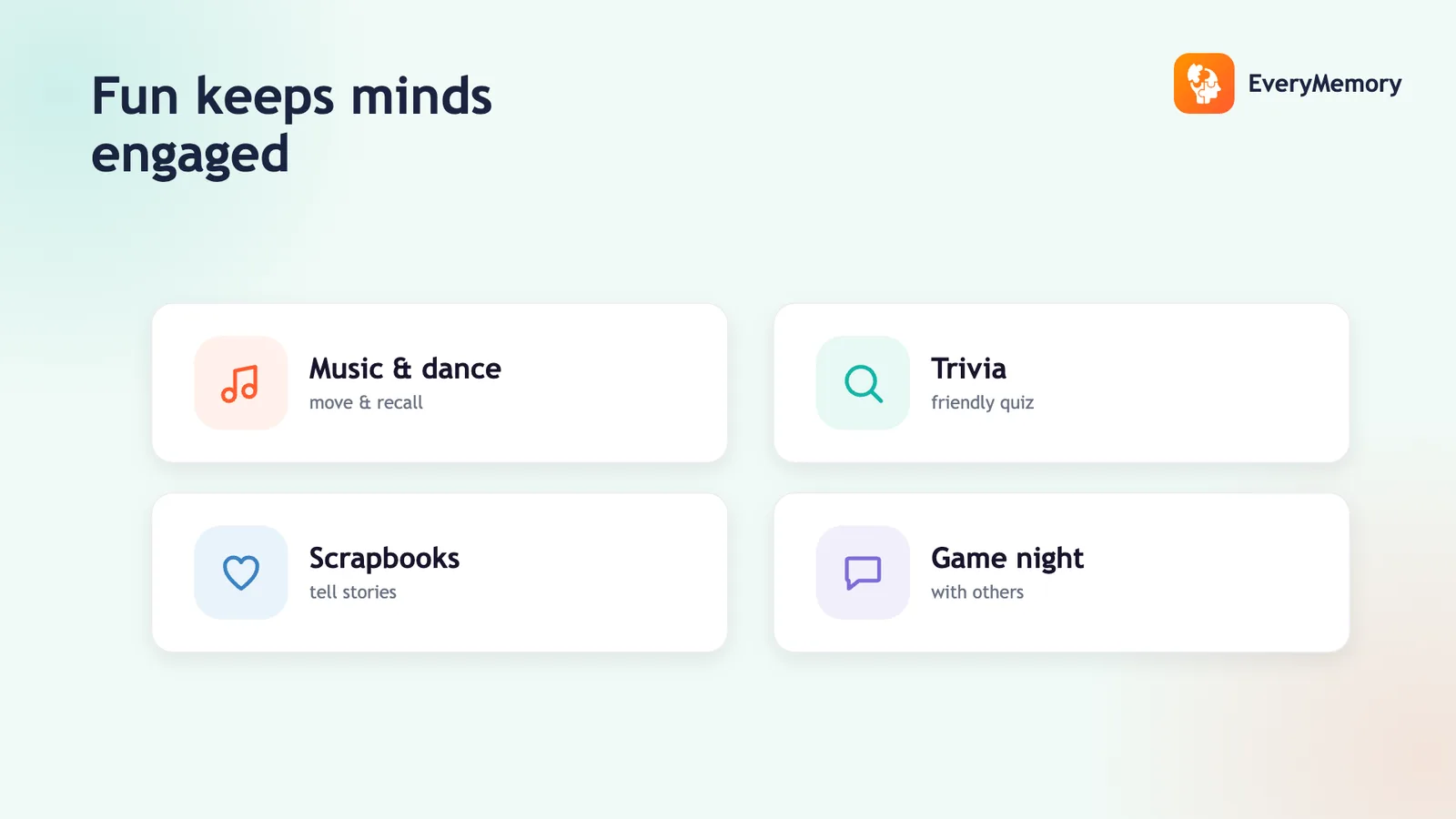
Group activities bring the company that keeps minds engaged and spirits up - from quiz afternoons and singalongs to gardening clubs and gentle group exercise.
Part of the guide: Helping a Parent With Memory Changes: The Complete Family Guide →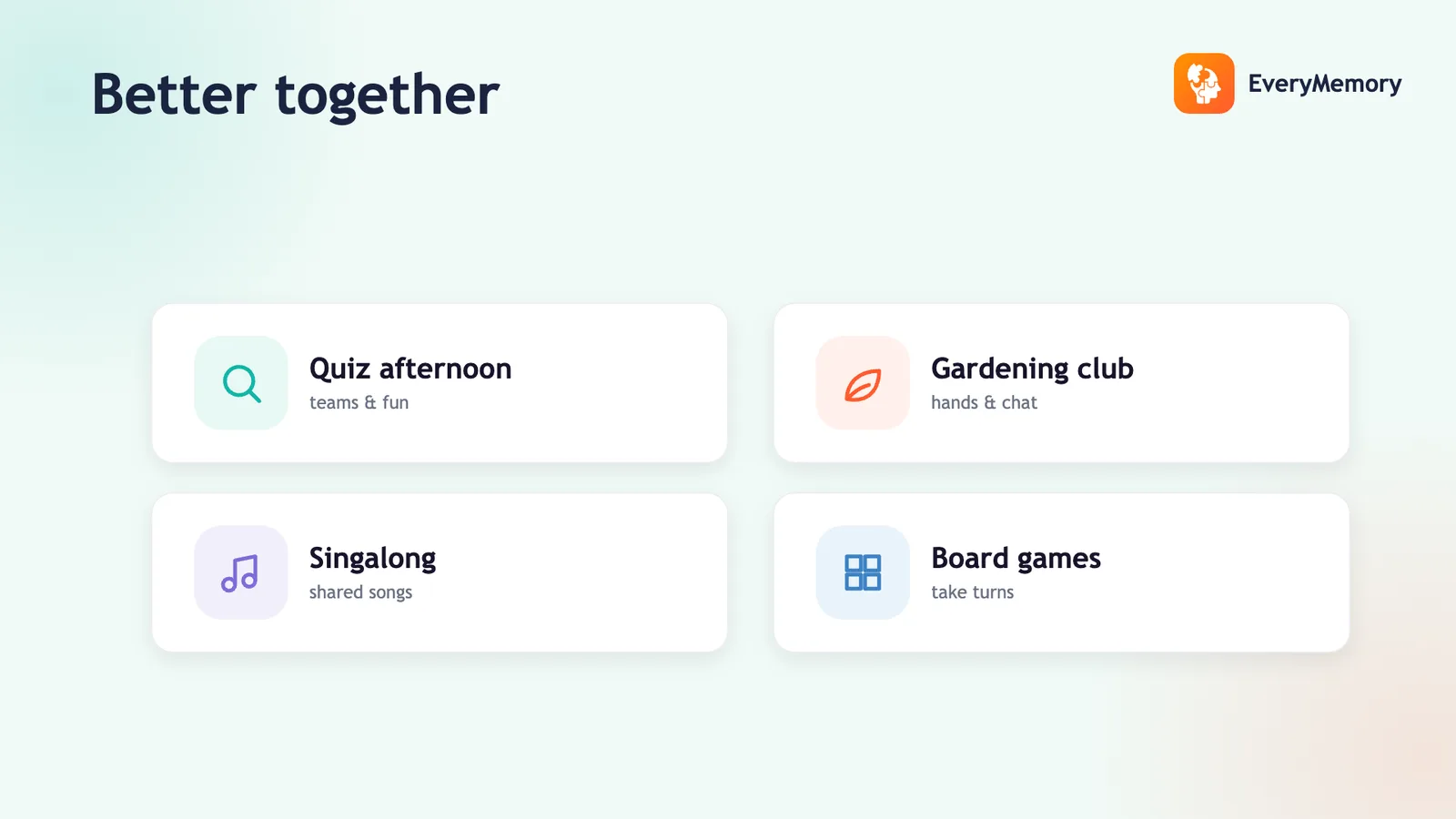
⚡ Quick answer
Good group activities for seniors combine fun and company so minds stay engaged naturally. Quiz and trivia afternoons, singalongs, bingo, card and board games, gardening clubs, simple crafts, and gentle group exercise all work well. Choose activities that include a range of abilities, play in teams to take pressure off individuals, and keep the focus on enjoyment and connection rather than competition or testing.
Key takeaways
- Company does the heavy lifting - groups keep minds engaged.
- Quizzes, singalongs, bingo, gardening, and crafts work well together.
- Use teams and seated options so everyone is included.
- Plan ahead, keep it short, and end on a cheerful note.
Company is one of the most powerful things a mind can have, and group activities deliver it naturally. Whether it's a handful of friends at a kitchen table or a room at a community centre, doing something together keeps everyone engaged, talking, and laughing - the social side does the heavy lifting.
Good group activities suit a range of abilities so no one feels left out, and they put fun before performance. Whether you're organising for a family gathering, a club, or a care setting, the aim is the same: a lively, inclusive hour where people connect.
Why groups work so well
In a group, the activity is only half the point - the rest is the talking, teasing, and shared laughter around it. That social engagement keeps minds active in a way solo puzzles can't, and it lifts mood and tackles the loneliness many older people feel.
Teams and shared games also take the spotlight off any one person, so no one feels exposed. For games that scale to several players, see memory games for groups and the broader list in games for the elderly.
Group activities to try
A range of options for different settings and energy levels.
| Activity | Why it works in a group |
|---|---|
| Quiz / trivia afternoon | Teams, friendly debate, lots of chat |
| Singalong or music hour | Shared songs, memories, and easy joining in |
| Bingo or lotto | Simple, inclusive, and lively |
| Gardening club | Purposeful, outdoors, and naturally social |
| Craft or scrapbook session | Hands busy, conversation flowing |
| Gentle group exercise | Movement, music, and company together |
Making everyone feel included
A good group activity has a way in for every ability. Mix easy and harder quiz questions, offer seated options alongside standing ones, and use teams so quieter or less confident members can contribute without being put on the spot.
- Play in teams rather than one-against-one.
- Offer seated versions of any active game.
- Mix question difficulty so everyone gets some right.
- Welcome help and hints between members.
- Keep sessions short enough that energy stays up.
Organising a session that runs smoothly
A little planning keeps a group activity relaxed. Have everything ready before people arrive, keep instructions simple, and have a quieter back-up activity for anyone who tires. Warm tea and a friendly host matter as much as the game itself.
End before energy flags, and finish on something cheerful - a final song or a round of applause. People remember how an afternoon felt more than who won.
✅ Try this today - A simple quiz afternoon
Run a friendly team quiz that suits a mixed group.
- Write twenty questions across easy and medium difficulty, on familiar topics.
- Split the room into small teams so no one answers alone.
- Read questions slowly and clearly, repeating where needed.
- Keep score loosely and hand out small, daft prizes to everyone.
- Finish with a singalong or a cup of tea so it ends on a warm note.
⚠ When to talk to a professional
Group activities here are for enjoyment, company, and engagement, not therapy or treatment for any condition. Adapt them to participants' abilities, and direct any genuine memory concerns to a doctor or qualified professional.