 EveryMemory
Daily Routine
Small daily habits and brain-training routines you can repeat every week.

A Simple Daily Memory Routine You Can Repeat
A practical daily memory routine - under 15 minutes - that fits any schedule and helps you build sharper recall through consistent, repeatable practice.
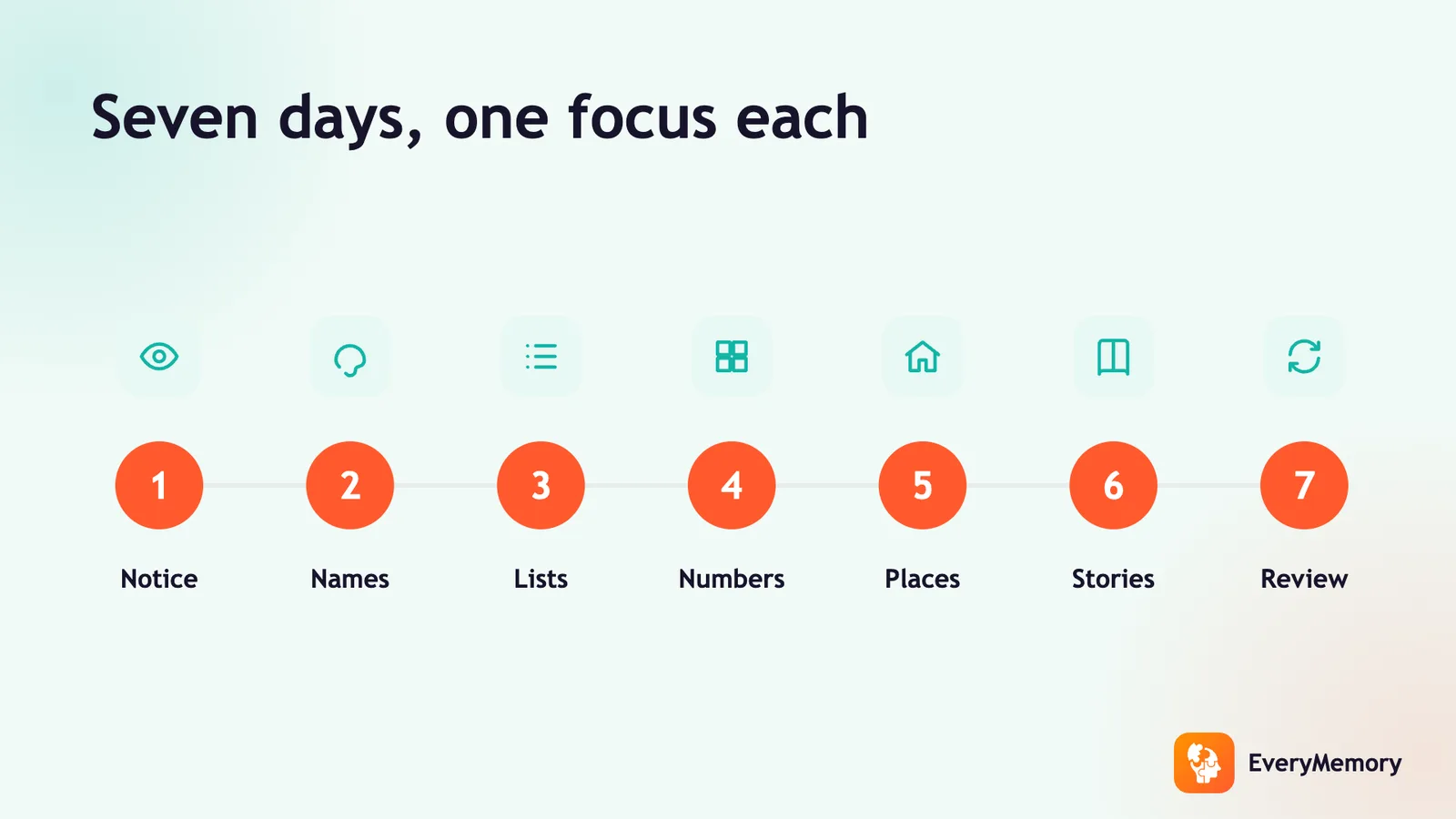
7-Day Memory Training Plan for Beginners
A gentle, structured week with one small focus each day - the easiest way to start a memory-training habit and prove to yourself it can stick.
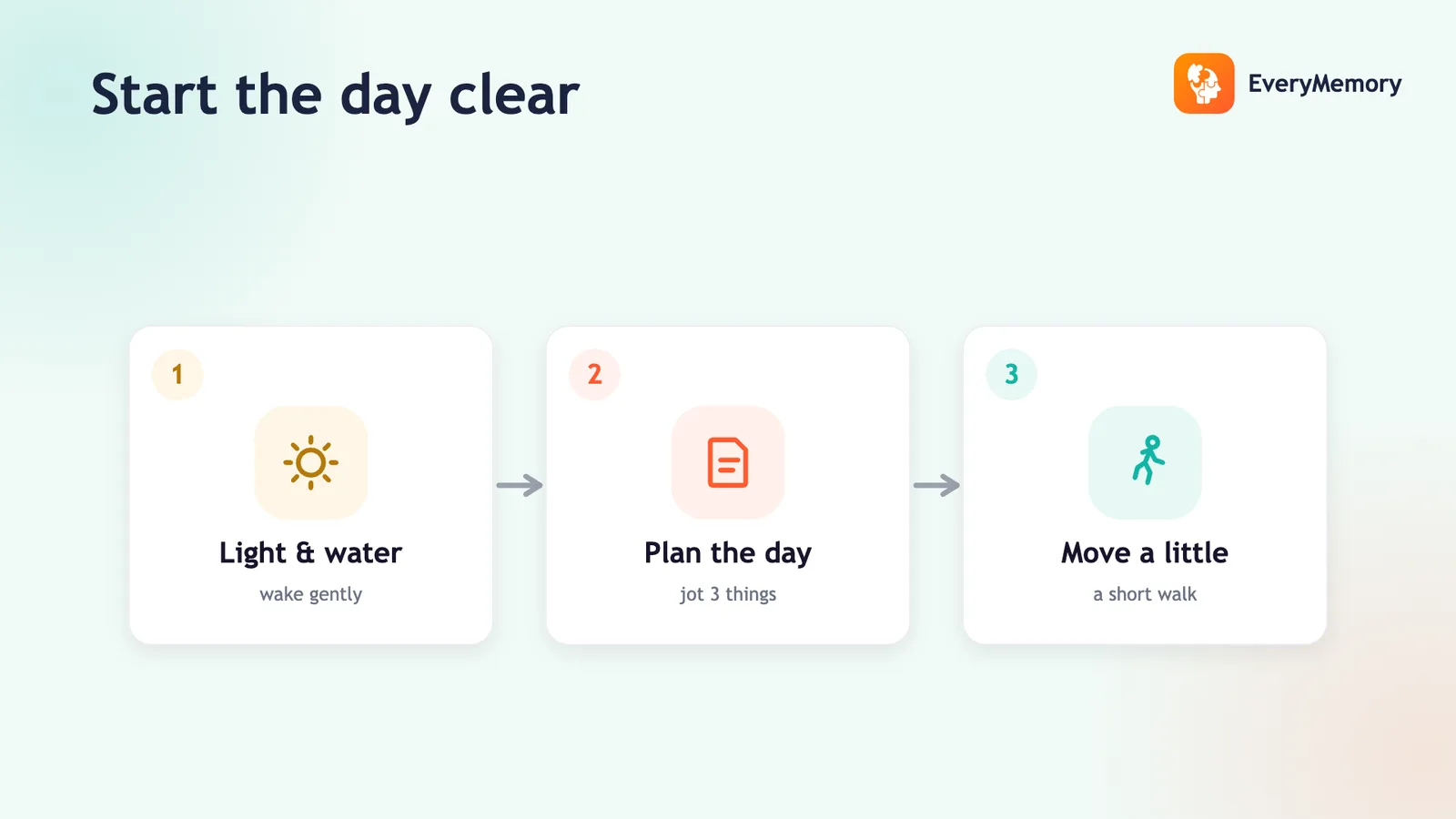
Morning Brain Routine for Seniors
A calm, practical morning brain routine for older adults - designed to warm up focus, support recall, and set a clear mental tone for the rest of the day.
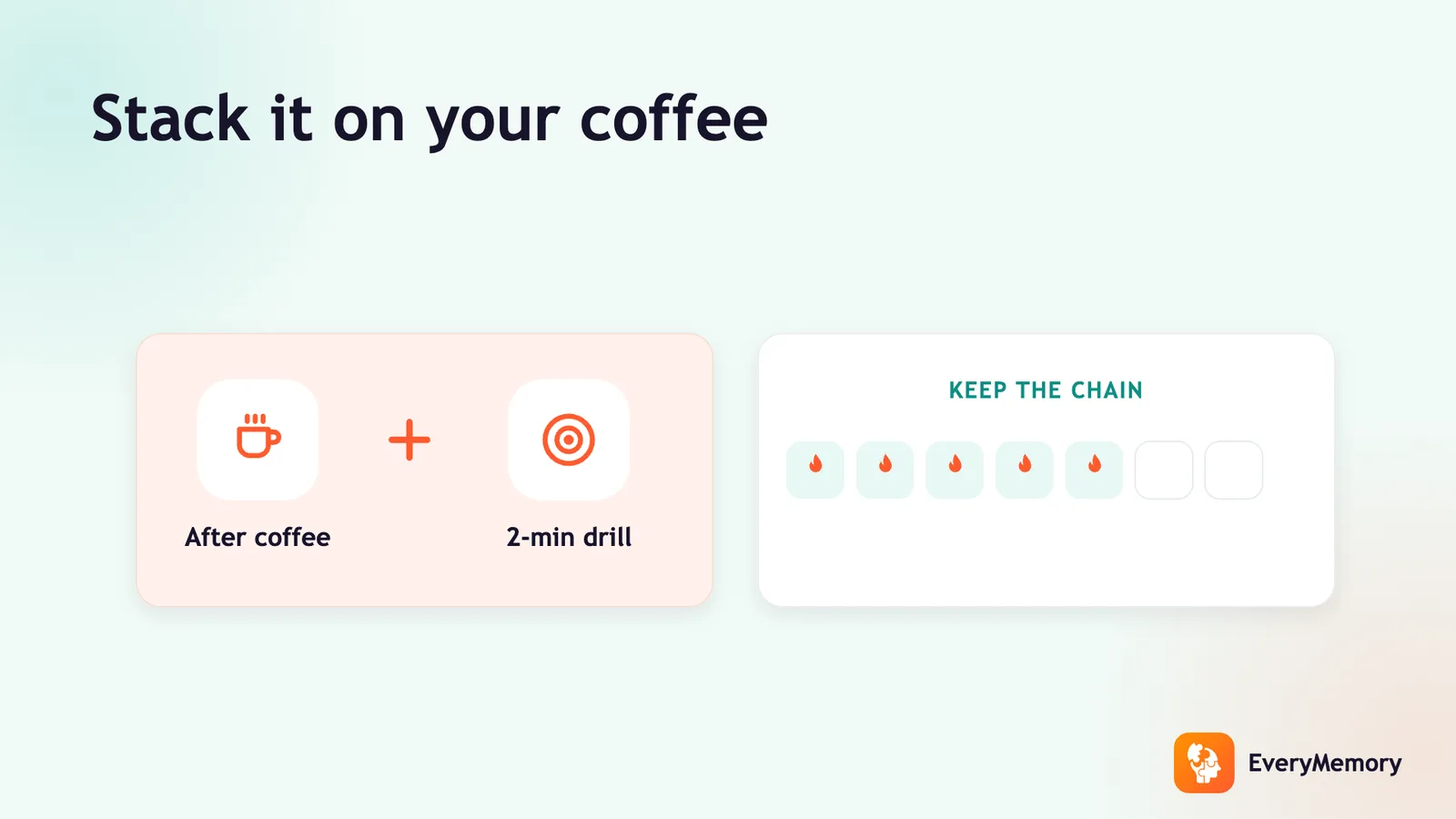
How to Build a Memory Training Habit
Starting a memory training habit is easy. Keeping it going past week three is the real challenge. Here is a practical framework that works for adults 55+.
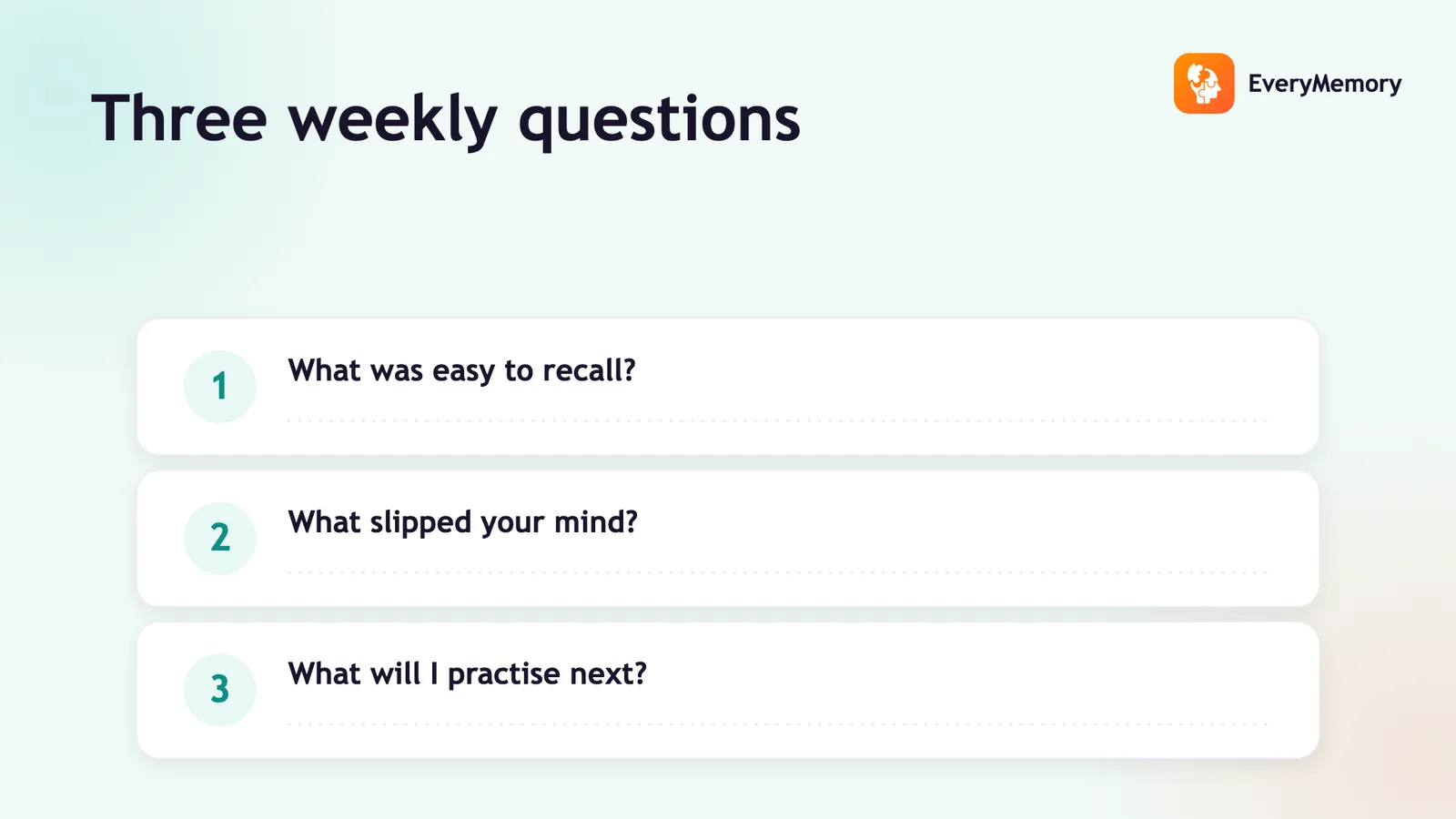
Weekly Memory Check-In Template
A simple weekly memory check-in template for older adults - five questions, five minutes, done every Sunday to track patterns in recall and focus over time.
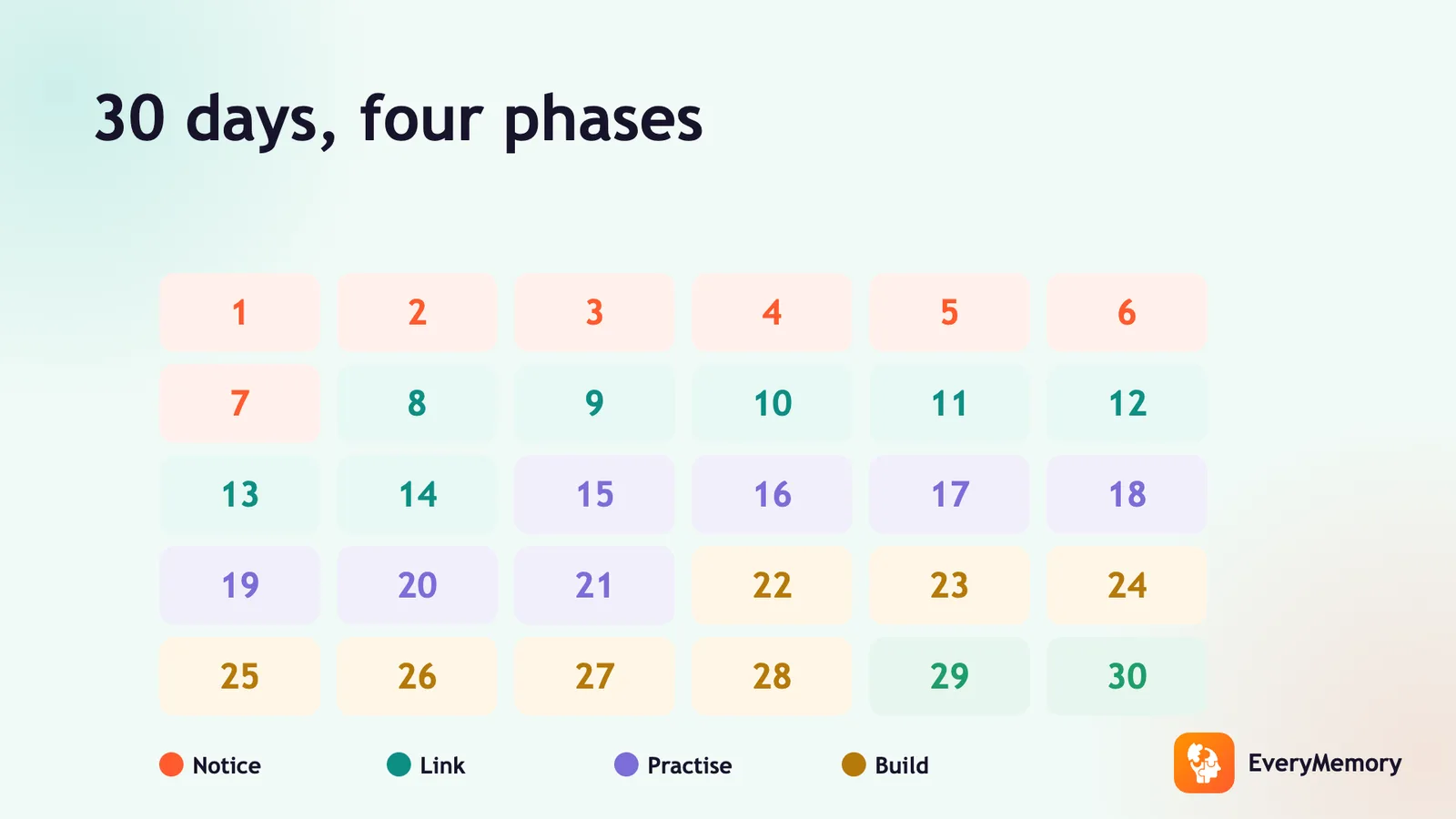
30-Day Memory Challenge
A structured 30-day memory challenge for adults 55+. Four weekly phases, clear daily tasks, and a built-in system for tracking progress and staying on track.

Staying Mentally Sharp in Retirement
Retirement removes the three things that quietly keep the mind sharp - structure, challenge, and daily social contact. Here is how to rebuild all three deliberately.
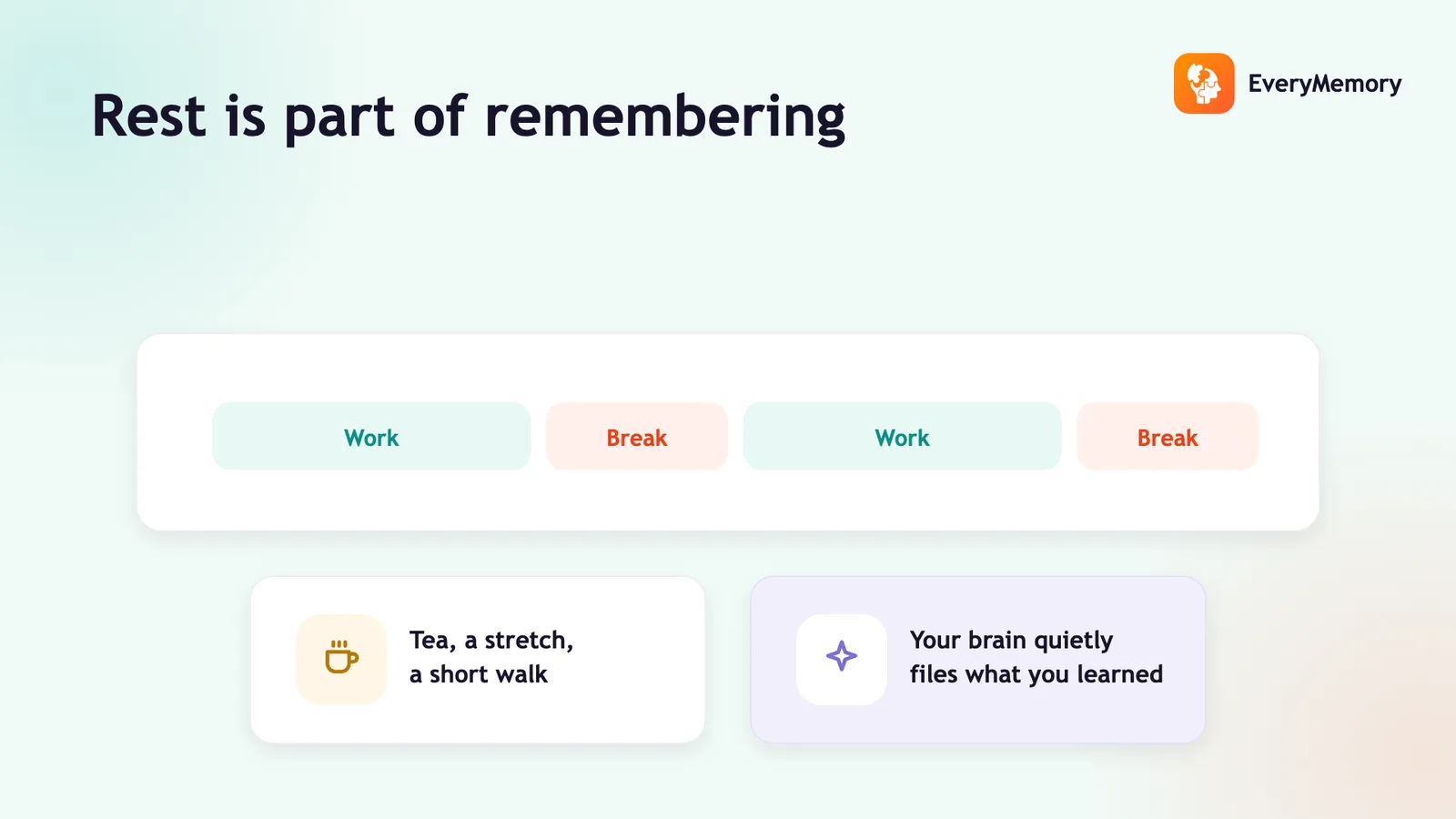
How Rest Breaks Quietly Strengthen Your Memory
Your brain does some of its most important memory work during quiet downtime - short pauses, a brief walk, or even a nap can all help what you've learned stick.

Daily Brain Exercises You Can Do for Free
The best daily brain exercise is any focused mental effort you'll actually repeat. A free, no-equipment menu and a 10-minute routine you can keep up.
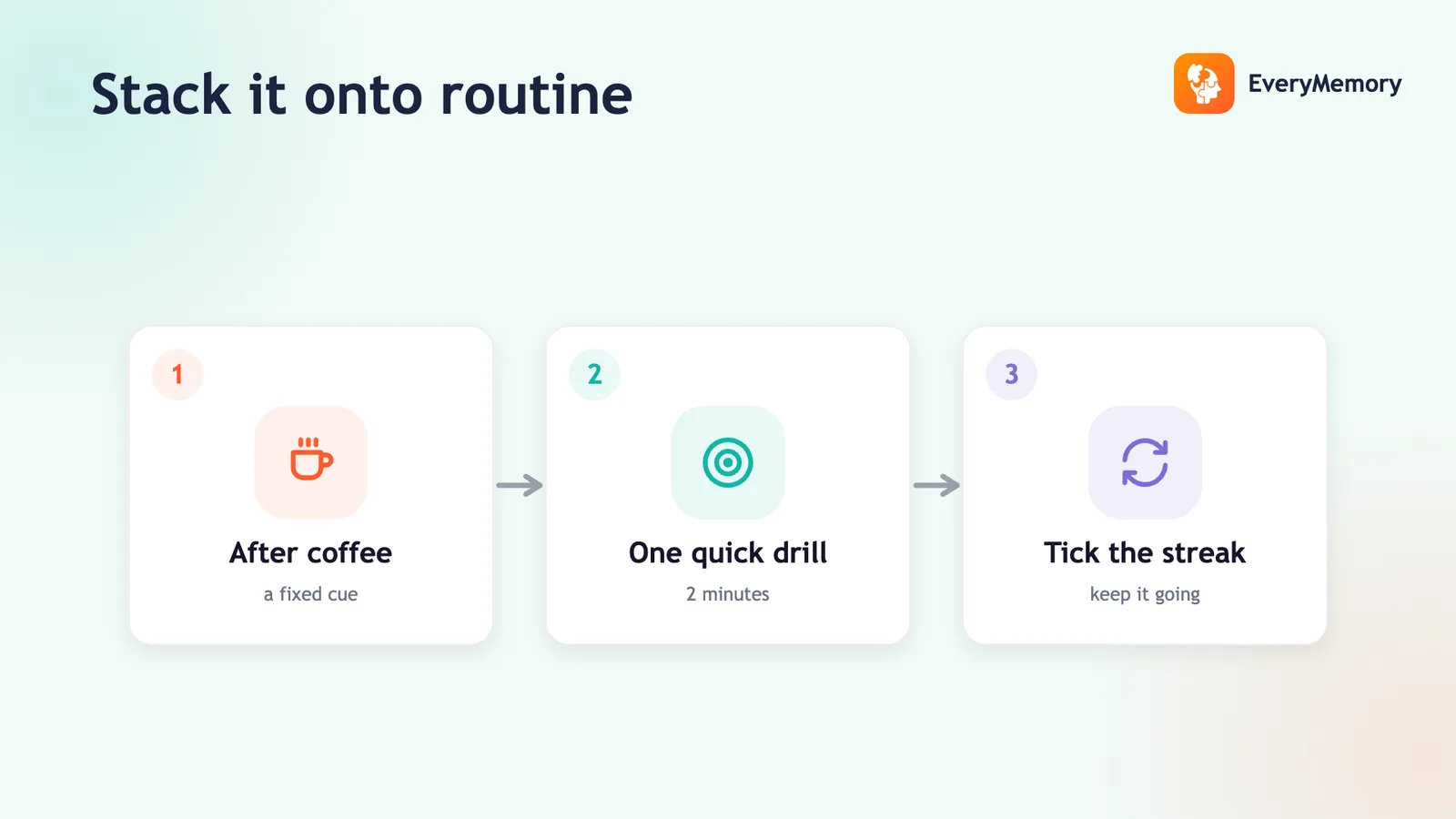
How to Make Brain Training a Daily Habit
Keeping up brain training is a design problem, not a motivation one. Attach it to an existing routine, keep it short, and track a streak.
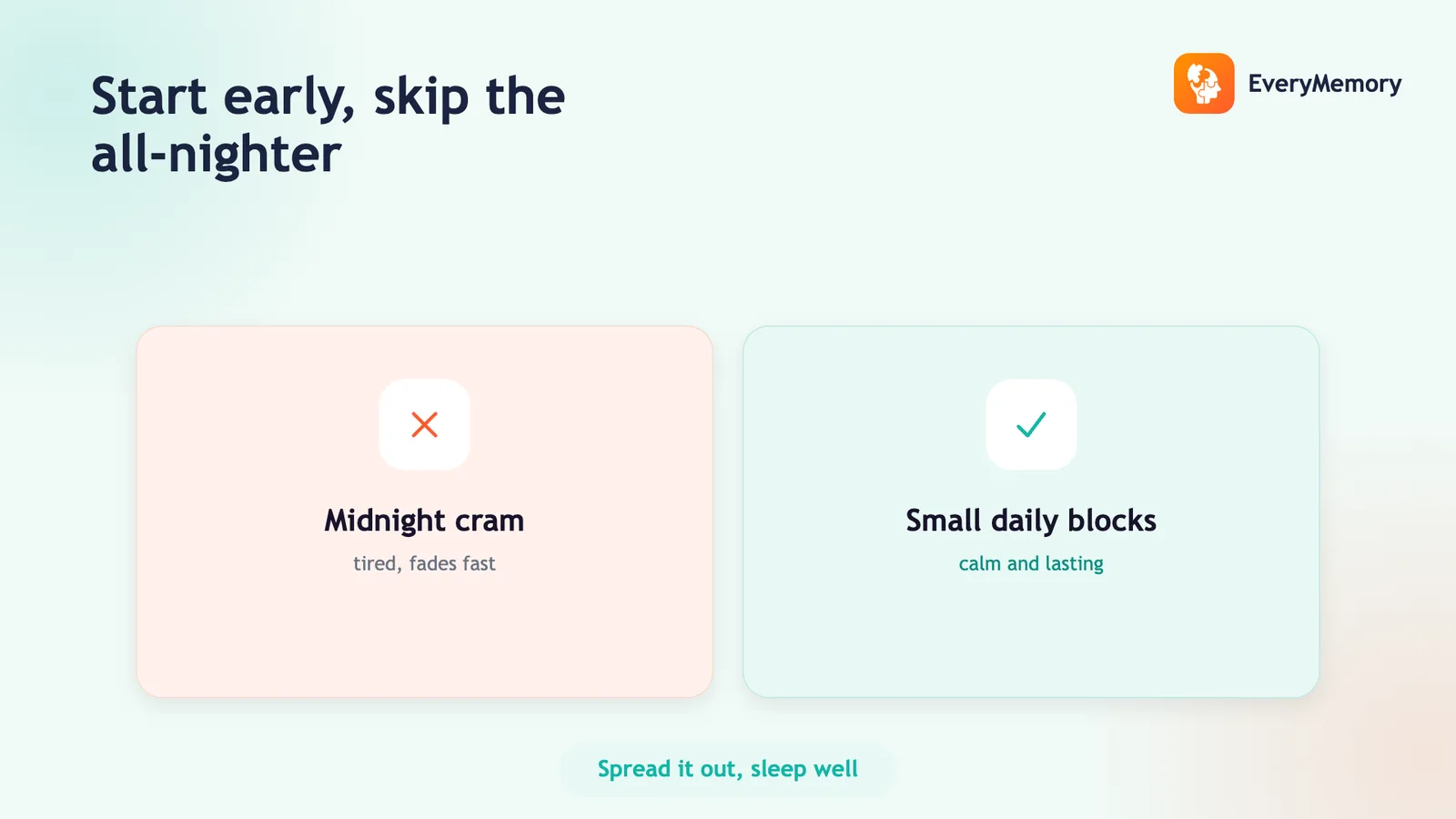
How to Avoid Cramming (and What to Do Instead)
Cramming fails because there's no time to consolidate. Start earlier, study in short spaced sessions, and test yourself - the plan that replaces the all-nighter.
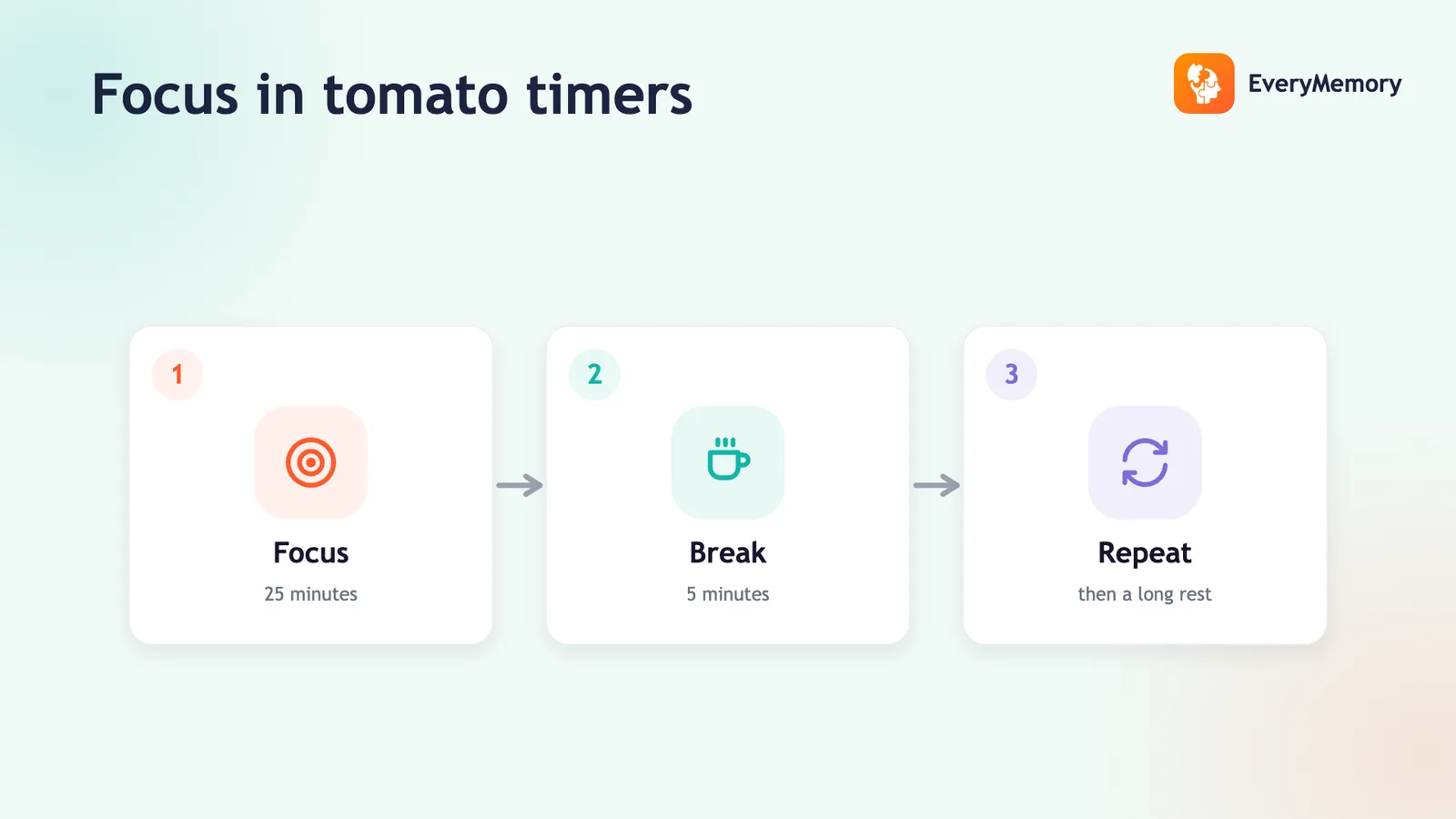
The Pomodoro Technique for Studying
Study in focused 25-minute blocks with short breaks. Why this simple timer method beats open-ended sessions - and how to adapt it to you.
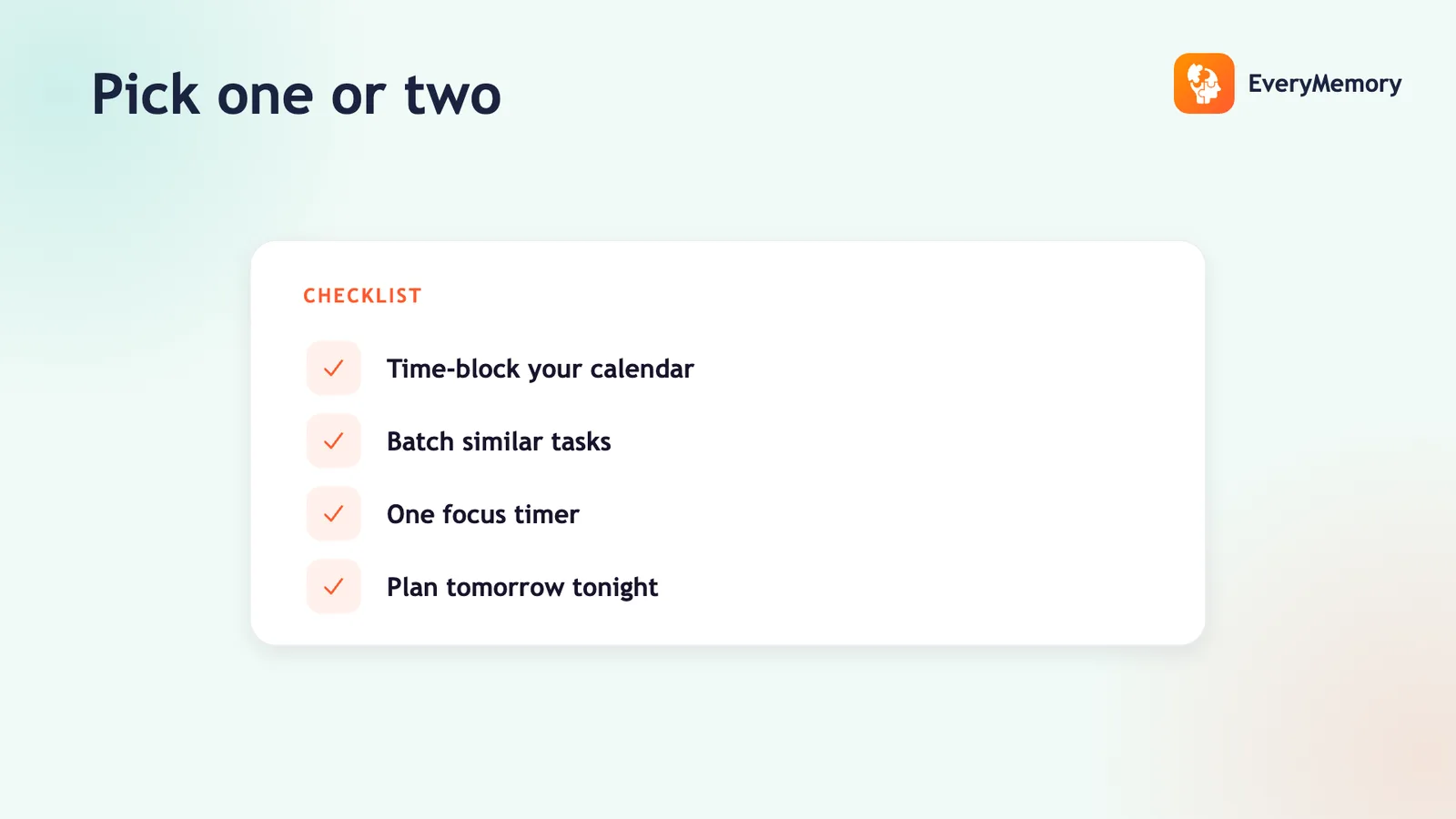
Productivity Techniques That Actually Work
Time-blocking, focused intervals, ruthless prioritising, and batching - the simple techniques that beat busyness. Pick one or two, not ten.
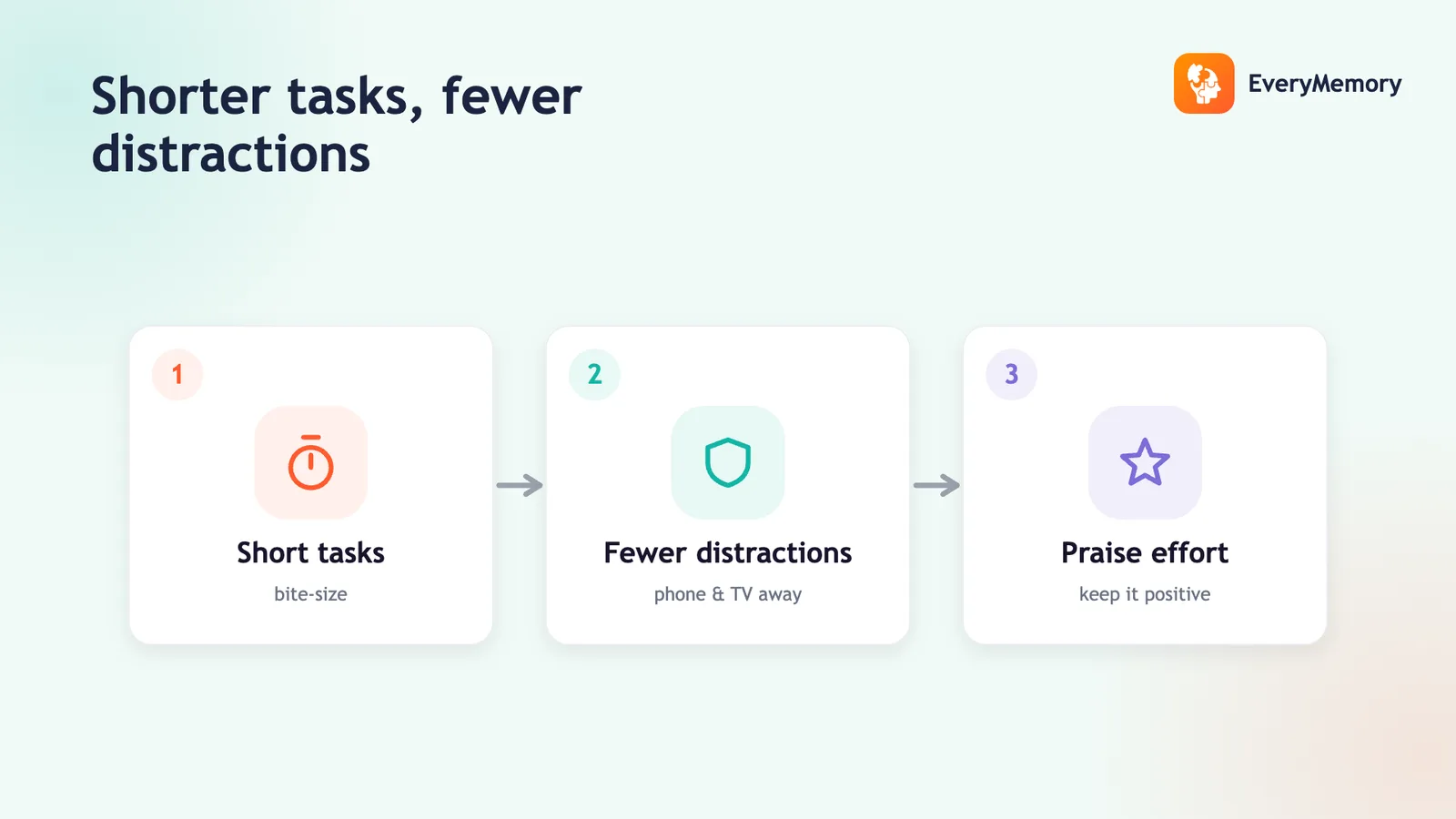
How to Help a Child Focus
Children focus better with shorter tasks, fewer distractions and a predictable routine - practical ways to help your child concentrate without nagging or long sit-still sessions.
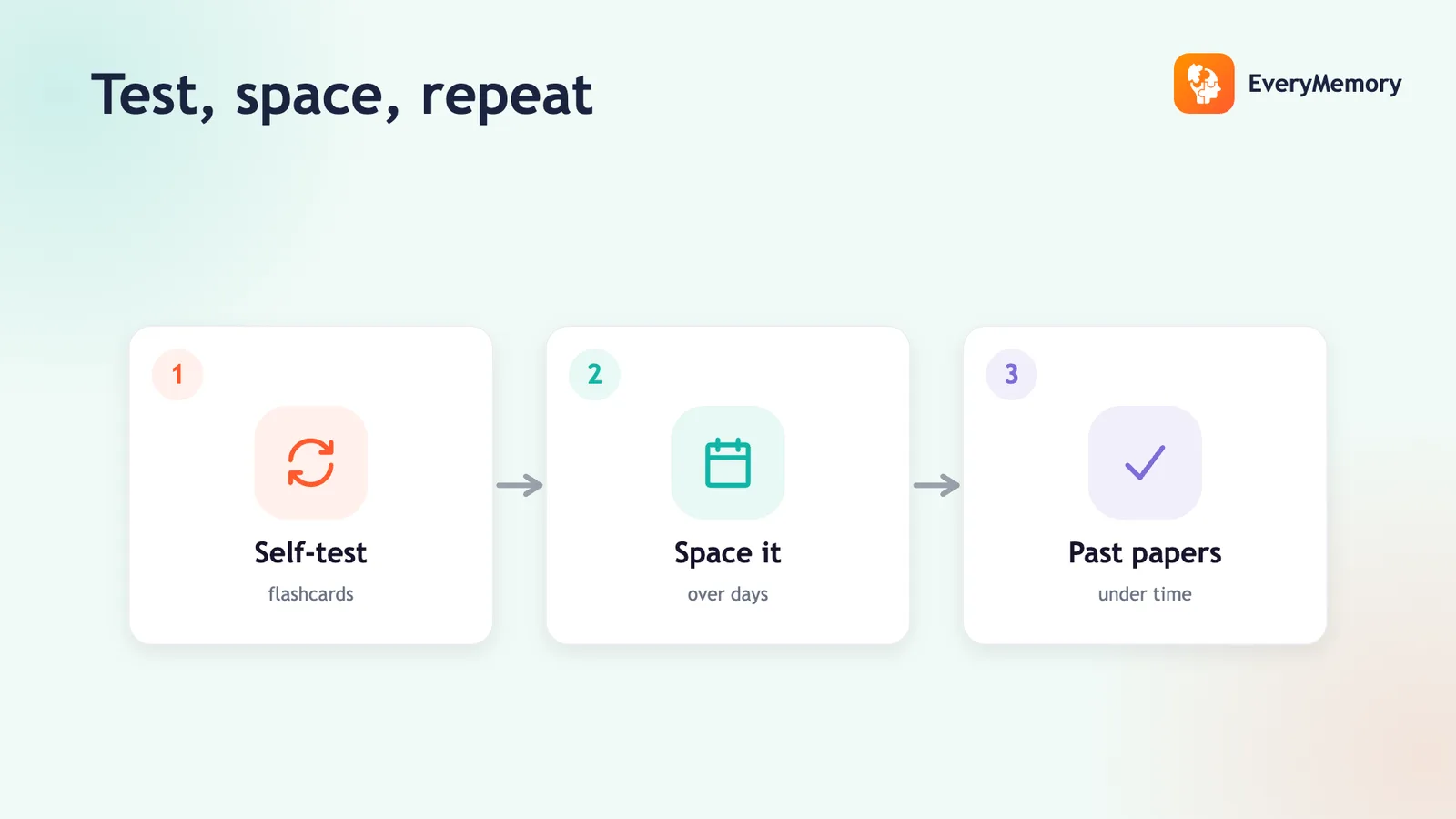
Study Tips for Exams
The study methods that actually move exam grades are active recall, spaced practice and past papers - here's how to use them, plus what to skip when time is short.
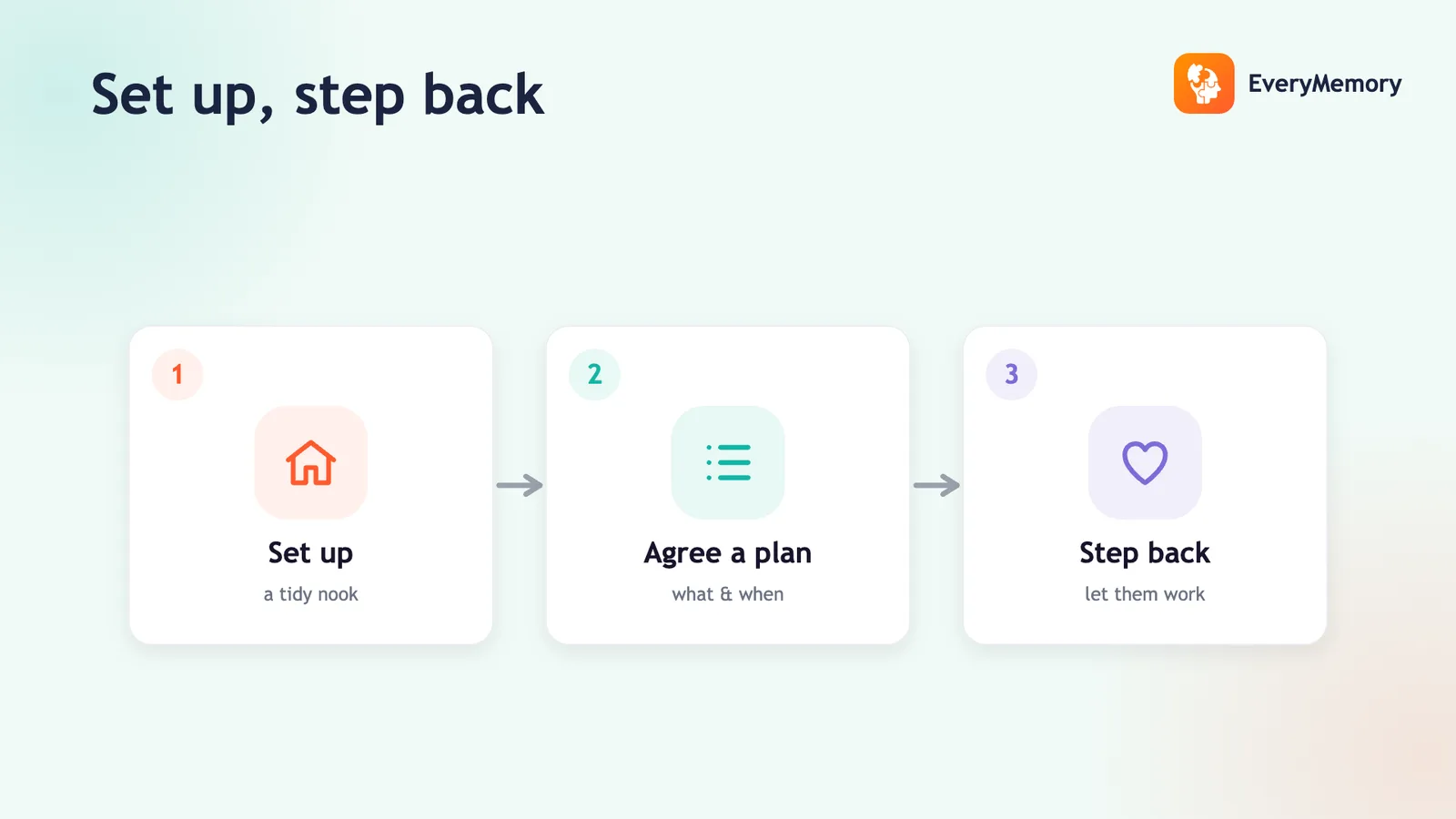
How to Help Kids Study
Helping kids study is less about sitting beside them and more about setting up the routine, the space and the right habits so they can do the work themselves.
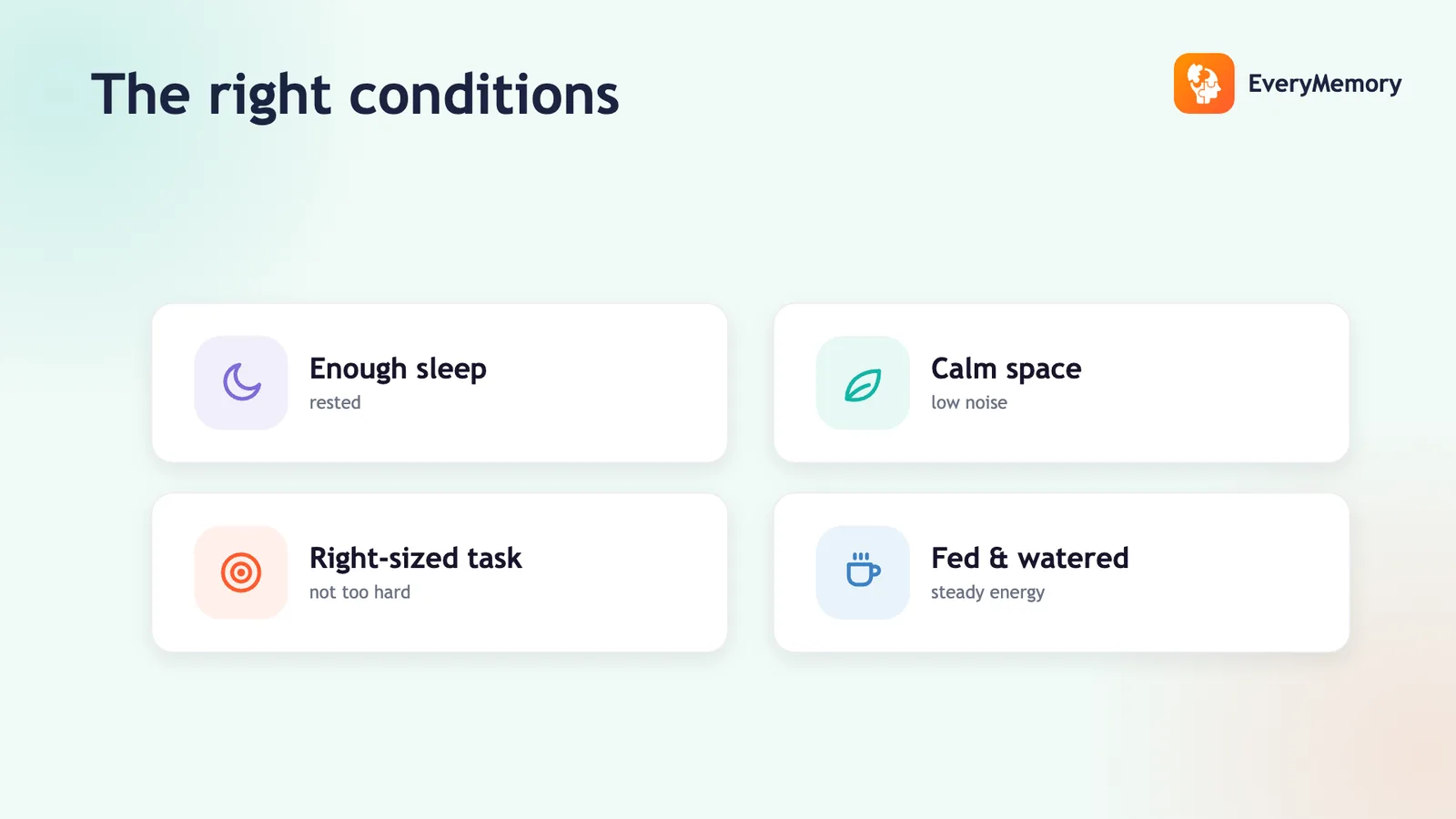
How to Improve Concentration in Children
Concentration grows with the right conditions - enough sleep, fewer distractions, tasks matched to age, and regular practice through games kids enjoy.
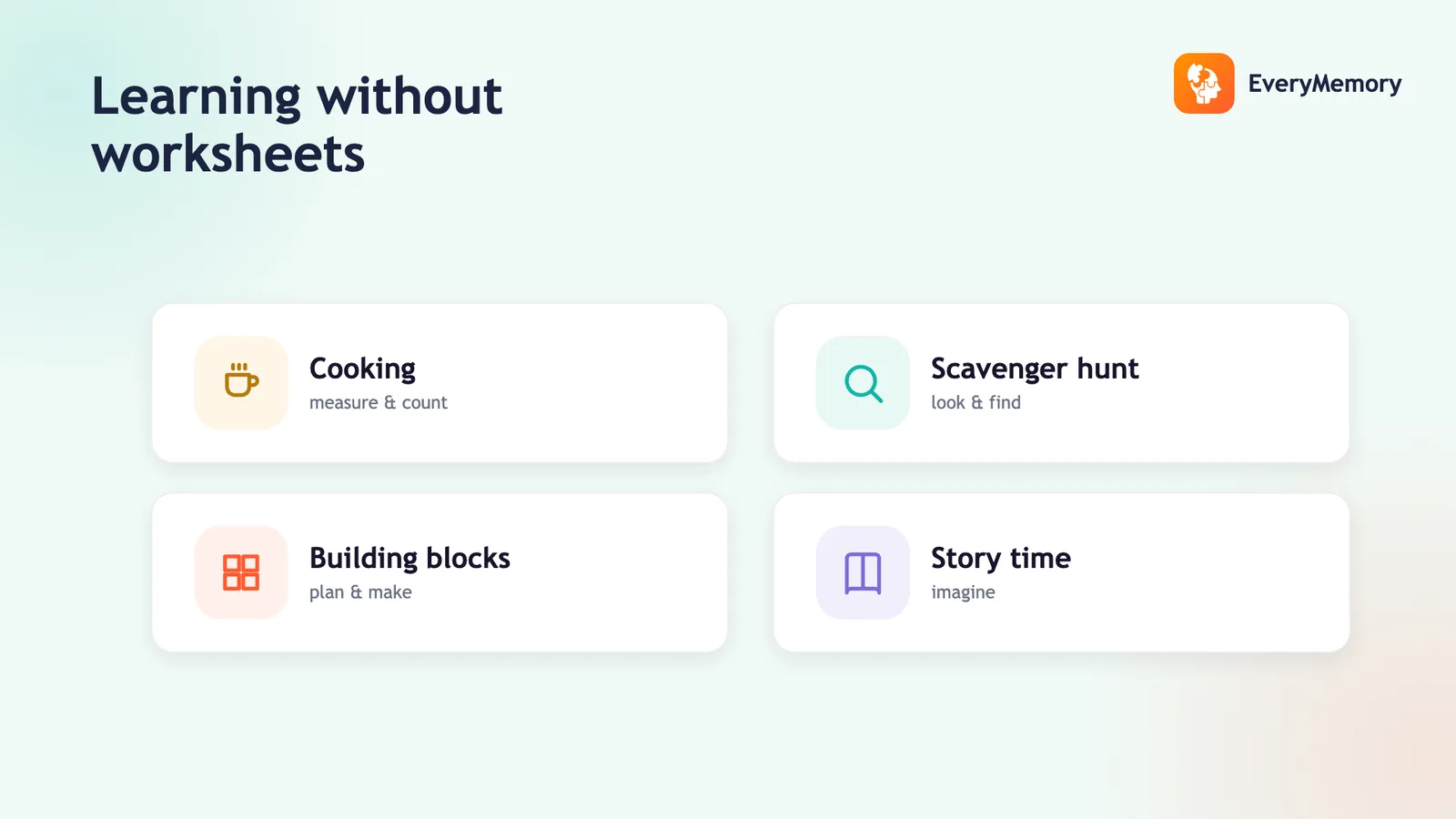
Fun Learning Activities for Kids
Cooking, scavenger hunts, building, and story games turn everyday moments into real learning - fun activities that teach without a worksheet in sight.
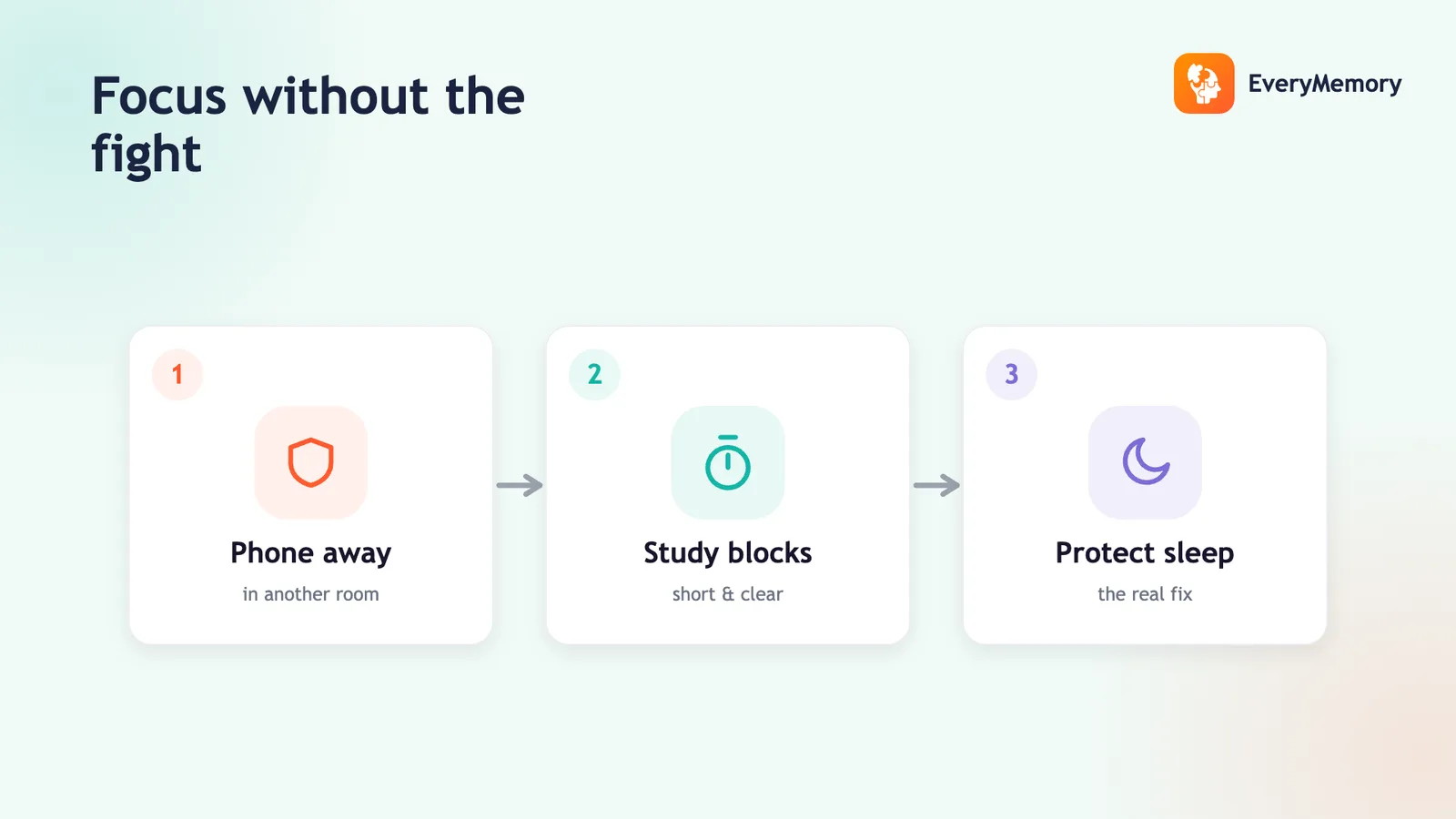
How to Improve Focus in Teenagers
Teenagers focus better with phones out of reach, short study blocks, enough sleep, and a say in their own routine - practical help that doesn't turn into a fight.

Breathing Exercises for Focus and Calm
A few deliberate breaths can shift your nervous system from scattered to settled in under two minutes. Here are four simple breathing techniques, when to use each one, and how to build them into a daily routine.

How to Beat Procrastination (Without Relying on Willpower)
Procrastination is not a character flaw - it is your brain dodging uncomfortable feelings. Here is what the research says about breaking the avoidance loop for good.

Journaling for a Clearer Mind and Better Memory
Writing things down does more than create a record - it actively frees up mental space, eases the pull of unfinished thoughts, and strengthens the way experiences are stored. A practical guide to journaling formats that genuinely work.
Build your personal memory routine
Take a short non-medical quiz and get a simple plan with daily memory exercises.
Take Memory Quiz