 EveryMemory
Memory Techniques
Practical techniques like association, chunking, and the memory palace.
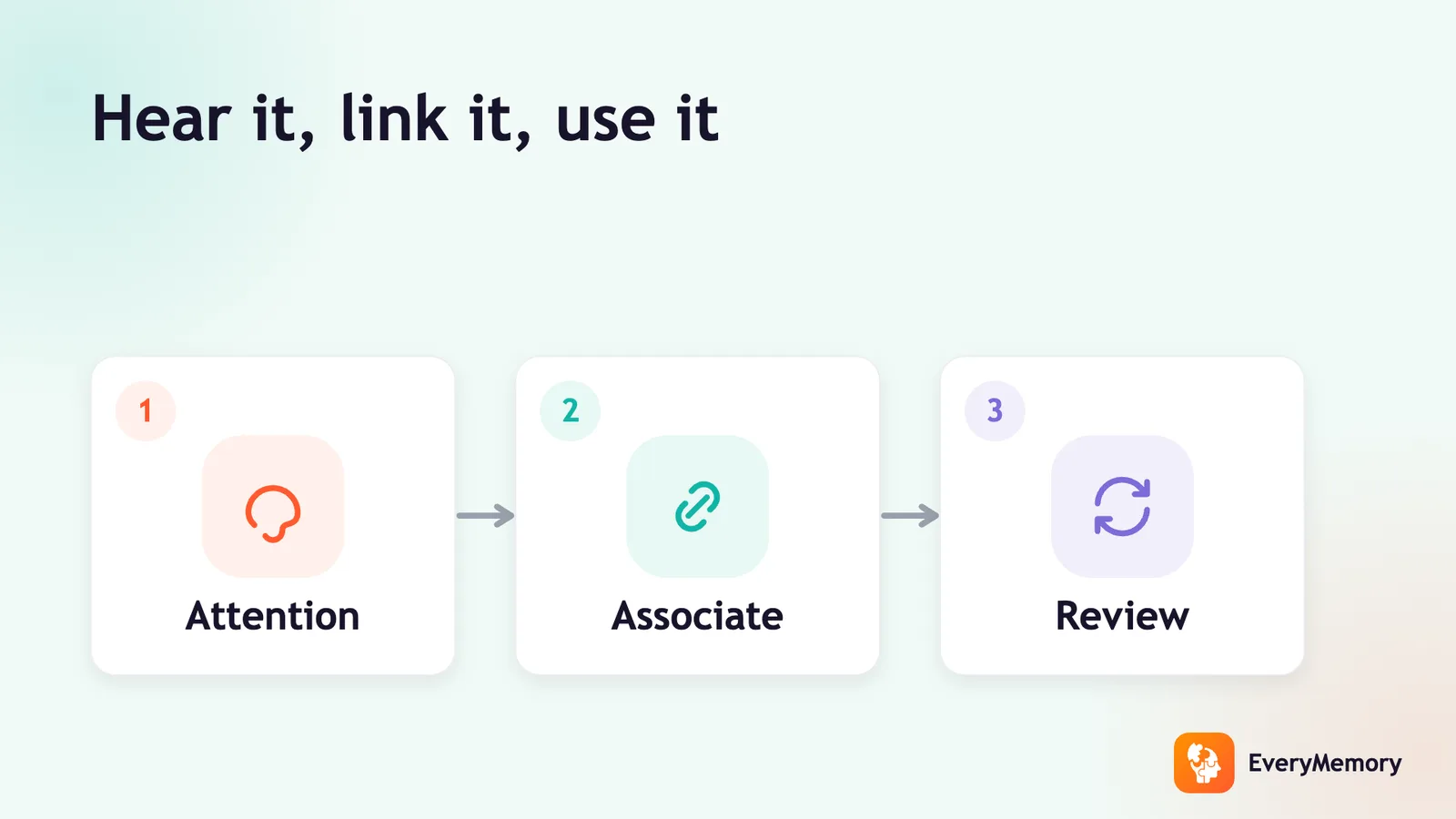
How to Remember Names and Faces
A step-by-step technique guide for remembering names the moment you hear them - using attention, repetition, and visual anchors.
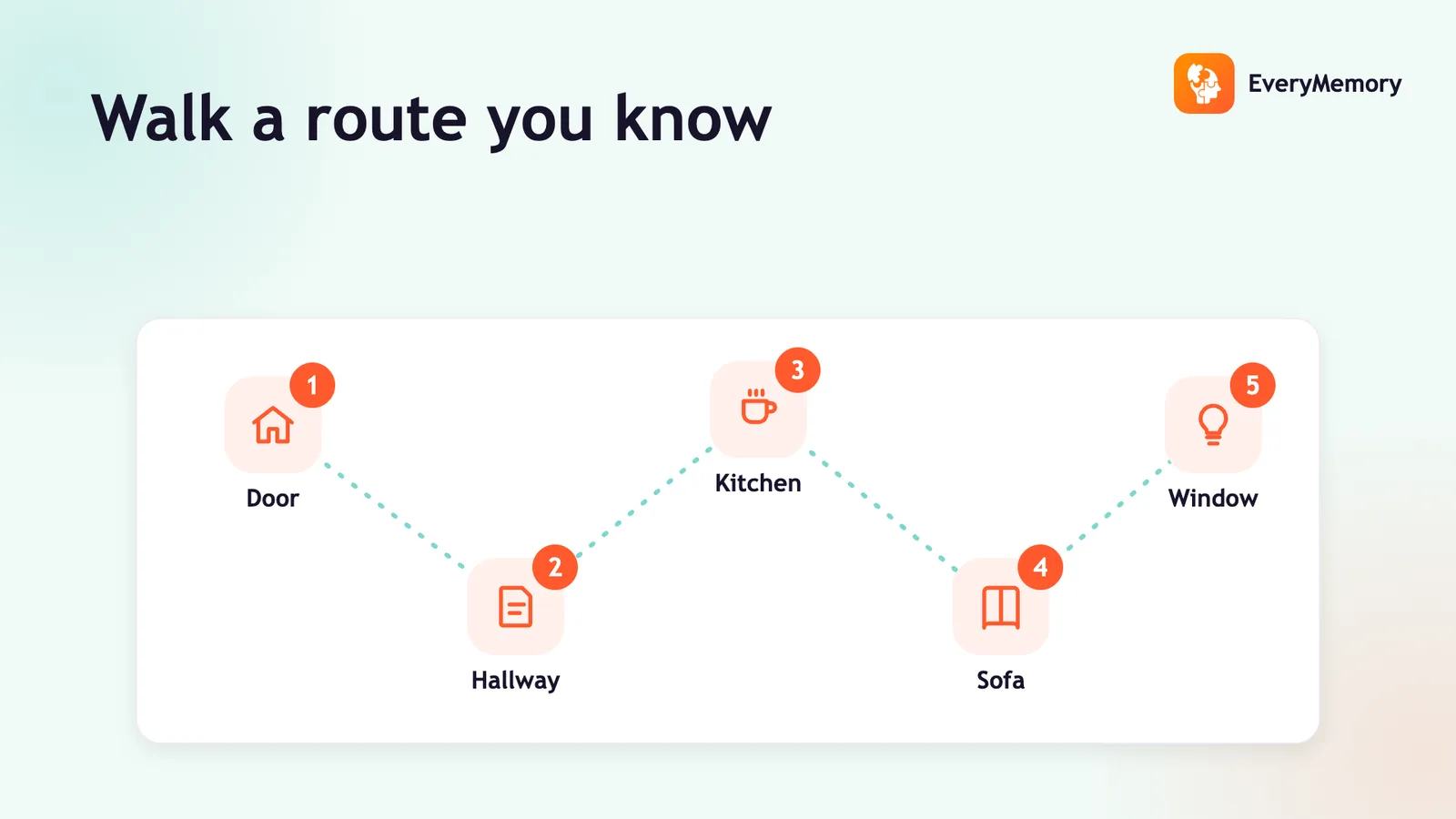
Memory Palace for Beginners
The memory palace is one of the oldest recall techniques in existence. Here's how it works and how to build your first one in under 20 minutes.
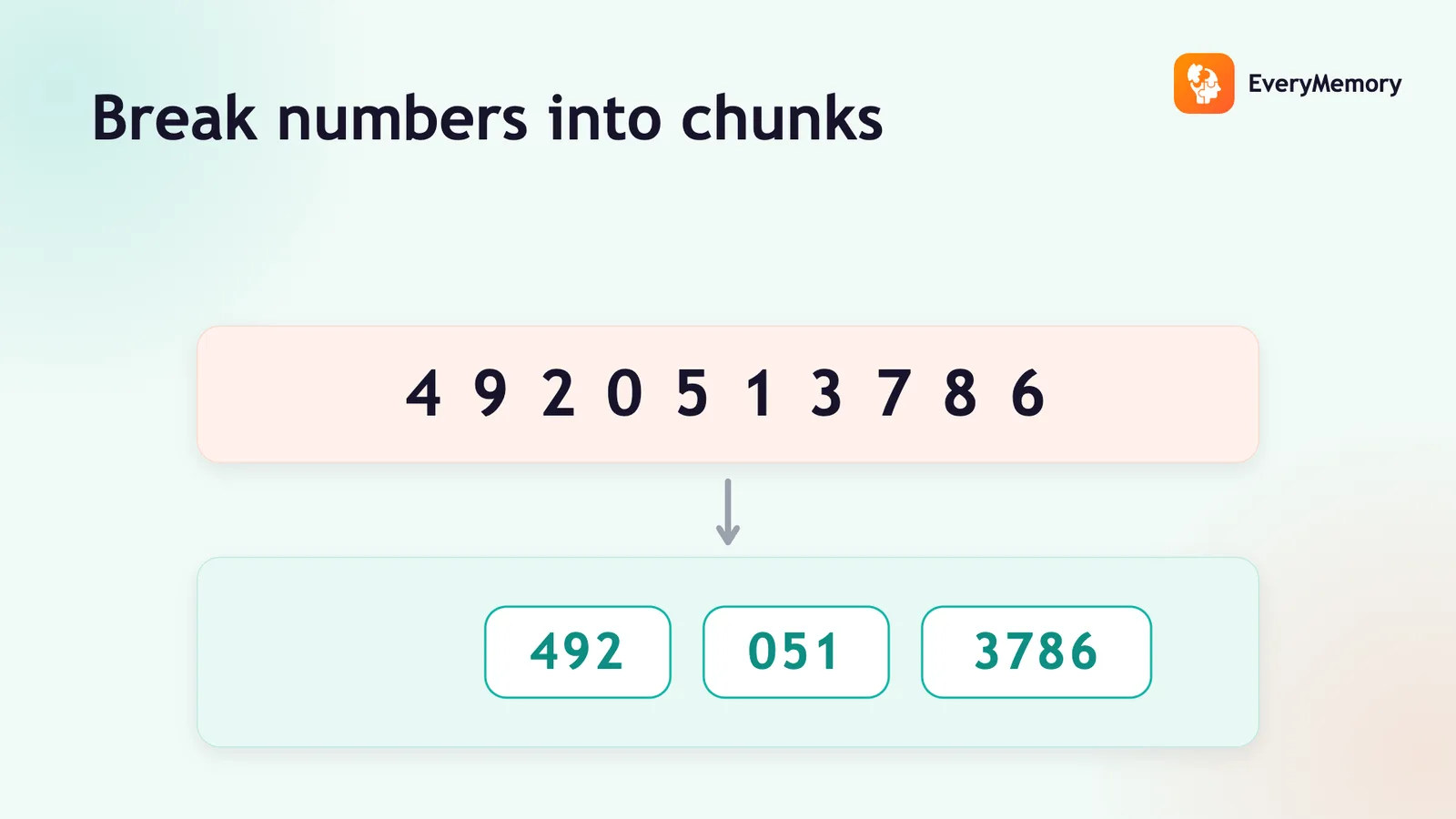
Chunking Technique Explained Simply
Chunking is how your brain already handles phone numbers and PIN codes. Here's how to use it deliberately to remember almost anything.
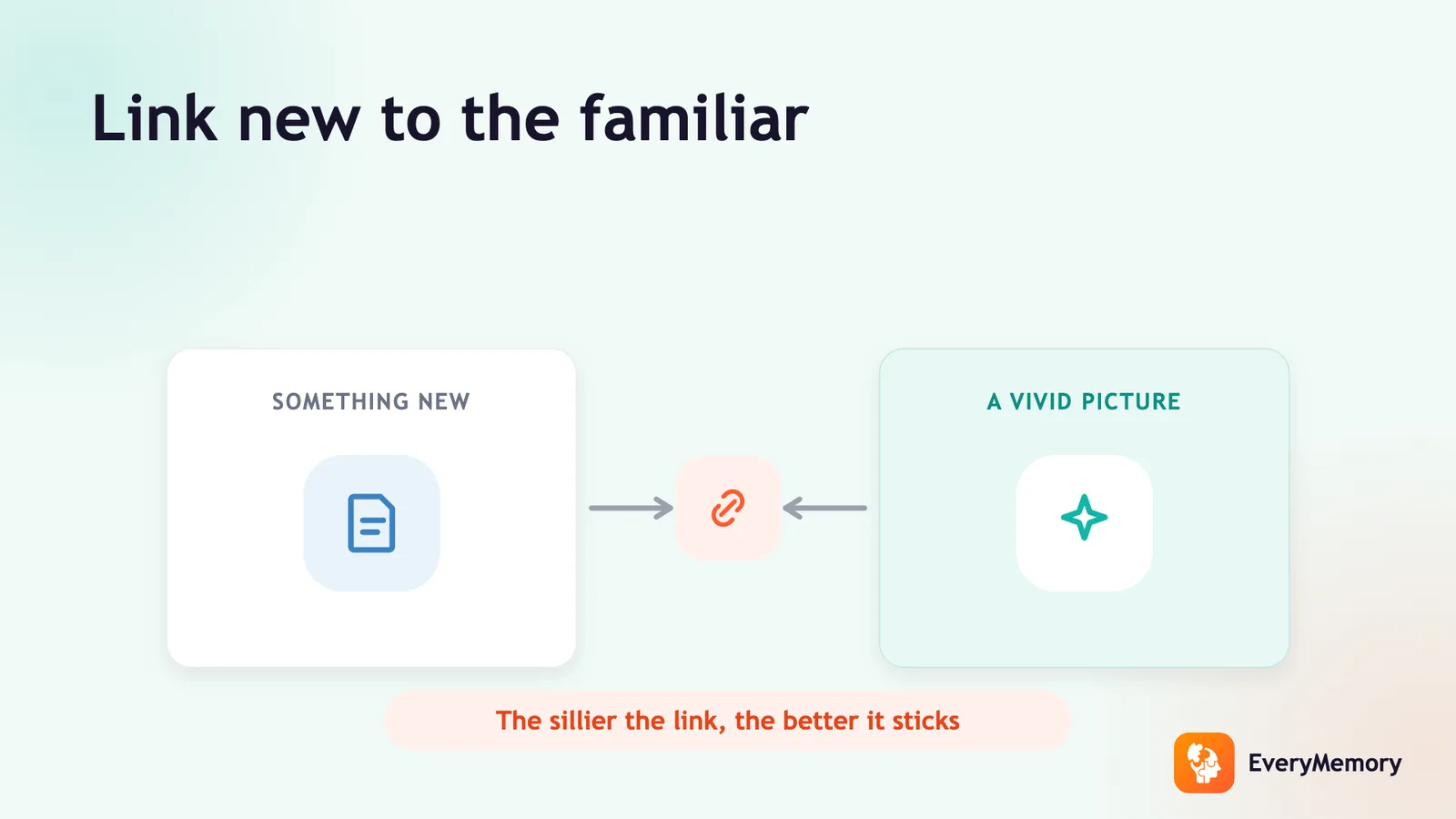
How to Use Association to Remember More
Association is the foundation of almost every memory technique. Here's how to use it deliberately to make new information stick.
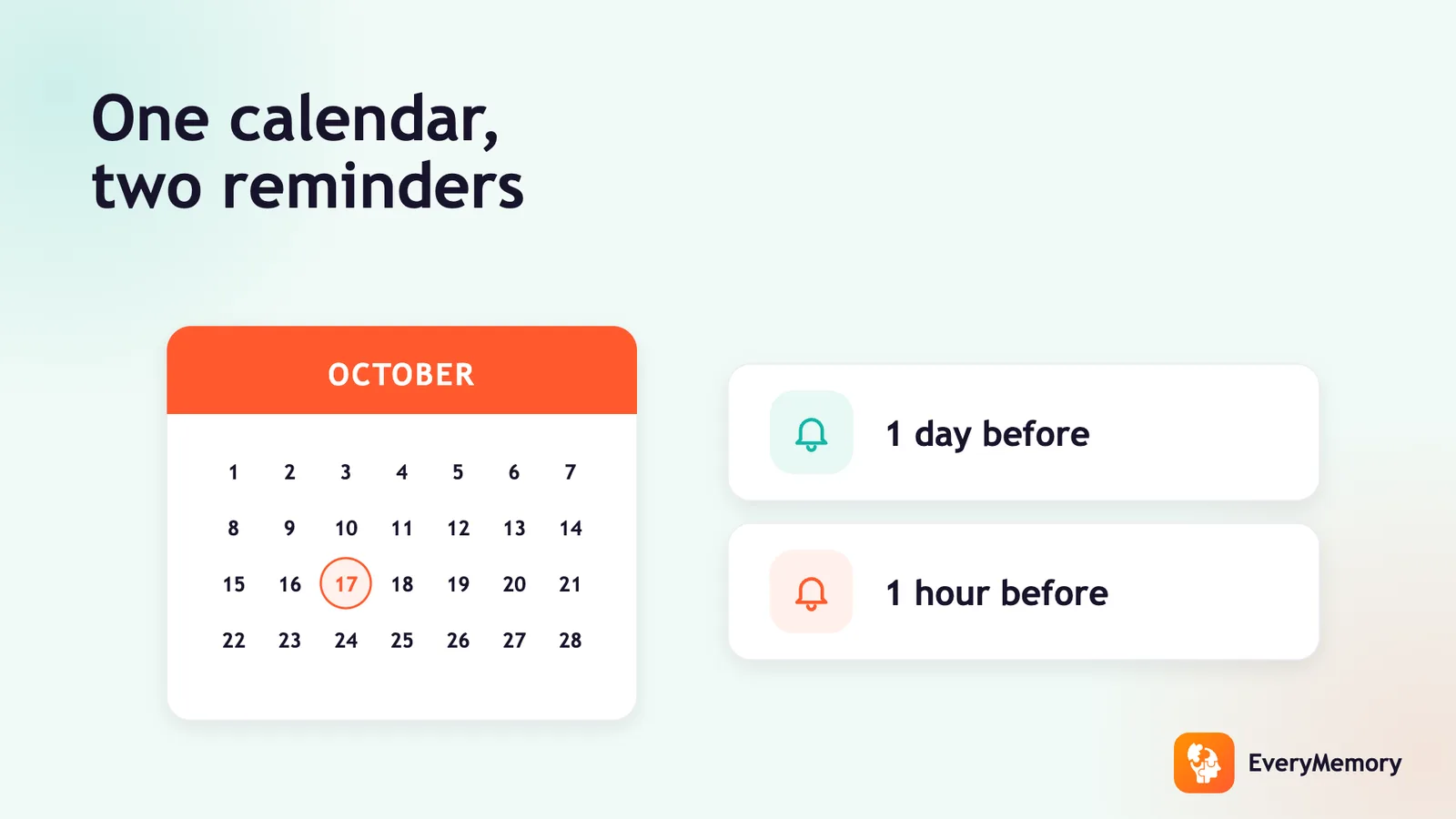
How to Remember Appointments
A simple, reliable system for keeping track of appointments - even when your schedule gets busy or you stop using a planner consistently.
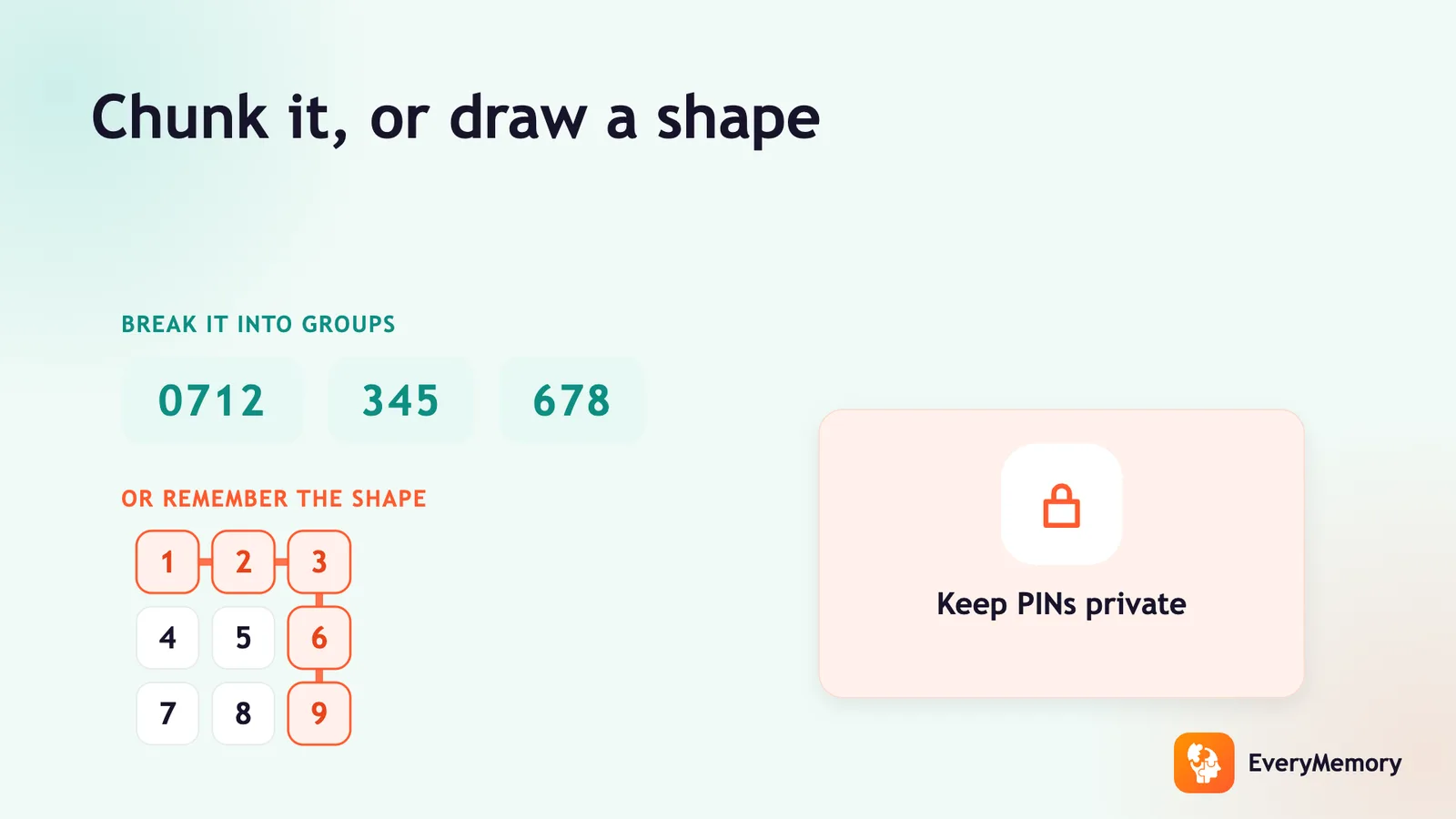
How to Remember Phone Numbers and PINs
Practical techniques for learning phone numbers and PINs by heart - using chunking, rhythm, and association - with a brief privacy note on keeping sensitive numbers safe.
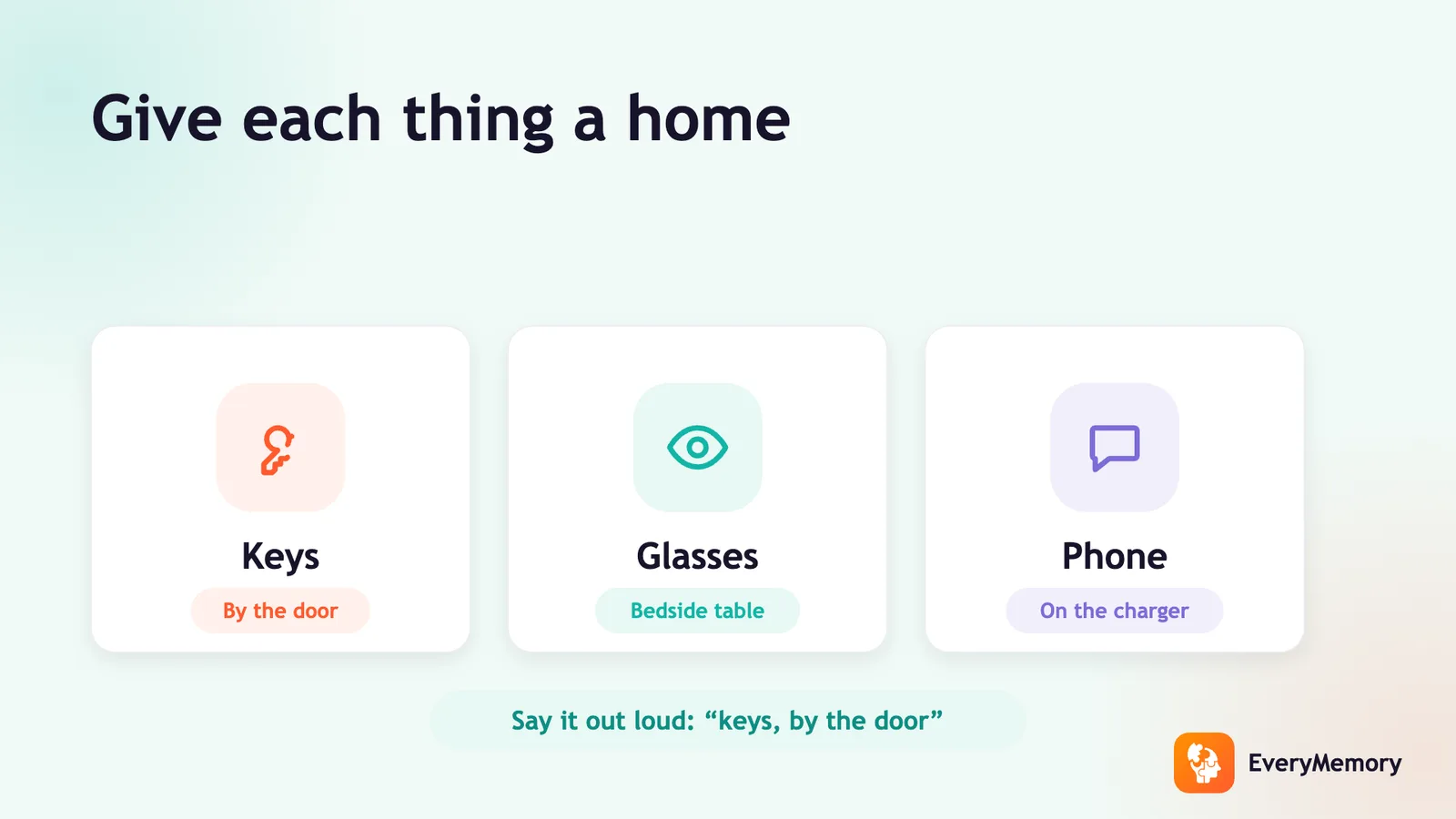
How to Remember Where You Put Things
A practical system for ending the daily hunt for keys, glasses, and phones - using designated homes, a brief verbal habit, and a simple mental snapshot.
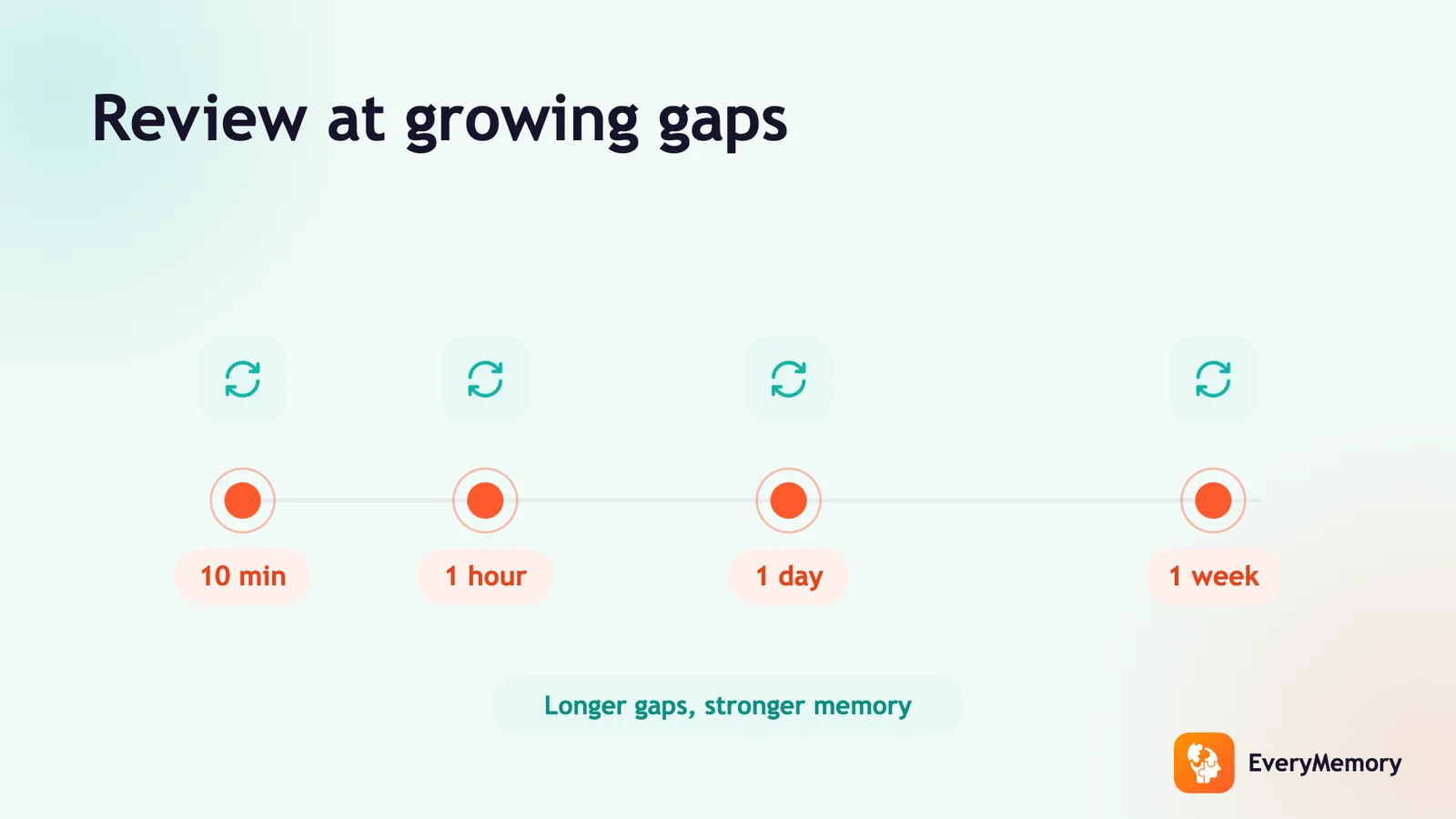
Spaced Repetition for Everyday Memory
Spaced repetition is the most evidence-backed way to make information stick long-term. Here's how to use it for names, appointments, medication, and anything else worth remembering.
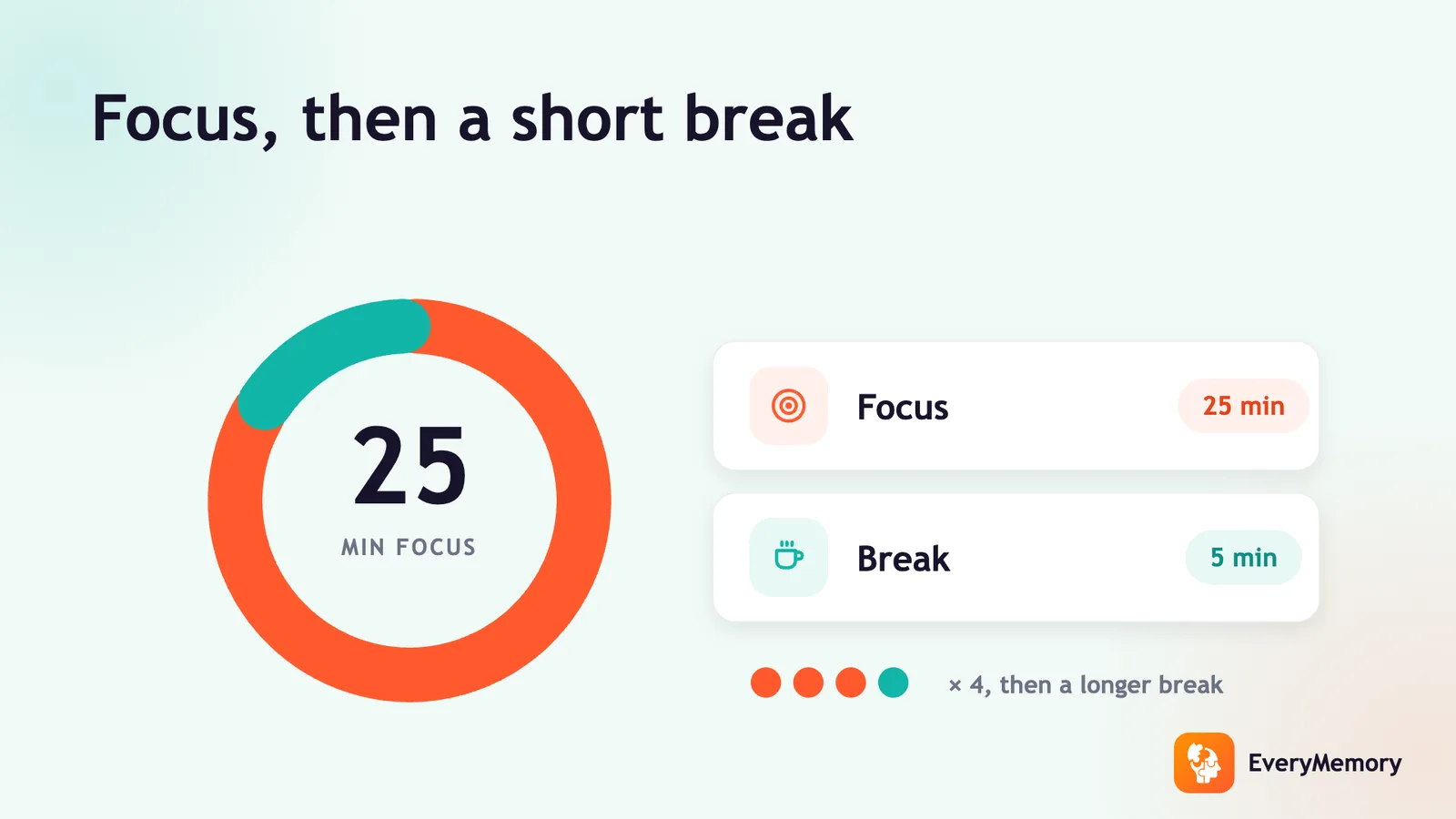
The Pomodoro Technique for Focus
Short, timed focus bursts with real breaks between them can do more for concentration and recall than longer, unstructured sessions. Here's how to use the Pomodoro Technique - and adapt it for your pace.
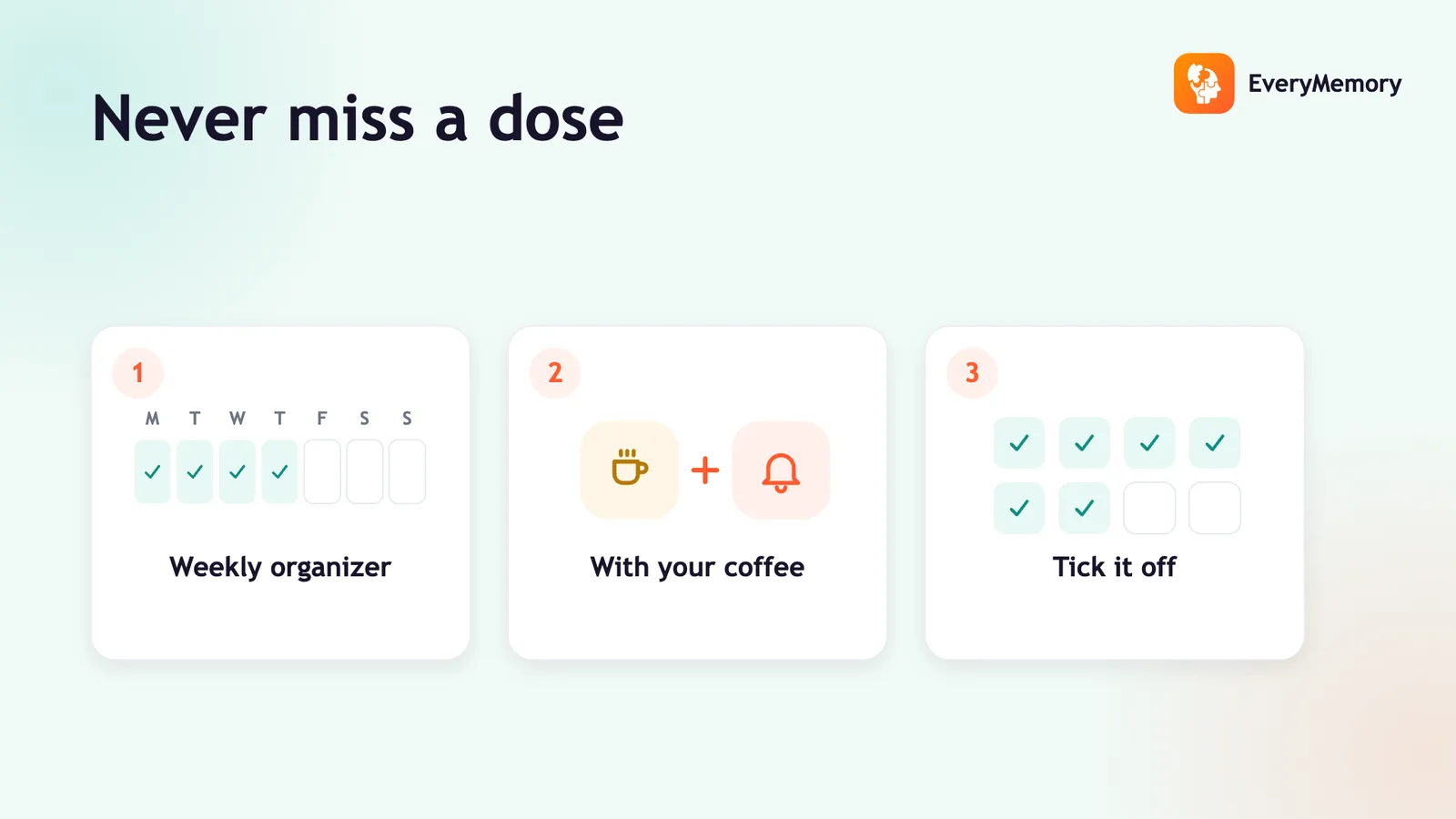
How to Remember to Take Medication on Time
Practical, non-medical strategies - pill organizers, habit-stacking, visible placement, reminder apps, and a simple tick chart - to make staying on your medication schedule easier.
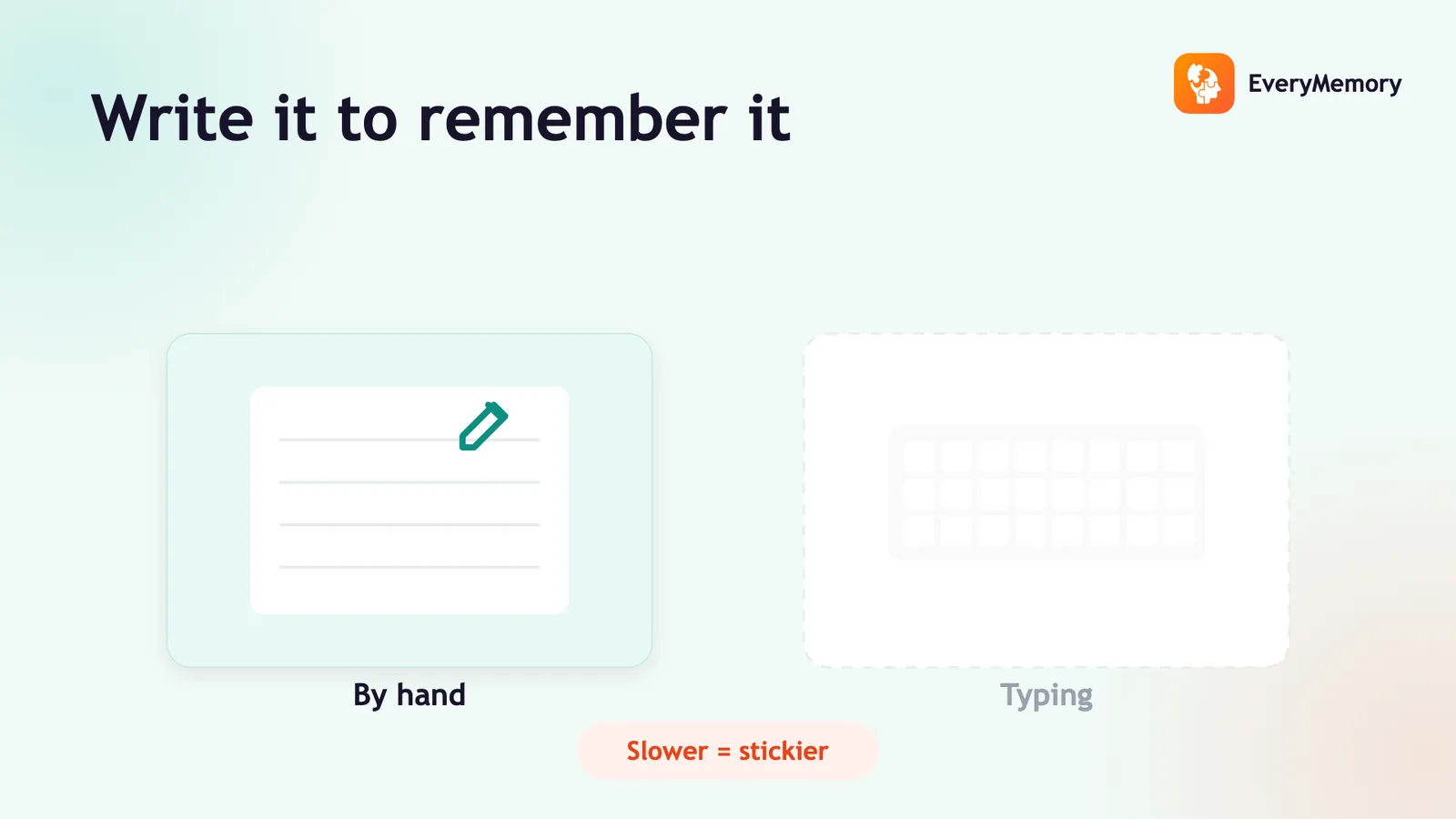
Does Writing by Hand Help You Remember?
Picking up a pen instead of a keyboard might seem old-fashioned, but research suggests handwriting helps your brain encode information more deeply - here's why and how to use it.
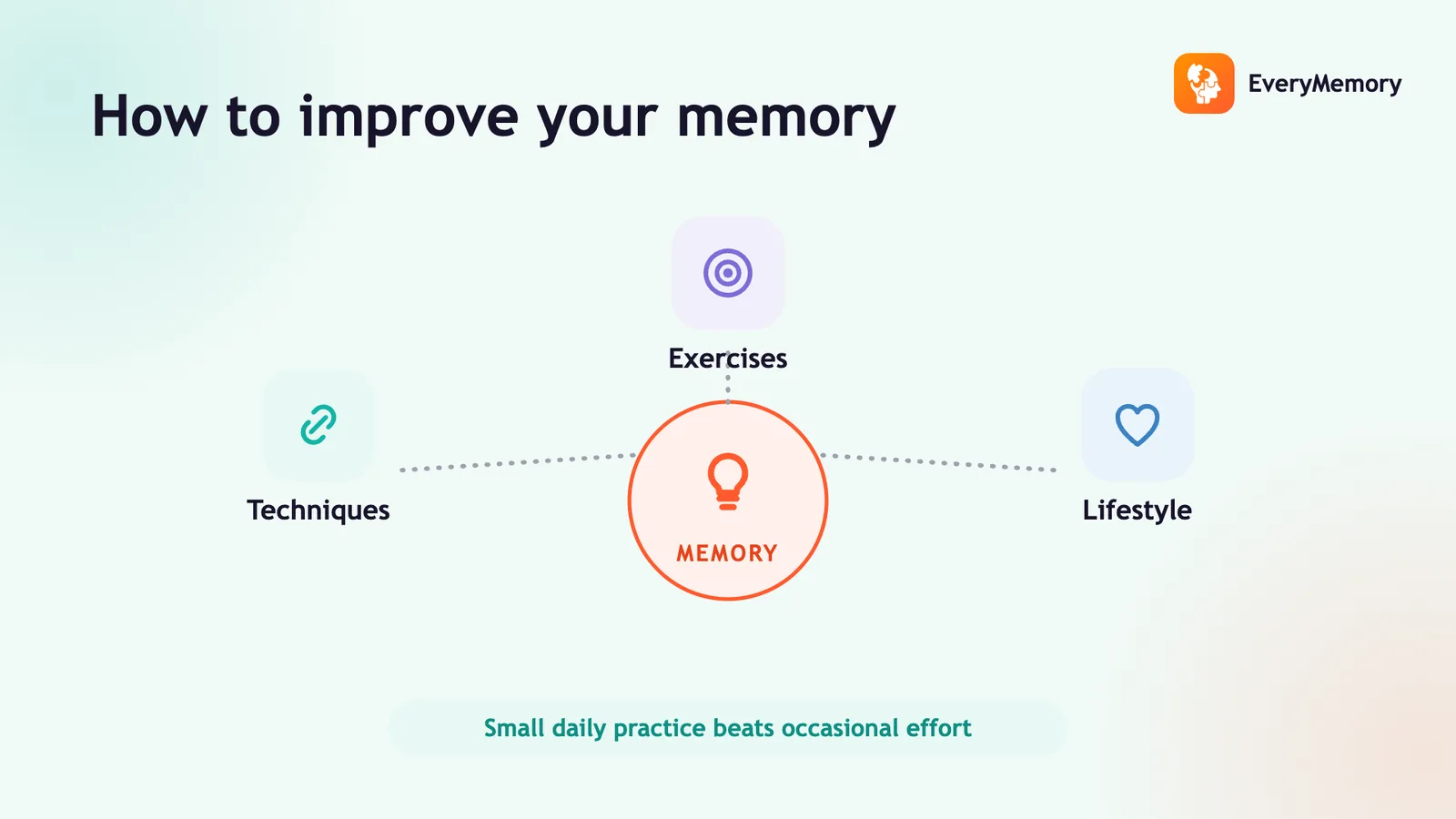
How to Improve Your Memory: The Complete Beginner's Guide
A comprehensive, beginner-friendly guide to improving your memory - how it works, the core techniques, a simple daily practice, and the lifestyle basics that make the biggest difference.
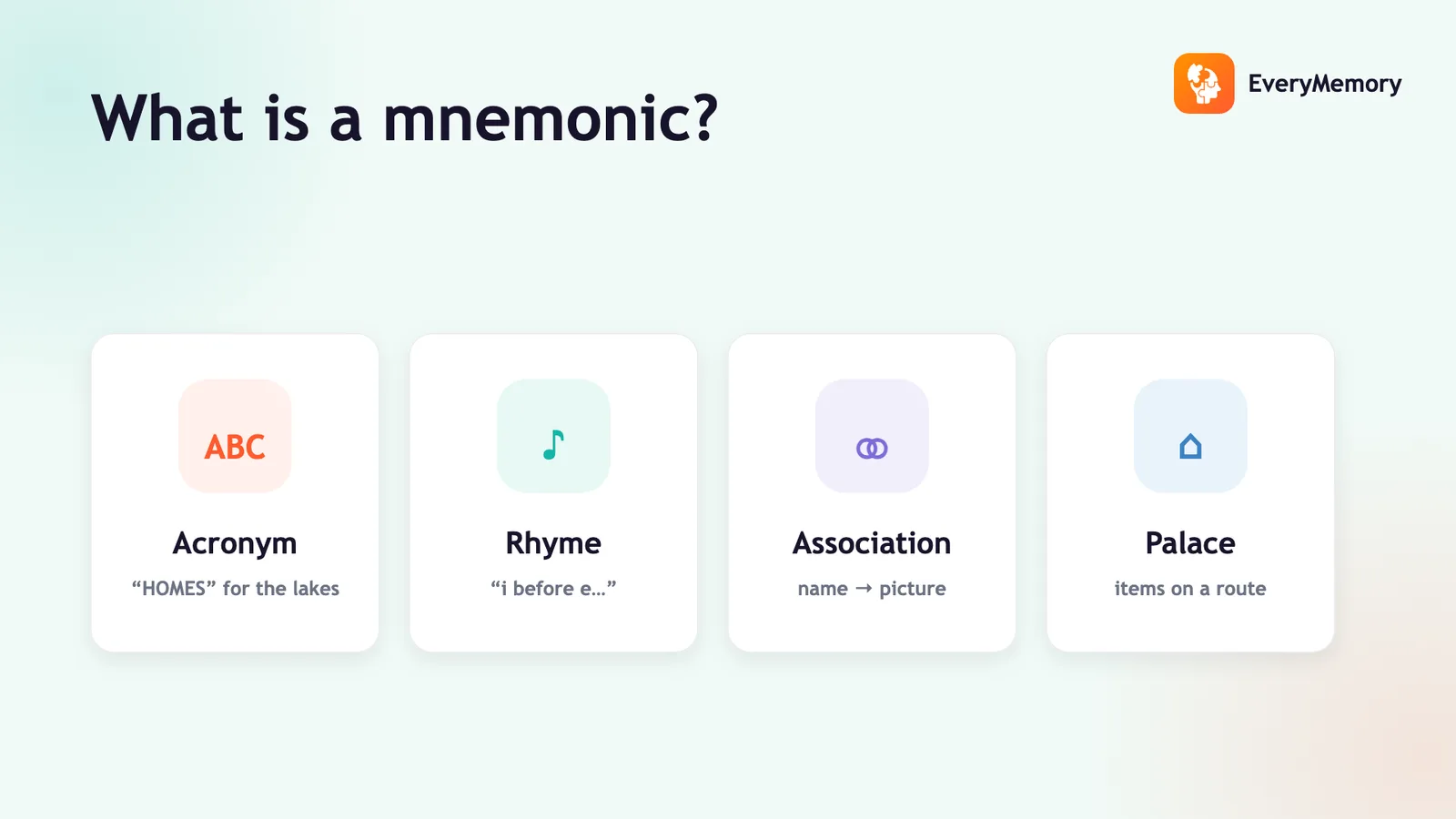
What Is a Mnemonic? A Simple Guide With Examples
A mnemonic is any trick that helps your brain hold onto information - from a simple rhyme to a full memory palace. Here is how each type works and how to make your own.
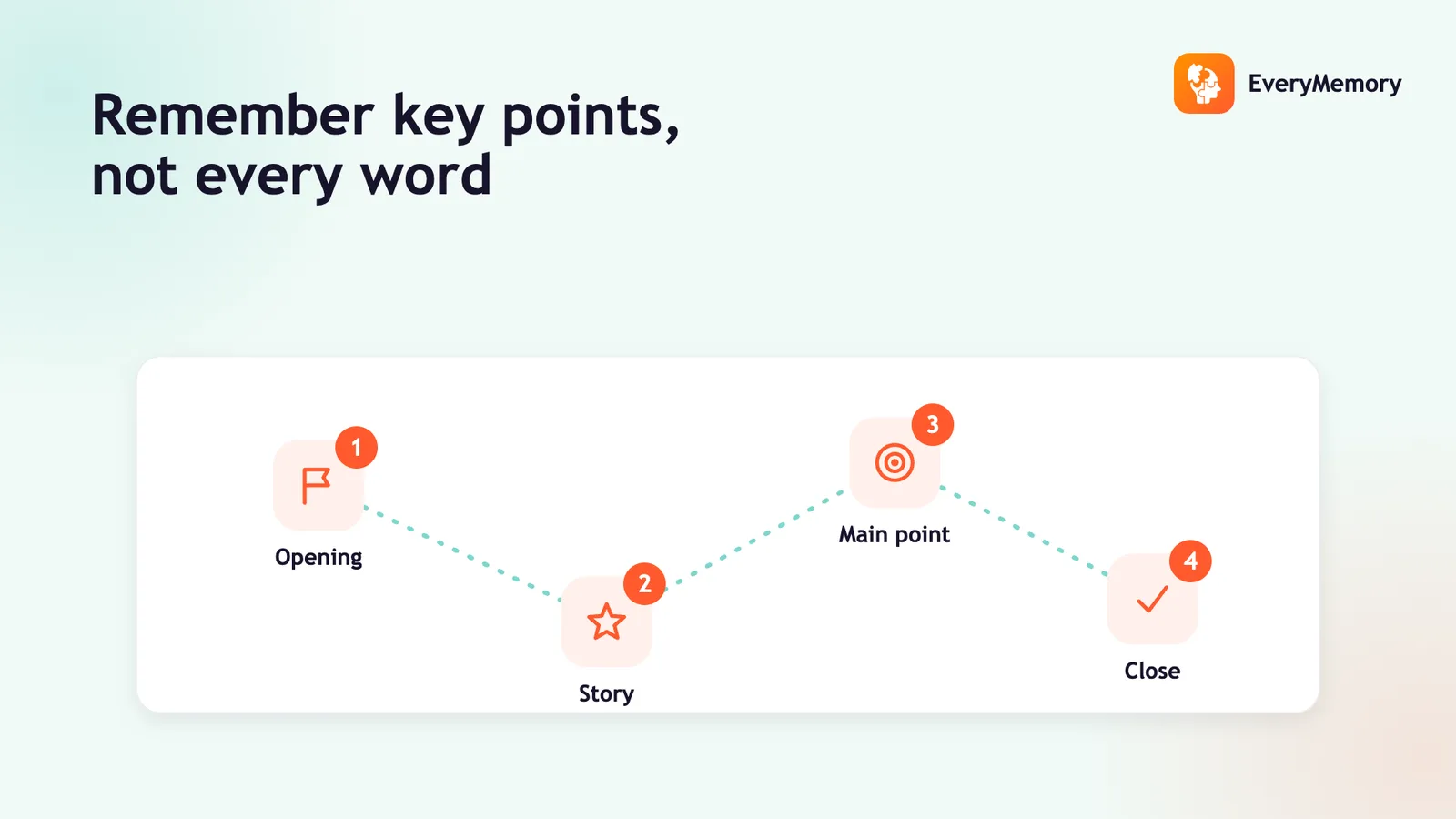
How to Remember a Speech or What to Say
Whether it's a wedding toast, a doctor's appointment, or a few words at a family gathering, these practical techniques help you speak confidently without blanking.
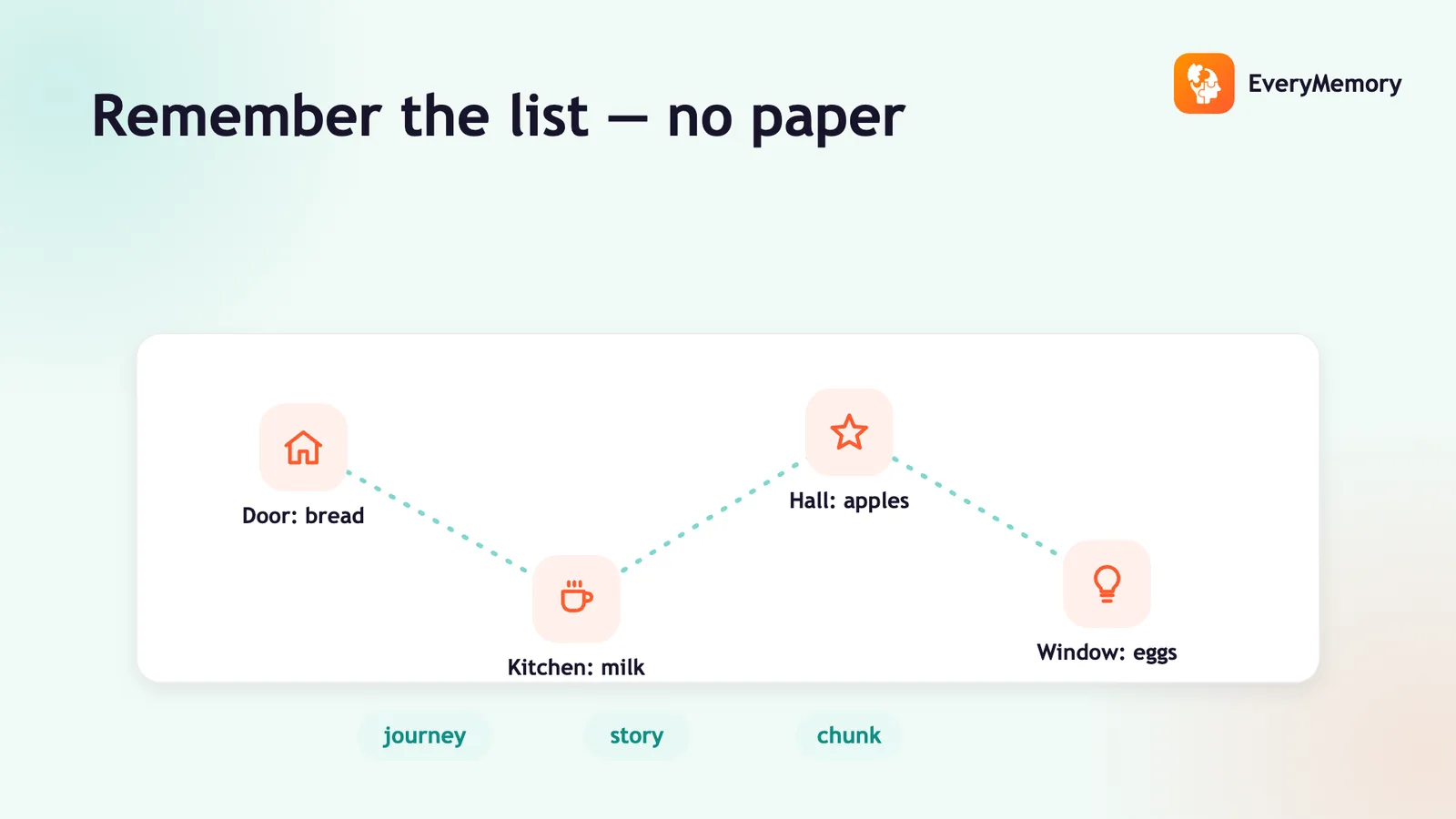
How to Remember a Shopping List Without Writing It Down
Four playful, proven memory techniques - a journey method, a silly story, aisle grouping, and association - turn an everyday errand into surprisingly good brain practice.
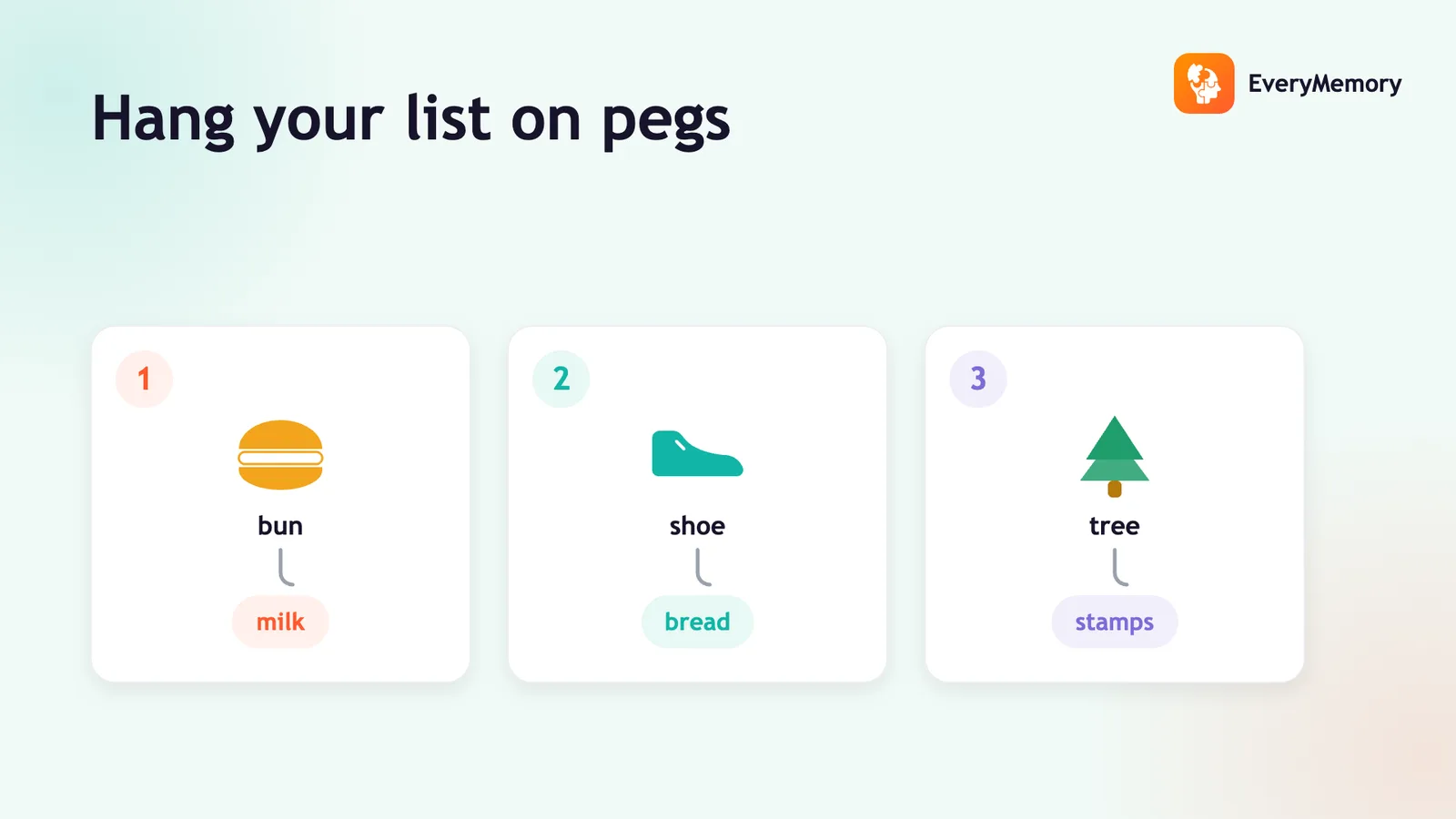
The Peg System for Remembering Lists
The peg system gives you a set of mental hooks numbered 1 to 10 so you can hang list items on them and jump straight to any position - no rehearsing from the top.
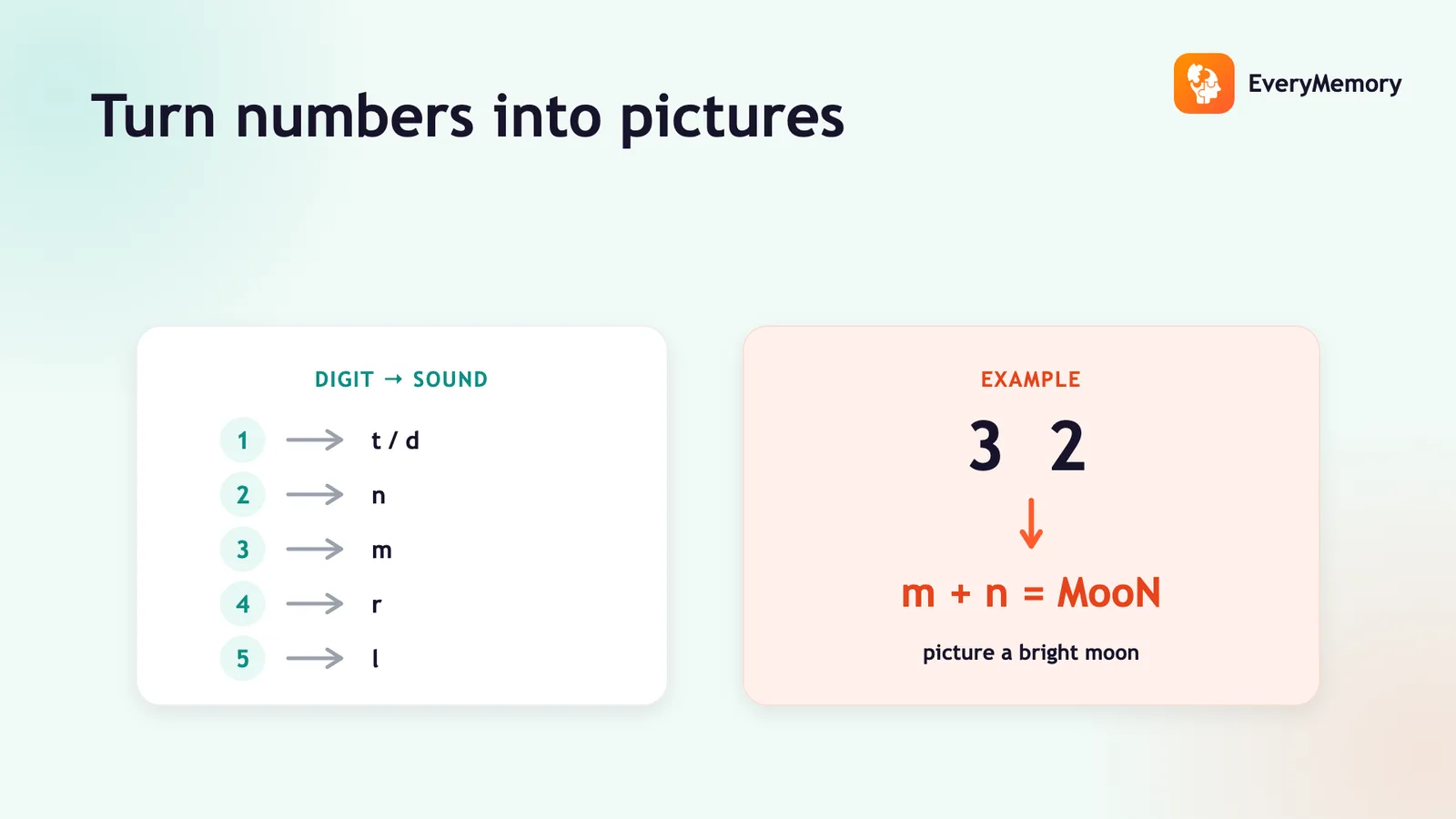
The Major System for Numbers: A Beginner's Guide
Turn any number into a vivid picture with the Major System - a centuries-old technique that maps digits to consonant sounds so you can remember PINs, phone numbers, and dates with ease.
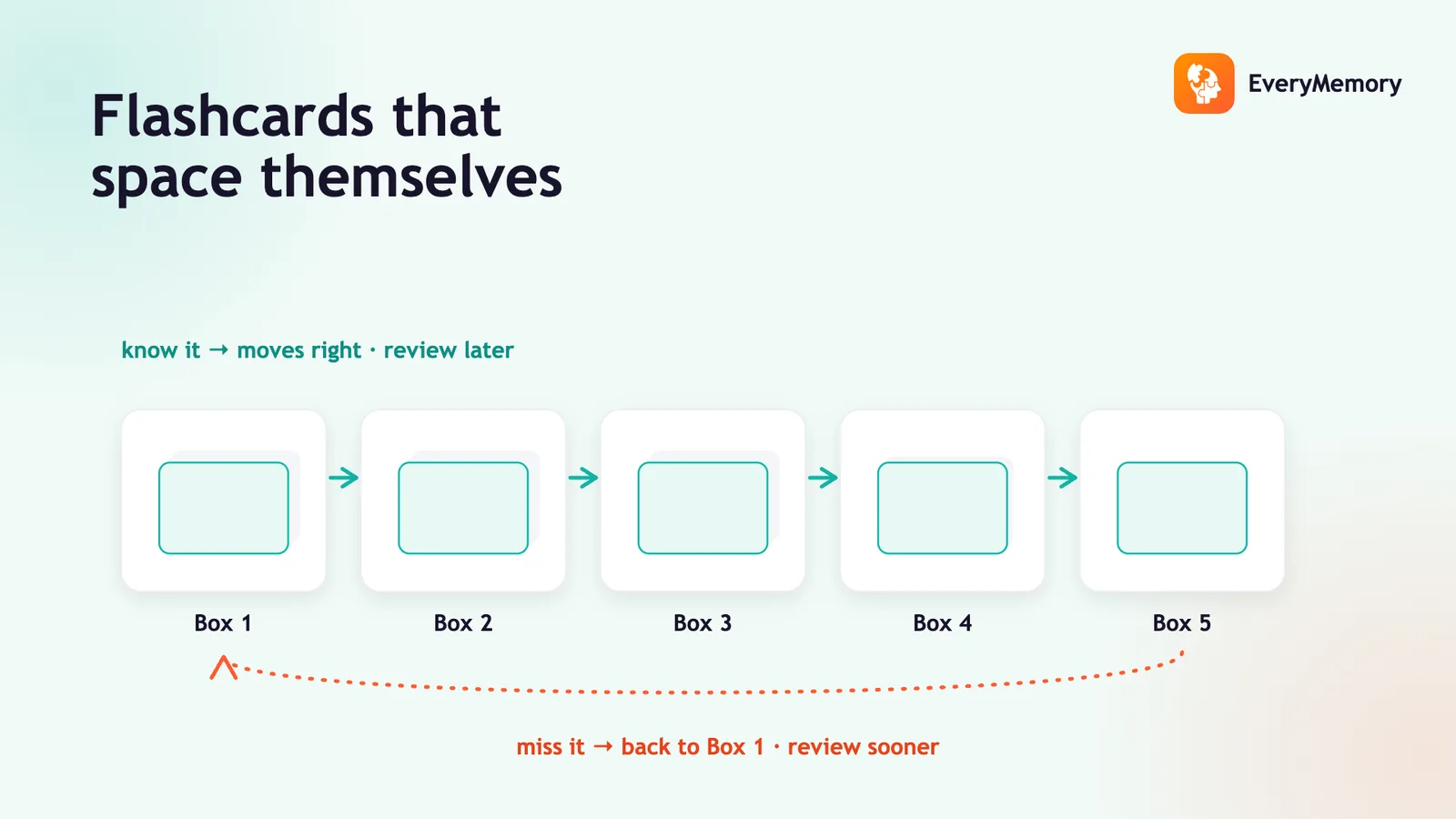
The Leitner Flashcard System: Low-Tech Spaced Repetition
The Leitner system turns a shoebox and a stack of index cards into a surprisingly powerful memory tool - here is how the box method works and why it still holds up.
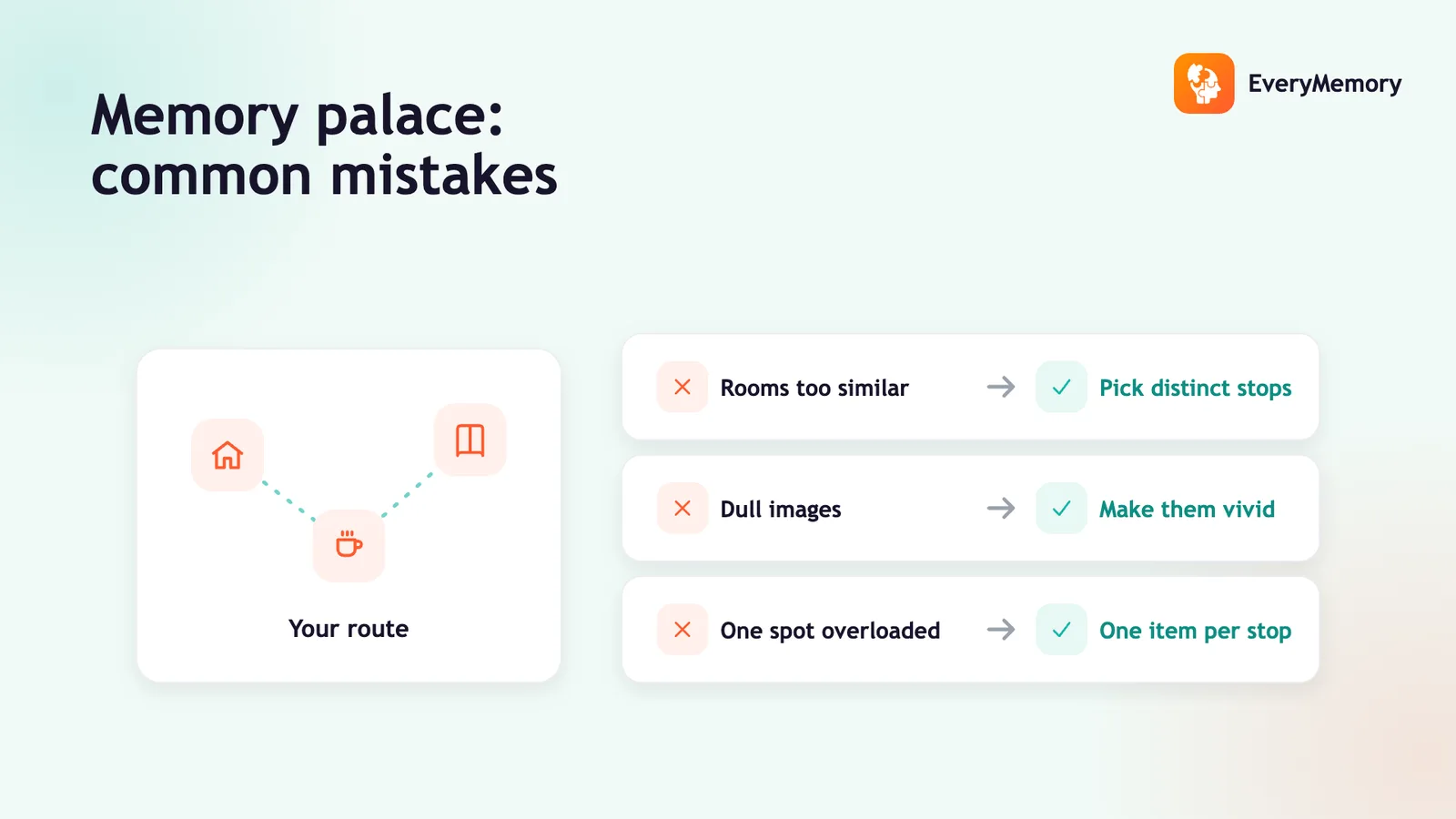
Memory Palace Mistakes - and How to Fix Them
The memory palace is one of the most powerful recall tools ever devised - but five common mistakes quietly undermine it. Here is how to spot and fix each one.
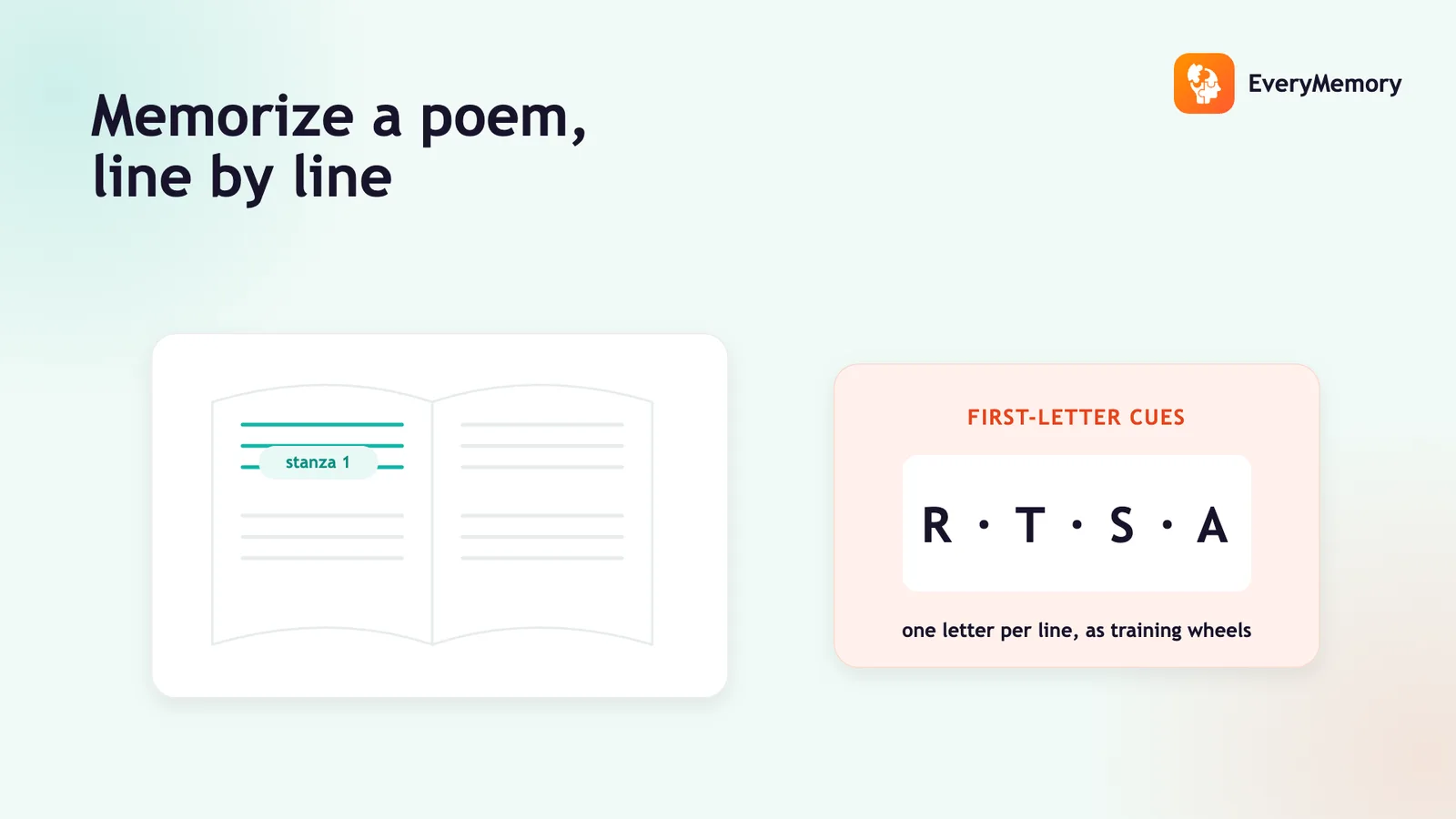
How to Memorize a Poem or Favourite Reading
Whether it's a poem you love, a wedding reading, or a passage of scripture, these gentle step-by-step techniques make memorizing meaningful text feel manageable - and even joyful.
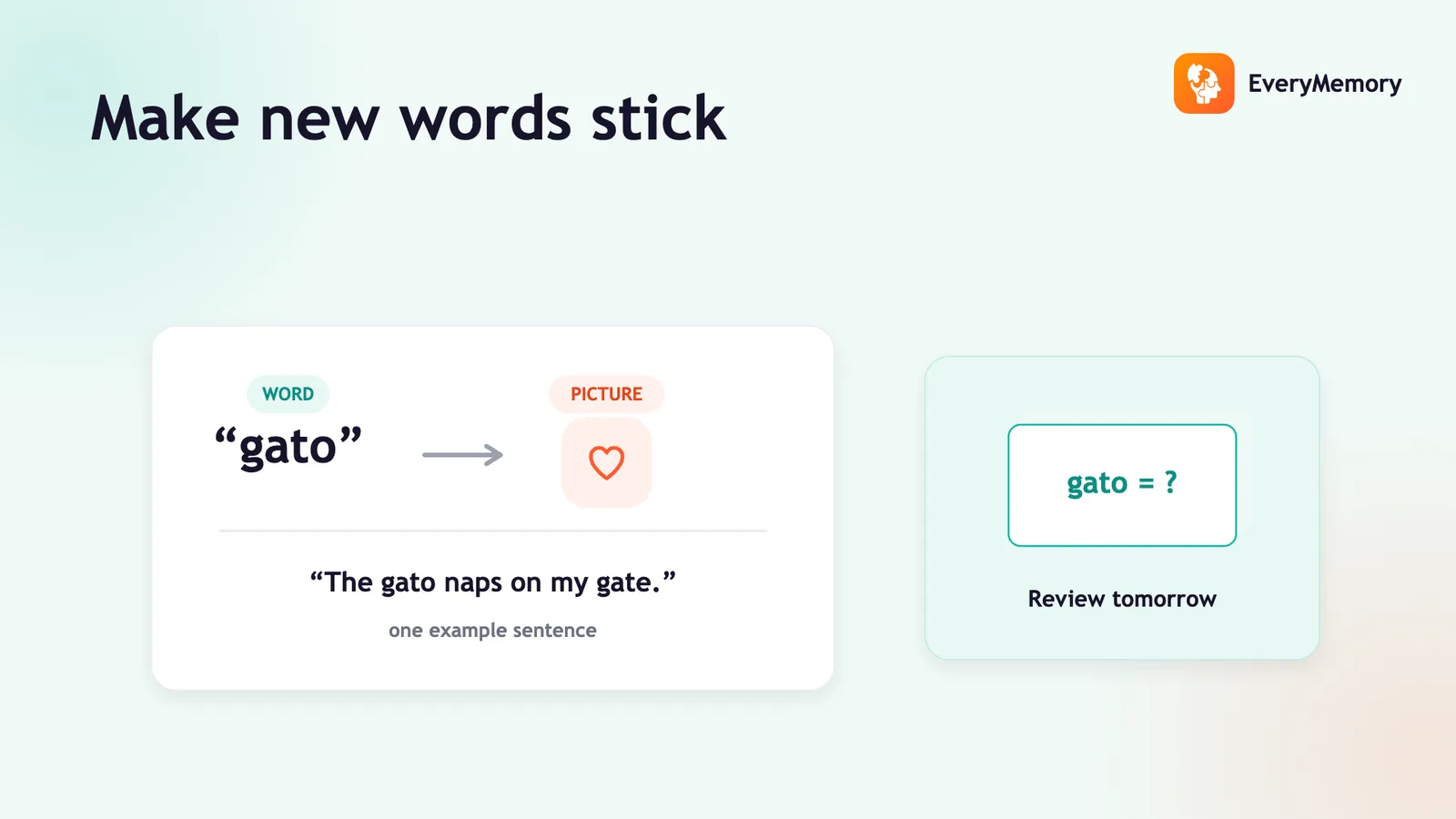
How to Remember New Words and Vocabulary
Whether you're learning a new language, studying plant names, or picking up professional terms, four proven methods make new vocabulary stick long-term.
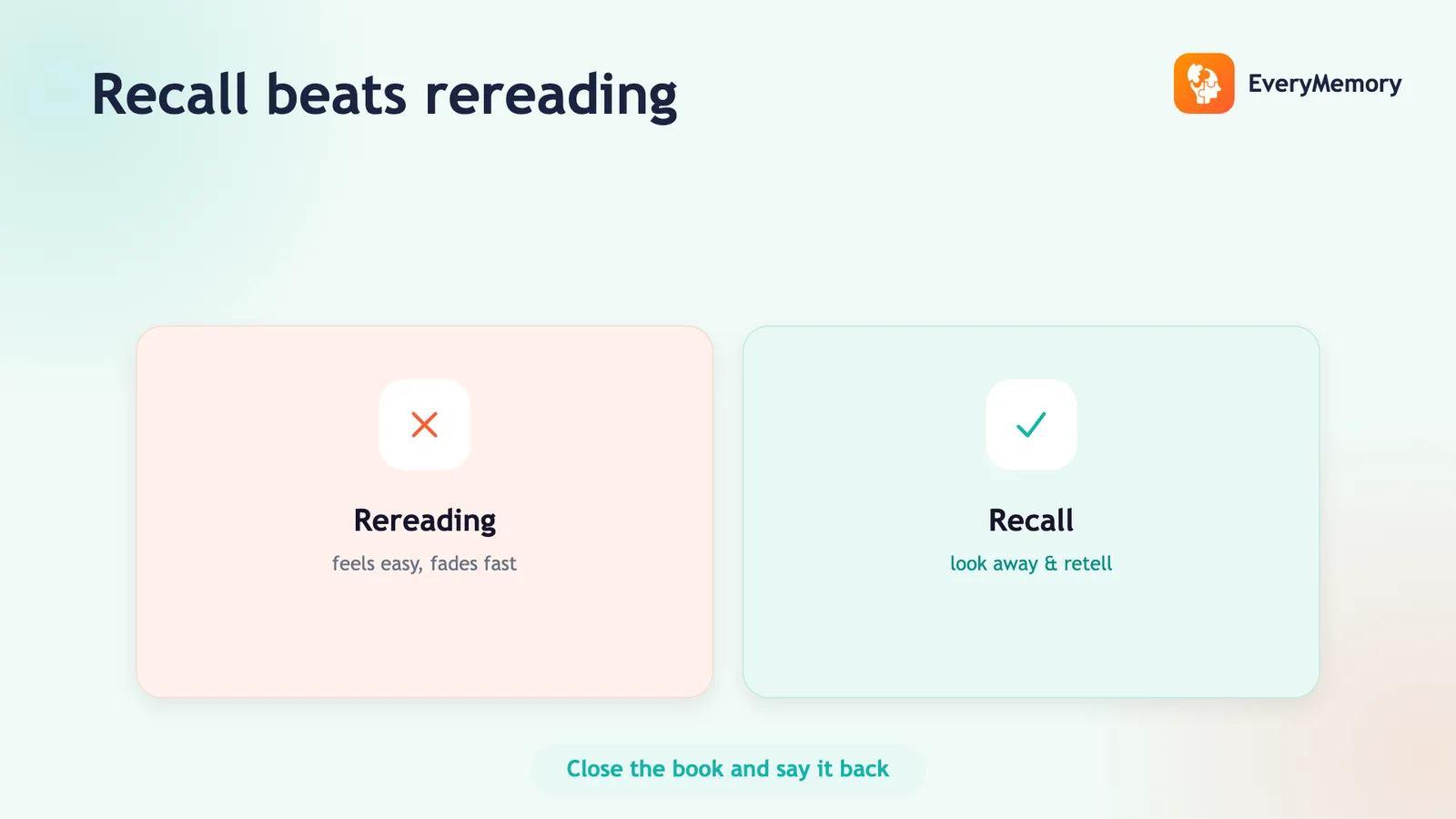
How to Remember What You Read
Most of what you read fades because reading is passive. Five concrete habits - built around recalling, not rereading - that make it stick.
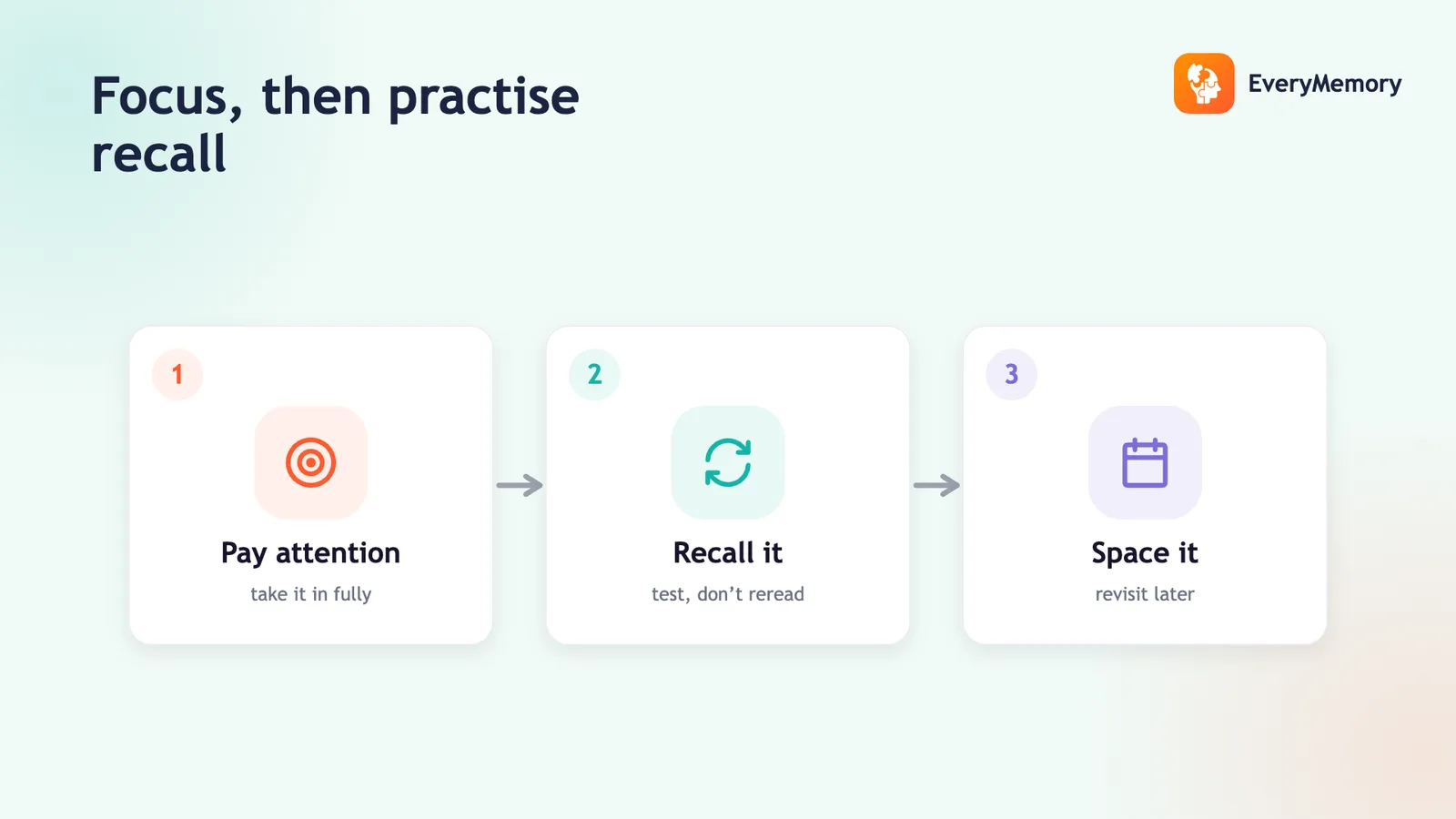
How to Remember Things Better
Most 'bad memory' is divided attention plus never practising recall. Five habits - built on how memory actually forms - that make things stick.
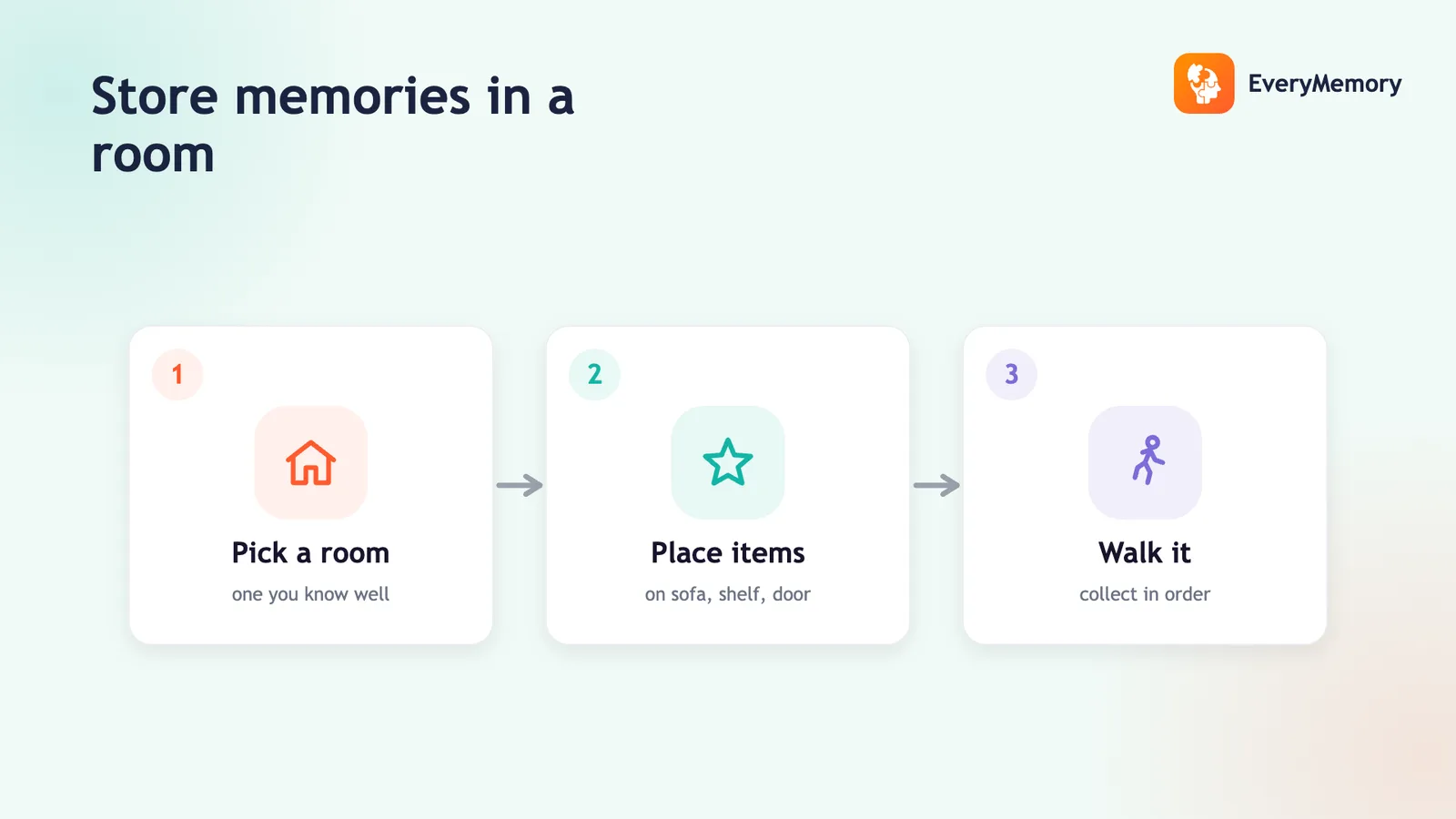
The Memory Palace Technique: A Step-by-Step Guide
The memory palace turns a place you know well into a storage system. Build your first one in minutes with this step-by-step guide, and learn what makes the images stick.
Memory Techniques: The Complete Guide
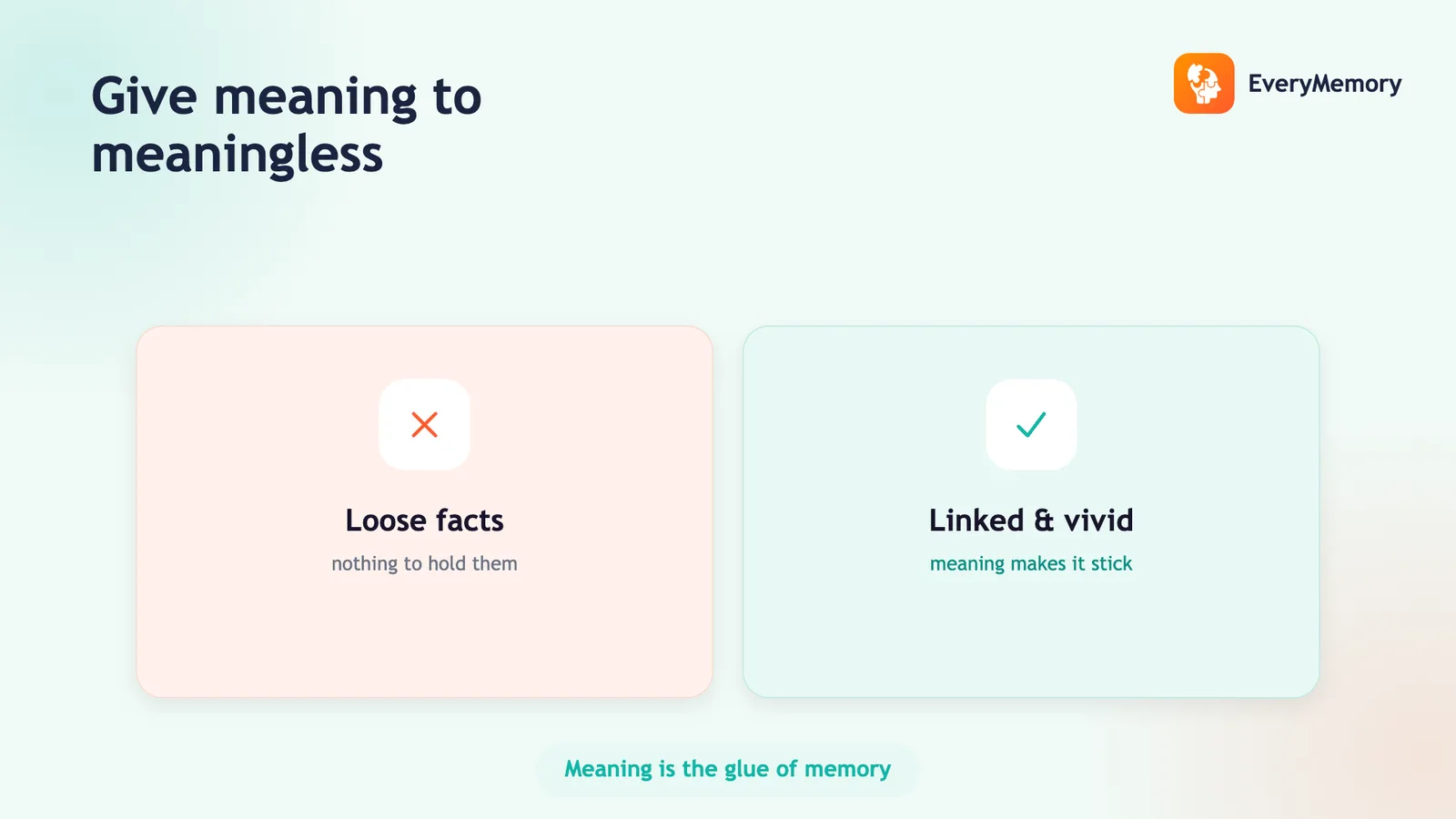
Every memory technique shares one idea: give meaningless information meaning and structure. A plain map of the techniques that work, what each is for, and where to start.
What Are Mnemonics? (And How to Use Them)
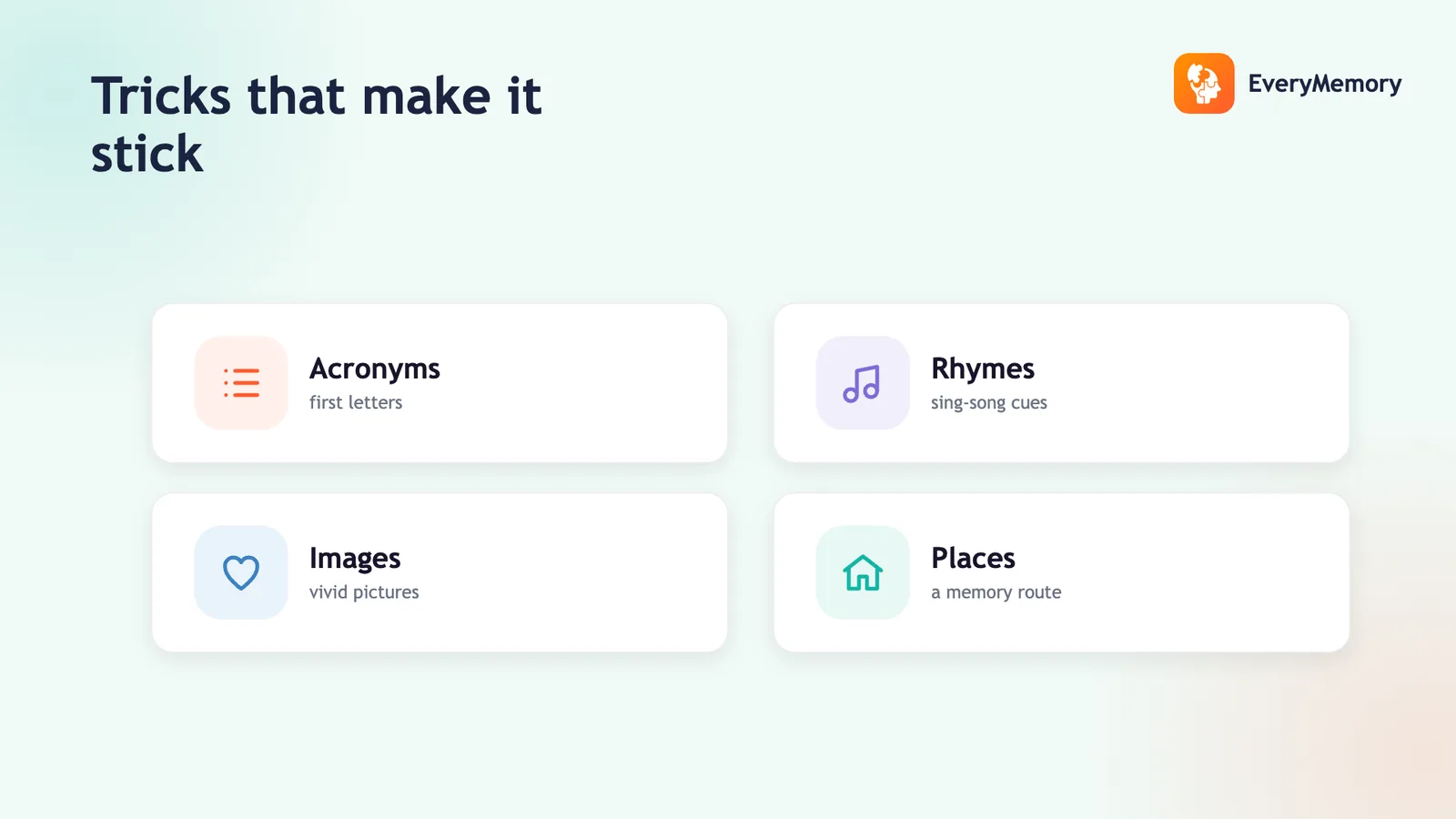
A mnemonic is any trick that makes information easier to recall by giving it pattern or meaning. The main types, why they work, and how to make your own.
How to Remember Names Easily
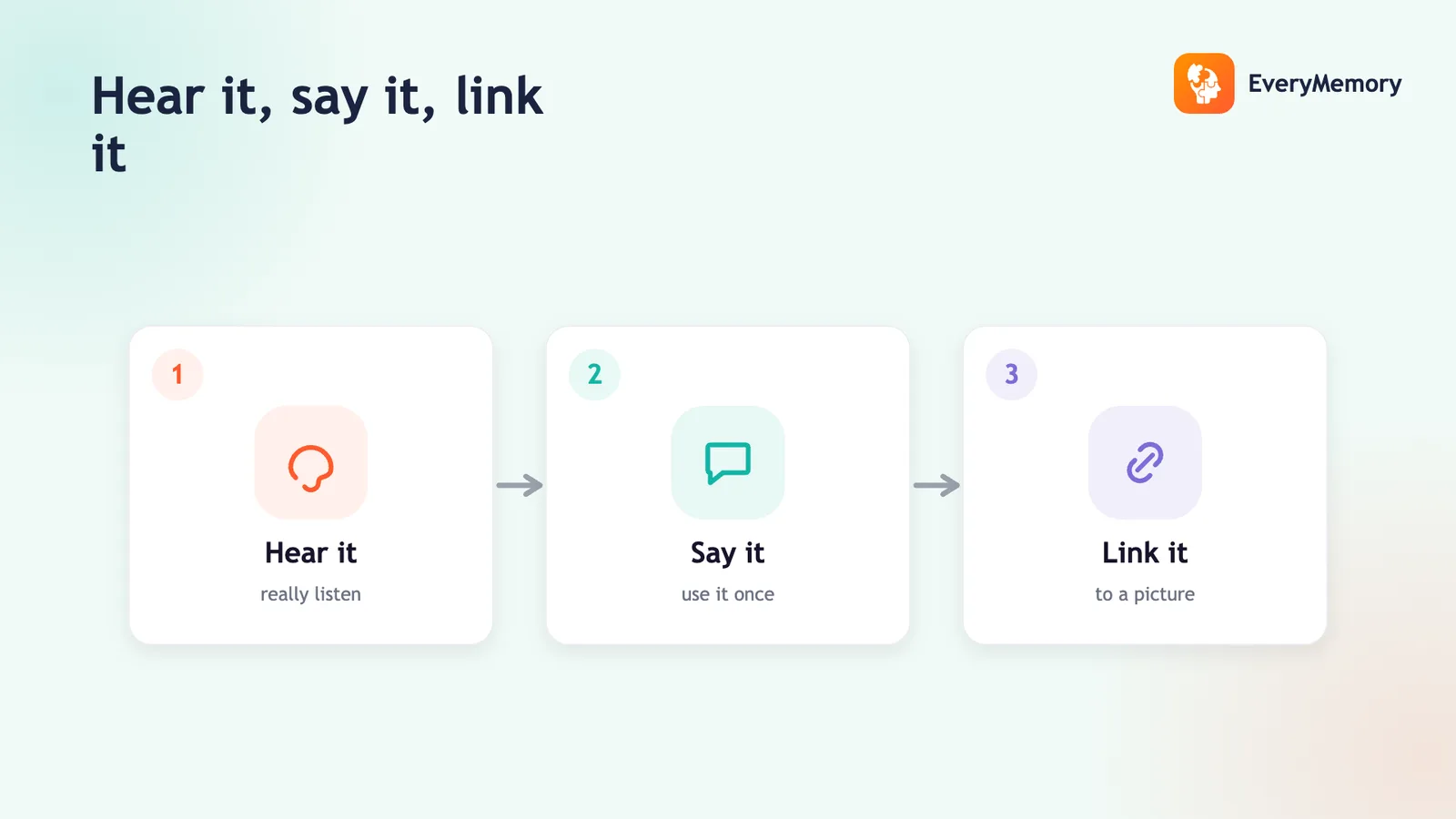
Names slip because they're arbitrary. Three quick moves at the introduction - hear it, say it, link it - that make almost any name stick.
How to Remember Numbers (Chunking and Beyond)
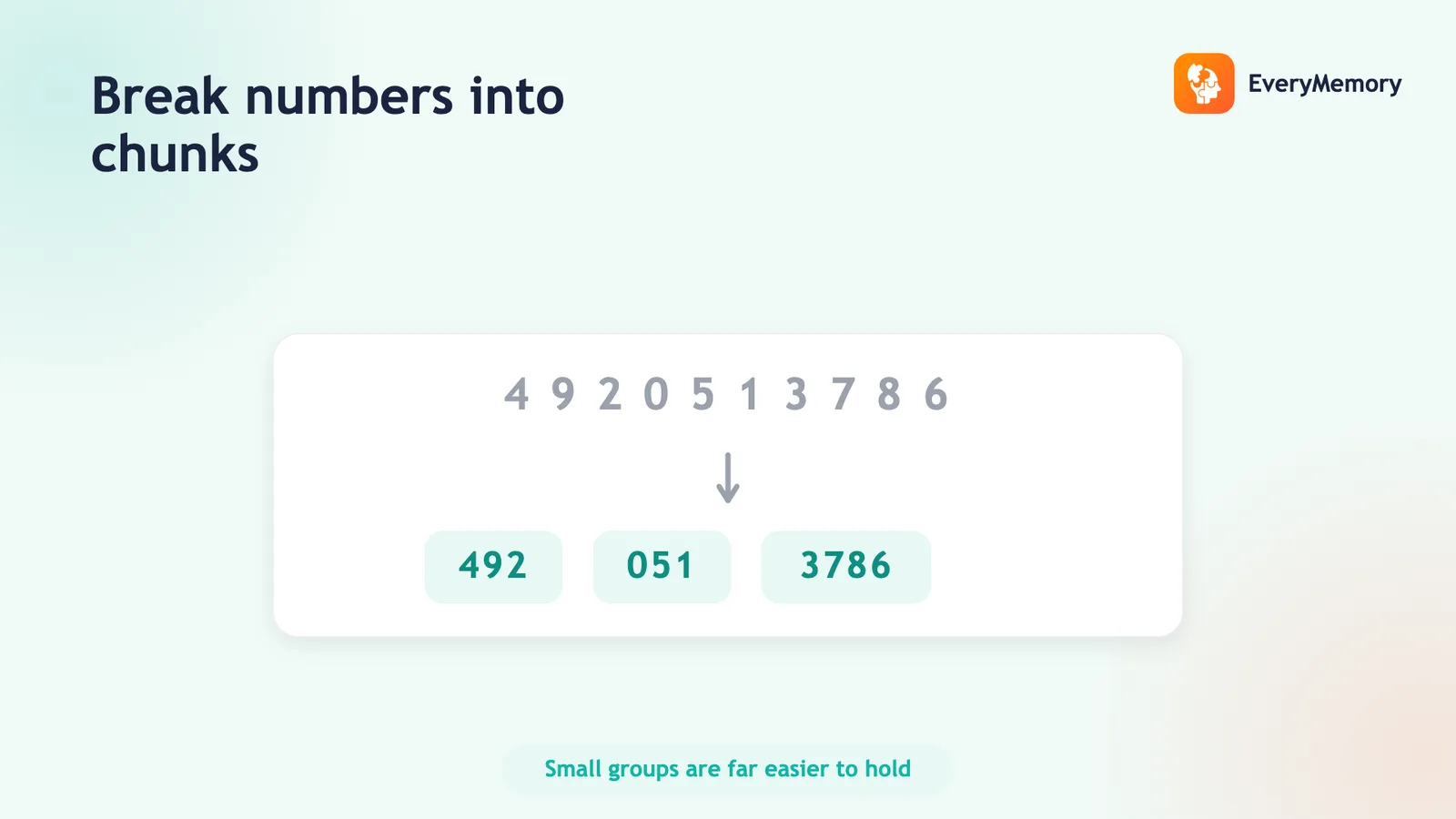
Long numbers overwhelm working memory. Chunking, meaningful patterns, and a simple digit-to-image system make phone numbers, PINs, and dates easy to hold.
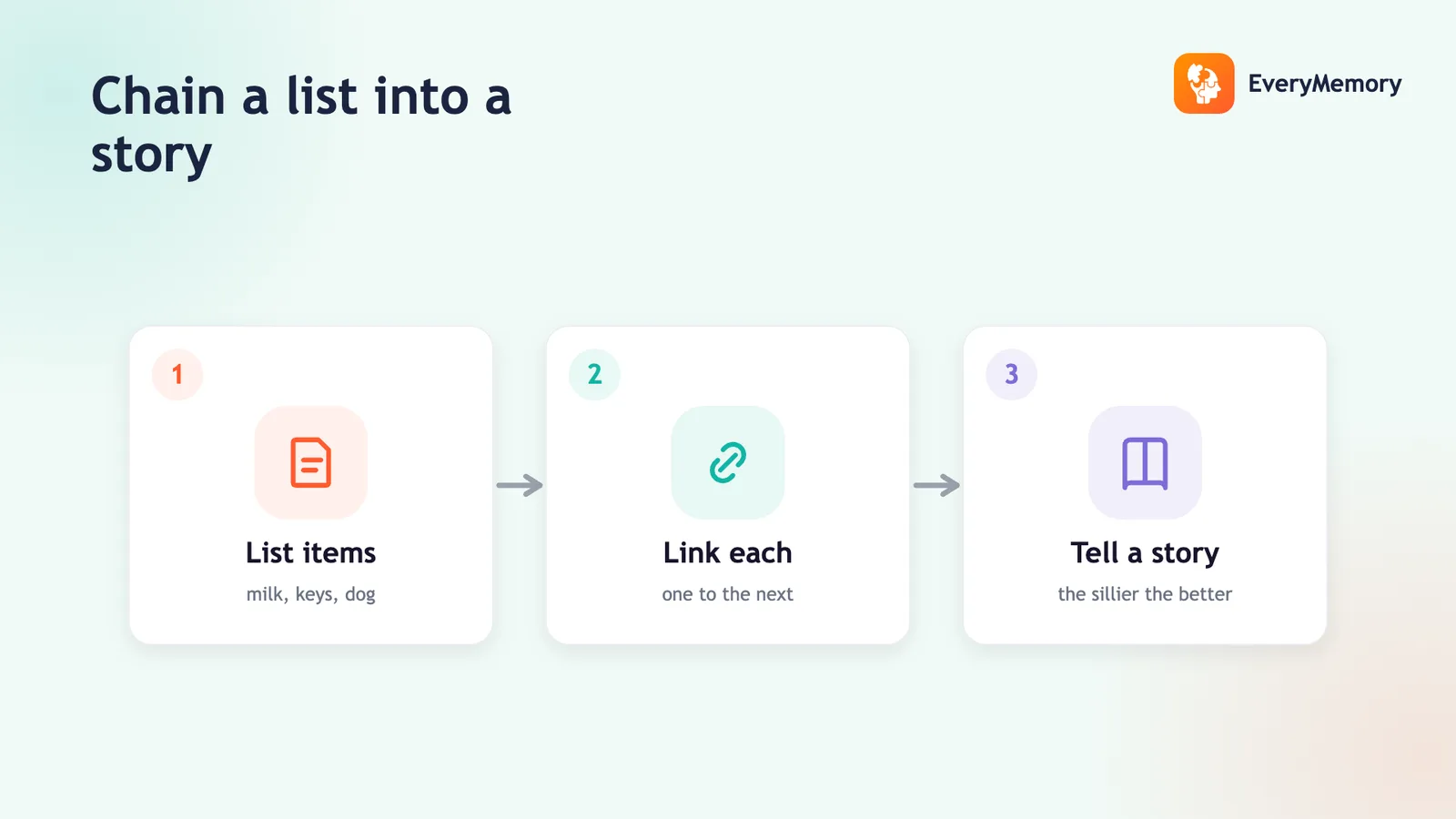
The Link and Story Method for Remembering Lists
Turn a list into a chain of vivid images, or one absurd story, and recalling the first item pulls up the rest. The simplest technique for everyday lists.
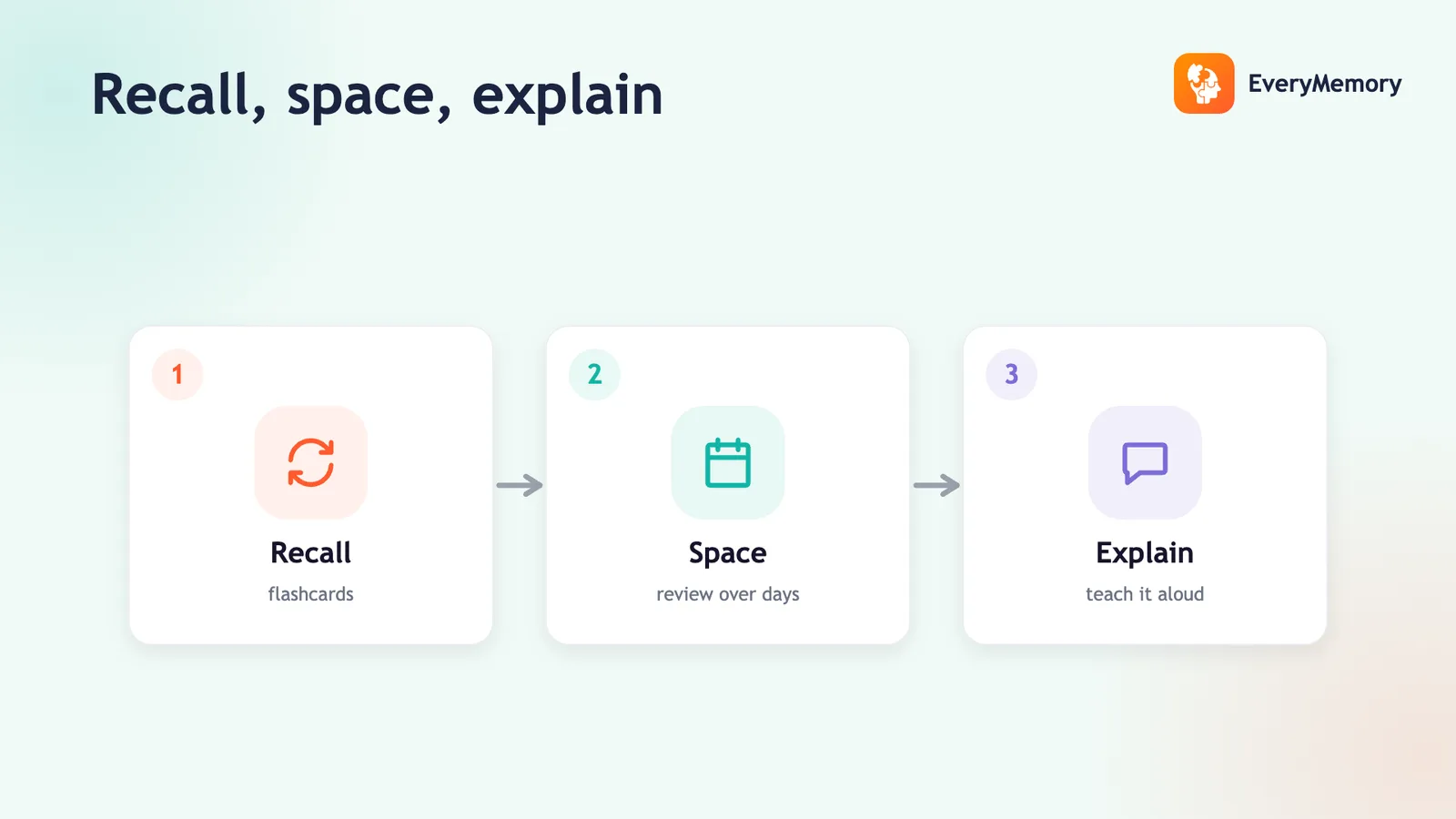
Memory Techniques for Studying That Actually Work
The biggest study wins aren't mnemonics - they're active recall, spacing, and explaining ideas. Where each technique fits, and the habits to drop.
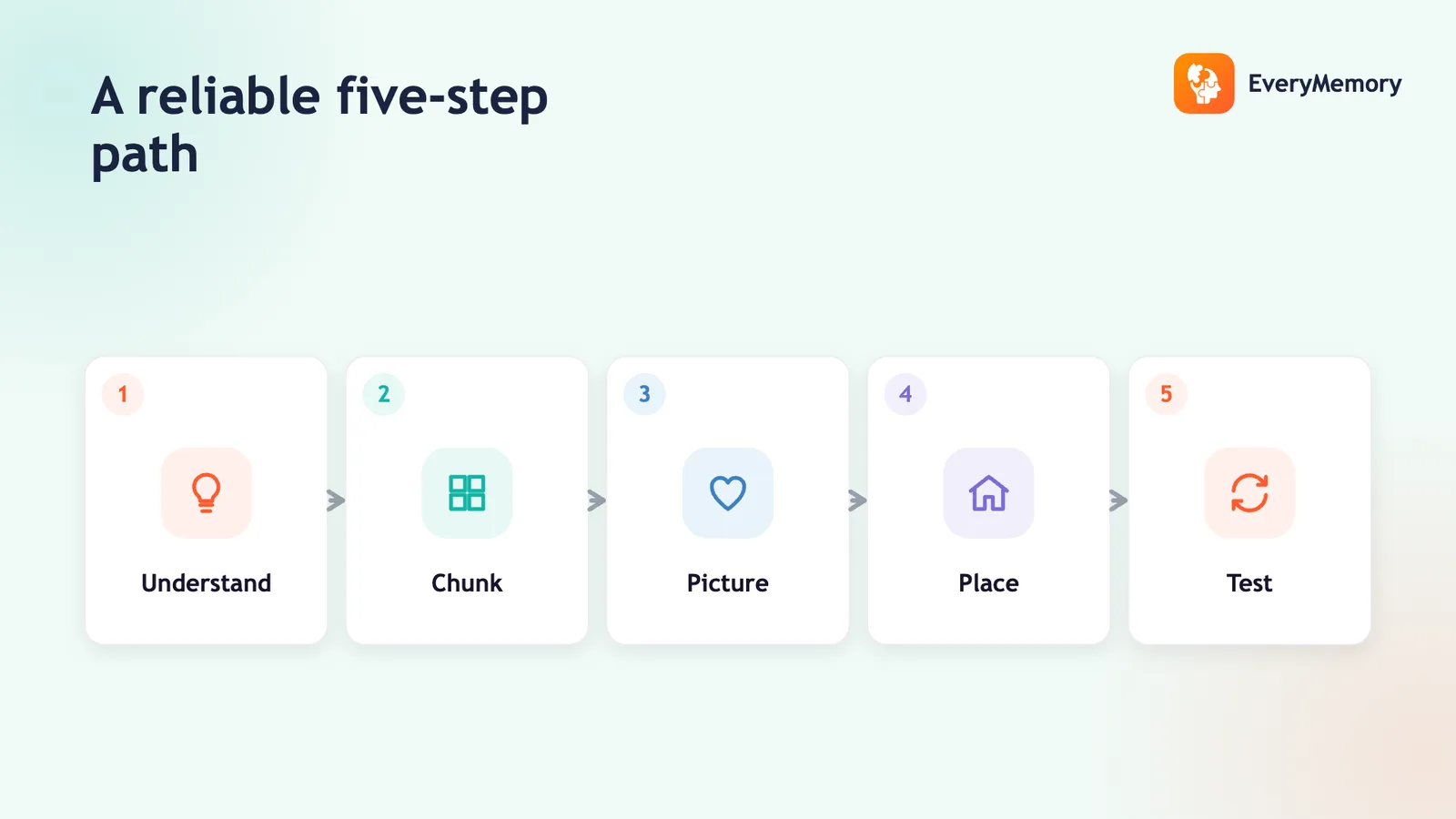
How to Memorise Anything: A Practical Workflow
There's no single trick, but there is a reliable order: understand, chunk, picture, place, and test. The workflow that handles almost anything.
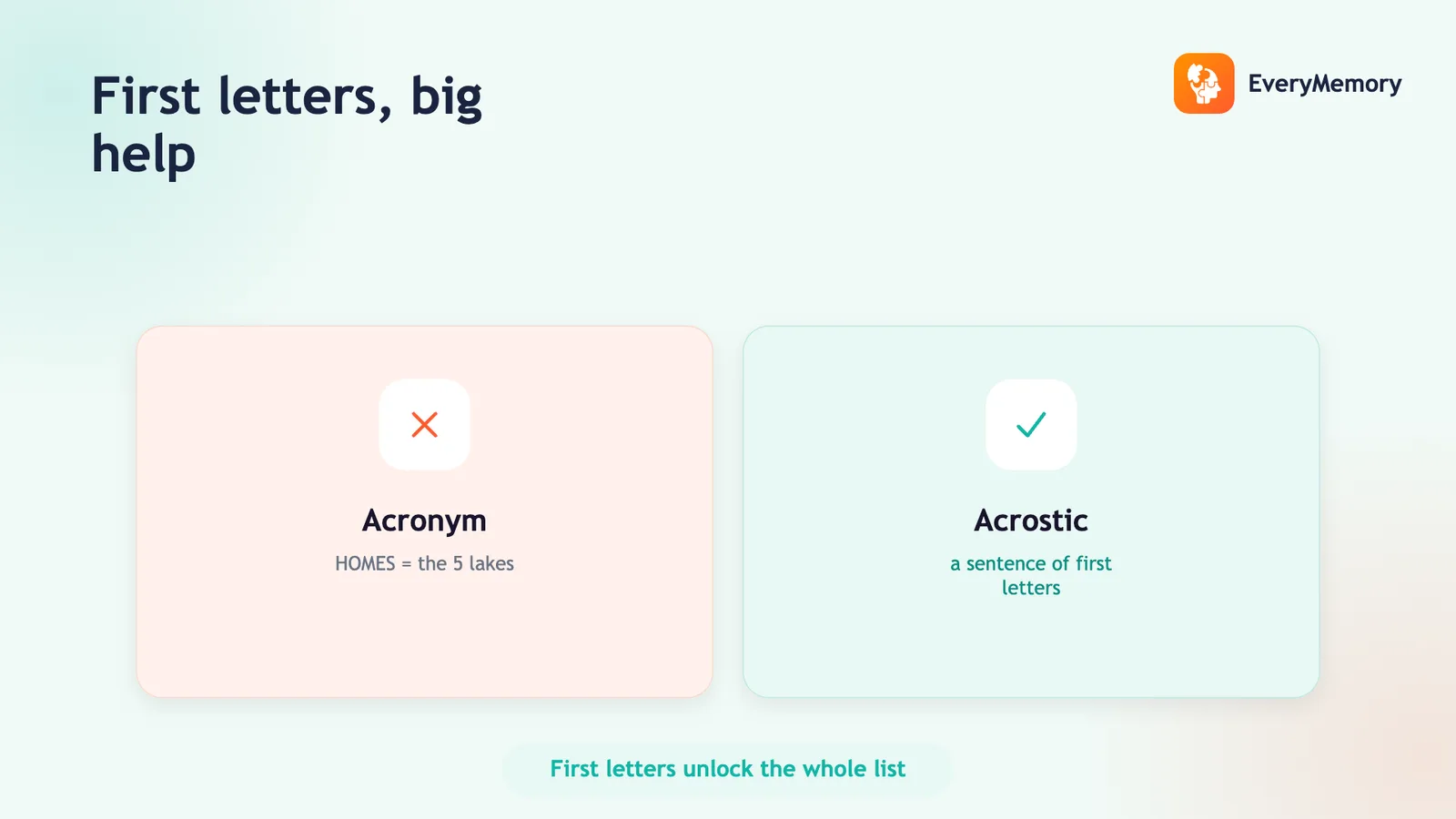
Acronyms and Acrostics: Simple Memory Tricks
An acronym makes a word from first letters; an acrostic makes a sentence. The simplest mnemonics there are - and exactly when to use them.
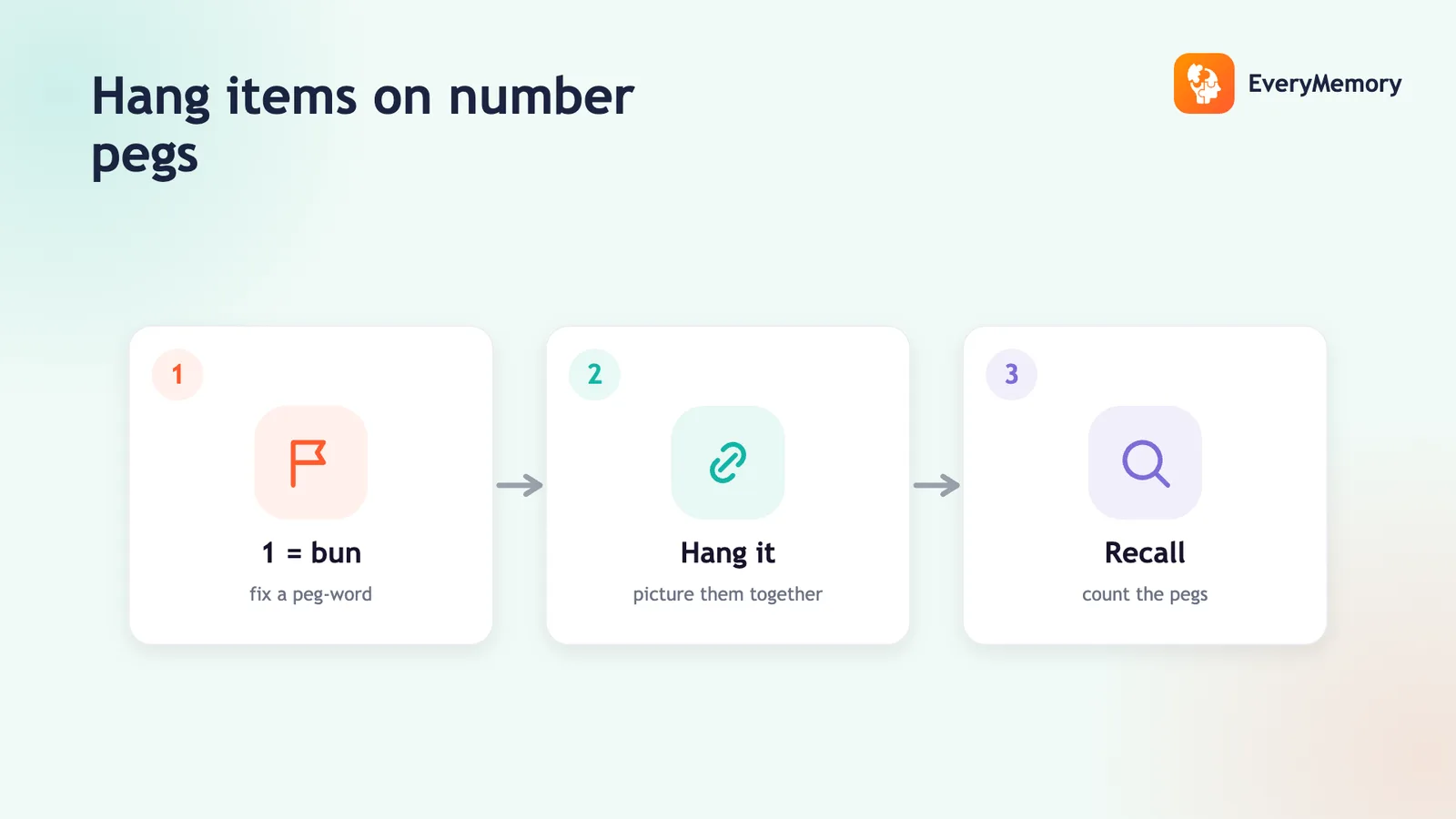
The Peg System: Remembering Ordered Lists
The peg system gives each number a fixed image to hang information on, so you can recall a list in order - or jump straight to item seven. Reusable forever.
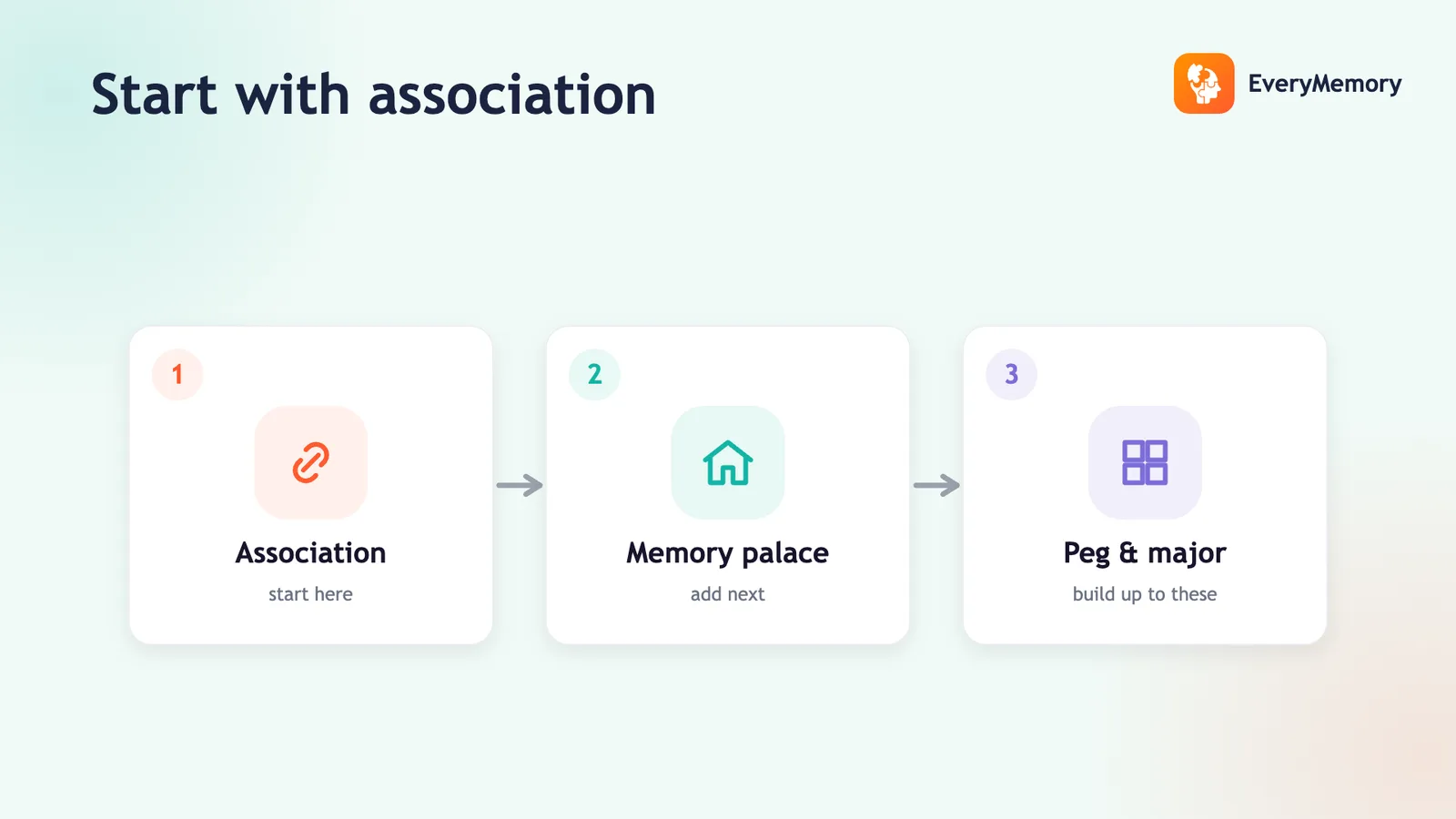
How to Learn Memory Techniques: A Beginner Path
Don't learn all the techniques at once. The order to learn them in, why to start with association, and a two-week plan that builds real skill.
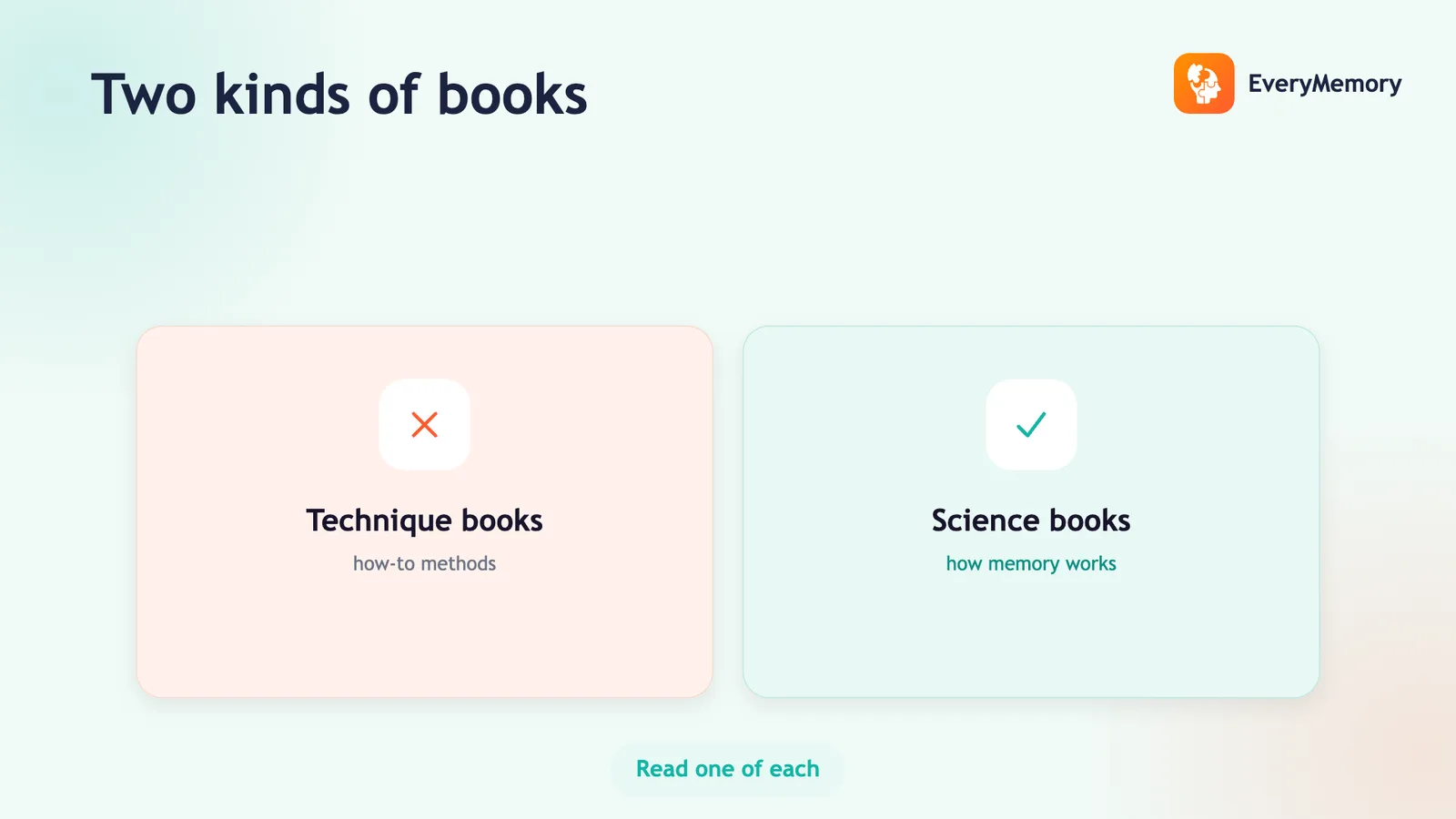
Memory Improvement Books: Where to Start
Memory books split into two kinds: practical technique guides and the science of how memory works. How to choose, and how to actually get value from one.
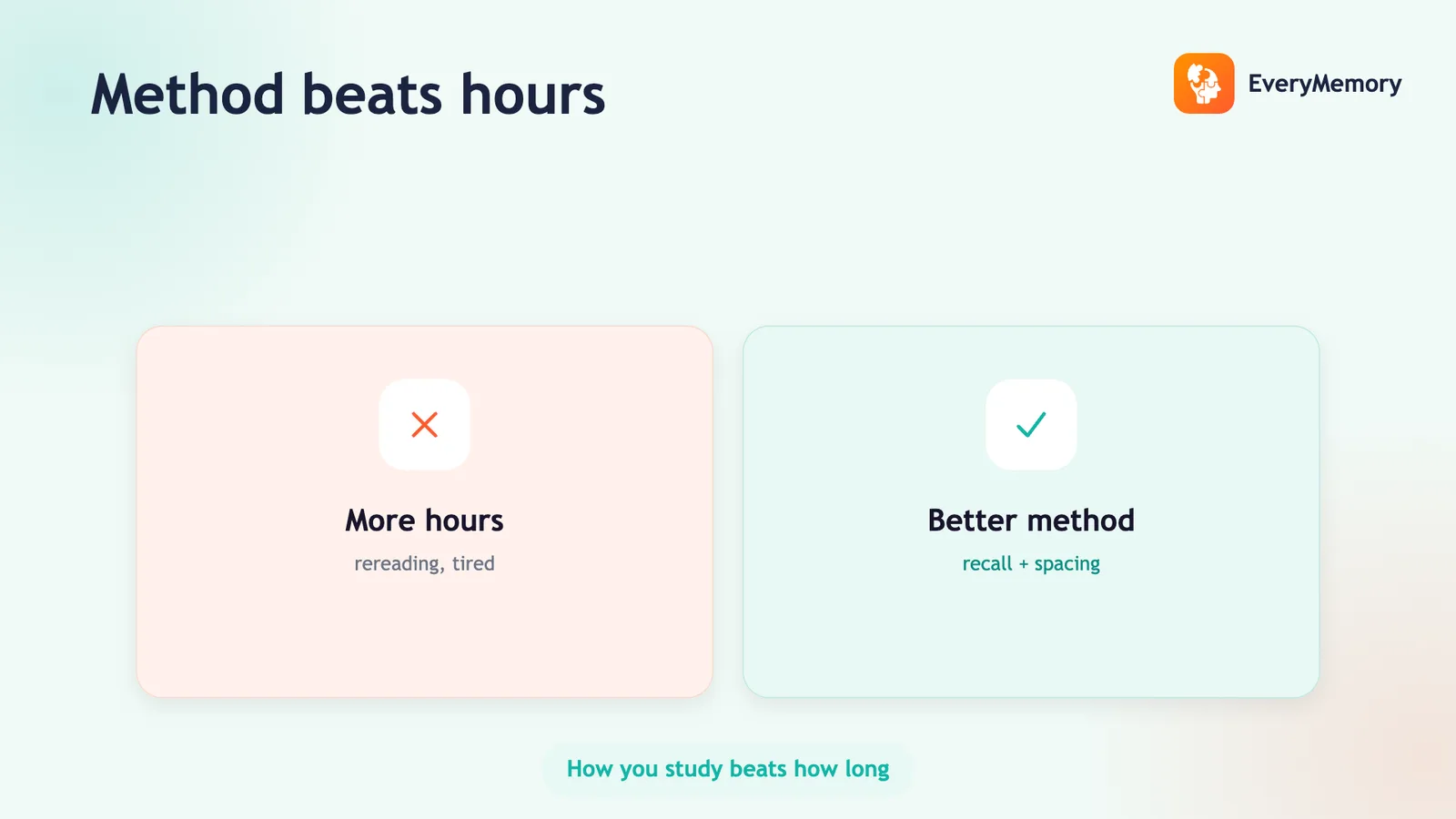
How to Study Effectively
Effective studying is about method, not hours. The handful of evidence-backed techniques that learn more in less time - and the popular habits that waste it.
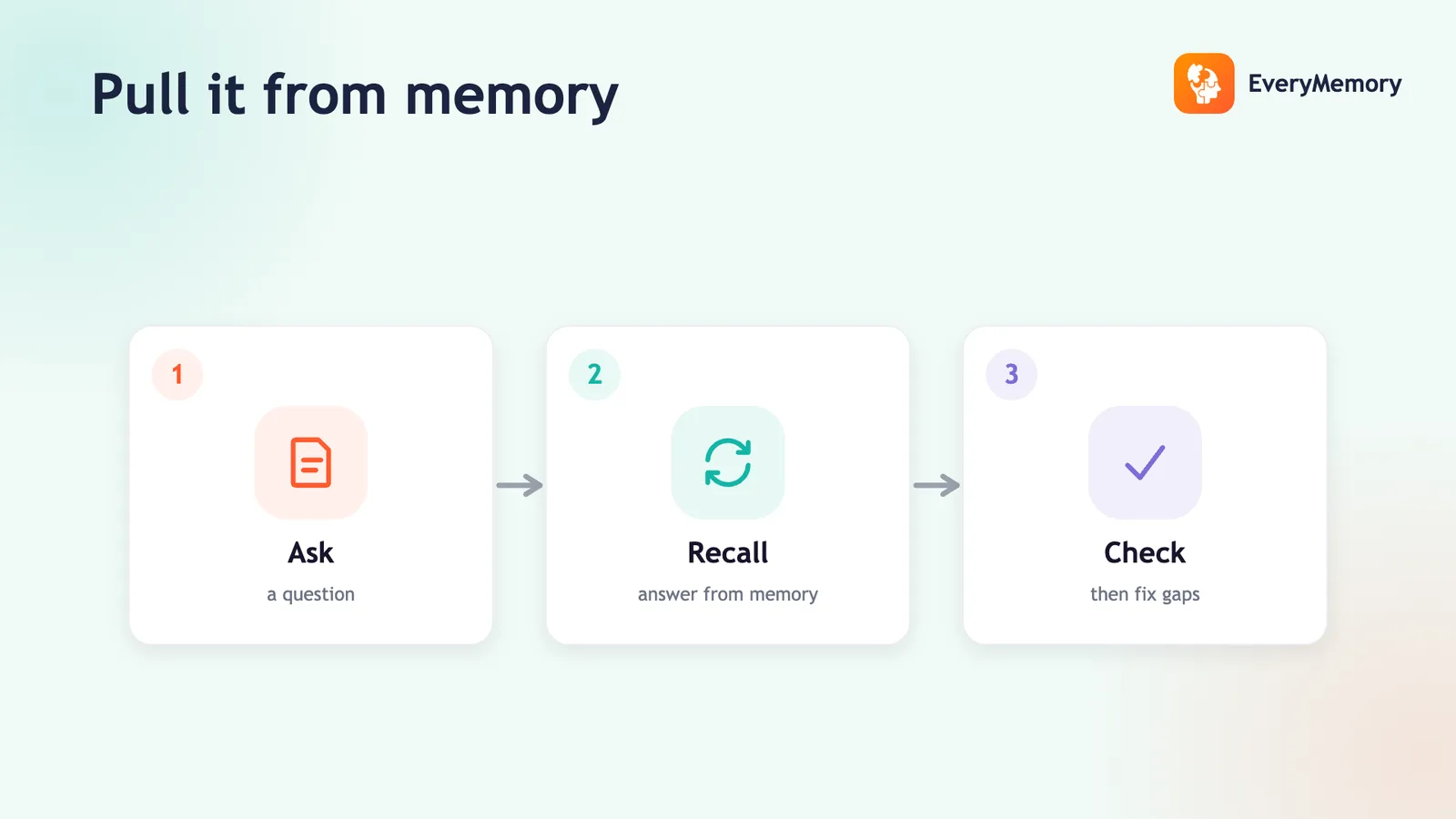
Active Recall: The Most Effective Study Method
Active recall means retrieving information from memory instead of rereading it. Why it's the most effective way to study, and exactly how to do it.

Spaced Repetition for Studying
Reviewing material at widening intervals keeps it for far less effort than cramming. How spaced repetition works, and how to schedule it.
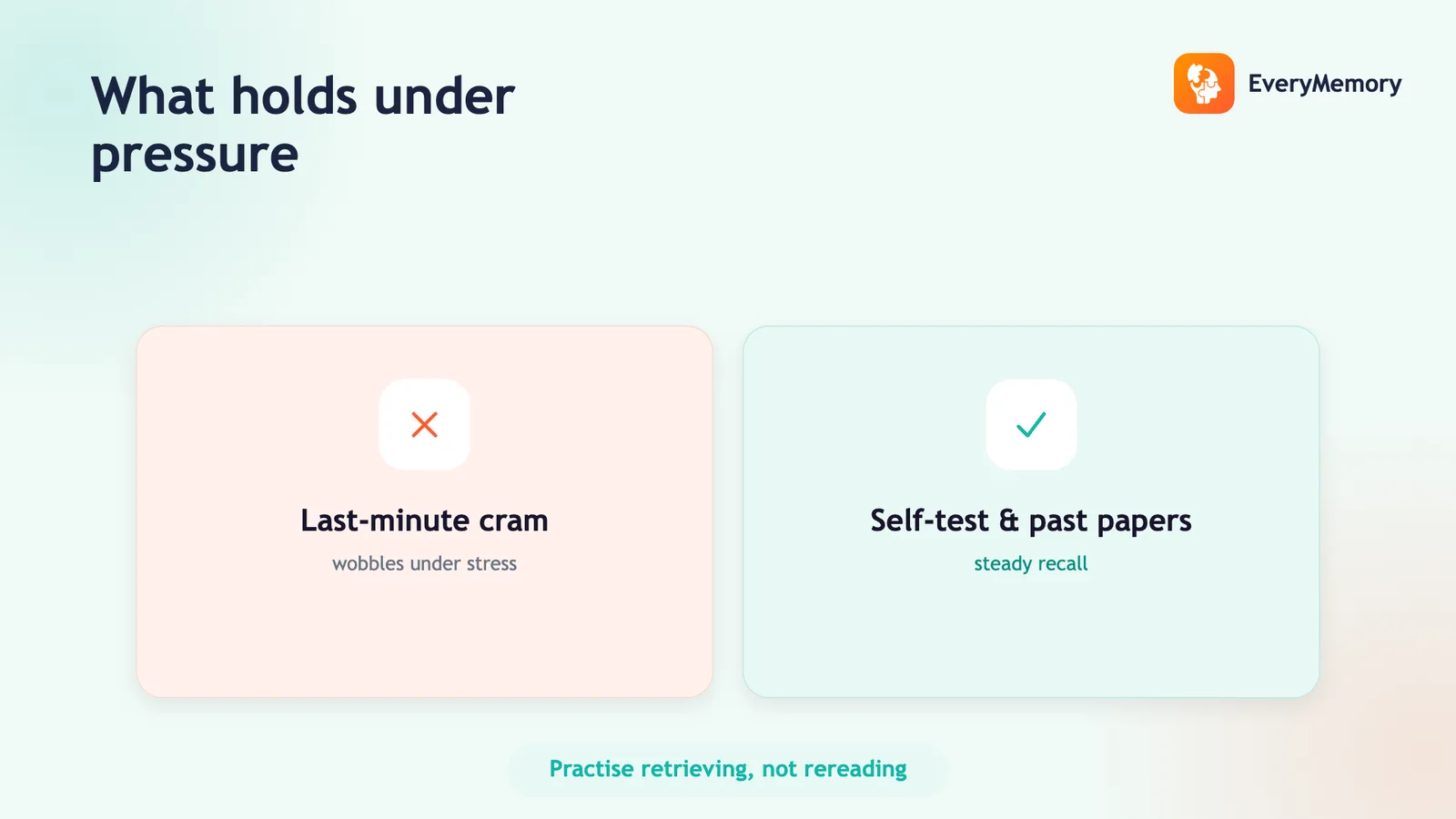
How to Memorise for Exams
Cramming feels productive and fails under pressure. What actually holds in an exam - self-testing, spacing, past papers, and mnemonics for the rote bits.
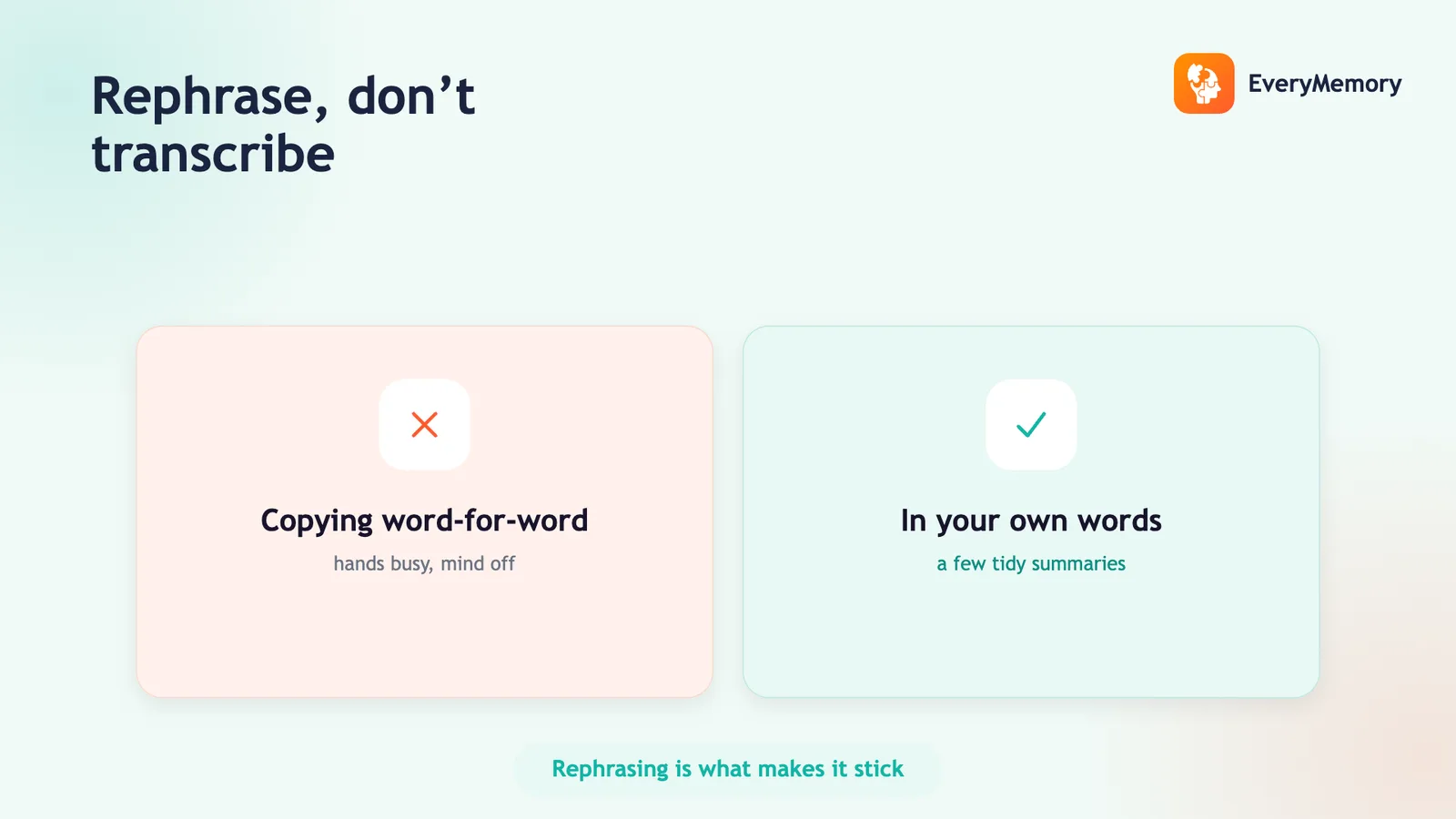
How to Take Notes That Help You Remember
Notes help memory when they make you process and rephrase, not transcribe. How to take notes worth reviewing - and why the review matters more than the notes.
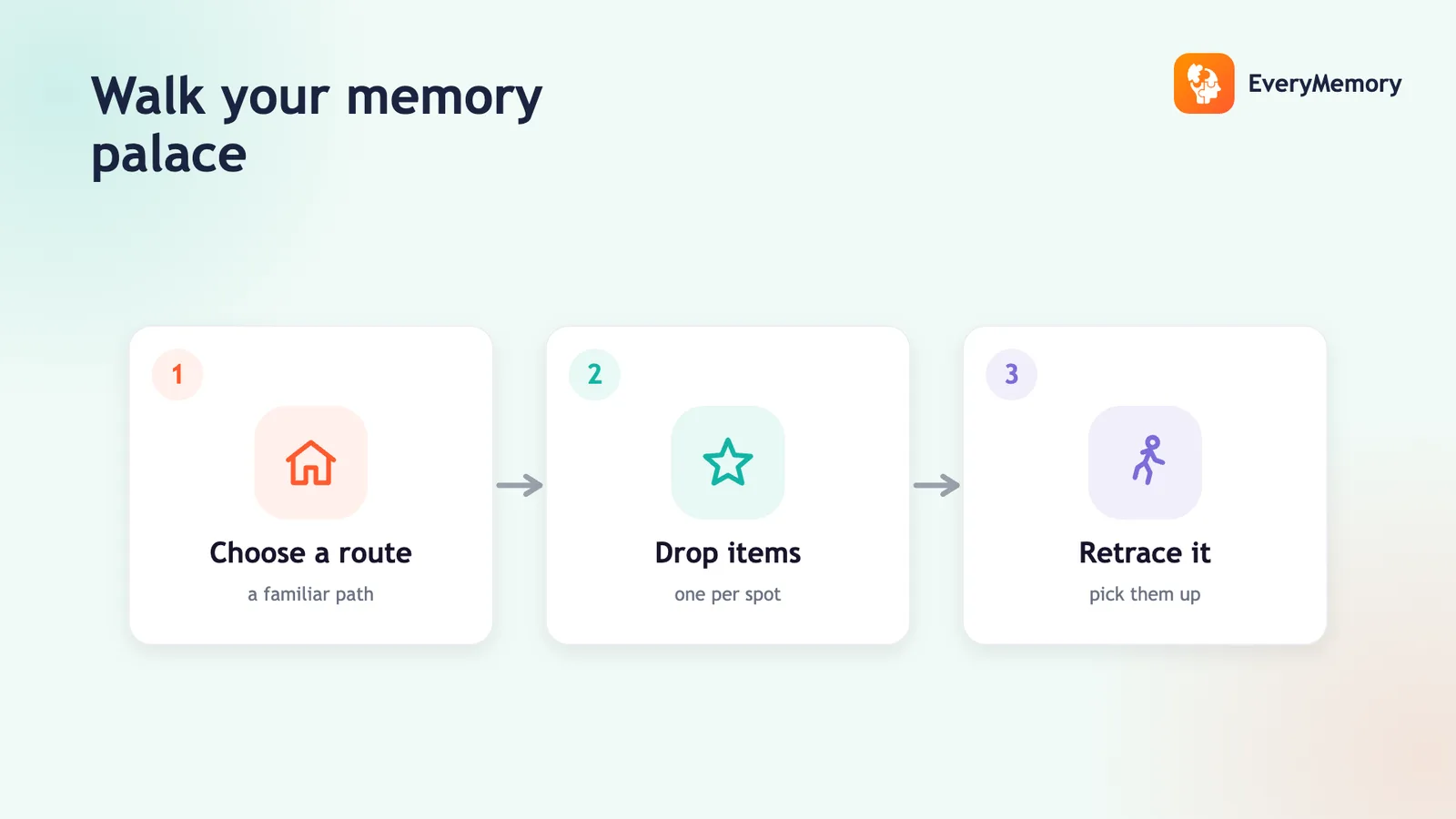
The Method of Loci (Memory Palace), with Examples
The method of loci stores information along a familiar mental route. What it is, why it has worked since ancient Greece, and a clear worked example.
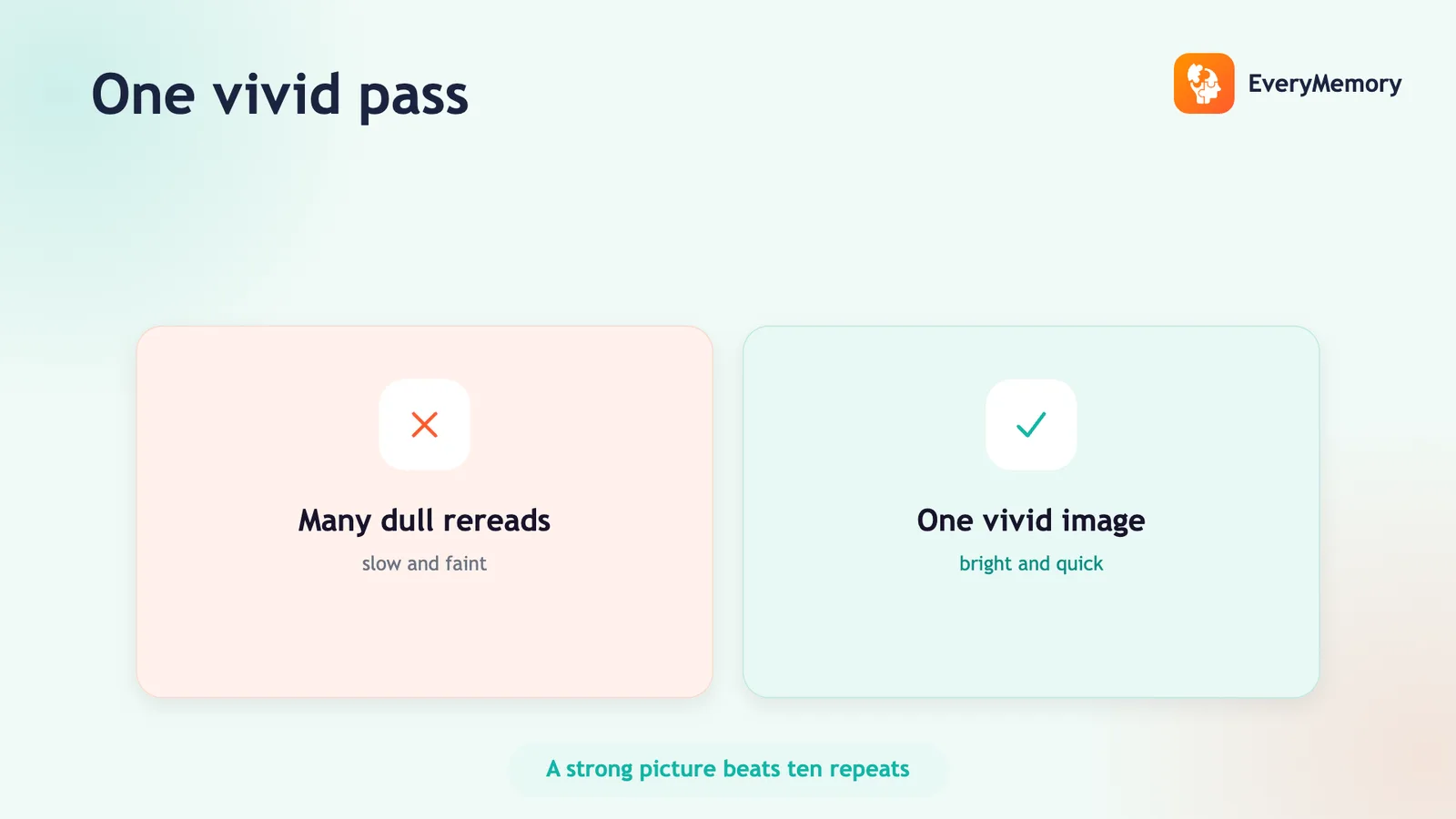
How to Memorize Things Fast
Fast memorising comes from better encoding, not more repetition. Understand, chunk, picture, link - one vivid pass beats a dozen rereads.
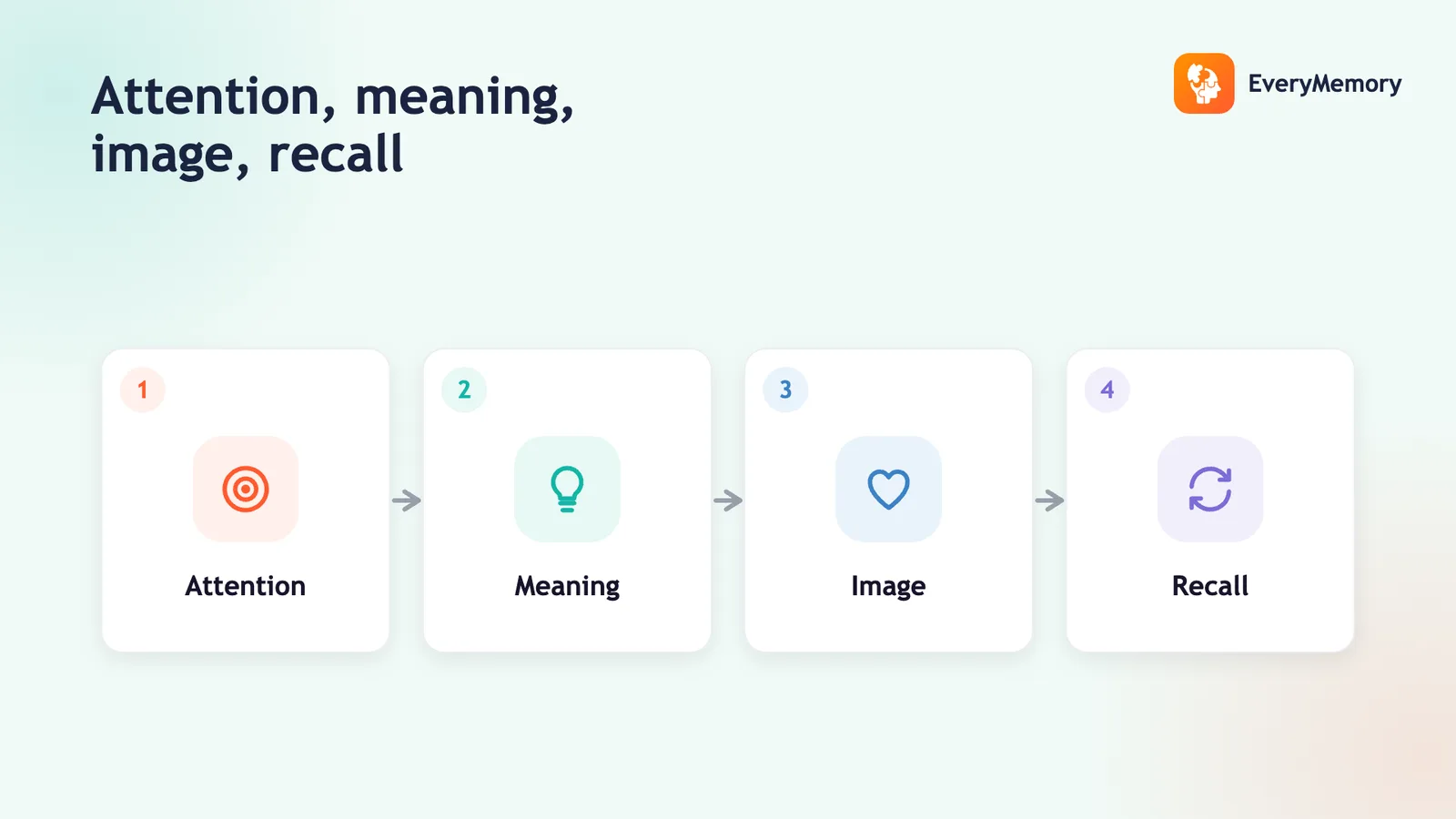
How to Remember Anything
No trick remembers anything for you, but a reliable approach handles most of it: attention, meaning, a vivid image, and a recall soon after.
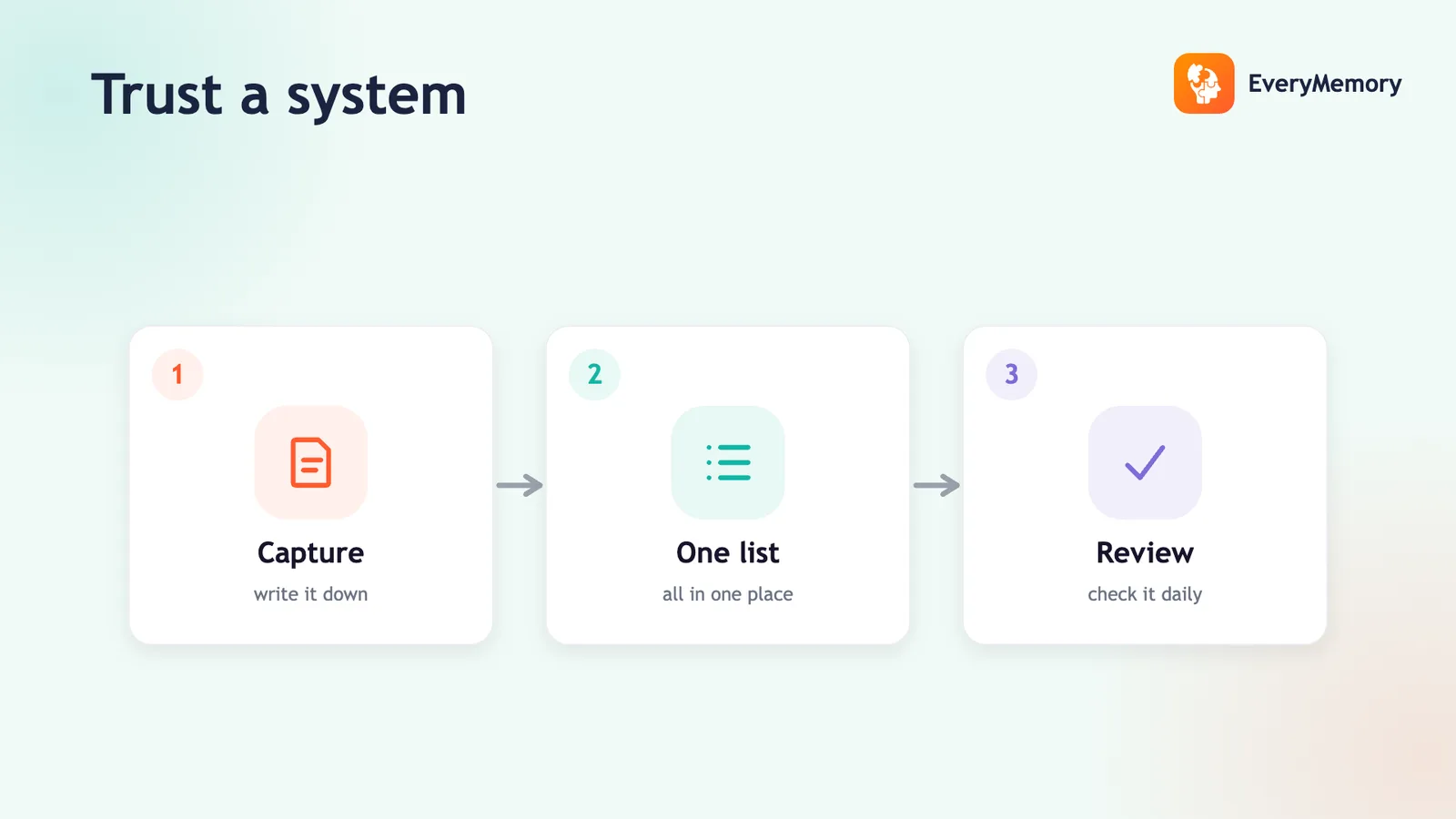
How to Remember Things at Work
Stop relying on memory at work and build a system you trust. Capture every task in one place, and use in-the-moment habits for names, meetings, and details.
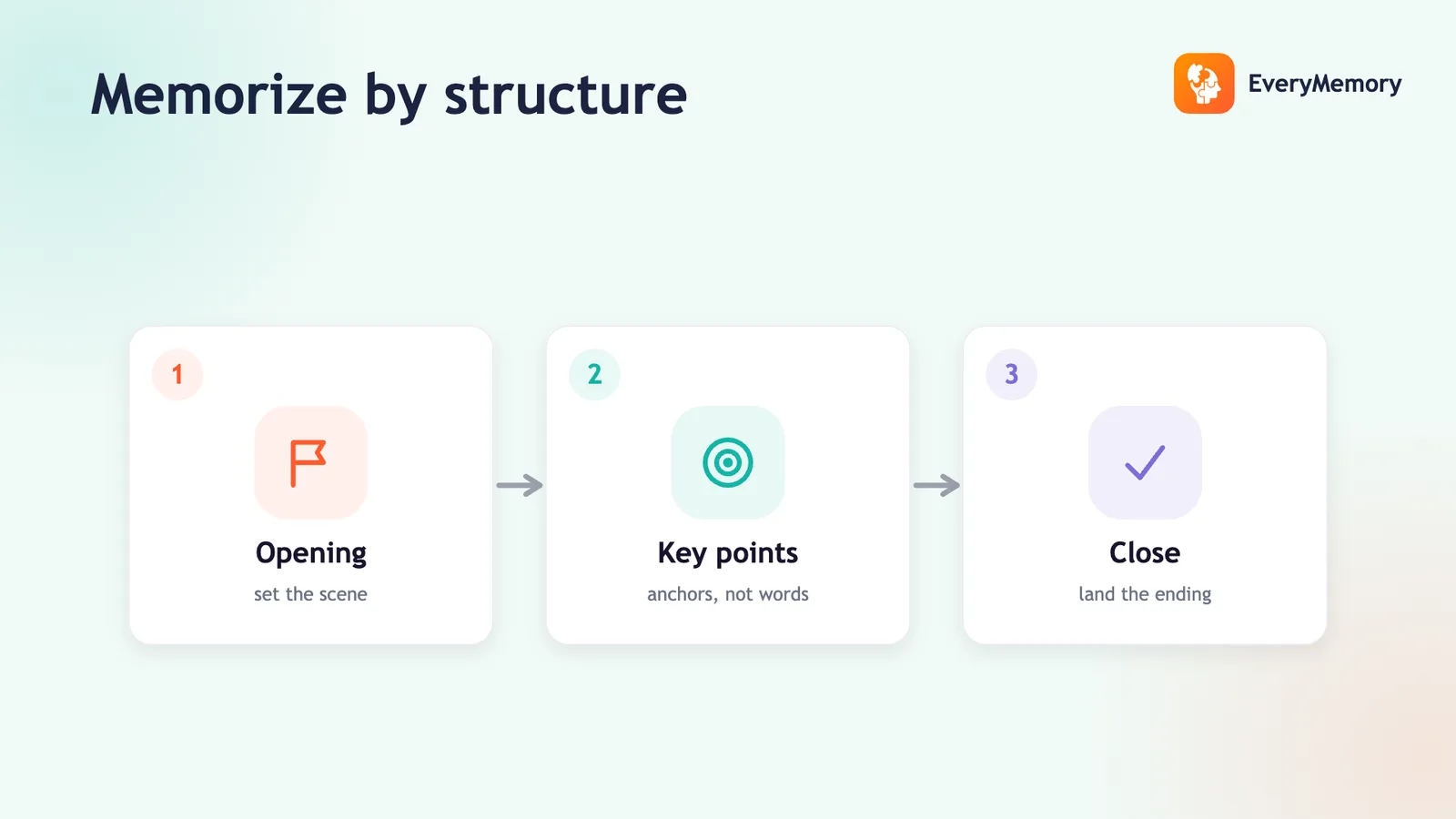
How to Memorize a Speech
Memorize a speech by its structure, not word for word - outline the key points, anchor them to a route, and rehearse the transitions out loud until they're automatic.
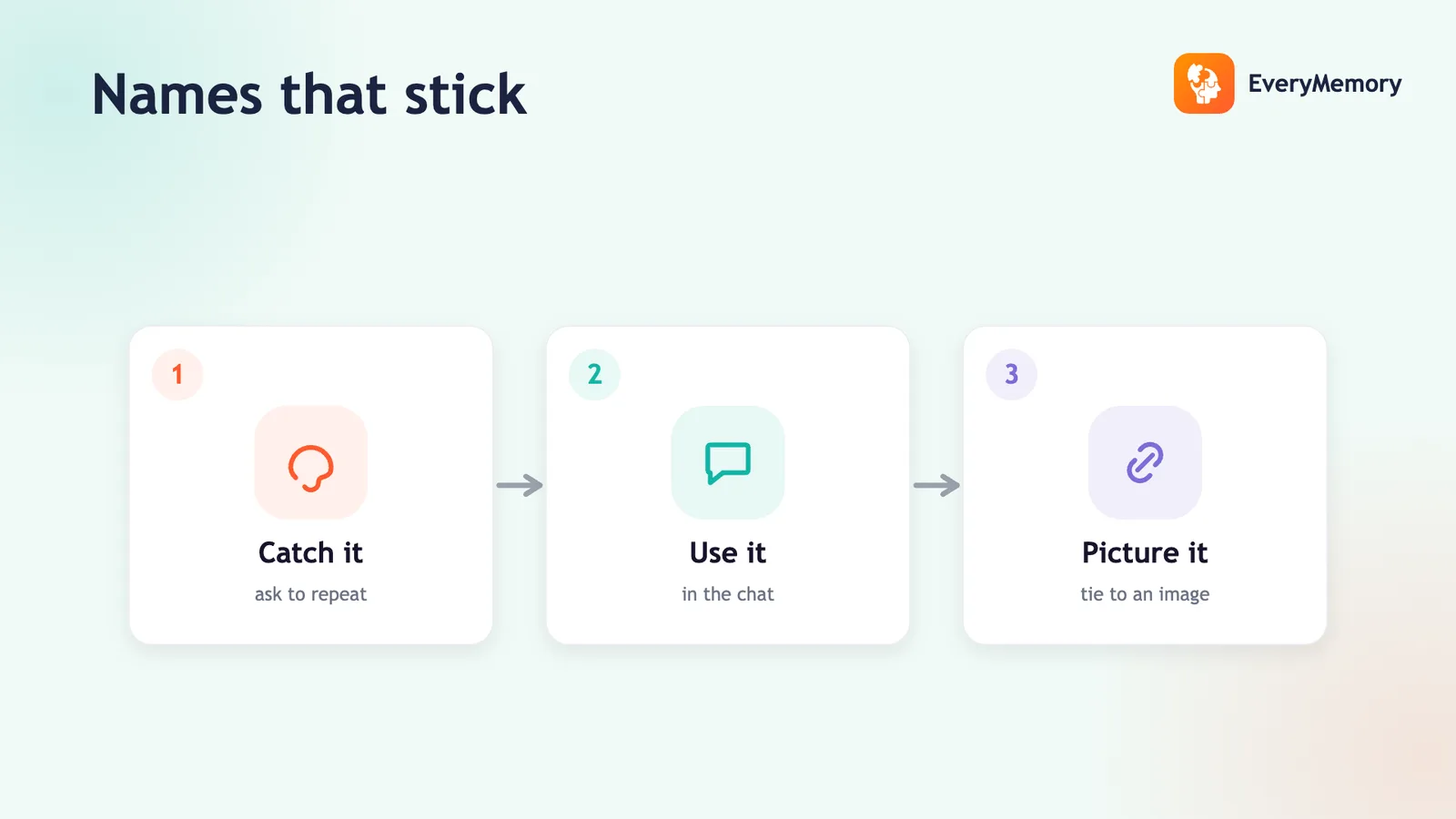
How to Remember Names at Networking Events
Remember names at networking events by paying real attention at the introduction, repeating the name back, and linking it to the face with a vivid mental image.
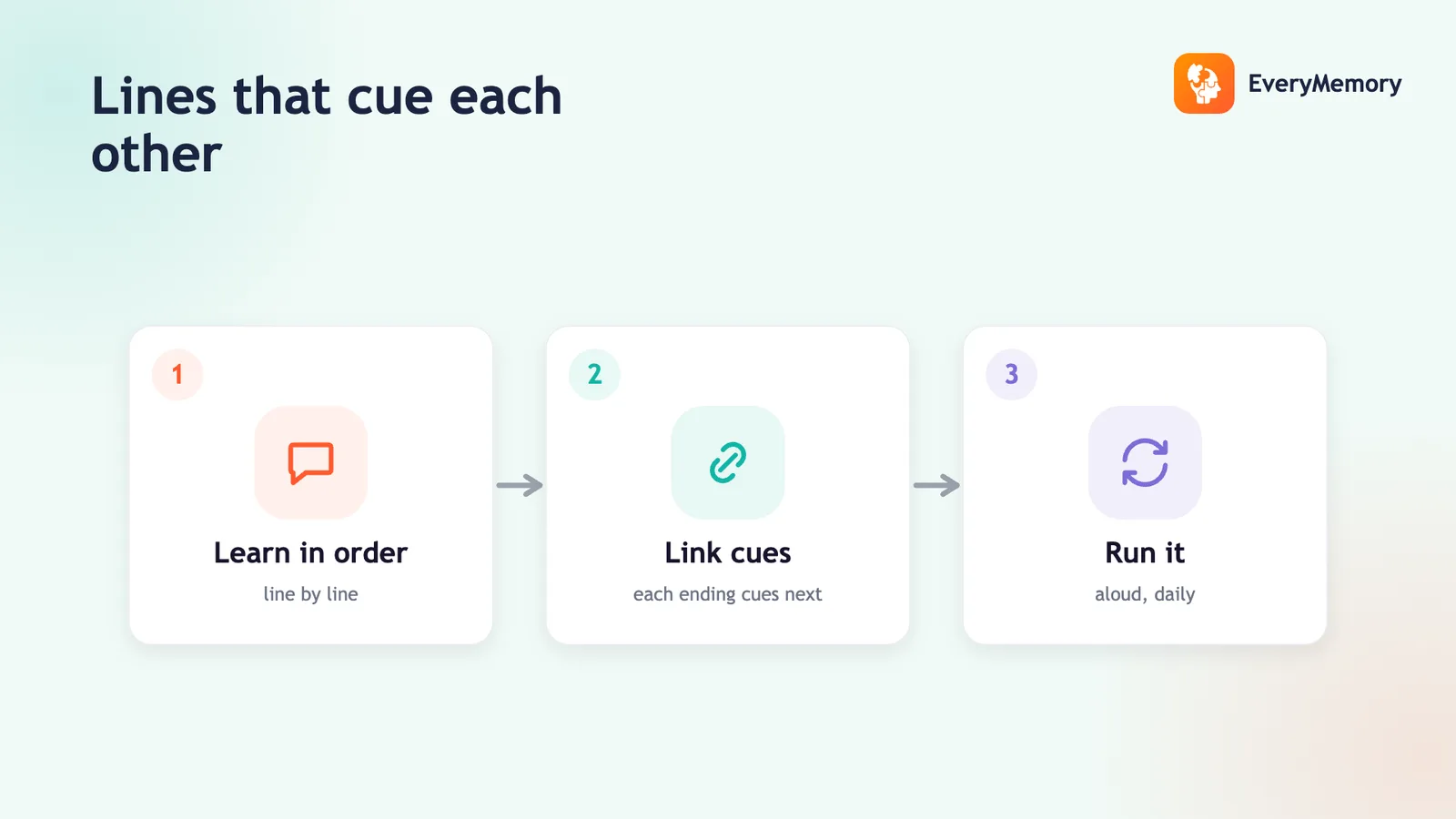
How to Memorize Lines (for Actors)
Actors memorize lines by learning cue-to-line links, not monologues in isolation - working off-book in stages and connecting each line to the action and intention behind it.
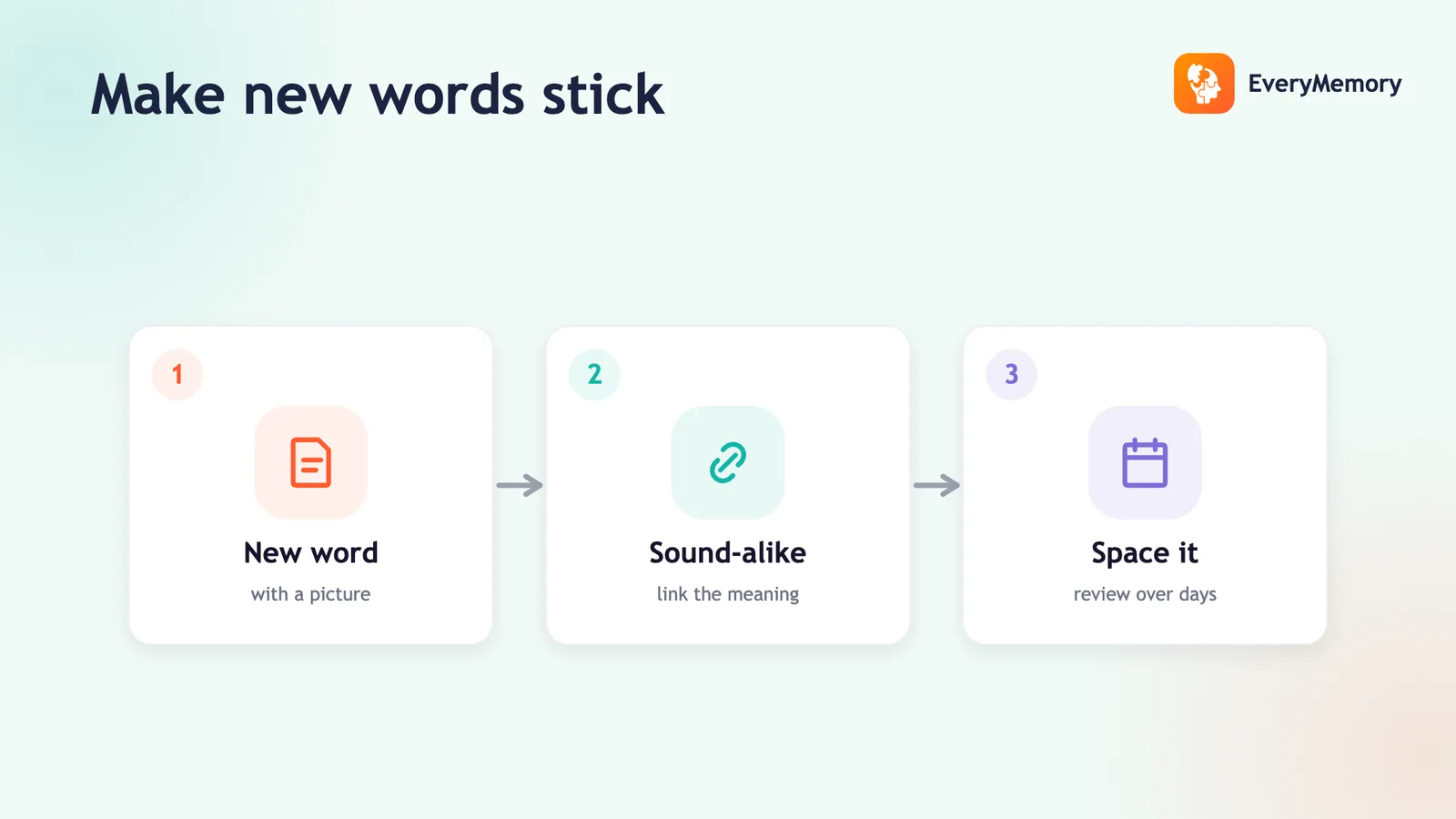
How to Memorize Vocabulary
Memorize vocabulary with spaced repetition and vivid association: link each new word to a sound-alike image and meaning, then review on an expanding schedule.
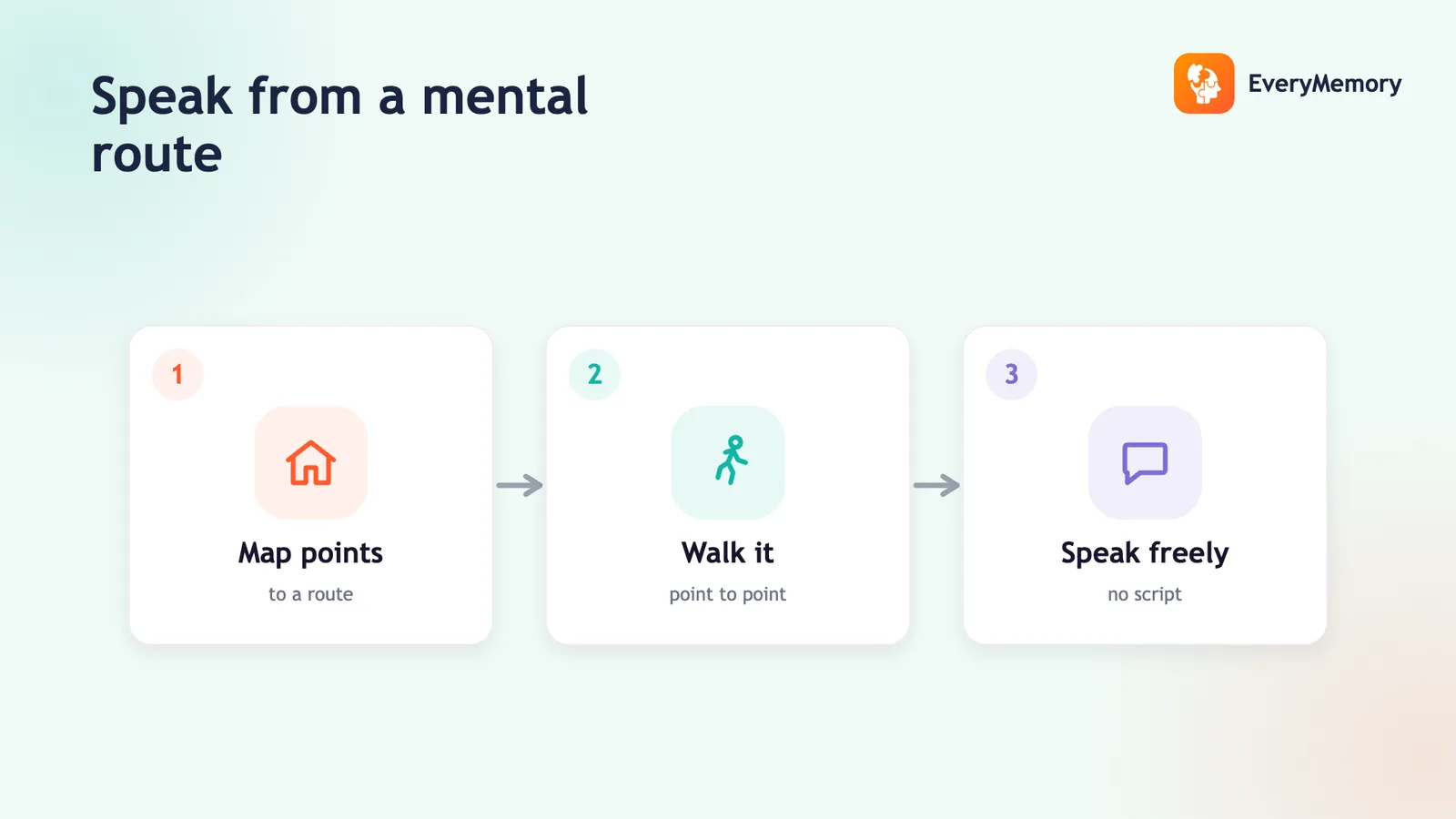
Memory Tips for Public Speaking
Memory tips for public speaking: speak from a structured outline anchored to a mental route, rehearse out loud, and build recovery cues so a blank never becomes a freeze.
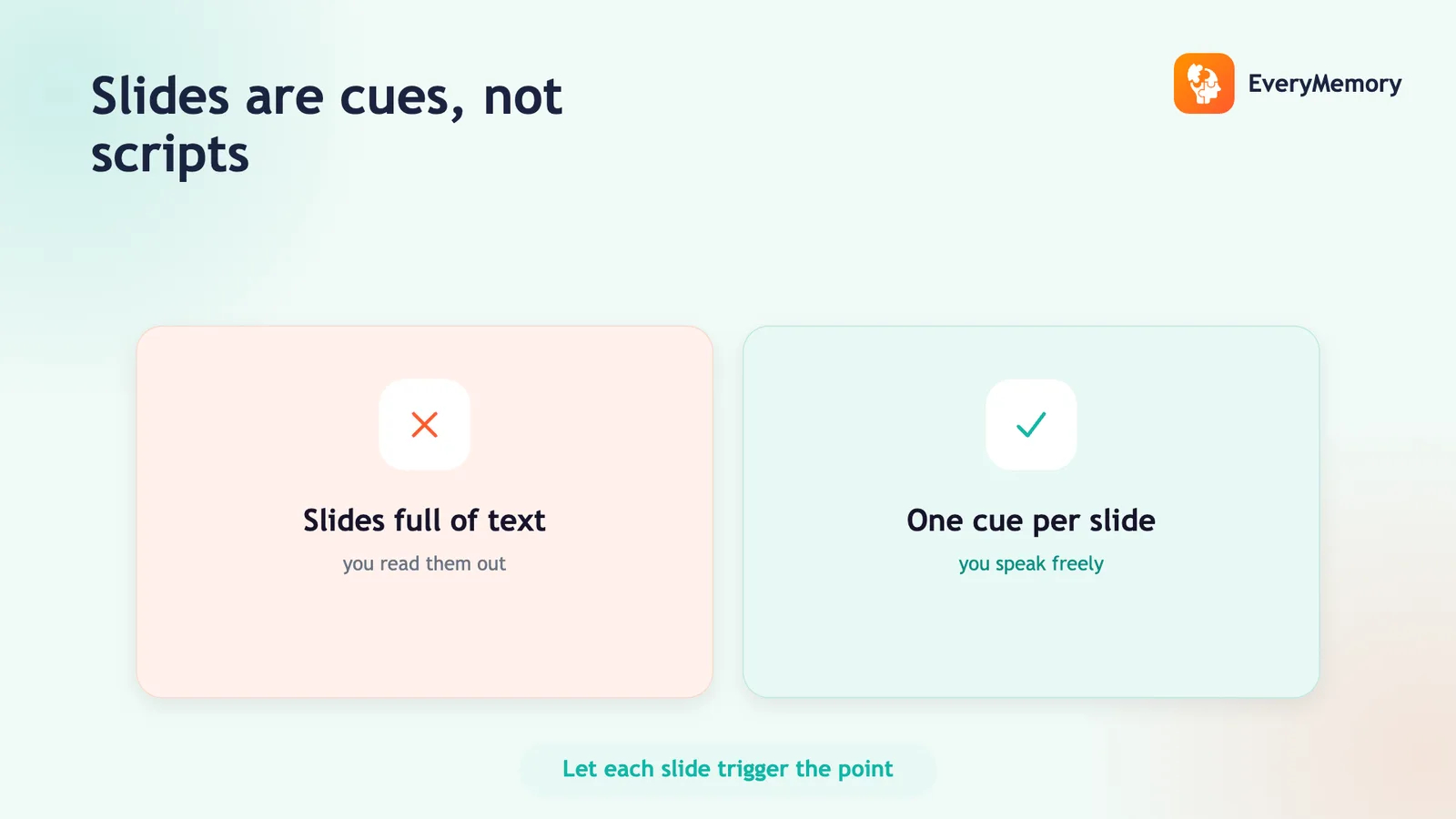
How to Remember a Presentation
Remember a presentation by letting your slides act as cues for talking points you've rehearsed - never reading the deck - and learning the flow as a sequence of ideas.
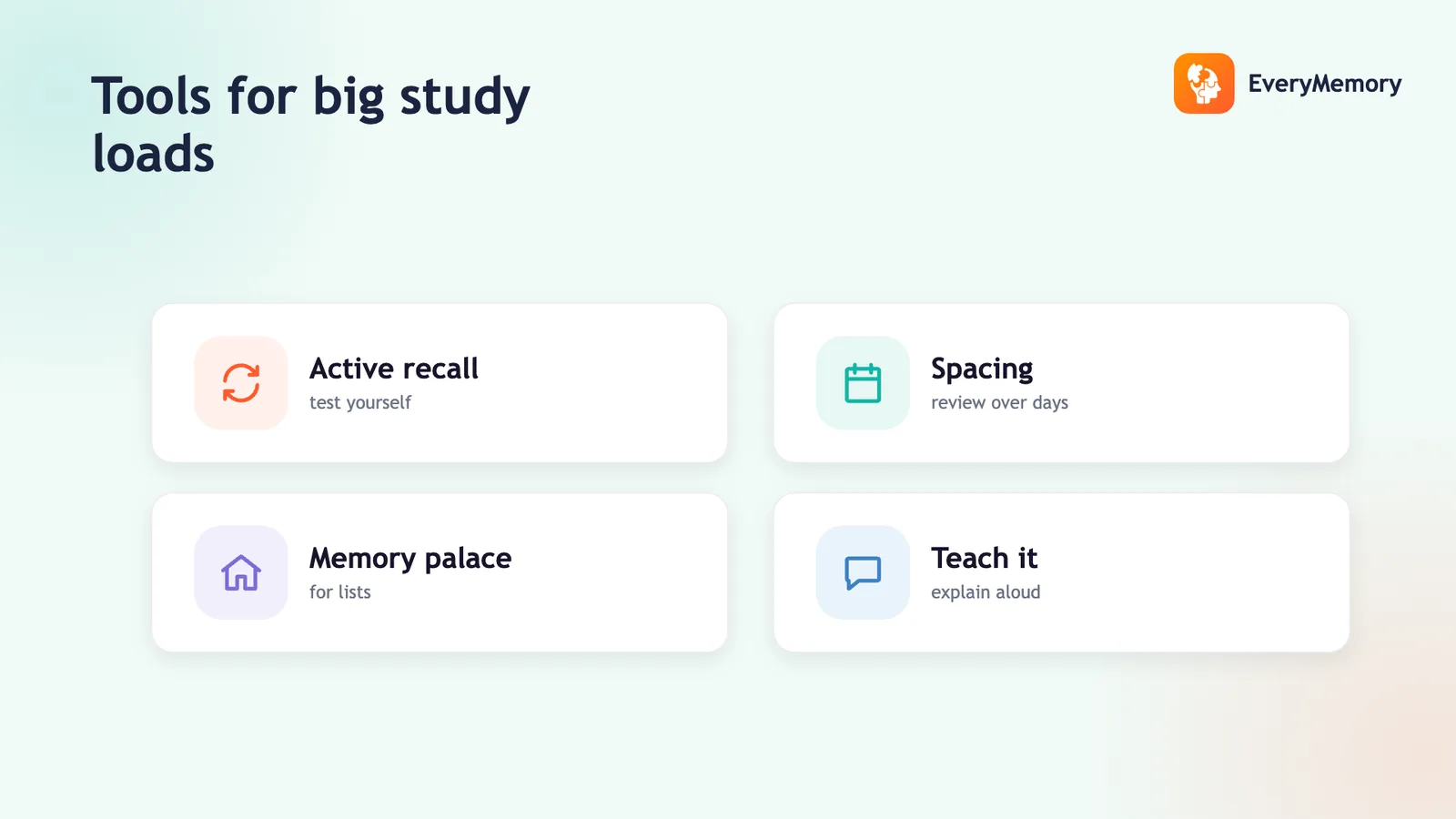
Memory Tips for Medical Students
Memory tips for medical students: use active recall and spaced repetition for sheer volume, mnemonics for arbitrary lists, and memory palaces for anatomy and pathways.
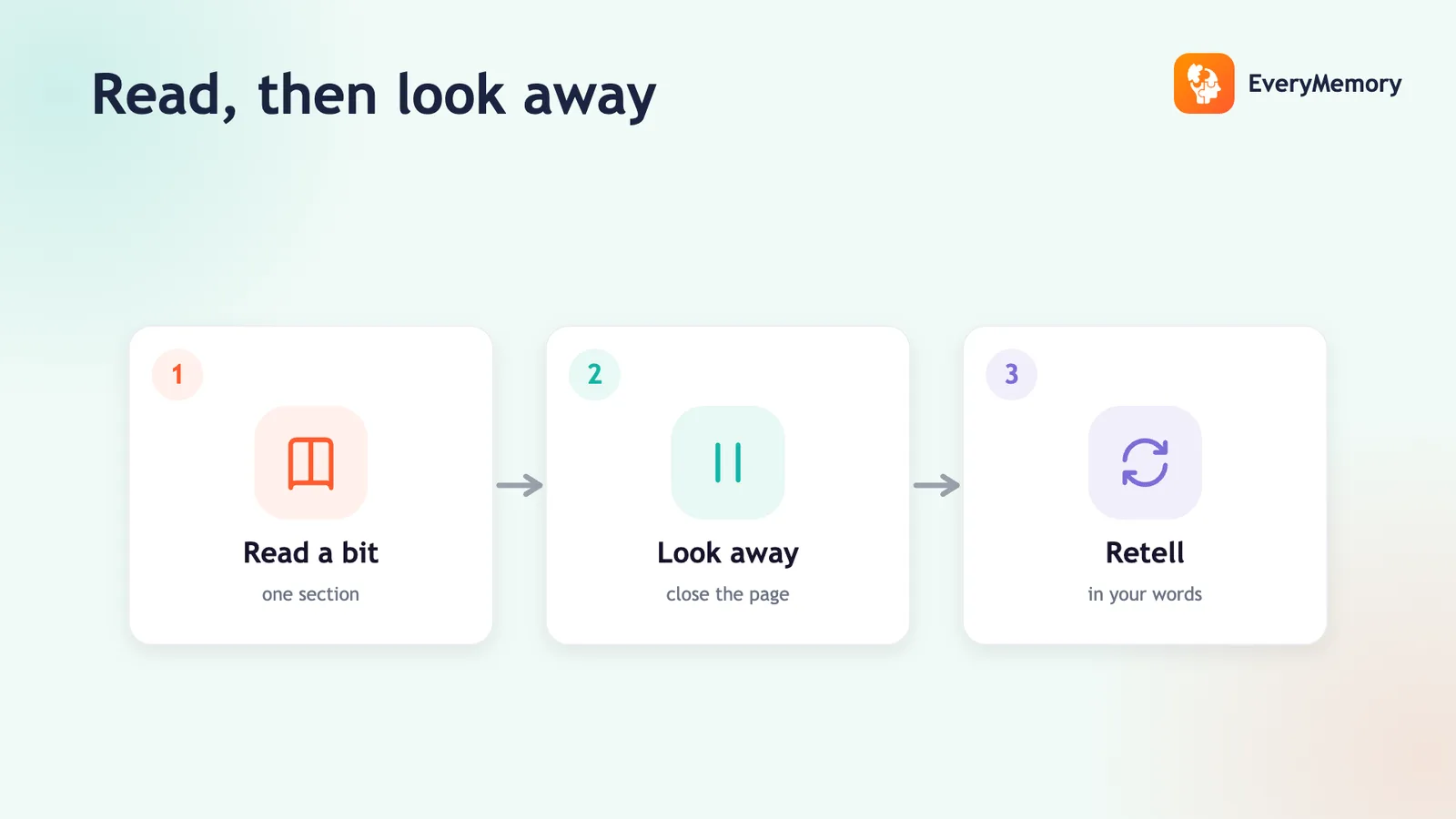
How to Remember More of What You Read
Remember more of what you read by reading actively - previewing, questioning, then closing the book to recall - instead of passively running your eyes over the page.

How to Memorize a Poem
Memorize a poem line by line with the say-look-away-recall method, using its rhythm and rhyme as built-in cues - then space your reviews to keep it for good.
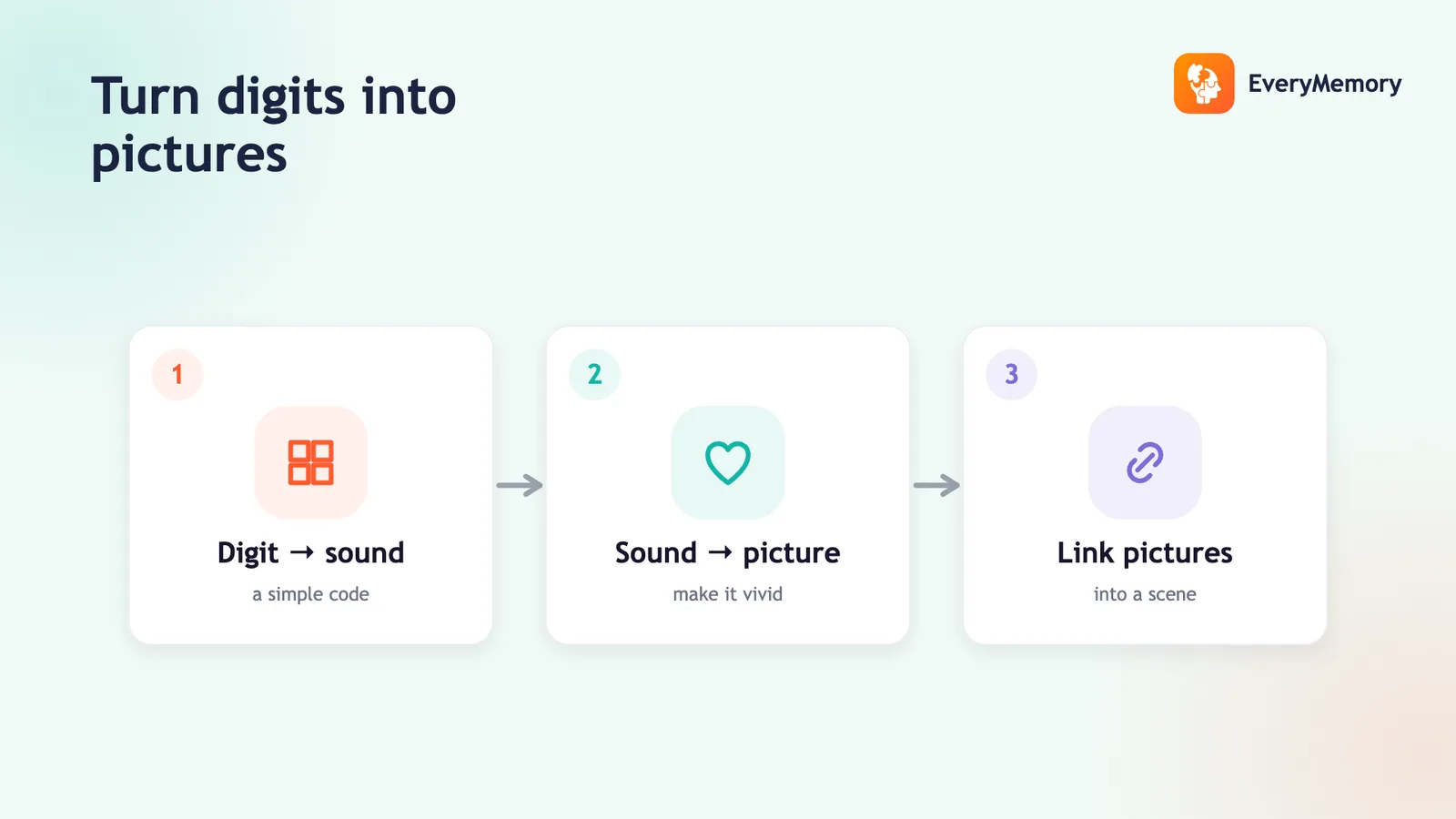
How to Memorize Numbers
Memorize numbers by chunking them into small groups and converting digits into vivid images with the major system, turning abstract figures into a memorable story.
How to Remember Passwords Without Writing Them Down
You do not need to memorise every password. The smart split is a password manager for the many and a handful of strong passphrases for the few, here is how to make those stick.

How to Remember What People Tell You
Forgetting what someone just told you is not a memory problem - it is usually an attention problem. Here is how to actually capture and keep what people say.
How to Remember to Do Things (Prospective Memory)
Forgetting to take the bins out, reply to that email, or call someone back is not a sign of a failing memory. It is a prospective memory challenge, and there are simple, proven ways to fix it.
Mind Mapping for Memory and Study
Mind mapping organises information the way your brain actually stores it - as a web of connected ideas, not a list. Here is how to build maps that make material stick.
The Forgetting Curve: Why You Forget and How to Beat It
Hermann Ebbinghaus mapped exactly how fast memories fade - and the curve he discovered explains why cramming fails and how a simple review schedule can make almost anything stick.
The Feynman Technique: Learn Anything by Explaining It Simply
If you cannot explain a concept in plain words, you have not learned it - you have only memorized the shape of it. The Feynman Technique fixes that in four concrete steps.

Interleaving: A Smarter Way to Practice and Study
Mixing different topics in one session feels chaotic and slow - but research consistently shows it produces stronger long-term retention than the tidy, one-topic-at-a-time approach most people use.
Dual Coding: Pair Words With Visuals to Remember More
Combining words with visuals gives your brain two retrieval routes instead of one. Here is exactly how dual coding works and how to apply it to any subject.
How to Build a Second Brain: A Simple Note System That Works
Your working memory holds about four things at once. A second brain holds everything else - here is a simple, tool-agnostic system to capture, organise, and review so nothing slips through.
The Cornell Note-Taking Method, Explained Simply
The Cornell system divides your page into three zones and forces you to self-test from your own notes. Here is exactly how to set it up, fill it in, and use it for real recall.
Build your personal memory routine
Take a short non-medical quiz and get a simple plan with daily memory exercises.
Take Memory Quiz