 EveryMemory
All articles
Every guide and exercise we've published - 614 non-medical, practical articles on memory, focus, and brain health. Browse by topic below.
Simple explanations for common memory concerns, from forgetting names to misplacing things.
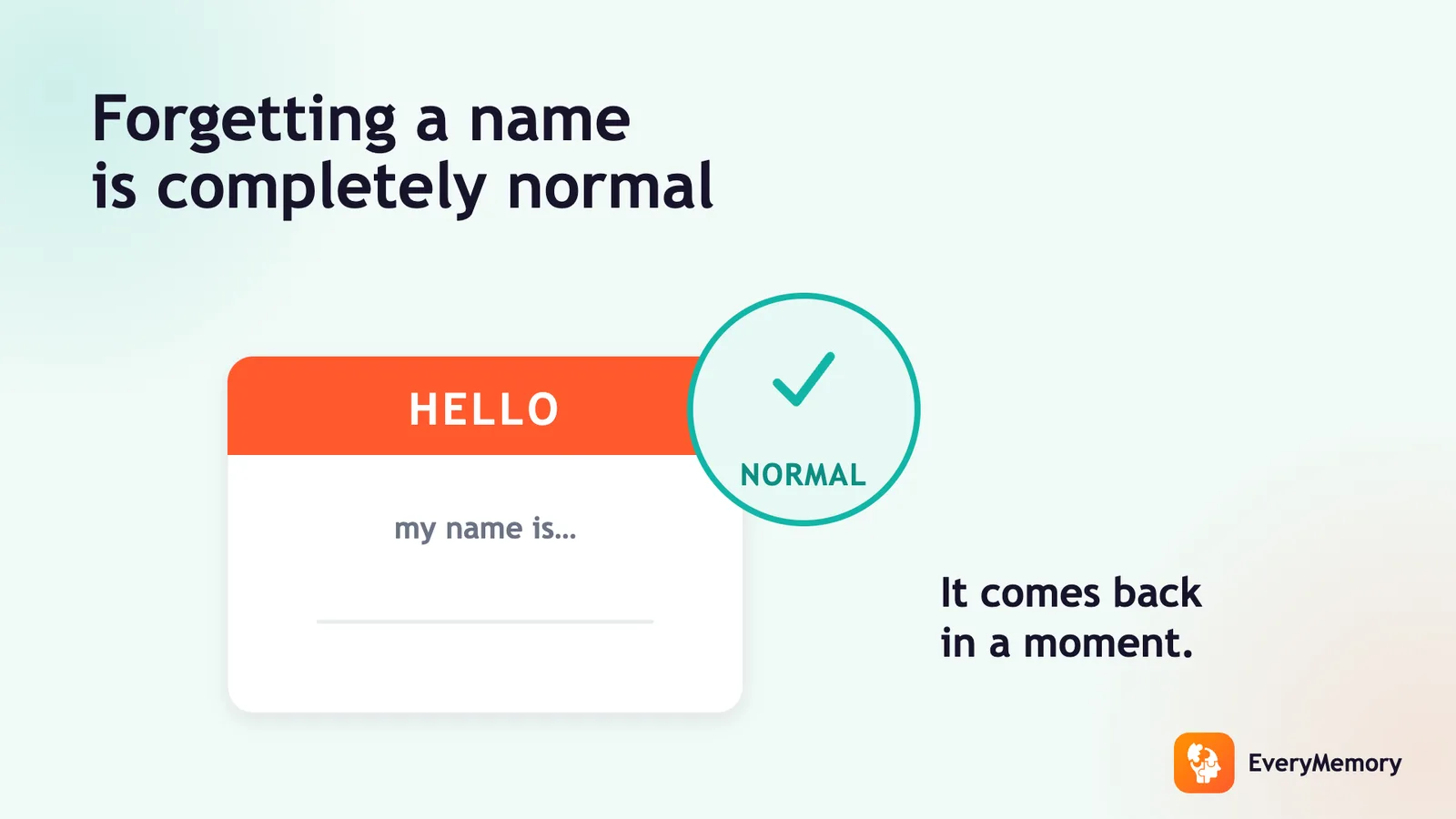
Is It Normal to Forget Names After 60?
Blanking on a familiar name is one of the most common memory complaints after 60 - and in most cases it's a normal feature of how recall works, not a warning sign.

Memory Loss vs Normal Aging: What's the Difference?
Some memory change is a normal part of getting older. Here's a clear, non-medical way to tell everyday forgetfulness from the kinds of changes worth discussing with a professional.
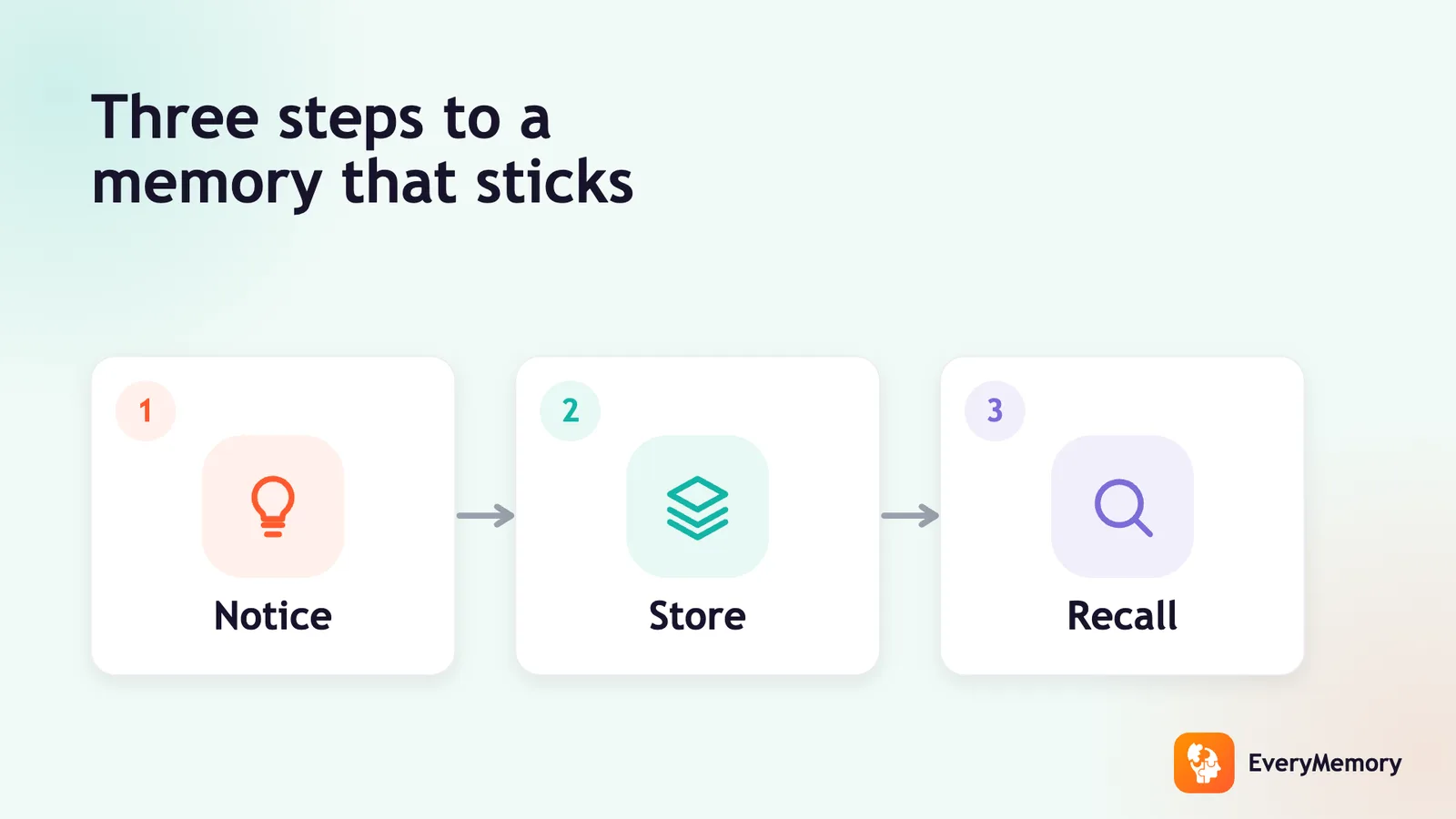
How Memory Works: A Simple Guide
Memory isn't a single system - it's a layered process of encoding, storage, and retrieval. Understanding how it works makes forgetting far less worrying.
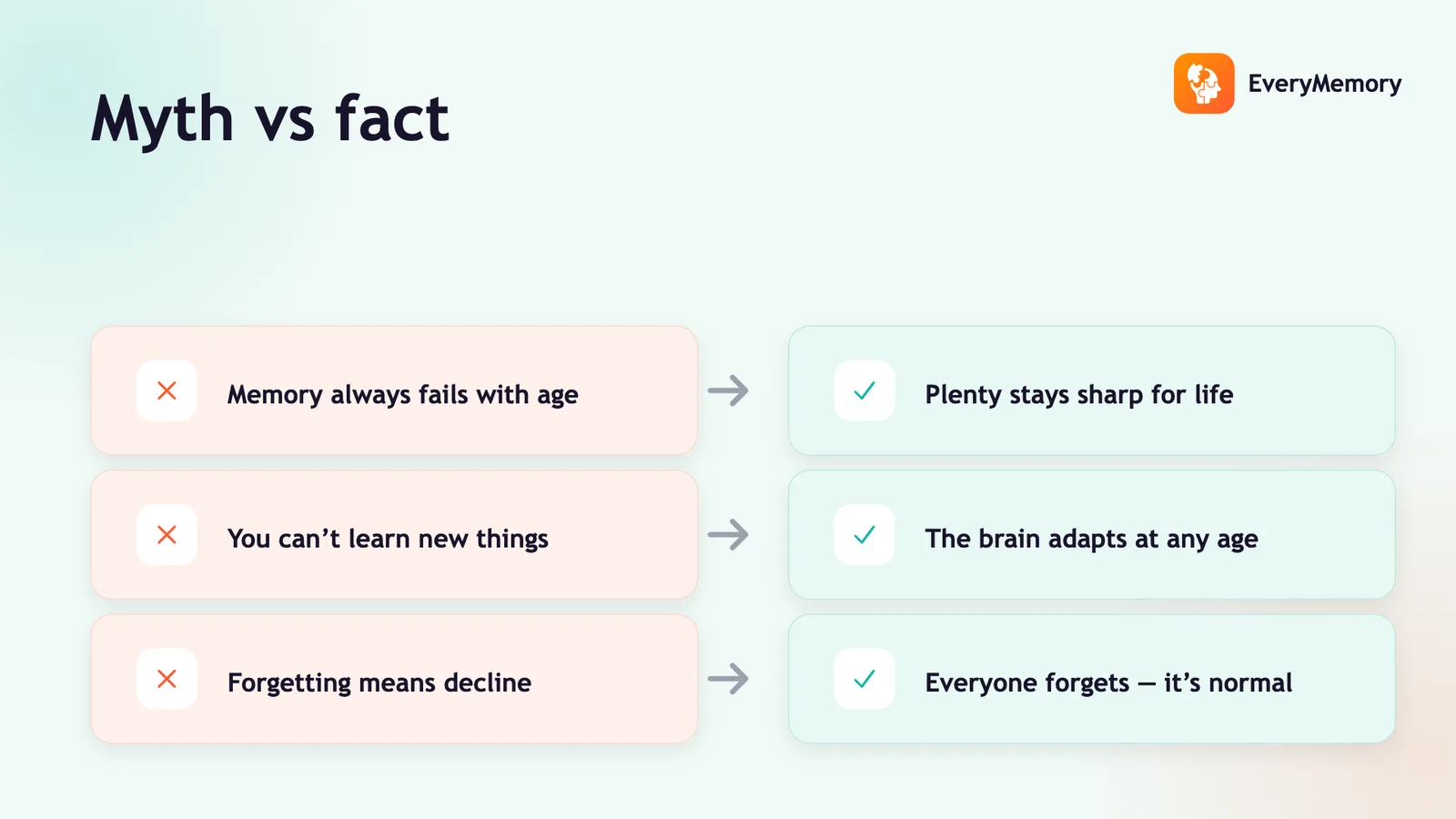
5 Common Myths About Memory and Aging
Many fears about memory and aging are built on myths. Here's a clear, reassuring look at five of the most common misconceptions - and what's actually true.
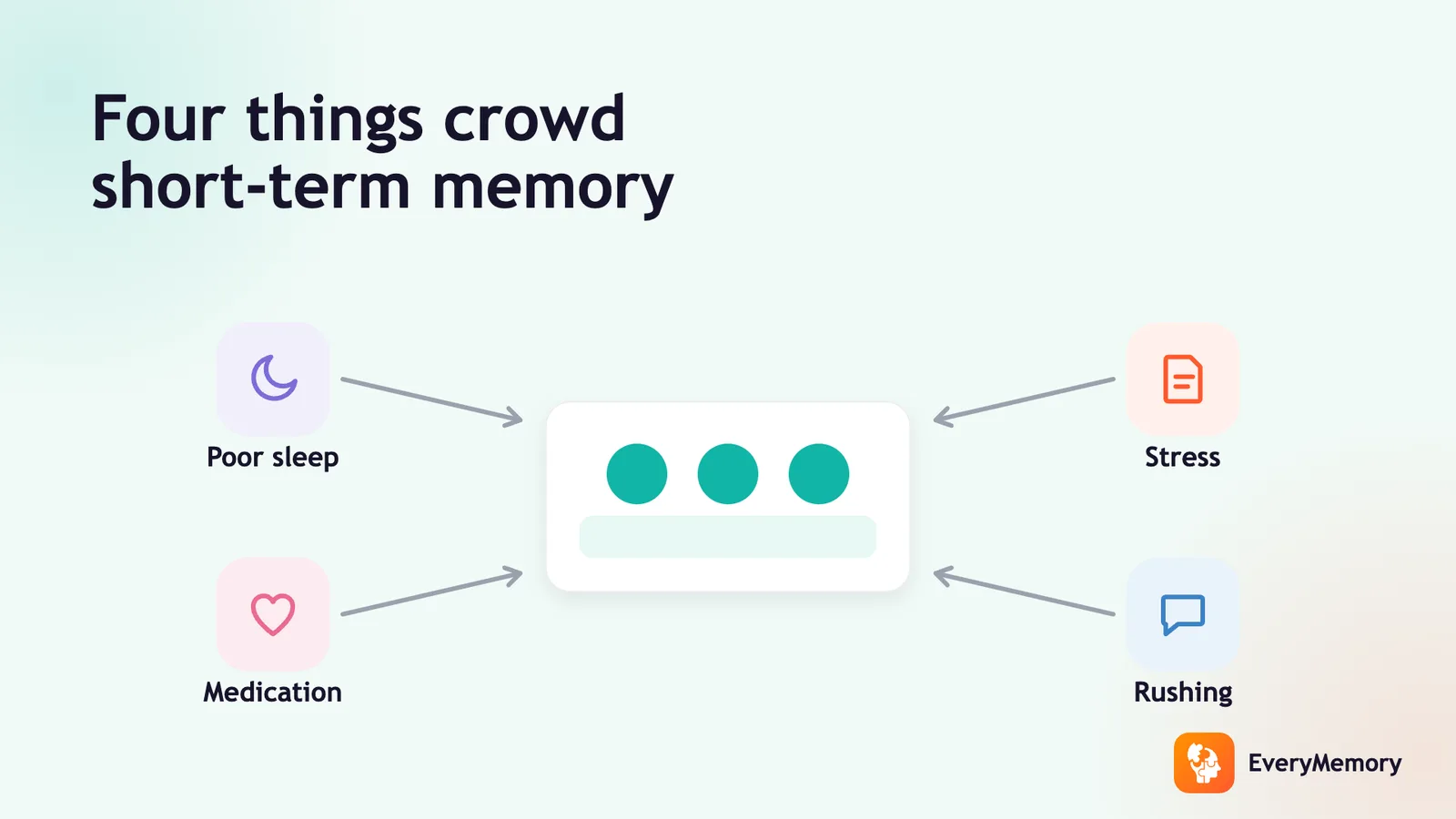
Short-Term Memory Problems: What Can Affect Them?
Short-term memory problems in older adults have many causes - most of them common and changeable, a few worth discussing with a professional.
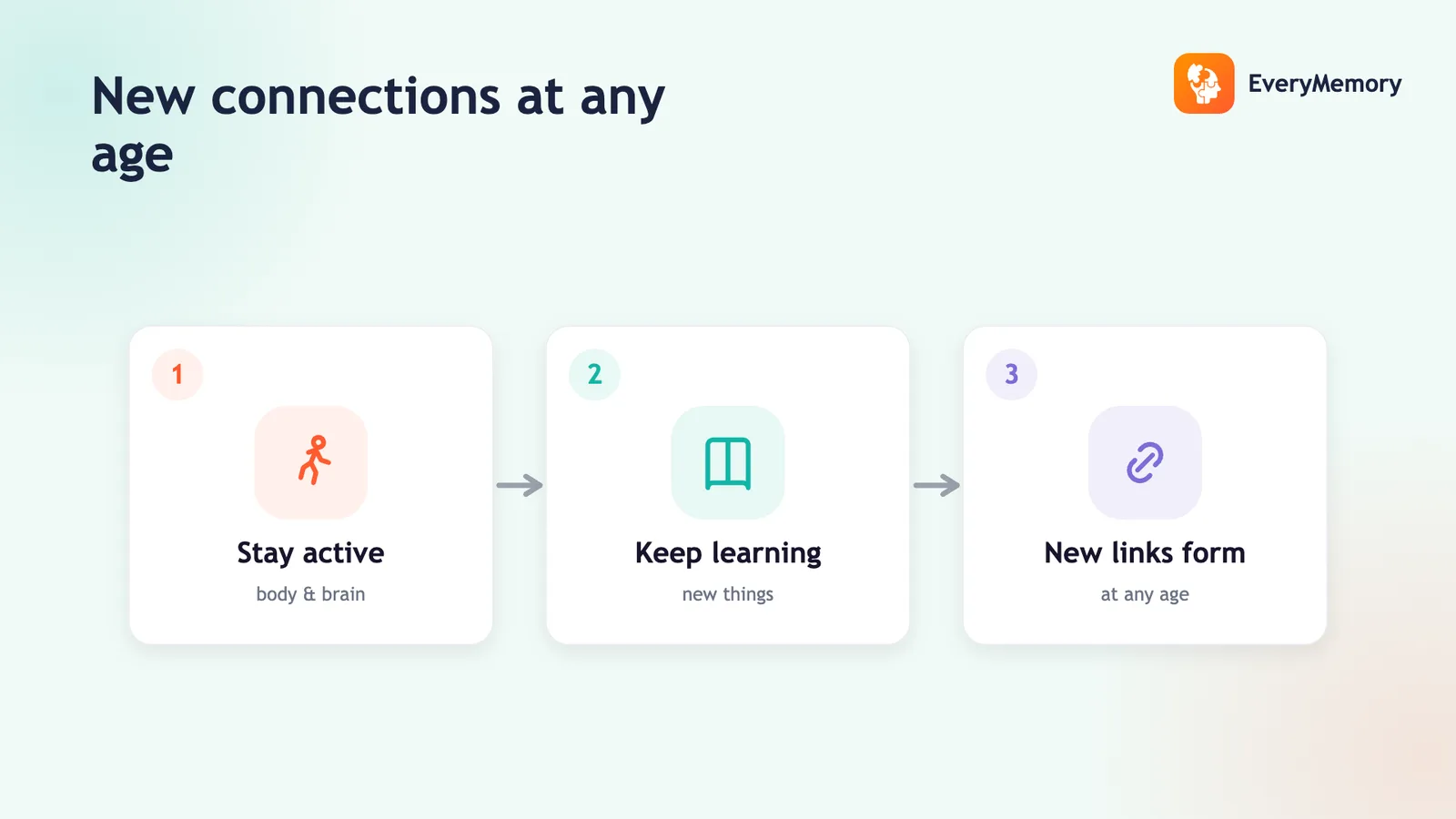
How to Improve Your Memory After 60
The brain keeps forming new connections at any age. The handful of things that matter most for memory after 60 - and the techniques that offset slower recall.
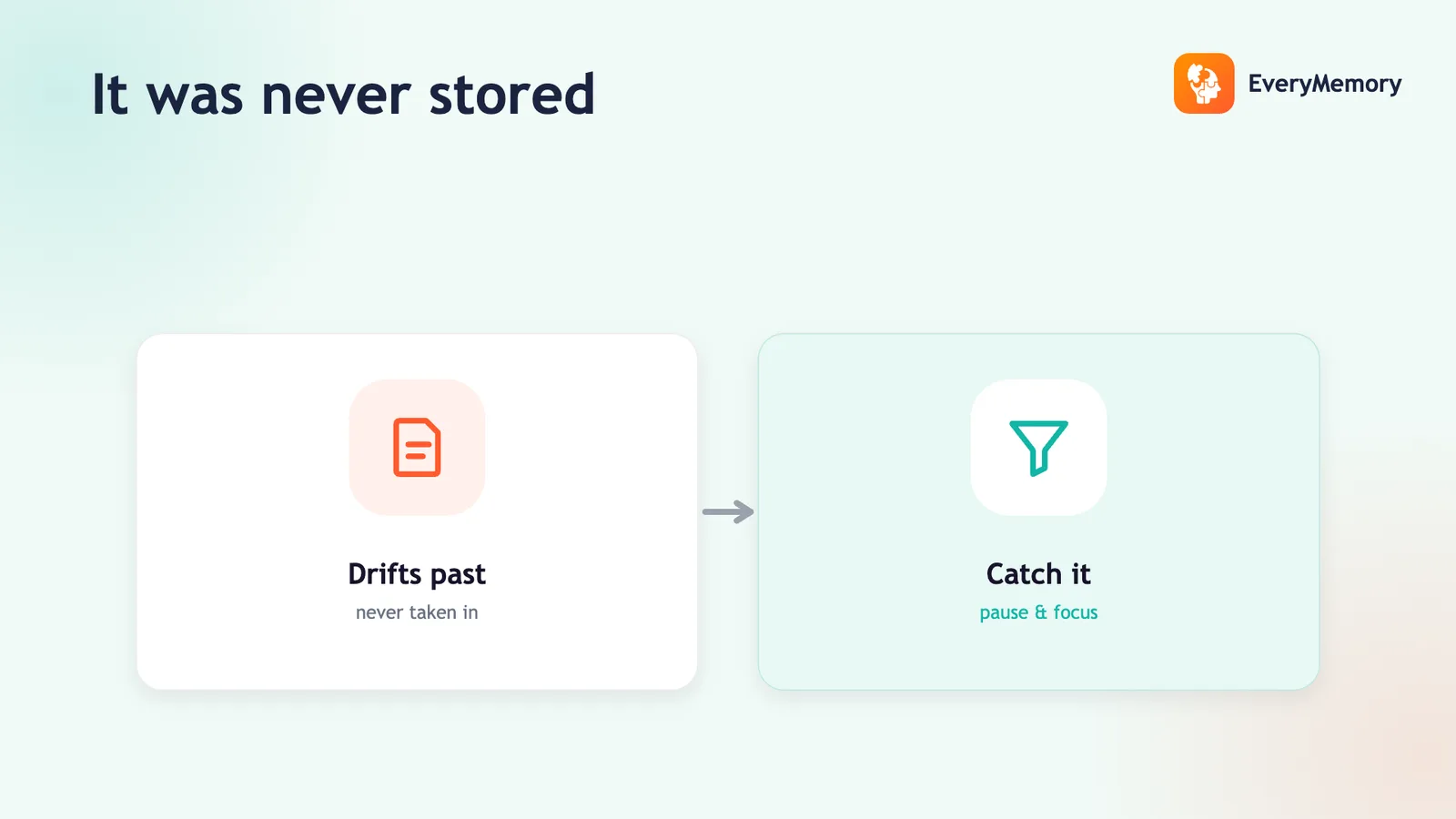
Why Do I Forget Things So Quickly?
Forgetting something seconds after hearing it usually means it was never stored - not that your memory is failing. Here's why it happens and how to make things stick.
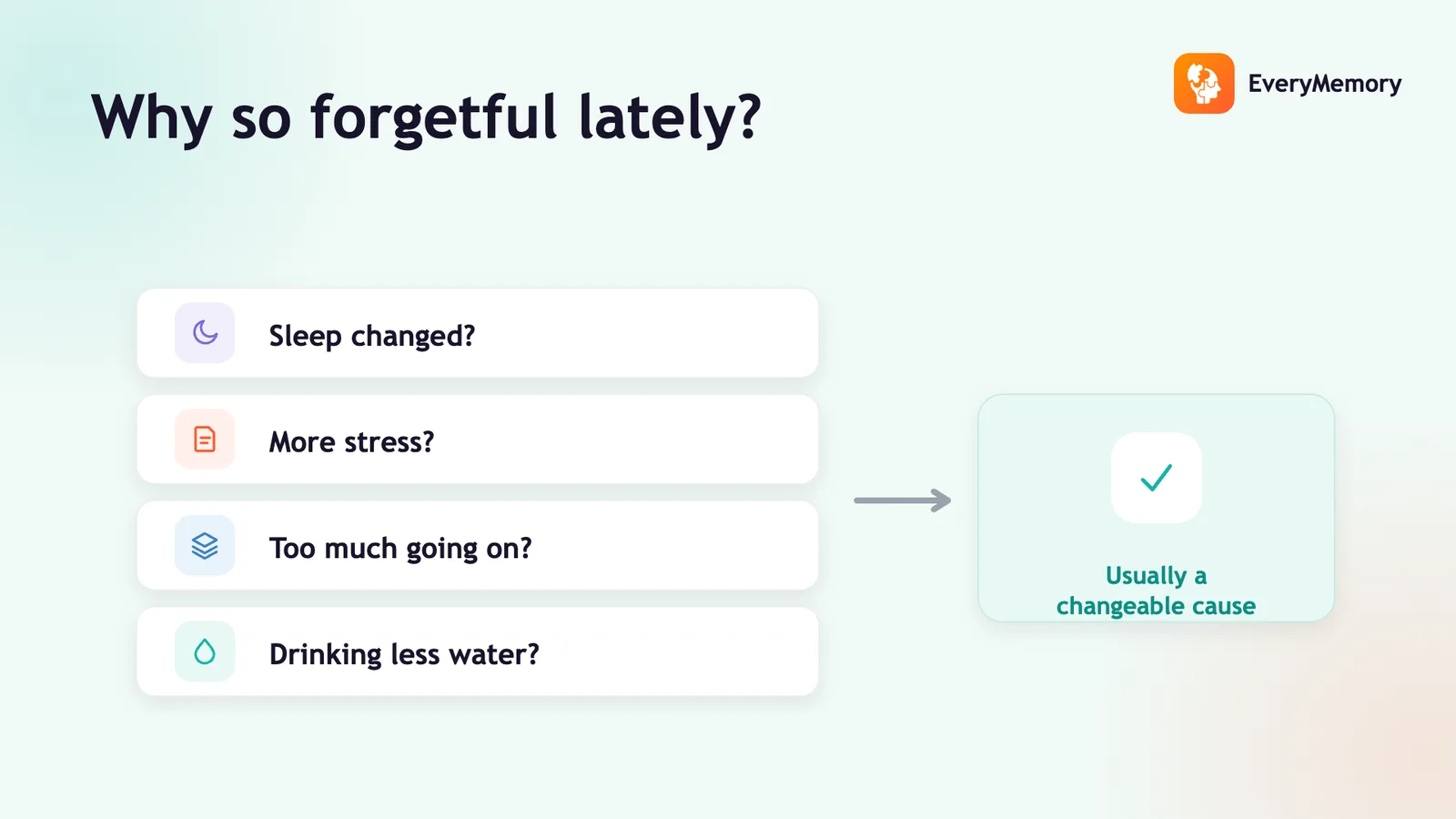
Why Am I So Forgetful Lately? Common Causes
If your memory has felt unreliable lately, the cause is most likely one of several very common, very changeable everyday factors - not something permanently wrong.
Information Overload: Why You Forget When There's Too Much
Forgetting names, losing your train of thought, re-reading the same sentence three times - these are not signs of a failing memory. They are signs of an overloaded one. Here is what is happening and how to fix it.
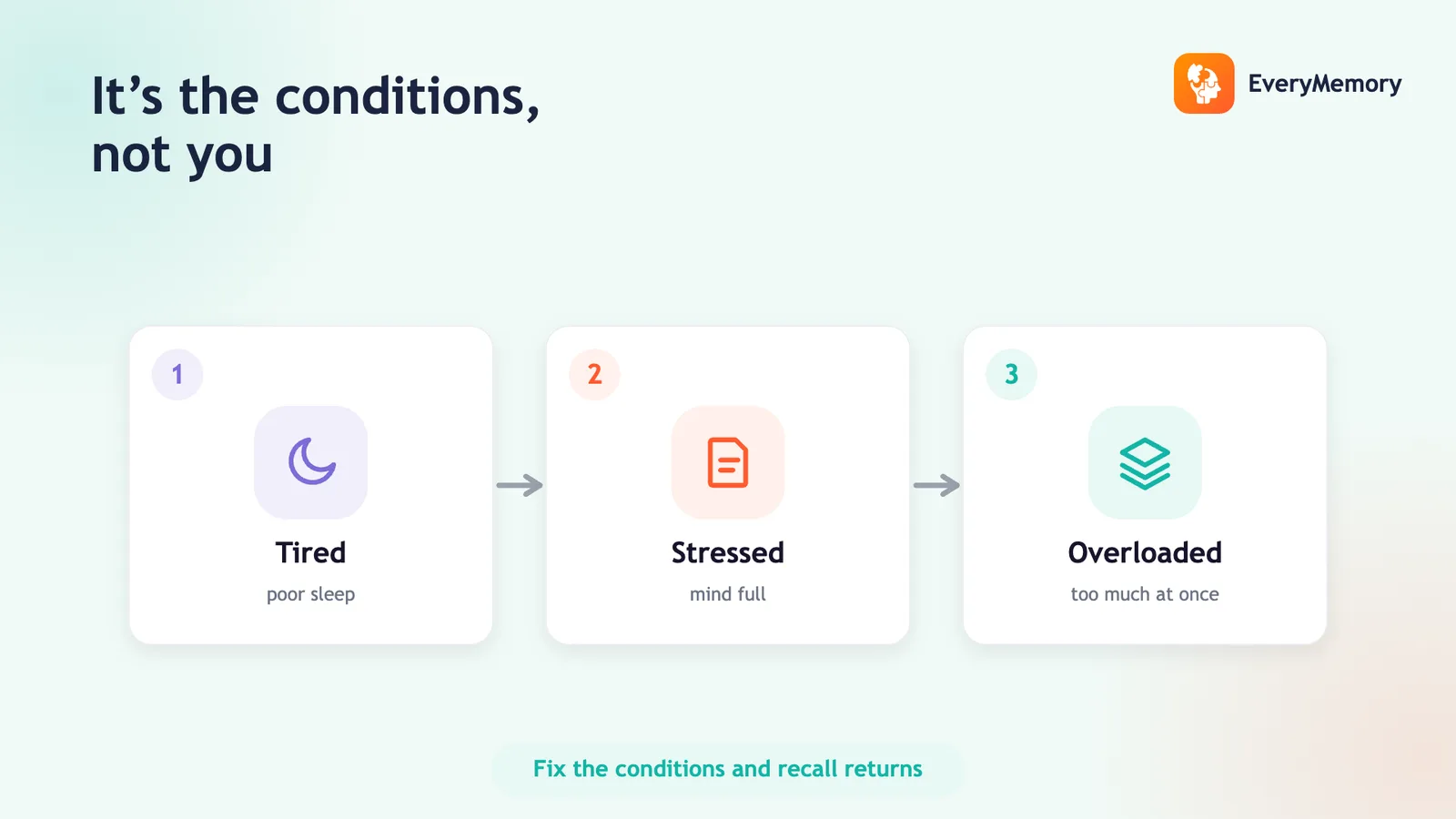
Why Is My Memory Getting Worse?
If your memory feels worse lately, the cause is usually the conditions around it - not your memory itself. The common, fixable reasons, and when it's worth checking.
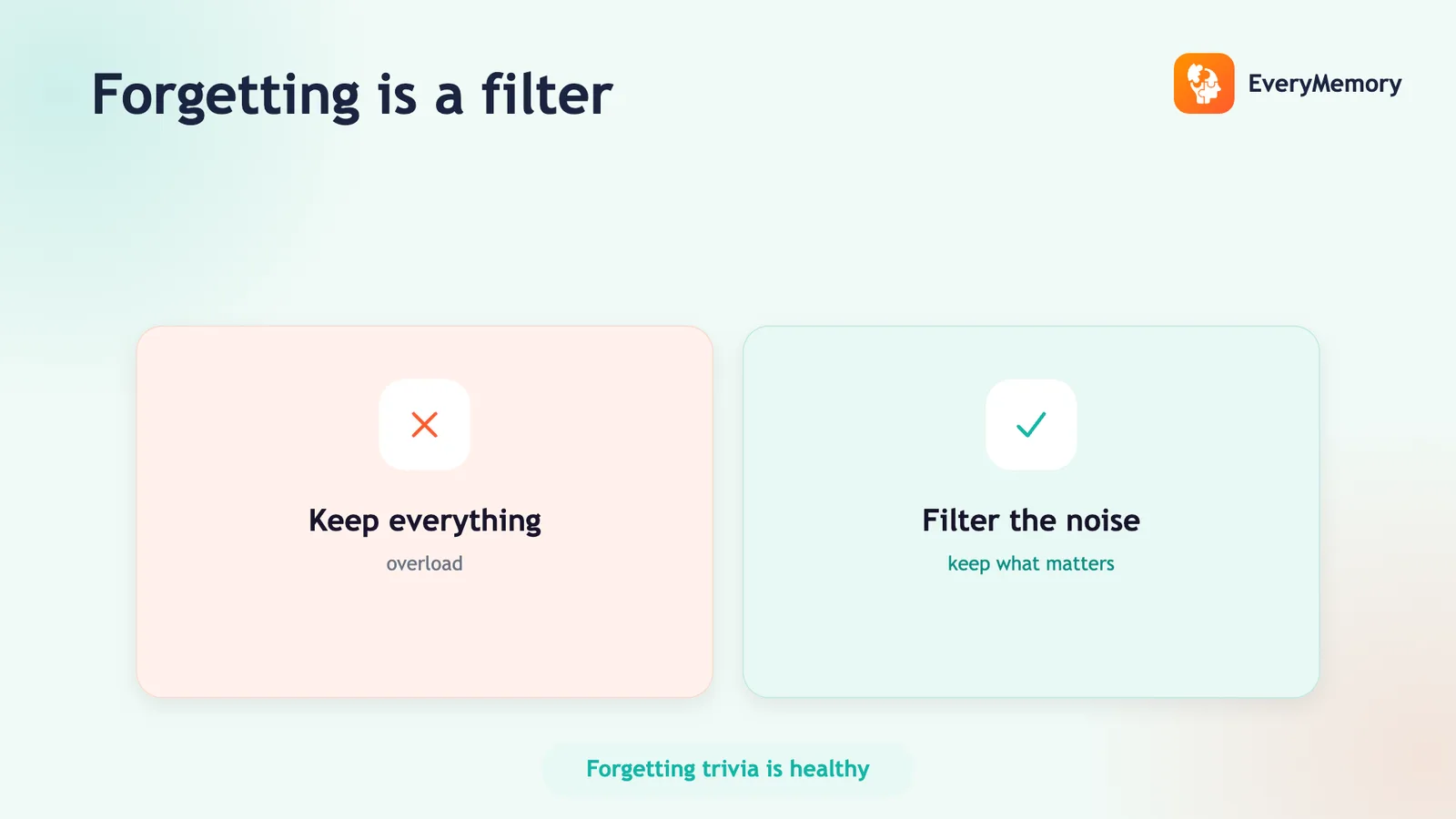
Is It Normal to Be Forgetful?
Everyday forgetfulness is normal at every age - it's how memory filters and prioritises. What's ordinary, what makes it worse, and where the line is.
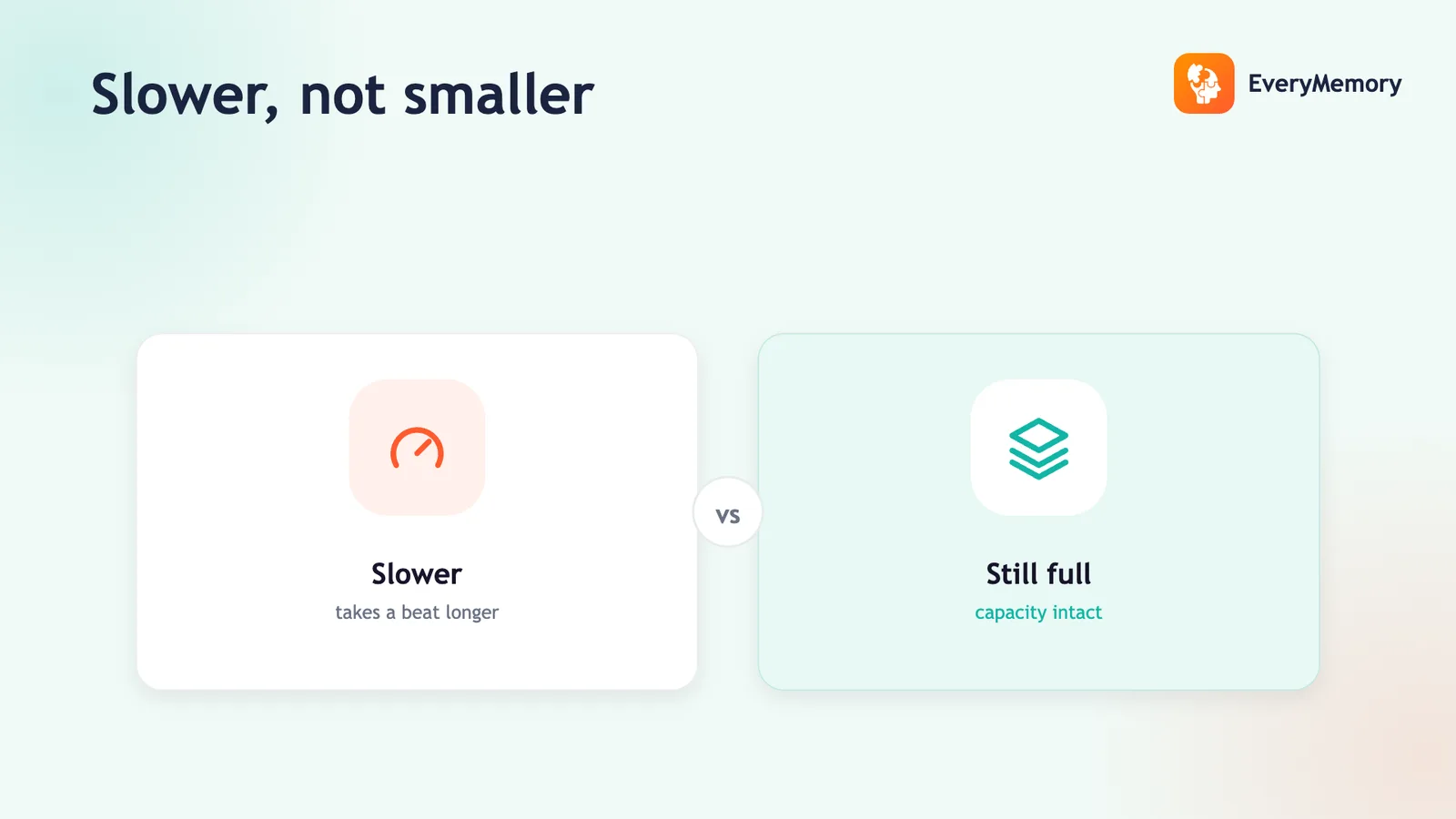
How Does Memory Change With Age?
With age, memory changes mostly in speed, not capacity - and some kinds get stronger. What actually changes, what stays, and why it's usually nothing to worry about.
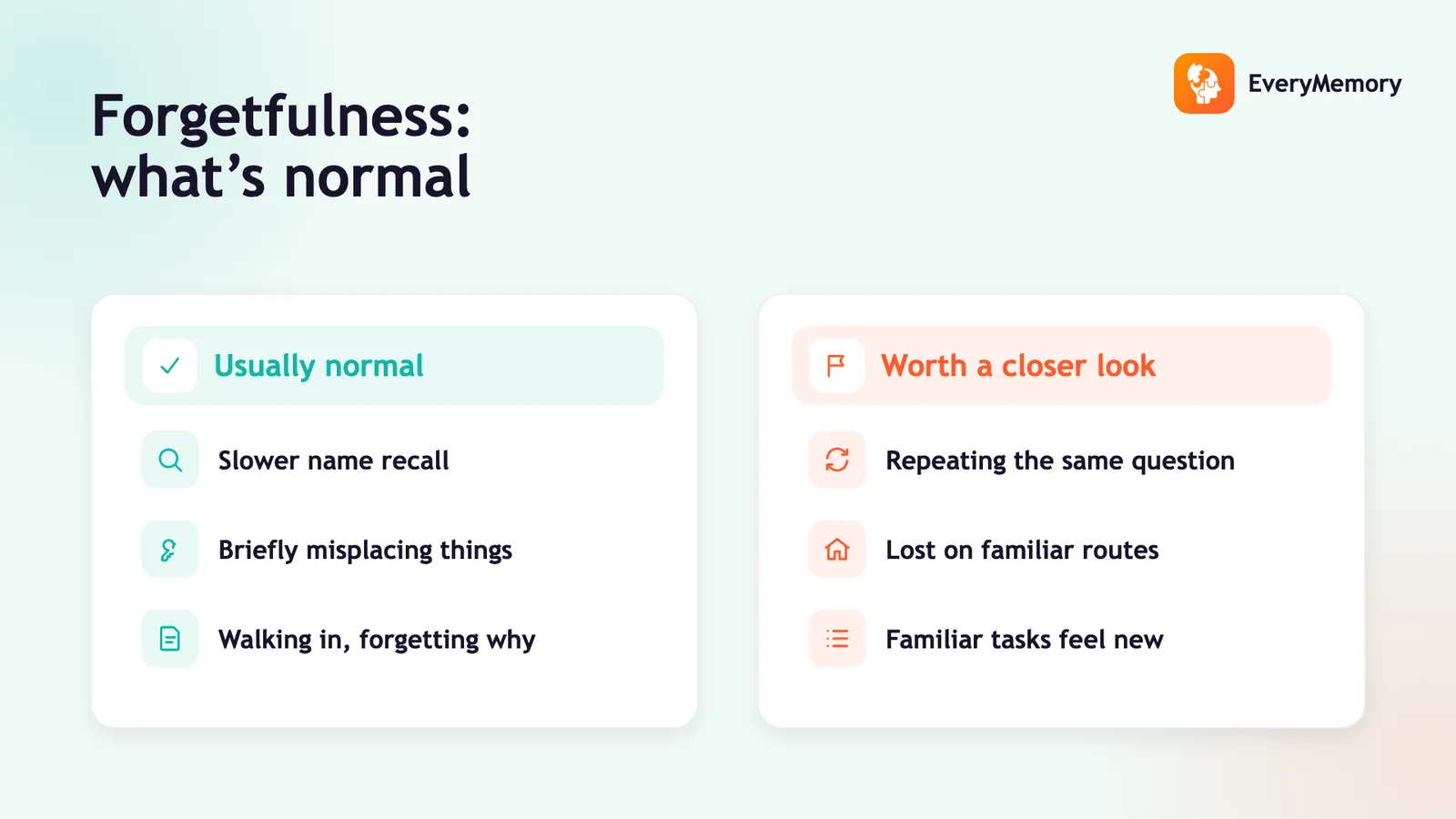
Understanding Memory Loss and Forgetfulness: A Calm, Reassuring Guide
Most everyday forgetfulness is normal - and explainable. A reassuring overview of what causes it, what changes with age, and when a professional's view is worth seeking.
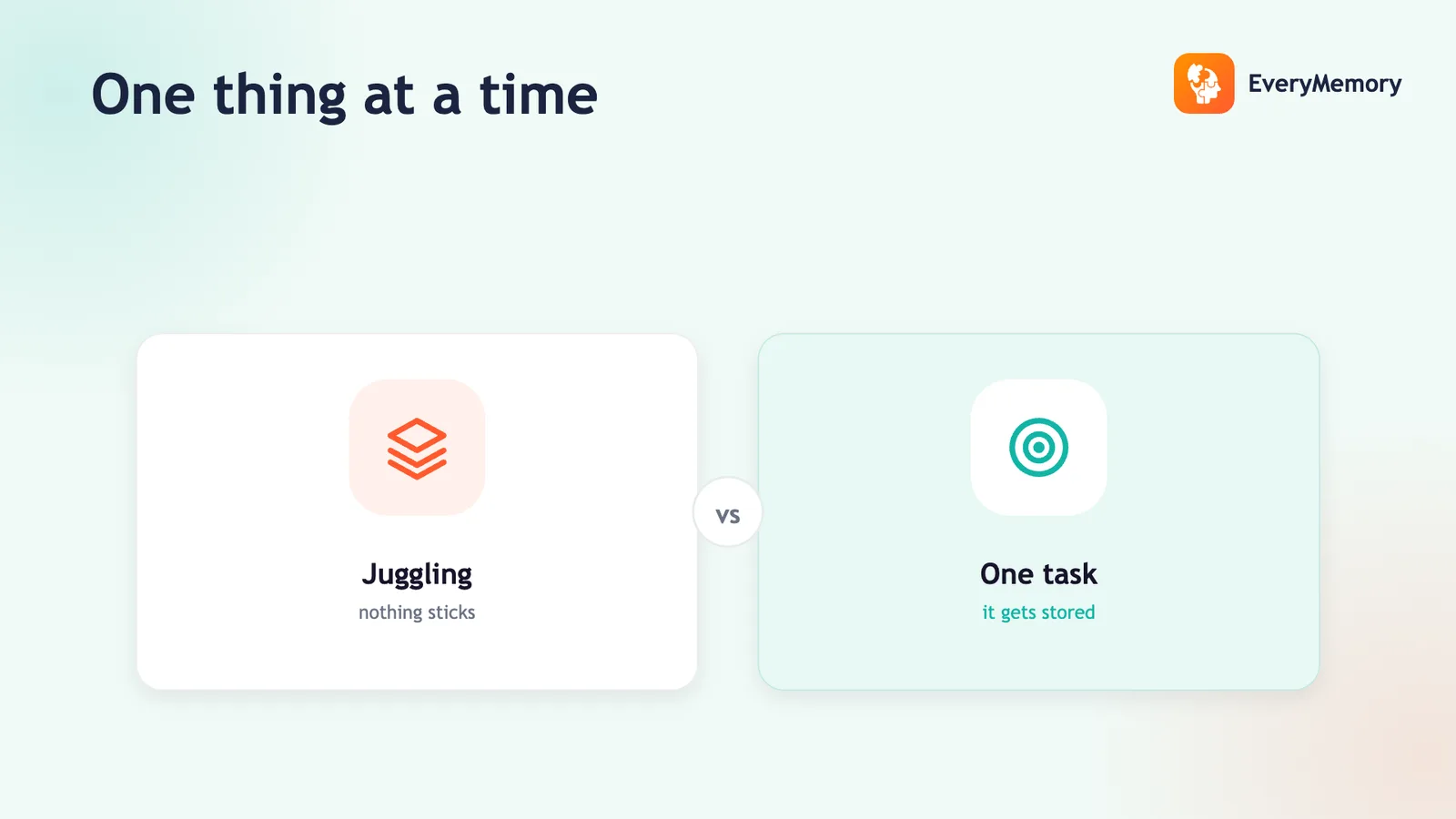
Does Multitasking Affect Your Memory?
Yes - multitasking is one of the most common reasons things slip your memory, because what you don't attend to in the moment never gets stored. Why it happens, and the fix.
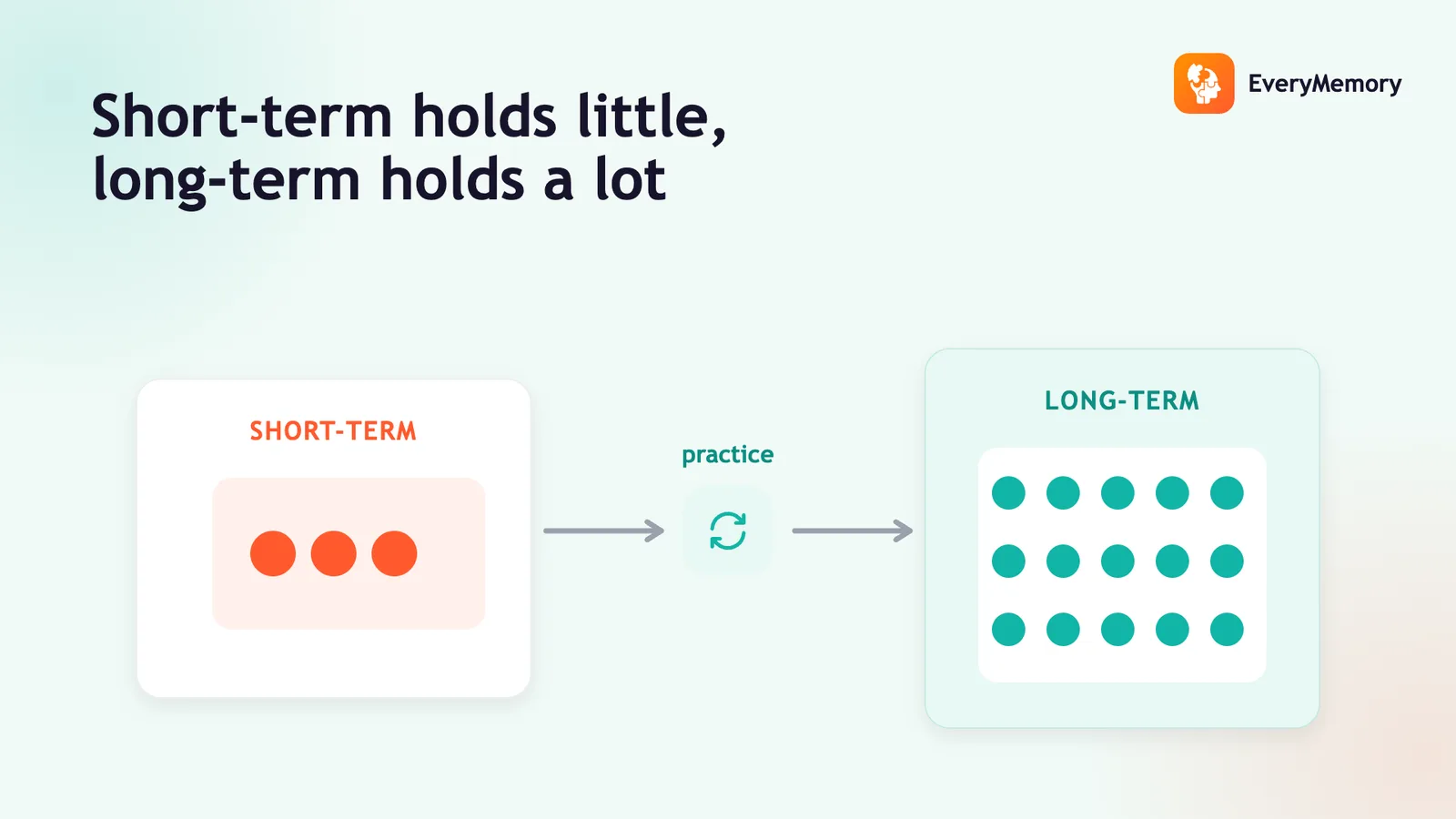
Short-Term vs Long-Term Memory: What's the Difference?
Short-term and long-term memory are genuinely different systems. Understanding the contrast helps explain why some things slip immediately while others last a lifetime.
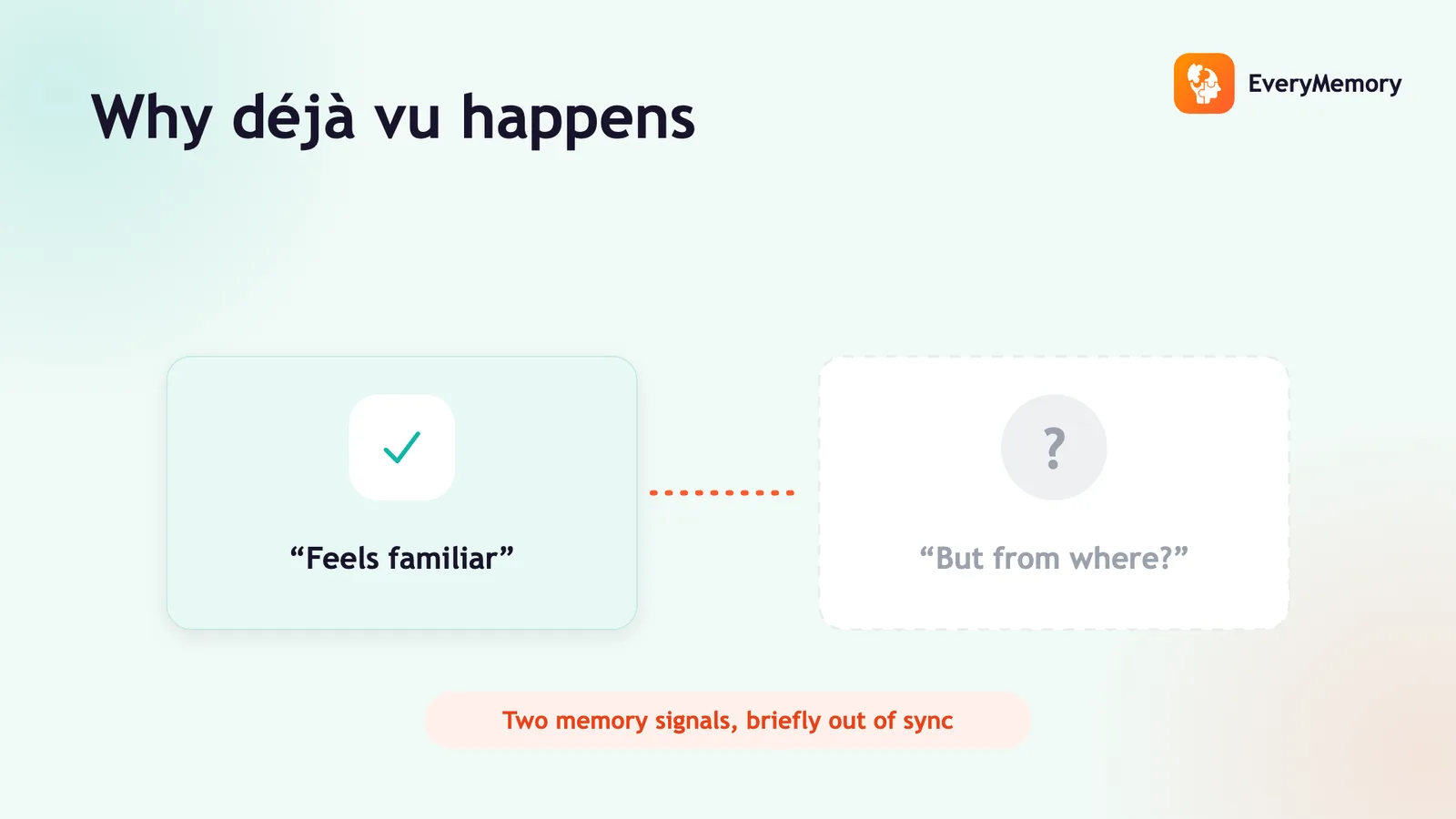
What Is Déjà Vu? A Memory Glitch Explained
That eerie 'I've been here before' feeling has a surprisingly tidy scientific explanation - and it says something reassuring about how your brain checks its own work.
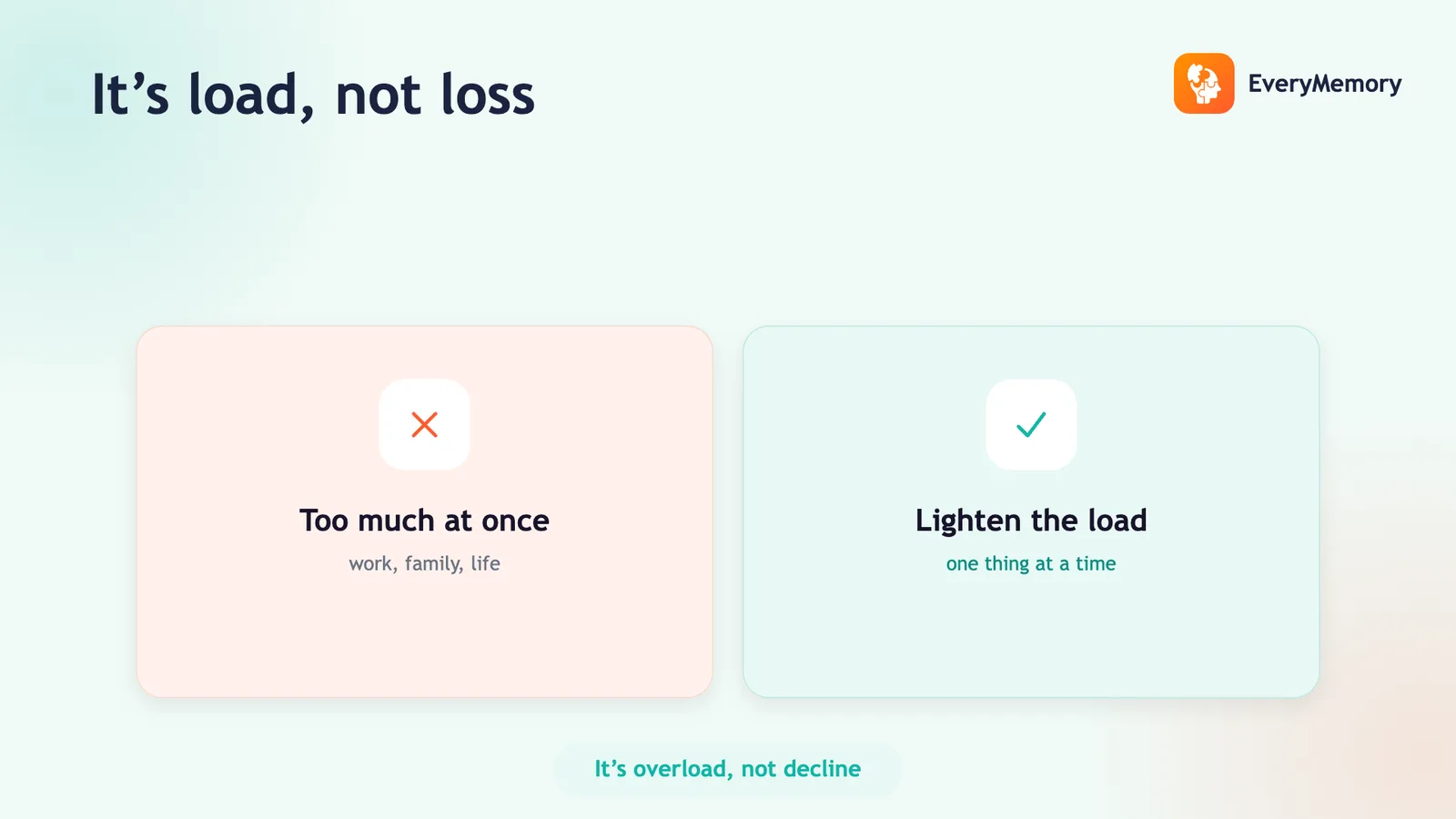
Forgetfulness in Your 40s and 50s: What's Going On?
Feeling more forgetful in midlife is common and usually about load, not loss. Why this stage feels forgetful, and what genuinely helps.
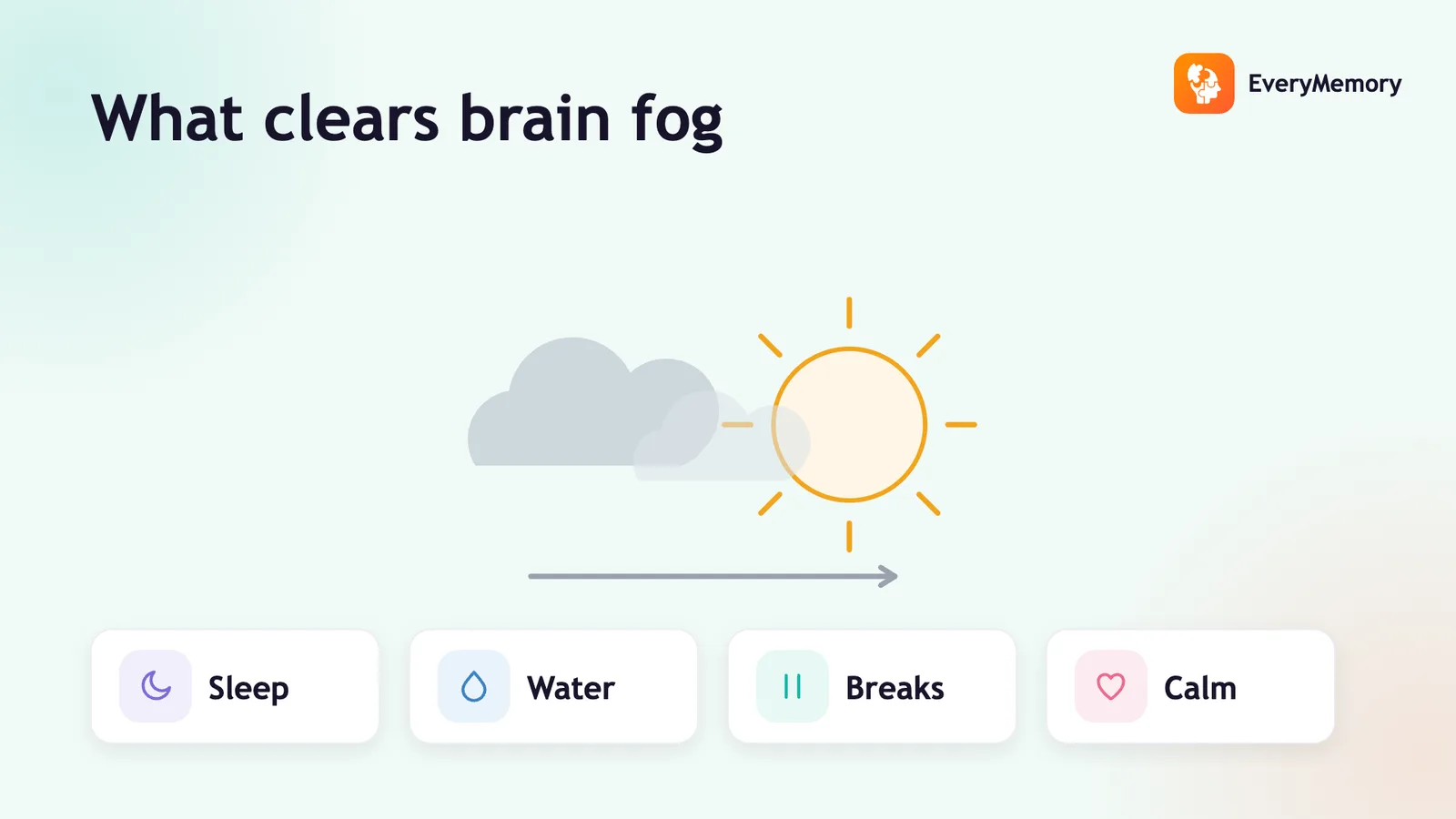
Brain Fog: Common Causes and What Can Help
That cloudy, slow-thinking feeling has a name - brain fog - and it's usually tied to everyday factors like poor sleep, stress, or dehydration that you can actually do something about.
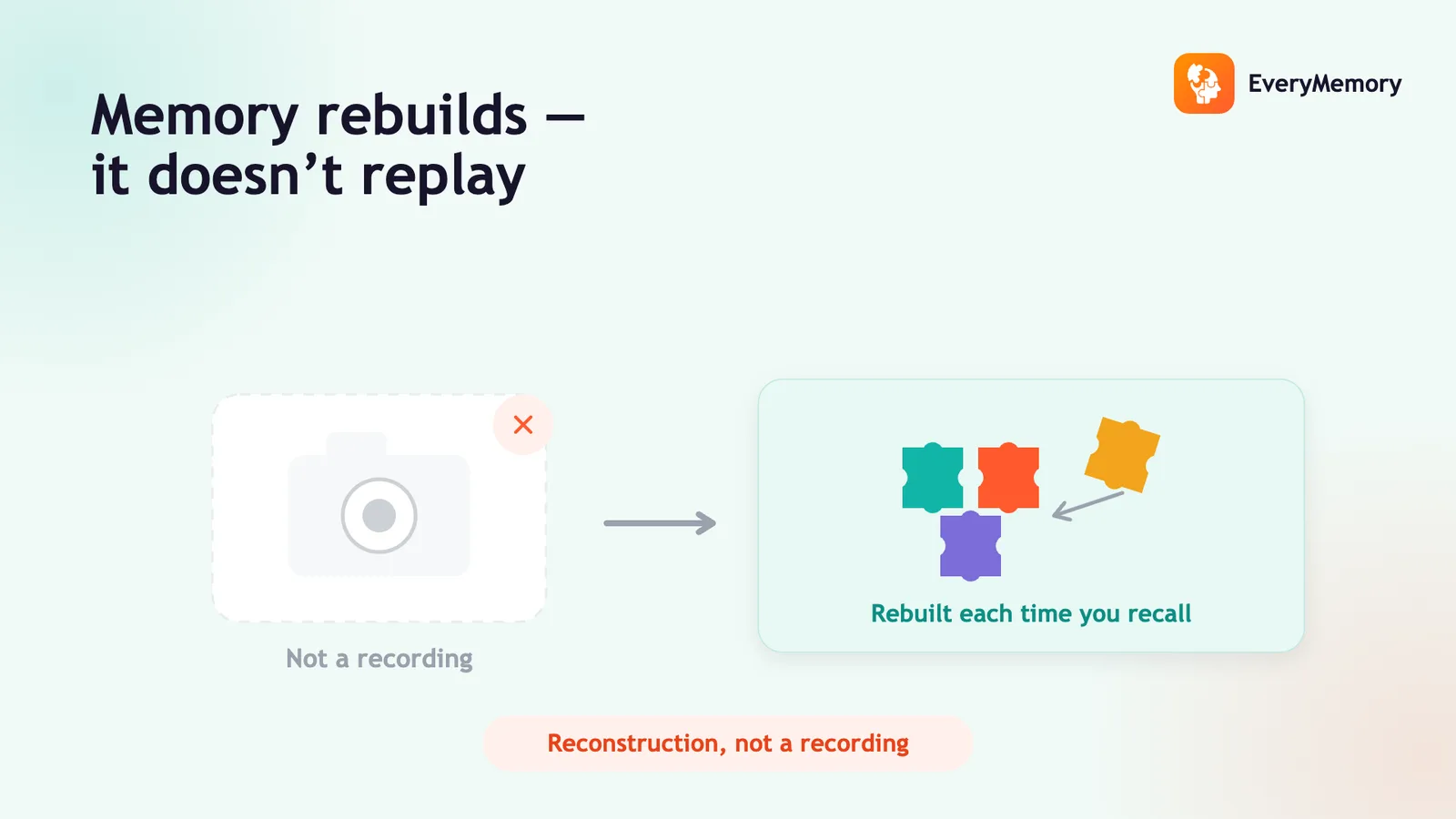
Why Your Memory Isn't a Video Recording
Memory reconstructs the past rather than replaying it - which is why two people recall the same event differently, details shift over time, and a vivid memory can still be imperfect.
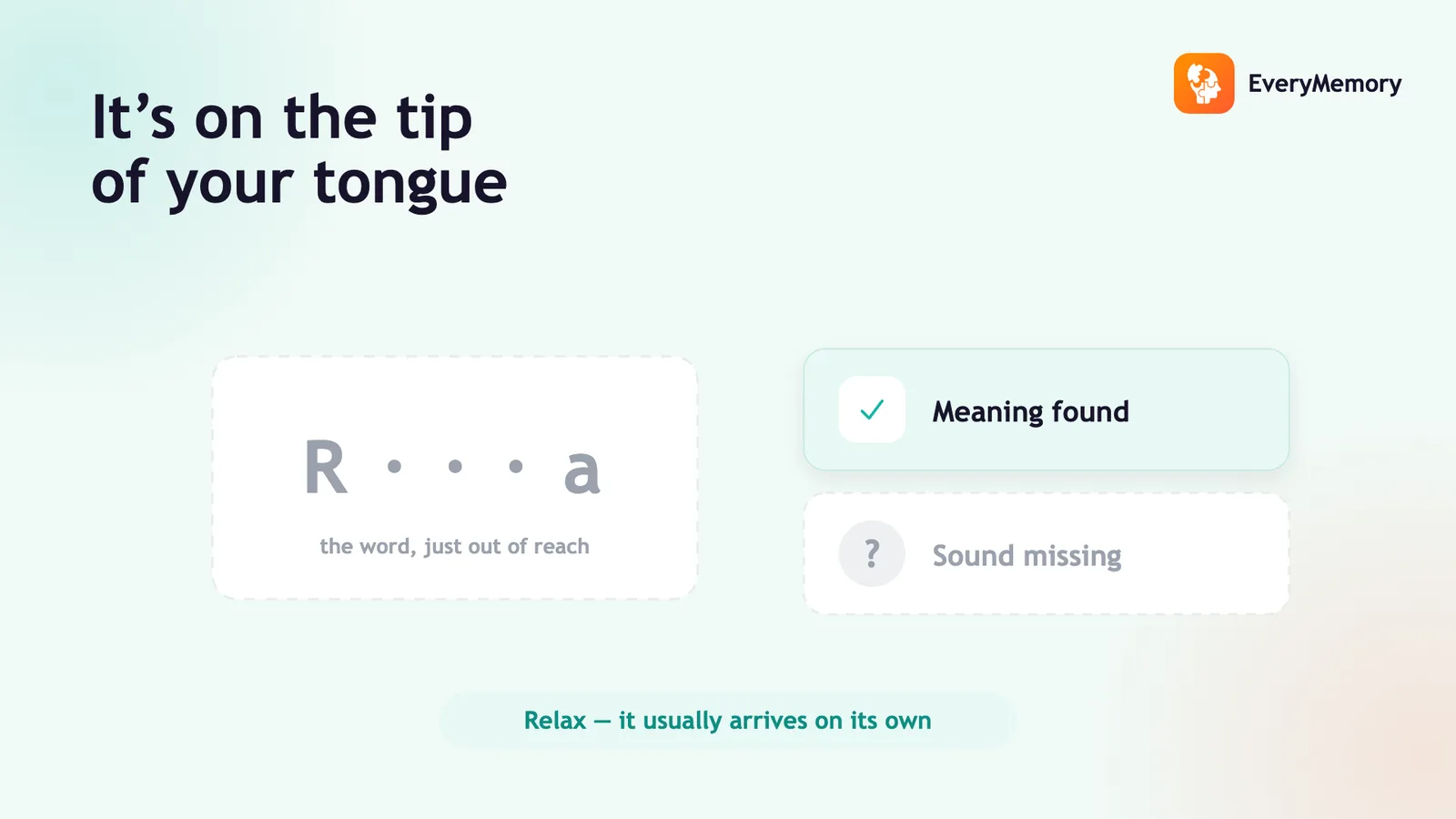
Tip of the Tongue: Why Words Get Stuck
That maddening moment when a word hovers just out of reach is called the tip-of-the-tongue state - a normal retrieval hiccup, not a warning sign, and it almost always resolves on its own.
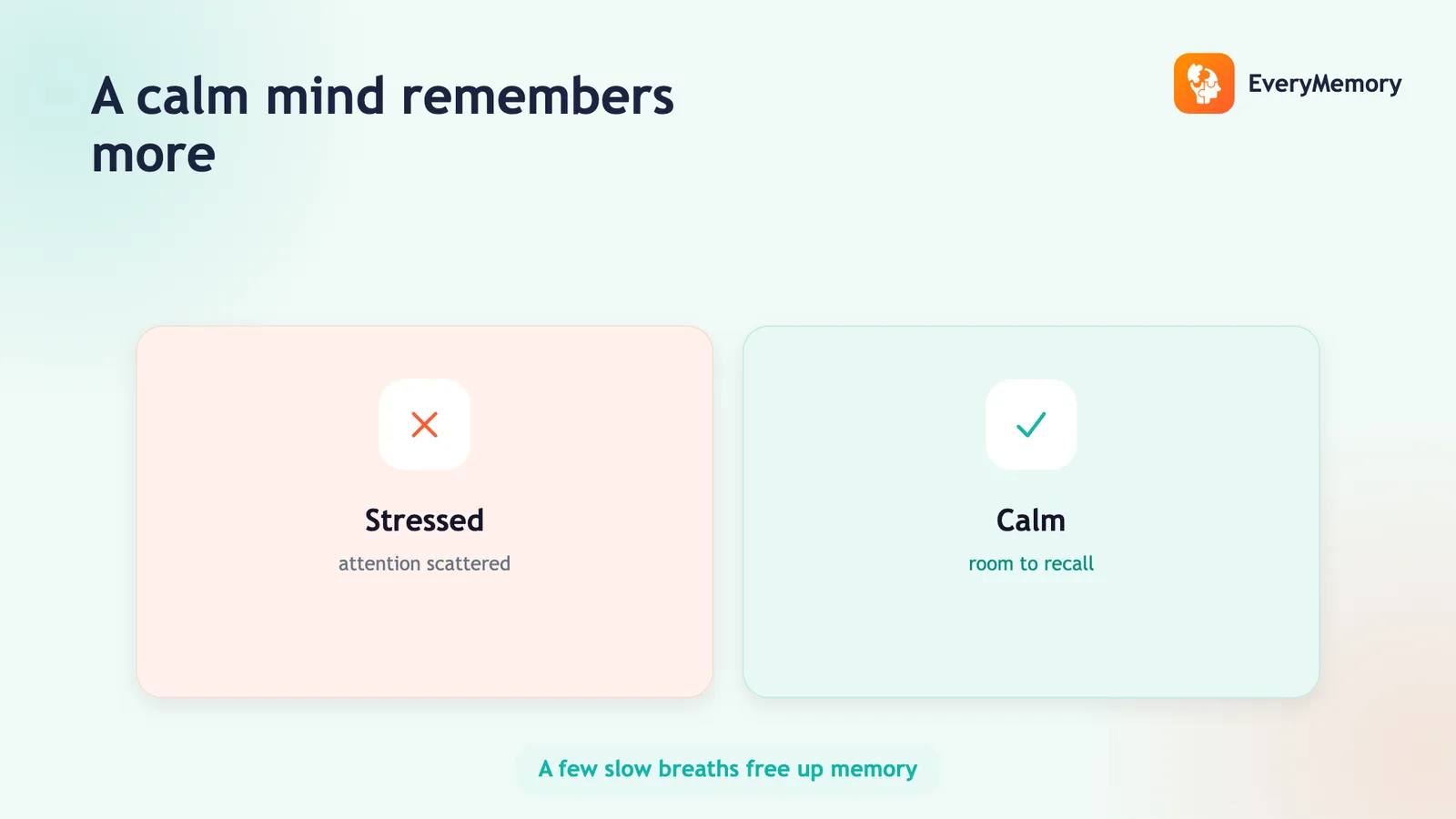
Does Stress Cause Forgetfulness?
Yes - stress is one of the most common everyday causes of forgetfulness. Why a busy, worried mind forgets more, and what actually helps.
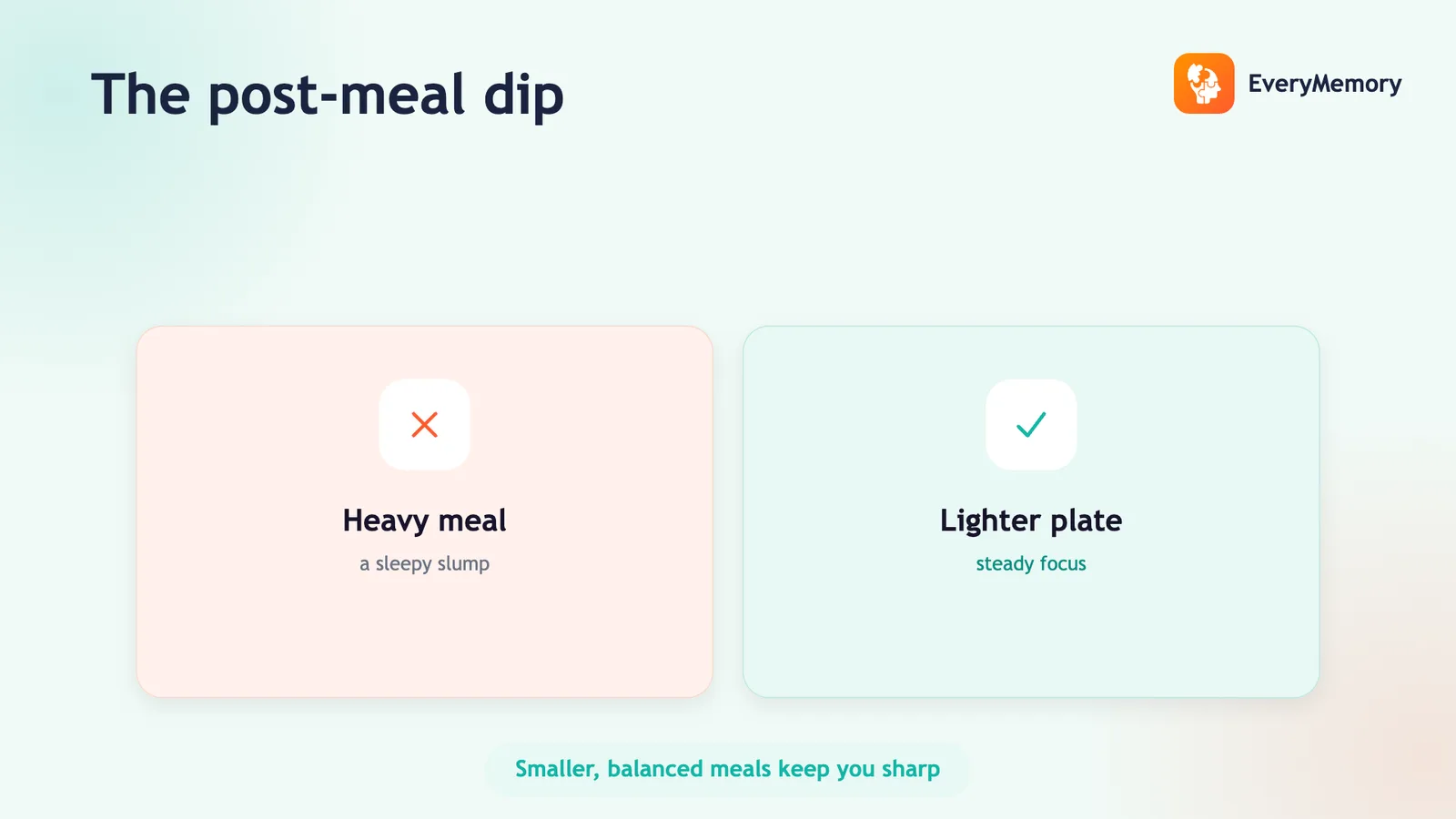
Brain Fog After Eating: Why It Happens
Feeling foggy or sleepy after a meal is common and usually harmless. Why it happens, which meals make it worse, and simple things that reduce it.
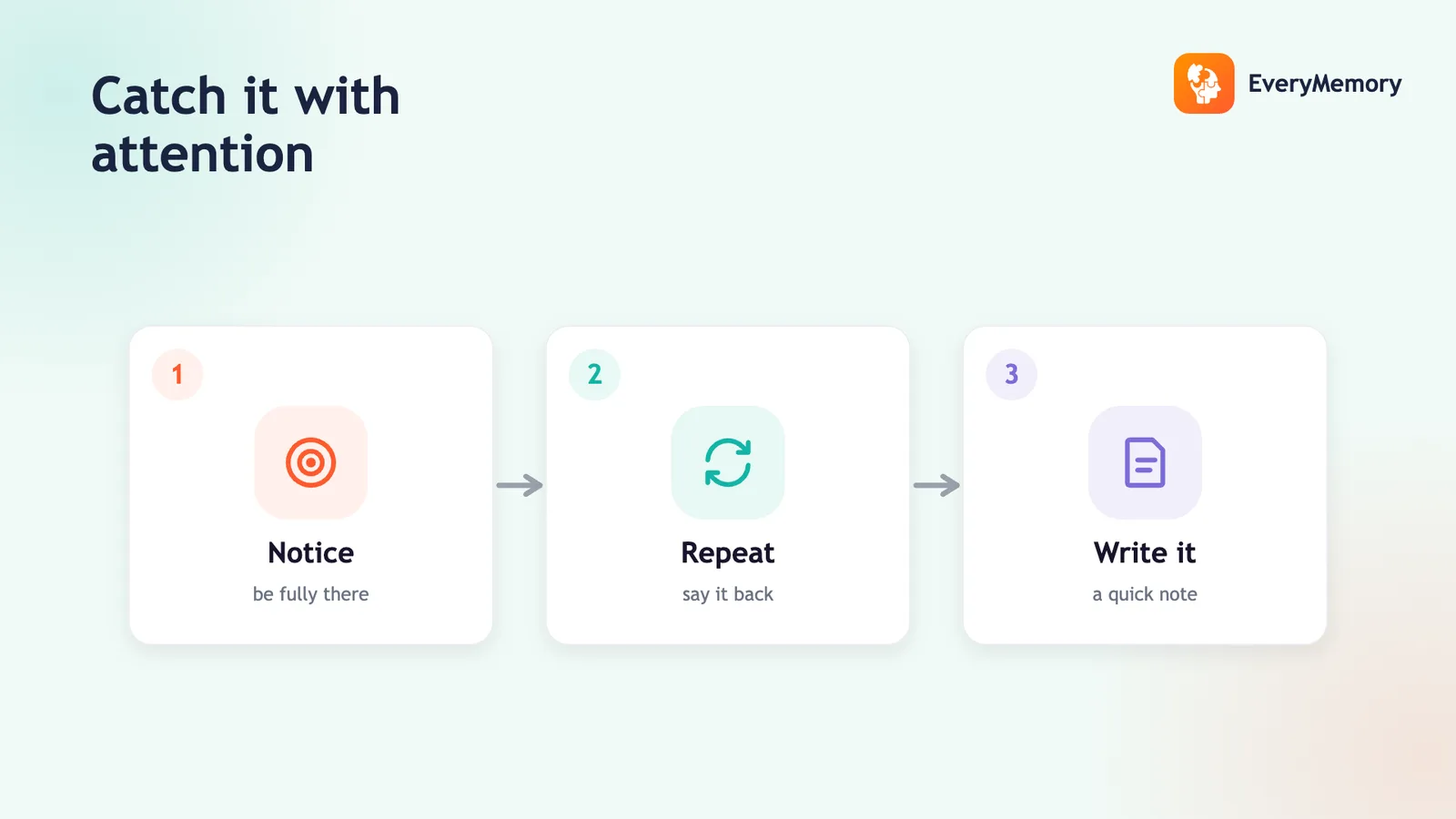
How to Stop Forgetting Things
You can't stop forgetting entirely - but most everyday forgetting is avoidable, because it's an attention problem, not a memory one. The fixes that actually work.
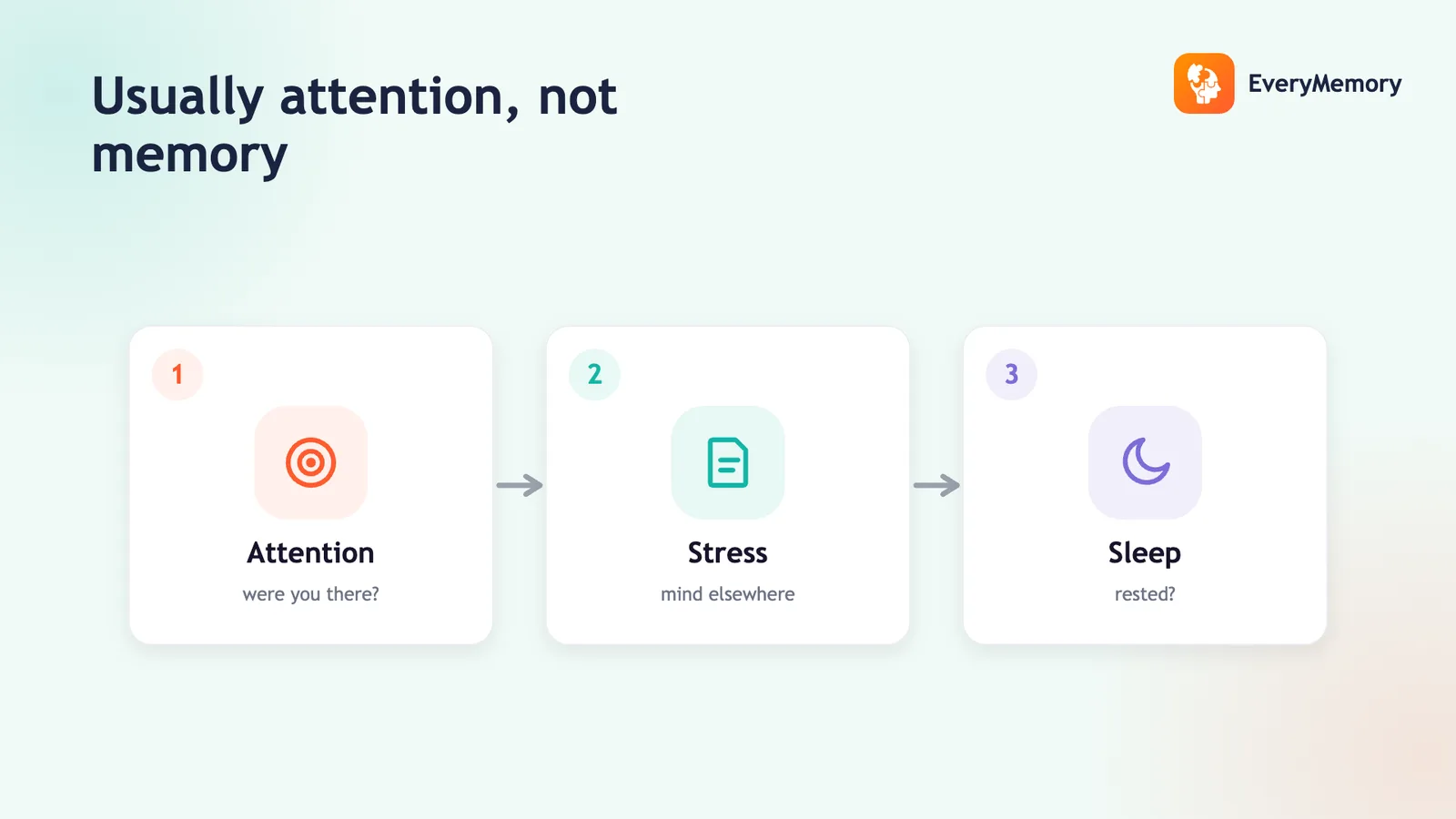
Memory Issues: Common Causes and What Helps
Most everyday memory issues are about attention, stress, and sleep - not failing memory. The common causes, what helps, and when they're worth checking.
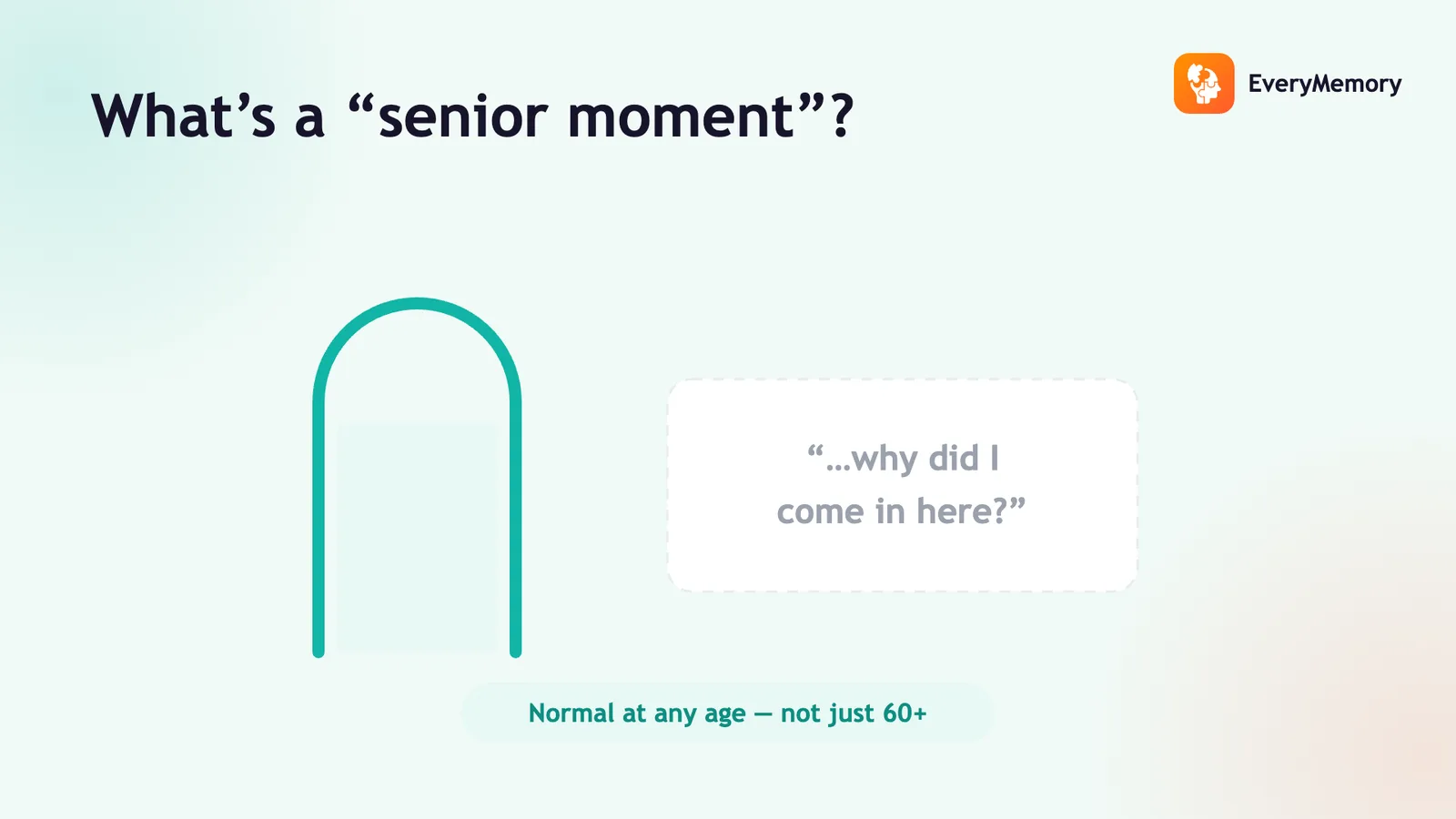
What Is a Senior Moment? A Reassuring Guide
Everyone has them - the lost name, the forgotten errand, the blank at the top of the stairs. Here's what a 'senior moment' actually is and why it happens at any age.
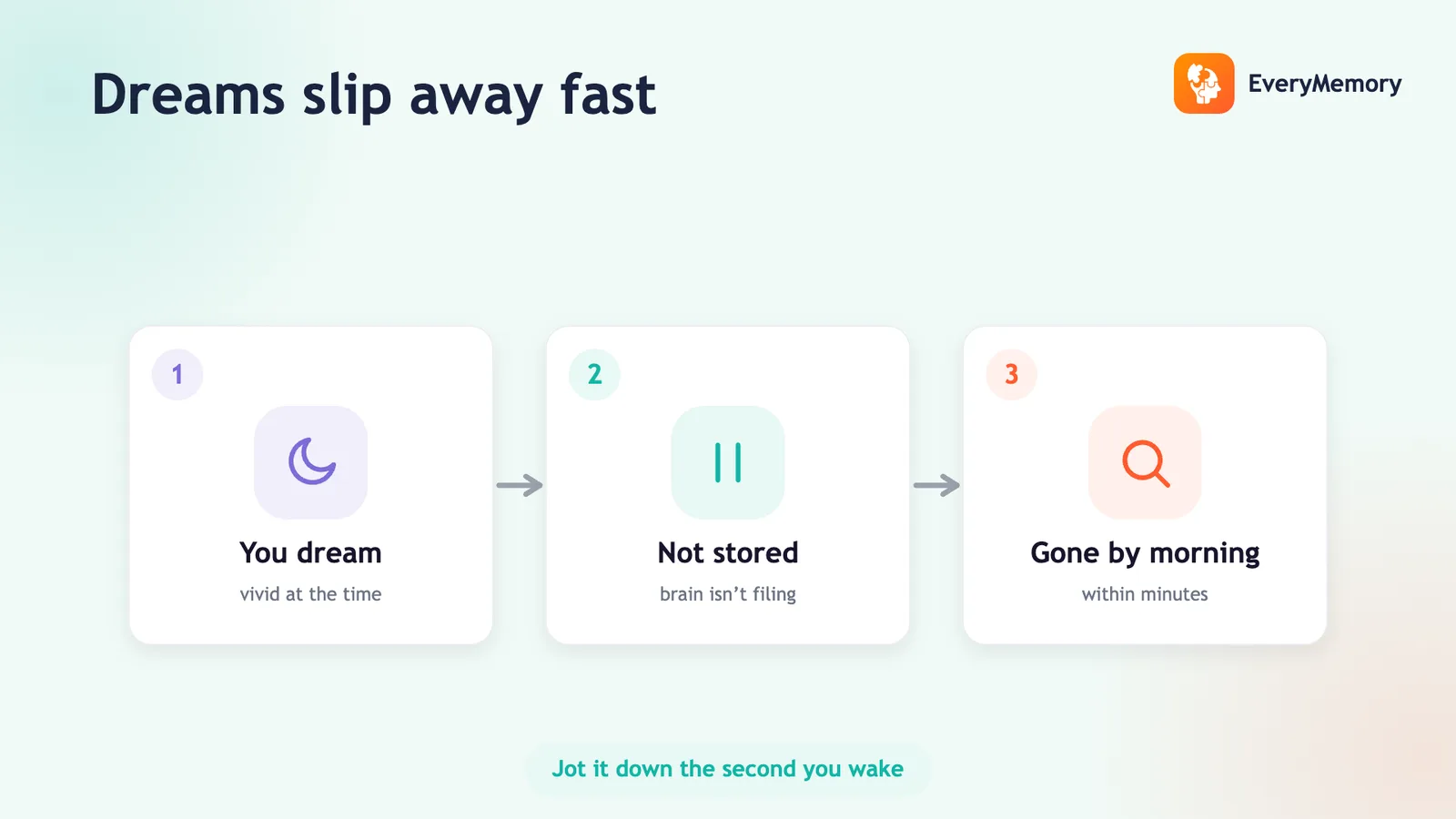
Why Do We Forget Our Dreams?
Dreams vanish within minutes because the sleeping brain isn't set up to store them. Why it happens, why some dreams stick, and how to remember more of them.
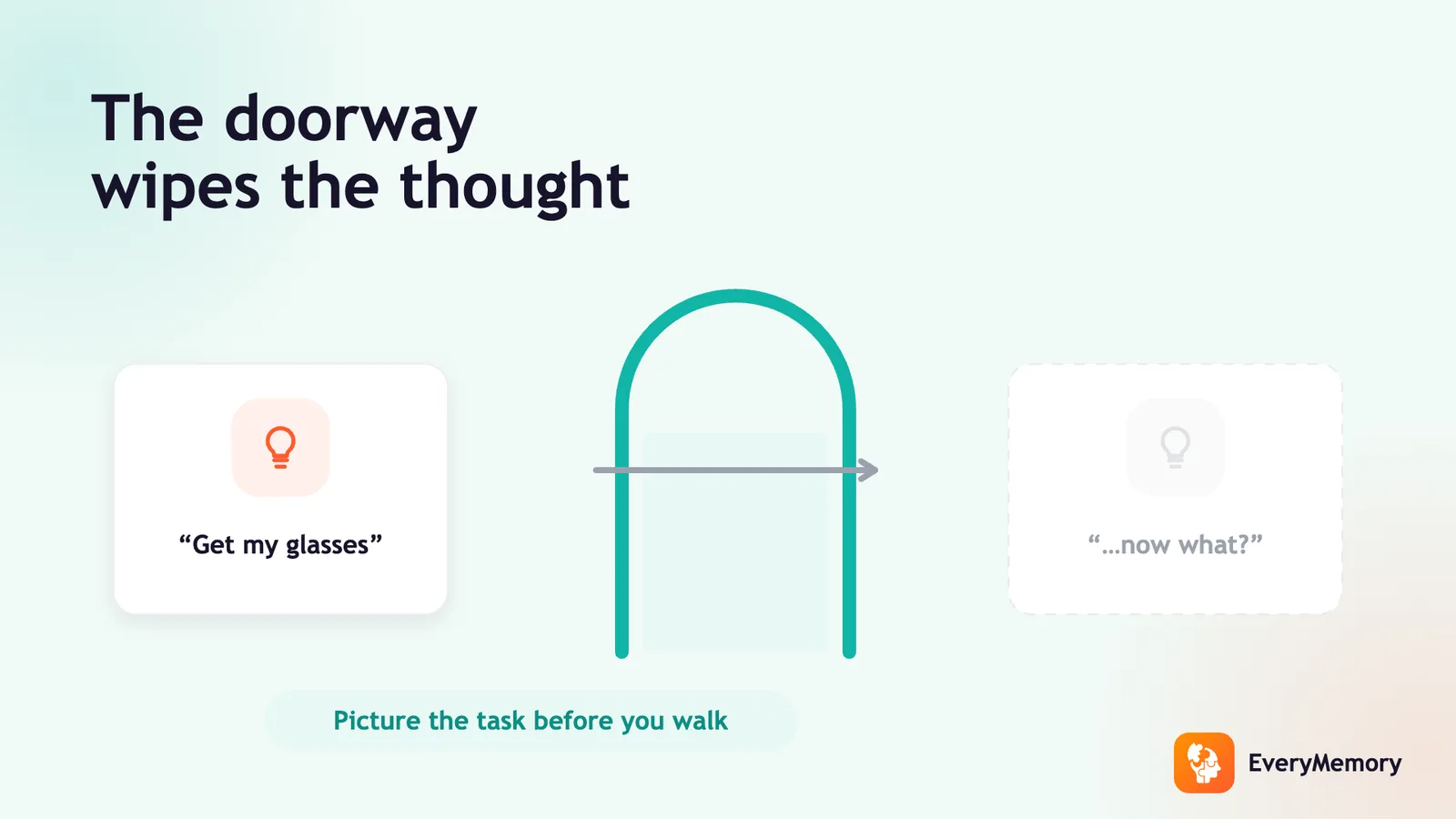
Why Do I Forget Why I Entered a Room?
Forgetting why you walked into a room is so common it has a name - and understanding it makes the fix much easier.
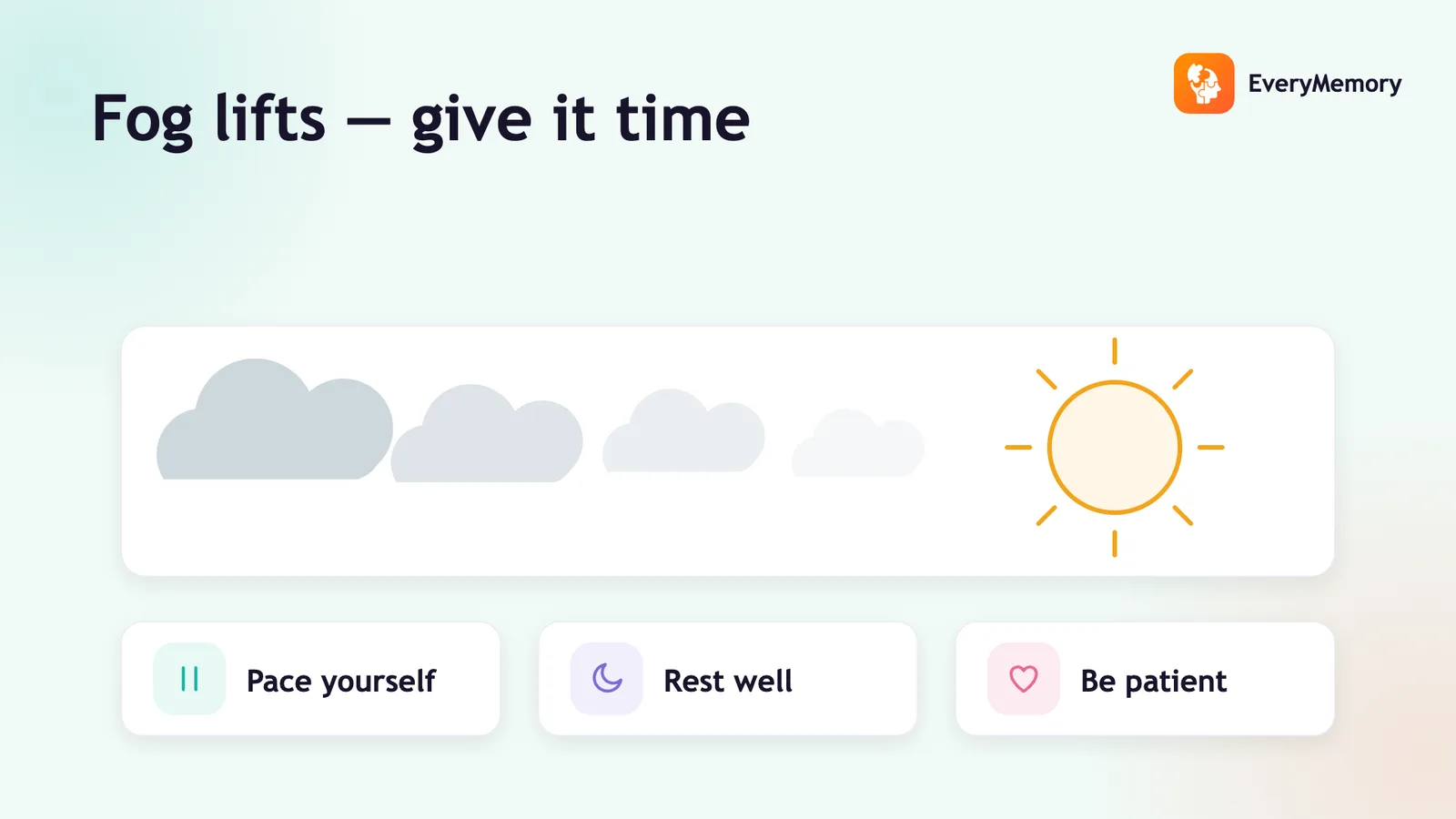
Long COVID Brain Fog: What Older Adults Report
Foggy thinking, word-finding trouble, and mental fatigue are among the most commonly reported experiences after COVID-19 - here is what older adults describe and what gently helps.
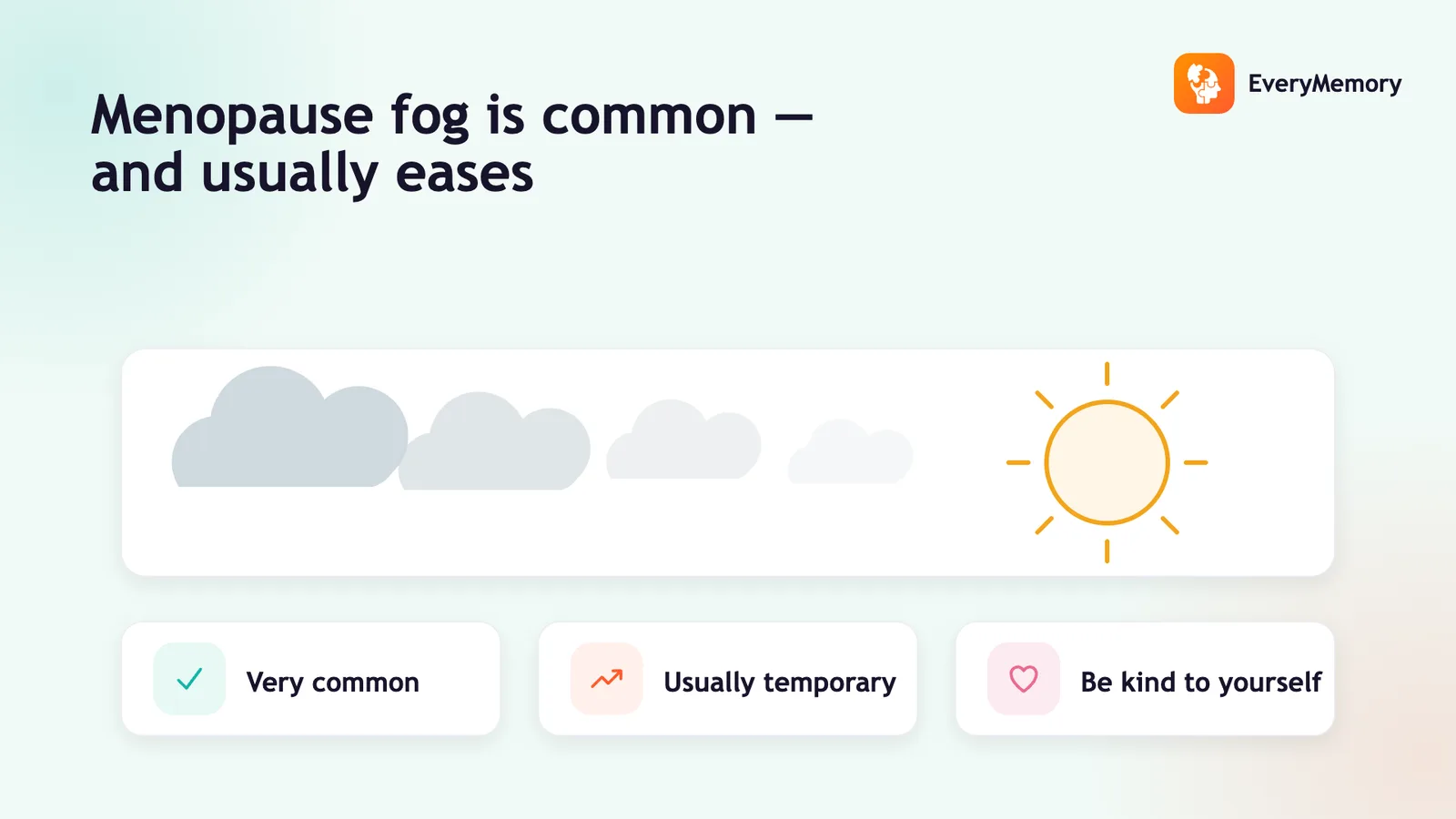
Menopause and Memory: What Women Should Know
Word-finding trouble, forgetfulness, and fuzzy focus are commonly reported during perimenopause and menopause - and for many women, these changes ease over time with the right everyday supports.
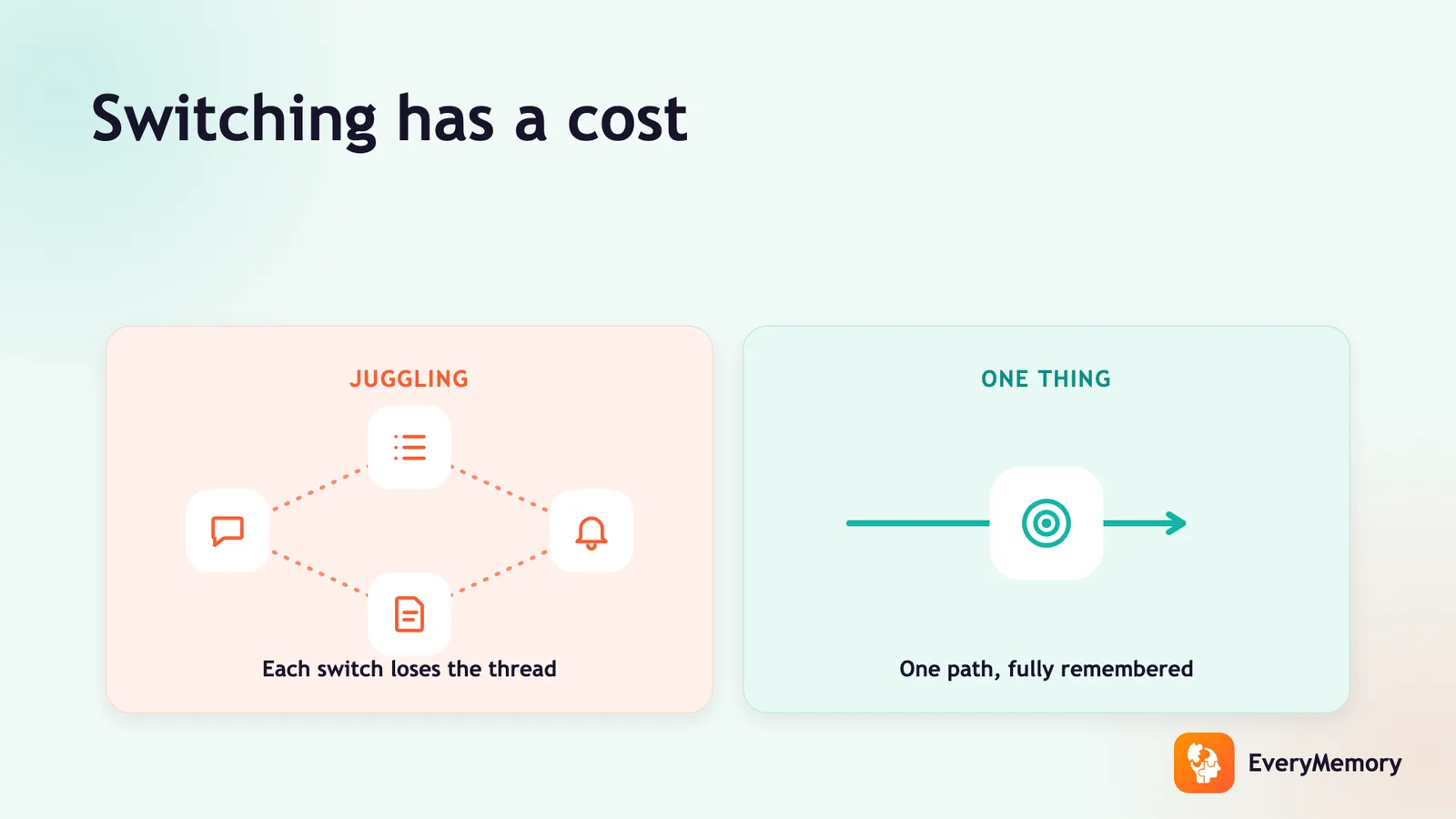
Why Multitasking Makes You Forgetful
Multitasking doesn't split your attention evenly - it switches it rapidly, and each switch leaves information too shallow to stick. Here's what's happening and how to fix it.
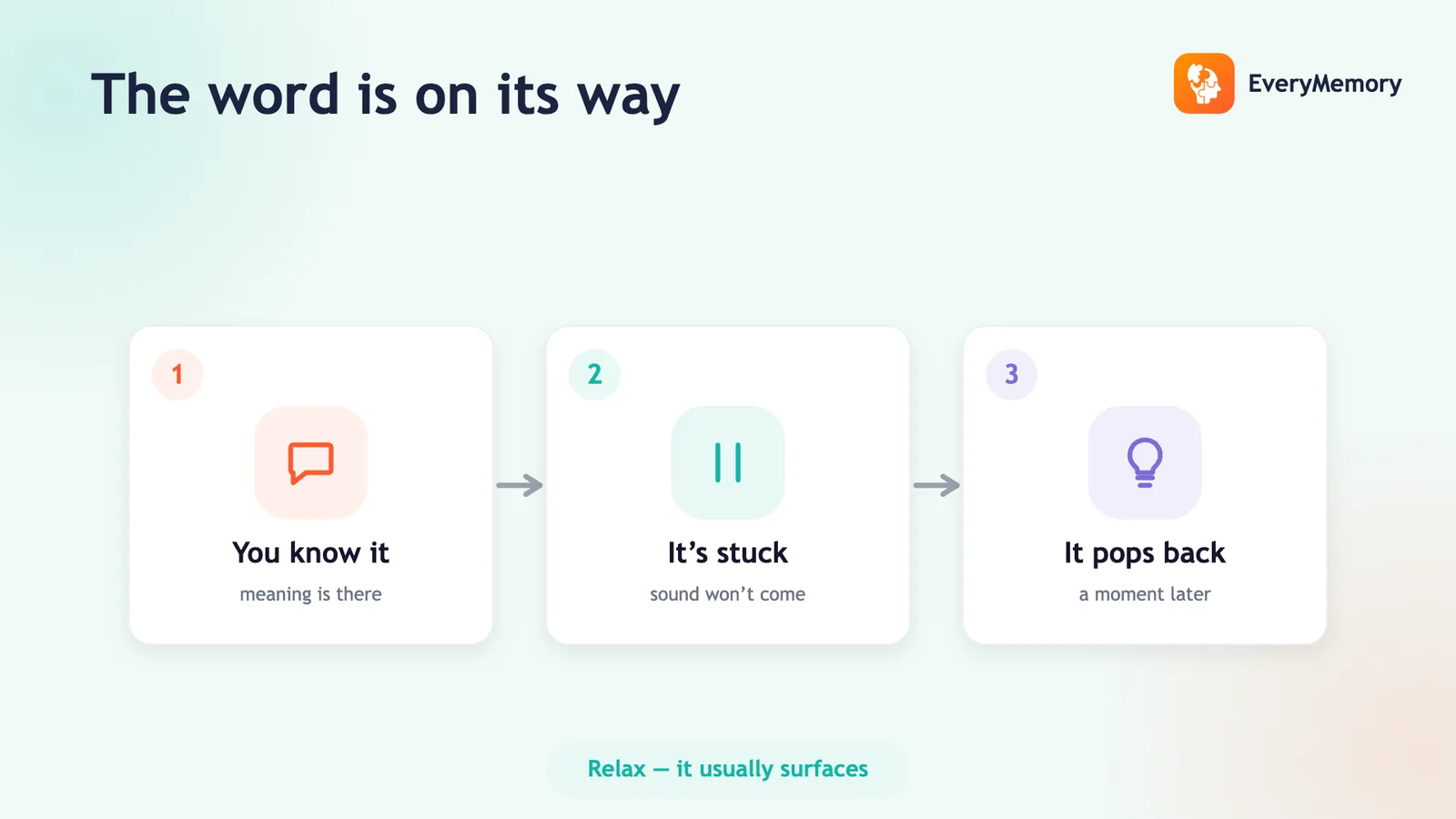
Why Do I Forget Words While Speaking?
That 'tip of the tongue' feeling - knowing the word but being unable to say it - is one of the most universal memory experiences. Here's what's really happening, and how to get the word back.
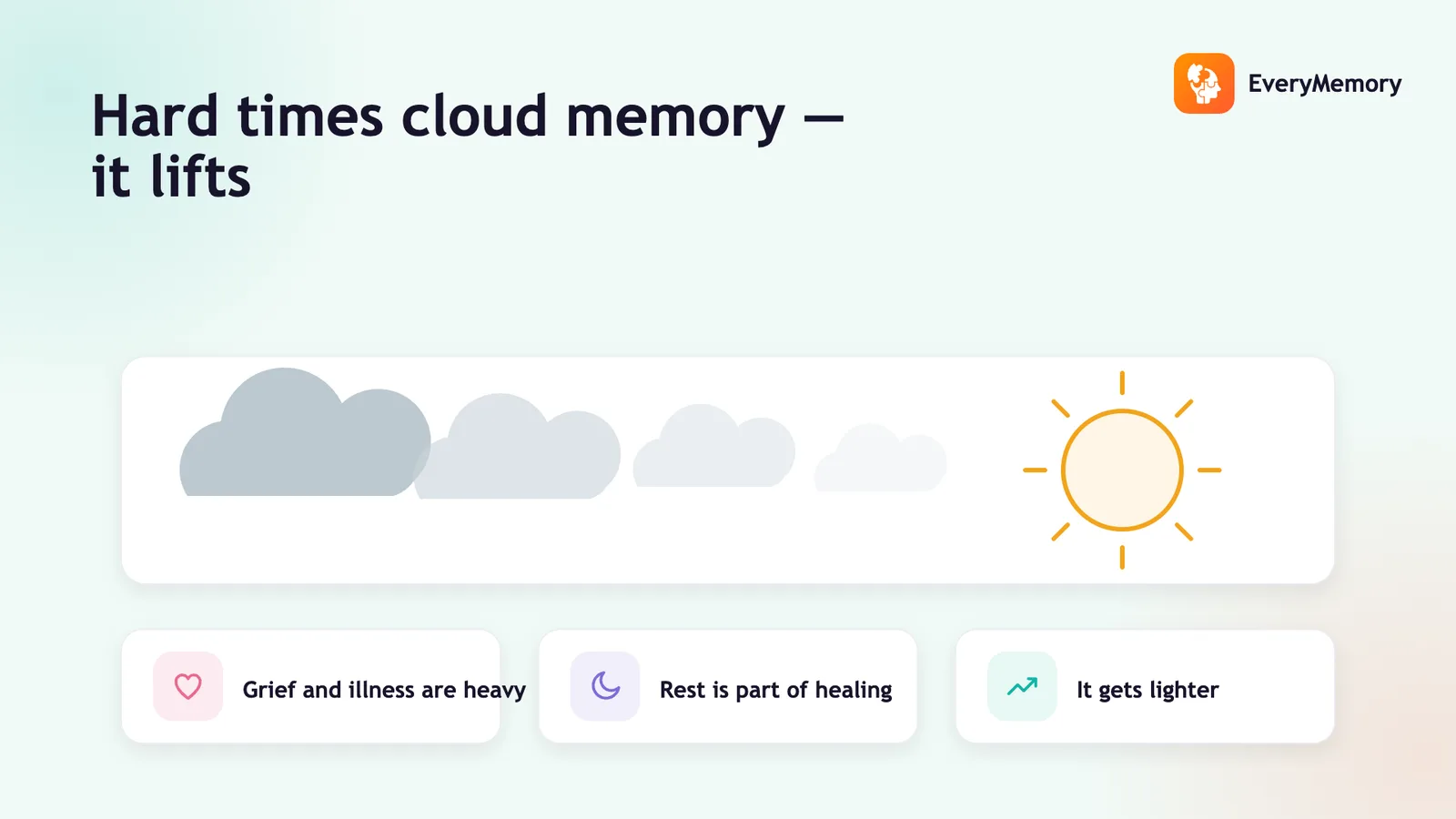
When Grief or Illness Makes You Forgetful
Big emotional events and physical illness often bring a temporary mental fog - forgetting where you put things, losing words mid-sentence, struggling to concentrate. Here's why it happens and how it often eases.
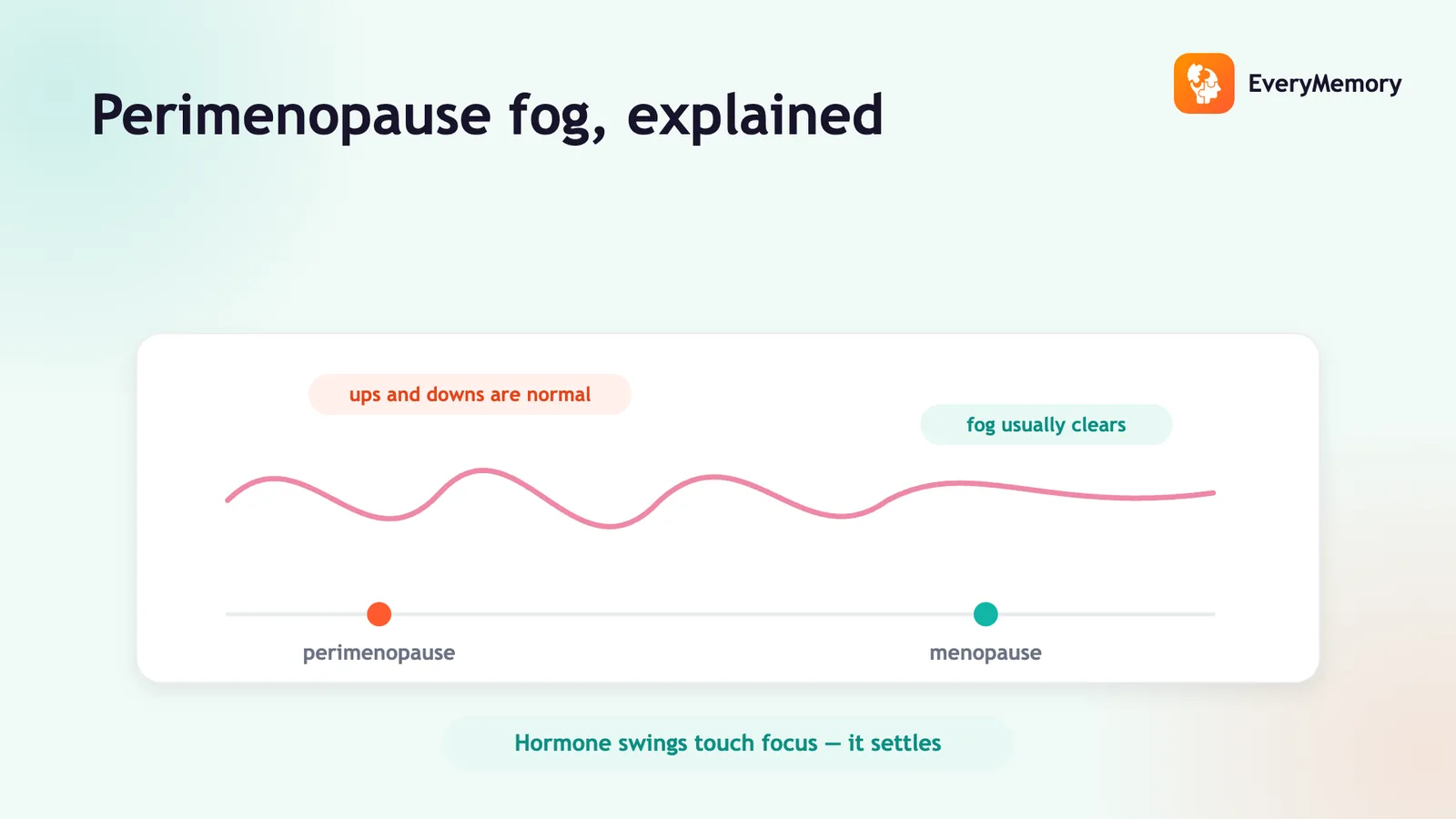
Perimenopause and Memory: What to Expect
Many women in their 40s and early 50s notice word-finding trouble, foggy focus, and unexpected forgetfulness - and perimenopause is one of the most commonly cited reasons why.
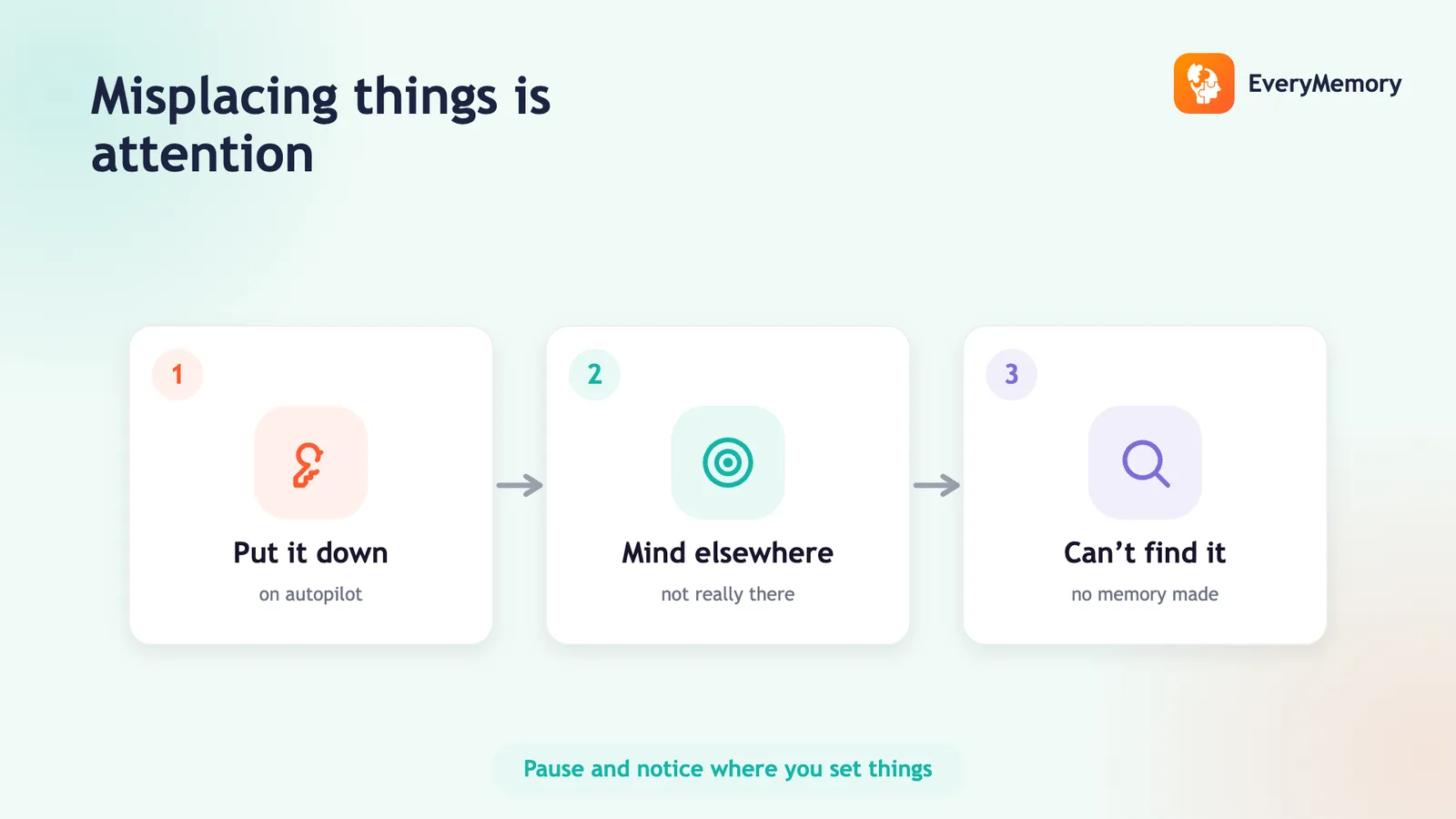
Why Do I Keep Misplacing Things?
Constantly hunting for your keys, glasses, or phone usually points to attention - not memory. Here's why it happens, and how two small habits can end the daily search.
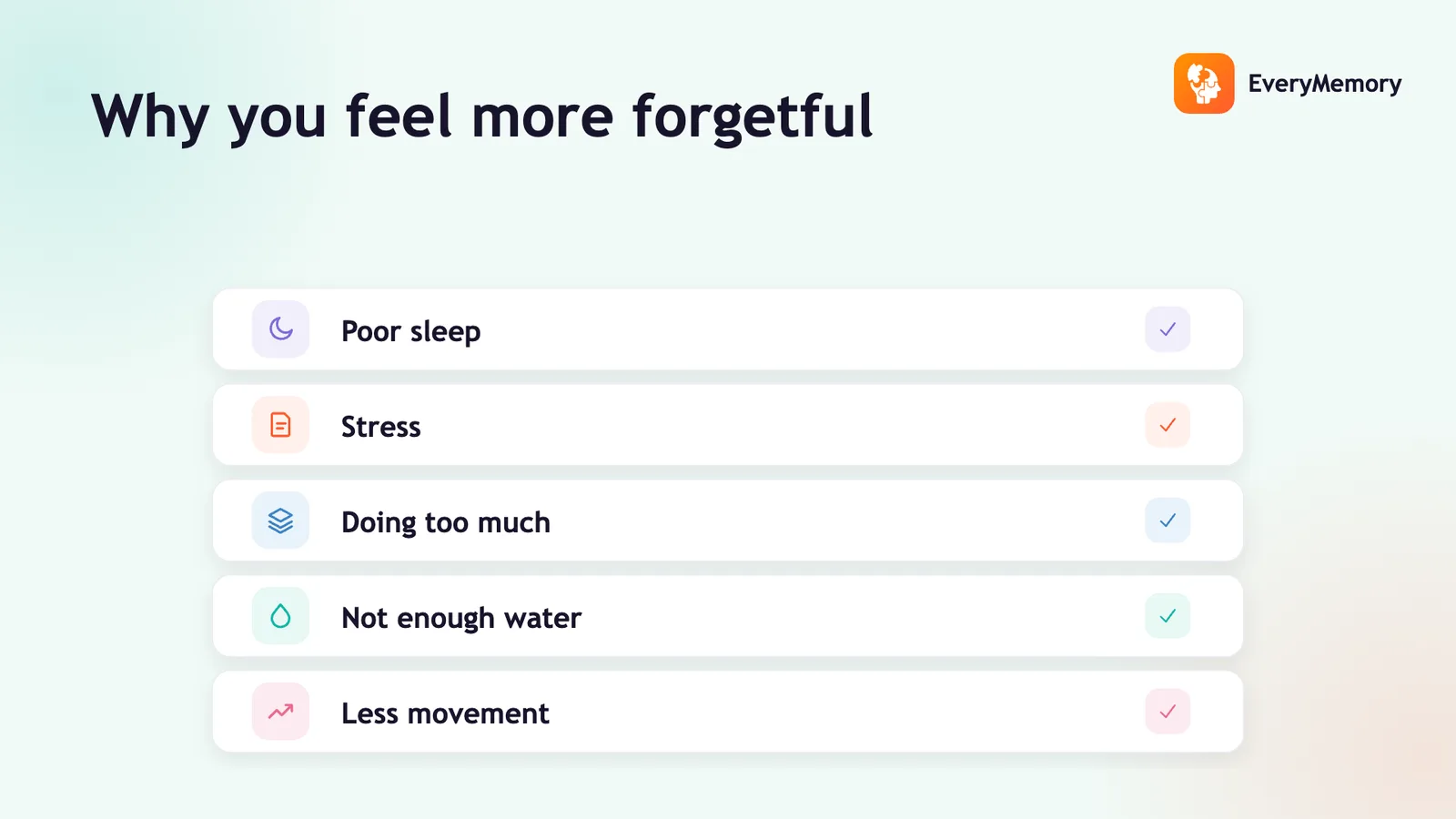
Everyday Reasons You Feel More Forgetful
Most everyday forgetfulness has an ordinary, changeable cause - poor sleep, stress, divided attention, or a disrupted routine. Here's a reassuring checklist to help you identify yours.
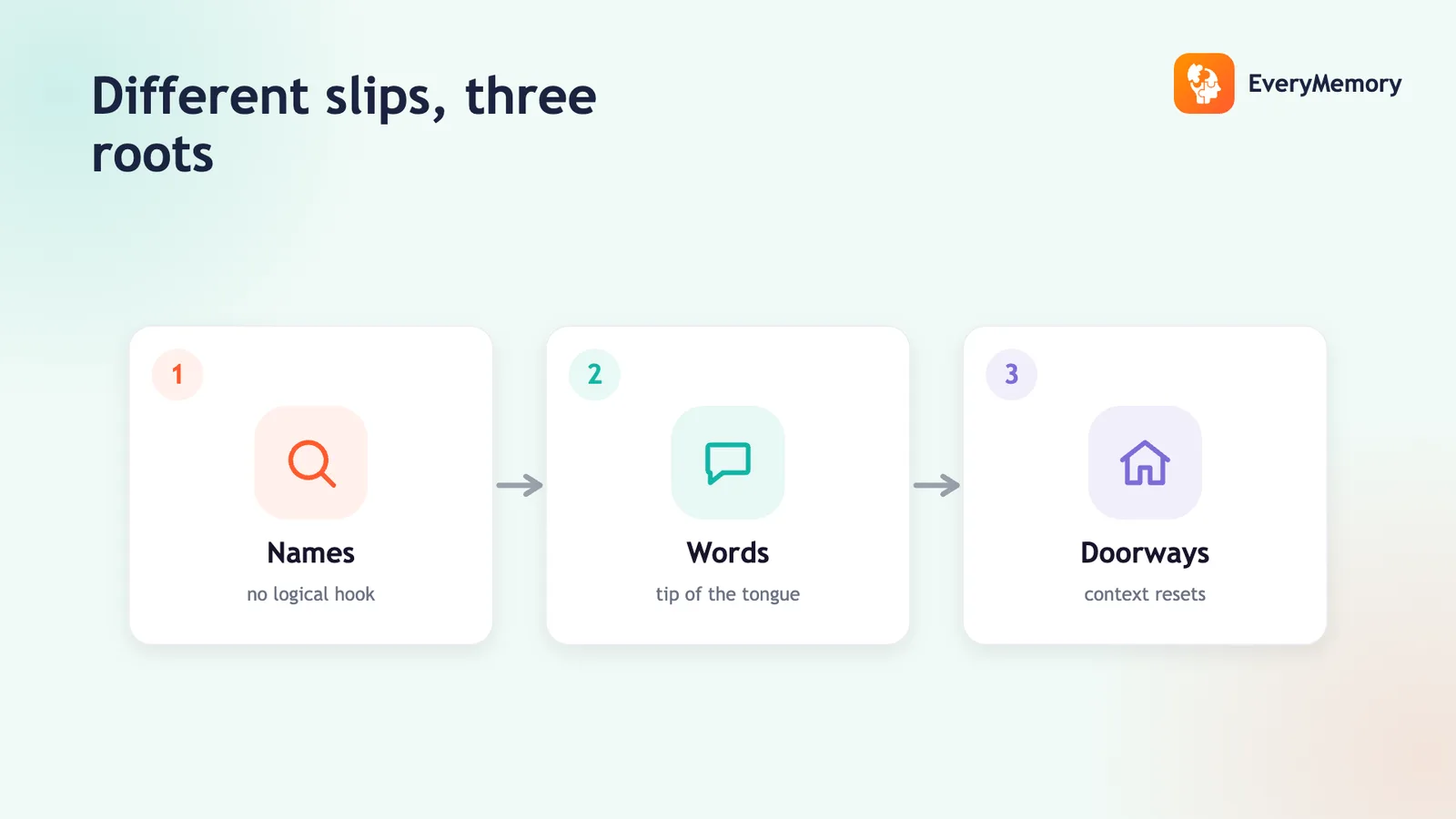
Why Do I Forget? The Everyday Causes Explained
Names, words, why you entered a room, where you put things - different slips, three shared roots. The plain explanation, and the fix for each.
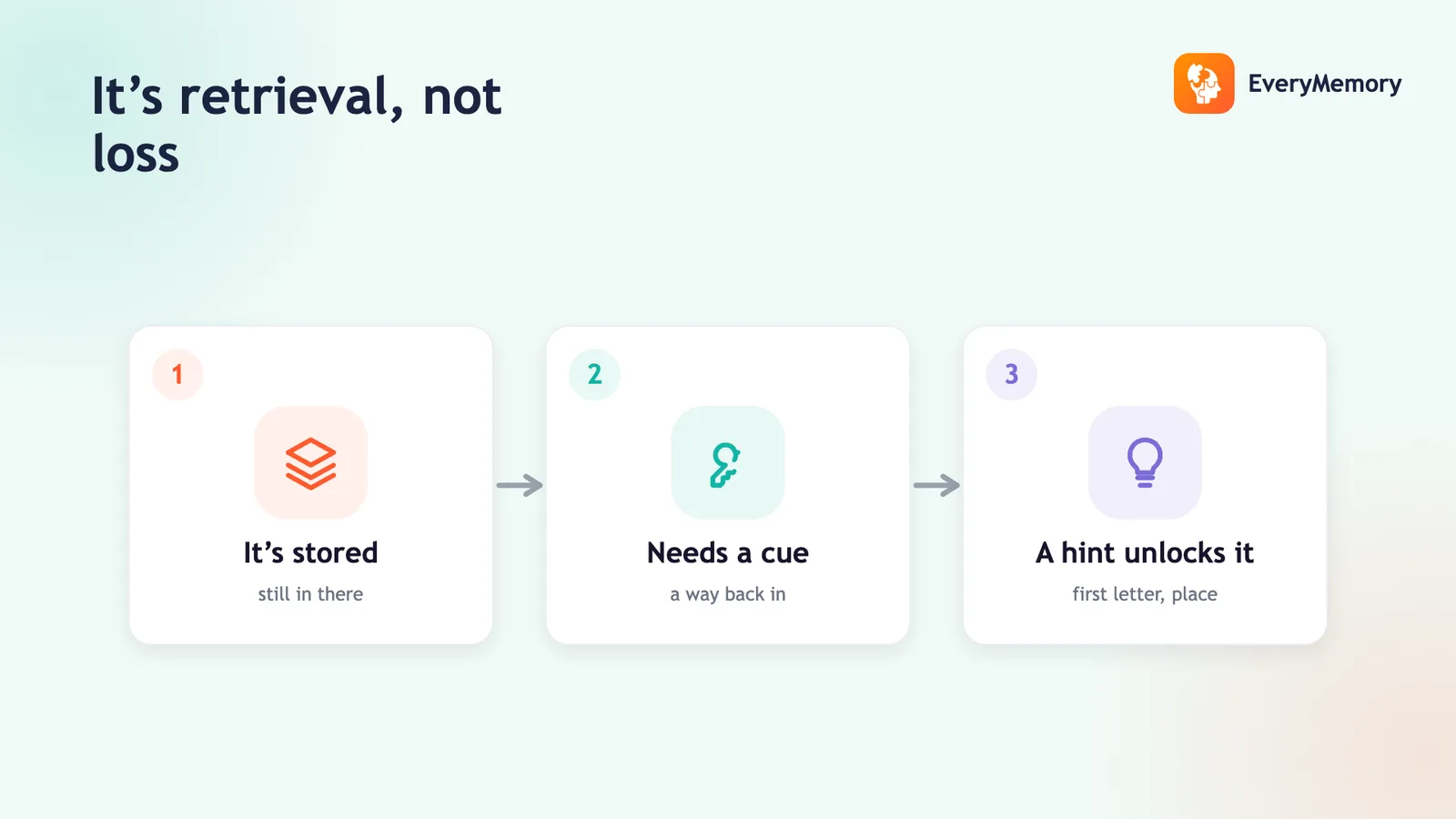
Forgetting Names and Words: Why It Happens
Blanking on a name or losing a word mid-sentence is usually retrieval, not memory loss. Why both slip, and the different fixes each one needs.
Why You Feel Foggy When You're Unwell
Struggling to think straight when you have a cold or flu? That mental slowness is extremely common, usually temporary, and has a clear explanation. Here is what is happening and how to be gentle on your brain while you recover.
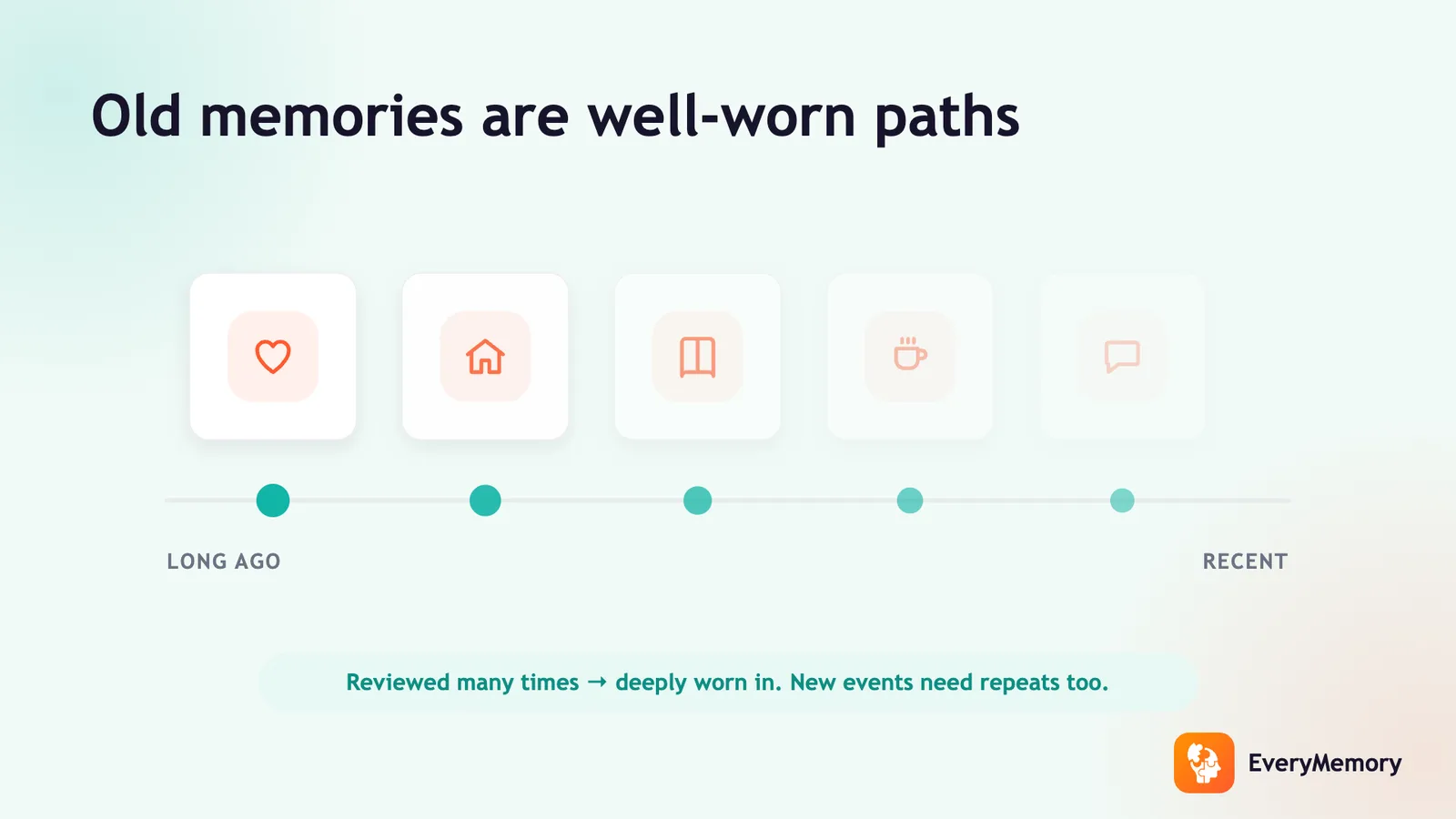
Why Old Memories Stay Clear While Recent Ones Fade
Childhood feels vivid, yet you can't recall what you had for lunch yesterday - this common pattern has a solid scientific explanation, and it's almost always reassuring.
Step-by-step exercises for recall, focus, names, faces, words, and visual memory.

Free Brain-Training Apps: Are They Good Enough?
For the core practice, free brain-training apps are often enough - what matters is whether a game makes you recall, not the price. What paid versions actually add.

Printable Matching Game
A printable matching game you can make in minutes - a ready-to-cut card set, themed variations, difficulty tweaks, and printing tips. Real recall practice on paper.
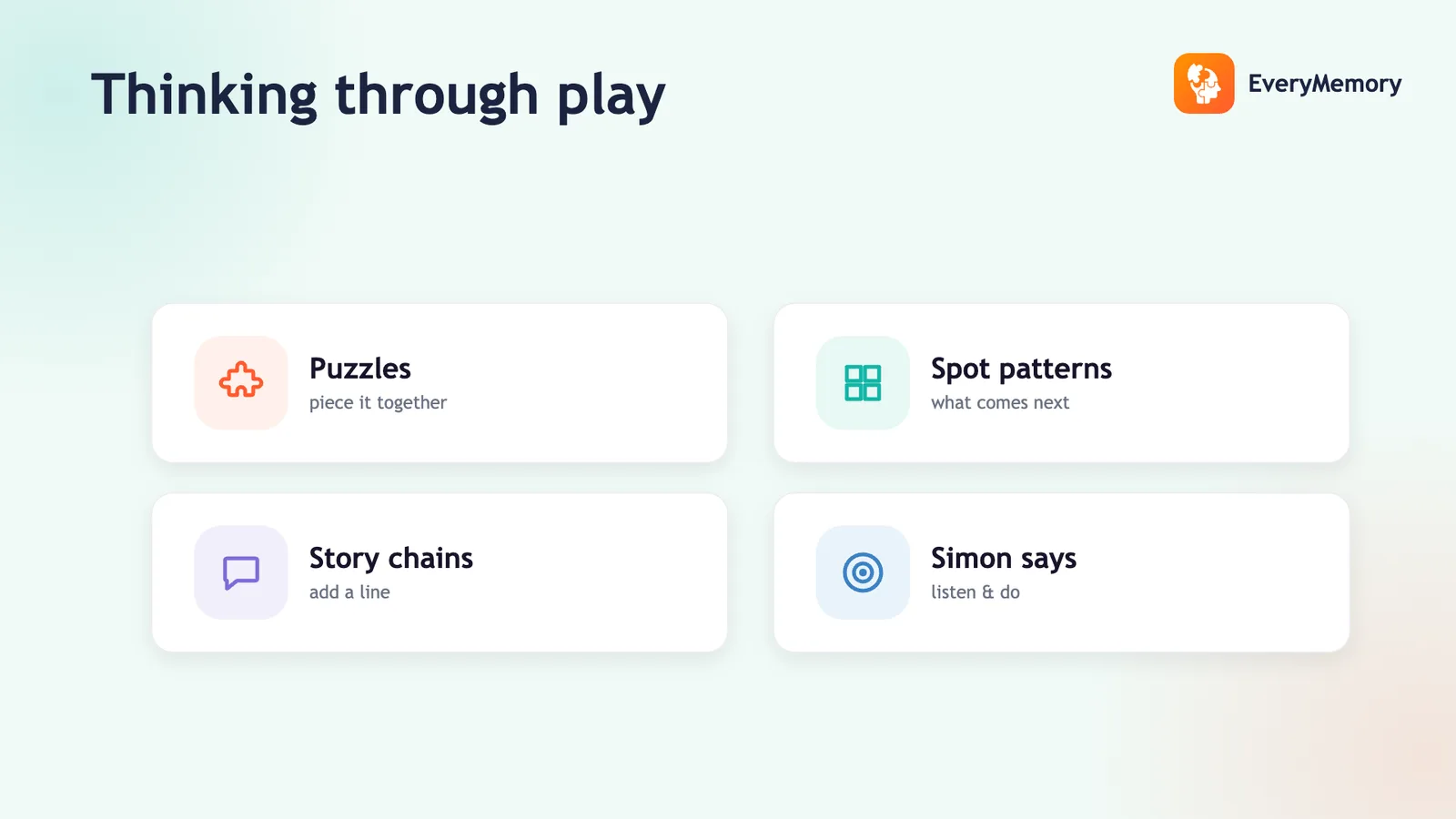
Brain Games for Kids
Puzzles, card games, riddles and movement games give kids real thinking practice through play - here are the best brain games to rotate through, sorted by skill and age.
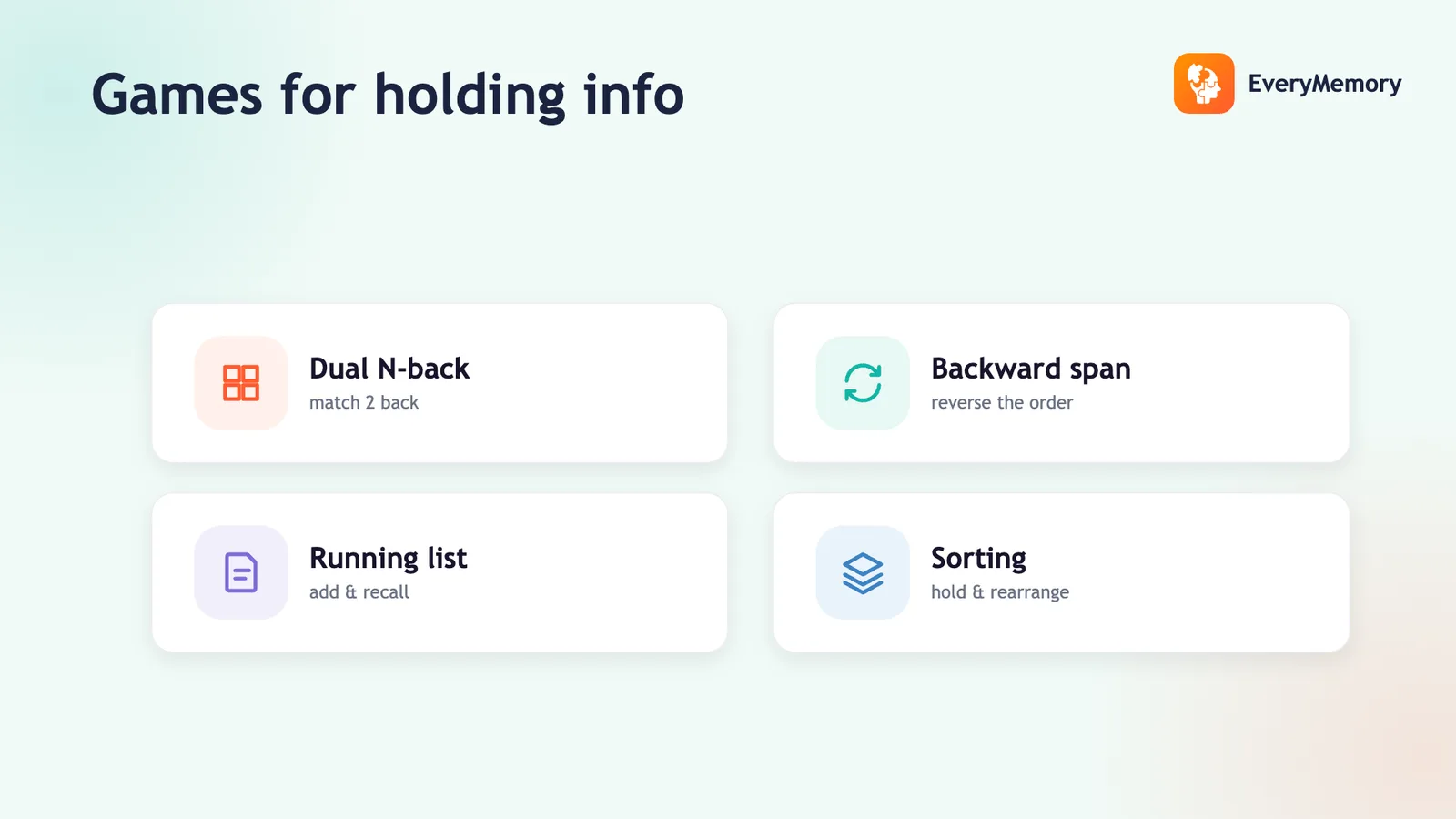
Working Memory Games
Working memory games train your brain's mental scratchpad - holding and juggling information for a few seconds. Here are the mechanics that actually work and what to honestly expect.

Printable Memory Cards
Printable memory cards: ready-to-cut sets, flashcard and matching uses, themed ideas, and printing tips so cards don't show through. Real recall practice on paper.
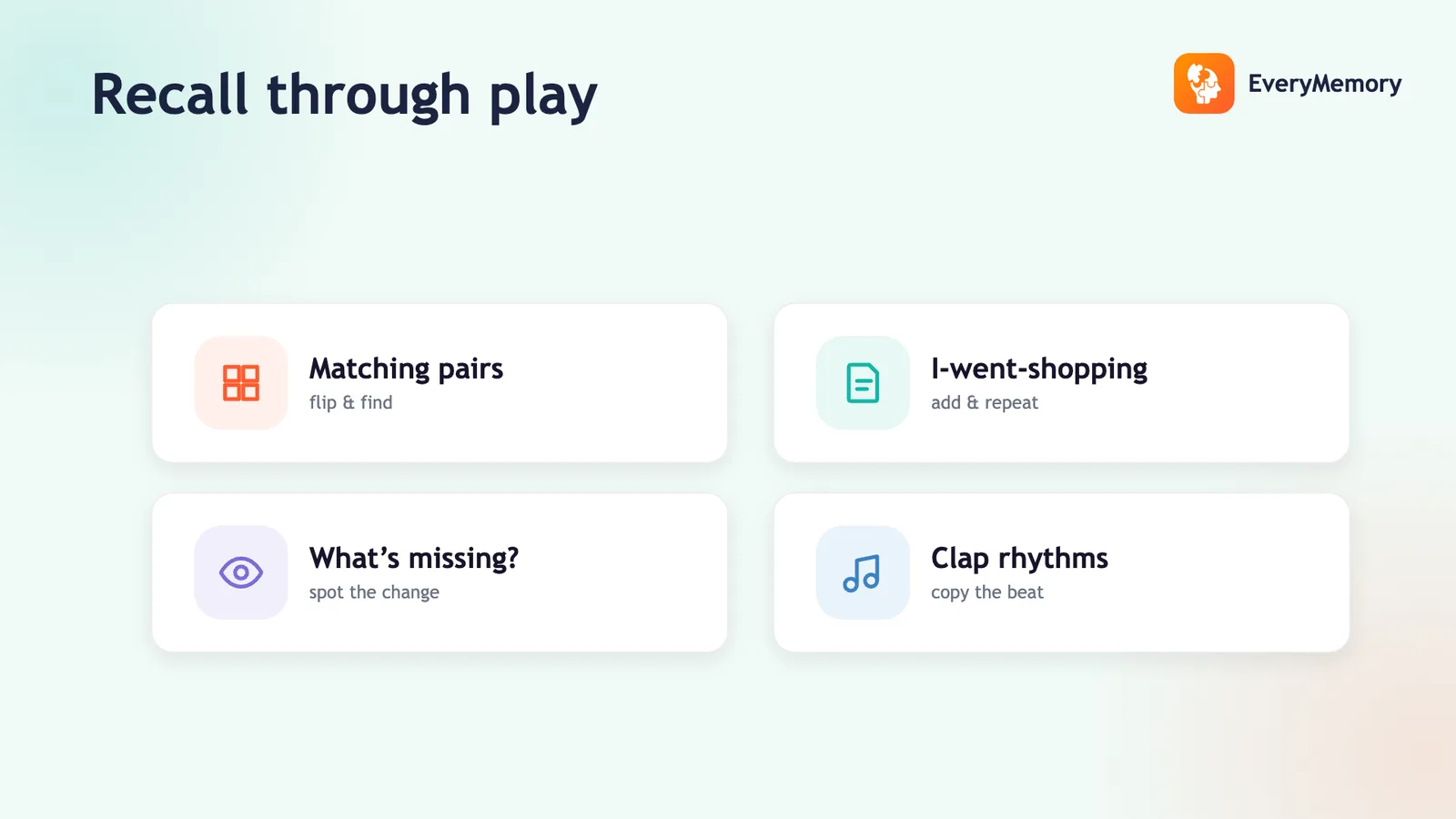
Memory Games for Kids
Simple memory games like matching pairs, Kim's game and sequence-clapping give kids real recall practice without screens, worksheets, or any sense that they're being tested.
Number Compare
Two numbers, one quick choice: tap the bigger one as fast as you can. A free 60-second speed warm-up you play right in your browser.

Problem-Solving Games
Problem-solving games train logical reasoning - spotting patterns, testing rules, and planning ahead. Here are the puzzle types that work and an honest take on what they transfer.
Light Chase
Tap the lit cell and chase the light around a 3x3 grid for 30 seconds. A free, fast reaction game in your browser.

Card Games and Puzzles That Exercise Memory
Matching pairs, solitaire, sudoku, and jigsaws give memory and attention a free, social workout. Which exercise memory most, and how to make them count.

Daily Brain Training Routine
A repeatable, mixed daily set of short mental drills - covering recall, attention, and processing - that takes under 15 minutes and fits any schedule.
Name-Pairs Memory Game
Meet a few faces, then match each one to the right name - the everyday memory we all fumble. A free name-and-face memory game you can play right here and beat your own best.
Quiz Games for Seniors
Quiz games are a warm, sociable way to keep an older adult engaged - done with them, never at them. Here are dignity-first ideas, themes that resonate, and how to keep it fun.
Odd One Out Game
Find the one tile that's a slightly different colour - it gets harder every round. A fast, free visual-perception game for all ages. Play here and beat your own best.

Brain Quiz Questions and Answers
A ready-to-use bank of brain quiz questions and answers - knowledge, logic, sequences, and memory - sorted by difficulty. Honest about what each tests, and built to be genuinely fun.
Pattern Matrix
Spot the rule in a 3x3 grid of shapes and choose the missing piece. A free Raven-style reasoning game right in your browser.

Vocabulary Games
Vocabulary games widen your active word store and sharpen recall - the real, useful skill of having the right word ready. Here's what to play, how to learn words that stick, and an honest take.
Rule Shift
Play the free Rule Shift card-sorting game. The hidden sorting rule changes without warning - figure out the new one from the feedback and adapt.
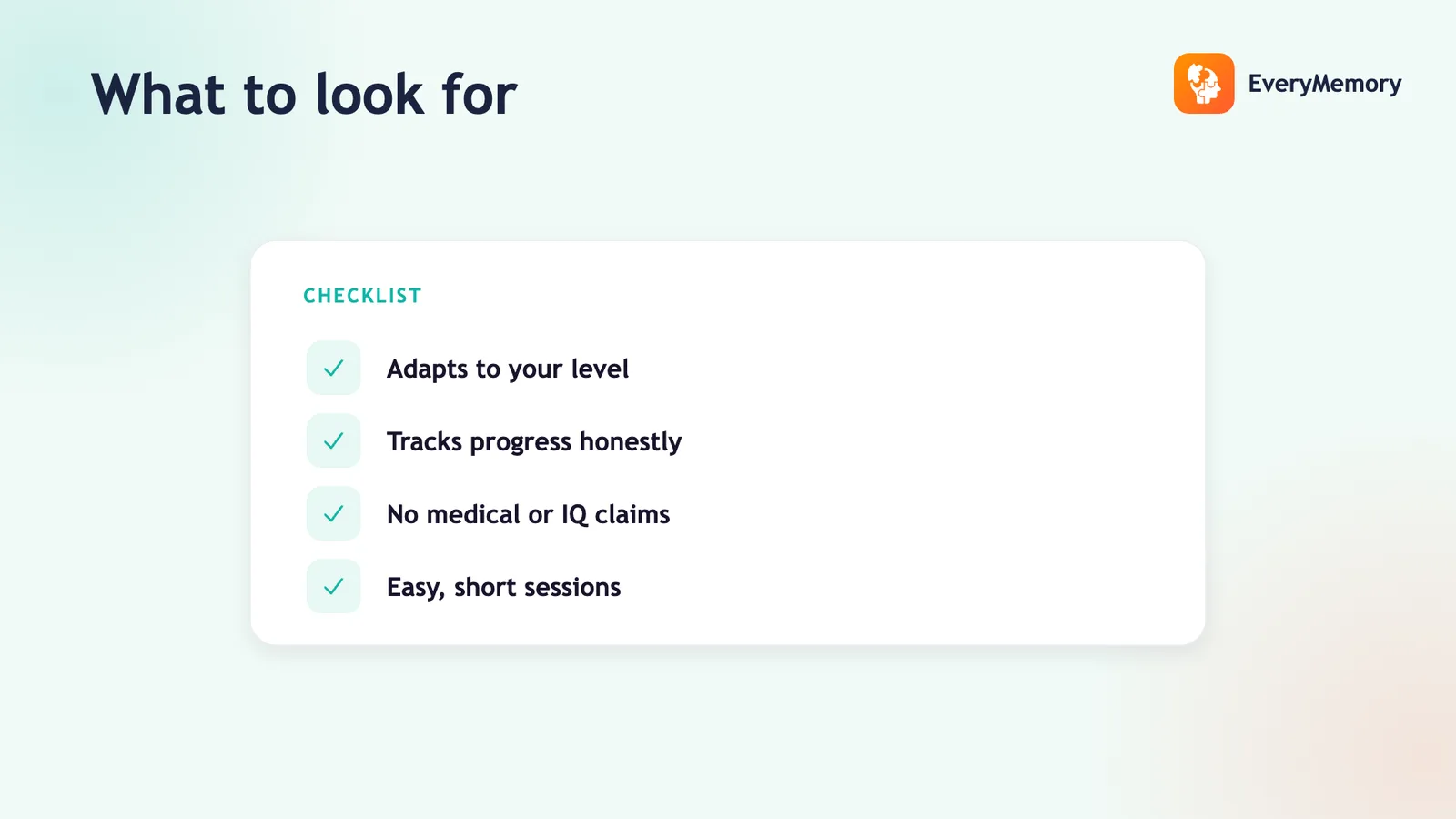
Brain-Training Apps: What to Look For
A brain-training app is short games and exercises for skills like memory and attention. What the good ones share, what the marketing overpromises, and how to choose.

Fast Math Games
Fast math games train calculation speed and the working memory behind it - under a clock. Here's how to actually get faster, the tricks that help, and an honest take on what they build.
Balance It
Solve for the missing number that balances each equation. A free, fast algebra warm-up you play in your browser with no sign-up.
Printable Brain Teasers (With Answers)
Free printable brain teasers with answers - real examples you can solve right now, plus where to find more and how to print a clean, large-type sheet.
Stop Signal
Play the free Stop Signal test. Tap fast on GO arrows but hold back when the STOP signal flashes. A quick, fun check of your response inhibition.
Word Pairs
Study pairs like OCEAN–BLUE, then recall each partner from four choices. A free associative-memory game you play in your browser.

Printable Sudoku for Beginners
Printable sudoku for beginners: how the grid works, three solving moves to start with, where to find easy free sheets, and a worked example you can follow.

Printable Brain Games (PDF)
Printable brain games in PDF form: where to find free sheets, how to make your own PDF, what each puzzle trains, and printing tips - plus examples to use now.
Whack-a-Mole
Play Whack-a-Mole free online. Tap the moles before they disappear and rack up hits in 30 seconds. A fast, fun reaction self-check.

Best Memory Game Apps for Adults
The best memory game apps make you actively recall, adapt as you improve, and track your progress. What separates a real workout from a time-filler.
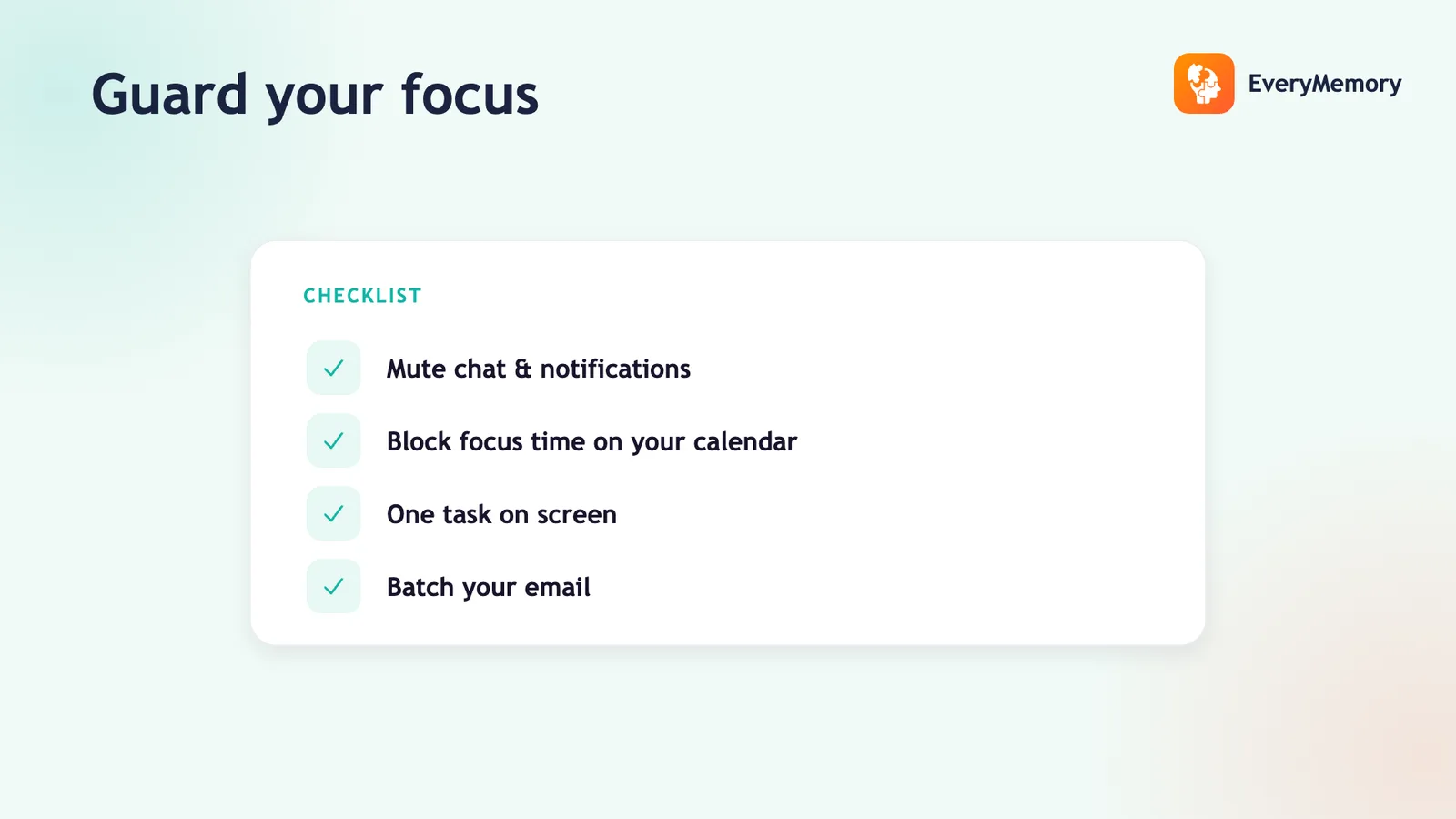
How to Improve Focus at Work
Most lost focus at work is interruptions and context-switching, not weak discipline. Control your environment, protect time blocks, and match tasks to your energy.

Free Printable Memory Games and Worksheets
Screen-free, group-friendly, and free - printable memory games are an easy way to practise recall at home or in a group. The types, how to use them, and where to get them.

Processing Speed Games
Processing speed games train how fast you take in, judge, and respond to information. Here are the speed-match and rapid-decision mechanics that work - and an honest take on transfer.

Concentration Games
Concentration games train you to hold attention on one thing and resist the pull to switch. Here are the single-tasking mechanics that work, plus an honest take on transfer.
Magic Square
Place the digits 1 to 9 so every row, column and diagonal adds up to 15. A free magic square puzzle that trains number logic - correct lines glow. Play it right here.

Target Tracking
Spot the highlighted target dots, watch them scatter, then pick them out of the crowd. A free attention game right in your browser.
Word Analogies
A is to B as C is to what? Pick the best fourth word from four options. A free verbal-reasoning game right in your browser.
How to Concentrate on Studying
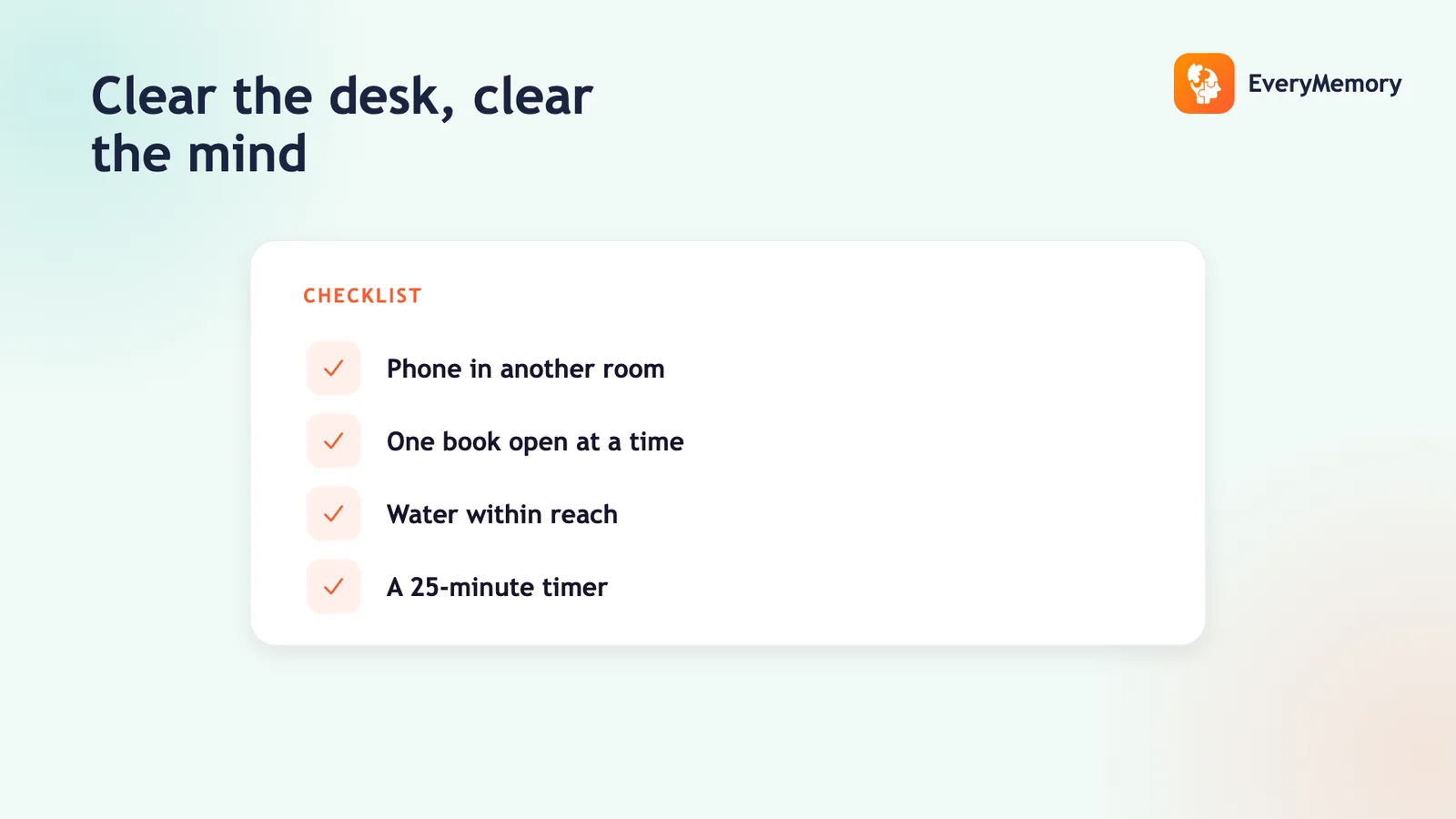
Concentration is mostly a setup problem. Remove distractions, make study active, and work in short blocks - and focus stops being a fight.

How to Improve Focus and Concentration
Concentration isn't mainly willpower - it's your environment and habits. Remove distractions, single-task in blocks, and protect sleep, and focus stops being a fight.

Quiz Questions to Test Your Brain
A mixed set of quiz questions that stretch different mental muscles - knowledge, logic, lateral thinking - each with the answer given. Honest about what they test, and genuinely fun.
How to Stay Focused for Longer
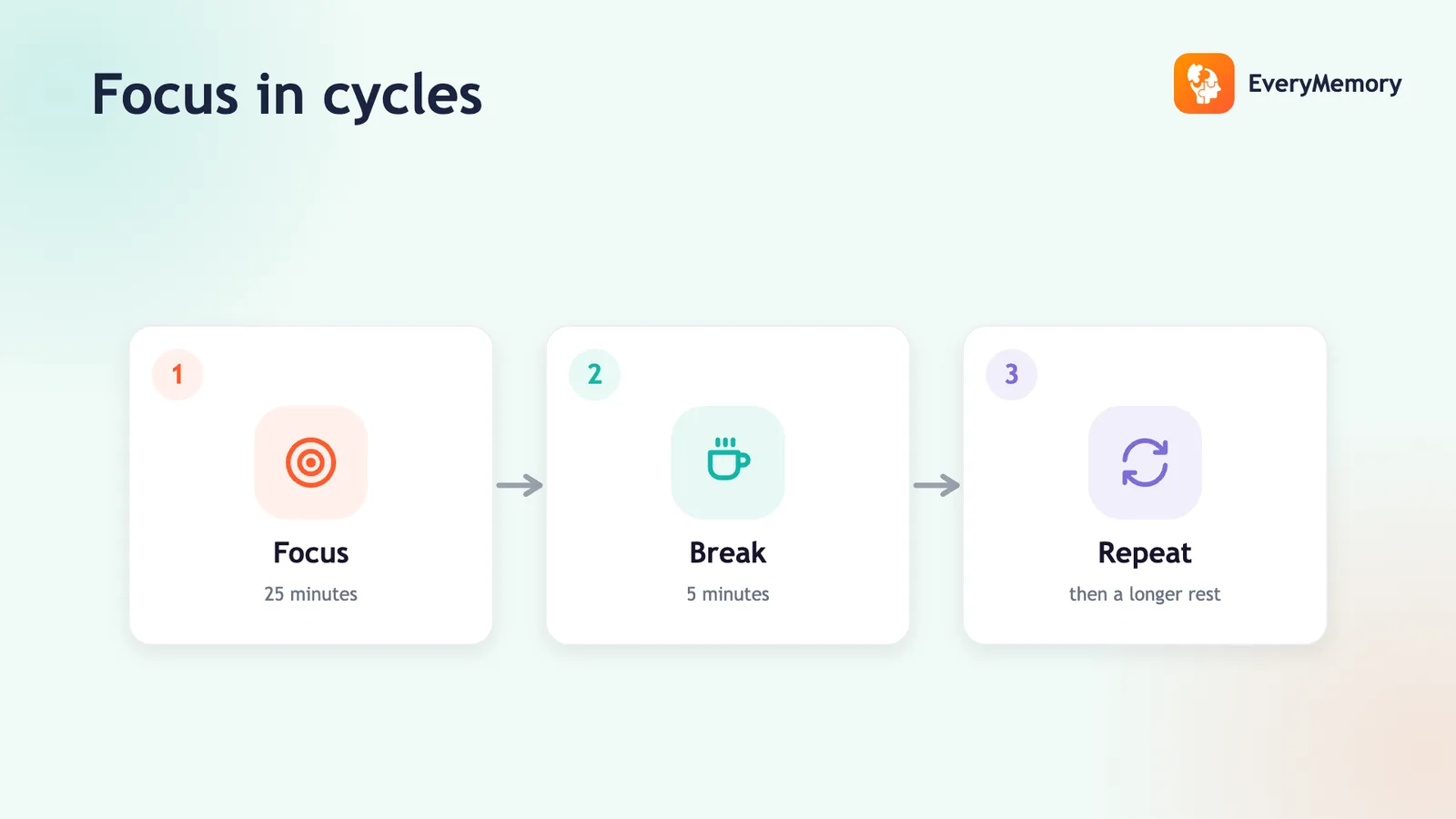
Sustained focus isn't endless concentration - it's cycles of deep focus and recovery. Work with your attention's rhythm, protect the drop-in, and manage energy.

Picture Quiz Ideas
The picture round is every quiz's secret weapon. Here are picture quiz ideas that are easy to make, fun to play, and work for any group - from cropped logos to 'guess the close-up'.

Anagram Games and the Brain
Anagrams train flexible word retrieval - finding the word hidden in scrambled letters. Here's the strategy that cracks them, worked examples with answers, and an honest take on what they build.

Word Games for Memory and Recall
Crosswords, anagrams, and word-recall games keep word-finding quick. Which ones train memory most - and which are mostly recognition.
Printable Word Search for Adults
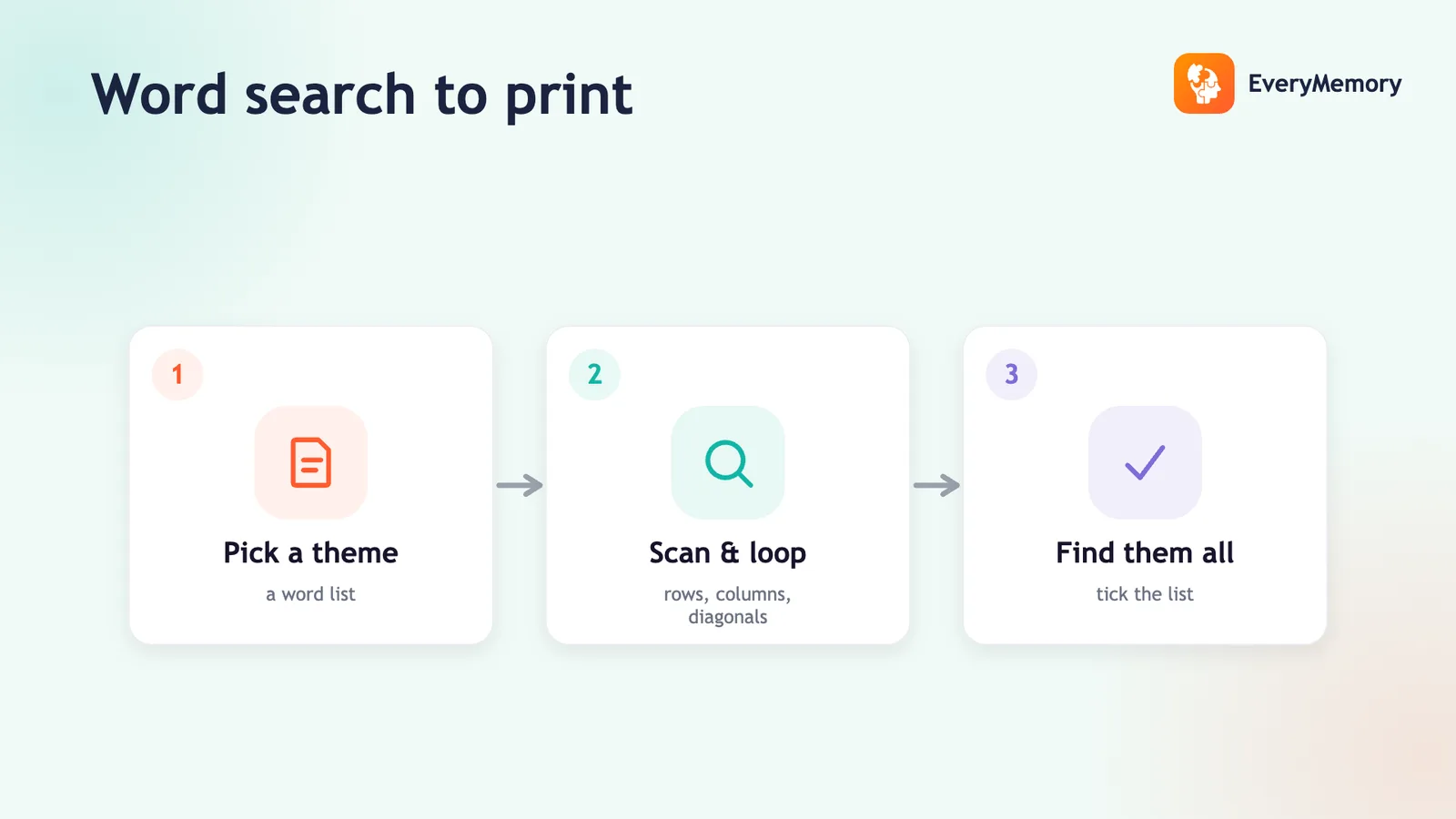
Printable word search for adults: what they actually train, how to make your own grid, where to find free large-print sheets, and a small puzzle to solve now.

Brain Exercises for Seniors: The Complete Guide
A practical, honest hub covering the best brain exercises for older adults - recall drills, focus workouts, visual tasks, and how to build a routine that actually sticks.
Odd Color Out
One tile is a slightly different shade. Spot it before the difference gets too small. A free color-discrimination game, no sign-up.
Quick Add
A 60-second mental-math sprint. Tap the right answer to add or subtract, beat your own best. Free, in your browser, no sign-up.
Quick Estimate
See a multiplication like 47 x 21 and tap the rounded answer closest to the true product. A free estimation game in your browser.
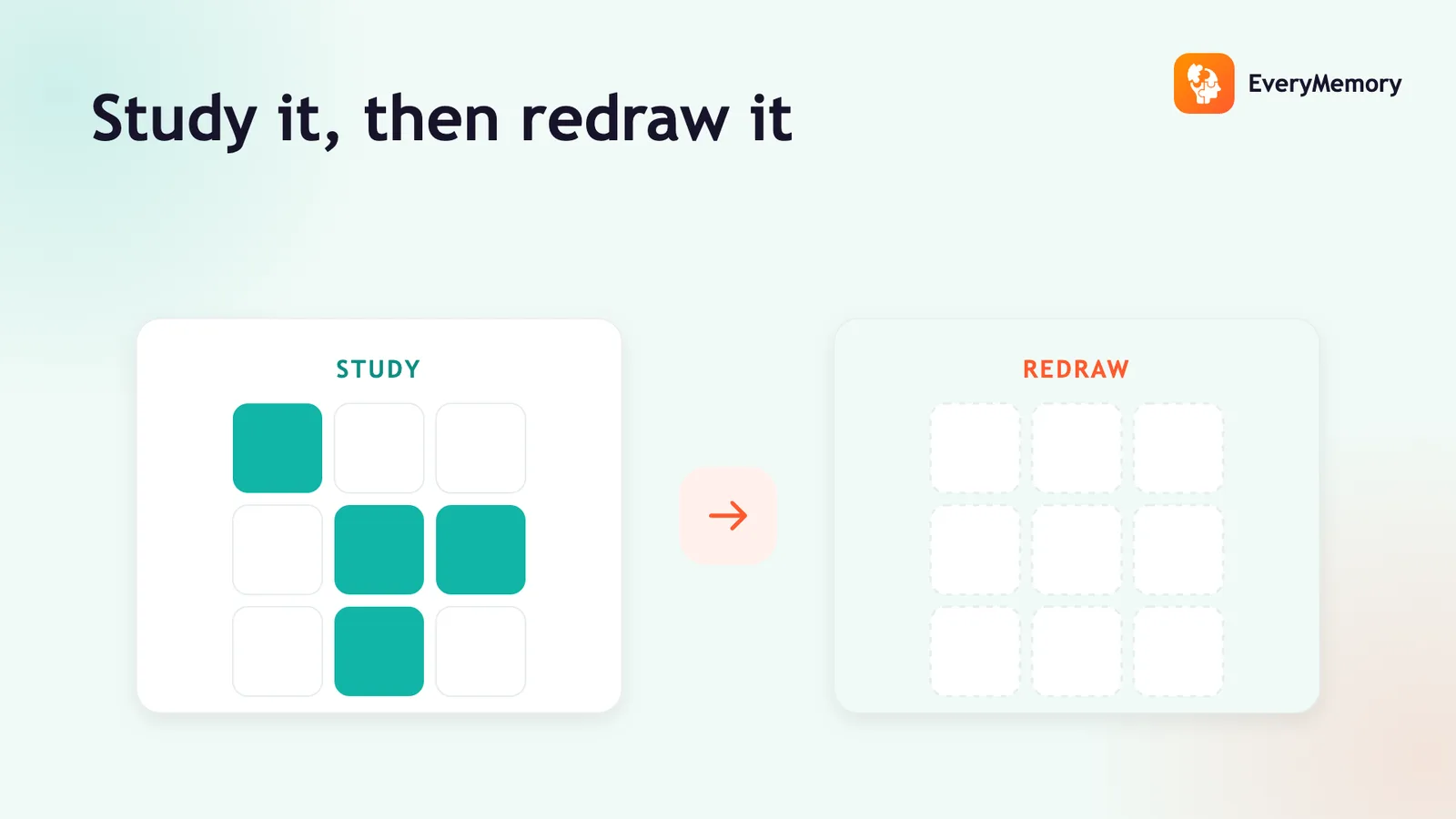
Pattern Memory Exercise
Recognising and rebuilding visual, number, and sequence patterns sharpens the part of memory that keeps everyday life organised and predictable.
Maze Game
Guide the dot from the top corner to the exit through a freshly generated maze, against the clock. A free maze game that trains spatial planning. Play it right here.
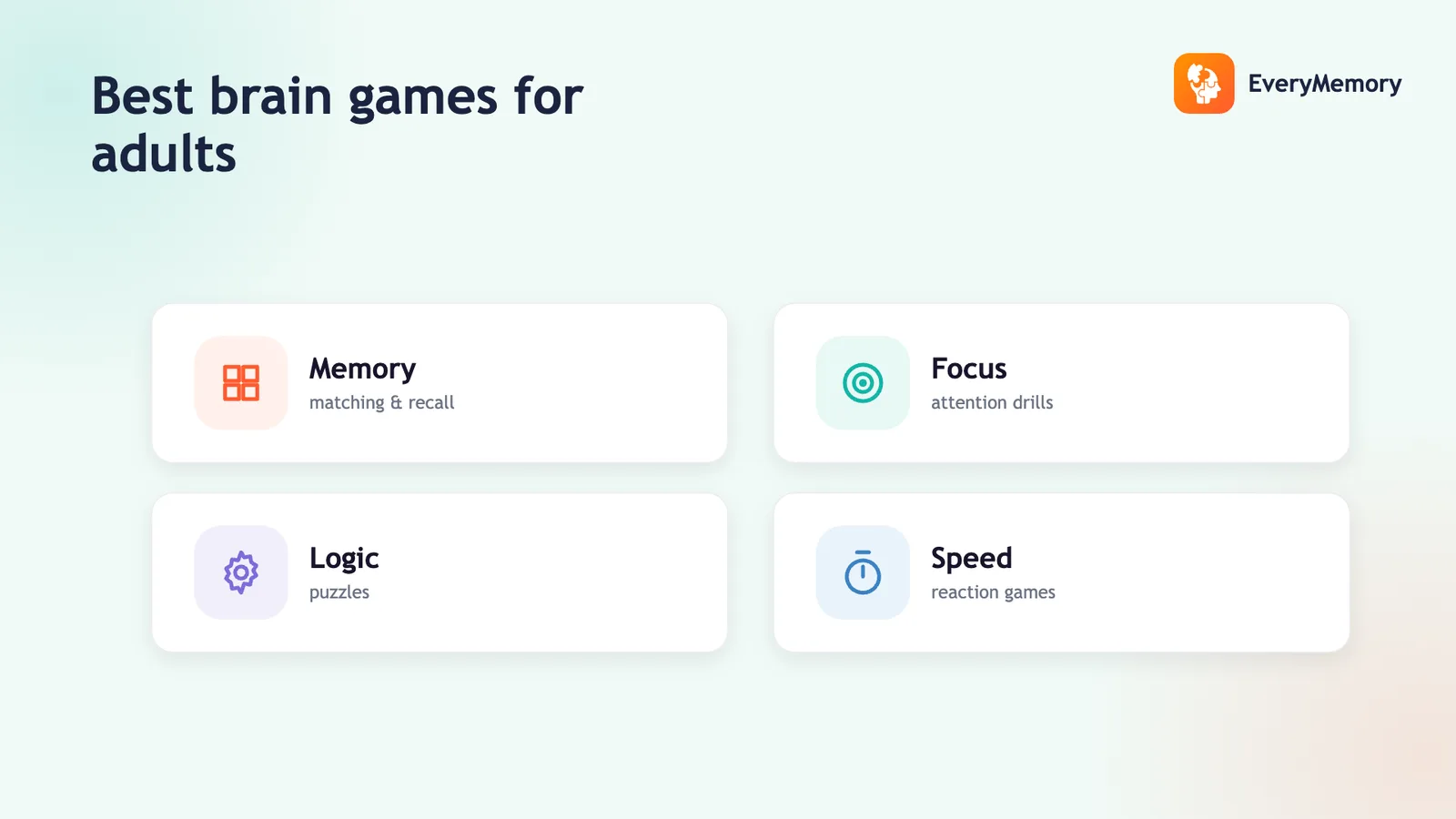
Best Brain Games for Adults
The best brain games for adults match a real skill to a real goal. Here's the field mapped by what each game trains, plus honest criteria for choosing one worth your time.
Arrow Switch
Play the free Arrow Switch game. Tap the same way for green arrows, the opposite way for red. A quick test of inhibition and mental flexibility.
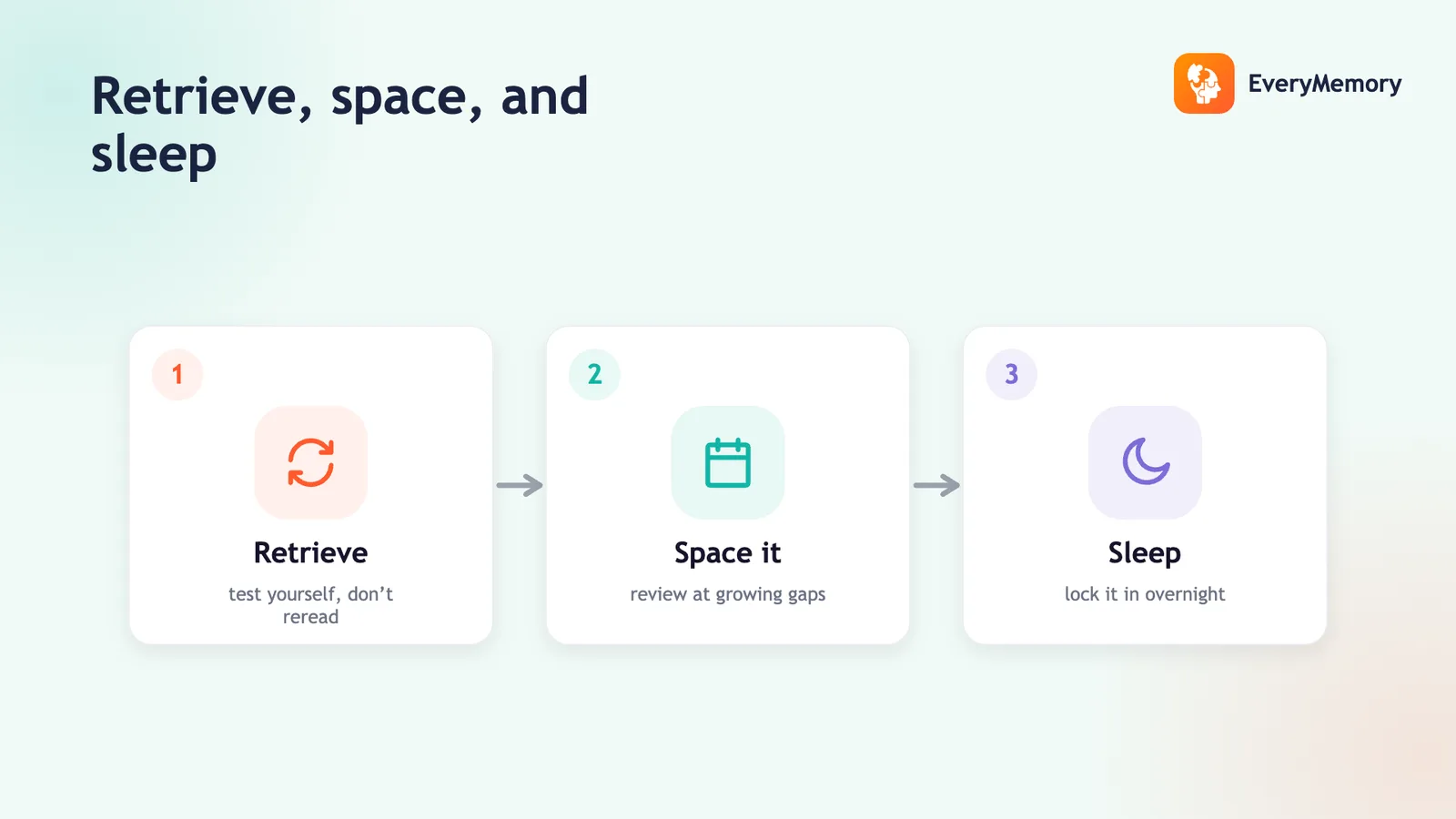
How to Improve Memory Retention
Retention isn't about studying harder - it's about retrieving, spacing, and sleeping. The handful of methods that make what you learn actually stay.
Memory Tips for Exams
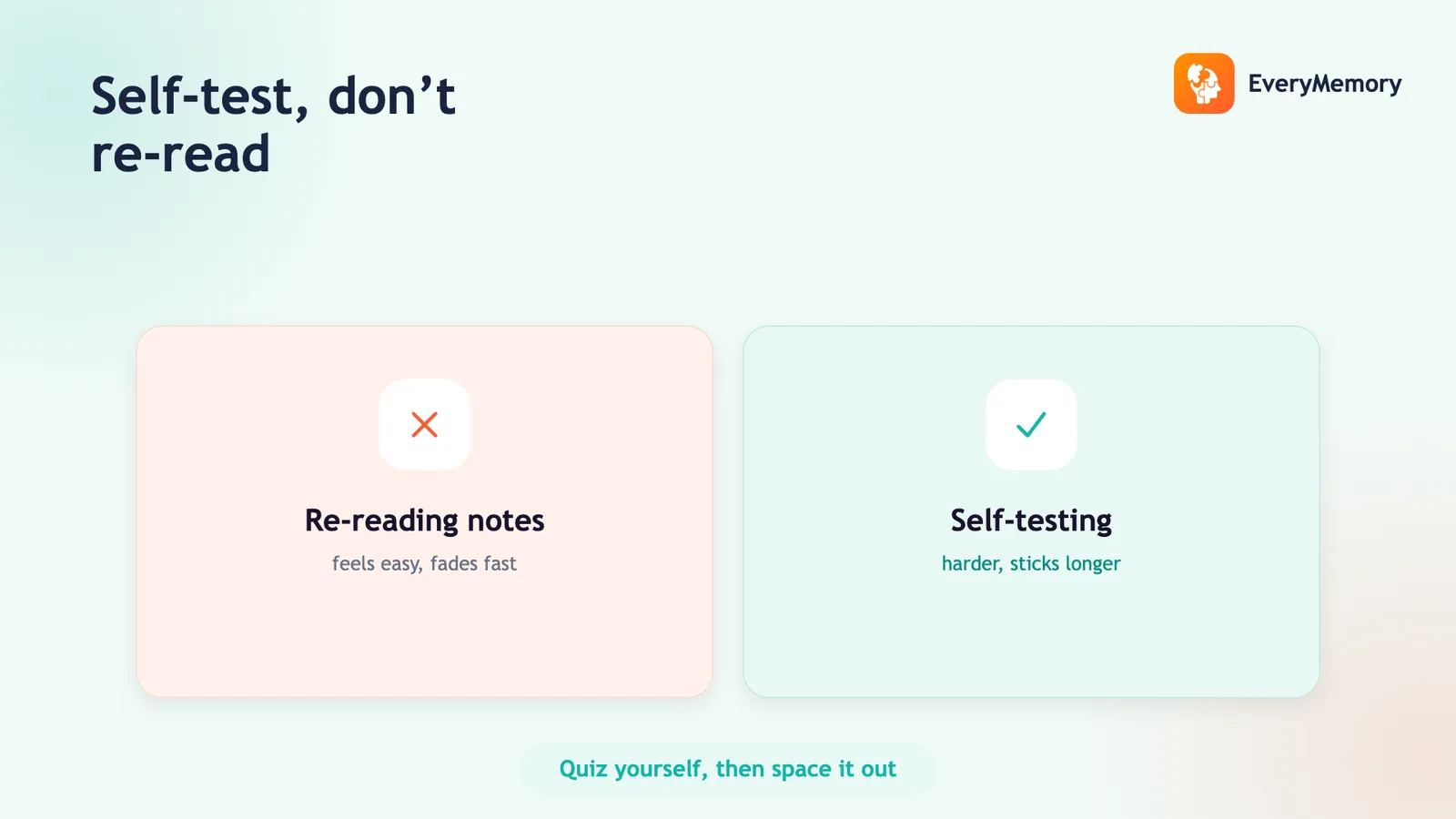
Remembering more in an exam comes down to how you study - self-testing, spacing, and memory tricks like chunking and mnemonics beat re-reading every time.
Missing Vowels
MMRY is MEMORY - the vowels are gone and you fill in the word against the clock, with a category hint. A free missing-vowels game you can play right here.

Printable Logic Puzzles
Printable logic puzzles: how grid puzzles work, a worked mini example with its solution, where to find free sheets, and printing tips for a usable grid.
Word Recall Practice: A Simple Daily Exercise
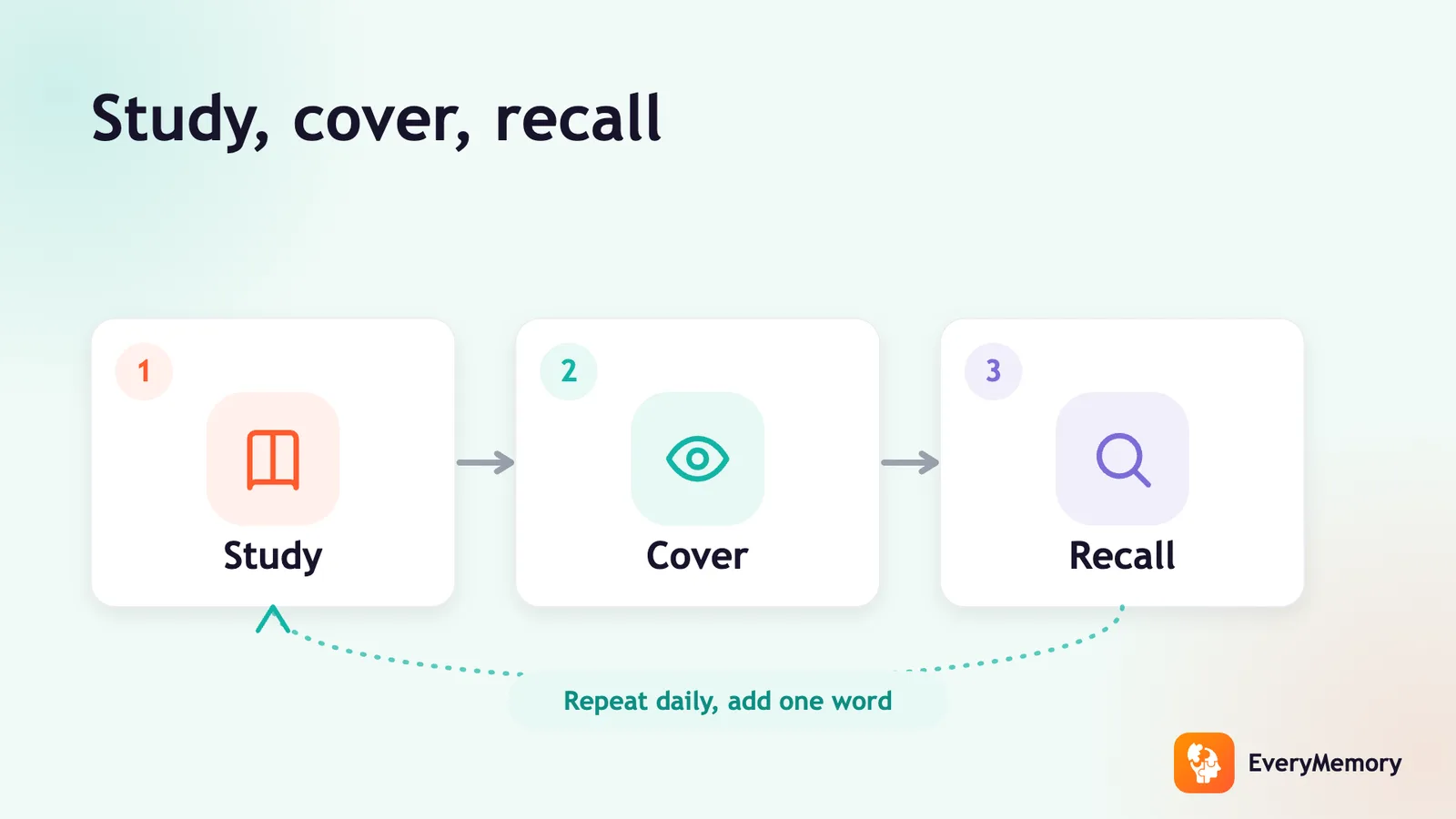
A clear, step-by-step word recall drill you can do in ten minutes a day to keep everyday verbal memory sharp and track your own progress over time.
Short-Term Memory Exercise for Beginners
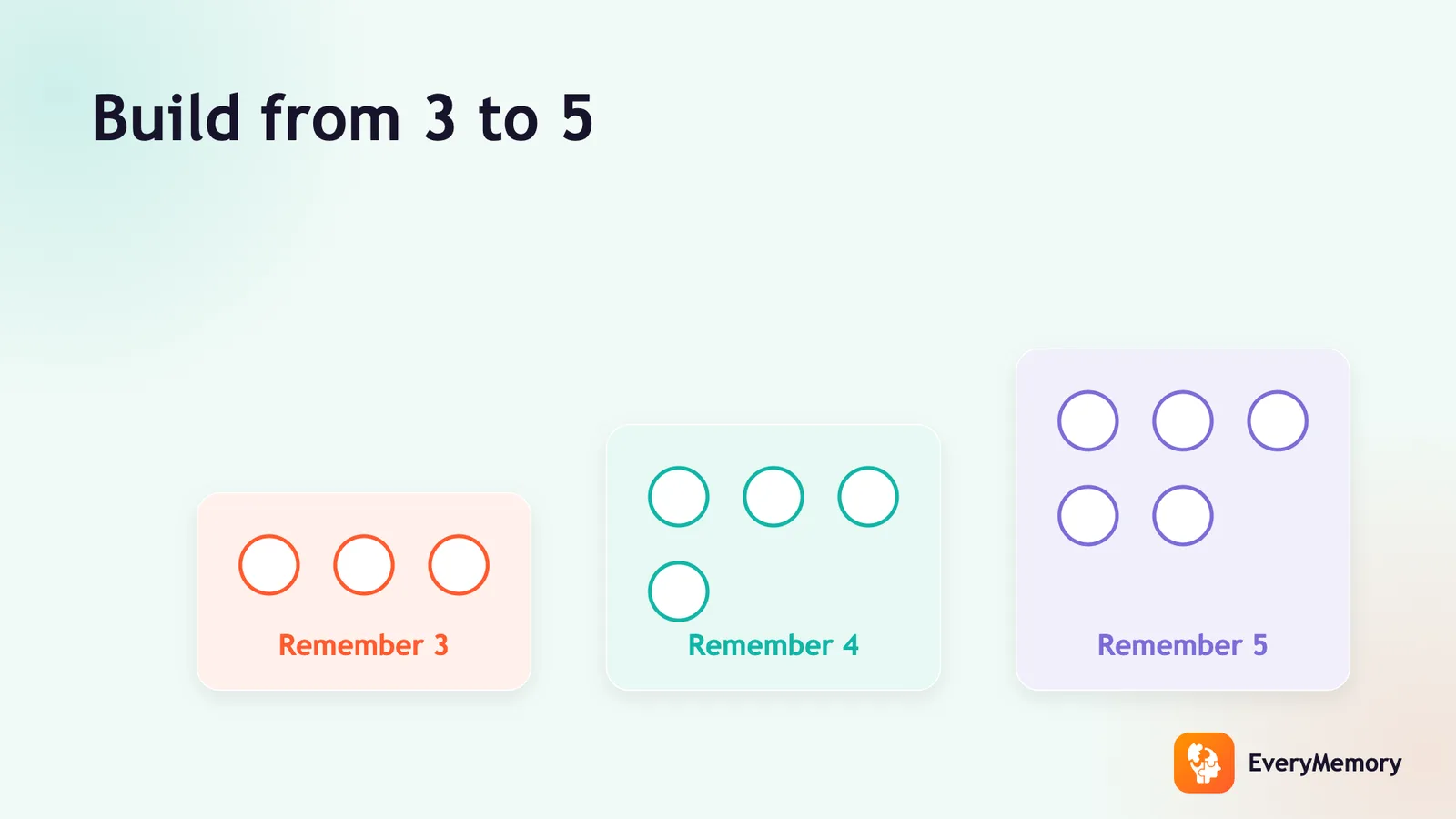
Gentle working-memory drills for beginners - simple, screen-free exercises that build recall confidence from the ground up with clear starting points and easy progressions.
Peripheral Vision
Play the free Peripheral Vision test. Keep your eyes on the center cross and tap where a dot flashed at the edges. A fun check of visual attention.

Memory Trivia Questions (With Answers)
Trivia questions all about memory itself - how the brain remembers, classic facts, and a few myths to bust - each with the answer given. Perfect for a quiz round or a curious afternoon.

Memory Games: Types, Benefits, and How to Use Them
Not all memory games help equally. The main types, what each one trains, what separates a useful game from a time-filler, and how to actually get the benefit.

Word Association Games
Word association games train semantic fluency - the speed and richness of the links between words in your memory. Here's how to play, real variants, and an honest take on what they build.

Attention Span: What It Is and How to Improve It
There's no single 'normal' attention span, and the famous 8-second claim is a myth. What attention span really is, why it feels shorter now, and how to lengthen it.
Find the Target
Play the Find the Target visual search game free online. Spot the one ★ among the ✦ as the field grows. A fun self-check of visual attention.

Fun Quiz Questions for Adults
Crowd-pleasing quiz questions for grown-ups - clever, surprising, and not too hard - each with the answer given. Perfect for a dinner party, a quiz night, or a group chat.

Mental Math Games
Mental math games train the one skill they target - fast, accurate calculation in your head - and they're genuinely fun. Here are real tricks, worked examples, and an honest take on what they do.
Follow the Ball
Play the classic cups-and-ball shell game free in your browser. Track the swaps, tap the right cup, and beat your own best round.

How to Keep Your Brain Active
Keeping your brain active is about variety and a little challenge - learning, moving, connecting, and using recall. Novelty beats repeating the same familiar puzzles.
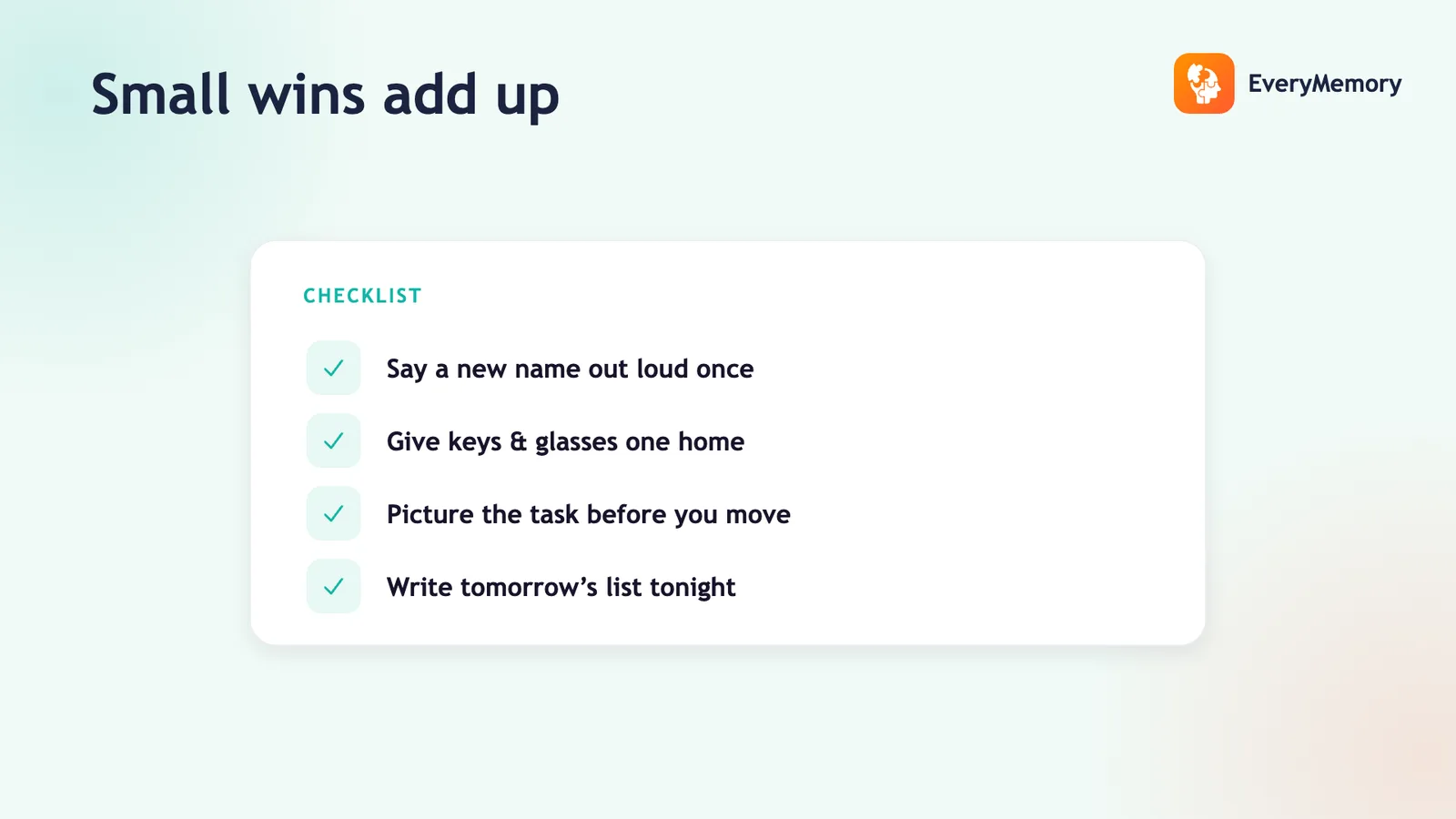
Quick Memory Tips and Tricks for Everyday Recall
The memory tips that actually work are small and consistent - not clever. Eight quick wins for names, tasks, and everyday recall, with deeper guides for each.
Number Bonds
Tap the two numbers that add up to the target in a 60-second sprint. A free number-pairing game you play in your browser, no sign-up.
Word Scramble Game
Unscramble as many words as you can in 60 seconds - a quick, free word game that warms up vocabulary, spelling, and word recall. Play right here and beat your own best.
Word Search Game
Find every hidden word in the grid - across, down, or diagonally - against the clock. A free, no-sign-up word search you can play right here and beat your own fastest time.
Times Tables
A 60-second times-tables sprint. Tap the right product, beat your own best. Free, in your browser, no sign-up.
Word/Color Switch
Word/Color Switch is a free Stroop game with a twist. A cue flips each round between reading the word and naming the ink color, so you switch rules on the fly.
How to Help a Child With Memory and Recall
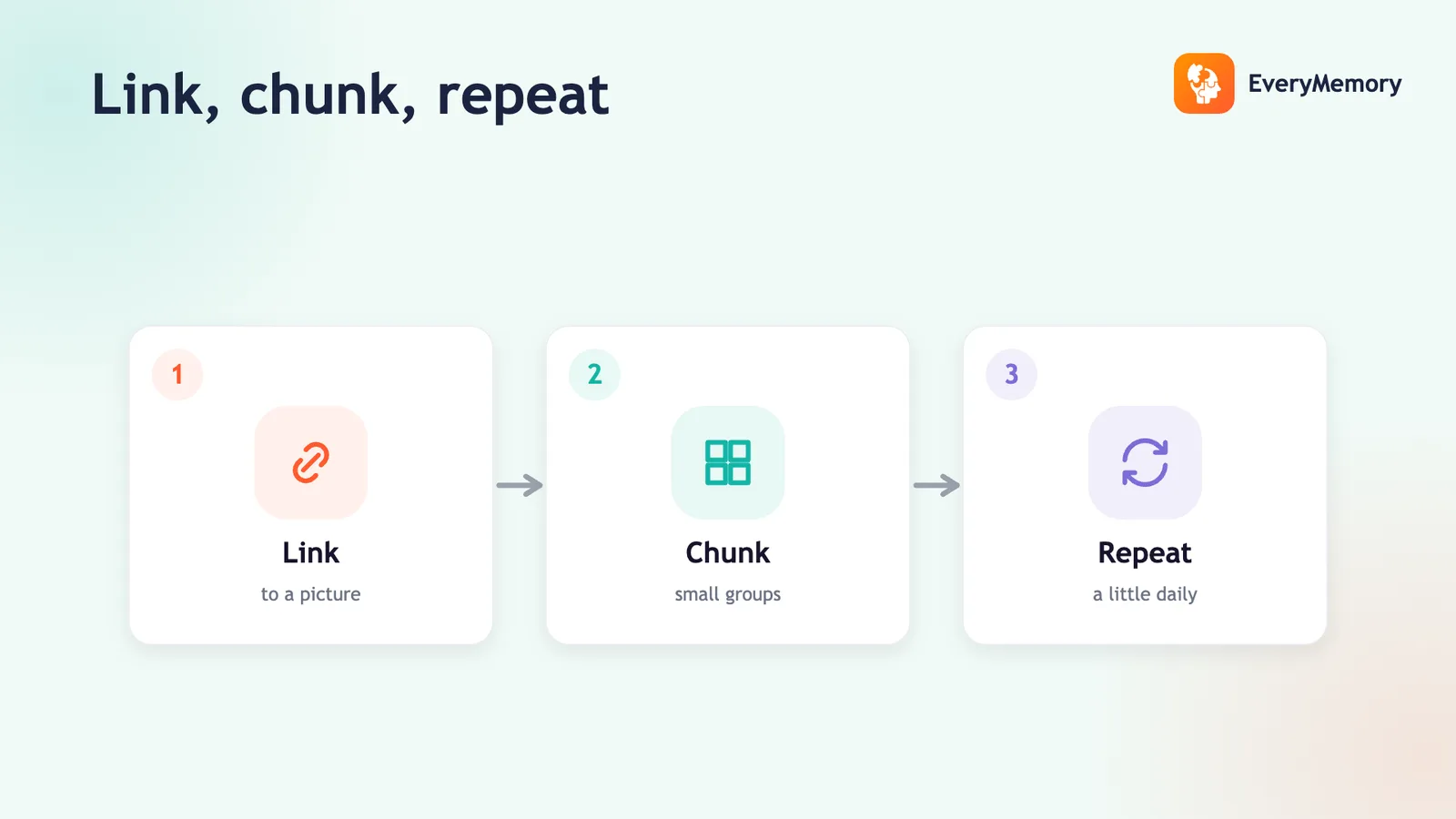
Children remember better with the right strategies - chunking, repetition, linking new facts to what they know, and plenty of playful recall practice.

How to Host a Quiz Night
A great quiz night runs on structure, not luck. Here's a practical host's playbook - rounds, timing, scoring, and the small touches that keep everyone laughing and engaged.
Odd One Out: Words
Four words, three from the same group and one that doesn't belong - tap the odd one. A free verbal-reasoning game in your browser.
What's Missing?
Play What's Missing free in your browser. Study a set of emoji, watch them vanish, then spot which one is gone. No sign-up, score saved on device.
Number Pyramid
Each block equals the sum of the two below it. Find the missing block in this free number puzzle you play in your browser.

Word Games for Adults
Word games for adults sharpen vocabulary and verbal recall - the real skill of pulling the right word out of memory fast. Here's what to play, what each builds, and an honest take.
Object Location
Play a free object location memory game in your browser. Watch objects appear on a grid, then tap where each one was hiding. No sign-up.
Kim's Game
Play Kim's Game free in your browser. Memorize the objects, then spot the one that vanished. Each round gets harder - beat your own best.
Sustained Attention
Play the free Sustained Attention test. Tap for every letter except the target X, and see how steadily you can stay focused over time.
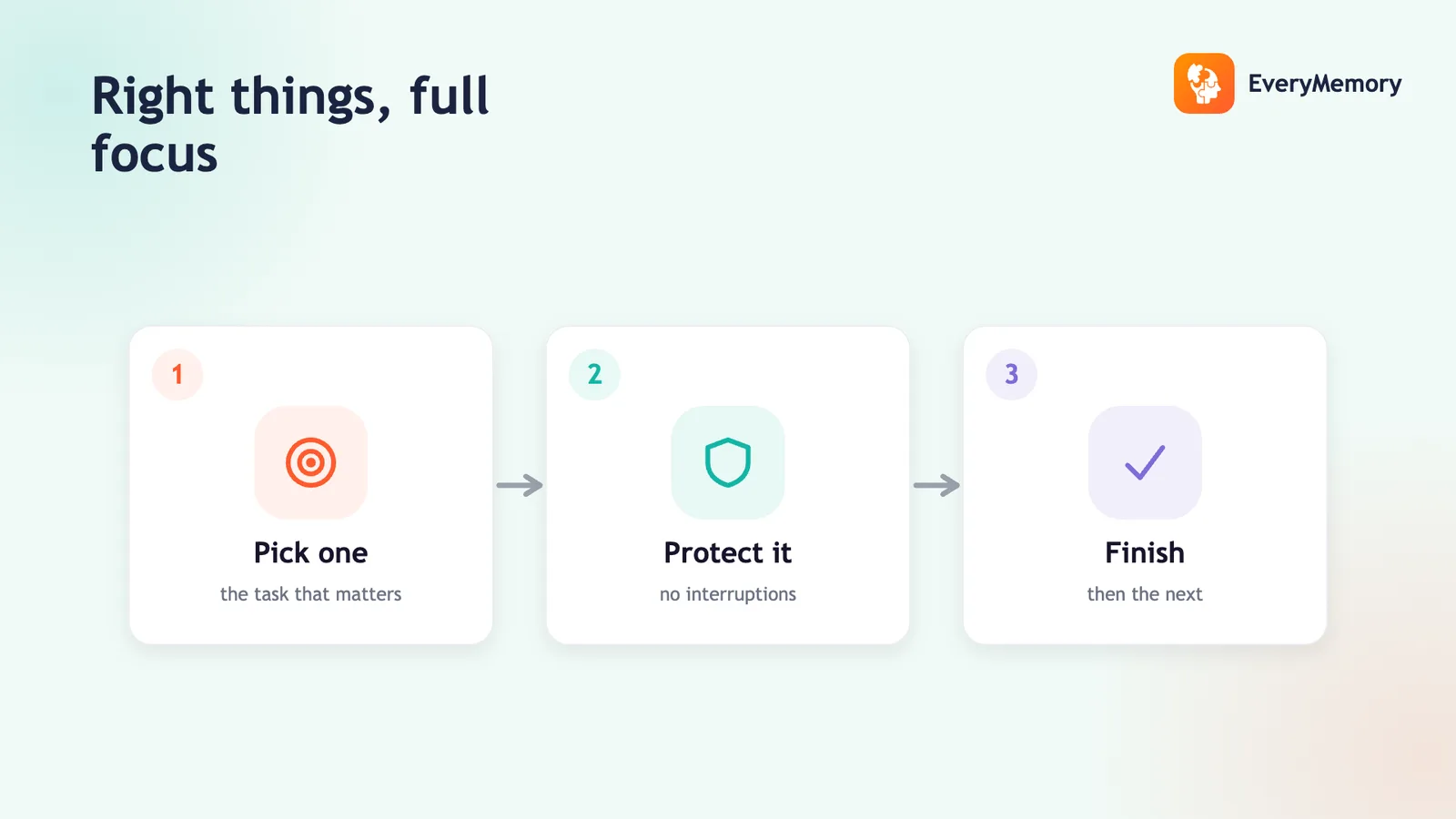
How to Be More Productive
Productivity isn't doing more things faster - it's doing the right things with full focus. Prioritise ruthlessly, single-task, protect attention, and manage energy.
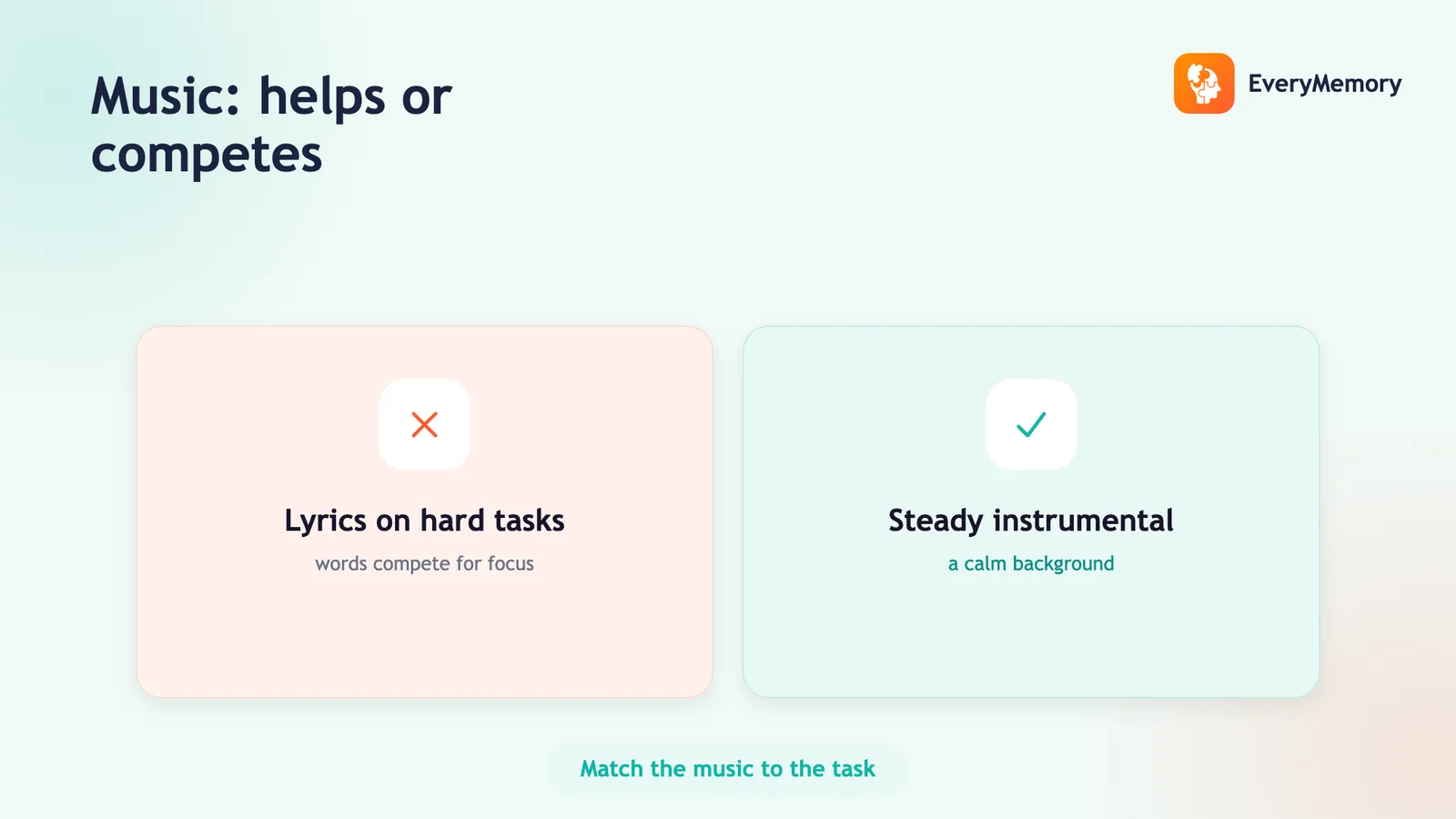
Does Music Help You Concentrate?
Music helps focus for some people and tasks and hurts it for others. When background music aids concentration, when it competes, and what kind works best.
Number Sequence Game
2, 4, 8, ? - spot the rule and pick what comes next. A free number sequence game that trains pattern logic, with three lives and a rising difficulty. Play it right here.
Code Breaker
Crack a hidden 3-digit code with pure logic. A free Mastermind-style deduction game you can play in your browser, no sign-up.
Speed Sort
A word flashes up - animal or fruit? Tap the right bin as fast as you can. A free 60-second sorting game you play in your browser.
Pattern Memory
A pattern of cells flashes on the grid all at once - remember it, then tap them all back. A free visual-memory game in your browser.
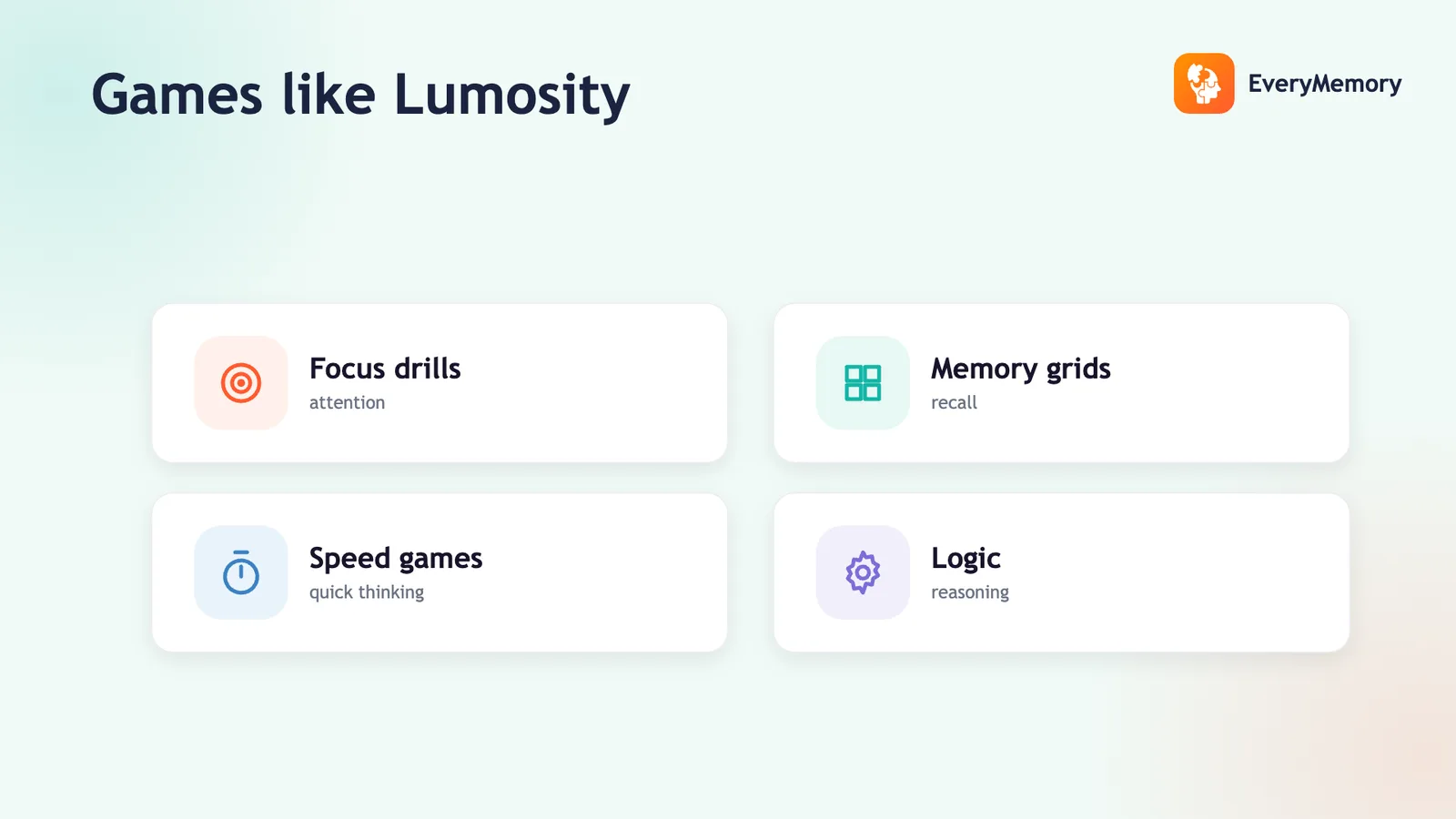
Games Like Lumosity
Games like Lumosity span memory, attention, speed and problem-solving. Here's the category mapped by skill - and the criteria that tell a good one from a gimmick.

Brain Games Online: A Practical Guide
A practical guide to brain games online - what they train, how to play them so they actually help, and how to tell a real trainer from a time-sink.

Math Games for Adults
Math games for adults rebuild numeracy and the confidence to do sums in your head - a genuinely useful skill. Here's what to play, the tricks that help, and an honest take on what they do.
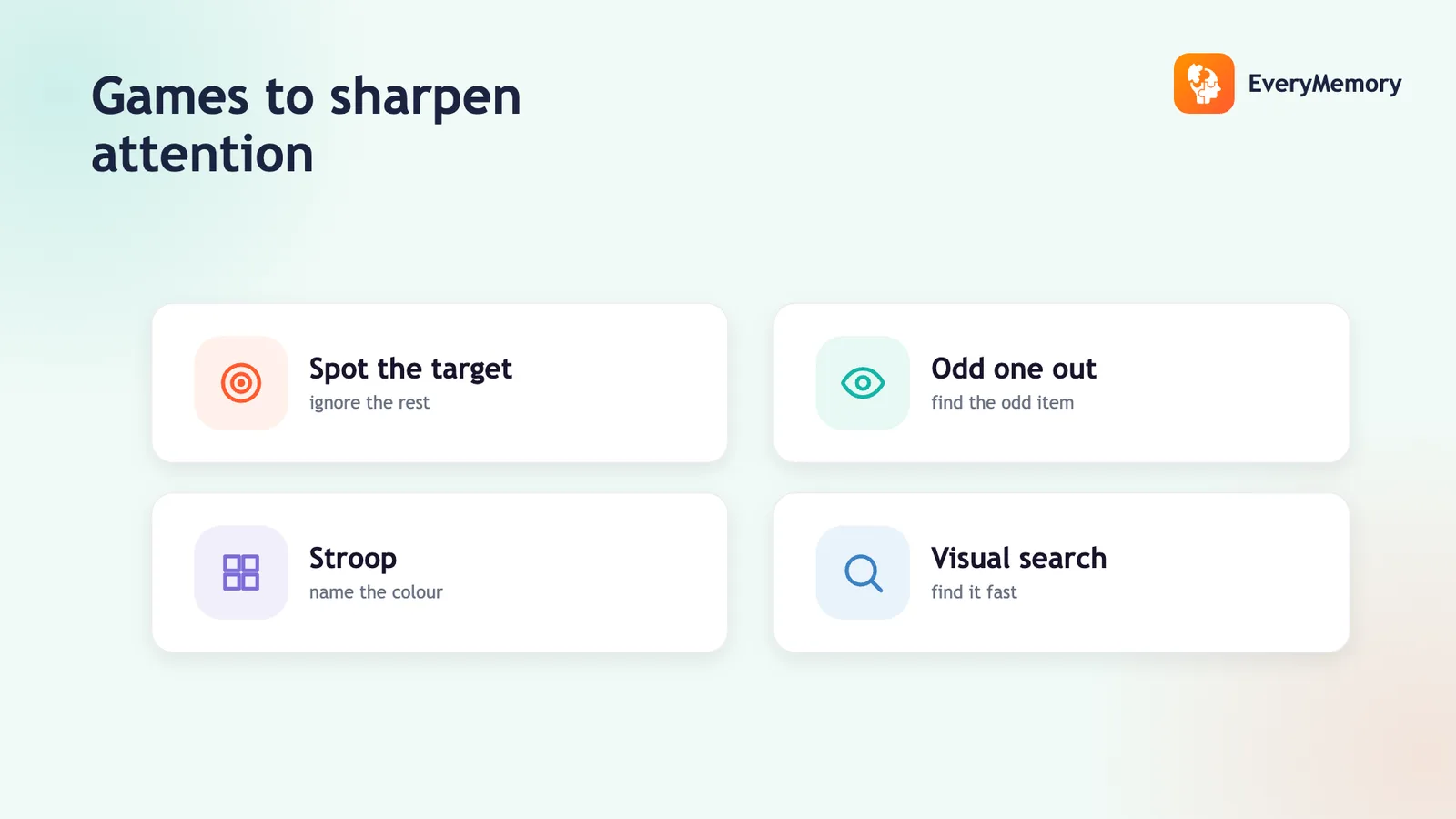
Games to Improve Attention
Games to improve attention train you to lock onto a target and resist distraction. Here are the mechanics that work - spot-the-target, Stroop-like, and sustained vigilance - and honest expectations.

Types of Brain Training Games (A Practical List)
A practical list of brain training game types - memory, attention, speed, flexibility and reasoning - mapped to the skill each one actually trains.
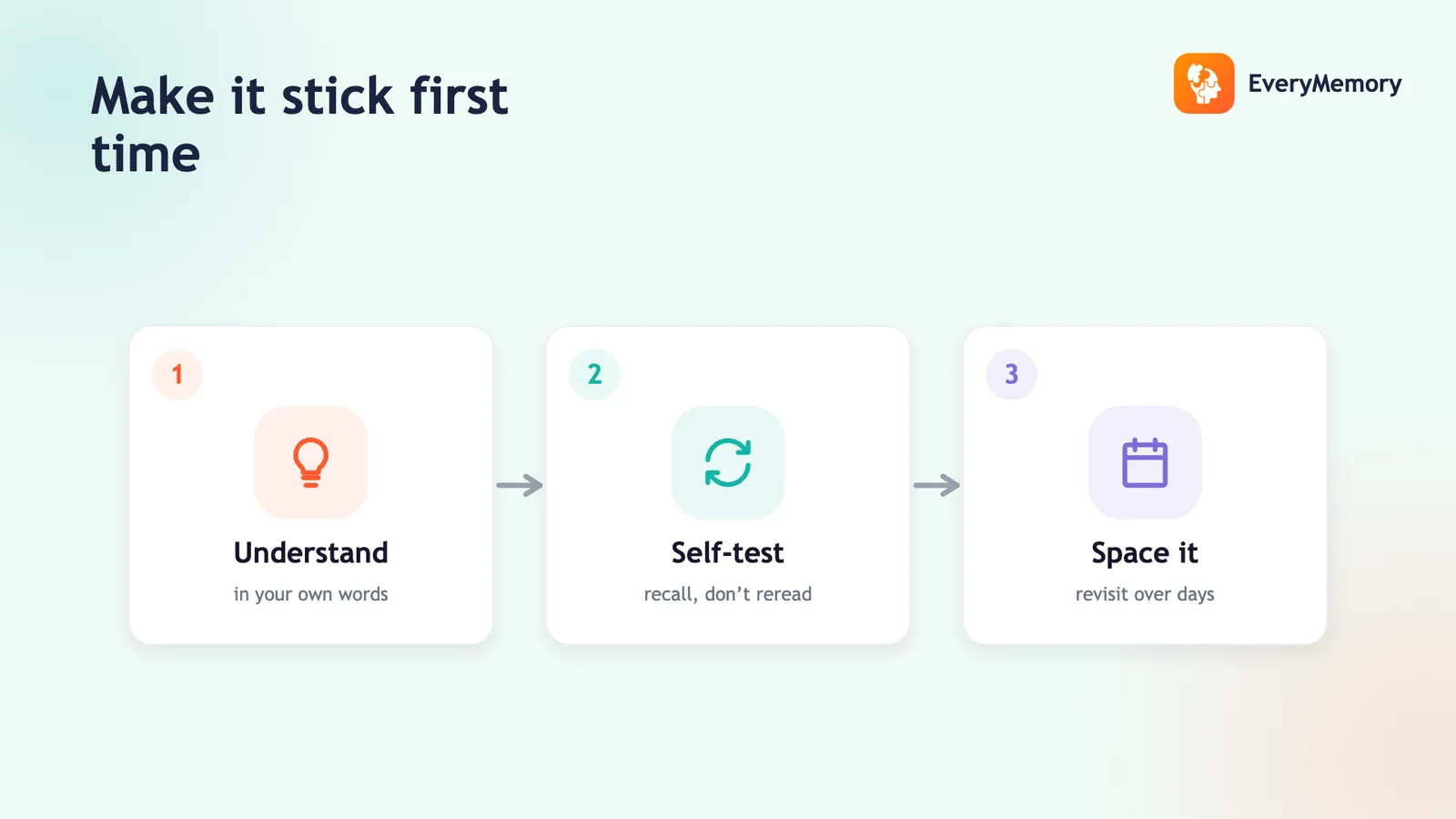
How to Learn Faster
Learning faster isn't about reading more or harder - it's about using methods that make information stick the first time, so you stop re-learning what you forgot.
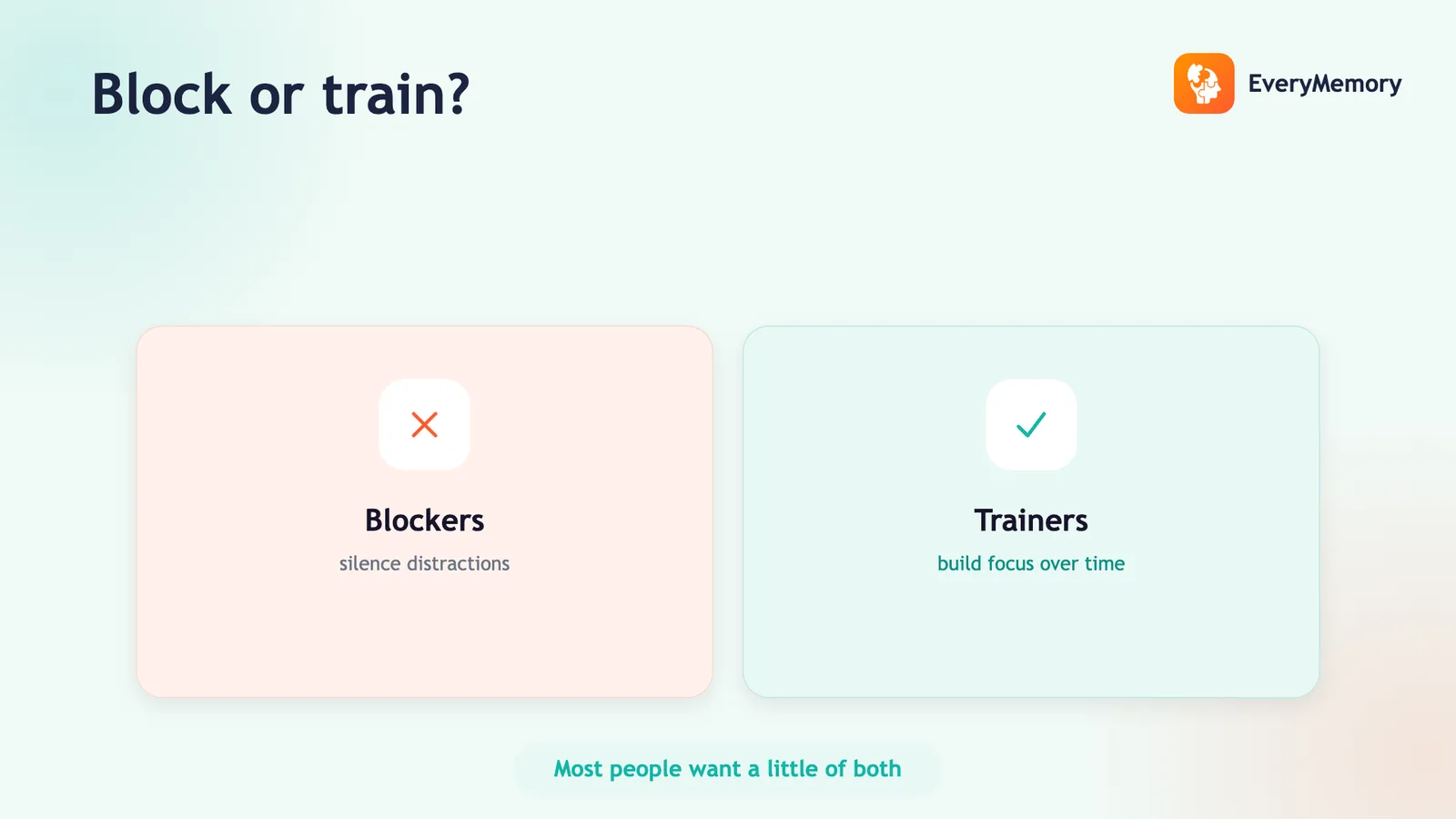
Best Focus Apps for Concentration and Productivity
Focus apps come in two types - distraction blockers and attention trainers. What each does, what to look for, and the focus wins no app can do for you.

Best Free Brain Games Online
The best free brain games online are the ones that adapt to your level and track your own progress - here's what to look for and the game types worth your time.
Word Ladder
Turn COLD into WARM by changing one letter at a time, each step a real word. A free word ladder puzzle invented by Lewis Carroll - five to solve. Play it right here.

Lumosity Alternatives: How to Choose a Brain-Training App
Looking for an alternative to Lumosity? The choice comes down to what you want to train and what you'll keep using. The criteria that matter, and where EveryMemory fits.
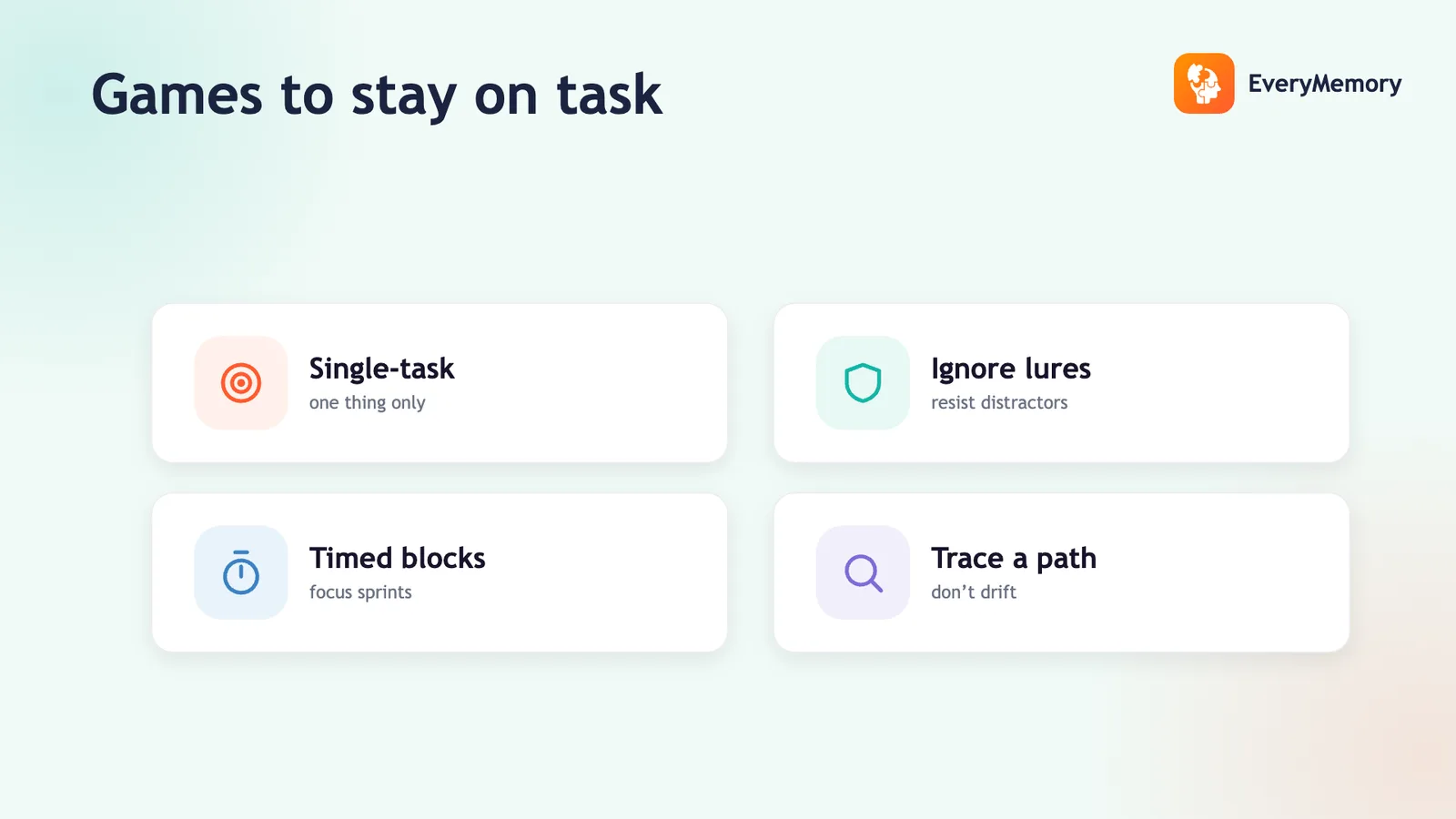
Games to Improve Focus
Games to improve focus train you to direct and hold attention where you want it. Here are the mechanics that work, how to pair them with focus habits, and an honest take on transfer.
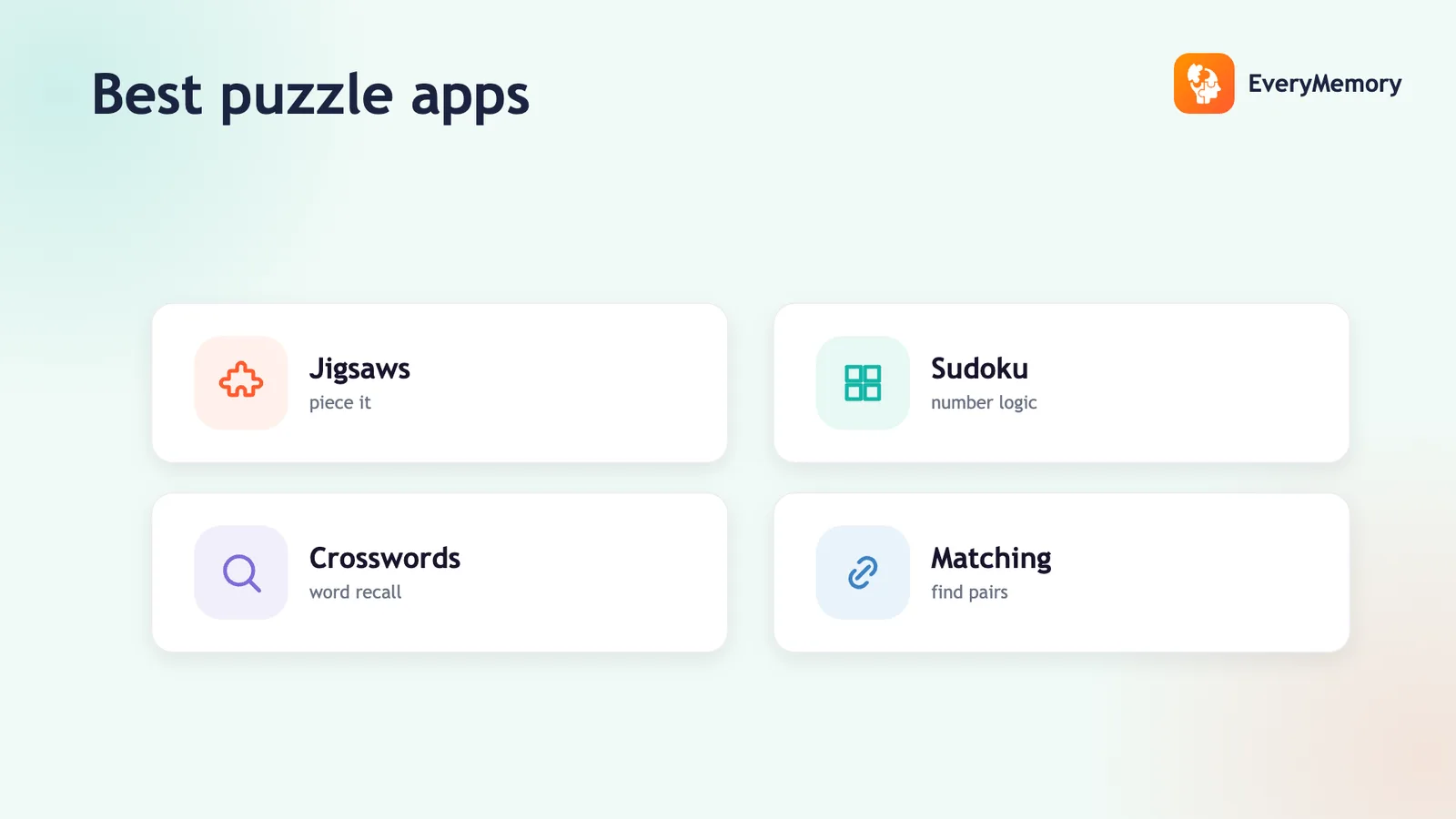
Best Puzzle Apps for the Brain
The best puzzle apps for the brain train real skills - logic, spatial reasoning, memory. Here's the field by skill, the criteria that matter, and an honest read on what puzzles do.

Crossword Tips for Beginners
Crosswords are a vocabulary and general-knowledge workout - and far more solvable once you know the tricks. Here are real beginner tips, a worked clue, and an honest take on what they build.
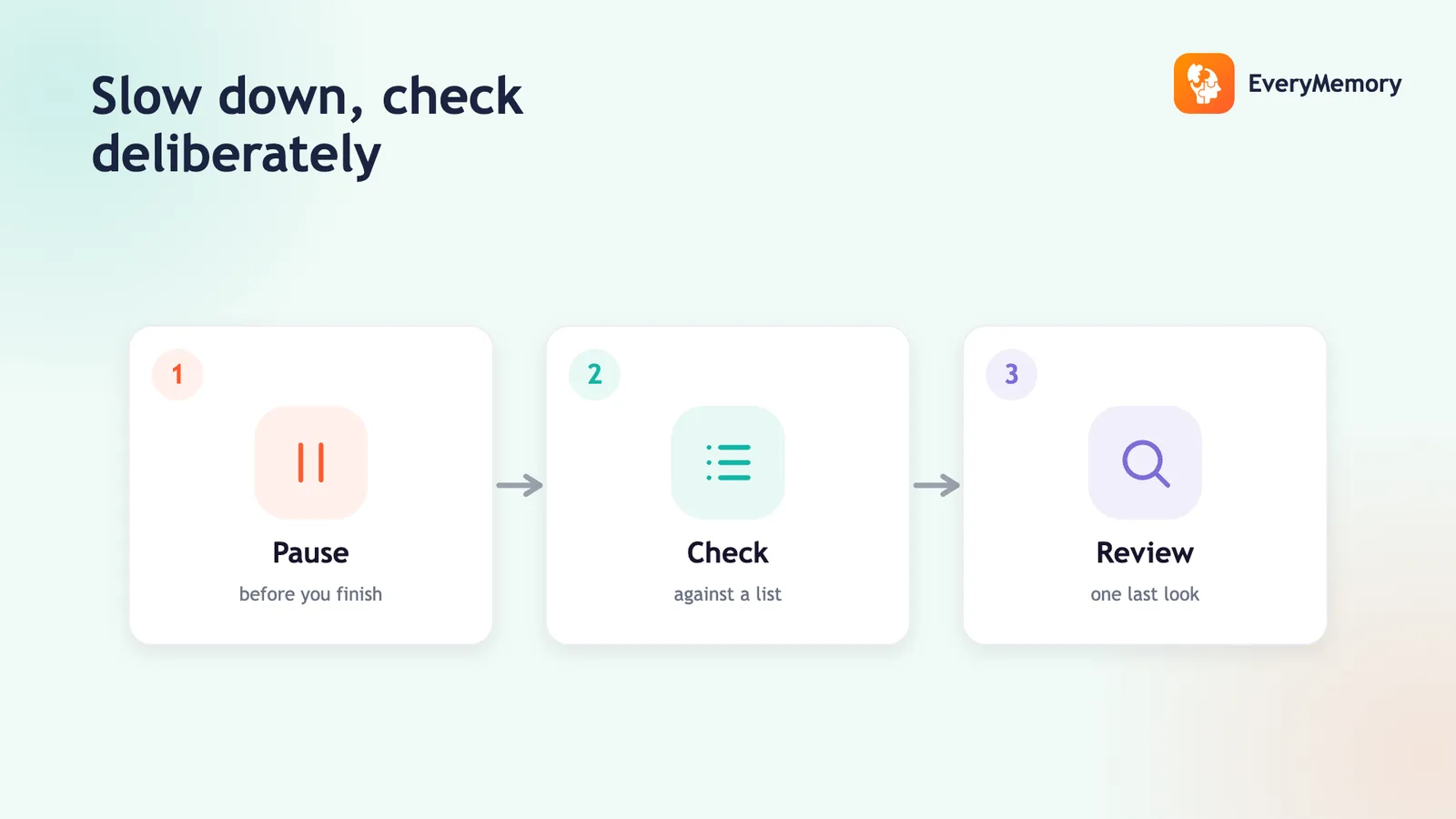
How to Improve Attention to Detail
Attention to detail is less about effort and more about systems - slowing down, checking deliberately, and removing the rush and distraction that cause most slips.
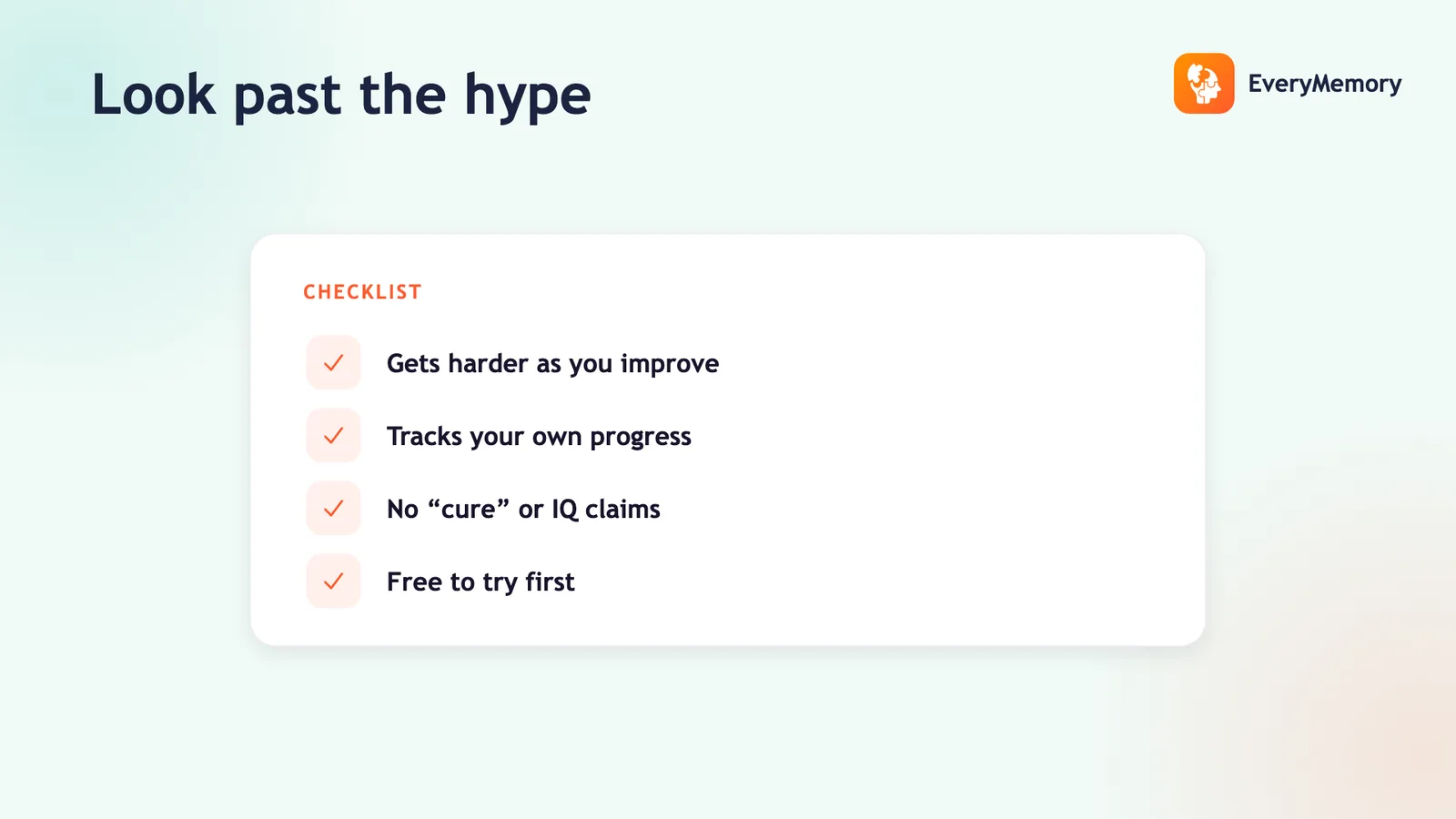
The Best Apps for Memory and Brain Training
Ignore the flashy claims. The qualities that actually make a memory app worth using - and honest expectations about what any of them can do.

Number Sequence Puzzles
Number sequence puzzles train pattern-spotting and inductive logic - finding the rule behind a run of numbers. Here's how to crack them, worked examples with answers, and an honest take.
Speed Match
Play the free Speed Match game. Tap YES if the symbol matches the one before it, NO if not - as fast as you can for 60 seconds. Test your processing speed.
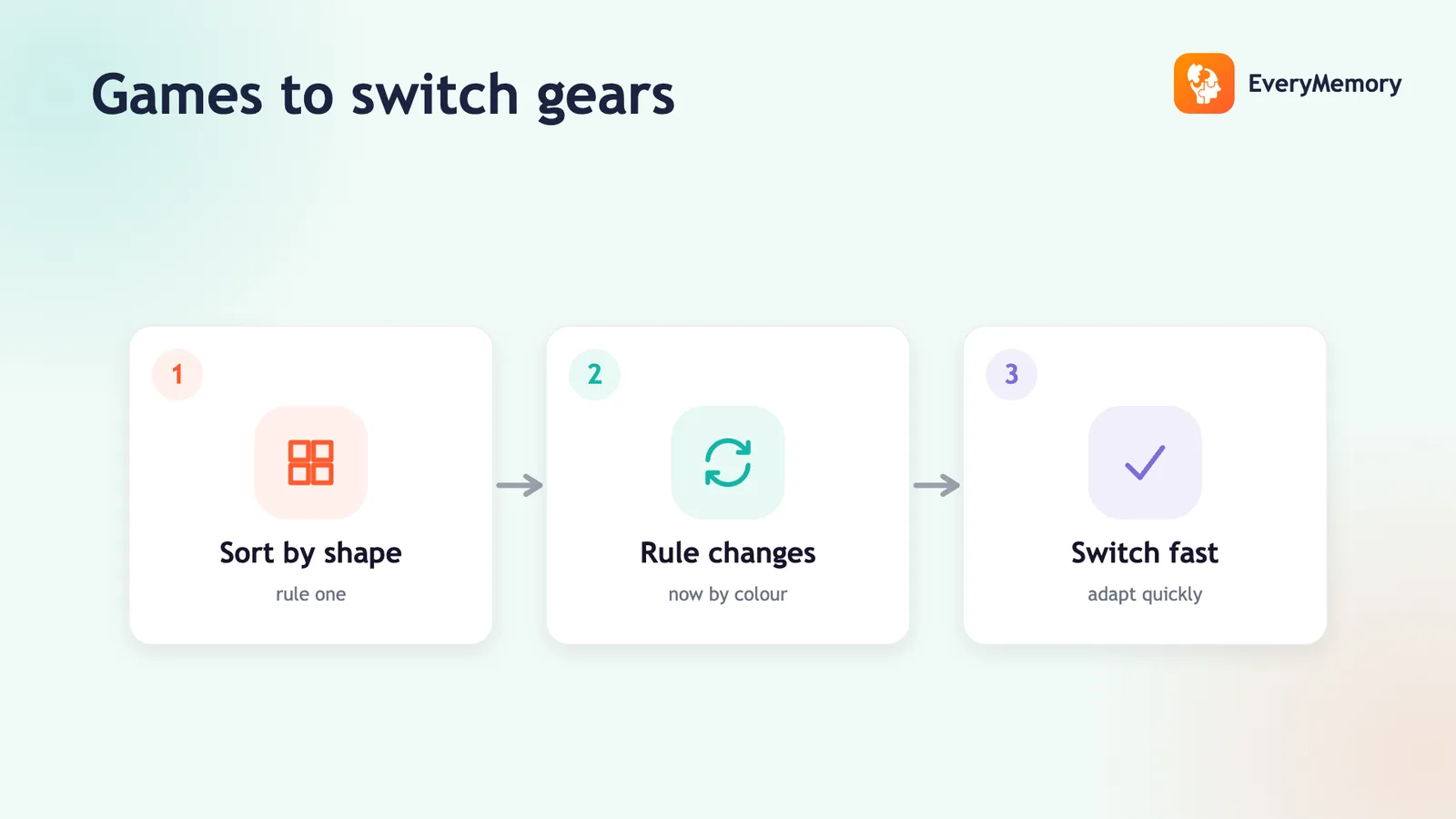
Cognitive Flexibility Games
Cognitive flexibility games train you to switch rules and shift gears without getting stuck. Here are the task-switching mechanics that work - and an honest take on what transfers.
Tower of Hanoi
Move the whole stack to another peg, one disk at a time, never a larger disk on a smaller one. A free Tower of Hanoi puzzle that quietly trains planning - play it right here.
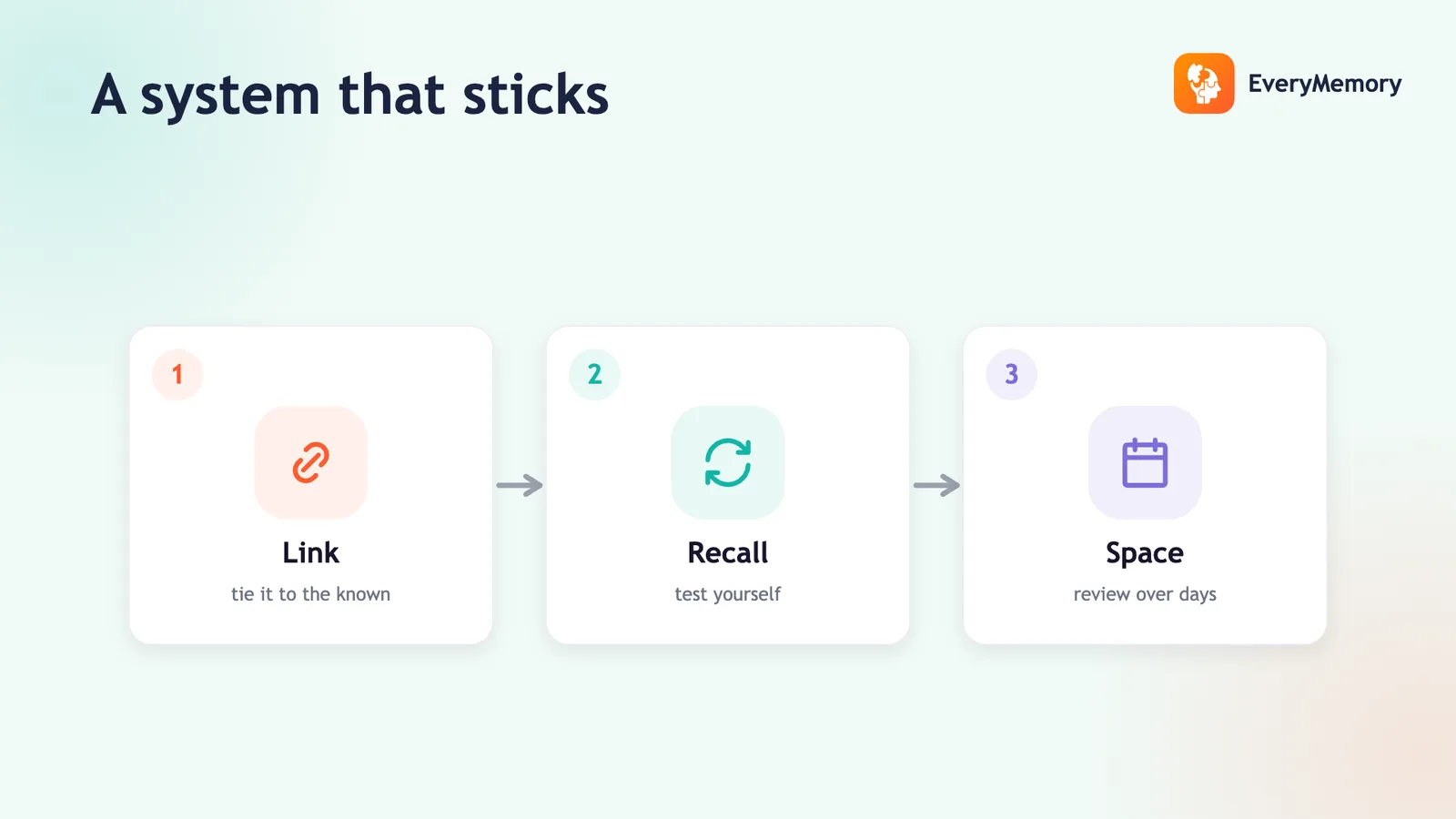
How to Learn and Remember Anything
A reliable learning system combines understanding first, active recall, spaced review, and association - so what you learn actually stays learned instead of fading in days.
Hangman
Guess the hidden word one letter at a time before your six lives run out. A free, friendly hangman game that trains word logic and vocabulary. Play it right here.

Games to Improve Reaction Time
Games to improve reaction time train how fast you respond to a signal. Here are the simple and choice-reaction mechanics that work, plus an honest take on how much they transfer.
Word Bubbles Game
Make every hidden word from seven jumbled letters before the clock stops. A free word-bubbles anagram game you can play right here and beat your own fastest time.
Schulte Table: Free Attention Trainer
A 5x5 grid of scrambled numbers you tap from 1 to 25 in order, as fast as you can - a popular attention and visual-scanning trainer.
Focus and Attention Brain Workout
Practical attention drills you can do in ten minutes a day to sharpen focus, reduce distractibility, and support everyday memory - with clear steps and a habit plan.
Find the Pair
Two emoji in the grid are identical, the rest are unique. Spot the pair fast. A free 60-second visual-scanning sprint, no sign-up.
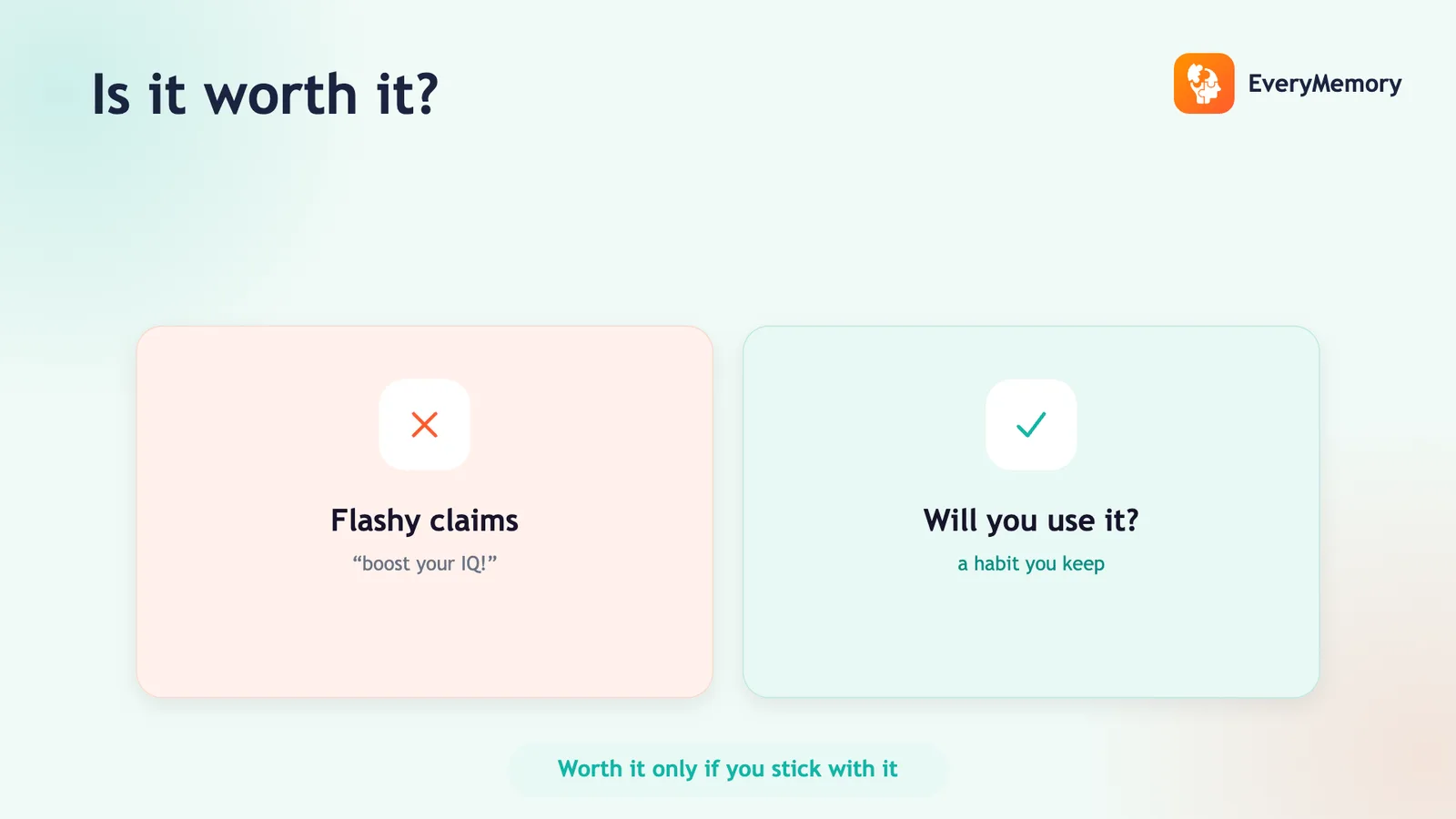
Is Lumosity Worth It? How to Decide
Whether Lumosity - or any brain-training app - is 'worth it' depends entirely on what you expect from it. An honest framework for deciding.
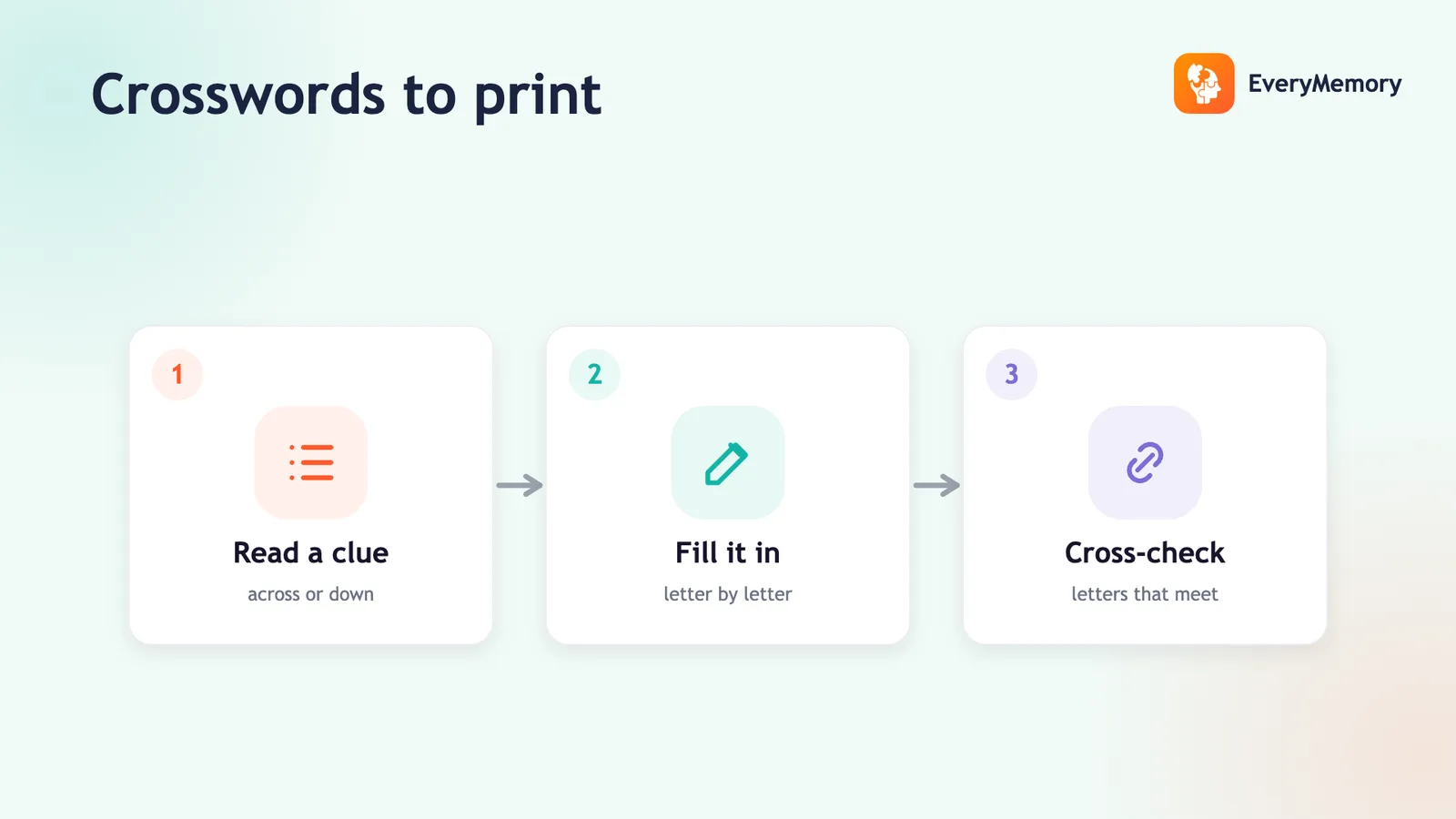
Printable Crossword for Seniors
Printable crosswords for seniors: large-print sources, easy-grid tips, what crosswords really train, and a mini puzzle with answers you can solve today.

Visual Memory Games
Visual memory games train your ability to hold images, grids, and positions in mind. Here are the grid-recall and pattern mechanics that work, plus an honest take on transfer.
Letter Spotter
Spot the hidden T letters among a sea of L letters as fast as you can. A free 60-second visual search sprint in your browser.
Number Switch
Play the free Number Switch game in your browser. Judge each number by odd/even or high/low as the rule keeps switching. Test your mental flexibility.
Lights Out
Tap a tile and it flips itself plus its four neighbours - your job is to switch every light off. A free Lights Out puzzle that trains logical planning. Play it right here.
Nonogram
Use the row and column number clues to deduce which squares to fill and reveal the hidden picture. A free nonogram (picross) puzzle you can play right here.
Best Reaction Time Games
The best reaction time games are quick, fair and trackable. Here's the field by type, the criteria that separate a real test from a noisy one, and how to read your own scores.

Number Games for the Brain
Number games are absorbing and sharpen real skills - arithmetic, logic, pattern-spotting - but each trains its own narrow ability. Here's what to play, what each one builds, and an honest take.
Memory Training for Productivity: Does It Help?
Focus and working memory are the engines of productive work - meetings you absorb, names you recall, tasks you hold in mind. How training them gives a real edge.
Brain Training for Adults: Does It Help, and How to Start
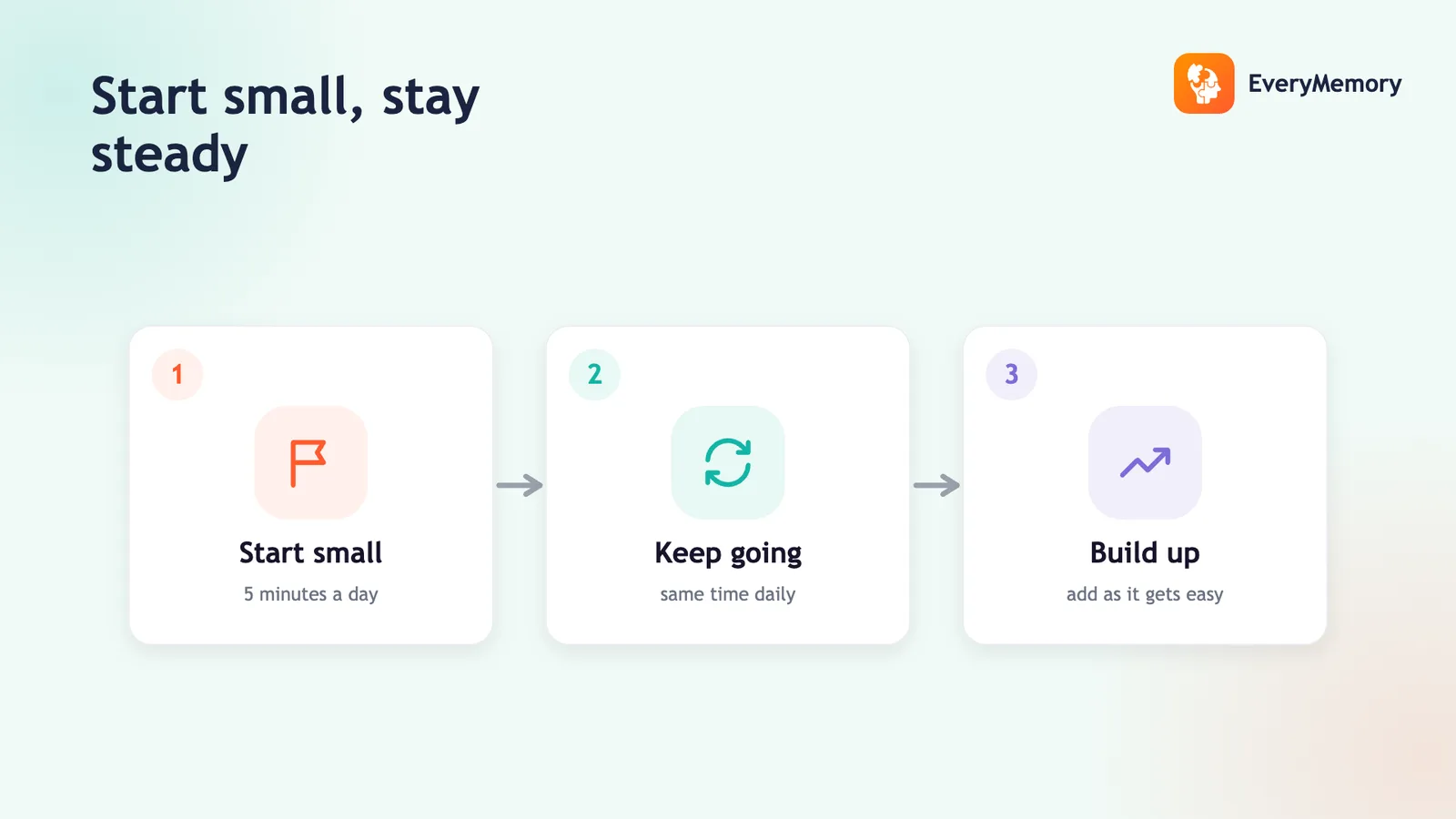
Brain training for adults means giving memory, attention, and reasoning regular, slightly challenging practice. What helps, what's hype, and how to start.
Count the Coins
Add up a handful of coins and tap the total. A free, quick mental-addition game you play in your browser with no sign-up.
PIN Recall
Play PIN Recall free in your browser. Watch a keypad light up a code, then tap it back in order. Each round gets longer. No sign-up.
Speed Reading Techniques: What Works
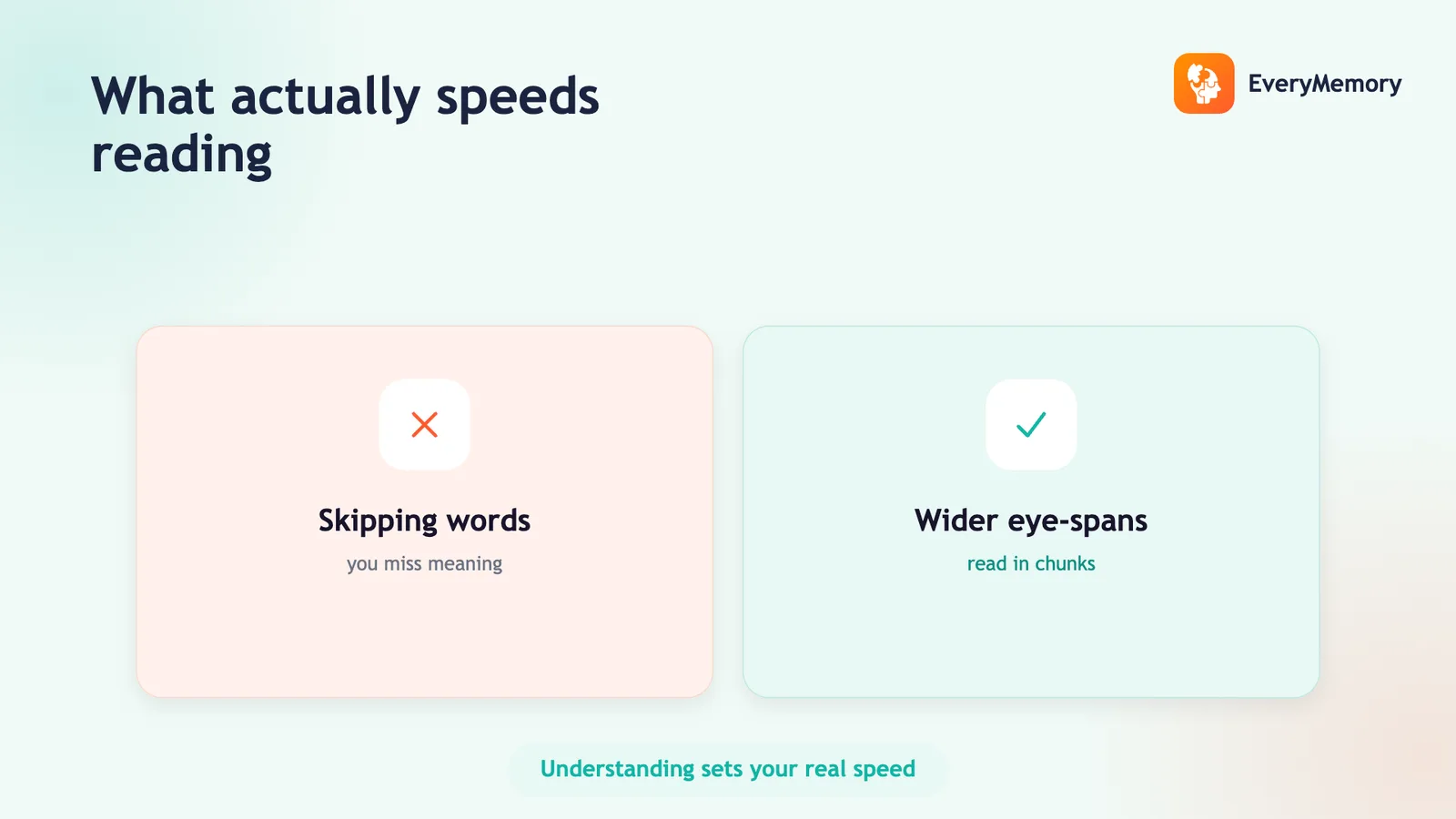
Most speed-reading claims fall apart under testing, but a few honest techniques genuinely help you get through reading faster without losing the parts you need.

10-Minute Memory Workout for Beginners
A simple, follow-along routine that mixes recall, focus, and visual memory into ten focused minutes - no equipment, no experience, and easy to repeat every day.
Path Memory
A route lights up across the grid, one cell at a time - then you retrace it in order. A free spatial-memory game in your browser.
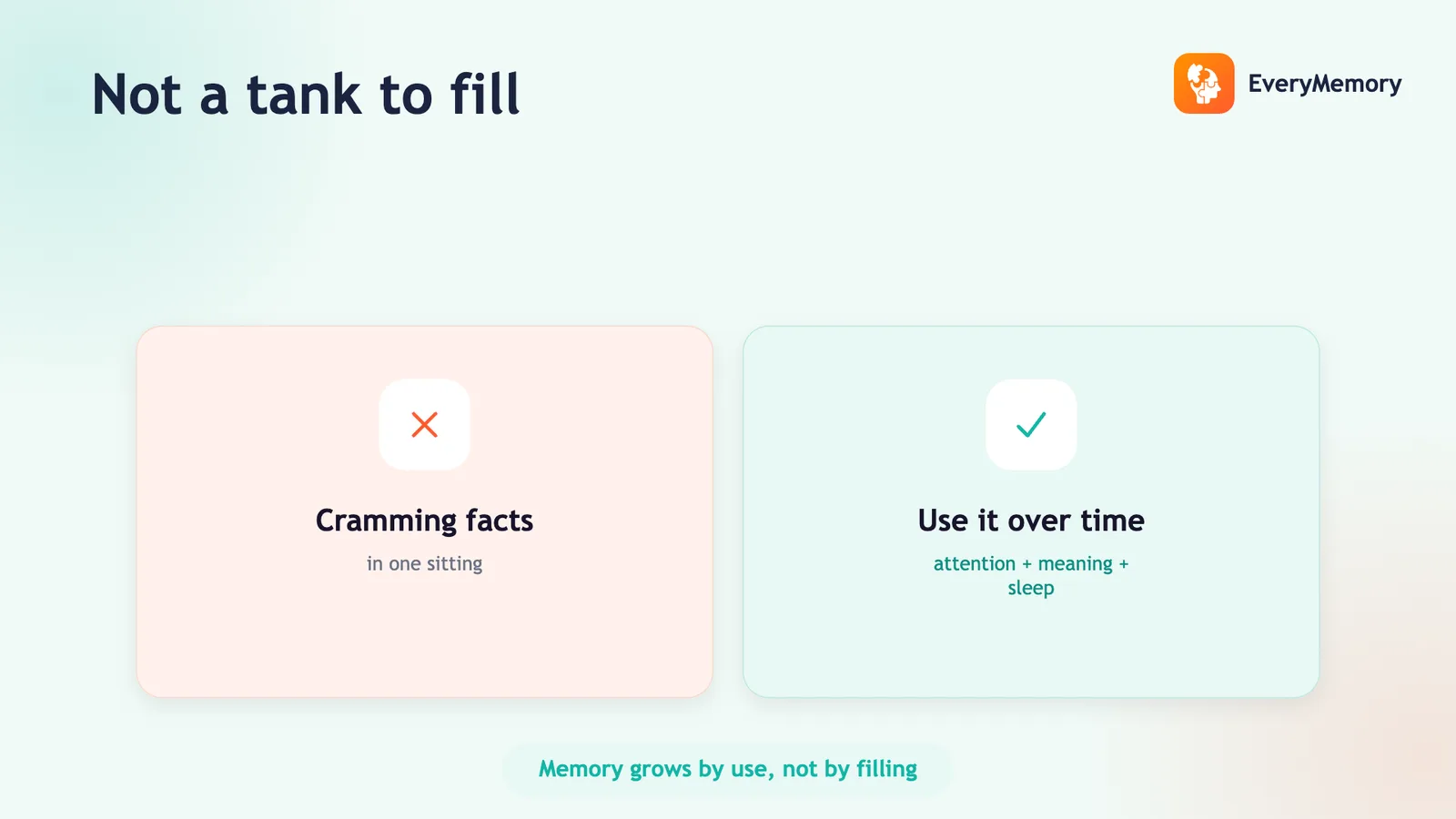
How to Increase Your Memory Power
'Memory power' isn't a fixed tank you can pump up. The levers that genuinely raise how much you remember - and the shortcuts to skip.

Verbal Memory Games
Verbal memory games train your ability to hold words, names, and lists. Here are the word-list and name-recall mechanics that work, plus an honest take on what transfers.
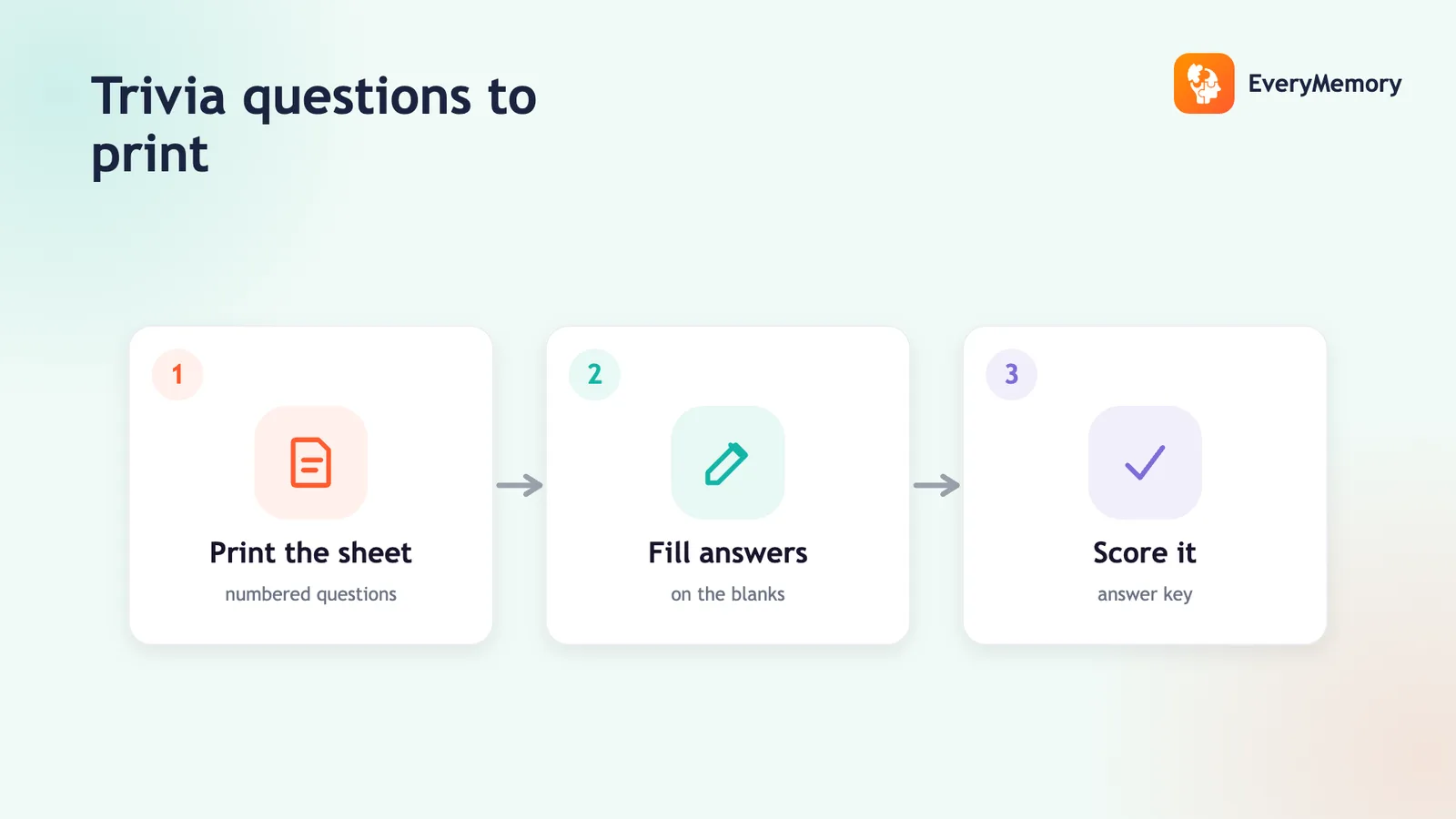
Printable Trivia Questions
Printable trivia questions with answers: ready-to-use rounds, what trivia actually exercises, how to build a themed quiz sheet, and printing tips for group play.
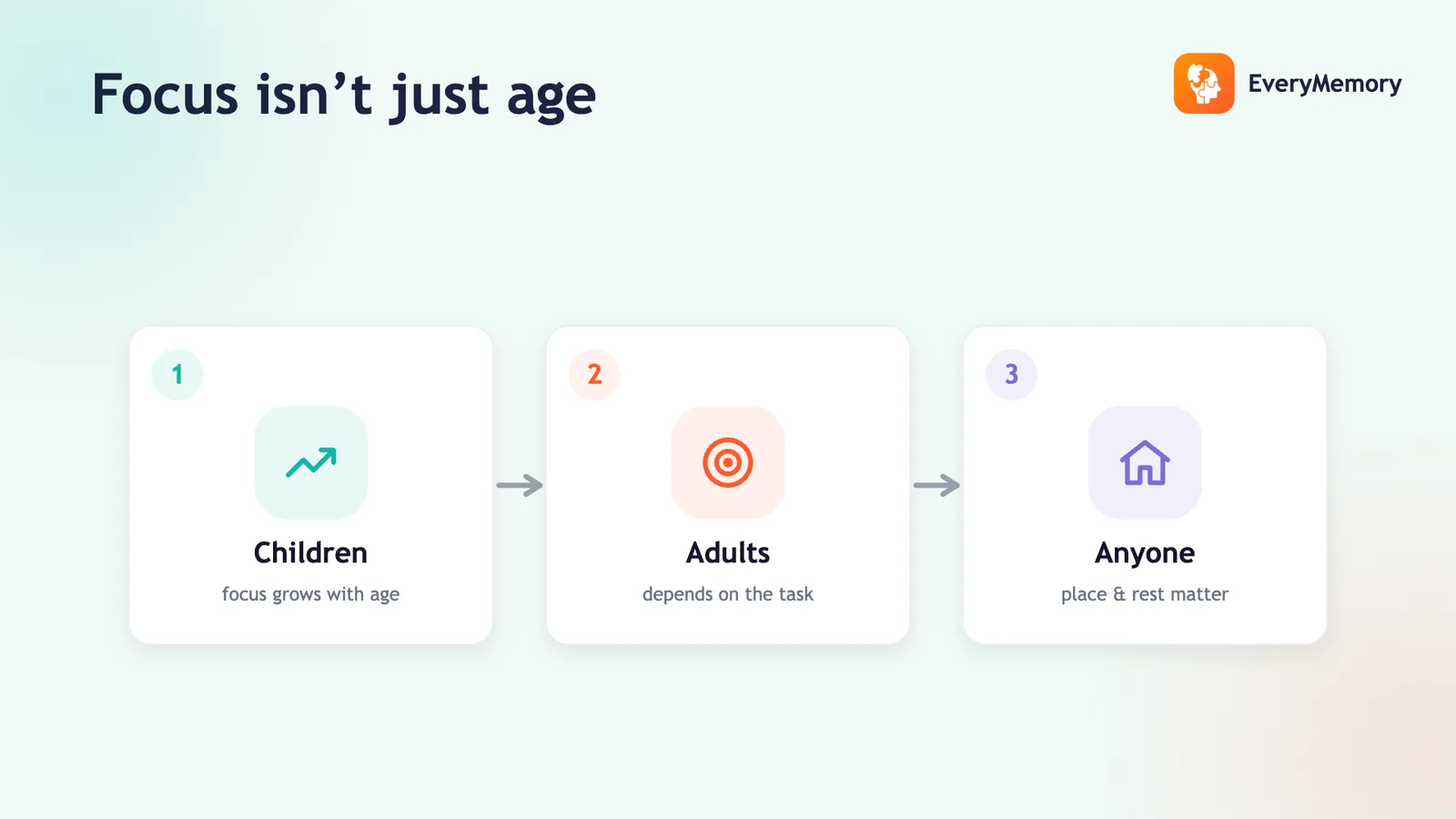
Attention Span by Age: What's Normal?
Children's focus lengthens with age; adult attention varies far more by task and environment than by years. A realistic guide - and why the famous numbers are myths.
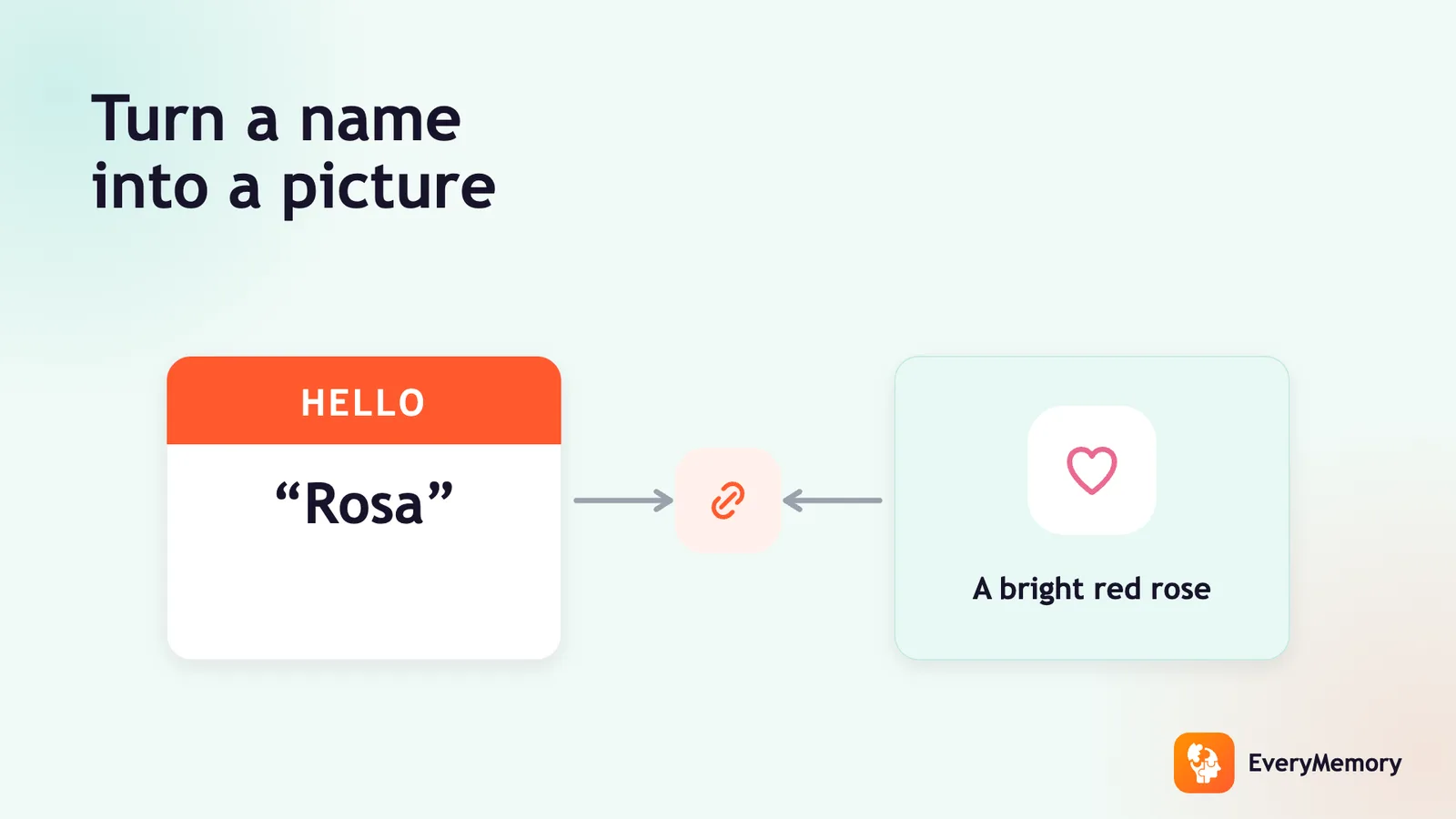
Names and Faces Memory Exercise
Remembering names is a skill, not a gift - and it responds remarkably well to practice. Here's a step-by-step exercise to make new names stick by linking them to faces.
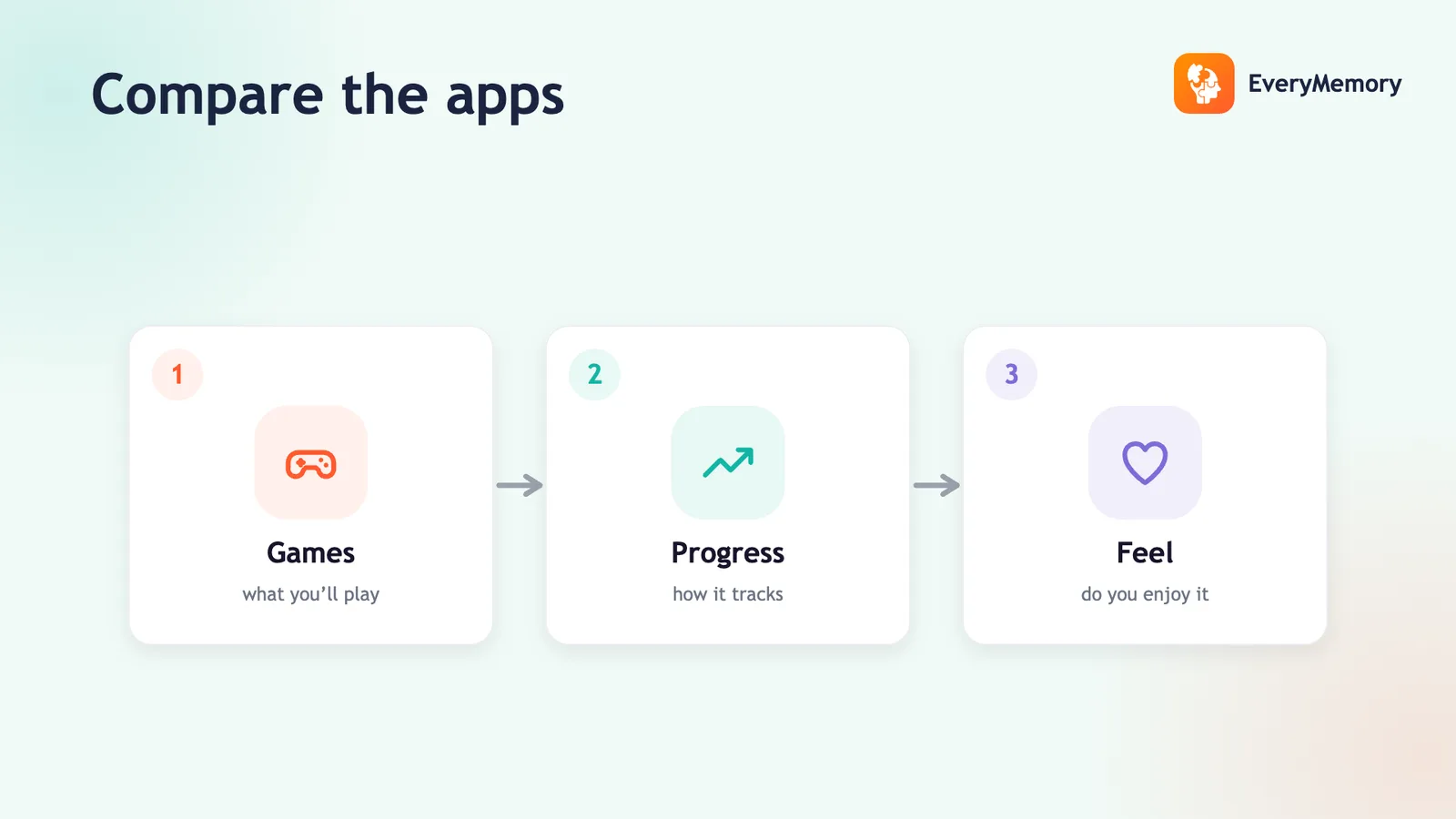
Lumosity vs Elevate vs EveryMemory: How to Compare
Lumosity, Elevate, and EveryMemory are all brain-training apps with different emphases. How they differ, and how to pick the right one for you.
Make the Number
Hit the target by combining a few numbers with plus, minus and times. A free mental-math reasoning game right in your browser.
Sliding Puzzle
Slide the numbered tiles into order using the one empty space - the classic 8-puzzle (and 15-puzzle). A free sliding puzzle that trains planning. Play it right here.
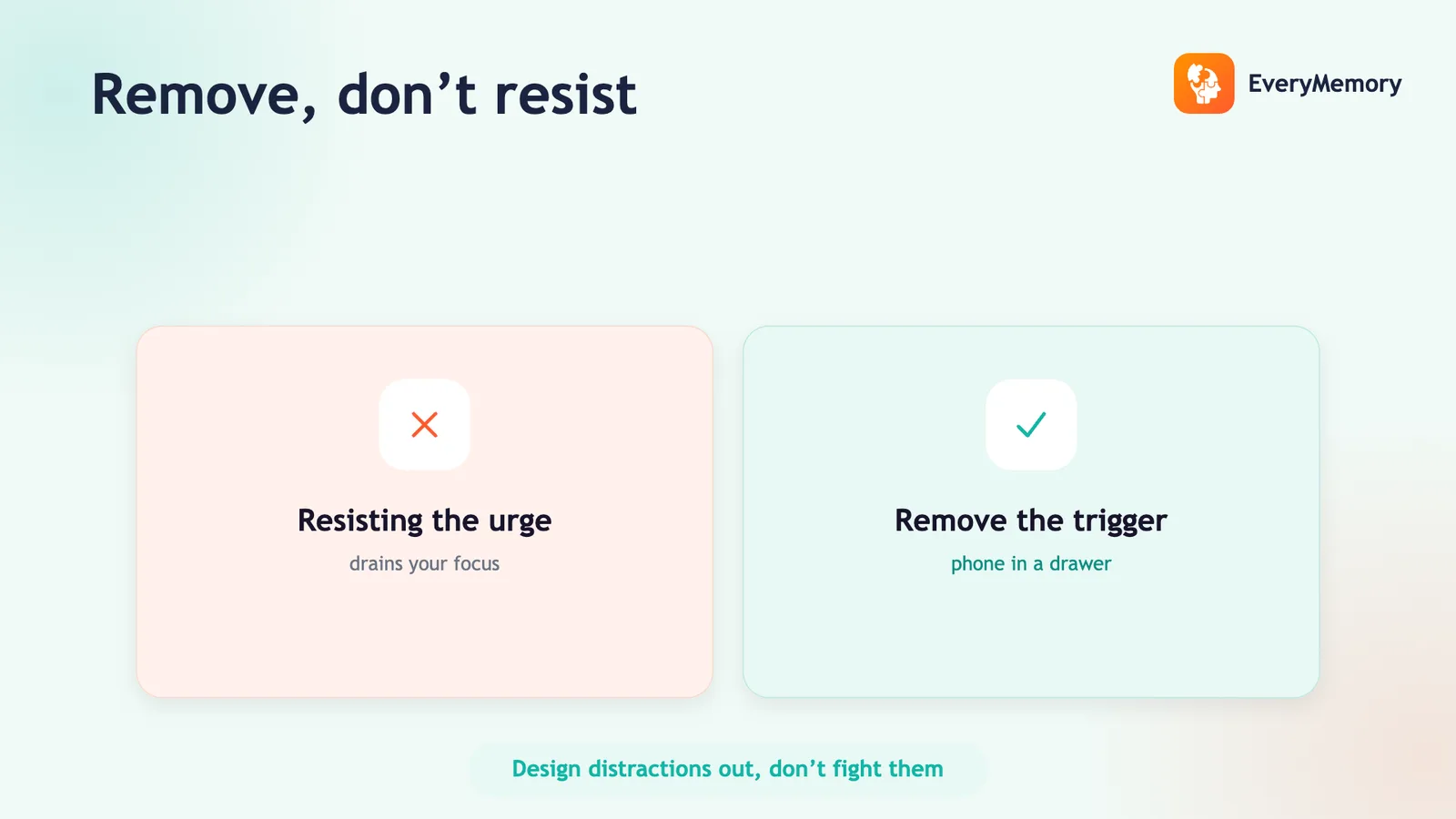
How to Avoid Distractions
Willpower loses to a buzzing phone. Remove distractions instead of resisting them, handle the internal ones, and ride out each pull with short focused blocks.
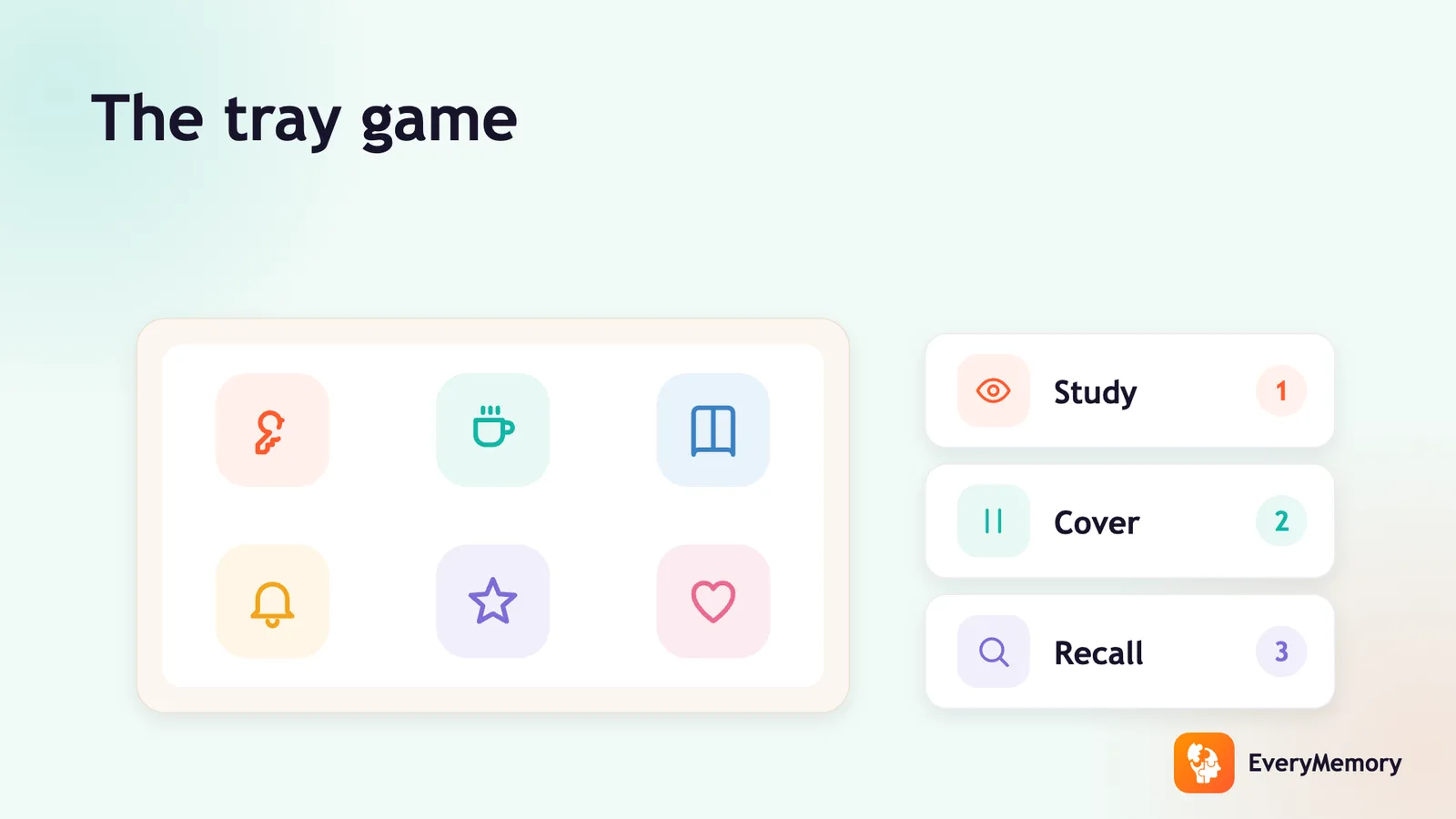
Visual Memory Training for Older Adults
Visual memory exercises help older adults sharpen spatial recall, remember faces and places, and notice fine details. Here are the best drills and how to do them daily.
Memory Match Game: Free Online Pairs
A free online pairs game where you flip cards to find matching pairs from memory - the classic Concentration game, scored by how few moves you take.
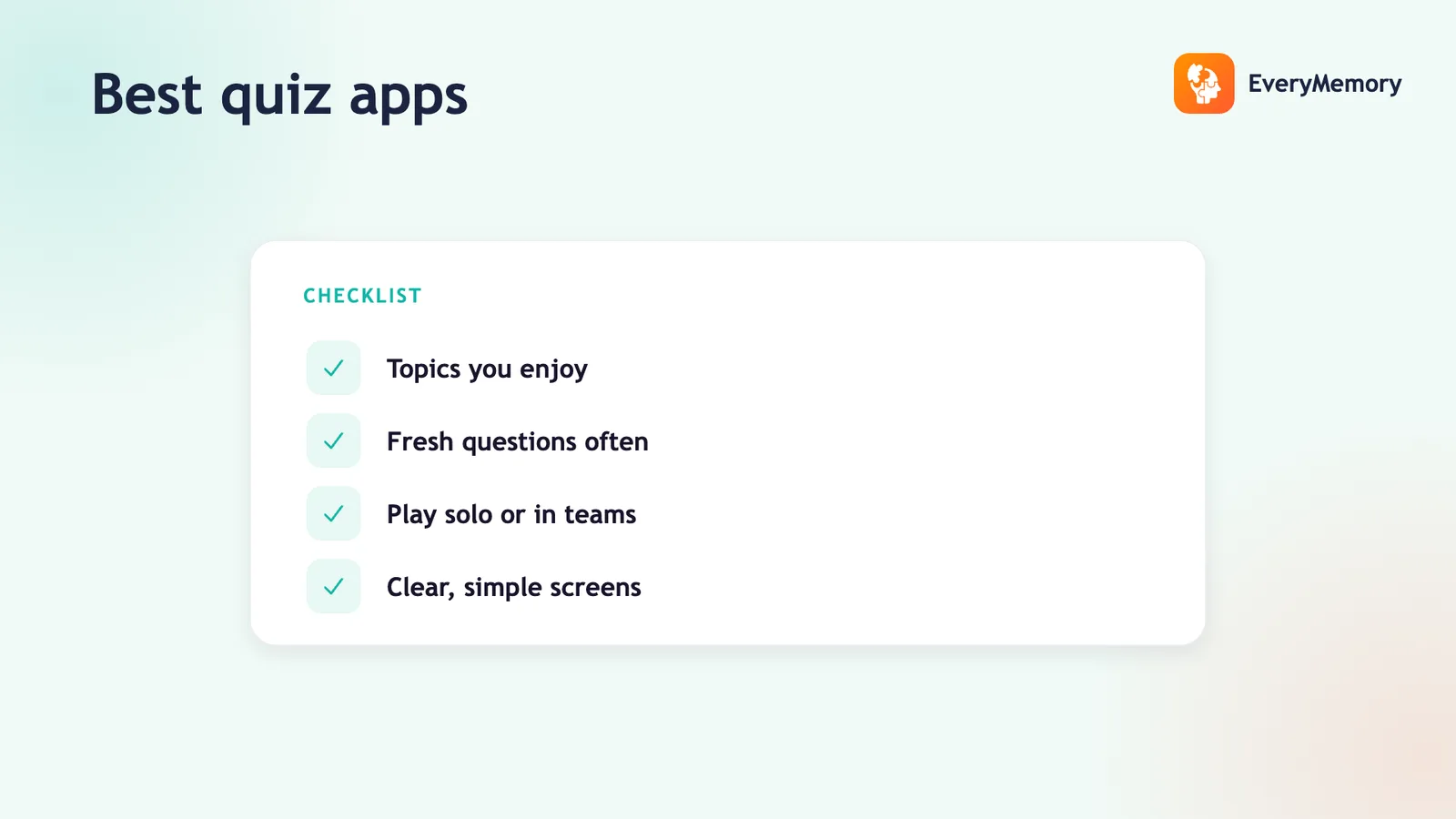
Best Quiz Apps
The best quiz apps are great for retrieval practice and fun - but they test what you already know. Here's the field by type, the criteria that matter, and what quizzing really builds.
Divided Attention
Play the free Divided Attention game. Tap the stars while quietly counting the blue shapes - a genuine dual-task challenge for your focus.
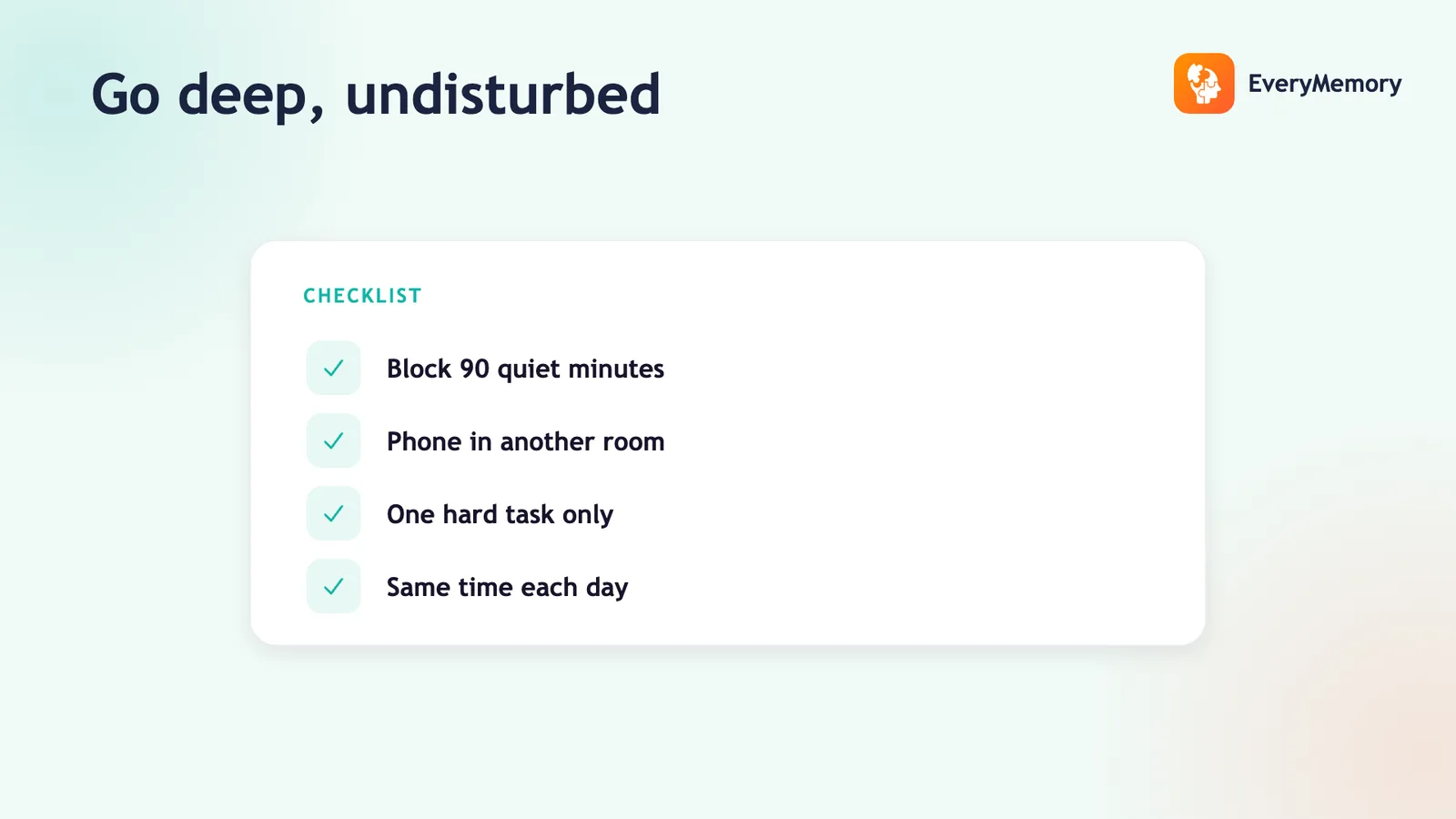
How to Do Deep Work
Deep work is distraction-free focus on demanding tasks - where your best output comes from. How to set it up, and how to build the capacity for it.
More or Less
Play the free More or Less game. Tap the bigger group when the cue says MORE, the smaller when it says LESS - and the cue keeps switching on you.
Shopping List
Play the Shopping List memory game free online. Memorize the grocery list, then pick the right items from a bigger grid. Beat your own best.
Color Match Game
Memorise the colour, then pick it from the grid once it hides - harder every round as the shades get closer. A free colour-memory game you can play right here.
Hobbies That Keep Your Mind Sharp
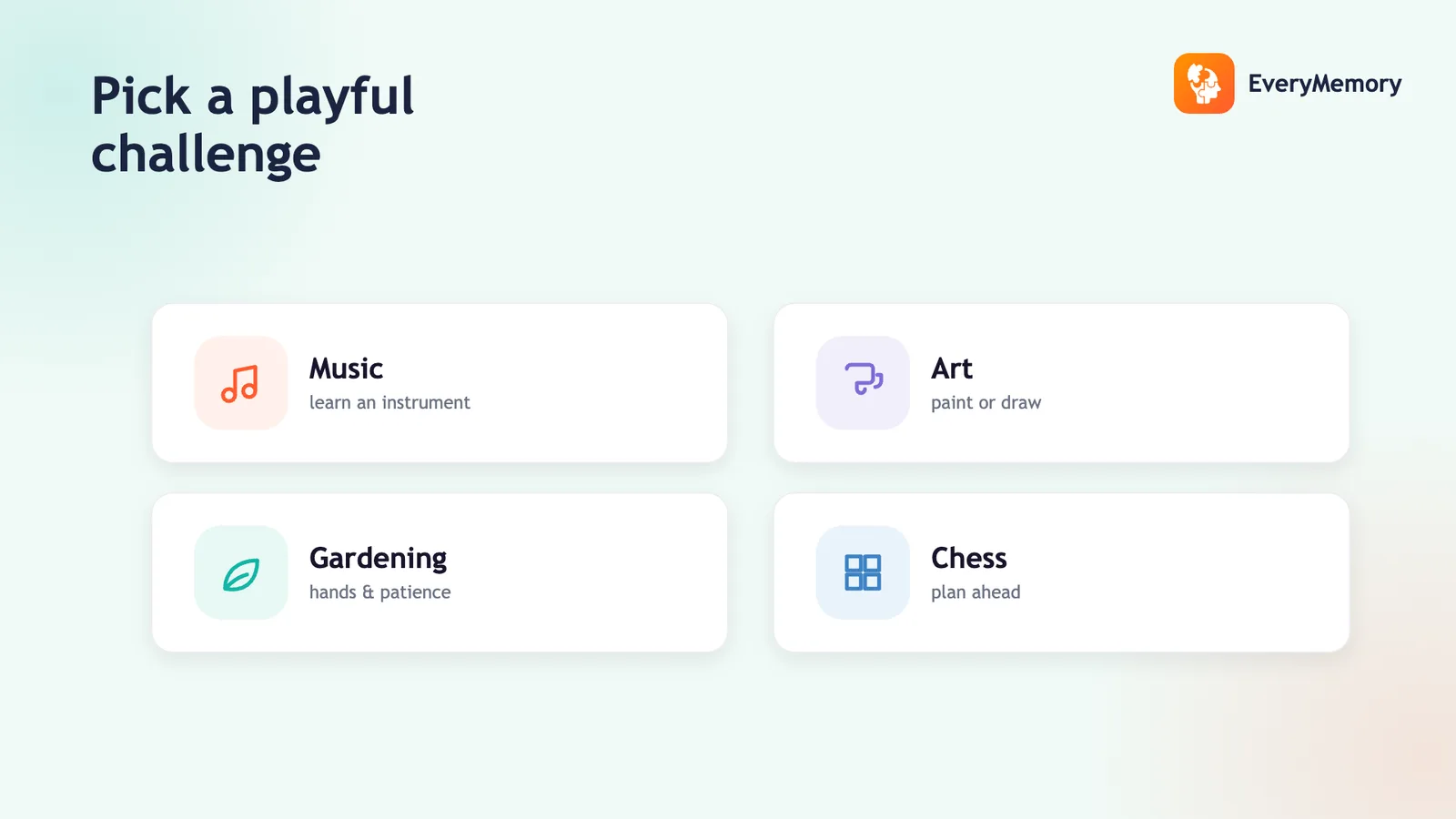
The best hobbies for your brain are a little challenging, varied, and ideally social. What to look for, plus plenty of examples - pick the ones you'll keep doing.
Concentration Exercises for Students
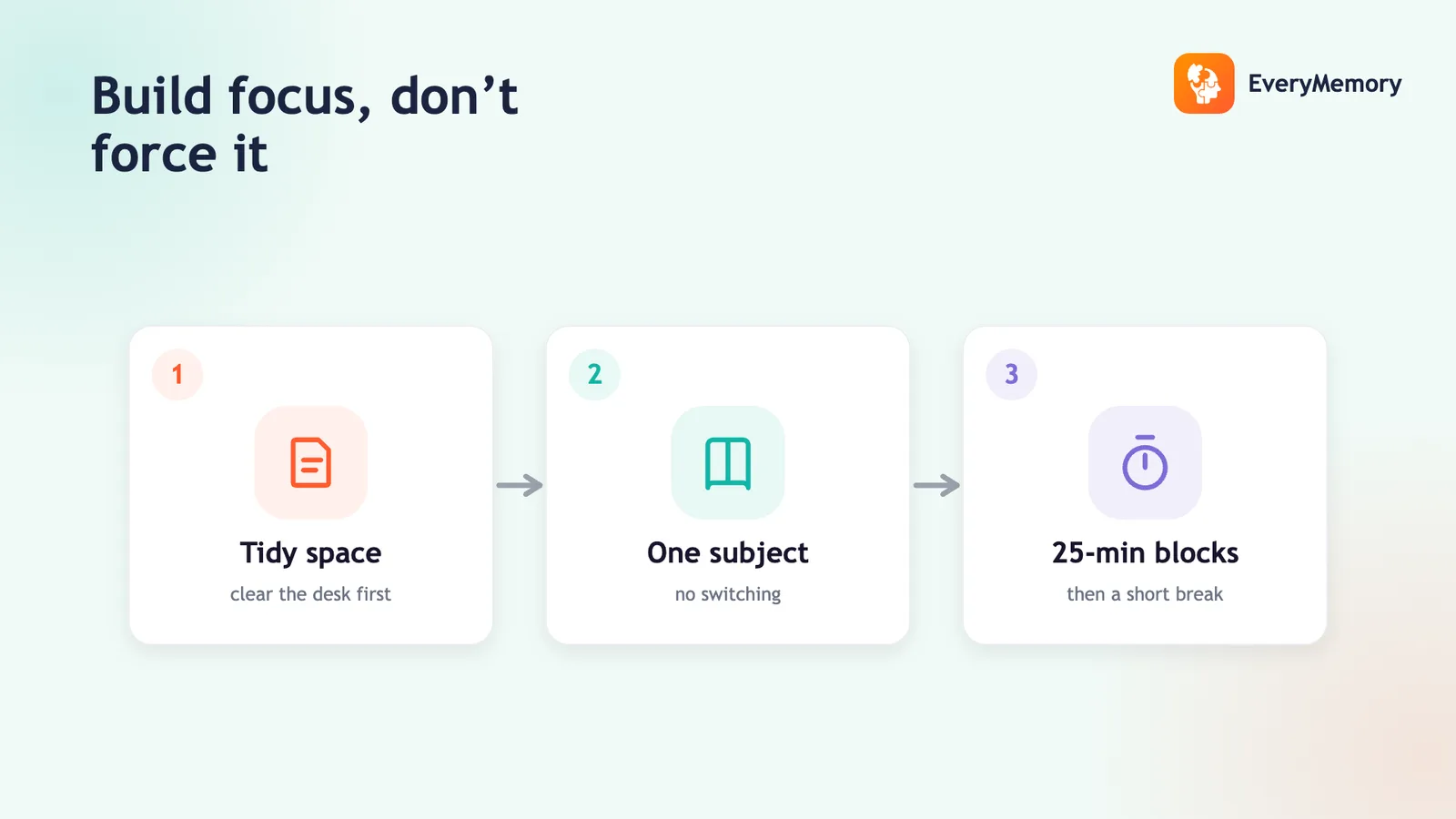
Concentration is built, not forced. Practical exercises that help students focus while studying - by removing distractions and making study active.
Printable Memory Games for Adults
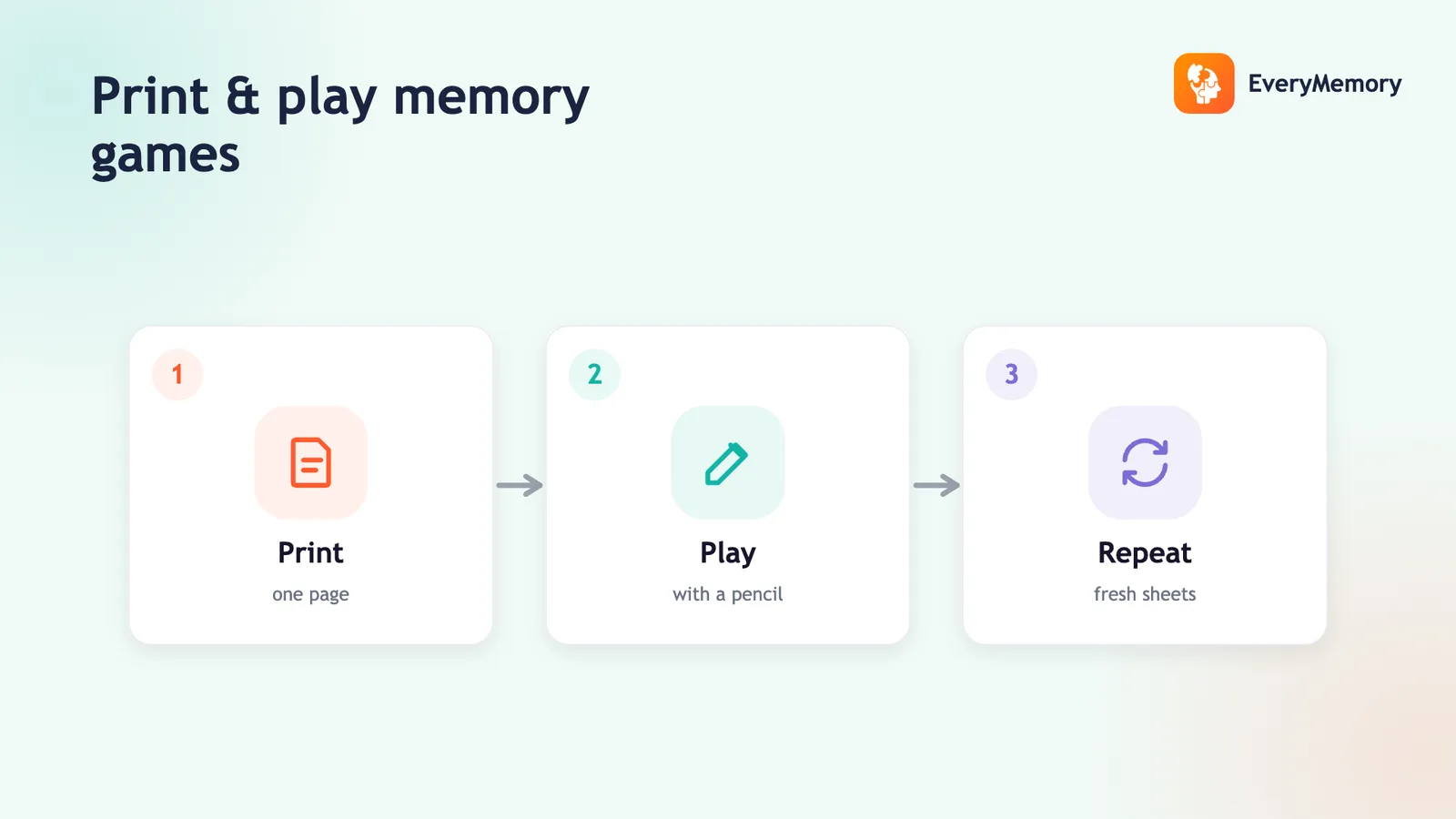
Printable memory games for adults that actually train recall - matching pairs, Kim's game, and number-recall sheets you can make at home, with examples you can use now.
Task Switcher
Play the free Task Switcher game in your browser. Read the cue, switch the rule, and see how well you handle flexible thinking under time pressure.

Mental Math Tricks
A handful of mental-math methods - working left to right, rounding then adjusting, breaking numbers apart - make everyday calculation fast and reliable without a calculator.
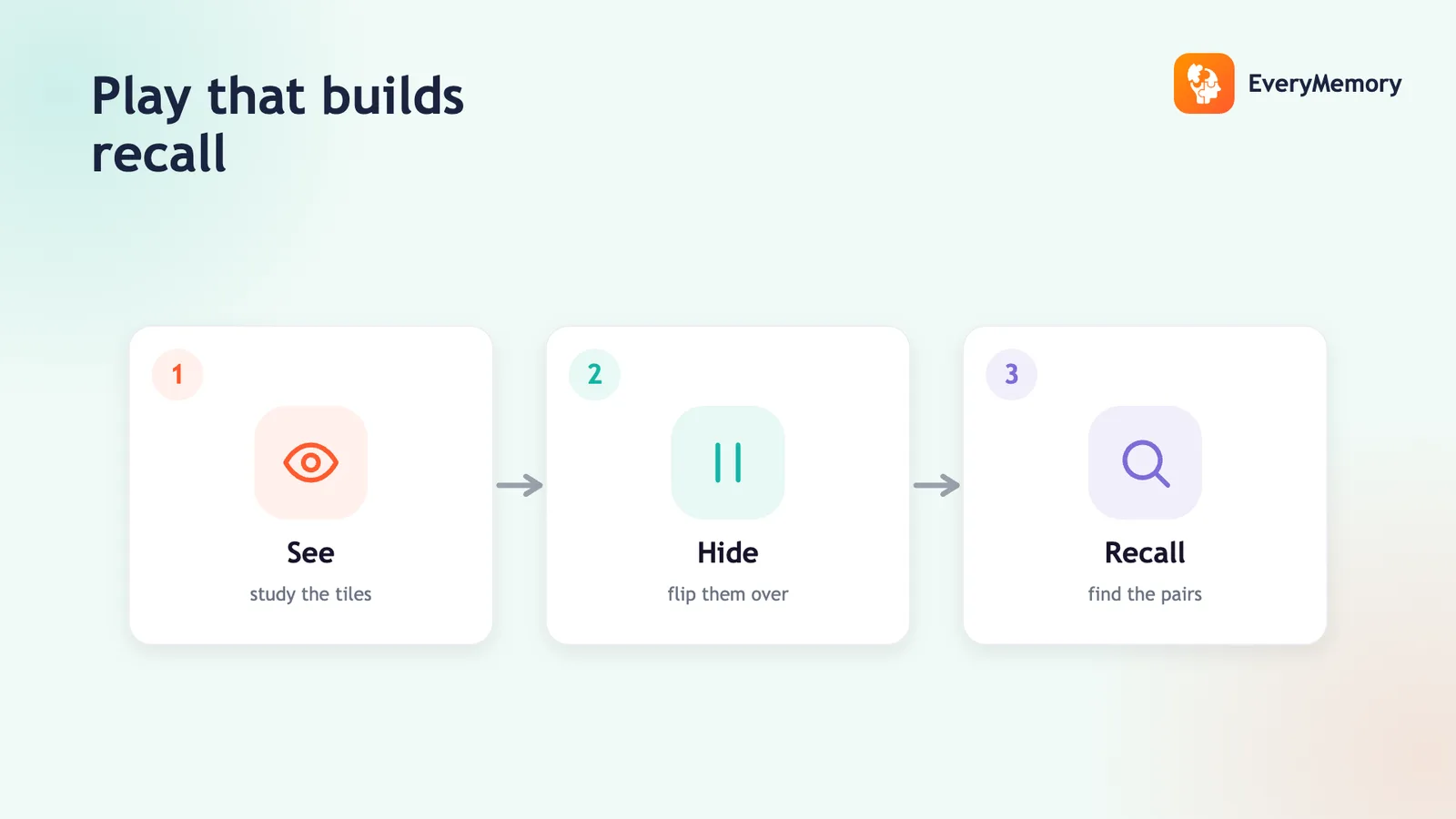
Free Memory Quiz Games to Test Your Recall
Memory quiz games are a playful way to test recall - but only some actually help. What to look for, the types worth your time, and how to use them so they count.
Emoji Recall
Play Emoji Recall free in your browser. Watch emoji flash one by one, then tap them back in the same order. Each round gets longer. No sign-up.
Simon Task
The Simon Task is a free flexibility game. Color picks the button, not position, so your brain fights the urge to follow where the square appears.
Missing Operator
Pick the operator (+, -, x or divide) that makes the equation true. A fast, free mental-arithmetic puzzle you play in your browser.
Small daily habits and brain-training routines you can repeat every week.
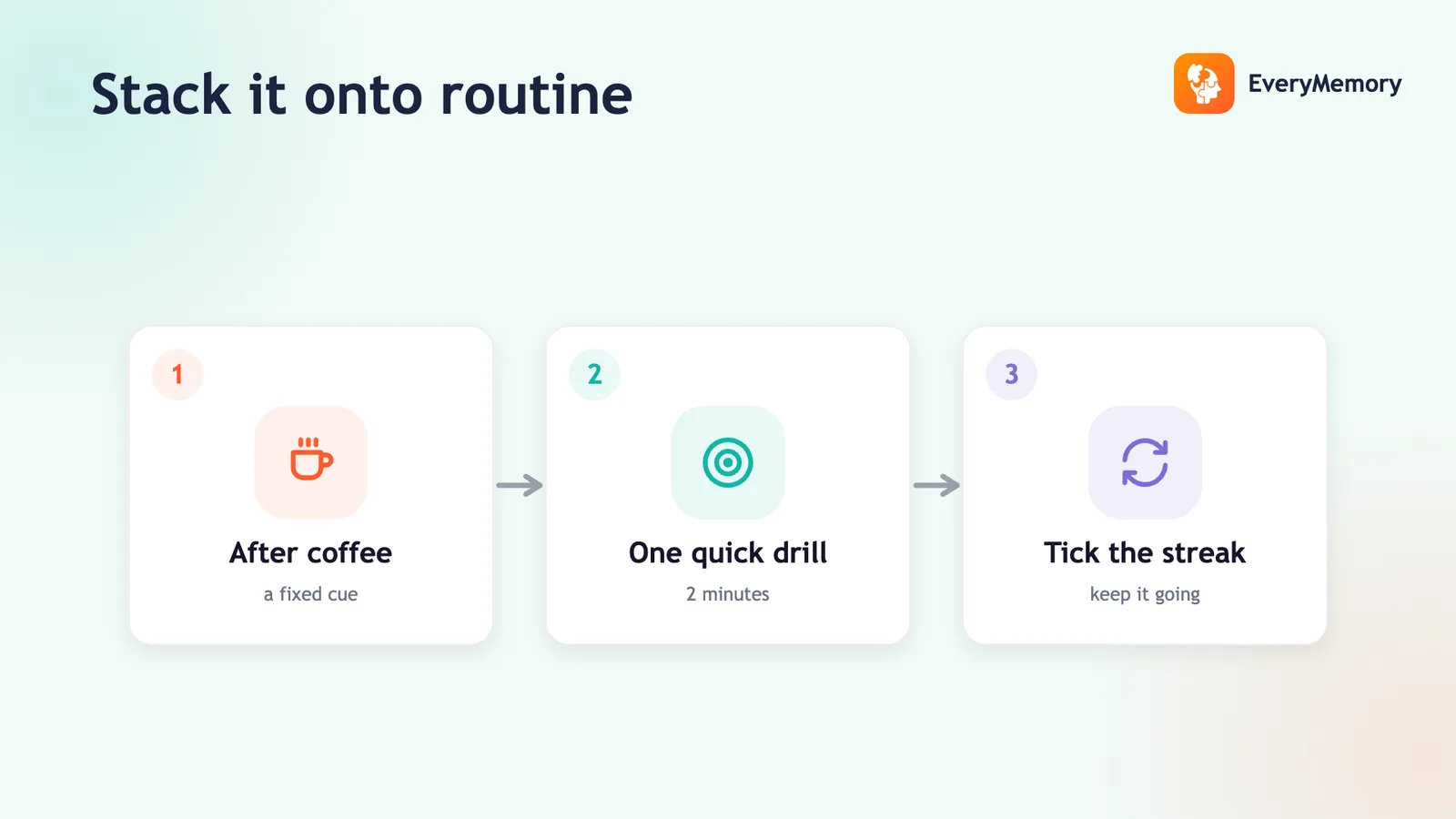
How to Make Brain Training a Daily Habit
Keeping up brain training is a design problem, not a motivation one. Attach it to an existing routine, keep it short, and track a streak.
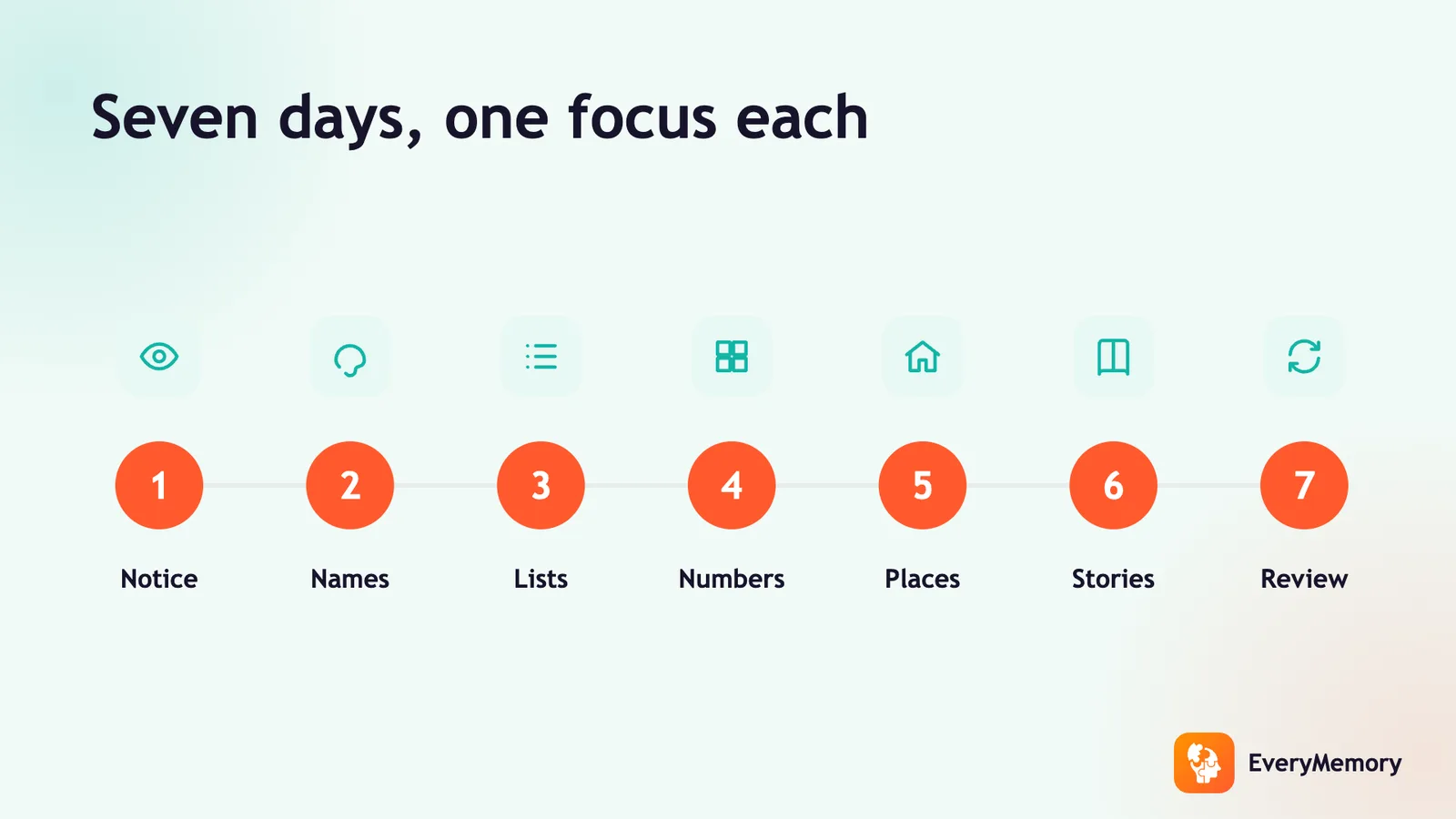
7-Day Memory Training Plan for Beginners
A gentle, structured week with one small focus each day - the easiest way to start a memory-training habit and prove to yourself it can stick.
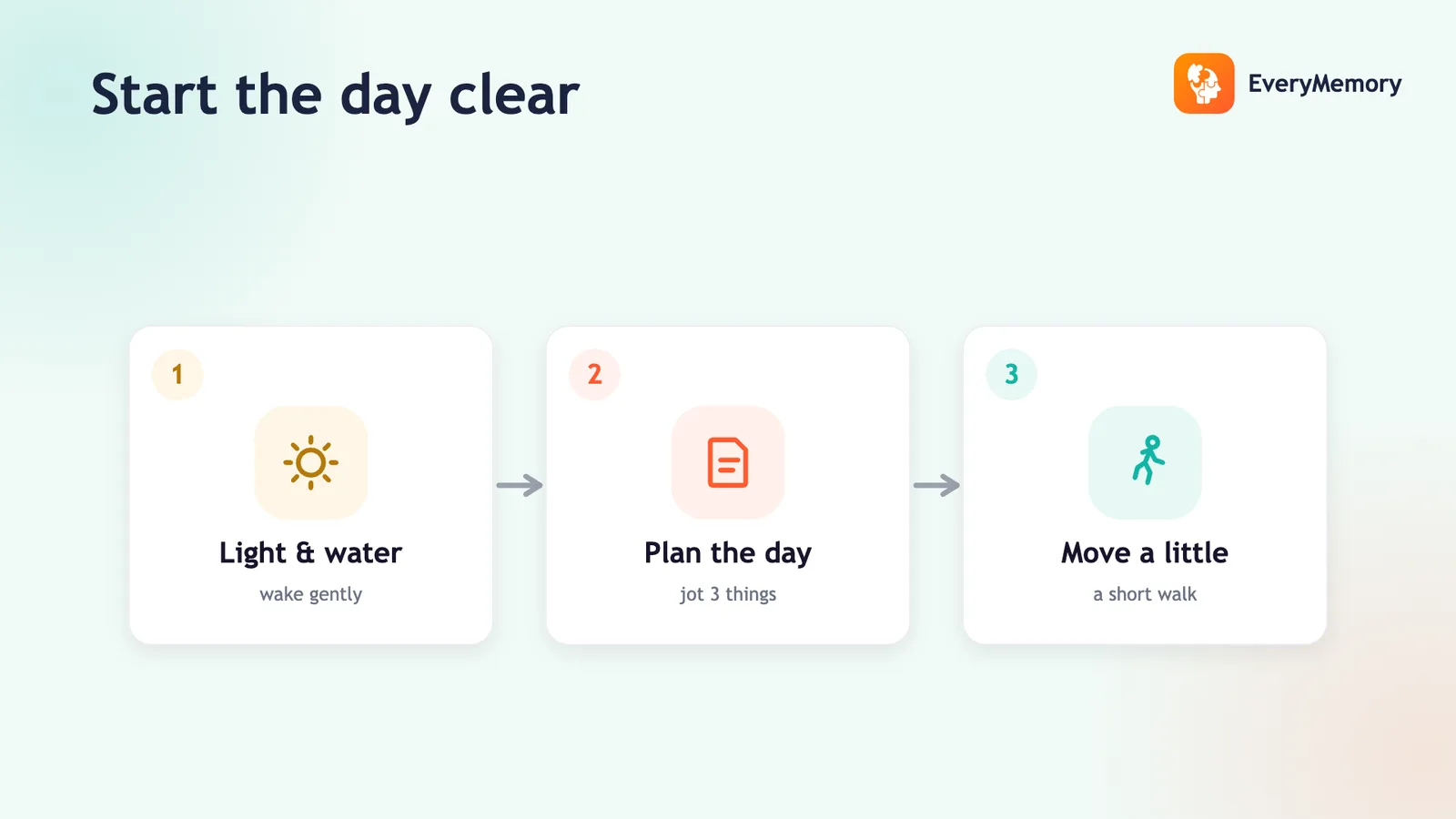
Morning Brain Routine for Seniors
A calm, practical morning brain routine for older adults - designed to warm up focus, support recall, and set a clear mental tone for the rest of the day.
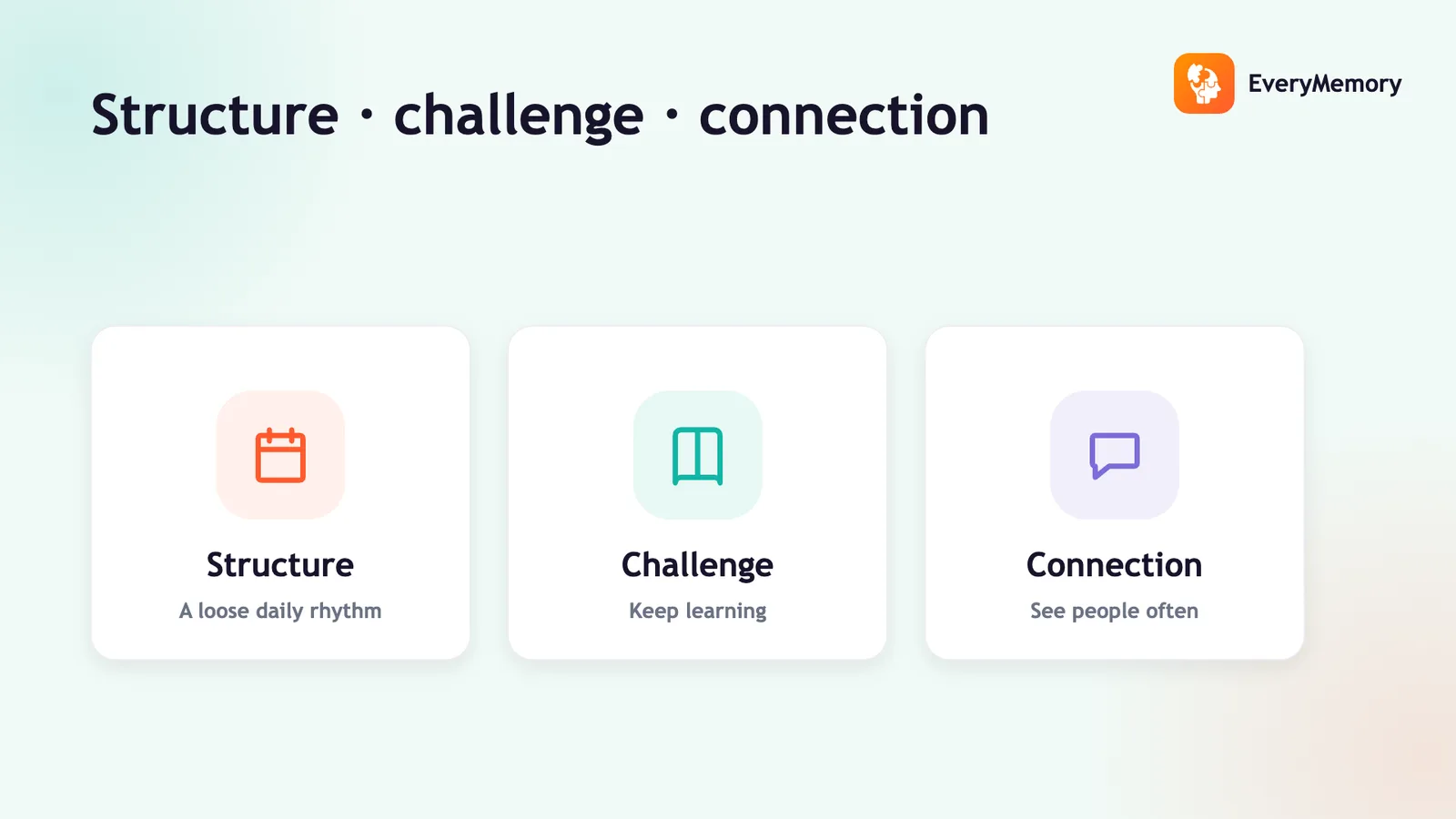
Staying Mentally Sharp in Retirement
Retirement removes the three things that quietly keep the mind sharp - structure, challenge, and daily social contact. Here is how to rebuild all three deliberately.
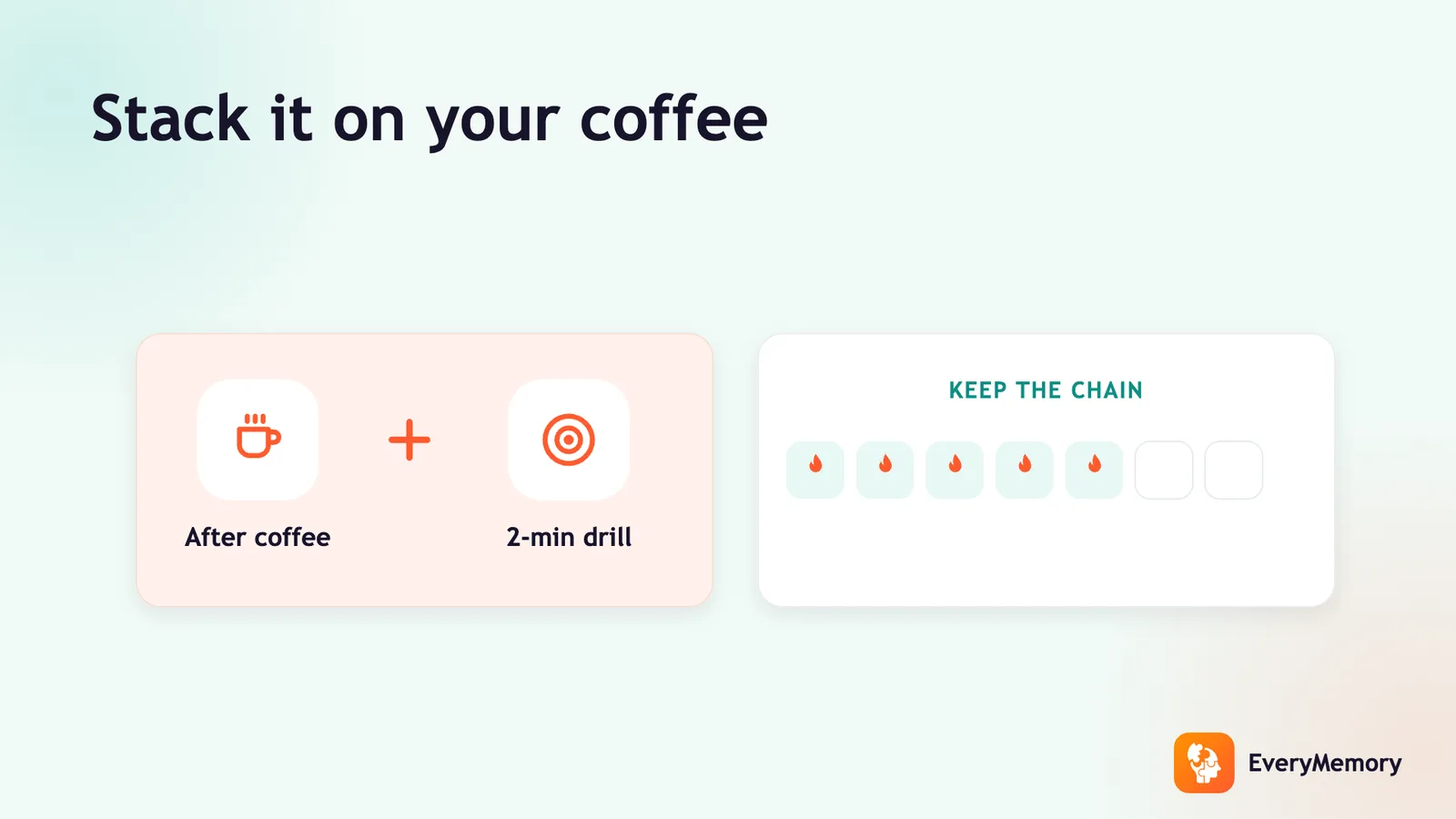
How to Build a Memory Training Habit
Starting a memory training habit is easy. Keeping it going past week three is the real challenge. Here is a practical framework that works for adults 55+.
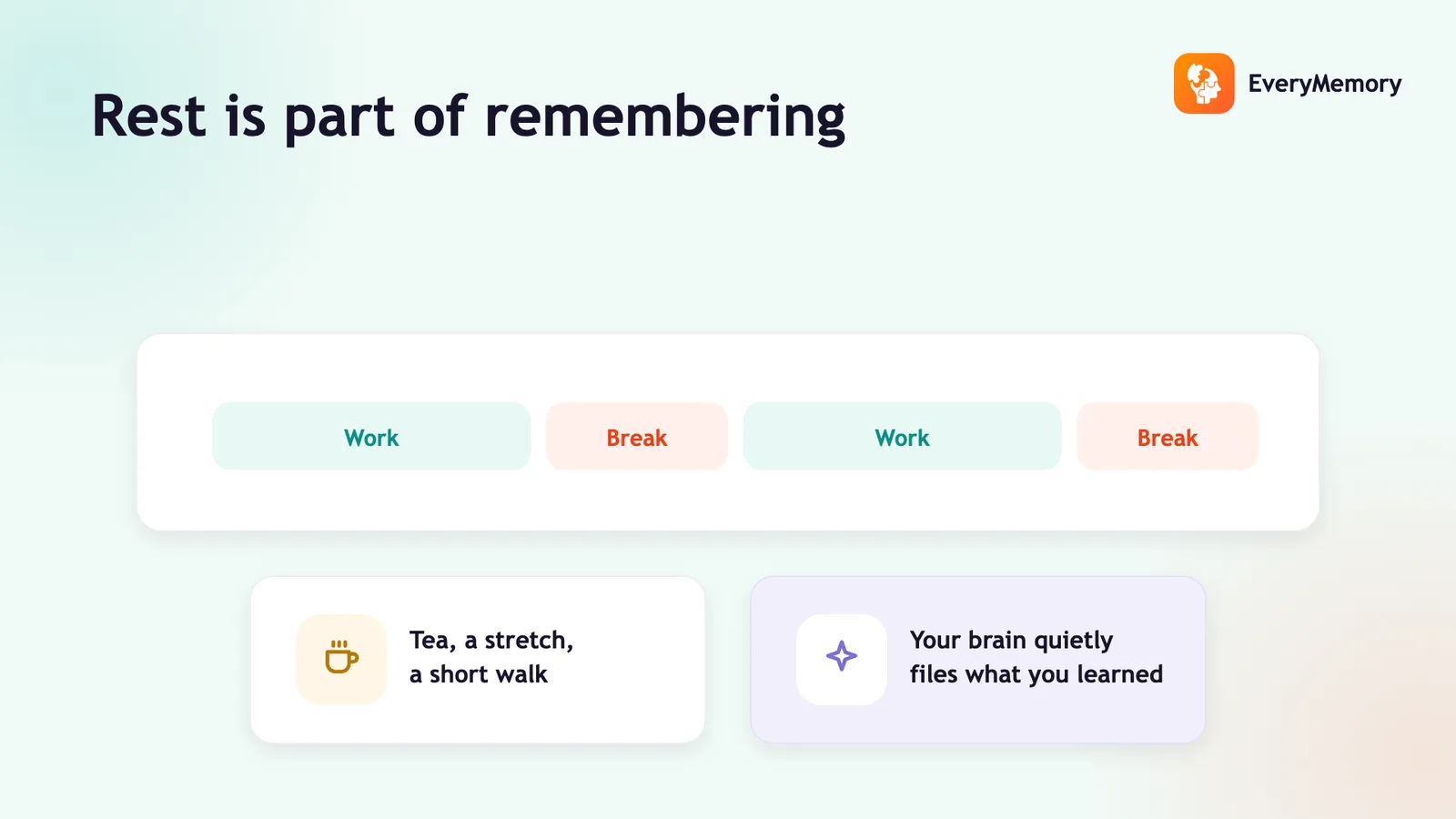
How Rest Breaks Quietly Strengthen Your Memory
Your brain does some of its most important memory work during quiet downtime - short pauses, a brief walk, or even a nap can all help what you've learned stick.
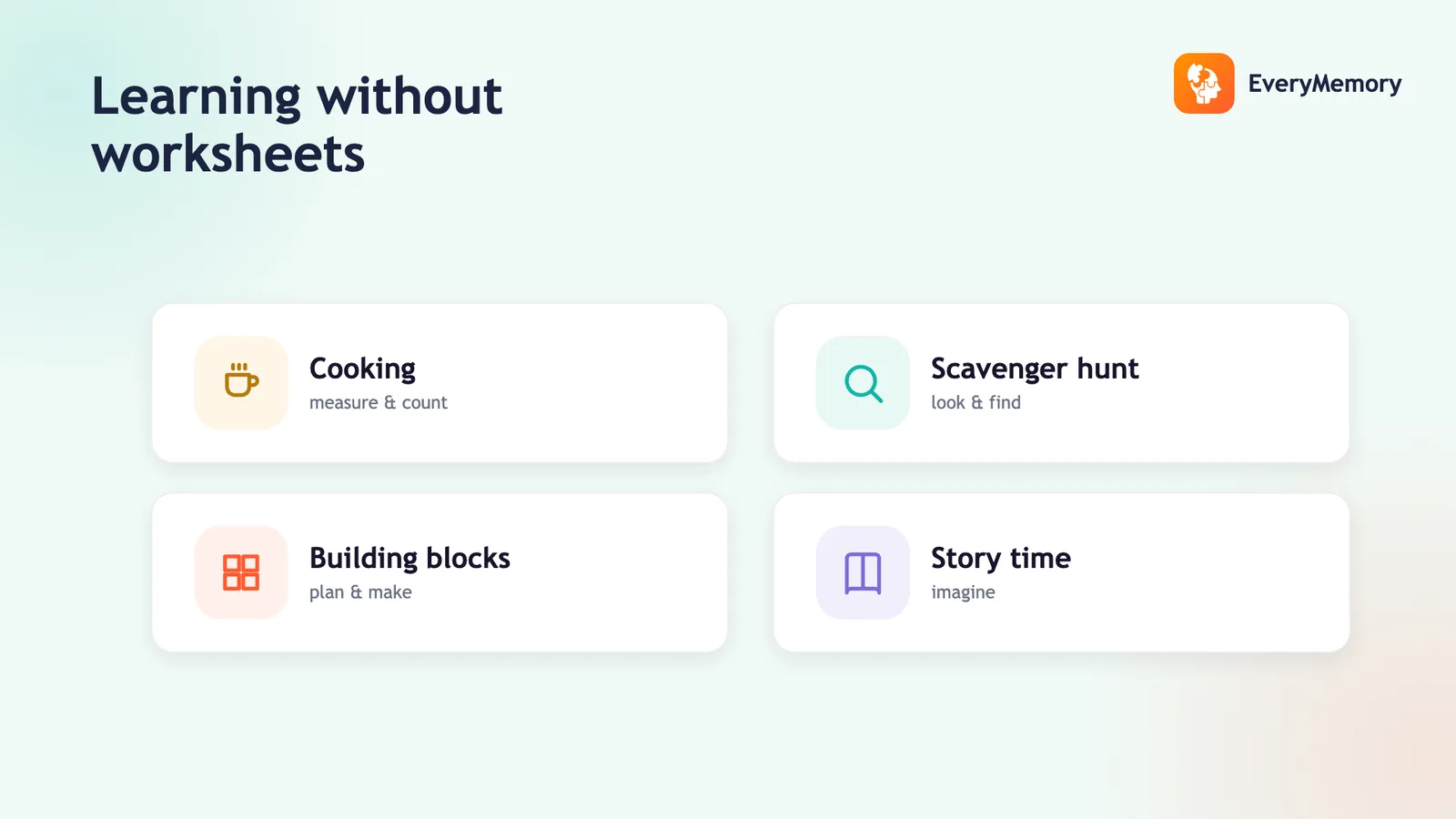
Fun Learning Activities for Kids
Cooking, scavenger hunts, building, and story games turn everyday moments into real learning - fun activities that teach without a worksheet in sight.
How to Beat Procrastination (Without Relying on Willpower)
Procrastination is not a character flaw - it is your brain dodging uncomfortable feelings. Here is what the research says about breaking the avoidance loop for good.

A Simple Daily Memory Routine You Can Repeat
A practical daily memory routine - under 15 minutes - that fits any schedule and helps you build sharper recall through consistent, repeatable practice.
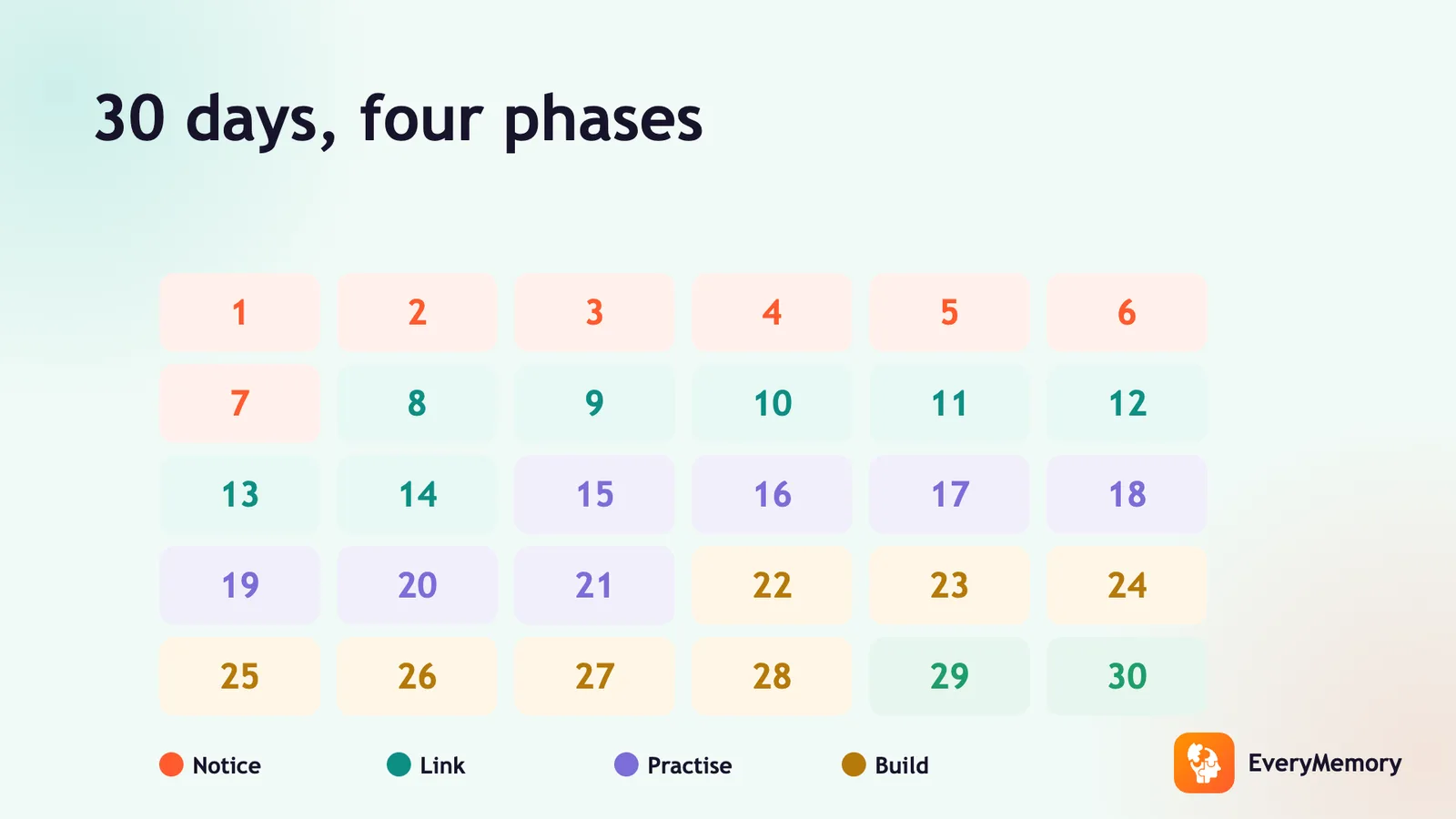
30-Day Memory Challenge
A structured 30-day memory challenge for adults 55+. Four weekly phases, clear daily tasks, and a built-in system for tracking progress and staying on track.
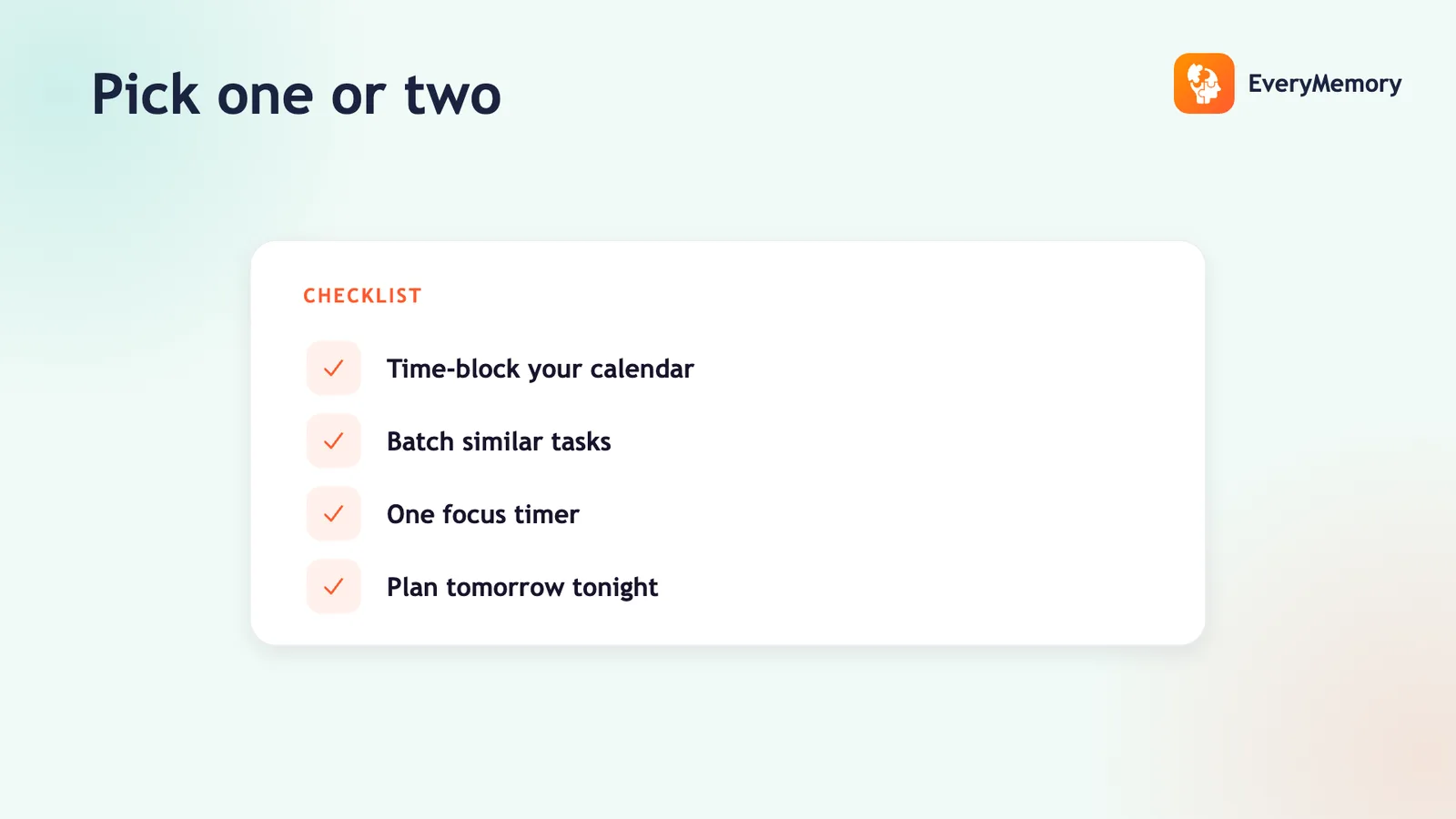
Productivity Techniques That Actually Work
Time-blocking, focused intervals, ruthless prioritising, and batching - the simple techniques that beat busyness. Pick one or two, not ten.
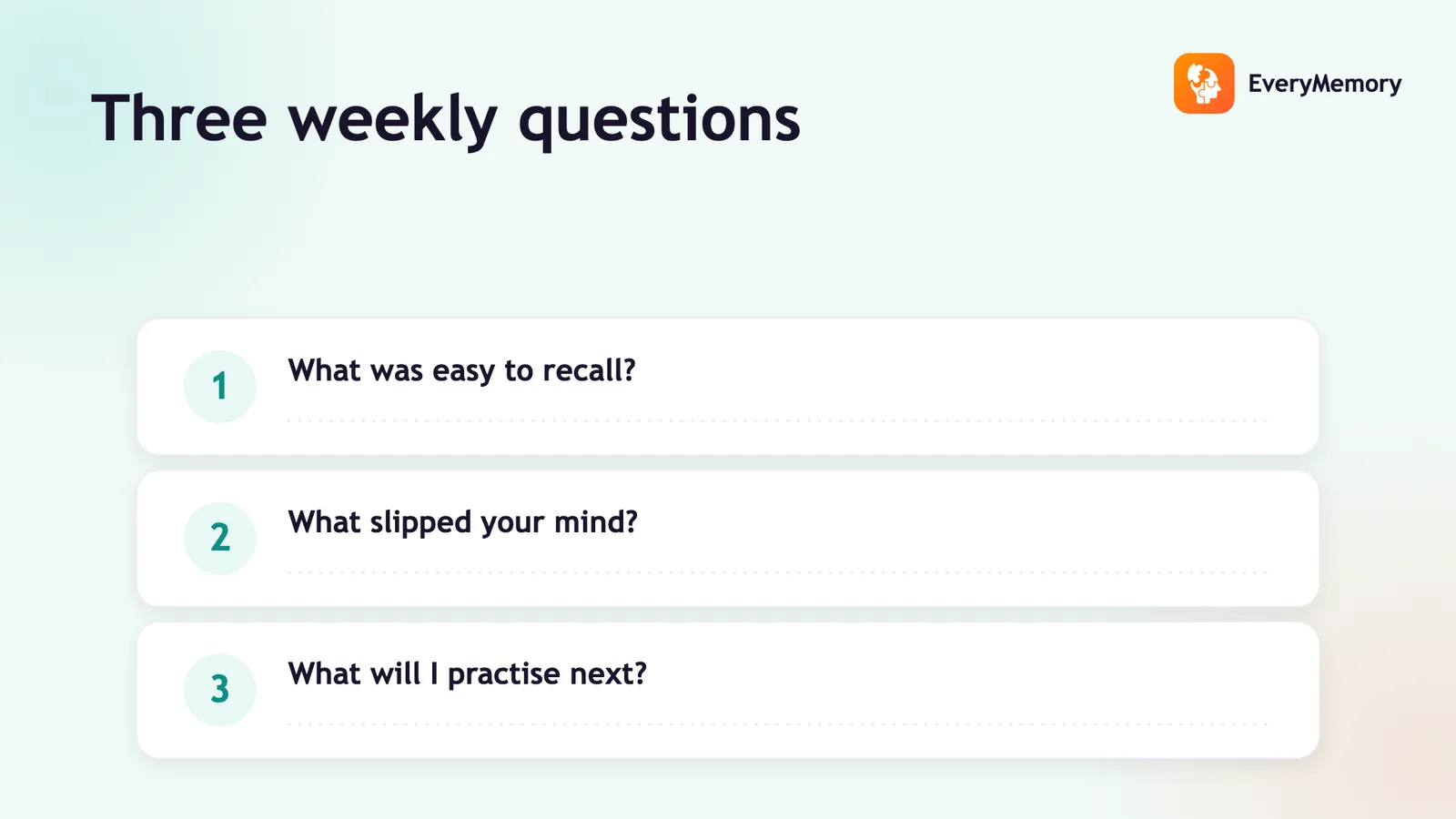
Weekly Memory Check-In Template
A simple weekly memory check-in template for older adults - five questions, five minutes, done every Sunday to track patterns in recall and focus over time.
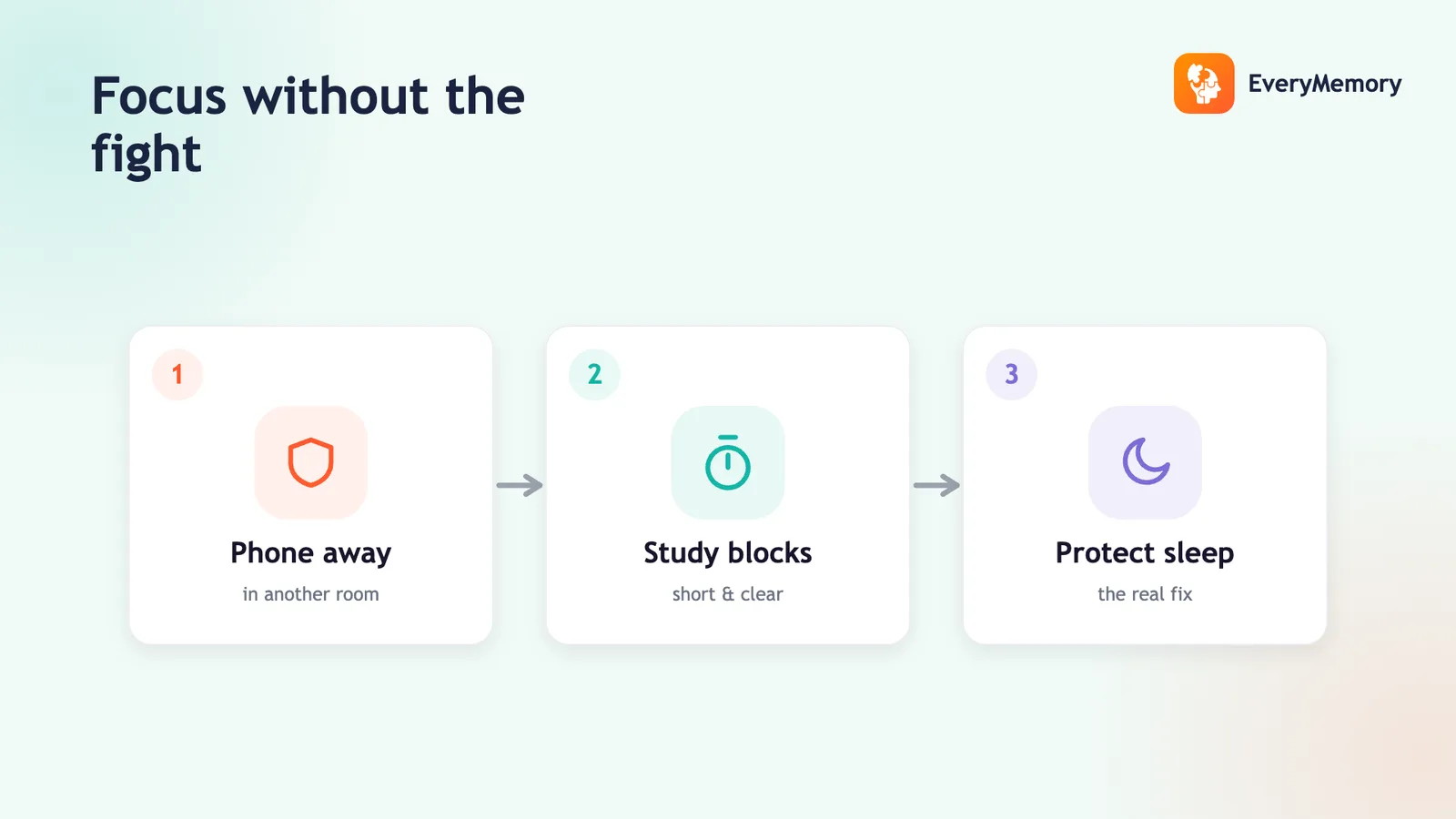
How to Improve Focus in Teenagers
Teenagers focus better with phones out of reach, short study blocks, enough sleep, and a say in their own routine - practical help that doesn't turn into a fight.
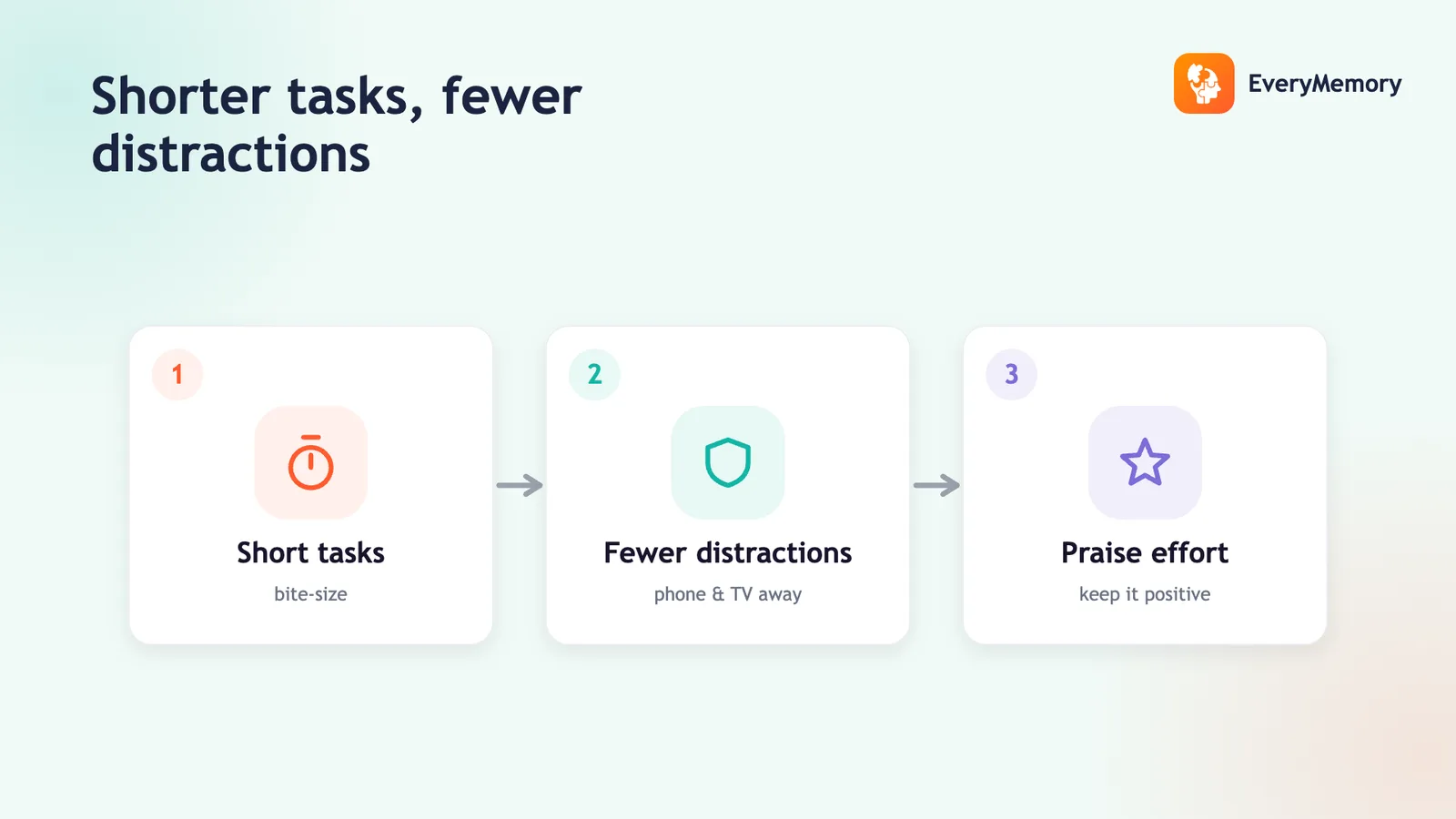
How to Help a Child Focus
Children focus better with shorter tasks, fewer distractions and a predictable routine - practical ways to help your child concentrate without nagging or long sit-still sessions.

Breathing Exercises for Focus and Calm
A few deliberate breaths can shift your nervous system from scattered to settled in under two minutes. Here are four simple breathing techniques, when to use each one, and how to build them into a daily routine.
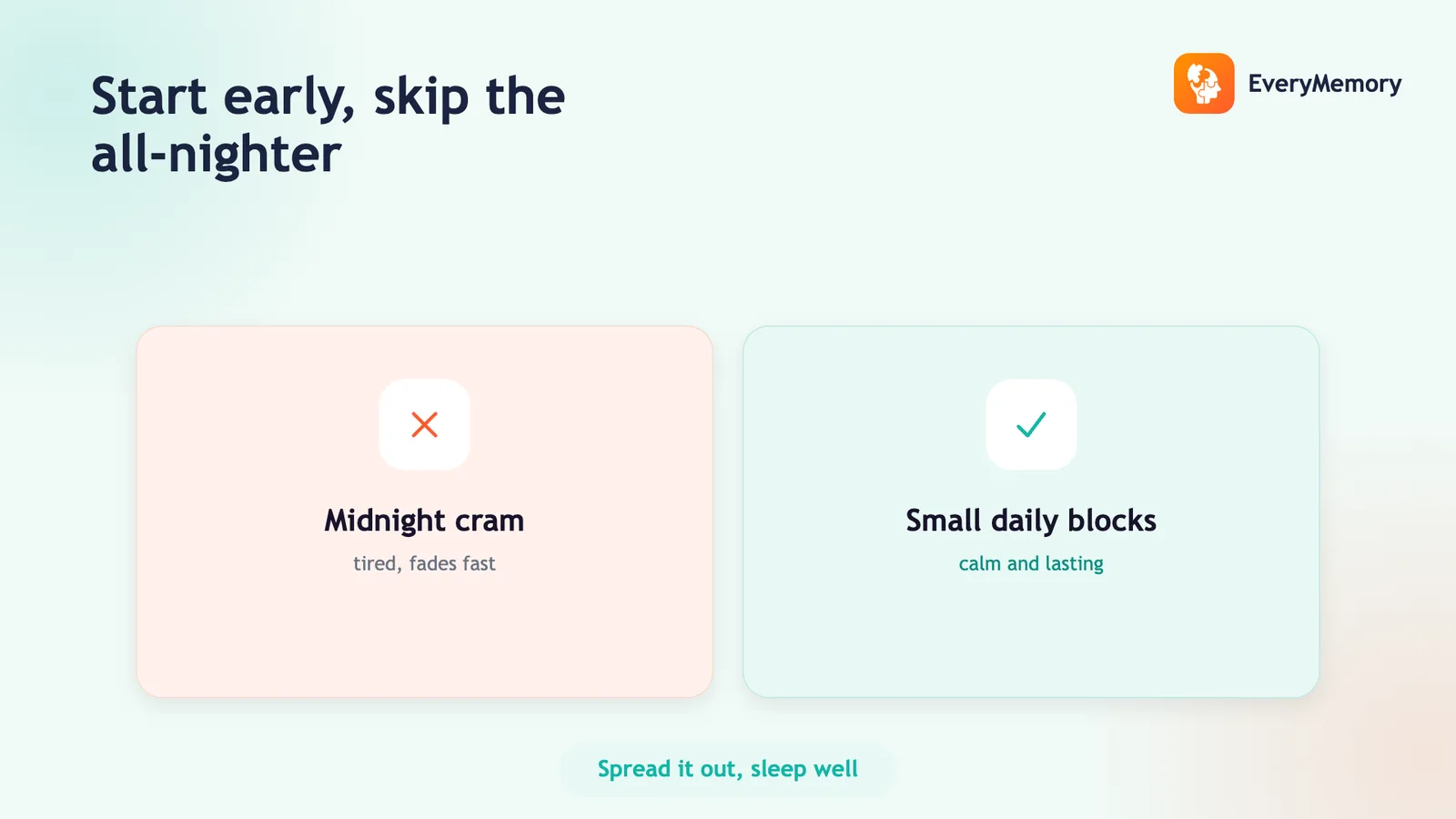
How to Avoid Cramming (and What to Do Instead)
Cramming fails because there's no time to consolidate. Start earlier, study in short spaced sessions, and test yourself - the plan that replaces the all-nighter.
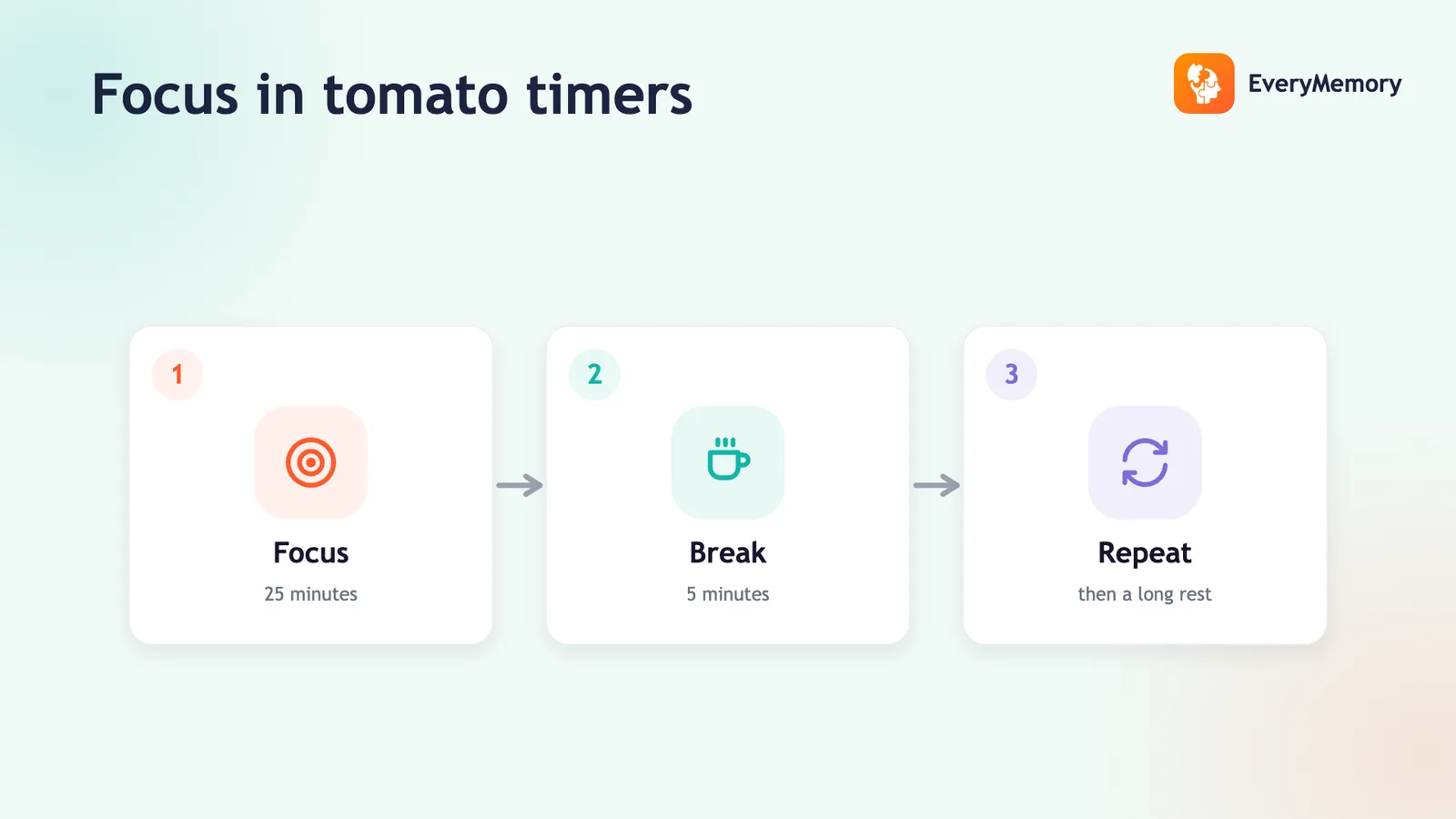
The Pomodoro Technique for Studying
Study in focused 25-minute blocks with short breaks. Why this simple timer method beats open-ended sessions - and how to adapt it to you.
Journaling for a Clearer Mind and Better Memory
Writing things down does more than create a record - it actively frees up mental space, eases the pull of unfinished thoughts, and strengthens the way experiences are stored. A practical guide to journaling formats that genuinely work.

Daily Brain Exercises You Can Do for Free
The best daily brain exercise is any focused mental effort you'll actually repeat. A free, no-equipment menu and a 10-minute routine you can keep up.
How to Improve Concentration in Children
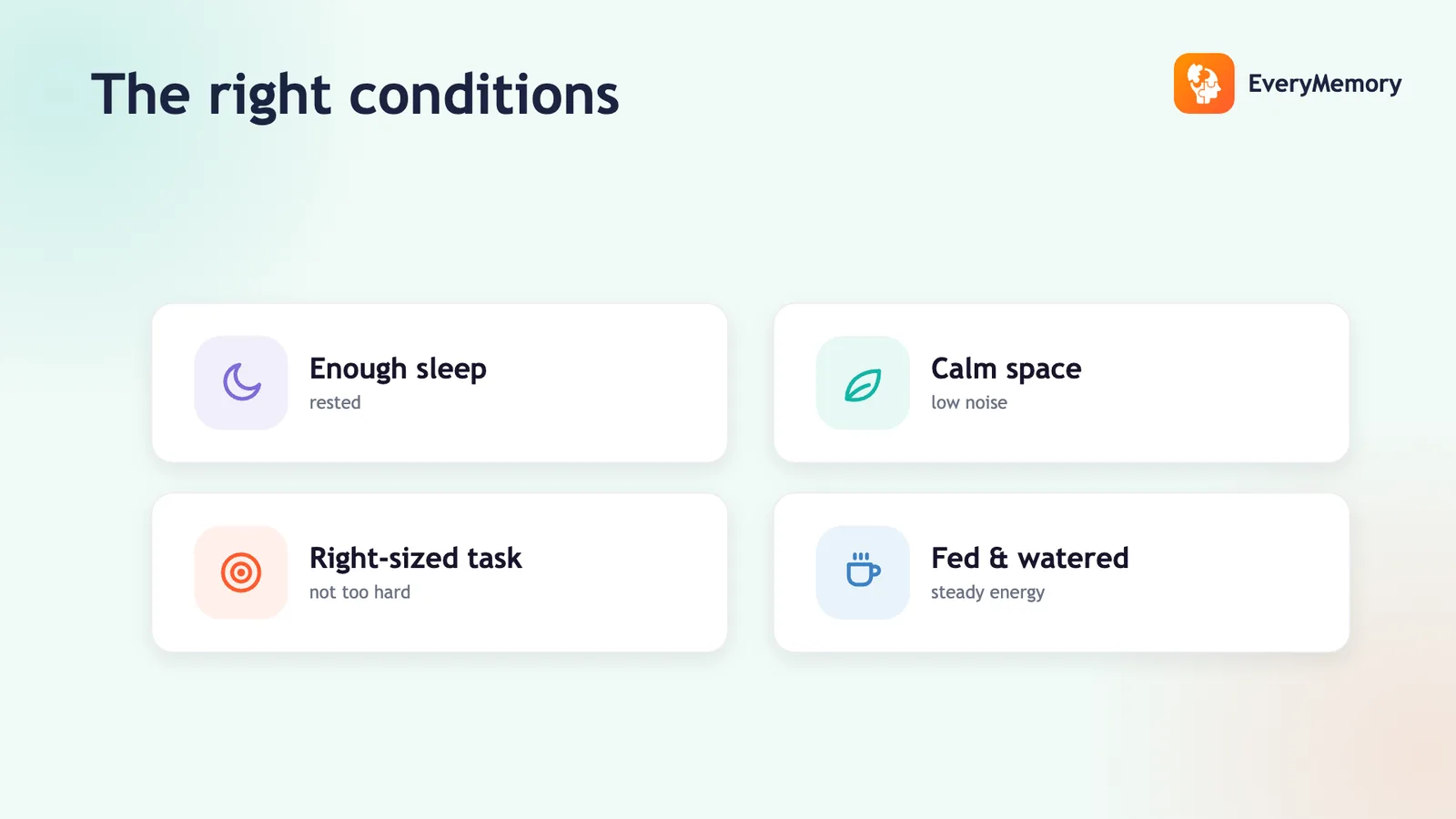
Concentration grows with the right conditions - enough sleep, fewer distractions, tasks matched to age, and regular practice through games kids enjoy.
Study Tips for Exams
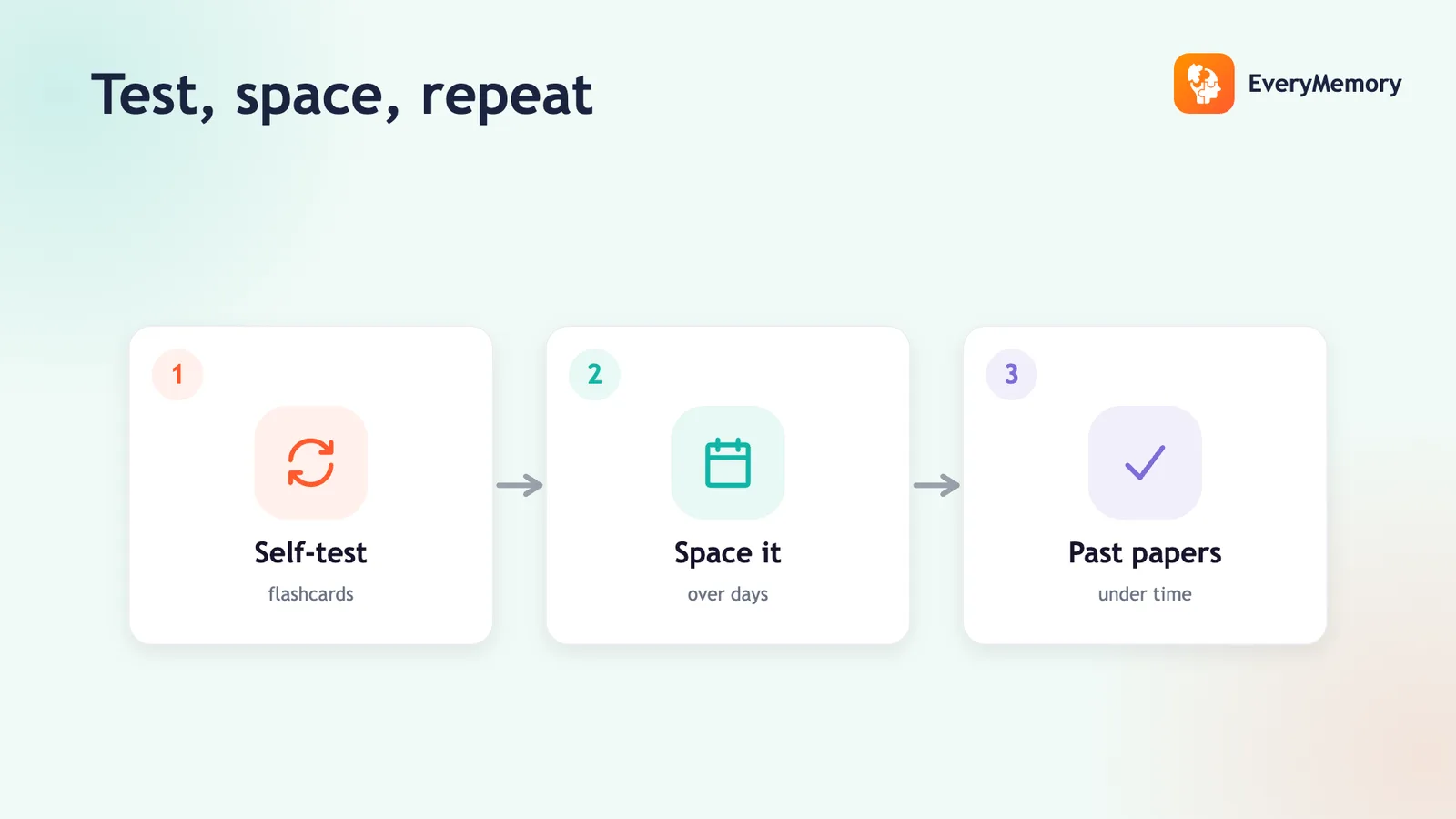
The study methods that actually move exam grades are active recall, spaced practice and past papers - here's how to use them, plus what to skip when time is short.
How to Help Kids Study
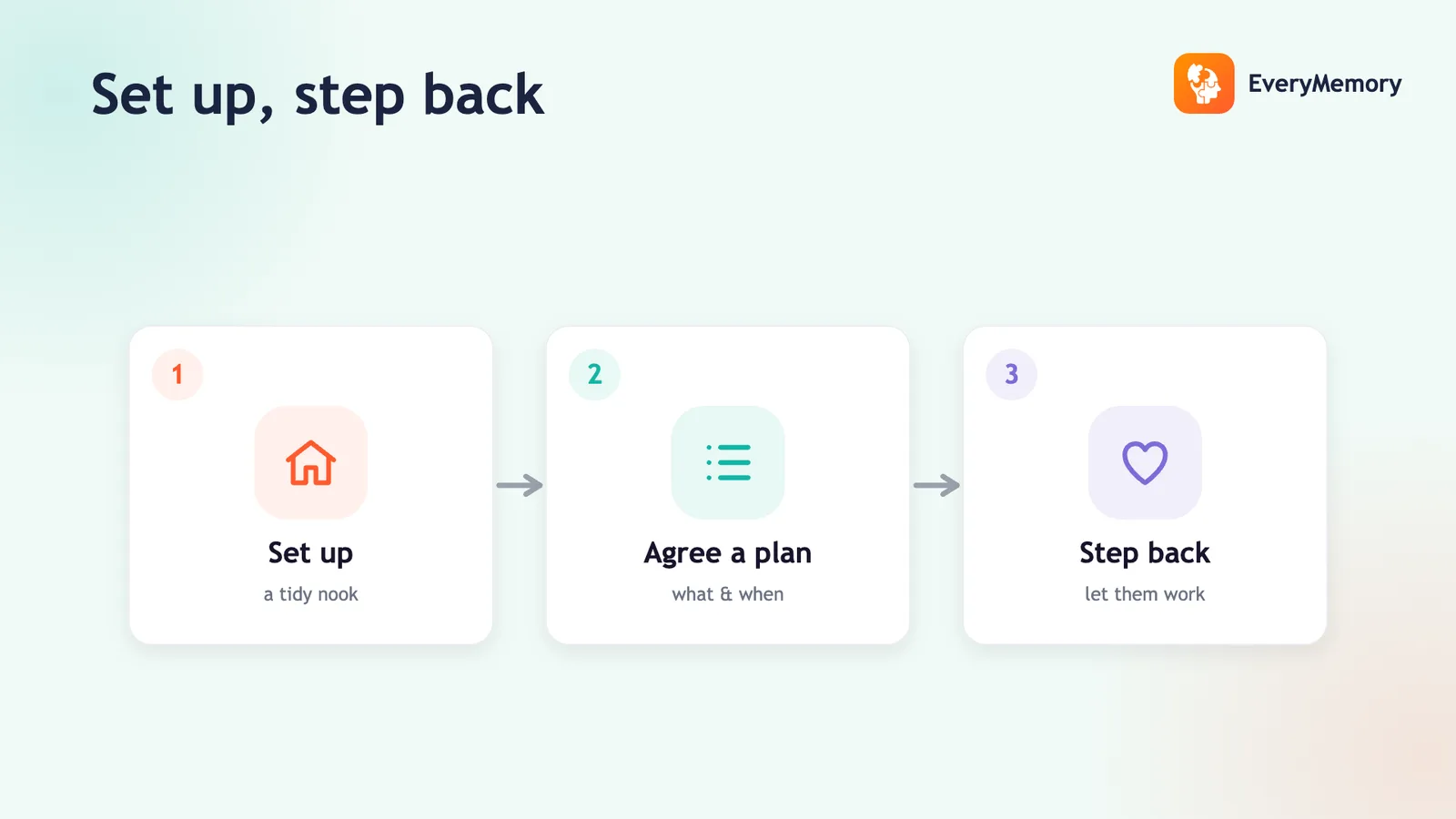
Helping kids study is less about sitting beside them and more about setting up the routine, the space and the right habits so they can do the work themselves.
Guides for helping an aging parent or loved one with memory concerns.

Easy Brain Games for Seniors
Not every brain game has to be hard to be worthwhile. Here are easy, low-frustration games for seniors that feel fun rather than like an exam - and how to keep the difficulty just right.

Games for the Elderly That Keep Minds Active
From cards and dominoes to crosswords and trivia, the right games keep an older relative engaged and laughing - here's how to choose ones that fit their abilities and tastes.
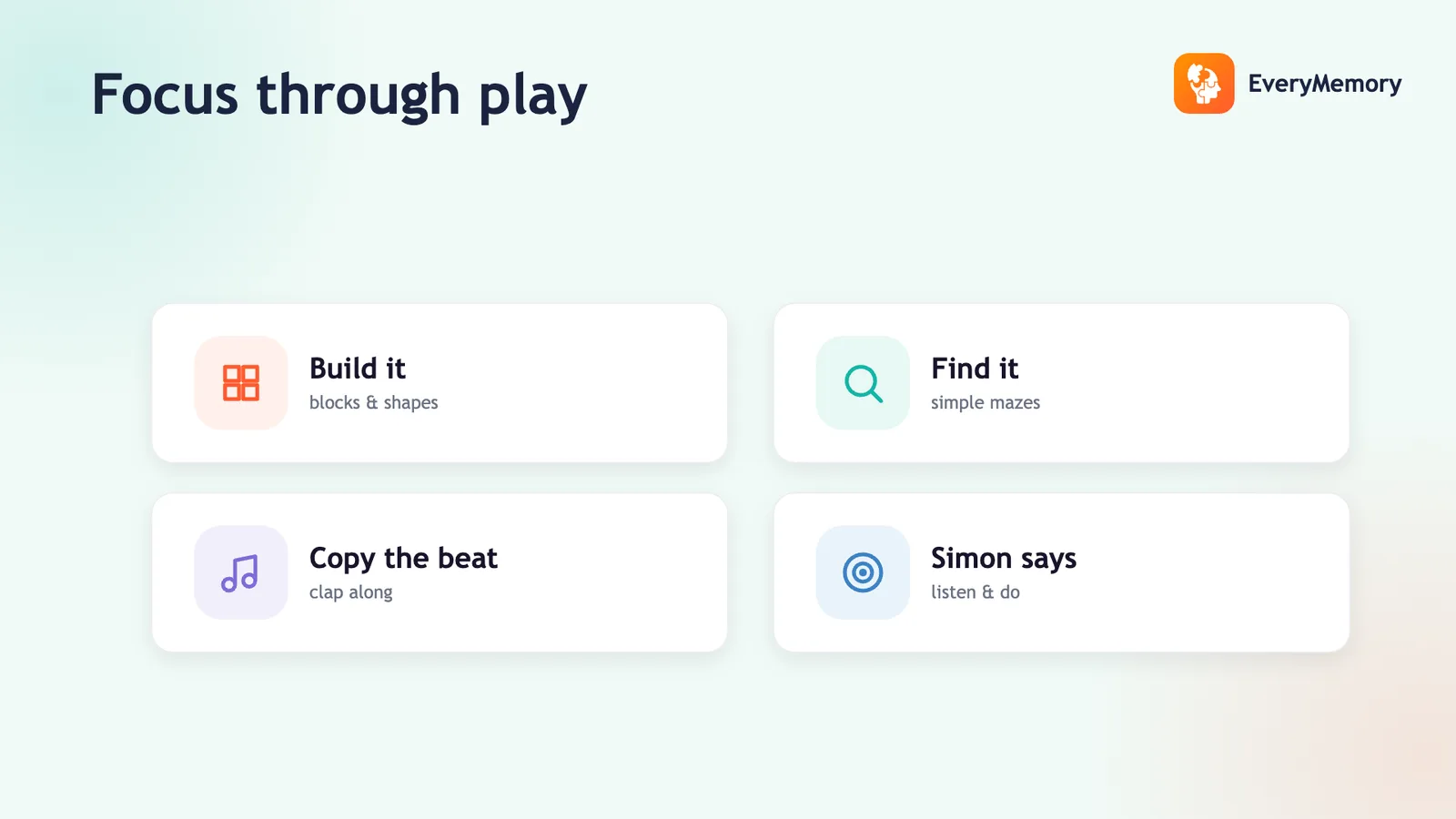
Concentration Exercises for Kids
Children's focus grows with age and practice. Playful, age-appropriate activities that build attention - without turning it into a drill.
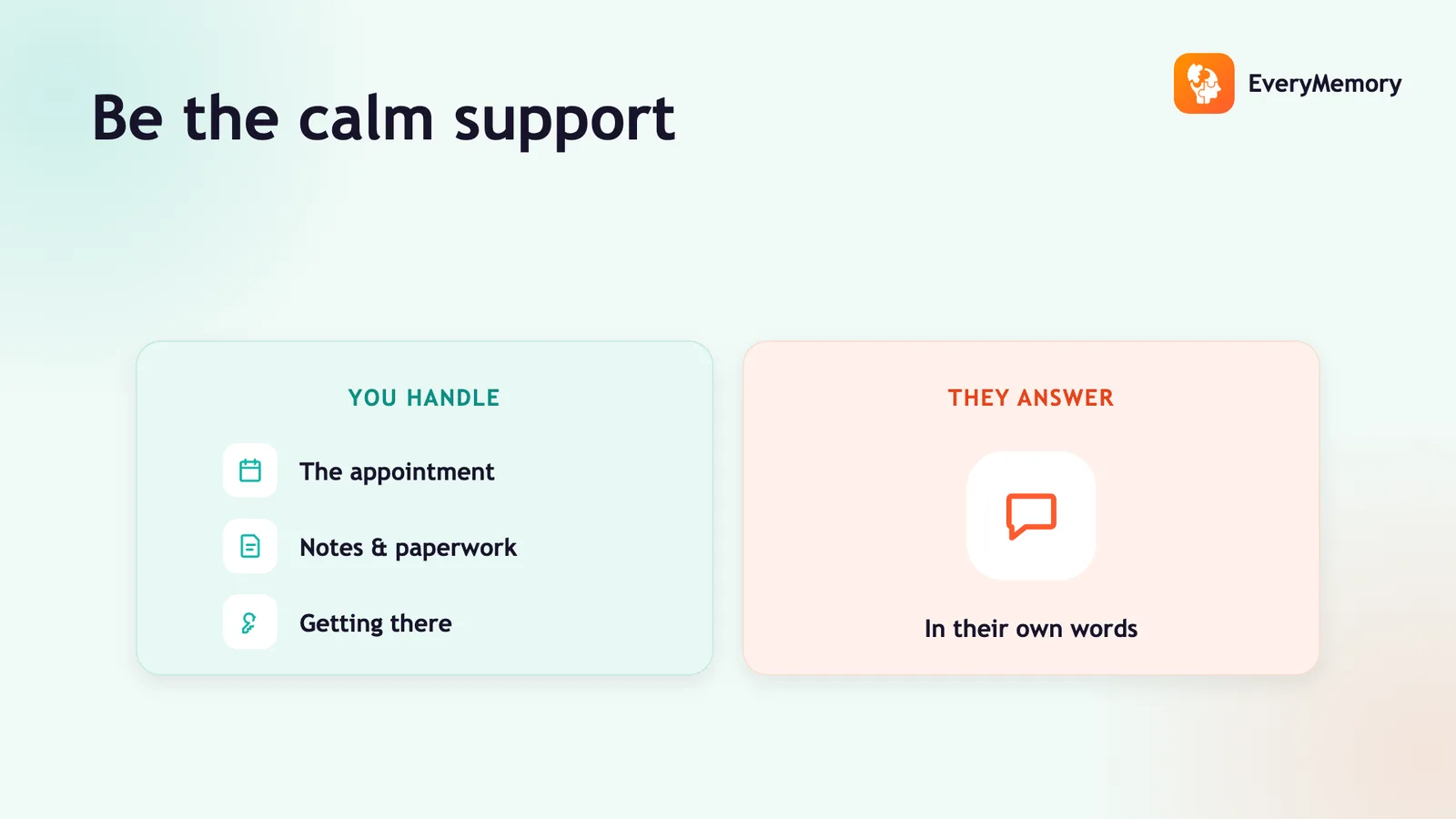
Supporting a Parent Through a Memory Assessment
When a parent faces a memory assessment, your role as a caring adult child is to be a steady, respectful presence - before, during, and after - without taking over.
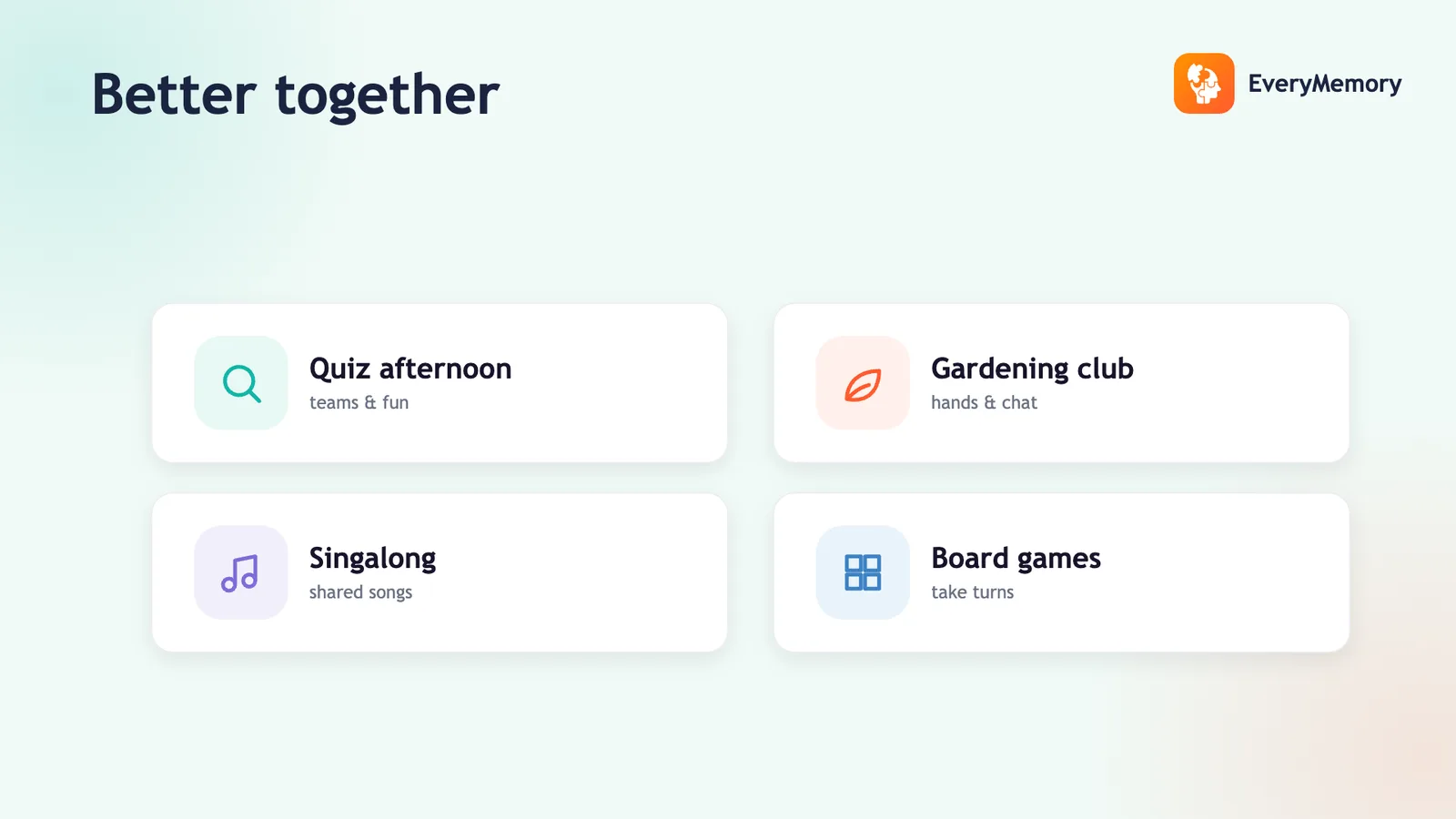
Group Activities for Seniors
Group activities bring the company that keeps minds engaged and spirits up - from quiz afternoons and singalongs to gardening clubs and gentle group exercise.

What to Track Before Talking to a Doctor
A few weeks of simple notes can make a doctor's appointment far more useful. Here's exactly what to observe, write down, and bring.
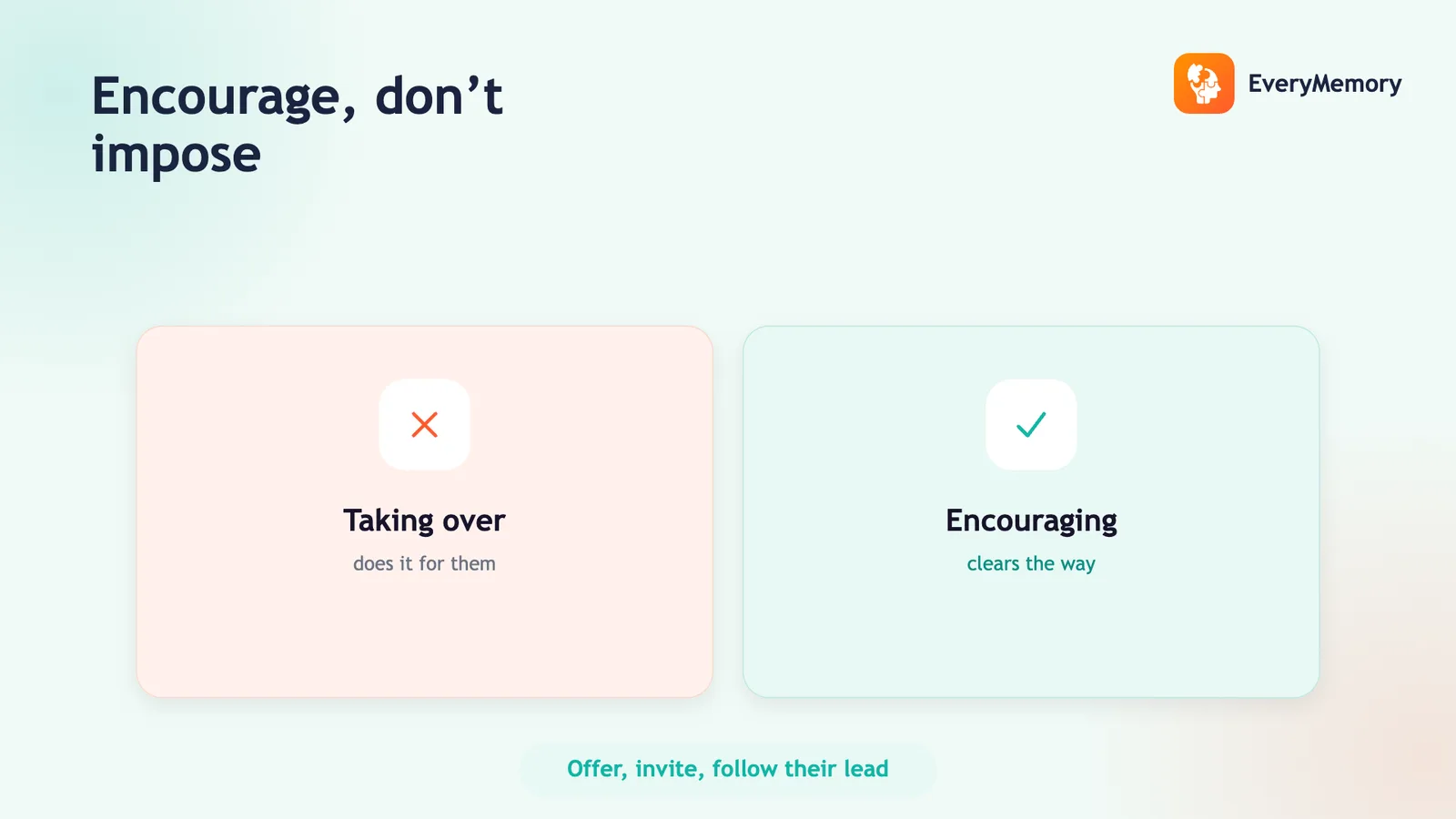
Helping Seniors Stay Mentally Active
Helping an older relative stay mentally active is mostly about removing barriers and adding gentle encouragement - supporting interest and independence rather than imposing tasks.

Memory Activities to Do With an Older Parent
Spending time on memory-friendly activities with an aging parent is good for both of you. Here are simple, enjoyable ideas that support recall and connection.

How to Help an Aging Parent With Memory Concerns
A calm, practical guide to supporting a parent's memory with warmth and dignity - without taking over, causing alarm, or turning every interaction into a test.

Printable Brain Games for Seniors
Sometimes paper beats a screen. Here's a guide to printable brain games for seniors - what to print, how to size it for tired eyes, and which puzzles work best on the page.
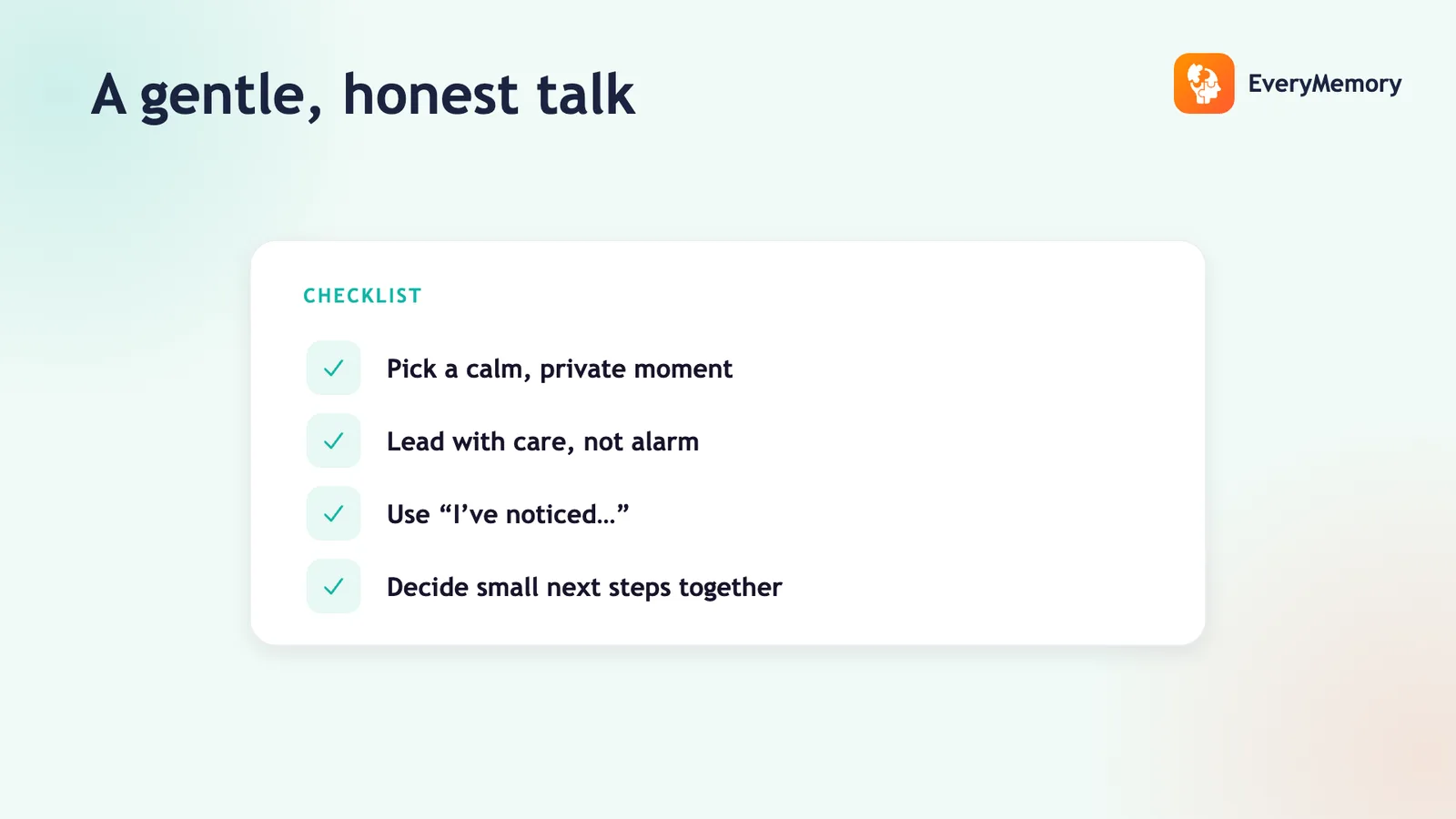
How to Talk About Memory Without Scaring a Parent
Bringing up memory concerns with a parent is one of the hardest conversations in a family. Here's how to do it with honesty, warmth, and without causing fear.

Group Games for Seniors
The best brain games are often the most social. Here are group games for seniors that work in care homes, clubs, and family gatherings - fun, inclusive, and easy to run.
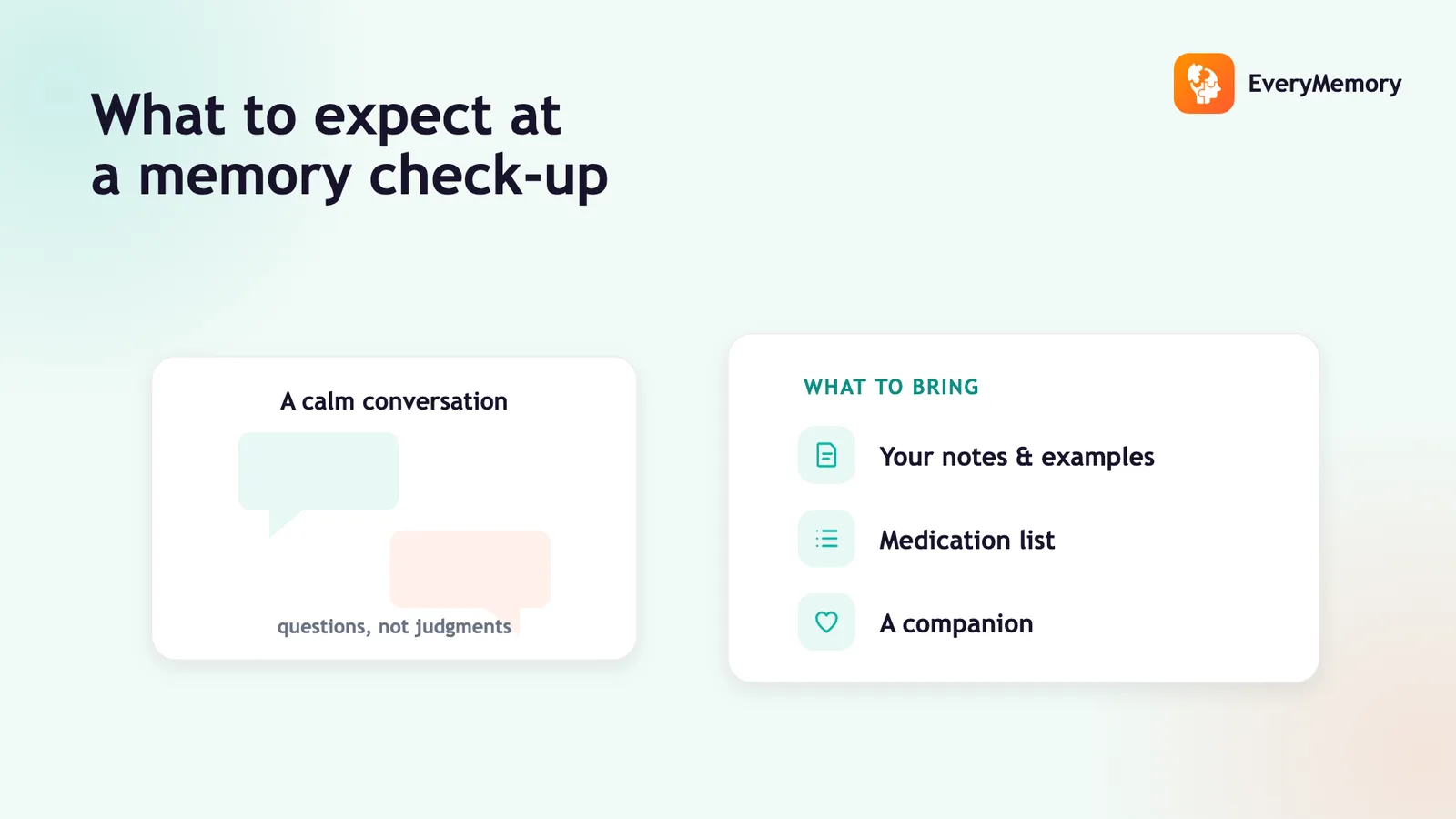
What to Expect at a Memory Check-Up
A memory check-up with a doctor is a normal, supportive appointment - not a test you can pass or fail. Here's a calm, practical guide to what usually happens and how to prepare.
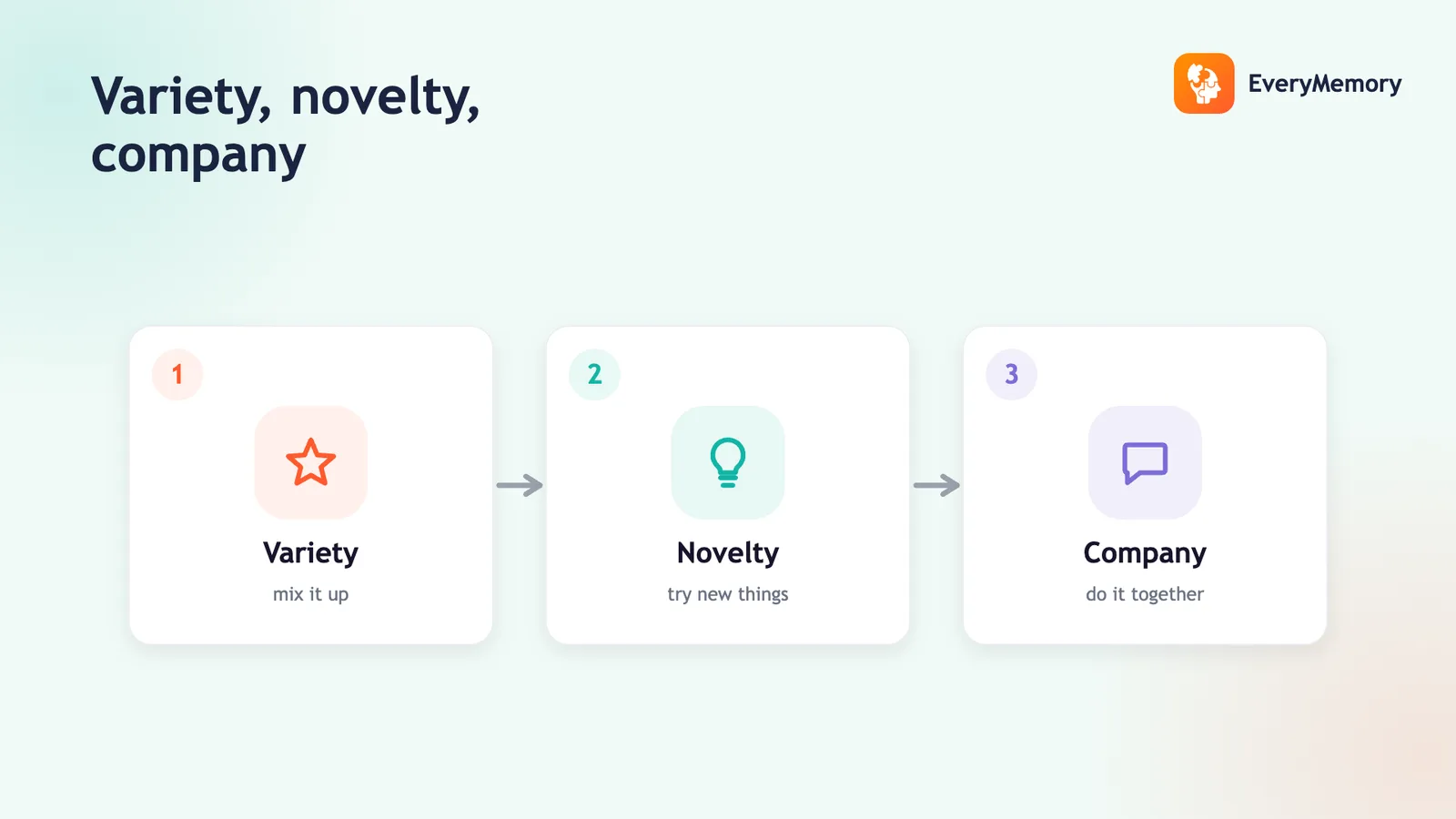
How to Keep an Elderly Mind Active
Keeping an older relative's mind active comes down to variety, novelty, and social contact - woven into days they enjoy rather than imposed as exercises.

Number Games for Seniors
Numbers don't have to mean hard sums. Here are enjoyable number games for seniors - from dominoes and bingo to gentle sudoku - chosen to feel playful rather than like a maths test.
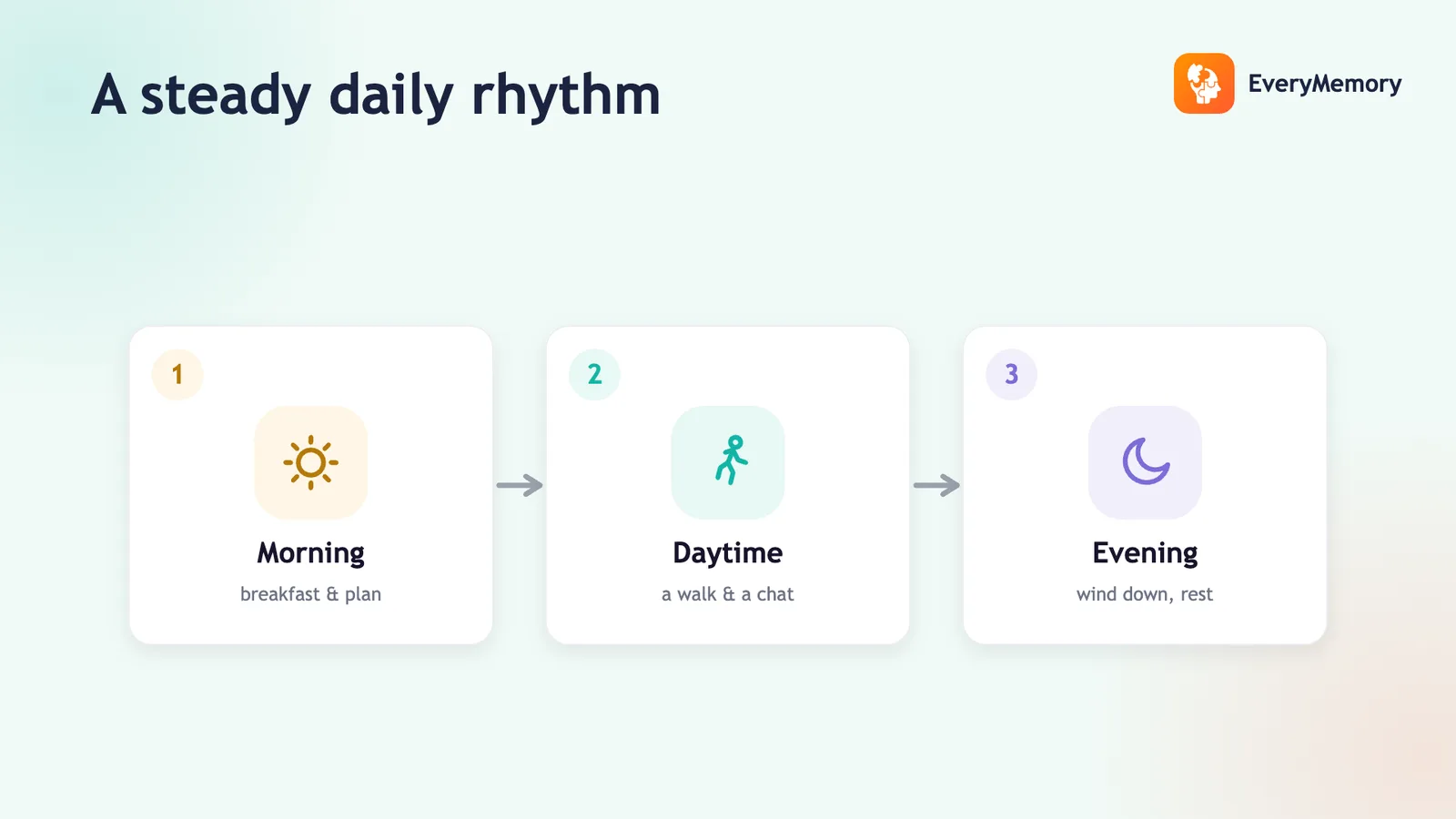
A Daily Routine That Supports a Senior's Memory
A steady daily rhythm - predictable meals, a morning anchor, movement, company, and rest - takes pressure off everyday memory and helps an older relative feel in control.
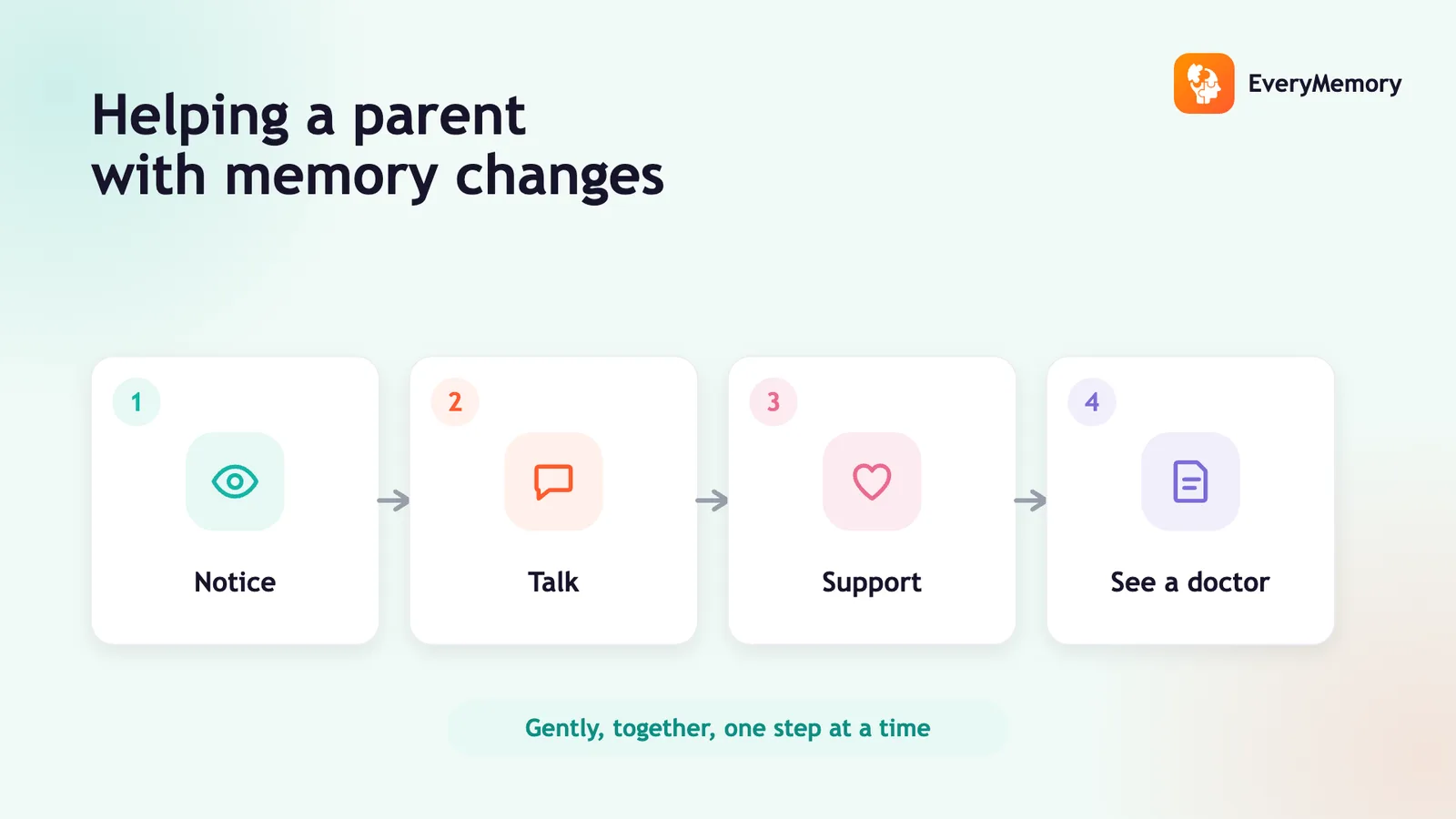
Helping a Parent With Memory Changes: The Complete Family Guide
A compassionate, practical hub for families navigating a parent's memory changes - from first conversations to doctor visits, daily activities, and caring for yourself.
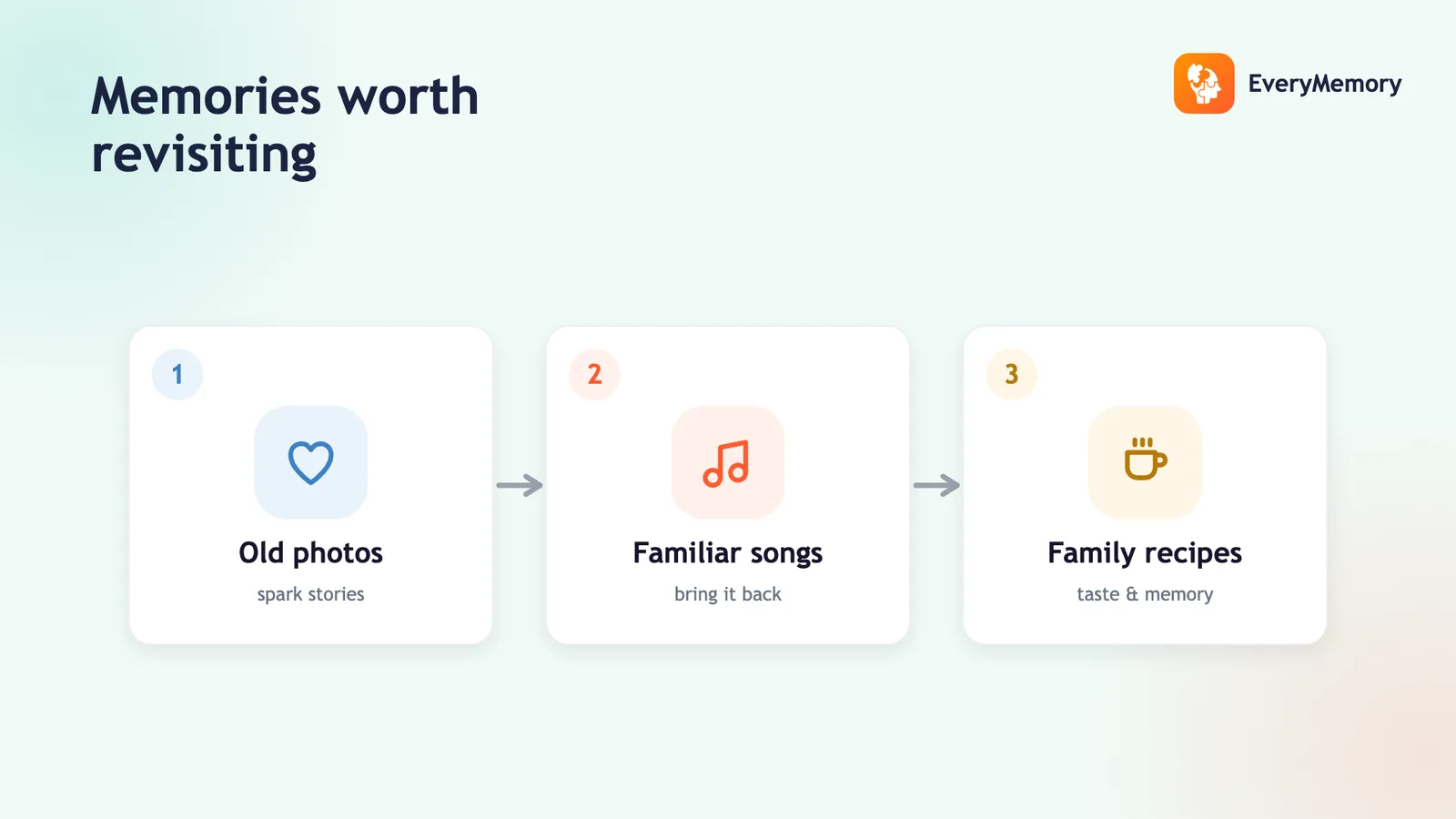
Reminiscence Activities for Seniors
Old photos, familiar songs, and well-loved recipes invite a parent's stories to the surface - here are reminiscence activities that bring warmth, dignity, and connection.
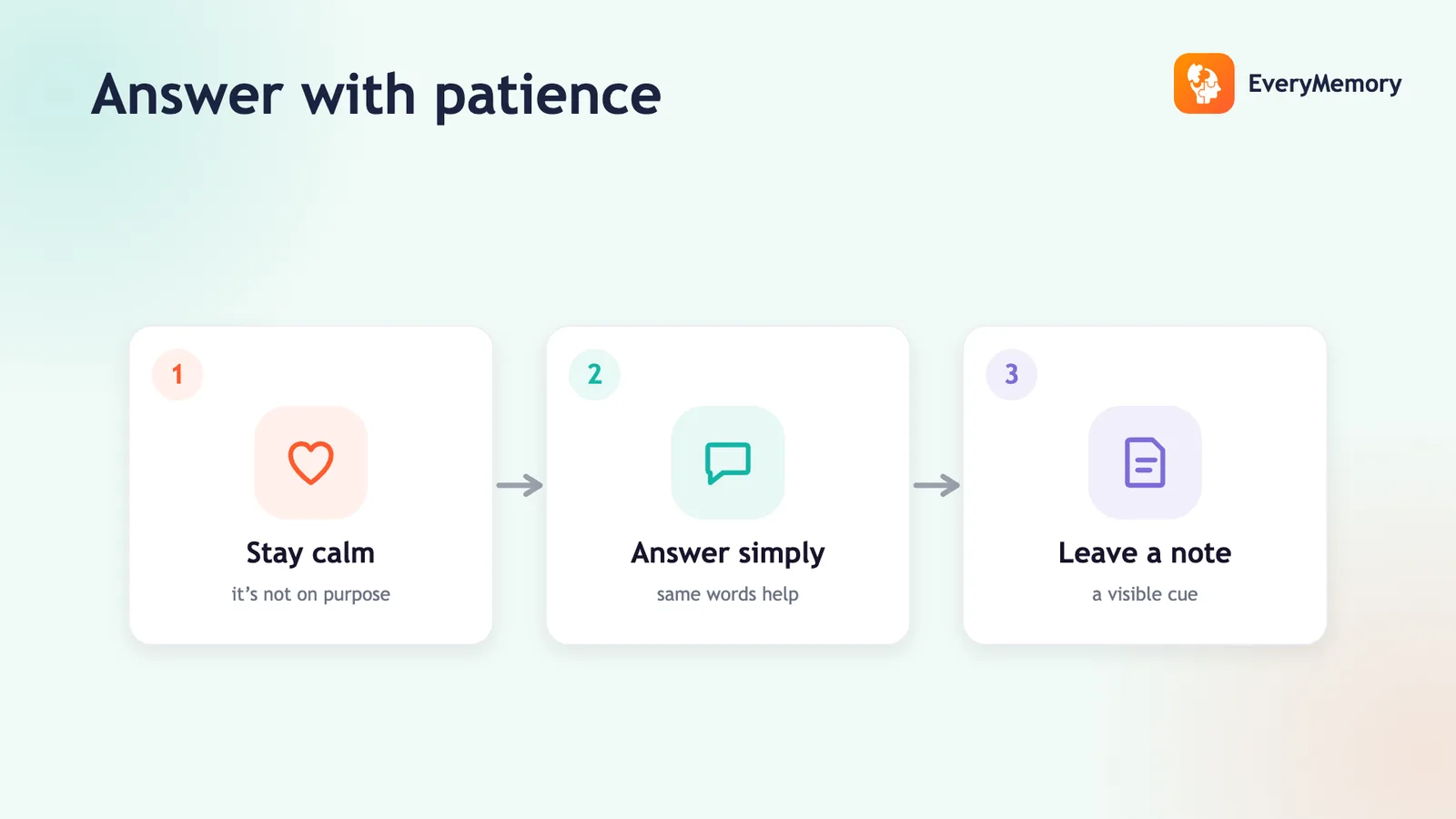
What to Do If Mom Keeps Repeating Questions
When a parent asks the same question several times, it can feel frustrating and worrying. Here's how to respond with patience, and what to watch for.

Word Games for Seniors
Words come naturally to most older adults, which makes word games a satisfying place to start. Here are enjoyable word games for seniors, from crosswords to category games you can play anywhere.

Card Games for Seniors and Memory
A single deck of cards holds dozens of games that exercise recall and tracking. Here are the best card games for seniors and memory, from simple matching to old favourites like Rummy.
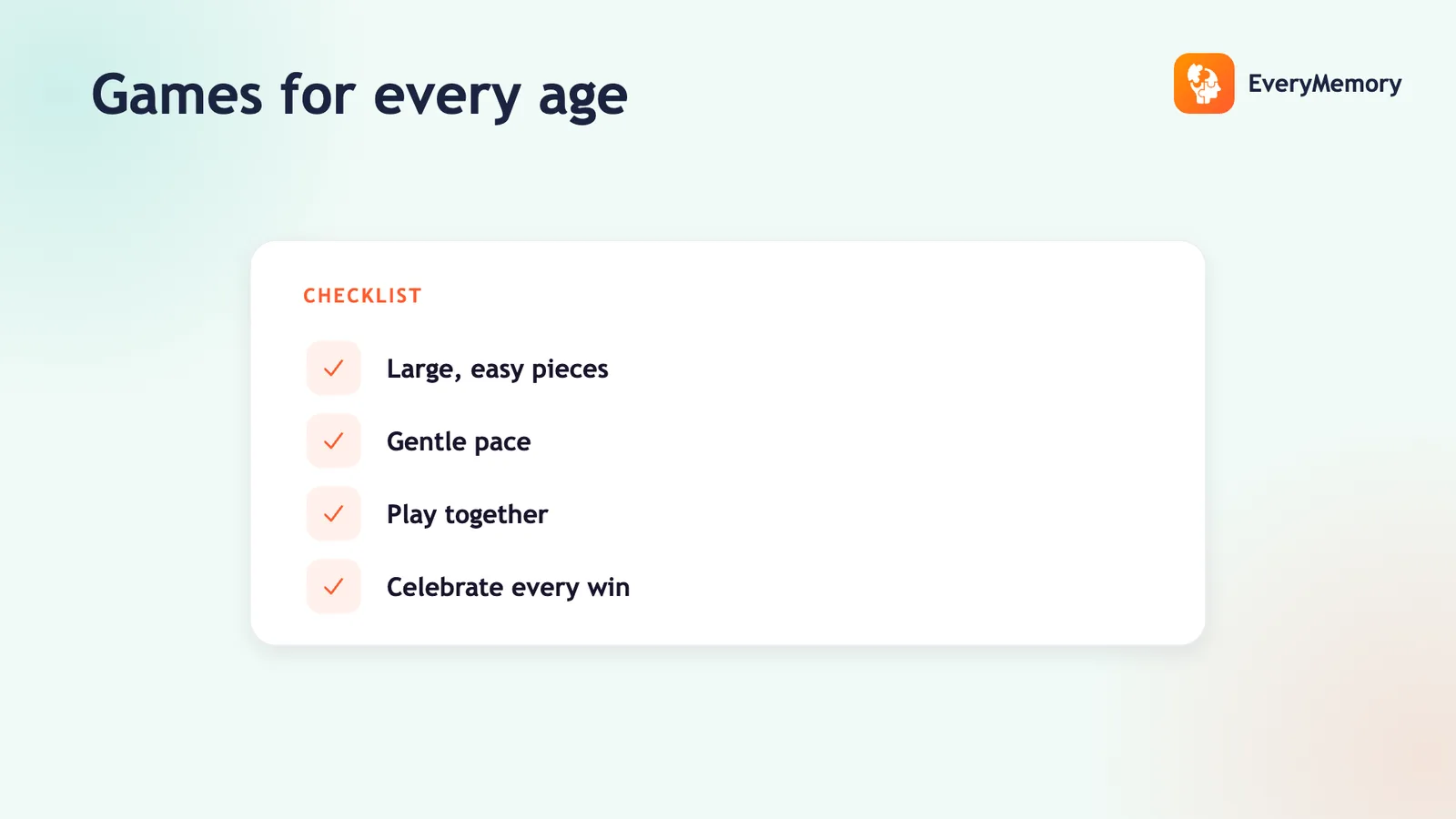
Brain Games for 80-Year-Olds
At eighty and beyond, the right brain game is gentle, familiar, and full of dignity. Here are games chosen for comfort and enjoyment - easy on the eyes and hands, and lovely to do together.
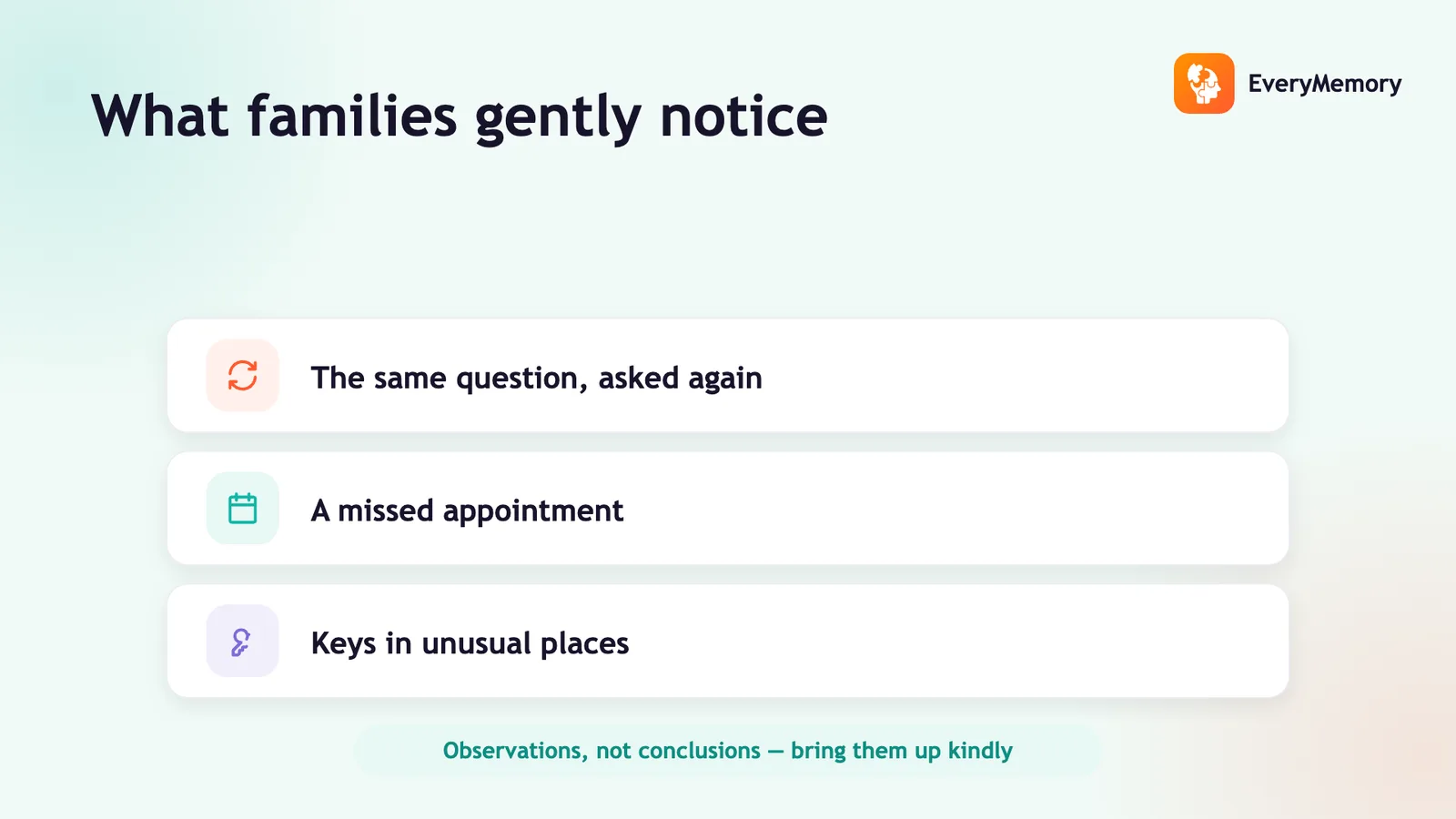
Memory Changes Families Often Notice in a Parent
A gentle, non-diagnostic guide to the everyday memory changes adult children sometimes notice in an aging parent - and how to respond with care.
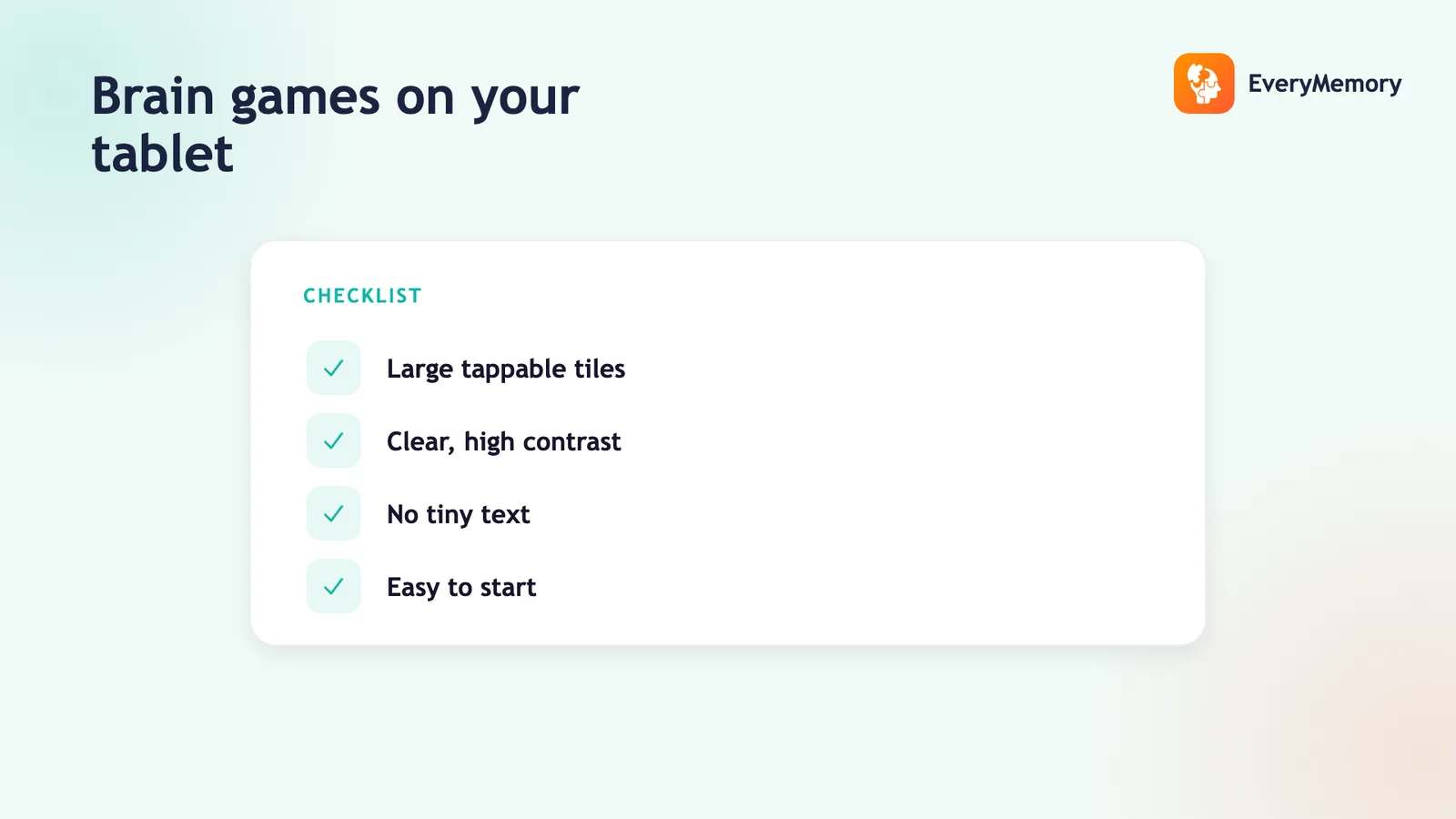
Brain Games for Seniors on a Tablet
A tablet can be a brilliant brain-game device for an older adult - if it's set up right. Here's how to choose games, adjust the settings, and make a tablet genuinely senior-friendly.

Free Memory Games for Seniors
You don't need to spend a penny to keep a mind active. Here are genuinely free memory games for seniors - from a deck of cards to friendly apps - and how to pick ones that fit.
How to Remember What the Doctor Said
Most people forget more than half of what a doctor tells them within an hour. These simple before, during, and after strategies help you hold on to the details that matter.
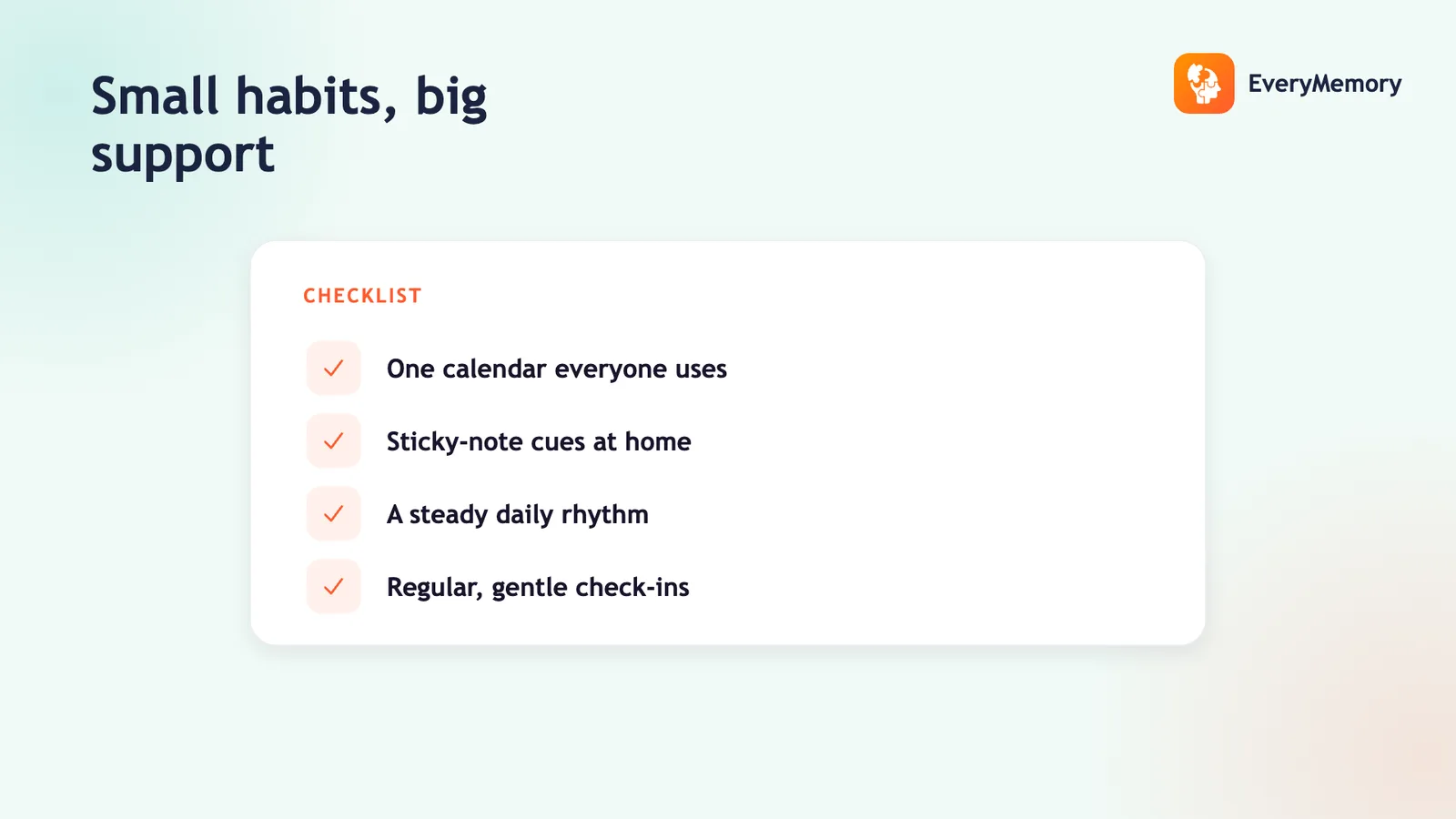
How to Support a Parent's Memory
Supporting a parent's memory is less about drills and more about gentle habits - routines, cues, good conversation, and shared activities that keep them engaged and confident.

Memory Games and Activities for Groups
Group memory games keep minds active and bring people together. Games that work for families, care settings, and classes - and how to run them so everyone can join in.
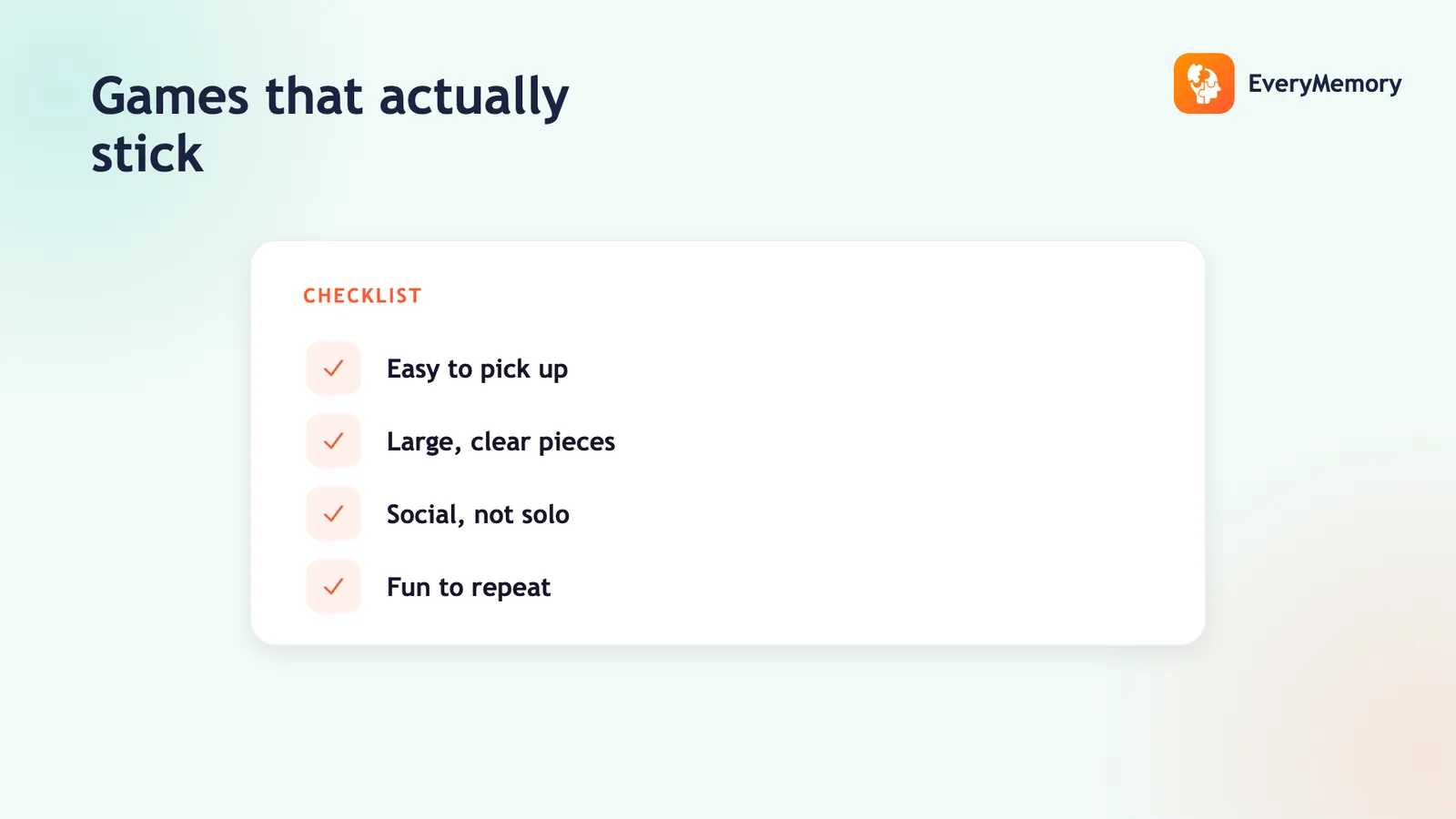
Best Brain Games for Elderly Parents
A practical guide to the brain games and mental activities that work well for older adults - what to try, what to avoid, and how to make them stick.
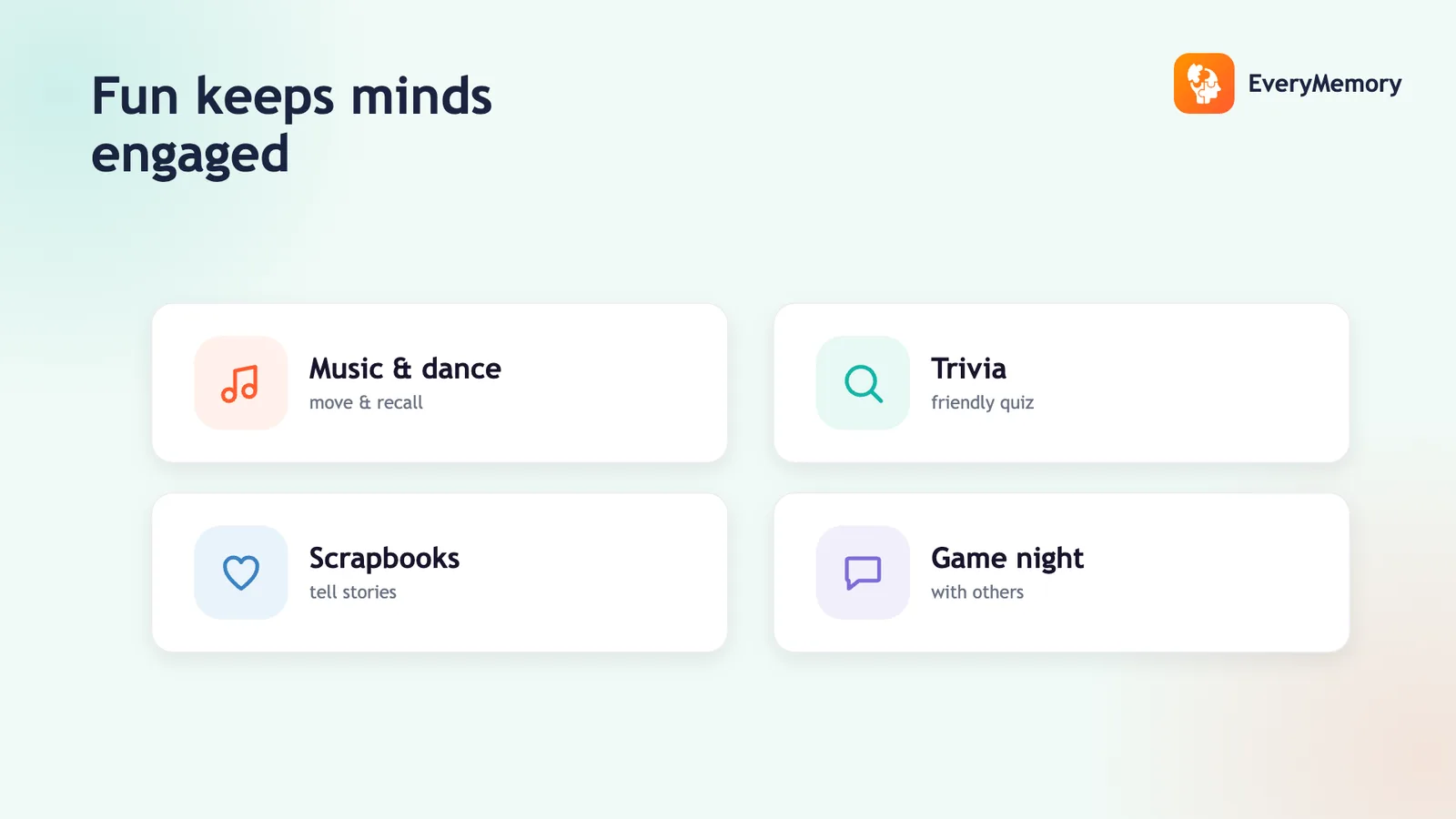
Fun Activities for Seniors That Support Memory
Dancing, trivia nights, scrapbooking, and singalongs prove that the activities that keep a mind engaged are the ones people genuinely enjoy - here are plenty to try.
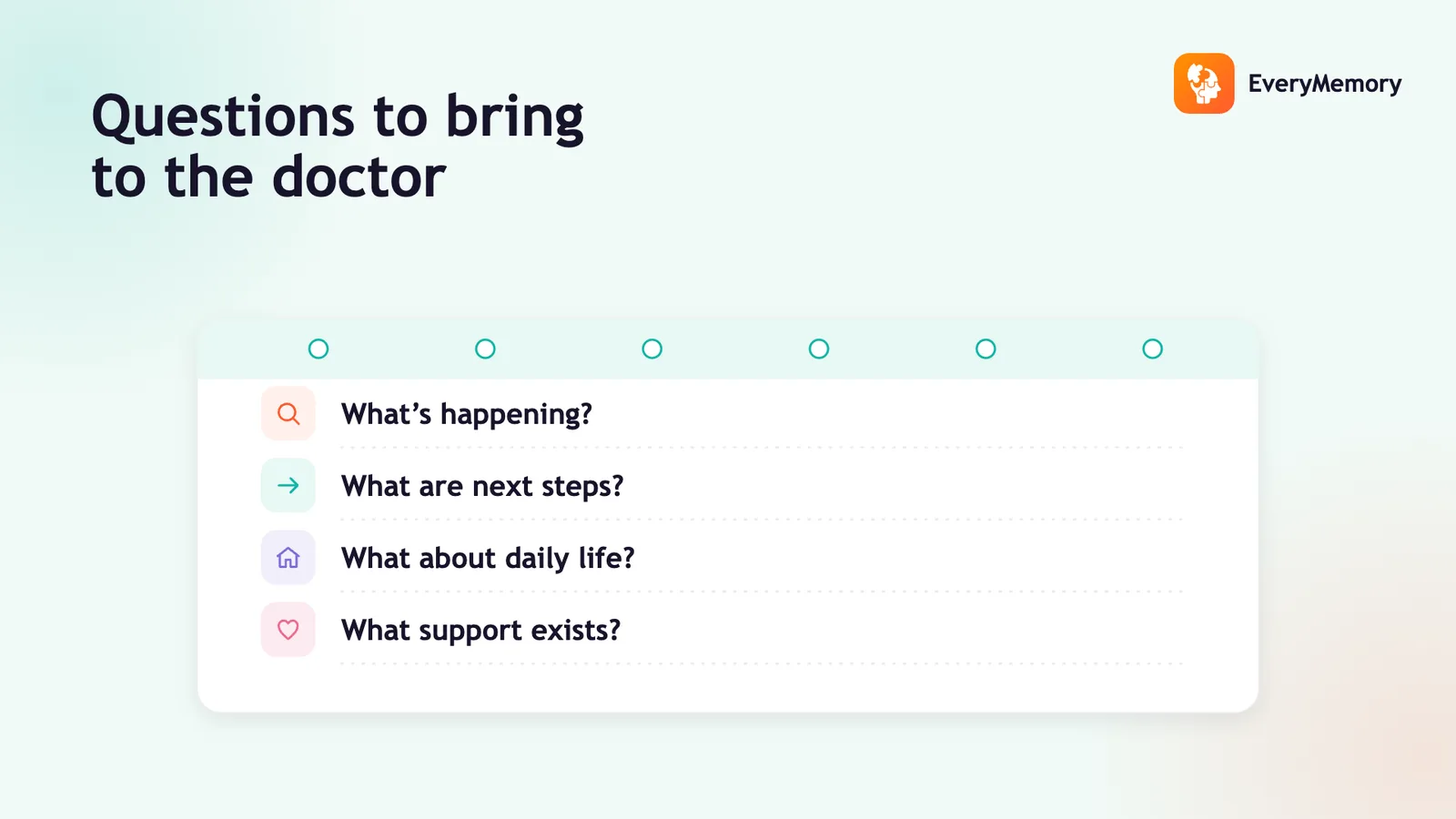
Questions to Ask a Doctor About Memory Concerns
Walking into a short appointment with the right questions already written down means you leave with real clarity - not a foggy sense that you forgot to ask what mattered most.
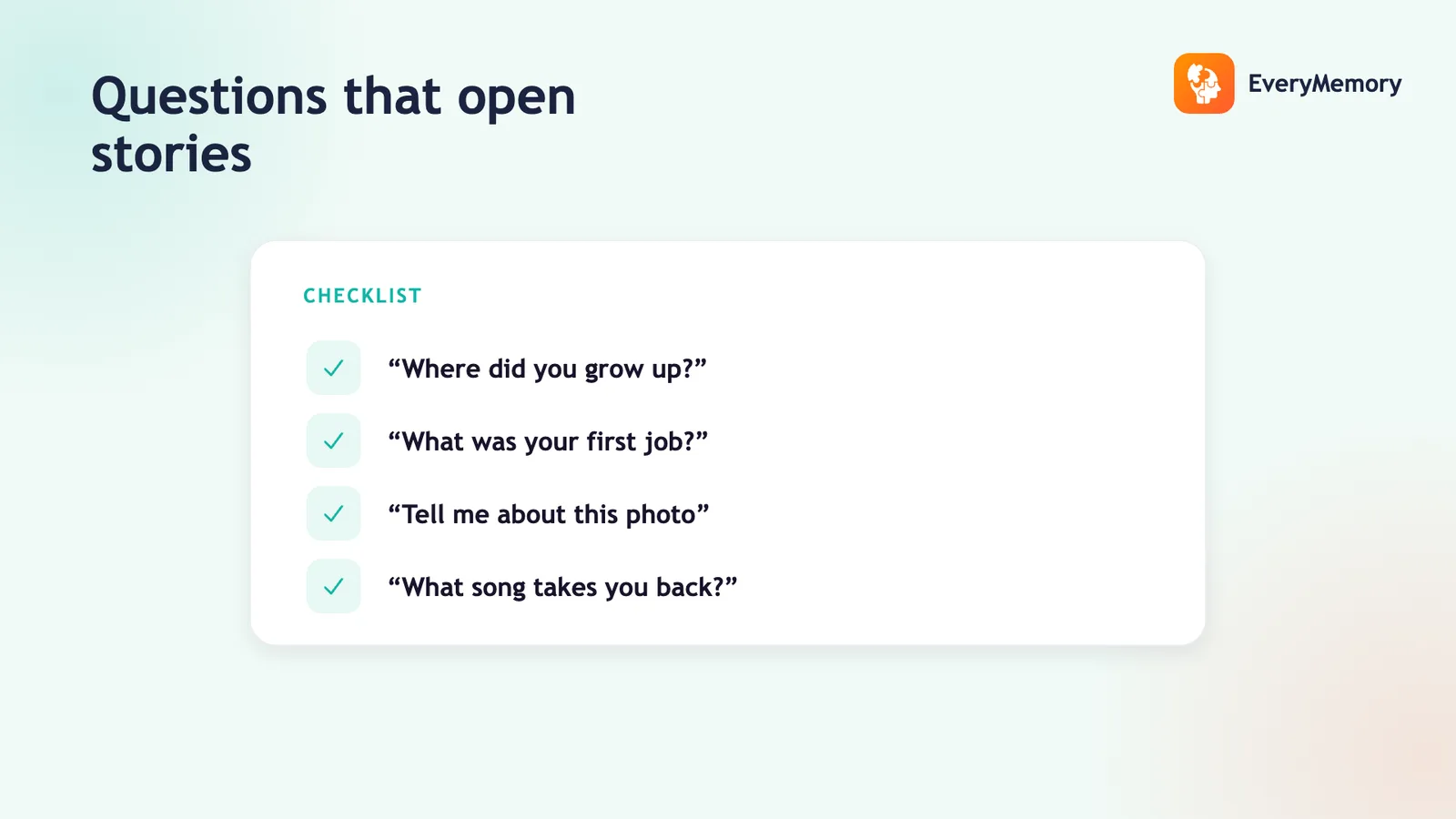
Conversation Starters for Seniors
Good questions open up an older parent's stories and keep a visit warm - here are dozens of conversation starters that invite real memories rather than yes-or-no answers.
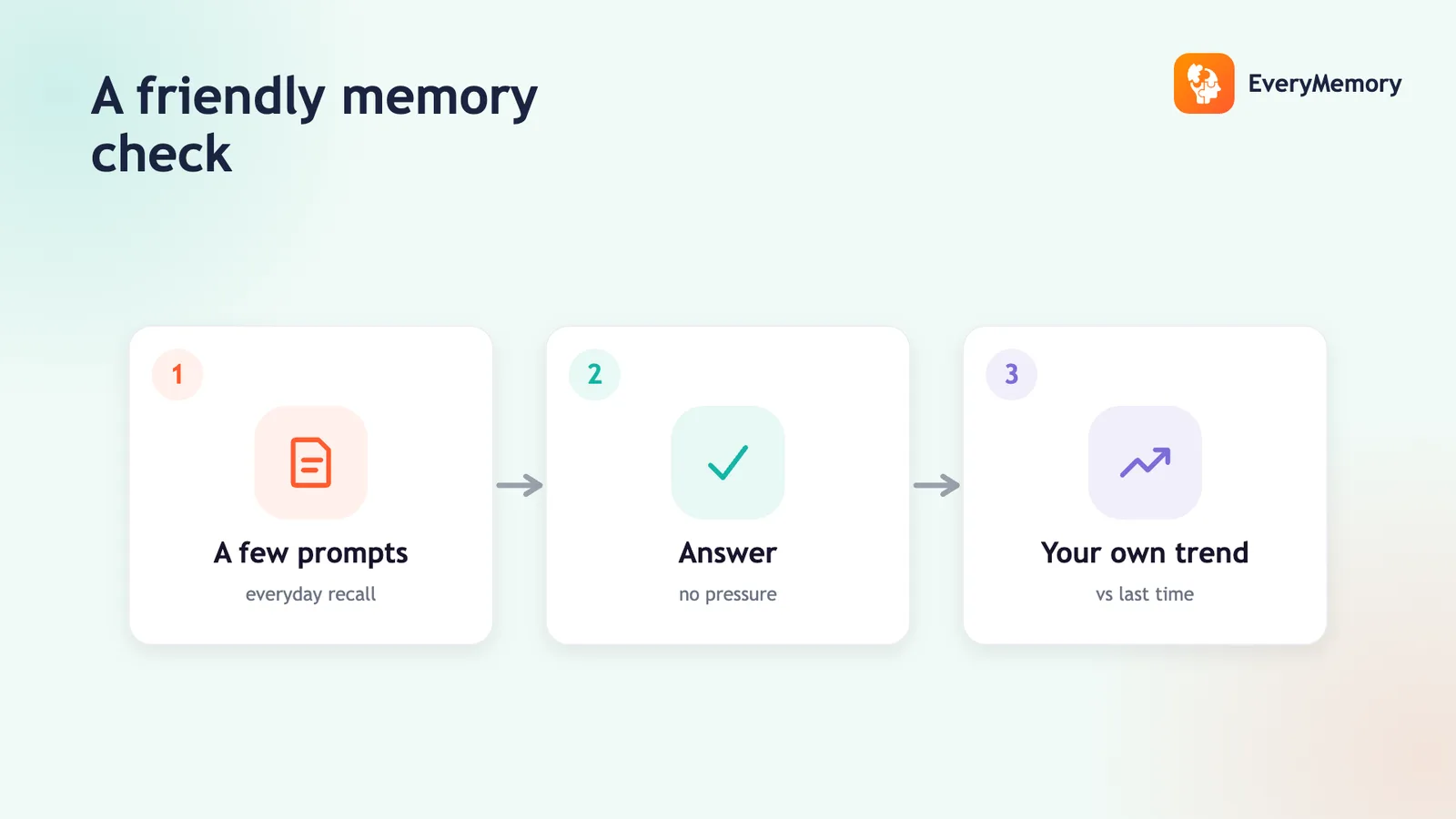
Memory Test for Seniors (Non-Medical Self-Check)
A friendly, non-medical memory self-check for older adults - a way to compare against your own past, not a screening. Here's how to do one gently, and what it can and can't tell you.
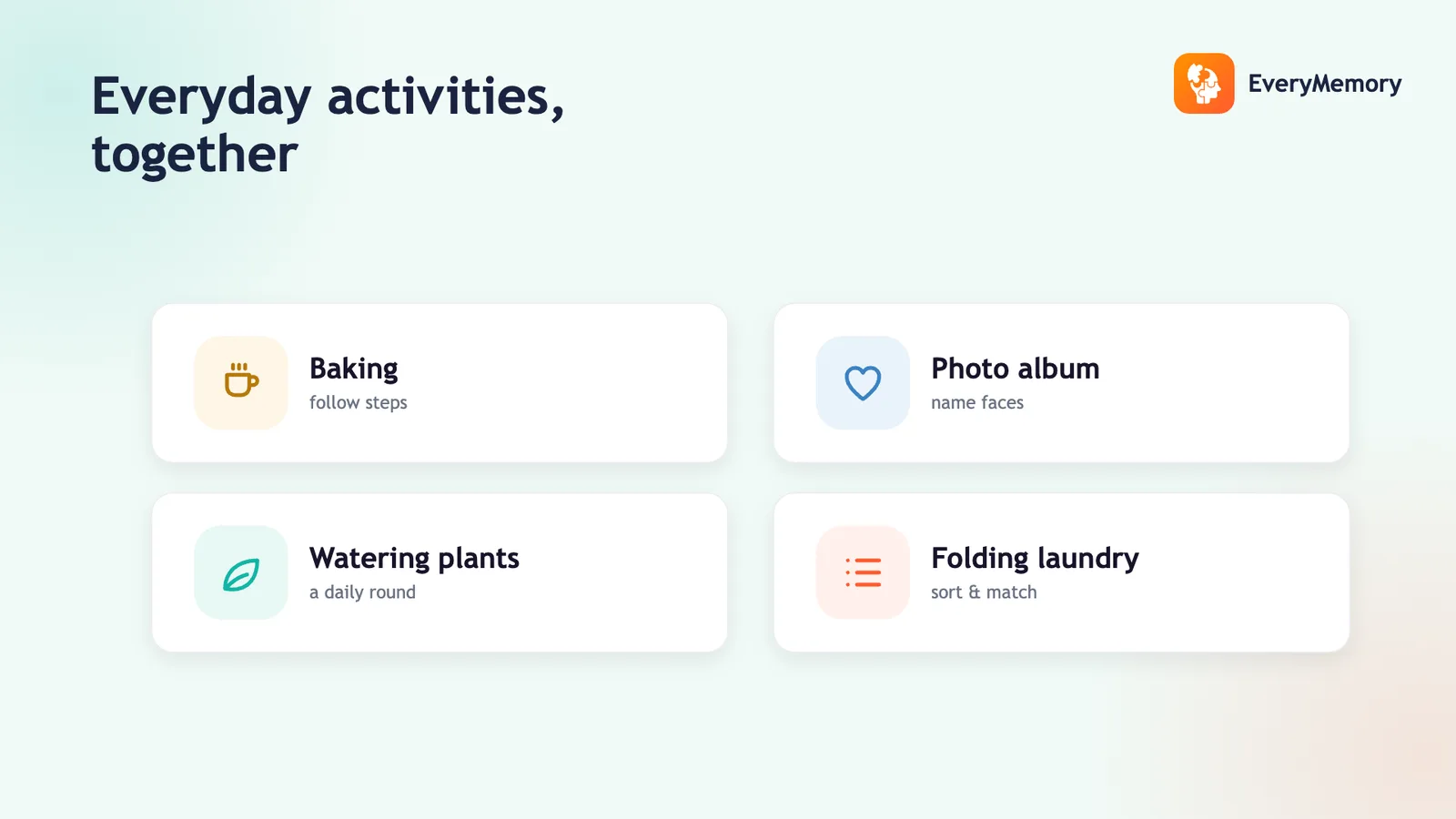
Memory-Supporting Activities to Do at Home
Cooking a familiar recipe, sorting photos, gentle gardening, and folding laundry together - everyday activities at home that keep an older relative engaged and connected.
Practical techniques like association, chunking, and the memory palace.
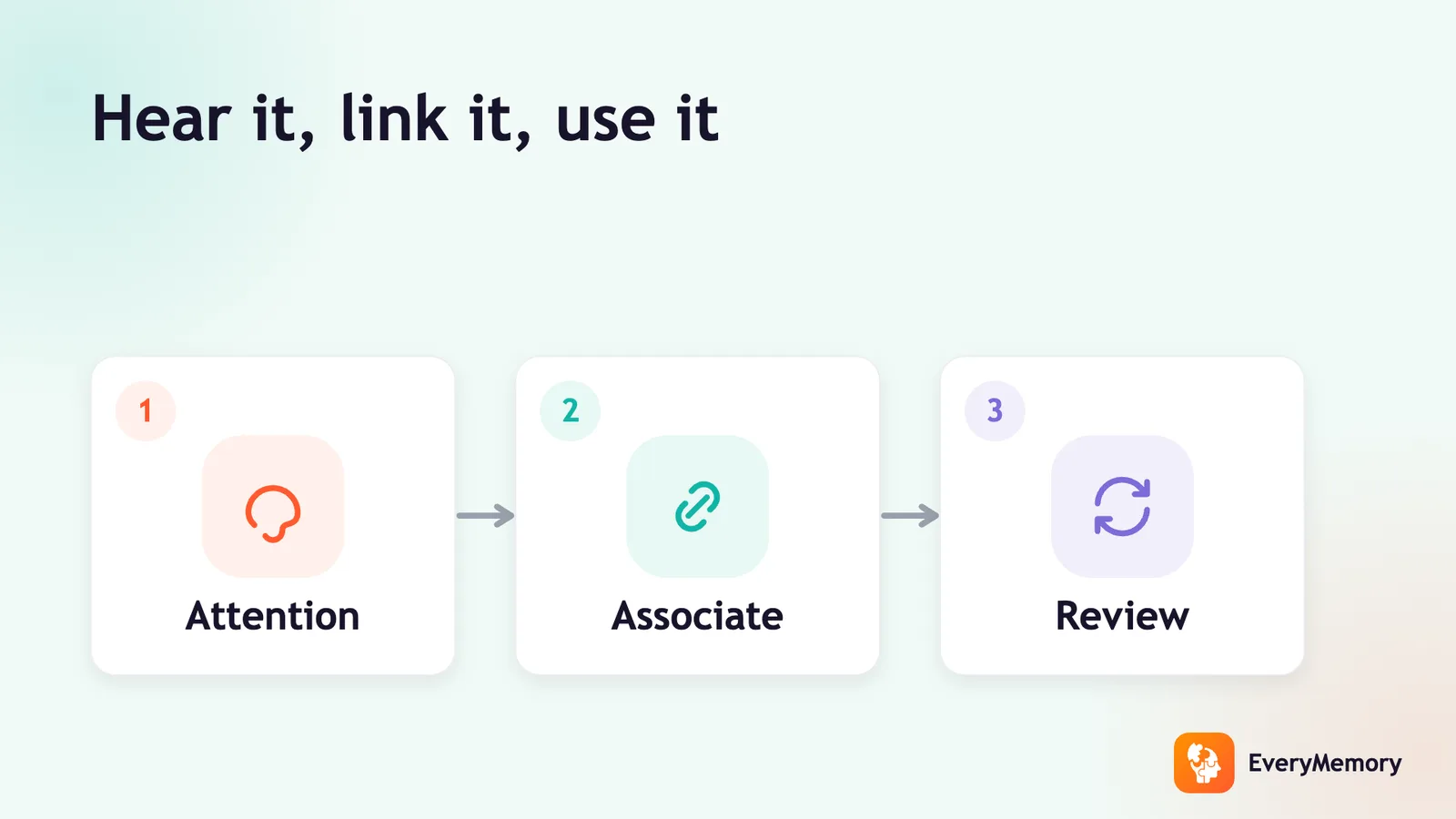
How to Remember Names and Faces
A step-by-step technique guide for remembering names the moment you hear them - using attention, repetition, and visual anchors.
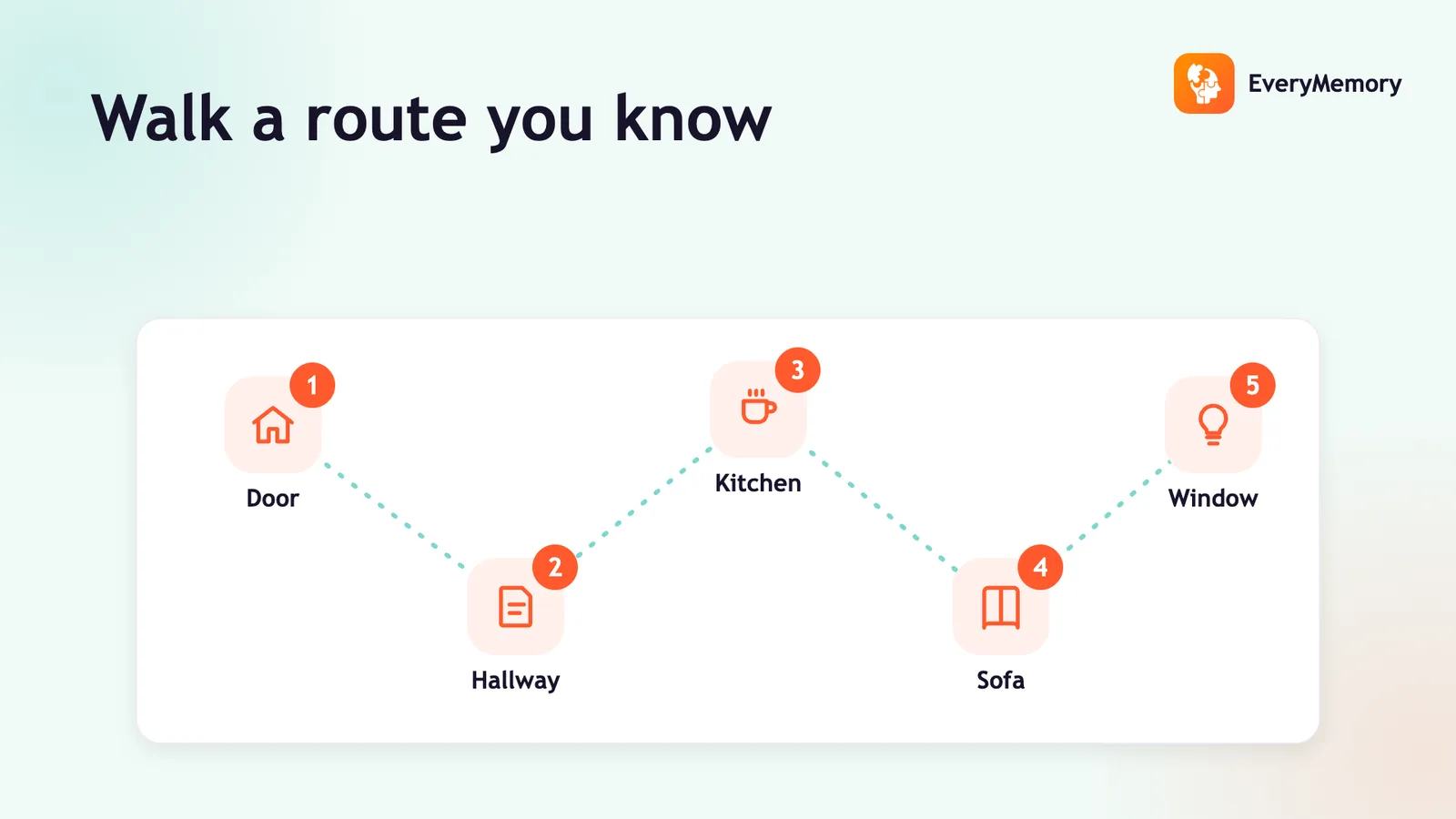
Memory Palace for Beginners
The memory palace is one of the oldest recall techniques in existence. Here's how it works and how to build your first one in under 20 minutes.
How to Remember Passwords Without Writing Them Down
You do not need to memorise every password. The smart split is a password manager for the many and a handful of strong passphrases for the few, here is how to make those stick.
How to Memorize Things Fast
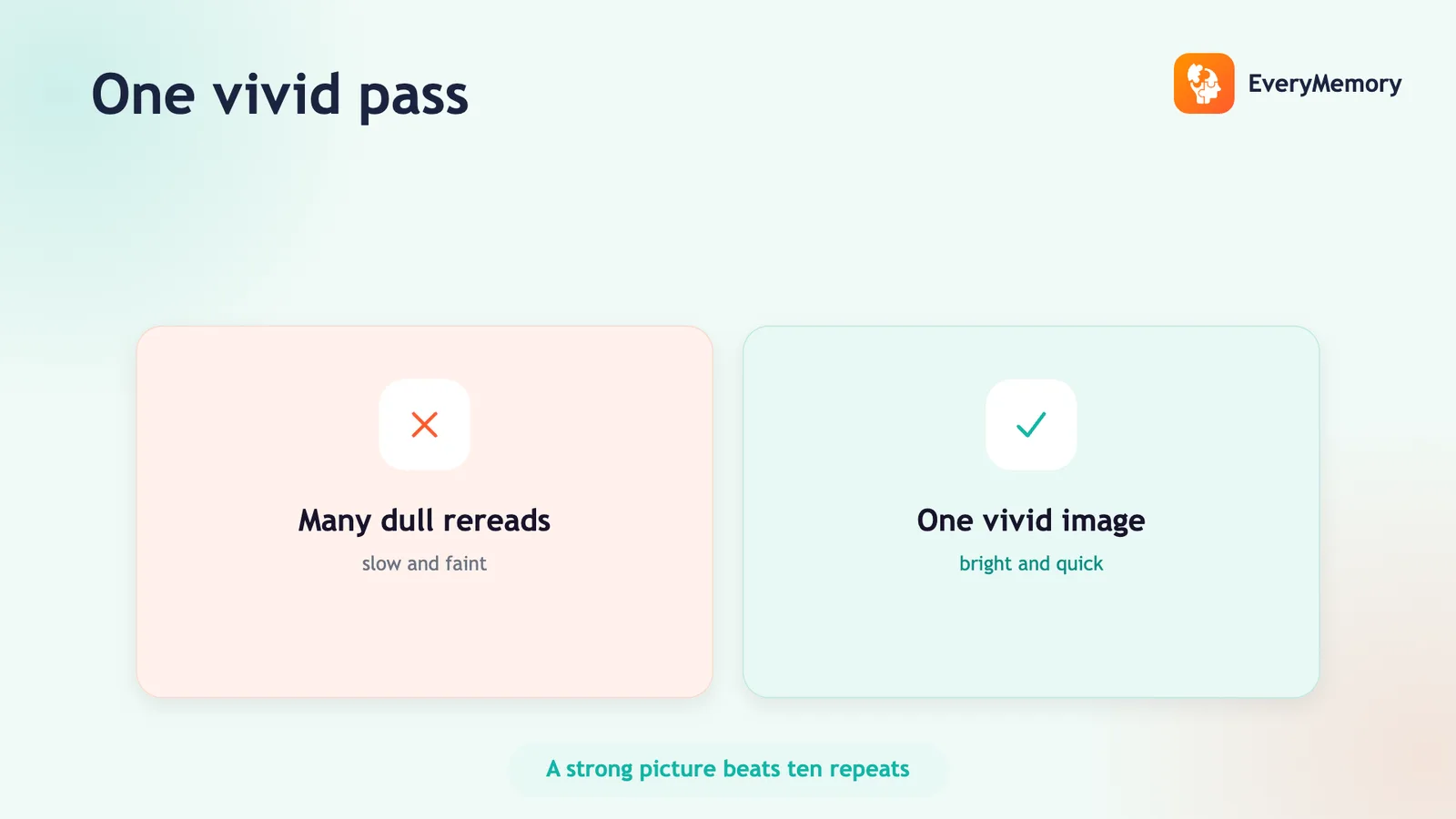
Fast memorising comes from better encoding, not more repetition. Understand, chunk, picture, link - one vivid pass beats a dozen rereads.
How to Remember Appointments
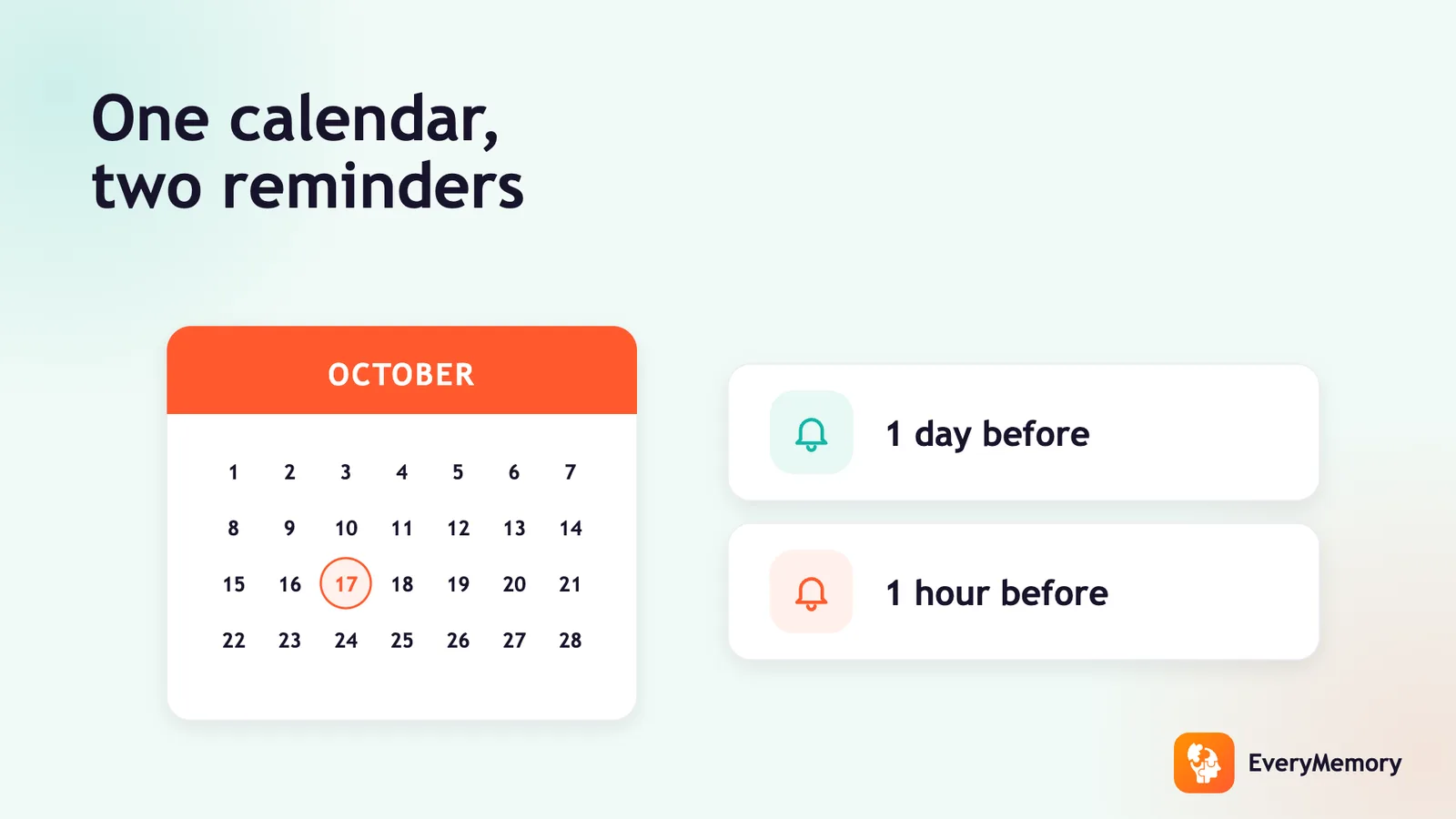
A simple, reliable system for keeping track of appointments - even when your schedule gets busy or you stop using a planner consistently.
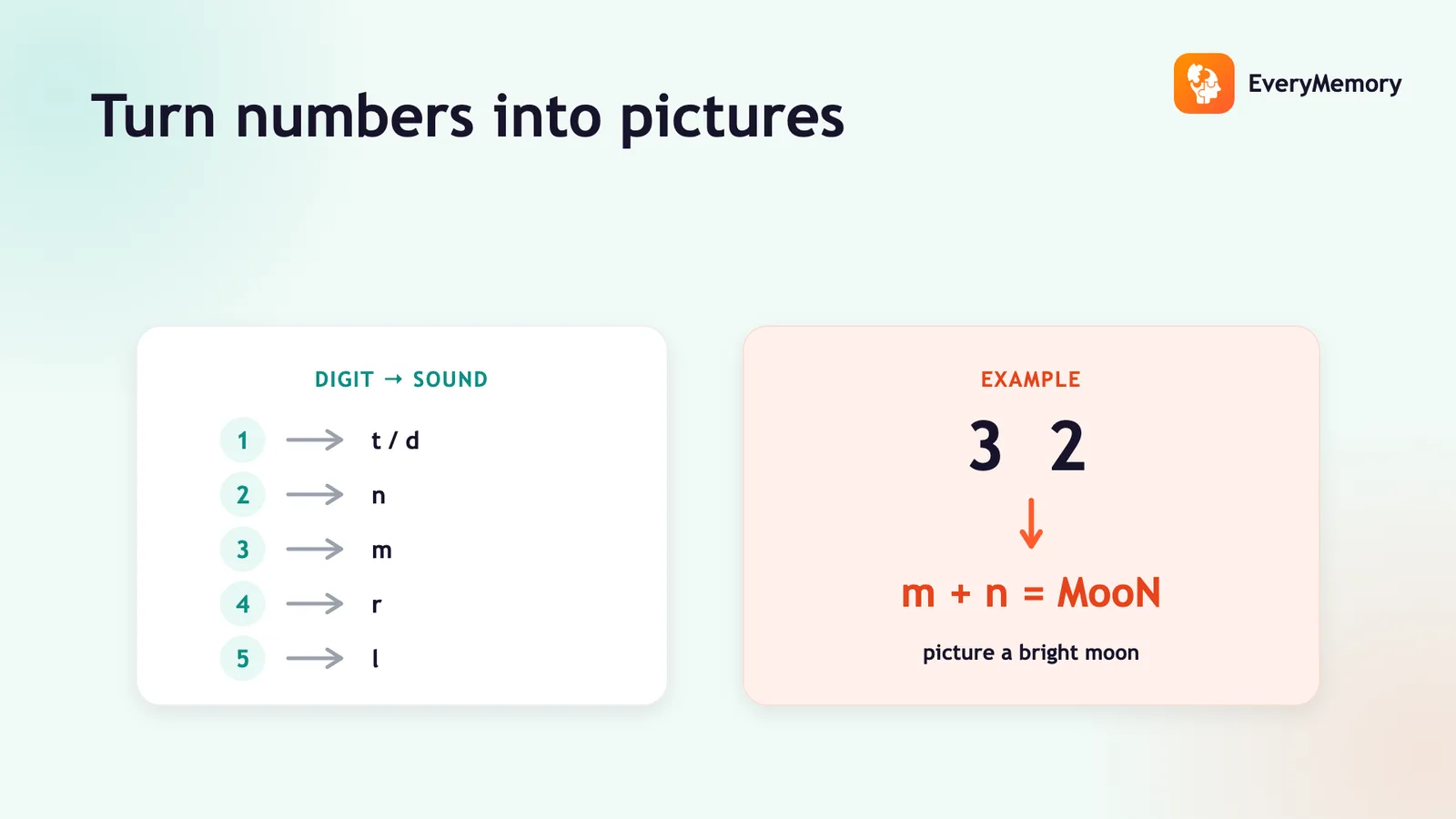
The Major System for Numbers: A Beginner's Guide
Turn any number into a vivid picture with the Major System - a centuries-old technique that maps digits to consonant sounds so you can remember PINs, phone numbers, and dates with ease.
The Link and Story Method for Remembering Lists
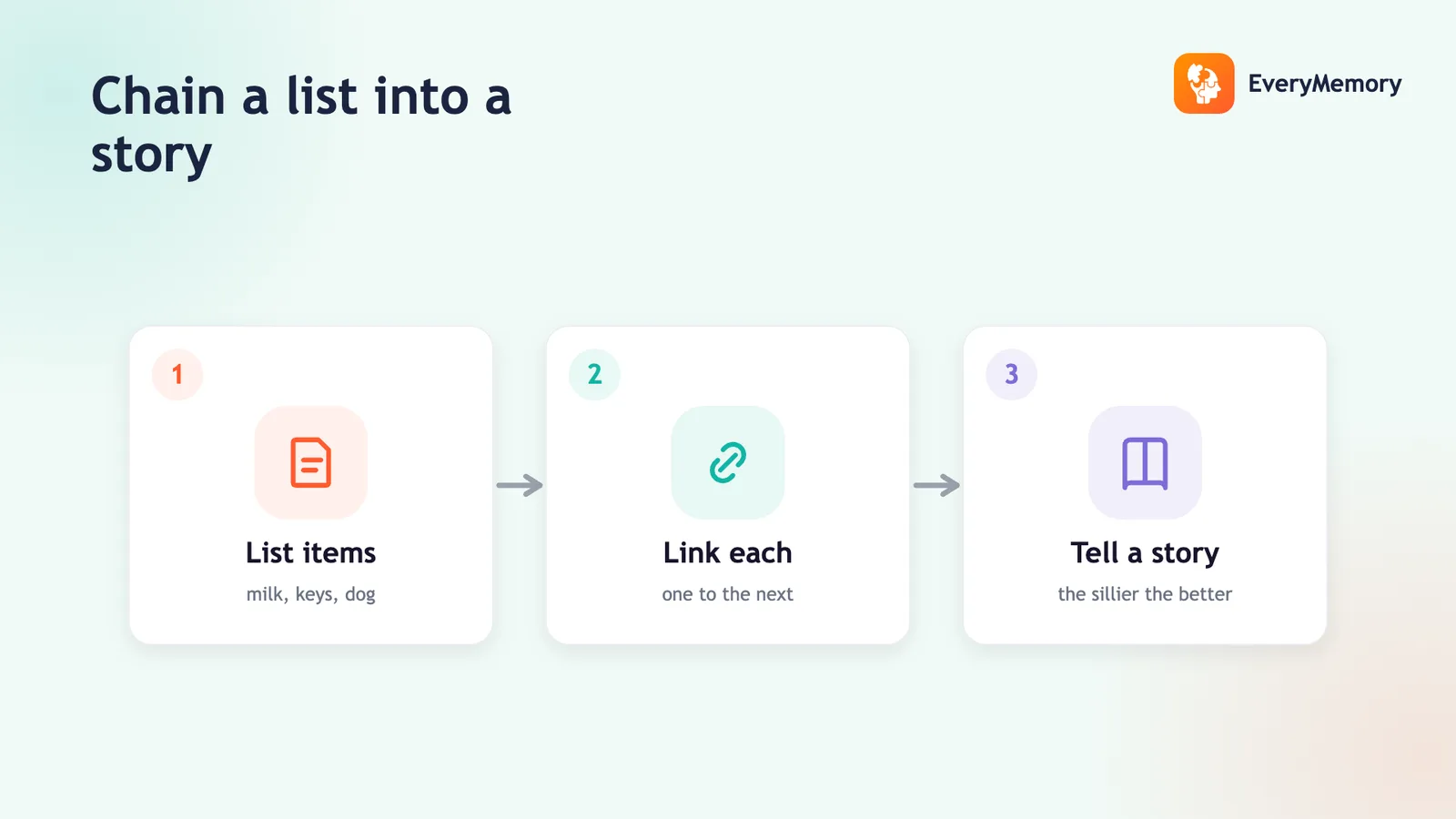
Turn a list into a chain of vivid images, or one absurd story, and recalling the first item pulls up the rest. The simplest technique for everyday lists.
Acronyms and Acrostics: Simple Memory Tricks
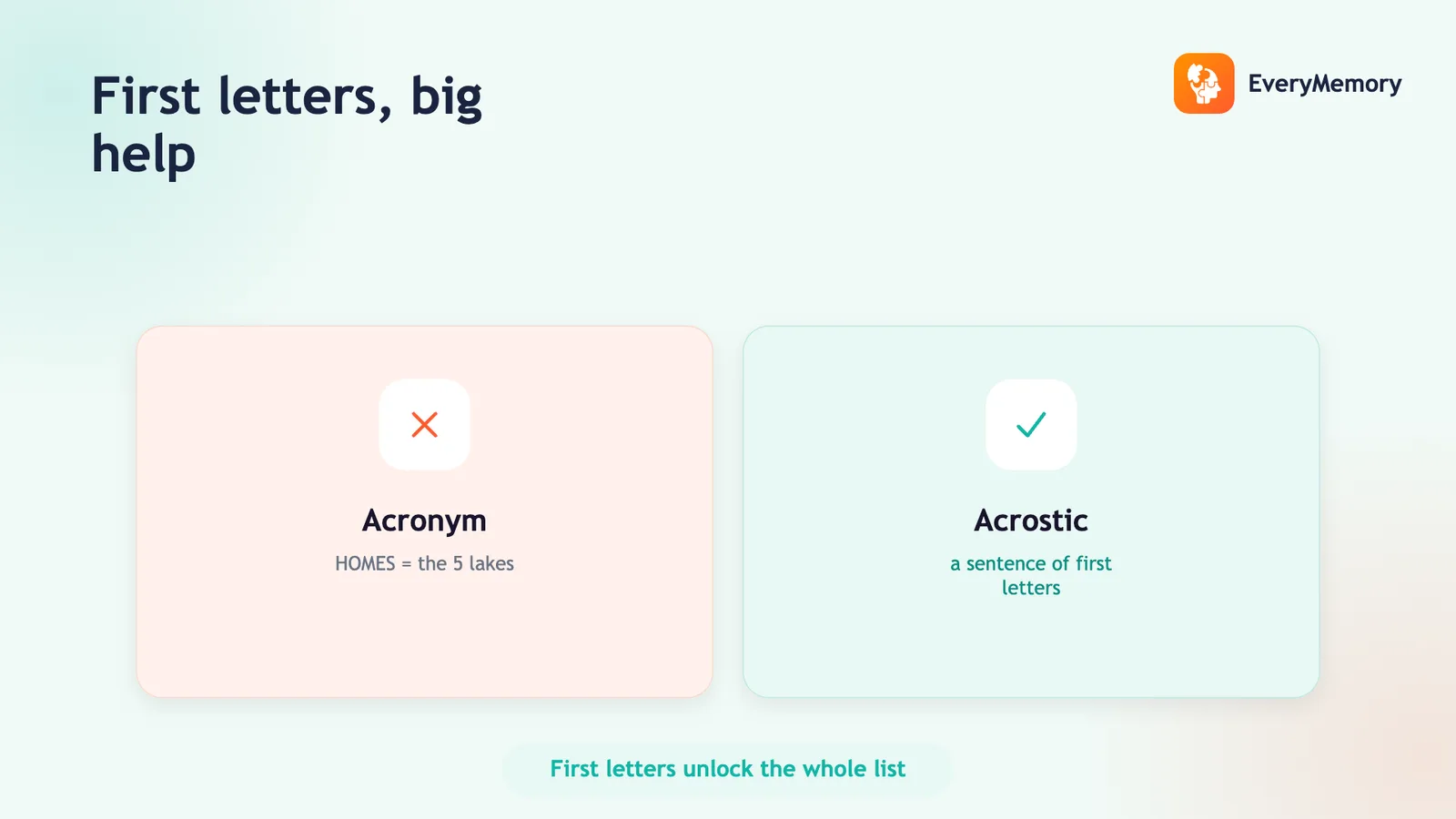
An acronym makes a word from first letters; an acrostic makes a sentence. The simplest mnemonics there are - and exactly when to use them.
Active Recall: The Most Effective Study Method
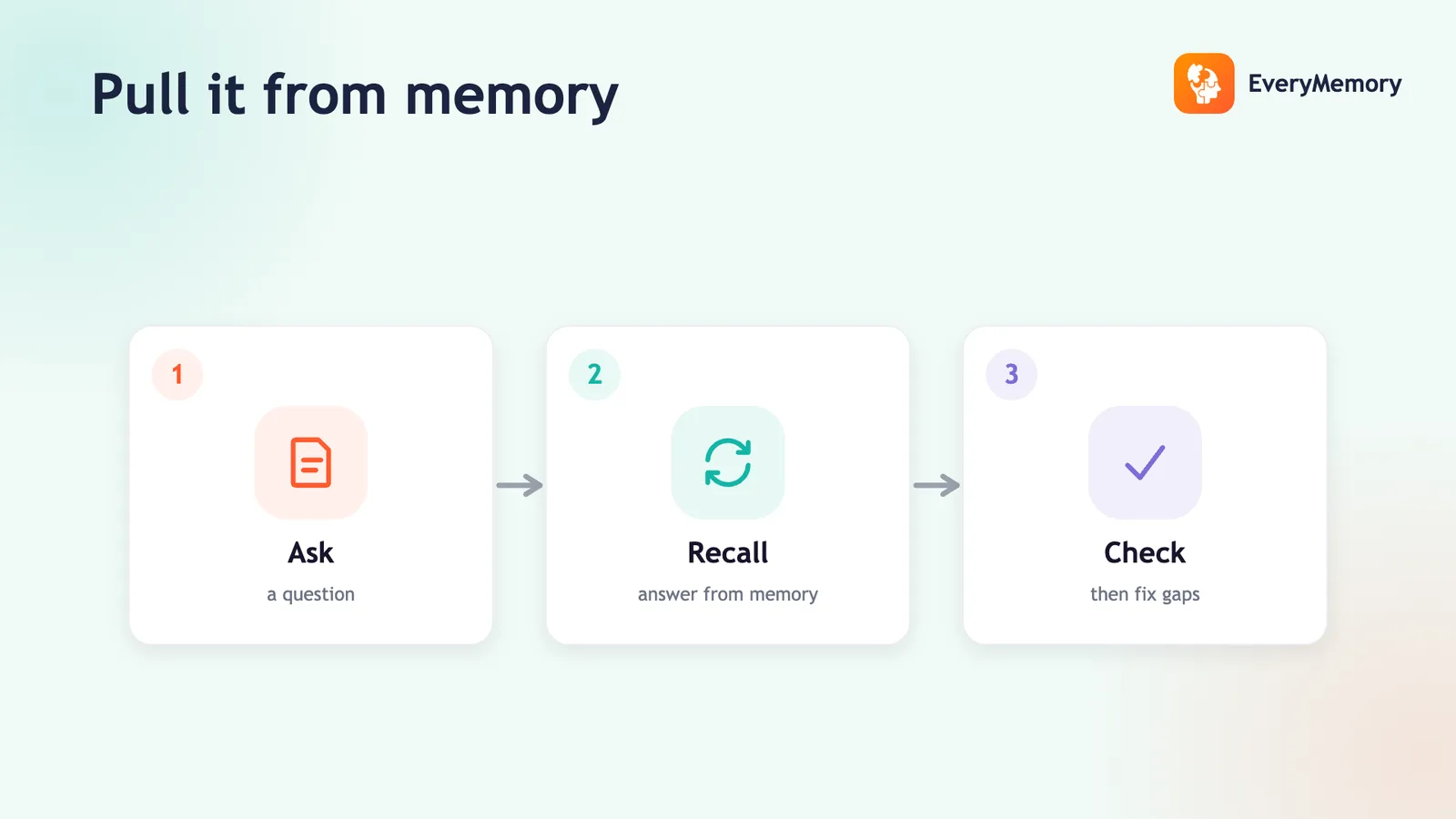
Active recall means retrieving information from memory instead of rereading it. Why it's the most effective way to study, and exactly how to do it.
What Are Mnemonics? (And How to Use Them)
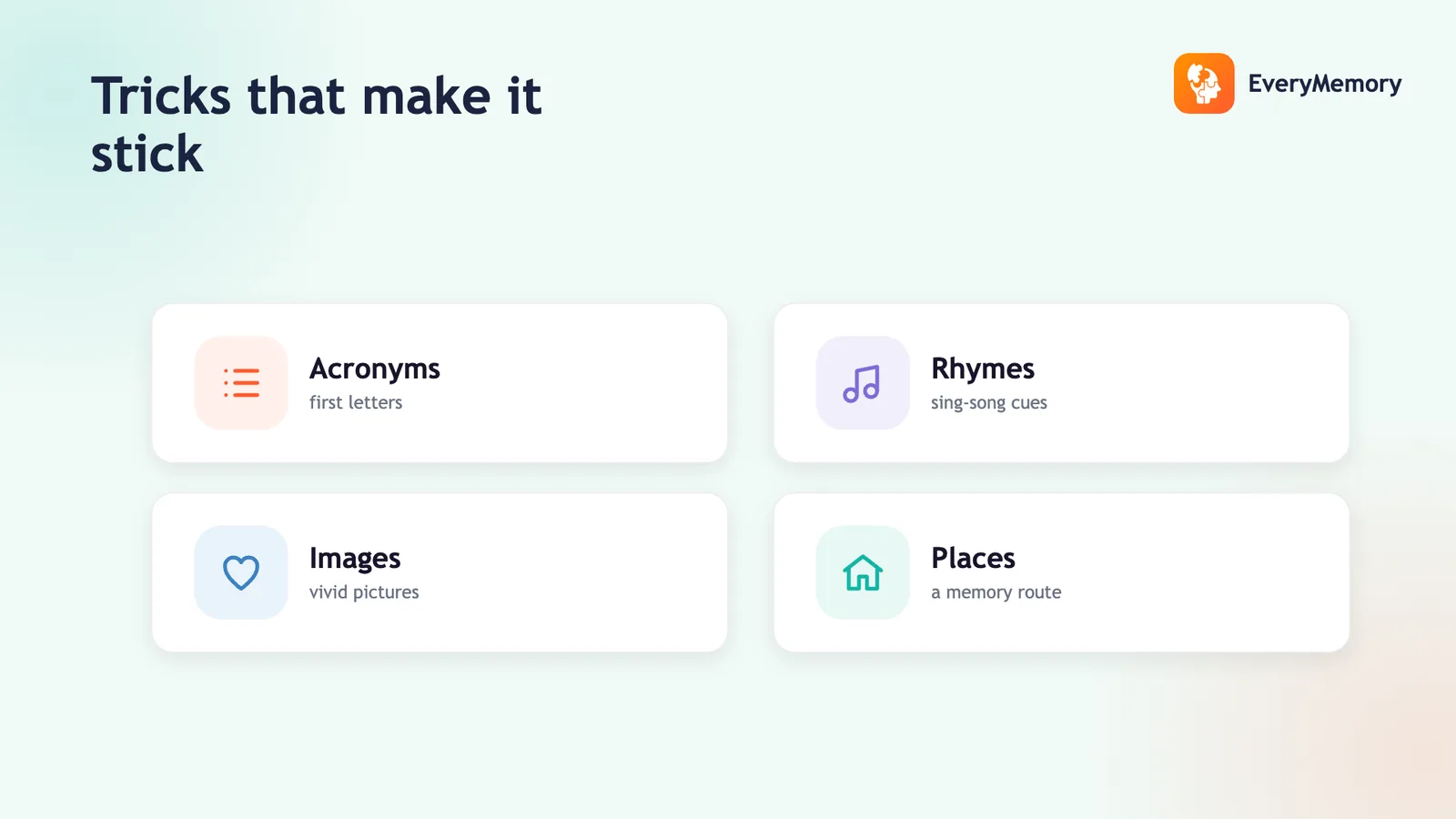
A mnemonic is any trick that makes information easier to recall by giving it pattern or meaning. The main types, why they work, and how to make your own.
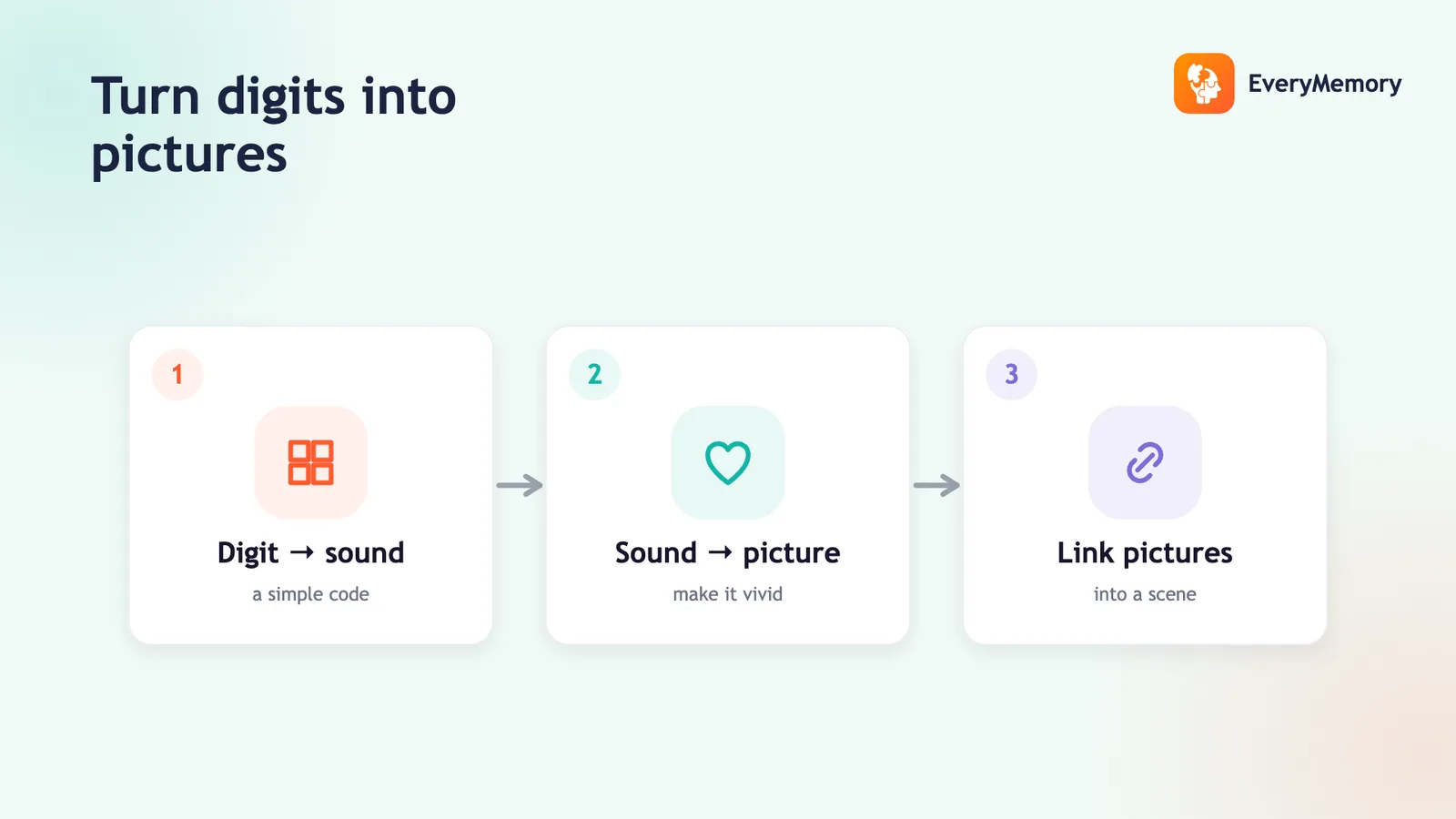
How to Memorize Numbers
Memorize numbers by chunking them into small groups and converting digits into vivid images with the major system, turning abstract figures into a memorable story.
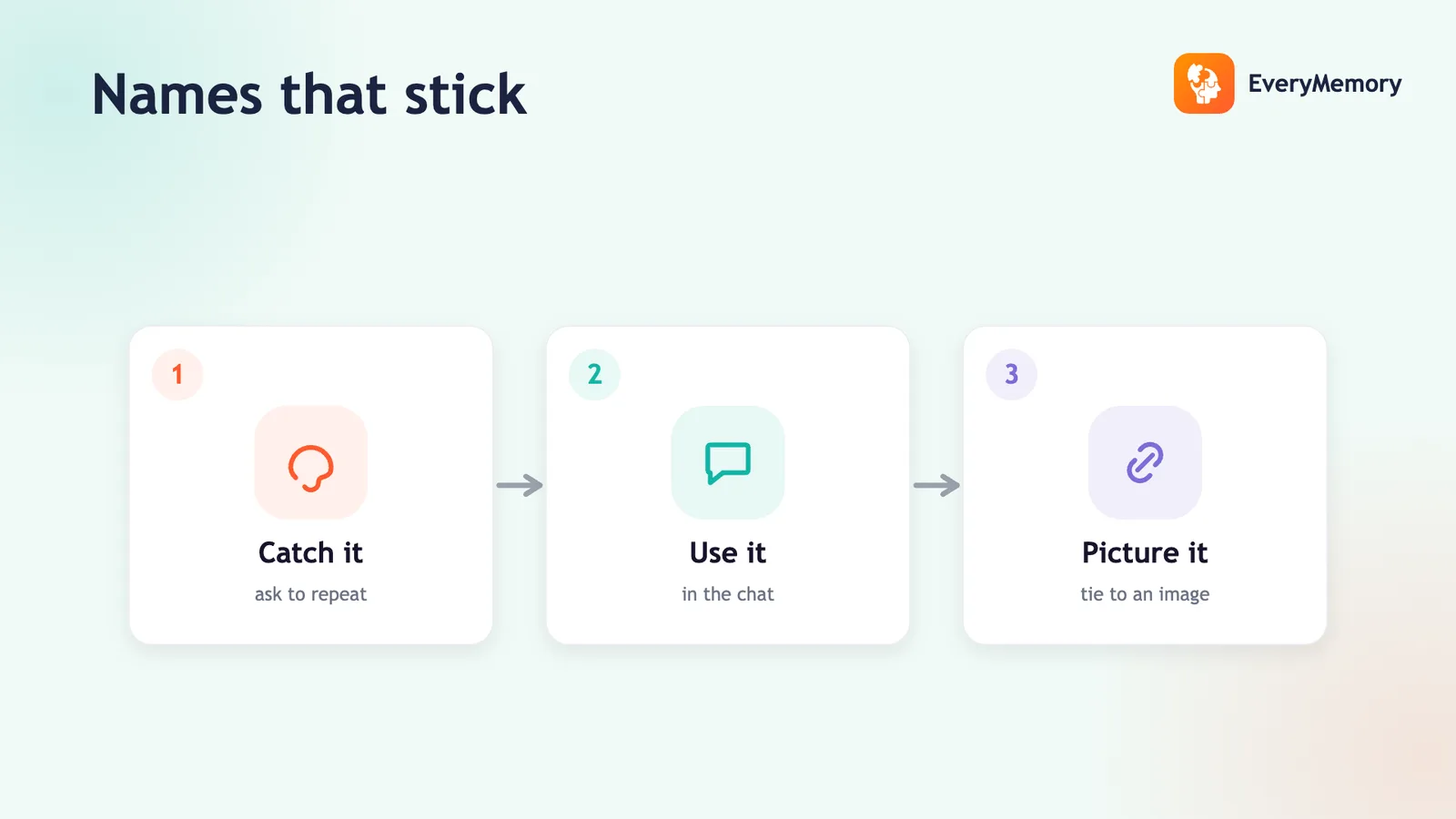
How to Remember Names at Networking Events
Remember names at networking events by paying real attention at the introduction, repeating the name back, and linking it to the face with a vivid mental image.
Dual Coding: Pair Words With Visuals to Remember More
Combining words with visuals gives your brain two retrieval routes instead of one. Here is exactly how dual coding works and how to apply it to any subject.
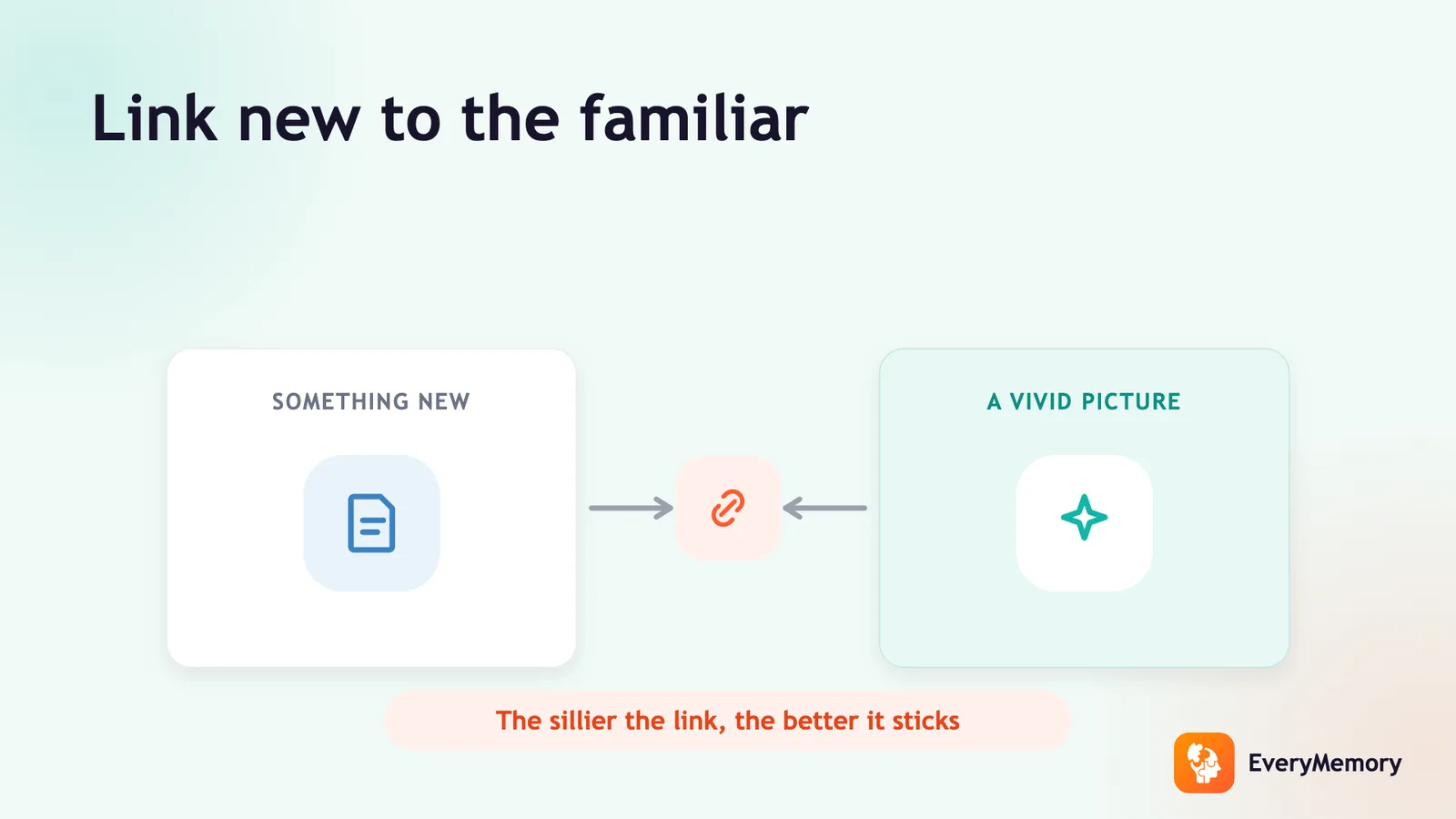
How to Use Association to Remember More
Association is the foundation of almost every memory technique. Here's how to use it deliberately to make new information stick.
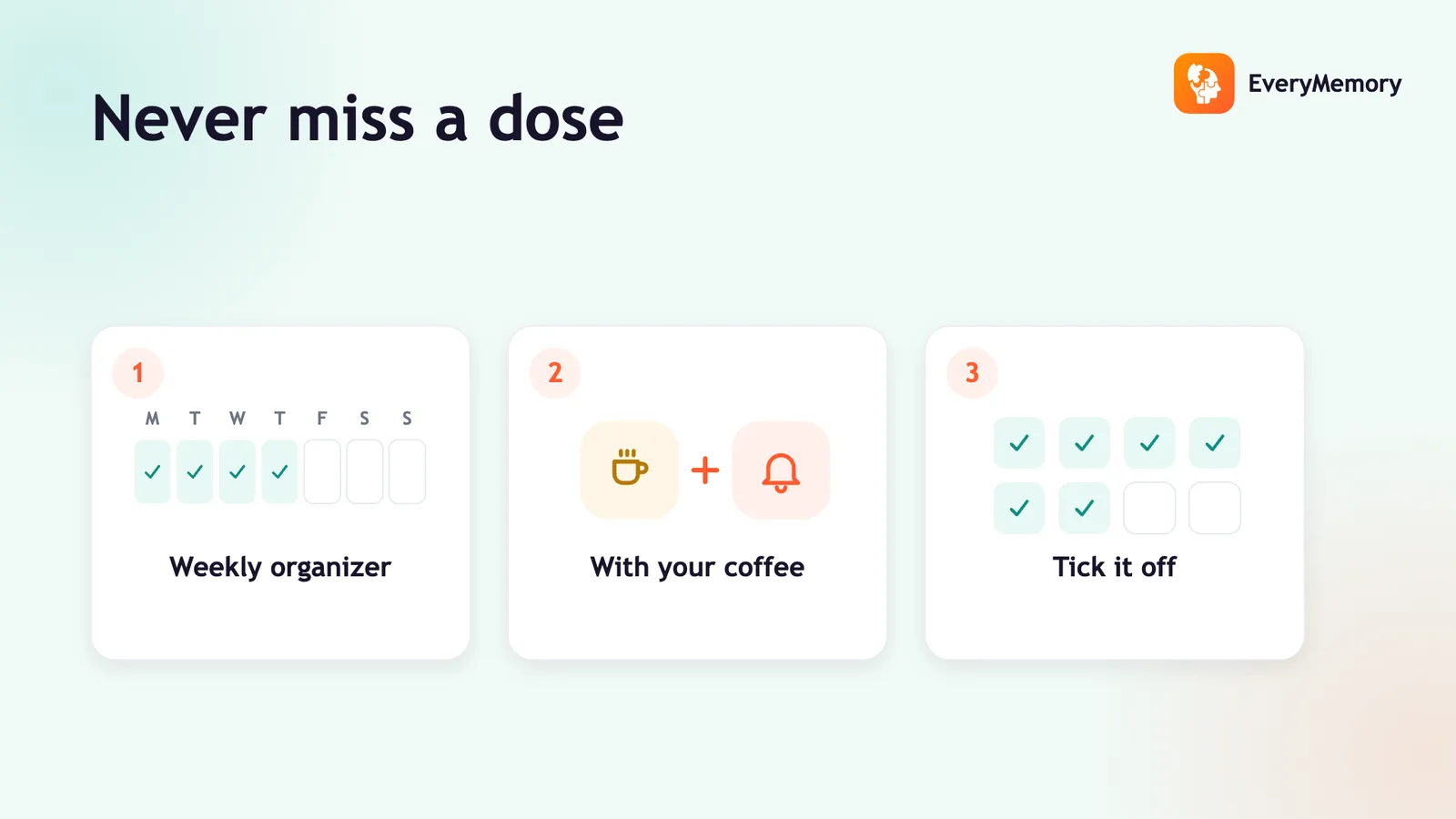
How to Remember to Take Medication on Time
Practical, non-medical strategies - pill organizers, habit-stacking, visible placement, reminder apps, and a simple tick chart - to make staying on your medication schedule easier.
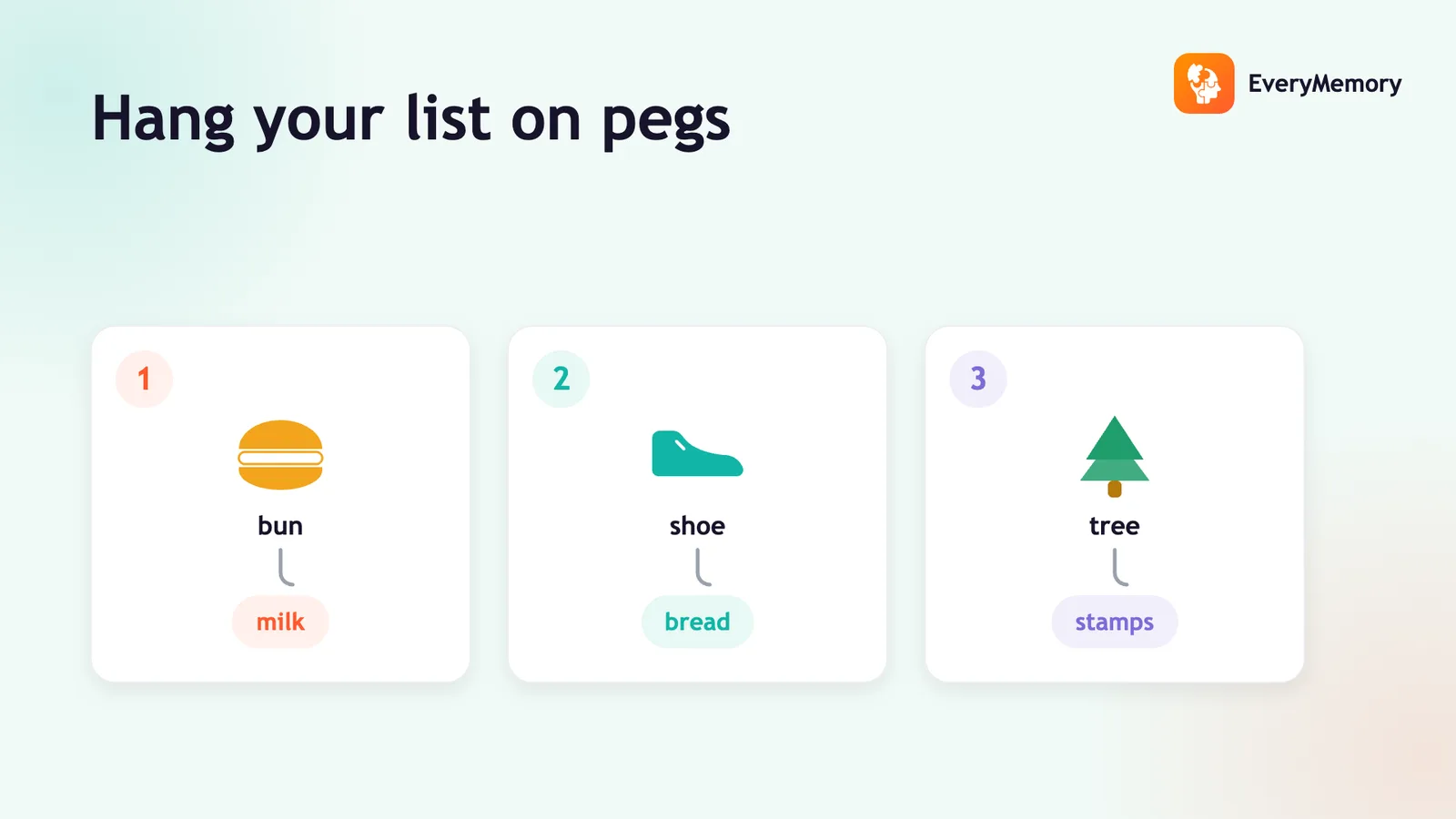
The Peg System for Remembering Lists
The peg system gives you a set of mental hooks numbered 1 to 10 so you can hang list items on them and jump straight to any position - no rehearsing from the top.
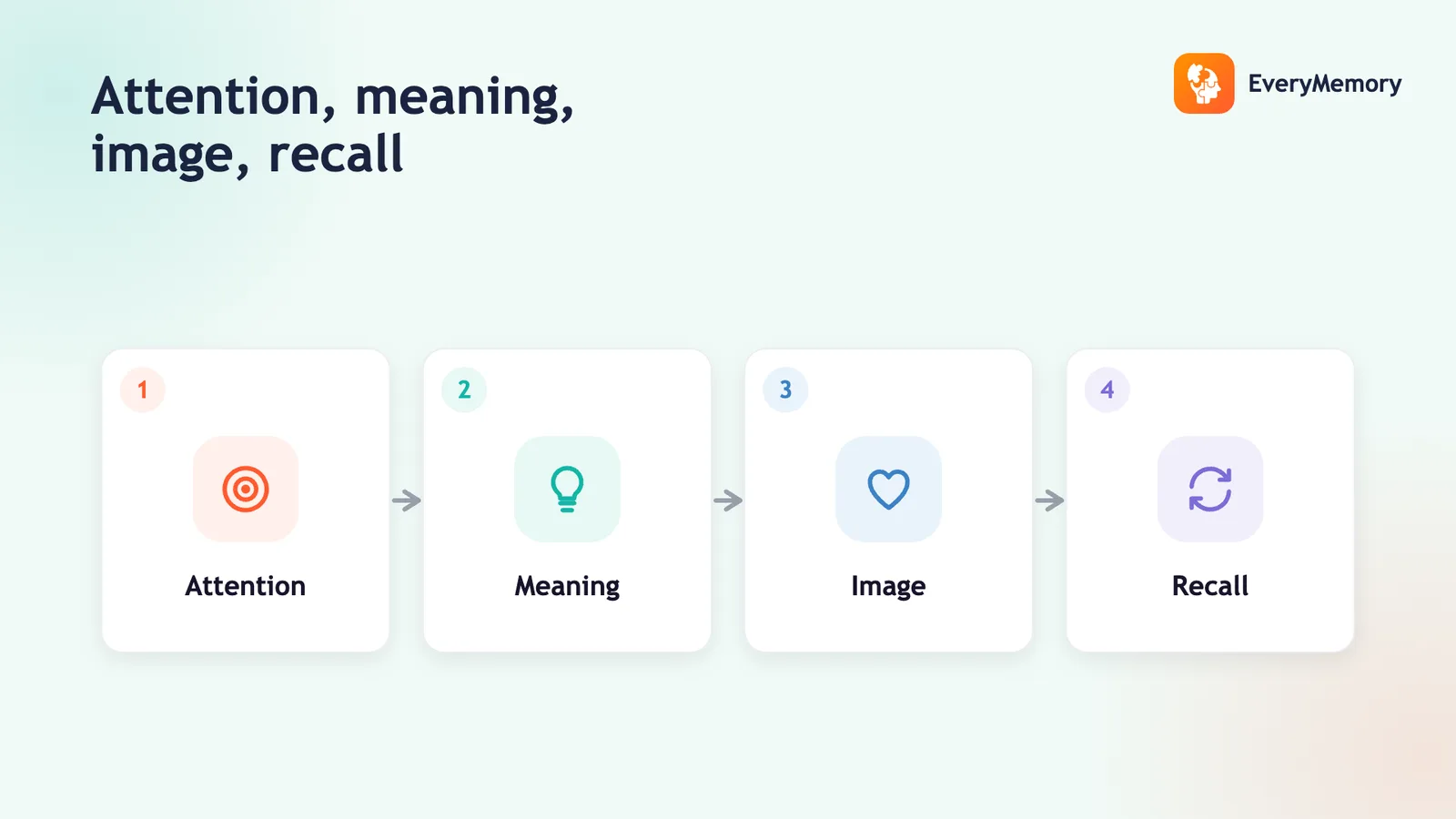
How to Remember Anything
No trick remembers anything for you, but a reliable approach handles most of it: attention, meaning, a vivid image, and a recall soon after.
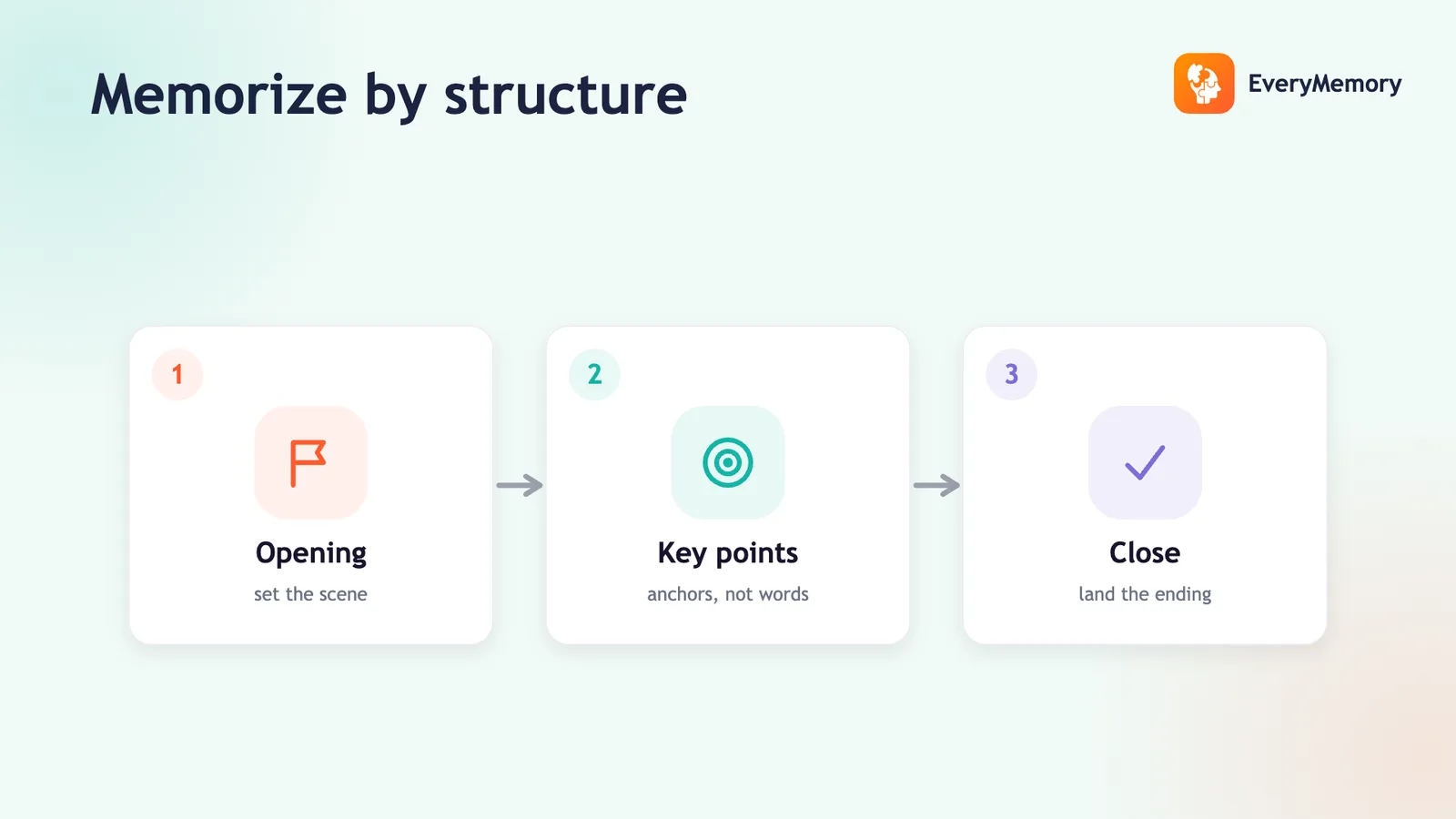
How to Memorize a Speech
Memorize a speech by its structure, not word for word - outline the key points, anchor them to a route, and rehearse the transitions out loud until they're automatic.
How to Remember to Do Things (Prospective Memory)
Forgetting to take the bins out, reply to that email, or call someone back is not a sign of a failing memory. It is a prospective memory challenge, and there are simple, proven ways to fix it.
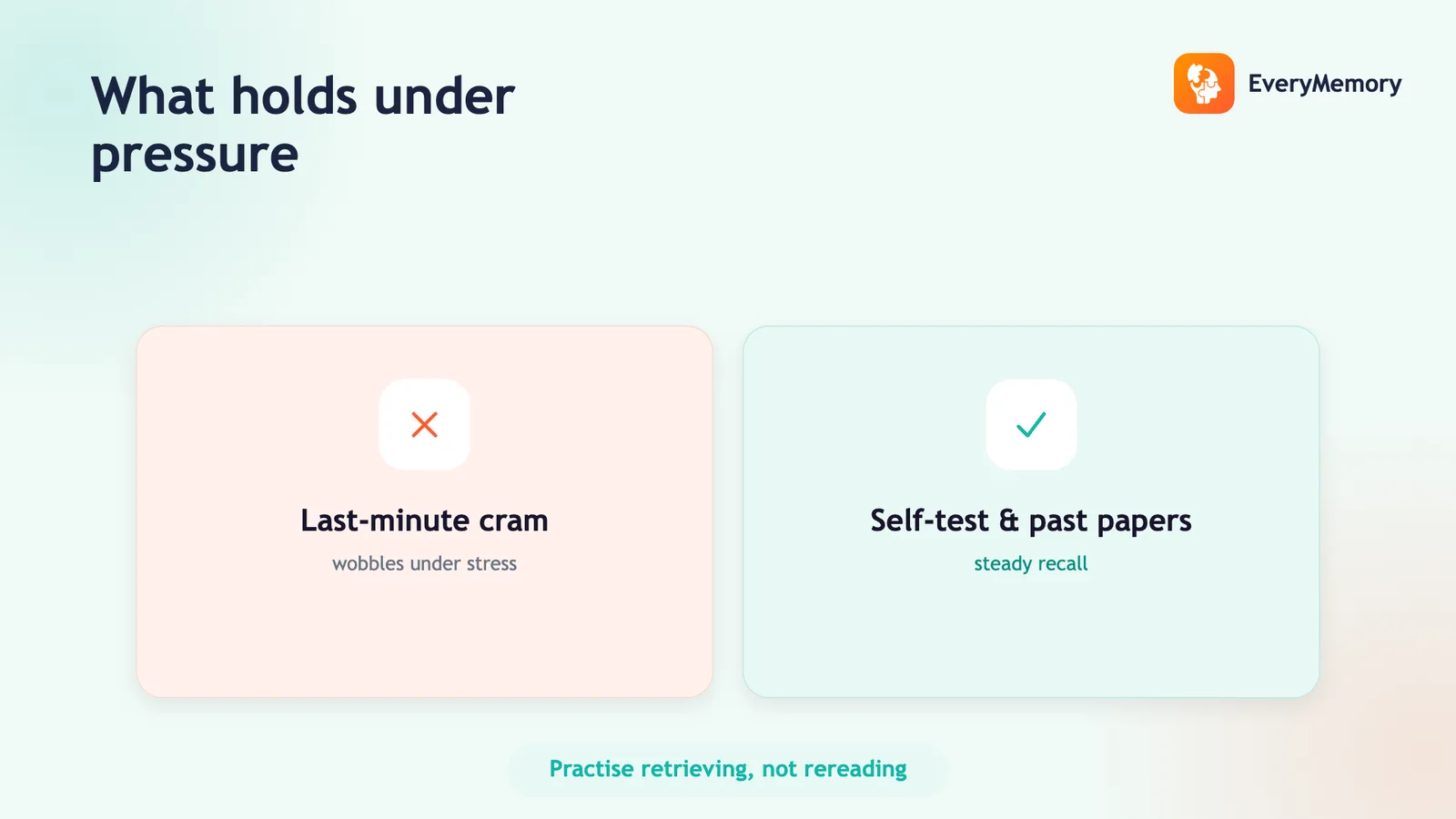
How to Memorise for Exams
Cramming feels productive and fails under pressure. What actually holds in an exam - self-testing, spacing, past papers, and mnemonics for the rote bits.
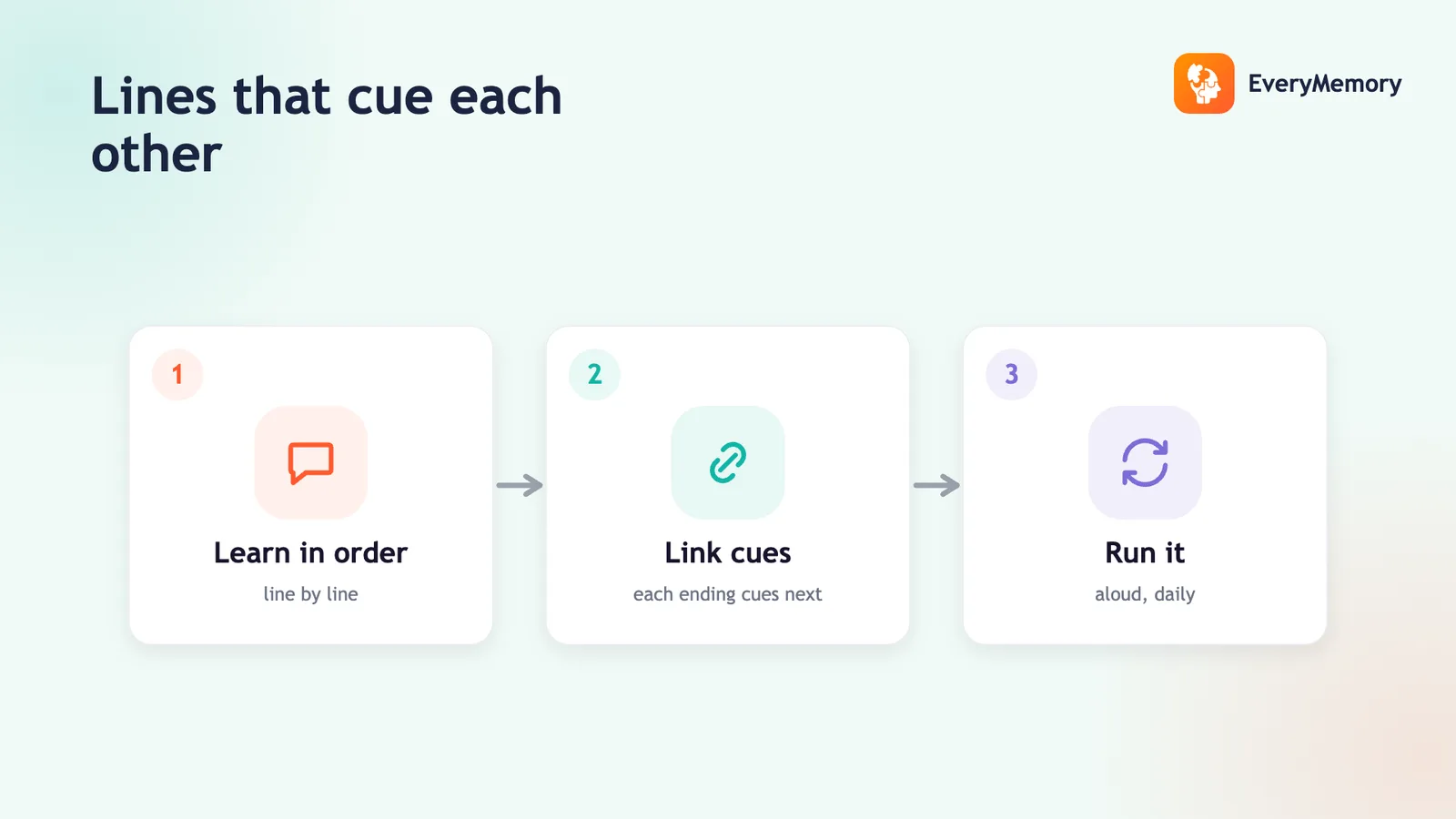
How to Memorize Lines (for Actors)
Actors memorize lines by learning cue-to-line links, not monologues in isolation - working off-book in stages and connecting each line to the action and intention behind it.
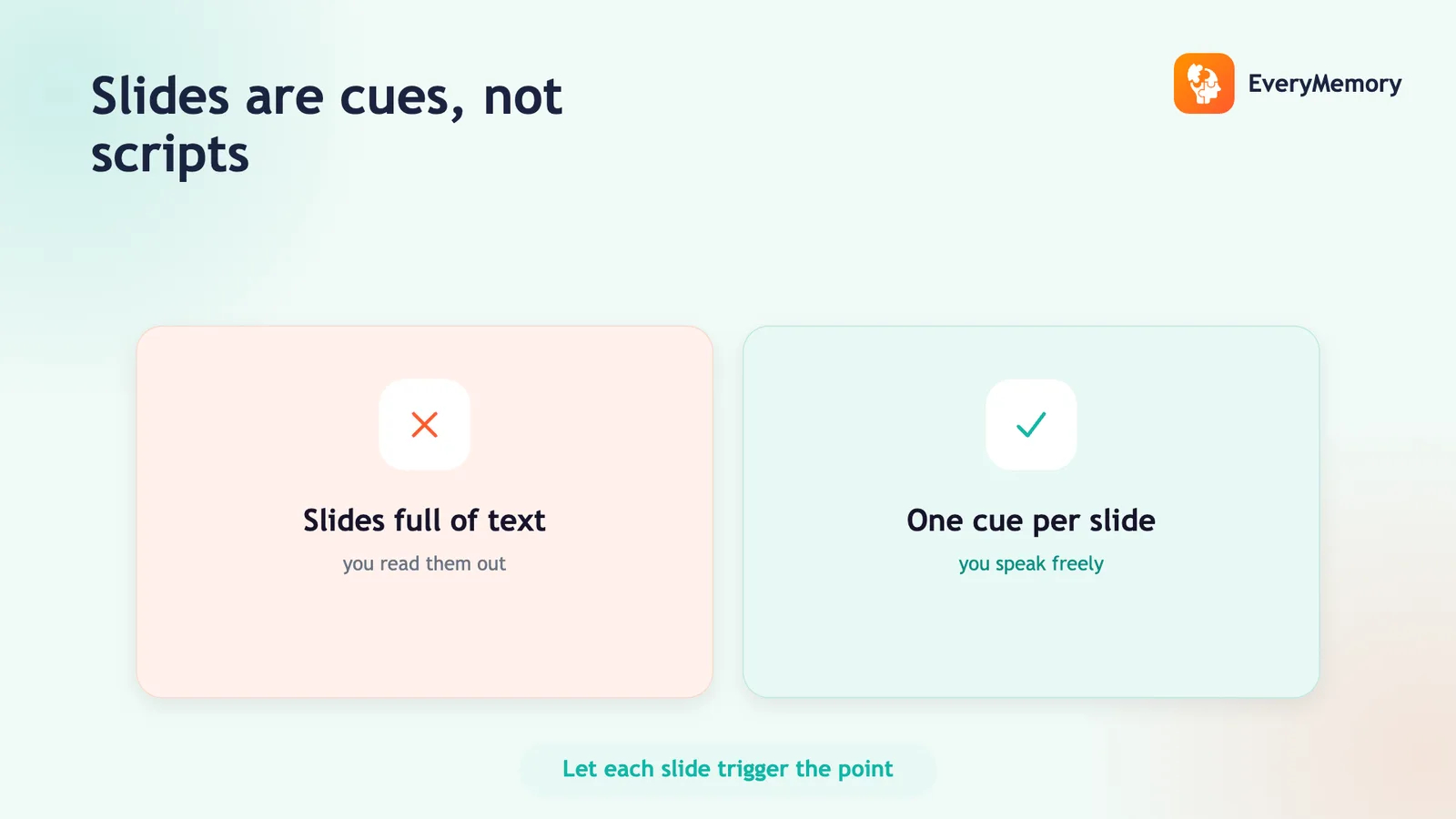
How to Remember a Presentation
Remember a presentation by letting your slides act as cues for talking points you've rehearsed - never reading the deck - and learning the flow as a sequence of ideas.
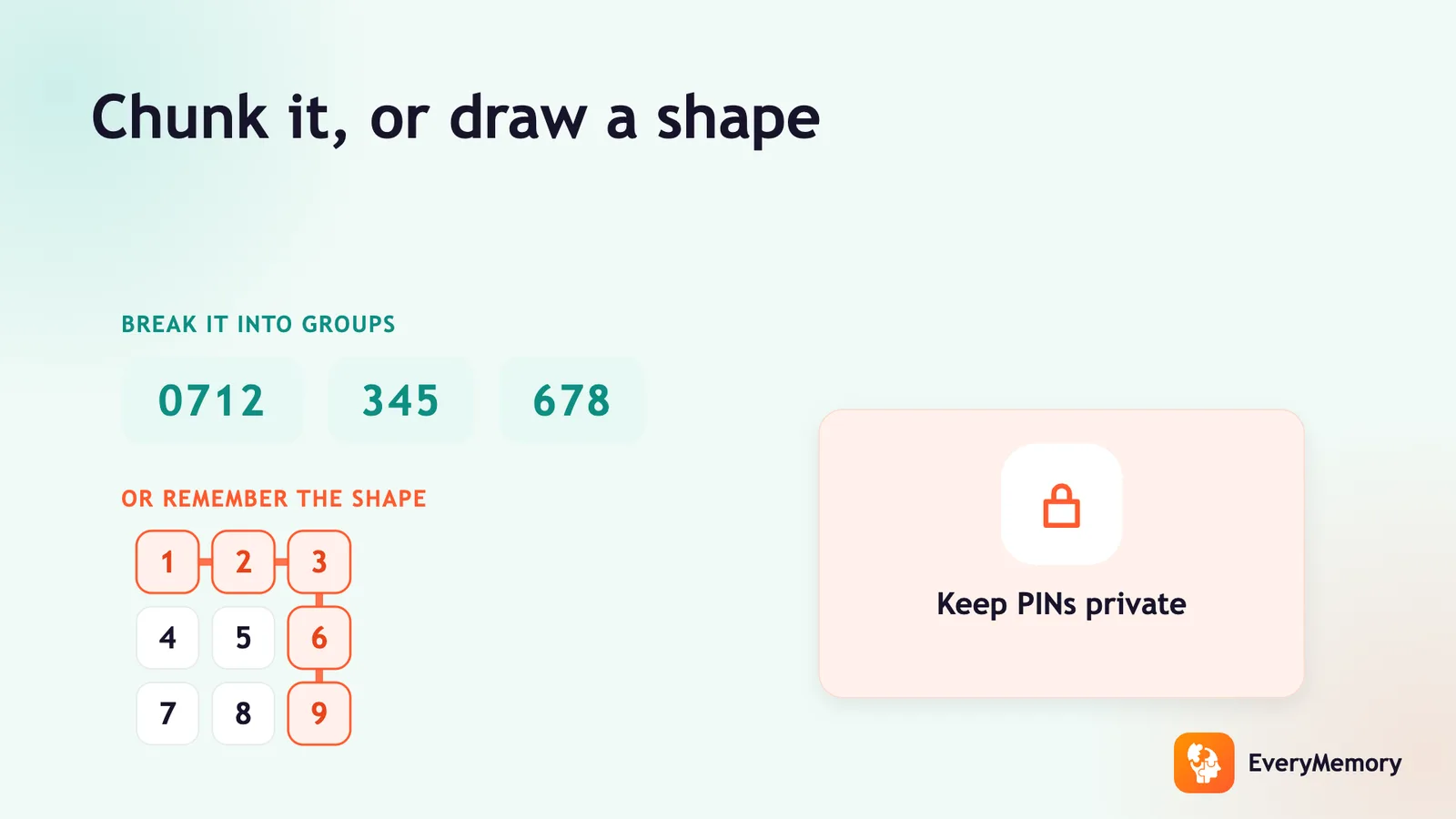
How to Remember Phone Numbers and PINs
Practical techniques for learning phone numbers and PINs by heart - using chunking, rhythm, and association - with a brief privacy note on keeping sensitive numbers safe.
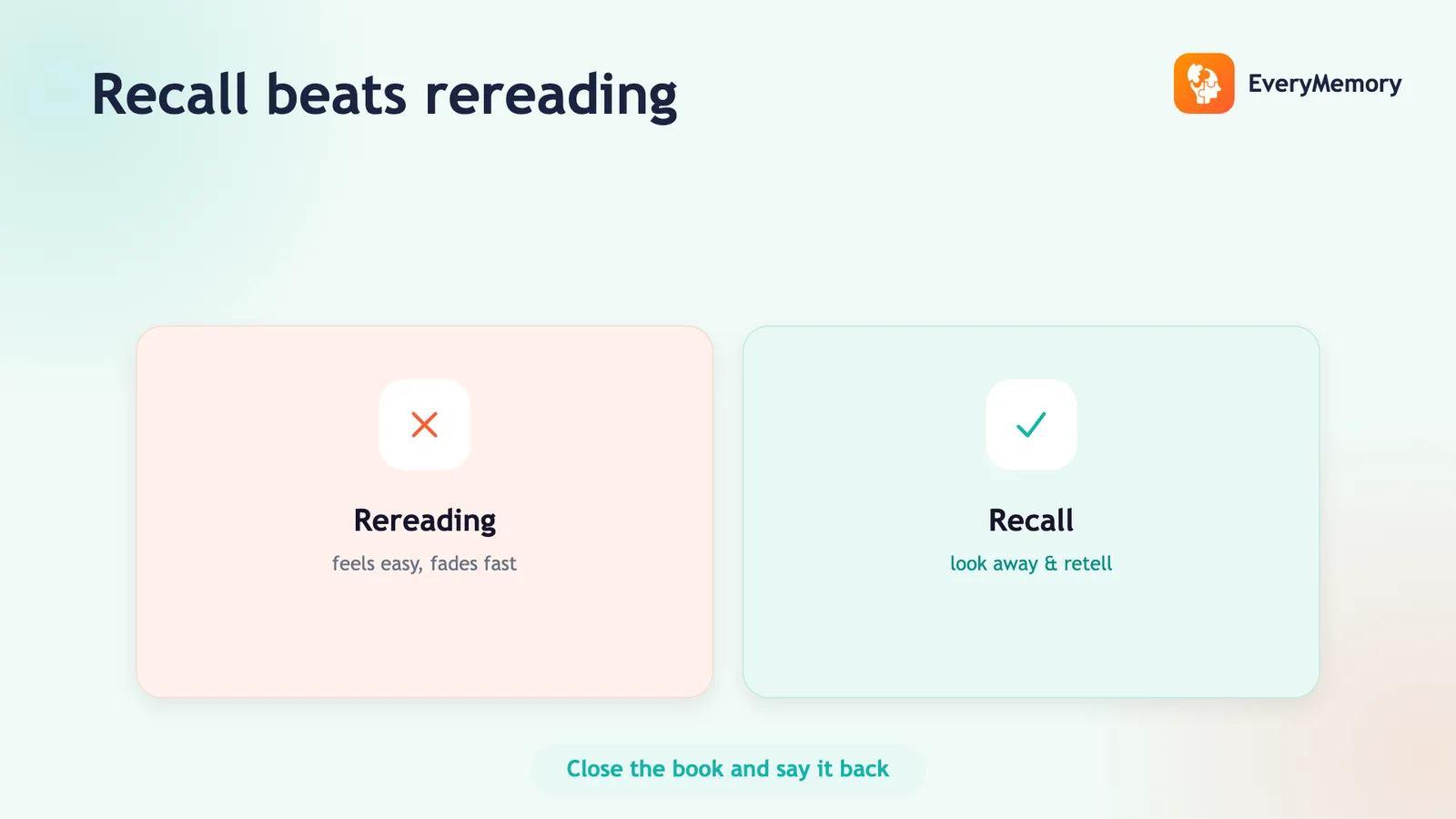
How to Remember What You Read
Most of what you read fades because reading is passive. Five concrete habits - built around recalling, not rereading - that make it stick.
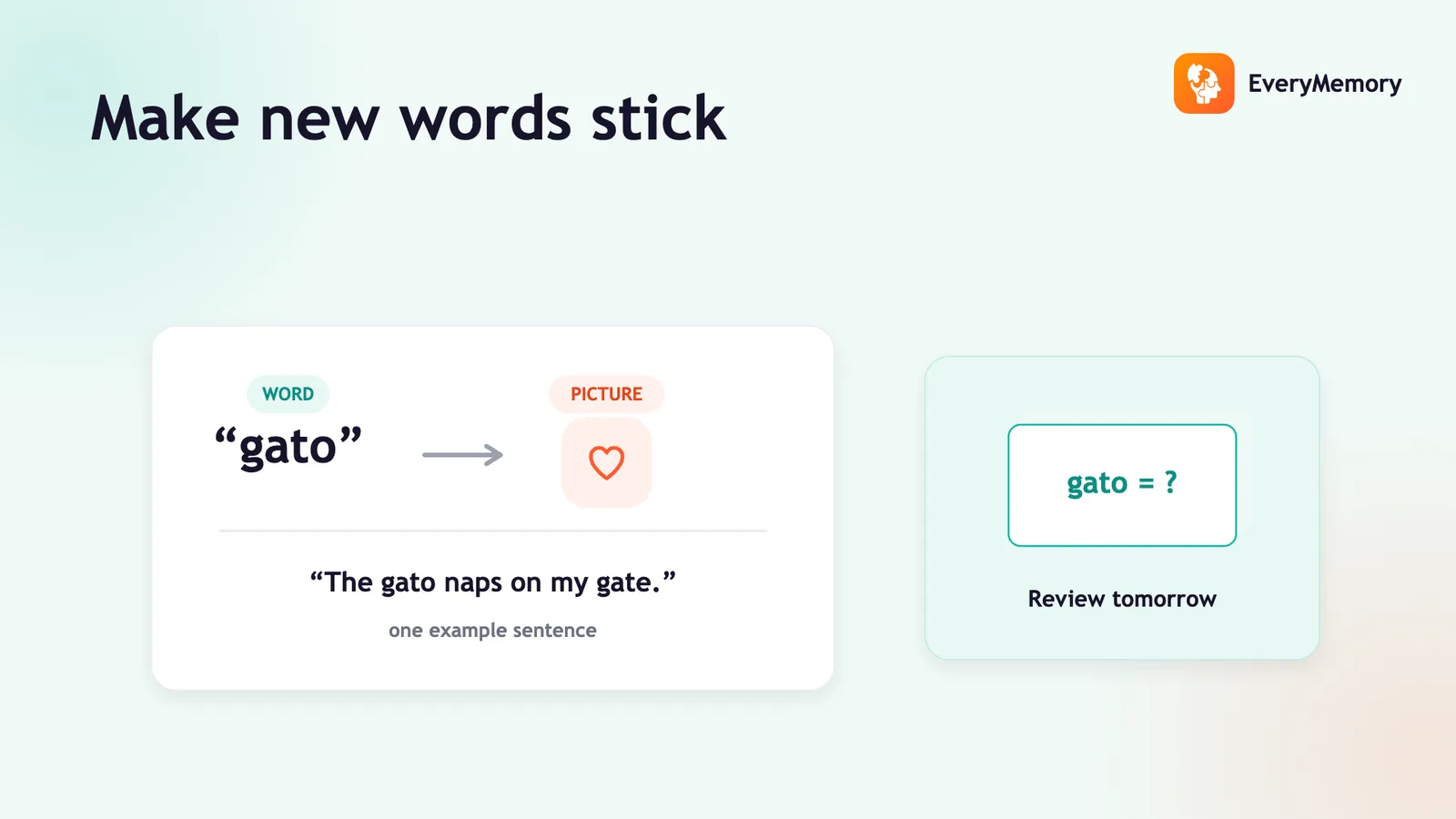
How to Remember New Words and Vocabulary
Whether you're learning a new language, studying plant names, or picking up professional terms, four proven methods make new vocabulary stick long-term.
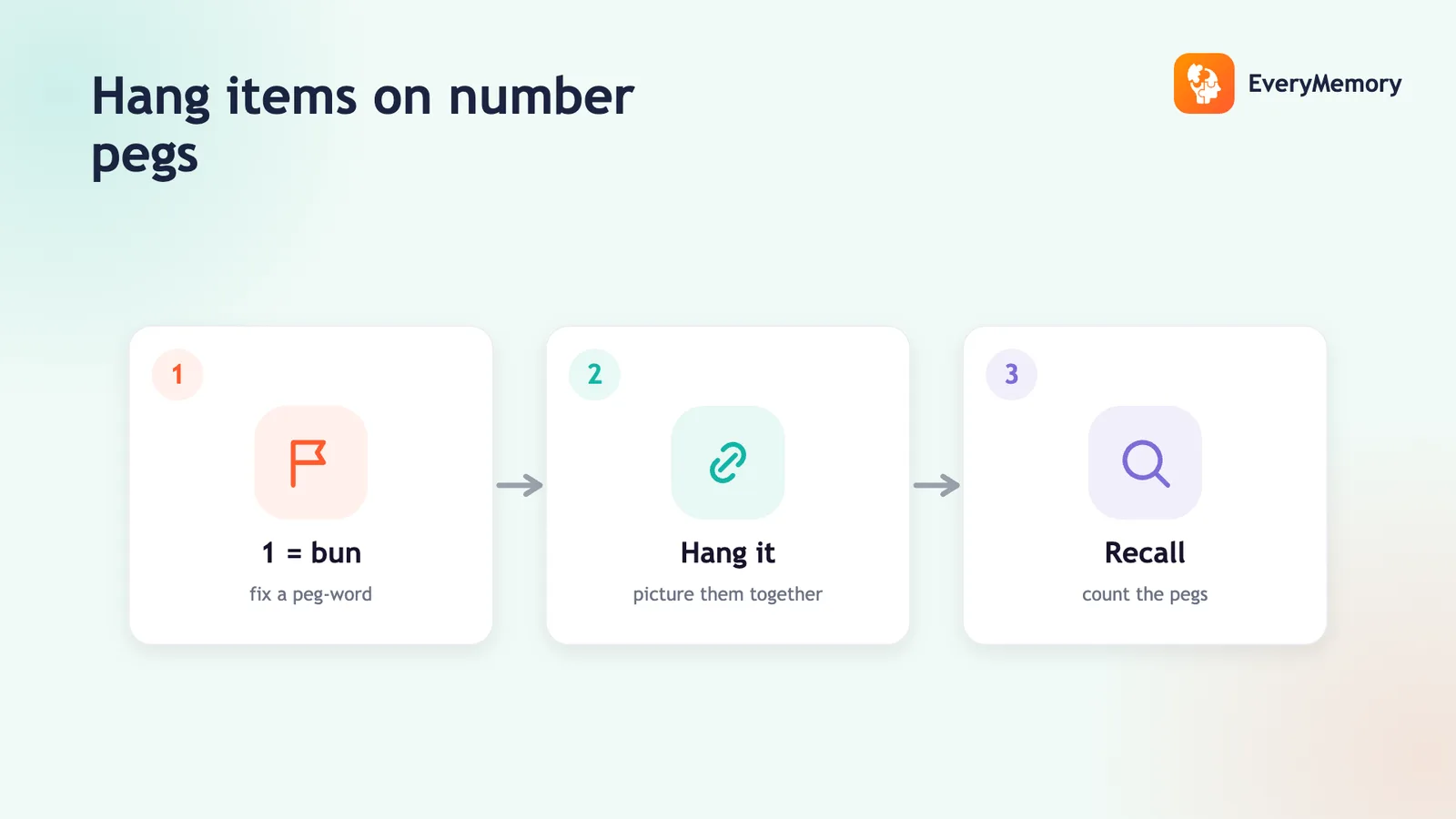
The Peg System: Remembering Ordered Lists
The peg system gives each number a fixed image to hang information on, so you can recall a list in order - or jump straight to item seven. Reusable forever.
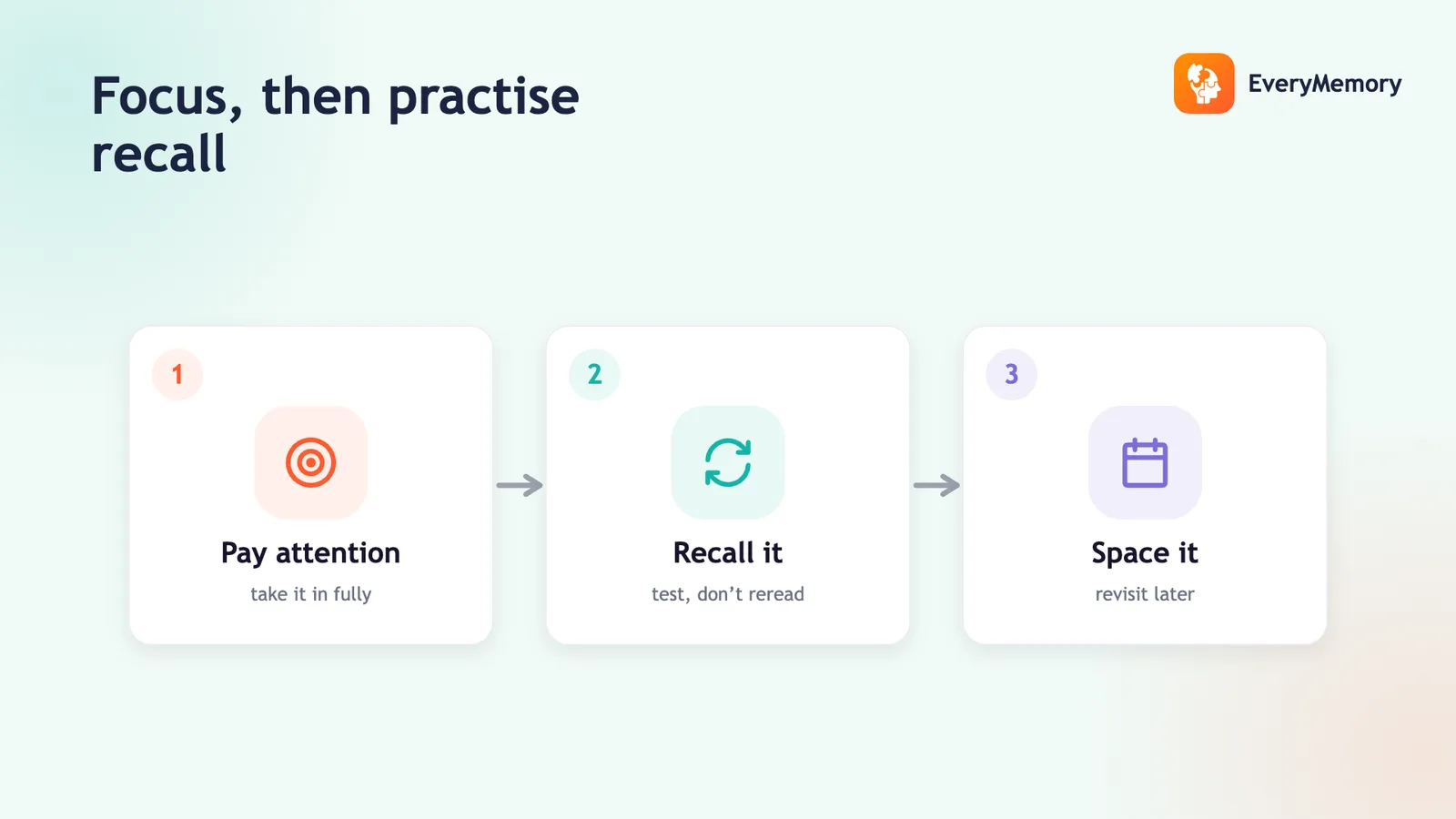
How to Remember Things Better
Most 'bad memory' is divided attention plus never practising recall. Five habits - built on how memory actually forms - that make things stick.
The Cornell Note-Taking Method, Explained Simply
The Cornell system divides your page into three zones and forces you to self-test from your own notes. Here is exactly how to set it up, fill it in, and use it for real recall.
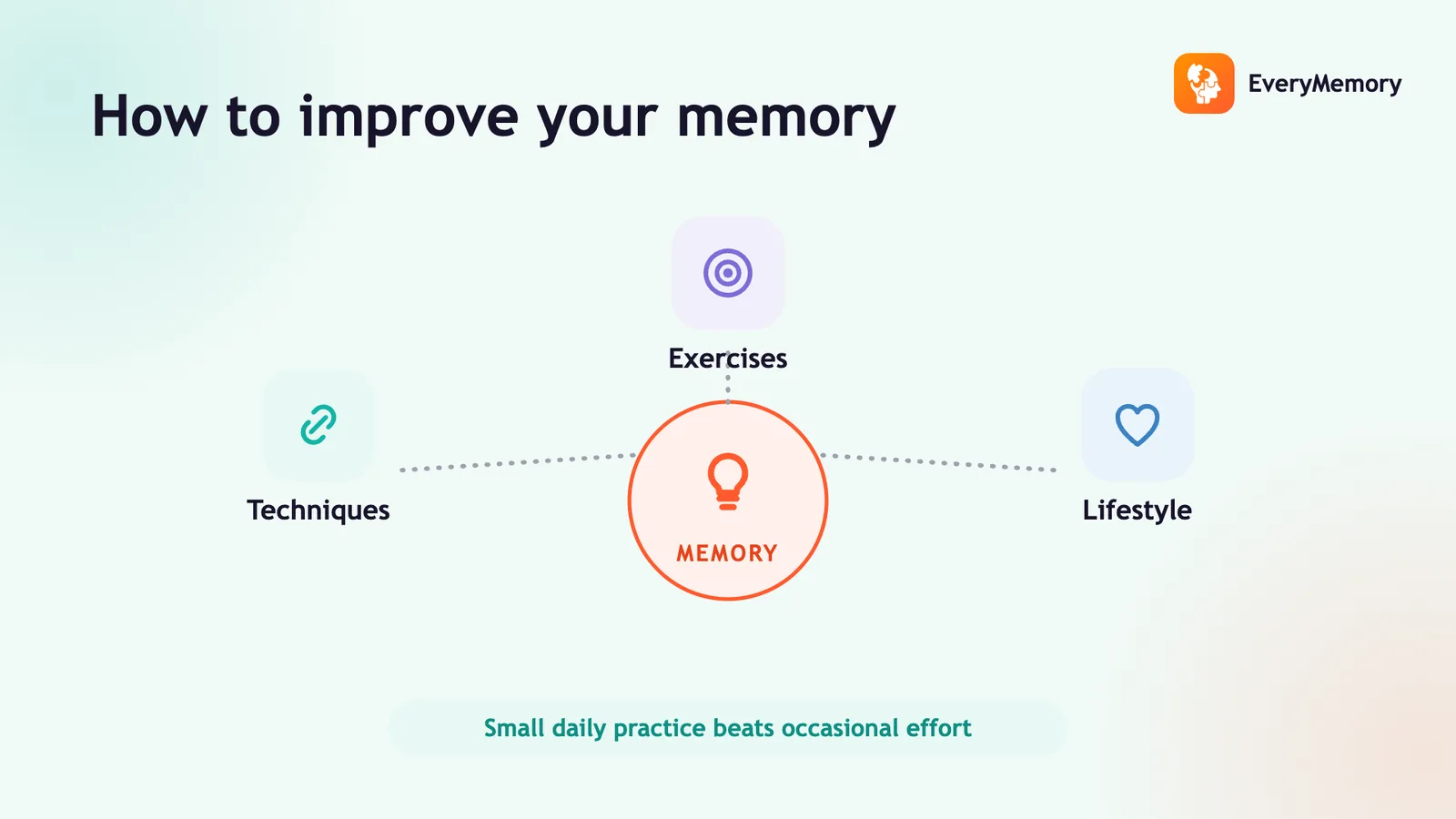
How to Improve Your Memory: The Complete Beginner's Guide
A comprehensive, beginner-friendly guide to improving your memory - how it works, the core techniques, a simple daily practice, and the lifestyle basics that make the biggest difference.
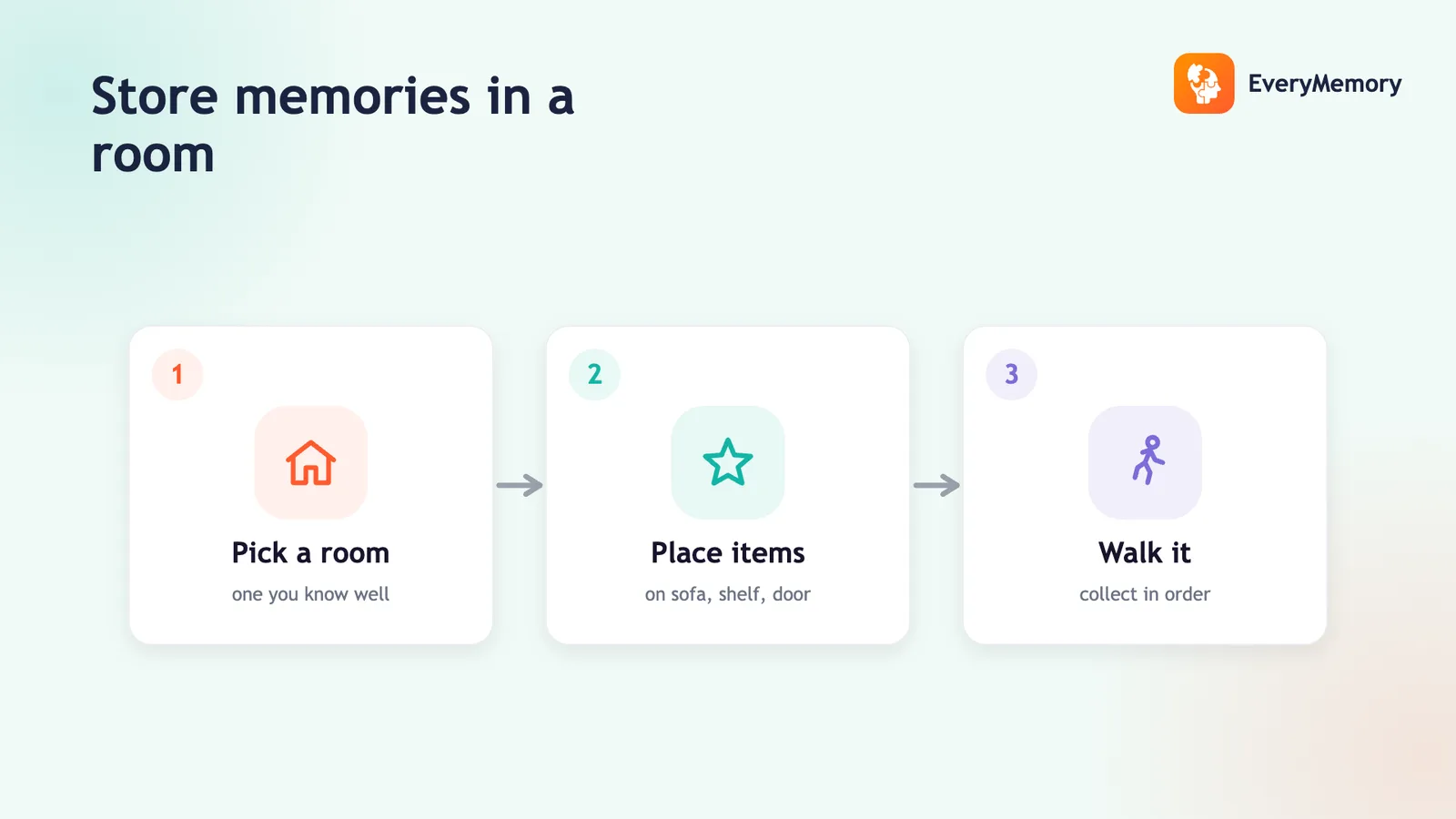
The Memory Palace Technique: A Step-by-Step Guide
The memory palace turns a place you know well into a storage system. Build your first one in minutes with this step-by-step guide, and learn what makes the images stick.
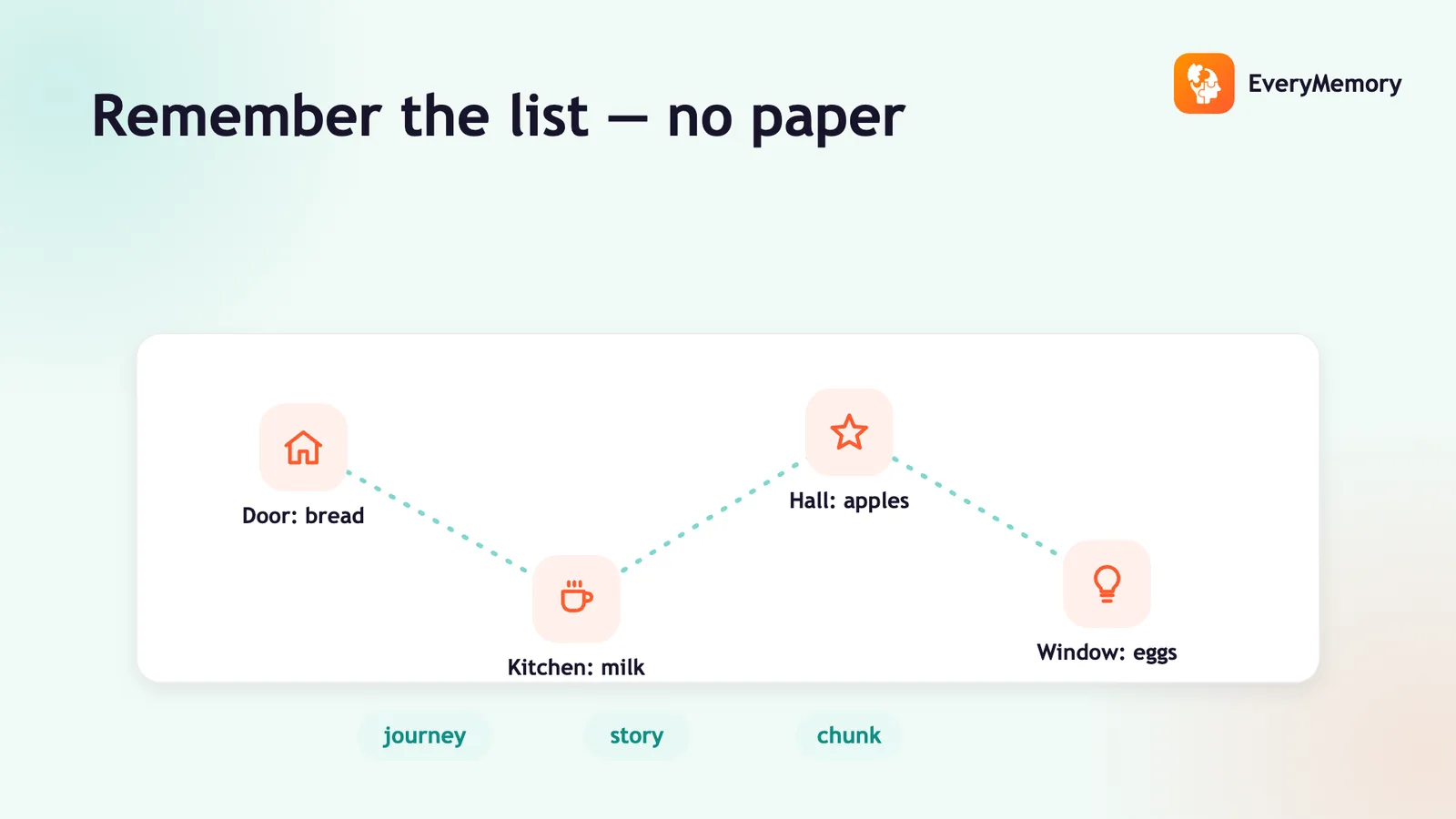
How to Remember a Shopping List Without Writing It Down
Four playful, proven memory techniques - a journey method, a silly story, aisle grouping, and association - turn an everyday errand into surprisingly good brain practice.
The Forgetting Curve: Why You Forget and How to Beat It
Hermann Ebbinghaus mapped exactly how fast memories fade - and the curve he discovered explains why cramming fails and how a simple review schedule can make almost anything stick.
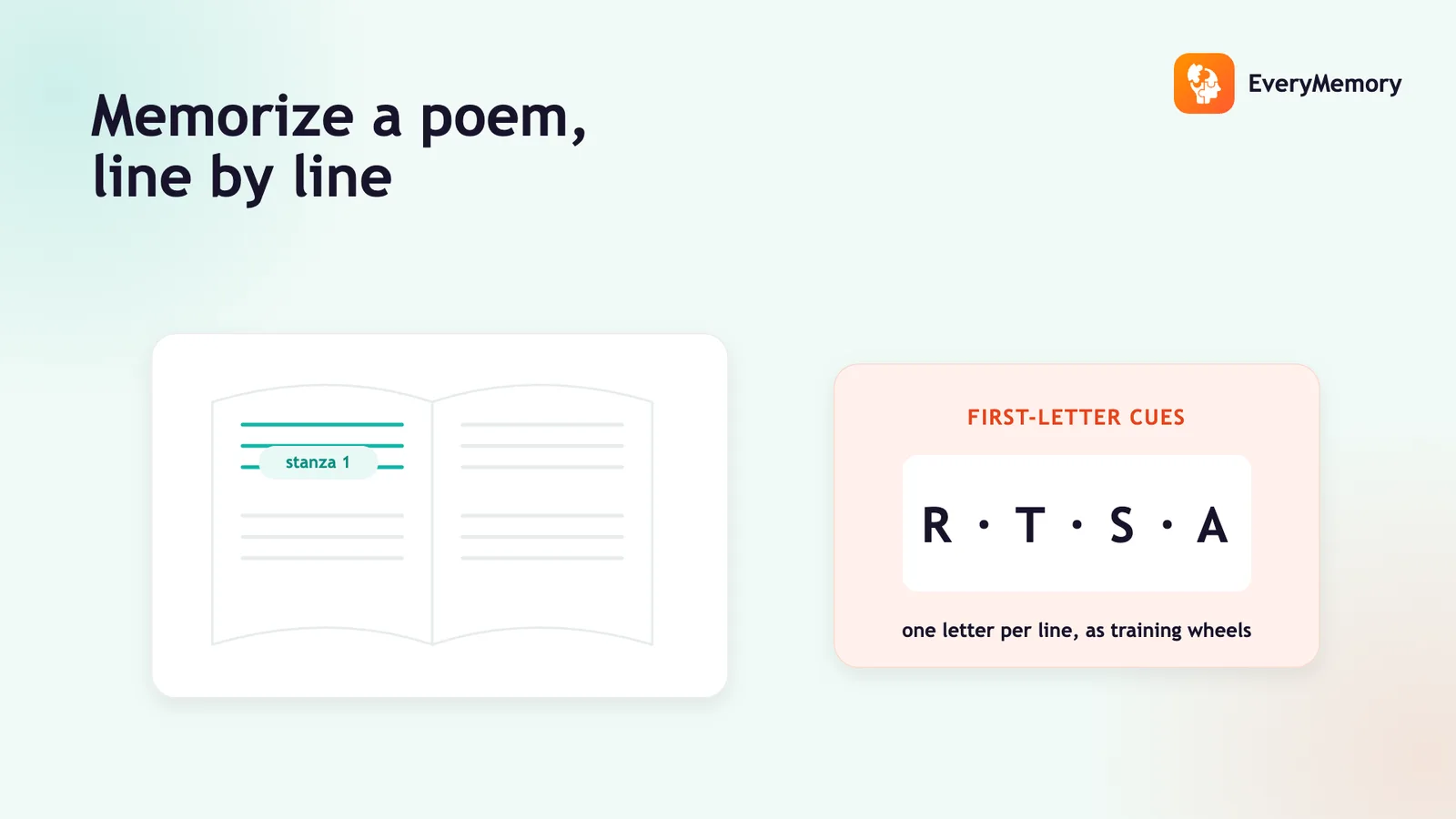
How to Memorize a Poem or Favourite Reading
Whether it's a poem you love, a wedding reading, or a passage of scripture, these gentle step-by-step techniques make memorizing meaningful text feel manageable - and even joyful.
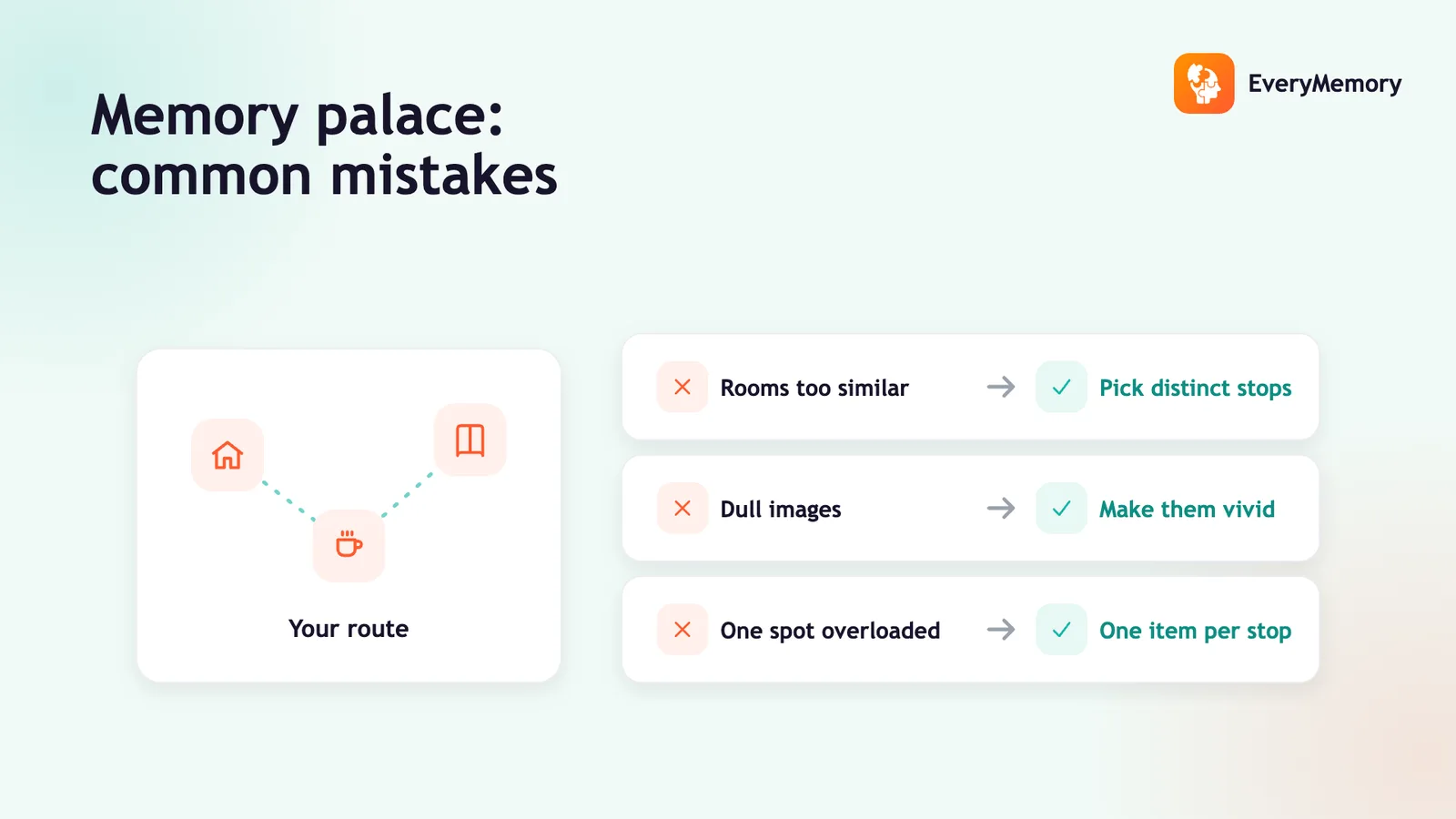
Memory Palace Mistakes - and How to Fix Them
The memory palace is one of the most powerful recall tools ever devised - but five common mistakes quietly undermine it. Here is how to spot and fix each one.
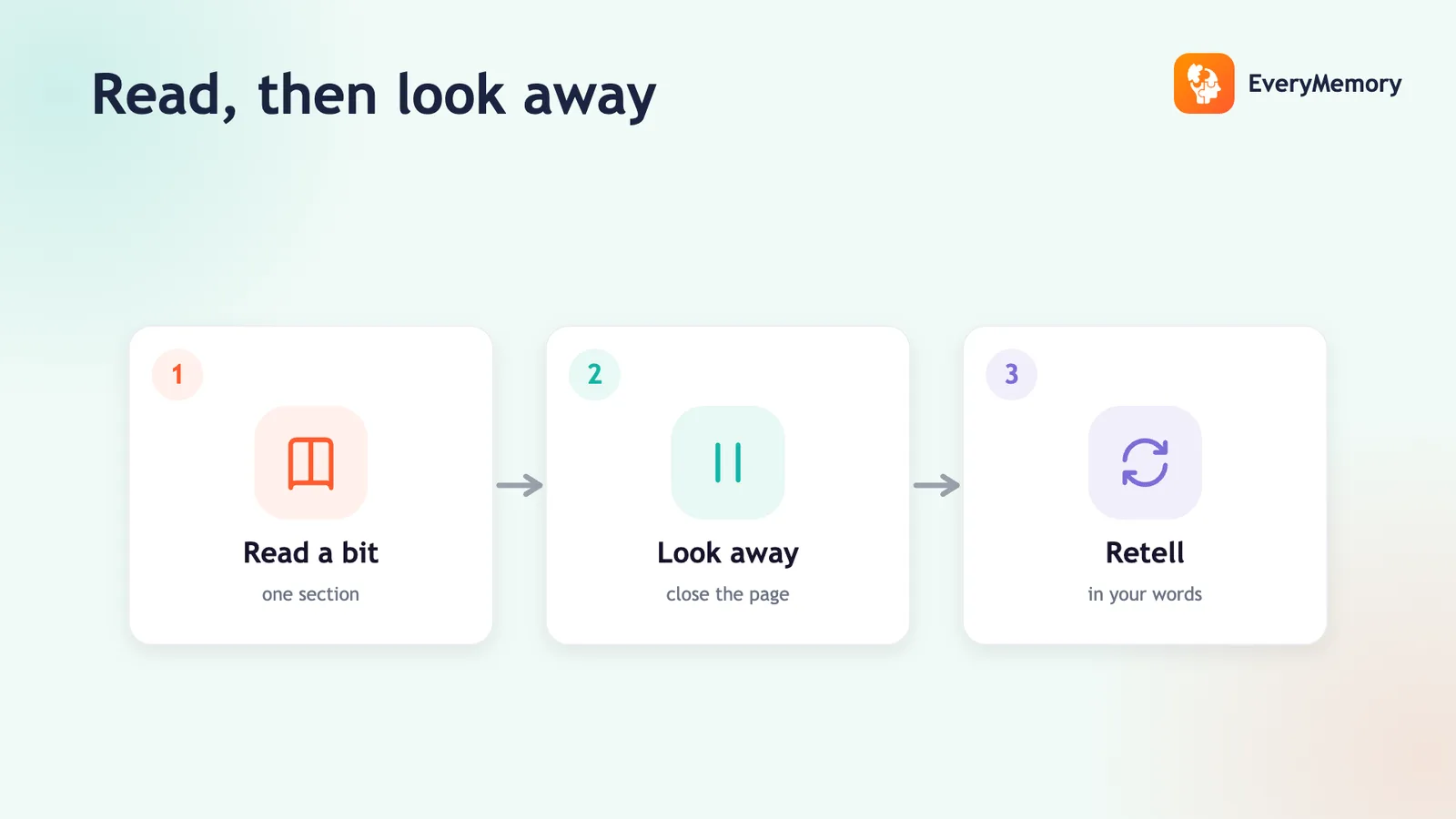
How to Remember More of What You Read
Remember more of what you read by reading actively - previewing, questioning, then closing the book to recall - instead of passively running your eyes over the page.
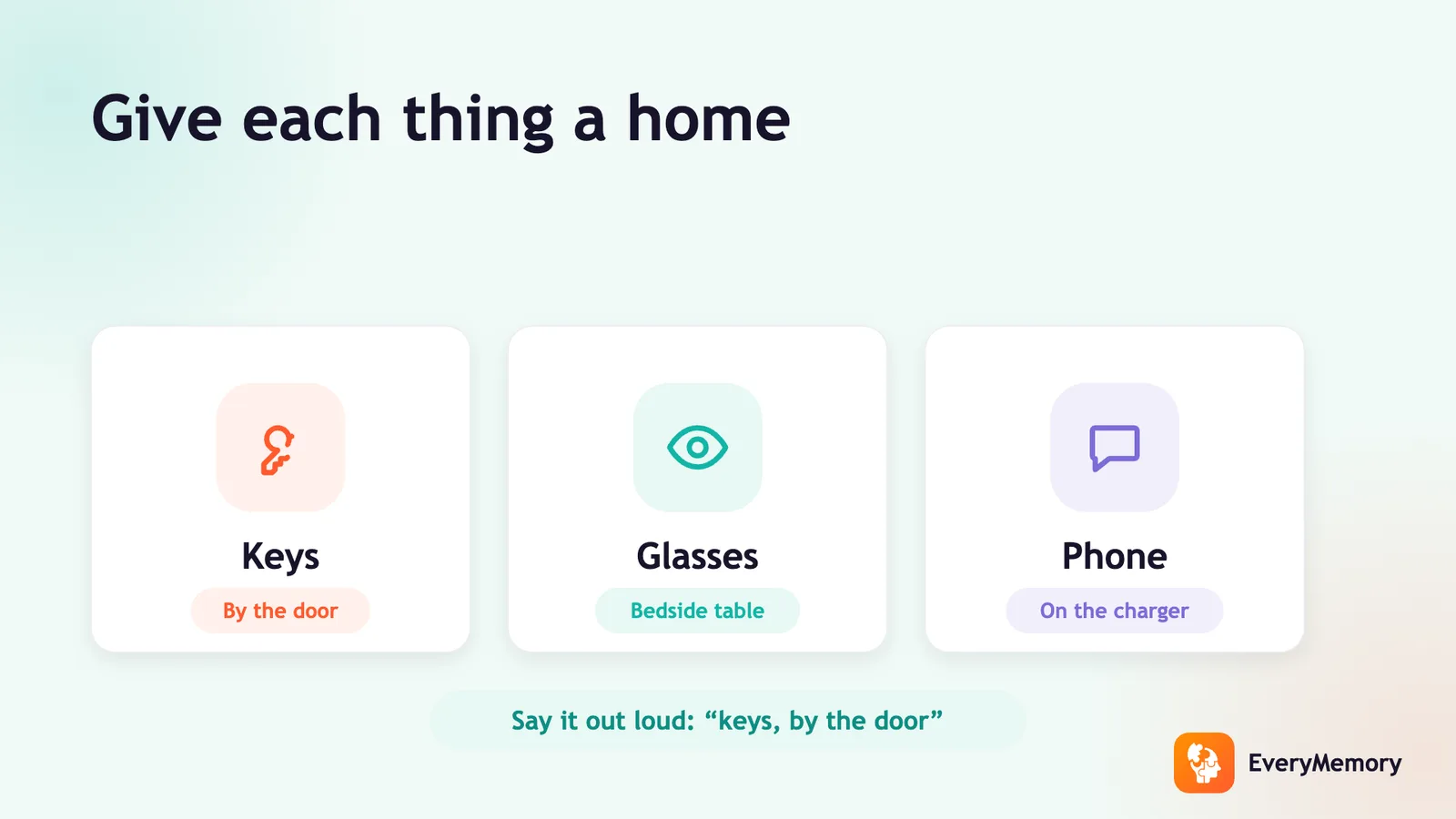
How to Remember Where You Put Things
A practical system for ending the daily hunt for keys, glasses, and phones - using designated homes, a brief verbal habit, and a simple mental snapshot.
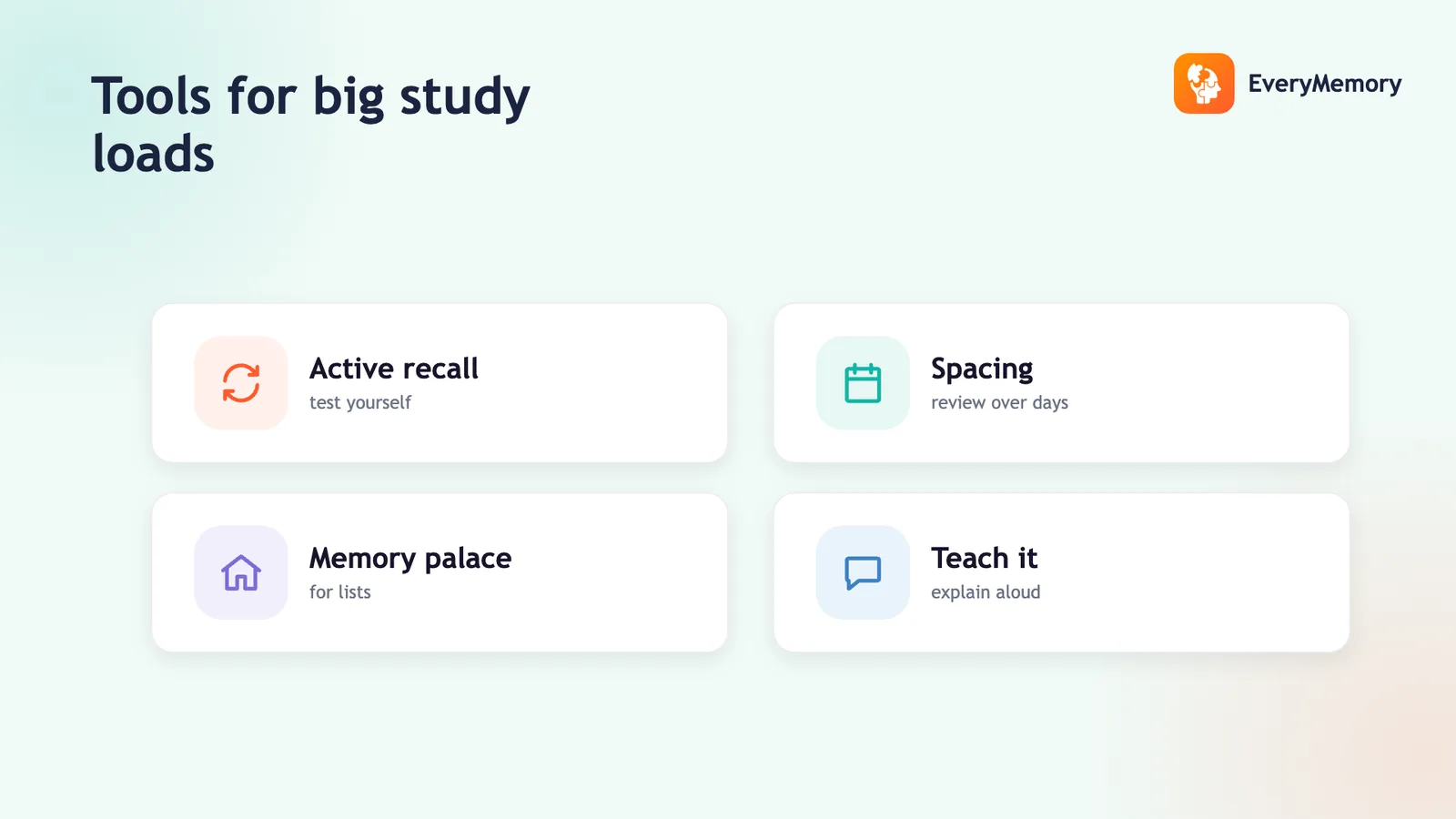
Memory Tips for Medical Students
Memory tips for medical students: use active recall and spaced repetition for sheer volume, mnemonics for arbitrary lists, and memory palaces for anatomy and pathways.
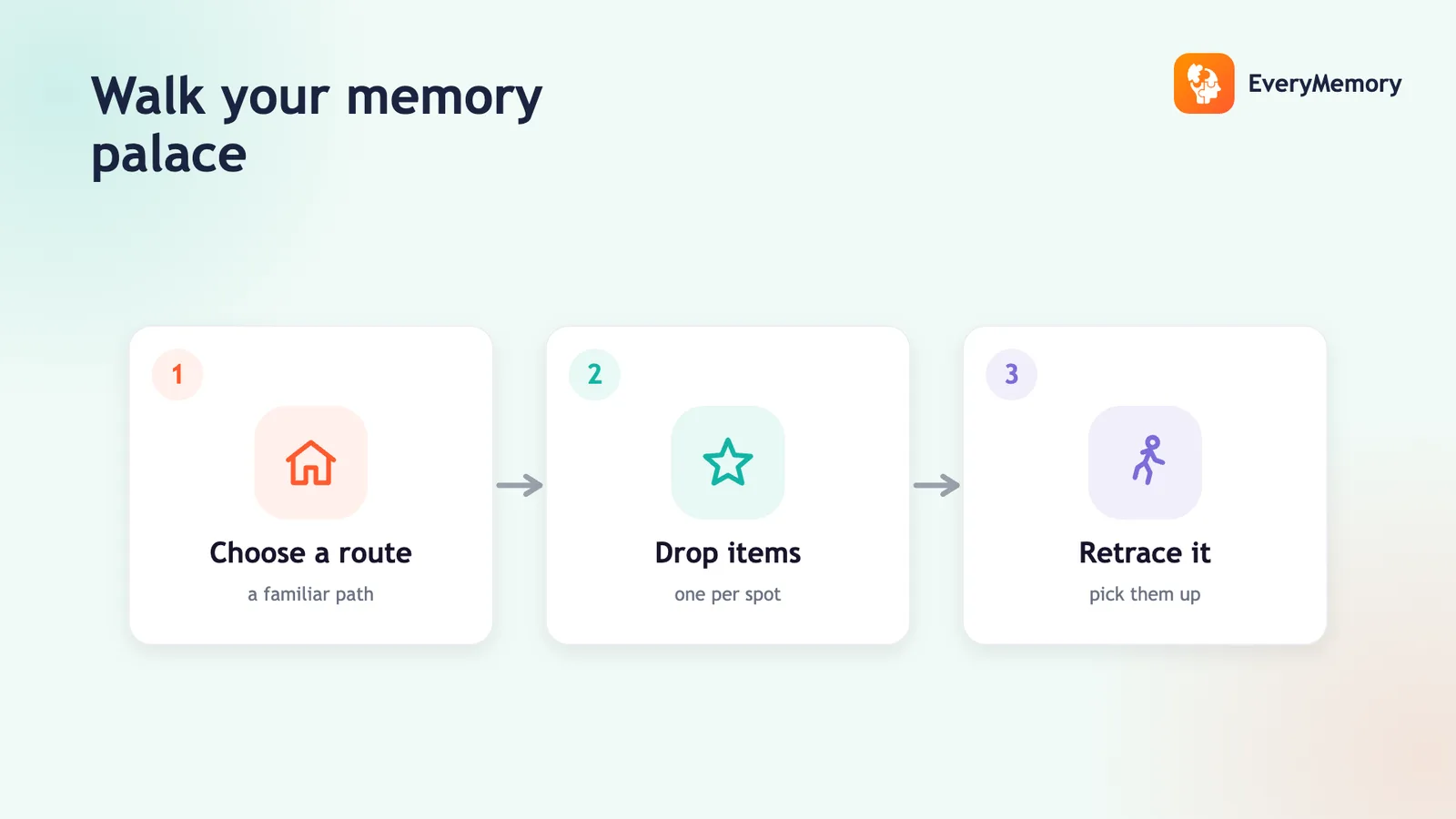
The Method of Loci (Memory Palace), with Examples
The method of loci stores information along a familiar mental route. What it is, why it has worked since ancient Greece, and a clear worked example.
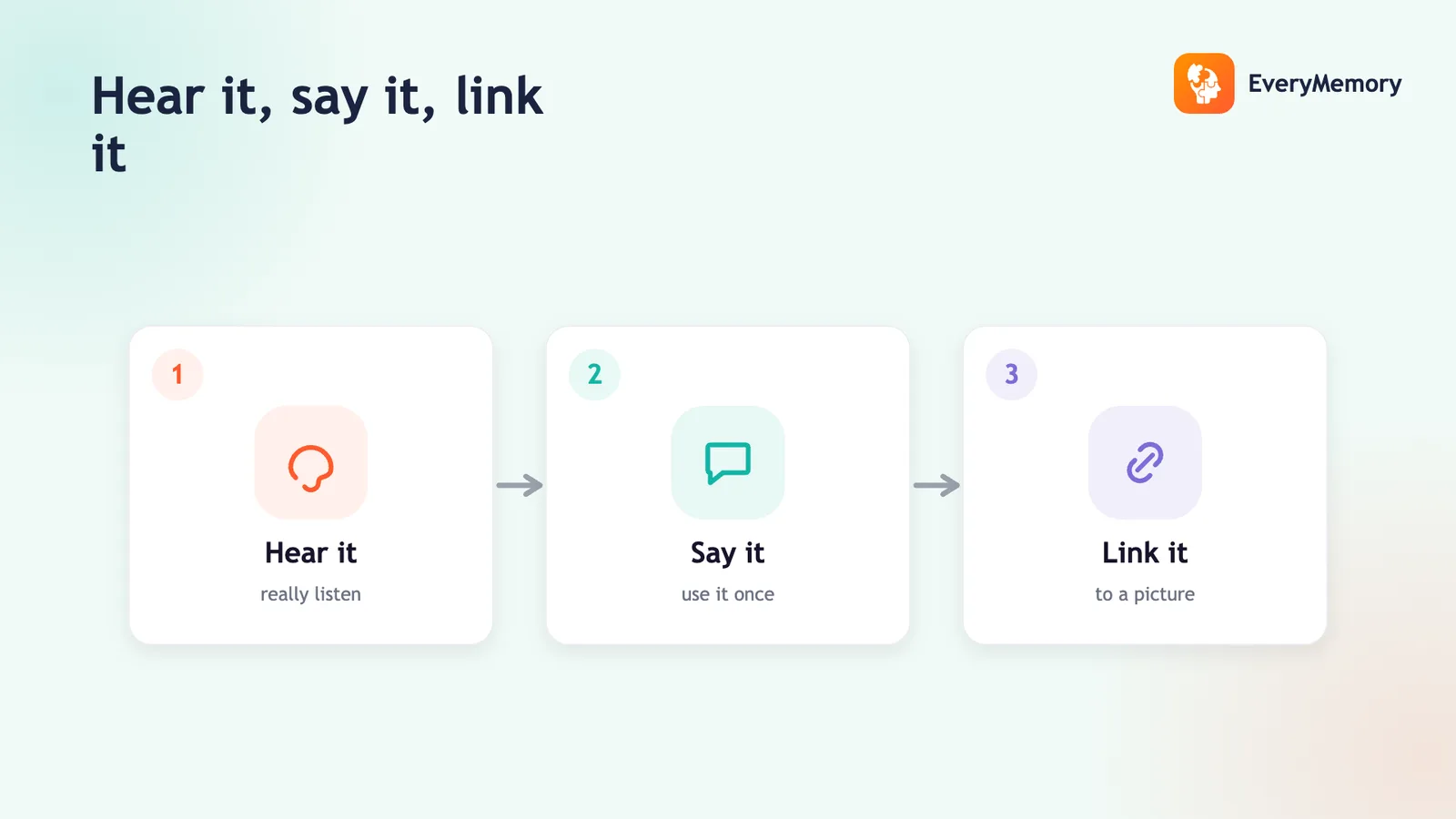
How to Remember Names Easily
Names slip because they're arbitrary. Three quick moves at the introduction - hear it, say it, link it - that make almost any name stick.
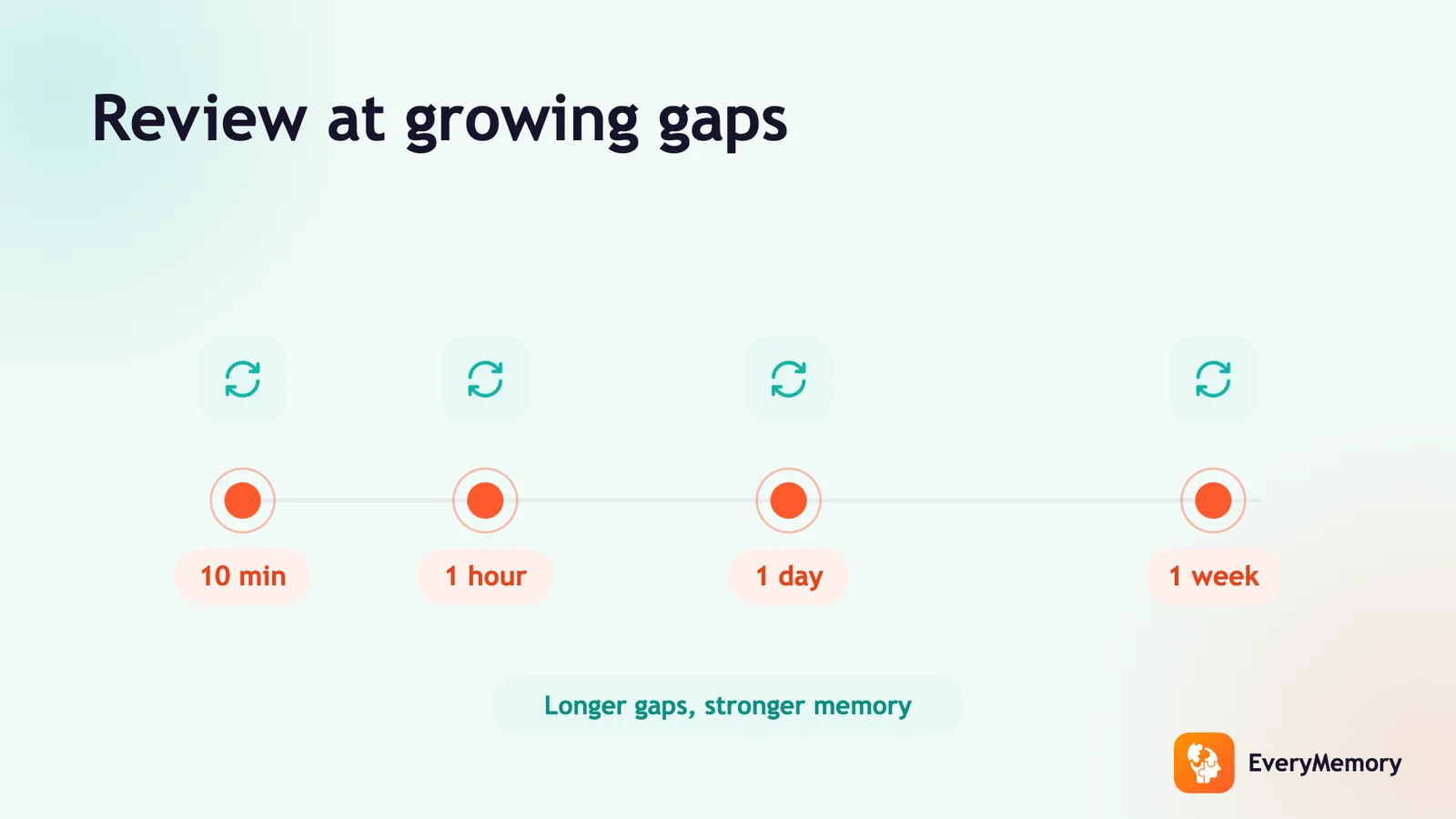
Spaced Repetition for Everyday Memory
Spaced repetition is the most evidence-backed way to make information stick long-term. Here's how to use it for names, appointments, medication, and anything else worth remembering.
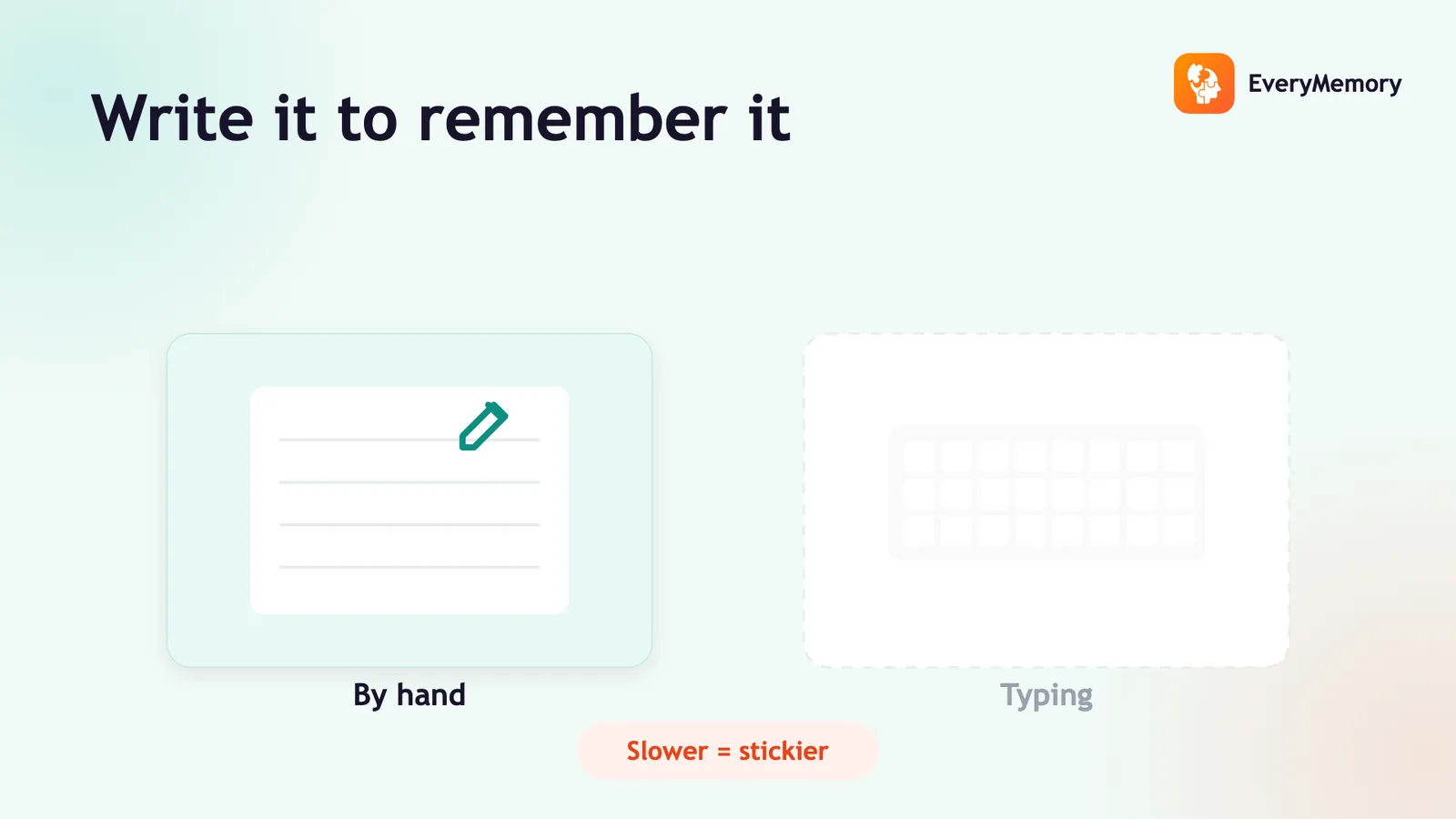
Does Writing by Hand Help You Remember?
Picking up a pen instead of a keyboard might seem old-fashioned, but research suggests handwriting helps your brain encode information more deeply - here's why and how to use it.
Interleaving: A Smarter Way to Practice and Study
Mixing different topics in one session feels chaotic and slow - but research consistently shows it produces stronger long-term retention than the tidy, one-topic-at-a-time approach most people use.
Memory Tips for Public Speaking
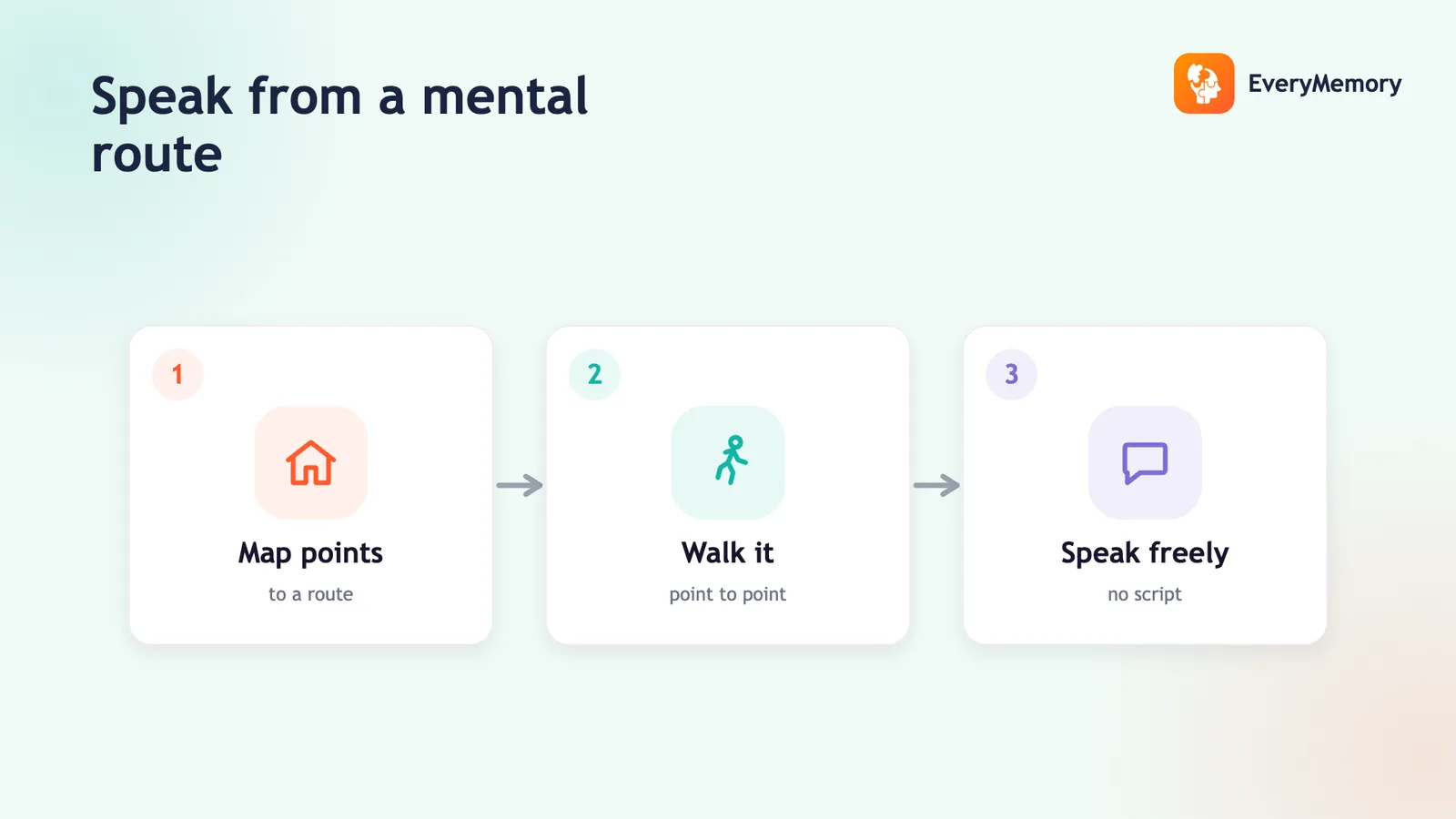
Memory tips for public speaking: speak from a structured outline anchored to a mental route, rehearse out loud, and build recovery cues so a blank never becomes a freeze.
Mind Mapping for Memory and Study
Mind mapping organises information the way your brain actually stores it - as a web of connected ideas, not a list. Here is how to build maps that make material stick.
The Leitner Flashcard System: Low-Tech Spaced Repetition
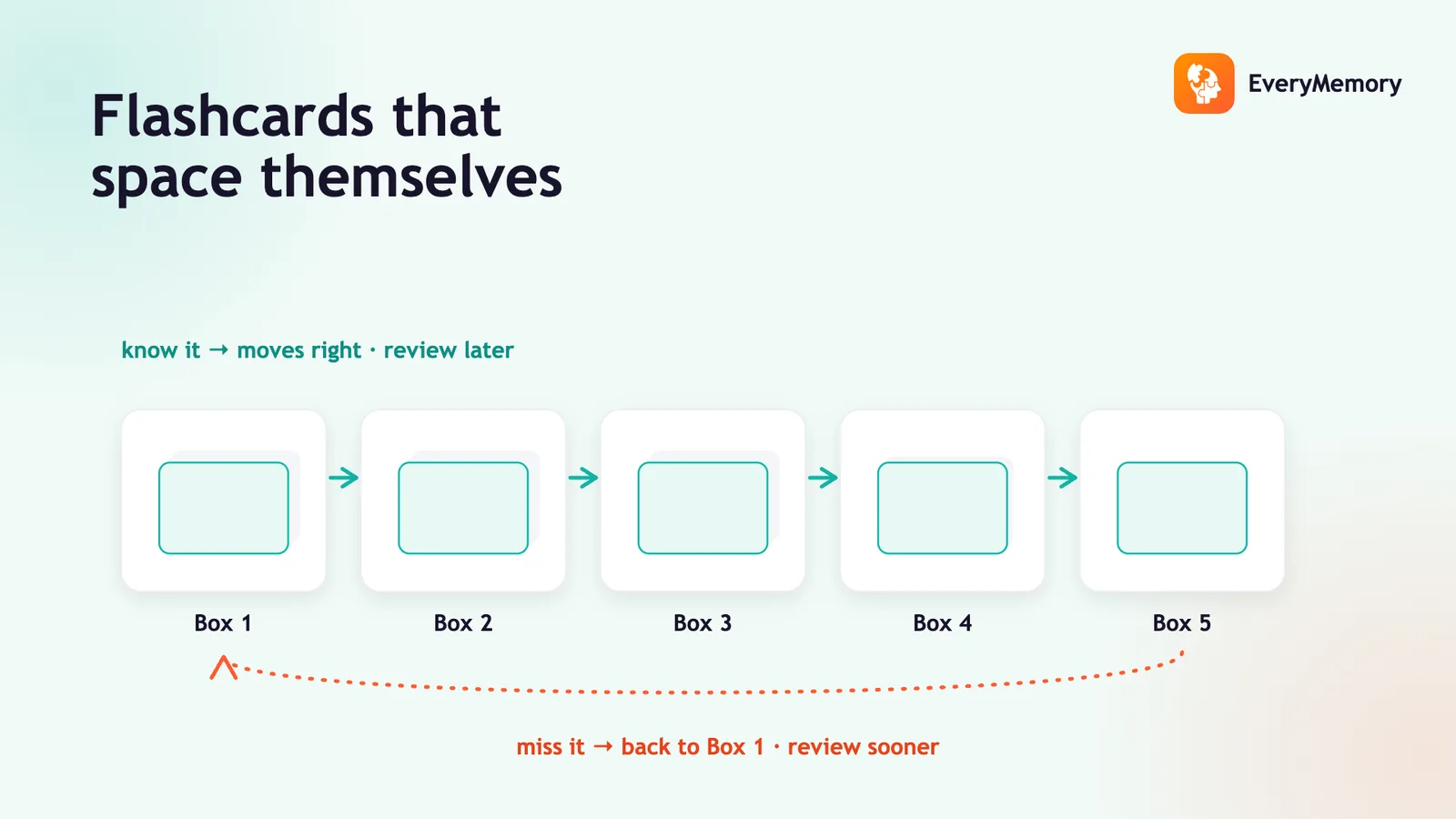
The Leitner system turns a shoebox and a stack of index cards into a surprisingly powerful memory tool - here is how the box method works and why it still holds up.
Memory Techniques for Studying That Actually Work
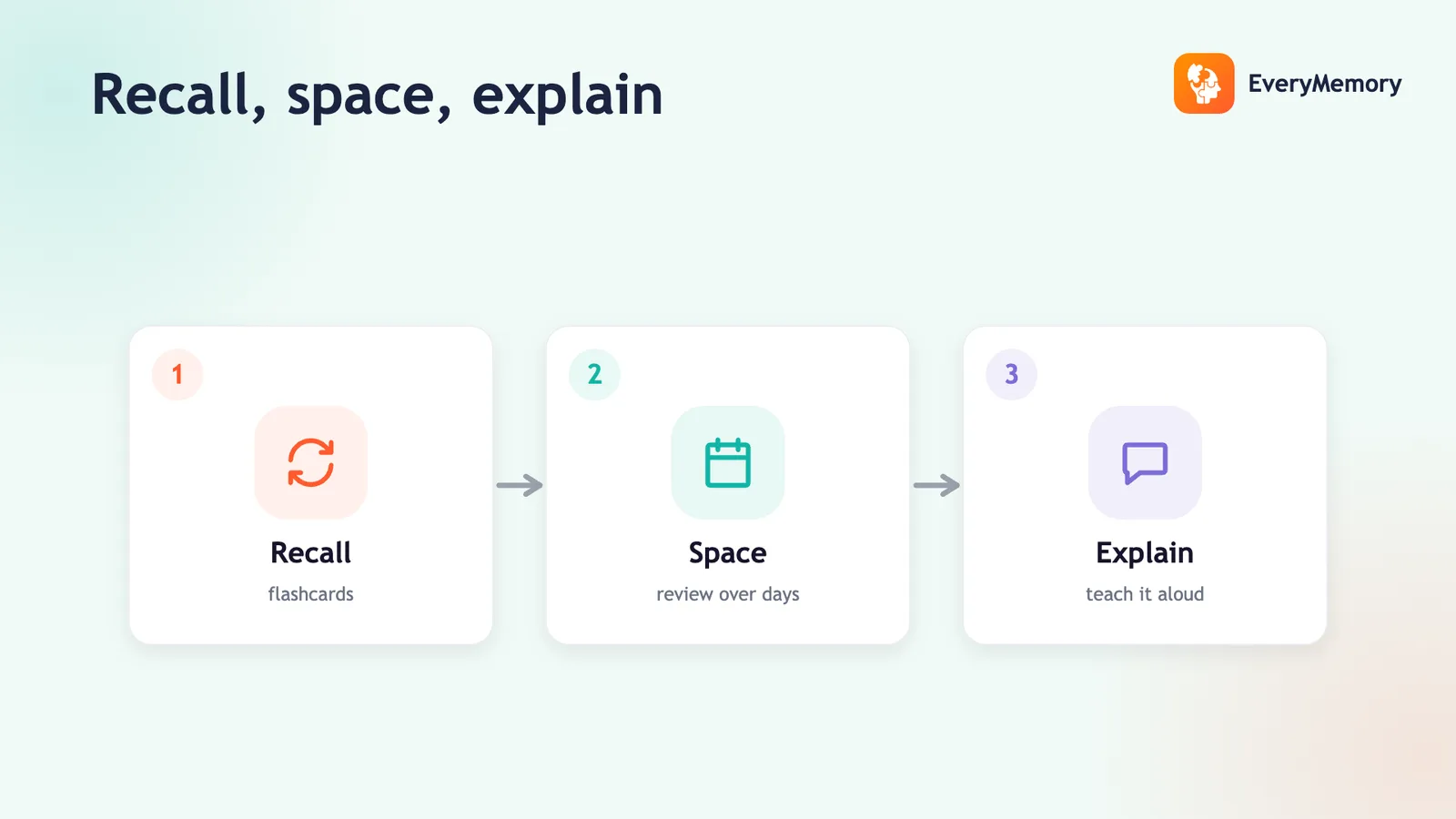
The biggest study wins aren't mnemonics - they're active recall, spacing, and explaining ideas. Where each technique fits, and the habits to drop.
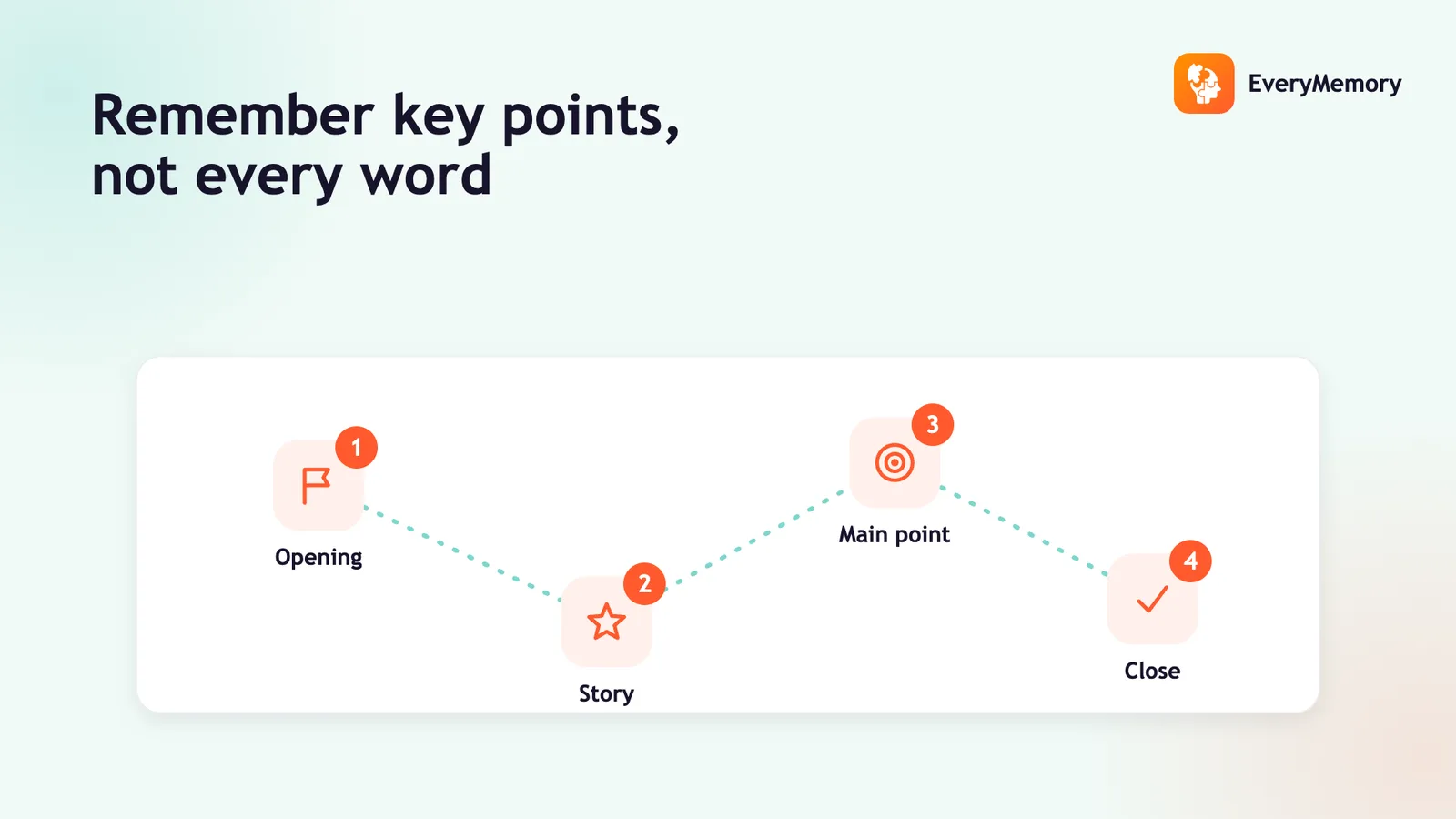
How to Remember a Speech or What to Say
Whether it's a wedding toast, a doctor's appointment, or a few words at a family gathering, these practical techniques help you speak confidently without blanking.
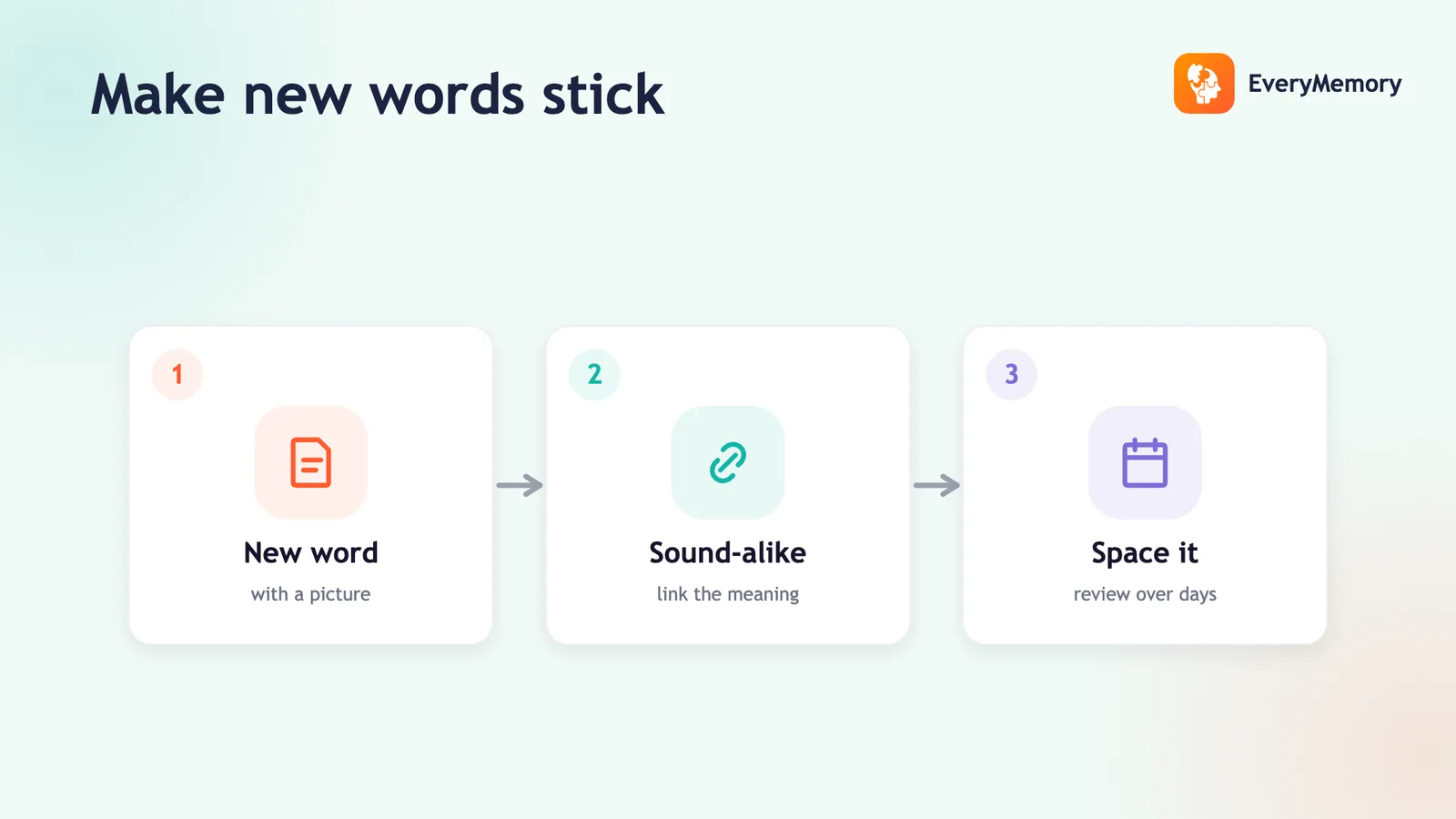
How to Memorize Vocabulary
Memorize vocabulary with spaced repetition and vivid association: link each new word to a sound-alike image and meaning, then review on an expanding schedule.
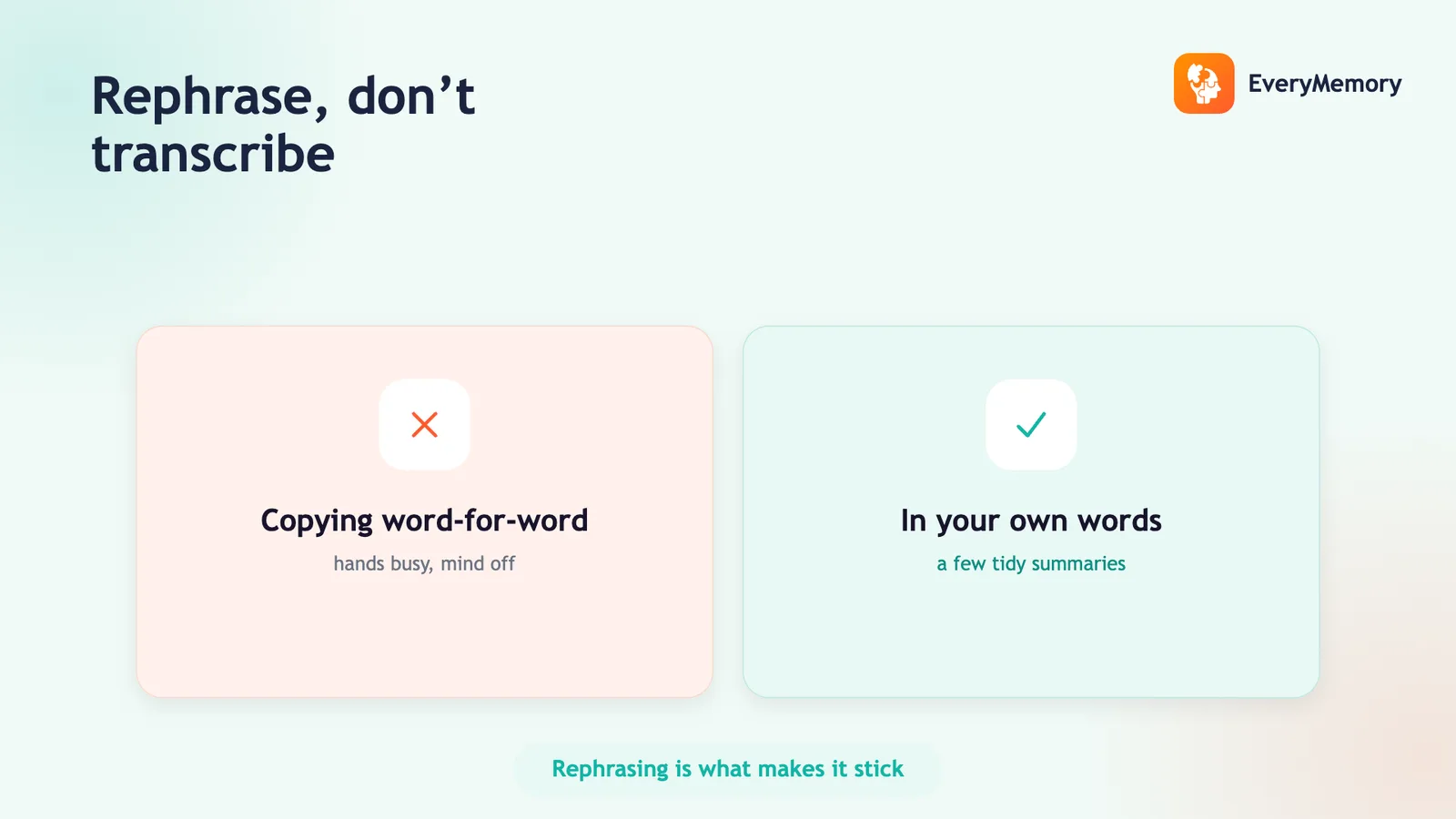
How to Take Notes That Help You Remember
Notes help memory when they make you process and rephrase, not transcribe. How to take notes worth reviewing - and why the review matters more than the notes.
The Feynman Technique: Learn Anything by Explaining It Simply
If you cannot explain a concept in plain words, you have not learned it - you have only memorized the shape of it. The Feynman Technique fixes that in four concrete steps.
Memory Improvement Books: Where to Start
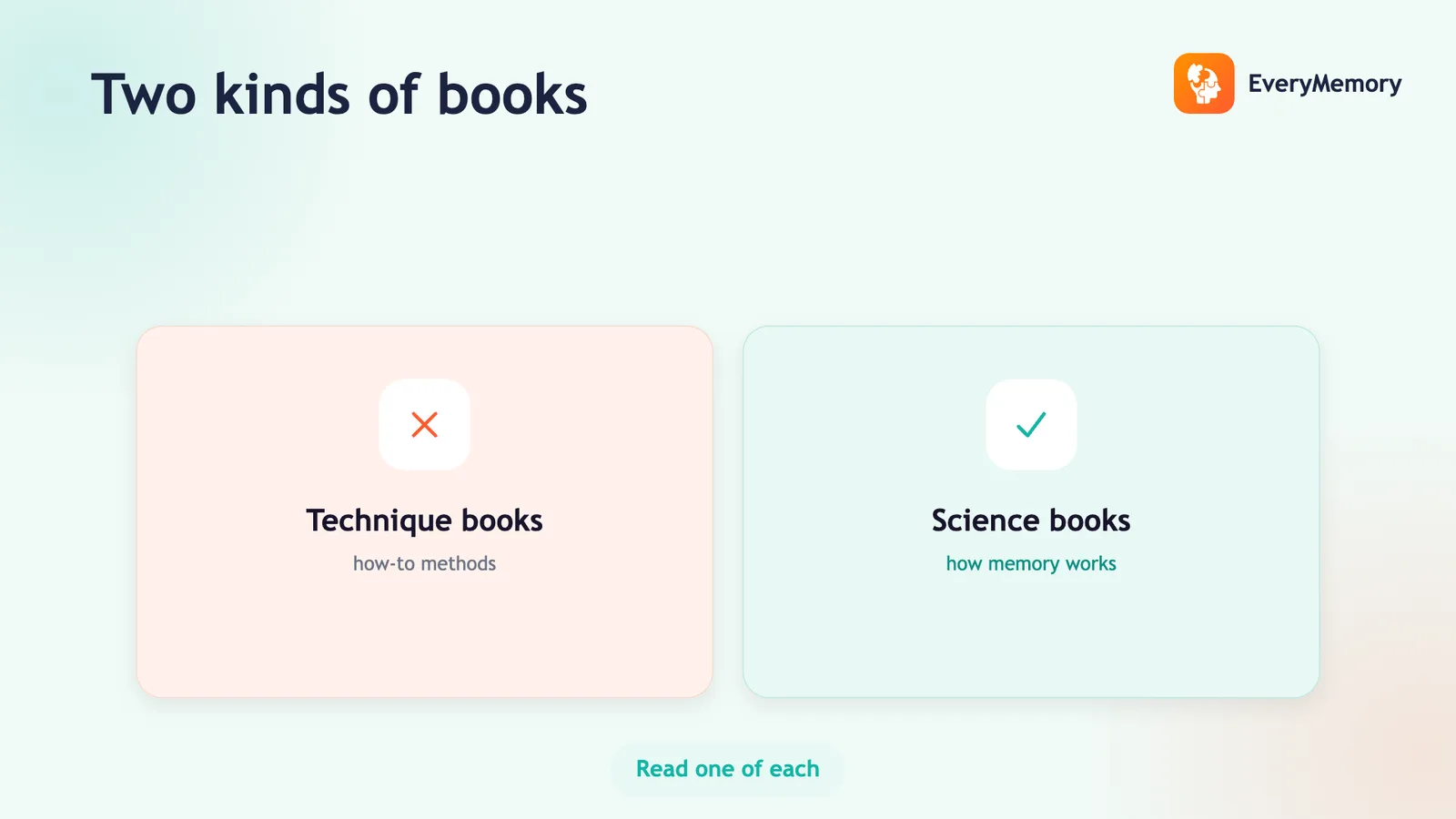
Memory books split into two kinds: practical technique guides and the science of how memory works. How to choose, and how to actually get value from one.
How to Study Effectively
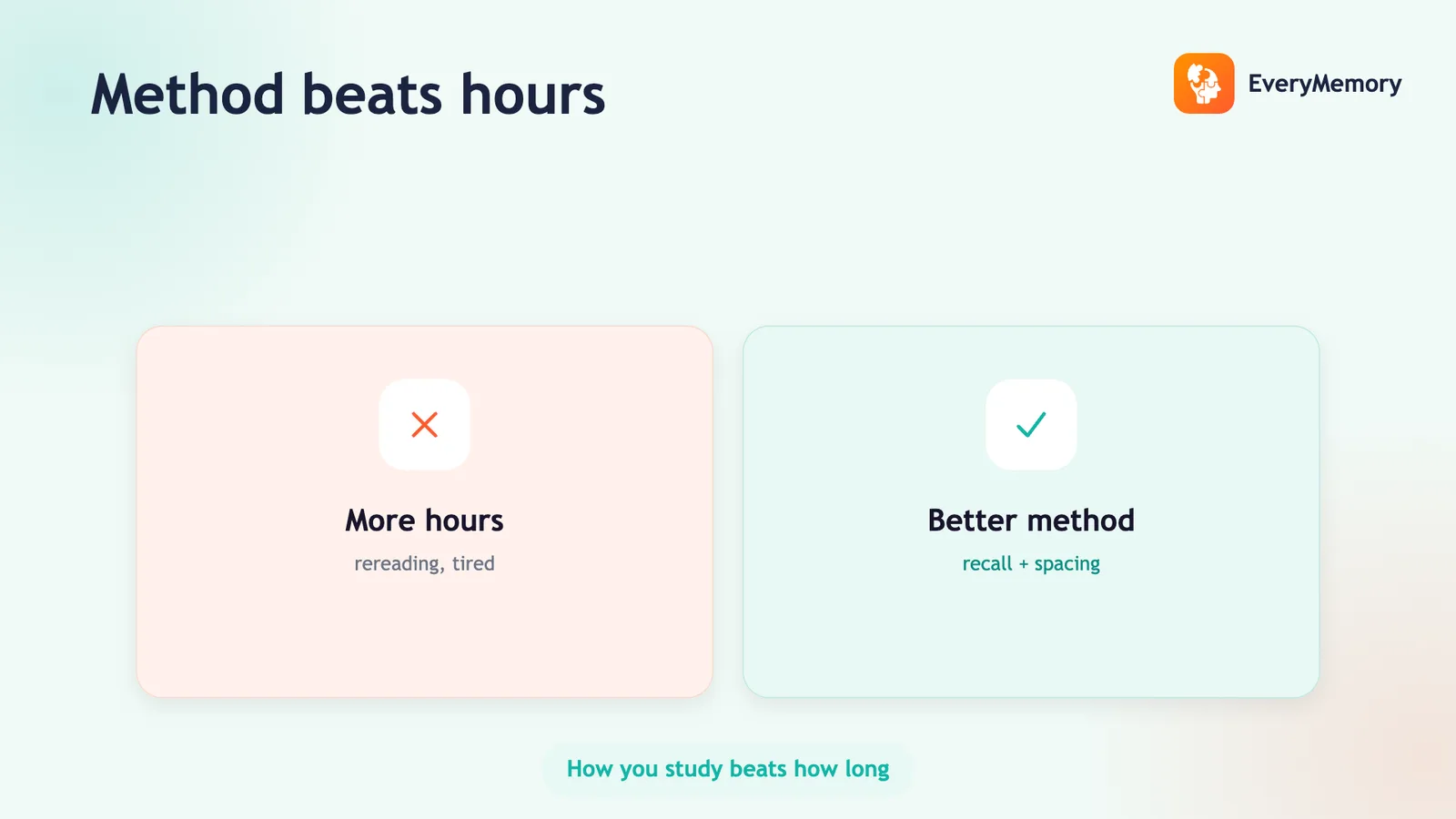
Effective studying is about method, not hours. The handful of evidence-backed techniques that learn more in less time - and the popular habits that waste it.
How to Memorize a Poem
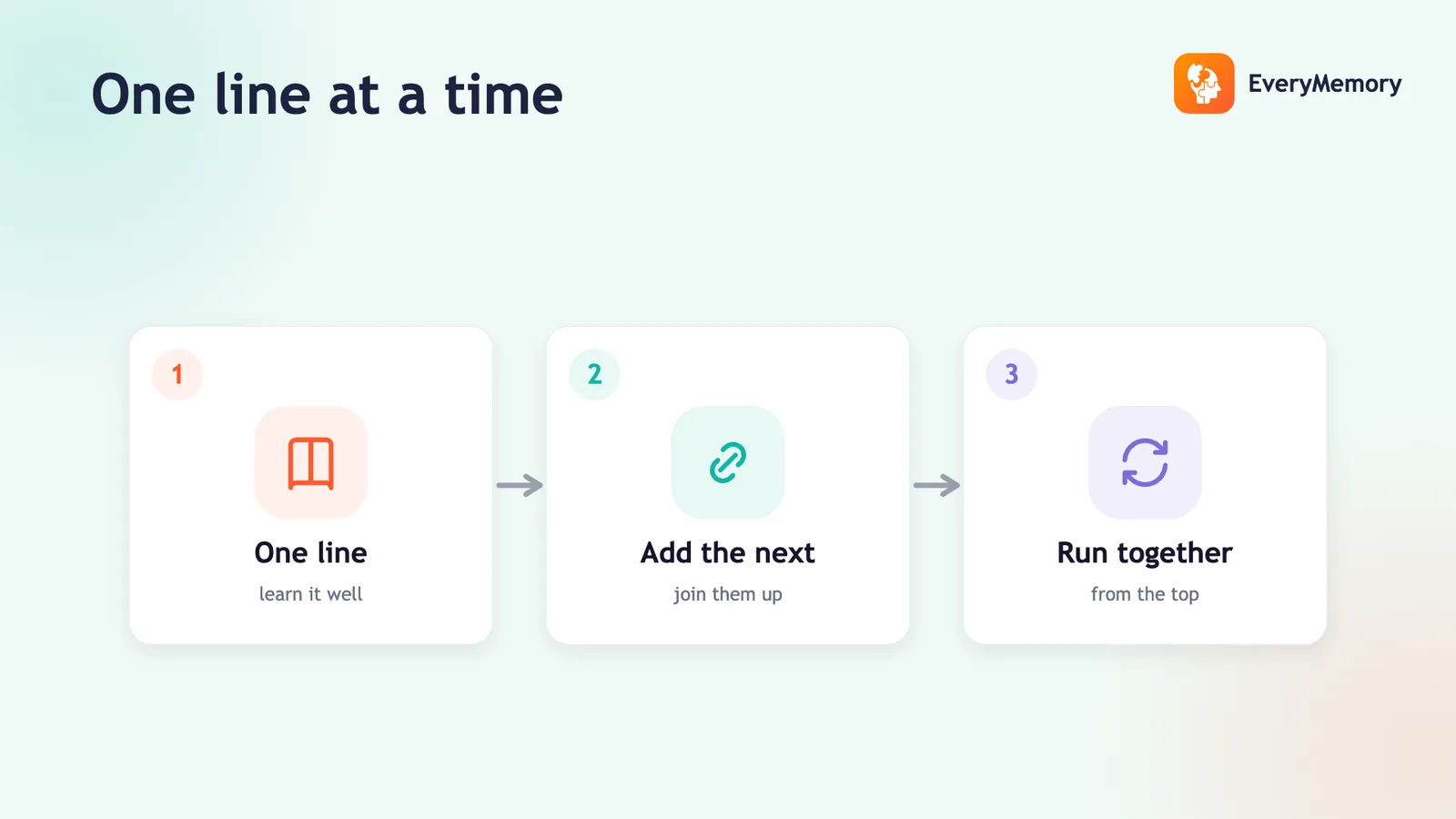
Memorize a poem line by line with the say-look-away-recall method, using its rhythm and rhyme as built-in cues - then space your reviews to keep it for good.
How to Remember Numbers (Chunking and Beyond)
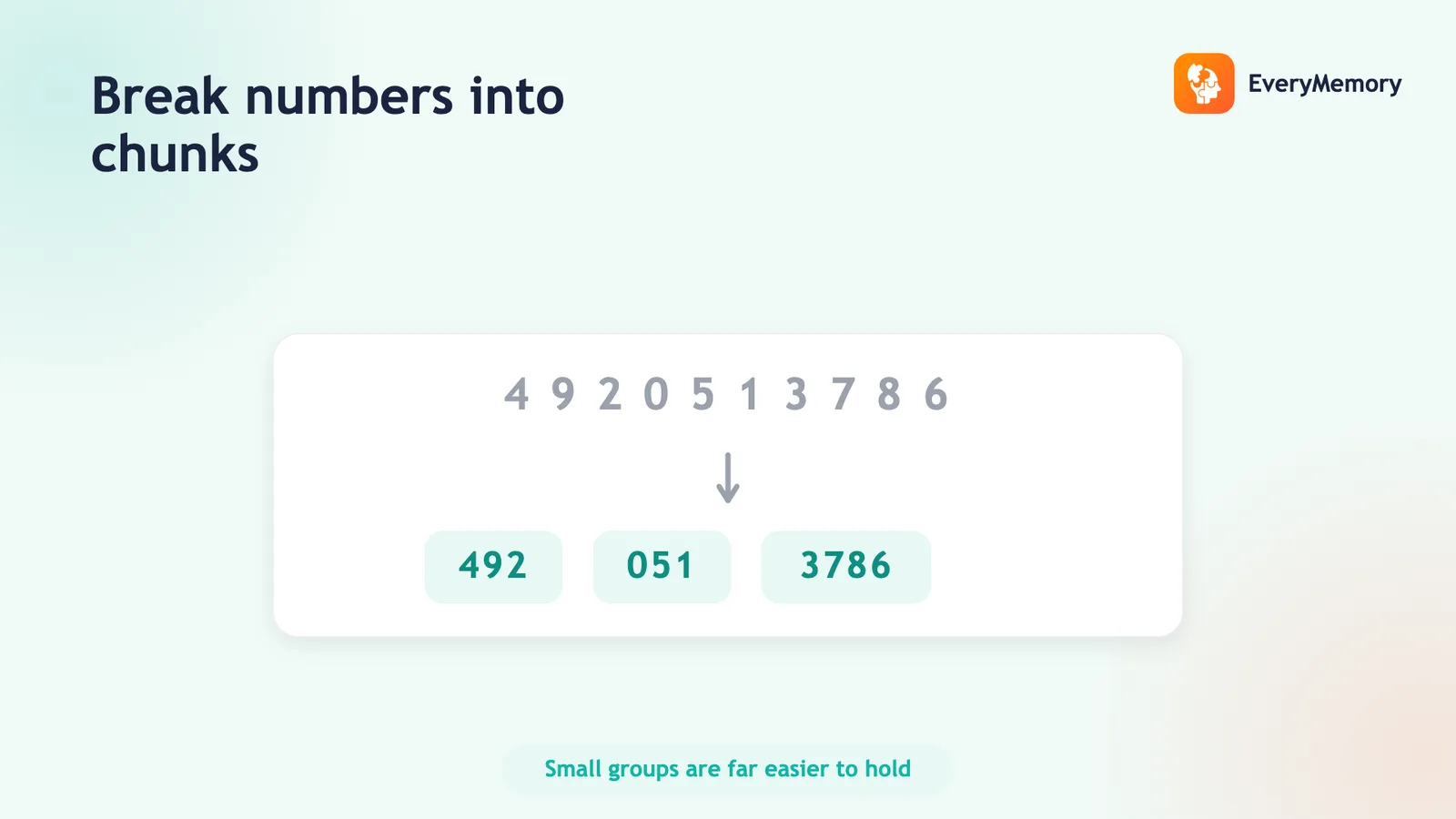
Long numbers overwhelm working memory. Chunking, meaningful patterns, and a simple digit-to-image system make phone numbers, PINs, and dates easy to hold.
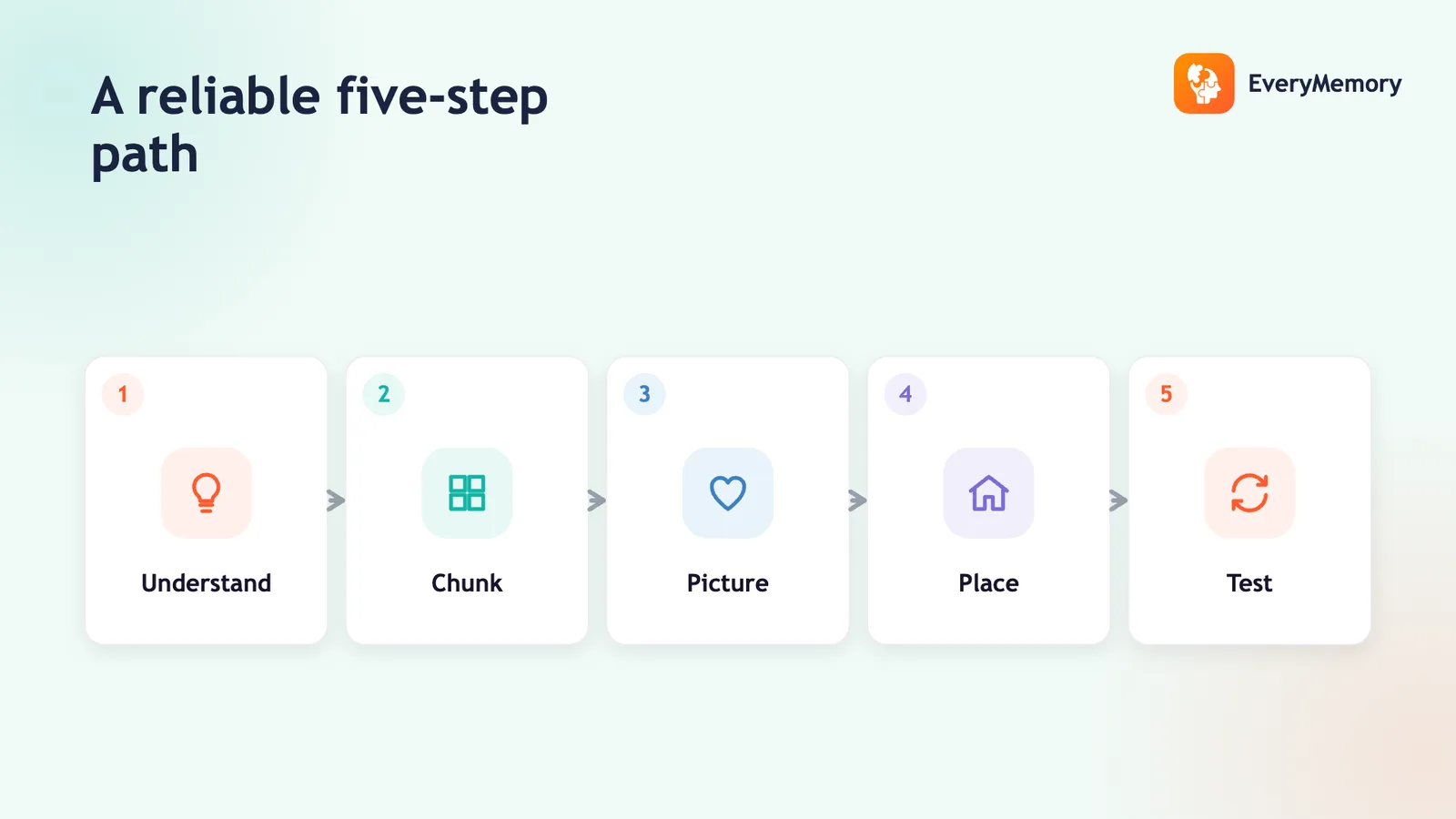
How to Memorise Anything: A Practical Workflow
There's no single trick, but there is a reliable order: understand, chunk, picture, place, and test. The workflow that handles almost anything.
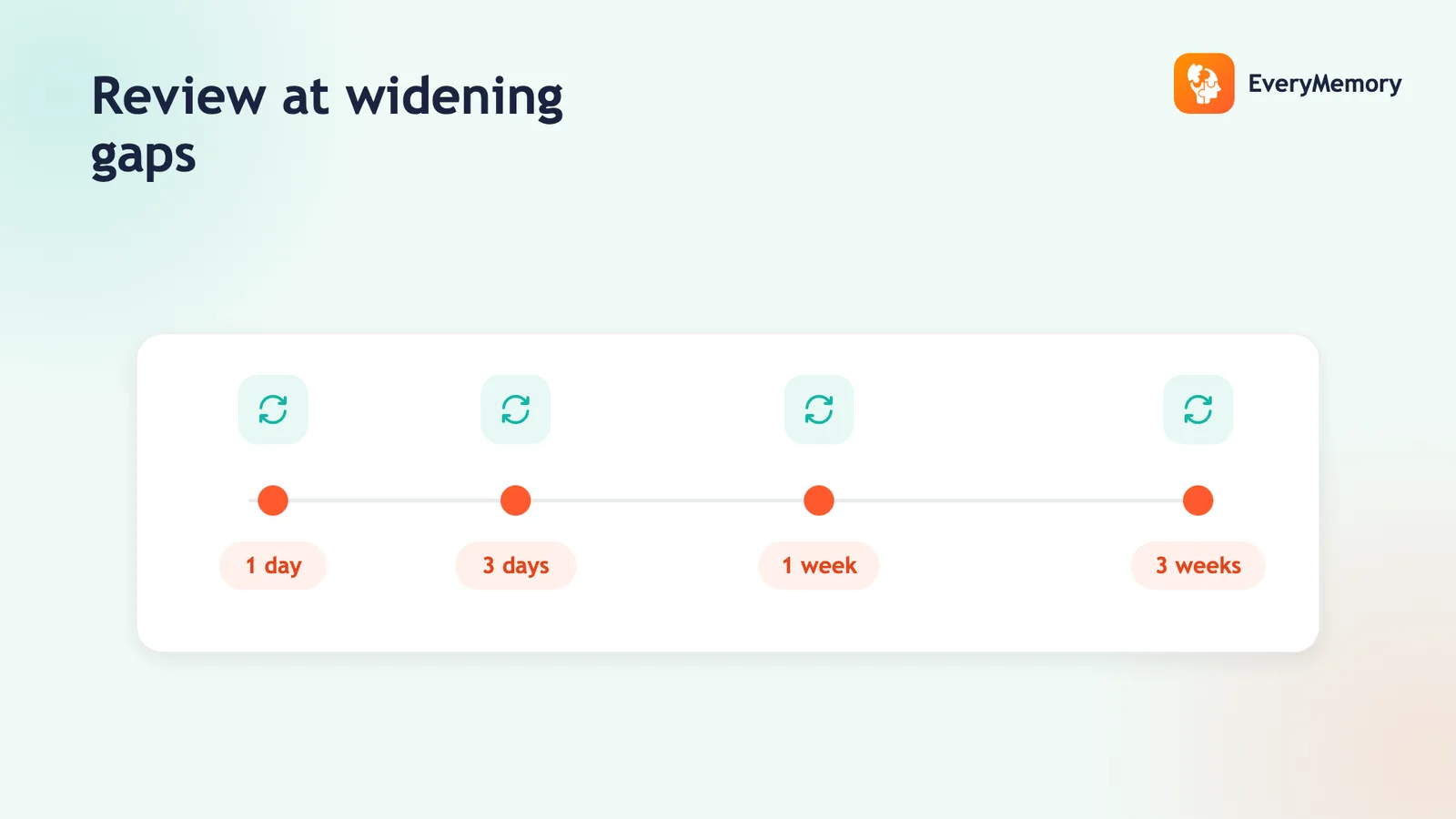
Spaced Repetition for Studying
Reviewing material at widening intervals keeps it for far less effort than cramming. How spaced repetition works, and how to schedule it.
How to Build a Second Brain: A Simple Note System That Works
Your working memory holds about four things at once. A second brain holds everything else - here is a simple, tool-agnostic system to capture, organise, and review so nothing slips through.
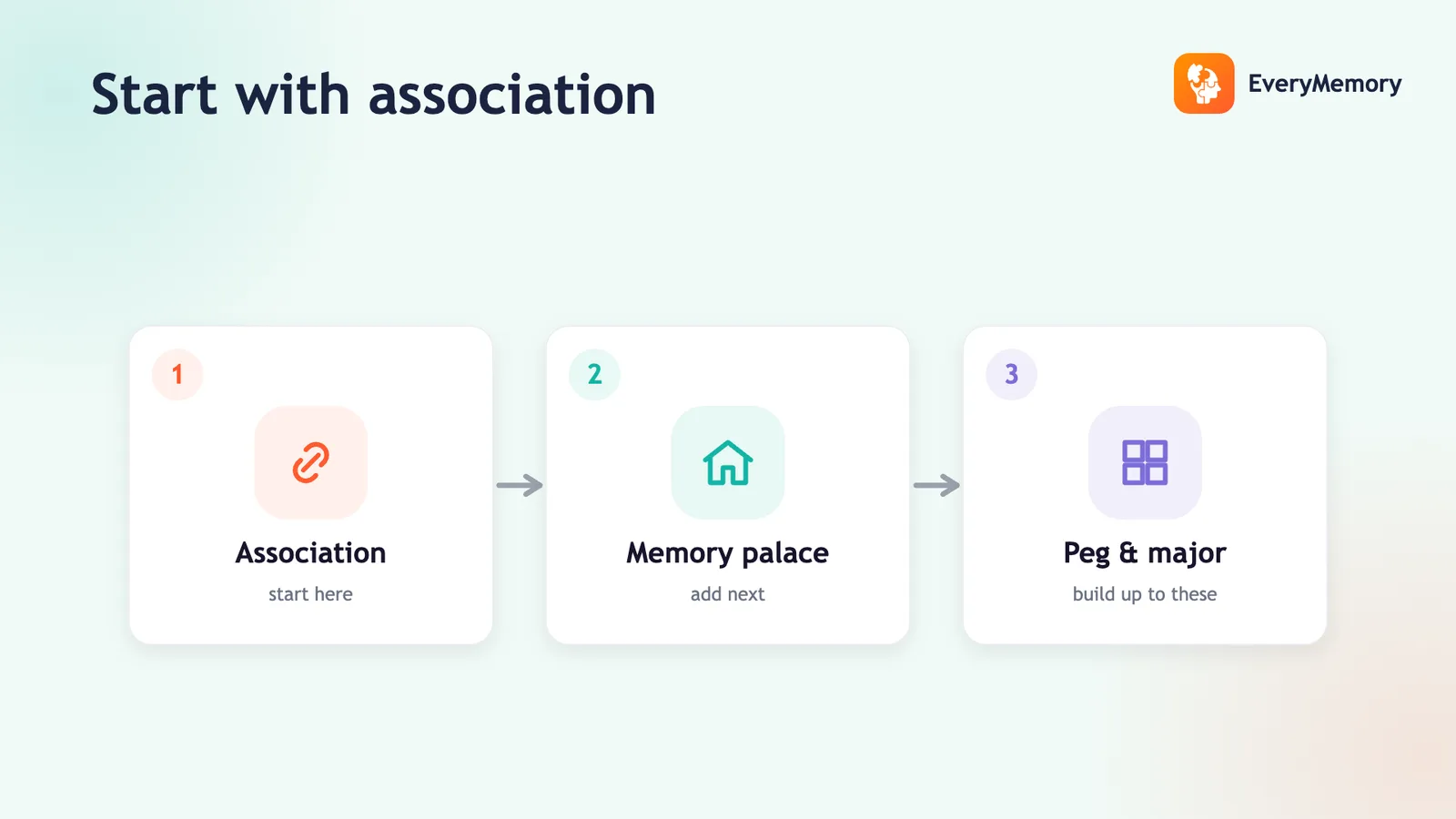
How to Learn Memory Techniques: A Beginner Path
Don't learn all the techniques at once. The order to learn them in, why to start with association, and a two-week plan that builds real skill.
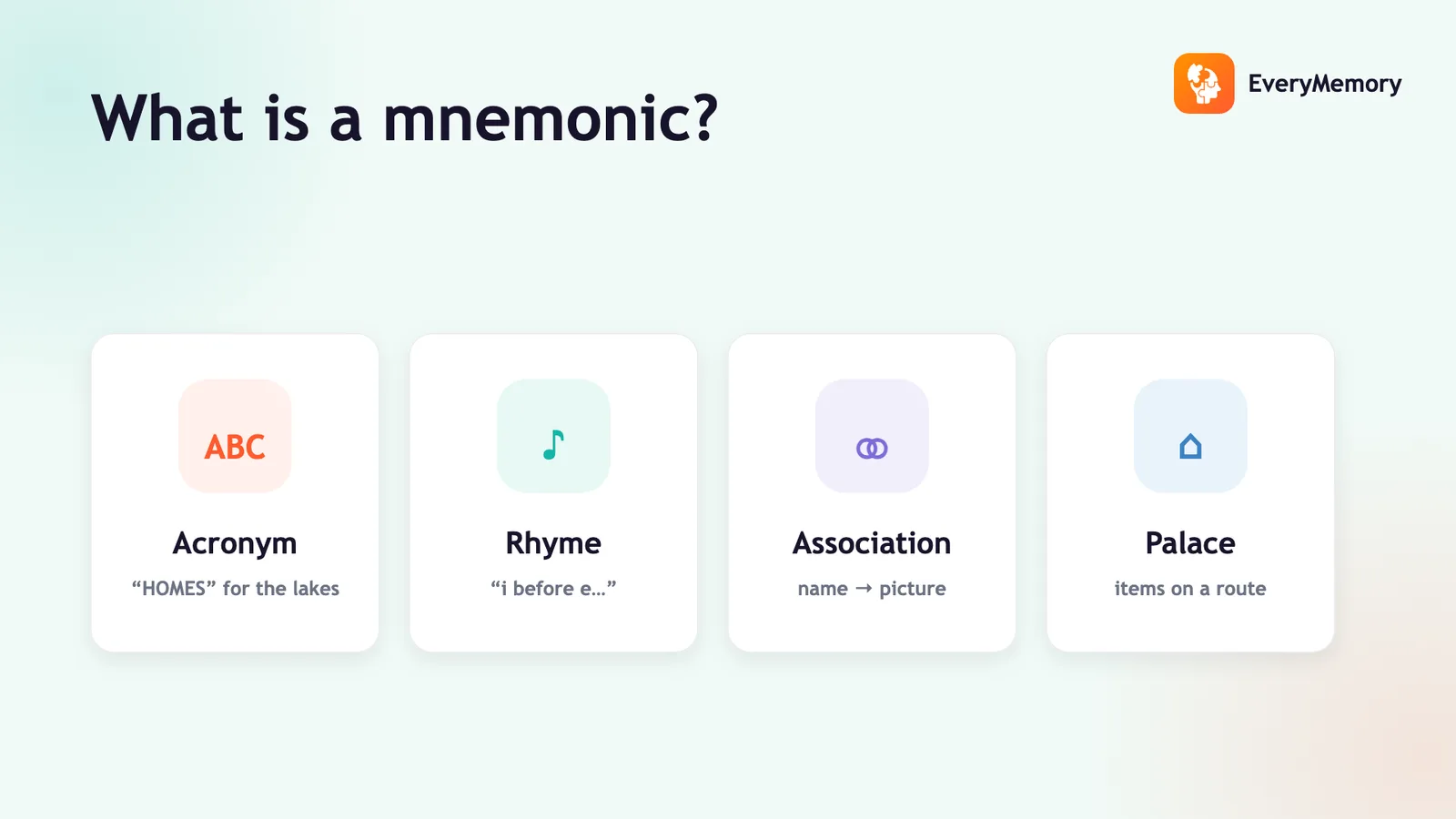
What Is a Mnemonic? A Simple Guide With Examples
A mnemonic is any trick that helps your brain hold onto information - from a simple rhyme to a full memory palace. Here is how each type works and how to make your own.
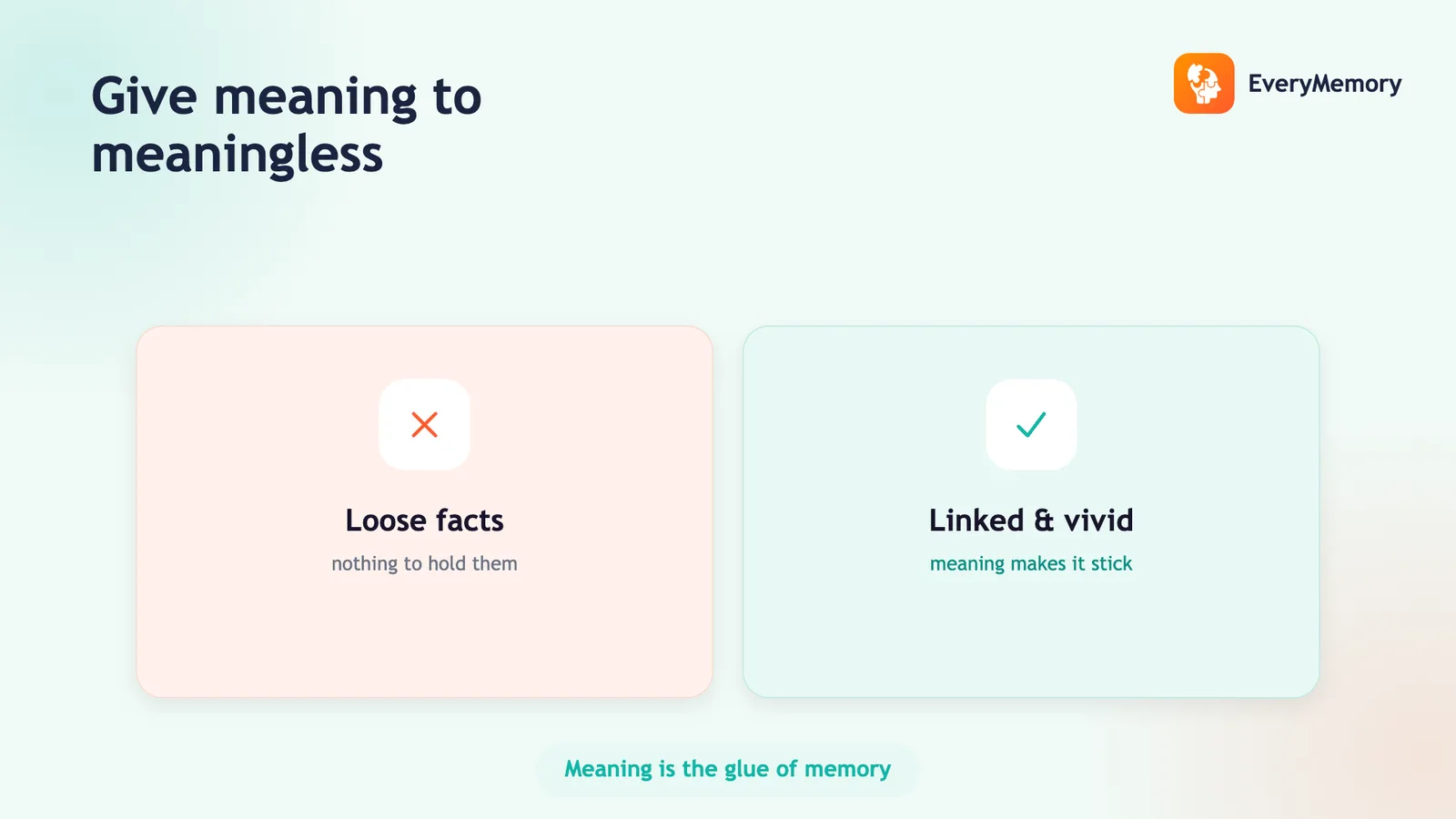
Memory Techniques: The Complete Guide
Every memory technique shares one idea: give meaningless information meaning and structure. A plain map of the techniques that work, what each is for, and where to start.
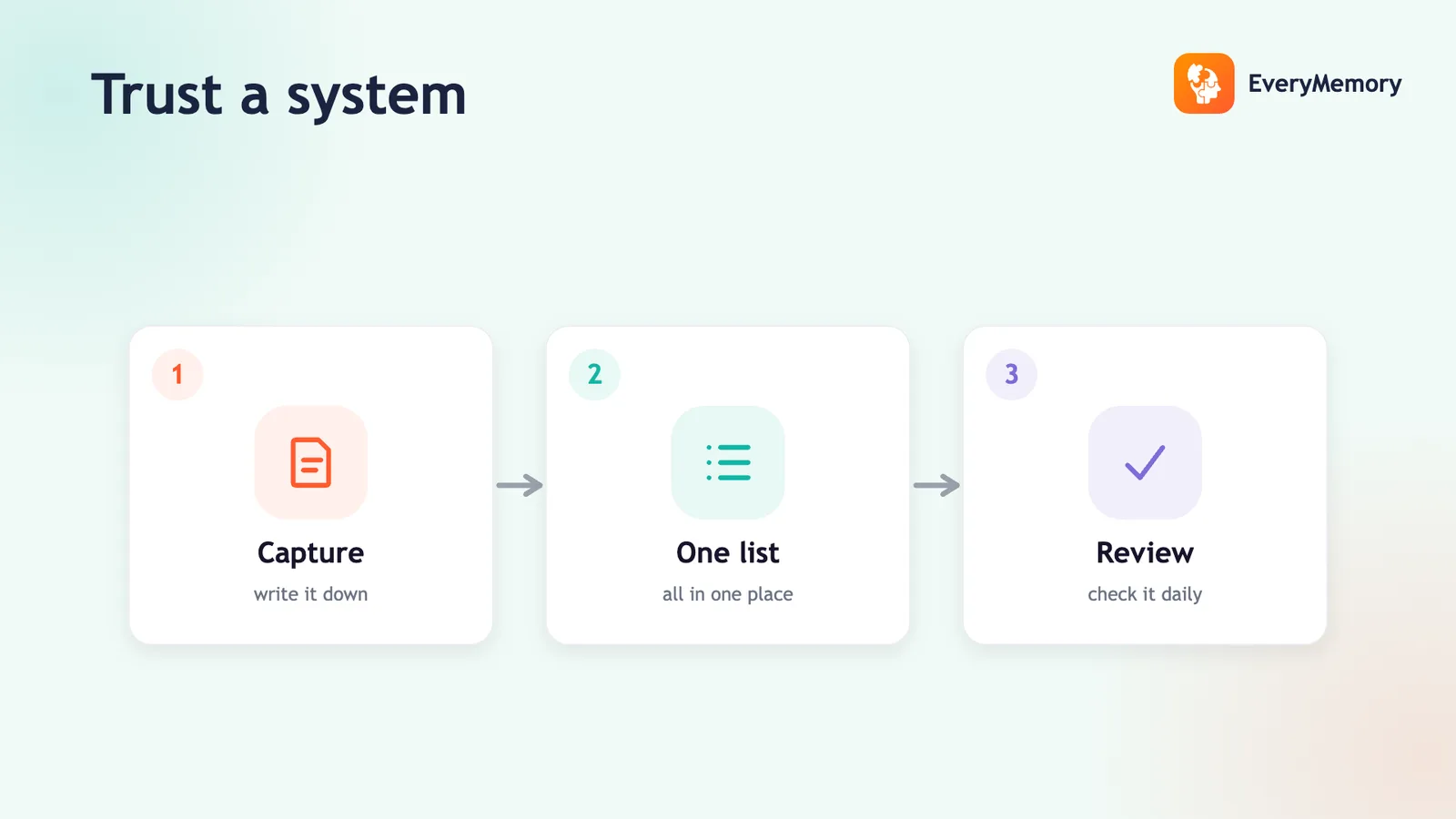
How to Remember Things at Work
Stop relying on memory at work and build a system you trust. Capture every task in one place, and use in-the-moment habits for names, meetings, and details.
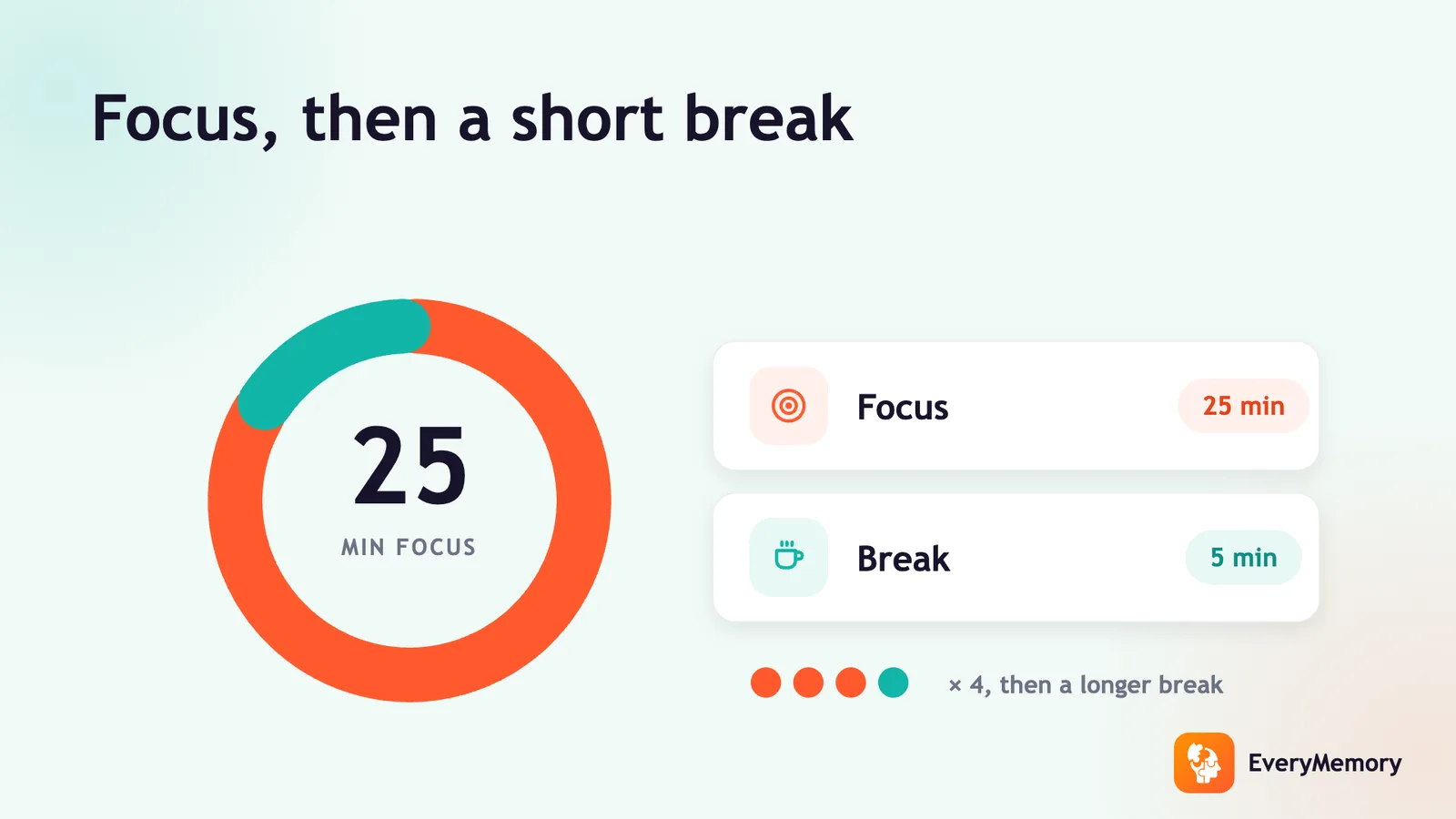
The Pomodoro Technique for Focus
Short, timed focus bursts with real breaks between them can do more for concentration and recall than longer, unstructured sessions. Here's how to use the Pomodoro Technique - and adapt it for your pace.
How to Remember What People Tell You
Forgetting what someone just told you is not a memory problem - it is usually an attention problem. Here is how to actually capture and keep what people say.
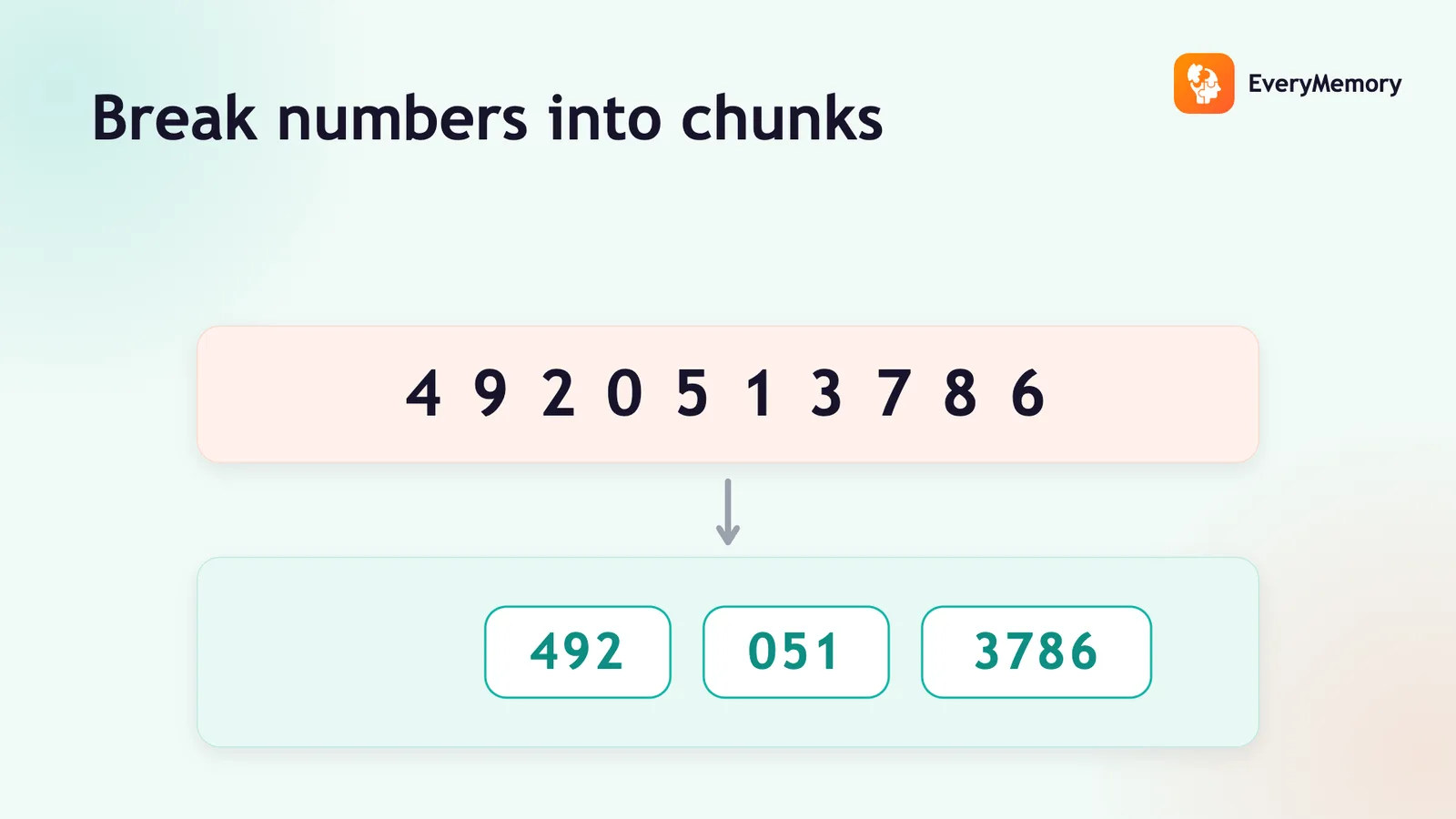
Chunking Technique Explained Simply
Chunking is how your brain already handles phone numbers and PIN codes. Here's how to use it deliberately to remember almost anything.
Lifestyle topics connected to memory, focus, sleep, stress, and activity.
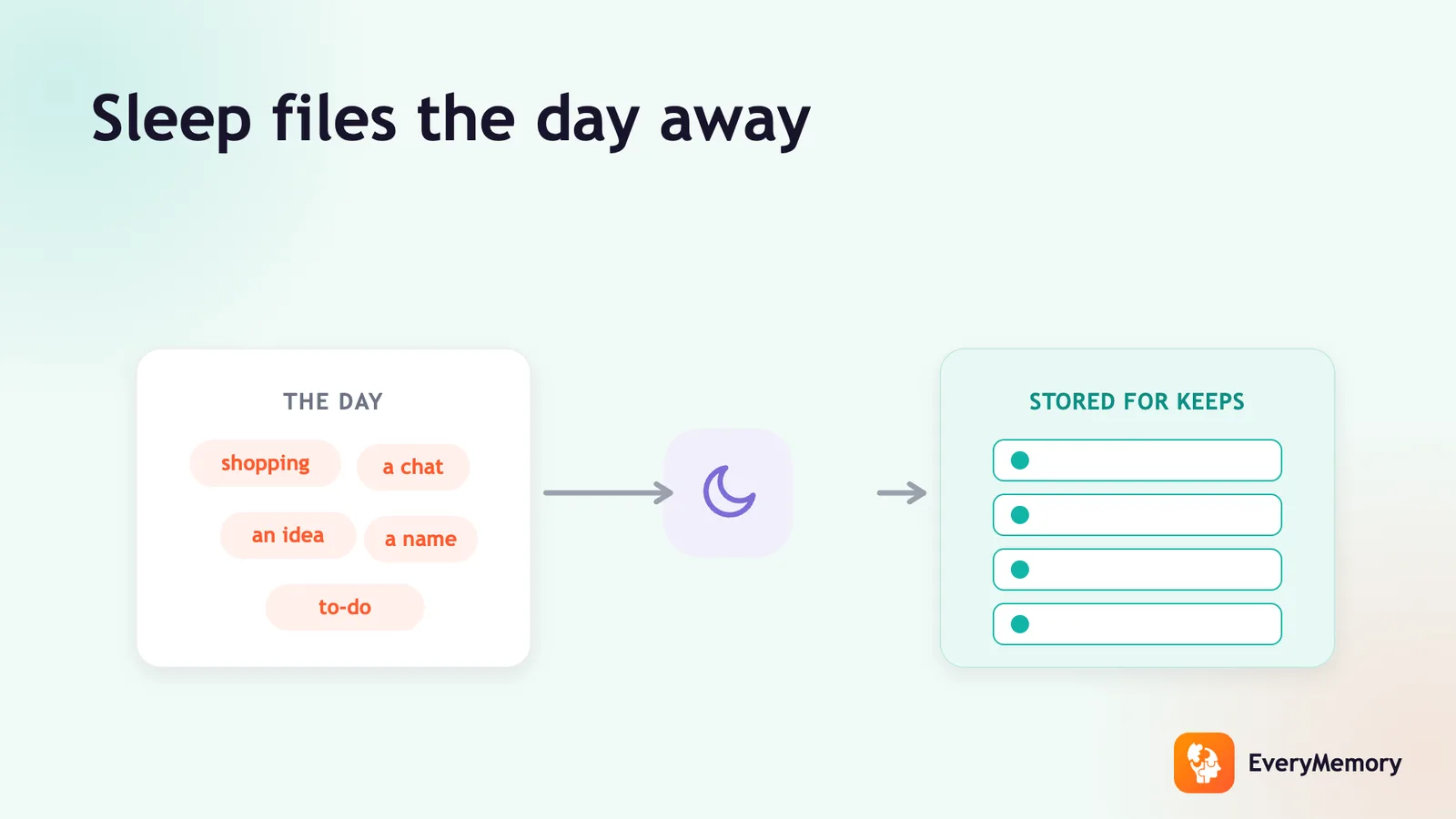
Sleep and Memory: What's the Connection?
Sleep is when your brain does most of its memory work - and even mild, regular sleep loss can make recall noticeably worse.
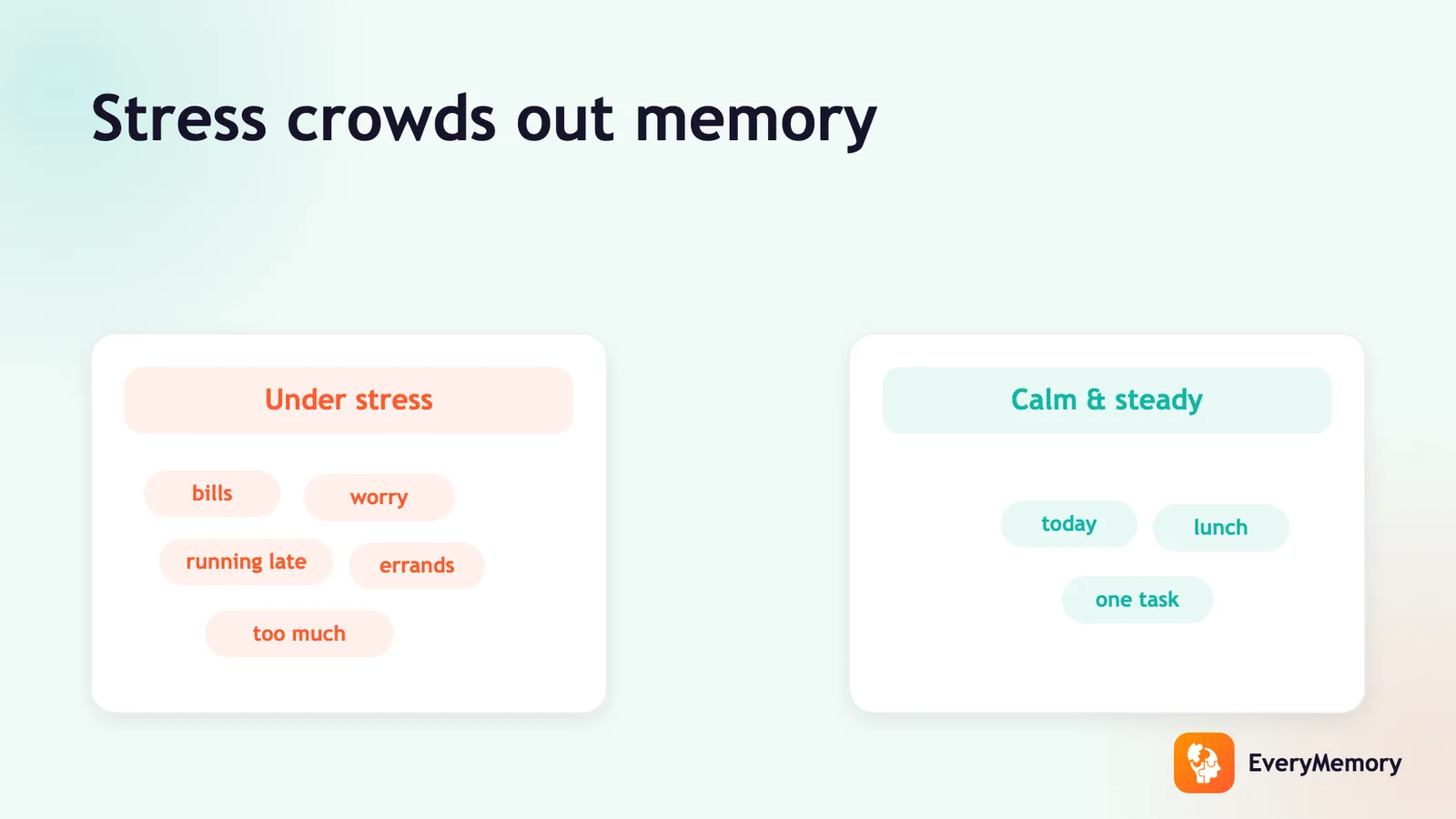
Can Stress Make You More Forgetful?
Stress is one of the most common and overlooked causes of forgetfulness - and understanding the link gives you a practical way to do something about it.
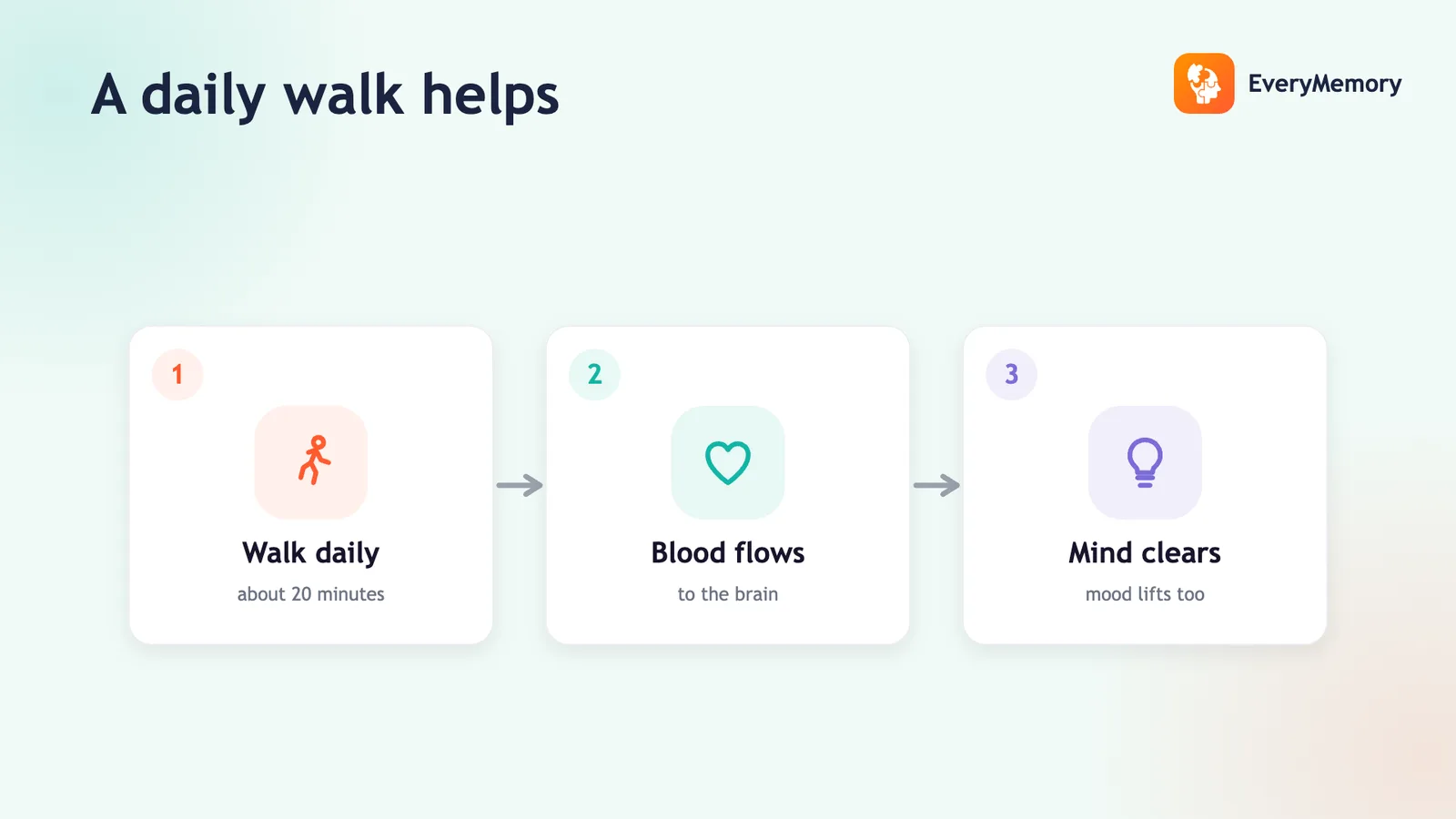
Walking and Brain Health
A daily walk is one of the simplest habits linked with sharper recall and better focus in older adults - here's what the research suggests and how to get started.

Do Brain Games Really Work? An Honest Look
Brain games are popular, but the evidence is more modest than the marketing. Here's an honest look at what they do, what they don't, and why that's still worth knowing.
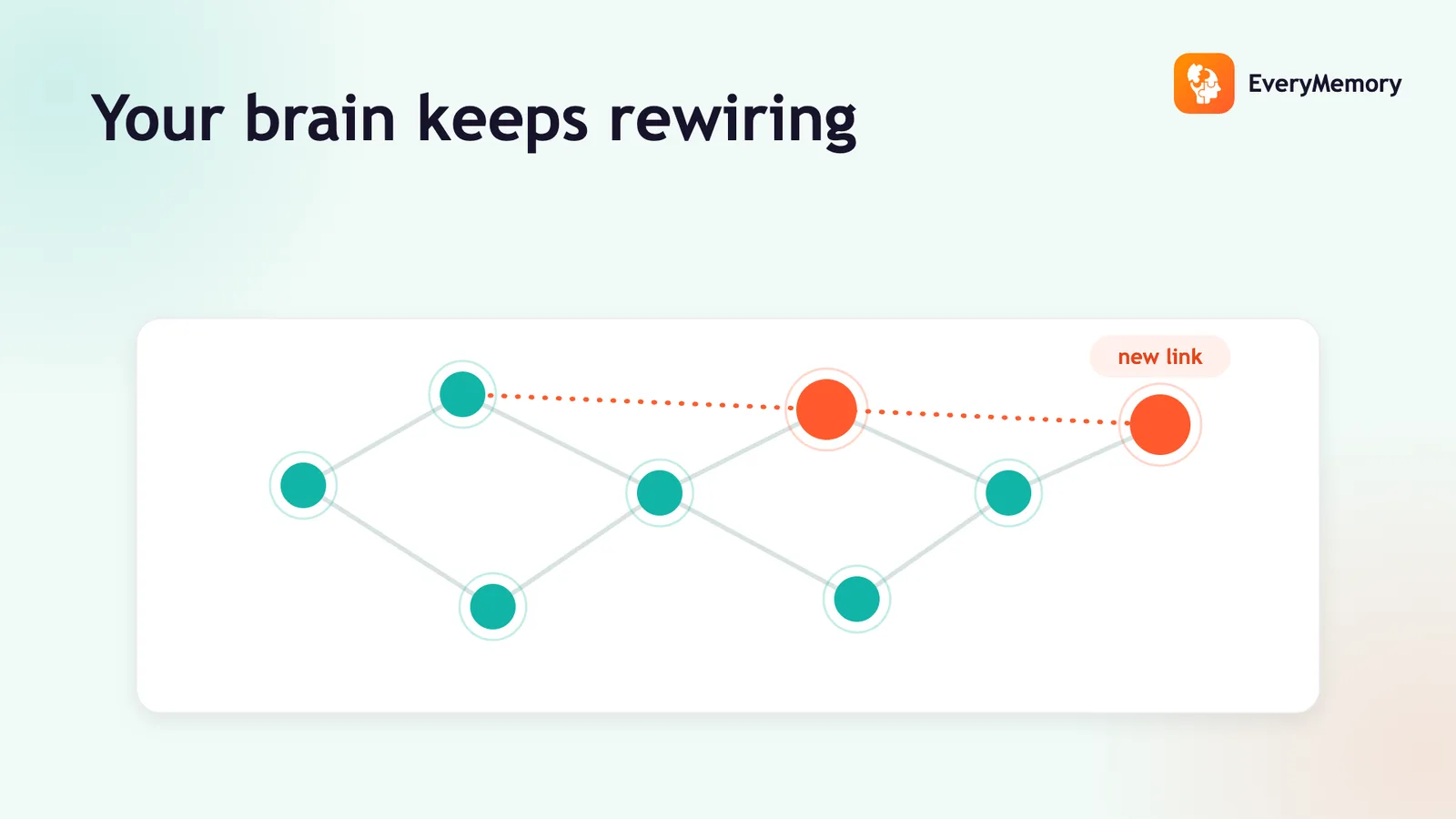
What Is Neuroplasticity? Keep Learning at Any Age
The brain keeps forming new connections throughout life. Here's what neuroplasticity actually means and what it suggests about learning and memory after 60.
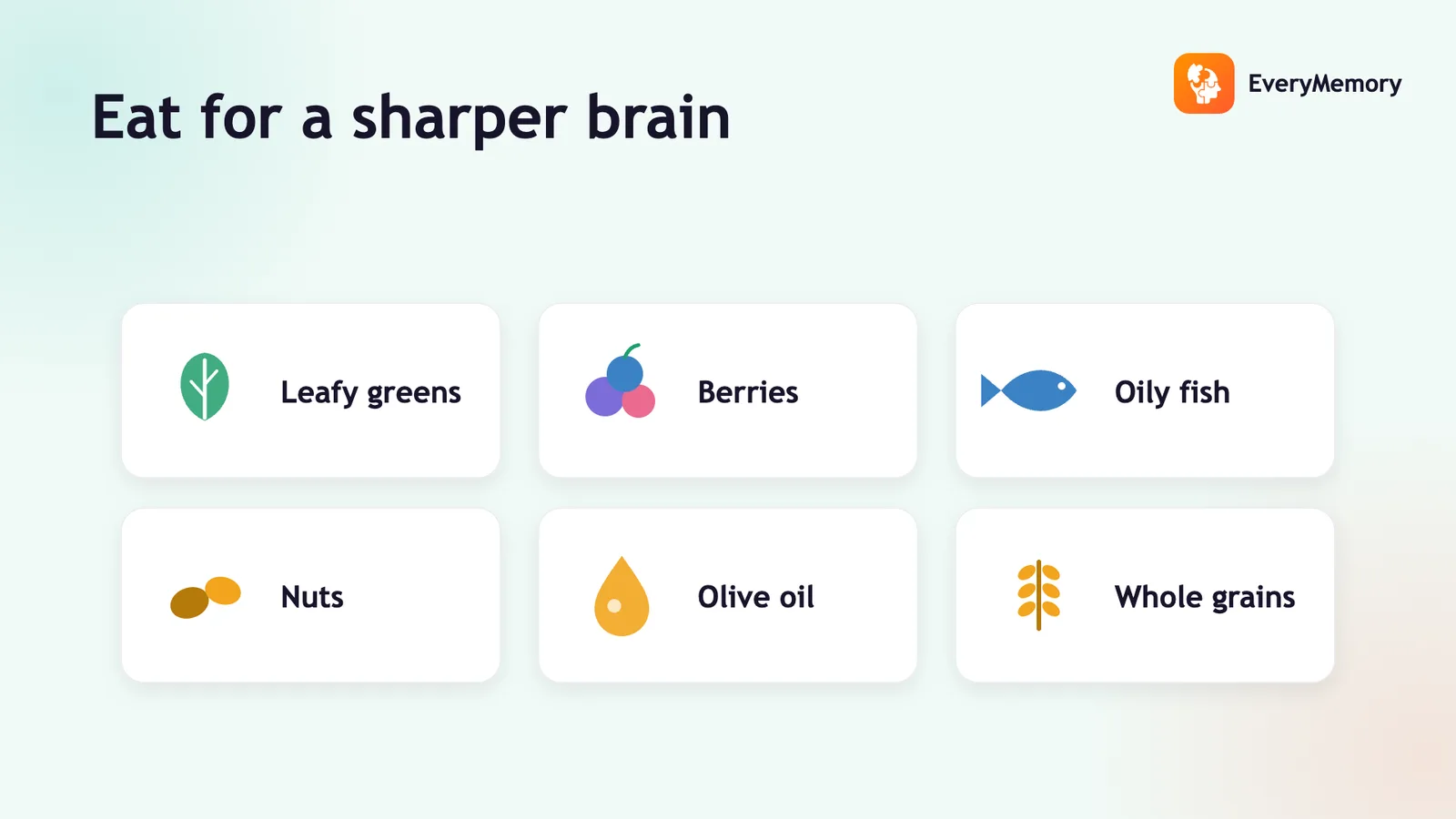
Best Foods for Memory and Brain Health
No single food is a magic solution, but a consistent eating pattern rich in oily fish, leafy greens, berries, nuts, and olive oil is linked with sharper recall and healthier brain ageing.

Can You Train Fluid Intelligence?
You can get noticeably better at brain-training tasks - but whether that lifts your general fluid intelligence is contested, and the honest evidence for durable transfer is weak. Here's the real picture.
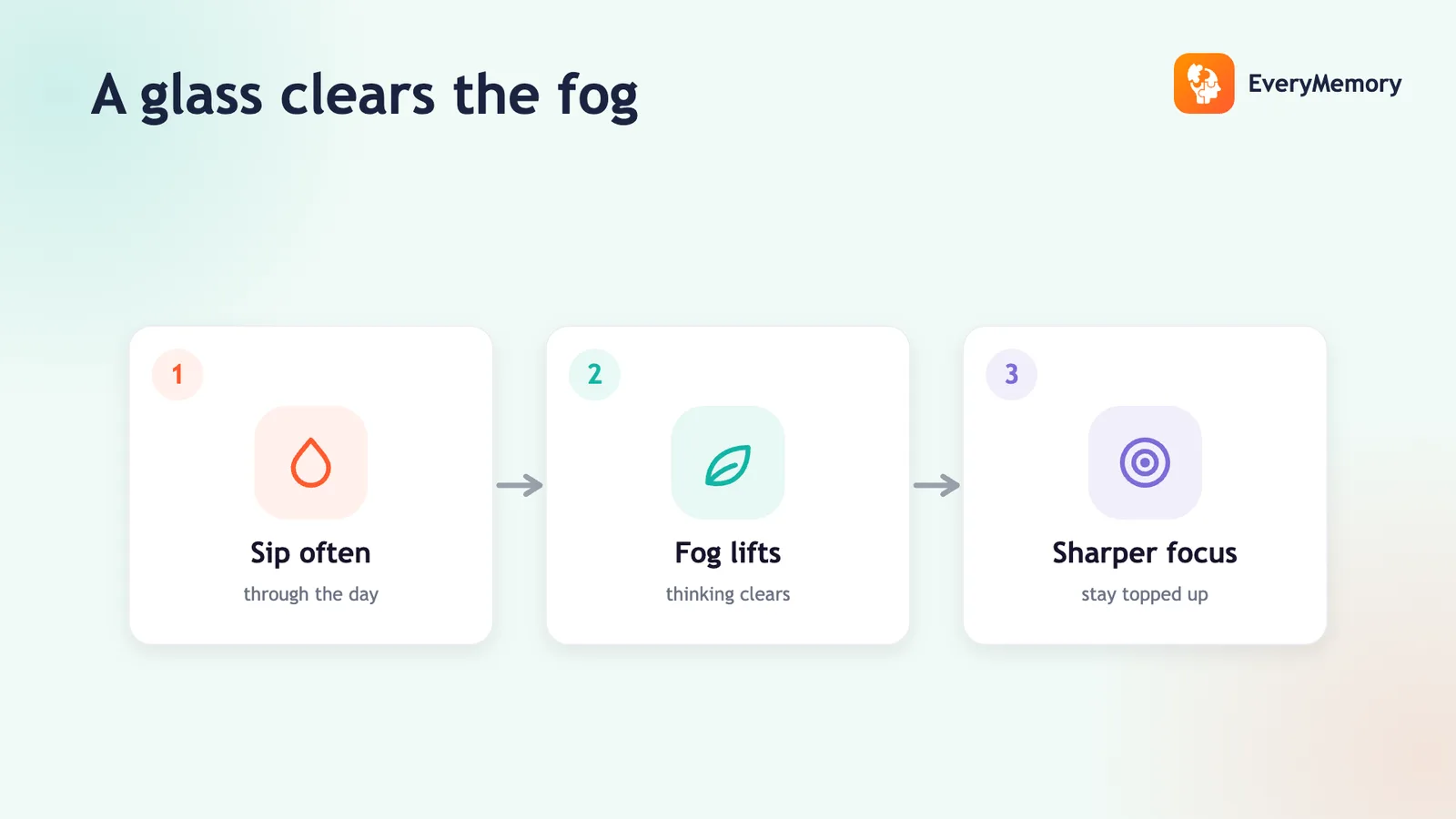
Hydration and Brain Function
Even mild dehydration is linked with poorer concentration and a slower, foggier feeling - staying hydrated is a small, real lever on day-to-day focus and memory.
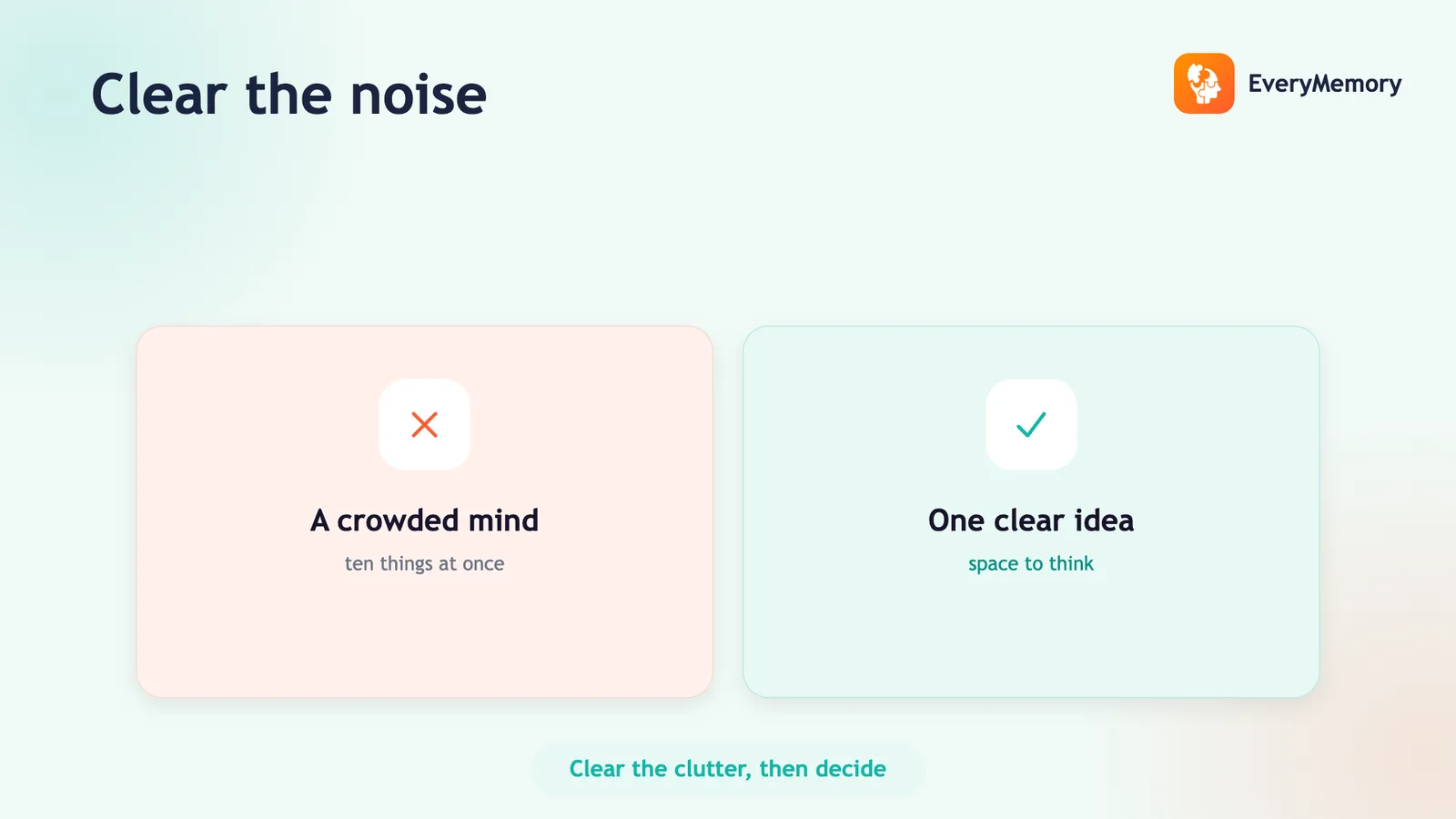
How to Think More Clearly
Clear thinking is less about intelligence and more about conditions. Cut the noise, offload working memory, take one thing at a time, and slow down on decisions.
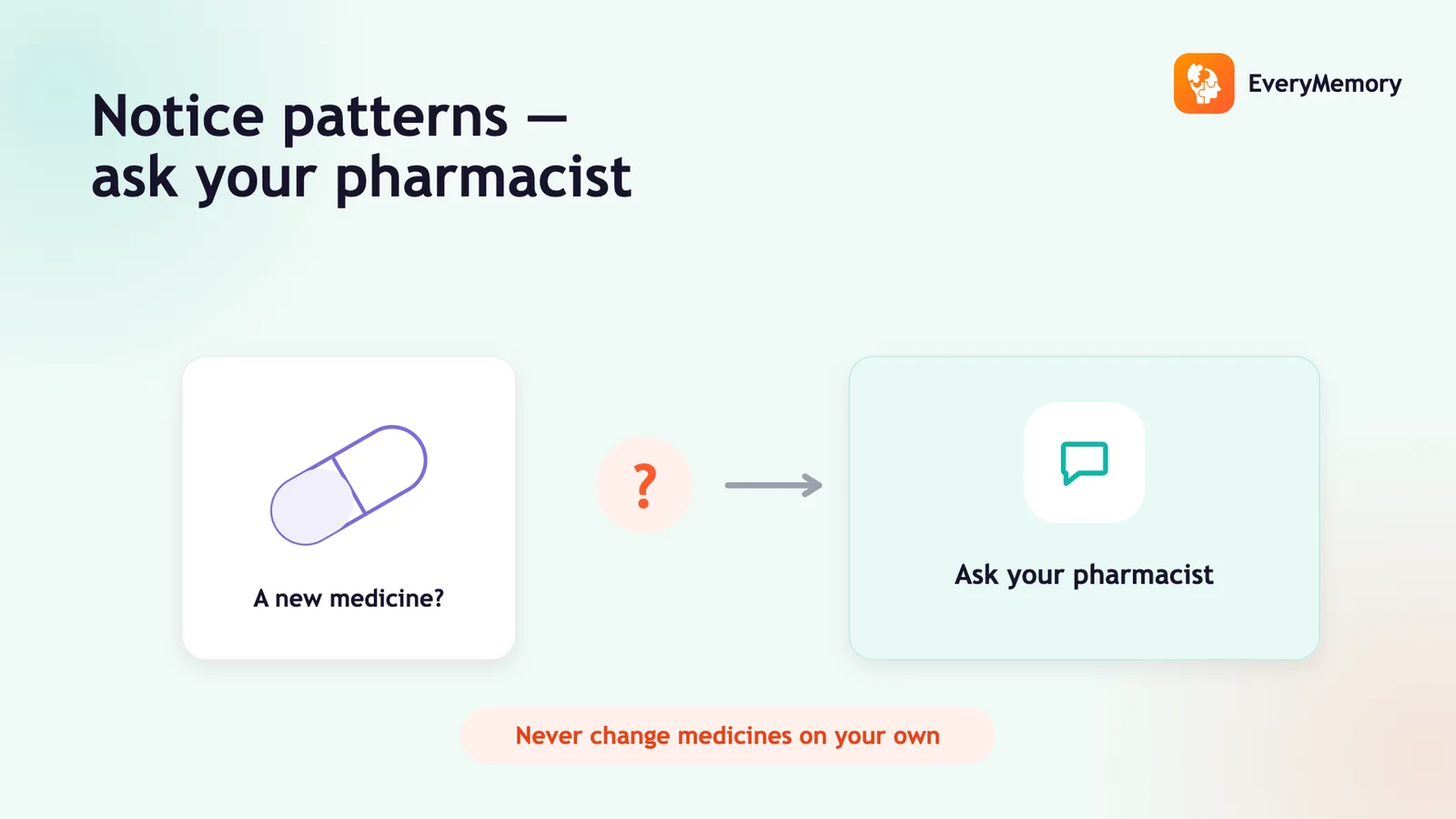
Medications and Memory: Ask Your Pharmacist
Some everyday medicines can sometimes affect focus or memory for some people - the empowering step is bringing a full medicine list to your pharmacist or doctor and asking.

Brain Training Apps Compared: How to Judge Them
A criteria-led way to compare brain training apps - adaptive difficulty, honest tracking, evidence-honest claims and price - instead of trusting marketing.
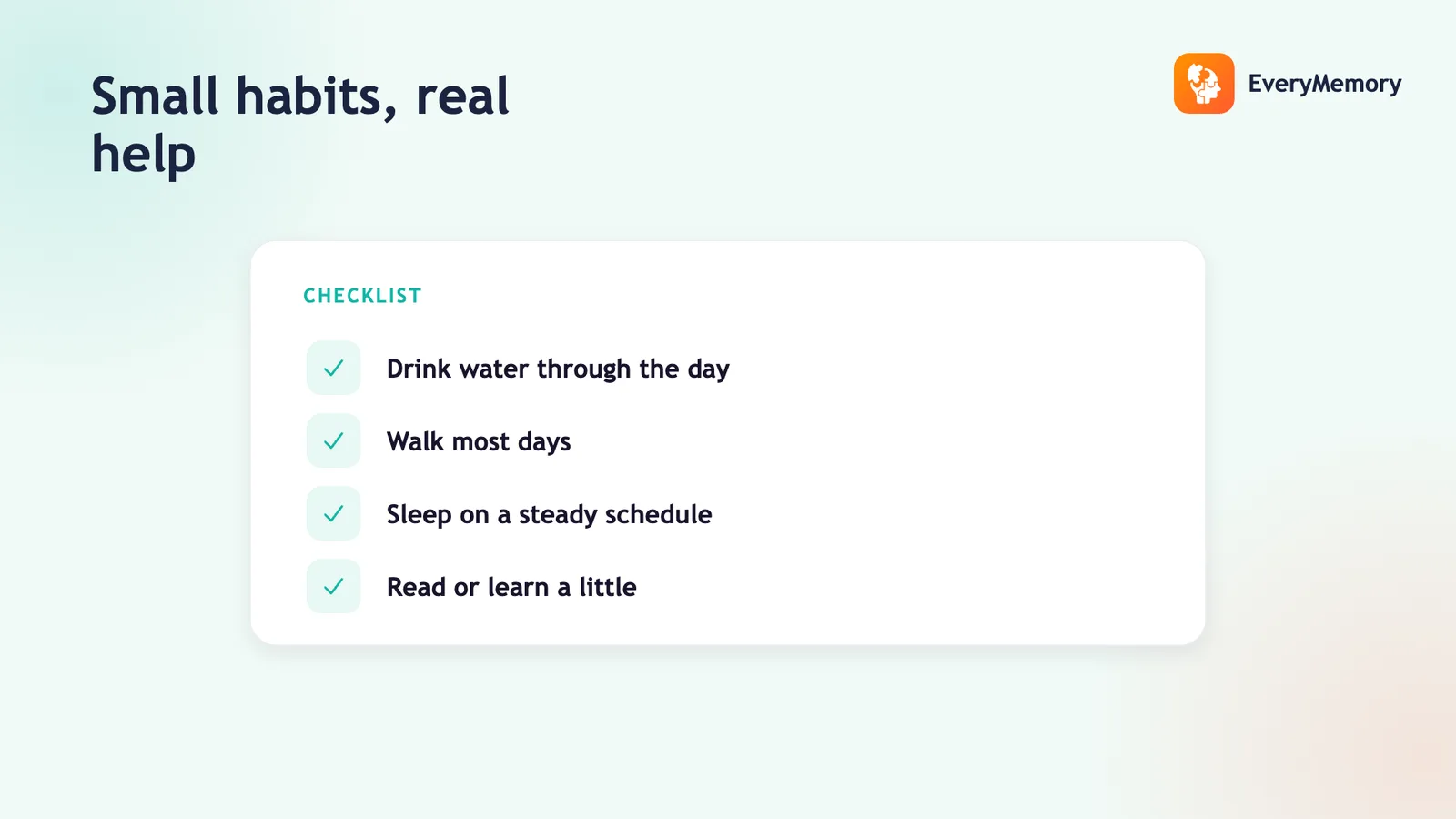
Memory Booster Habits That Actually Help
There's no magic memory booster - but a handful of everyday habits genuinely create the conditions memory needs. The ones that work, and what to be skeptical of.
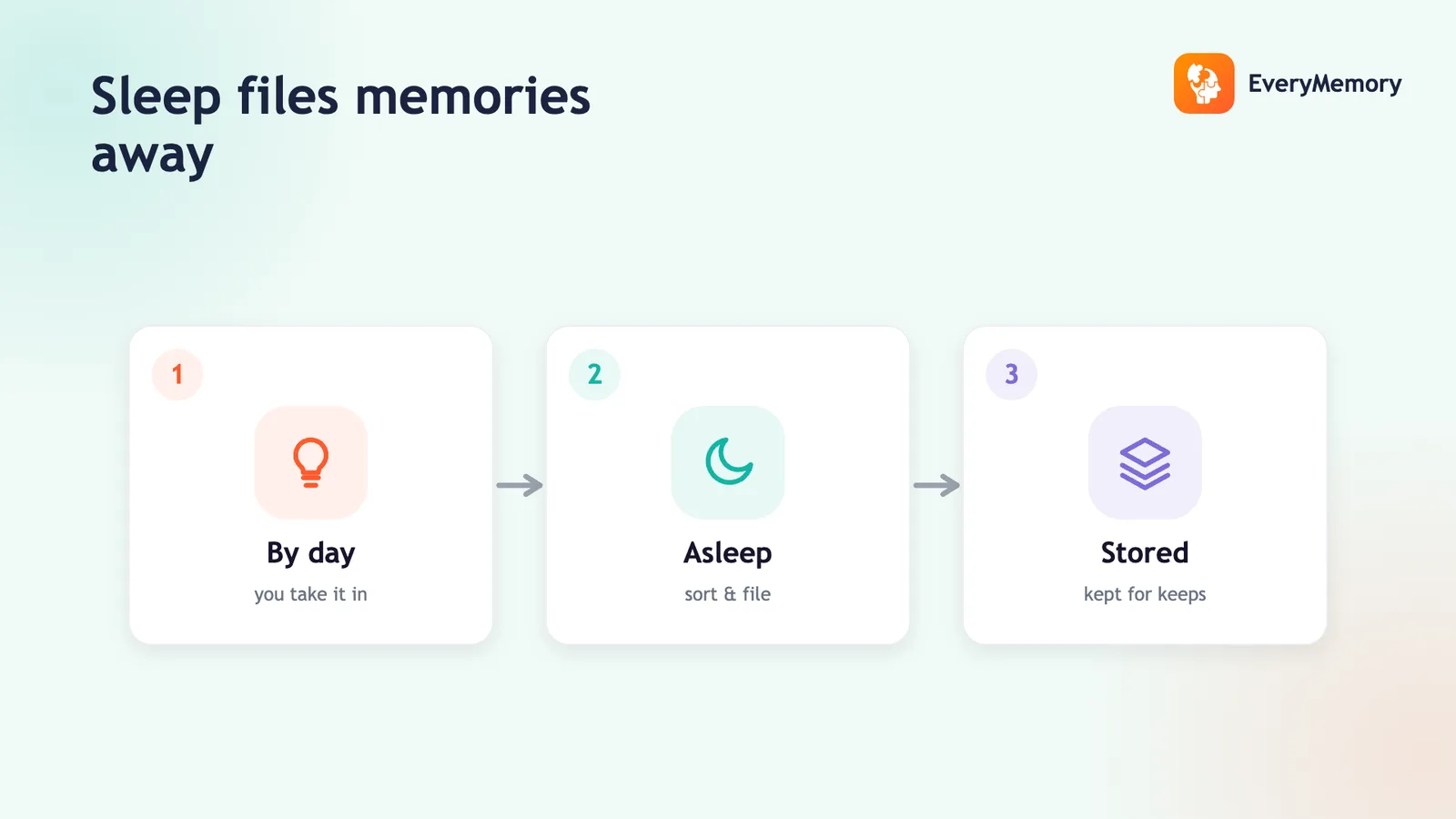
How Sleep Affects Your Memory
Sleep is when your brain files new memories away. Why too little undoes a day's learning, and the simple sleep habits that protect memory.
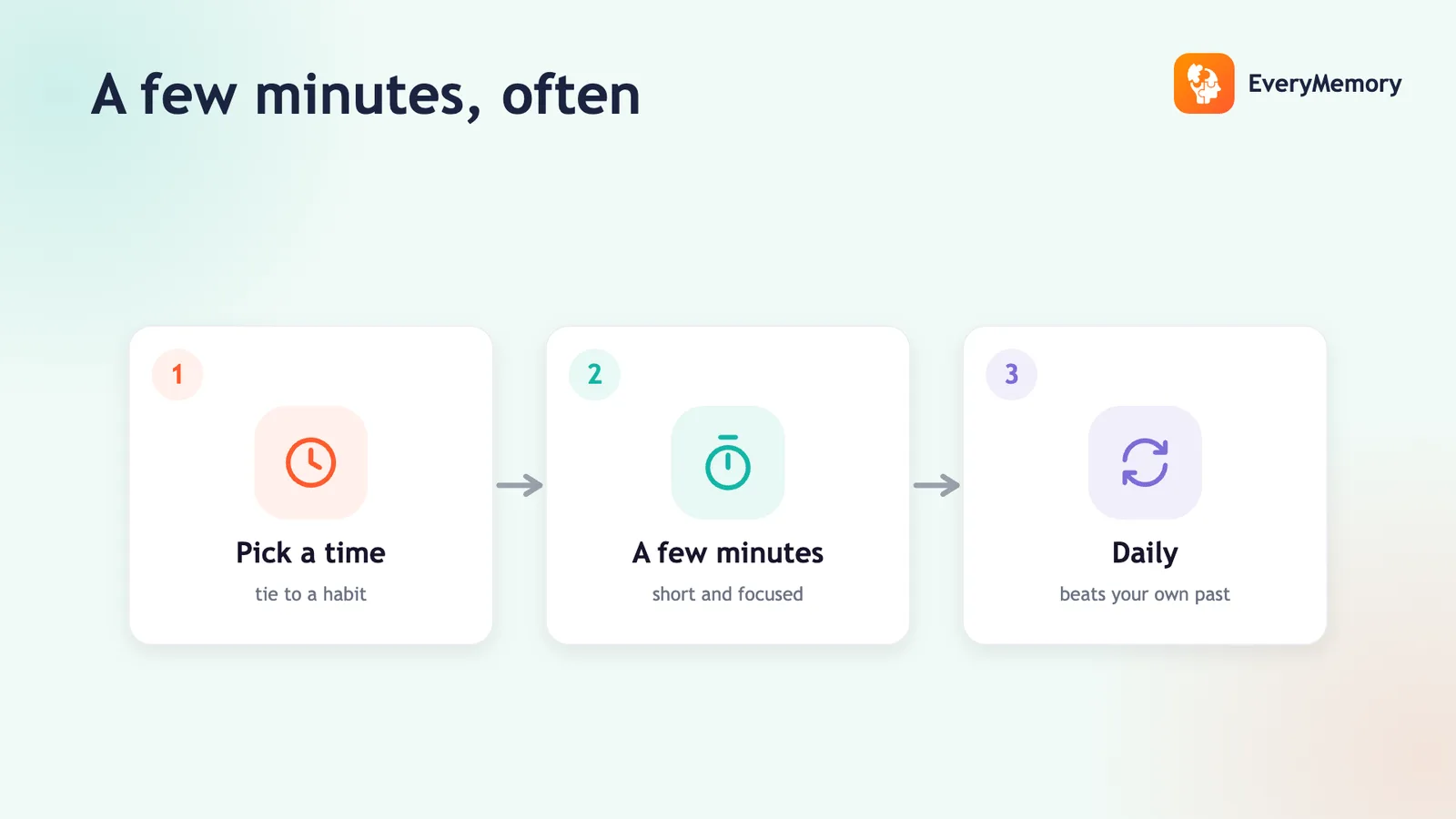
A Simple Mental Fitness Routine
A good mental fitness routine is small enough to keep - a few minutes of skill practice wrapped in the everyday basics - and built to track against your own past, not anyone else's.
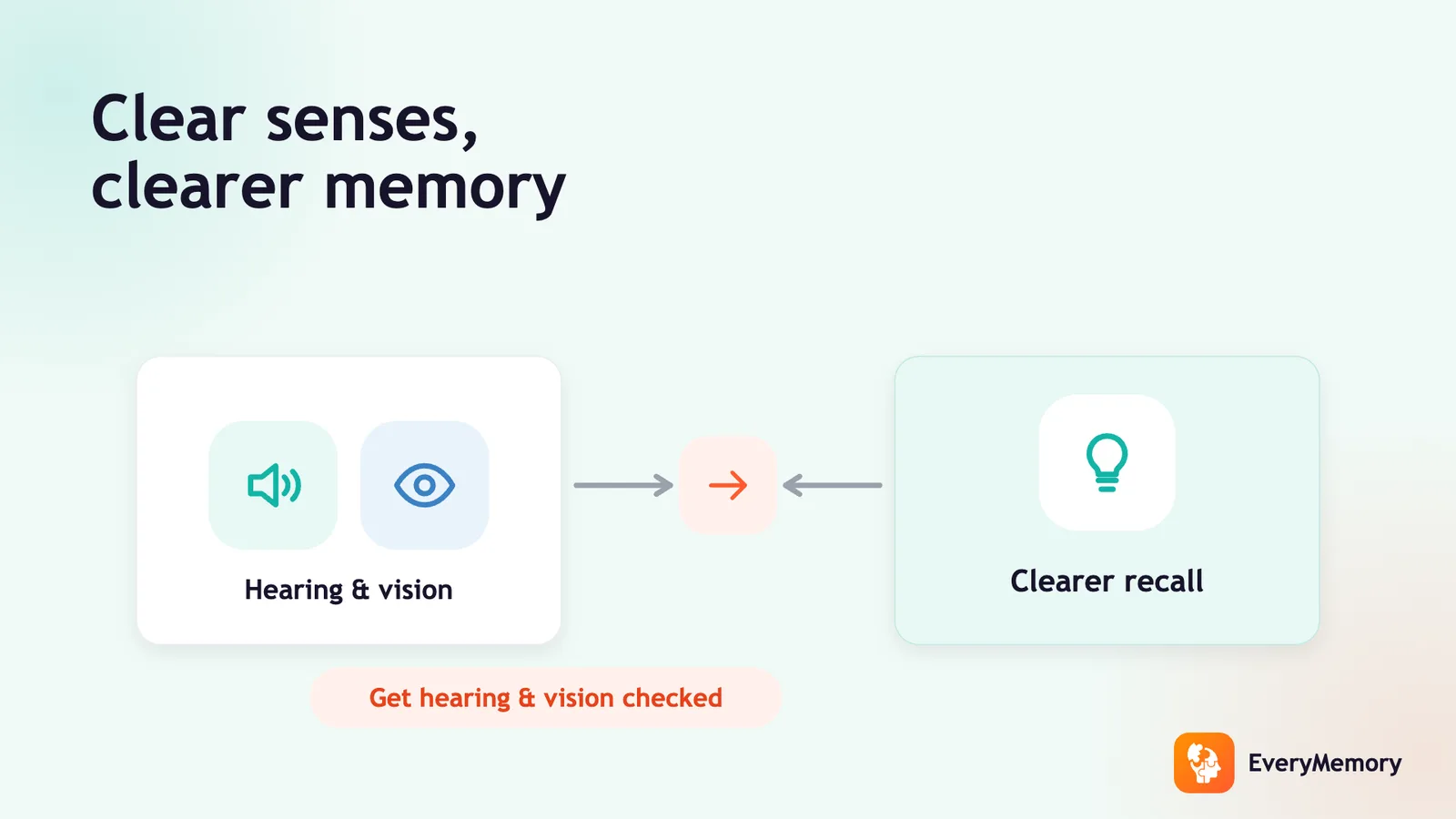
Hearing, Vision and Memory: Why They Matter
Uncorrected hearing or vision problems can look a lot like forgetfulness - and addressing them is one of the most straightforward ways to support sharper recall after 60.
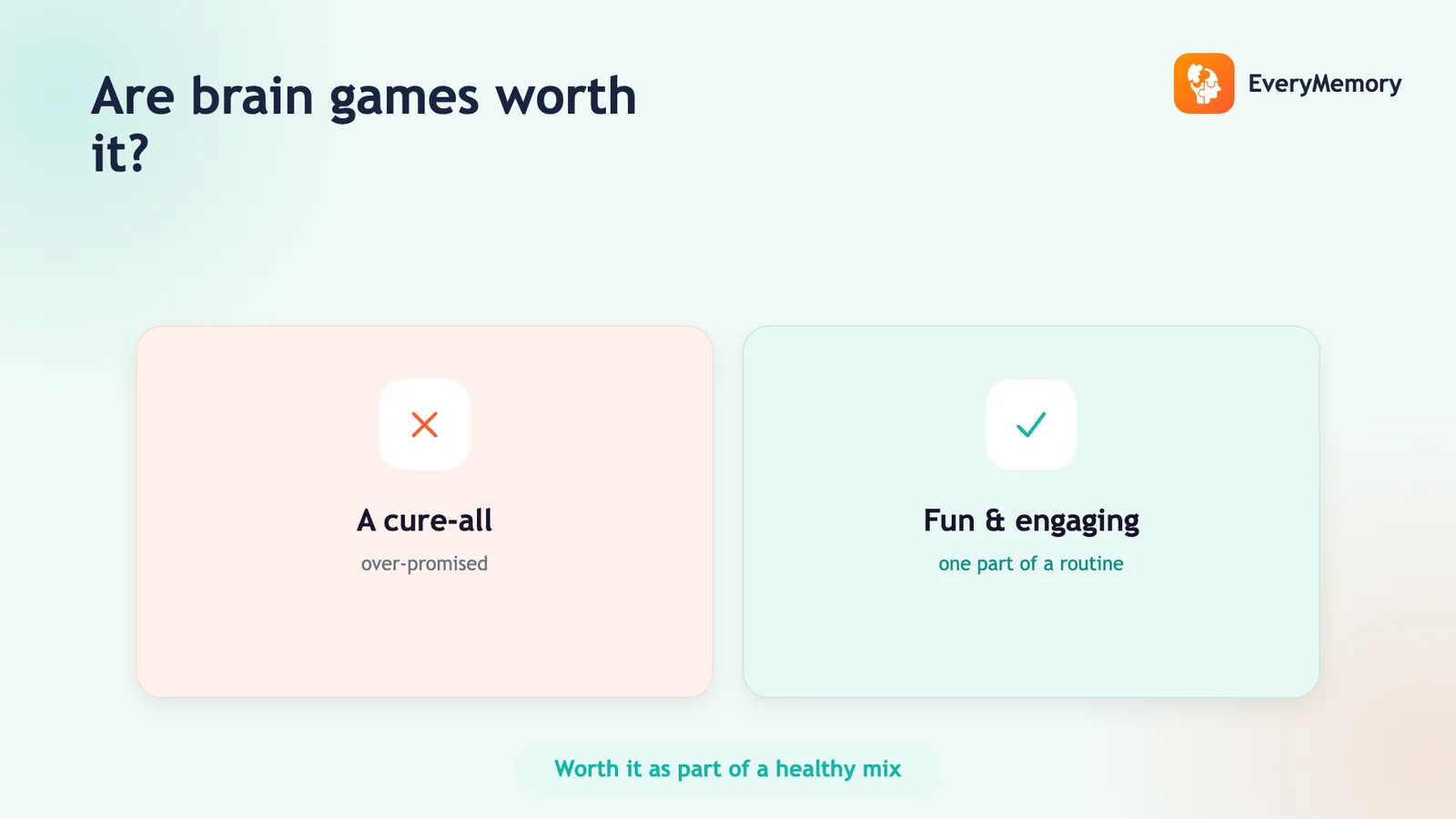
Are Brain Games Worth It?
Are brain games worth it? Honestly, yes for skill practice and habit, no for IQ or decline-prevention promises. Here's a balanced verdict and how to tell which apps deliver.
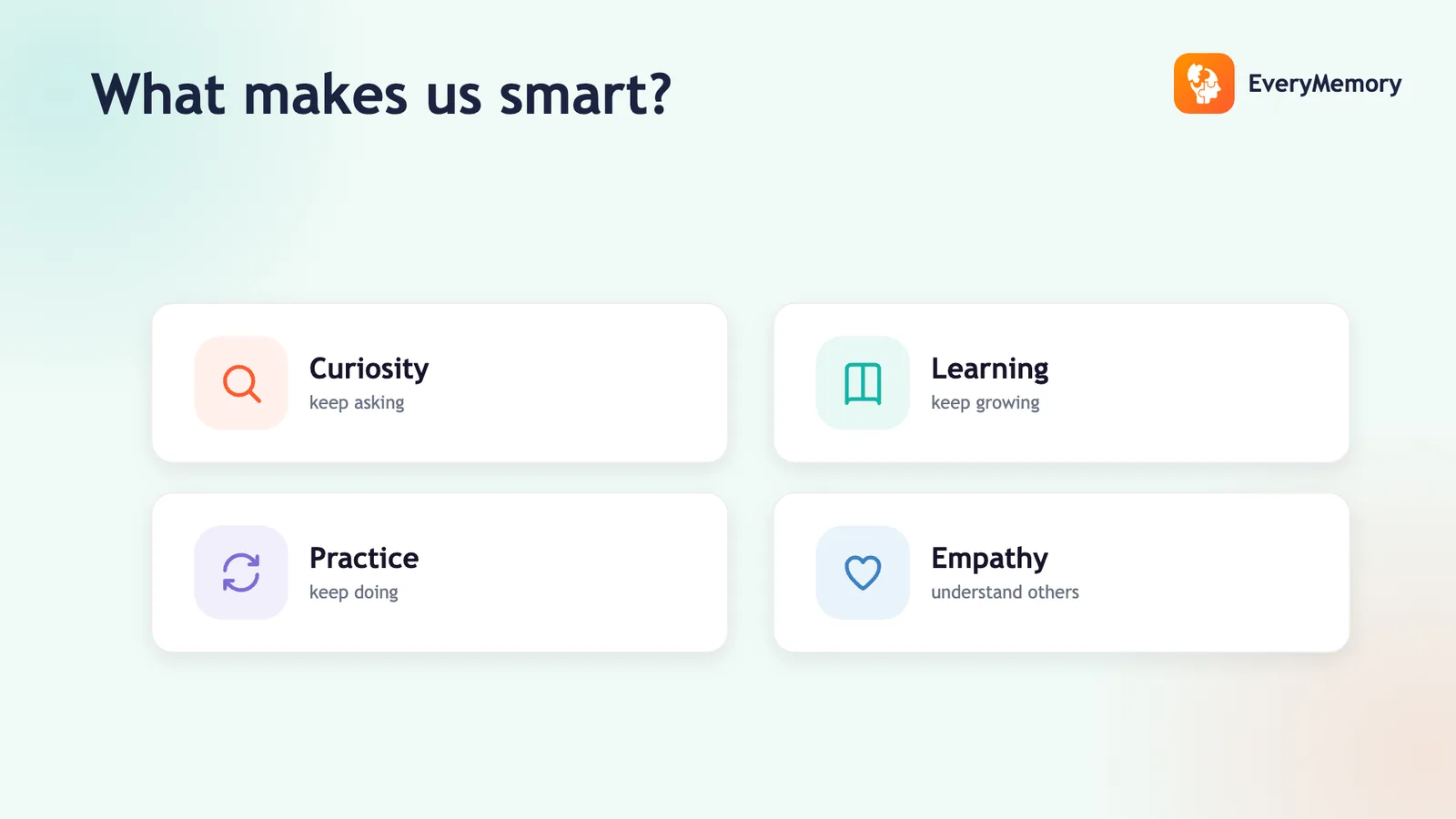
What Makes Someone Intelligent?
Intelligence is more than a test score. It's a blend of reasoning, knowledge, judgement, creativity, emotional skill, and drive - much of it built rather than born. Here's the honest, fuller picture.

How to Improve Your Problem-Solving Skills
Good problem-solving is a repeatable process - define the problem, break it down, generate options, test them - not a flash of inspiration you wait around for.
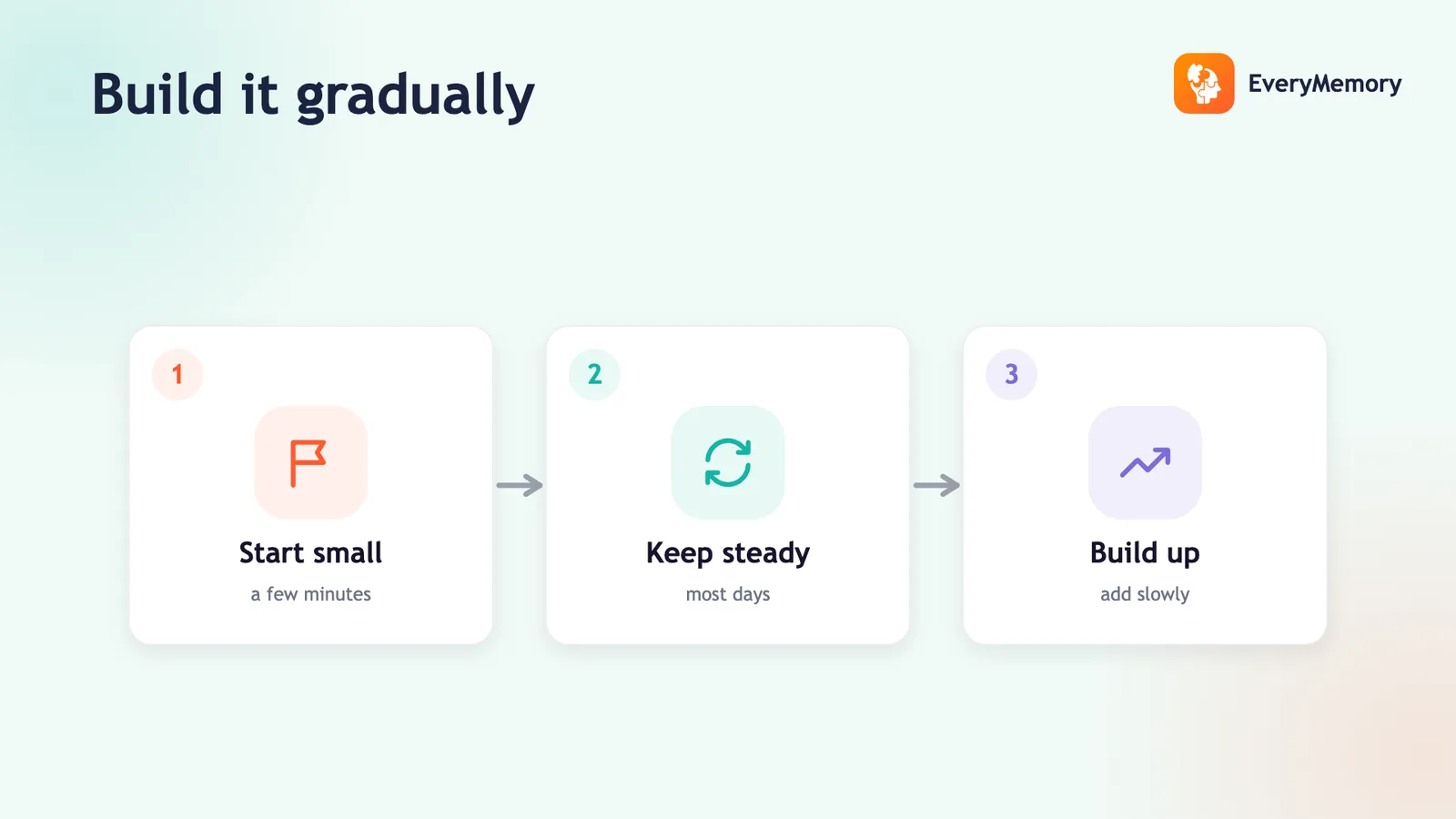
Mental Fitness: What It Is and How to Build It
Mental fitness is a mix of trainable skills like attention and working memory plus the everyday habits that keep them well supplied - and you build it the way you build any fitness, gradually.

Do IQ Tests Measure Intelligence?
IQ tests capture a real, useful slice of cognitive ability - but they don't measure all of intelligence, and they're shaped by education, language, and culture.

How to Improve Logical Reasoning
Logical reasoning improves when you learn the difference between valid and true, recognise common patterns, and slow down to check each step before drawing a conclusion.
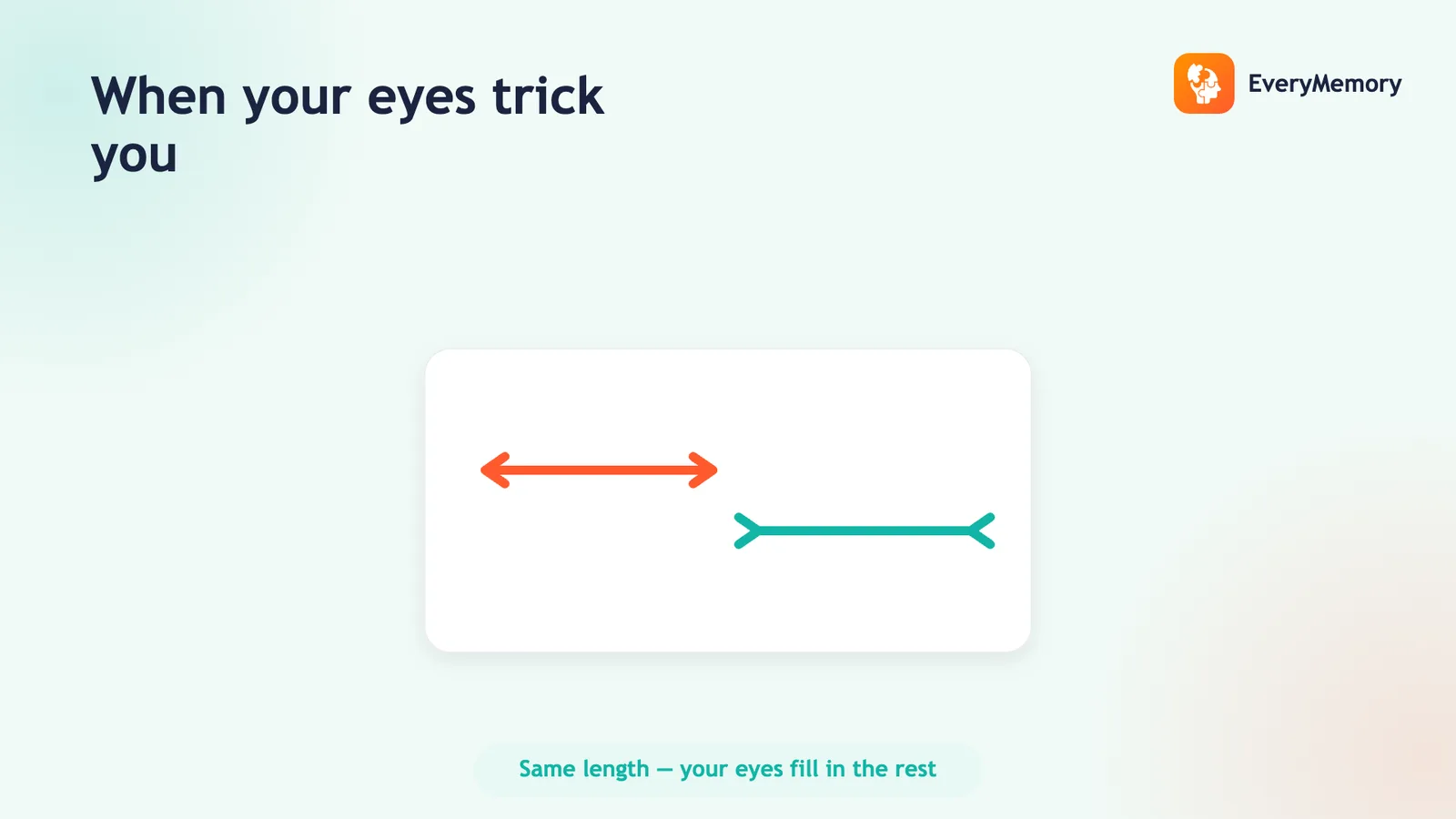
Optical Illusions and Attention
Optical illusions are less a brain workout than a window into how attention and perception work. Here's what they actually reveal - and why they don't "train" your brain.
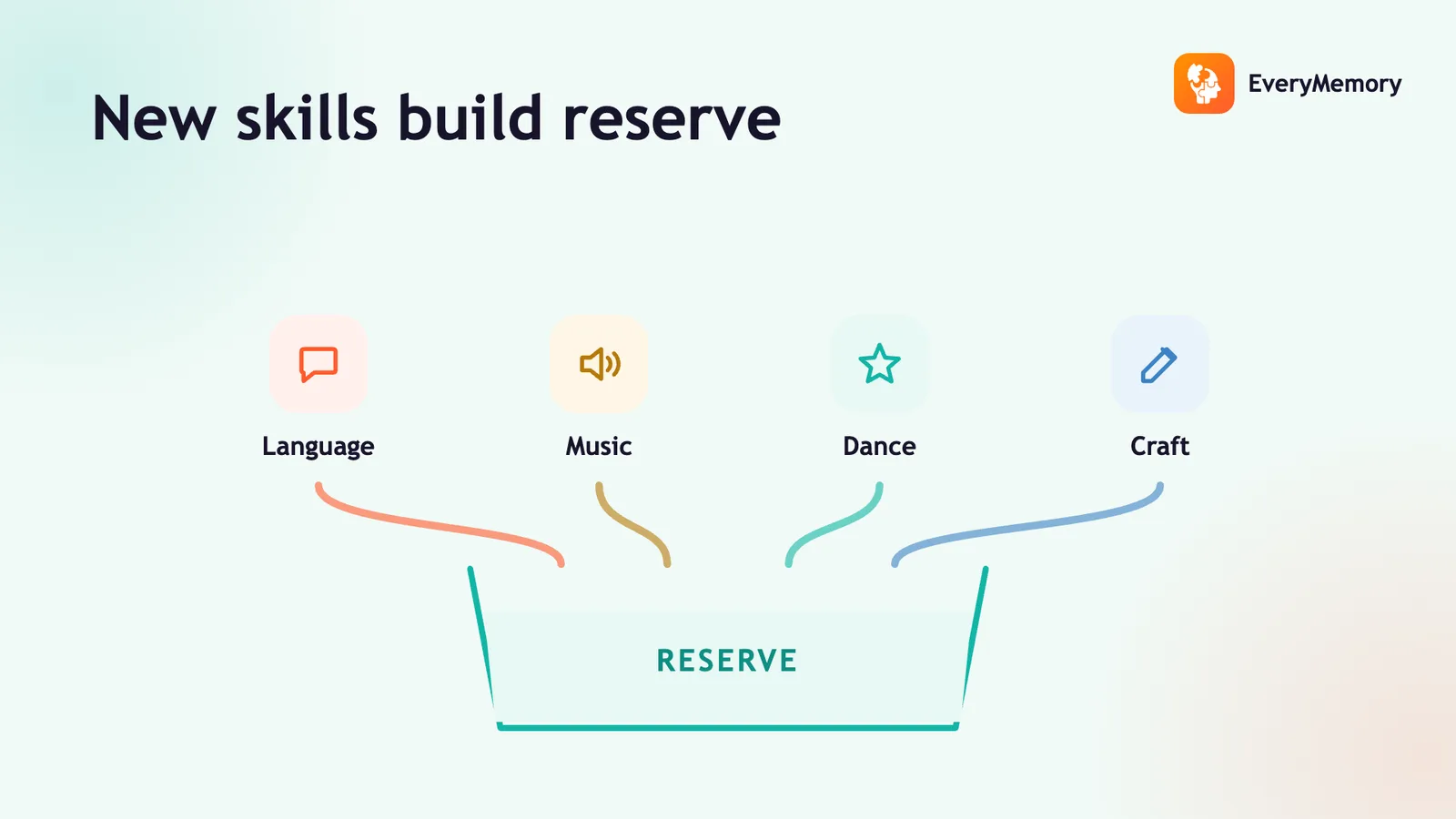
Learning New Skills and Brain Health
Picking up a language, an instrument, or a craft in your 50s, 60s, or beyond does more than keep you occupied - it engages the very mechanisms that support a resilient brain.

Can You Increase Your IQ?
You can sharpen specific skills and learn a great deal, but reliably raising your general IQ in adulthood isn't well established. Here's the honest, hedged picture.
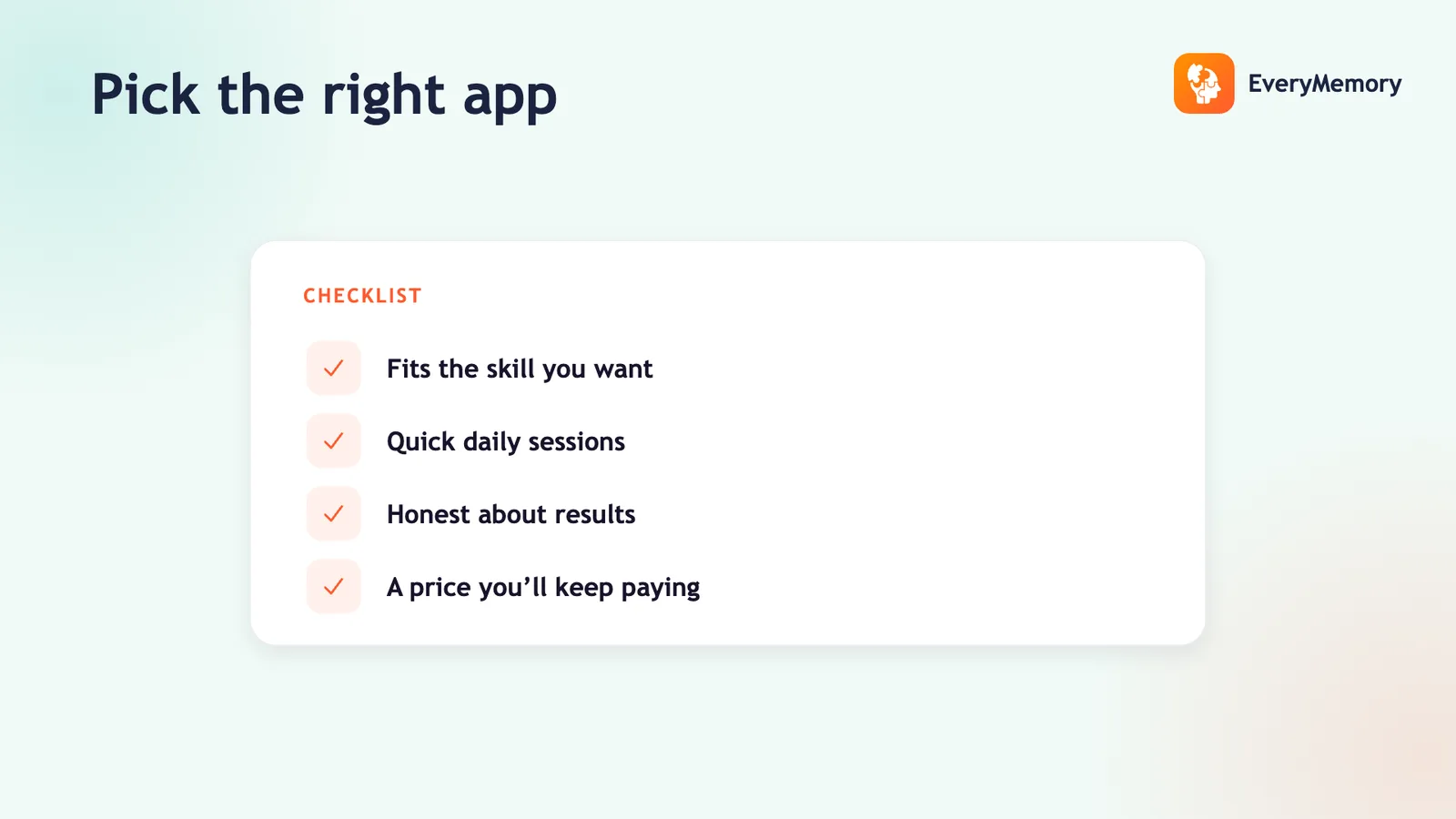
How to Choose a Brain Training App
A step-by-step way to choose a brain training app: define your goal, test whether it adapts, check the tracking is honest, and try it free before paying.
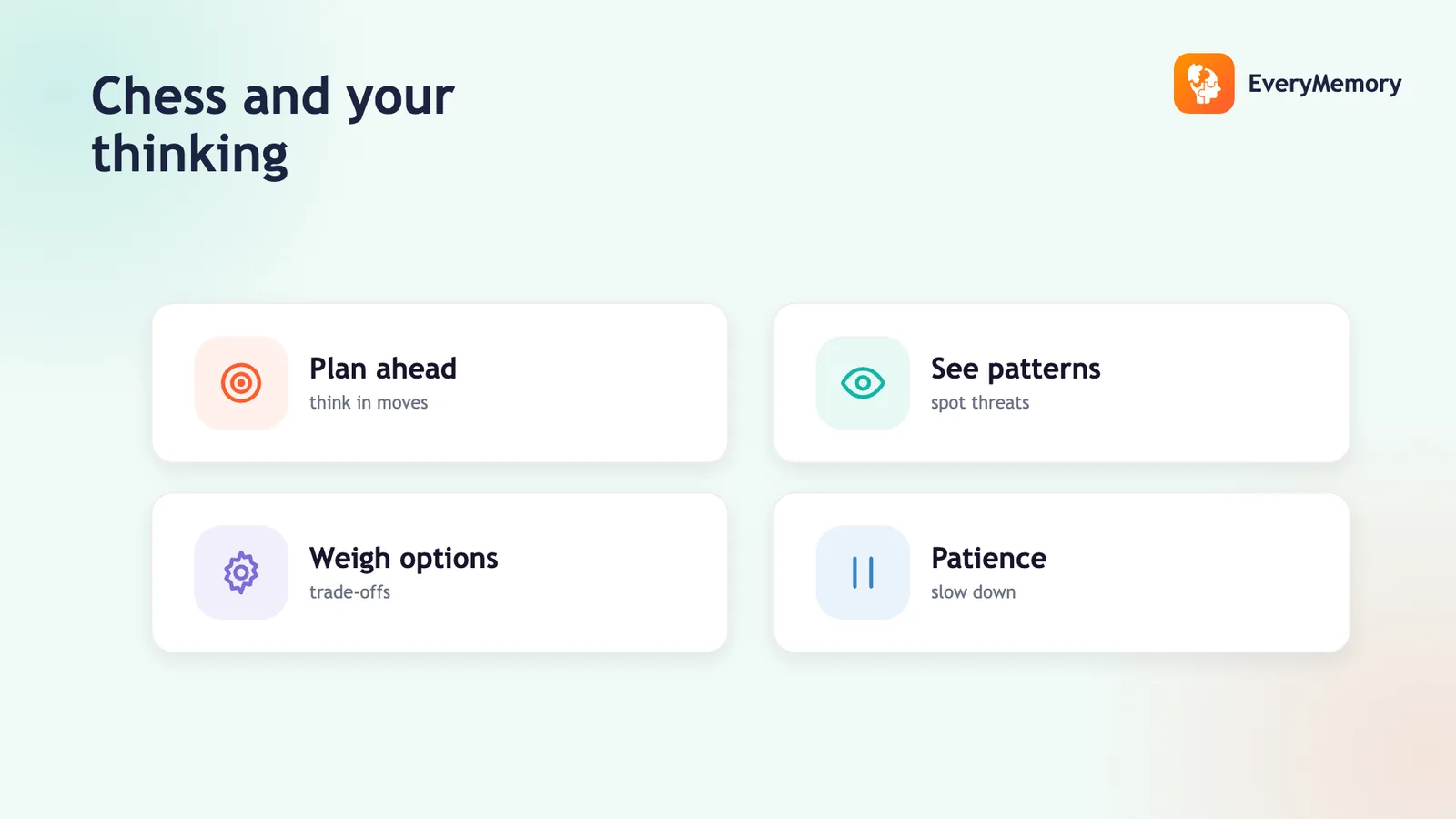
Chess and the Brain
Chess is a deep workout in planning and pattern recognition, and it's wonderfully absorbing. But the famous "chess makes you smarter" claim is shakier than it sounds - here's the honest version.

Mental Stimulation and Memory
Mental stimulation supports memory when it's genuinely novel and challenging - learning new things stretches the brain in ways that repeating familiar puzzles can't.
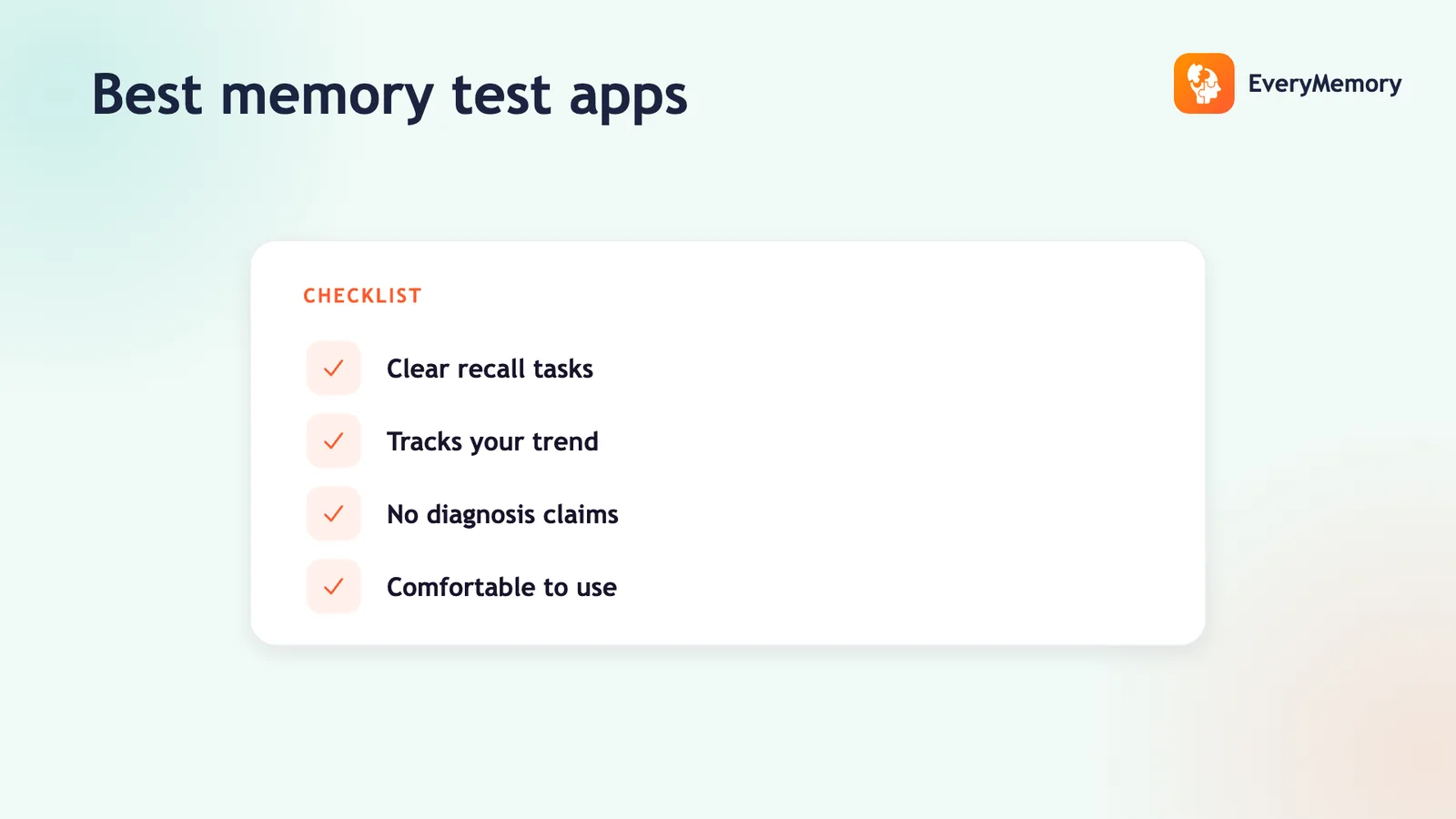
Best Memory Test Apps: What to Look For
The best memory test apps share a few honest traits: clear tasks, self-relative scoring, no fake percentiles and no medical claims. Here's the checklist to judge them by.
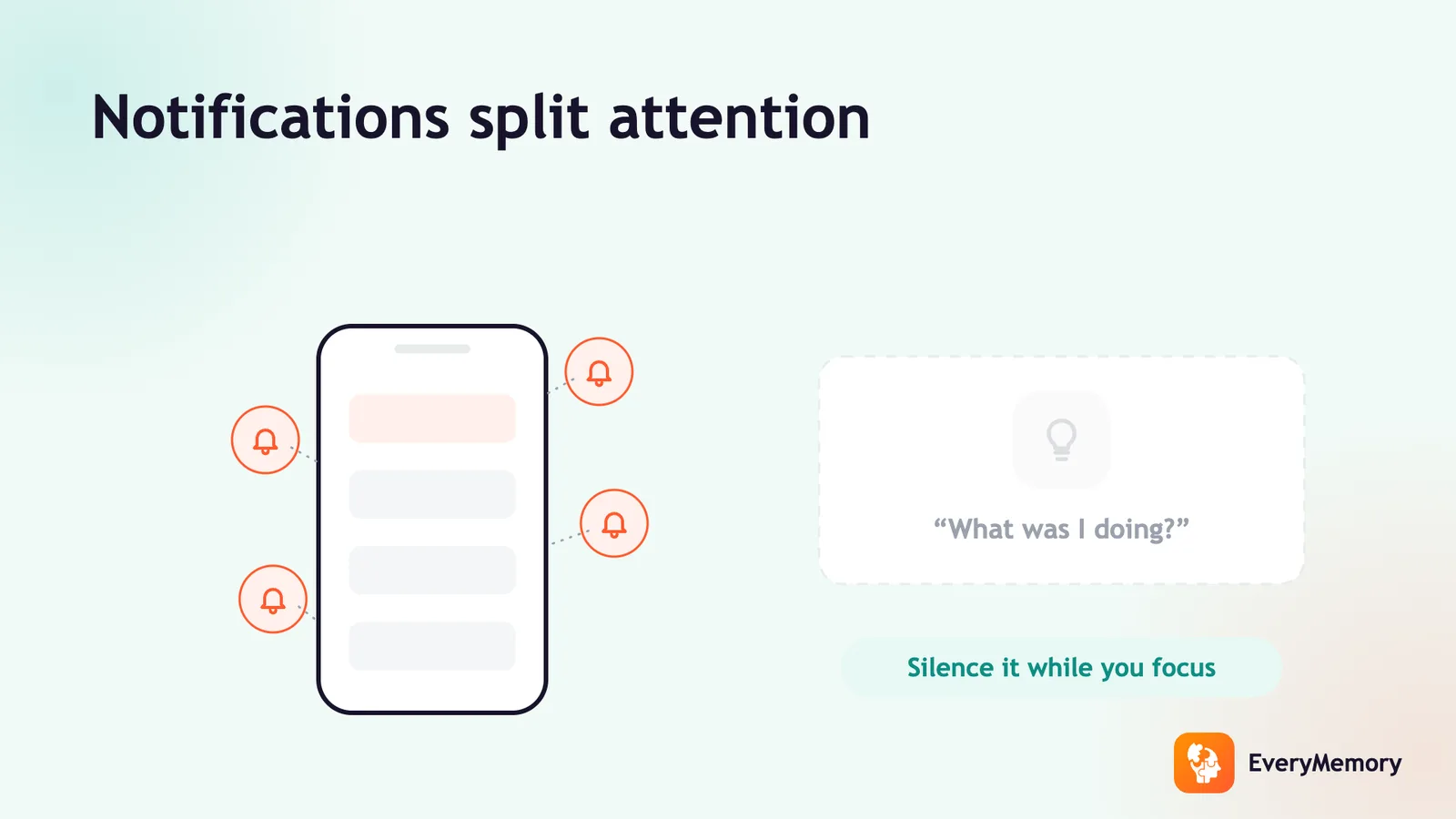
Are Smartphones Making Us Forgetful?
Phones aren't erasing your memory - but the way you use them can quietly undermine how information gets stored in the first place.

Brain Teasers With Answers
A set of brain teasers with answers and full explanations - the kind that catch you out - plus an honest note on what they train and what they don't.
How Pets Support Your Brain and Wellbeing
Companion animals can bring structure, movement, social connection, and a sense of purpose to daily life, all things that support a healthy, engaged mind.
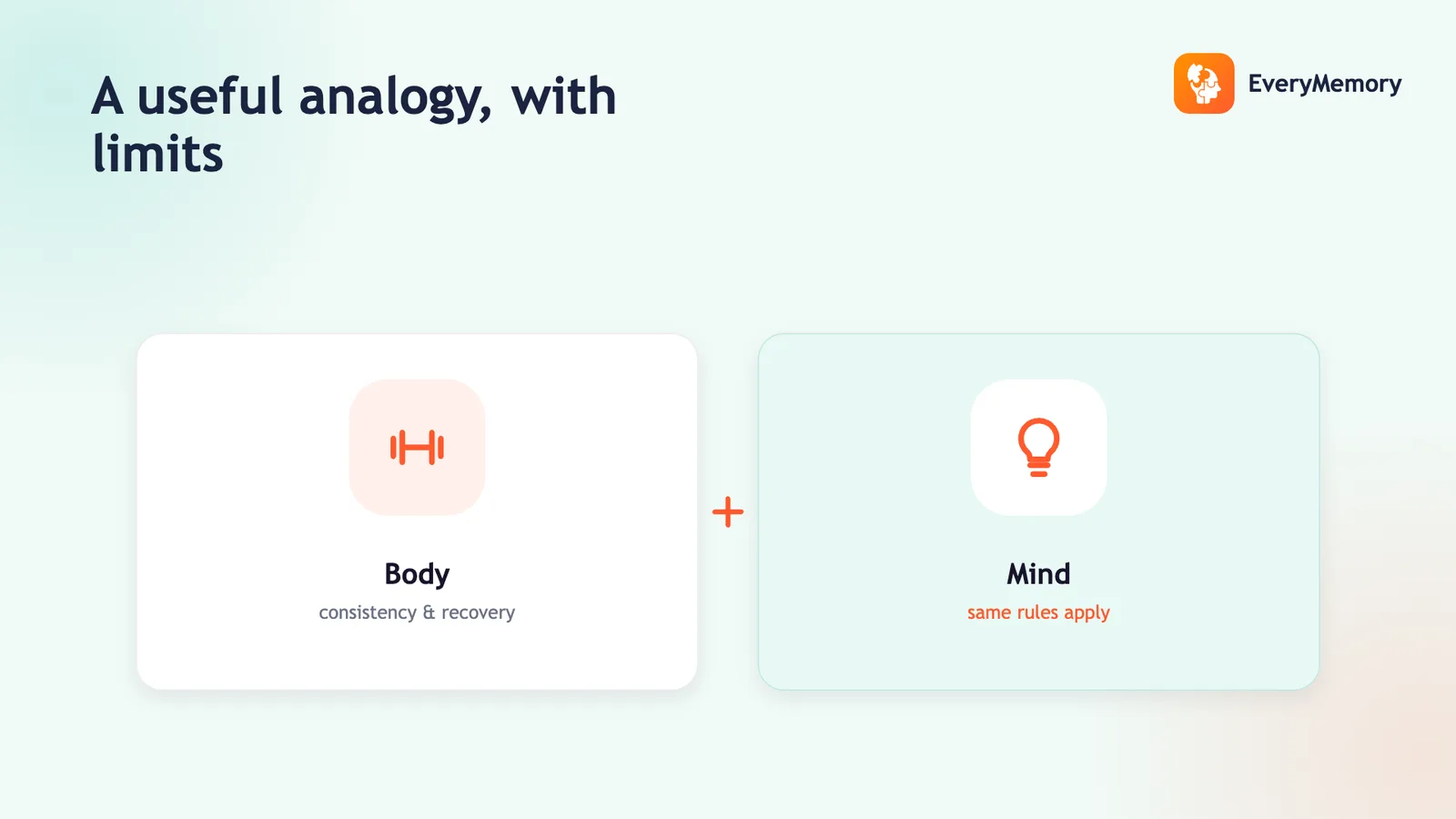
Brain Fitness vs Physical Fitness
The fitness analogy is genuinely useful - consistency, progressive challenge, and recovery all carry over - but it has honest limits, the biggest being that training a skill mostly trains that skill.
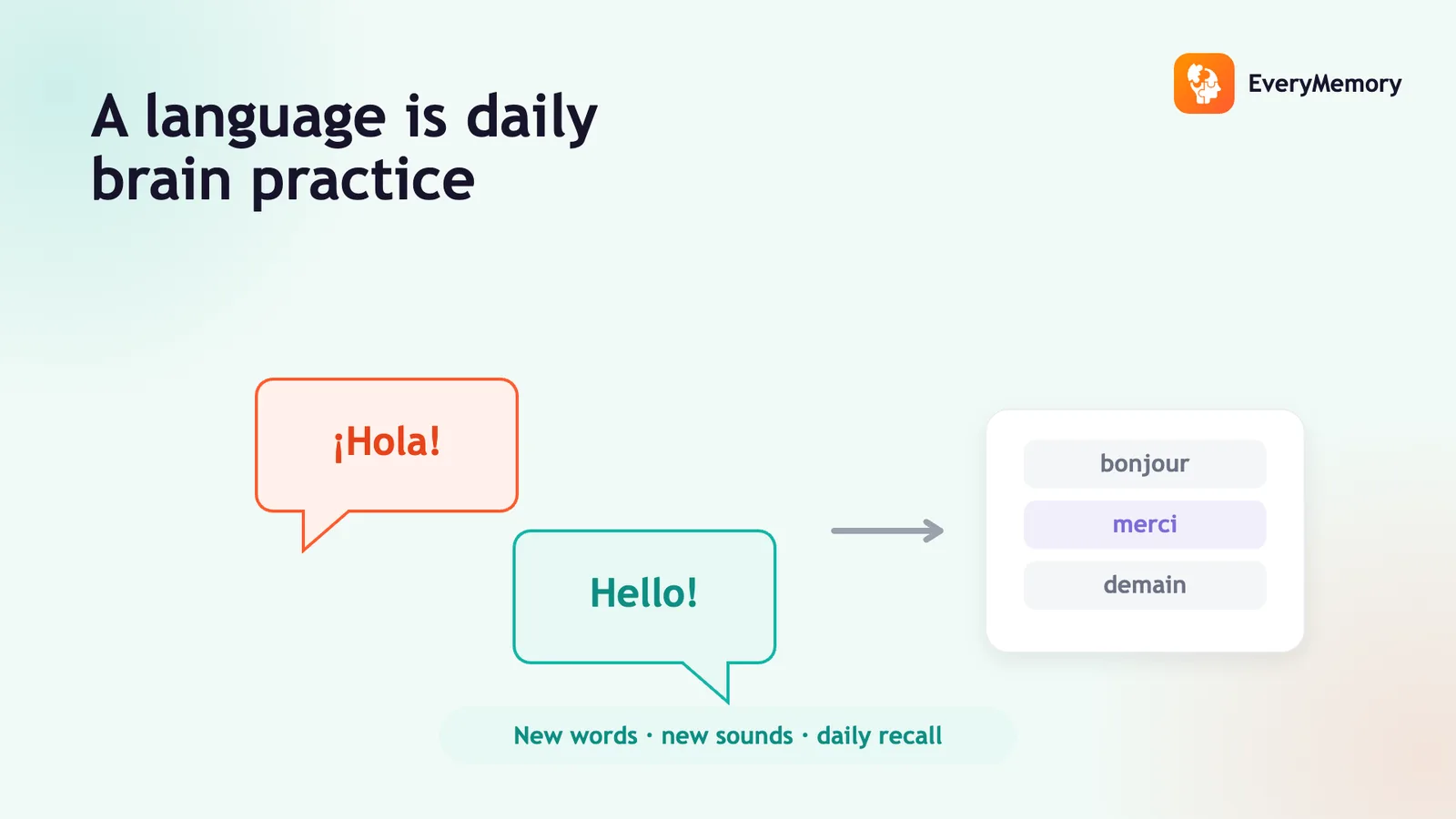
Learning a Language and Memory: What the Science Says
Picking up a new language as an adult does far more than teach you words - it exercises the very memory and attention systems that matter most as you age.
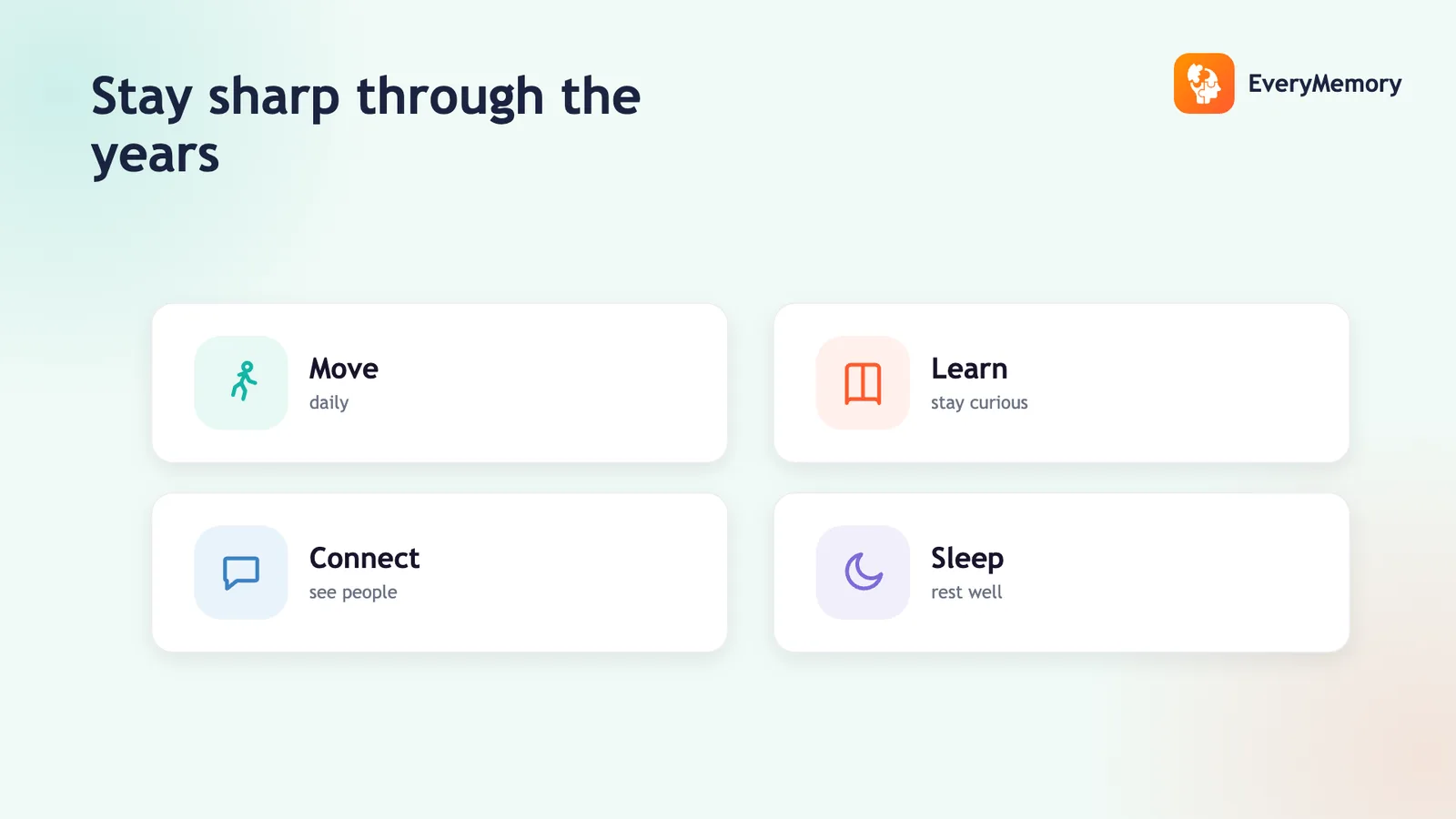
How to Keep Your Mind Sharp as You Age
Some changes in thinking are a normal part of getting older, and a handful of steady habits - movement, learning, connection, sleep - help you stay sharp through them.
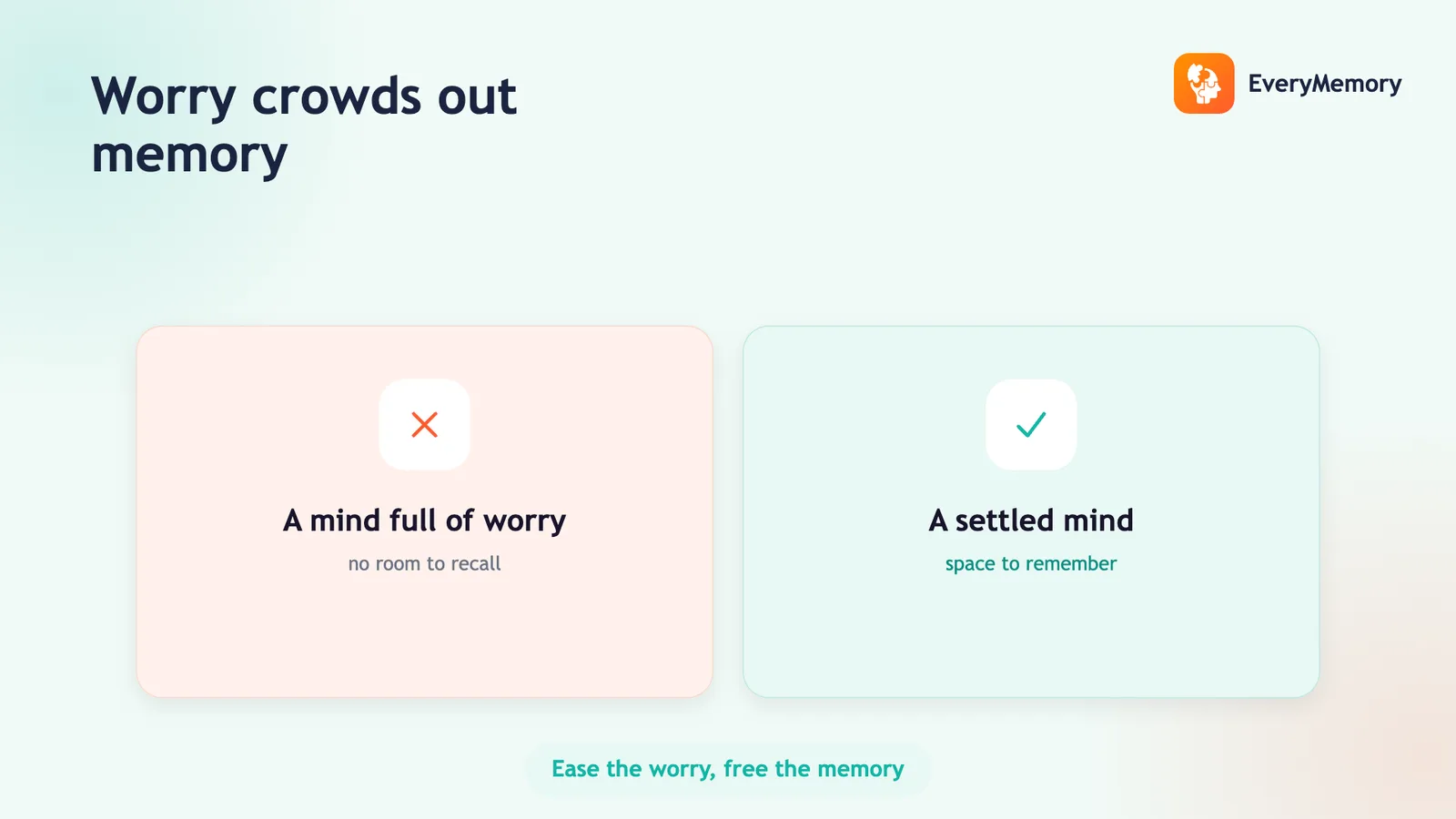
Worry and Forgetfulness
A mind stuck in a worry loop has little attention left for remembering - which is why anxious stretches so often come with everyday forgetfulness that eases when the worry does.
How to Keep Your Brain Healthy: A Complete Lifestyle Guide
Sleep, movement, diet, stress, social life, hearing - the research-backed habits most consistently linked with a sharper, more resilient brain as you age.
Spot the Difference and Attention
Spot-the-difference is a genuine visual-attention task - it trains how carefully you scan and compare. Here's what it really exercises, honestly, and where the limit is.
Brain Health After 60
After 60, slower recall and more tip-of-the-tongue moments are common and usually normal - and staying active, social, and mentally engaged supports a sharp mind.
Does Spending Time in Nature Help Your Brain?
Time in green space can restore tired attention and lower stress - both of which support memory. A simple, pleasant brain habit, even in short doses.
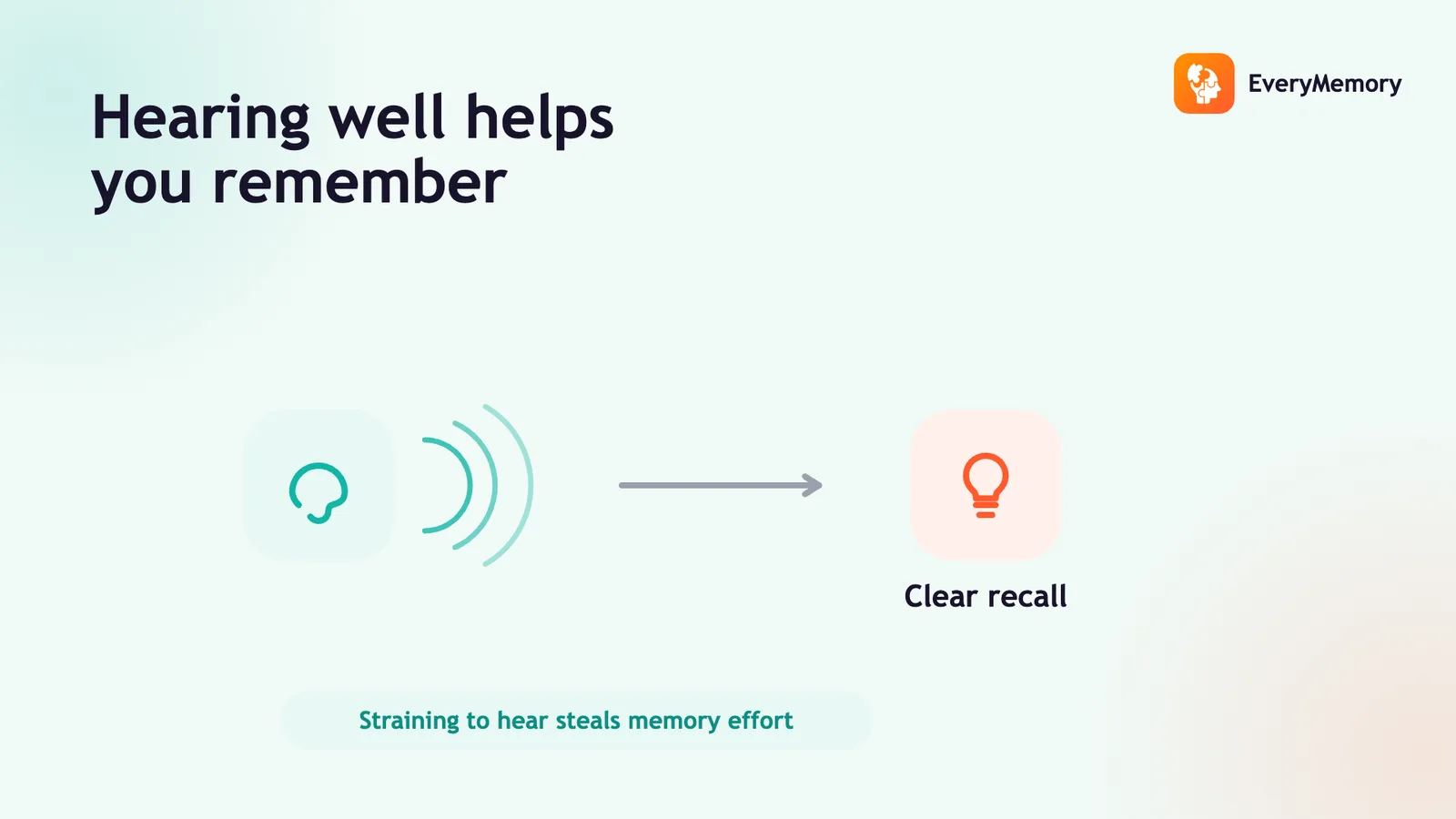
Hearing and Memory: Why It Matters More Than You Think
Struggling to hear clearly doesn't just make conversation harder - it quietly drains the mental resources you need to remember things, in ways that are easy to miss.
Smell and Memory: Why a Scent Brings Back the Past
A whiff of sunscreen and you are eight years old at the beach again. Here is the fascinating brain science behind why scent memories feel so vivid, emotional, and old.
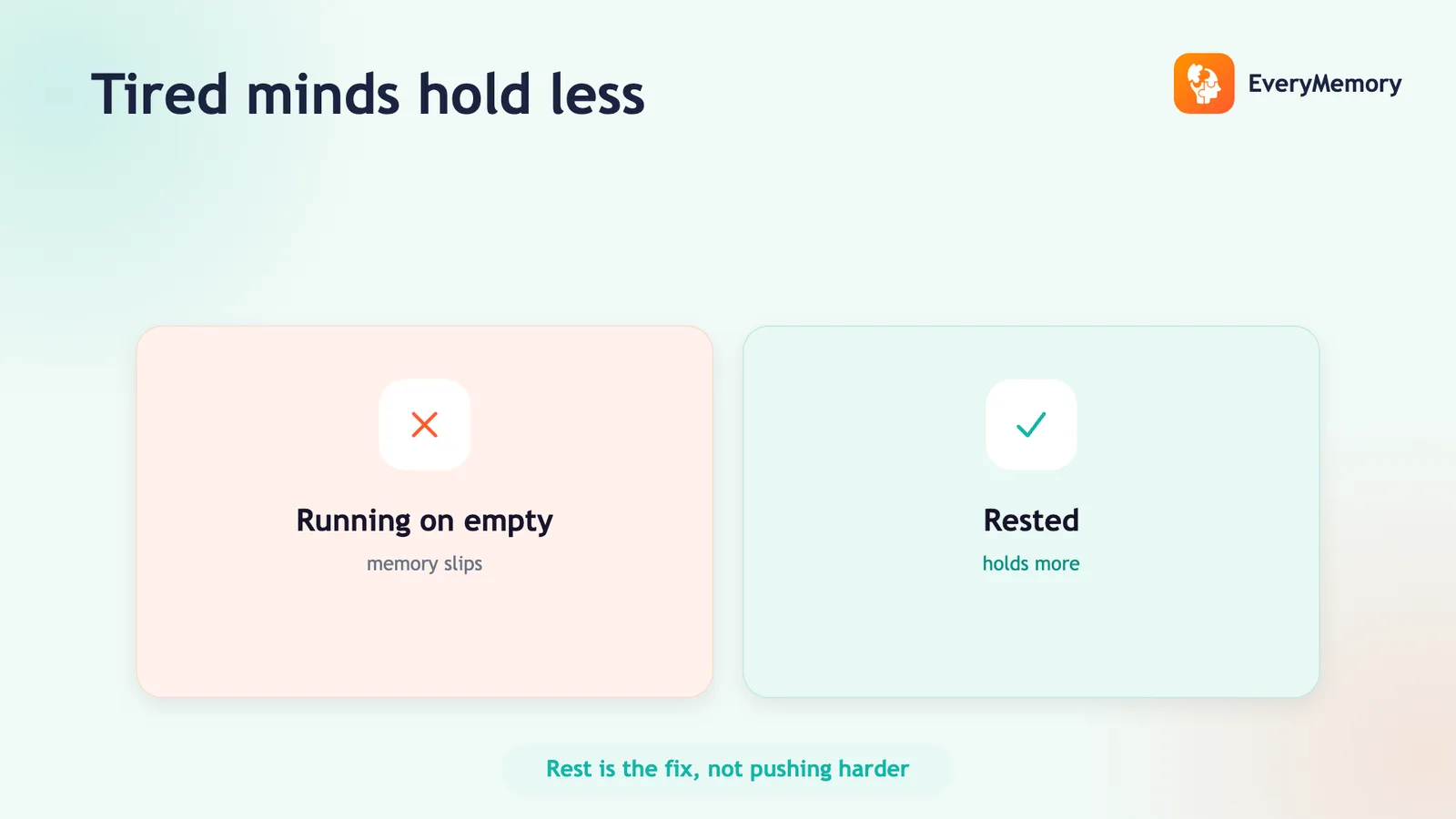
Mental Fatigue and Memory
When your mind is worn out, encoding falters and everything feels harder to hold - mental fatigue is a real drain on memory, and the fix is usually rest, not effort.
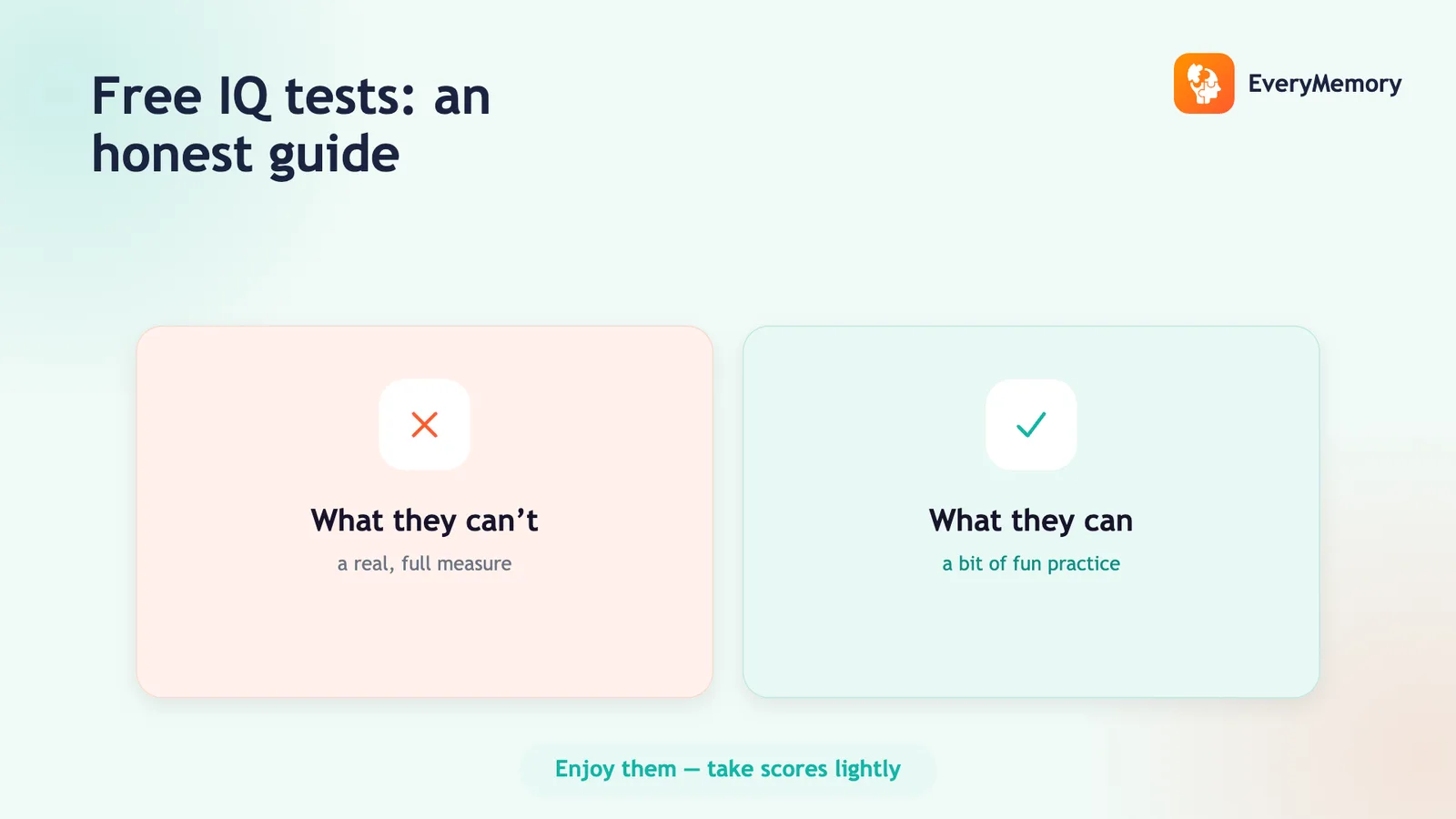
Free IQ Tests: An Honest Guide
Most free online IQ tests aren't real IQ tests - they're engagement machines built to flatter you and sell certificates. Here's how to spot the difference and what they can actually tell you.

Emotional Intelligence, Explained
Emotional intelligence is the ability to recognize and manage emotions - yours and others'. It's a genuinely useful concept, even though it's measured imperfectly. Here's the honest version.
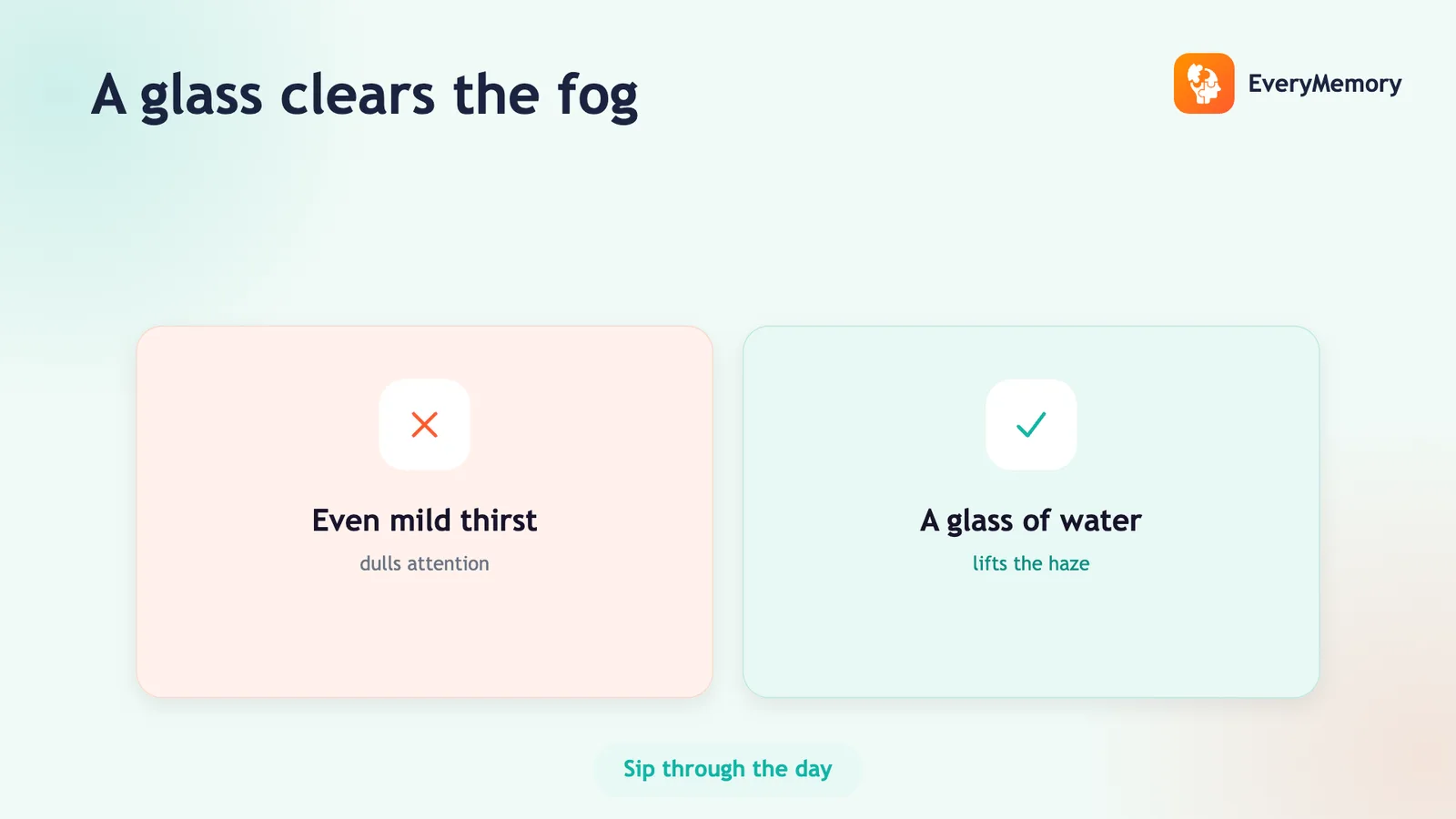
Can Dehydration Affect Your Memory?
Even mild dehydration can leave you foggy and reduce focus and short-term memory - and it's quickly reversible. A simple thing to rule out first.
Deliberate Practice: How to Actually Get Better at Anything
Most people plateau because they practice the same way indefinitely. Psychologist Anders Ericsson spent decades studying how experts actually develop - and the answer is more precise, more effortful, and more rewarding than simply putting in the hours.
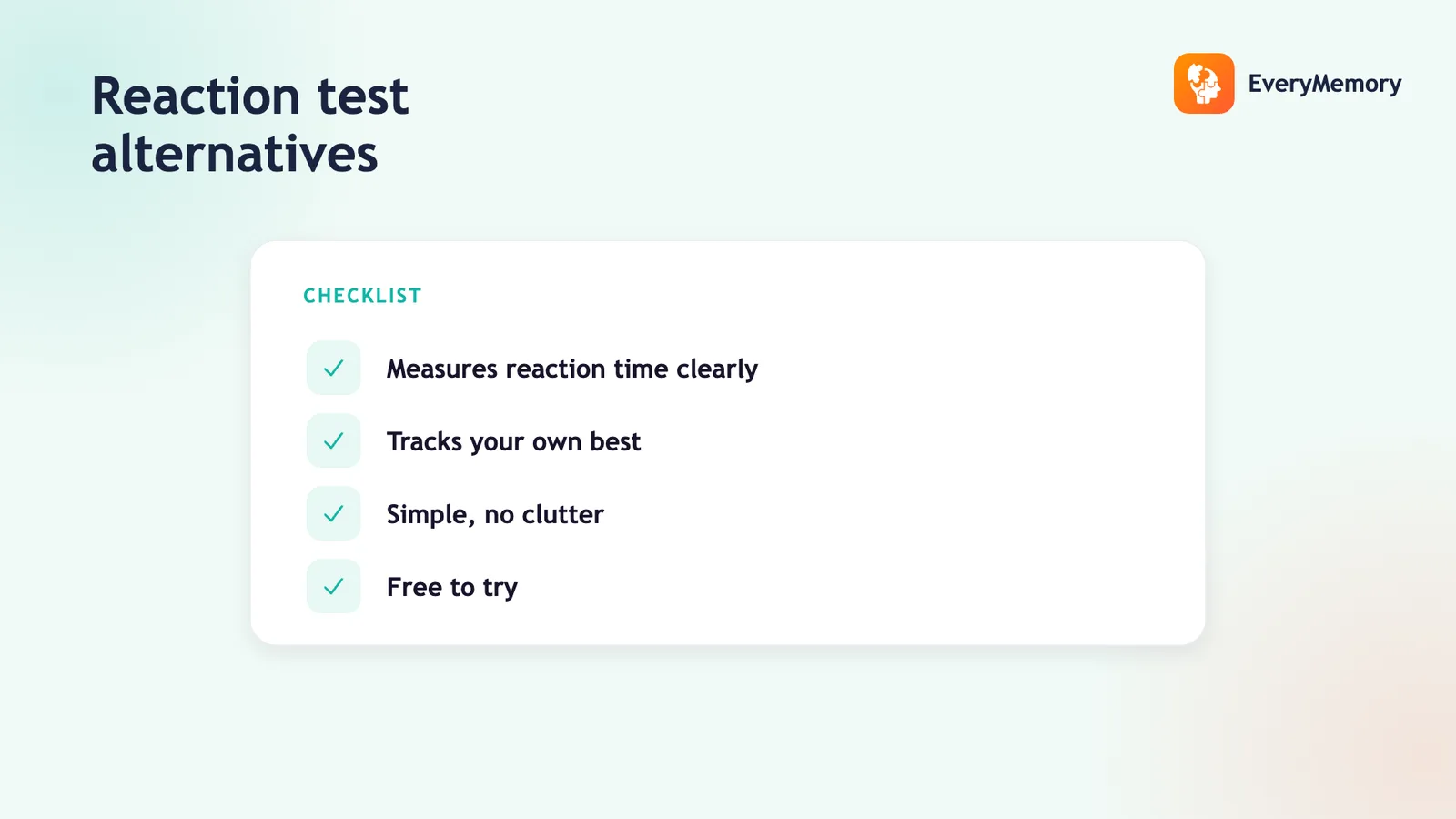
Human Benchmark Alternatives
Looking for a Human Benchmark alternative? Here are the criteria that actually matter - adaptive difficulty, honest tracking, no fake percentiles - and how to pick well.
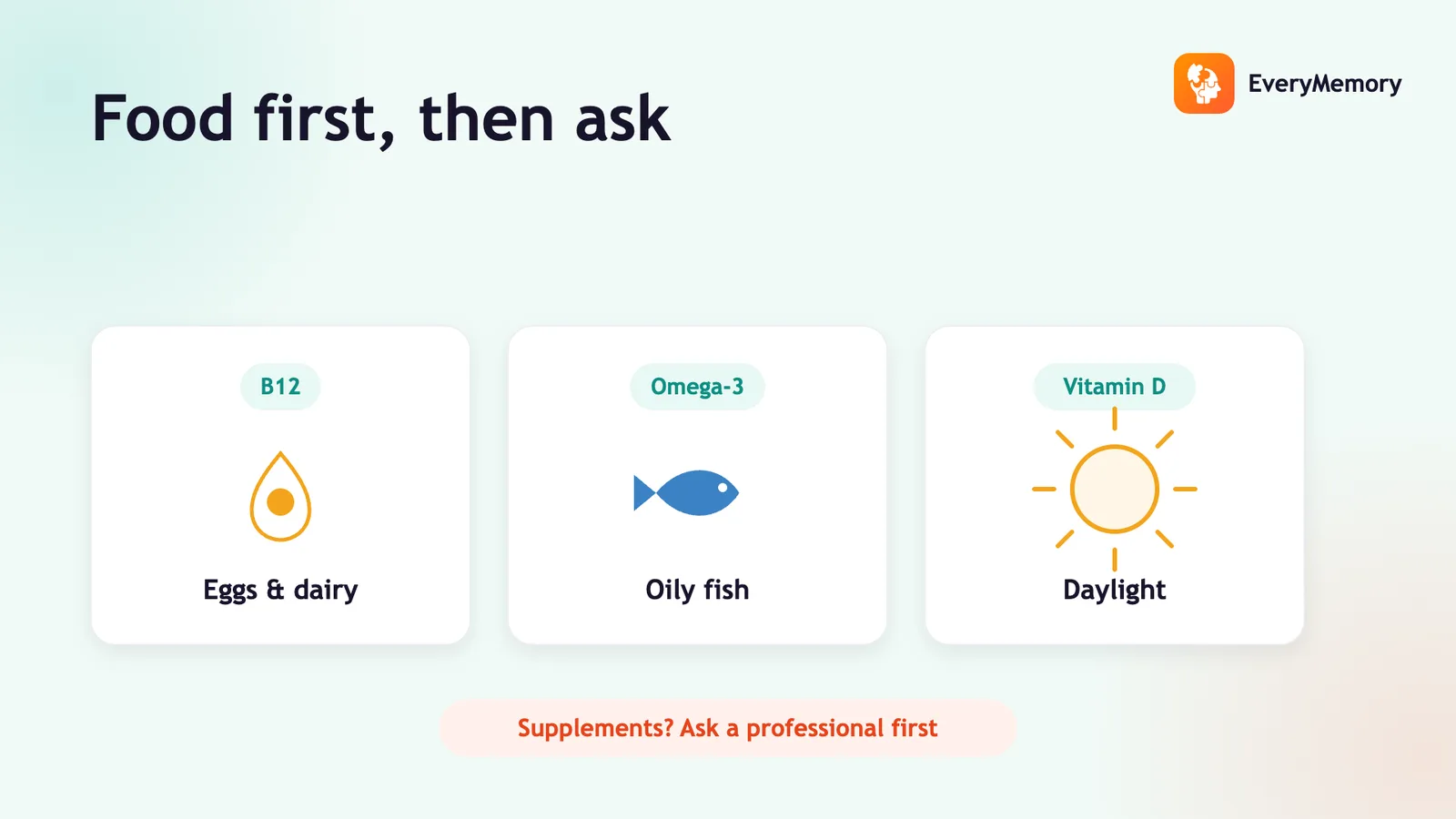
Vitamins and Memory: What the Evidence Shows
An honest, calm look at the nutrients most linked with brain health - B12, omega-3, vitamin D, and more - and why food comes first.
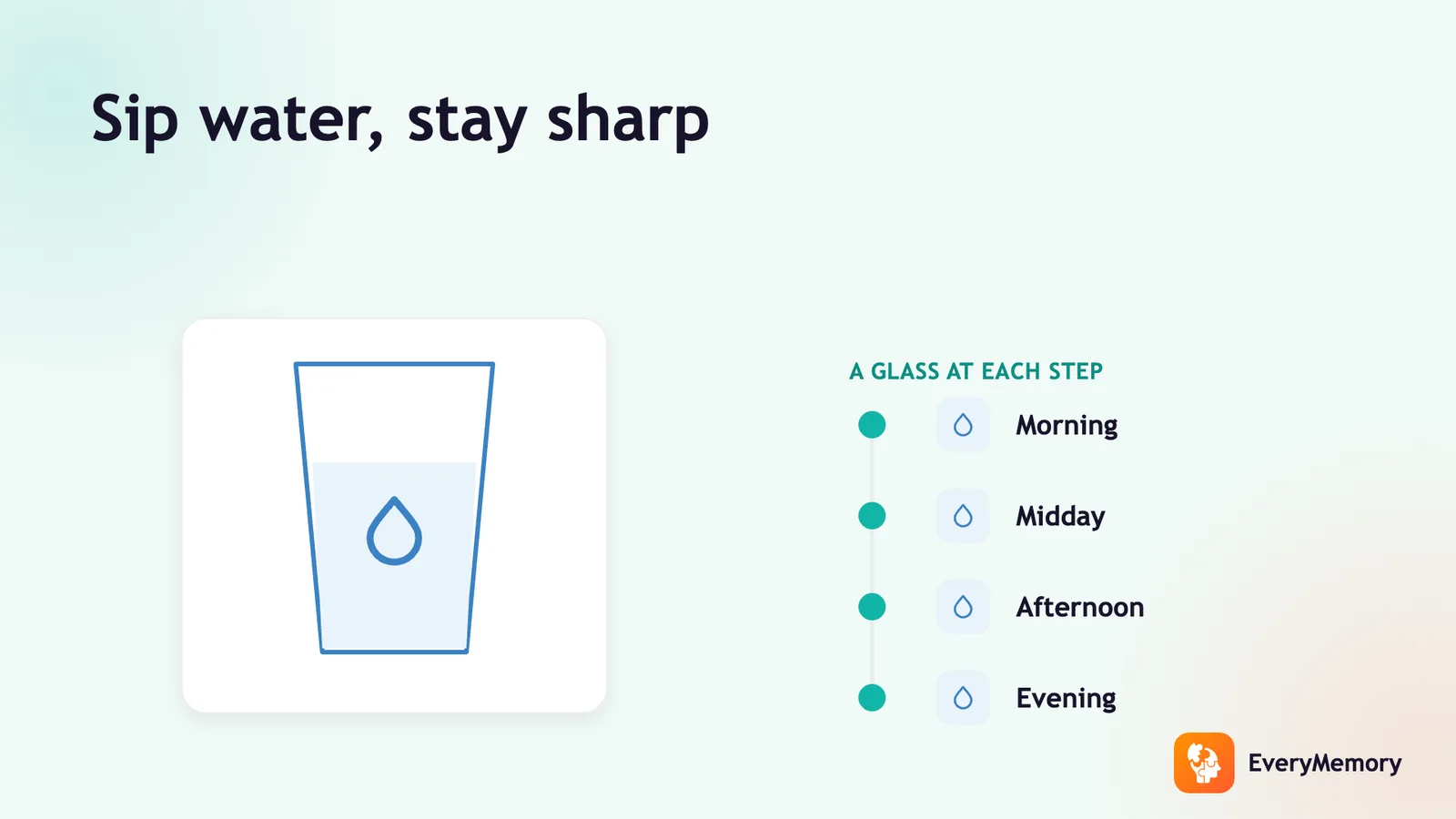
Hydration and Focus in Older Adults
Even mild dehydration can noticeably affect concentration, recall, and mood - and older adults are more vulnerable to it. Here's what to know and how to stay on top of it.
Brain Foods: What People Eat for Memory and Focus
A practical look at the foods most commonly associated with memory, focus, and everyday brain health, no hype, no medical claims, just honest nutrition context.
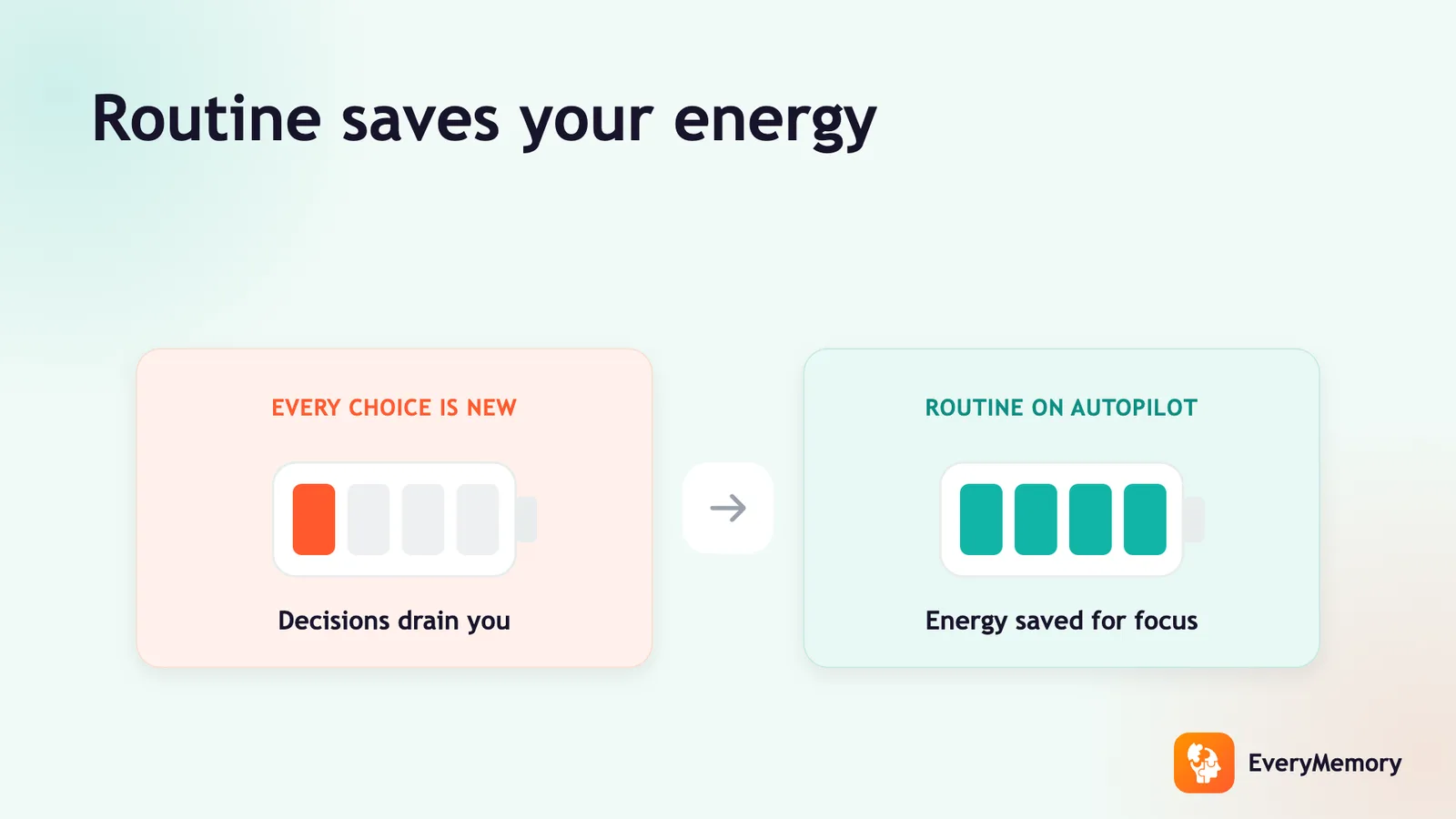
Why Routine Matters for Focus
A predictable daily structure reduces the mental load of decision-making, freeing up attention for the things that actually matter. Here's how to build one that works.
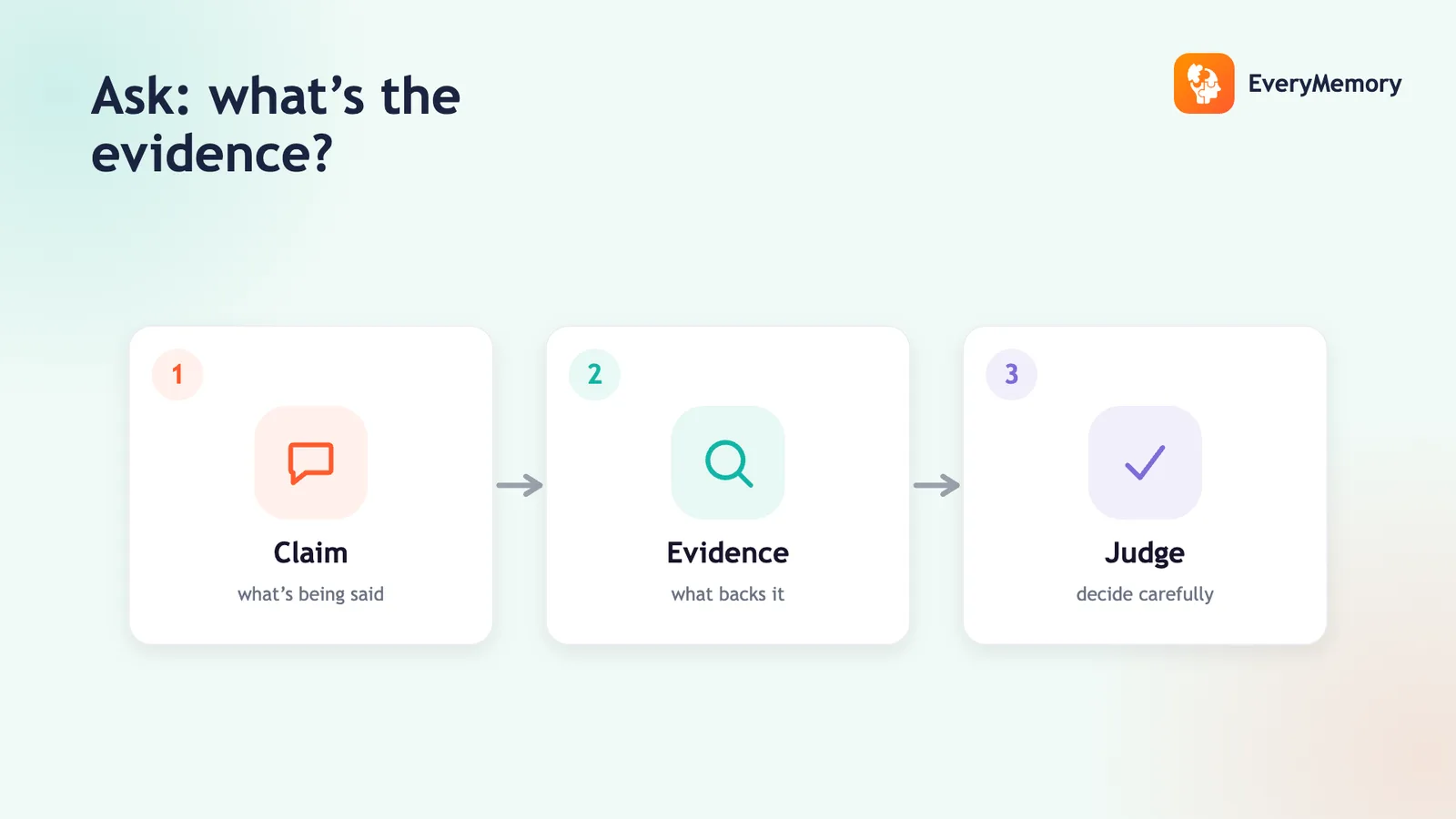
How to Improve Critical Thinking
Critical thinking is a set of habits - asking what the evidence is, separating claims from facts, and checking your own assumptions - that you can deliberately practise.
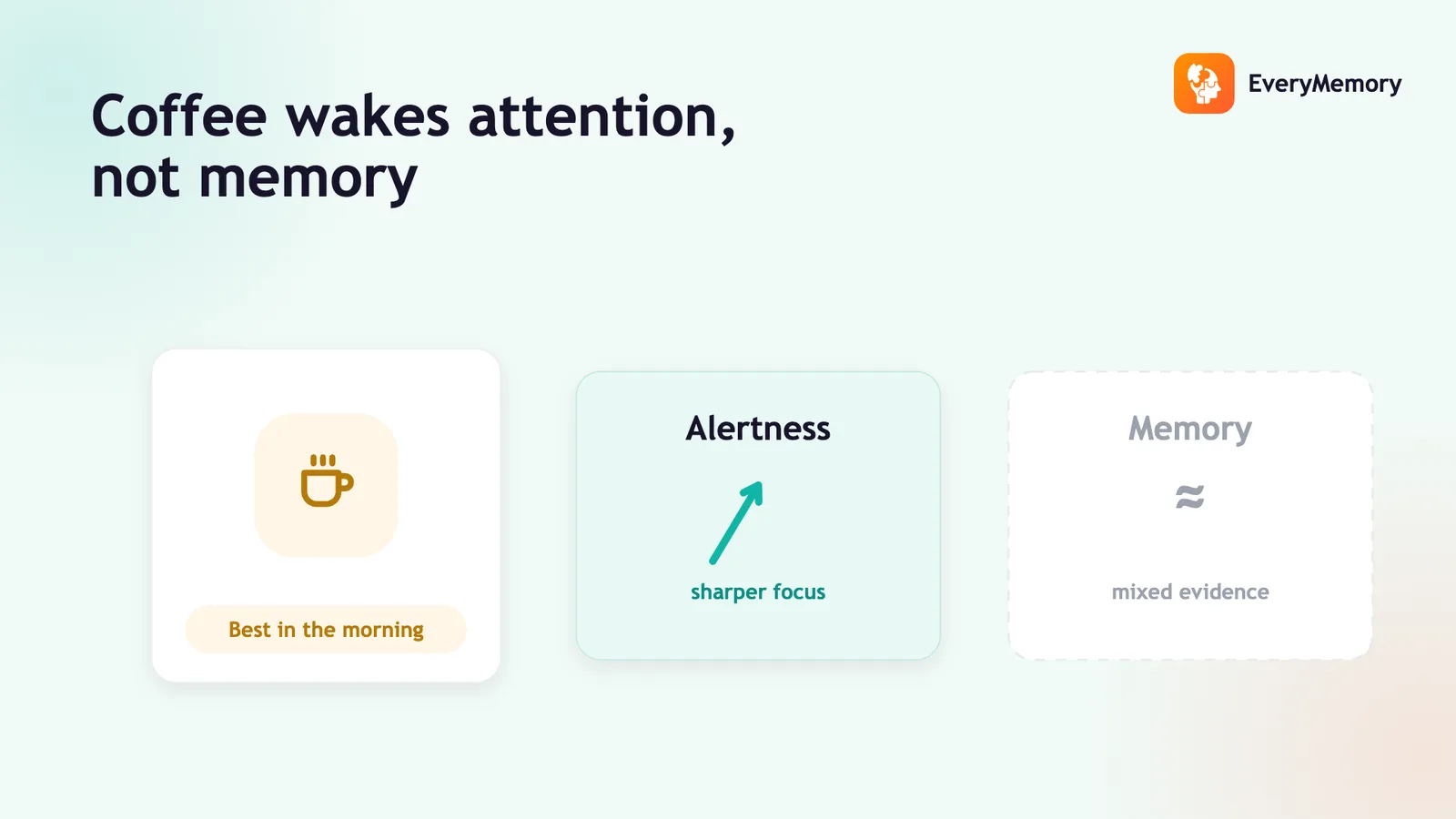
Caffeine and Memory: What Coffee and Tea Actually Do
Caffeine sharpens alertness and attention reliably - but its relationship with memory is more nuanced, and timing matters more than most people realise.
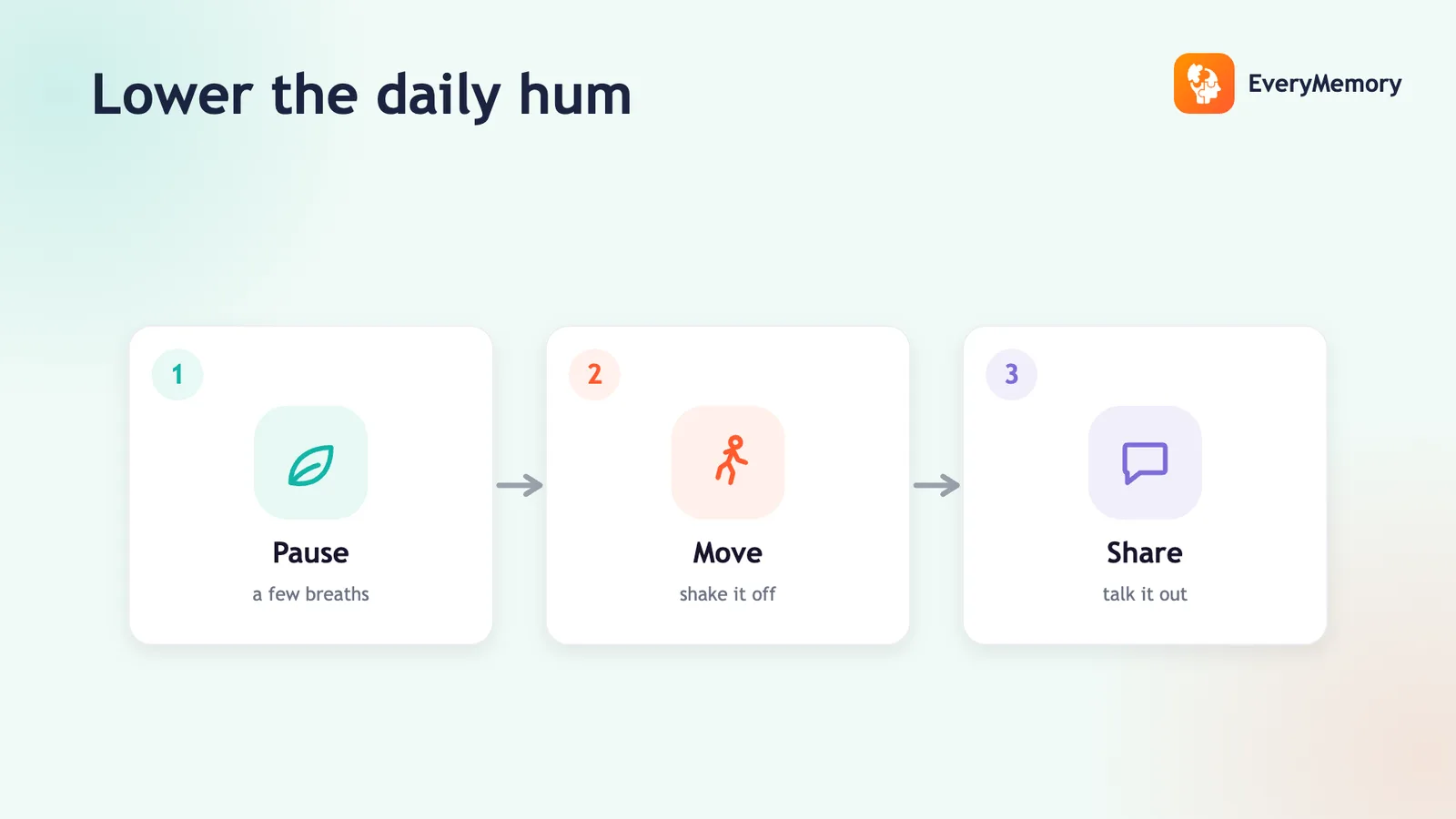
How to Reduce Stress
You can't delete stress, but you can lower the daily hum that crowds out focus - these are simple, everyday techniques that give attention and memory more room.
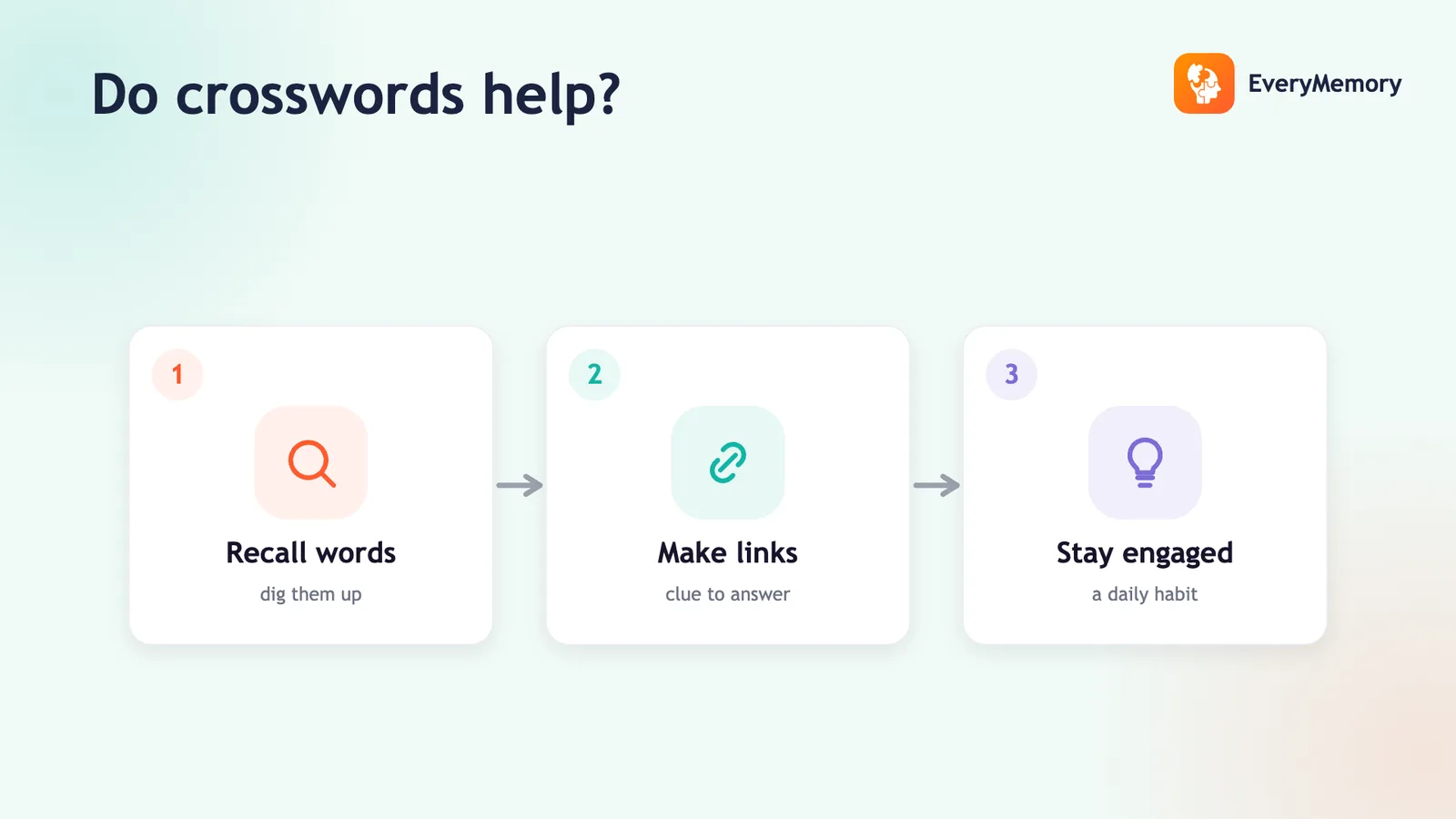
Are Crosswords Good for Your Brain?
Crosswords are a rich workout for vocabulary and verbal recall, and they're genuinely absorbing. But like all puzzles, the benefit is mostly crossword-specific - here's the honest read.
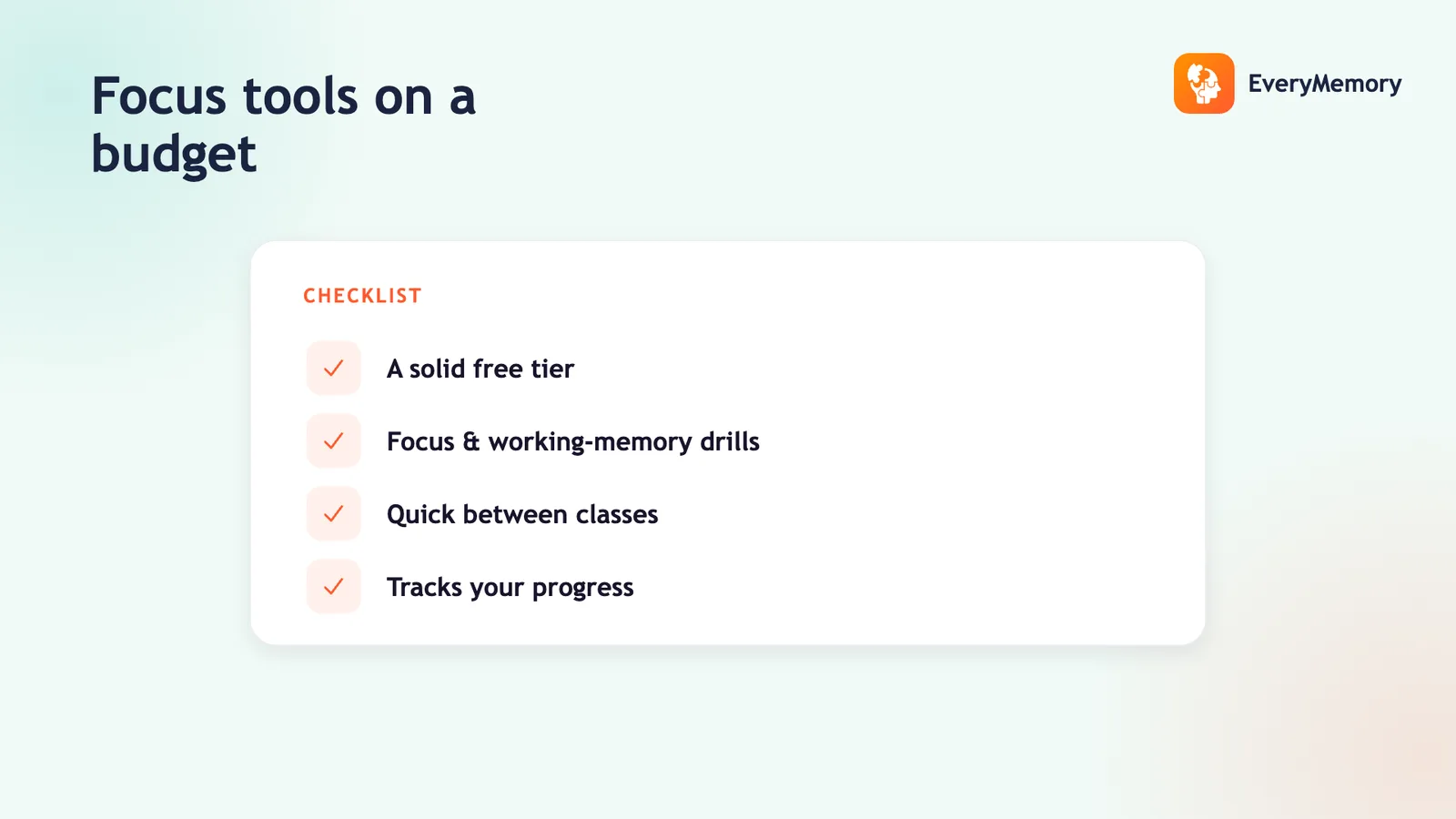
Brain Apps for Students: What to Look For
What to look for in a brain app as a student - working-memory and focus training, adaptive difficulty, honest claims, and a free tier that fits a tight budget.
Does Meditation Help Memory and Focus?
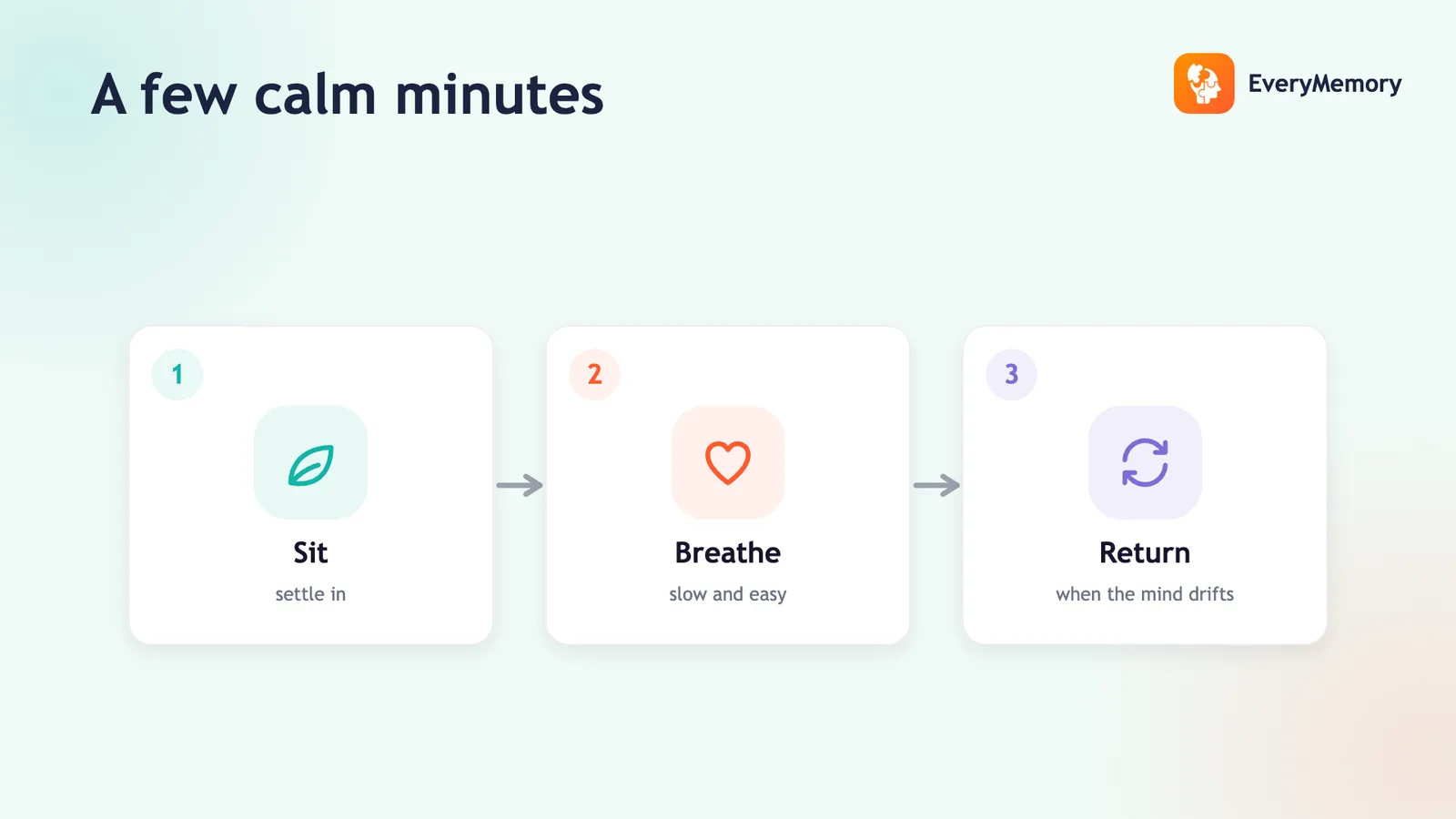
Meditation trains attention and lowers stress - and since both strongly affect memory, a few minutes most days can indirectly help you focus and recall better.
Do Seasons Affect Your Memory and Focus?
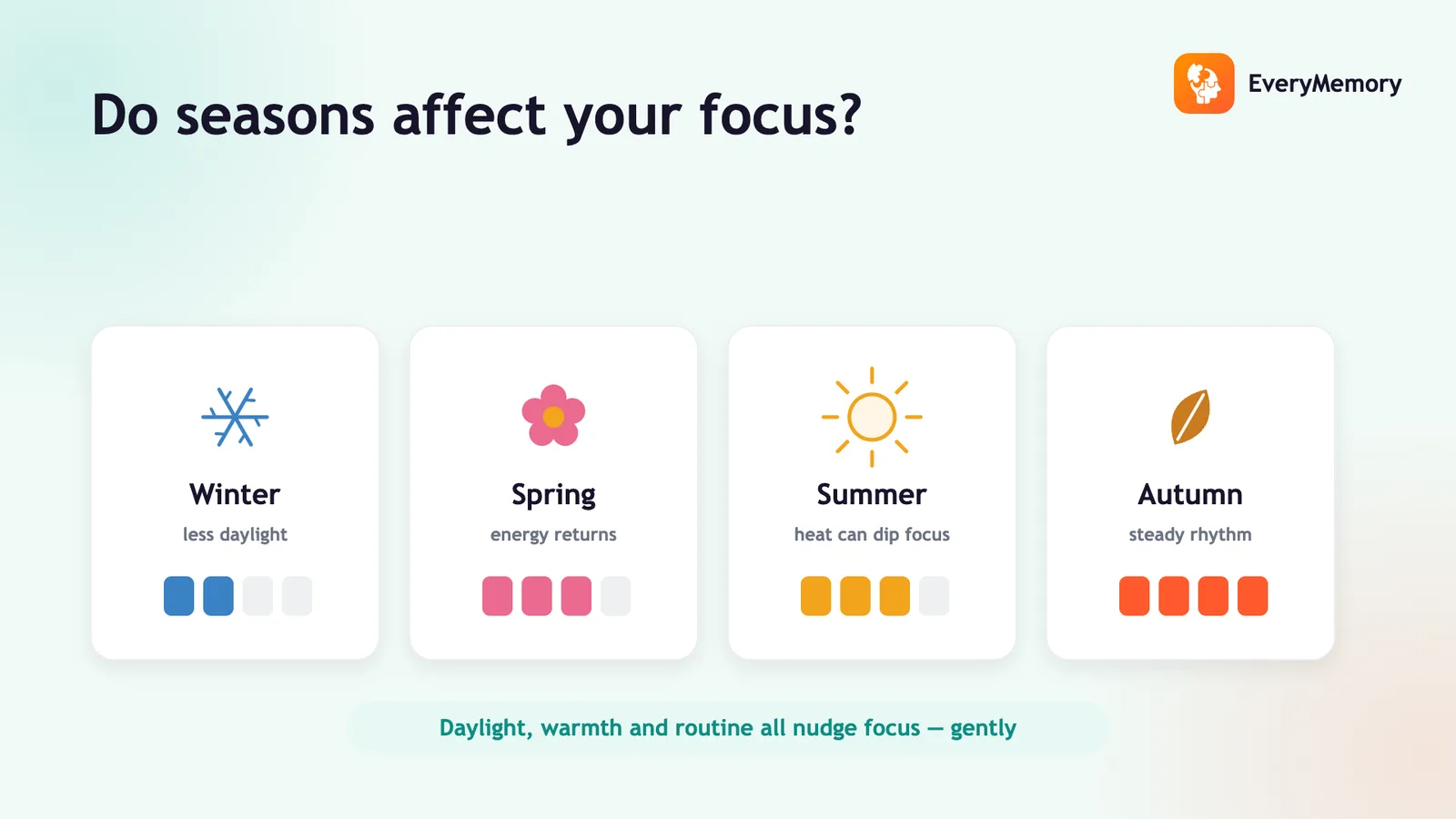
From winter sluggishness to summer heat, the changing seasons have a surprisingly real effect on how clearly we think - and gentle habits can help year-round.
Social Connection and Brain Health
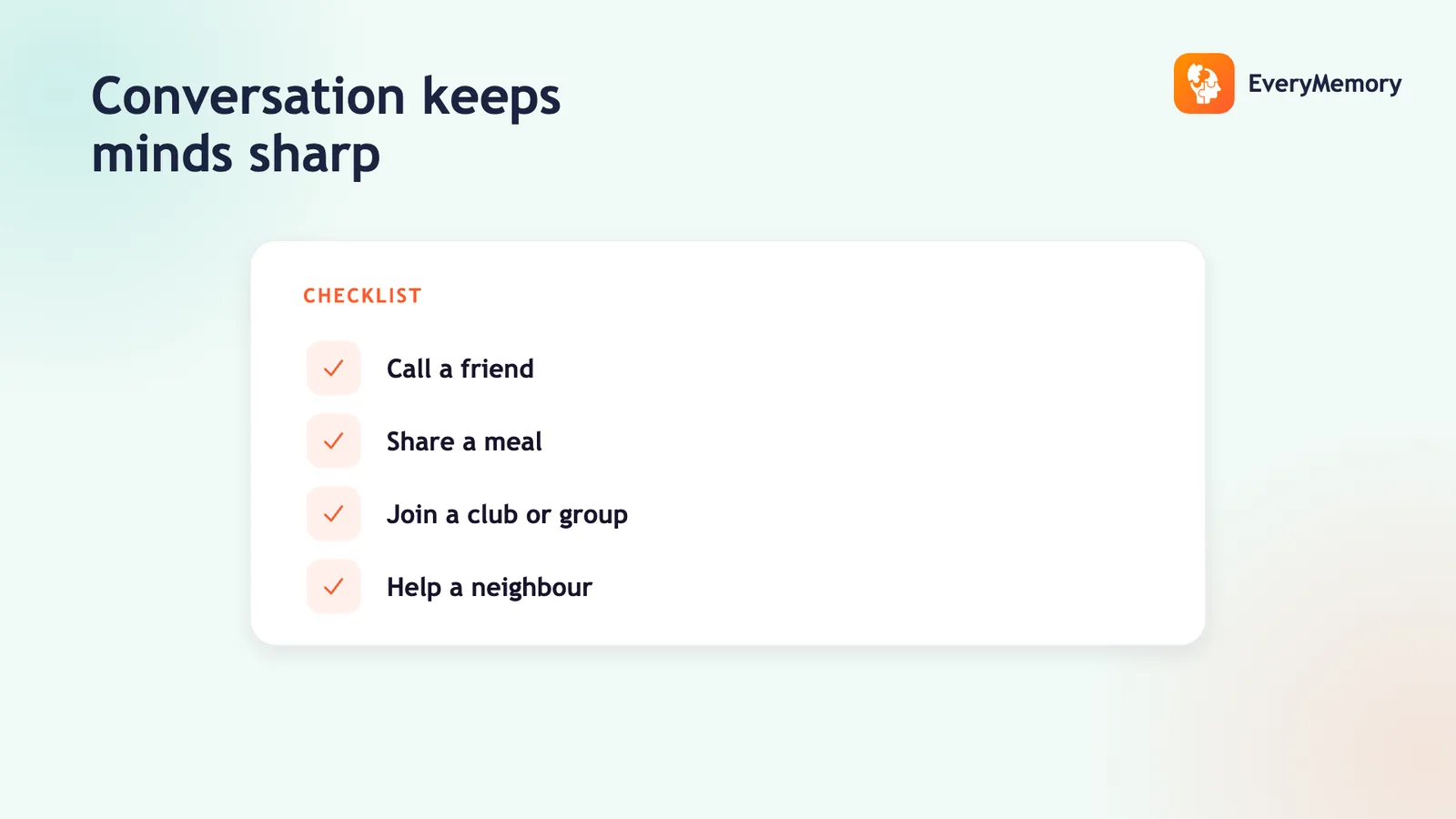
Staying socially connected is an underrated support for the brain - conversation exercises memory and attention, and connection lifts mood and lowers stress.
What Makes a Good Brain Training App
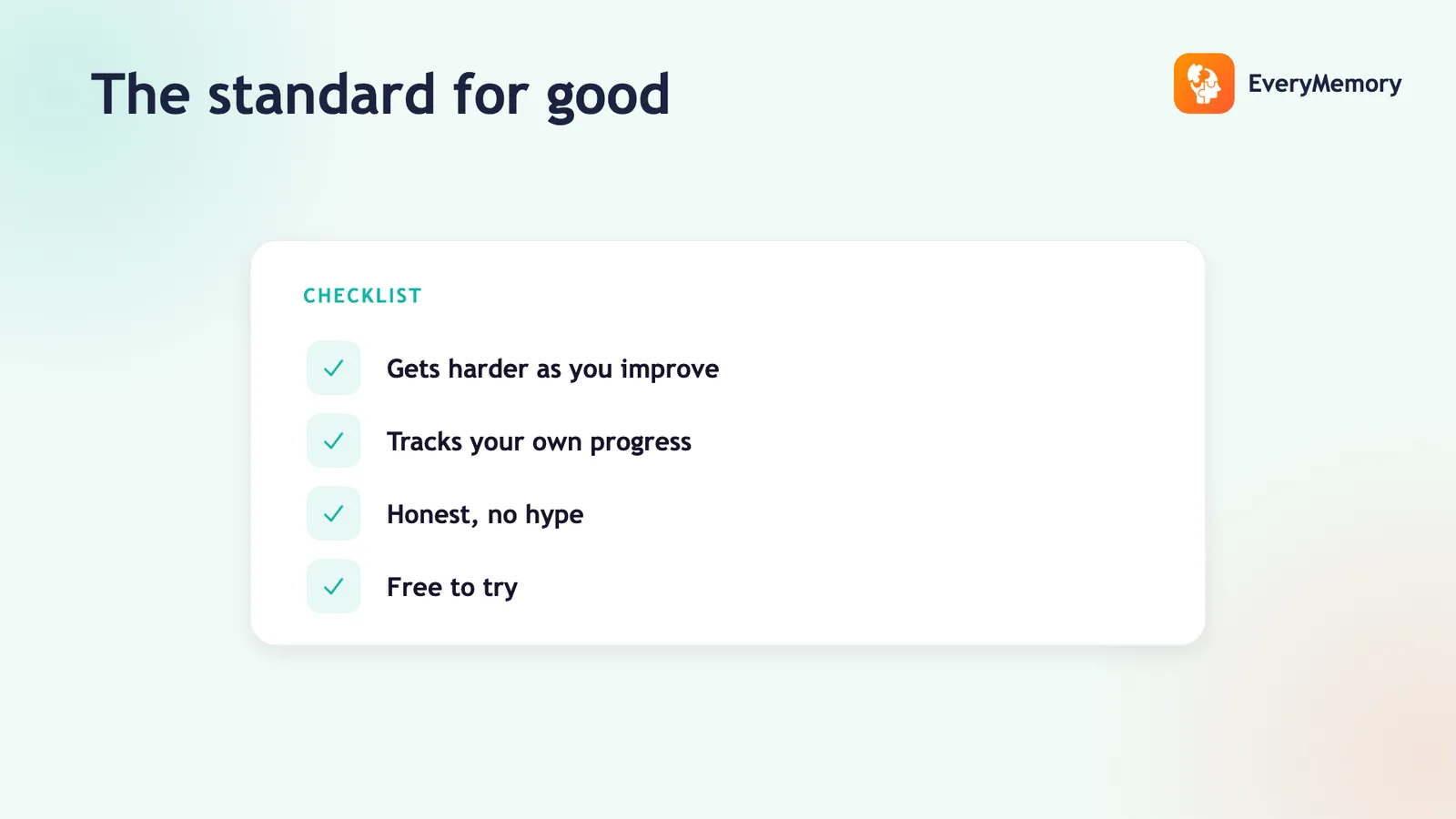
A good brain training app adapts difficulty to you, tracks your own baseline, makes honest non-medical claims, and is free to try - here's the full standard.
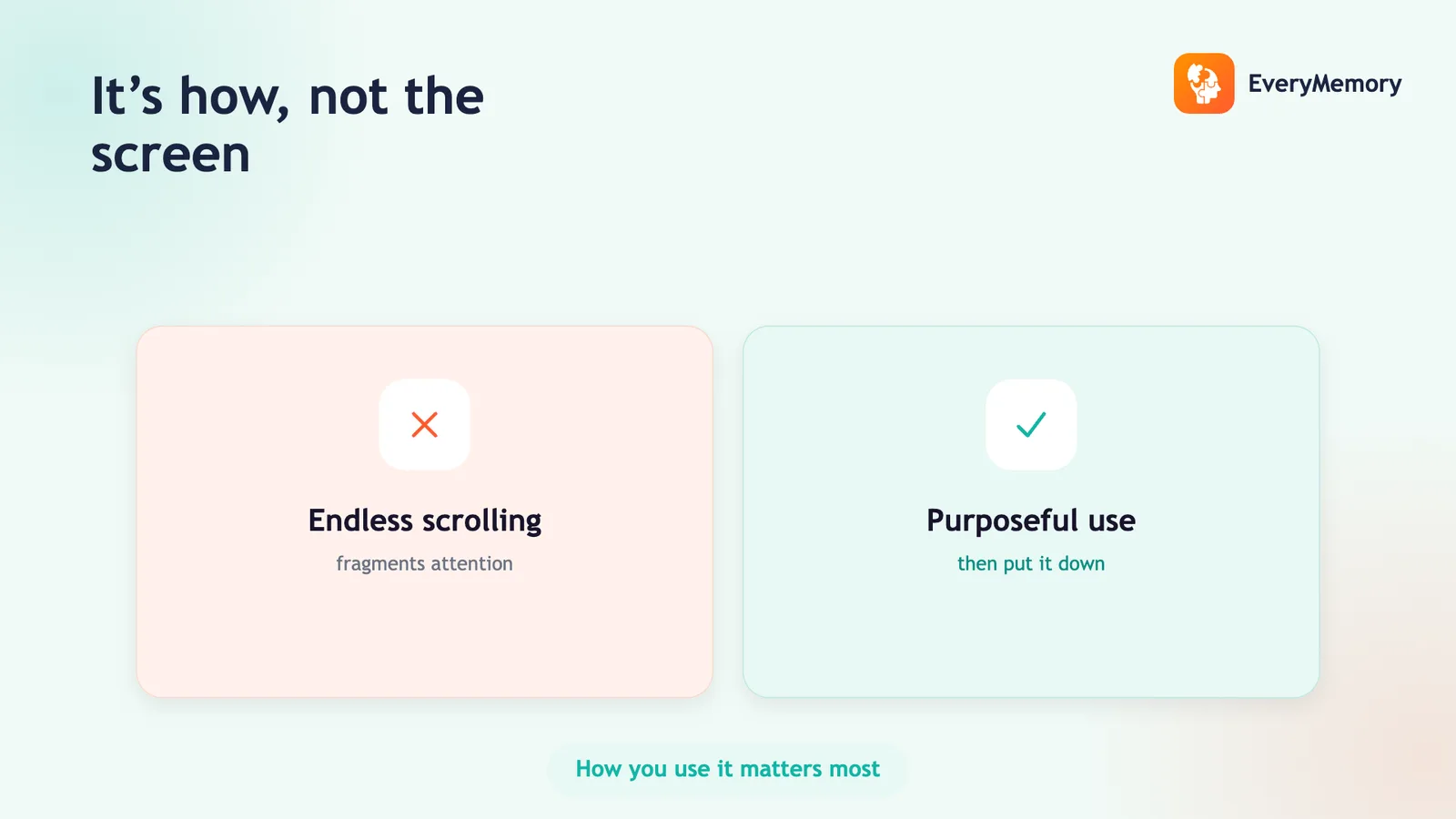
Screen Time and Memory
Screen time rarely damages memory directly, but the way we use screens - fragmented attention, shallow encoding, and lost sleep - quietly weakens how well things get remembered.
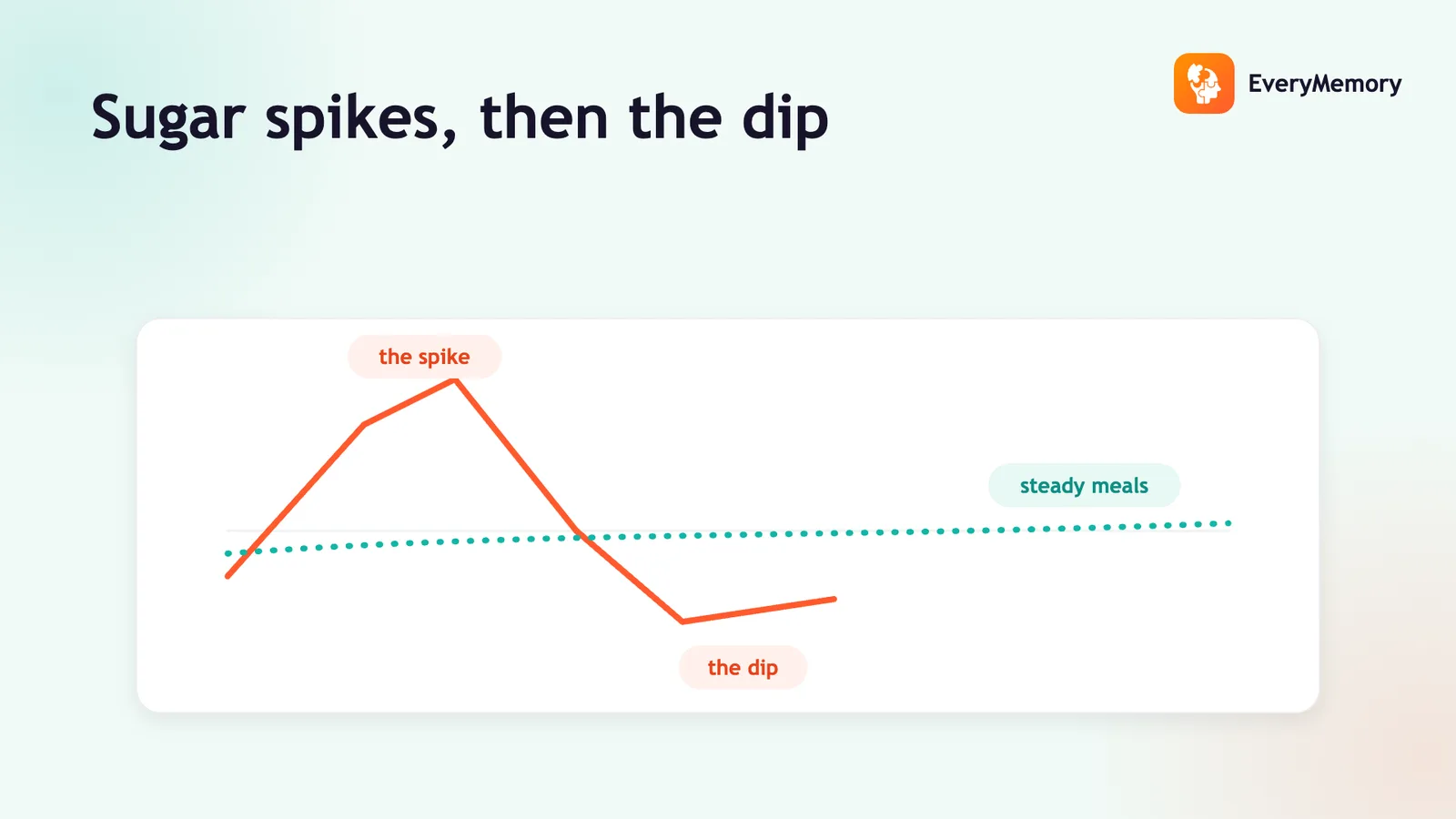
Sugar and Brain Fog: What's Actually True?
That foggy, sluggish feeling after a sweet meal isn't in your head - but the story of sugar, blood glucose, and focus is more nuanced than most people realise.

The Left-Brain vs Right-Brain Myth
The idea that you're a logical "left-brained" or creative "right-brained" person is a myth - real brains use both sides together for almost everything you do.
Learning a Musical Instrument and Your Brain
Playing a musical instrument is one of the most cognitively demanding things a human can do, and that may be exactly why it feels so good for your mind.
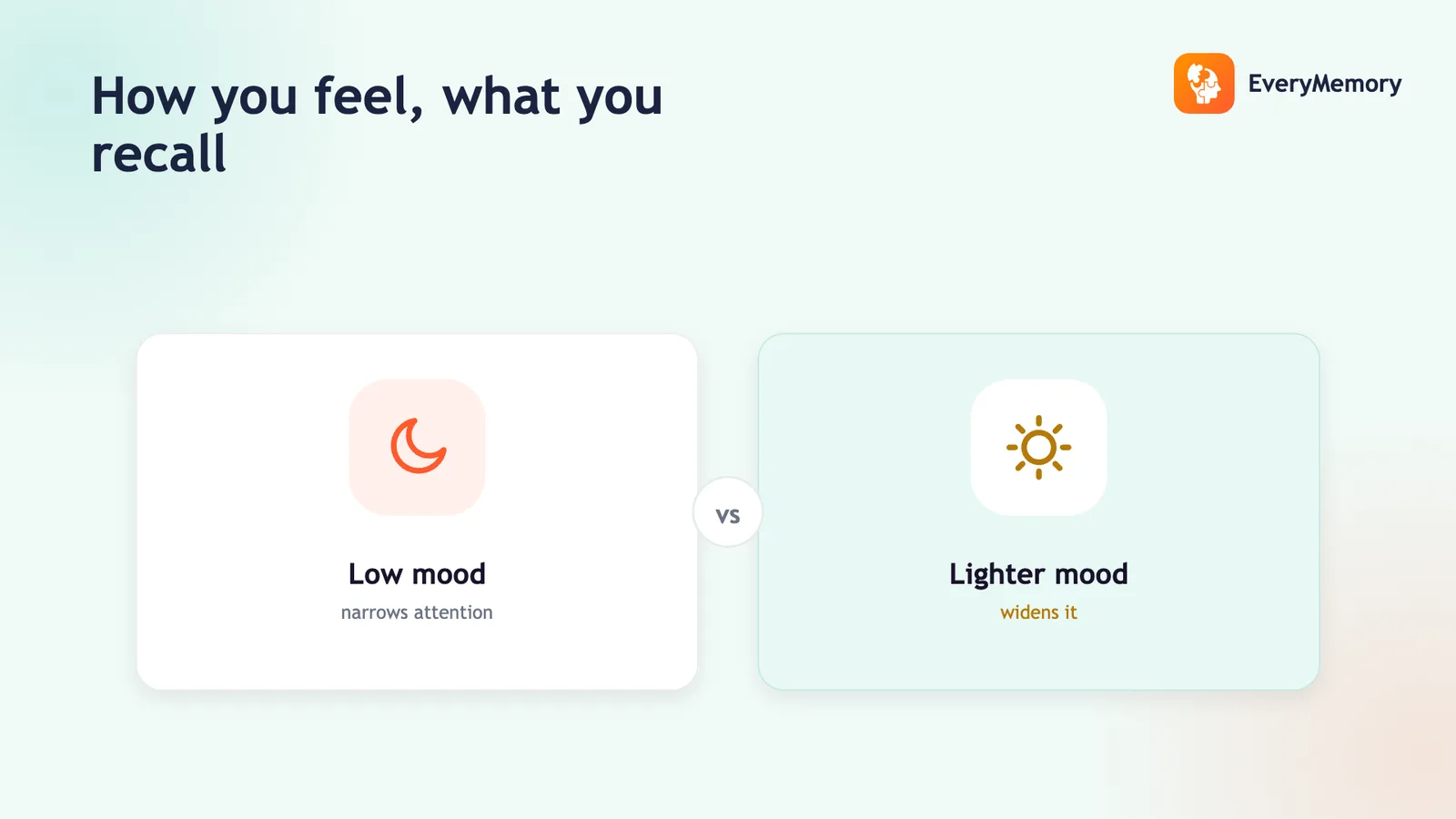
Mood and Memory
How you feel quietly shapes what you notice and recall - low mood narrows attention while a lighter mood widens it, and that has real effects on everyday memory.
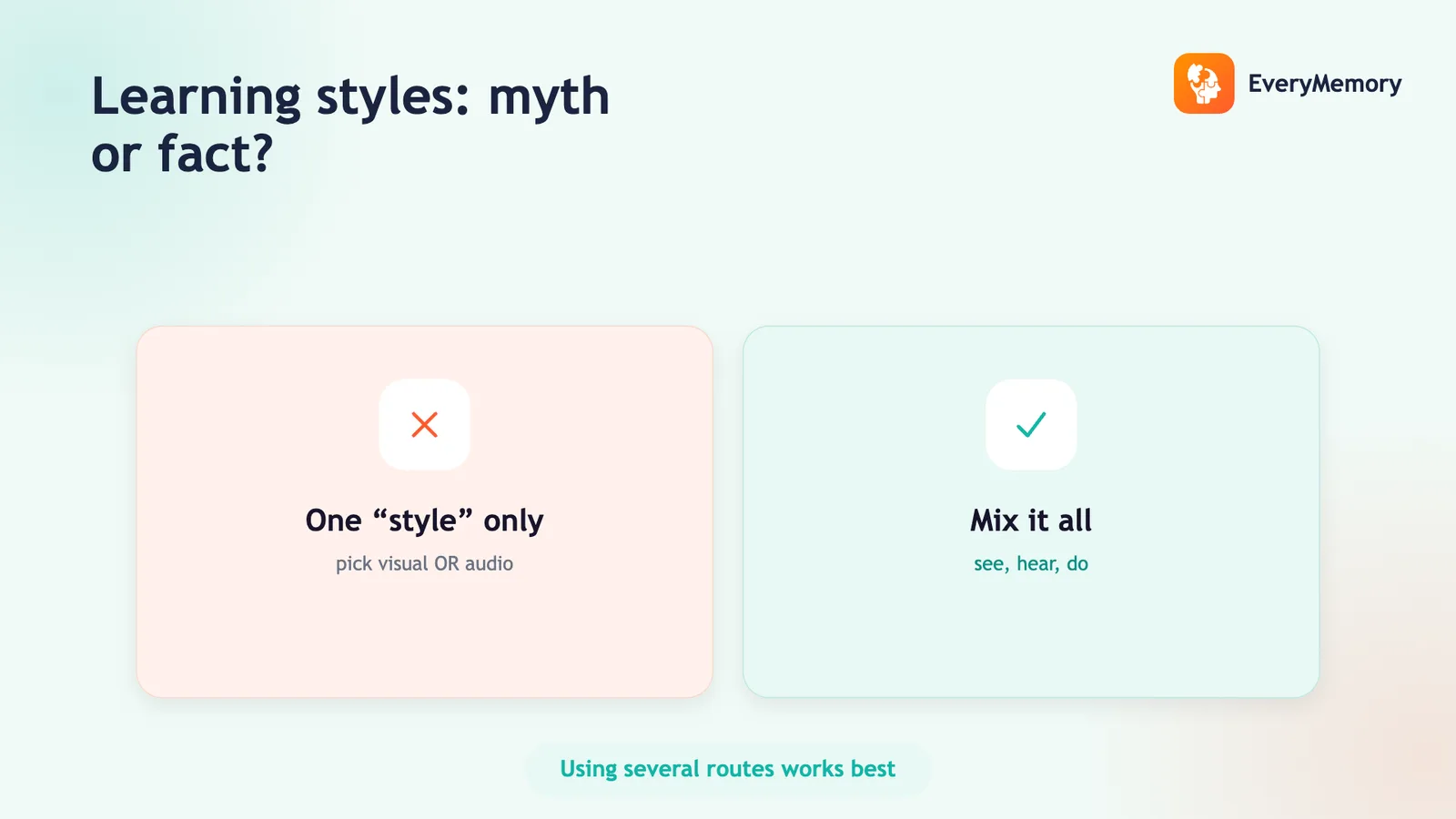
Do Learning Styles Exist?
The idea that you're a "visual" or "auditory" learner is popular but unsupported - matching teaching to a style doesn't improve learning. Here's what actually works.
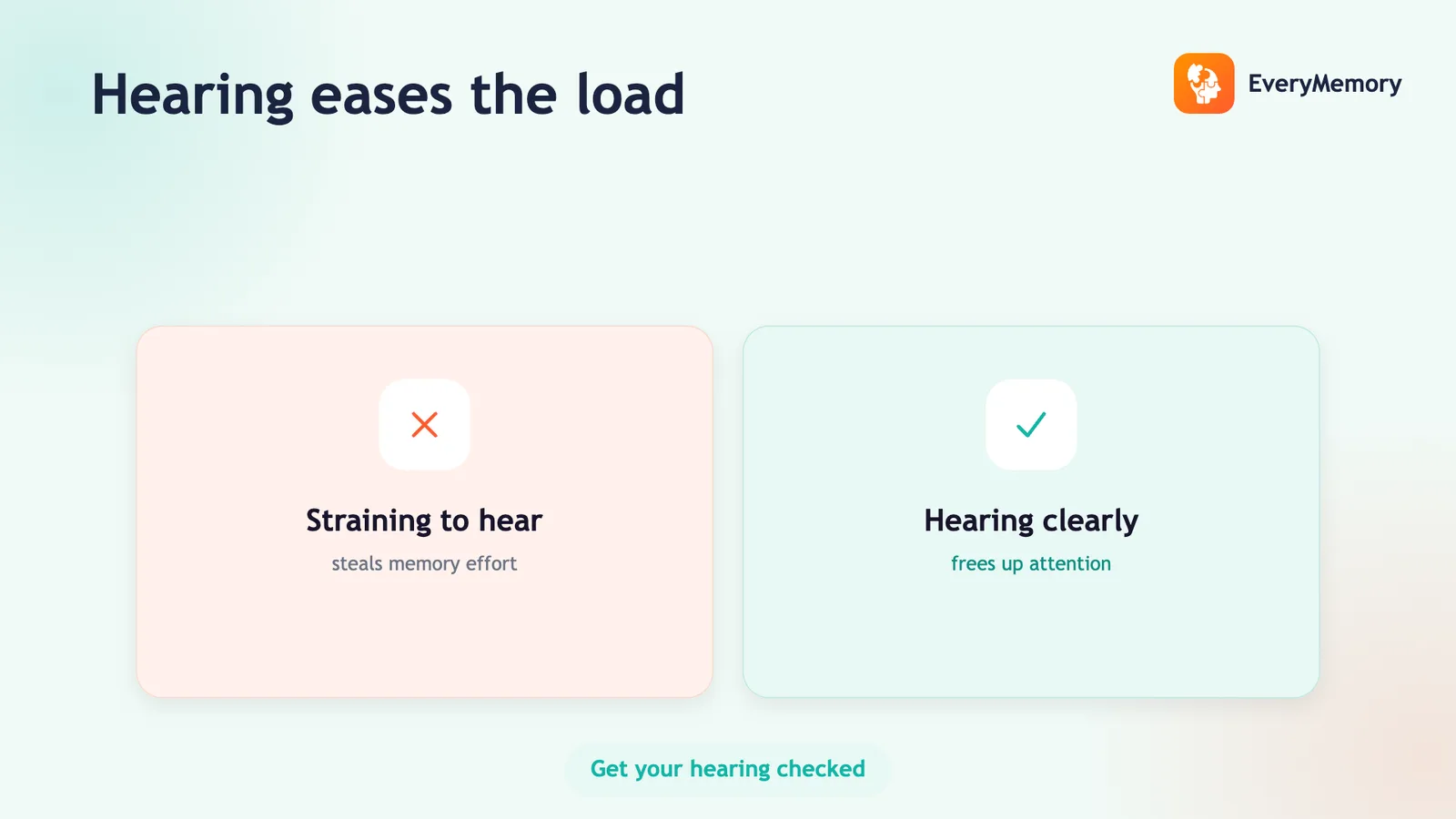
Hearing Loss and Memory: The Overlooked Link
Straining to hear quietly drains the attention memory depends on. Why untreated hearing loss is linked with memory difficulties - and why it's often addressable.
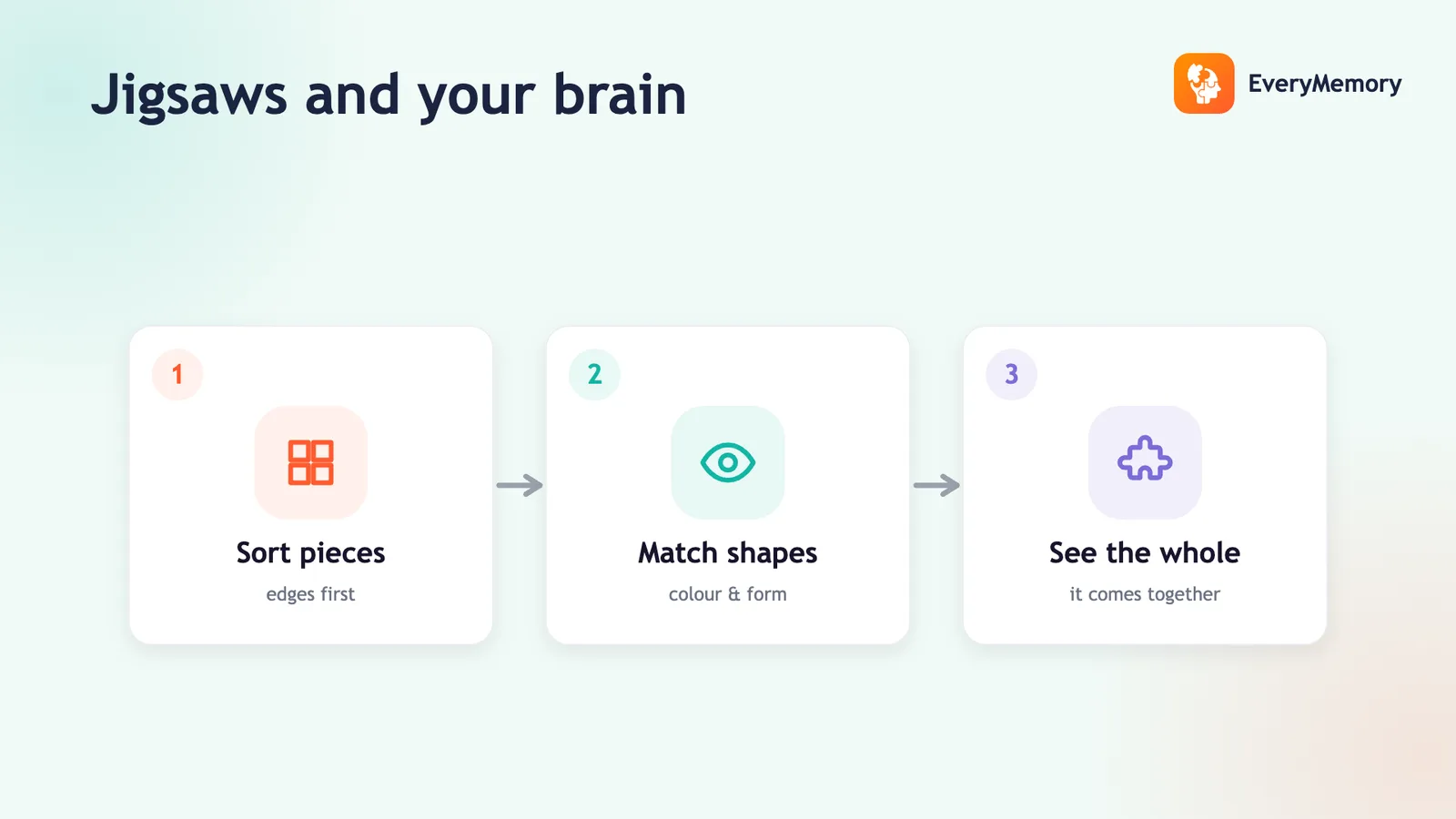
Jigsaw Puzzles and the Brain
Jigsaw puzzles are a calming, hands-on workout for visual-spatial thinking. They're genuinely good engagement - here's an honest look at what they train and what they don't.

Working Memory vs Short-Term Memory: The Difference
Short-term memory holds; working memory holds and works. The simple distinction, with examples, and why the terms get used interchangeably.

Word Search and Memory
Word search is relaxing and great for visual scanning - but it's much lighter on memory than people assume. Here's the honest read on what it actually trains.
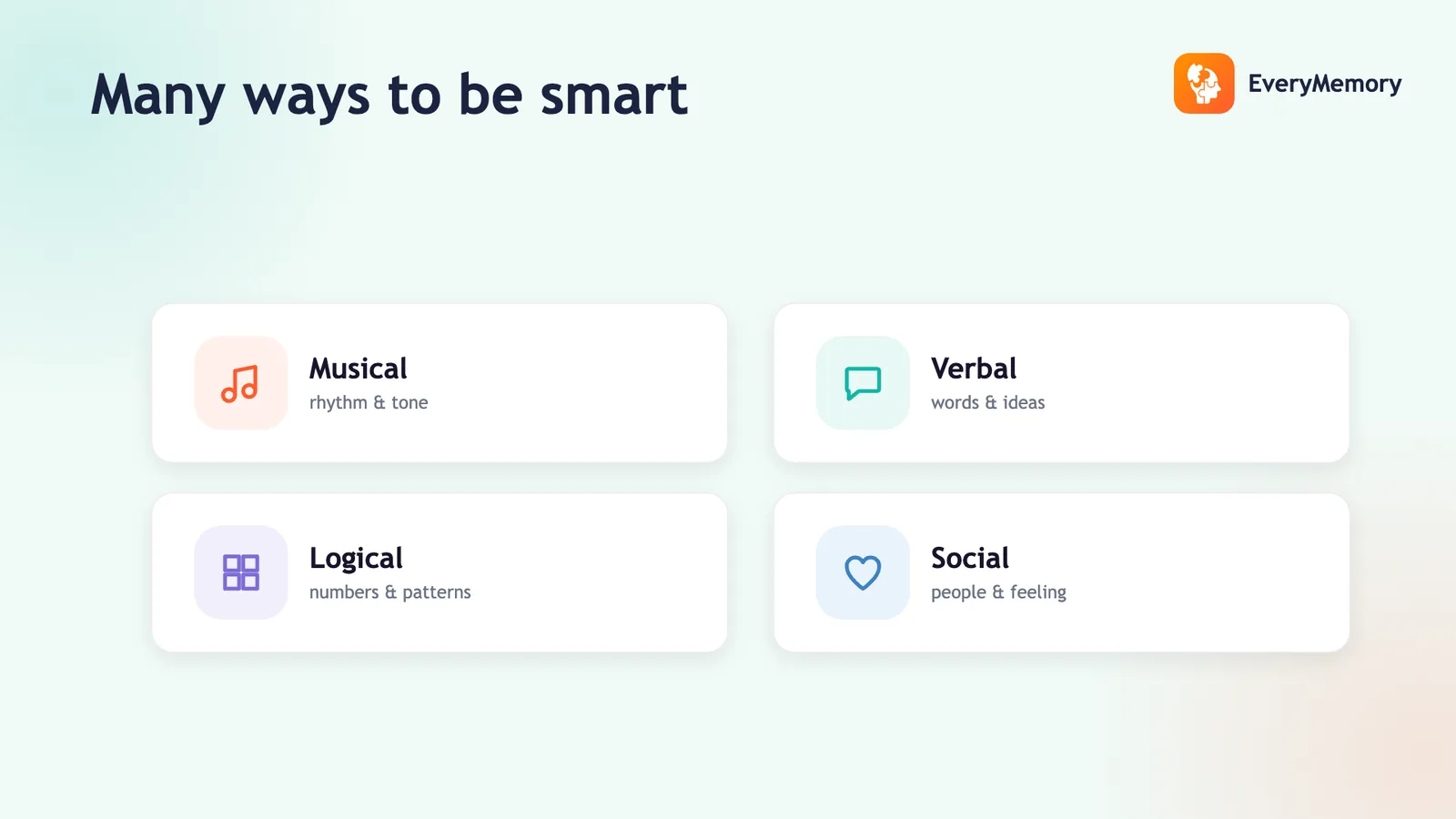
Types of Intelligence
Are there really nine types of intelligence? The popular 'multiple intelligences' framework is appealing but debated. Here's an honest tour of how psychologists actually carve up the mind.
Menopause and Memory: Why Midlife Brain Fog Happens
Brain fog, forgotten words, and mid-sentence blanks are among the most commonly reported experiences during perimenopause and menopause. Here is what is happening and why it usually gets better.

What Is the Average IQ?
The average IQ is 100 by definition, with about two-thirds of people scoring between 85 and 115. Here's what those ranges mean - and why the number is less dramatic than it sounds.

Are Brain Training Apps Worth It?
Brain training apps are worth it for a narrow, honest reason - you get better at what you practise - but not for the broad promises the marketing often makes.
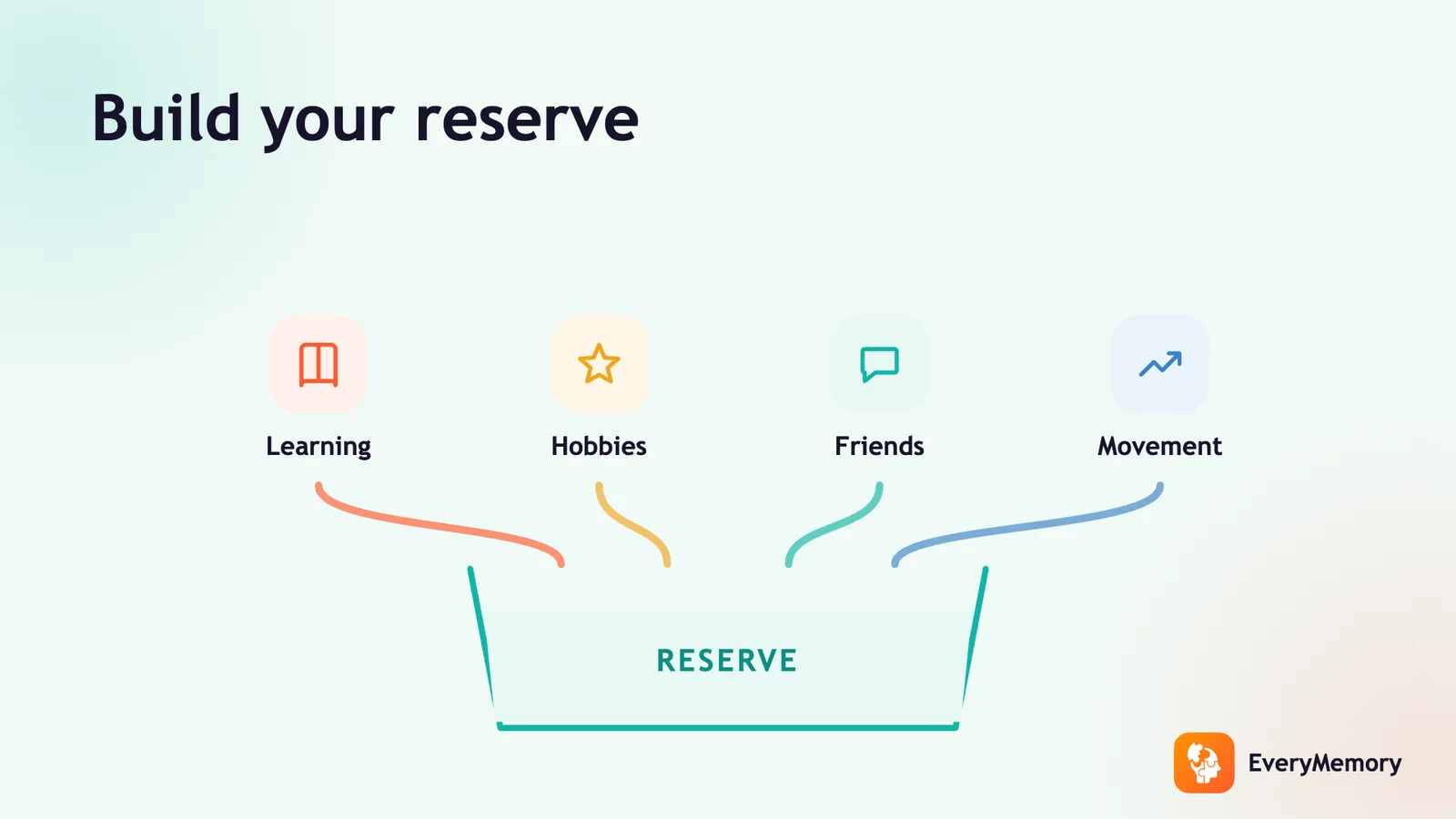
What Is Cognitive Reserve - and Can You Build It?
Cognitive reserve is the brain's built-up capacity to cope with the changes of aging - and a lifetime of learning, connection, and activity is how it grows.
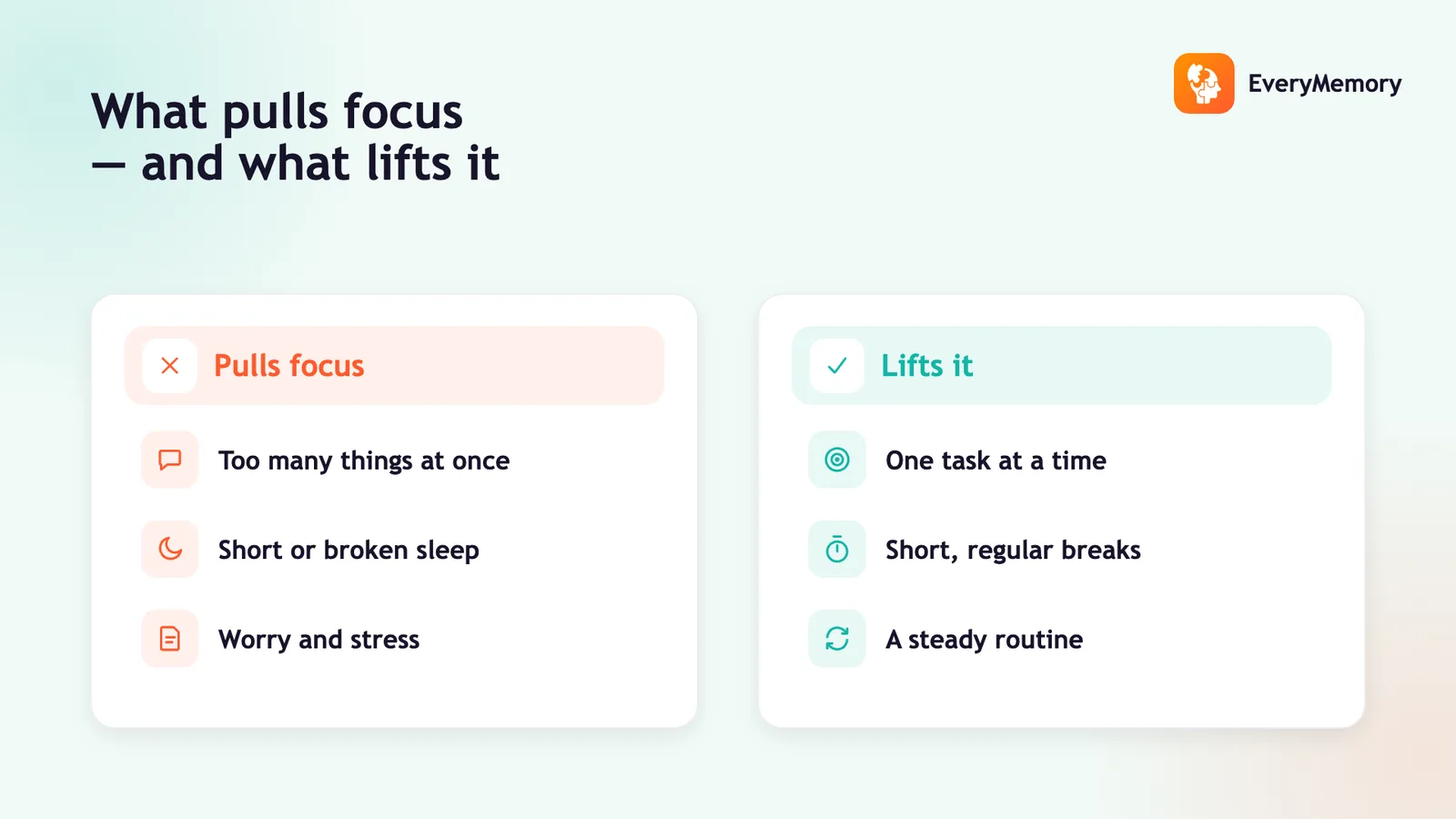
Why Focus Fades With Age - and How to Support It
Concentration does shift as we get older - but the reasons are more manageable than most people assume. Here's what's actually happening and what genuinely helps.
Can a Short Afternoon Nap Boost Your Memory?
A well-timed afternoon nap can restore alertness, lift mood, and help your brain consolidate what you have learned. Here is what the evidence says and how to nap well.
Do Memory Supplements Actually Work?
The memory supplement market is worth billions, but does the evidence keep up with the claims? Here is an honest look at what the research actually says, and what to do instead.
Blue Light and Focus: What's Actually True
The evidence that blue light directly harms your brain or focus is weak - the real problems with evening screens are disrupted sleep and fragmented attention, not the wavelength.
How to Think Faster
Thinking faster comes mostly from knowing your subject so well that answers feel instant - not from raw processing speed you can dial up at will.
Free vs Paid Brain Games
Free vs paid brain games comes down to what you're actually buying. Here's an honest breakdown of where free is enough - and what a subscription should add to earn its keep.
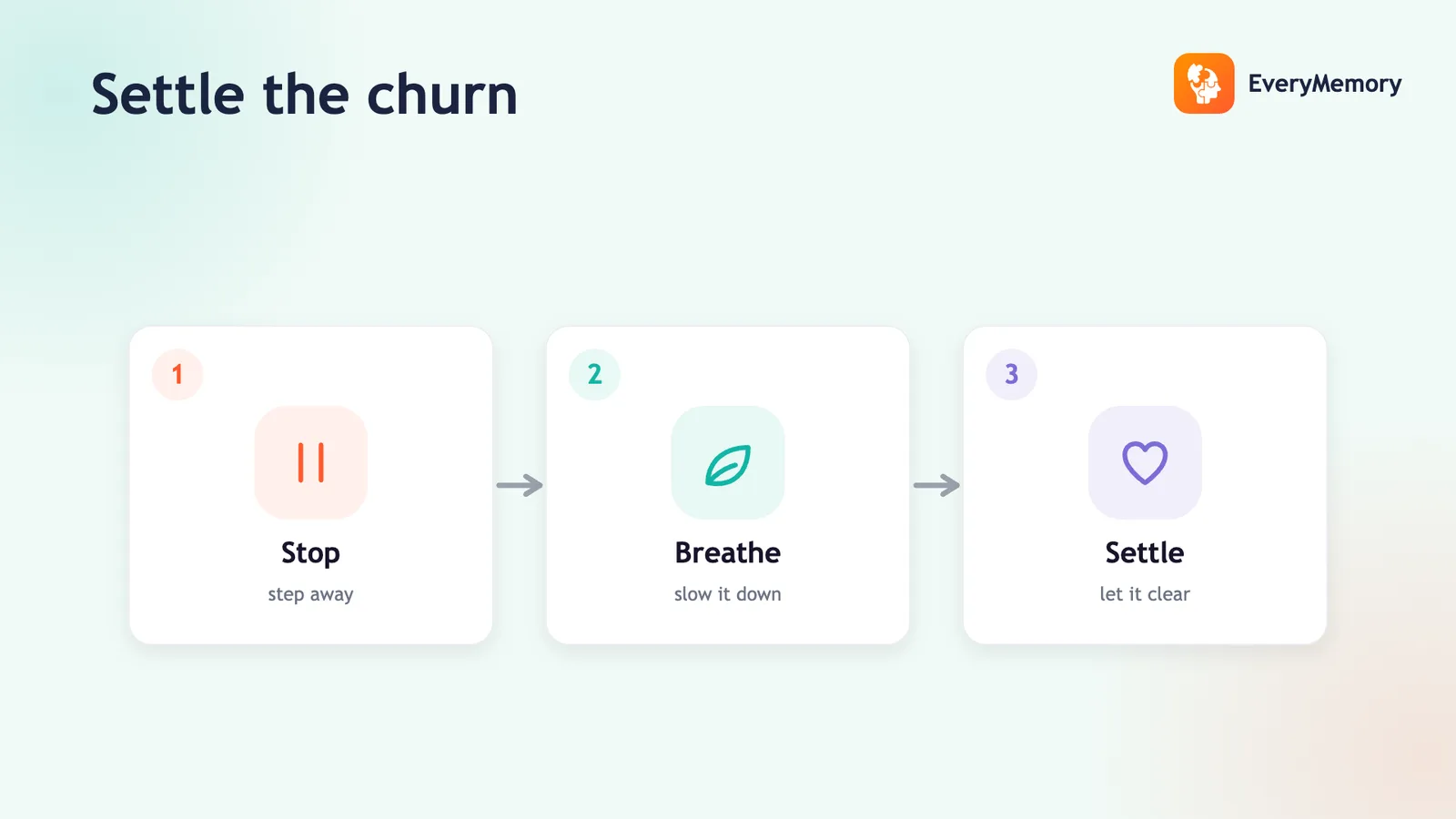
How to Relax Your Mind
A relaxed mind isn't an empty one - it's a mind that's stopped racing - and a few simple practices can settle the churn that crowds out focus and memory.

Logic Puzzles for Adults
A worked logic puzzle with its full solution, plus an honest look at what deductive puzzles train - structured reasoning and elimination - and where the benefit stops.

Fluid vs Crystallized Intelligence
Fluid intelligence is solving novel problems on the fly; crystallized intelligence is your accumulated knowledge. One peaks early, the other grows for decades - and that changes how you should think about getting smarter.
Why Gardening Is Good for Your Brain
Gardening quietly engages your memory, senses, planning, and mood all at once, and you do not need a backyard to get started.
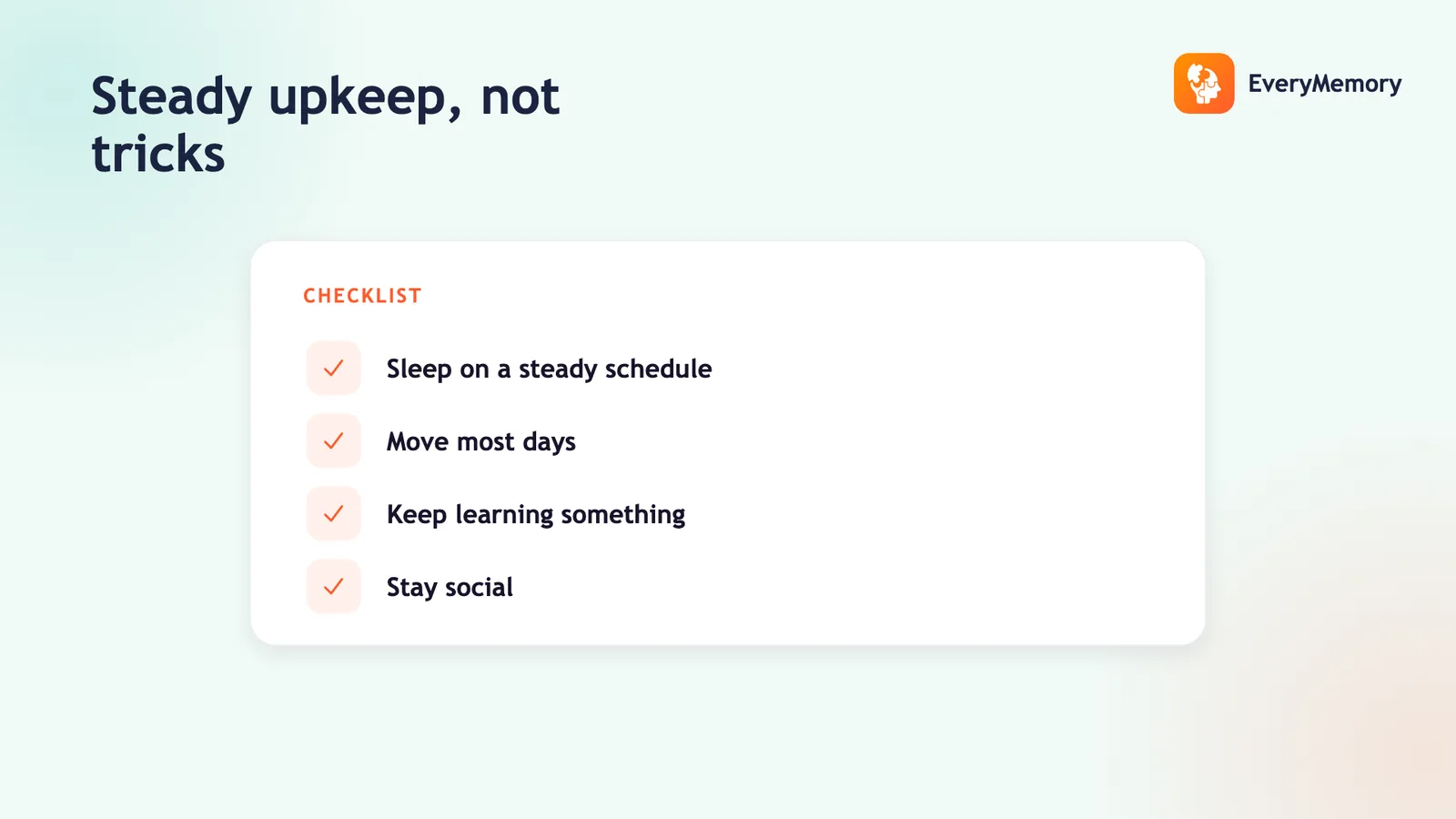
How to Stay Mentally Sharp
Staying mentally sharp is less about any single trick and more about steady upkeep - protecting attention, keeping your skills in use, and looking after the body your mind runs on.

IQ vs EQ
IQ measures reasoning; EQ measures emotional skill. They're not rivals so much as different tools for different jobs. Here's an honest comparison, without crowning a winner.
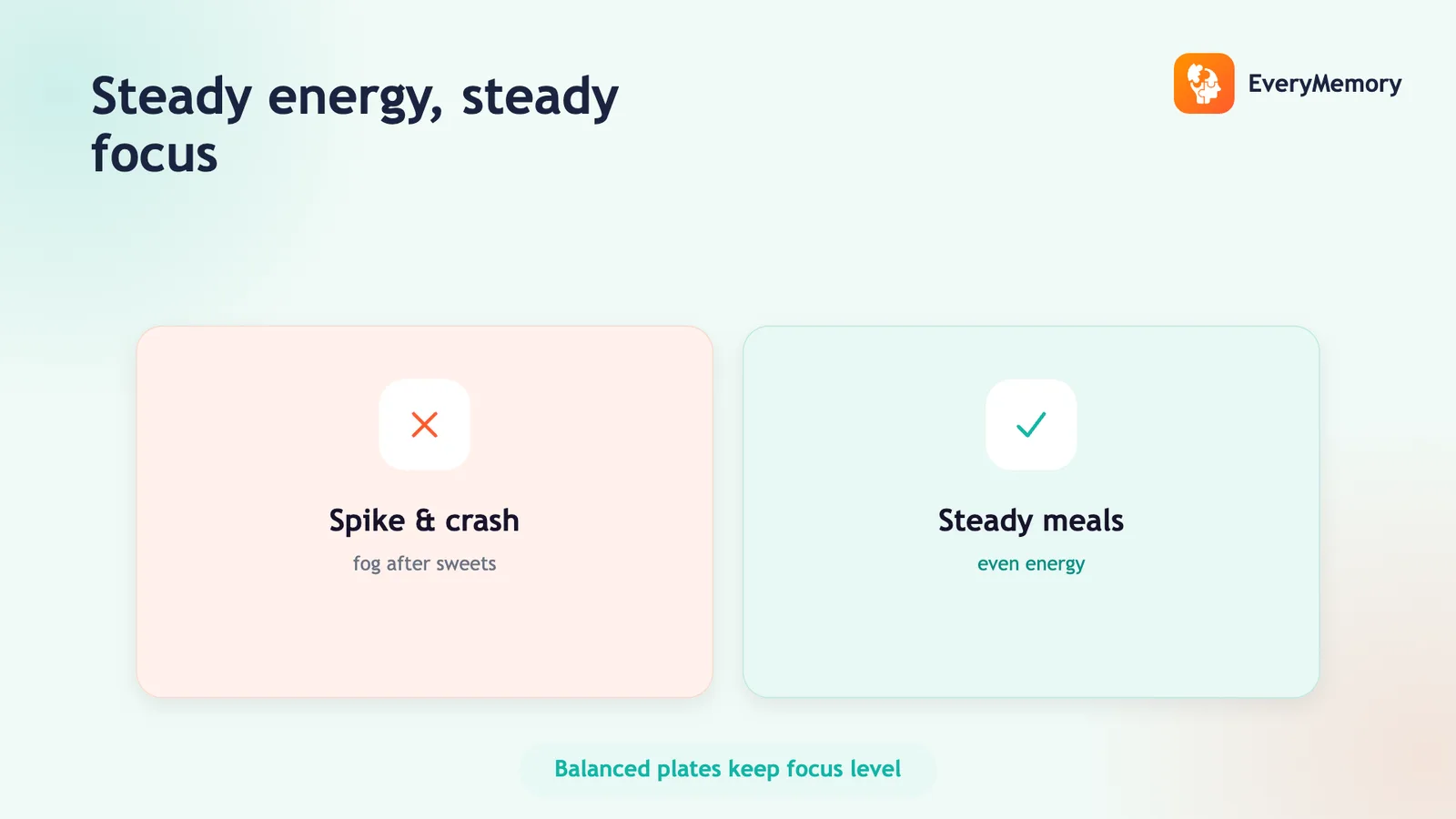
Does Sugar Affect Your Memory?
Sugar isn't a 'memory poison', but big blood-sugar swings can leave you foggy and unfocused. What actually matters is steady energy and overall diet.
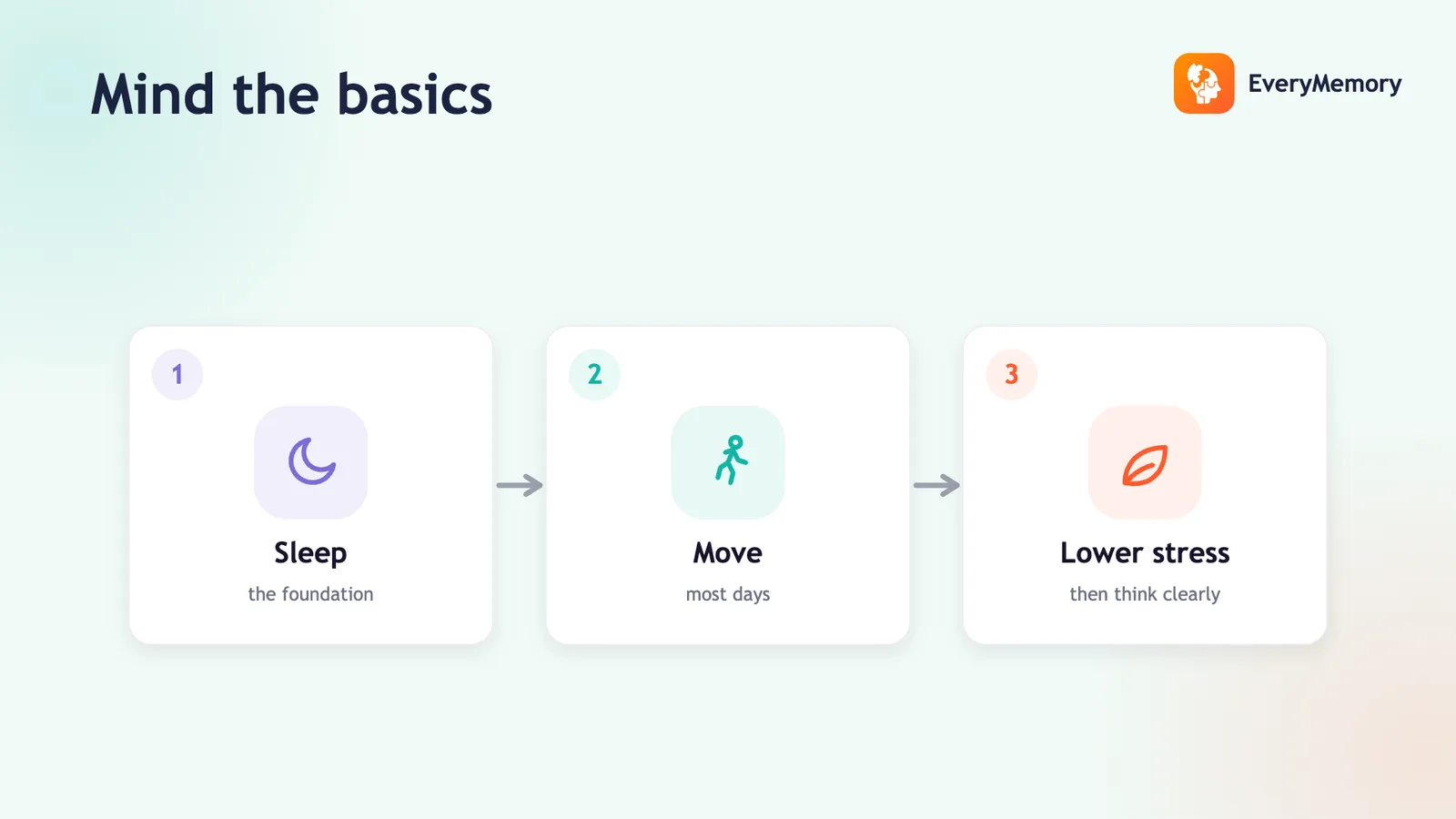
How to Improve Your Mental Performance
Mental performance is set by the basics - sleep, movement, stress - and sharpened by training attention and working memory. Protect the foundations, skip the pills.
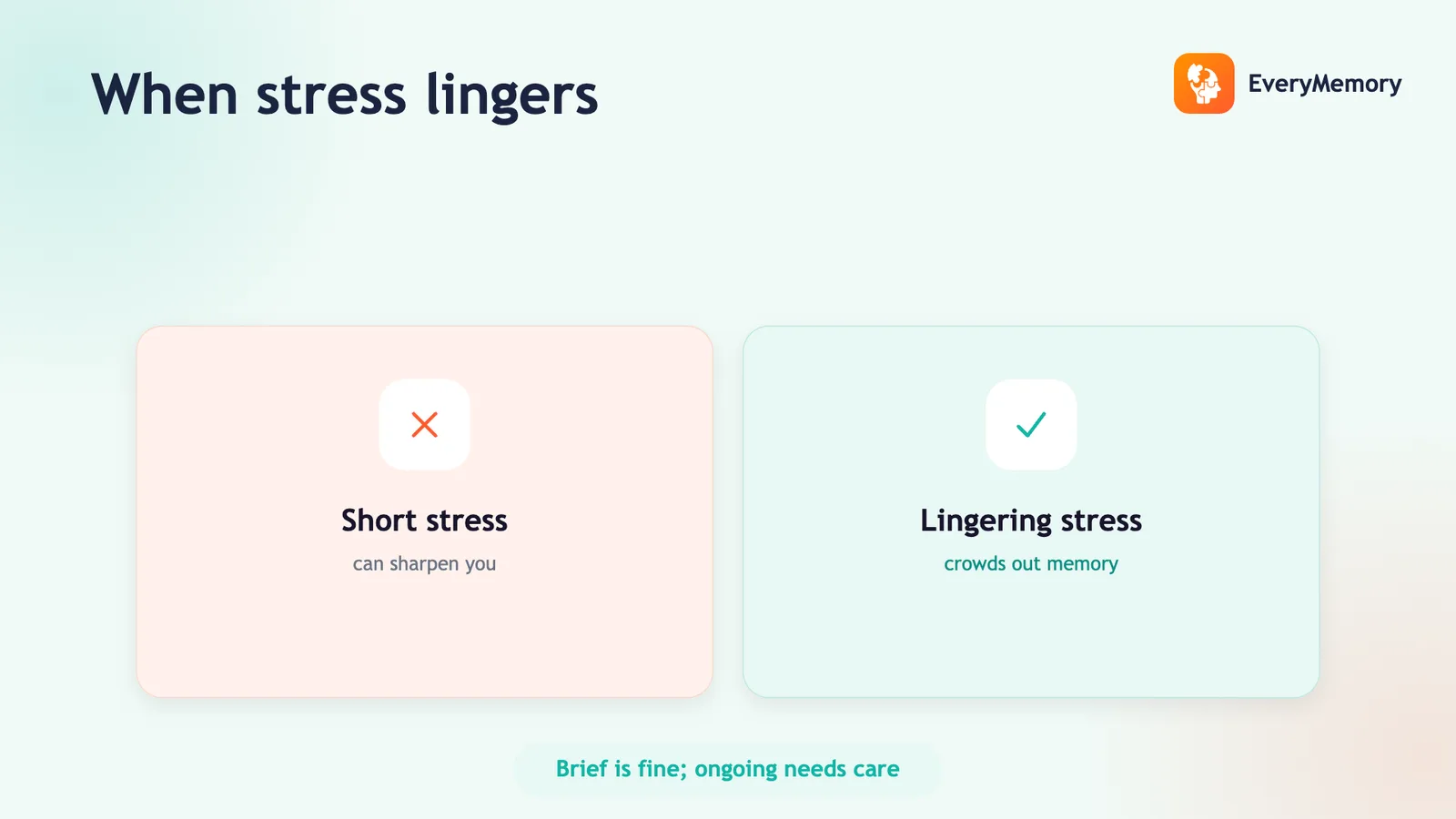
Stress and the Brain
Short bursts of stress can sharpen you, but when it lingers it crowds out the attention memory depends on - here's the honest link and what genuinely helps.
Loneliness and Memory: Why Connection Matters
Feeling socially isolated doesn't just affect your mood - research links it with less sharp memory and focus. Here's why human connection matters for the brain, and how to gently rebuild it.
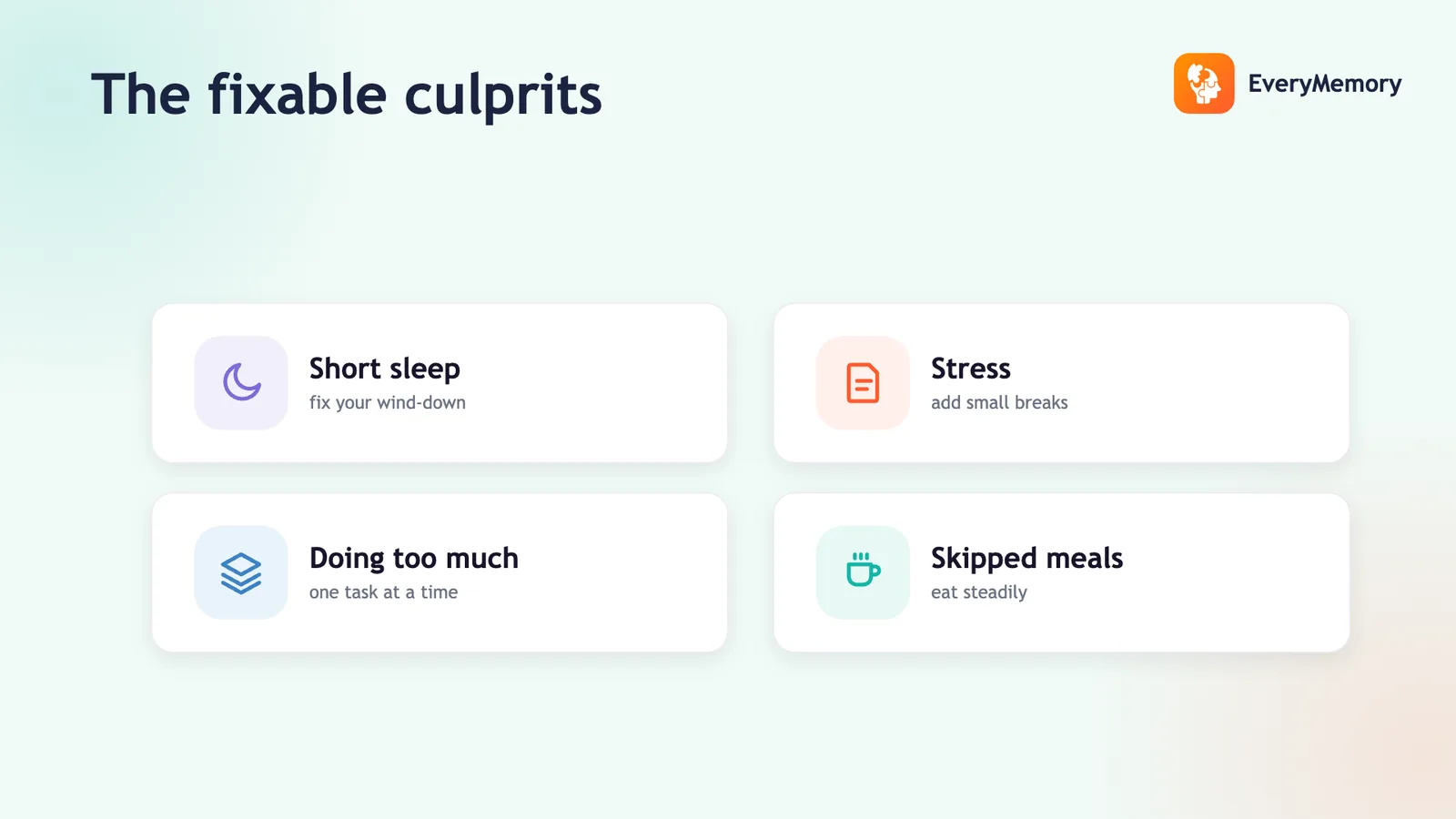
What Harms Your Memory? Common Culprits
Most everyday memory lapses trace back to a few fixable culprits - poor sleep, chronic stress, split attention, and skipped meals - far more often than to anything serious.
Digital Amnesia: Is Your Phone Weakening Your Memory?
The 'Google effect' shows we remember less when we expect to look things up. Here is what that means for everyday life, where AI raises the stakes, and how to keep your own memory in the loop.
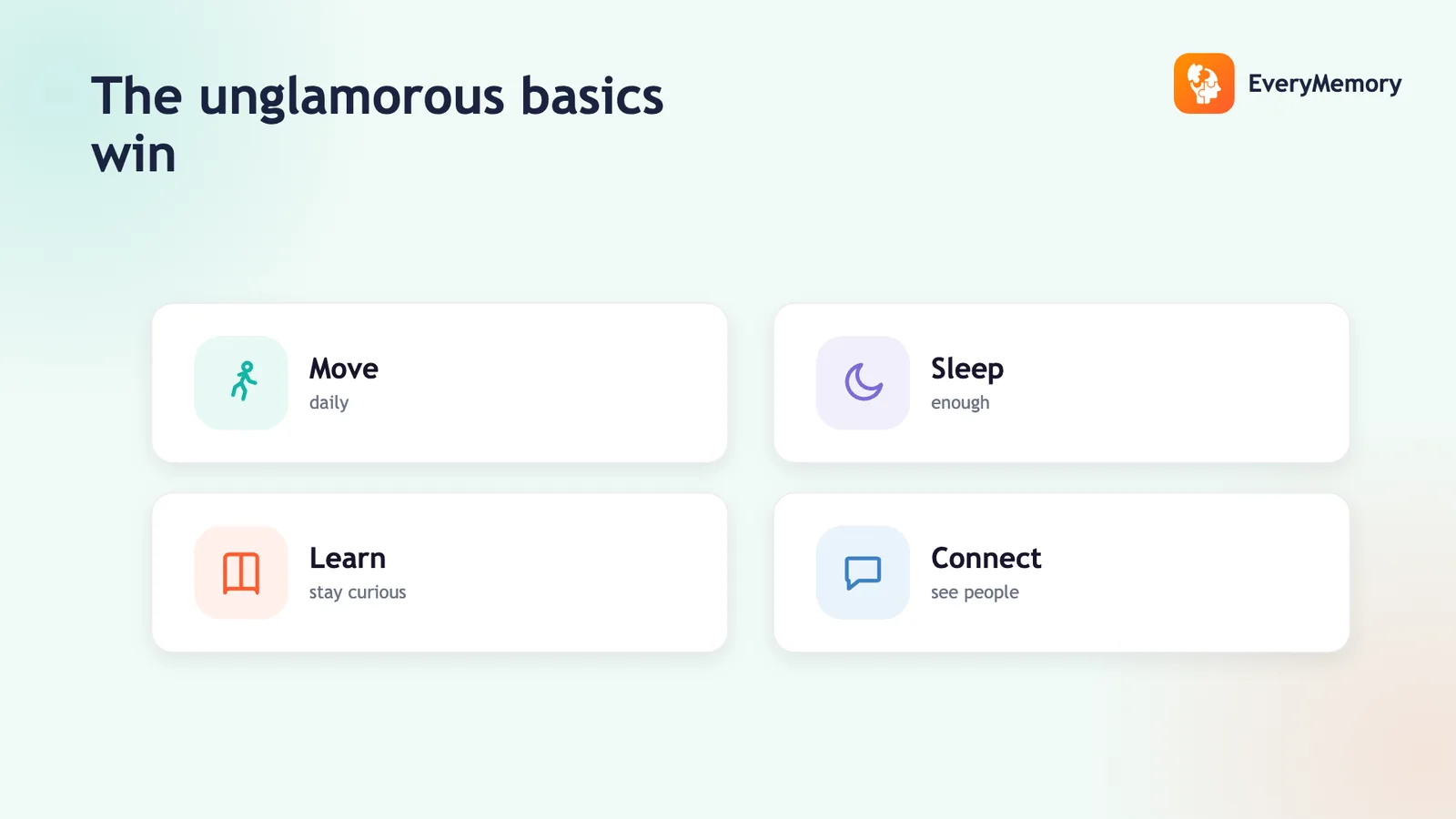
How to Keep Your Brain Young
Keeping your brain feeling young is mostly the unglamorous basics done consistently - movement, sleep, learning, and social contact - not supplements or one clever trick.
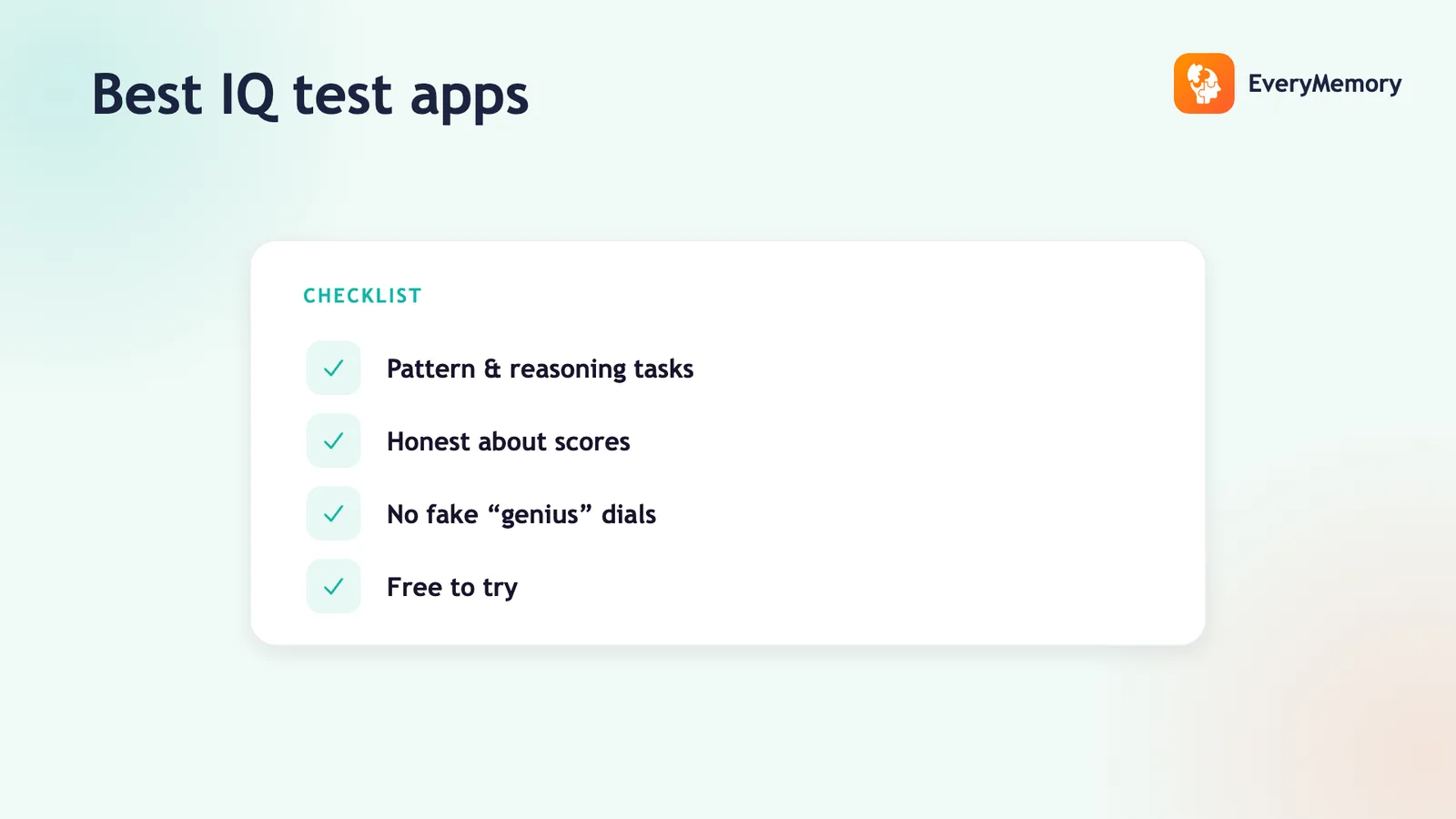
Best IQ Test Apps: An Honest Look
Most IQ test apps overpromise. Here's an honest look at what they can and can't measure, the red flags to avoid, and what to use instead if you want real practice.
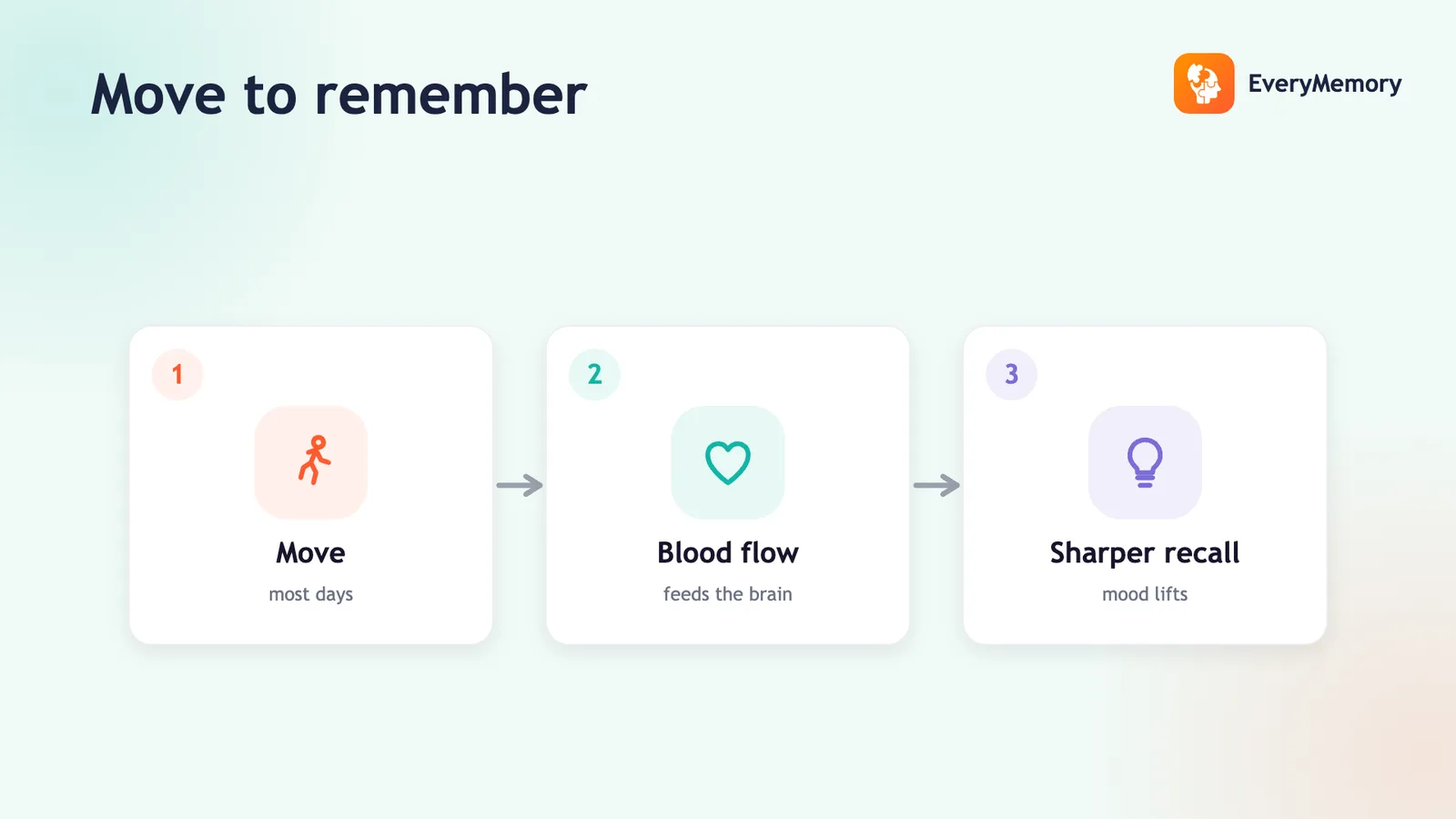
Does Exercise Improve Your Memory?
Physical activity is one of the most reliable everyday supports for memory - and you don't need intense workouts. How exercise helps, and how much is enough.
Does Reading Keep Your Mind Sharp?
Reading exercises attention, memory, language, and imagination - and the habit is linked with staying mentally sharp. Why engaged reading does more than skimming.
Emotional Wellbeing and Memory
How you feel and how well you remember are quietly linked - steady emotional wellbeing gives attention room to work, and looking after it supports everyday memory.
7 Surprising Facts About How Memory Works
Memory is not a recording - it is a creative act. These seven science-backed facts will change the way you think about remembering, forgetting, and your own life story.
Habits for a Healthy Brain
A healthy brain comes from a handful of ordinary habits kept up consistently - movement, sleep, learning, connection, and stress management - not from any single product or hack.
Why Dancing Is Great for Your Brain
Dancing combines aerobic exercise, memory, coordination, and social connection in one joyful activity, making it one of the most brain-friendly hobbies you can pick up at any age.
Alcohol and Memory: What Actually Happens
Even moderate drinking can leave next-day gaps in recall and muddy focus - here's what happens inside the brain and why those effects tend to grow more noticeable with age.
Is Sudoku Good for Your Brain?
Sudoku is a genuinely good logic workout that sharpens your working memory and deduction - but mostly it makes you better at sudoku. Here's an honest read on what it actually trains.
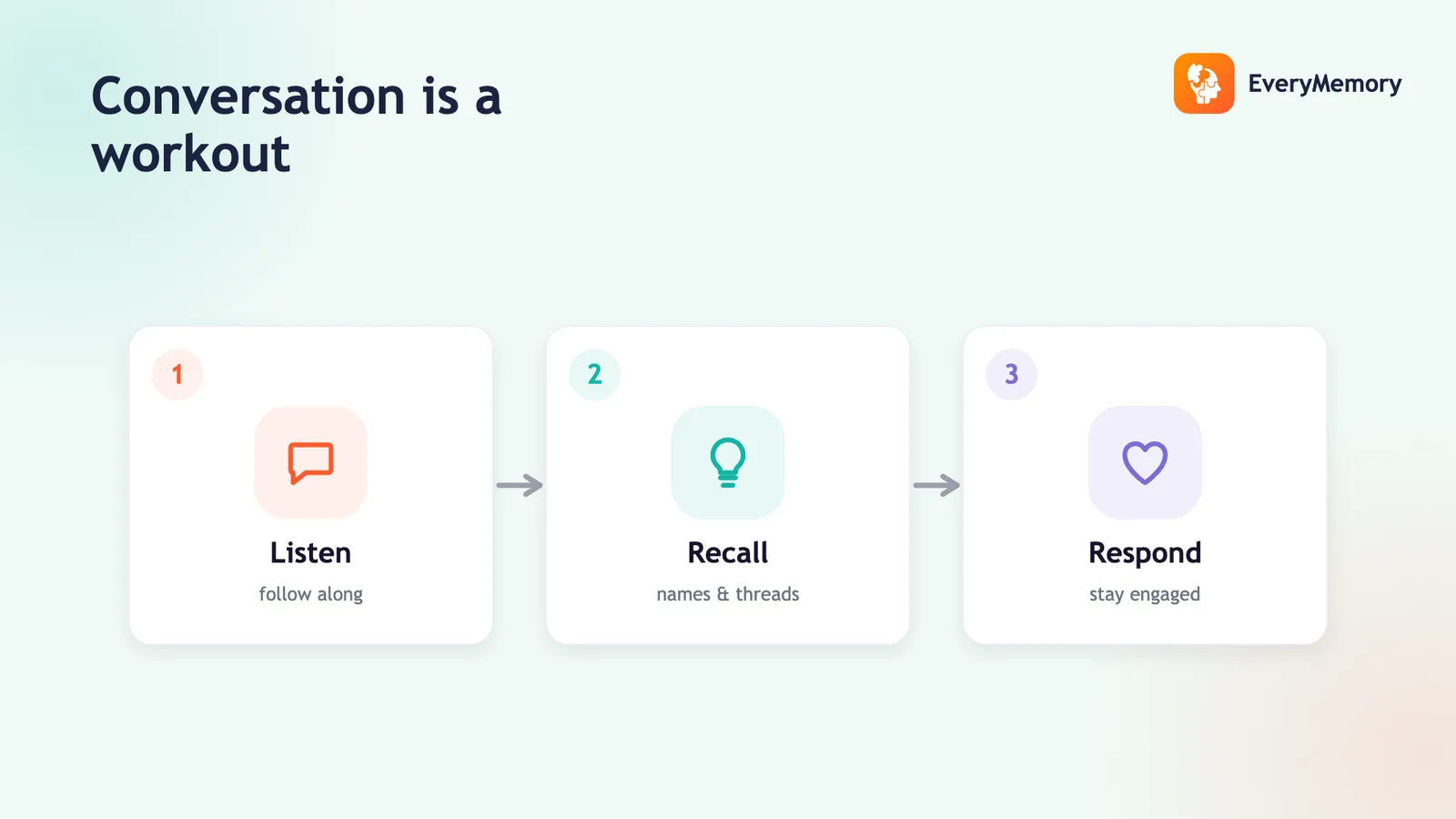
Social Connection and Memory
Conversation is one of the most demanding mental workouts there is, and regular social contact is consistently linked with sharper thinking and better mood.
Brain Health After 50
After 50, some changes in speed and word-finding are a normal part of aging - and the same lifestyle habits that protect your heart support a sharp, engaged mind.
Signs of High Intelligence
Forget the flattering listicles. Here are the traits researchers actually find correlate with high intelligence - along with honest caveats about why no single sign proves anything.

How to Be Smarter (Practically)
You can't reliably raise your IQ, but you can become noticeably more effective by sharpening specific skills - knowledge, focus, reasoning habits, and clear thinking.

Social Activity and Memory
Staying socially connected is one of the most consistently cited factors in healthy cognitive aging - here's what that means in practice for adults 55 and older.
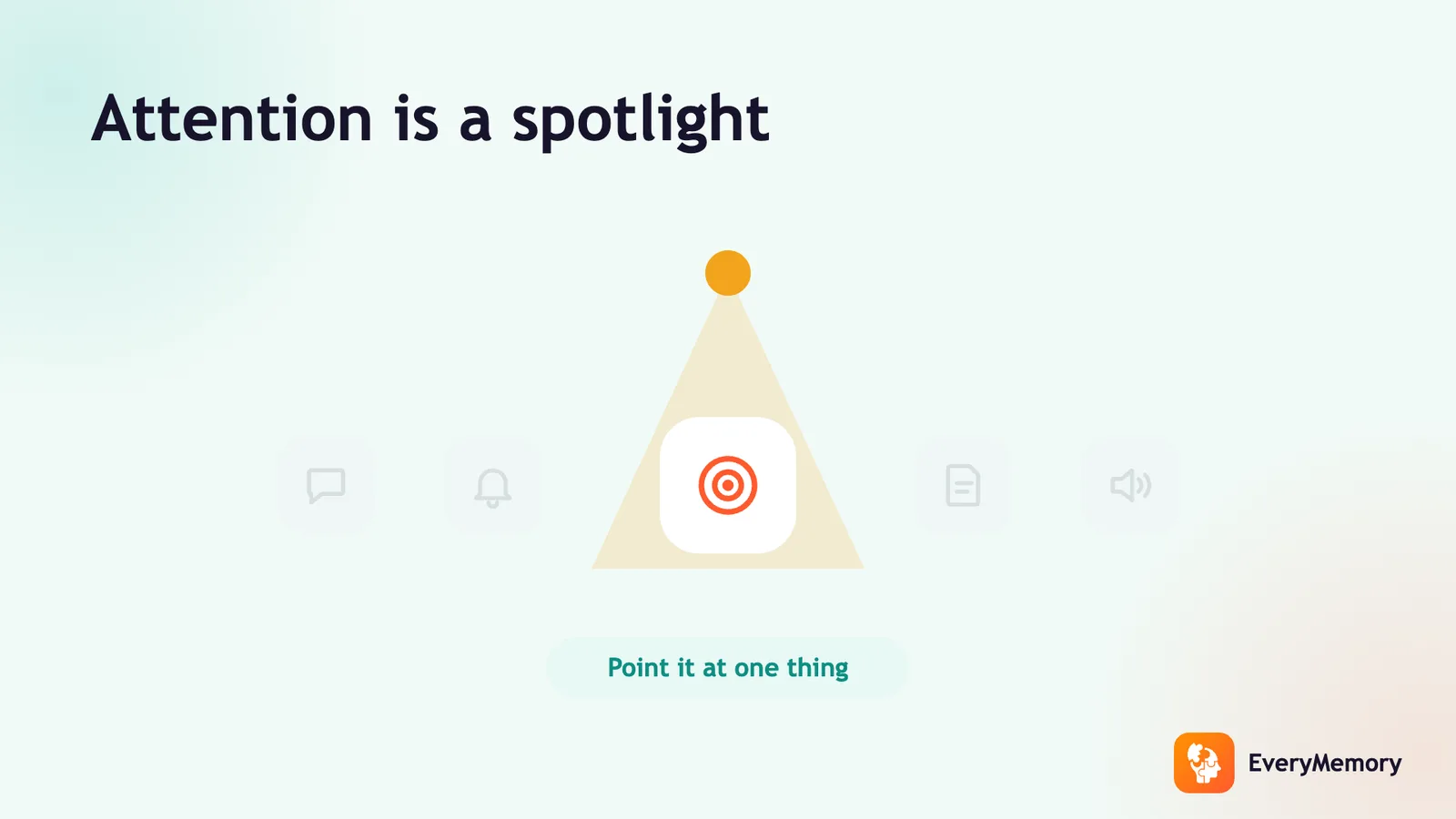
How Attention Works (and Why It Matters for Memory)
Attention is the gatekeeper of memory. Understand how your brain filters the world - and why you can't remember what you never truly noticed.
Brain Training Apps for Seniors: What to Look For
What to look for in a brain training app for seniors - large clear controls, gentle adaptive difficulty, honest non-medical claims, and no fear-based marketing.

Does Dual N-Back Raise Your IQ?
Dual n-back is a famous working-memory drill, but the claim that it raises your IQ or fluid intelligence is contested and weak. Here's the honest state of the debate.

What Is IQ?
IQ is a standardized score for how well you handle certain reasoning tasks, scaled so the average is 100. It's a real but partial measure - here's what it captures and what it leaves out.

Riddles for Adults (With Answers)
A set of genuinely tricky riddles for adults, with answers - plus an honest note on what riddles actually train: lateral thinking and reframing, more than memory.
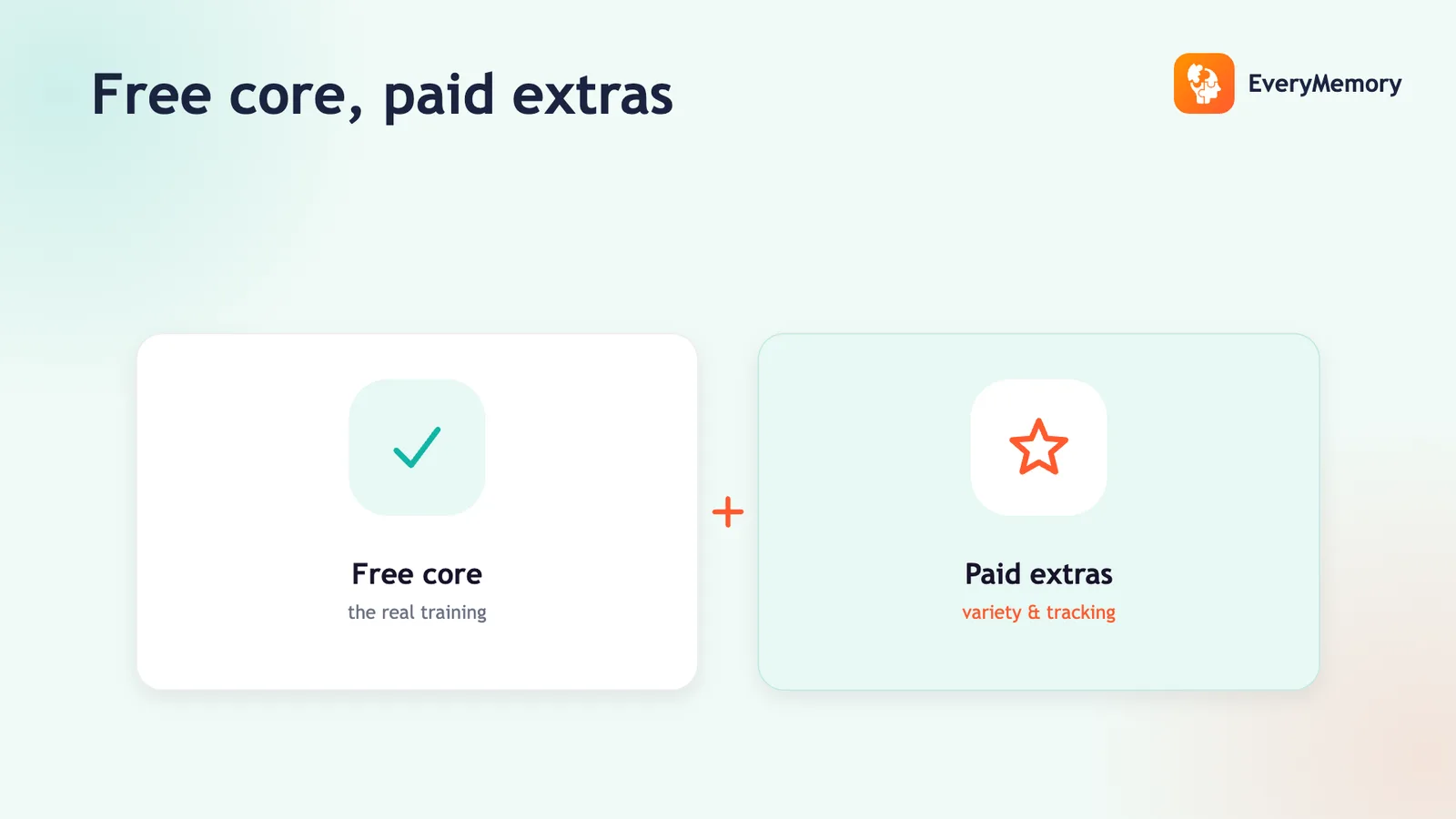
Paid vs Free Brain Training Apps
Paid vs free brain training apps: free covers the core training for most people, while paid mainly adds variety, tracking, and convenience - here's how to decide.
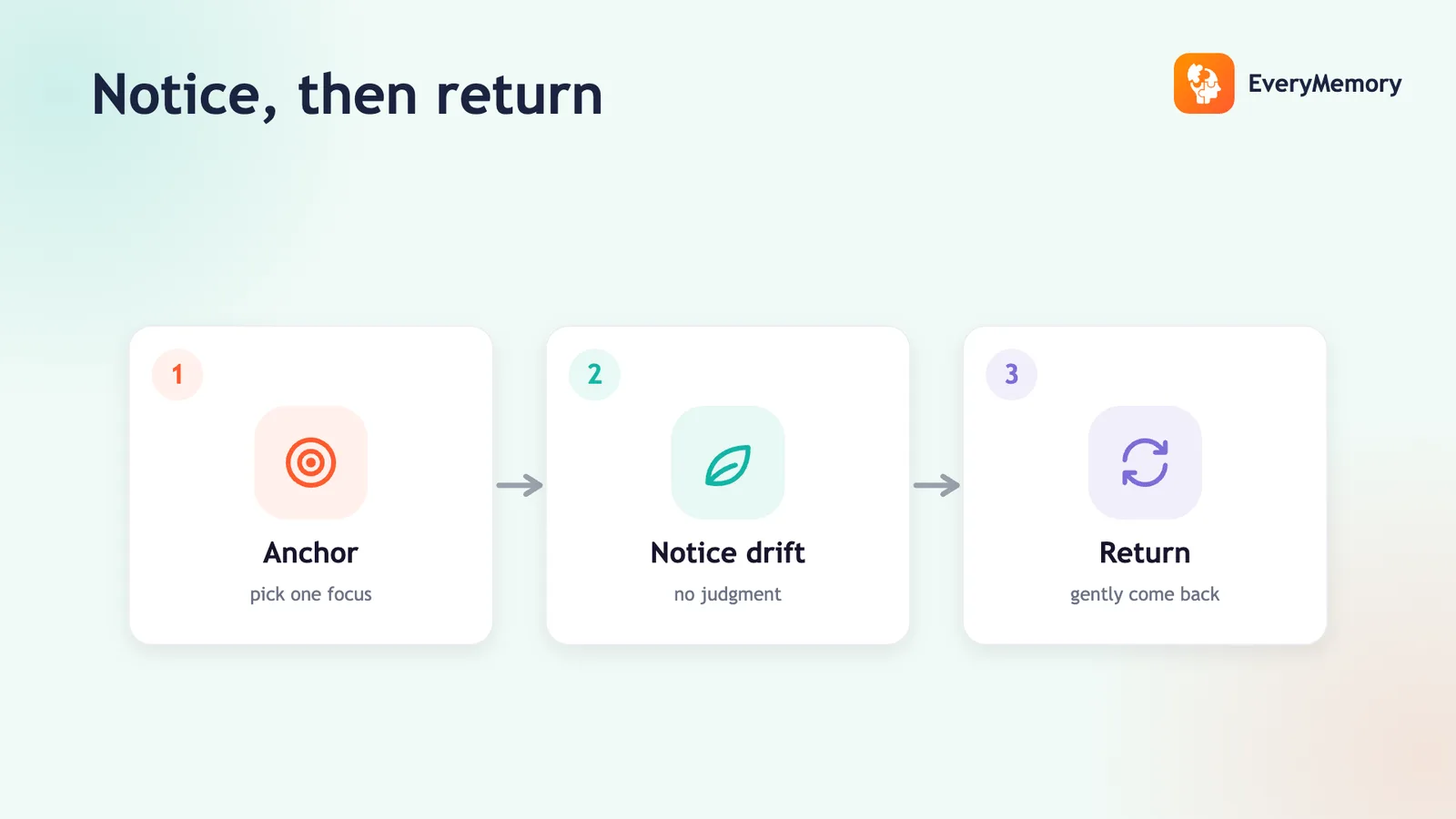
Mindfulness for Focus
Mindfulness is really attention practice - noticing when your mind wanders and steering it back - and that one simple move is the foundation of clear, steady focus.
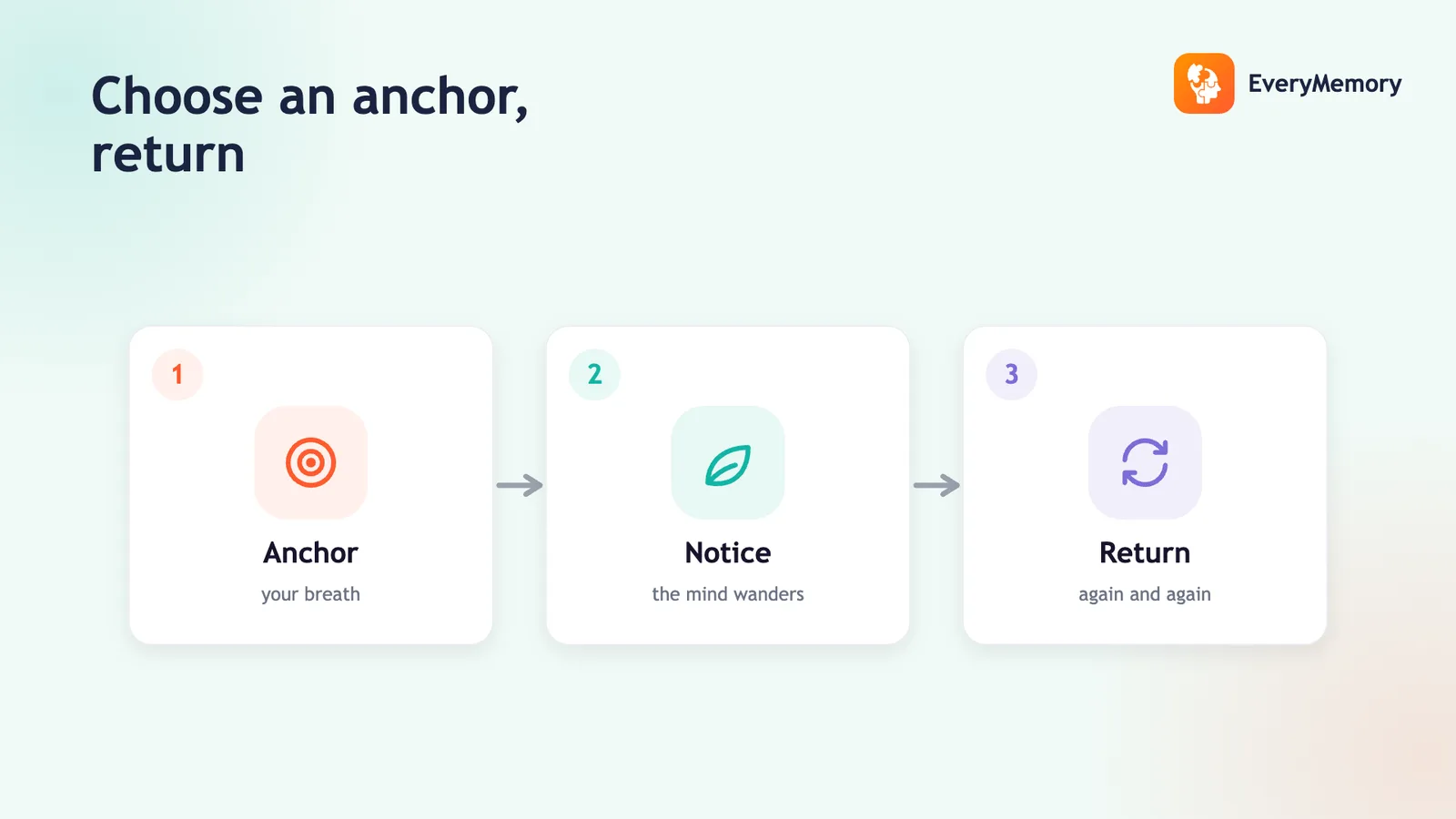
How Meditation Helps Focus
Meditation is focus practice with the noise removed - you choose an anchor, your mind drifts, you return - and that repeated return is what trains steadier attention.
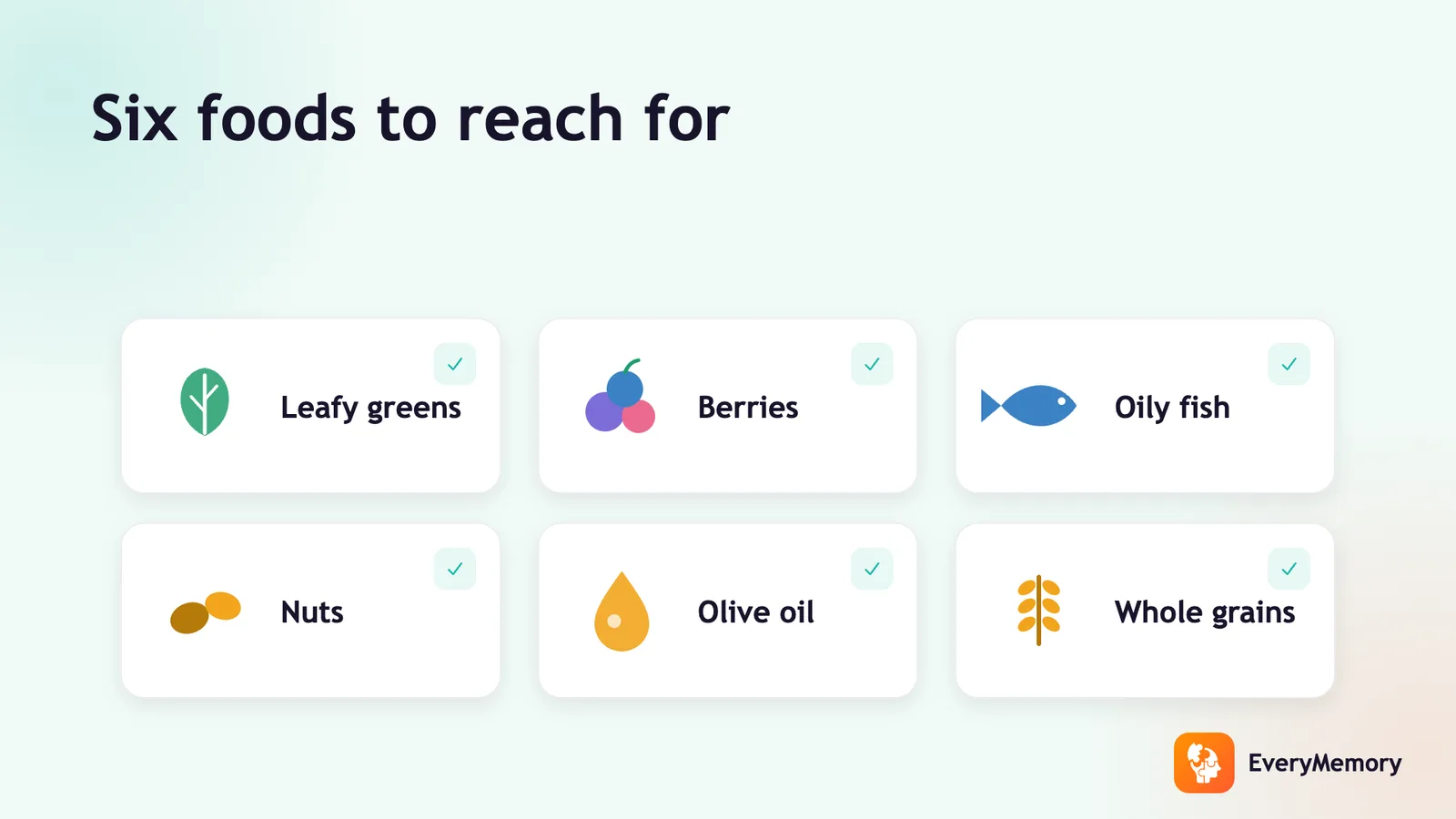
The MIND Diet for Brain Health: A Beginner's Guide
The MIND diet blends Mediterranean and DASH eating into a brain-focused pattern linked with better cognitive outcomes - here is how it works and how to start.
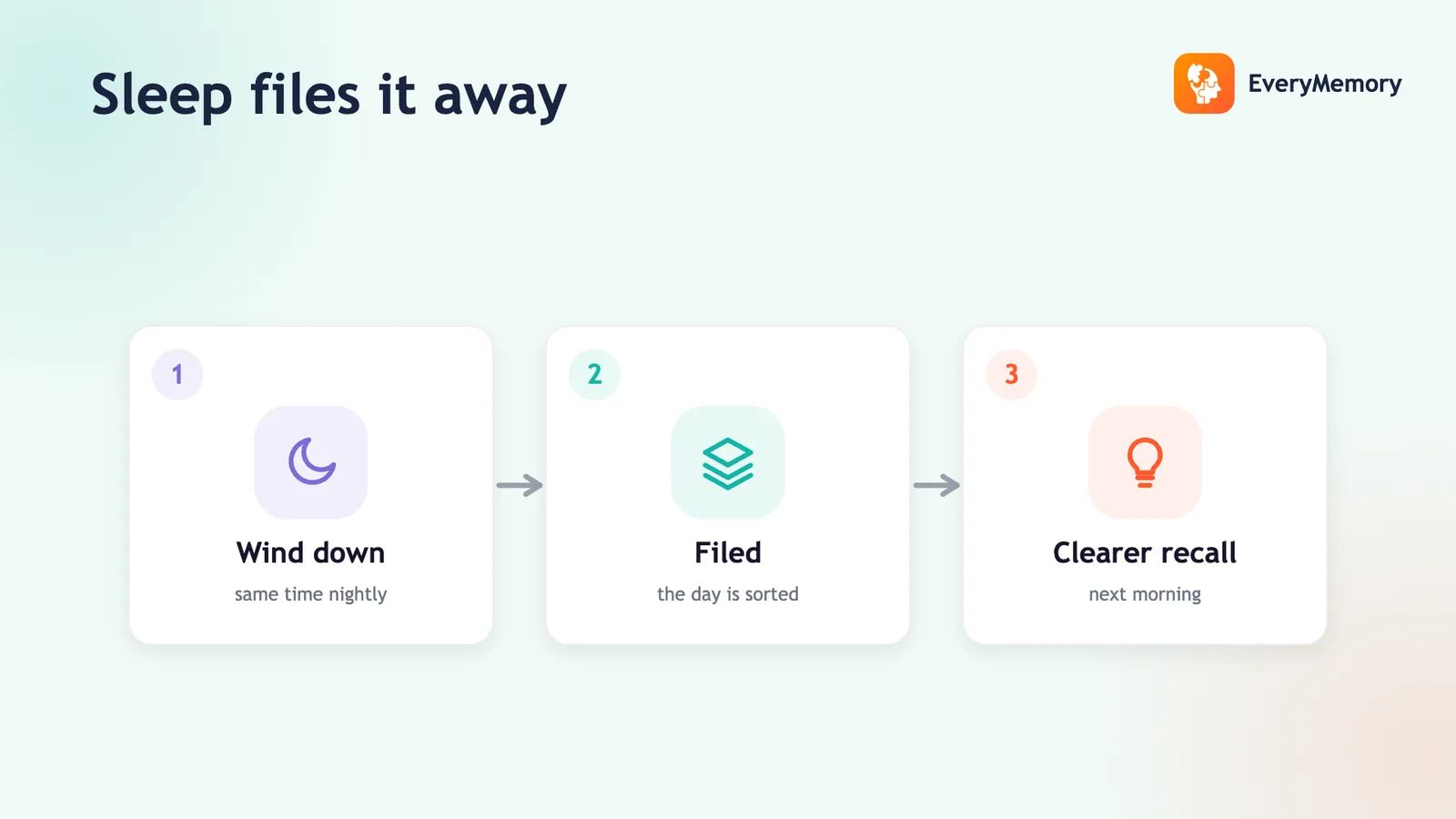
How to Sleep Better for Memory
Sleep is when the brain files away what you learned, so a few steady habits around bedtime can do more for everyday recall than any single trick.
Cognitive Health: A Practical, Non-Medical Guide
Cognitive health, in everyday terms, is how well your thinking and memory serve you day to day - and it rests on the same ordinary habits that support the rest of you.
Does Learning a Language Keep Your Brain Sharp?
Language learning is one of the most complete mental workouts you can give your brain, recruiting memory, attention, pattern recognition, and cognitive flexibility all at once. Here is what the research suggests and how to get started at any age.

Types of Memory Explained: Sensory, Short-Term, and Long-Term
Memory isn't one thing. A plain guide to the main types - sensory, short-term, working, and long-term - and how information moves between them.
Non-medical ways to track memory patterns and progress over time.
What's Your Mental Stamina?
Can you focus for hours, or does your brain fade fast? Answer 20 quick questions for a fun read on your mental stamina. Free, no sign-up.
Left Brain or Right Brain?
Are you the logical, list-making type or the creative, go-with-your-gut type? Take this fun, shareable quiz to find out. Free, no sign-up.
Numerical Reasoning Quiz
Twenty number puzzles - sequences, ratios, percentages, and word problems - with instant scoring. Test your numerical reasoning, free, no sign-up.
How Curious Are You?
Do you chase questions and love to explore, or stick to what you know? Answer 20 quick questions for a fun read on your curiosity. Free, no sign-up.
Backward Digit Span Test
You're shown a sequence of digits and must enter them in reverse order - a working-memory task that's harder than recalling them forward.
How Creative Are You?
Do ideas pour out of you, or do you stick to the tried and true? Answer 20 quick questions for a fun read on your creativity. Free, no sign-up.
How's Your Concentration?
Can you stay locked on one task without drifting? Take this fun 20-question quiz for a read on your sustained focus. Free, in your browser, no sign-up.
Verbal Memory Test
A 'seen vs new' word stream that tests how many words you can recognise before your memory fills up - a read on verbal short-term memory.
Spatial Reasoning Quiz
Twenty space and shape puzzles - cube edges, clock angles, mirror letters - with instant scoring. Test your spatial reasoning, free, no sign-up.
Auditory Memory Test: How It Works
An auditory memory test plays a sequence of sounds, words, or tones you hear once and repeat - measuring how well you hold information that arrives through your ears.
How Easily Distracted Are You?
Does every ping, tab, and stray thought pull you away? Take this fun 20-question quiz for a read on how easily you're distracted. Free, no sign-up.
Choice Reaction
Wait for the arrow, then tap the matching side as fast as you can. A free choice reaction test in your browser, scored on your median time.
Color Reaction
Color Reaction is a free choice-reaction game. Tap only when the panel turns the named color, ignore the rest, and chase a faster median time.
What Kind of Learner Are You? Quiz
Visual, auditory, reading-writing, or hands-on? Find your learning style in 20 quick questions. A popular idea, just for fun. Free, no sign-up.
How Much Do You Procrastinate?
Do you start now or stall till the last minute? Answer 20 quick questions for a fun read on your procrastination. Free, no sign-up.
Optimist or Pessimist?
Do you see the glass half full or half empty? Answer 20 quick questions for a fun, self-relative read on your outlook. Free, no sign-up.
Reaction Time Test: How Fast Are You?
A reaction time test measures the gap between a signal and your response - usually a click on colour change - and a typical simple reaction lands around 200-270 ms.
Face Memory Test
Play a free face memory test in your browser. Faces appear one by one, decide if each is new or one you have already seen. No sign-up.
Do You Have a Photographic Memory?
Can you replay scenes in vivid detail in your mind's eye? Take this fun 20-question quiz to find out how vivid your visual recall is. Free, no sign-up.
Your Creativity Type Quiz
Are you a Visionary, a Maker, a Storyteller, or a Connector? Find your creativity type in 8 quick questions. Free, no sign-up.
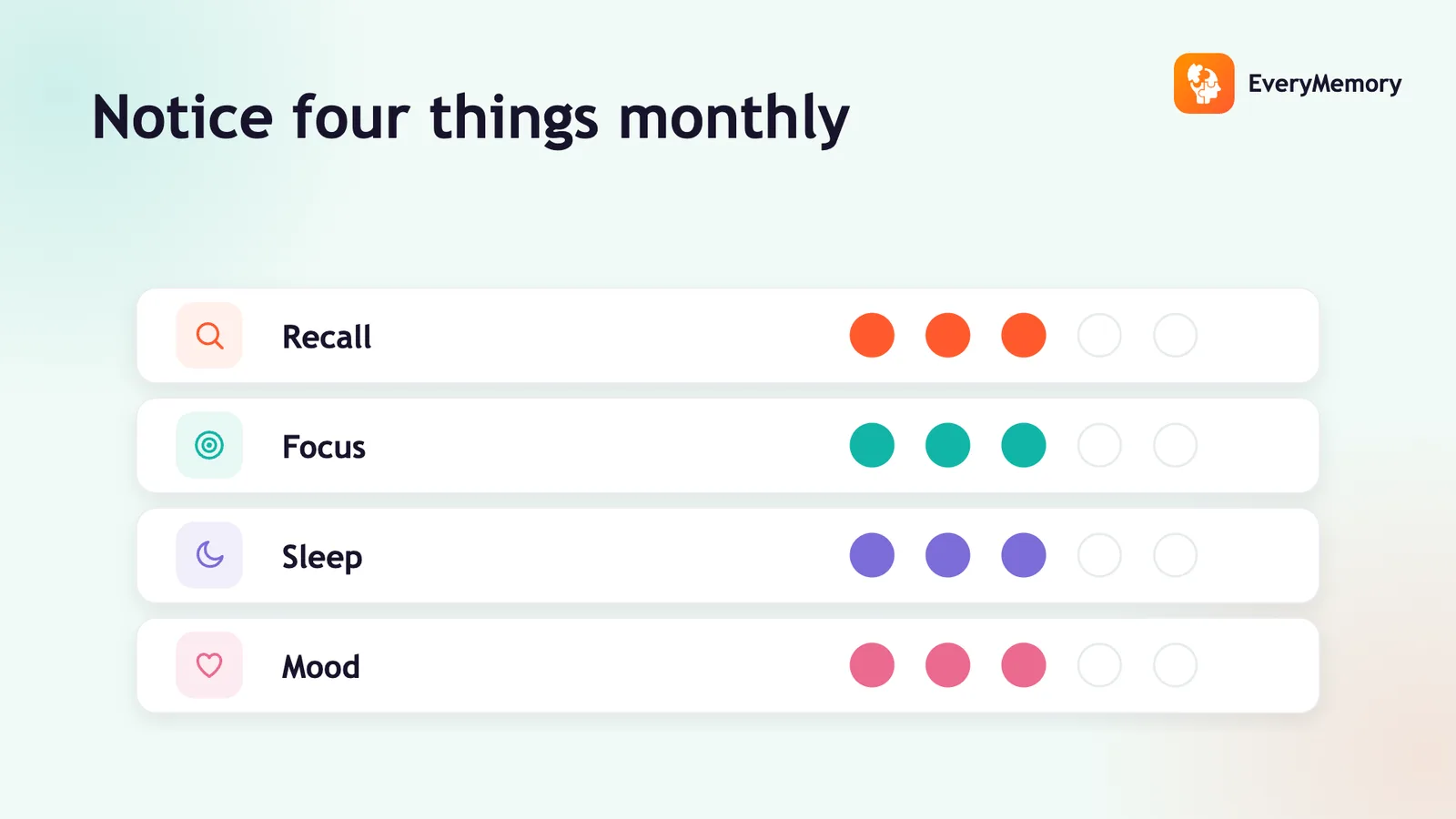
Monthly Memory Check-In: What to Notice
A gentle monthly check-in routine for noticing memory patterns over time - what to look for, what's normal variation, and what's worth writing down.
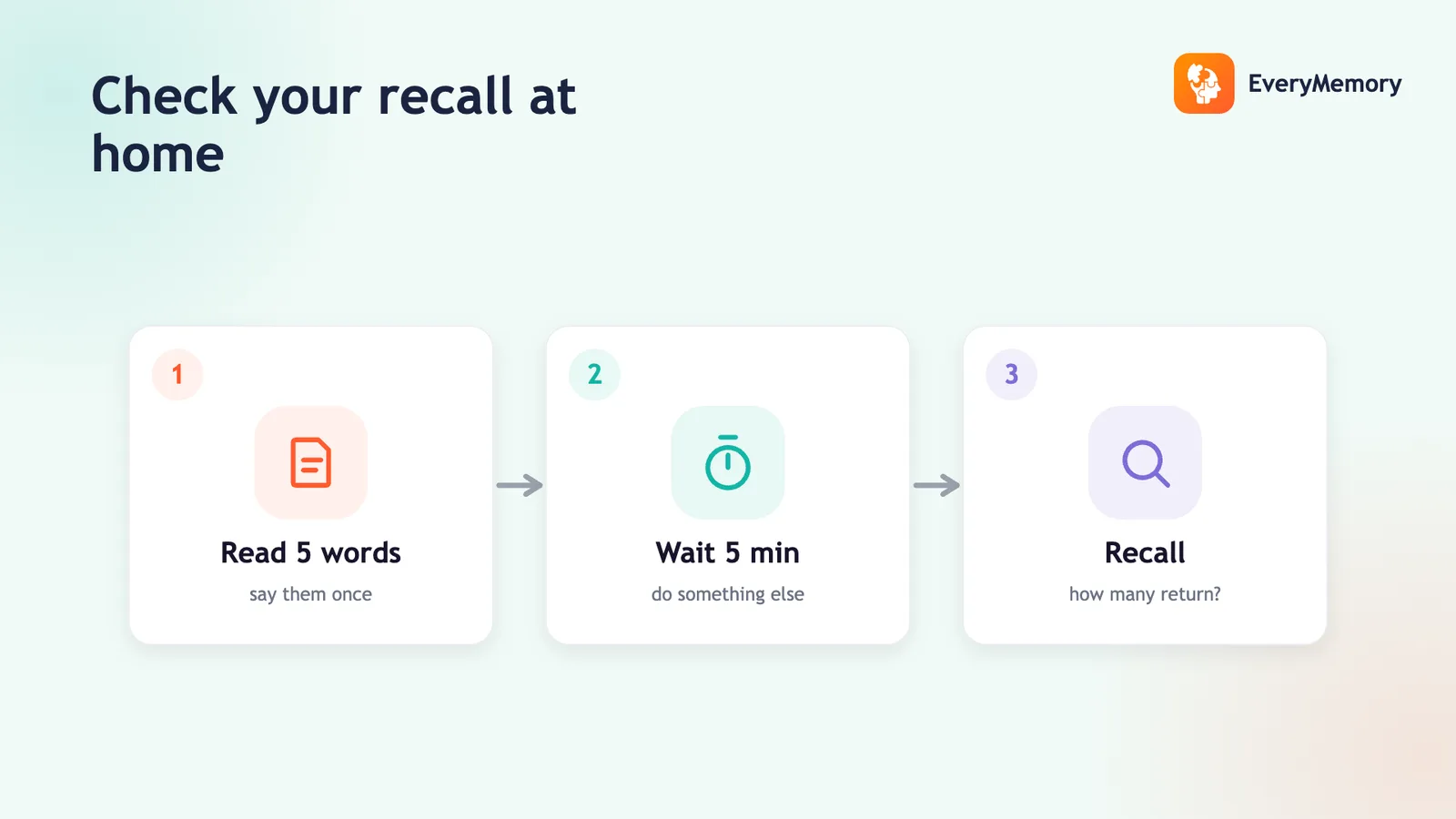
Memory Test: How to Do a Simple Non-Medical Self-Check
What a memory test measures, the three kinds you'll run into, and a 5-minute non-medical self-check you can do at home to track your own recall over time.
How Empathetic Are You?
How well do you tune into other people's feelings? Answer 20 quick questions for a fun, self-relative read on your empathy. Free, no sign-up.
Only 1% Can Solve This Quiz
Genuinely hard questions with one definite answer each. Can you join the 1% who ace them? Instant scoring. Free, no sign-up.
Coding & Decoding Quiz
Crack the code: if CAT is 3-1-20, what is DOG? Eight letter-number coding puzzles with instant scoring. Free, in your browser, no sign-up.
What Color Is Your Personality?
Discover the color that matches your personality. Free, no sign-up, just for fun.
Abstract Reasoning Quiz
Eight letter and symbol pattern puzzles with instant scoring. Find what completes the pattern. Test your abstract reasoning, free, no sign-up.
How Much Does Your Mind Wander?
Does your mind drift mid-task, or stay put? Answer 20 quick questions for a fun read on mind-wandering. Free, no sign-up.
Number Memory Test: How Many Digits Can You Hold?
A number memory test measures your digit span - how many numbers you can recall in order. The average, what affects it, and how chunking stretches it.
Letter Span
See a row of letters flash, then type them back in order. Each correct round adds a letter. A free, self-relative span game in your browser.

Brain Quiz: A Quick Test of Your Mental Sharpness
A brain quiz checks several mental skills at once - memory, attention, speed, reasoning - in a few short rounds. Here's what it measures and how to read it.
How Sharp Is Your Everyday Memory?
A reassuring self-check on remembering tasks, appointments, and where you put things. Twenty questions, instant result. Free, no sign-up.
What's Your Enneagram Type?
A playful take on the nine Enneagram types. Free, no sign-up, just for fun.
Classic Riddles Quiz
The famous riddles everyone should know, with instant scoring. What gets wetter the more it dries? Free, in your browser, no sign-up.
Hard Brain Trivia Quiz
Twenty tough facts about the brain and mind, with clear answers and instant scoring. How much do you really know? Free, no sign-up.
Mental Math Test: How Fast Can You Calculate?
A 60-second arithmetic sprint that counts how many sums you solve in your head - a quick read on processing speed and working memory.
Analytical, Intuitive, or Practical?
Do you analyse, sense, or just get things done? Take this fun 20-question quiz to find your thinking type. Free, in your browser, no sign-up.
Can You Pass This Brain Test?
Twenty tricky riddles and logic traps with instant scoring. Free, no sign-up.
What's Your Problem-Solving Style?
Do you plan, experiment, team up, or research your way to a solution? Take this fun 20-question quiz to find your problem-solving style. Free, no sign-up.
How Sharp Is Your Brain?
Twenty quick questions for a fun read on how sharp and quick your brain feels today. Free, in your browser, no sign-up, shareable.

Short-Term Memory Test: How It Works
A short-term memory test checks how much you can hold for a few seconds - usually a digit span. Here's how it works, a version to try now, and what your result means.
How to Measure Brain Health (Non-Medical)
You can't measure brain health like blood pressure, but you can track useful everyday signals - your own attention, recall, sleep, and mood - against your own past, not a benchmark.
What's Your EQ?
How tuned-in are you to your own and others' feelings? Answer 20 quick questions for a fun, supportive read on your emotional intelligence. Free, no sign-up.
What's Your Number Memory Span?
A fun self-check on how well you hold on to phone numbers, PINs, and prices. Twenty questions, instant result. Free, no sign-up.
Mental Math IQ Quiz
Twenty quick arithmetic and order-of-operations puzzles with instant scoring. Test your mental math, free, no sign-up.
Are Brain Age Tests Accurate?
Brain age tests give you a tidy number, but there's no biological clock behind it - they mostly reward speed and practice, so treat the result as fun, not a measurement.
What's Your Cognitive Superpower?
Memory, focus, speed, logic, or creativity - which one is your standout strength? Take this fun 20-question quiz to find out. Free, no sign-up.
Growth or Fixed Mindset?
Do you believe abilities can grow, or feel they're set in stone? Answer 20 quick questions for a fun read on your mindset. Free, no sign-up.
Memory Quiz vs Memory Test: What's the Difference?
A memory quiz is a casual for-interest check; a memory test is more structured and repeatable. Neither is medical - here's how they differ and when to use each.
Corsi Block Test
Watch the blocks light up, then tap them back in order. The Corsi block test measures your spatial memory span - how long a sequence of positions you can hold. Play it free here.
What's Your Memory Age? (Just for Fun)
A playful, made-up memory age vibe based on how your recall feels today. Twenty questions, instant result. Free, no sign-up, purely for fun.
Sequence Memory, Explained
Sequence memory tests show a growing pattern of flashing tiles you must repeat back in order - the digital descendant of the old Simon game.
What Career Fits You?
Builder, Thinker, Creator, Helper, or Leader? Answer 20 quick questions for a fun read on the kind of work that might fit you. Free, no sign-up.
What Comes Next? Quiz
Spot the pattern and pick what comes next: numbers, letters, and clever sequences. Instant scoring. Free, in your browser, no sign-up.
Digit-Symbol Code
Try the Digit-Symbol Code test free online. Use the legend to match digits to symbols as fast as you can in 60 seconds. A fun processing-speed self-check.
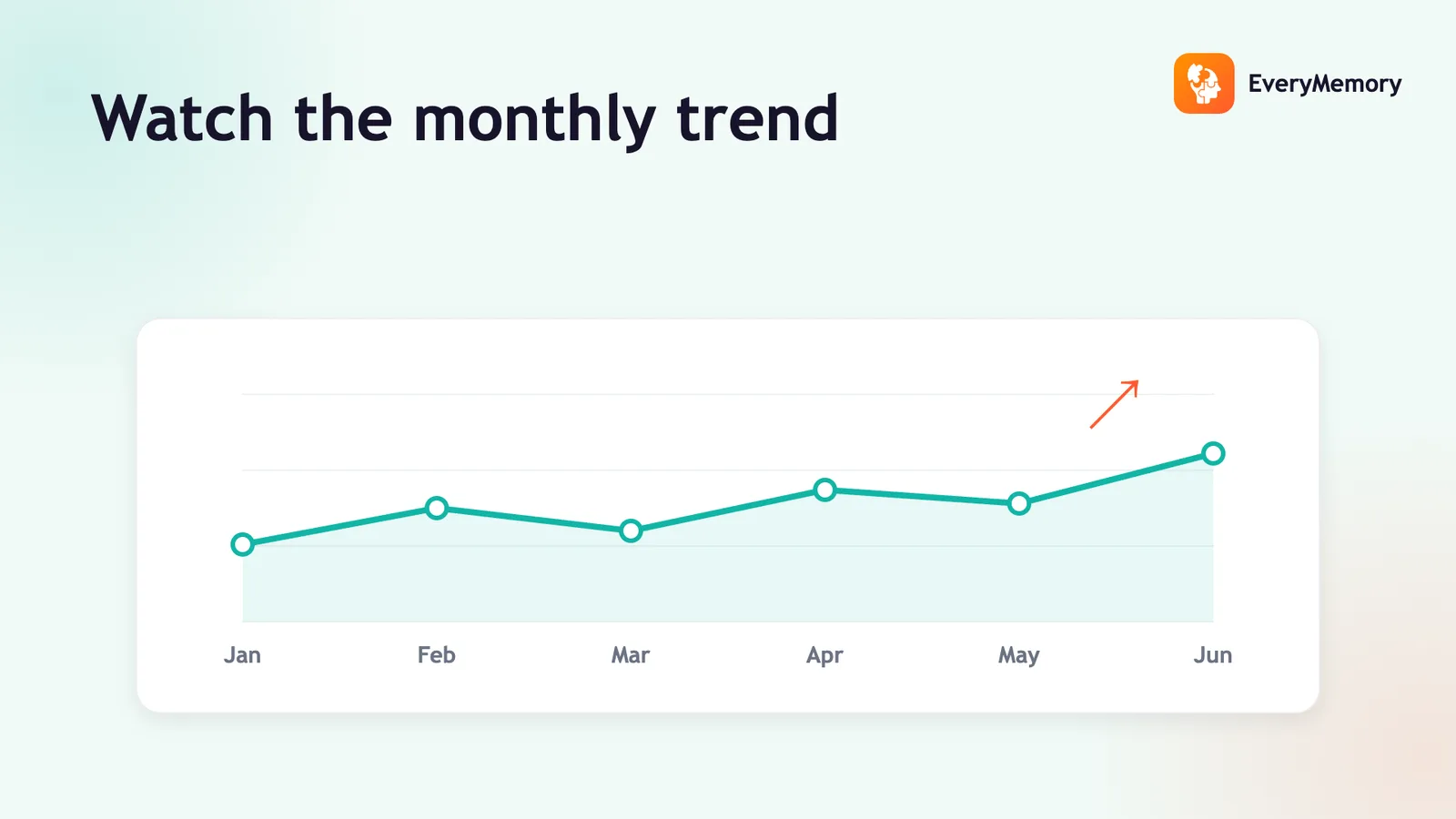
How to Track Memory Changes Month by Month
A practical, non-medical guide to noticing your own memory patterns over time - so you always have something useful to share with a doctor if needed.

How to Test Your Memory at Home
You don't need an app to check your memory. Five simple at-home self-tests for short-term, visual, and verbal recall - plus how to read the results honestly.
What's Your Boredom Tolerance?
Can you sit with a dull moment, or do you reach for stimulation fast? Answer 20 quick questions for a fun read. Free, no sign-up.

Memory Score: How to Read Your Progress
Your memory score shows how you're doing relative to yourself over time - not a ranking against others. Here's how to read it and what actually matters.
Are You a Good Multitasker?
Can you juggle tasks without dropping the ball? Answer 20 quick questions for a fun read on your multitasking. Free, no sign-up.
Math Riddles Quiz
Twenty number riddles with one correct answer each. Quick, clever, and no calculator needed. Instant scoring. Free, no sign-up.
Are You Built for Deep Work?
Can you carve out long, focused stretches of distraction-free work? Take this fun 20-question quiz to find out. Free, in your browser, no sign-up.
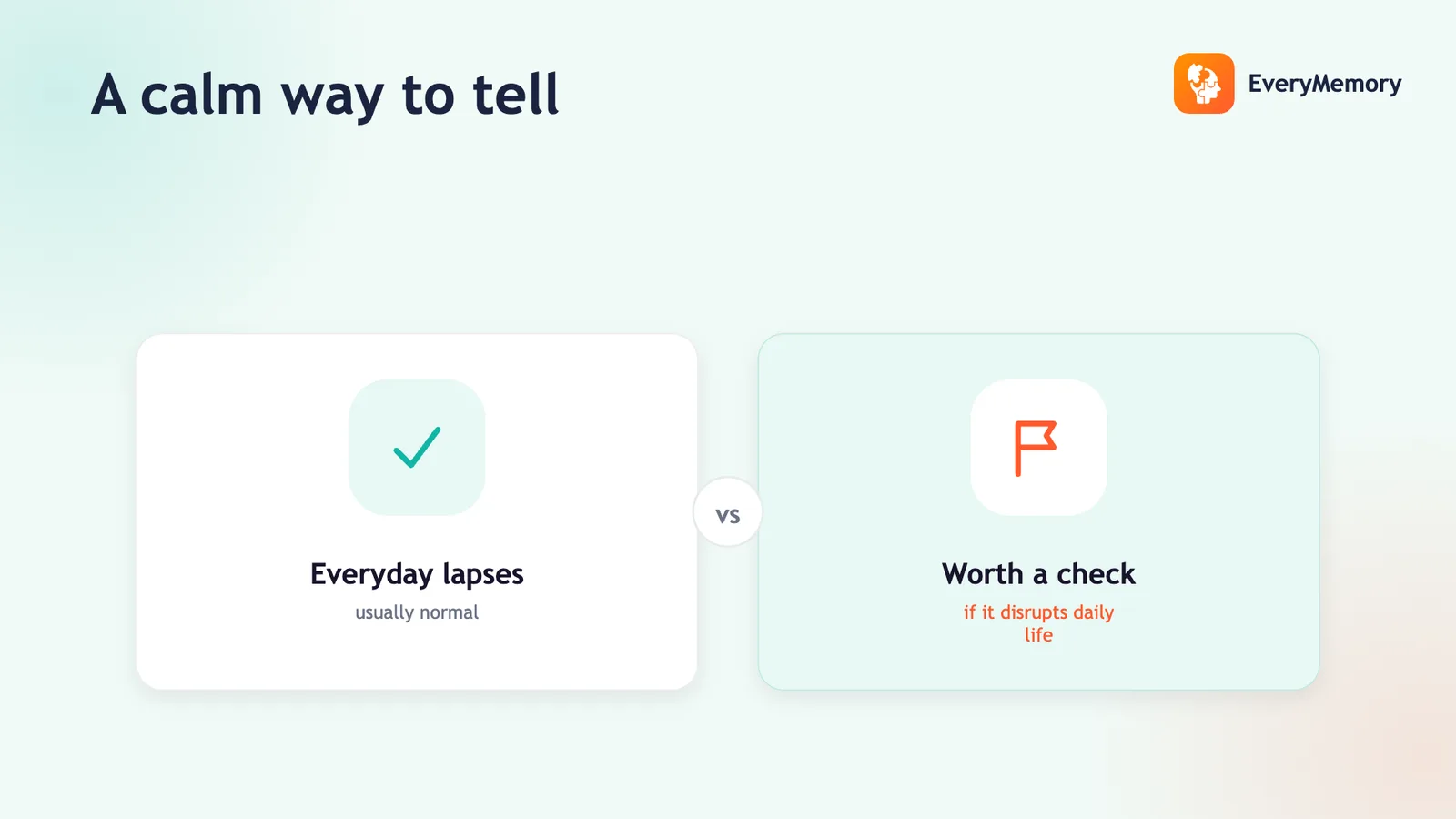
Am I Getting More Forgetful? How to Tell
Most everyday forgetting is normal and tied to attention, sleep, and stress - here's a calm way to tell ordinary lapses apart from changes that are worth a professional's eye.
How Often Do You Hit Flow?
Do you lose track of time in the zone, or never quite get there? Answer 20 quick questions for a fun read on your flow. Free, no sign-up.
Matrix Reasoning Quiz
Twenty 3x3 grid puzzles described in text, with instant scoring. Find the missing entry. Test your matrix reasoning, free, no sign-up.
Are You a Genius?
Twenty tricky brain teasers with instant scoring. Can you outsmart the classics and earn the genius title? Free, in your browser, no sign-up.
How Resilient Are You?
How well do you bounce back when life knocks you down? Answer 20 quick questions for a fun, self-relative read. Free, no sign-up.
Subitizing Test
Dots flash for a split second - how many can you 'see' without counting? A free subitizing test that probes your instant number sense. Play it right here and beat your own best.
Are You Logical or Creative?
Do you lead with logic or with imagination? Take this fun 20-question quiz to see which way your mind leans. Free, in your browser, no sign-up.
How Well Do You Focus Under Pressure?
Do you sharpen up when the heat is on, or crumble? Answer 20 quick questions for a fun read. Free, no sign-up.
How Good Is Your Spatial Memory?
A quick self-check on remembering layouts, directions, and where things are placed. Twenty questions, instant result. Free, no sign-up.
Trivia and Brain Health
Is trivia good for your brain? An honest, non-medical answer: it's engaging, social, and great retrieval practice - but it isn't a shield against decline. Here's the real picture.
What's Your Focus Type?
Are you a Deep Diver, a Sprinter, or a Juggler? Answer 20 quick questions for a fun read on your focus type. Free, no sign-up.
Number Stroop
Number Stroop is a free interference game. Count how many digits are shown while the digit value tries to trick you, and chase your best streak.
How Forgetful Are You?
Keys, names, why you walked into the room - how often do little things slip? Take this fun 20-question quiz for a self-relative read. Free, no sign-up.
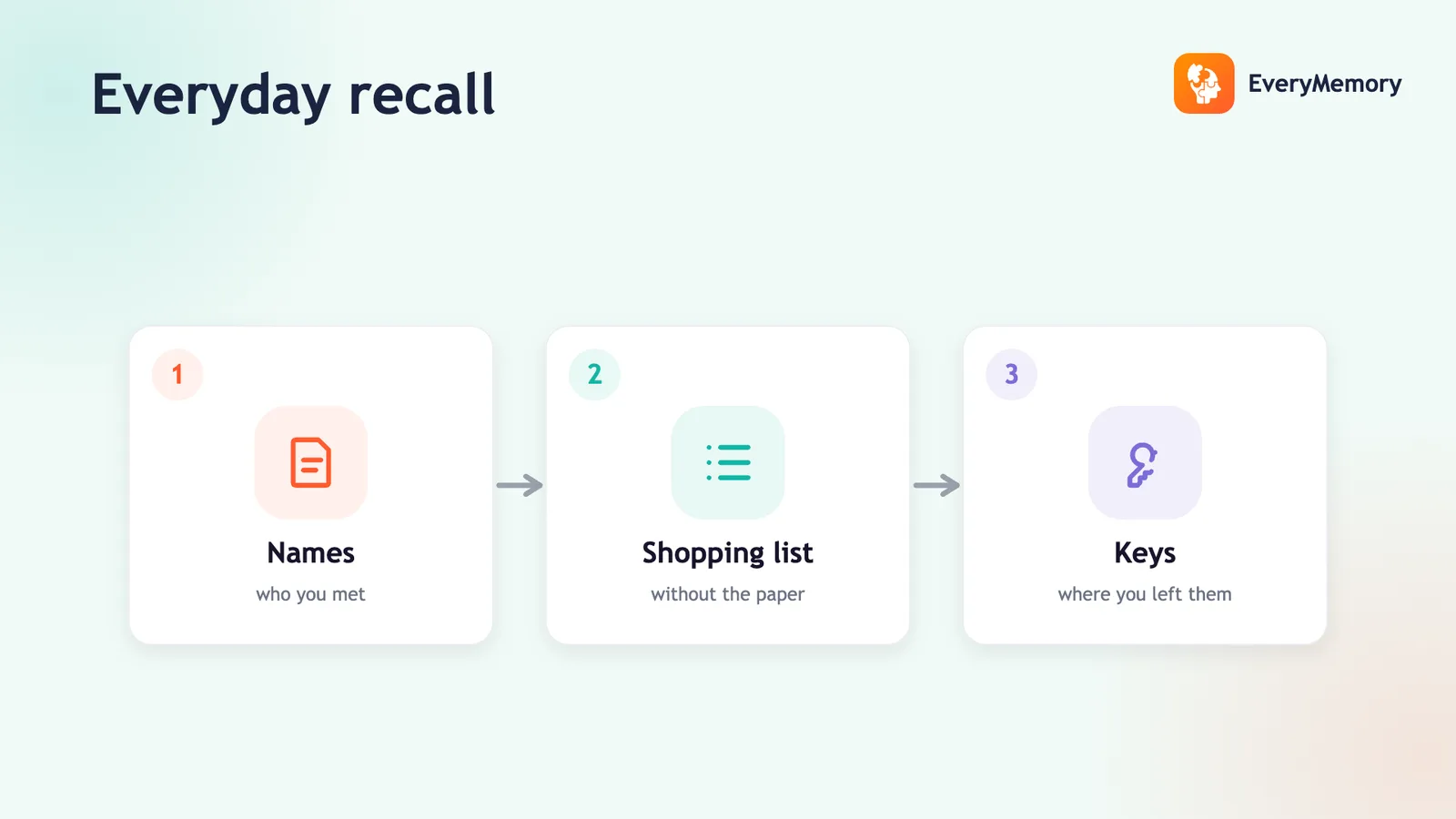
Memory Quiz for Adults
A memory quiz for adults checks everyday recall - names, lists, where you put things - as a non-medical baseline you track against your own past results.
Brain Myths: True or False Quiz
Do we really use only 10% of our brains? Bust twenty common brain myths, true or false, with instant scoring. Free, no sign-up.
How Good Is Your Memory?
Answer 20 quick questions and get a fun, self-relative read on how good your everyday memory is. Free, in your browser, no sign-up.
Verbal Reasoning Quiz
Twenty word puzzles - synonyms, antonyms, odd-one-out, and sentence logic - with instant scoring. Test your verbal reasoning, free, no sign-up.
Quick Estimation Quiz
Twenty estimation puzzles with instant scoring. Pick the closest answer to a product, sum, or real-world quantity. Free, no sign-up.

Are Online IQ Tests Accurate?
A free online IQ quiz is not a validated measure of intelligence - it can't tell you your "real IQ." Here's what those quizzes actually do and how to read them honestly.
Planner or Improviser?
Do you map it all out or wing it as you go? Answer 20 quick questions for a fun read on your planning style. Free, no sign-up.
How Good Is Your Long-Term Memory?
A gentle self-check on how well you recall past events, old facts, and long-ago routines. Twenty questions, instant result. Free, no sign-up.
What Is the N-Back Task?
The n-back task asks you to flag when the current item matches the one from N steps back - a demanding test of working-memory updating.
Fluid Intelligence Quiz
Twenty novel logic and pattern puzzles with instant scoring - no prior knowledge needed. Test your fluid intelligence, free, no sign-up.
The Trail Making Test, Explained
The trail making test asks you to connect scattered numbers - and then alternating numbers and letters - as fast as you can, testing task-switching and visual search.

What's a Good Digit Span Score?
Most adults can hold about seven digits, give or take two - the classic 7±2. Here's what digit span really measures and why your own trend matters more than the number.
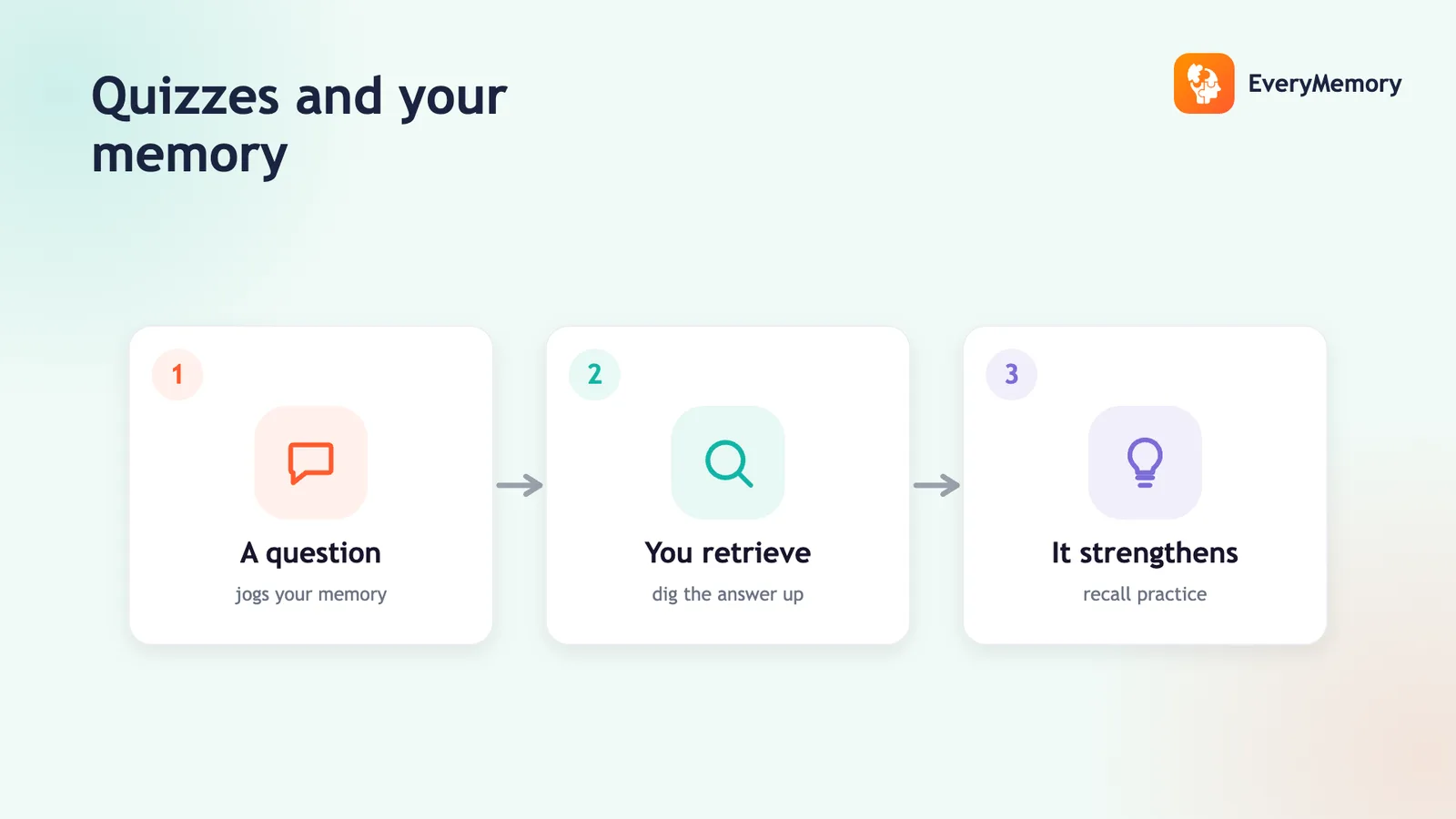
General Knowledge Quizzes and Memory
A good general knowledge quiz feels like a memory test, but it mostly measures what you already know. Here's what these quizzes actually exercise - and what they don't.
What's Your Decision-Making Style?
Do you decide with your head, your heart, your gut, or the data? Take this fun 20-question quiz to find out. Free, in your browser, no sign-up.

Memory Quiz: Check How Sharp Your Recall Is
A memory quiz is a quick, non-medical way to check how much you can take in and recall right now - here's what it measures and how to read your score.
What Is the Stroop Effect?
The Stroop effect is the slowdown you feel when you name the ink colour of a colour word that disagrees with it - like the word 'RED' printed in blue.
What's Your Attention Span?
How easily do you get pulled off task? Answer 20 quick questions for a fun read on your focus. Free, in your browser, no sign-up.
How Confident Are You?
How sure of yourself do you feel right now? Answer 20 quick questions for a fun, self-relative read on your confidence. Free, no sign-up.
Inductive Reasoning Quiz
Twenty rule-finding puzzles with instant scoring. From the examples, infer the rule or next case. Test your inductive reasoning, free, no sign-up.
How Vivid Are Your Childhood Memories?
A gentle, shareable self-check on how vividly you recall early life, old homes, and first days. Twenty questions, instant result. Free, no sign-up.

Do Memory Quizzes Actually Work?
Memory quizzes work well as a self-relative baseline and a practice nudge - and badly as a diagnosis or a ranking. Here's where the line really sits.
Detective Logic Quiz
Crack twenty whodunit mini-mysteries using only the clues. Each has one deducible answer. Instant scoring. Free, no sign-up.
Test Your Working Memory
Hold the numbers and words in mind, then juggle them in your head. Eight hold-and-manipulate challenges with instant scoring. Free, no sign-up.
Trick Questions Quiz
Twenty questions designed to lure you to the obvious, wrong answer. Can you resist? Instant scoring. Free, in your browser, no sign-up.
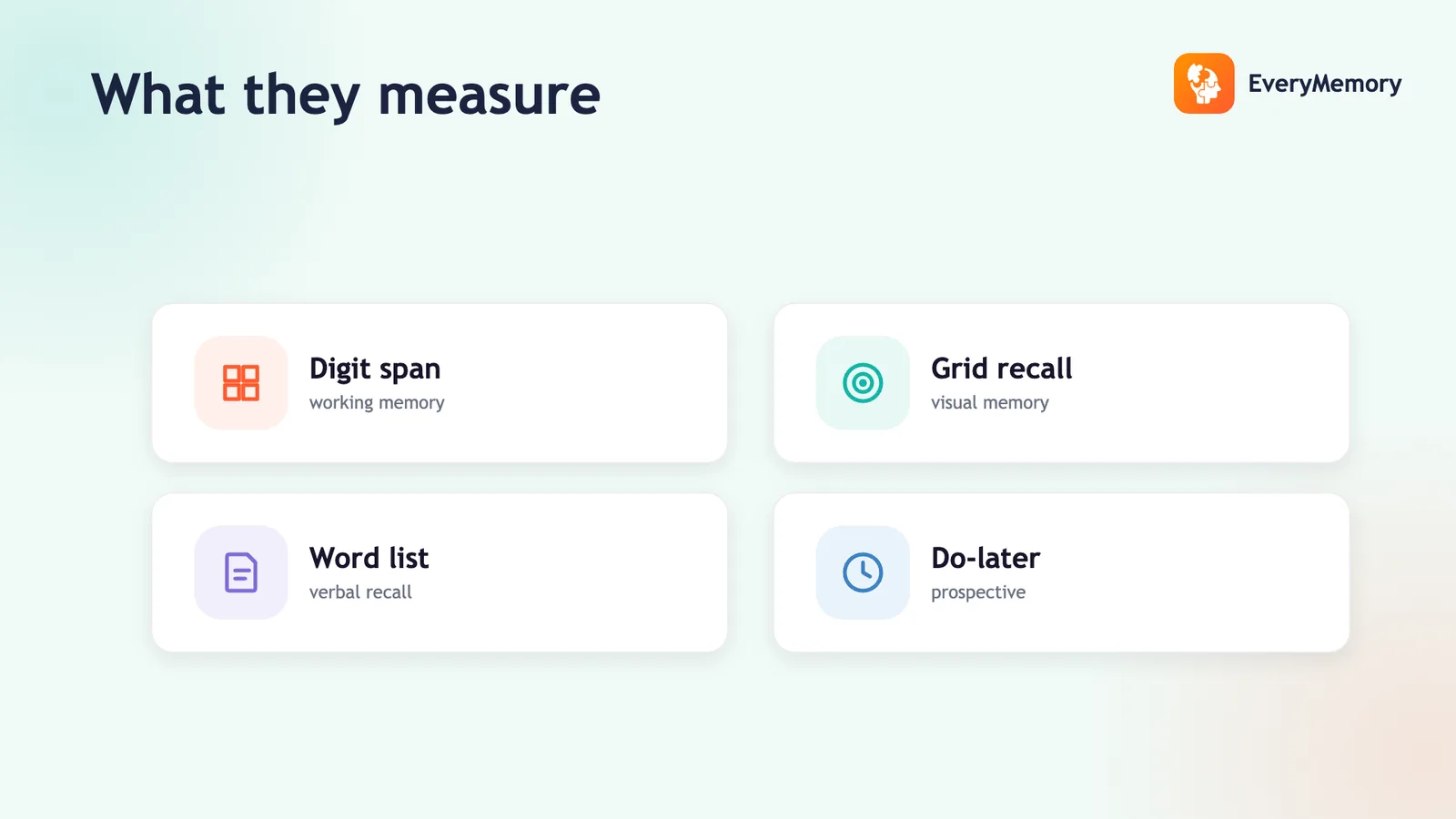
Memory Quiz Questions Explained
Most memory quizzes reuse a handful of question types - digit span, grid recall, word lists, spot-the-change. Here's what each one is really measuring.
Vocabulary IQ Quiz
Eight word-meaning puzzles with instant scoring. Pick the best synonym or definition. Test your vocabulary, free, no sign-up.
Lateral Thinking Quiz
Think outside the box: twenty puzzles where the obvious answer is wrong. Each has one definite solution. Free, in your browser, no sign-up.
Average Working Memory by Age
Working memory is often measured by digit span - about 7±2 for adults. Forward span stays remarkably stable with age; it's the “mental juggling” backward span that dips.
Typing Speed and the Brain
Typing speed reflects a practised motor skill plus processing speed and attention - measured in words per minute, where 40 wpm is average and 65-plus is fast.

Working Memory Test: How It Works
A working memory test checks not just how much you hold, but how well you juggle it - backward digit span, n-back. How it works, a version to try, and how to train it.
Deductive Reasoning Quiz
Twenty premise puzzles with instant scoring. From the given facts, what must be true? Test your deductive reasoning, free, no sign-up.
Word Analogies Quiz
Eight A:B :: C:? word analogies with instant scoring. Complete the relationship. Test your verbal logic, free, no sign-up.
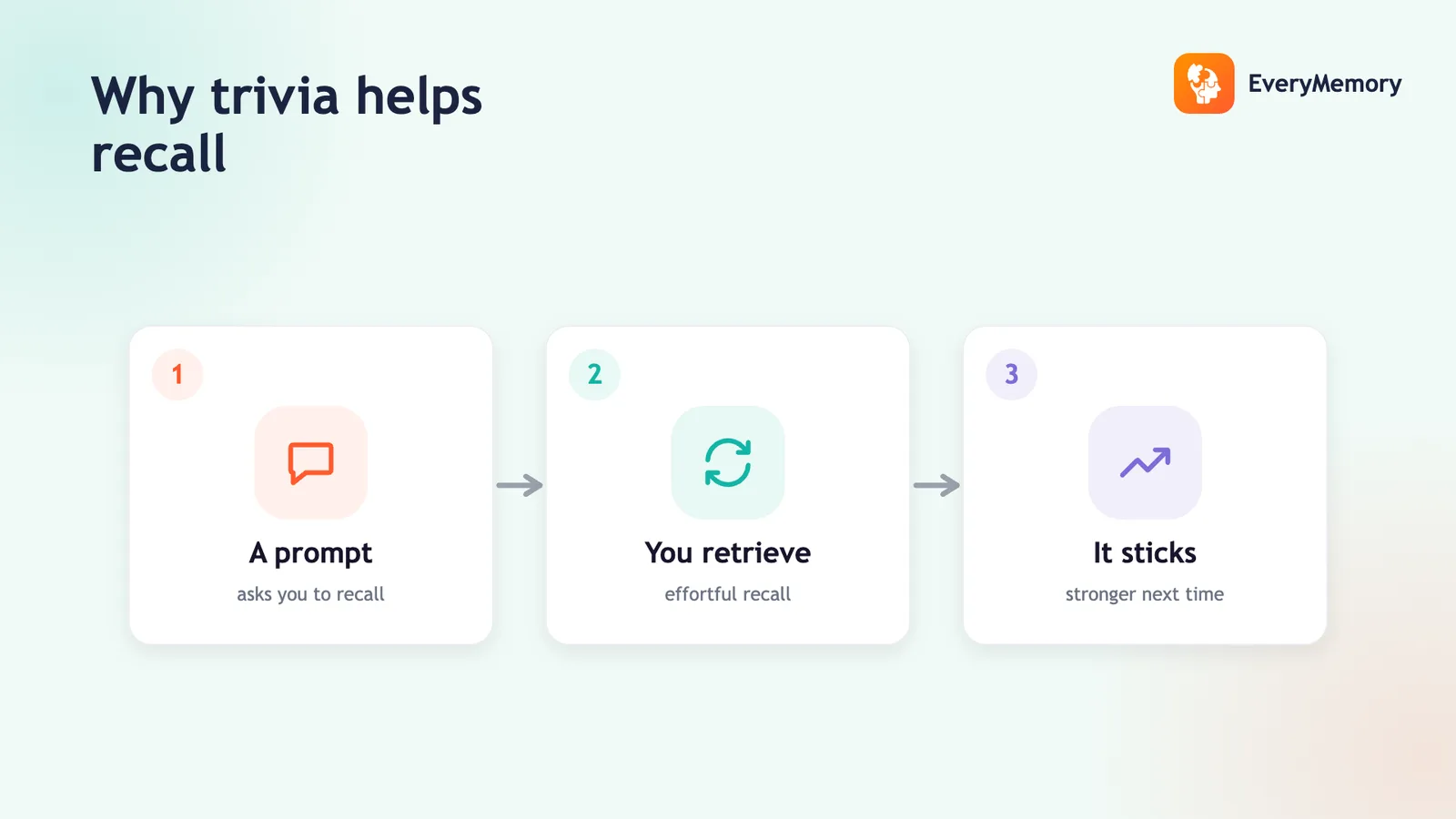
How Trivia Helps Memory
Does trivia help your memory? Honestly - yes and no. It strengthens recall of what you practise and keeps you engaged, but it won't expand your memory capacity. Here's the real mechanism.
Average Typing Speed by Age
Average typing speed is around 40 WPM for adults, but it tracks keyboard practice far more than age - digital-native teens and desk-job adults often type fastest.
What's Your Brain Age? (Just for Fun)
A playful brain-age vibe based on how you feel about speed, focus, and recall. Just for fun.
Mental Rotation Test: Spatial Reasoning
Decide whether a rotated shape is the same object turned in space or its mirror image. A quick, non-medical look at spatial reasoning - a real, trainable skill, not a spatial IQ score.
How Strong Is Your Verbal Memory?
A playful self-check on how well you remember words, names, and what you read. Twenty questions, instant result. Free, no sign-up.
When Is Your Brain Sharpest?
Morning lark, afternoon peak, or night owl? Answer 20 quick questions for a fun read on your peak focus time. Free, no sign-up.
Count the Dots
Dots flash for under a second, then vanish. How many did you see? A free quick-estimation game in your browser, no sign-up.

Free Memory Test: What to Look For
Plenty of free memory tests exist - but quality varies wildly. What separates a useful free test from a gimmick, the red flags to avoid, and how to use one well.
Optical Illusions Quiz
How well do you really understand what your eyes do? Eight facts about famous illusions, in text, with instant scoring. Free, no sign-up.
Word Riddles Quiz
Twenty wordplay riddles with one clever answer each. What word becomes shorter when you add two letters? Free, no sign-up.
Can You Outsmart a 5th Grader? Quiz
Twenty grade-school questions adults often get wrong. Can you outsmart a 5th grader? Instant scoring. Free, in your browser, no sign-up.

Brain Age Test: What It Really Means
A "brain age" test gives a playful number based on speed and accuracy - fun motivation, not a real measure of your brain or anything medical. How to read it honestly.
Quick Tap
How many times can you tap in 10 seconds? Play this free tapping-speed warm-up in your browser and beat your own best.
What's Your Personality Type?
Are you the Driver, the Expressive, the Amiable, or the Analyst? Answer 20 quick questions for a fun, shareable read on your personality type. Free, no sign-up.

Memory Test Online: How to Check Your Memory
An online memory test is a quick, non-medical way to baseline your memory and attention - if you take it rested, treat the score as self-relative, and retest the same way.
How Good Is Your Auditory Memory?
A fun self-check on how well you remember what you hear, from spoken instructions to songs and voices. Twenty questions, instant result. Free, no sign-up.

Printable Memory Tracker for Older Adults
A simple printable tracker makes it easy to notice memory patterns over time - no apps, no pressure, just a few seconds a day on paper.
Reading Speed Test: What's Your WPM?
Time yourself on a short passage, get your words-per-minute, then a quick comprehension check. A non-medical skill metric you can track against your own past results.
What's Your Memory Type?
Do you remember best with pictures, words, places, or sounds? Take this fun 20-question quiz to find your memory type. Free, no sign-up.
How Good Is Your Visual Memory?
A quick, playful self-check on how well you remember faces, scenes, and where things are. Twenty questions, instant result. Free, no sign-up.
Letter in the Stream
Numbers flash by fast with one hidden white letter. Catch it, then name it. A free rapid-attention game in your browser, no sign-up.

Types of Memory Tests Explained
Short-term, working, visual, verbal, prospective - different memory tests probe different systems. A clear guide to what each one measures and when it's useful.
What's Your Study Style?
Do you plan ahead, cram late, study in groups, or go solo? Answer 20 quick questions for a fun read on your study style. Free, no sign-up.
General Knowledge IQ Quiz
Twenty science, geography, and history facts with instant scoring. Test your general knowledge, free, no sign-up.
What's Your Attachment Style?
How do you show up in close relationships? Answer 20 quick questions for a fun, non-clinical read on your attachment style. Free, in your browser, no sign-up.

What's a Good Memory Score?
There's no universal "good" memory score - it depends entirely on the test. The honest benchmark isn't a percentile against strangers; it's your own past result.
Can You Single-Task?
Do you stick to one thing, switch a lot, or juggle it all? Answer 20 quick questions for a fun read on your work style. Free, no sign-up.
Flanker Task
Try the Flanker Task free online. Respond to the center arrow while ignoring the flanking arrows. A fun self-check of selective attention.
Names & Faces Memory Quiz
Meet a few people, then remember who's who. Twenty remember-then-answer challenges with instant scoring. Free, in your browser, no sign-up.
Symbol Search
Try the Symbol Search test free online. Decide fast whether a target symbol appears in each row. A fun self-check of visual scanning speed.
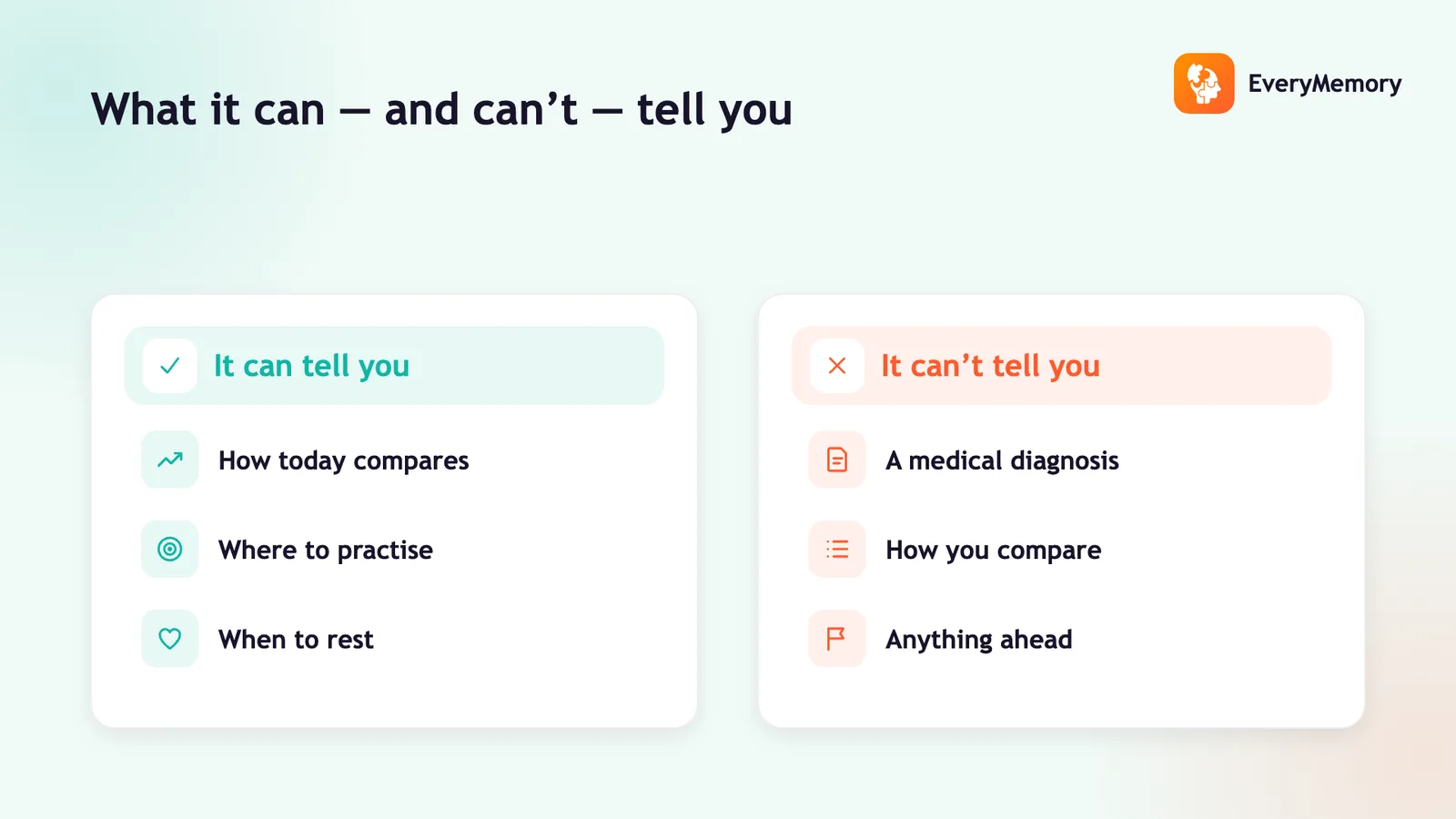
Simple At-Home Memory Check: What It Can and Can't Tell You
At-home memory checks can reveal your own patterns over time. Here's an honest look at what they can show - and what they genuinely cannot.
Go / No-Go
Try the Go / No-Go test free in your browser. Tap on the GO signal, hold back on NO-GO. A fun self-check of focus and impulse control.
Spot the Change
Try the Spot the Change test free online. Memorize a colored grid, watch it flash, then tap the cell that changed. A fun change-blindness self-check.
Critical Thinking Quiz
Twenty puzzles on spotting flawed arguments, hidden assumptions, and the best inference, with instant scoring. Test your critical thinking, free, no sign-up.
What's Your Communication Style?
Director, Socializer, Thinker, or Relater? Answer 20 quick questions for a fun read on how you communicate. Free, in your browser, no sign-up.
A Non-Medical Memory Self-Check for Seniors
A calm, non-diagnostic self-awareness tool for seniors searching for a free memory test - compare yourself to your own past, spot gentle trends, and know when to seek professional guidance.
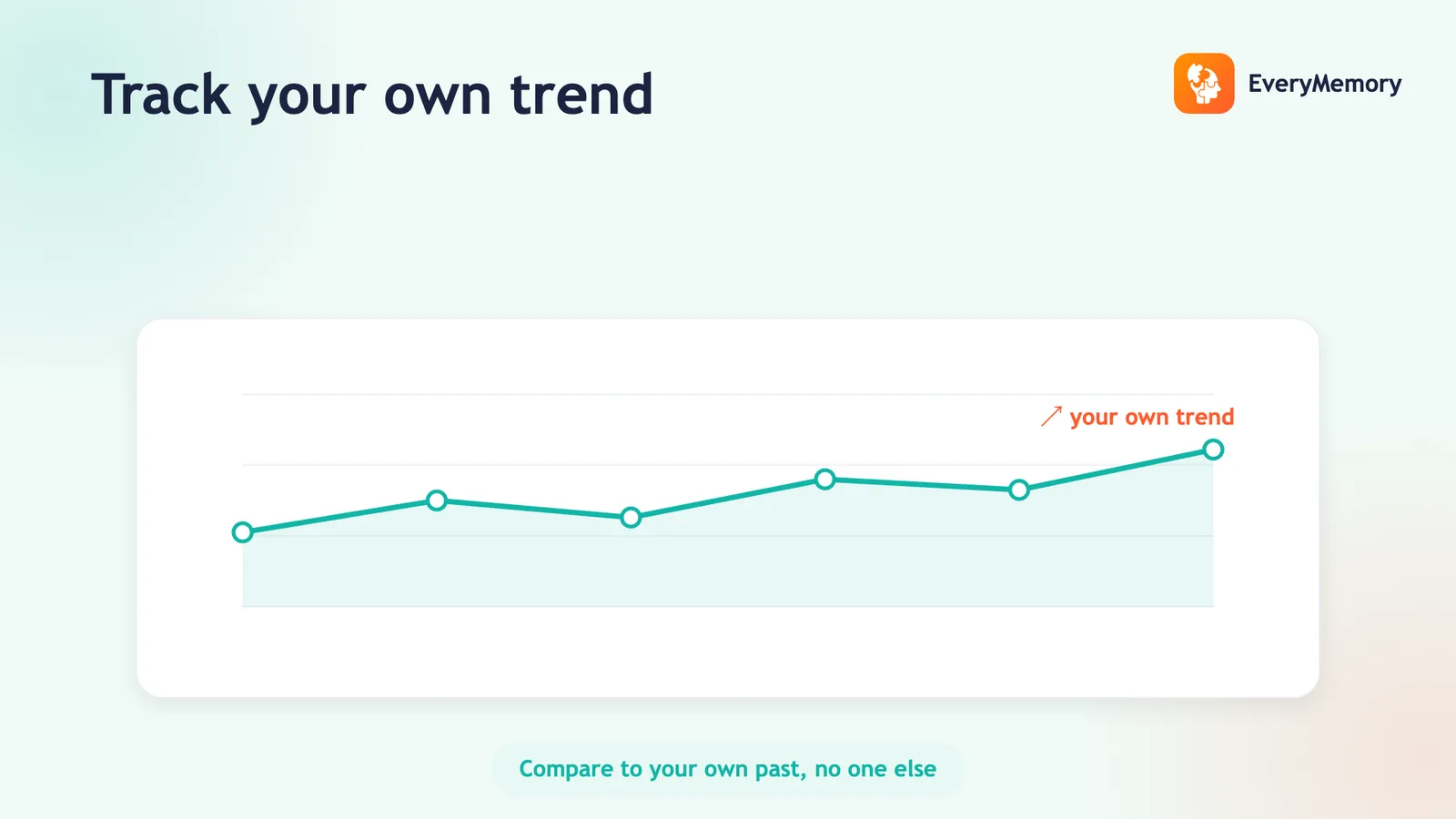
How to Track Your Memory Over Time
Tracking your memory means repeating the same simple check under similar conditions so you can see your own trend - not a one-off score, and never a comparison with strangers.
Your Hidden Strengths
What is your quiet superpower - strategy, connection, creating, driving, or steadiness? Answer 20 quick questions to find out. Free, in your browser, no sign-up.
The Chimp Test, Explained
The chimp test flashes numbered squares for a split second, then hides the numbers - you tap them in order from memory, testing fast visuospatial recall.
Story Recall
Play Story Recall free in your browser. Read a short sentence, watch it vanish, then answer a question about a detail. No sign-up, score on device.
How Do You Handle Stress?
Find your go-to stress style. Free, no sign-up, gentle and supportive.
Word List Recall
Study 10 words for 15 seconds, then type back as many as you can. A free, self-relative verbal memory check you play in your browser.
How High Is Your Self-Esteem?
A warm, supportive look at how you see yourself. Free, no sign-up, just for fun.
Pattern Recognition Quiz
Twenty number and letter pattern puzzles with instant scoring. Continue the sequence. Test your pattern recognition, free, no sign-up.
Test Your Attention to Detail
Can you spot the error, the odd one out, and the thing that doesn't fit? Twenty careful-reading challenges with instant scoring. Free, no sign-up.
Fun Brain Quizzes to Challenge Your Mind
Fun brain quizzes - the tray game, spot-the-change, odd-one-out - make a light challenge of memory and attention, and you can play several right now.

What Is Digit Span?
Digit span measures how many numbers you can hold and repeat in order after one hearing - for most adults that's around seven, give or take two.

Are Online Memory Tests Accurate?
Online memory tests are good at one thing and bad at another. What they're accurate for, what they're not, and how to make your own results actually mean something.
Aim and Reaction Games: What They Train
Aim trainers and reaction games drill how fast and accurately you can spot a target and click it - sharpening that specific skill, not your general reflexes.
What's Your Love Language?
Words, time, gifts, acts, or touch? Answer 20 quick questions for a fun read on how you most like to give and receive love. Free, no sign-up.
Introvert or Extrovert?
Do you recharge alone or in a crowd? Answer 20 quick questions for a fun read on whether you lean introvert, extrovert, or somewhere in between. Free, no sign-up.

What Is a Non-Medical Memory Check?
A non-medical memory check helps you notice your own patterns over time - without diagnosing anything. Here's exactly what it is, what it isn't, and how to use one well.
Logic Puzzles Quiz
Twenty short deduction puzzles you can reason all the way to one answer. Instant scoring. Free, in your browser, no sign-up.
How Good Is Your Memory? A Non-Medical Self-Check
There's no single "good memory" score - memory has several parts, and each is normal in a range. Here's a non-medical way to check where yours sits.
How Distracted by Your Phone Are You?
Does your phone pull you away every few minutes, or barely tempt you? Answer 20 quick questions for a fun read. Free, no sign-up.
Big-Picture or Detail Person?
Do you see the forest or the trees? Take this fun 20-question quiz to find whether you're a big-picture or detail thinker. Free, no sign-up.
Count by Color
Count the dots of one color in a busy grid and pick the right number. A free, fast selective-attention game in your browser.
Prime or Not
A 60-second sprint: a number flashes, you tap Prime or Not prime. Beat your own best. Free, in your browser, no sign-up.
Signs of a Healthy Memory
A healthy everyday memory isn't a flawless one - it forgets plenty - but it shows a few reassuring signs, like recalling things with a cue and staying steady over time.
Average Reaction Time by Age
Simple reaction time is roughly 200–270 ms for most adults and slows gradually with age - but sleep, caffeine, and your device move it more than you'd think.
Catch the Dot
Catch the Dot is a free 30-second tap game. Chase a jumping dot, beat your own catch count, and watch your average catch time drop.
Logical Reasoning Quiz
Twenty syllogisms and if-then puzzles with right-or-wrong answers and instant scoring. Test your logical reasoning, free, no sign-up.
Thinker or Doer?
Do you reflect first or jump straight in? Answer 20 quick questions for a fun read on your style. Free, no sign-up.
Odd One Out Quiz
Which one does not belong, and why? Eight grouping puzzles with one clear odd one out. Instant scoring. Free, no sign-up.
Test Your Short-Term Memory
Hold a few things in mind, then prove you remembered. Twenty quick recall challenges with instant scoring. Free, in your browser, no sign-up.
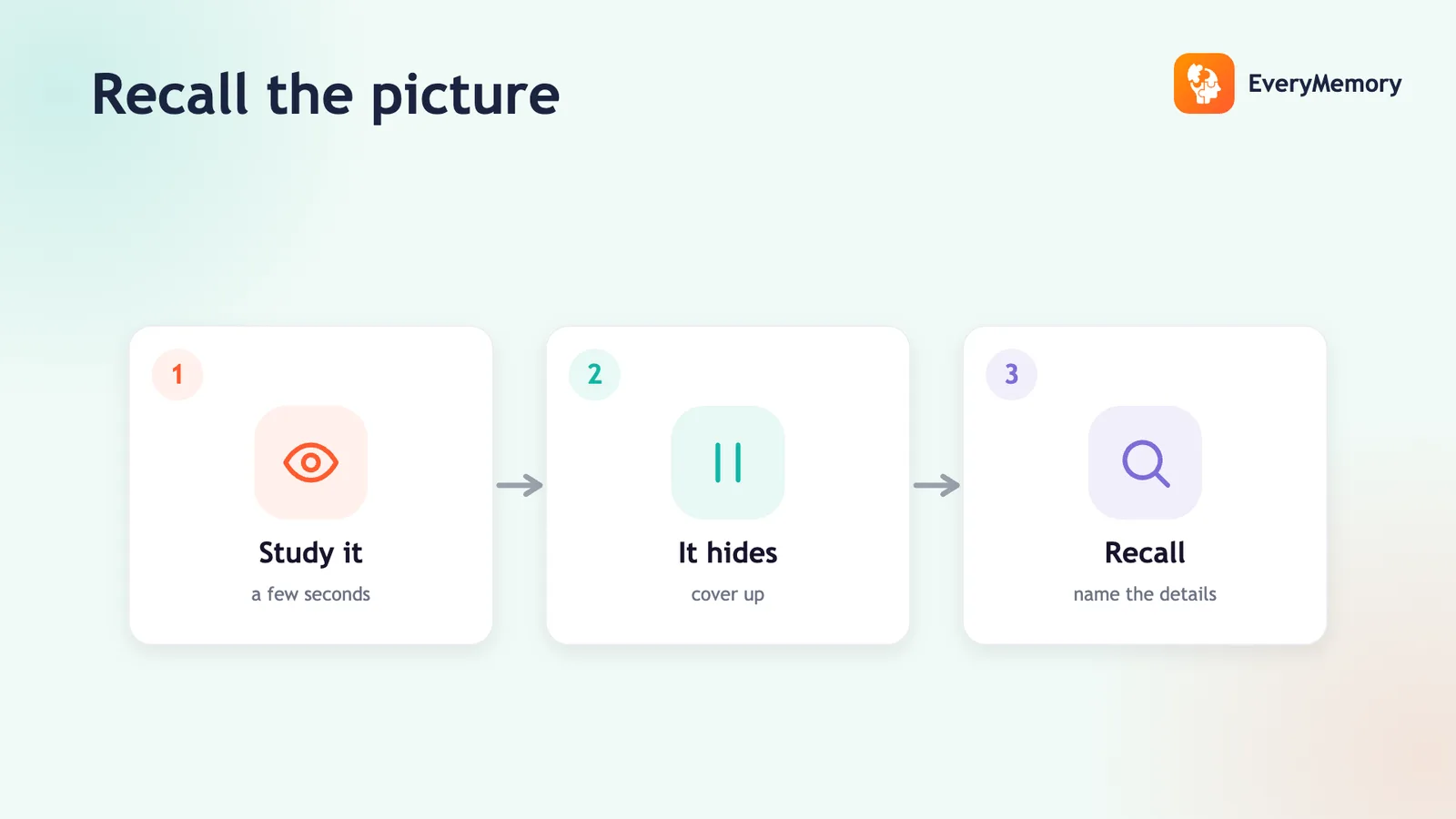
Picture Memory Quiz: Test Your Visual Recall
A picture memory quiz tests how well you take in and recall images, positions, and details - a different skill from remembering numbers or words.
What's Your Memory Style?
Do you remember in pictures, words, doing, or stories? Answer 20 quick questions for a fun read on your memory style. Free, no sign-up.
Number Sequence Quiz
Twenty number sequences with instant scoring. Find the next or missing number. Test your sequence skills, free, no sign-up.
Math: True or False
Play the Math: True or False game free online. Decide fast whether each equation is correct in a 60-second sprint. A fun mental-math self-check.
What's Your Memory Age? What It Really Means
"Memory age" or "brain age" sounds scientific but is mostly a fun framing of a quiz score - here's what it really means and what to ignore.
Visual Memory Test: How It Works
A visual memory test checks how well you recall patterns, positions, and images. How it works, a quick version to try, and what your result does and doesn't mean.
Build your personal memory routine
Take a short non-medical quiz and get a simple plan with daily memory exercises.
Take Memory Quiz