 EveryMemory
Brain Health After 60
After 60, slower recall and more tip-of-the-tongue moments are common and usually normal - and staying active, social, and mentally engaged supports a sharp mind.
Part of the guide: How to Keep Your Brain Healthy: A Complete Lifestyle Guide →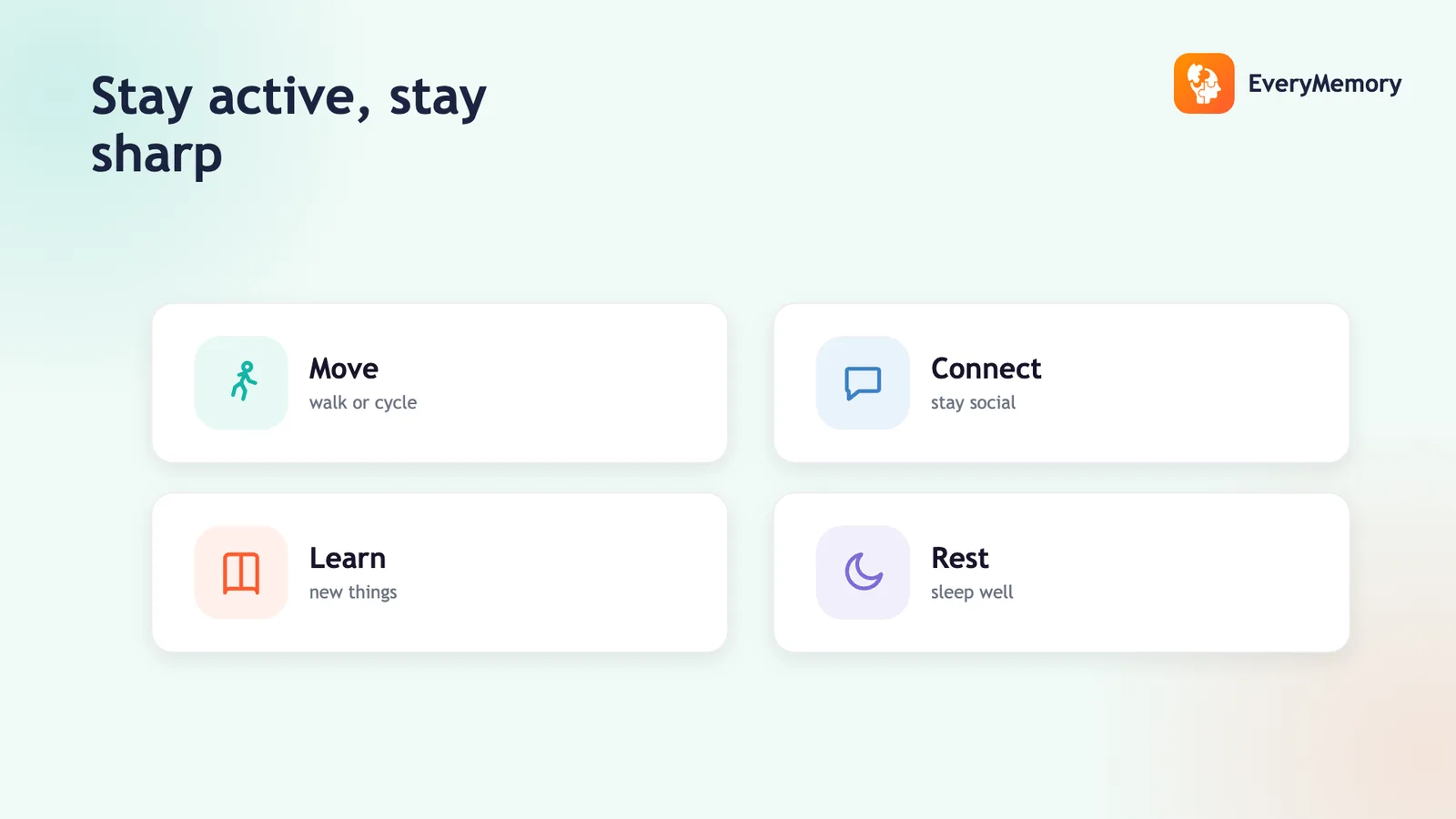
⚡ Quick answer
After 60, it's common and usually normal for recall to be slower and for tip-of-the-tongue moments to increase, while vocabulary and accumulated knowledge stay strong. Staying physically active, socially connected, and mentally engaged supports brain health. This isn't medical advice - memory that clearly worsens or disrupts daily life is worth a doctor's attention.
Key takeaways
- Slower retrieval and more tip-of-the-tongue moments are common and usually normal in your 60s.
- Vocabulary, knowledge, and judgement typically stay strong or keep growing.
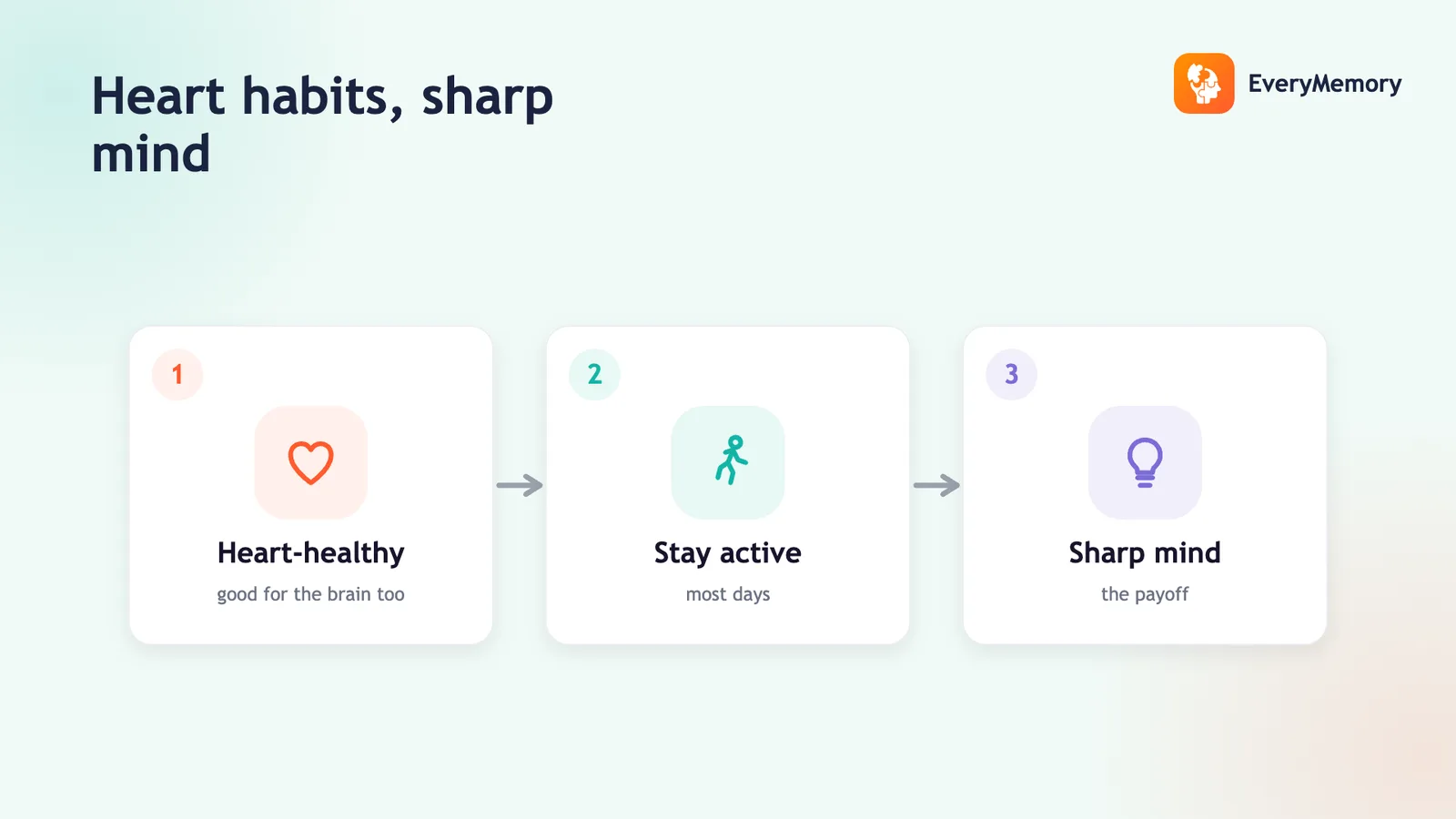
- Movement and social connection matter most, since both can quietly fall away after 60.
- Confusion about time and place or disrupted daily tasks is worth a doctor's attention.
By your sixties, the small lapses are familiar - the word that won't surface, the appointment you nearly missed, the moment in the kitchen wondering what you came for. It helps to know that most of this is the ordinary texture of an aging brain, not a red flag.
Memory and speed do change with age, and those changes are often most noticeable in this decade. But the picture isn't one of inevitable decline: the brain stays adaptable, and the habits you keep have a real say in how engaged and capable your mind feels.
What changes - and what holds
In your sixties, the brain trades a little speed for a lot of accumulated knowledge. Retrieval slows, multitasking gets harder, and names play hide-and-seek more often. But vocabulary, general knowledge, and the judgement built over a lifetime usually stay strong - and often keep growing.
The everyday lapses live mostly in fast retrieval, not in the deep store of what you know. The different memory systems are laid out in types of memory explained.
Normal aging vs. worth checking
The useful line is the same at any older age: minor, stable lapses you recover from are normal; changes that clearly worsen or disrupt daily life deserve a professional's eye.
| Usually part of aging | Worth a conversation with a doctor |
|---|---|
| Slower to recall a name or word, but it comes | Repeatedly forgetting recent conversations or events |
| Occasionally misplacing things and finding them | Getting confused about time, dates, or familiar places |
| Needing lists more than you used to | Trouble managing money or following familiar recipes |
| Forgetting an appointment now and then | Family noticing changes that you don't |
Stay physically and socially active
Two habits matter most in this decade. The first is movement - regular activity supports blood flow, balance, mood, and sleep, and it doesn't have to be strenuous; a daily walk counts. See exercise and memory.
The second is connection. Retirement, bereavement, and reduced mobility can quietly shrink a social world, and isolation is linked with poorer mood and thinking. Regular contact is a genuine brain habit - more in social connection and memory.
Keep learning and keep a baseline
An engaged mind stays engaged through novelty. Take up something genuinely new - a language, an instrument, a class - rather than only the familiar. The point is laid out in mental stimulation and memory and keeping your brain active.
A simple, repeatable non-medical memory check can be reassuring: it lets you follow your own trend over time rather than reading too much into a single bad day.
⚠ When to talk to a professional
This is general, non-medical information about normal aging, not a diagnosis or treatment. Some memory change after 60 is normal; if changes are clearly worsening, confusing, or affecting daily life, please see a doctor.