 EveryMemory
How to Keep Your Brain Healthy: A Complete Lifestyle Guide
Sleep, movement, diet, stress, social life, hearing - the research-backed habits most consistently linked with a sharper, more resilient brain as you age.
⚡ Quick answer
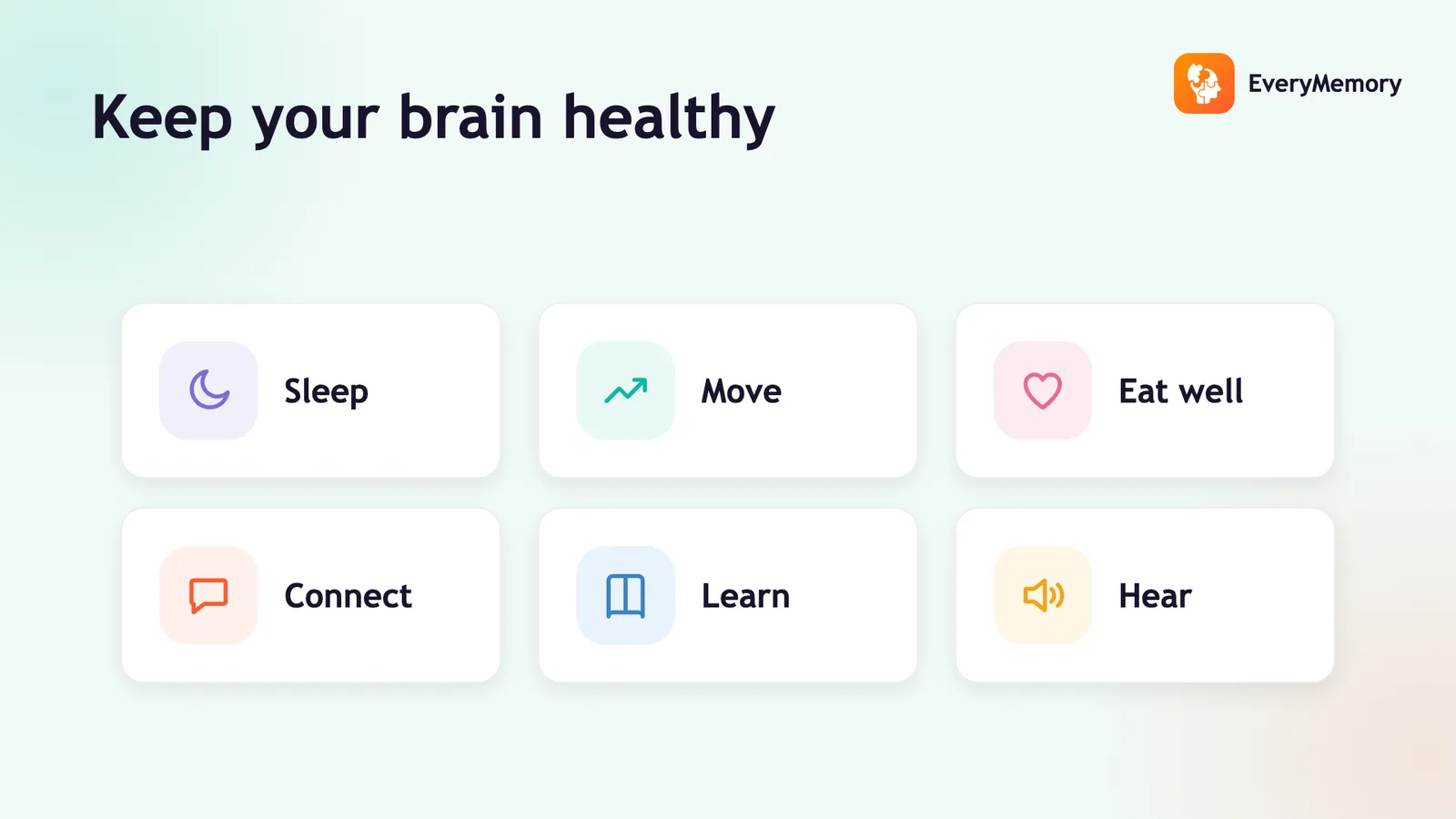
Keeping your brain healthy is mainly about consistent lifestyle habits: quality sleep, regular physical movement, a balanced diet rich in plant foods and healthy fats, managed stress, meaningful social connection, ongoing mental challenge, and taking care of your hearing. No single habit is a magic fix, but doing several of these well, most of the time, is what the evidence consistently links with sharper recall, better focus, and a more resilient brain across the decades.
Key takeaways
- Quality sleep, regular movement, and a plant-rich diet are the three most consistently supported pillars of brain health across decades of research.
- Chronic stress quietly undermines memory and focus, but its effects are typically reversible when the underlying cause is addressed or managed.
- Social connection and ongoing mental challenge both support cognitive reserve - the brain's long-term resilience against age-related change.
- Uncorrected hearing loss increases cognitive load and can closely mimic memory problems, making regular hearing checks a practical brain health step.
If you've ever wondered whether the everyday choices you make - how you sleep, move, eat, connect with others - actually add up to something meaningful for your brain, the short answer is yes. A growing body of research points consistently in the same direction: the lifestyle habits that support a healthy heart, a steady mood, and good overall wellbeing also support a sharper, more resilient mind over the years.
This is the comprehensive guide to keeping your brain healthy as you age. It covers the eight pillars that matter most - sleep, movement, diet, stress, social connection, mental engagement, hearing, and the concept of cognitive reserve - with honest, non-medical language throughout. Every section links to a deeper guide, so you can start anywhere and go as far as you like.
Sleep: the brain's essential overnight maintenance
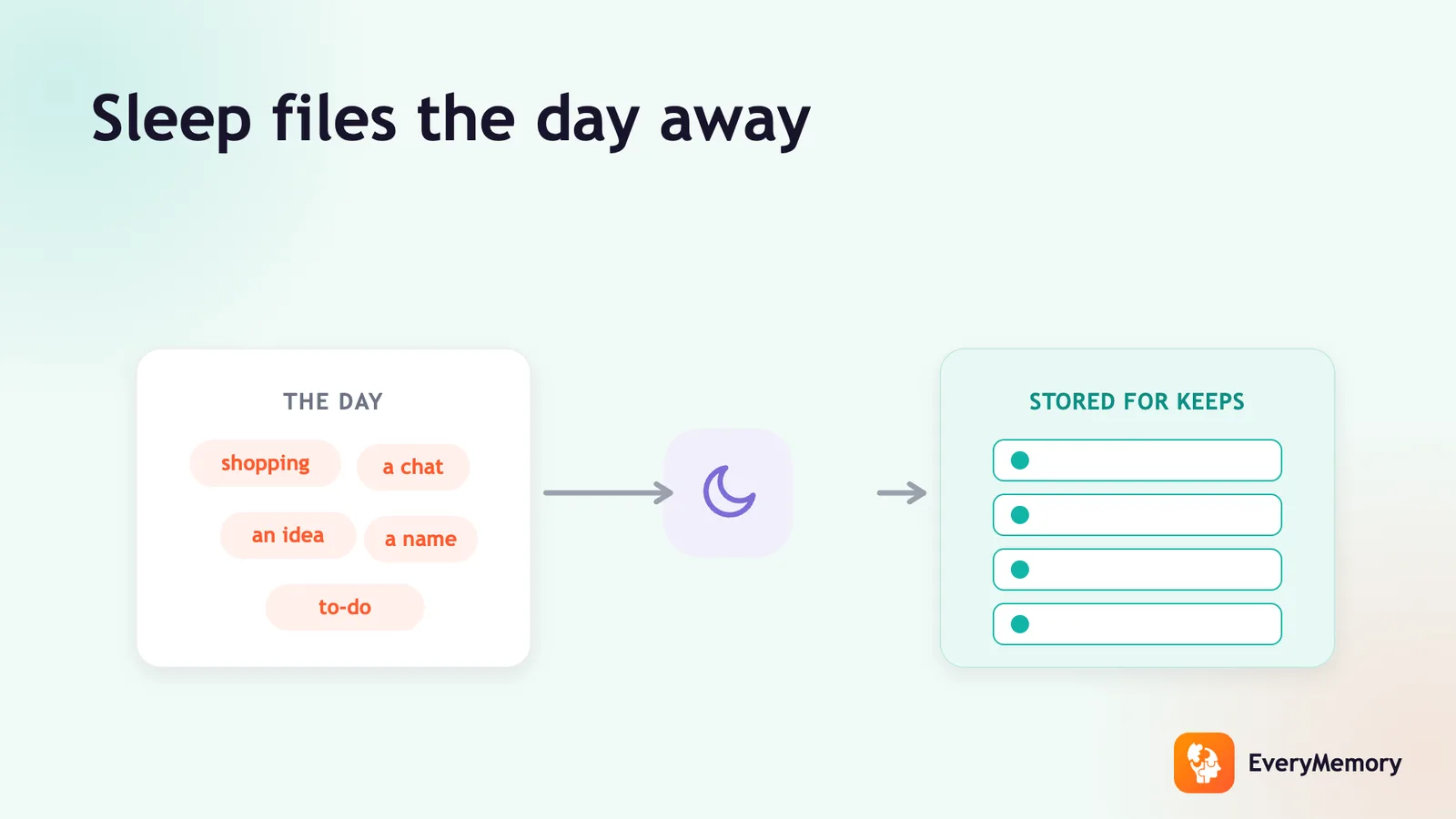
Of all the lifestyle factors linked with a healthy brain, sleep is probably the most powerful and the most overlooked. During deep sleep, the brain consolidates the day's experiences - moving information from short-term holding into longer-term storage and clearing metabolic waste that accumulates during waking hours. Cut that process short night after night, and the effects on memory and focus compound quickly.
Most adults need between seven and nine hours, and quality matters as much as quantity. Fragmented sleep - waking frequently, lying awake in the early hours - interrupts the deep and REM stages where much of the memory work happens. Common disruptors like caffeine after midday, irregular sleep and wake times, and bright screens before bed are all worth reviewing.
The evidence for sleep's role in memory is strong enough that improving sleep quality is arguably the single highest-leverage thing most people can do for their cognitive health. Our full guide on the sleep and memory connection explains exactly what happens during each sleep stage and gives practical steps for improving your nights.
Movement: regular physical activity and the brain
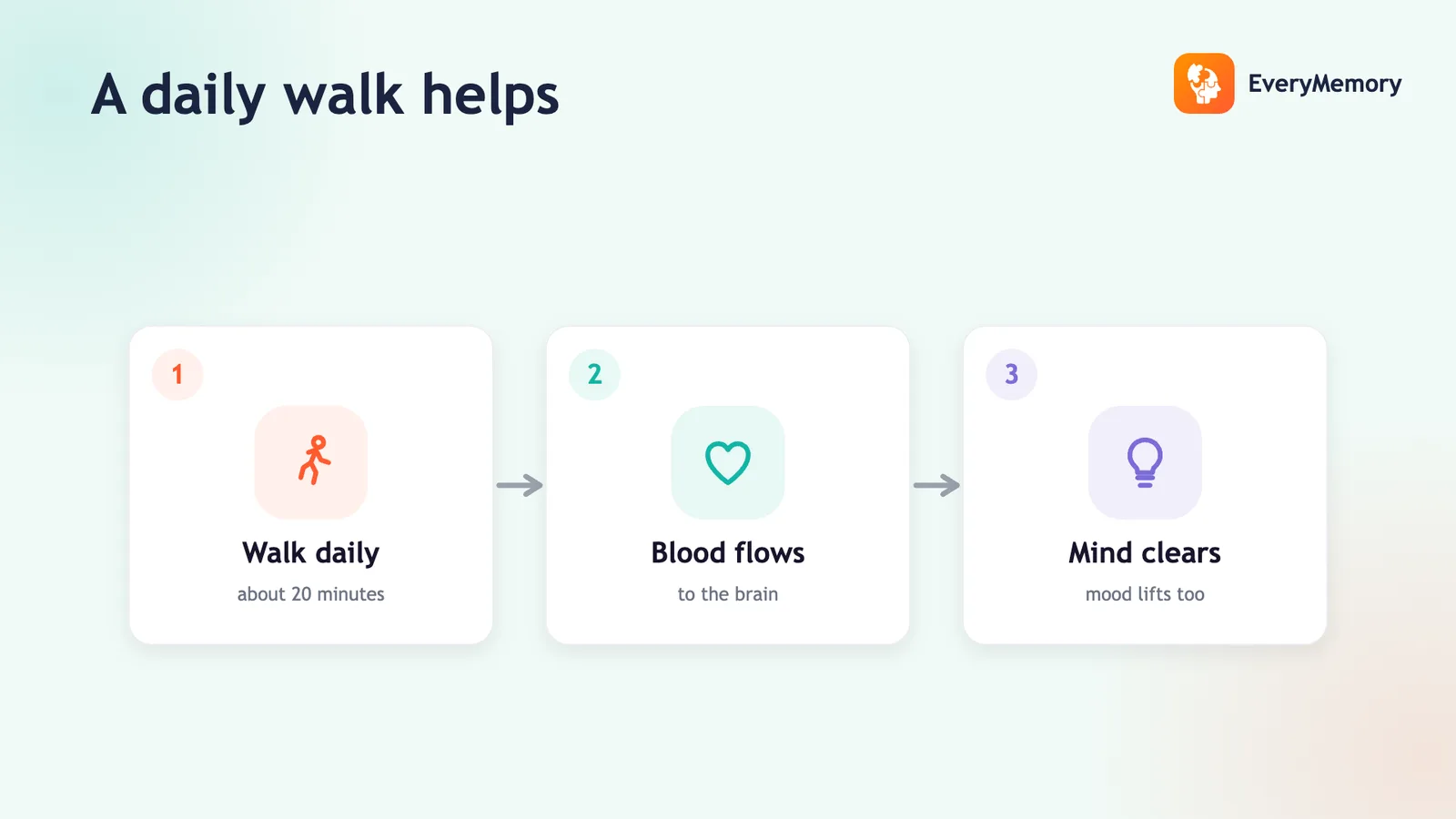
The brain is not isolated from the body's cardiovascular system - it depends on healthy blood flow to deliver oxygen and nutrients and carry away waste. Aerobic exercise, even at a modest level, supports that flow in ways that show up in how clearly people think, how well they recall information, and how resilient their mood and attention are day to day.
Walking is the most accessible form of exercise for most people, and it has been studied extensively in older adults. Consistent daily walking - even 20 to 30 minutes at a comfortable pace - is linked with better memory scores, sharper attention, and lower rates of age-related cognitive decline compared with a sedentary lifestyle. You do not need a gym membership or a demanding fitness programme. Regular, unhurried movement most days of the week is what the evidence most consistently supports.
Our detailed guide on walking and brain health covers how much is enough, how to make the habit stick, and why even a gentle daily walk creates genuinely meaningful change over time.
Diet: what you eat and how it affects your brain
The brain is a metabolically demanding organ that uses roughly 20 percent of the body's energy supply. What you eat affects the quality of that fuel - and also the environment in which brain cells operate: levels of inflammation, oxidative stress, and the availability of nutrients that neurons depend on.
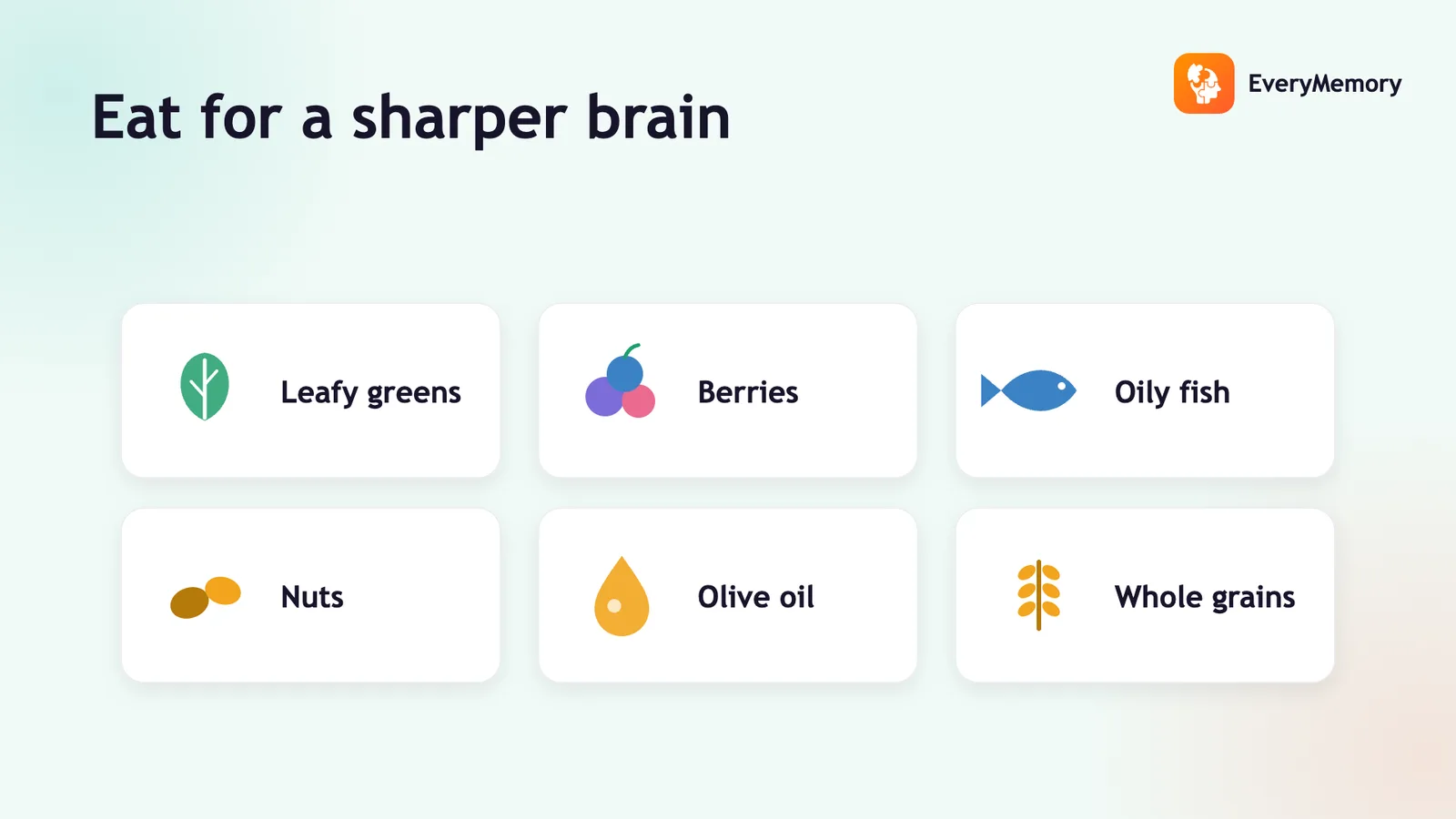
The pattern most consistently linked with brain health is one rich in vegetables, fruits, whole grains, oily fish, nuts, and olive oil - the Mediterranean or MIND diet approach. These eating patterns are associated with slower cognitive ageing and better memory performance. Ultra-processed foods, excess alcohol, and diets high in added sugar appear to work in the opposite direction.
Two questions worth addressing directly. First, hydration matters - even mild dehydration affects concentration and recall, and older adults are more vulnerable because thirst becomes less reliable with age. Our article on hydration and focus in older adults explains how to stay on top of it. Second, alcohol has a more significant effect on memory than many people realise - our honest guide on alcohol and memory covers what the evidence actually shows.
For a practical starting point, see our overview of the best foods for memory and brain health and our guide to the MIND diet for beginners.
Stress: what chronic pressure does to memory
Acute stress - the kind that focuses your attention before something important - can actually sharpen performance briefly. But chronic stress, sustained over weeks and months, has the opposite effect. The stress hormone cortisol, when persistently elevated, is linked with difficulty forming new memories and retrieving existing ones. The hippocampus, the brain's key structure for memory, is particularly sensitive to prolonged cortisol exposure.
The day-to-day experience of this is familiar to many people: under persistent pressure, names slip, concentration scatters, and recent events feel harder to hold onto. The reassuring news is that this kind of stress-related memory impairment is typically reversible. When stress eases - or when someone finds reliable ways to bring their stress response down - memory and focus often improve alongside mood.
Common, practical approaches that support stress management include regular movement (the brain benefits of exercise and stress relief overlap meaningfully), a consistent daily routine, adequate sleep, and meaningful social connection. Our full exploration of whether stress makes you more forgetful covers the mechanisms in detail and gives practical starting points.
Social connection: one of the most reliably supported factors
Of all the lifestyle factors linked with healthy cognitive ageing, social engagement is one of the most consistently supported across studies - and one of the most frequently underestimated. The mechanism is partly that conversation is cognitively demanding in the best possible way: listening carefully, tracking context, formulating responses, remembering what was said moments ago - all of this exercises memory, attention, and processing speed simultaneously.
But beyond the mental exercise, social connection also supports mood and reduces chronic stress - both of which have direct effects on memory. And the absence of connection - loneliness - has measurable negative effects on memory and attention, even after controlling for depression and physical health. Our article on loneliness and memory addresses this less-discussed side of the social picture.
You don't need a packed social diary. Regular, meaningful contact with a handful of people you genuinely like appears to provide most of the benefit. Our guide to social activity and memory covers what kinds of interaction matter most and how to stay meaningfully connected even when life circumstances make it harder.
Mental engagement: keeping the brain challenged
The brain responds to challenge. When you learn something new, practise an unfamiliar skill, or engage with material that requires genuine effort, the brain forms new connections and strengthens existing pathways. This is the practical reality behind neuroplasticity - the brain's ability to adapt and reorganise throughout life, not just in childhood.
The kinds of activity that support this process are those that involve real learning: picking up a new language or instrument, studying a subject you know little about, working through puzzles that push your current ability rather than repeat what you already know easily. Passive mental activity - watching television, re-reading familiar books - doesn't provide the same stimulus.
Our article on learning new skills and brain health explores why novelty and challenge matter, while our honest look at whether brain games really work gives a clear-eyed view of what dedicated cognitive training tools can and cannot do. For those in or approaching retirement, our guide to staying mentally sharp in retirement offers a practical framework for keeping the brain engaged through the years of life when structure often falls away.
Hearing: the overlooked factor in cognitive health
Memory begins with input. Before the brain can store something, it needs to receive it clearly. When hearing is impaired - even mildly - the brain receives incomplete or effortful information. Names get missed. Conversations fragment. The extra mental work required to decode unclear sound leaves less cognitive bandwidth for actually processing and remembering what's being said.
The result can feel exactly like a memory problem when it is actually a hearing problem. Uncorrected hearing loss is increasingly recognised as a meaningful contributor to cognitive load in older adults, and addressing it - through regular professional assessments and, if needed, appropriate hearing aids - is one of the most practical and direct ways to protect everyday recall.
Our guide on why hearing matters for memory covers this connection in full. The bottom line: if you haven't had a hearing check recently and find yourself regularly asking people to repeat themselves or struggling in noisy environments, a professional assessment is a straightforward step worth taking.
Cognitive reserve and neuroplasticity: building resilience over time
Researchers use the term cognitive reserve to describe the brain's resilience - its capacity to keep functioning well even as some natural change occurs with age. People with higher cognitive reserve tend to maintain sharper thinking for longer, and they manage the effects of age-related changes more effectively. Reserve is built up over a lifetime through education, mentally stimulating work, ongoing learning, and - significantly - through many of the habits covered in this guide.
This means that the lifestyle choices you make now are not just about how you feel today. They are contributing, gradually and cumulatively, to a kind of long-term brain resilience. No single activity builds reserve dramatically in a week, but years of consistent engagement - reading, conversing, learning, moving, sleeping well - appear to matter considerably.
The practical implication: it is never too late to add more of these habits, and never too early. Brain health is not a destination you reach; it is the cumulative result of how you live - and the evidence here is genuinely encouraging.
Explore the full guide
- How sleep consolidates memory overnight
- Why stress makes you more forgetful
- Walking and brain health: how much is enough
- Social activity and memory in older adults
- Hydration and focus: a practical guide
- Best foods for memory and brain health
- The MIND diet for beginners
- What alcohol actually does to memory
- Learning new skills and brain health
- What is neuroplasticity - and why it matters
- What is cognitive reserve
- Why hearing affects memory and thinking
- Loneliness and its effect on memory
- Do brain games really work?
✅ Try this today - Your brain health baseline: a 5-minute review
Run through these eight questions once, honestly - each one points to a pillar of brain health:
- Sleep: Are you getting seven or more hours most nights? If not, this is the highest-priority area to address first.
- Movement: Do you walk or move aerobically for at least 20 minutes most days? If not, a short daily walk is the simplest starting point.
- Diet: Does your typical day include vegetables, fruit, whole grains, and a source of healthy fat? If not, one swap per meal is a manageable beginning.
- Stress: Rate your baseline stress out of ten. If it's above six, what one thing could lower it - even slightly?
- Social connection: Did you have two or three real conversations this week? If not, schedule one before closing this page.
- Mental engagement: Are you learning something genuinely new this month - a skill or subject at the edge of your ability?
- Hearing: When did you last have a professional hearing check? If it's been more than two years, book one.
- Overall: Which of these eight areas, improved slightly, would have the biggest impact on how sharp you feel day to day? Start there.
⚠ When to talk to a professional
This guide contains general, non-medical lifestyle information. None of it is a substitute for professional medical advice. If you notice sudden, rapid, or worsening changes in memory or thinking - or changes that significantly affect daily life - please speak with a qualified healthcare professional promptly rather than assuming the cause is an everyday lifestyle factor.