 EveryMemory
How to Keep Your Brain Active
Keeping your brain active is about variety and a little challenge - learning, moving, connecting, and using recall. Novelty beats repeating the same familiar puzzles.
Part of the guide: Brain Exercises for Seniors: The Complete Guide →
⚡ Quick answer
The best way to keep your brain active is variety and a little challenge: learn new things, stay physically active, stay socially connected, and use recall in daily life rather than always looking things up. Novelty matters more than repeating familiar puzzles - anything that makes your brain reach and adapt keeps it engaged. None of it requires special equipment.
Key takeaways
- An active brain is one that's regularly challenged by something a little new or effortful - not merely busy.
- Learn new things, stay physically active and social, use recall daily, and vary your games.
- Novelty beats repeating the same familiar puzzles, which quickly stop challenging you.
- Build variety and a little challenge into your routine; it's a sensible non-medical habit, not a guaranteed shield.
"Use it or lose it" is roughly right for the brain, but the details matter: not all activity counts equally, and the comfortable, familiar kind does the least.
Here's how to keep your brain genuinely active - and why novelty is the key ingredient.
What 'keeping the brain active' really means
An active brain isn't one that's merely busy - it's one that's regularly challenged by something a little new or effortful. Watching television or doing the same easy puzzle on autopilot barely registers. The brain responds to reach: tasks that make it work slightly harder than comfortable.
The activities that count
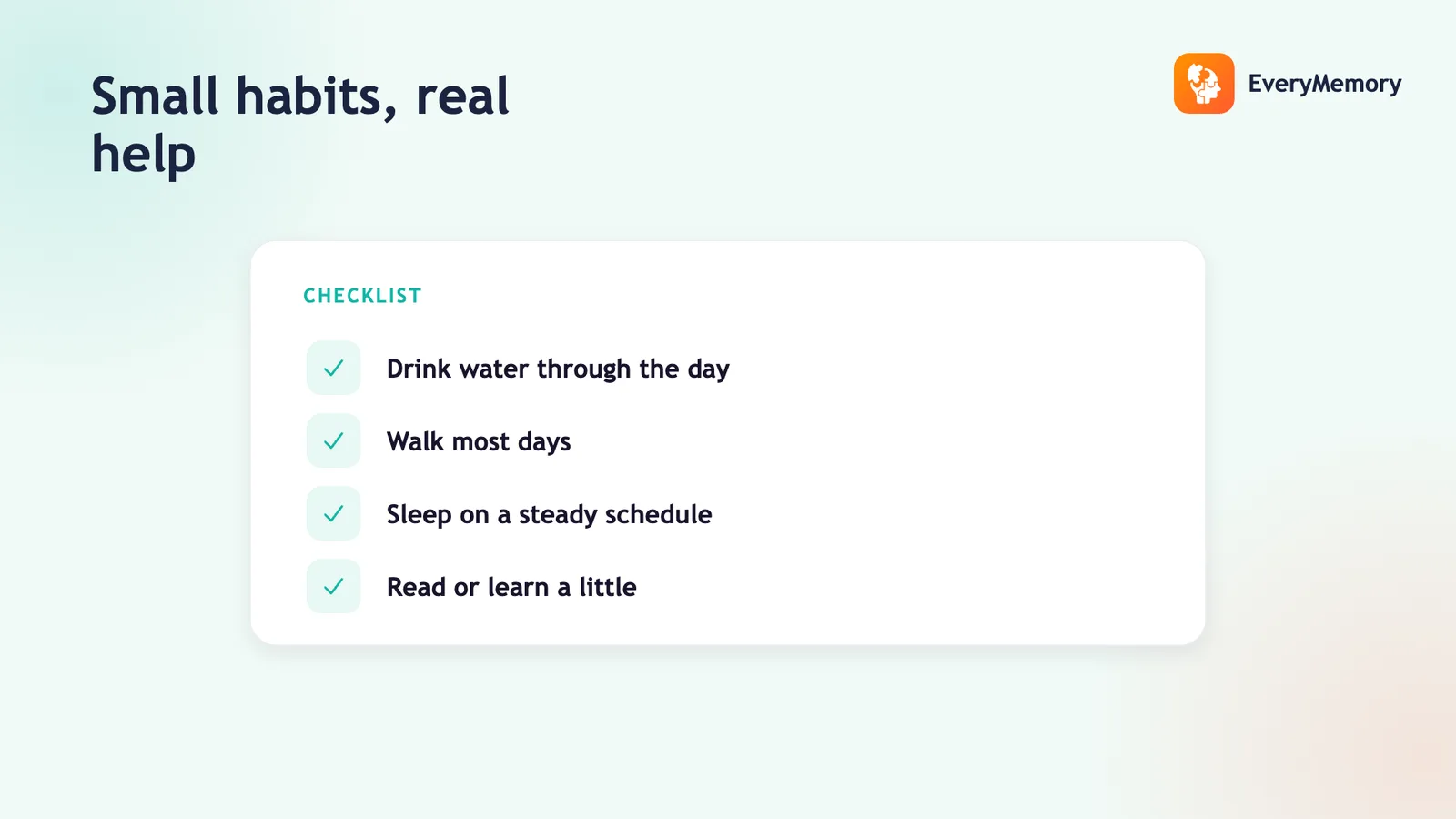
- Learn something new - a language, instrument, skill, or subject; novelty is the strongest challenge.
- Move your body - physical activity supports the brain; even walking counts (walking and brain health).
- Stay social - conversation and connection keep the mind engaged.
- Use recall - retrieve information rather than always looking it up.
- Vary your games - rotate memory, word, and puzzle games instead of one (daily brain exercises).
Why novelty beats familiar puzzles
Doing the same crossword or game every day quickly stops challenging you - you get good at that one thing and the brain settles into routine. Switching it up, or learning something genuinely unfamiliar, keeps it adapting. The mild discomfort of the new is exactly the point.
Build it into your day
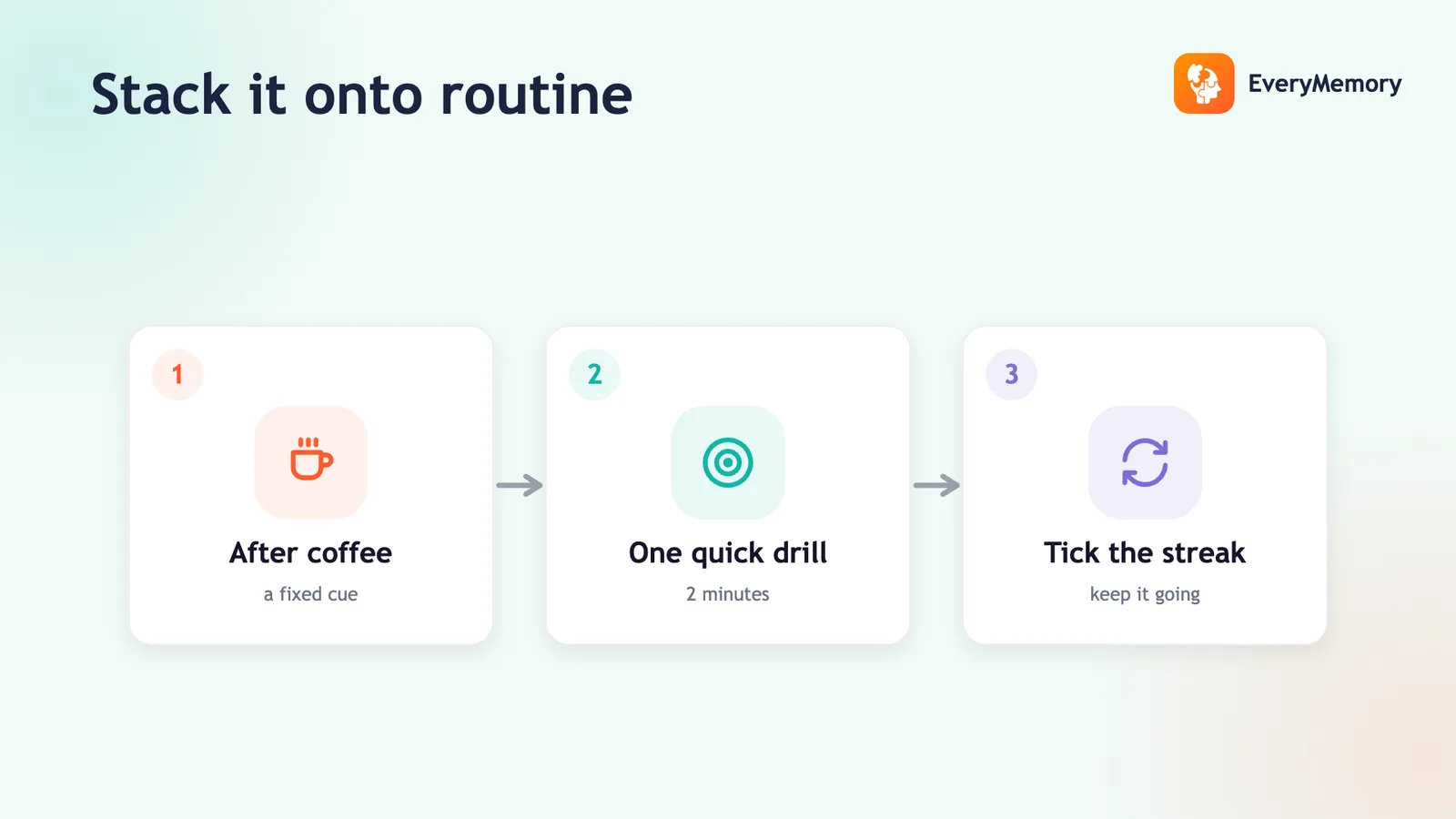
You don't need an hour or equipment - you need variety and consistency. Attach a little mental challenge to your daily routine and rotate what you do, so it stays slightly effortful. Making it a habit is half the battle; see making brain training a habit.
Honest expectations
Keeping your brain active is a sensible, enjoyable habit that helps you stay mentally engaged. It's not a guaranteed shield against every change, and it isn't medical advice - the balanced, non-medical take is in do brain games really work?