 EveryMemory
How to Make Brain Training a Daily Habit
Keeping up brain training is a design problem, not a motivation one. Attach it to an existing routine, keep it short, and track a streak.
Part of the guide: How to Improve Your Memory: The Complete Beginner's Guide →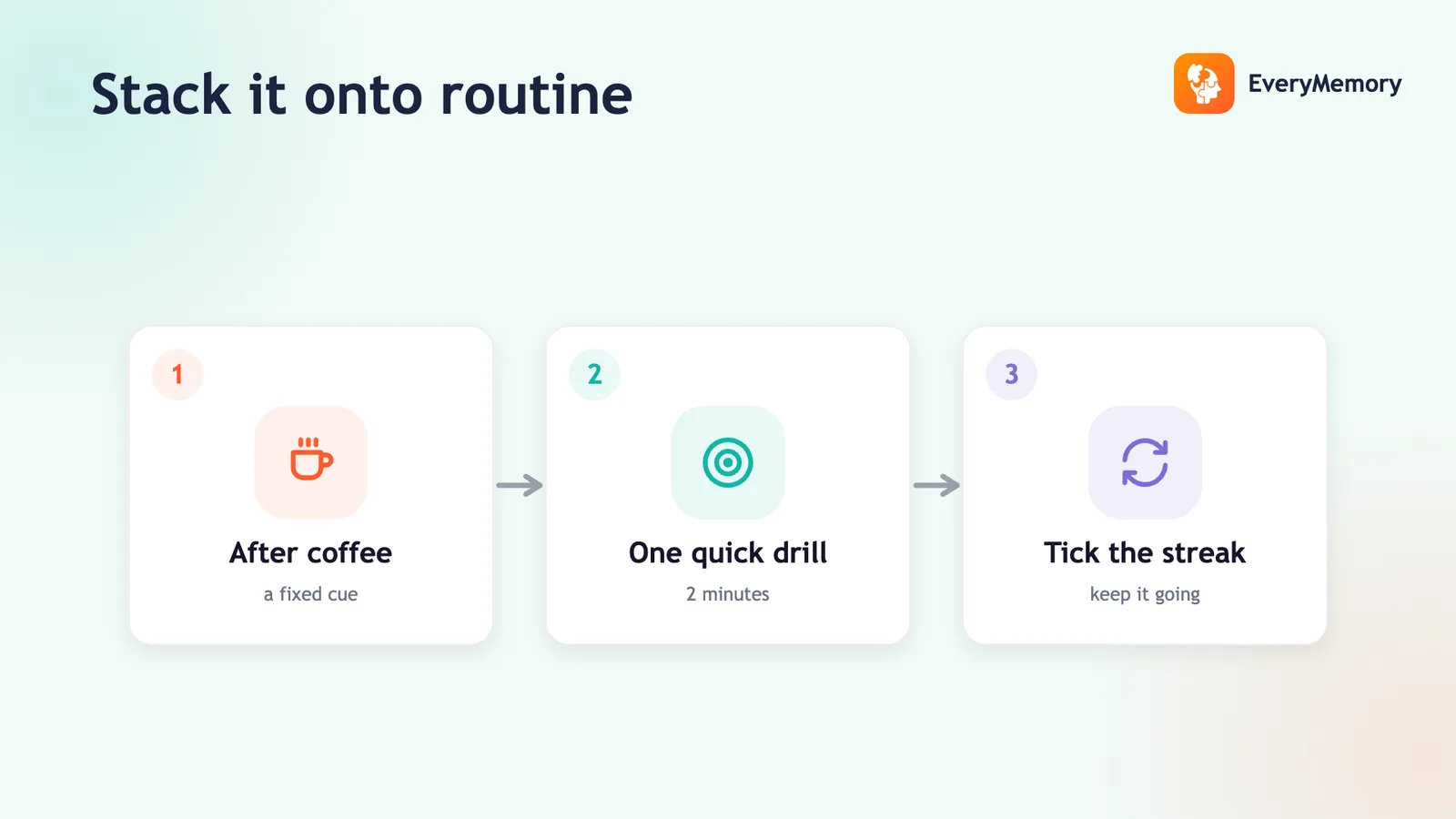
⚡ Quick answer
The trick to keeping up brain training isn't motivation - it's design. Attach it to something you already do daily, keep it short (five to ten minutes), make it slightly challenging but enjoyable, and track a simple streak. Habits stick when they're small, cued by an existing routine, and rewarding enough to repeat.
Key takeaways
- Keeping up brain training is a design problem, not a motivation one.
- Attach it to an existing daily habit (after morning coffee), keep it to five to ten enjoyable minutes, and track a visible streak.
- Make it slightly challenging but stop before it feels like a chore - a session you look forward to survives.
- Follow one rule for missed days: never miss twice.
Almost everyone starts a brain-training routine; almost no one keeps it past the second week. The reason isn't weak willpower - it's a setup that relies on willpower in the first place.
Habits that stick are designed, not forced. Here's how to design one that lasts.
Why good intentions fade
A plan to 'train my brain more' has no trigger, no fixed size, and no reward - so it competes with everything else for attention and loses. Relying on remembering and feeling motivated each day is the design flaw. Fix the design and the willpower demand drops to almost nothing.
Attach it to a habit you already have
The strongest cue is an existing daily action. 'After I pour my morning coffee, I do five minutes' borrows the reliability of a habit you never skip. Pick one anchor - coffee, the commute, the kettle boiling - and let it pull the new habit along. This anchoring is the backbone of any daily brain-training routine.
Keep it small and enjoyable
Five to ten minutes is enough and easy to repeat; an ambitious hour is easy to skip. Keep it slightly challenging - that's where the benefit is - but stop before it feels like a chore. A session you look forward to survives; one you dread doesn't, however good it is on paper.
Track a simple streak
A visible streak - a tick on a calendar, an app's counter - turns the habit into something you don't want to break. The small satisfaction of keeping the chain going is often enough to carry you on the days you don't feel like it.
Plan for missed days
You'll miss a day; everyone does. The rule that keeps habits alive is simple: never miss twice. One skipped day is a blip, two is the start of stopping. Just return the next day, and don't let a break become a verdict on the whole thing. A gentler on-ramp is the simple daily memory routine.
✅ Try this today - design your habit in one minute
Fill in this sentence and start tomorrow:
- "After I ____ (an existing daily habit), I'll do five minutes of brain training."
- Pick where you'll mark the streak - a calendar or an app.
- Agree the one rule with yourself: never miss twice.


