 EveryMemory
Memory Booster Habits That Actually Help
There's no magic memory booster - but a handful of everyday habits genuinely create the conditions memory needs. The ones that work, and what to be skeptical of.
Part of the guide: How to Keep Your Brain Healthy: A Complete Lifestyle Guide →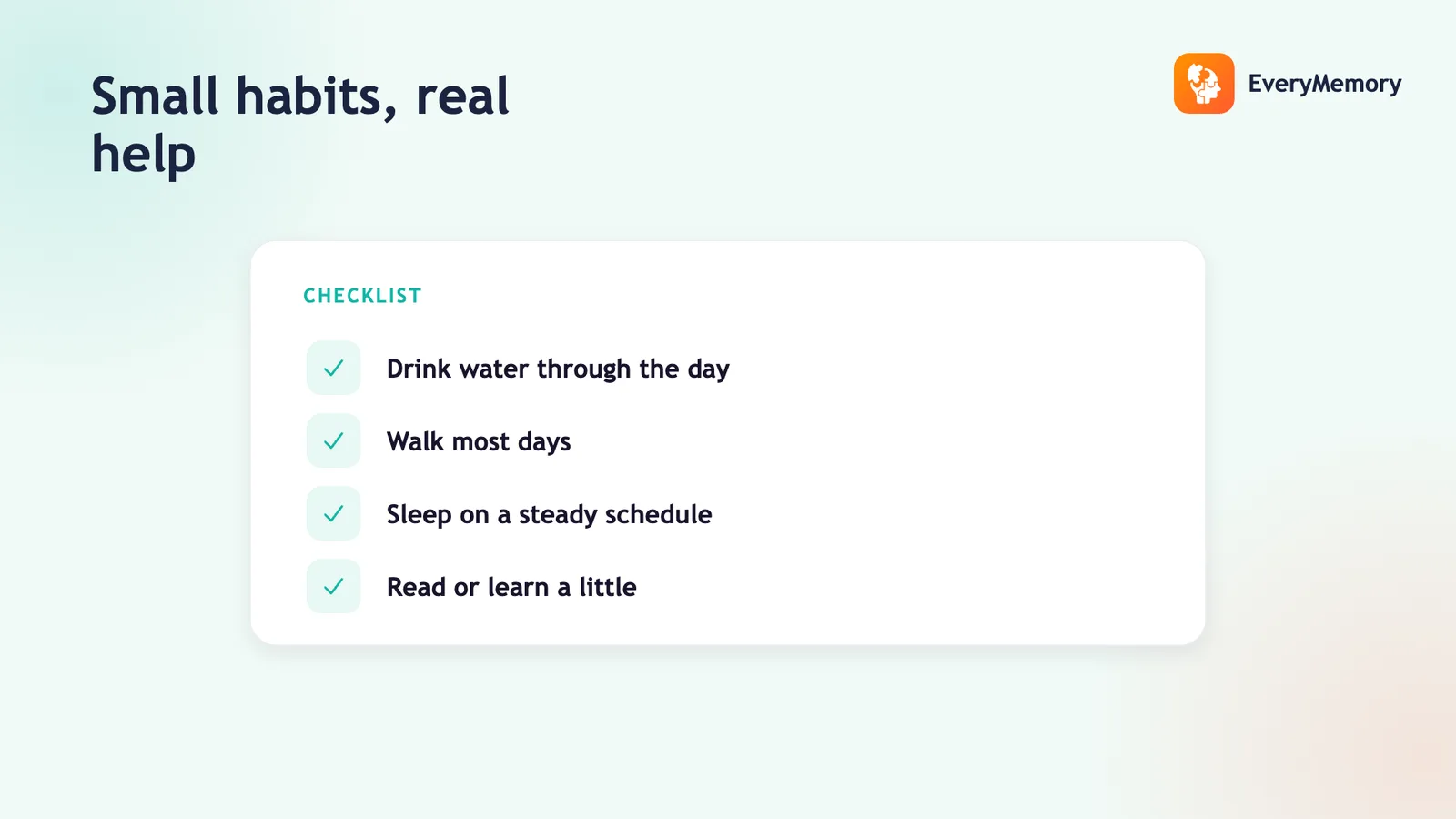
⚡ Quick answer
The habits that genuinely support memory aren't tricks - they're sleep, physical activity, staying mentally and socially engaged, managing stress, and using recall in daily life. None is a quick fix, but together they create the conditions memory needs. Be wary of pills or supplements that promise more; the substance sits with everyday habits, not shortcuts.
Key takeaways
- There's no magic memory booster - memory depends on a healthy, rested, engaged brain built by everyday habits.
- The habits that help: sleep, physical activity, learning new things, social connection, managing stress, and using recall daily.
- These work by removing what drags memory down and supporting the brain that does the remembering - and they compound.
- Be wary of 'memory booster' pills and supplements; the claims outrun the evidence, and supplements are a question for a professional.
Search 'memory booster' and you'll find pills, powders, and big promises. The honest version is less exciting and far more reliable: a few everyday habits that create the conditions memory depends on.
Here are the ones with real substance behind them - and why the shortcuts are worth a raised eyebrow.
There's no magic booster
Memory isn't a muscle you can spike with a single product. It depends on a healthy, well-rested, engaged brain - and that's built by ordinary habits, not bought in a bottle. The good news is these habits are within reach and help your whole self, not just your memory.
The habits that actually help
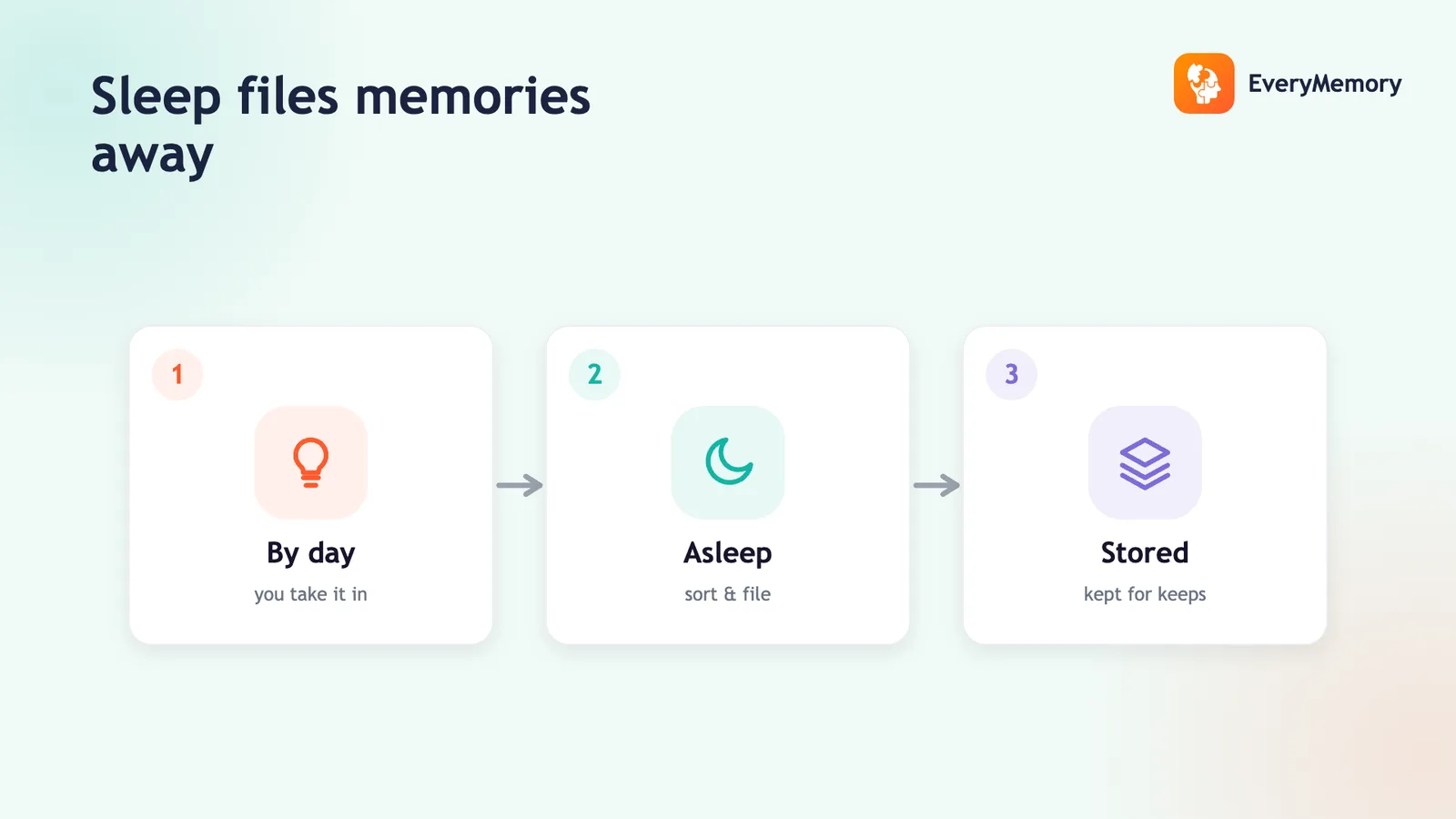
- Sleep - it consolidates memories; protect it. See how sleep affects memory.
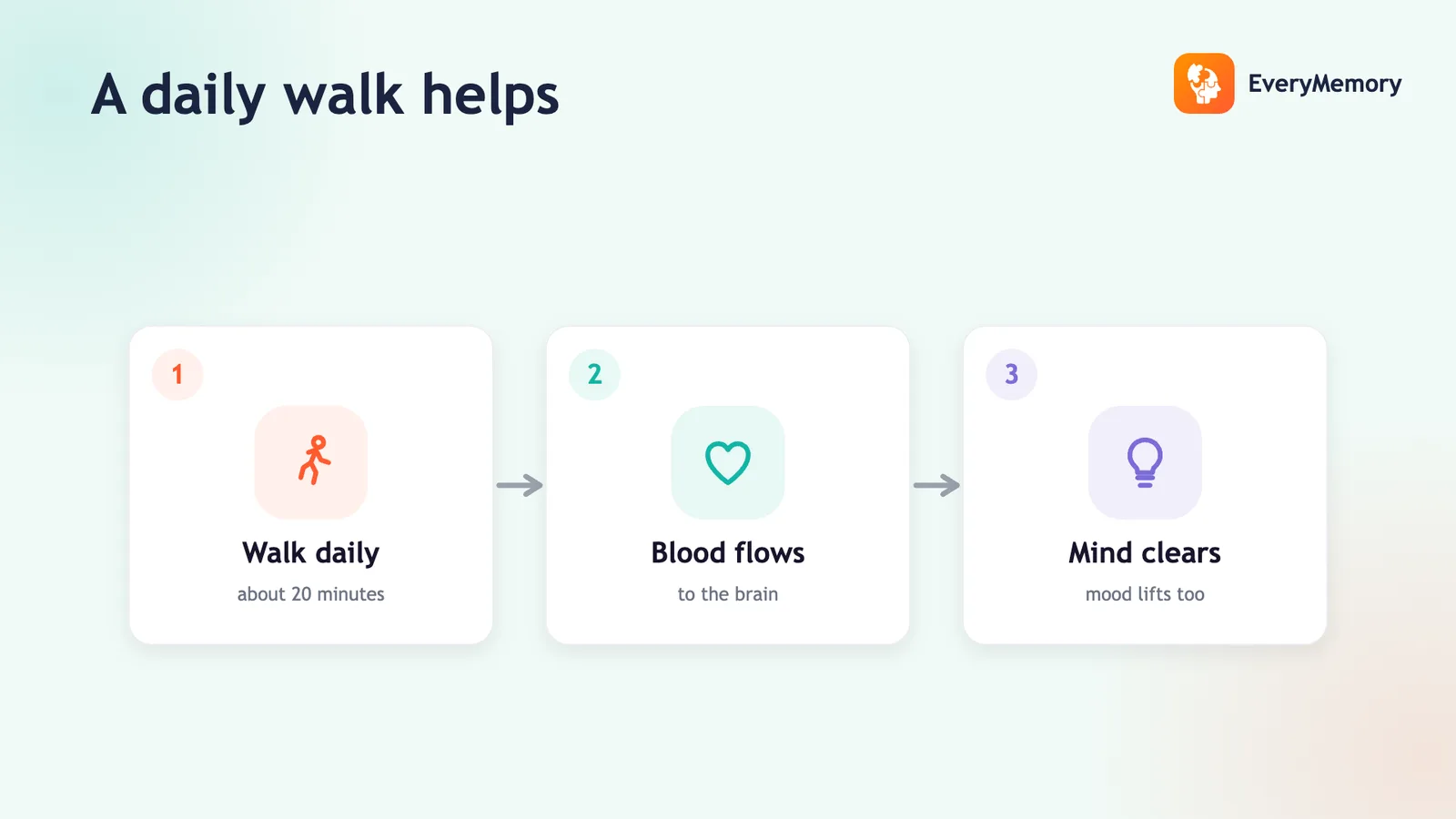
- Physical activity - regular movement supports the brain; even walking counts. See walking and brain health.
- Learning new things - novelty challenges the brain far more than familiar routines.
- Social connection - conversation and company keep the mind engaged.
- Managing stress - chronic stress crowds out the attention memory needs; see does stress cause forgetfulness?
- Using recall daily - retrieving information, rather than always looking it up, keeps it accessible.
Why these work
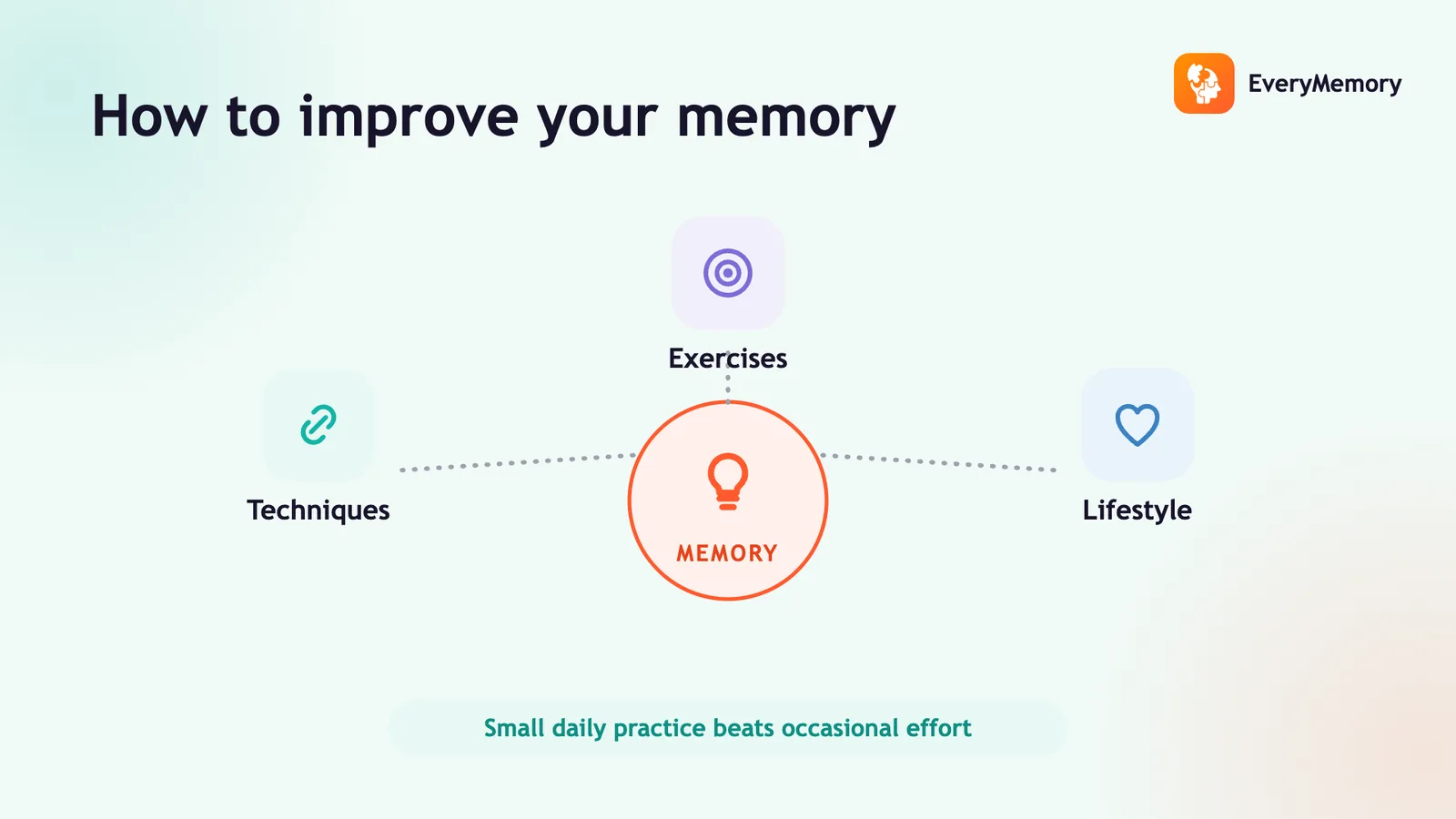
They don't 'add' memory - they remove the things that drag it down and support the brain that does the remembering. Sleep files what you learned; movement and managing stress protect focus; novelty and recall keep memory active. Stack a few and the effect compounds. The general guide is in how to improve your memory.
What to be skeptical of
Be cautious with products marketed as 'memory boosters' or 'brain pills' that promise quick, dramatic results - claims like that outrun the evidence, and some make medical-sounding promises they can't keep. If you're considering any supplement, that's a conversation for a qualified professional, not a marketing page. The dependable boosters are the free, everyday habits above.
✅ Try this today - stack two habits
Pick two and attach them to your day:
- A short walk after a meal - movement plus a routine cue.
- Learn and recall three new things (a word, a name, a fact) before bed.
- Keep both for two weeks; small, stacked habits beat one big resolution.
⚠ When to talk to a professional
These habits support memory and general wellness; they are not a treatment for any condition, and no supplement is a substitute. If you're worried about your memory or considering supplements, speak with a qualified professional.