 EveryMemory
Free Memory Quiz Games to Test Your Recall
Memory quiz games are a playful way to test recall - but only some actually help. What to look for, the types worth your time, and how to use them so they count.
Part of the guide: Brain Exercises for Seniors: The Complete Guide →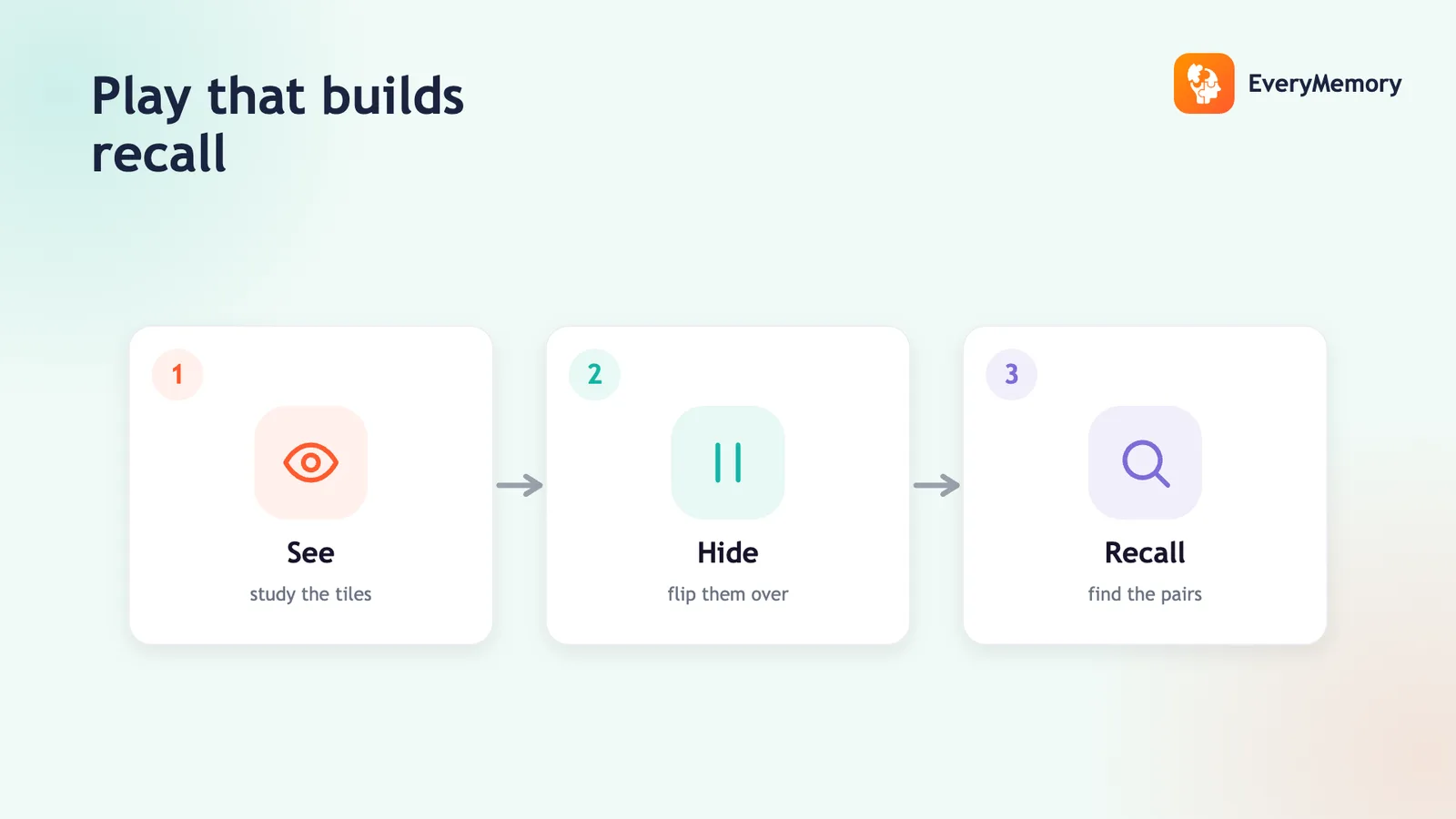
⚡ Quick answer
A memory quiz game is a short, playful way to test and exercise recall - matching pairs, recalling sequences, spotting what changed. Free versions are everywhere, but the useful ones make you retrieve from memory rather than just react, and let you track how you do over time. Treat them as practice and a self-relative check, not a medical test.
Key takeaways
- A memory quiz game helps when it makes you retrieve from memory, not just react quickly to what's on screen.
- Useful types: matching pairs, sequence recall, word-list recall, and spot-the-difference.
- Free games are fine for practice; paid ones mainly add tracking, adaptive difficulty and variety.
- Play a few minutes most days at a slightly effortful level, and judge yourself against your own trend - it's practice, not a diagnosis.
Type "memory quiz" into any app store and you'll drown in options. Most are pleasant time-fillers; a few genuinely exercise recall. The difference comes down to one thing: whether the game makes you retrieve from memory or just react.
Here's how to tell them apart, the types worth your time, and how to play so it actually counts.
What makes a memory quiz actually useful
A game helps your recall when it forces retrieval - pulling something back from memory after a delay or a distraction. A game that only asks you to react quickly to what's on screen trains reaction time, not memory. When you're choosing, look for three things:
- It makes you remember, then recall - you see something, it's hidden, you reproduce it.
- It gets harder as you improve - a fixed level stops stretching you quickly.
- It tracks your progress - so you can compare against your own past, not a stranger's high score.
Types worth your time
- Matching pairs - flip cards to find matches; trains short-term visual memory and location recall.
- Sequence recall - repeat a growing pattern of colours, sounds, or numbers; trains working memory.
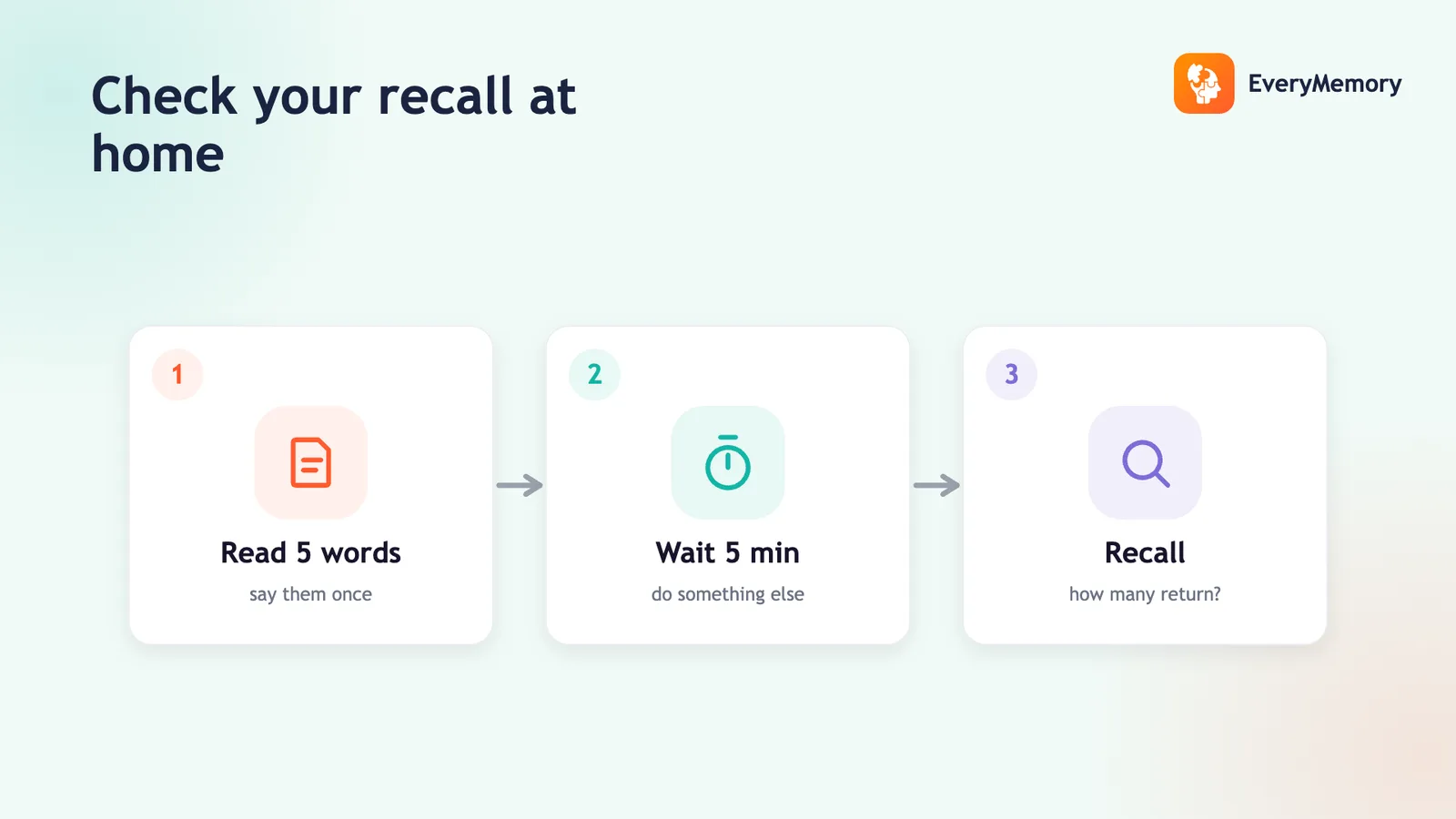
- Word-list recall - memorise a list, then reproduce it after a gap; the closest to a real recall test.
- Spot-the-difference / what-changed - study a scene, then say what changed; trains attention and visual memory together.
Variety matters - rotating types exercises more than drilling one.
Free vs paid: what you're really getting
Plenty of free games are perfectly good for practice. What paid versions usually add is structure: progress tracking, difficulty that adapts to you, and a varied daily mix so you're not left to choose. If a free game makes you retrieve and lets you see your trend, it's doing the important part.
How to use them so they help
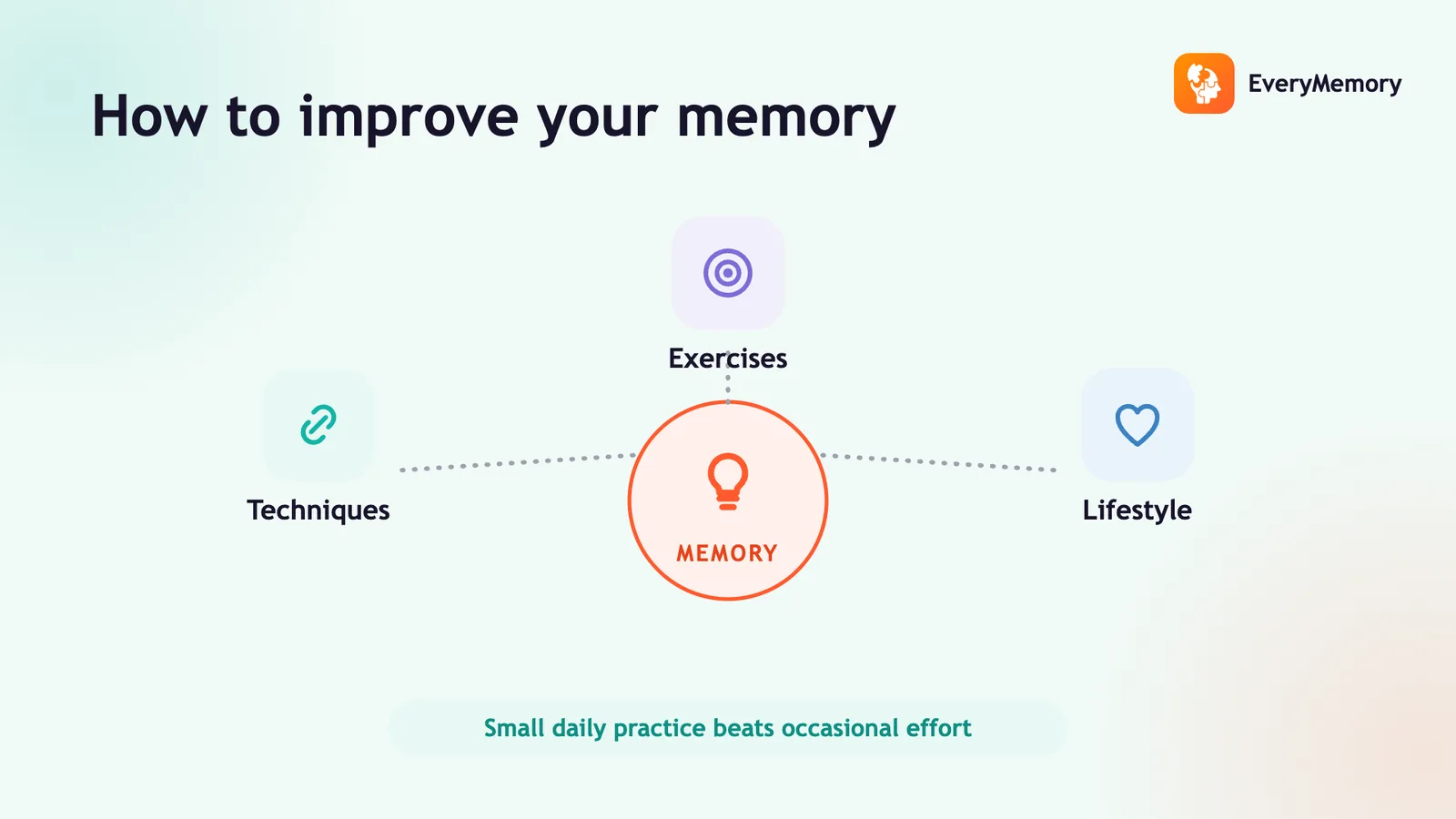
A few minutes most days beats a long occasional binge. Play to the edge of your ability, where it feels slightly effortful - that stretch is the part that helps. Mix a couple of types, and check your own trend over weeks rather than chasing a single high score. To turn that into a structured snapshot, pair it with a non-medical memory self-check.
A quiz is practice, not a diagnosis
However you score, a memory quiz can't tell you anything medical, and any that claims to should be ignored. It's a way to practise recall and watch your own trend - useful and motivating, but not an assessment. Whether games meaningfully sharpen everyday memory is a fair question, covered honestly in do brain games really work?
✅ Try this today - a 60-second recall quiz
Make your own, no app needed:
- Look at any photo or busy scene for 20 seconds.
- Turn it face down.
- Write down everything you can remember - objects, colours, positions.
- Check what you missed; repeat tomorrow with a new scene and compare.