 EveryMemory
Number Memory Test: How Many Digits Can You Hold?
A number memory test measures your digit span - how many numbers you can recall in order. The average, what affects it, and how chunking stretches it.
⚡ Quick answer
A number memory test measures your digit span - how many digits you can recall in correct order right after seeing them. The sequence grows by one digit each round until you slip. Most adults manage around 7, give or take a couple. It's a non-medical self-check that reflects short-term and working memory, and chunking can stretch how many you effectively hold.
Key takeaways
- A number memory test measures your digit span - how many digits you recall in order.
- The classic figure is 'seven, plus or minus two' (most adults 5–9).
- Sleep, stress, caffeine, and distraction all move the score, so one try means little.
- Chunking digits into meaningful groups stretches how many you can hold.
Watch a number flash on screen, watch it vanish, then type it back. Add a digit each round. That simple game - the number memory test - is one of the oldest measures of memory there is.
Here's what it measures, the average score, and how to push yours higher.
What the test measures
It measures your digit span - the longest string of numbers you can repeat back in order. That draws on short-term memory (holding the digits) and attention (taking them in cleanly). It's the number-format version of the short-term memory test (how that works).
What's the average?
The well-known figure is "seven, plus or minus two" - most adults land between 5 and 9 digits. Reading the digits aloud or grouping them rhythmically usually helps. But the average is just a reference point, not a target: your own score under consistent conditions is what's worth tracking.
What affects your score
Sleep, stress, caffeine, distraction, and even whether the digits are spoken or shown all move the number. That's why a single low score on a tired evening means little. Take the test rested and quiet, and compare like with like (are these tests accurate?).
How chunking stretches it
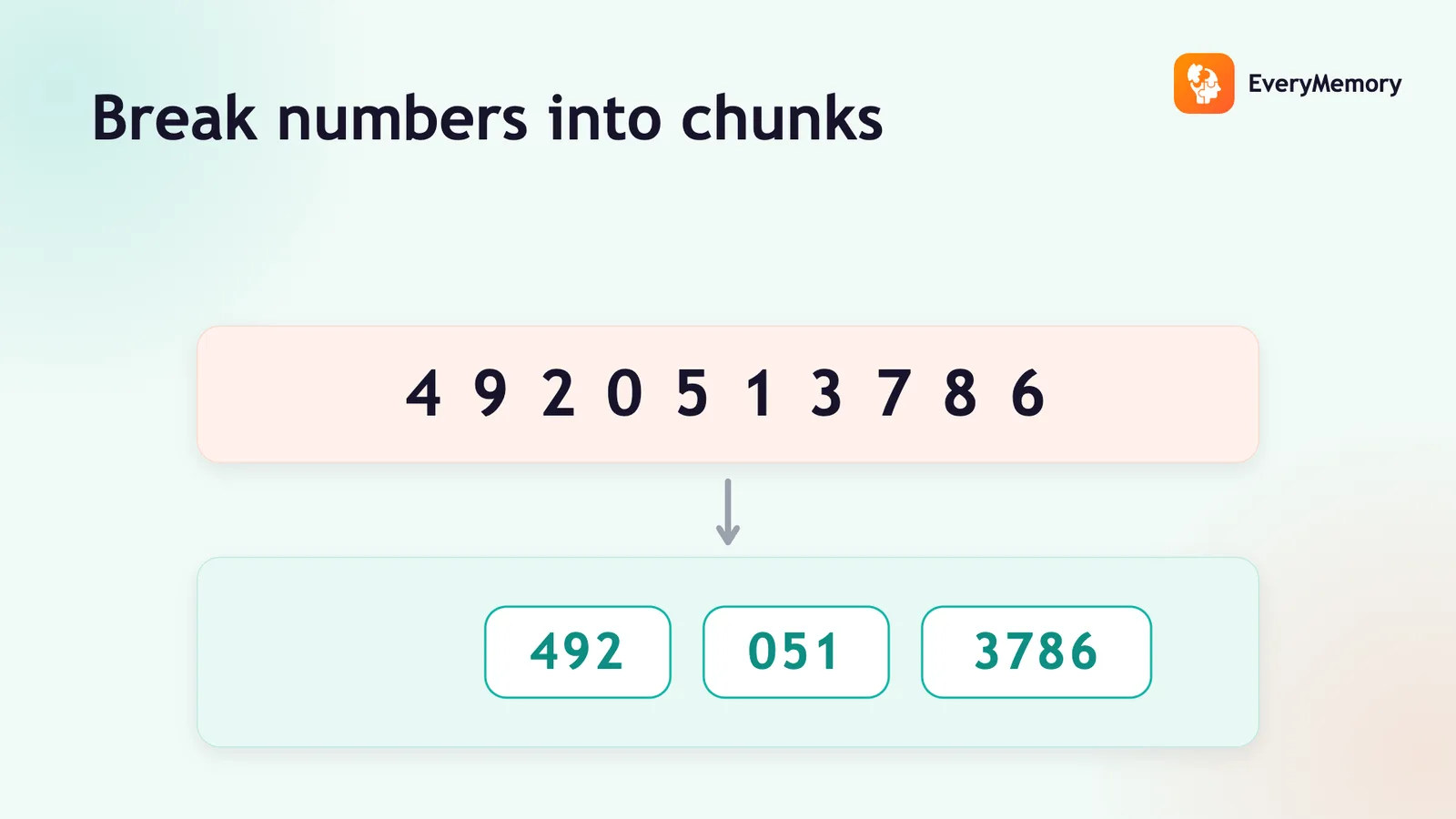
You can beat the raw limit by grouping digits into meaningful chunks - turning 1 4 9 2 into "1492", a memorable year. Chunking is how people recall long numbers that should exceed their span: the items are the same, but each chunk counts as one (the chunking technique).
⚠ When to talk to a professional
This is a non-medical self-check. A single score reflects your state - sleep, stress, focus - as much as your memory. It is not a diagnostic measure. If memory changes affect daily life, consult a qualified professional.