 EveryMemory
Short-Term Memory Test: How It Works
A short-term memory test checks how much you can hold for a few seconds - usually a digit span. Here's how it works, a version to try now, and what your result means.
Part of the guide: Understanding Memory Loss and Forgetfulness: A Calm, Reassuring Guide →
⚡ Quick answer
A short-term memory test checks how much information you can hold in mind for a few seconds - typically by repeating back a sequence of numbers, words, or positions right after seeing them. A common version is the digit span: how many digits you can recall in order. It's a non-medical self-check, not a diagnosis; take it rested and track your own baseline over time.
Key takeaways
- A short-term memory test checks how much you hold for a few seconds - classically the digit span.
- Most adults recall around 5–9 items, but it swings with sleep, stress, and attention.
- It's a non-medical self-check, not a diagnosis - track your own baseline over time.
- Chunking and practice can stretch how many items you effectively hold.
Short-term memory is the few seconds your brain holds onto something before it's stored or lost - the phone number you keep in mind just long enough to dial.
A short-term memory test puts a number on that holding capacity. Here's how it works, and a version you can try right now.
What short-term memory is
Short-term memory holds a small amount of information for a short time - seconds to a minute - before it's either used, stored into long-term memory, or forgotten. It overlaps with, but isn't identical to, working memory, which also manipulates what it holds (the difference explained).
How a short-term memory test works
The classic is the digit span: you see or hear a sequence of digits and repeat it back in order, with the sequence getting one digit longer each round until you slip. Your span is the longest sequence you can reliably recall. Word lists and tile-position tasks test the same capacity in different formats.
Try it now
Have someone read you a random number digit by digit - start with 5 digits, then 6, 7, and so on - and repeat each back immediately. Or read a row, look away, and write it down. The point where you start making errors is roughly your span.
What your result means
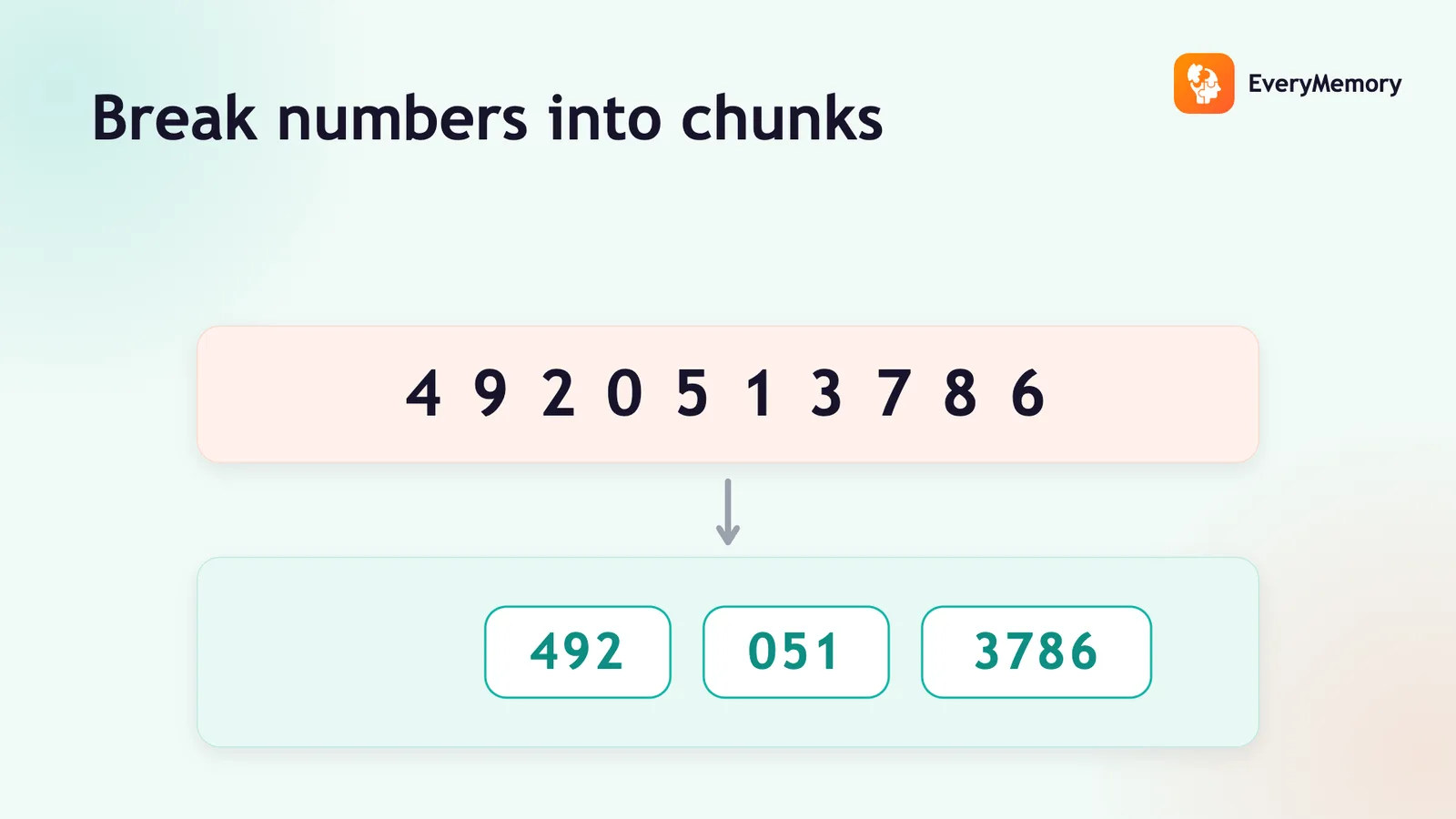
Most adults recall around 5–9 items, but the number swings with sleep, stress, and attention, so don't over-read a single try. What matters is your own trend under the same conditions - and that you can stretch it with practice and chunking (the chunking technique).
✅ Try this today - 60-second digit-span check
A quick at-home version - no app needed.
- Write a random 5-digit number, glance at it for 2 seconds, then look away and recall it.
- If correct, add a digit and repeat - 6, then 7, then 8.
- Your span is the longest length you got right two times out of three.
- Retest in a week, same time of day, and compare to your own number.
⚠ When to talk to a professional
This is a non-medical self-check, not a diagnostic test. A low score on a single try usually reflects tiredness or distraction, not a problem. If memory changes are affecting daily life, talk to a qualified professional.