 EveryMemory
Visual Memory Test: How It Works
A visual memory test checks how well you recall patterns, positions, and images. How it works, a quick version to try, and what your result does and doesn't mean.
⚡ Quick answer
A visual memory test checks how well you recall what you've seen - patterns, positions, shapes, or images - usually by showing a grid or pattern briefly and asking you to reproduce it. It probes visual and spatial memory rather than verbal recall. It's a non-medical self-check; take it rested and compare to your own baseline over time.
Key takeaways
- A visual memory test checks recall of patterns, positions, and images - not verbal labels.
- Common formats: reproduce a lit grid, or the tray/Kim's game.
- Visual memory is partly separate from verbal - you can be great with faces and poor with names.
- It's a non-medical self-check; track your own trend, and practice sharpens it.
Some people remember faces and routes effortlessly but lose names instantly - a sign their visual memory is doing the heavy lifting.
A visual memory test measures how well you hold images, patterns, and positions. Here's how it works.
What visual memory is
Visual memory is your ability to remember what you've seen - the layout of a room, a face, where you left your keys, the shape of a route. It's partly separate from verbal memory, which is why someone can be great with faces and poor with names (types of memory explained).
How a visual memory test works
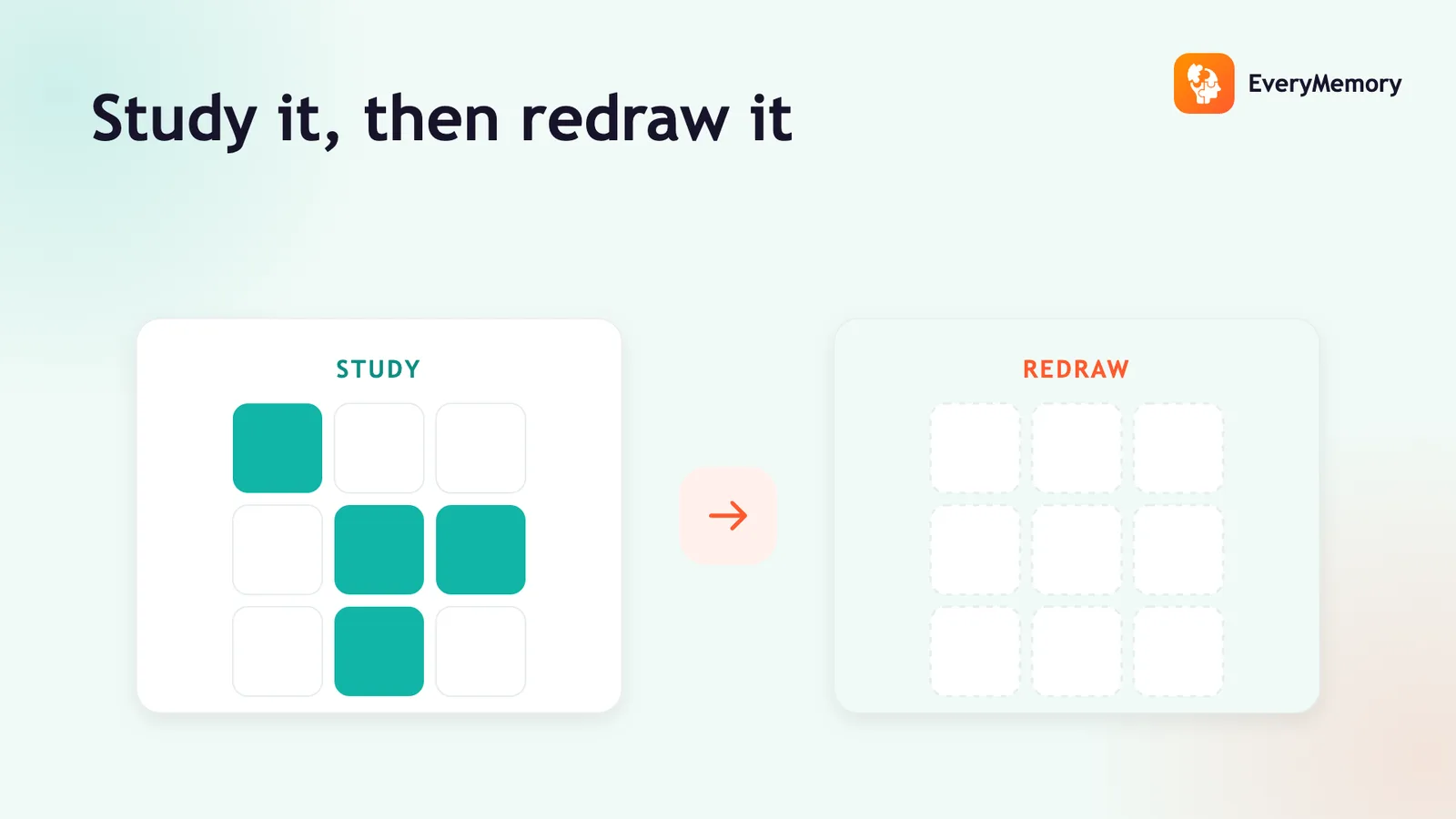
A common format flashes a grid with some tiles lit, then asks you to tap the same tiles after they vanish - adding tiles each round. Others show a pattern or set of images to reproduce or match moments later. All measure how much visual detail you can hold and recall, not whether you can name it.
Try it now
Glance at a filled bookshelf or a photo for ten seconds, look away, and list everything you can recall - objects, colours, positions. Or have someone arrange six small items on a tray, study it briefly, then cover it and write down what was there and where (the classic "Kim's game").
What your result means
A strong visual memory shows up as recalling positions and details accurately; a weaker one as remembering "a bookshelf" but not what was on it. As with any self-check, conditions matter and a single score isn't a verdict - track your own trend, and know you can sharpen visual recall with practice (a pattern memory exercise).
⚠ When to talk to a professional
This is a non-medical self-check, not a diagnostic test. Results vary with attention and tiredness. If memory changes are affecting daily life, speak with a qualified professional.