 EveryMemory
Types of Memory Explained: Sensory, Short-Term, and Long-Term
Memory isn't one thing. A plain guide to the main types - sensory, short-term, working, and long-term - and how information moves between them.
Part of the guide: How to Keep Your Brain Healthy: A Complete Lifestyle Guide →
⚡ Quick answer
Memory isn't one thing. The main types are sensory memory (a split-second impression), short-term and working memory (holding and using a few items for seconds), and long-term memory (lasting storage, including facts and skills). They work together: information passes from sensory to short-term, and only some of it, with attention and rehearsal, becomes long-term.
Key takeaways
- Memory isn't one thing: sensory, short-term, working, and long-term are the main types.
- Information flows sensory → short-term/working → long-term, and only attended, meaningful, rehearsed material becomes long-term.
- Short-term memory holds; working memory holds and manipulates; long-term splits into explicit (facts) and implicit (skills).
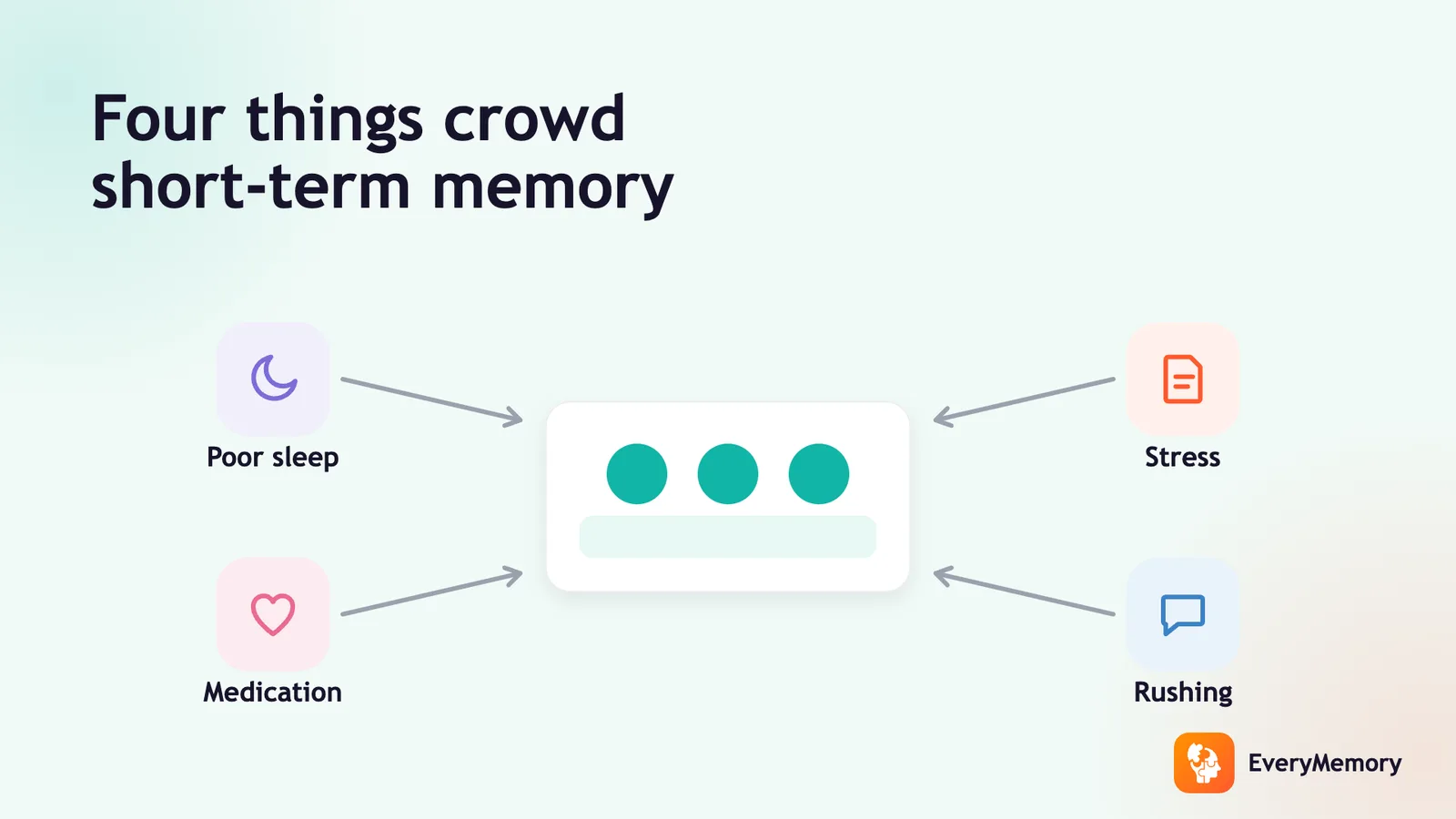
- Most everyday slips are an attention failure at the short-term stage, which is fixable.
We talk about 'memory' as if it's one thing, but it's really several systems working together. Knowing the types makes everyday forgetting - and how to remember better - much clearer.
Here's a plain guide to the main types and how they connect.
The main types of memory
| Type | What it does | Lasts |
|---|---|---|
| Sensory memory | A split-second impression of what you just saw or heard | Under a second |
| Short-term memory | Holds a few items you're aware of right now | Seconds |
| Working memory | Holds and manipulates a few items (e.g. mental math) | Seconds |
| Long-term memory | Lasting storage of facts, events, and skills | Days to a lifetime |
How they work together
Information flows in stages. Your senses take a fleeting impression (sensory memory); whatever you pay attention to passes into short-term/working memory, where you can hold and use it for a few seconds; and only some of that - the parts given attention, meaning, and repetition - is encoded into long-term memory. This is why attention is the gateway to remembering, and why so much 'forgetting' is really information that never made it past the early stages (forgetting things so quickly).
Short-term vs working memory
These two get used interchangeably, but there's a distinction: short-term memory simply holds a few items, while working memory holds them and works with them - repeating a phone number is short-term; recalling it and adding to it is working memory. More on this in working memory vs short-term memory.
Types of long-term memory
Long-term memory splits too: explicit memory you can consciously recall (facts and events) and implicit memory you use without thinking (skills like riding a bike). It's why you can forget a name yet never forget how to swim.
Why the types matter for remembering
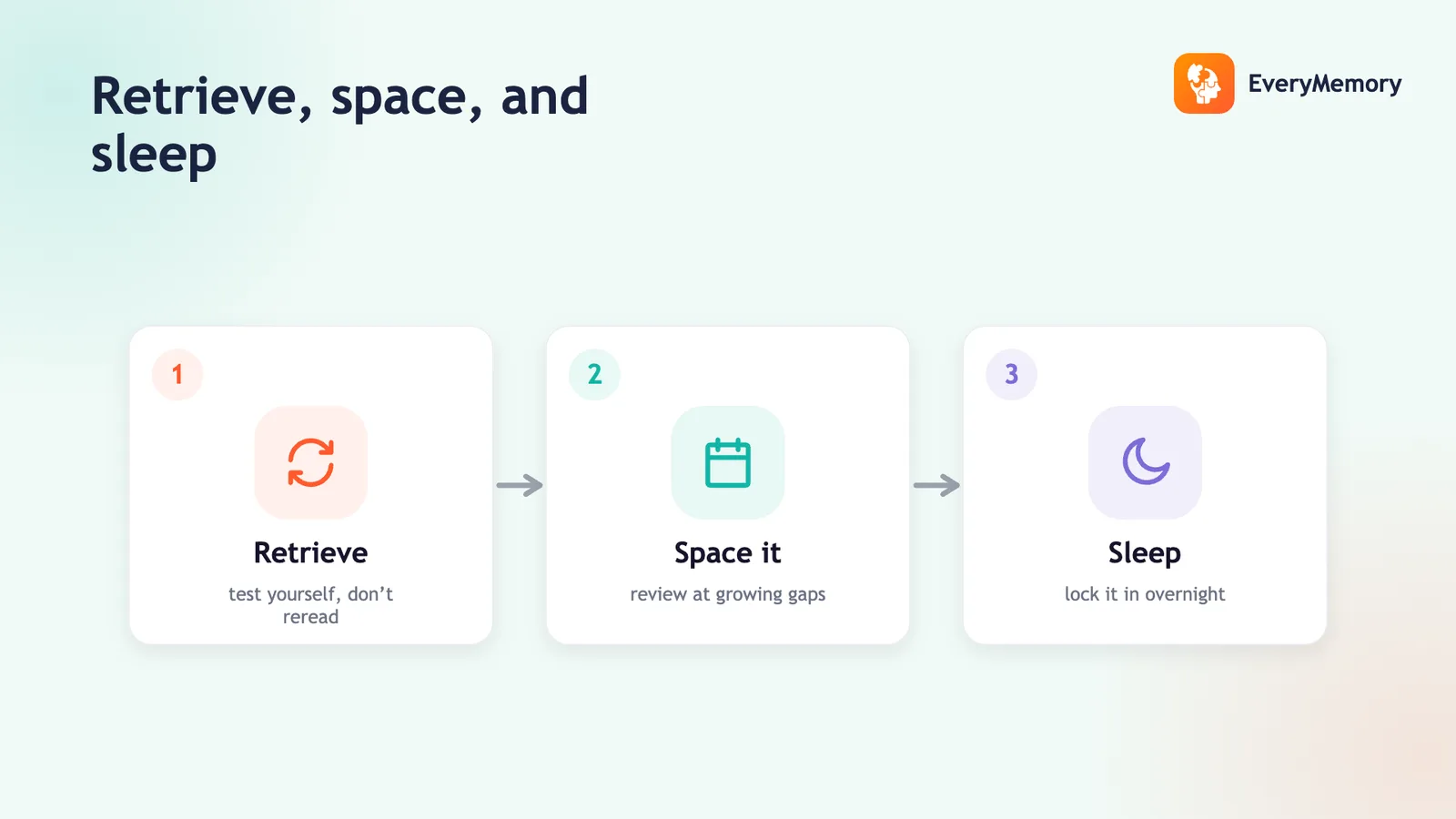
Knowing the stages tells you where to act. Most everyday slips are an attention failure at the short-term stage - fixable by single-tasking and saying things aloud. Keeping things long-term is about meaning and retrieval - see improving retention.