EveryMemory
Am I Getting More Forgetful? How to Tell
Most everyday forgetting is normal and tied to attention, sleep, and stress - here's a calm way to tell ordinary lapses apart from changes that are worth a professional's eye.
Part of the guide: Understanding Memory Loss and Forgetfulness: A Calm, Reassuring Guide →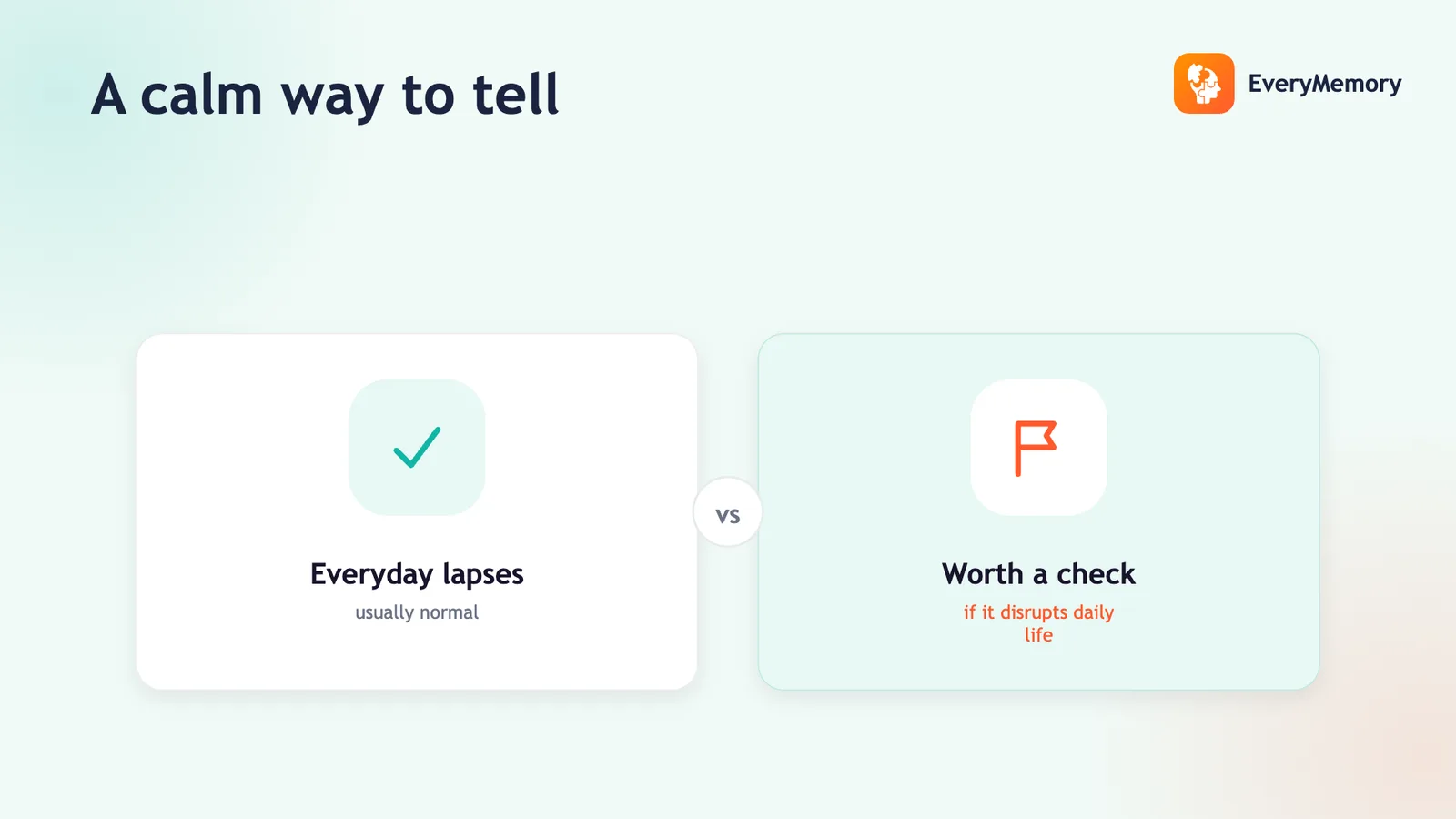
⚡ Quick answer
Most everyday forgetfulness - names on the tip of your tongue, walking into a room and forgetting why, misplacing keys - is normal and usually comes from divided attention, poor sleep, or stress, not failing memory. The fact that you notice it is itself reassuring. A gradual, persistent change that disrupts daily life, or that others notice too, is worth discussing with a doctor.
Key takeaways
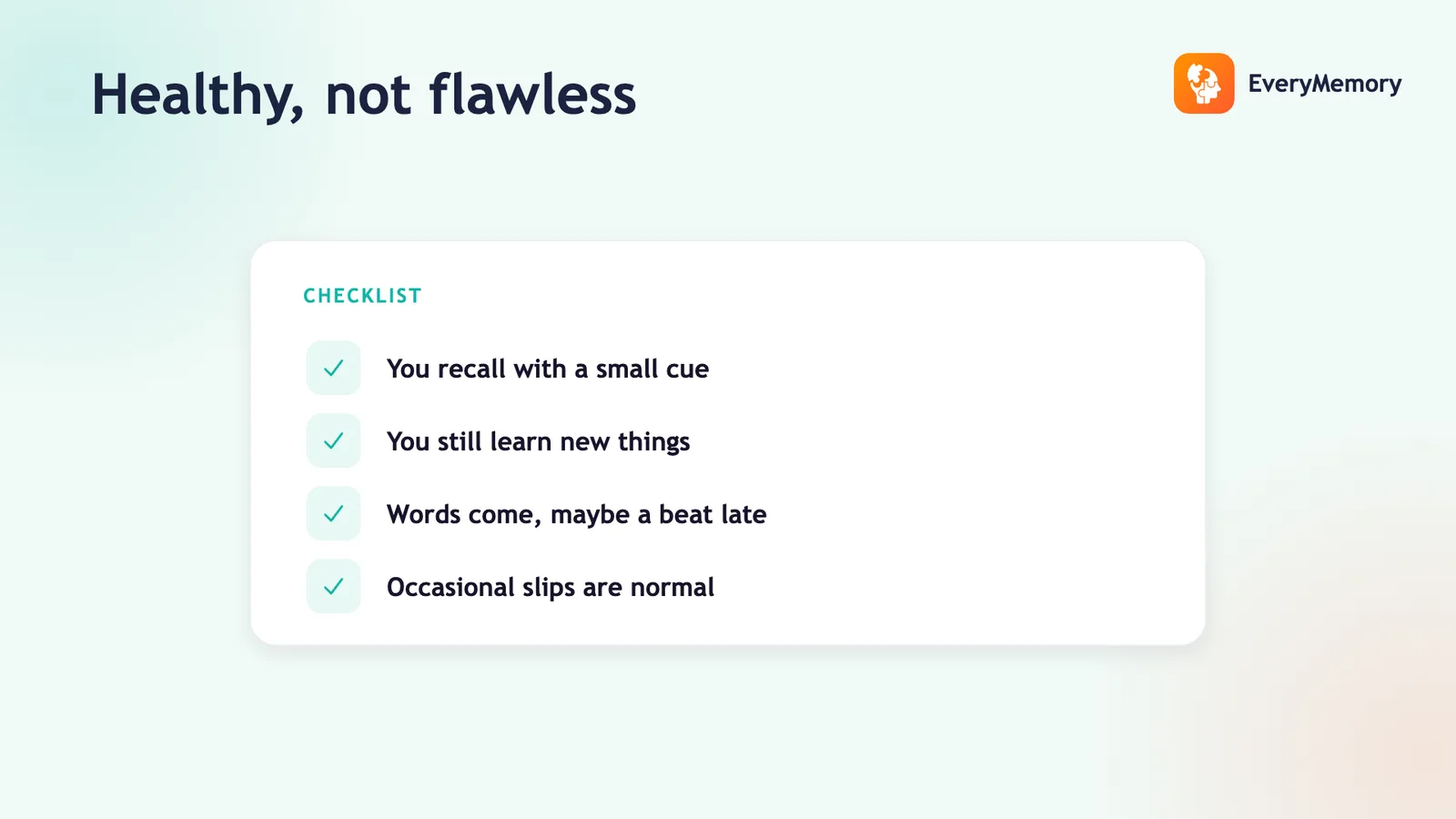
- Most everyday forgetting is normal and tied to attention, sleep, and stress.
- Noticing and worrying about your own lapses is itself a reassuring sign.
- Check the easy causes first - sleep, stress, multitasking, low mood, busyness.
- A gradual, persistent, disruptive change others notice is worth a calm doctor's visit.
If you've started noticing your own forgetting and wondering what it means, that very noticing is reassuring - people who are simply busy and distracted notice their lapses and worry about them; that worry itself is a sign of an engaged, self-aware mind. Most everyday forgetting is normal, and it's usually about attention, sleep, or stress rather than memory.
Still, it's fair to want a calm way to tell ordinary lapses from changes worth checking. The aim here isn't to alarm or to diagnose - it's to help you see the difference clearly and know when a sensible conversation with a professional makes sense.
Why everyday forgetting is so common
Most ordinary forgetting starts before memory even gets involved: you didn't fully attend in the first place. Distracted, tired, or stressed, you half-register a name or where you put your keys, so there's nothing solid to recall later. It feels like forgetting; it was really not-noticing.
Sleep, stress, mood, and simply having too much on your plate all thin the attention memory is built from. That's why busy stretches feel foggier - and why the fog lifts when life settles. For the stress strand, this overlaps with everyday attention rather than anything clinical.
Normal lapses vs worth watching
It helps to see the two side by side. The left column is the ordinary stuff almost everyone does; the right is the kind of change that's worth a calm professional check - not a self-diagnosis.
| Usually normal | Worth a professional's eye |
|---|---|
| Forgetting a name, then recalling it later | Trouble following or joining a conversation |
| Walking into a room and forgetting why | Getting lost in familiar places |
| Misplacing keys but retracing your steps | Putting things in odd places with no recall of it |
| Needing a reminder for an appointment | Repeatedly asking the same question soon after |
| More lapses when tired or stressed | A gradual change others around you notice too |
Check the easy explanations first
Before reading anything into a foggy patch, run through the ordinary causes - they explain most of it. Improve these and the forgetting usually eases on its own.
- Sleep - short or broken nights thin attention the next day.
- Stress and worry - a busy mind has little attention left over.
- Doing too much at once - multitasking guarantees dropped details.
- Low mood - narrows attention and makes recall feel effortful.
- Plain busyness - more to remember means more occasional misses.
When a check makes sense
The reassuring pattern is forgetting that comes and goes with sleep, stress, and busyness, where you usually recall things later and you're the one noticing. That's the everyday, reversible kind - not a verdict on your future.
What's worth a calm, non-urgent conversation with a doctor is a change that's gradual and persistent, that's disrupting daily life, or that the people around you are noticing too. That isn't cause for alarm - it's just sensible. Tracking your own trend can help you see steadiness rather than fear it; see how to track your memory.
✅ Try this today - A calm forgetfulness self-check
A short, non-medical way to take stock without spiralling.
- Ask: do I usually recall the thing later, or is it gone for good?
- Check the easy causes - sleep, stress, doing too much - honestly.
- Notice whether lapses track your tiredness and busy patches.
- Ask whether the people around you have raised any concern.
- If a change is gradual, persistent, and disruptive, book a calm chat with a doctor.
⚠ When to talk to a professional
This is general, reassuring information, not medical advice and not a way to diagnose or rule out any condition. If you have a gradual, persistent, or distressing change in memory - or others do - please speak with a doctor or qualified professional, who can look into it properly.