 EveryMemory
Signs of a Healthy Memory
A healthy everyday memory isn't a flawless one - it forgets plenty - but it shows a few reassuring signs, like recalling things with a cue and staying steady over time.
Part of the guide: Understanding Memory Loss and Forgetfulness: A Calm, Reassuring Guide →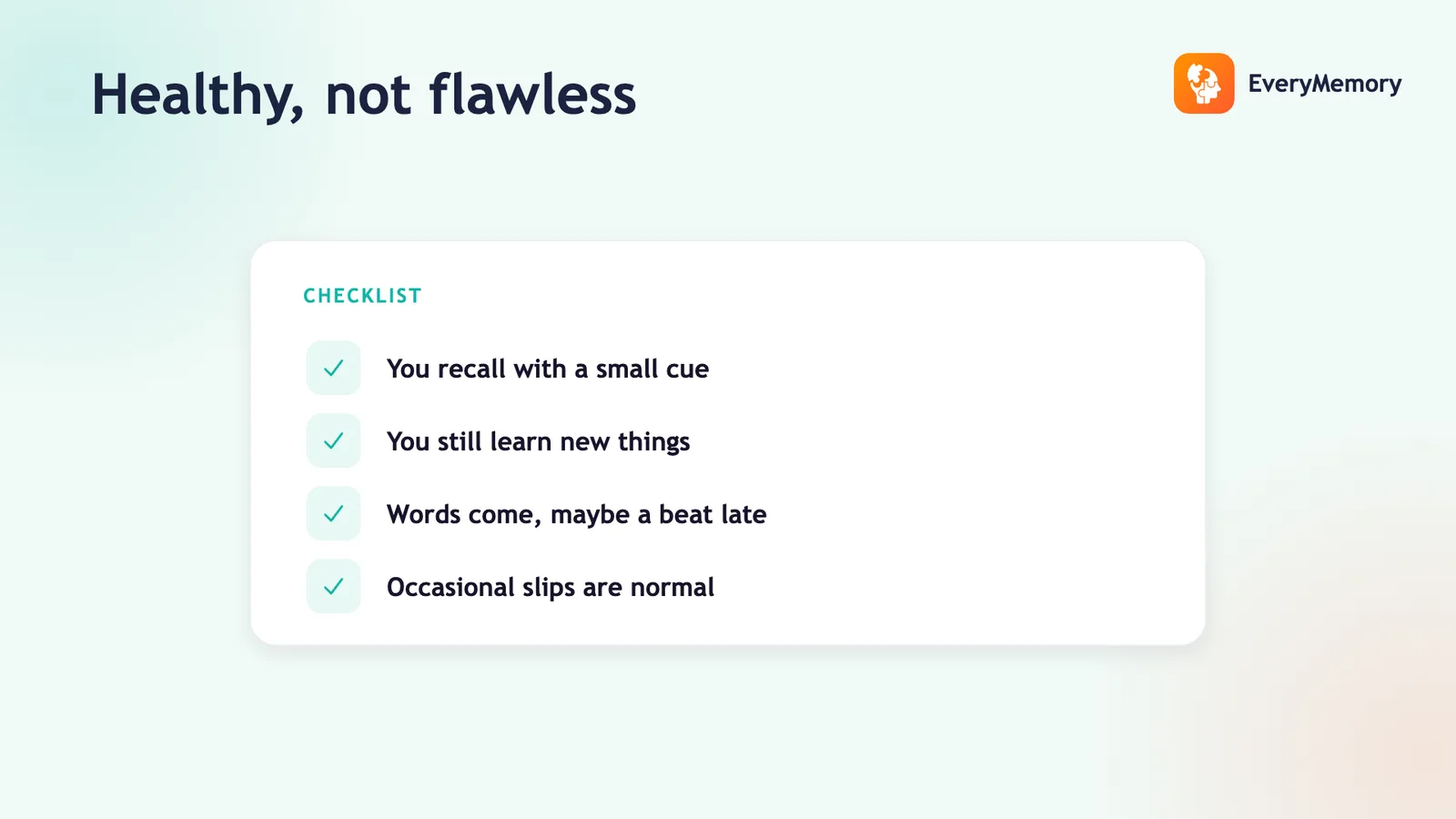
⚡ Quick answer
A healthy everyday memory recalls things with a cue, learns new information with reasonable repetition, holds steady over time, and forgets the trivial while keeping the meaningful. It still has off days with poor sleep or stress - that's normal. The reassuring sign isn't perfection but a steady personal trend, not a comparison with anyone else.
Key takeaways
- A healthy memory forgets the trivial - perfection isn't the standard.
- Reassuring signs: recall with a cue, learning with normal repetition, steady trend.
- Off days with poor sleep or stress are normal, not a verdict.
- Compare to your own past, not strangers; persistent changes warrant a professional.
It's easy to assume a healthy memory is one that forgets nothing. It isn't - forgetting is a feature, not a fault. A healthy everyday memory drops the trivial, keeps the useful, and bends with sleep and stress like everyone's. The reassuring signs are subtler than perfection, and most people show them.
Knowing what a healthy everyday memory looks like is steadying. It stops you reading ordinary forgetting as a warning, and it gives you a fair, self-relative yardstick for your own trend over time.
Forgetting is part of healthy memory
A memory that kept everything would be useless - you'd drown in trivia. Healthy memory is selective: it lets go of the parking spot from three weeks ago and keeps the things that matter. So everyday forgetting isn't a flaw in the system; it's the system working.
It also varies. The same memory feels sharp when you're rested and sludgy when you're tired or stressed, because attention - its raw material - varies. An off day is a condition, not a verdict. For where the line sits, see am I getting more forgetful.
Reassuring signs vs worth watching
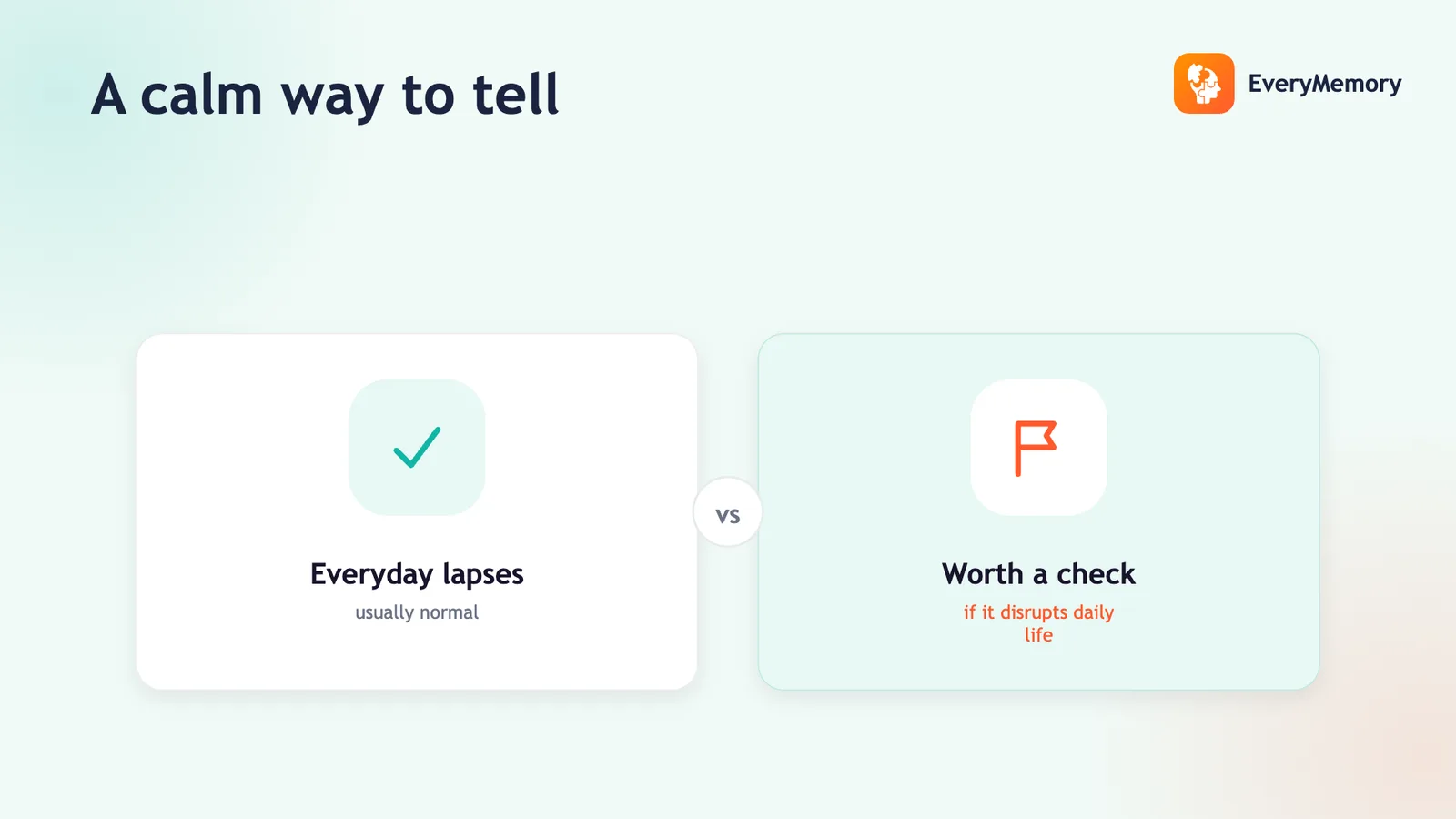
Here's the everyday picture side by side. The left is what a healthy memory routinely does; the right is the kind of change that's worth a calm professional check - not a self-diagnosis.
| Reassuring sign | Worth a professional's eye |
|---|---|
| A cue or context brings the memory back | Familiar information feels newly unreachable |
| You can learn new things with repetition | New routines won't stick despite real effort |
| Forgetting tracks tiredness and stress | A gradual change others notice too |
| You recall the gist, if not every detail | Losing the thread of familiar tasks or places |
| Your trend stays steady over time | A steady, persistent downward trend |
Signs you can notice day to day
You don't need a test to spot the everyday signs of a working memory. These show up in ordinary life.
- A reminder or cue reliably brings a forgotten thing back.
- You pick up new names, routes, or skills with normal repetition.
- Your lapses cluster on tired, busy, or stressful days.
- You hold the gist of conversations even if details fade.
- Checked the same way over weeks, your results stay roughly steady.
Use your own baseline
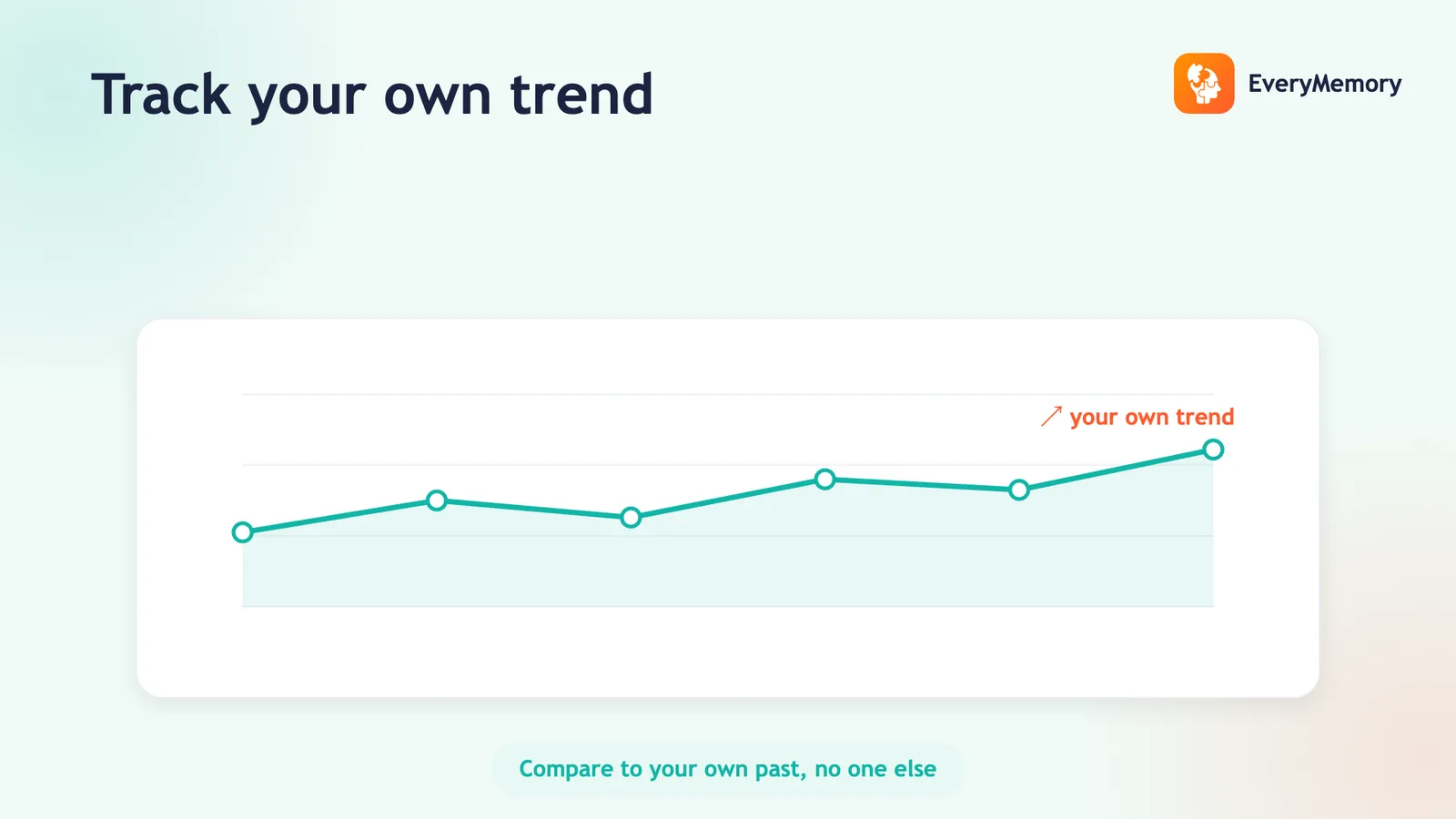
The fairest sign of a healthy memory is a steady personal trend, not a high score against strangers. Everyone starts from a different place, so the only honest comparison is you over time - which is reassuring far more often than not.
Keep it non-medical. These signs describe everyday memory, not a clinical assessment, and they can't diagnose anything. A gradual, persistent change that worries you or that others notice is a reason to see a doctor. To watch your own trend, see how to track your memory.
⚠ When to talk to a professional
This is general, reassuring information about everyday memory, not medical advice and not a way to diagnose or rule out any condition. If you notice a gradual, persistent change - or others do - please speak with a doctor or qualified professional.