 EveryMemory
Best Foods for Memory and Brain Health
No single food is a magic solution, but a consistent eating pattern rich in oily fish, leafy greens, berries, nuts, and olive oil is linked with sharper recall and healthier brain ageing.
Part of the guide: How to Keep Your Brain Healthy: A Complete Lifestyle Guide →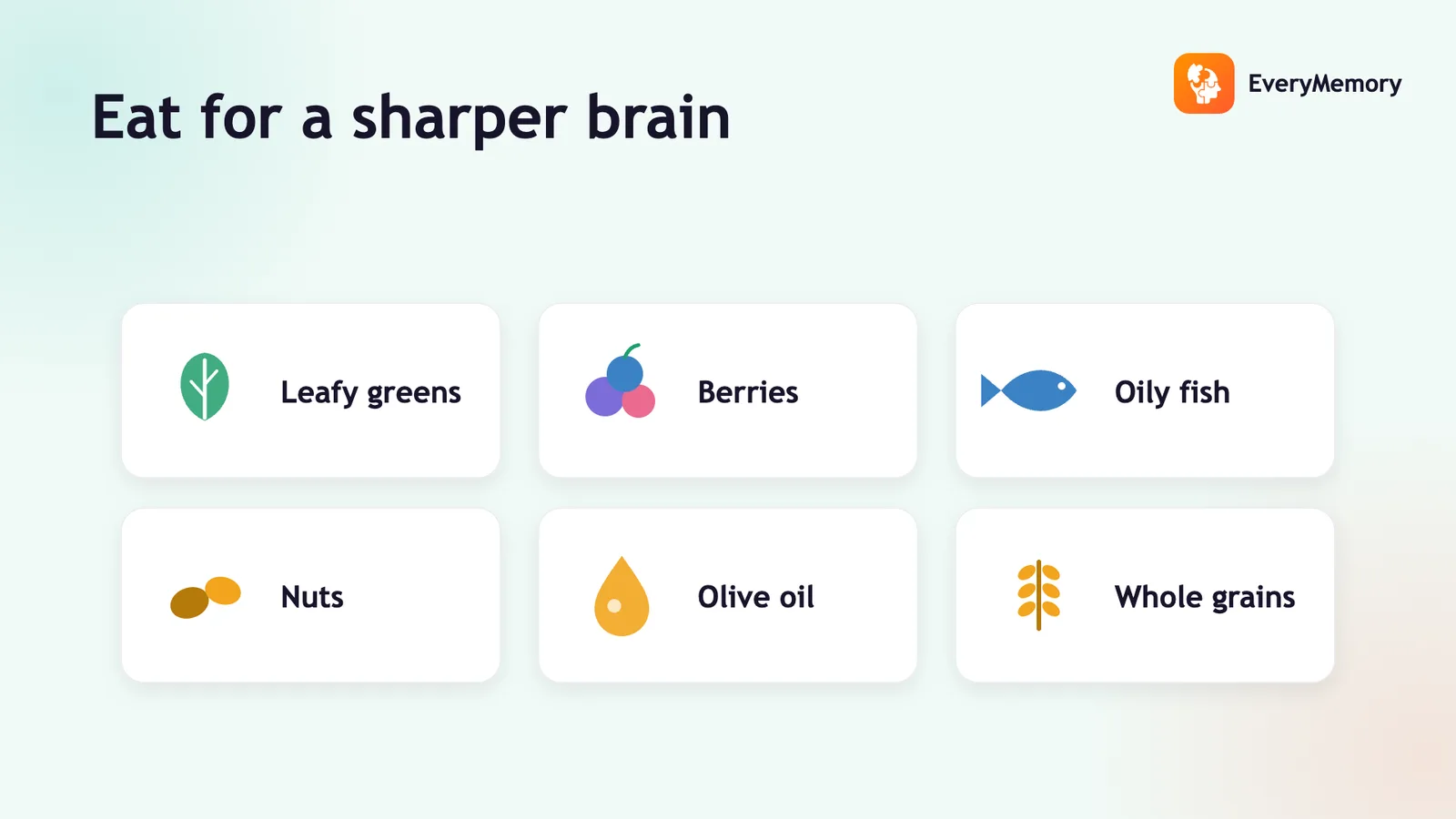
⚡ Quick answer
The eating pattern most consistently linked with better memory and brain health in older adults is the Mediterranean-style diet - rich in oily fish, leafy greens, berries, nuts, whole grains, and olive oil, and low in processed foods and red meat. No single food delivers brain benefits on its own; it's the overall pattern, eaten consistently over time, that appears to make the difference.
Key takeaways
- The Mediterranean-style eating pattern - rich in oily fish, leafy greens, berries, nuts, whole grains, and olive oil - is the most consistently studied diet for brain health.
- No single food delivers brain benefits on its own; the overall pattern, sustained over time, is what the evidence supports.
- Leafy greens, oily fish, and berries come up most often in brain health research and are easy to add to everyday meals.
- Good hydration and regular physical activity work alongside diet - none of these habits is as effective in isolation as in combination.
Food won't cure or prevent any neurological condition - that much is important to say upfront. But what you eat across years and decades does appear to matter for how well the brain ages. Research consistently points to certain eating patterns, and the specific foods within them, as linked with better recall, sharper focus, and slower age-related cognitive decline.
This article covers the evidence honestly: what the research shows, where it's strong, and where it's still uncertain. The goal isn't to hand you a list of superfoods to rush out and buy, but to give you a clear picture of the overall eating pattern that comes up most often - and practical ways to move toward it.
Why diet and brain health are connected
The brain depends on a steady supply of specific nutrients - omega-3 fatty acids for cell membranes, antioxidants to manage oxidative stress, B vitamins for nerve signalling, and slow-releasing carbohydrates for moment-to-moment fuel. It also relies on good circulation: what supports cardiovascular health tends, over time, to support the brain too.
Hydration is part of this picture. Even mild dehydration affects concentration and recall - something we cover in our article on hydration and focus in older adults.
The Mediterranean-style pattern: the most studied approach
Of all the dietary patterns examined in brain health research, the Mediterranean-style diet has the most consistent and longest-standing evidence behind it. It emphasises vegetables, fruits, legumes, whole grains, fish, nuts, and olive oil - with modest amounts of dairy and meat, and limited processed and sugary foods.
Multiple large, long-running studies have found that closer adherence to this pattern is linked with better performance on memory and attention tests, and with slower decline over time. A meta-analysis published in Alzheimer's & Dementia reviewed 34 prospective studies and found that high adherence was associated with a meaningfully lower risk of cognitive impairment, though the effect size varies across studies and the research is still evolving.
The MIND diet - developed specifically to focus on brain health, merging Mediterranean and DASH principles - adds a sharper emphasis on leafy greens and berries over other fruits, and limits foods like butter, pastry, fried food, and red meat more strictly. Results from clinical trials on the MIND diet are mixed: observational studies are encouraging, while controlled trials have shown more modest effects. That honest complexity is worth knowing. You can explore the research behind these eating patterns further via our Library.
- Mediterranean-style eating is a pattern, not a prescription - no food is forbidden, and there is no single "correct" version.
- The emphasis is on what you eat most of the time, not perfection on any given day.
- Both the Mediterranean and MIND approaches rate vegetables, fish, nuts, whole grains, and olive oil highly.
The foods that come up most consistently
- Oily fish - salmon, mackerel, sardines, herring - are rich in omega-3 fatty acids DHA and EPA. Higher blood levels of omega-3s are linked in several studies with better recall and more brain volume in key memory areas. One to two servings per week is the standard recommendation.
- Leafy greens - spinach, kale, rocket, romaine - contain lutein, folate, and vitamin K. One well-known study found that people eating roughly one daily serving showed cognitive abilities similar to those of people eleven years younger on memory tests.
- Berries - blueberries, strawberries - are high in flavonoids with antioxidant properties. Several studies link regular berry consumption with slower memory decline in older adults.
- Nuts - especially walnuts - provide vitamin E, healthy fats, and polyphenols, and feature prominently in both Mediterranean and MIND diet frameworks.
- Extra-virgin olive oil replaces butter as the primary cooking fat. Its monounsaturated fats and polyphenols support cardiovascular pathways that also benefit the brain.
- Whole grains - oats, brown rice, wholemeal bread - provide slow-releasing carbohydrates that support stable blood sugar and sustained concentration.
| Food | Why it's linked with brain health | An easy way to include it |
|---|---|---|
| Oily fish | A source of omega-3 fats studied for brain health | Salmon or sardines once or twice a week |
| Leafy greens | Folate, vitamin K and antioxidants | A handful of spinach in eggs, soup or a smoothie |
| Berries | Flavonoids associated with brain health | A small bowl with breakfast or as a snack |
| Nuts | Healthy fats and vitamin E | A small daily handful of walnuts or almonds |
| Extra-virgin olive oil | Central to the Mediterranean pattern | Use in place of butter for cooking and dressings |
| Whole grains | Steady energy for focus | Swap white bread or rice for wholegrain versions |
The whole pattern matters more than any single food
No single food explains the brain benefits observed in people who eat well. The effect appears to come from the combination - eating many of these foods regularly, in place of processed foods, refined carbohydrates, and high-saturated-fat products. The "superfood" framing is largely unhelpful: adding blueberries to an otherwise poor diet is unlikely to make a meaningful difference.
Consistent substitutions made over months - white bread to wholemeal, butter to olive oil, processed snacks to nuts - are where the evidence actually sits. Sleep is also part of the picture: the brain consolidates memory during sleep, and a diet that supports stable blood sugar may also support better sleep. Our article on sleep and the memory connection explores that link.
Hydration: the overlooked piece
Even a well-composed eating pattern loses some of its benefit if hydration is poor. The brain is roughly 75 percent water, and mild dehydration - common in older adults because the thirst sensation weakens with age - is directly linked with reduced concentration, slower recall, and lower mood. Water-rich vegetables and soups contribute to fluid intake, but actively drinking enough throughout the day is still important. The practical detail is in our piece on hydration and focus in older adults.
How physical activity and diet work together
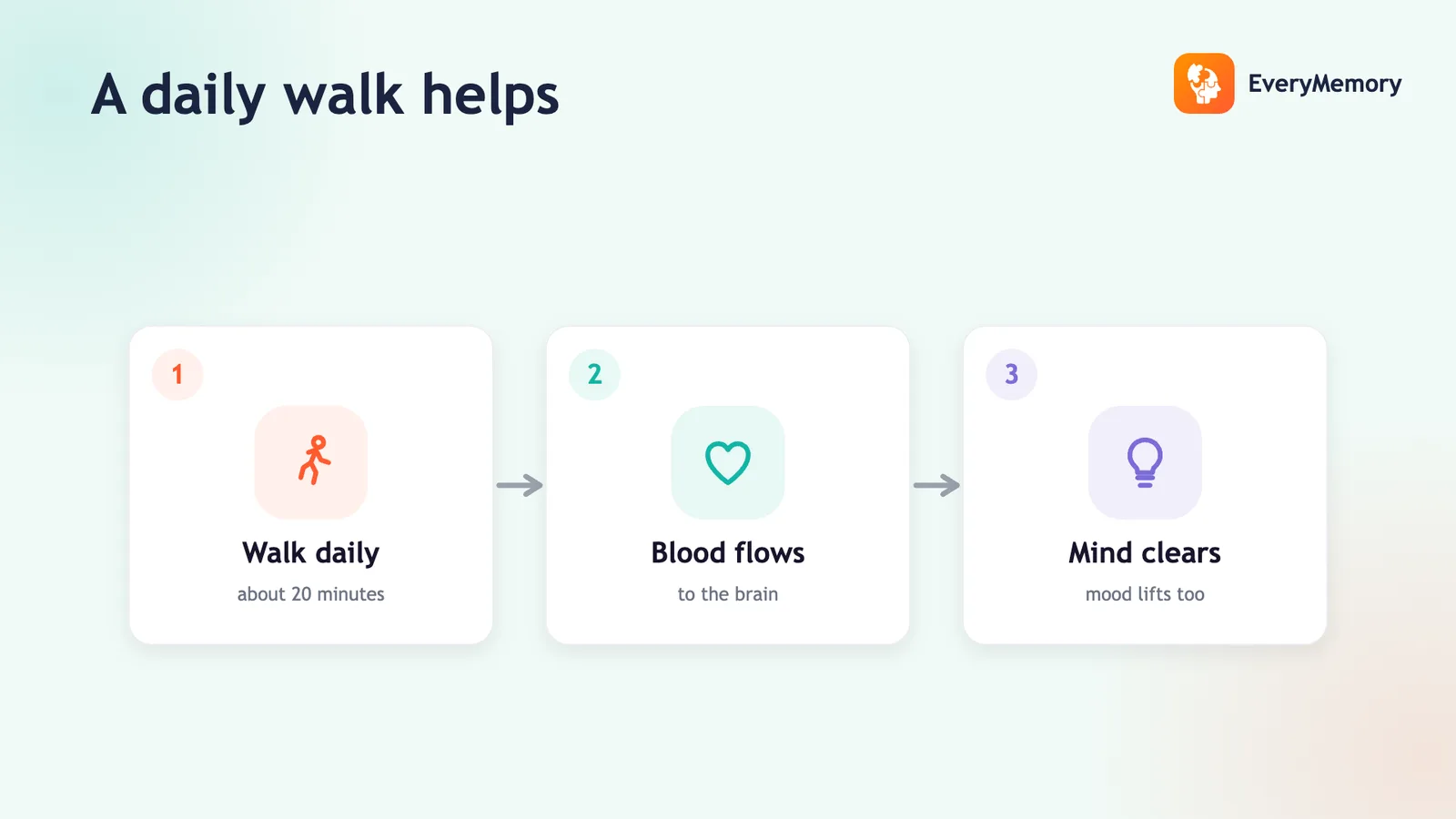
Diet doesn't act in isolation. The combination of a Mediterranean-style pattern and regular moderate exercise - particularly walking - appears stronger than either factor alone, and the two are naturally complementary: regular walking supports circulation and mood while eating well underpins the energy and biology those habits depend on. Our article on walking and brain health covers the movement side of this in practical detail.
✅ Try this today - The one-week kitchen reset
Rather than overhauling everything at once, try these five focused swaps for seven days:
- Replace butter or margarine with extra-virgin olive oil in cooking - on toast, in salad dressings, for sautéing vegetables.
- Add one large handful of leafy greens (spinach, kale, or rocket) to one meal per day - in an omelette, stirred into soup, as a side salad.
- Swap your usual snack twice a day for a small handful of walnuts or almonds alongside a small portion of berries.
- Include one serving of oily fish this week - sardines on wholegrain toast, or salmon with a grain and vegetable side.
- At the end of seven days, notice: did your energy or afternoon concentration feel different on most days?
⚠ When to talk to a professional
This article contains general, non-medical information. If you have dietary health conditions, take medication affected by food choices (such as blood thinners and vitamin K), or have concerns about sudden or significant changes in memory, please discuss them with a qualified healthcare professional.