 EveryMemory
Hydration and Focus in Older Adults
Even mild dehydration can noticeably affect concentration, recall, and mood - and older adults are more vulnerable to it. Here's what to know and how to stay on top of it.
Part of the guide: How to Keep Your Brain Healthy: A Complete Lifestyle Guide →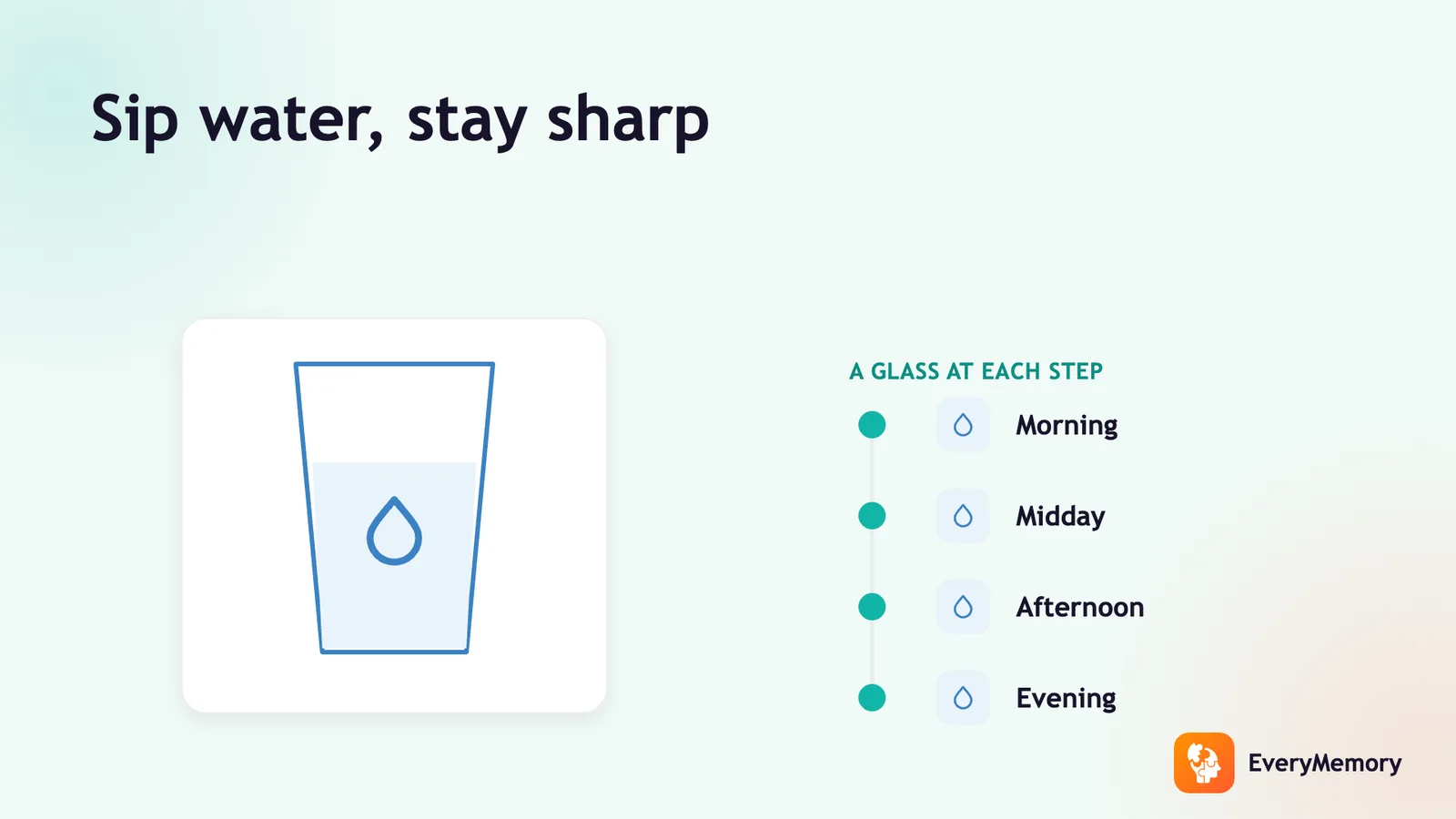
⚡ Quick answer
Even mild dehydration - losing as little as 1 to 2 percent of body water - is linked with reduced concentration, slower recall, and lower mood in older adults. Older adults are more vulnerable because the sense of thirst weakens with age, making it easy to fall behind on fluids without feeling obviously thirsty.
Key takeaways
- Even mild dehydration - losing as little as 1 to 2 percent of body water - is linked with reduced concentration, slower recall, and lower mood.
- The sense of thirst weakens with age, meaning older adults can be meaningfully dehydrated without feeling thirsty - urine colour is a more reliable daily guide.
- Coffee and tea count toward daily fluid intake despite their mild diuretic effect; the idea that they do not count is a common misconception.
- Starting each morning with a glass of water before coffee and keeping a glass visible throughout the day are the two most effective low-effort strategies.
It's easy to think of hydration as a physical concern - dry mouth, fatigue, headaches. But the connection between fluid intake and mental sharpness is just as direct, and for older adults, the risk of mild dehydration is higher than most people realise.
You don't need to be seriously dehydrated to feel the cognitive effects. Even a modest shortfall in fluid intake can cloud concentration, slow recall, and affect mood. This article explains why, and gives you practical ways to stay consistently hydrated without making it a project.
How dehydration affects the brain
The brain is roughly 75 percent water. It depends on consistent fluid levels to function well - maintaining electrical signalling between neurons, regulating temperature, and clearing metabolic waste. When fluid levels drop even slightly, these processes become less efficient.
The most noticeable effects tend to be on attention and working memory - the ability to hold information in mind while using it. Tasks that require sustained concentration become harder, and it's easier to lose your train of thought. Many people describe a mild, foggy feeling they can't quite explain, which improves noticeably after drinking.
There's also a mood connection. Even mild dehydration is associated with increased tension, reduced alertness, and lower energy - all of which compound the cognitive effects. If you find your focus dips in the afternoon with no clear reason, your fluid intake that morning is worth checking.
Why older adults are more vulnerable
Age changes the body's relationship with water in two important ways. First, the sensation of thirst becomes less reliable. Younger adults typically feel thirsty before they're genuinely depleted; older adults can be meaningfully dehydrated without feeling thirsty at all. This means you can't rely on thirst alone as a guide.
Second, the body's ability to conserve water - to reduce how much it loses through the kidneys - also becomes less efficient with age. Combined with lower total body water content (which naturally decreases as muscle mass does), this means older adults reach a state of mild dehydration more quickly than younger people under the same conditions.
Certain medications common in older adults - diuretics, some blood pressure medications - can increase fluid loss further. Heat, illness, and increased physical activity also raise fluid needs above the everyday baseline.
- Signs of mild dehydration that are easy to miss: low energy, difficulty concentrating, slight headache, feeling slightly irritable.
- Urine colour is a reliable guide: pale straw yellow is well-hydrated; dark yellow suggests you need more fluid.
- Morning is typically when dehydration is most pronounced, since you haven't drunk anything for 7-8 hours.
How much fluid do older adults actually need
General guidance suggests around 1.5 to 2 litres of fluid per day for older adults, though needs vary with body size, activity level, and climate. The important word is "fluid" - water, herbal teas, soups, and water-rich foods like cucumber, melon, and oranges all count.
Coffee and regular tea also contribute to fluid intake, despite their mild diuretic effect - the net effect in moderate amounts is still positive. The idea that coffee doesn't count toward hydration is a common misconception.
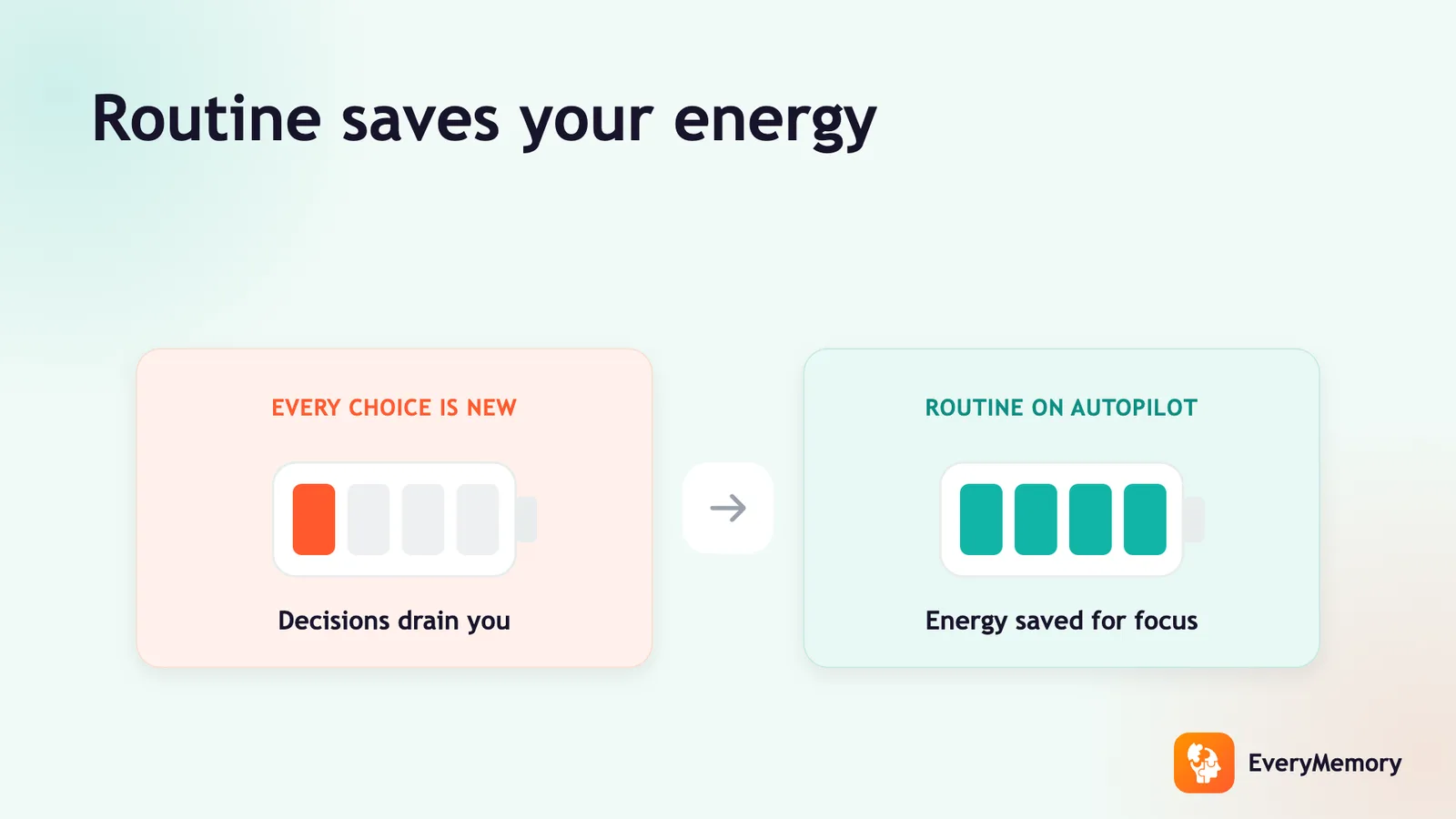
Rather than tracking precise quantities, most people find it easier to build drinking into their routine. The link between routine and focus is explored in our article on why routine matters for focus - the same principle applies here.
Practical strategies for staying hydrated
The most effective hydration strategies work with your existing day rather than requiring a separate effort:
- Start every morning with a glass of water before coffee or tea. You're mildly dehydrated after sleep, and this simple habit helps close the overnight gap.
- Keep water visible. A glass or bottle on the kitchen counter, on your desk, or next to your chair acts as a passive prompt. Out of sight really does mean out of mind.
- Drink at regular anchors. A glass with each meal and once between meals gives you 5 to 6 servings without counting.
- Include fluid-rich foods. Soup at lunch, fruit as a snack - these make a genuine contribution without requiring extra drinks.
- Check your urine colour once a day. It takes three seconds and is the most reliable real-world measure of hydration.
Hydration alongside other cognitive habits
Hydration alone won't transform your memory or focus, but it removes a quiet, persistent drag on performance that many people don't even realise is there. Think of it as maintenance - keeping the conditions right so that the habits that actively build memory and attention can actually work.
Alongside good sleep, regular movement, and a consistent routine, adequate hydration is one of the foundational factors in how clearly your brain works day to day. Our guide on a simple daily memory routine brings these elements together in a practical format.
If you've noticed forgetfulness or scattered focus and aren't sure what's behind it, checking hydration is one of the simplest first steps. It costs nothing, has no side effects, and is one of the most easily reversible factors affecting mental sharpness. Our article on memory loss vs normal aging can also help you put everyday lapses in context.
✅ Try this today - The hydration baseline check
For three days, try this simple experiment:
- Check your urine colour each morning and note it - pale straw or lighter is the target.
- On the first day, drink as you normally would and notice your concentration and energy in the afternoon.
- On days two and three, drink a glass of water first thing in the morning and with each meal. At the end of day three, compare your afternoon focus with day one.
⚠ When to talk to a professional
Mild, gradual dehydration is common and easy to address. However, sudden confusion, significant disorientation, or rapid changes in mental clarity warrant prompt attention from a qualified healthcare professional - these are not typical signs of everyday dehydration.