 EveryMemory
The Best Apps for Memory and Brain Training
Ignore the flashy claims. The qualities that actually make a memory app worth using - and honest expectations about what any of them can do.
Part of the guide: Brain Exercises for Seniors: The Complete Guide →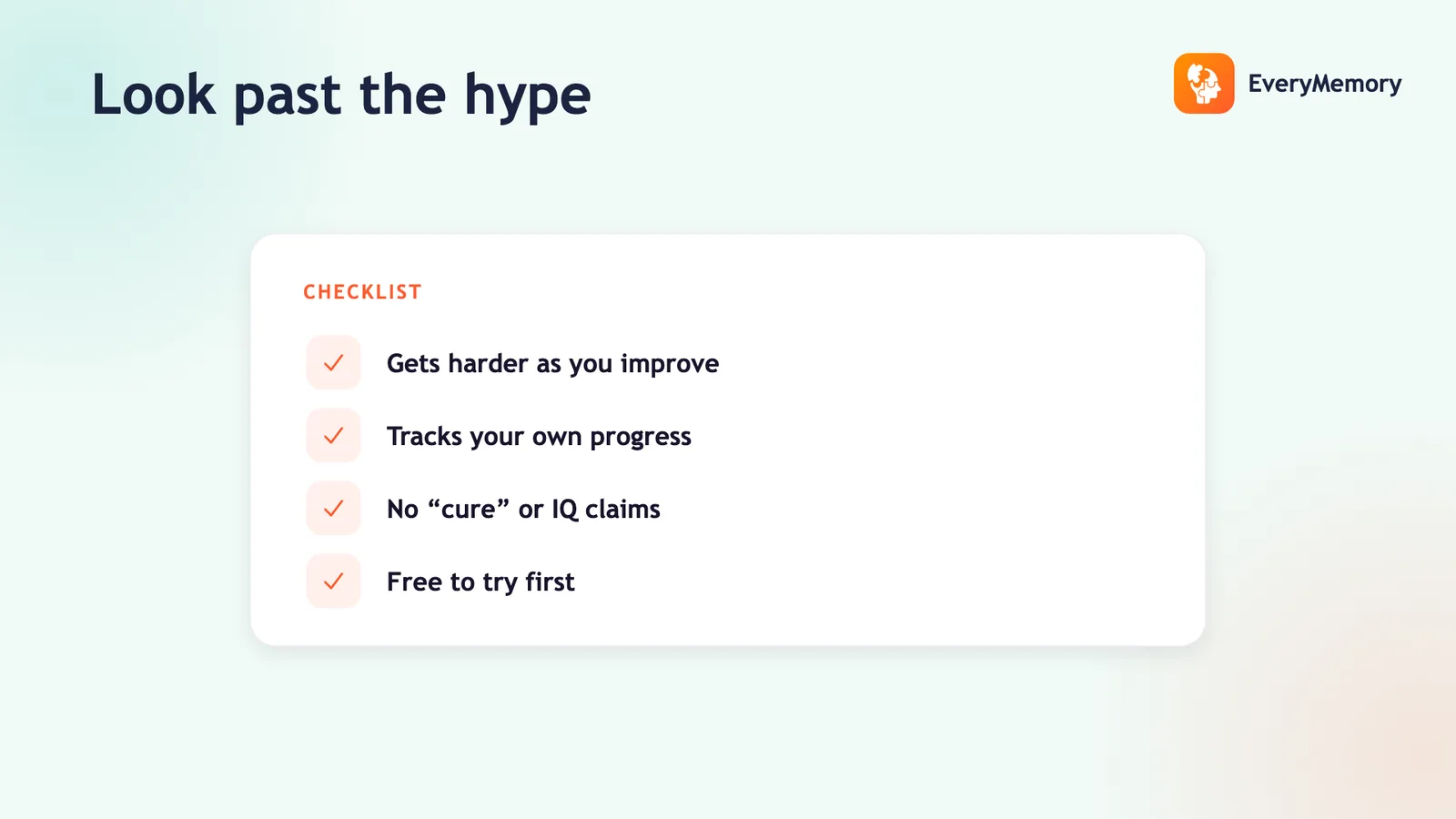
⚡ Quick answer
The best memory and brain-training apps give you short, varied sessions, make you actively recall rather than just react, adapt the difficulty as you improve, and track your progress over time. Look for those qualities rather than flashy claims - and remember any app is a non-medical practice tool, not a treatment. Free options cover the basics; paid ones mainly add structure and tracking.
Key takeaways
- The best memory apps make you actively recall, adapt difficulty as you improve, offer variety, and track your progress.
- Be skeptical of apps promising dramatic gains or implying medical benefits - that's marketing, not evidence.
- Free apps cover the core practice; paid ones mainly add structure, adaptive difficulty, and tracking.
- Any app is a non-medical practice tool - pair it with sleep, movement, and learning new things for the real benefit.
There are hundreds of memory apps and a lot of bold marketing. Rather than rank a list that changes monthly, it's more useful to know the few qualities that separate a genuinely good app from a polished time-filler.
Here's what to look for, and what any app can - and can't - realistically do.
What actually matters in a memory app
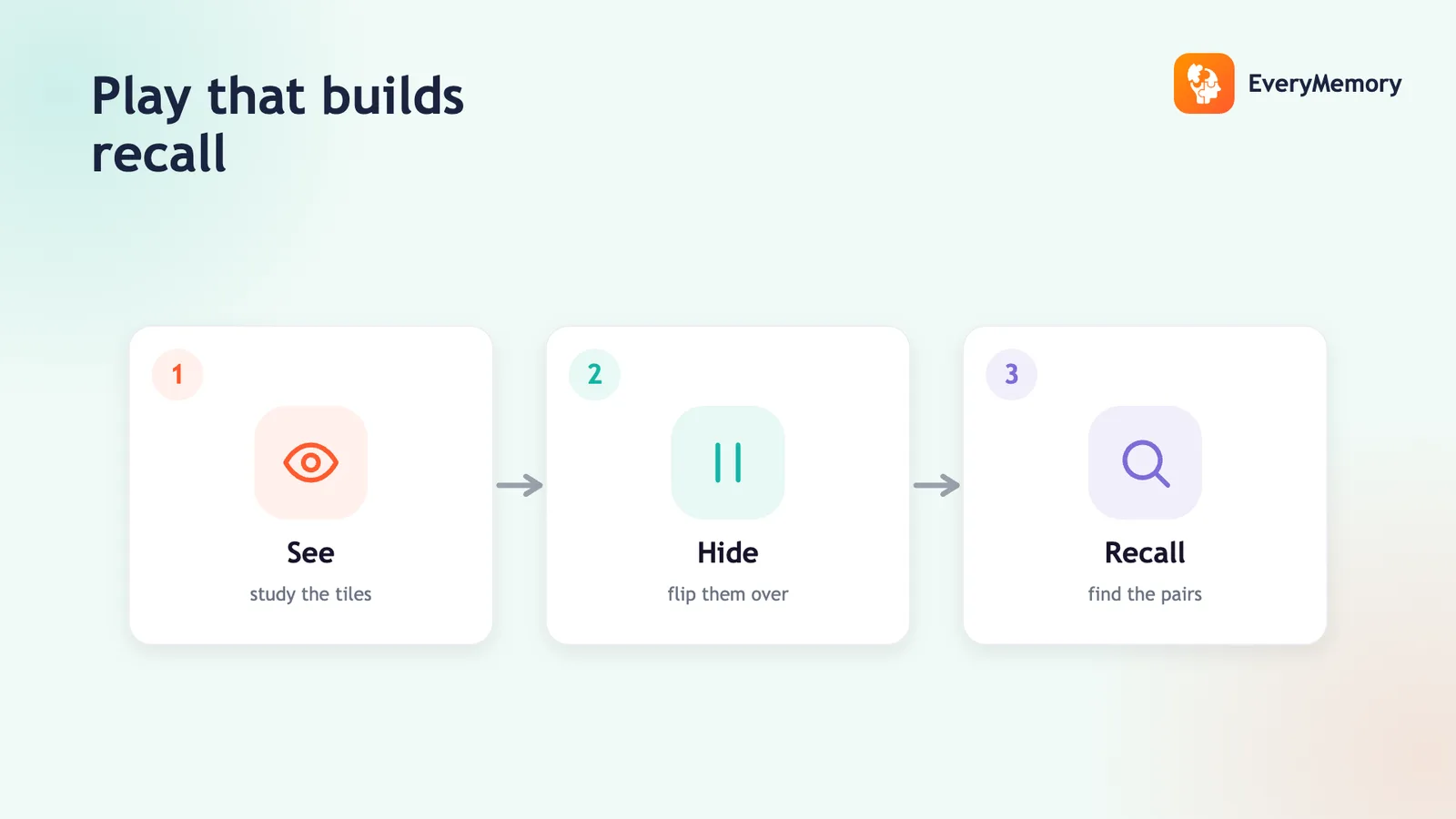
- Retrieval, not just reaction - it hides information and asks you to reproduce it, rather than only testing reflexes.
- Adaptive difficulty - it gets harder as you improve, so it keeps stretching you.
- Variety - it rotates memory, attention, and reasoning rather than one repeated game.
- Progress tracking - it shows your trend against your own past, not a stranger's score.
- Short, repeatable sessions - a few minutes you'll actually do daily beats a long one you won't.
Features that matter vs marketing that doesn't
Be skeptical of apps promising dramatic IQ gains or implying medical benefits - that's marketing, not evidence. What matters is whether the app makes you recall, adapts to you, and you'll keep opening it. A simple app you use daily beats an impressive one you abandon.
Free vs paid
Free apps and games are perfectly good for the core practice. Paid versions mainly add structure - adaptive difficulty, a varied daily plan, and progress tracking - so you're not left to choose what to play. If a free option makes you retrieve and shows your trend, it's doing the important part.
Honest expectations
Any app will make you better at its games and is an enjoyable way to stay mentally active; how far that carries into everyday memory is genuinely debated - see do brain games really work? Pair an app with sleep, movement, and learning new things for the real benefit, and treat it as practice, not a cure.
Where EveryMemory fits
EveryMemory is built around exactly these qualities: short daily sessions of retrieval-based games across memory, attention, flexibility, and speed, with difficulty that adapts and a self-relative score you can track. It's a non-medical practice tool - and you can start with the free memory self-check to set a baseline.