 EveryMemory
Memory Games: Types, Benefits, and How to Use Them
Not all memory games help equally. The main types, what each one trains, what separates a useful game from a time-filler, and how to actually get the benefit.
Part of the guide: Brain Exercises for Seniors: The Complete Guide →
⚡ Quick answer
Memory games are activities that exercise recall, attention, and visual or working memory - matching pairs, sequence games, word recall, spot-the-difference, and puzzles like sudoku and crosswords. They give memory enjoyable, repeated practice. The most useful ones make you retrieve from memory rather than just react, get harder as you improve, and are ones you'll actually keep playing.
Key takeaways
- Memory games exercise recall, attention, and visual or working memory - matching pairs, sequence games, word recall, and puzzles.
- The useful ones make you retrieve from memory rather than just react, get harder as you improve, and track your progress.
- They reliably make you better at the game; whether that transfers to everyday memory is debated, so treat them as one part of staying active.
- Play a few minutes most days at a slightly effortful level, rotating a few types and judging yourself against your own trend.
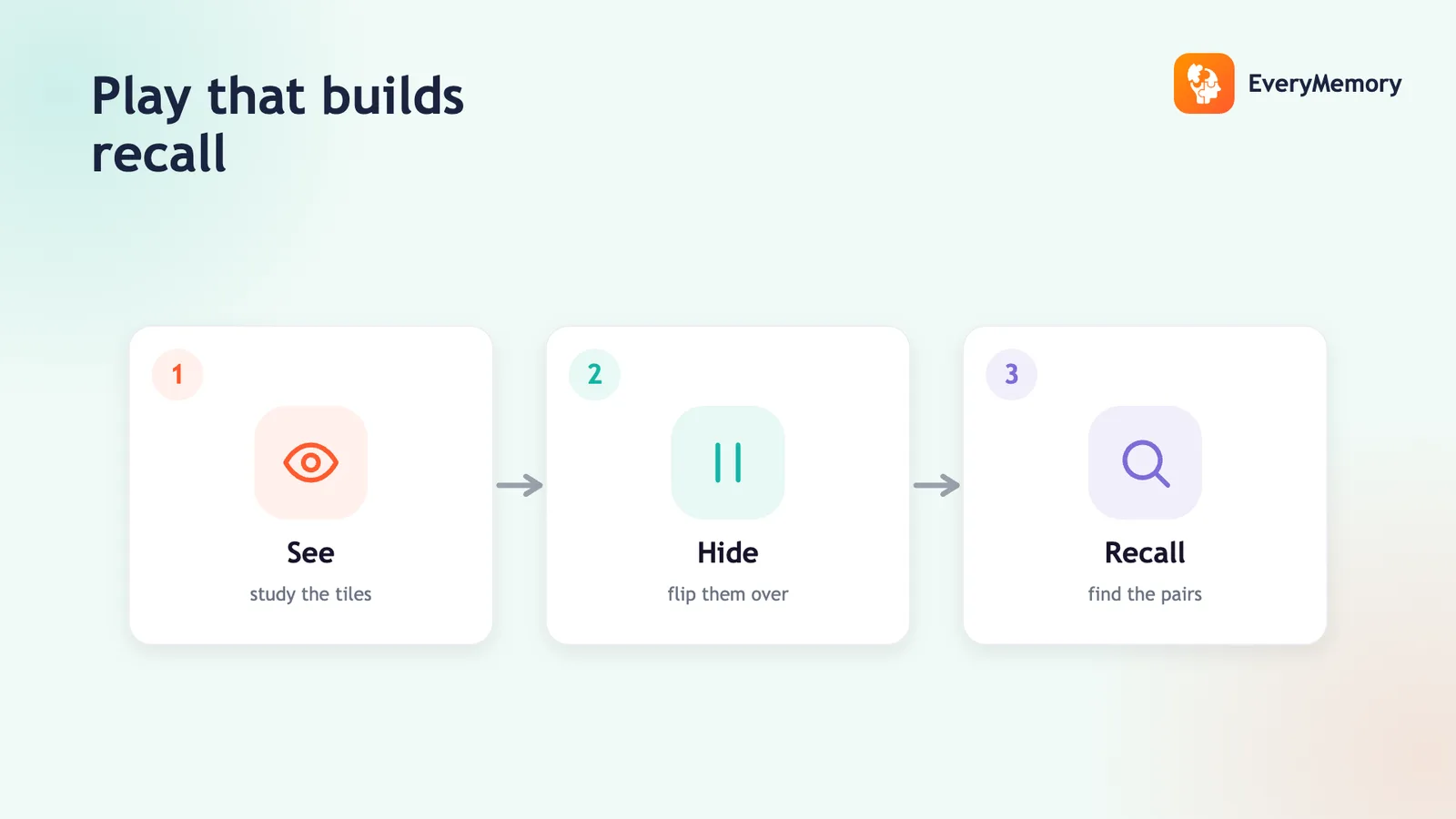
"Memory games" covers everything from a deck of cards to a polished app, and they're not equally useful. The difference comes down to whether a game makes you retrieve from memory or just react to what's on screen.
Here's a plain map of the types, what each trains, and how to get the benefit rather than just the entertainment.
The main types of memory game
| Type | What it trains | Examples |
|---|---|---|
| Matching pairs | Short-term visual & location memory | Concentration, pairs apps |
| Sequence recall | Working memory | Repeat-the-pattern games, digit span |
| Word recall | Verbal memory & retrieval | Word games, recall lists |
| Spot-the-difference | Attention & visual memory | What-changed, hidden-object |
| Puzzles | Reasoning & focus | Sudoku, crosswords, jigsaws |
What makes a memory game actually help
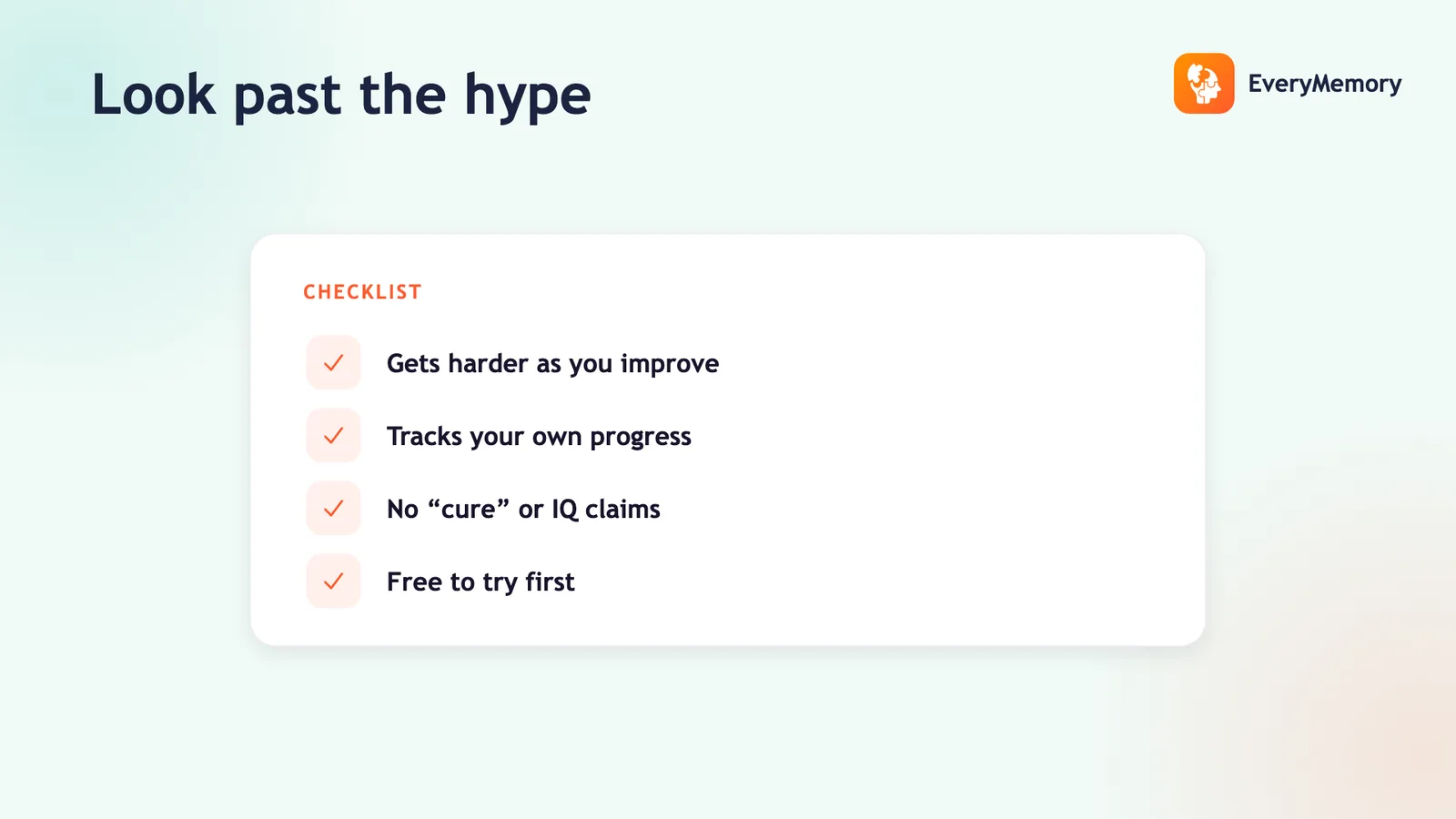
A game helps your memory when it forces retrieval - pulling something back after a delay - not just quick reactions. Look for three things: it makes you remember then reproduce, it gets harder as you improve, and it tracks your progress so you compare against your own past. A game that stays easy or only tests reflexes is fun but does little.
Do memory games actually work?
Honestly: they reliably make you better at the game, and the retrieval practice is real exercise - but claims that any game transforms your overall memory are overstated. Treat them as one enjoyable part of staying mentally active, alongside sleep, movement, and learning new things. The fuller, non-medical answer is in do brain games really work?
How to use them so they count
A few minutes most days beats an occasional long session. Play at the edge of your ability, where it feels slightly effortful - that stretch is the part that helps. Rotate a few types rather than drilling one, and judge yourself against your own trend, not a high score.
Where to find them
Free options are everywhere - a deck of cards, a newspaper puzzle, or screen-free printable memory games. For structure, tracking, and a varied daily mix, a memory app does the planning for you. Both work; the important part is playing in a way that makes you recall.