 EveryMemory
Brain-Training Apps: What to Look For
A brain-training app is short games and exercises for skills like memory and attention. What the good ones share, what the marketing overpromises, and how to choose.
Part of the guide: Brain Exercises for Seniors: The Complete Guide →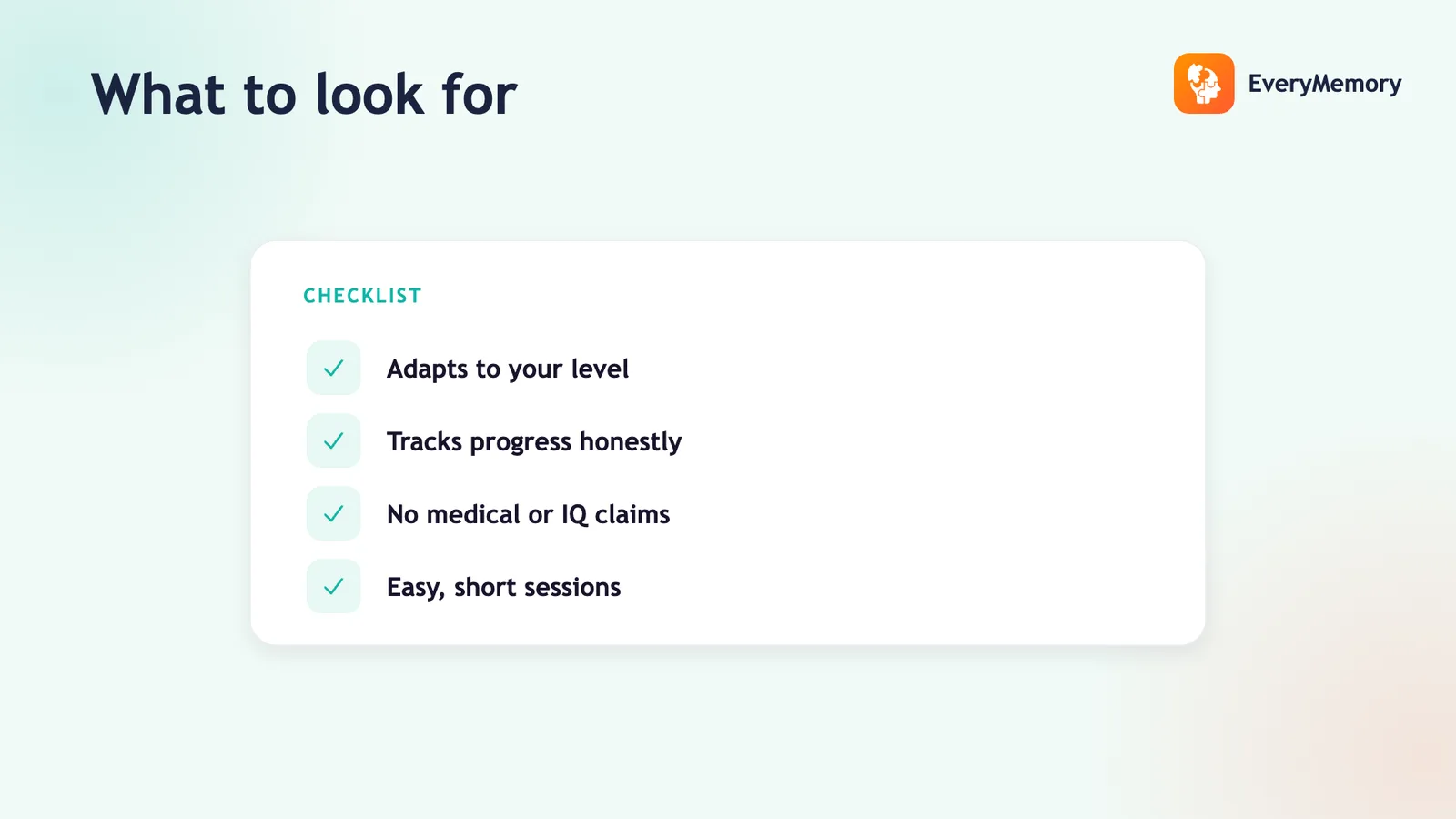
⚡ Quick answer
A brain-training app is a collection of short games and exercises designed to give skills like memory, attention, and processing speed regular practice. The good ones make you actively retrieve and adapt to you; the marketing often overpromises. Choose one with variety, adaptive difficulty, short sessions, and progress tracking - and judge it on whether you'll use it daily, not on bold claims.
Key takeaways
- A brain-training app is short games for skills like memory, attention, and processing speed, packaged as a daily routine.
- Look for active recall, adaptive difficulty, variety, short sessions, and progress tracking.
- Be skeptical of dramatic IQ-gain or medical-benefit claims - that's marketing, not evidence.
- Free tiers test whether you'll use it; paid versions add structure. Judge by daily use, not bold claims.
"Brain-training app" covers everything from a serious daily habit to a glossy time-filler. Knowing what actually matters helps you pick a good one and ignore the hype.
Here's what a brain-training app is, what to look for, and what to expect.
What a brain-training app is
It's a set of short games targeting cognitive skills - memory, attention, processing speed, reasoning - packaged into a daily routine. The idea is simple: give those skills regular, slightly challenging practice, the mental equivalent of a short workout.
What to look for
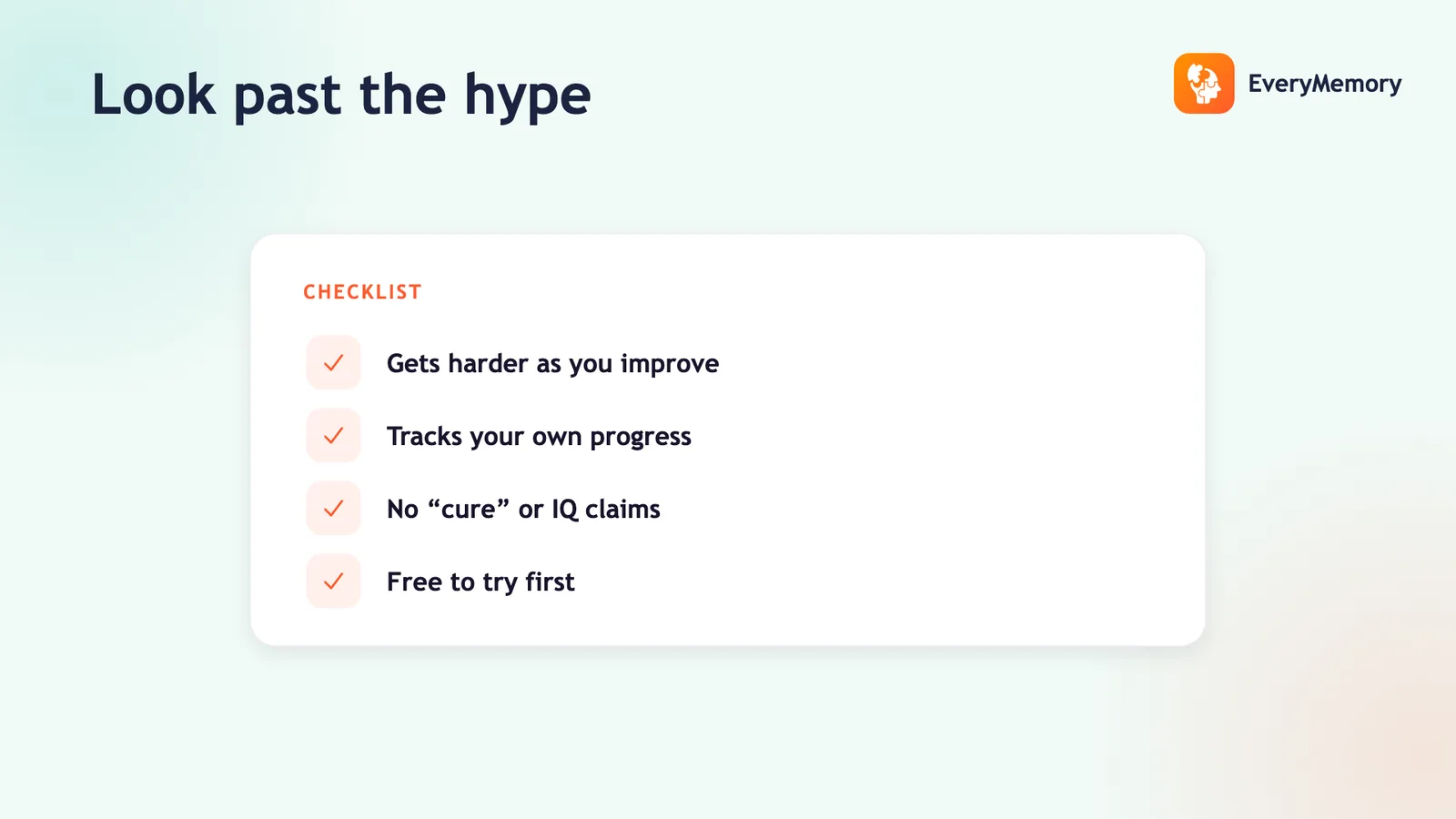
- Active recall - it makes you retrieve from memory, not just react fast.
- Adaptive difficulty - it gets harder as you improve.
- Variety - it rotates skills rather than one repeated game.
- Short, repeatable sessions - a few minutes you'll actually do daily.
- Progress tracking - against your own past, not a leaderboard.
Honest expectations
Be skeptical of apps promising dramatic IQ gains or implying medical benefits - that's marketing, not evidence. A brain-training app reliably makes you better at its games and is an enjoyable way to stay mentally active; whether that transfers to everyday life is debated (do brain games really work?). Pair it with sleep, movement, and learning new things.
Free vs paid, and where to start
Free tiers are usually enough to test whether you'll use it; paid versions add adaptive difficulty, variety, and tracking. EveryMemory (ours) is built around the criteria above and focused on memory and attention - start with a free baseline self-check. For the memory-specific version of this guide, see best memory apps.