 EveryMemory
Brain Training for Adults: Does It Help, and How to Start
Brain training for adults means giving memory, attention, and reasoning regular, slightly challenging practice. What helps, what's hype, and how to start.
Part of the guide: Brain Exercises for Seniors: The Complete Guide →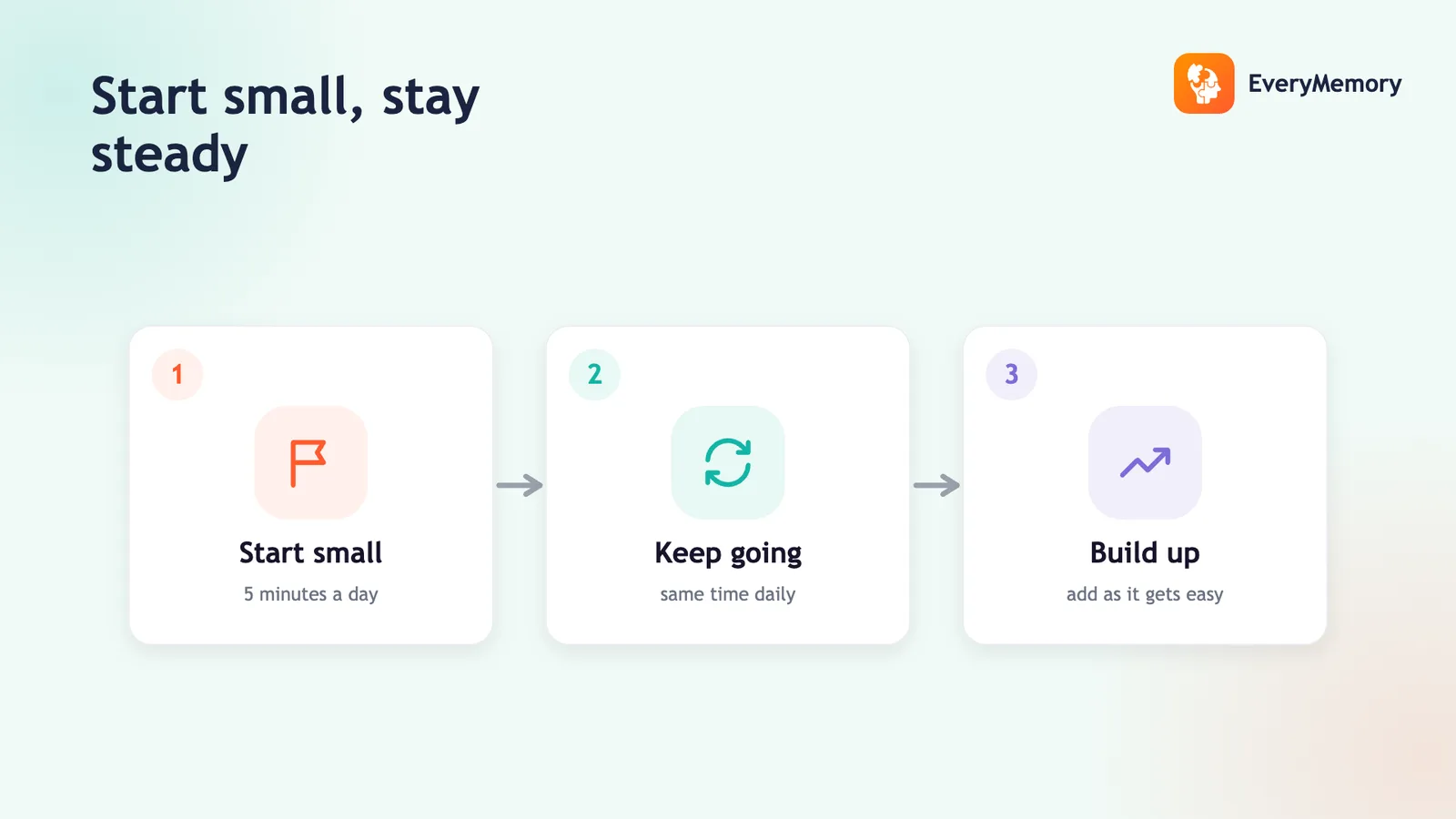
⚡ Quick answer
Brain training for adults means giving memory, attention, and reasoning regular, slightly challenging practice - through apps, games, puzzles, or learning new things. It won't transform overall intelligence, but it's an enjoyable way to stay mentally active, and the habits that help - variety, novelty, consistency - work at any adult age. A few minutes most days beats occasional long sessions.
Key takeaways
- Brain training for adults is regular, slightly challenging mental practice - apps, games, puzzles, or learning new things.
- It reliably improves what you practise and keeps you mentally active; claims of dramatic IQ gains outrun the evidence.
- The principles work at any adult age, not just for older adults.
- Start with a short daily anchor, add novelty, cover sleep and movement, and keep it short and consistent.
Brain training is often pitched at older adults, but it's just as relevant in your 30s, 40s, and 50s - and the principles are the same at any adult age.
Here's what brain training for adults actually is, whether it helps, and how to start.
What brain training for adults is
It's any deliberate, slightly challenging mental activity done regularly - brain-training apps and games, puzzles, learning a skill or language, or simple recall drills. The aim is to keep memory, attention, and reasoning active, the mental side of staying fit.
Does it actually help?
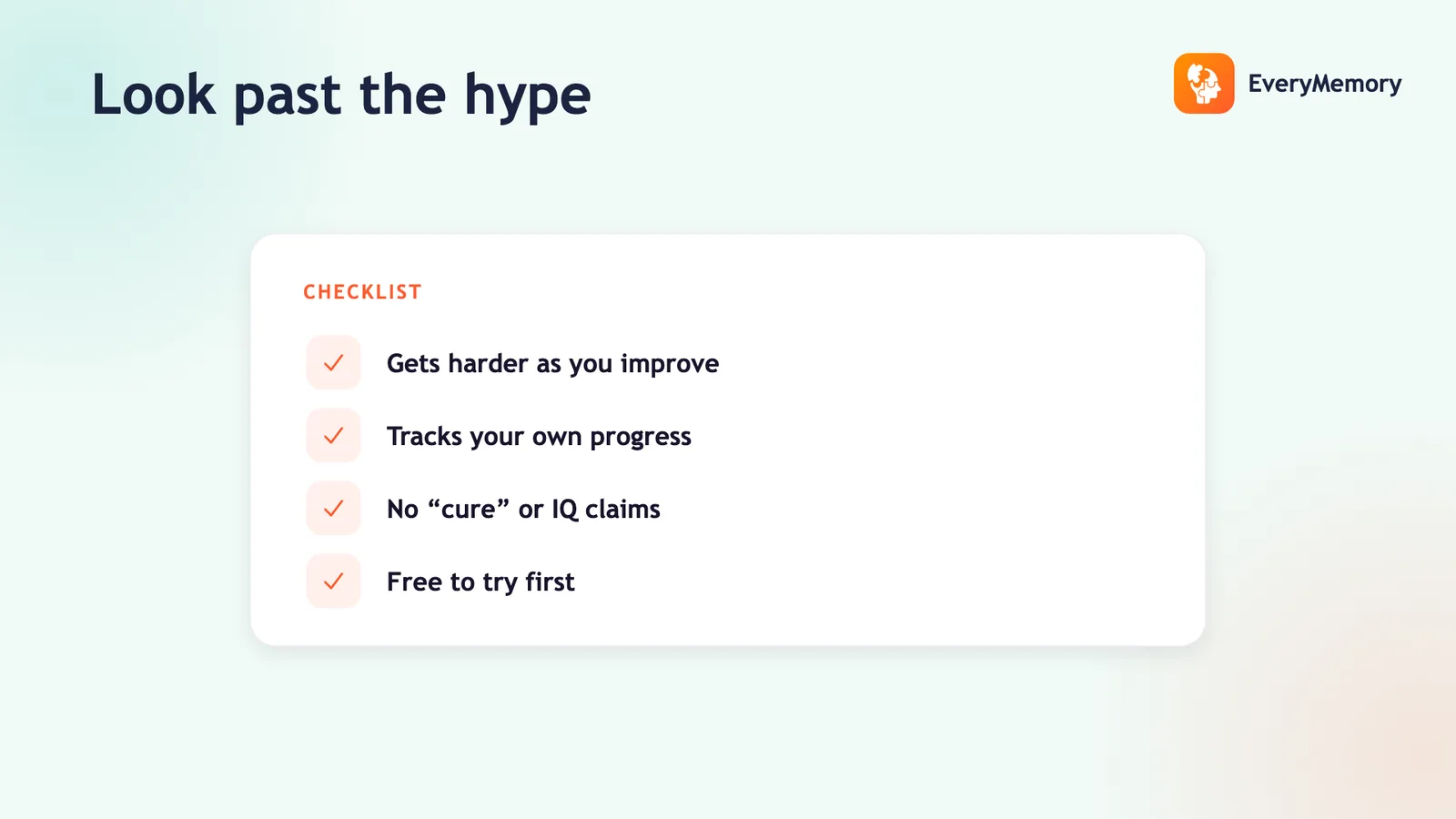
Honestly: it reliably makes you better at whatever you practise, and staying mentally active is a sensible, enjoyable habit - but claims that it dramatically raises overall intelligence or memory outrun the evidence. Keep expectations grounded and the routine fun; the balanced take is in do brain games really work?
How to start
- Pick a daily anchor - a short brain-training app or game (what to look for), or free daily exercises.
- Add novelty - learn something genuinely new; novelty challenges the brain most.
- Cover the basics - sleep, movement, and social connection support everything (memory booster habits).
- Keep it short and consistent - a few minutes most days beats an occasional marathon.
Make it stick
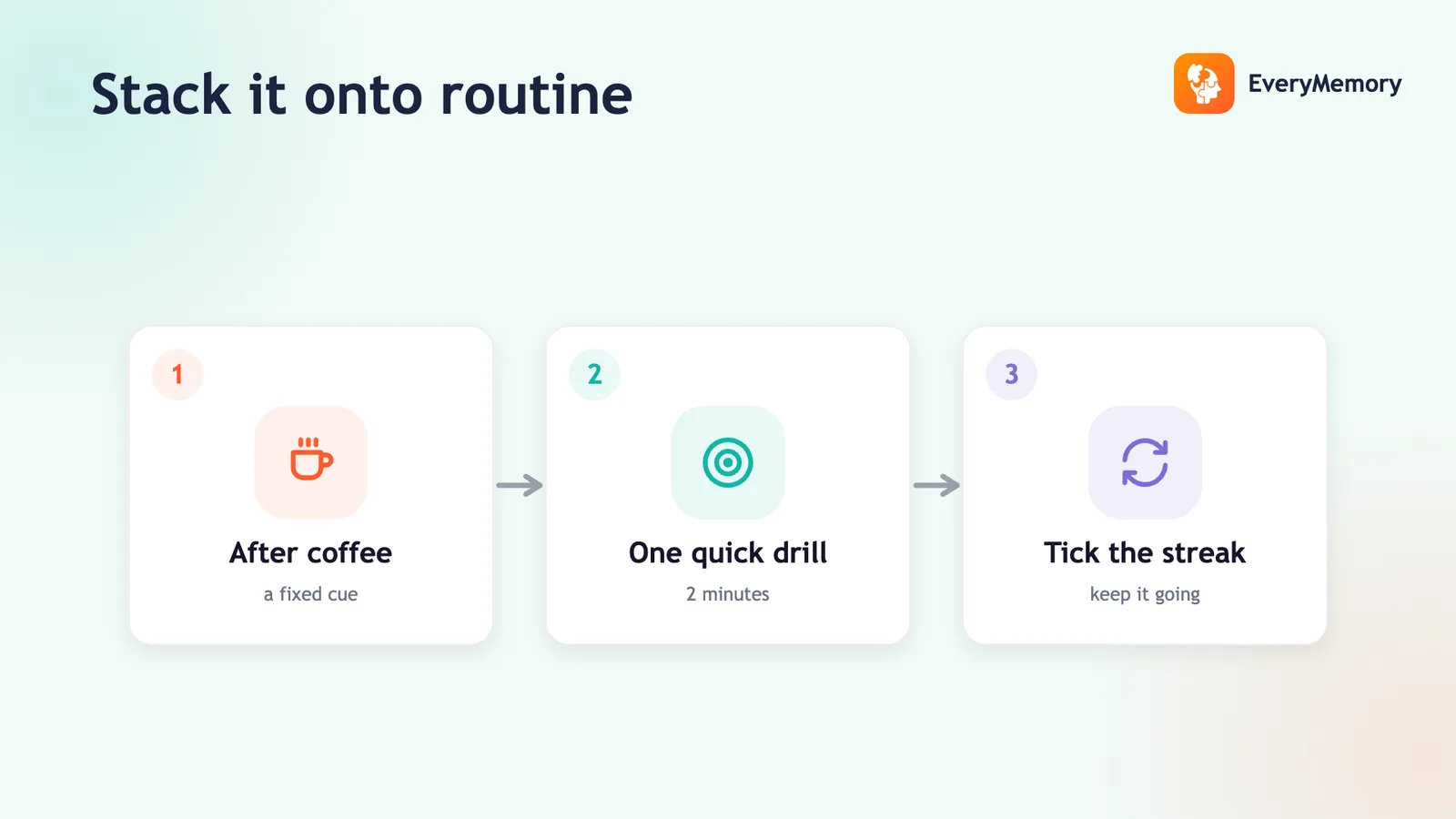
The hardest part is keeping it up. Attach it to an existing routine, keep it enjoyable, and track a simple streak - the habit design is in making brain training a habit.