 EveryMemory
Concentration Exercises for Kids
Children's focus grows with age and practice. Playful, age-appropriate activities that build attention - without turning it into a drill.
Part of the guide: Helping a Parent With Memory Changes: The Complete Family Guide →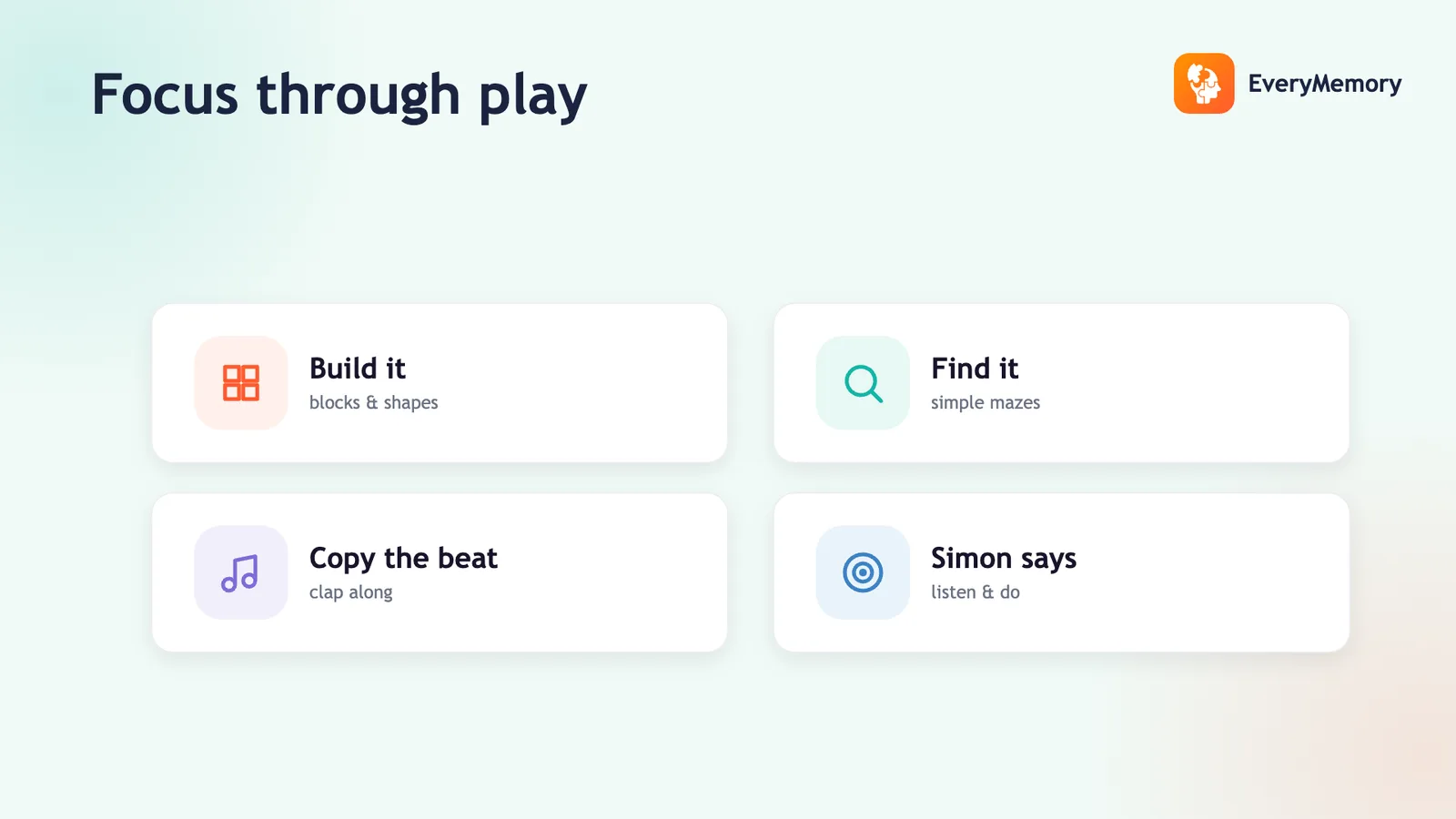
⚡ Quick answer
Concentration exercises for kids work best as short, playful activities, not drills: memory and matching games, 'spot what changed', following multi-step instructions, building or puzzles, and brief calm-down breathing. Keep them fun and age-appropriate, build attention gradually, and reduce distractions like screens during focused time.
Key takeaways
- Children's attention is naturally shorter and grows with age and practice - quick loss of focus is usually normal.
- Build focus through play: memory and matching games, spot-what-changed, follow-the-instructions, building, and calm-down breathing.
- Keep it short, playful, and a little challenging - making it feel like a test kills concentration.
- Reduce distractions (especially screens) during focused time, and support rather than pressure.
A child who can't sit still for homework isn't necessarily struggling - younger attention spans are simply shorter, and focus is a skill that grows with age and practice. The aim isn't to force stillness but to build attention gently, through things children enjoy.
Here are playful exercises that help, and how to run them without it becoming a battle.
How children's attention works
Attention span is shorter in children and lengthens through childhood, so a young child losing focus quickly is usually normal, not a problem. Focus also grows with practice - the goal is to stretch it gently over time, in small, enjoyable doses, rather than expecting adult-length concentration.
Playful exercises that build focus
- Memory and matching games - Concentration and simple recall games build attention and memory together; see group memory games.
- 'Spot what changed' - study a tray or picture, look away, name what's different.
- Follow the instructions - give two- or three-step instructions to carry out in order; grow the number as they improve.
- Building and puzzles - blocks, models, and jigsaws hold absorbed attention naturally.
- Calm-down breathing - a minute of slow 'smell the flower, blow the candle' breathing settles a restless mind before focused tasks.
Keep it fun, not a drill
The fastest way to kill a child's concentration is to make it feel like a test. Keep activities short, playful, and a little challenging, celebrate effort over getting it right, and stop while it's still enjoyable. Focus built through fun lasts; focus forced through pressure doesn't.
Reduce distractions and support, don't pressure
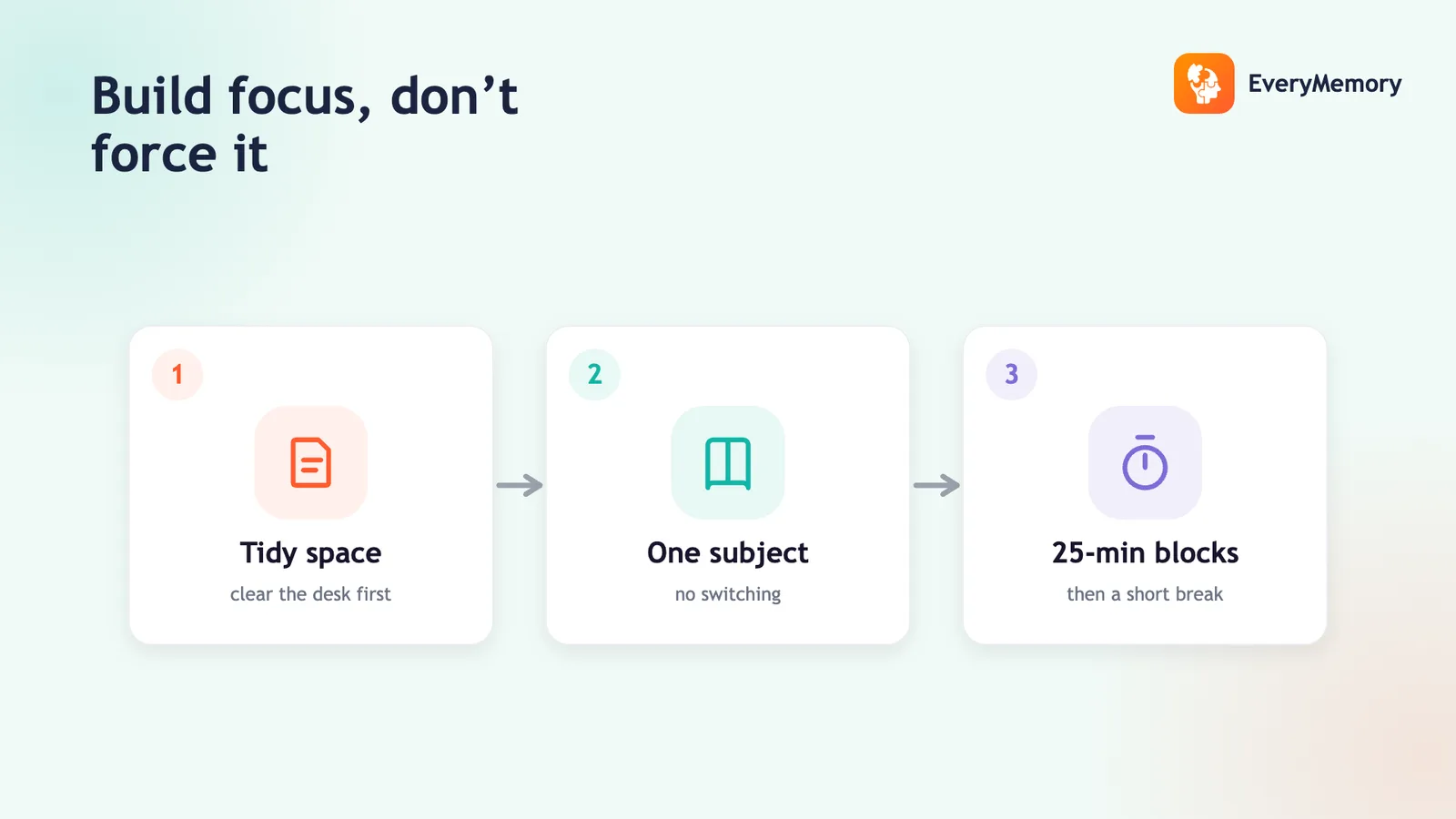
During focused time - homework, a game - reduce competing distractions, especially screens, which are far more tempting than the task. Set up a calm space, break work into short chunks with breaks, and offer encouragement rather than pressure. The same focus principles, for older students, are in concentration exercises for students.