 EveryMemory
Concentration Exercises for Students
Concentration is built, not forced. Practical exercises that help students focus while studying - by removing distractions and making study active.
Part of the guide: Brain Exercises for Seniors: The Complete Guide →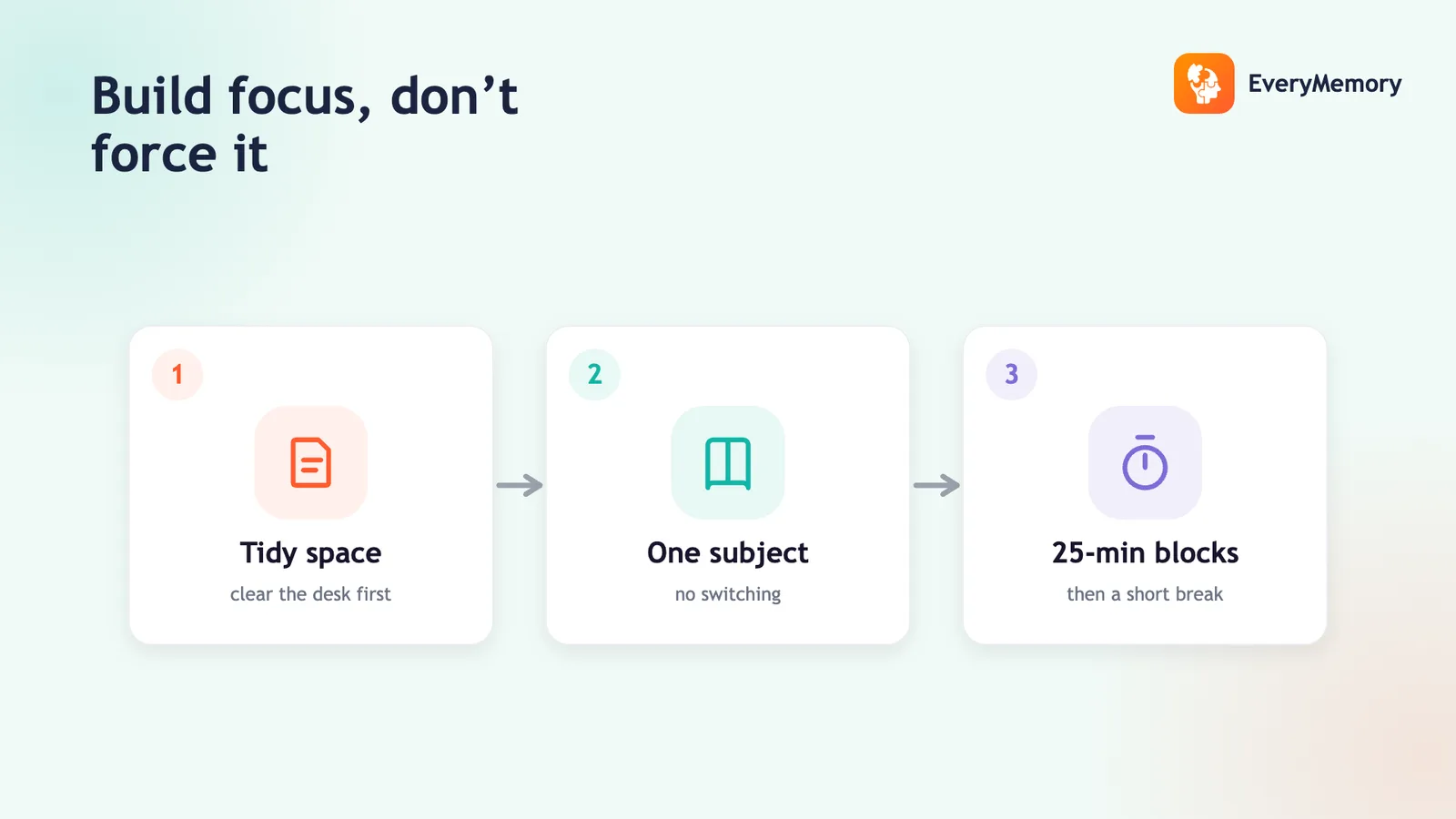
⚡ Quick answer
The best concentration exercises for students build focus through practice and a distraction-free setup: timed single-task study blocks, a 'one tab, phone away' rule, brief breathing resets, and active study that demands attention, like self-testing. Concentration improves when you remove distractions and give your brain a reason to stay engaged - not by forcing willpower.
Key takeaways
- Students rarely have a focus problem so much as a distraction problem plus passive study.
- Build focus with timed study blocks, single-tasking practice, a brief breathing reset, and active study that demands attention.
- Remove distractions by distance - phone in another room, one tab - rather than trying to resist them.
- Concentration grows with practice, so start with focus blocks you can sustain and extend them.
Most students don't have a focus problem so much as a distraction problem. A phone within reach, several tabs open, and passive rereading make concentration nearly impossible - no exercise can outwork that setup.
Fix the setup and add a few simple exercises, and focus becomes far easier to hold. Here's how.
Why focus is hard while studying
Two things wreck student concentration: constant distraction (notifications, open tabs, a nearby phone) and passive study (rereading, highlighting) that asks nothing of your attention, so your mind drifts. Both are fixable, and fixing them does more than any willpower 'exercise'. The wider picture is in attention span.
Exercises that build focus
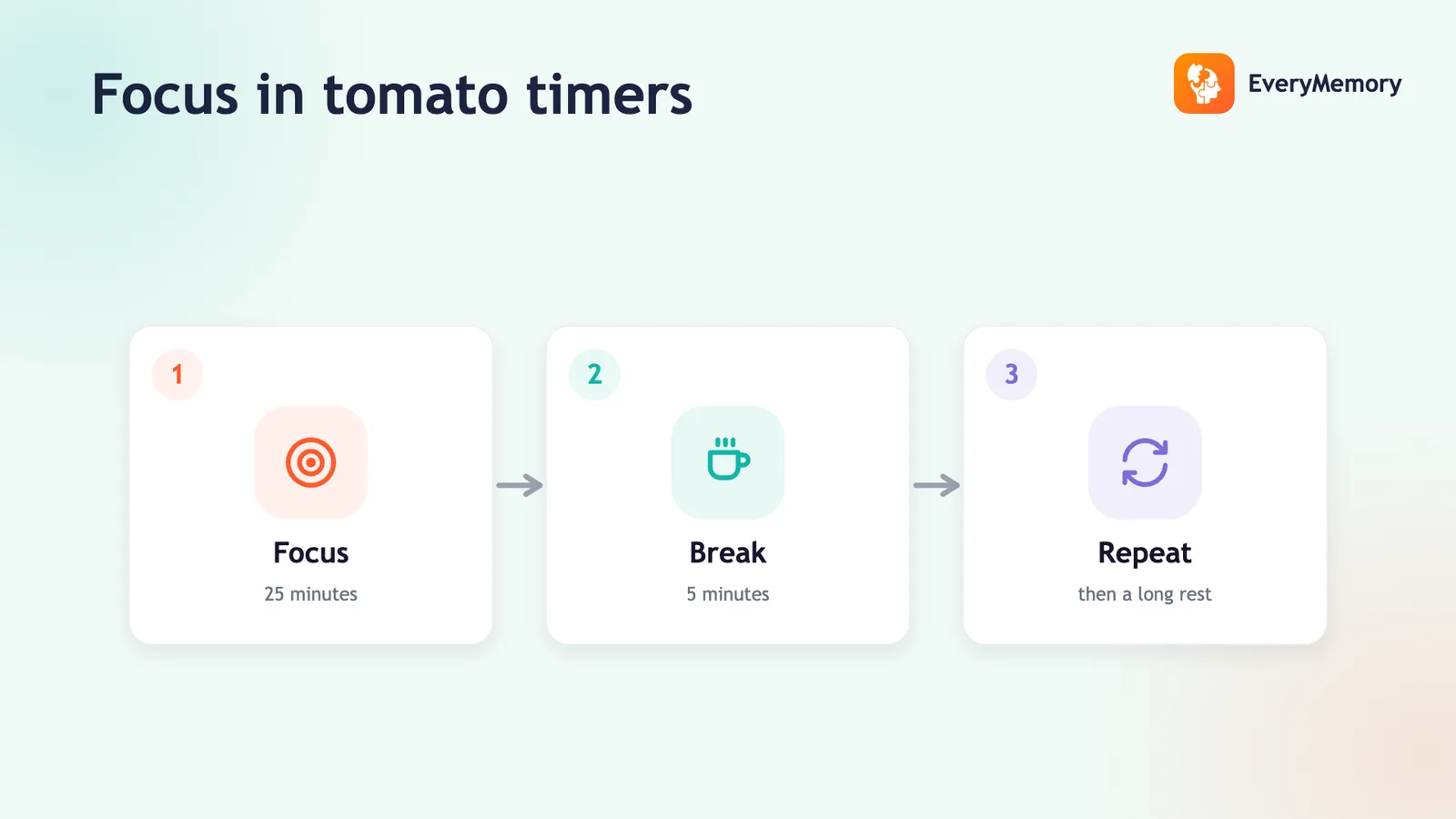
- Timed focus blocks - study in short defined stretches with breaks (the Pomodoro technique); a defined block is easier to sustain than an open-ended one.
- Single-tasking reps - practise giving one task your whole attention, returning gently each time your mind wanders. Returning is the rep.
- A breathing reset - before a block, take a minute of slow breathing to settle a racing mind.
- Active study - self-testing and recalling demand attention in a way rereading never does, so focus comes more naturally.
Set up a distraction-free space
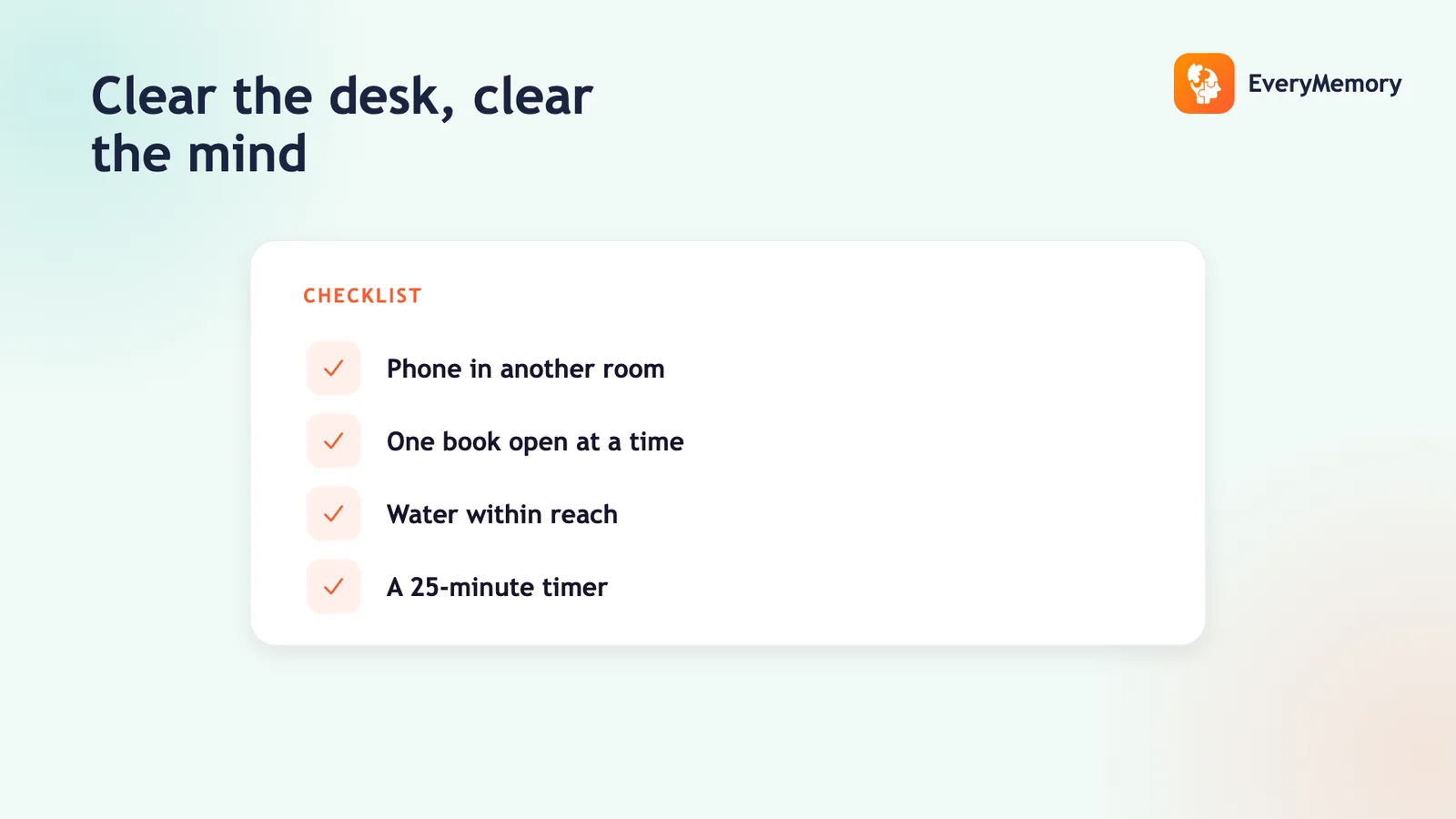
Willpower loses to a buzzing phone, so use distance, not resistance: phone in another room, one tab, notifications off, a tidy surface. Removing the easy escapes is the single biggest thing you can do for concentration - far more reliable than trying to ignore them.
Make studying active
A drifting mind during study usually means the study is passive. Turn reading into questions, close the book and recall, quiz yourself - when your brain has to produce answers, it stays engaged. This is active recall, and it doubles as the most effective way to learn.
Build it up gradually
If you can only focus for ten minutes, start there and extend it. Concentration grows with practice like any skill, and pushing from short, successful blocks beats failing at hour-long ones. The trainable side of focus is covered in the focus and attention workout.
✅ Try this today - a 20-minute focus rep
One distraction-free, active block:
- Phone in another room, one tab, a one-minute breathing reset.
- Study one topic for 20 minutes - and make it active: close the book and recall, or answer practice questions.
- Take a 5-minute break away from screens, then repeat.