EveryMemory
Does Exercise Improve Your Memory?
Physical activity is one of the most reliable everyday supports for memory - and you don't need intense workouts. How exercise helps, and how much is enough.
Part of the guide: How to Keep Your Brain Healthy: A Complete Lifestyle Guide →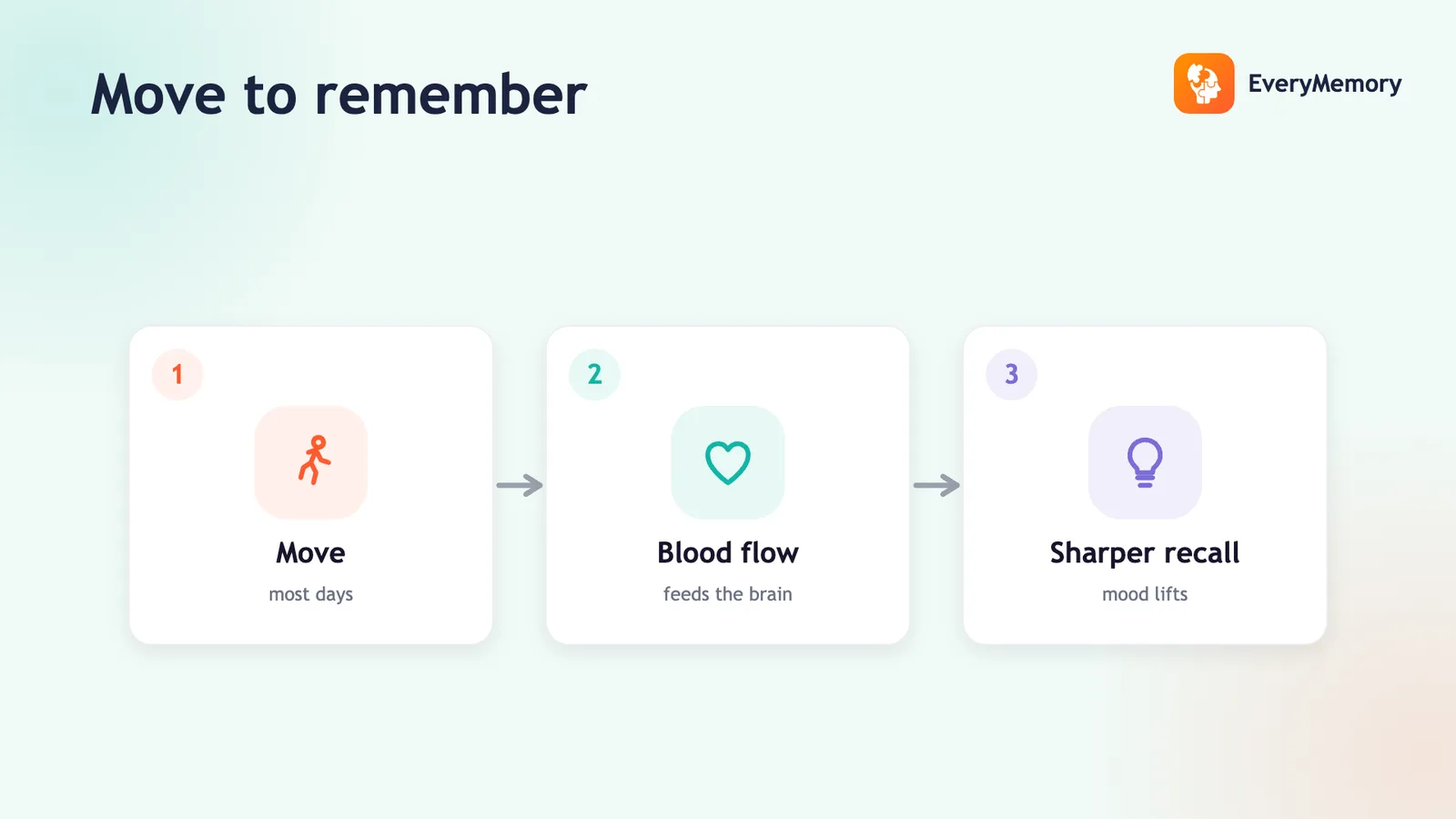
⚡ Quick answer
Yes - regular physical activity is one of the most reliable everyday supports for memory. Exercise increases blood flow to the brain and supports the processes that help form and keep memories, and it improves sleep and mood, which help too. You don't need intense workouts; regular brisk walking, done consistently, is enough to make a difference.
Key takeaways
- Regular physical activity is one of the most reliable everyday supports for memory.
- Exercise boosts blood flow to the brain and improves sleep and mood, all of which help you take in and recall information.
- You don't need intense workouts - regular, moderate activity like brisk walking, done consistently, is enough.
- Some focus benefits are immediate after a session; the deeper benefits build over weeks of a habit.
Of all the things people try for a better memory, the most reliable one isn't a brain game or a supplement - it's moving your body. And it works at any age.
Here's how exercise helps memory, how much you actually need, and the easiest way to start.
How exercise helps your memory
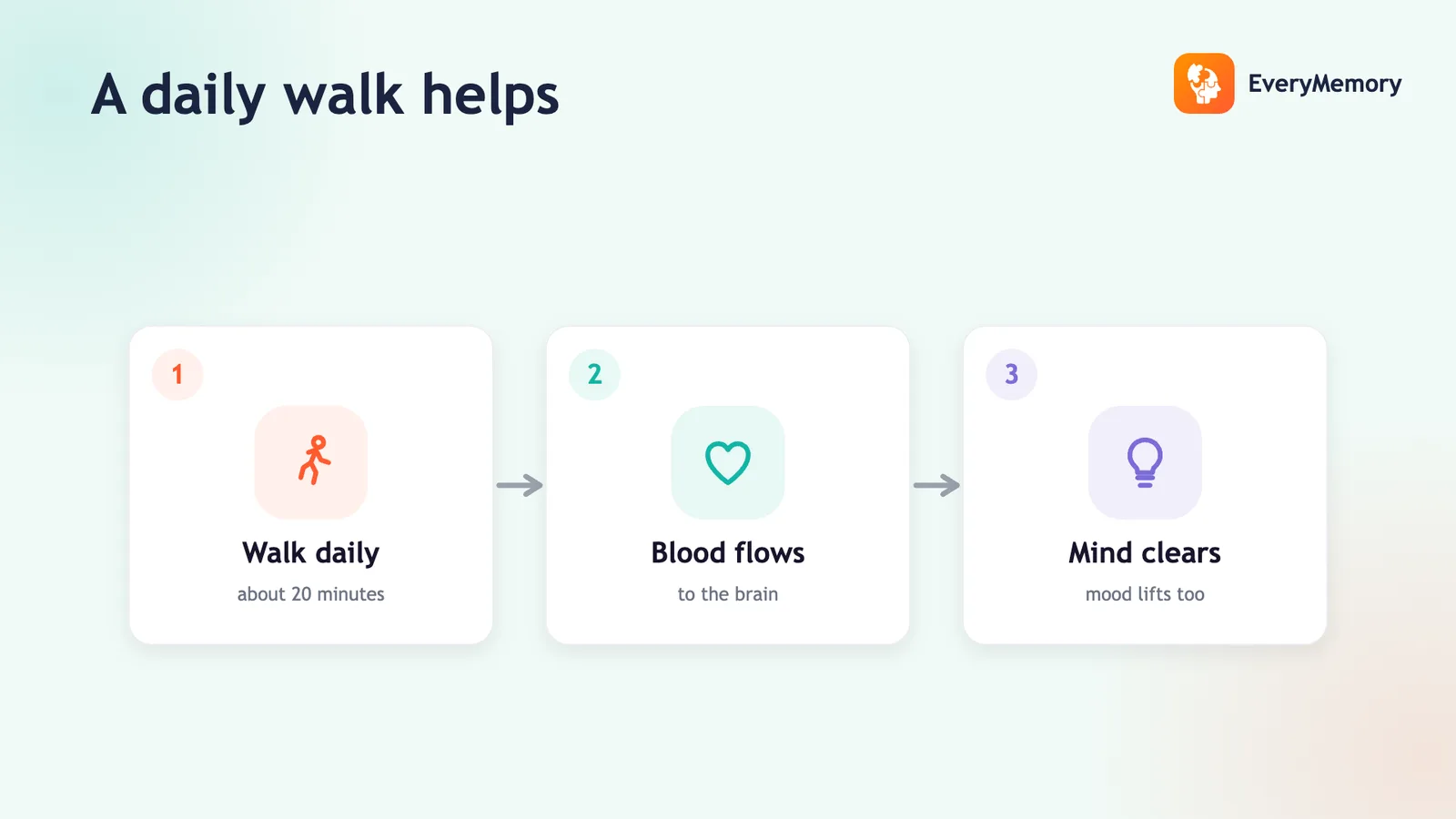
Movement supports memory through several everyday routes: it boosts blood flow and oxygen to the brain, encourages the brain to form and maintain connections, and improves both sleep and mood - two things that strongly affect how well you take in and recall information. It's less a single magic effect than a stack of small supports.
How much, and what kind
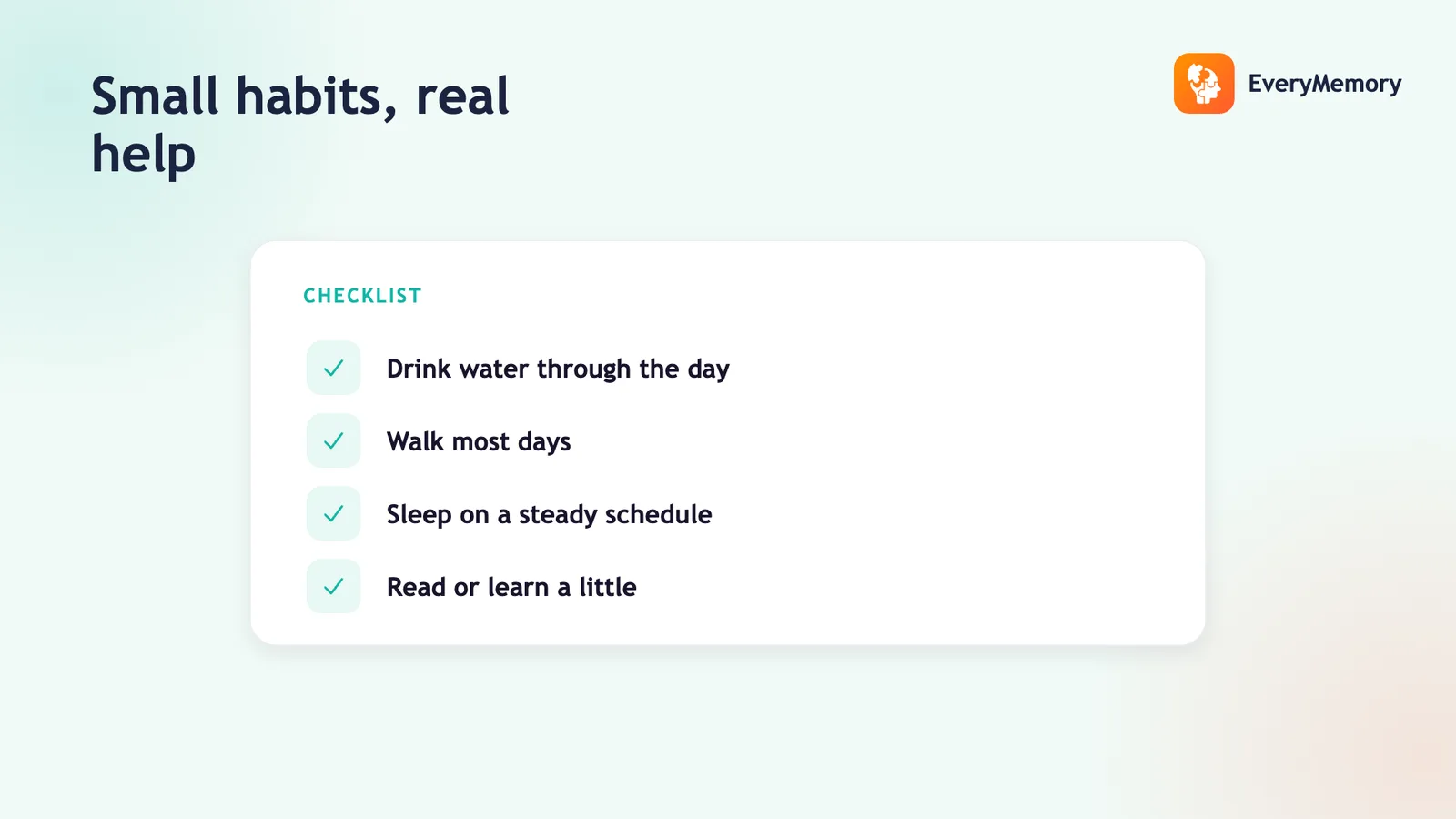
You don't need the gym. Regular, moderate activity - brisk walking, cycling, swimming, gardening - done consistently is what counts. General guidance points to most days of the week, but the best amount is the one you'll keep up. Even short, regular walks add up; see walking and brain health.
When you'll notice a difference
Some benefits are immediate - a walk can lift your focus and mood for hours afterward, making the rest of the day's remembering easier. The deeper benefits build with a consistent habit over weeks and months, not from a single session.
Getting started
Make it small and regular rather than ambitious and abandoned: a daily walk attached to an existing routine beats an intense plan you drop by Thursday. Pair it with the other everyday supports - sleep, social connection, learning new things - in memory booster habits.
⚠ When to talk to a professional
Exercise supports memory and general wellness; it is not a treatment for any condition. Check with a qualified professional before starting a new exercise routine if you have health concerns.