 EveryMemory
How Sleep Affects Your Memory
Sleep is when your brain files new memories away. Why too little undoes a day's learning, and the simple sleep habits that protect memory.
Part of the guide: How to Keep Your Brain Healthy: A Complete Lifestyle Guide →
⚡ Quick answer
Sleep is when your brain consolidates new memories - moving them from fragile short-term storage into a lasting form, especially during the night after you learn something. Too little or broken sleep weakens what you learned that day and shrinks the next day's capacity to focus and take in new information. Consistent, sufficient sleep is one of the most effective things you can do for memory.
Key takeaways
- Sleep consolidates new memories, moving them from fragile short-term storage into lasting form - especially the night after learning.
- Poor sleep hits memory twice: it weakens consolidation and reduces next-day focus, without which new information barely encodes.
- Regularity and quality matter as much as hours; consistent bed and wake times support consolidation.
- A few bad nights can feel like memory decline when it's really sleep loss.
If you've noticed you're more forgetful after a bad night, that's not your imagination. Sleep does some of memory's most important work - and it does it while you're unconscious.
Here's what sleep does for memory, what losing it costs, and the habits that protect both.
Sleep files the day's memories
New memories don't arrive permanent - they're fragile at first and have to be consolidated, strengthened and moved into durable storage. Much of that happens during sleep, particularly the night after learning. Skip the sleep and you skip the filing: what you took in that day stays weak and fades faster.
What poor sleep costs you
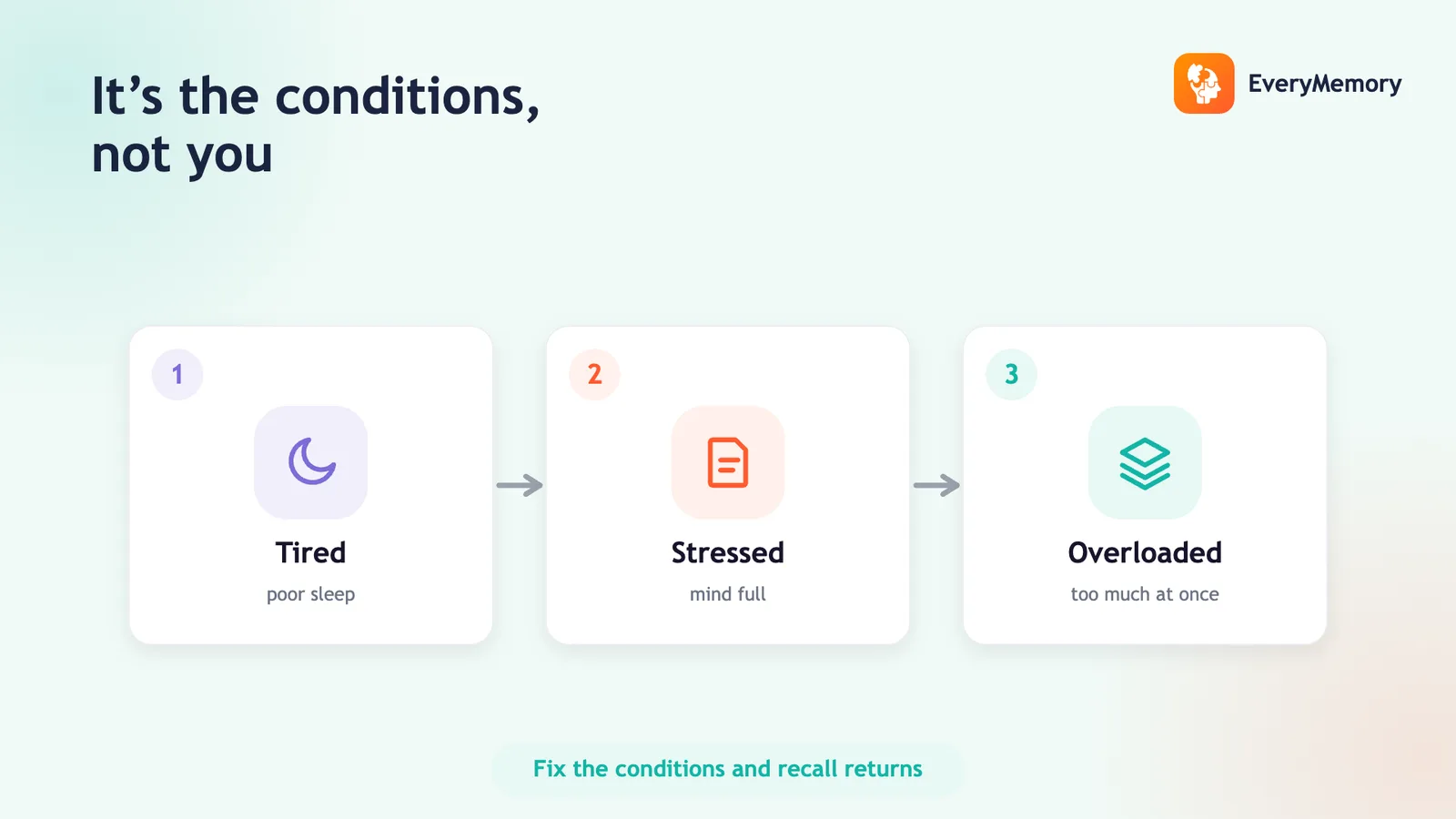
Short or broken sleep hits memory twice. It weakens the consolidation of what you learned, and it shrinks the next day's ability to focus - and without attention, new information barely encodes at all. That's why a run of bad nights can feel like your memory is slipping when it's really your sleep. The wider pattern is in why is my memory getting worse?
It's not only about hours
Regularity and quality matter as much as quantity. Going to bed and waking at consistent times, and getting unbroken sleep, support consolidation better than the same hours taken erratically. A reasonable, steady amount most nights beats occasional long lie-ins after short nights.
Simple habits that protect memory
- Keep consistent sleep and wake times, including weekends.
- Wind down without screens for the last stretch before bed.
- Keep the room dark, cool, and quiet.
- Go easy on caffeine late in the day and large meals close to bedtime.
- If you learned something important, a good night's sleep is part of locking it in - see improving retention.
When poor sleep needs more than habits
Better habits resolve most everyday sleep trouble. If you consistently can't fall or stay asleep despite them, feel unrefreshed however long you sleep, or sleep problems are clearly affecting your memory and daily life, it's worth speaking with a qualified professional.
⚠ When to talk to a professional
Sleep habits support memory and general wellness, not a treatment for any condition. Persistent sleep problems, or sleep issues clearly affecting your memory and daily life, are worth discussing with a qualified professional.