 EveryMemory
General Knowledge Quizzes and Memory
A good general knowledge quiz feels like a memory test, but it mostly measures what you already know. Here's what these quizzes actually exercise - and what they don't.
Part of the guide: Understanding Memory Loss and Forgetfulness: A Calm, Reassuring Guide →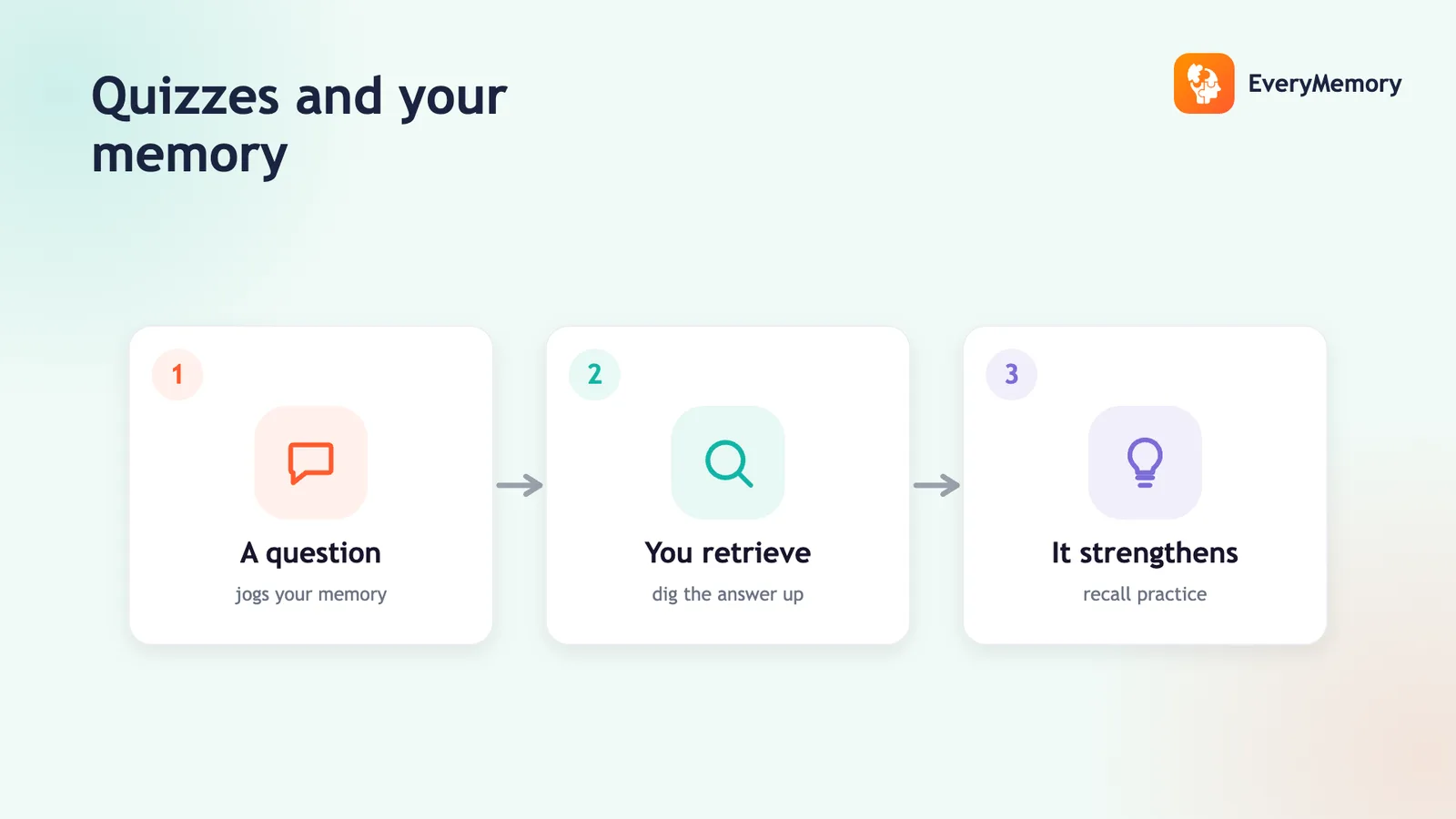
⚡ Quick answer
A general knowledge quiz mostly tests crystallized memory - facts and knowledge you've already stored - and your ability to retrieve them on demand. It doesn't measure how well you form new memories or your working memory, and a high score won't build memory capacity. It's retrieval practice and enjoyable engagement, not a brain upgrade.
Key takeaways
- Quizzes mainly test crystallized memory - facts you already stored
- The real workout is retrieval, which strengthens recall of those facts
- A high score reflects exposure and reading, not a 'good memory'
- Useful for practice and fun, not a memory-capacity boost
Sit down to a general knowledge quiz and it can feel like the ultimate memory test - capital cities, film years, the name of that one footballer on the tip of your tongue. But a quiz is a narrower instrument than it looks. It's brilliant at one thing and silent on several others, and knowing the difference makes you both a sharper quizzer and more honest about what your score means.
This is a plain-spoken look at the relationship between general knowledge and memory: which kind of memory a quiz leans on, why a high score doesn't mean a 'good memory' in the everyday sense, and how to use quizzes for what they're genuinely good for - practising retrieval and having fun doing it.
Which memory a quiz actually uses
Psychologists split long-term memory into two broad types, and a general knowledge quiz draws almost entirely on one of them. Knowing which helps explain why someone can win the pub quiz yet still forget where they left their keys.
| Memory type | What it holds | Does the quiz test it? |
|---|---|---|
| Semantic (crystallized) | Facts, words, general knowledge | Yes - this is the main one |
| Episodic | Personal events, what happened when | Rarely - only 'on this day'-style rounds |
| Working memory | Holding info live to reason with it | A little, on multi-step questions |
| Procedural | Skills and how-tos | No |
So a quiz is largely a snapshot of your stored knowledge plus how quickly you can pull it out. For the fuller map, see types of memory explained.
Retrieval is the real workout
The genuinely useful bit isn't storing facts - it's retrieving them. Every time you successfully dredge up an answer, you strengthen the path back to it, which is why a fact you've quizzed yourself on sticks better than one you only re-read. This 'retrieval practice' effect is well established, and it's the honest reason quizzing helps with the things you quiz on.
What it doesn't do is expand some general memory muscle. Getting good at trivia makes you better at trivia and at recalling those specific facts; it doesn't make you better at remembering a shopping list or a name at a party. For more on that distinction, see do memory quizzes work.
Why a high score isn't a 'good memory'
General knowledge keeps growing across most of adult life - you've simply had more years to accumulate facts. That's why crystallized knowledge often holds up well with age even as the speed of forming brand-new memories changes. A strong quiz score reflects exposure, interest, and reading habits at least as much as raw memory ability.
Treat a quiz as a knowledge check, not a health check. If you want a self-relative look at how you handle new information rather than stored facts, a short non-medical exercise like our memory quiz is a different and more honest tool.
Using quizzes well
Lean into what quizzes are good at. Pick topics you actually want to know more about, and let the quiz tell you the gaps. Quiz with other people - the chat, the arguing over answers, and the laughter are a big part of the value. And space your sessions out rather than cramming; revisiting facts days apart locks them in far better.
- Quiz on topics you care about - interest is what makes facts stick.
- Say or write answers before checking - the effort is the point.
- Space sessions across days, not all in one sitting.
- Do it socially when you can - engagement does as much as the puzzle.
✅ Try this today - Turn any quiz into retrieval practice
A small tweak that makes a quiz actually help you remember.
- Read the question and commit to an answer out loud before peeking.
- Check it - note the ones you missed without judgement.
- Wait two or three days, then re-test only the missed ones.
- Repeat the missed set once more a week later.
- Watch how many 'permanent' gaps quietly close.


