 EveryMemory
Memory Quiz: Check How Sharp Your Recall Is
A memory quiz is a quick, non-medical way to check how much you can take in and recall right now - here's what it measures and how to read your score.
Part of the guide: Understanding Memory Loss and Forgetfulness: A Calm, Reassuring Guide →
⚡ Quick answer
A memory quiz is a quick, non-medical set of tasks that checks how much information you can take in and recall right now - usually digit sequences, visual patterns, or word lists. It can't diagnose anything. Treat the result as a self-relative baseline: take it rested and undistracted, then retake the same quiz under the same conditions to see real change over time.
Key takeaways
- A memory quiz checks short-term, working, and visual memory plus attention in a few short rounds.
- It can't diagnose anything or reliably rank you against other people.
- Take it rested, quiet, and undistracted with a practice round first.
- Read the result as a self-relative baseline and retake under the same conditions.
A memory quiz is a short set of tasks that asks you to hold some information and reproduce it moments later - a sequence of numbers, a tray of objects, a list of words. The score is a snapshot of your recall in that moment.
Done well, it tells you something useful. Done carelessly, it just measures how distracted you were. Here's what a memory quiz actually checks and how to read your result.
What a memory quiz measures
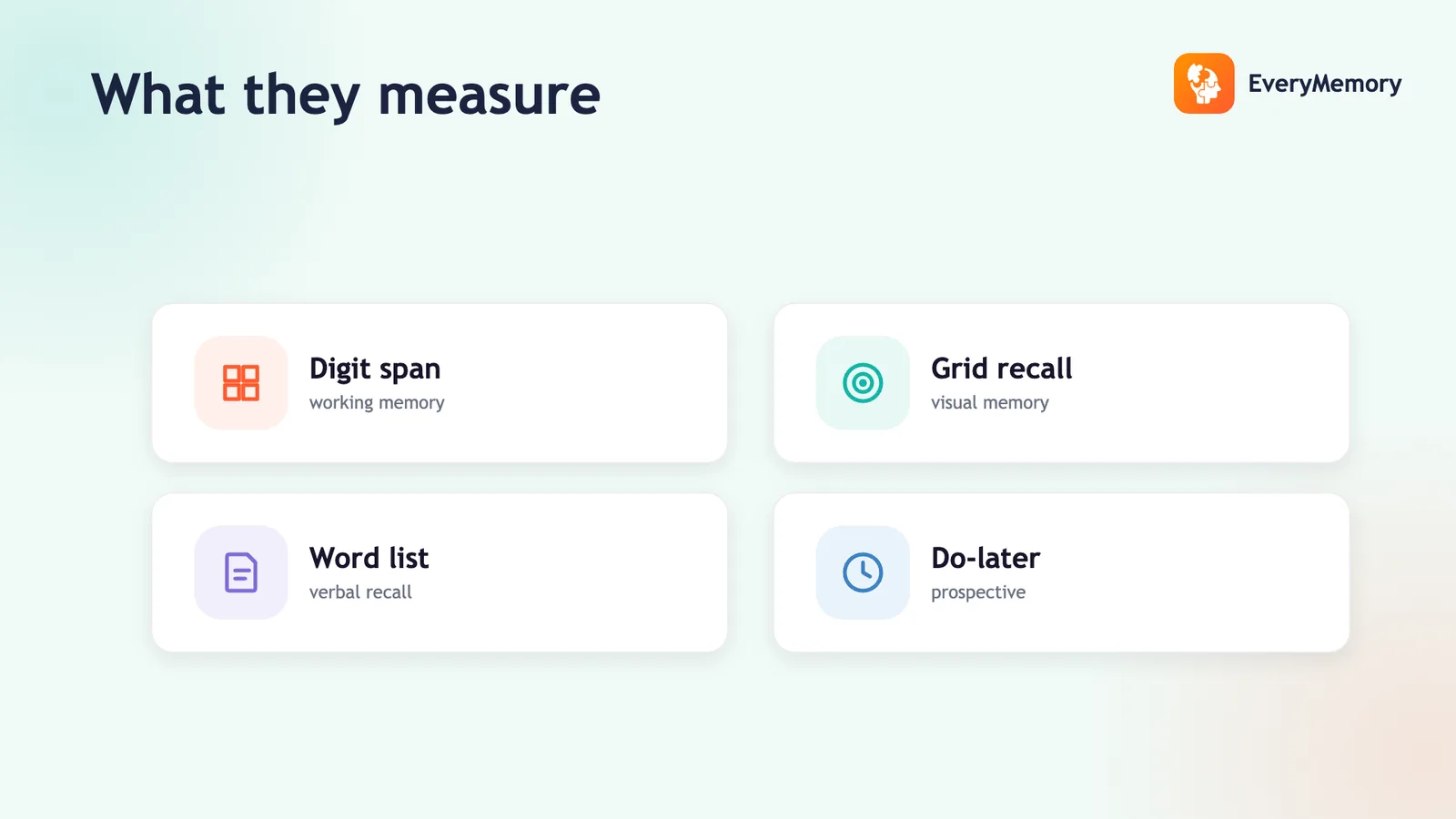
Most quizzes probe one or more of: short-term memory (holding info for seconds), working memory (holding and using it), visual memory (positions and patterns), and the attention that feeds all of them. A typical quiz mixes a few of these so no single weak round decides your whole score. For the full landscape of question formats, see memory quiz questions explained.
What it can't tell you
A quiz can't diagnose a condition, and it can't reliably tell you how you compare to other people. Single-session scores swing with sleep, caffeine, stress, and distraction. Be wary of any quiz that hands you a confident "you scored better than 80% of people" line - that number is usually invented. The honest signal is your own trend over time, not a benchmark against strangers.
How to take a memory quiz fairly
Conditions decide the score almost as much as your memory does. Take it rested, somewhere quiet, phone face-down, and not right after coffee or a stressful call. Do a practice round first so you're scoring your recall, not your confusion about the rules. Then keep those conditions identical every time you retake it.
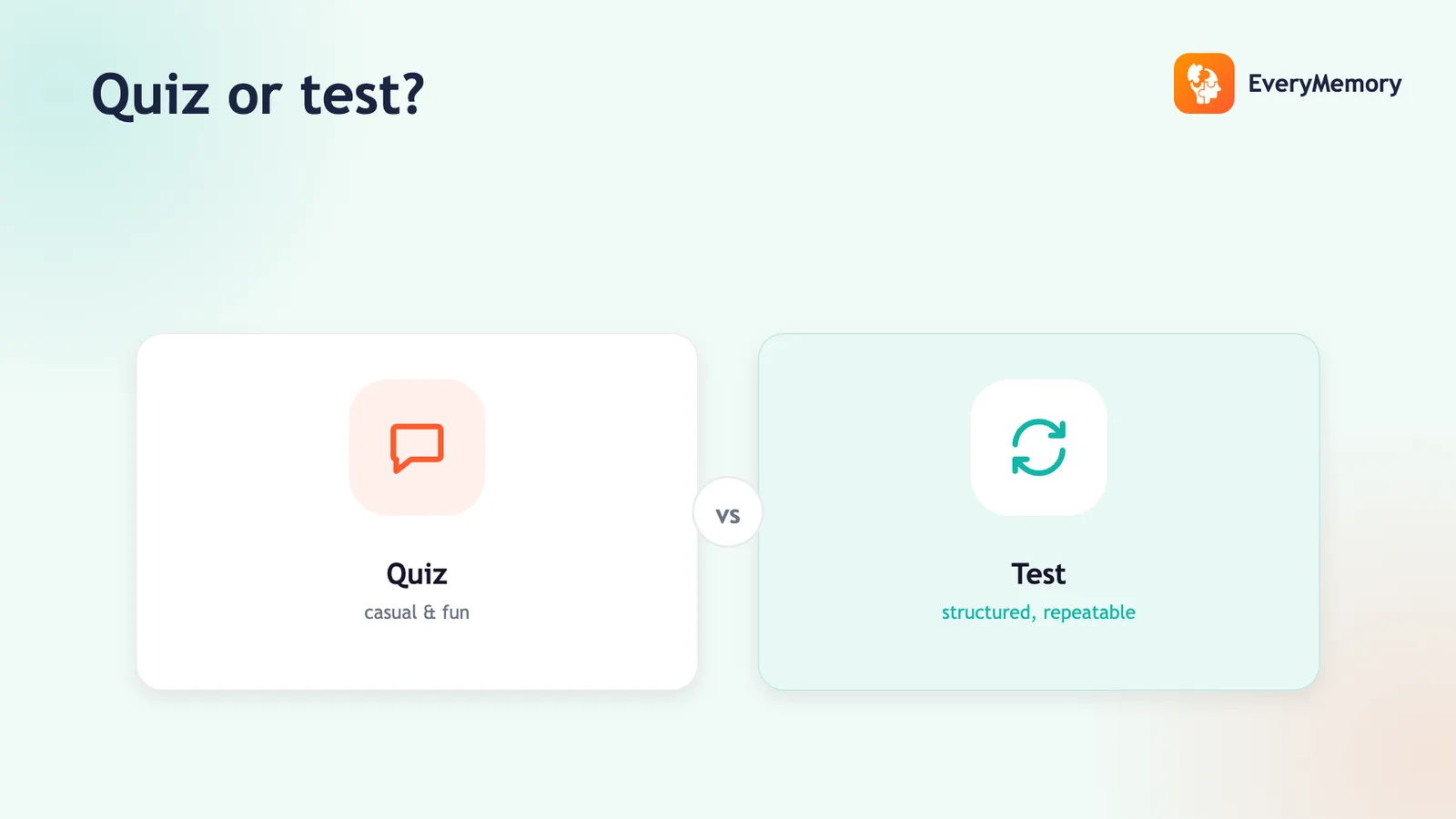
Want the difference between a casual quiz and a structured assessment? See memory quiz vs memory test.
Read your score as a baseline
One score tells you little. The same quiz, same conditions, taken over weeks tells you a lot. Compare yourself to your own earlier results - that self-relative trend is the useful part (how to read your progress). It's how EveryMemory's memory test works: a personal baseline, not a ranking.
⚠ When to talk to a professional
A memory quiz is a non-medical self-check, not a diagnostic tool. If you're worried about memory changes that affect daily life, speak with a qualified healthcare professional.