 EveryMemory
Habits for a Healthy Brain
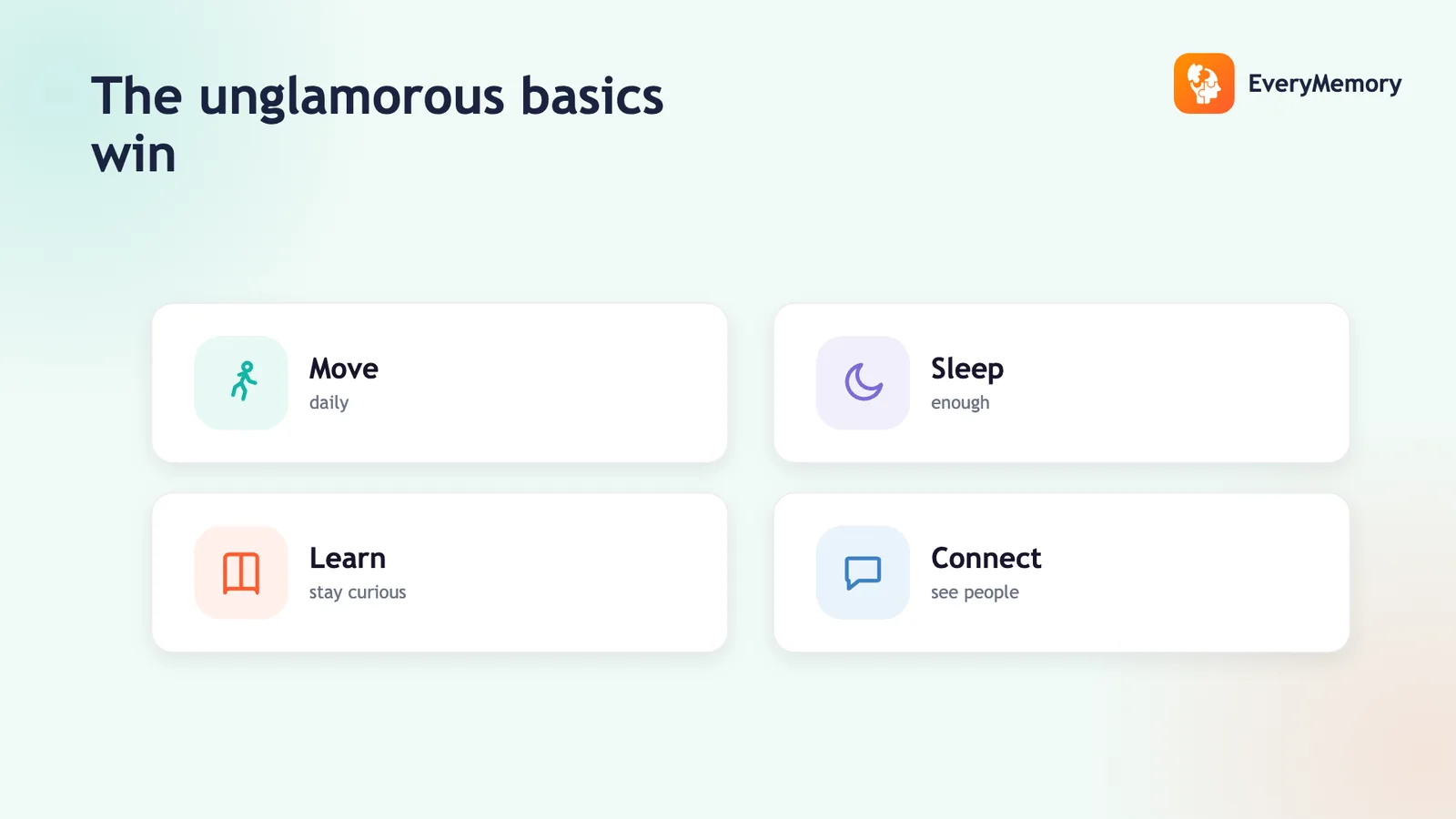
A healthy brain comes from a handful of ordinary habits kept up consistently - movement, sleep, learning, connection, and stress management - not from any single product or hack.
Part of the guide: How to Keep Your Brain Healthy: A Complete Lifestyle Guide →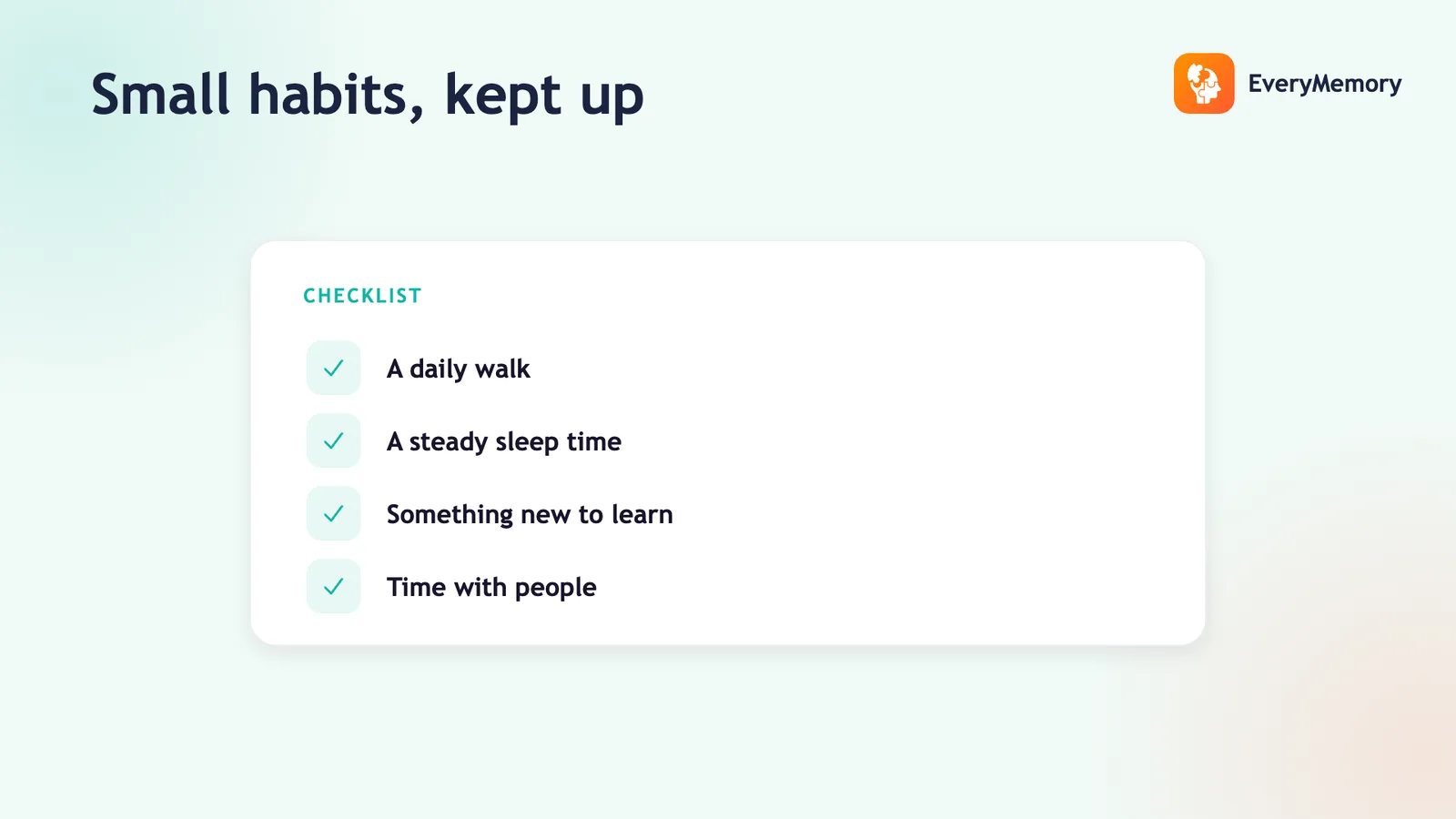
⚡ Quick answer
The best habits for a healthy brain are: regular physical activity, consistent good-quality sleep, ongoing learning that genuinely challenges you, real social contact, and managing chronic stress. A brain-friendly diet supports the rest. None works in isolation or overnight - the benefit comes from keeping a few of them up consistently over the long term.
Key takeaways
- Brain health is built from a few ordinary habits kept up consistently, not products or hacks.
- Physical activity and good sleep do the heaviest lifting and reinforce each other.
- Favour novel, challenging learning over repeating puzzles you've already mastered.
- Make habits automatic by attaching them to existing routines and keeping them small.
Brain health gets marketed as a product - a pill, a supplement, a subscription. The unglamorous truth is that it's built from habits, most of which cost nothing and overlap heavily with general good health.
No single habit is magic, and no habit works in one week. What matters is a small set of the right ones, kept up consistently over months and years. Here are the ones with the best evidence behind them, and how to make them stick.
The five habits that matter most
Strip away the marketing and the evidence keeps pointing at the same short list. Each one supports brain health through a clear, plausible mechanism.
| Habit | Why it helps | An easy starting point |
|---|---|---|
| Physical activity | Blood flow, brain-cell health, mood, sleep | A 20-minute brisk walk most days |
| Good sleep | Consolidates memory, clears waste, restores focus | Same bedtime and wake time daily |
| Novel learning | Keeps the brain adapting to difficulty | 10 minutes on something genuinely new |
| Social contact | Conversation is a demanding mental workout | One real conversation a day |
| Stress management | Lowers the stress hormones that blur focus | A few minutes of slow breathing |
Movement and sleep do the heavy lifting
If you only have room for two habits, make them physical activity and sleep. They support brain health through more pathways than anything else and reinforce each other - exercise improves sleep, and sleep makes you more likely to exercise. The depth is in exercise and memory and how sleep affects memory.
Feed novelty, not just repetition
Mental habits work best when they're varied and a little hard. Repeating a familiar crossword is pleasant but does little; learning something new stretches the brain. Rotate what you do - a language one month, an instrument the next, daily brain exercises on the side - and let difficulty, not comfort, guide you.
What you eat supports all of this; the practical version is in best foods for memory and brain health.
Make the habit automatic
The reason brain habits fail is the same reason any habit fails - they rely on motivation instead of structure. Attach a new habit to one you already have (a walk after lunch, recall practice with your morning coffee), keep it small enough to do on a bad day, and let consistency beat intensity.
A daily anchor like a quick game or memory self-check can be the cue that holds the whole routine together.
✅ Try this today - Stack one new brain habit this week
Don't overhaul everything. Add one habit and make it stick:
- Pick one habit from the table that you're not already doing.
- Attach it to something you do every day without fail - coffee, lunch, brushing your teeth.
- Make the smallest version count (a 5-minute walk, one new word, one conversation) so you never skip it. Scale up only once it's automatic.
⚠ When to talk to a professional
These are general, non-medical lifestyle habits, not a way to prevent or treat any condition. They support brain health; if you're concerned about noticeable memory changes, see a doctor.