 EveryMemory
How to Keep Your Brain Young
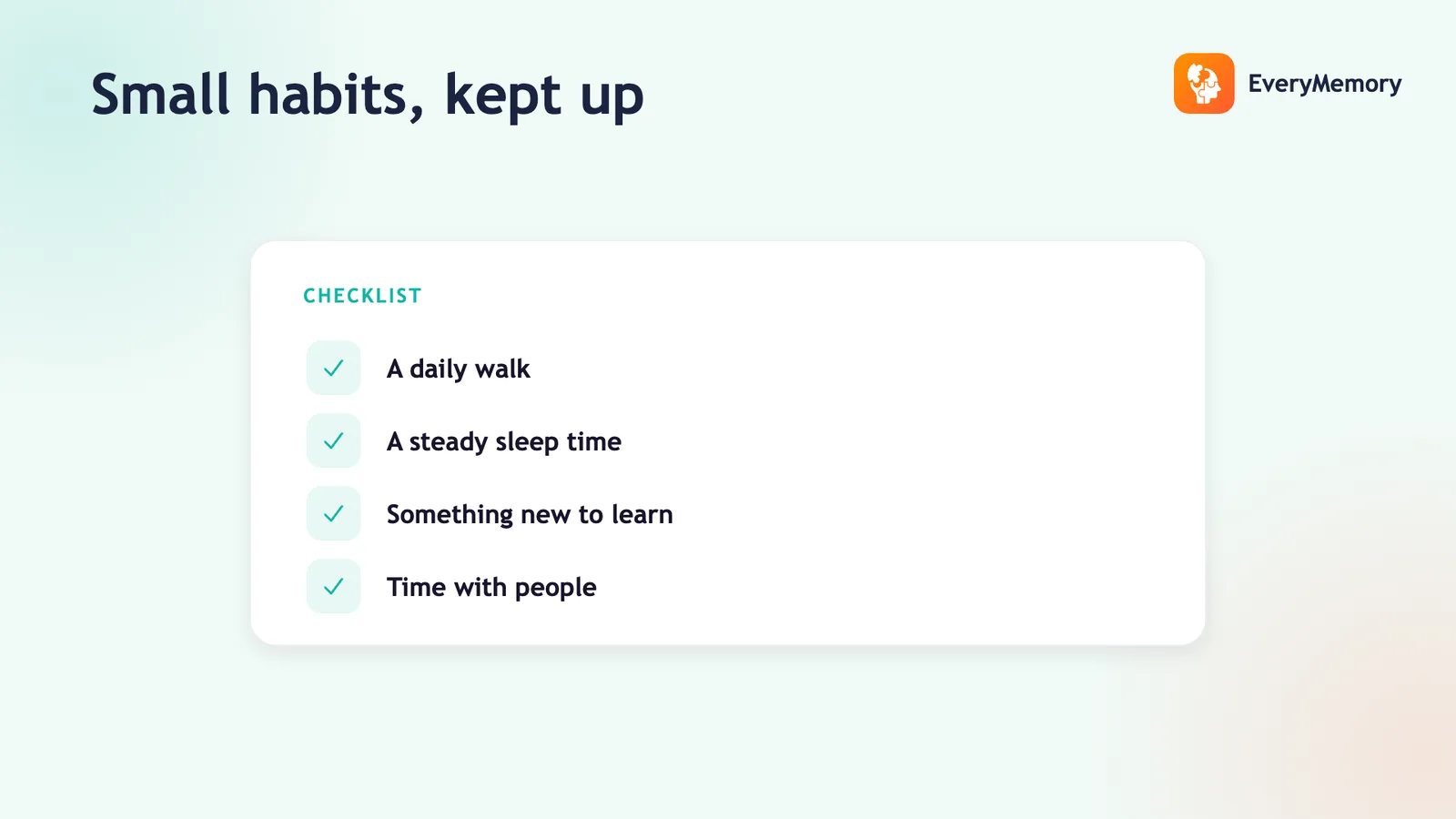
Keeping your brain feeling young is mostly the unglamorous basics done consistently - movement, sleep, learning, and social contact - not supplements or one clever trick.
Part of the guide: How to Keep Your Brain Healthy: A Complete Lifestyle Guide →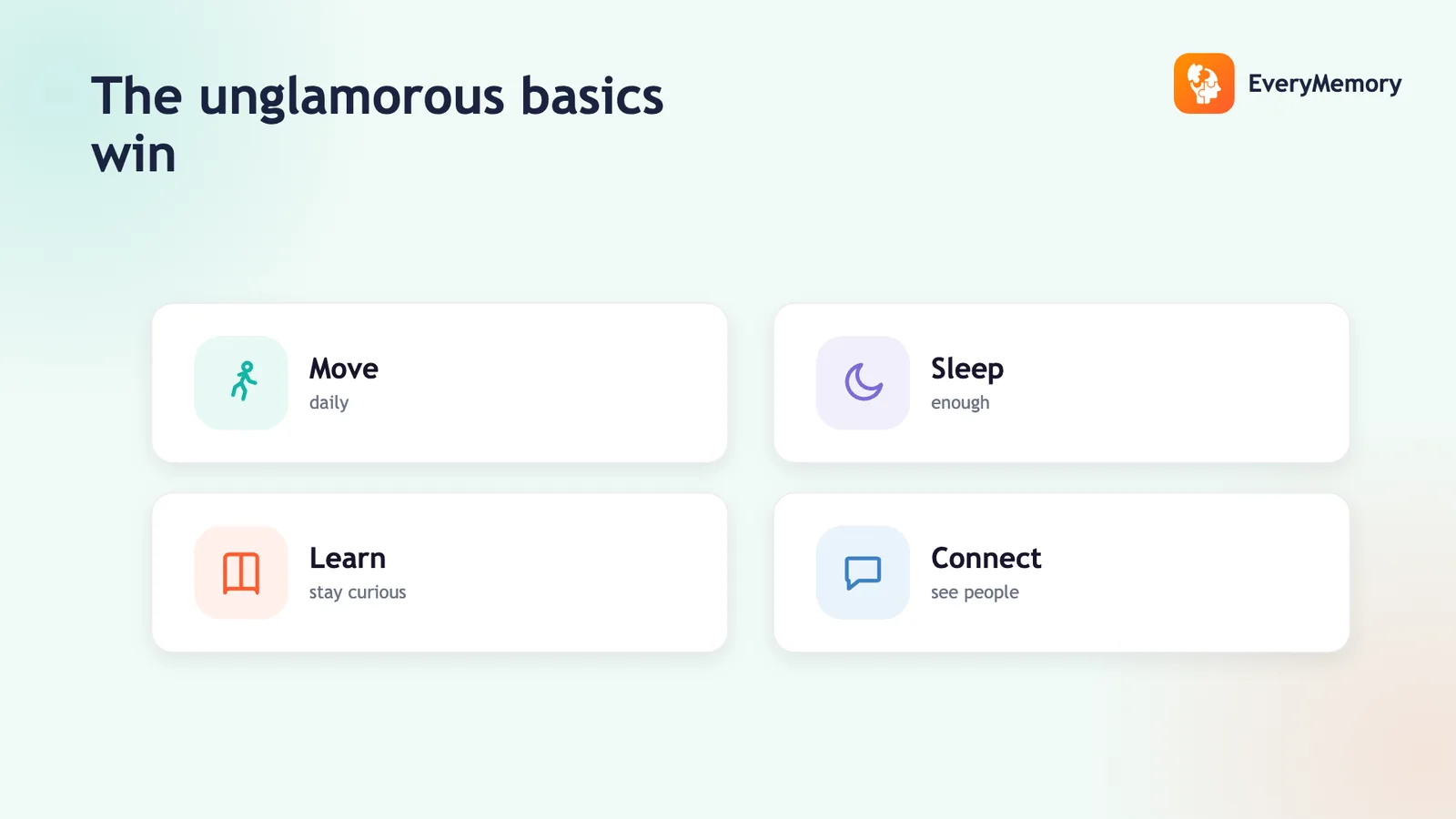
⚡ Quick answer
To keep your brain feeling young, lean on the basics done consistently: regular physical activity, enough good-quality sleep, ongoing learning that genuinely challenges you, real social contact, and managing stress. No supplement or single trick substitutes for these. The common thread is staying physically active, mentally challenged, and socially engaged over the long term.
Key takeaways
- There's no way to stop aging, but lifestyle strongly shapes how sharp and engaged your mind feels.
- Physical activity is the strongest single lever; sleep is close behind.
- Keep learning genuinely new, difficult things - novelty matters more than repetition.
- Real social contact and managing stress round out the core habits.
"Keeping your brain young" gets sold as a problem solved by a supplement, an app, or a superfood. The honest answer is duller and more reliable: the habits that keep the rest of your body in good shape are the same ones that keep your mind sharp and engaged.
There's no proven way to stop the brain from aging, and some change with age is normal. But how engaged, quick, and capable your mind feels day to day owes a lot to a handful of ordinary habits, kept up over years rather than weeks.
Move your body - it's the strongest lever
If you do one thing for your brain, make it physical activity. Movement increases blood flow to the brain, supports the health of brain cells, and is consistently linked with sharper thinking and better mood. It's the closest thing to a broad-spectrum habit for the mind.
It doesn't take a gym. Brisk walking, cycling, swimming, or anything that raises your heart rate, done regularly, counts. The detail is in exercise and memory.
Protect your sleep
Sleep is when the brain clears metabolic waste, consolidates memories, and resets attention. Chronically short or broken sleep blunts focus and recall the very next day, and the effects compound over time. Treating sleep as optional is one of the fastest ways to make your mind feel older than it is.
Aim for a consistent schedule and a genuine wind-down. The mechanics are in how sleep affects memory.
Keep learning real, new things
The brain stays adaptable when it's asked to do hard, unfamiliar things - a new language, an instrument, a craft, a subject you know nothing about. The key word is novel. Re-running skills you've already mastered is comfortable but does little; genuine difficulty is what keeps the mind stretching.
This is the heart of mental stimulation and keeping your brain active - and why variety matters more than any one puzzle.
Stay socially connected
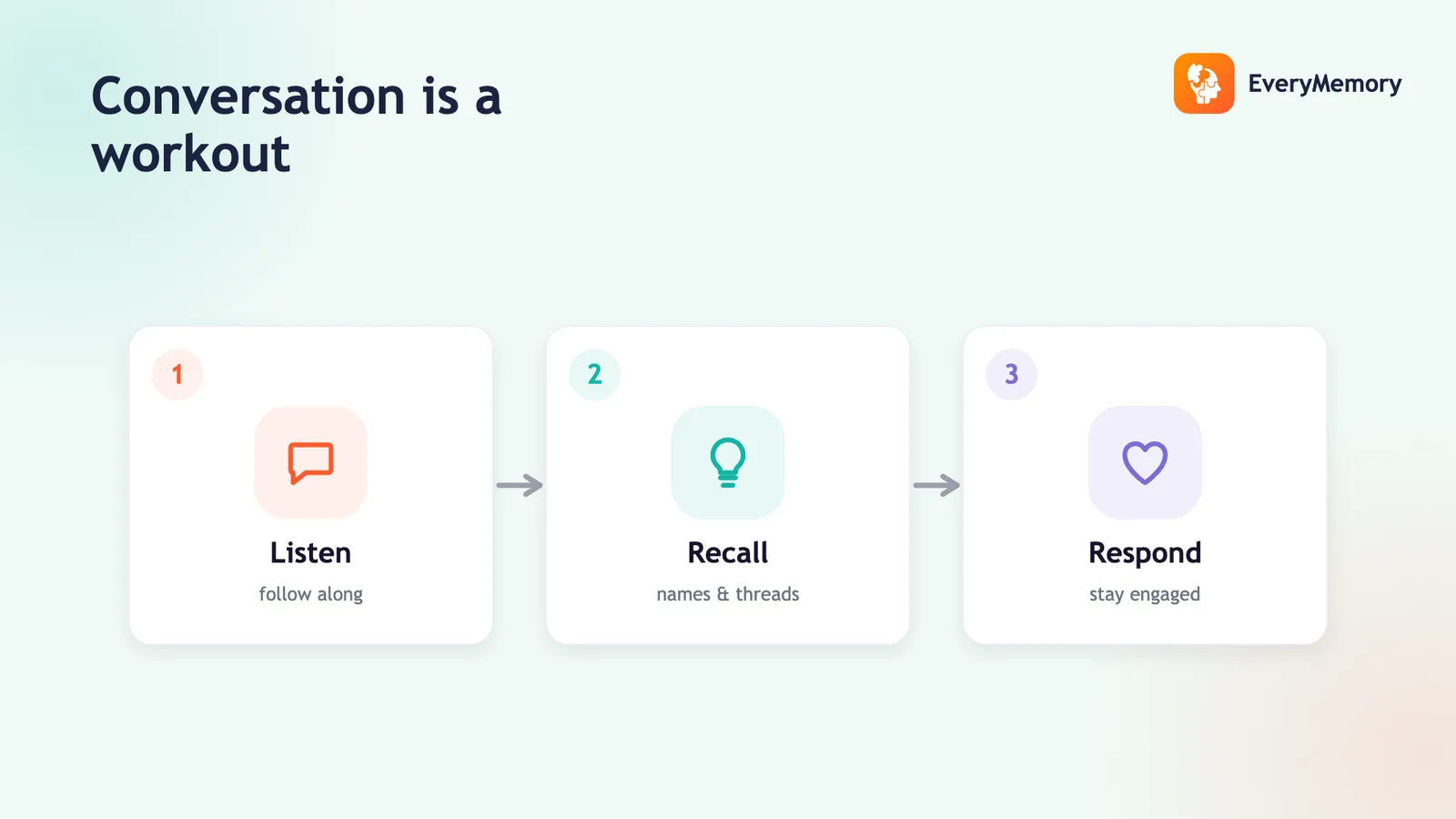
Regular, meaningful contact with other people is one of the most underrated brain habits. Conversation is a fast, demanding mental workout - listening, recalling, responding, reading tone - and isolation is consistently linked with poorer mood and thinking. Social engagement is covered in social connection and memory.
Habits ranked by how much they matter
If you want a rough order of priority, this is a fair one:
| Habit | Why it helps the brain |
|---|---|
| Regular physical activity | Boosts blood flow, supports brain-cell health, lifts mood - the strongest single lever. |
| Good-quality sleep | Consolidates memory, clears waste, restores attention each night. |
| Ongoing, novel learning | Keeps the brain adapting; difficulty and variety matter more than repetition. |
| Real social contact | Conversation is a demanding mental workout; connection protects mood. |
| Managing chronic stress | Persistent stress hormones interfere with focus and memory formation. |
⚠ When to talk to a professional
These are general, non-medical lifestyle habits, not a way to prevent or treat any condition. Some change in thinking and memory is a normal part of aging; if you're worried about noticeable changes, see a doctor.