 EveryMemory
What Harms Your Memory? Common Culprits
Most everyday memory lapses trace back to a few fixable culprits - poor sleep, chronic stress, split attention, and skipped meals - far more often than to anything serious.
Part of the guide: How to Keep Your Brain Healthy: A Complete Lifestyle Guide →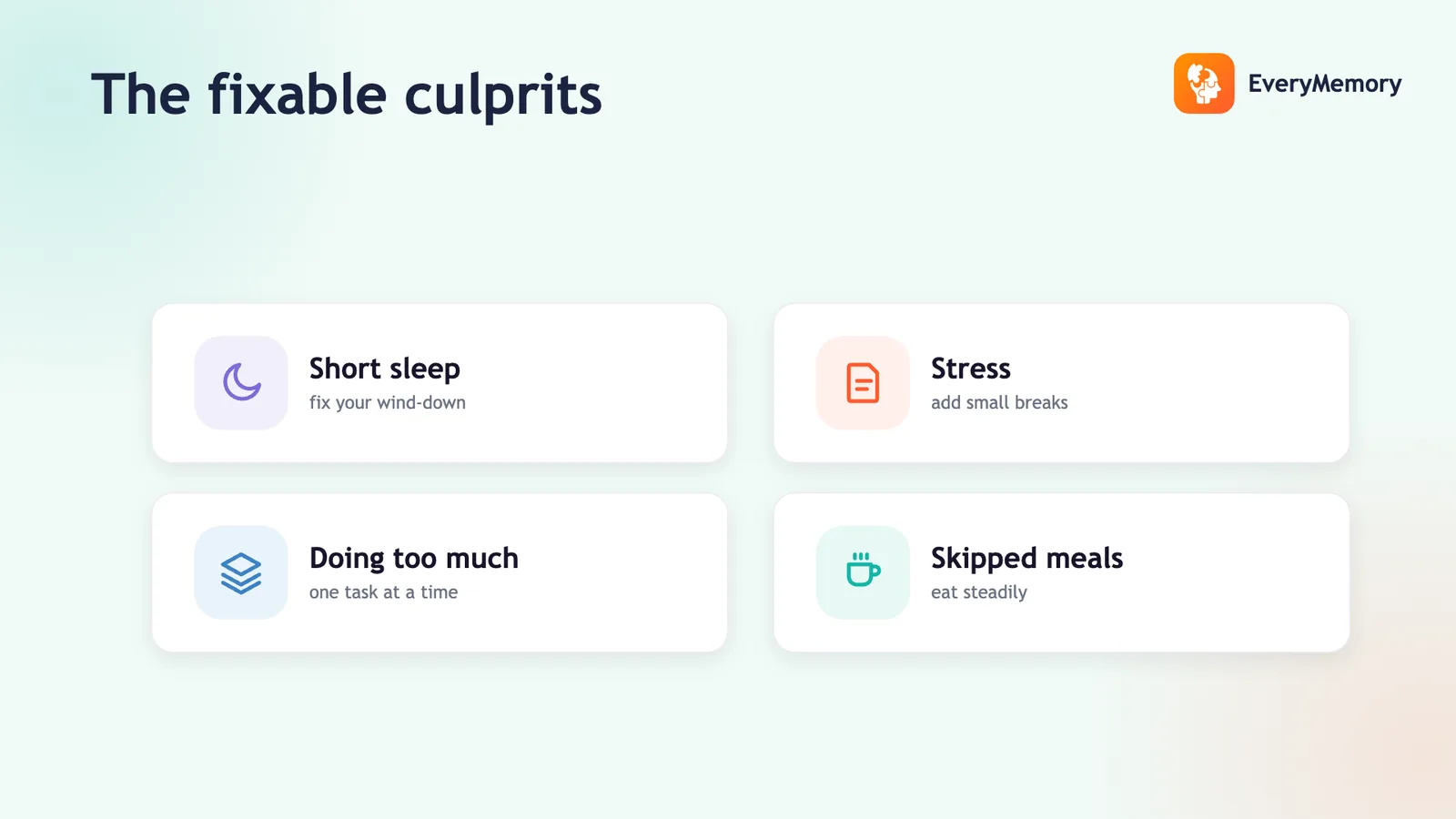
⚡ Quick answer
The most common things that harm everyday memory are poor or short sleep, chronic stress, divided attention, dehydration and skipped meals, and excess alcohol. These mostly interfere with how memories are formed and recalled rather than damaging the brain. Each is fixable, and addressing them resolves the great majority of ordinary forgetfulness.
Key takeaways
- Most everyday forgetfulness traces to fixable culprits, not anything serious.
- Poor or short sleep is the single biggest cause; stress and divided attention follow.
- Dehydration, skipped meals, and excess alcohol drag down focus and consolidation.
- Memory that clearly worsens or disrupts daily life is worth a doctor, not lifestyle tweaks.
When memory slips, people jump to the scariest explanation. But day-to-day forgetfulness almost always traces back to a short list of ordinary, fixable culprits - not to anything wrong with your brain.
Knowing what actually erodes memory is empowering, because most of these are within your control. Here are the common ones, why each one bites, and what to do about it.
Poor sleep - the biggest single culprit
If you're forgetful, look at your sleep first. Memories are consolidated overnight, and short or broken sleep leaves them poorly filed and harder to retrieve. It also blunts the attention you need to encode new things the next day, so the damage hits both ends.
This one habit explains a remarkable share of everyday lapses. The mechanism is in how sleep affects memory.
Chronic stress and divided attention
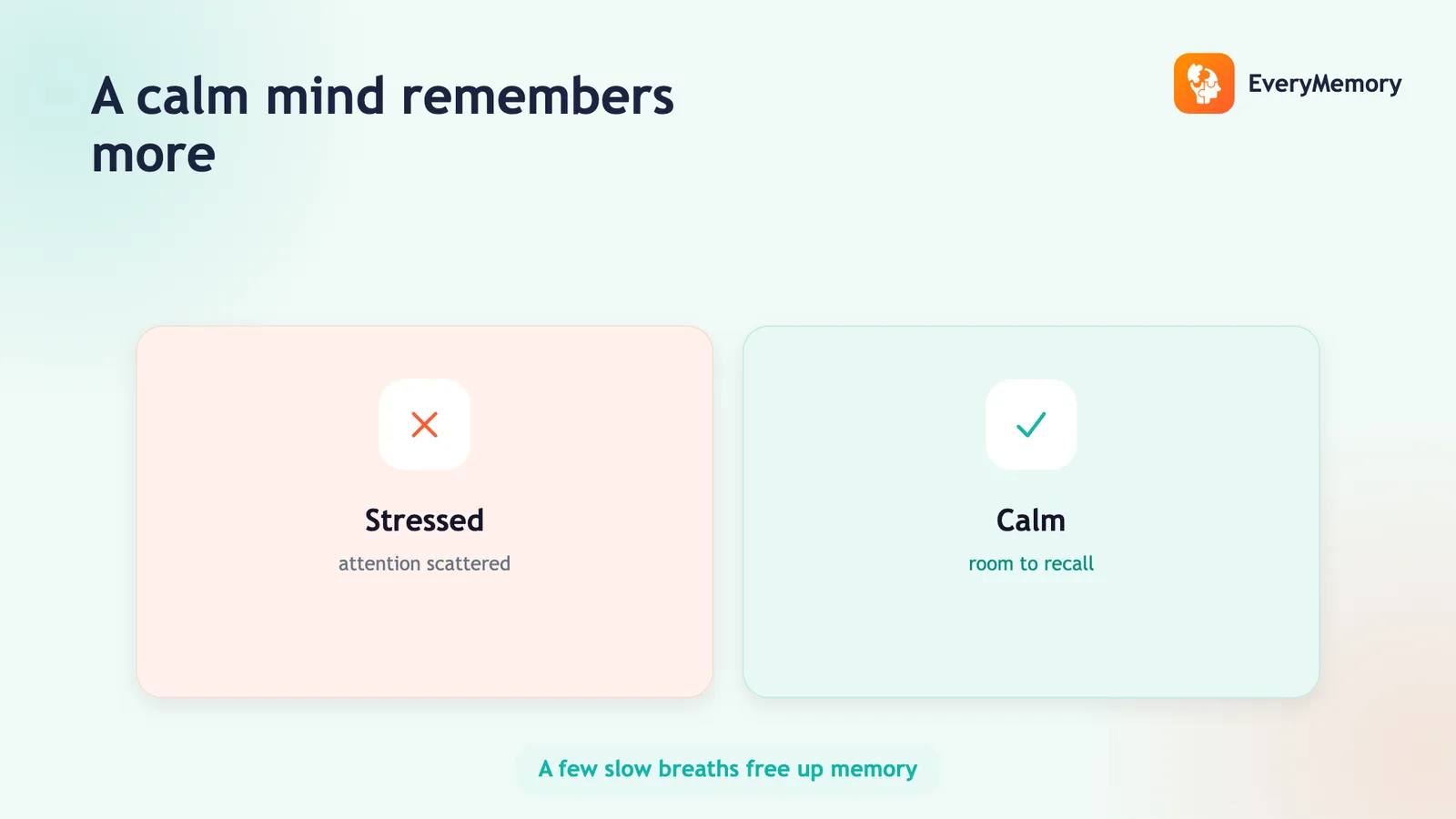
Persistent stress floods the body with hormones that, over time, interfere with how memories form and are retrieved. It also makes the mind race and the attention fragment - and attention is where memory begins. You can't store what you never properly took in.
Divided attention is the everyday version of this. Half-listening while scrolling, learning with notifications on - these guarantee shallow encoding. More on stress in does stress cause forgetfulness and on focus in avoiding distractions.
The common culprits at a glance
| Culprit | Why it harms memory | What helps |
|---|---|---|
| Poor / short sleep | Memories aren't consolidated; next-day focus drops | Consistent schedule, real wind-down |
| Chronic stress | Stress hormones disrupt forming and recalling memories | Slow breathing, exercise, downtime |
| Divided attention | Information is encoded too shallowly to stick | Single-task when learning; cut notifications |
| Dehydration / skipped meals | Reduces concentration and steady mental energy | Drink water; don't skip meals |
| Excess alcohol | Interferes with consolidation and sleep quality | Moderate; protect sleep nights |
Fuel: dehydration, skipped meals, alcohol
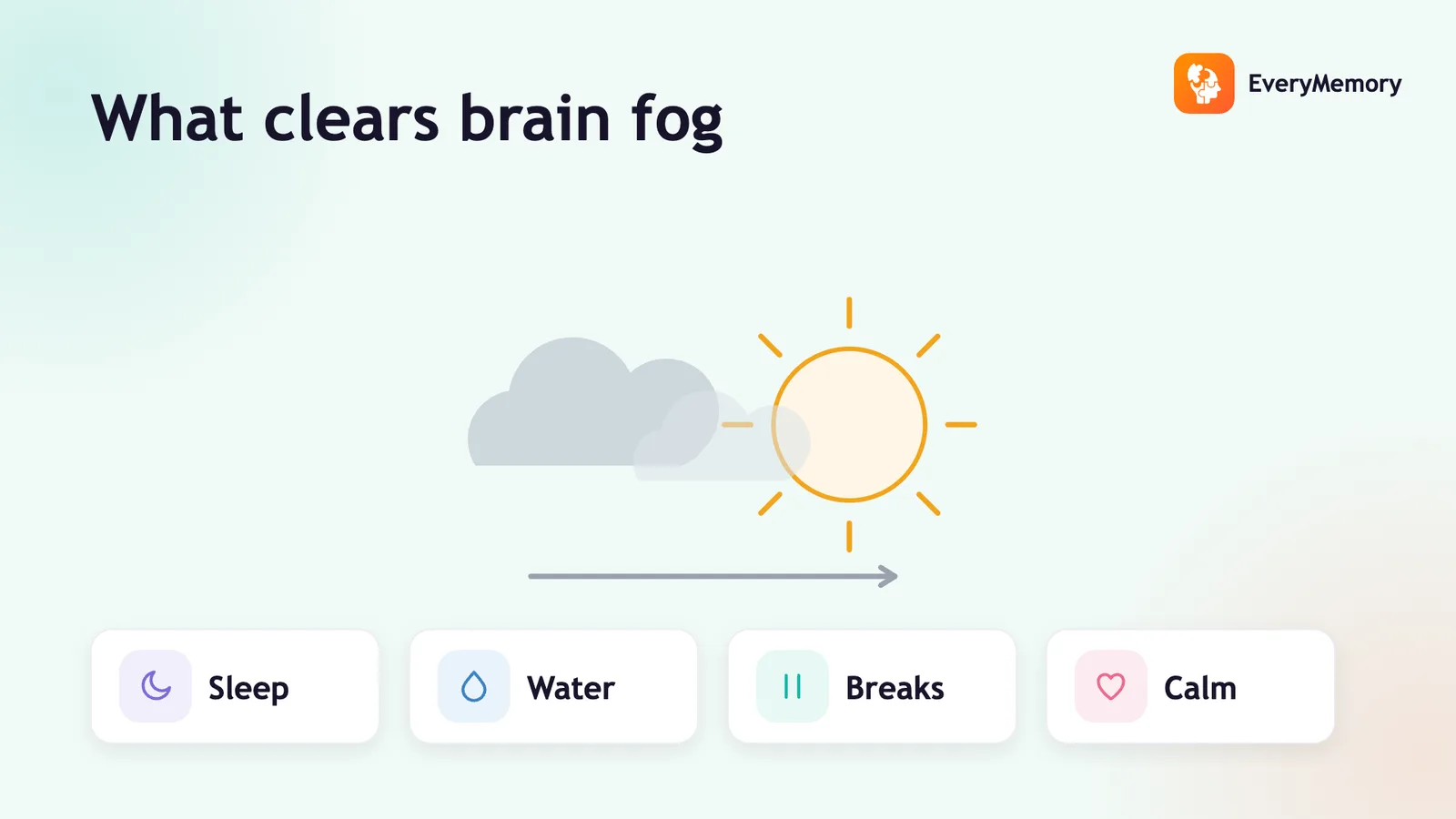
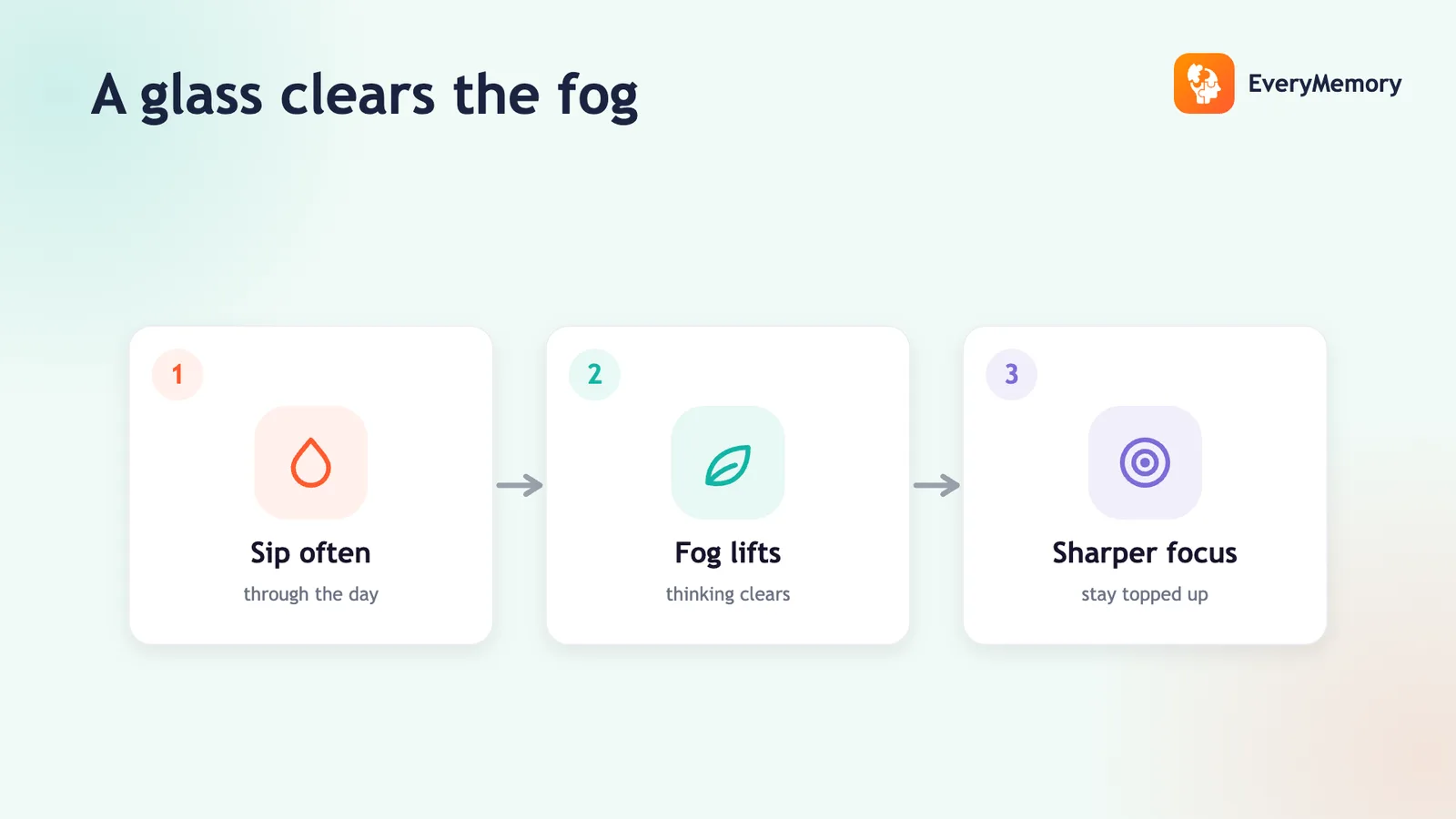
The brain runs on a steady supply of fluid and energy. Even mild dehydration is linked with poorer concentration, and skipping meals leaves attention ragged - both make memory feel worse without anything being wrong. The detail is in hydration and brain function and best foods for memory.
Excess alcohol is a double hit: it interferes with memory consolidation directly and wrecks sleep quality, compounding the next day's fog.
When it's not just lifestyle
Most forgetfulness is fixable with these basics. But if memory is clearly worsening over time, affecting daily life, or coming with confusion about time and place, that's beyond the scope of lifestyle tweaks. The distinction matters - see brain fog causes for the everyday side, and talk to a doctor for anything that's genuinely getting worse.
⚠ When to talk to a professional
This covers common, non-medical causes of everyday forgetfulness, not a diagnosis. If your memory is clearly worsening, confusing, or affecting daily life, please see a doctor rather than relying on lifestyle changes alone.