 EveryMemory
Hobbies That Keep Your Mind Sharp
The best hobbies for your brain are a little challenging, varied, and ideally social. What to look for, plus plenty of examples - pick the ones you'll keep doing.
Part of the guide: Brain Exercises for Seniors: The Complete Guide →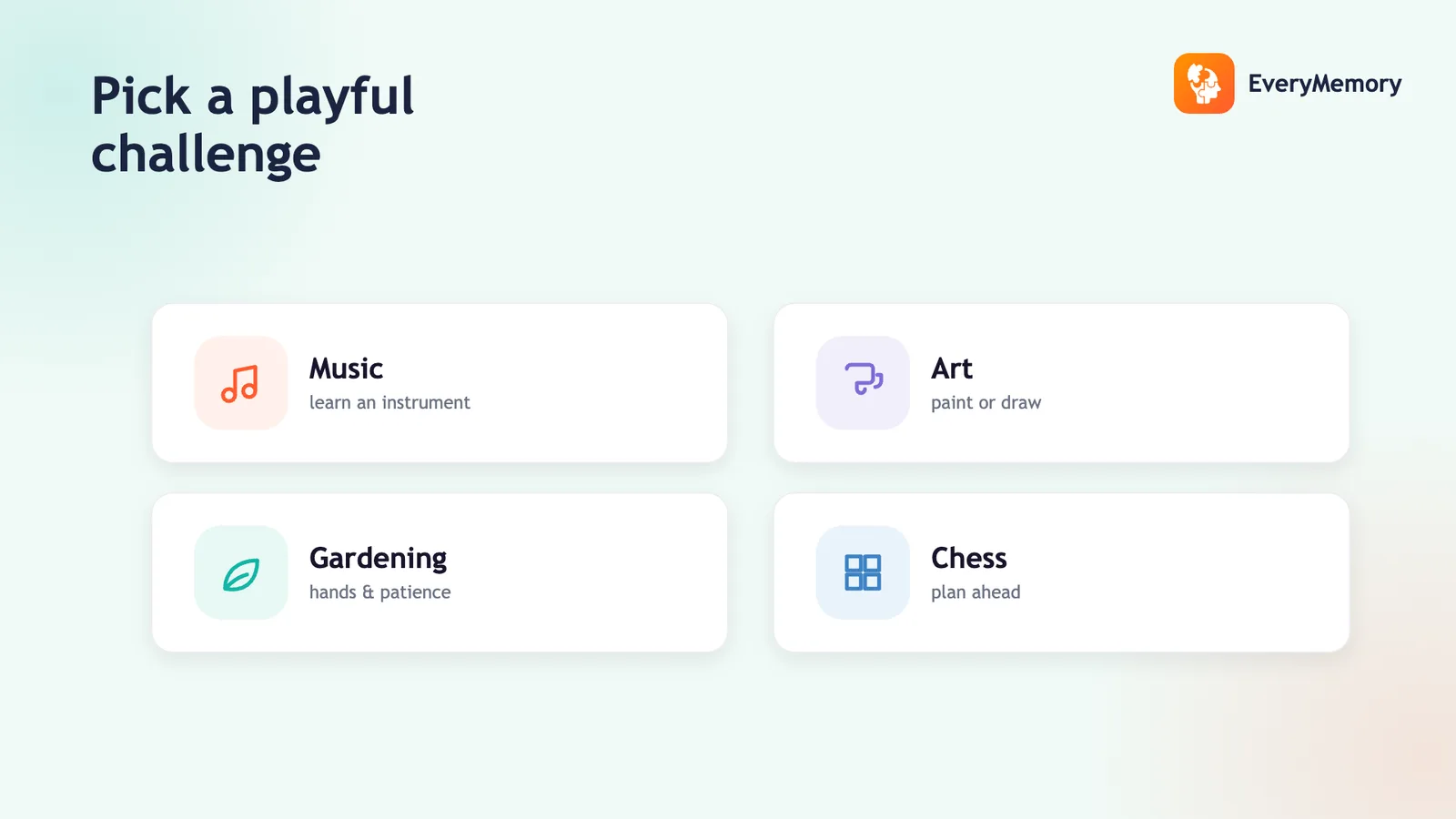
⚡ Quick answer
The best hobbies for your brain are ones that are a little challenging, varied, and ideally social - learning an instrument or language, crafts, dancing, puzzles, gardening, or games with others. What matters is novelty and engagement, not the specific hobby: anything that makes your brain reach and that you'll keep doing helps keep your mind sharp.
Key takeaways
- The best brain hobbies are a little challenging, varied, and ideally social.
- Examples: learning an instrument or language, dancing, crafts, gardening, strategy games, and cooking new recipes.
- Novelty matters most - a hobby you've mastered and do on autopilot stops challenging you.
- Pick what you'll keep doing; consistency and challenge beat a perfectly-optimised hobby you abandon.
Any hobby beats sitting passively, but some do more for your brain than others. The difference isn't the activity itself - it's whether it makes your brain reach.
Here's what to look for in a brain-friendly hobby, with plenty of examples.
What makes a hobby good for the brain
Three things: a little challenge (it stretches you), novelty (it's new or keeps changing), and ideally a social element. A hobby you've mastered and do on autopilot stops challenging you - the brain benefits most while you're still learning. That's the same idea behind keeping your brain active.
Brain-friendly hobbies to try
- Learn an instrument - combines memory, coordination, and listening.
- Learn a language - sustained novelty and memory practice.
- Dancing - movement, memory for steps, and often social.
- Crafts and DIY - knitting, woodwork, model-building: focus and fine skill.
- Gardening - planning, learning, and gentle activity.
- Strategy games and puzzles - chess, bridge, jigsaws, and varied memory games.
- Cooking new recipes - following steps, learning techniques.
Why novelty matters most
The temptation is to stick to what you're good at, but comfort is the enemy of challenge. Picking up something genuinely new - or pushing an existing hobby into harder territory - is what keeps the brain adapting. The mild awkwardness of being a beginner is the point.
Pick what you'll keep doing
The best brain hobby is the one you'll still be doing in six months, so choose for enjoyment as much as 'brain benefit'. Consistency and a little challenge beat a perfectly-optimised hobby you abandon. Honest expectations help too - see do brain games really work?