 EveryMemory
Why Is My Memory Getting Worse?
If your memory feels worse lately, the cause is usually the conditions around it - not your memory itself. The common, fixable reasons, and when it's worth checking.
Part of the guide: Understanding Memory Loss and Forgetfulness: A Calm, Reassuring Guide →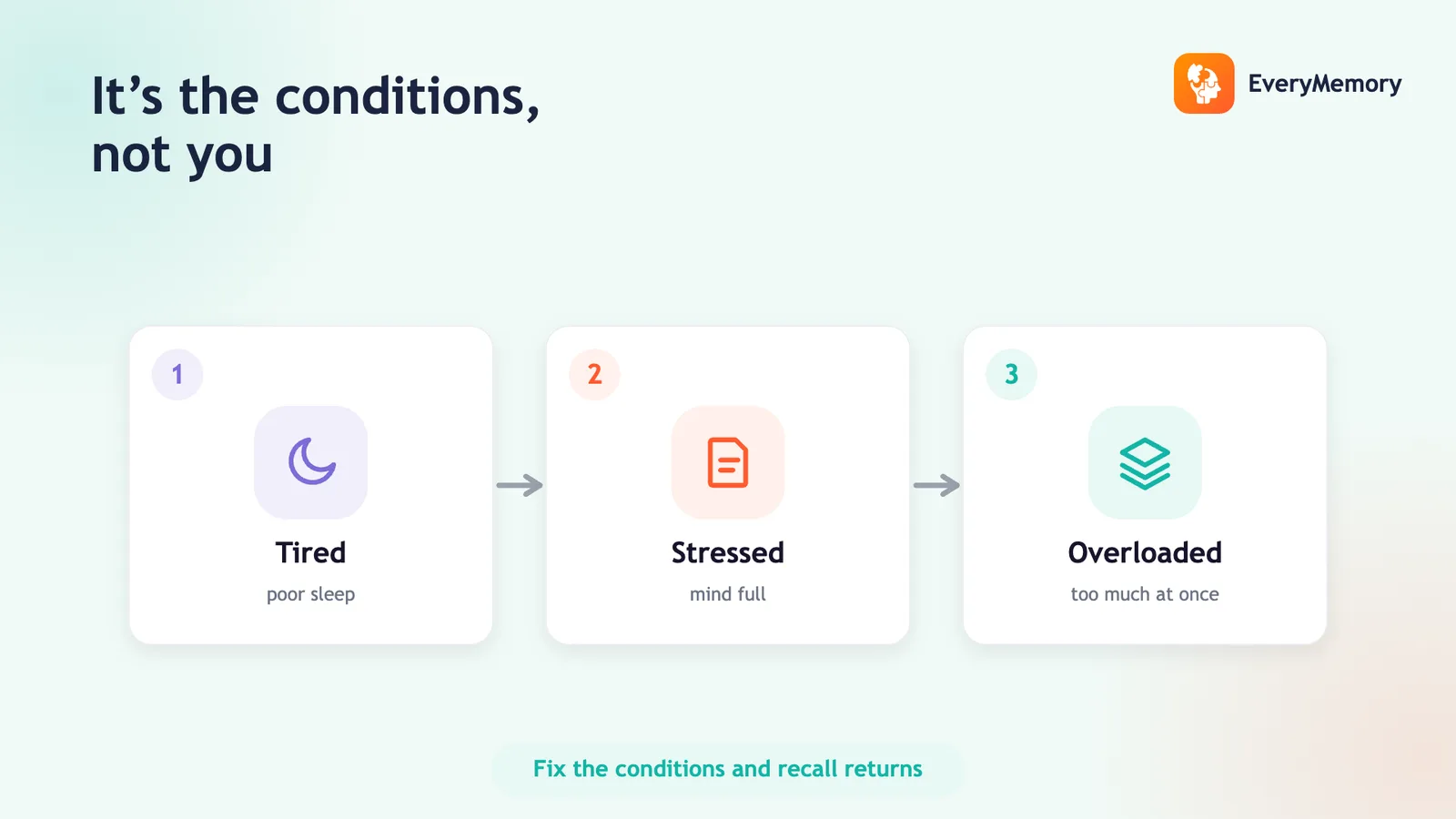
⚡ Quick answer
If your memory feels worse lately, the cause is usually not your memory itself but the conditions around it - poor sleep, stress, doing too much at once, and a normal slight slowing of recall all reduce how well you take in and recall information. These are common and largely fixable. A memory that's steadily and noticeably worsening over weeks, or starting to affect daily life, is worth a professional's input.
Key takeaways
- Memory that feels worse lately is usually about conditions - sleep, stress, overload - not your memory itself.
- These causes are common and largely reversible once the underlying strain eases.
- A normal slight slowing of recall with age makes names and words surface more slowly, but they're still stored.
- Steady, noticeable worsening over weeks, or memory affecting daily life, is worth a professional's input.
Noticing your memory slipping is unsettling, and the worry itself makes it feel worse. But 'my memory is getting worse' usually points away from memory and toward the things quietly draining it.
Here are the common, fixable reasons - and the clear line for when worsening memory is worth talking to someone.
It's usually the conditions, not your memory
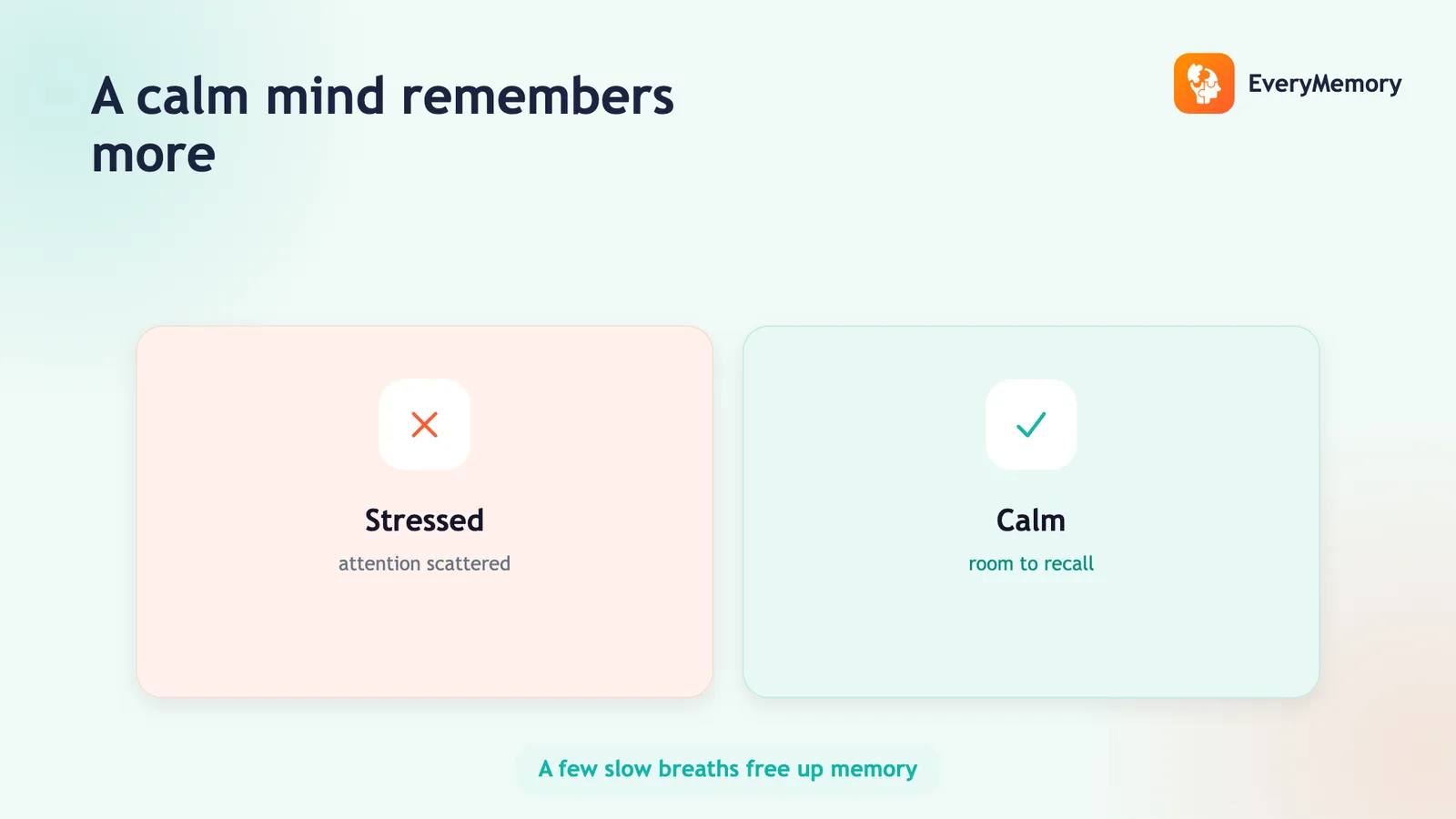
Memory doesn't work in isolation - it depends on attention, sleep, mood, and how much you're juggling. When those are strained, less gets stored and less comes back, and it feels exactly like your memory failing. Fix the conditions and the 'decline' often lifts within days.
The usual culprits
- Poor or broken sleep - the single biggest day-to-day drag on memory; see how sleep affects memory.
- Stress and worry - a preoccupied mind has little capacity left to store new information; see does stress cause forgetfulness?
- Doing too much at once - divided attention means things never encode in the first place.
- Low mood or feeling run-down - both reduce concentration and recall.
- Big life changes - busy, disrupted periods crowd out the attention memory needs.
A little slowing with age is normal
Retrieval naturally slows a touch over the years, so names and words take longer to surface even though they're still stored. This gentle change is a normal feature of aging, not decline - the difference between the two is laid out in memory loss vs normal aging.
What to do about it
Start with the basics that move the needle most: protect your sleep, lighten the mental load where you can, and single-task on what matters. Offload dates and to-dos to a calendar so memory isn't doing storage work. If you want to see whether it's a real trend or a rough patch, track a few specific, dated examples - a non-medical self-check repeated over weeks shows the pattern.
When worsening memory is worth checking
It's reasonable to speak with a qualified professional if your memory is clearly and steadily worsening over weeks rather than fluctuating with tiredness, if it's starting to affect everyday tasks, or if others notice changes before you do - particularly alongside confusion about familiar people or places. Bringing dated examples makes that conversation far more useful; what to expect at a memory check-up walks through it.
⚠ When to talk to a professional
Memory that fluctuates with sleep, stress and busyness is usually about those conditions, not decline. If it is steadily and noticeably worsening over weeks, affecting daily life, or noticed by others alongside confusion, talk to a qualified professional.