 EveryMemory
How to Improve Memory Retention
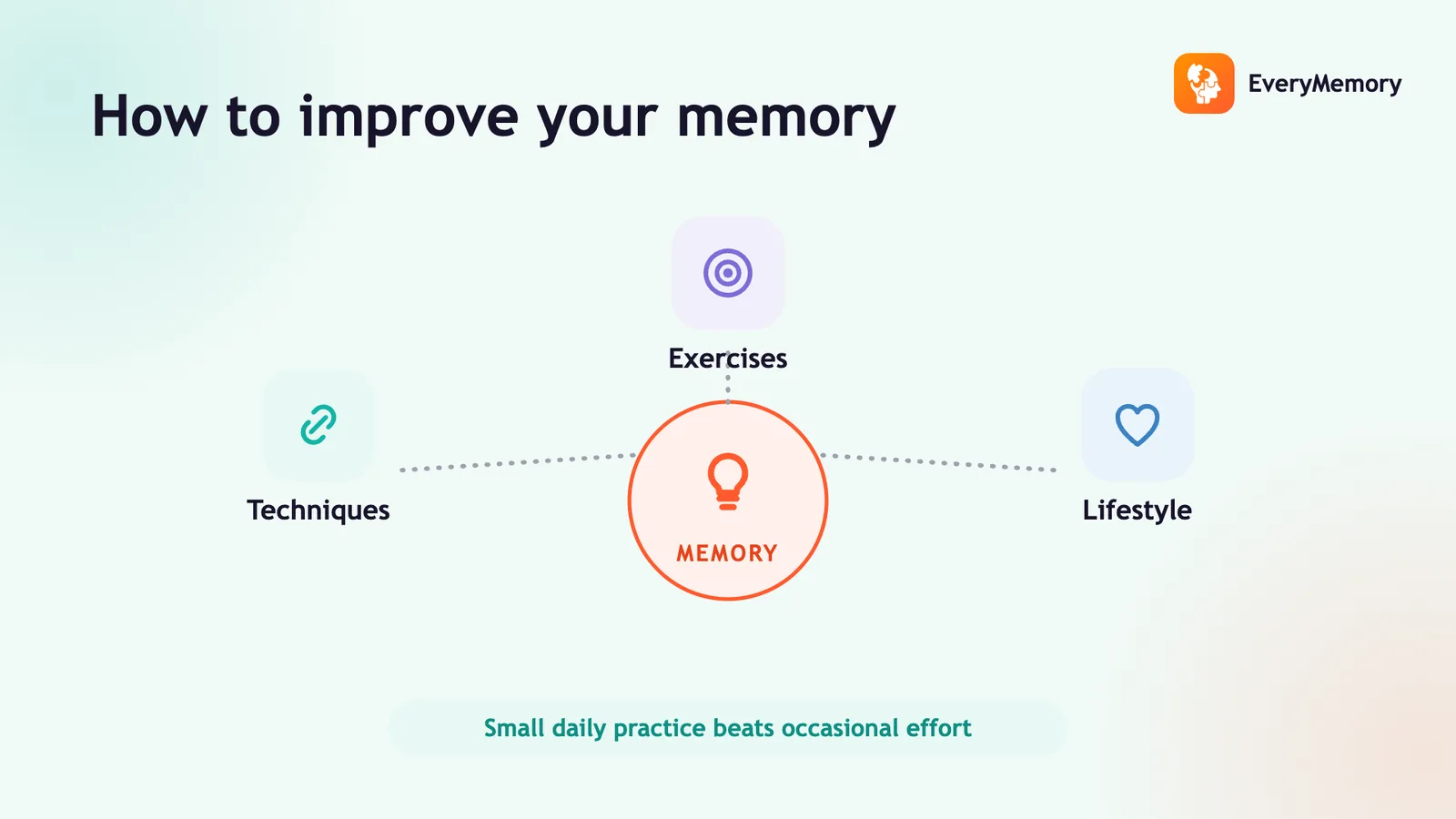
Retention isn't about studying harder - it's about retrieving, spacing, and sleeping. The handful of methods that make what you learn actually stay.
Part of the guide: Brain Exercises for Seniors: The Complete Guide →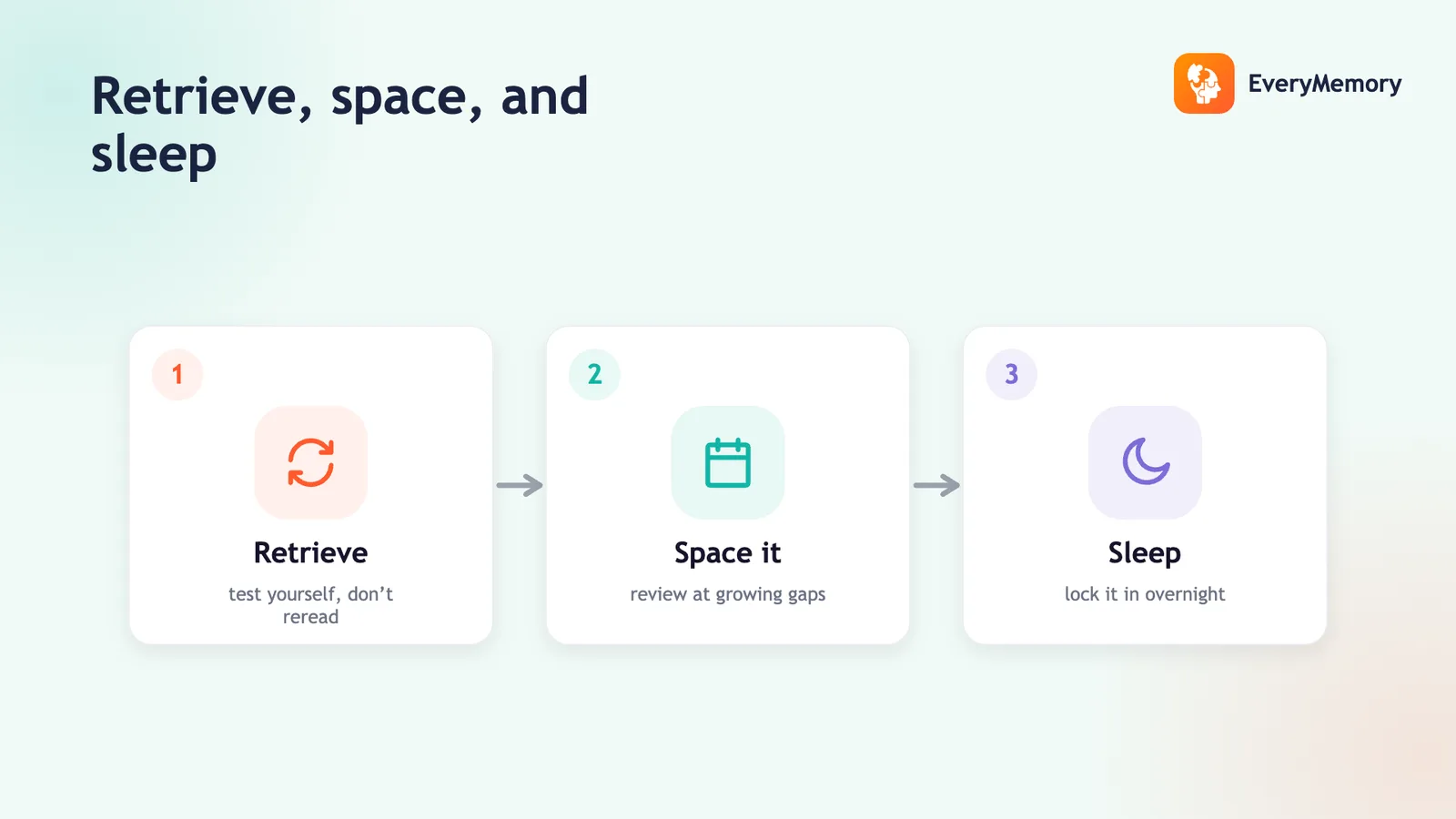
⚡ Quick answer
Memory retention is how well information stays put after you learn it. You improve it less by studying harder and more by retrieving and spacing: recall what you learned from memory, then review it again after a day, a few days, and a week. Sleep consolidates memories, so rest matters as much as practice. Cramming feels productive but fades fast.
Key takeaways
- Retention depends on consolidation, which cramming skips - that's why crammed material fades within days.
- Active recall (testing yourself) is the single most effective method for retaining information.
- Space reviews on a widening schedule - later today, tomorrow, in a few days, in a week - to reset the forgetting curve.
- Sleep consolidates memories, so rest is part of learning; reducing interference and adding meaning help too.
Learning something and still having it a week later are two different achievements. Most people pour effort into the first and neglect the second - then wonder why it's gone.
Retention is improved by a small set of methods that match how memories actually settle. None of them is 'try harder'.
What retention really depends on
After you learn something, it isn't fixed in place straight away - it has to be consolidated, strengthened over hours and days. Cramming skips that process: it crams a lot into a short window with no consolidation, which is exactly why it drains away within days. Retention is the result of spacing learning out and letting each piece settle.
Retrieve to retain
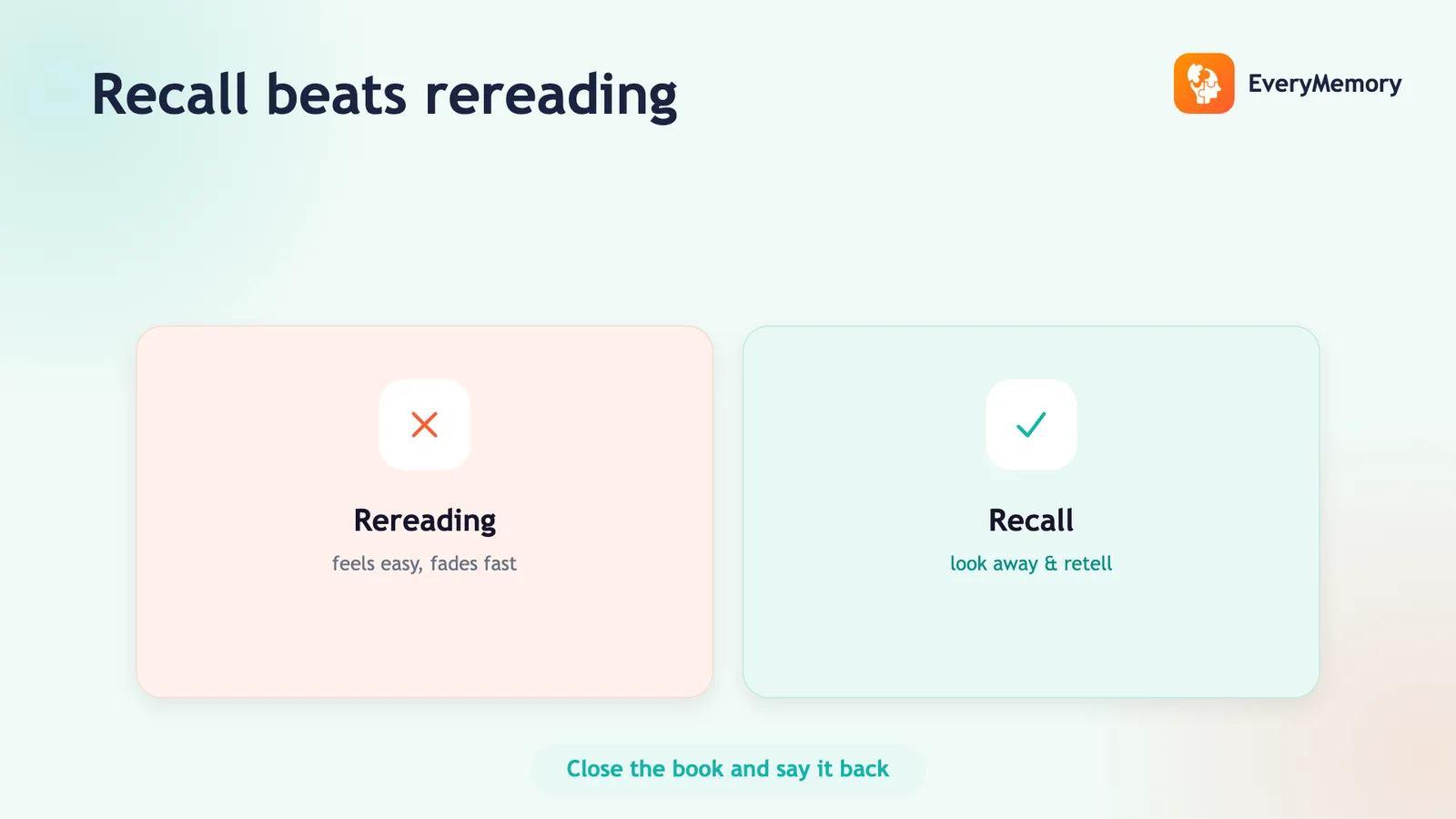
The single most effective thing you can do for retention is to recall the material from memory, repeatedly, rather than rereading it. Each successful retrieval strengthens the memory and makes the next recall easier - this is the testing effect. Close the book and reproduce the idea; check only afterwards. The same logic powers remembering what you read.
Space your reviews
Reviewing once isn't enough. Revisit material on a widening schedule - later today, tomorrow, in a few days, in a week. Each spaced retrieval, done just as you're starting to forget, resets the forgetting curve and the memory lasts longer for less total effort. Spacing beats massing every time.
Sleep does the filing
Much of consolidation happens while you sleep, especially the night after learning. Skimp on sleep and you weaken what you learned that day and reduce the next day's capacity to learn more. Treat a good night's sleep as the second half of studying, not a reward for finishing.
Reduce interference
Cramming several similar topics back-to-back makes them blur and compete, so each is held less well. Learn one thing at a time, give it a little space, and avoid piling closely-related material into one block. Less interference means cleaner retention.
Make it meaningful
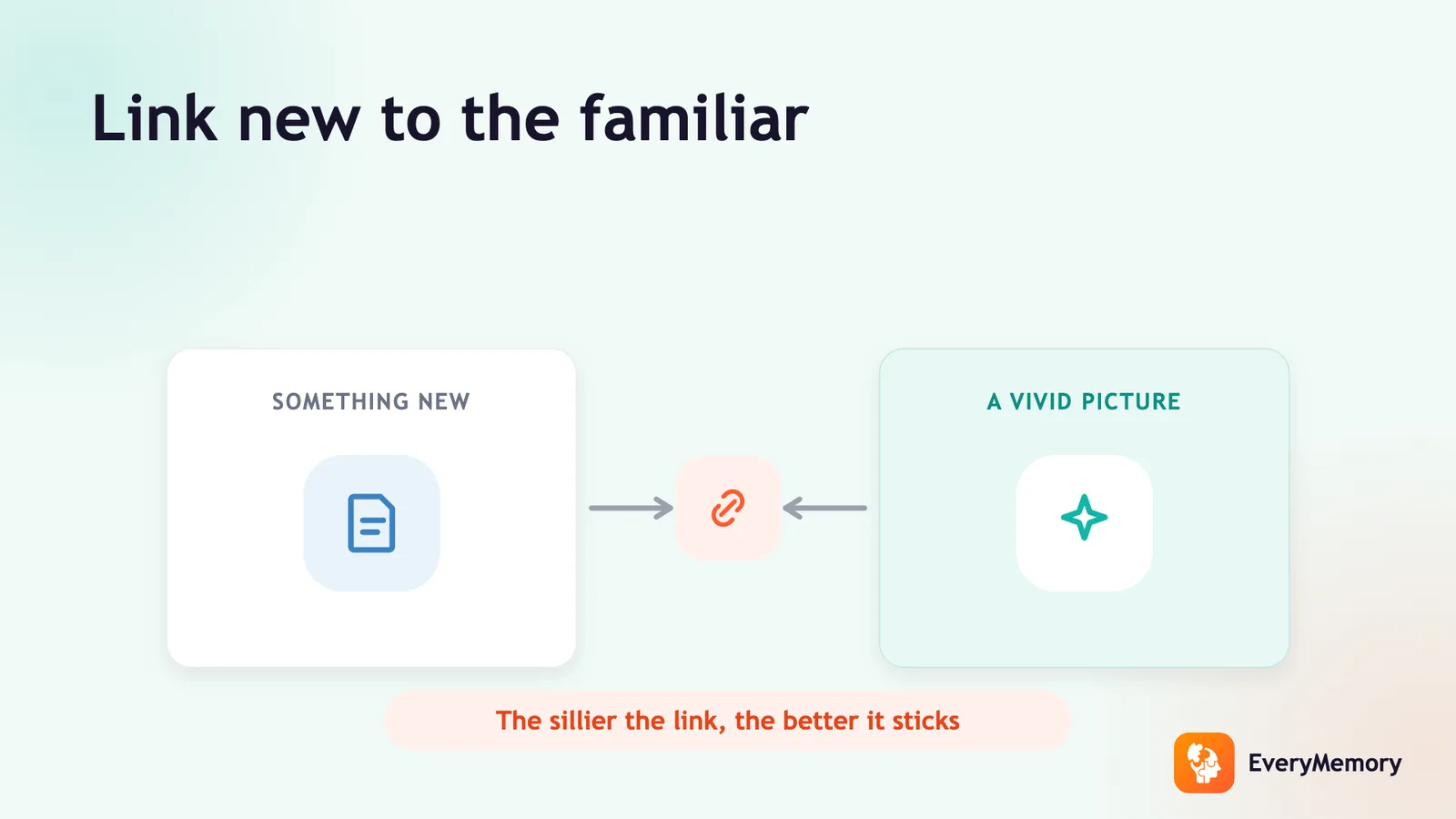
Information connected to what you already know is held far better than isolated facts. Before you try to retain something, give it a hook - an example from your life, a comparison, a picture. This is association, and it's the difference between a fact that sticks and one that slides off.
✅ Try this today - the spaced-three schedule
Retain something you learned today with three short reviews:
- Tonight: recall the main points from memory, no notes (2 minutes).
- Tomorrow: recall them again before checking what you missed.
- In a week: one more recall pass. Three small reviews beat one long reread.