 EveryMemory
How to Beat Procrastination (Without Relying on Willpower)
Procrastination is not a character flaw - it is your brain dodging uncomfortable feelings. Here is what the research says about breaking the avoidance loop for good.
Part of the guide: How to Improve Your Memory: The Complete Beginner's Guide →
⚡ Quick answer
Procrastination is driven by negative emotion, not poor discipline. The most effective fixes lower the emotional cost of starting - shrinking the task, removing friction, using implementation intentions - rather than demanding more effort from you. Pair a tiny starting action with a short focus block and you break the avoidance loop faster than any motivational pep-talk.
You have a deadline. You know exactly what needs to be done. And yet you find yourself reorganising your desk, checking your phone for the fourth time, or suddenly convinced the kitchen needs cleaning. This is not laziness and it is not poor time management - it is your nervous system doing exactly what it has learned to do: avoid a task that feels bad.
Procrastination is one of the most studied behaviours in psychology, and the research consensus shifted dramatically over the past two decades. We now understand it primarily as an emotion-regulation strategy, not a scheduling problem. We avoid tasks that trigger boredom, anxiety, frustration, or self-doubt, and that avoidance delivers real short-term relief - which is precisely why it keeps working as a habit even when it makes everything worse in the long run.
The good news is that once you understand the actual mechanism, the fixes become obvious - and none of them require superhuman willpower. This guide walks through the psychology of the procrastination loop, then gives you a set of evidence-based tools you can start using today.
Why Procrastination Is an Emotion Problem, Not a Time Problem
When a task feels threatening - whether the threat is failure, boredom, or just uncertain effort - your brain flags it as something to avoid. Avoidance produces an immediate drop in discomfort, which your brain registers as a reward. Over time the association strengthens: task appears, discomfort rises, avoidance brings relief. Willpower alone tries to override this loop through brute force, which is exhausting and rarely works for long.
Research by psychologist Fuschia Sirois and others found that procrastination is more reliably predicted by difficulty tolerating negative emotions than by poor time awareness. People do not procrastinate on tasks they enjoy, even when those tasks are technically harder. The discomfort - not the complexity - is the trigger.
This reframe matters practically. If procrastination is about emotion, the solution is to change the emotional landscape around the task, not to lecture yourself about discipline. Every technique in this article works by doing exactly that.
The Procrastination Loop (and Why Guilt Makes It Worse)
The cycle runs in a predictable sequence: a task appears on your radar, it triggers a negative feeling (anxiety about the outcome, boredom at the prospect, frustration with past attempts), you avoid it, you feel temporary relief, and then guilt arrives. The guilt is the painful part - but it also inflates the perceived difficulty of the task, making the next avoidance episode even more likely.
Studies by Michael Wohl and colleagues found that people who forgave themselves for procrastinating on a previous task were significantly less likely to procrastinate on the next one. Harsh self-blame, by contrast, increased future procrastination. This is counterintuitive but robust: beating yourself up is not motivating, it is another aversive experience you then want to escape - often by procrastinating further.
A second mechanism that sustains the loop is present bias, sometimes called temporal discounting. Future rewards and consequences feel abstract and far away, so your brain discounts them steeply compared to the immediate comfort of doing something else. The project due in three weeks feels less real than the relief of watching one more video right now. Understanding this bias lets you design around it rather than just fighting it.
Shrink the Start: The Most Powerful Lever You Have
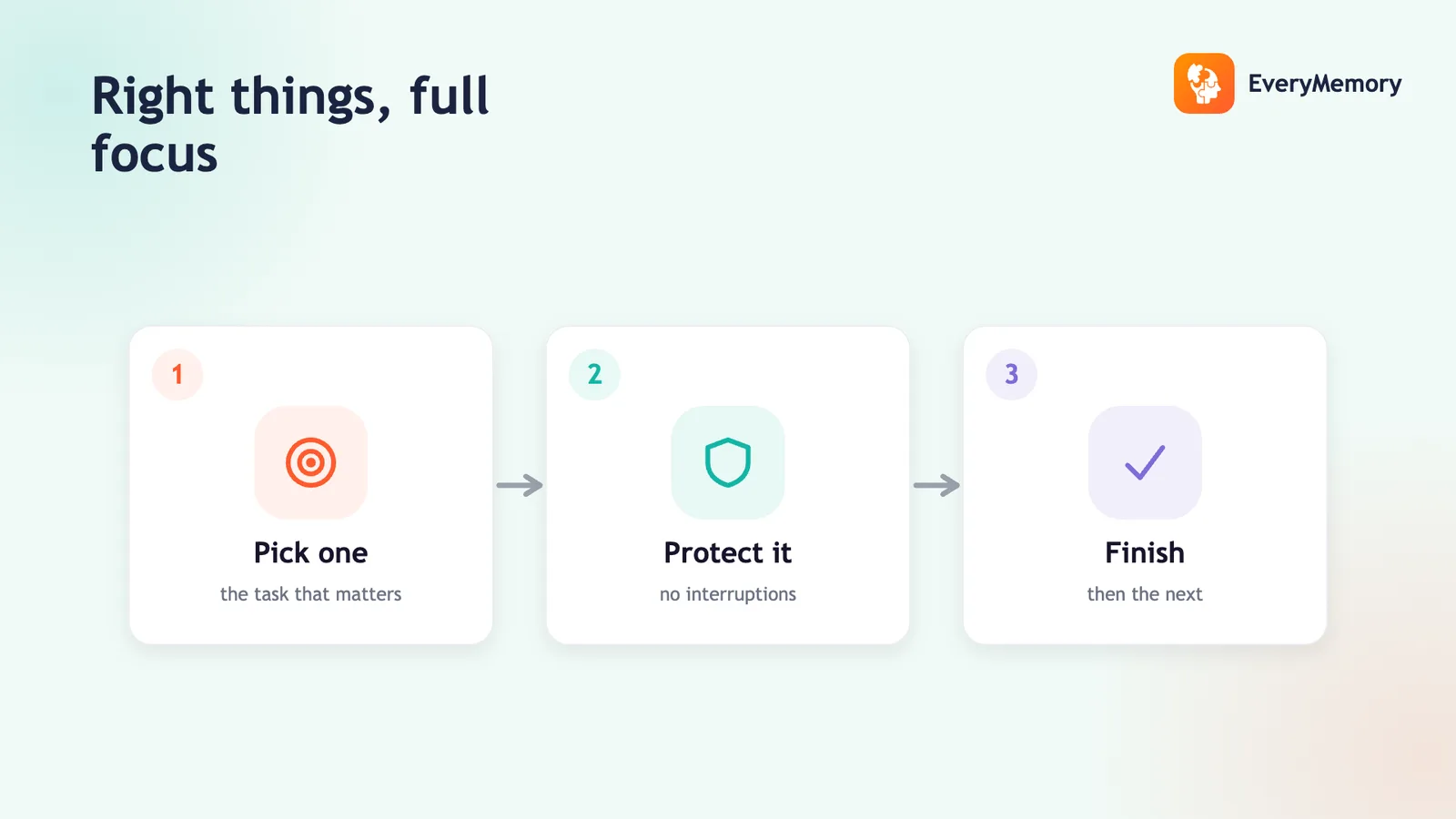
The largest barrier to any avoided task is not the task itself - it is the activation energy required to begin. Neuroscience and behavioural research consistently show that once people start a task, the aversive feelings diminish quickly and motivation follows action, not the other way around. The implication: your only real job is to lower the cost of the first step to near zero.
The classic form of this is the two-minute rule: commit only to working on the task for two minutes. Not finishing it. Not doing it well. Just opening the document, writing one sentence, or reading the first paragraph of the report. Most of the time you will continue past two minutes once the initial resistance dissolves. On the occasions you stop, you have still broken the avoidance pattern and made the next start easier.
"Just open the document" is not a metaphor - it is a literal instruction. Do not think about the whole project. Do not plan your approach. Open the file, sit with it for 120 seconds, and let your brain update its threat assessment. This single habit, applied consistently, is more effective at reducing chronic procrastination than any productivity system built on top of it.
Implementation Intentions, Time-Blocking, and Reducing Friction
Implementation intentions are a deceptively simple tool with a strong evidence base. Instead of "I will work on the report this week," you specify: "When I sit down at my desk at 9 am on Tuesday, I will open the report and write the introduction." The when-then format links the behaviour to a specific cue, bypassing the need to make a decision in the moment. Meta-analyses by Peter Gollwitzer show this approach roughly doubles follow-through compared to goal intentions alone.
Time-blocking locks your implementation intention into the calendar so it competes with other events rather than floating in a vague to-do list. Treat the block as a meeting you cannot cancel. Keep the block shorter than you think you need - a 60-minute block that happens is infinitely better than a 3-hour block that keeps getting postponed.
Environment design is equally important. Every piece of friction between you and the task is an invitation to divert. Close browser tabs, put your phone in another room, use a site blocker if needed. Conversely, make distracting activities slightly harder to access. You do not need iron discipline if your environment already points you toward the right thing - see our guide on how to stay focused for a full environment audit.
Momentum Tools: Pomodoro, Temptation Bundling, and Mini-Deadlines
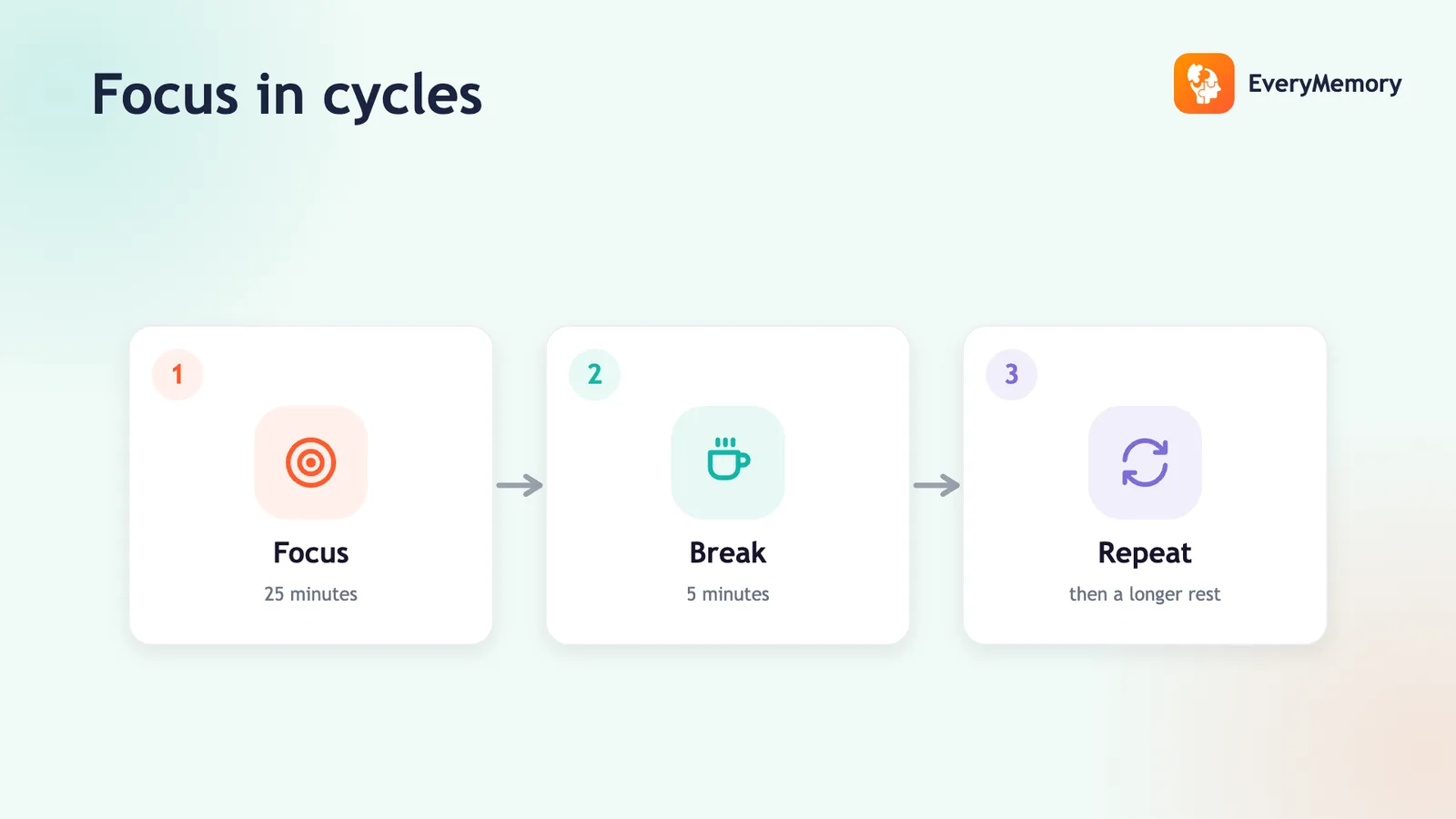
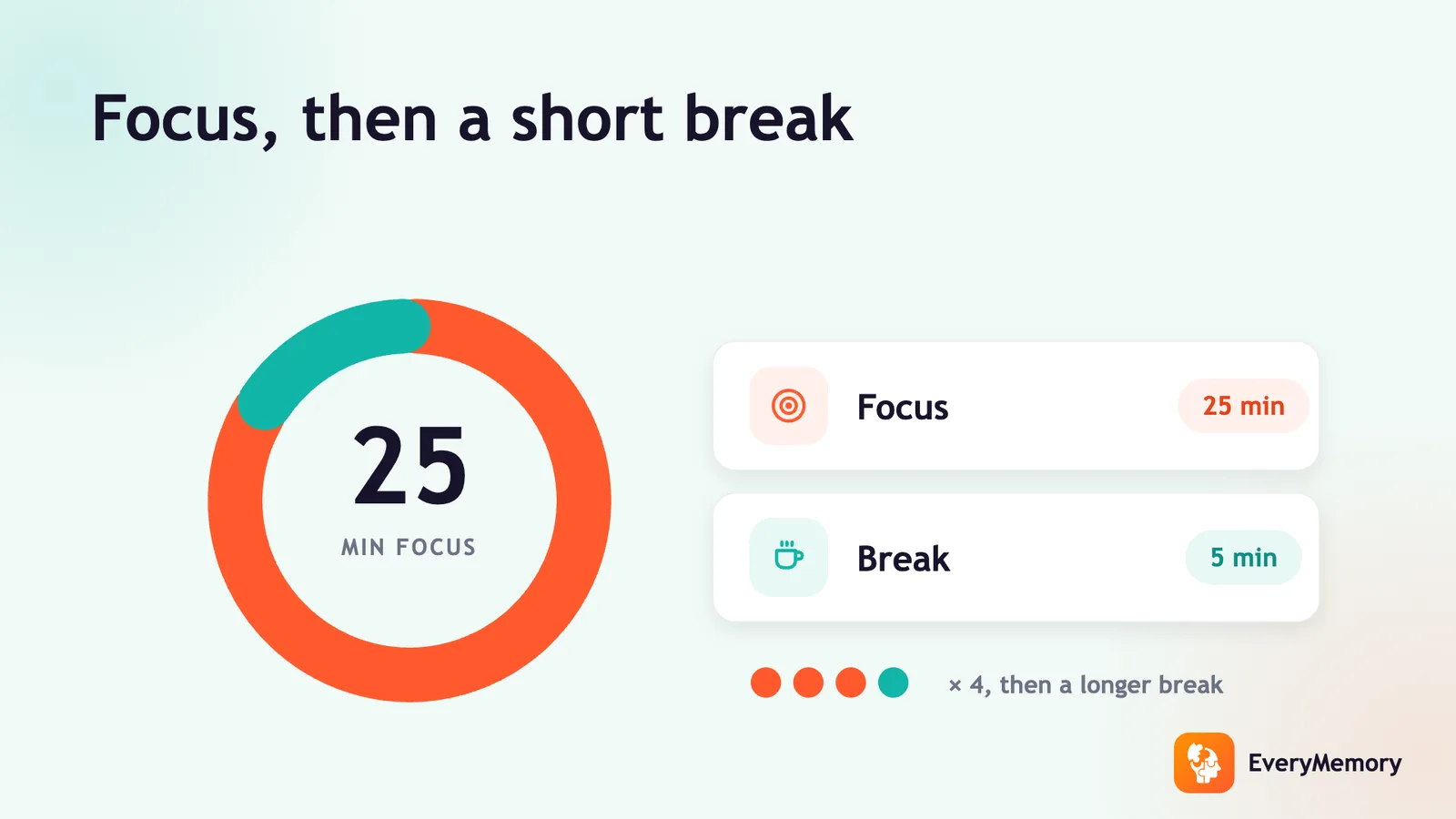
Once you have started, you need tools to maintain momentum without burning out. The Pomodoro technique - 25 minutes of focused work, then a 5-minute break - works partly because it makes the commitment finite. Knowing you only have to focus until the timer rings lowers the perceived cost of starting and prevents the mental fatigue that leads to drift. It also creates a visible rhythm: you can see yourself making progress in concrete, timed units.
Temptation bundling pairs a task you avoid with a reward you genuinely enjoy. Only listen to your favourite podcast while doing your expense reports. Only have your preferred coffee while working on a difficult email. Over time the reward becomes associated with the task itself, reducing the aversive flavour. Katherine Milkman's research at Wharton found it meaningfully increased low-motivation behaviours across multiple domains - the same principle transfers directly to cognitively demanding work.
Self-imposed mini-deadlines exploit present bias in your favour. Break a project into milestones and assign each a specific date, ideally one you share with another person. External accountability makes future deadlines feel more concrete and near, narrowing the temporal discounting gap. Even telling a friend "I will send you the draft by Thursday" changes the reward landscape significantly.
A Worked Example: Walking One Dreaded Task Through the System
Say you have been avoiding writing a performance self-review for two weeks. The task triggers anxiety (what if it sounds arrogant or, worse, inadequate?) and it feels large and undefined. Step one: name the feeling - anxiety about judgment - without self-criticism. That recognition alone slightly reduces its power. No guilt about the two weeks of avoidance; research says forgiving yourself here improves your odds of acting next.
Step two, shrink the start: your only commitment is to open the document and type three bullet points of raw notes, no editing, two-minute timer running. You are not writing the review; you are dumping thoughts. Step three, set an implementation intention: "When I finish my morning coffee tomorrow at 8:30 am, I will open the draft and add two more bullet points." Block 25 minutes on Thursday at 10 am labelled "self-review Pomodoro 1" and tell a colleague you will have a draft by Friday.
Step four, environment prep the night before: close all unrelated tabs, place the document on your desktop so it is the first thing you see. Bundle a small reward - your favourite playlist plays only during that 25-minute block. By Friday you have a draft, not because you summoned superhuman willpower, but because you systematically lowered every barrier between you and the first word. The same sequence works for tax returns, difficult conversations, or creative projects. For a broader framework on structuring your day around high-value work, see the guide on how to be more productive.
When Procrastination Is More Than a Habit
For most people, the tactics above will produce clear improvement within days. But procrastination that is severe, persistent, and tied to ongoing low mood, intense anxiety, or significant difficulty with attention can be a signal worth taking seriously. Chronic avoidance is common in anxiety disorders, depression, and ADHD-type presentations. In those cases, behavioural tricks help at the margins, but addressing the underlying pattern with a qualified professional - a therapist, psychologist, or GP - tends to produce more durable change.
This is not a reason to catastrophise if you procrastinate regularly - most people do. It is simply worth noticing whether the pattern is narrowly situational (you avoid one type of task) or pervasive and distressing across all areas of life. The latter deserves more than a productivity hack.
✅ Try this today - The 2-Minute Start + 25-Minute Block
Pick one task you have been avoiding for at least three days and apply this sequence right now - no preparation needed.
- Name the feeling the task triggers (boredom, anxiety, frustration) without judgment, then set a two-minute timer and do only the smallest possible first action: open the file, write one sentence, or read the first paragraph. Stop when the timer rings if you need to - the point is to break the avoidance, not to finish.
- Set a 25-minute Pomodoro block for today or tomorrow and write it in your calendar as a fixed appointment. Add one concrete when-then commitment: "When [specific cue at a specific time], I will [specific action on this task]."
- Remove one piece of friction before the block starts - close a tab, silence your phone, or move a distraction out of arm's reach - and add one small reward you will only enjoy during the focus block, such as a favourite drink or playlist.
⚠ When to talk to a professional
This article describes procrastination as a common behavioural pattern and is not a substitute for professional advice; if avoidance is severe, persistent, or linked to significant distress, please speak with a qualified healthcare professional.