 EveryMemory
How to Stay Focused for Longer
Sustained focus isn't endless concentration - it's cycles of deep focus and recovery. Work with your attention's rhythm, protect the drop-in, and manage energy.
Part of the guide: Brain Exercises for Seniors: The Complete Guide →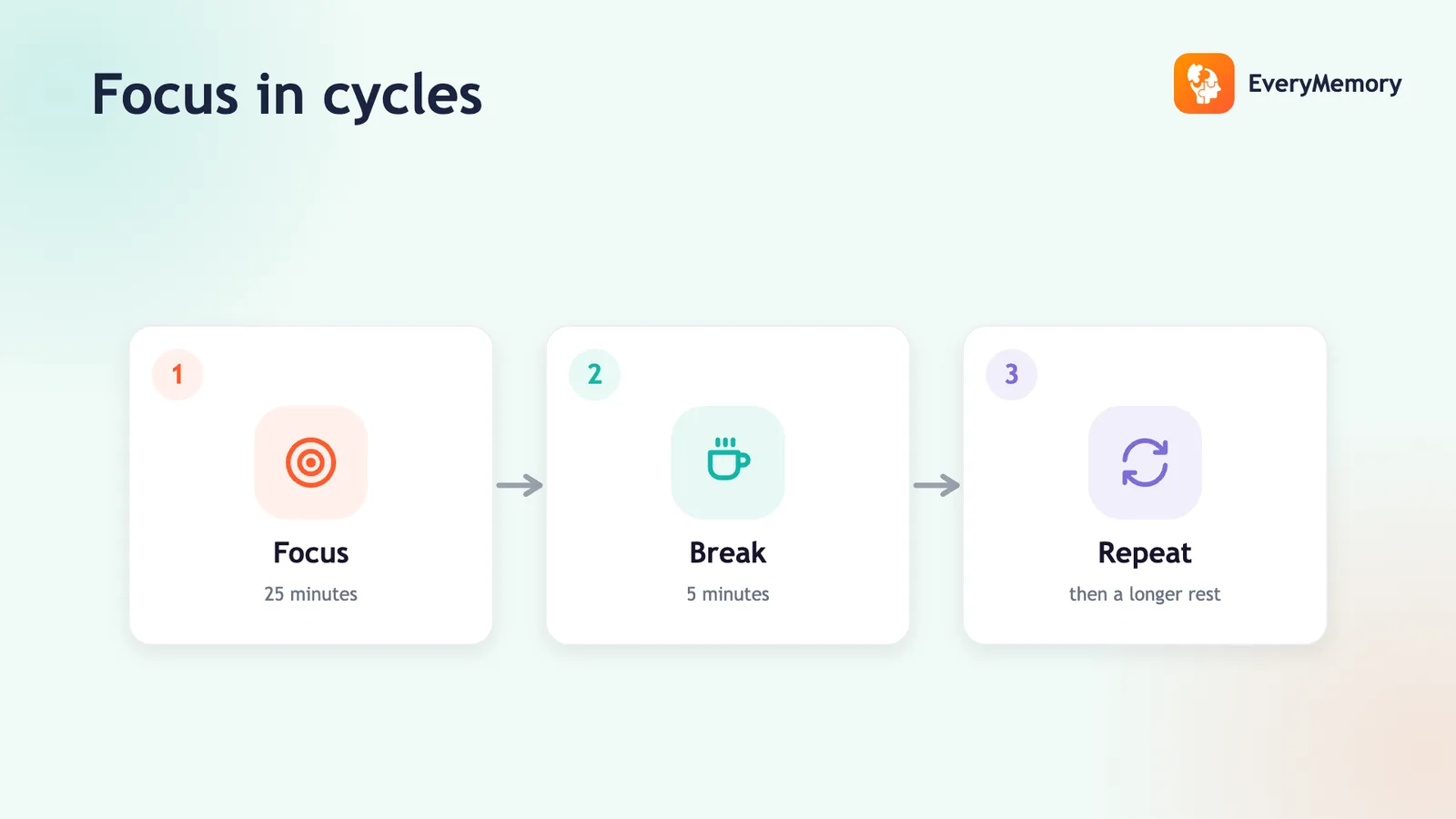
⚡ Quick answer
To stay focused for longer, work with your attention's natural rhythm rather than against it: alternate focused blocks with real breaks, protect the start of a session from distractions so you can drop in, and manage your energy across the day. Sustained focus isn't endless concentration - it's repeated cycles of deep focus and recovery.
Key takeaways
- Sustained focus is cycles of deep focus and recovery, not one endless stretch.
- Protect the start of a session - focus takes a few minutes to drop into, and an interruption resets it.
- Take real breaks (move, look away), not phone breaks, which fragment attention.
- Manage energy across the day and protect sleep, which sets the focus ceiling.
Trying to concentrate continuously for hours is a recipe for fading fast and feeling like you 'can't focus'. Attention doesn't work that way.
Here's how to stay focused for longer by working with your attention instead of against it.
Focus comes in cycles, not one long stretch
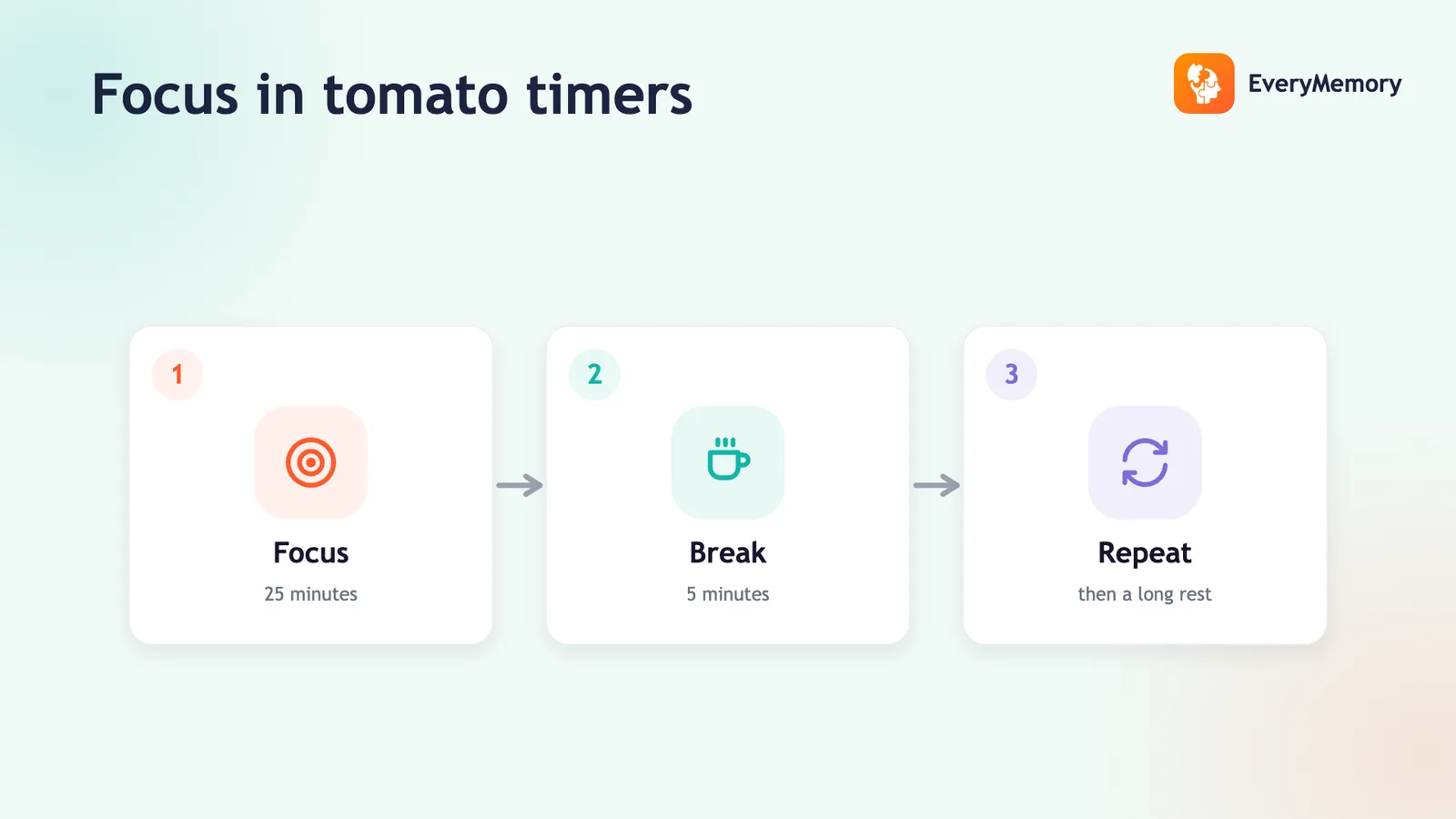
Attention naturally rises and dips; expecting unbroken concentration for hours sets you up to fail. Instead, plan for cycles - a focused block, then a genuine break to recover - so you can return sharp rather than grinding to a halt. This is the rhythm the Pomodoro technique builds in.
Protect the drop-in
Focus doesn't switch on instantly - it takes a few minutes to drop into a task, and a single interruption can knock you out and force you to start over. So protect the start especially: distractions removed, one clear task, and a few patient minutes before deciding you 'can't focus today'.
Take real breaks
A break spent scrolling your phone fragments attention rather than restoring it. Real recovery - standing, stretching, looking out a window, a short walk - lets attention recharge so the next block is strong. Skipping breaks is why focus collapses by mid-afternoon.
Manage your energy across the day
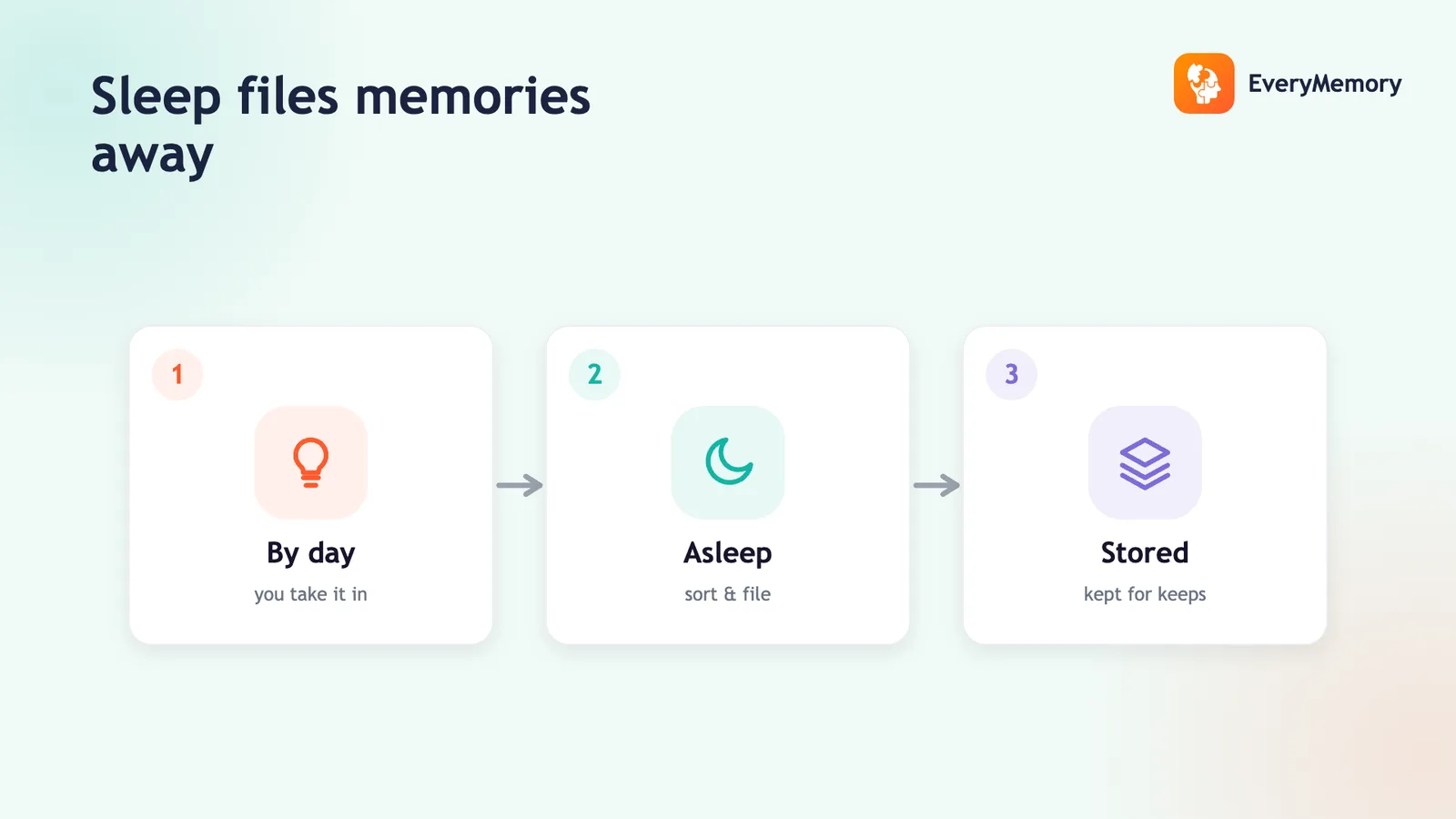
You can't sustain focus on an empty tank. Do demanding work at your peak hours, leave shallow tasks for the dips, eat and hydrate steadily, and protect your sleep, which sets the day's focus ceiling (sleep and memory).
Train the focus muscle
How long you can hold focus grows with practice. Short daily sessions of single-tasked attention extend your capacity over time - the idea behind the focus and attention workout and improving focus generally.