 EveryMemory
How to Do Deep Work
Deep work is distraction-free focus on demanding tasks - where your best output comes from. How to set it up, and how to build the capacity for it.
Part of the guide: Brain Exercises for Seniors: The Complete Guide →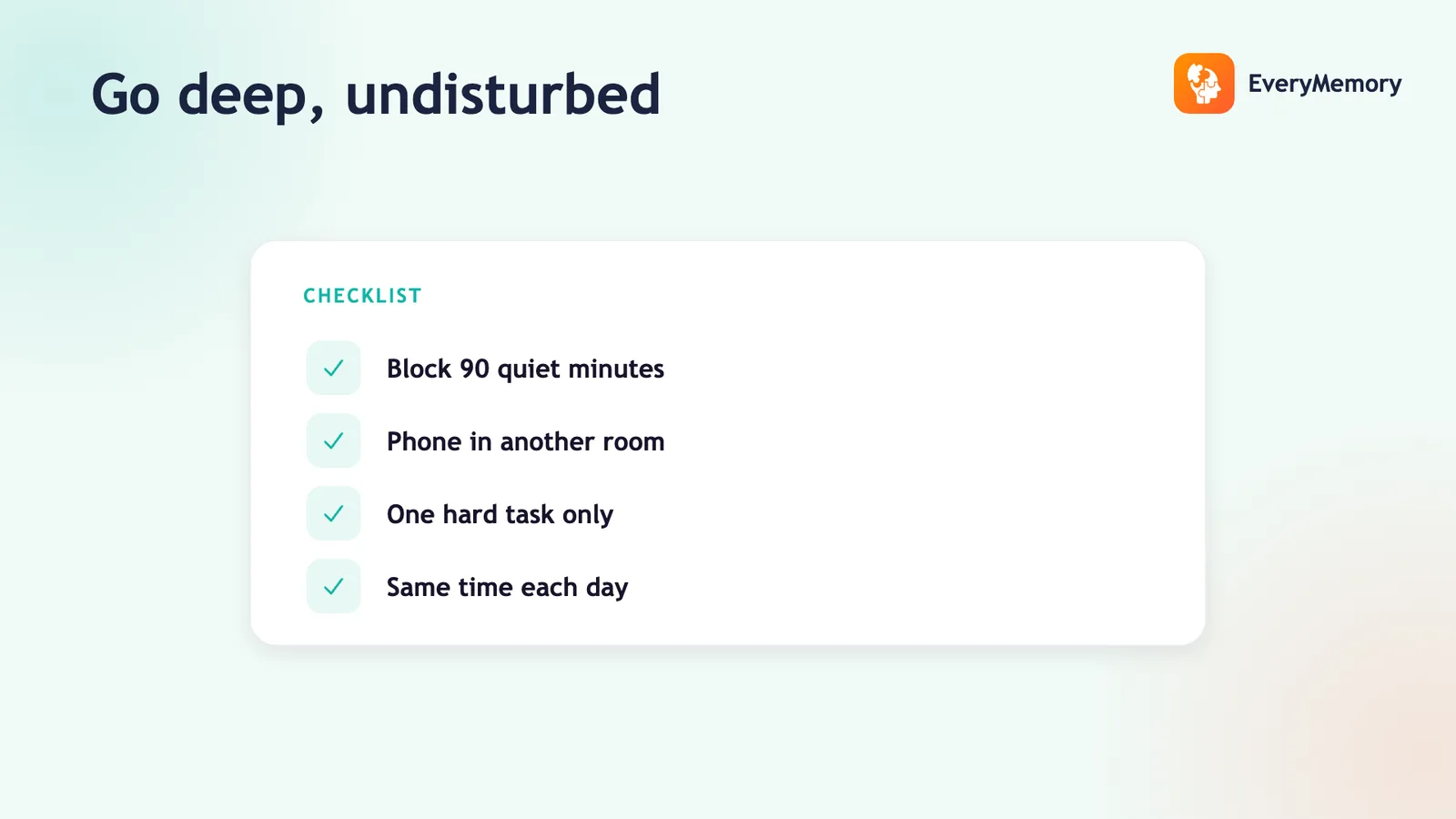
⚡ Quick answer
Deep work is focusing without distraction on a cognitively demanding task - the kind of concentration that produces your best output. To do it, schedule protected blocks, eliminate distractions entirely (phone away, notifications off), start with a clear single goal, and build up the length gradually. It's a trainable skill, not a personality trait.
Key takeaways
- Deep work is distraction-free focus on demanding tasks - where your best output comes from.
- Schedule protected blocks (60–90 min) at peak energy and defend them like meetings.
- Eliminate distractions entirely, not just reduce them - one interruption collapses the deep state.
- Start with one clear goal, and build the capacity gradually; it's a trainable skill.
Most valuable work - writing, coding, designing, solving hard problems - needs sustained, undistracted concentration. That state has a name: deep work. And almost nothing in modern work life supports it by default.
Here's how to make deep work happen, and build the capacity for more of it.
What deep work is - and why it matters
Deep work is undistracted focus on a demanding task; its opposite is shallow work - email, messages, admin - done while half-distracted. The valuable, hard-to-replicate output almost always comes from deep work, yet most workdays are spent shallow. Reclaiming even a little deep work has an outsized effect on what you produce.
Schedule protected blocks
Deep work rarely happens by accident - you schedule it. Block 60–90 minutes, defend it like a meeting, and pick a consistent time (often your peak-energy morning). Telling colleagues you're heads-down, and setting status to busy, protects the block from interruptions (improving focus at work).
Eliminate distractions entirely
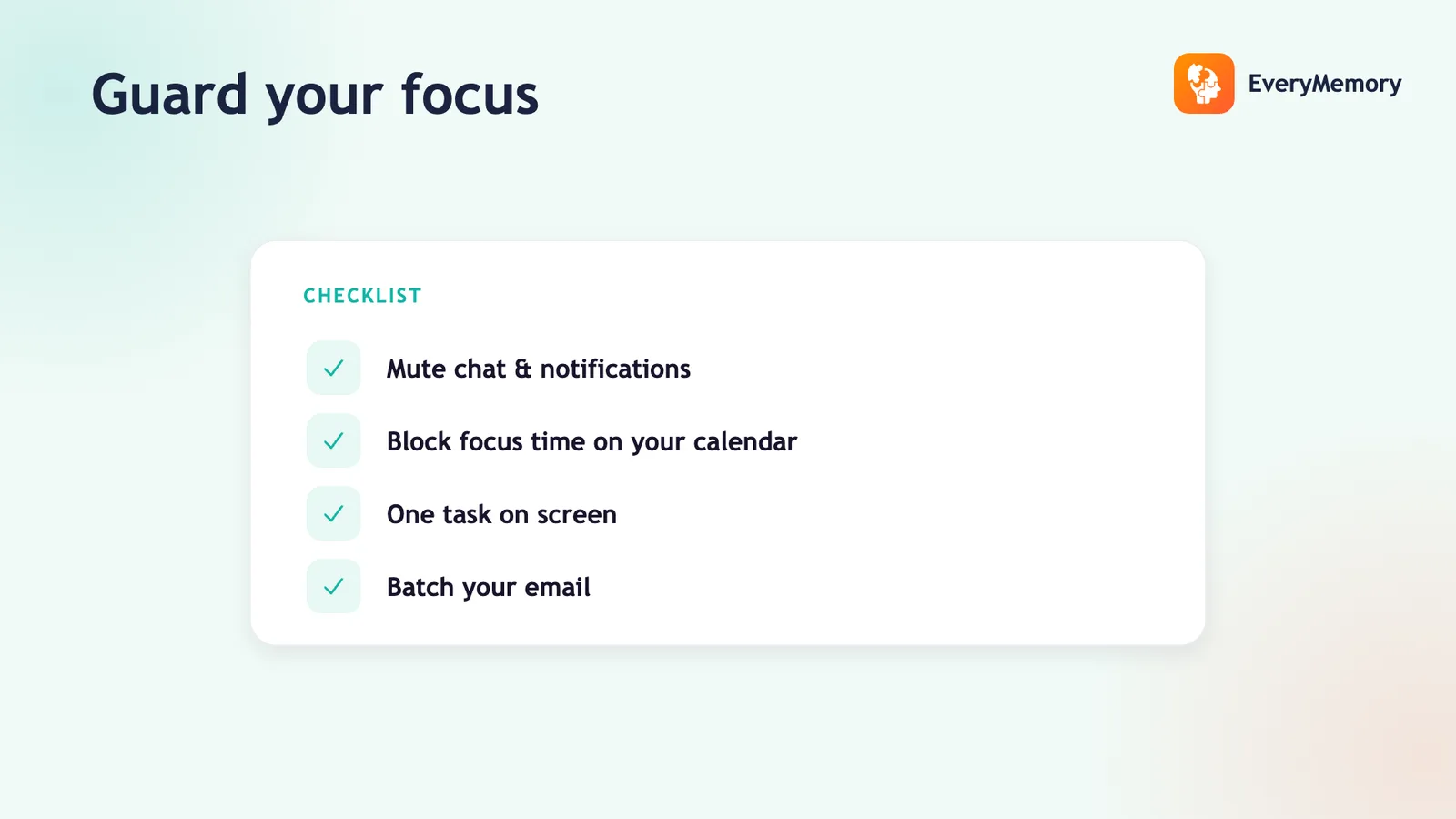
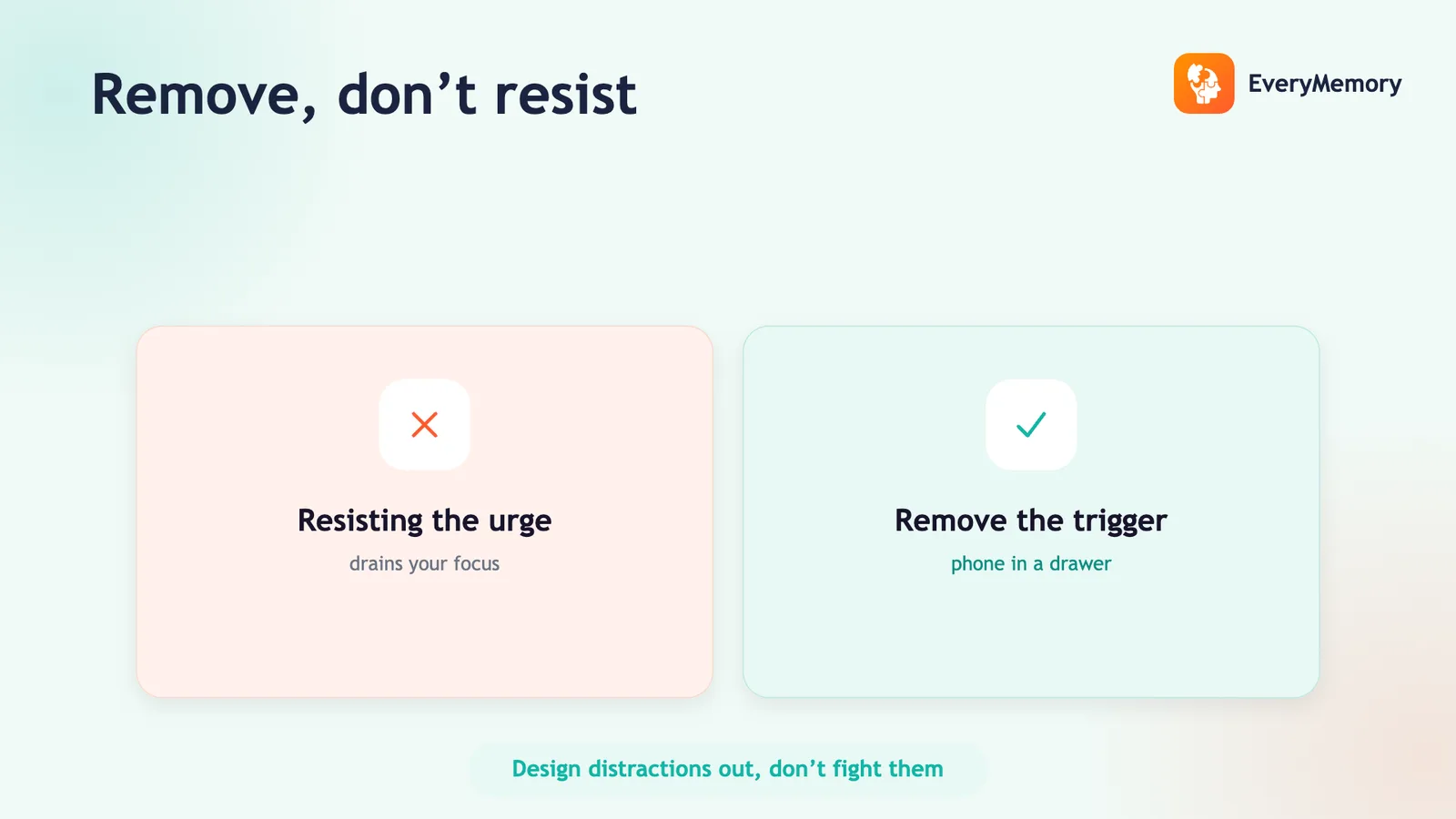
Deep work needs zero-distraction conditions, not low-distraction. Phone in another room, notifications off, email and chat closed, one task on screen. A single interruption can collapse the deep state and cost you minutes to rebuild - see how to avoid distractions.
Start with one clear goal
Vague intentions invite drifting. Begin each block knowing exactly what 'done' looks like - one specific outcome. A clear target gives your attention something to lock onto and makes it obvious when you've succeeded.
Build the capacity gradually
Deep focus is a trainable skill, and if you're out of practice, an hour feels impossible at first. Start with shorter blocks and extend them as your concentration strengthens - the same way you'd build any capacity (attention span). Protect rest between blocks so you can go deep again.