EveryMemory
How to Avoid Distractions
Willpower loses to a buzzing phone. Remove distractions instead of resisting them, handle the internal ones, and ride out each pull with short focused blocks.
Part of the guide: Brain Exercises for Seniors: The Complete Guide →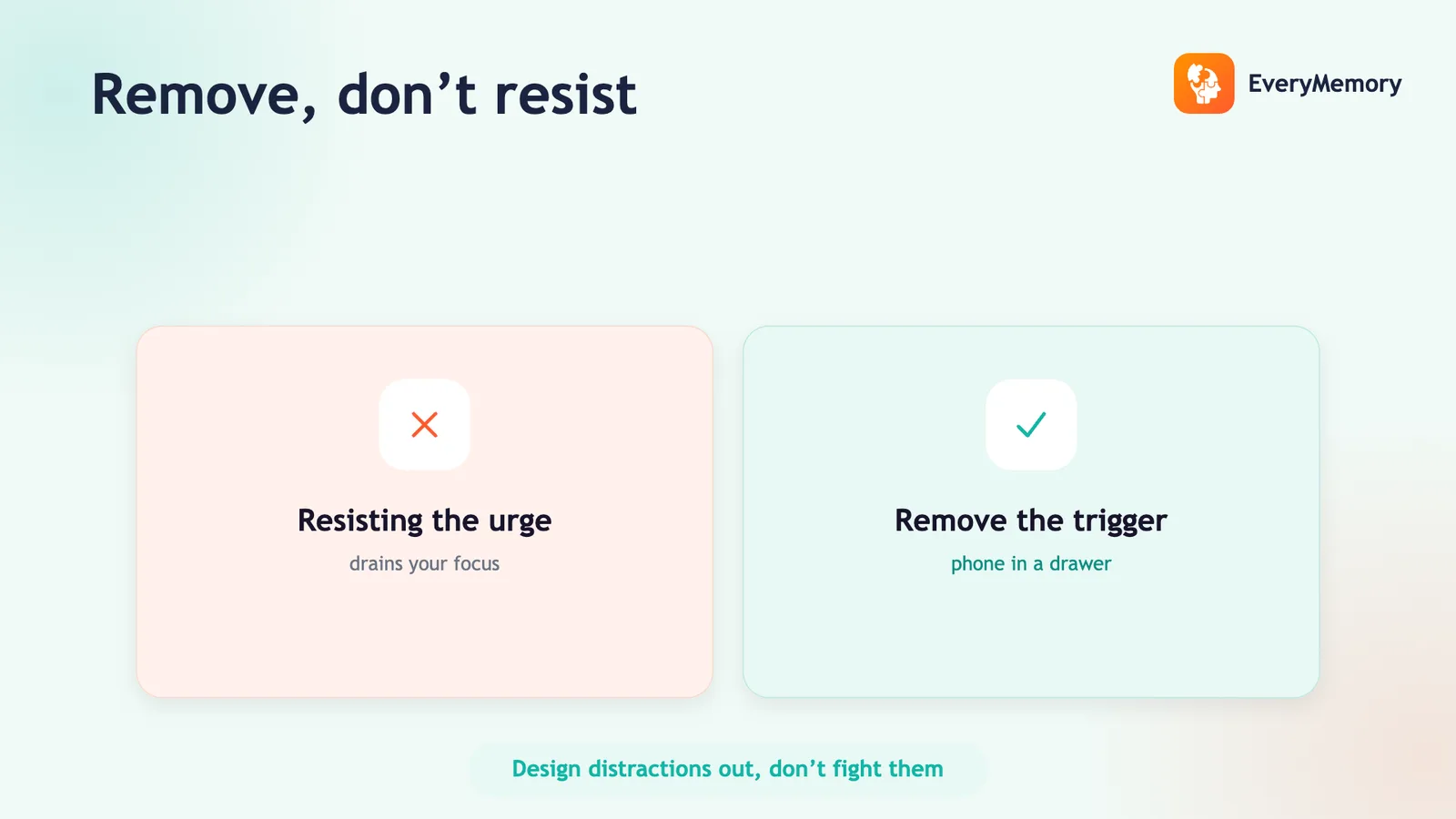
⚡ Quick answer
To avoid distractions, remove them rather than resist them: put your phone in another room, silence notifications, close unrelated tabs, and clear your workspace. Distance beats willpower - every distraction within reach drains attention even unused. For internal distractions, jot the stray thought on a notepad to deal with later, and work in short focused blocks so each pull is easier to ride out.
Key takeaways
- Remove distractions rather than resist them - resisting burns the attention you need.
- Use distance: phone in another room, notifications off, unrelated tabs closed, desk clear.
- For internal distractions, jot the stray thought on a notepad to handle later.
- Each interruption costs more than its seconds, because of the time to drop back into focus.
The reason you can't ignore distractions isn't weak willpower - it's that resisting a distraction uses the very attention you're trying to protect. So you lose either way.
The trick is to not have to resist. Here's how.
Why distractions win
A visible phone or open inbox pulls at your attention even when you don't act on it, and the effort of resisting drains your focus. Willpower is the wrong tool - it runs out, and it costs you the attention you need for the task. The reliable move is to remove the temptation so there's nothing to resist.
Remove external distractions
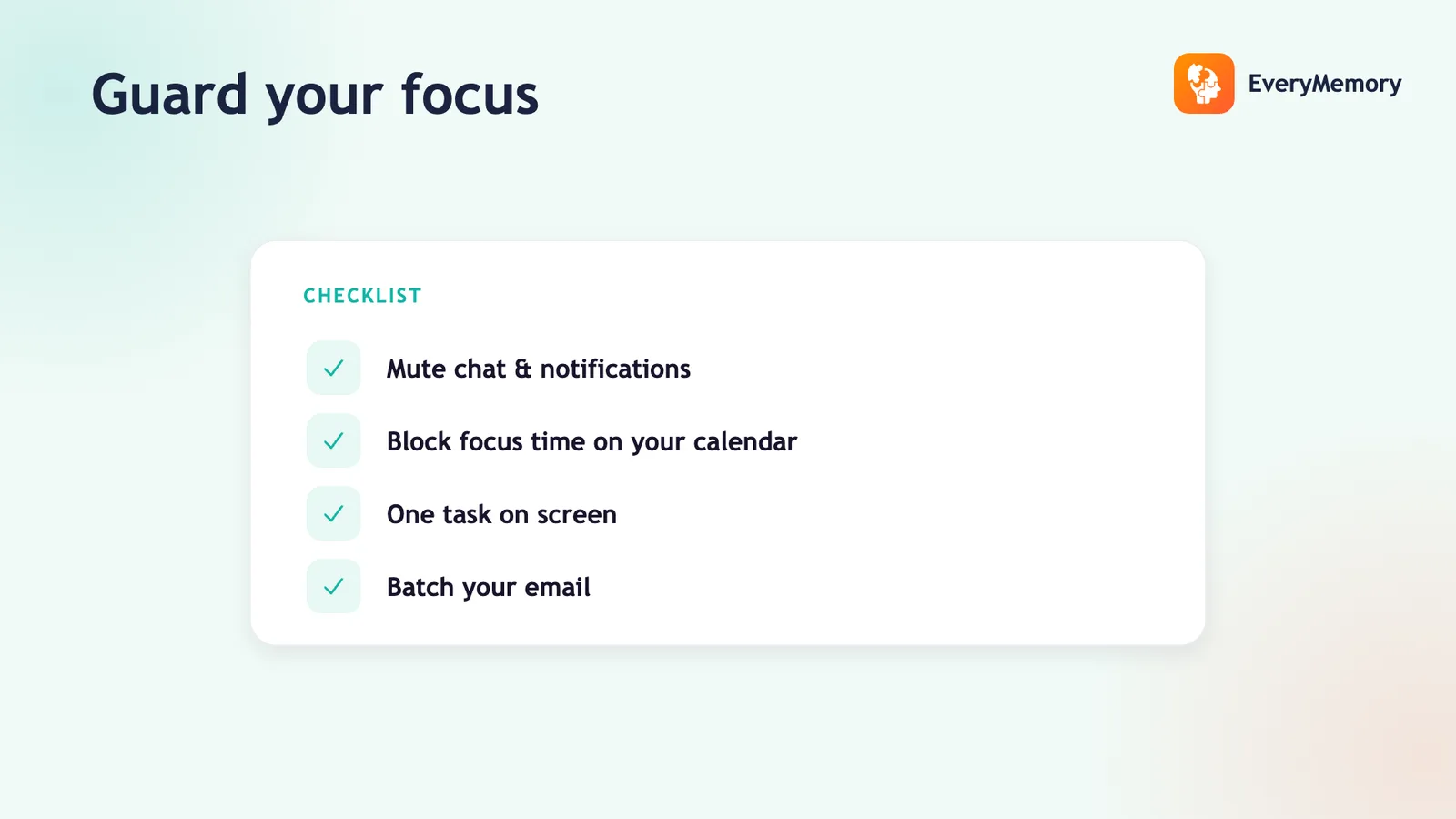
Use distance, not discipline: phone in another room (not just face-down), notifications off, email and chat closed, one task on screen, a clear desk. Each removed distraction is one you never have to fight. If noise is the issue, mask it with steady background sound (does music help concentration?).
Handle internal distractions
Not all distractions come from outside - stray thoughts, worries, and 'I should also do X' pull you off task. Keep a notepad and jot each one down to deal with later. Capturing it tells your brain it's safe to let go, so you can return to the task instead of looping on it.
Count the real cost of an interruption
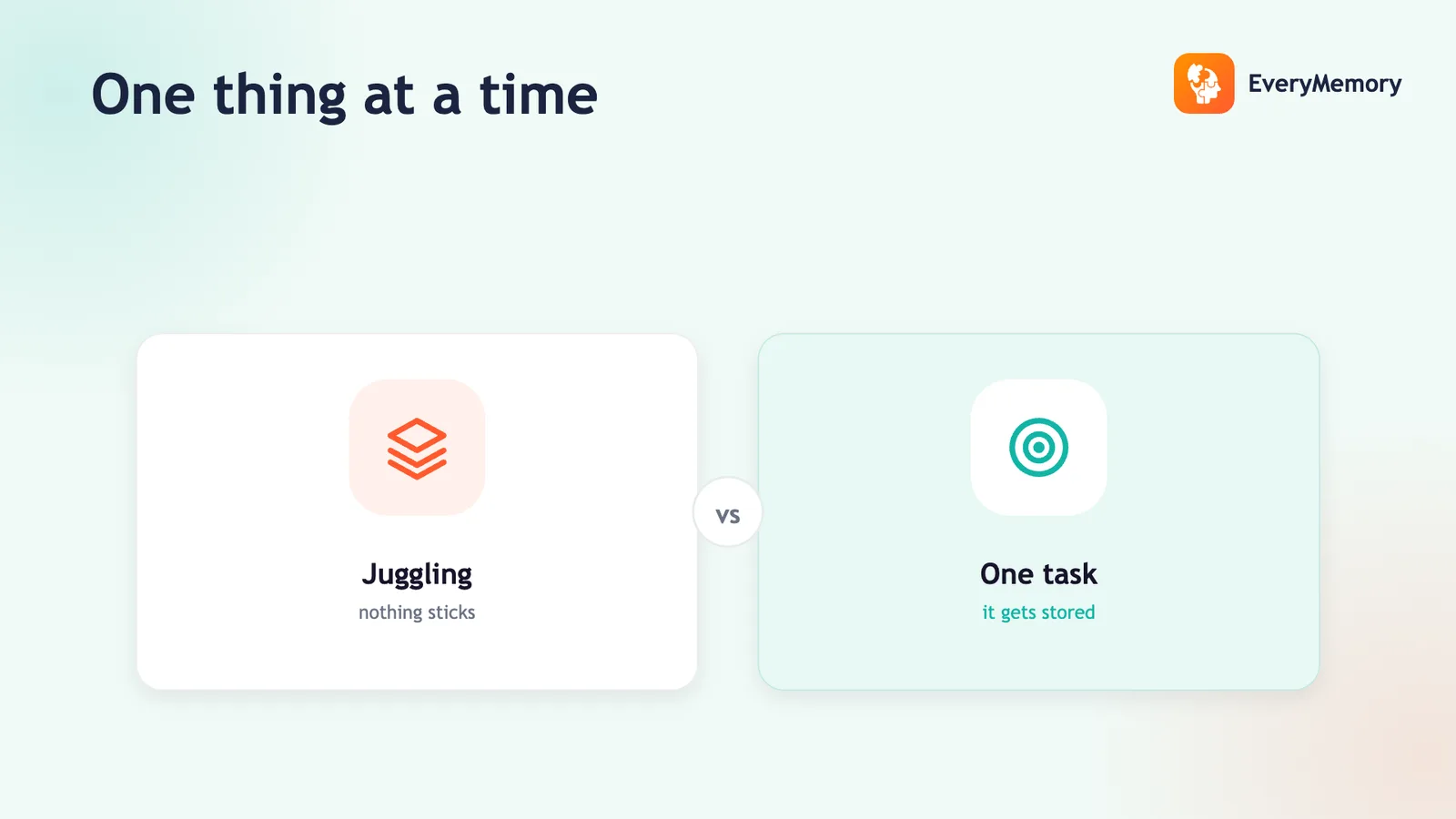
Each interruption costs far more than the seconds it takes, because of the time and attention to drop back into deep focus afterward - the 'attention residue' that lingers from the last thing. That's why a steady stream of small distractions wrecks a workday even though none feels big (does multitasking affect memory?).
Work in short focused blocks
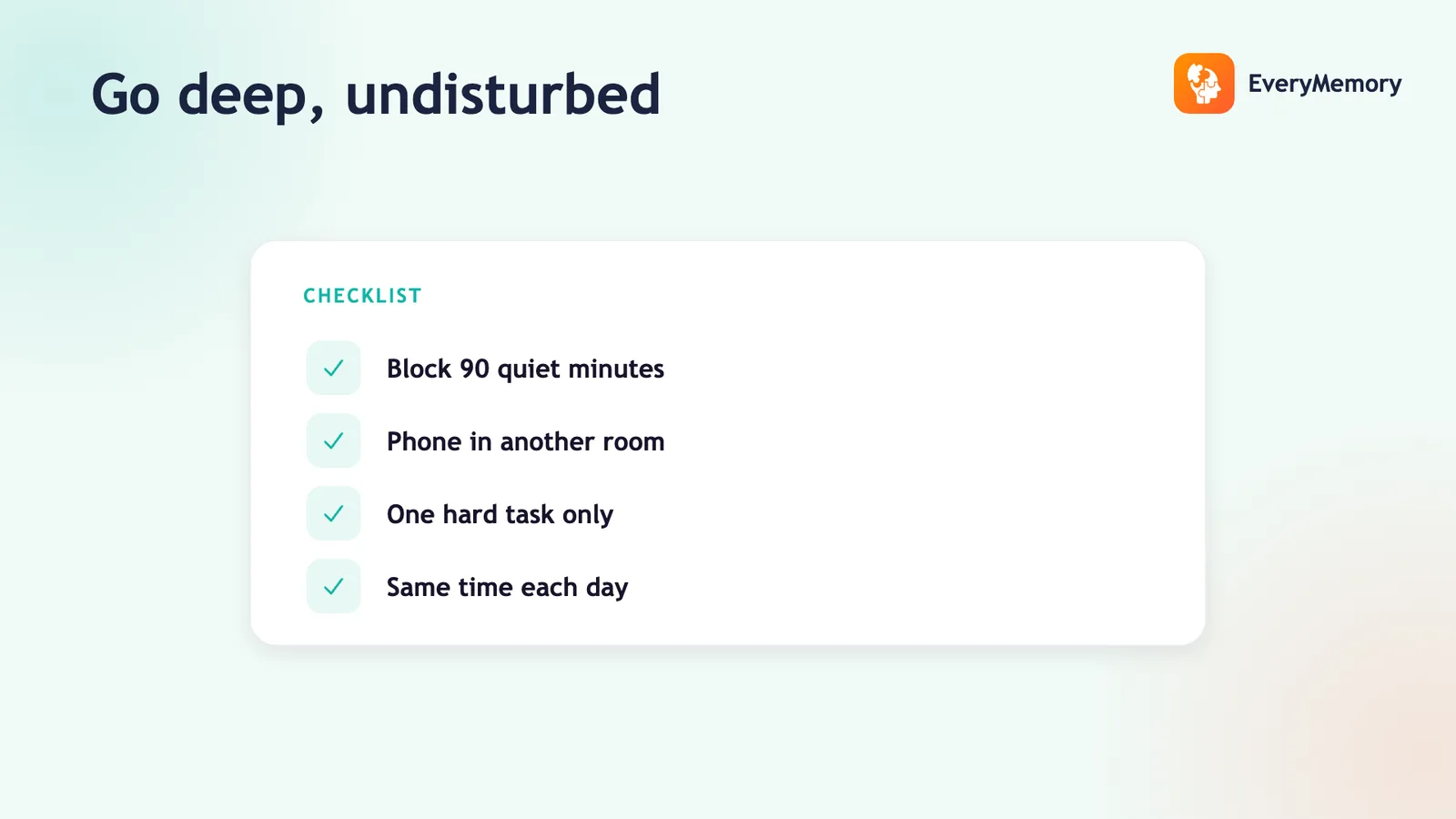
A defined block - say 25–50 minutes - is easier to keep distraction-free than an open-ended stretch, because the end is in sight and you've a break coming (the Pomodoro technique). When a pull comes, it's easier to think 'after this block' than to drop everything.