 EveryMemory
How to Keep an Elderly Mind Active
Keeping an older relative's mind active comes down to variety, novelty, and social contact - woven into days they enjoy rather than imposed as exercises.
Part of the guide: Helping a Parent With Memory Changes: The Complete Family Guide →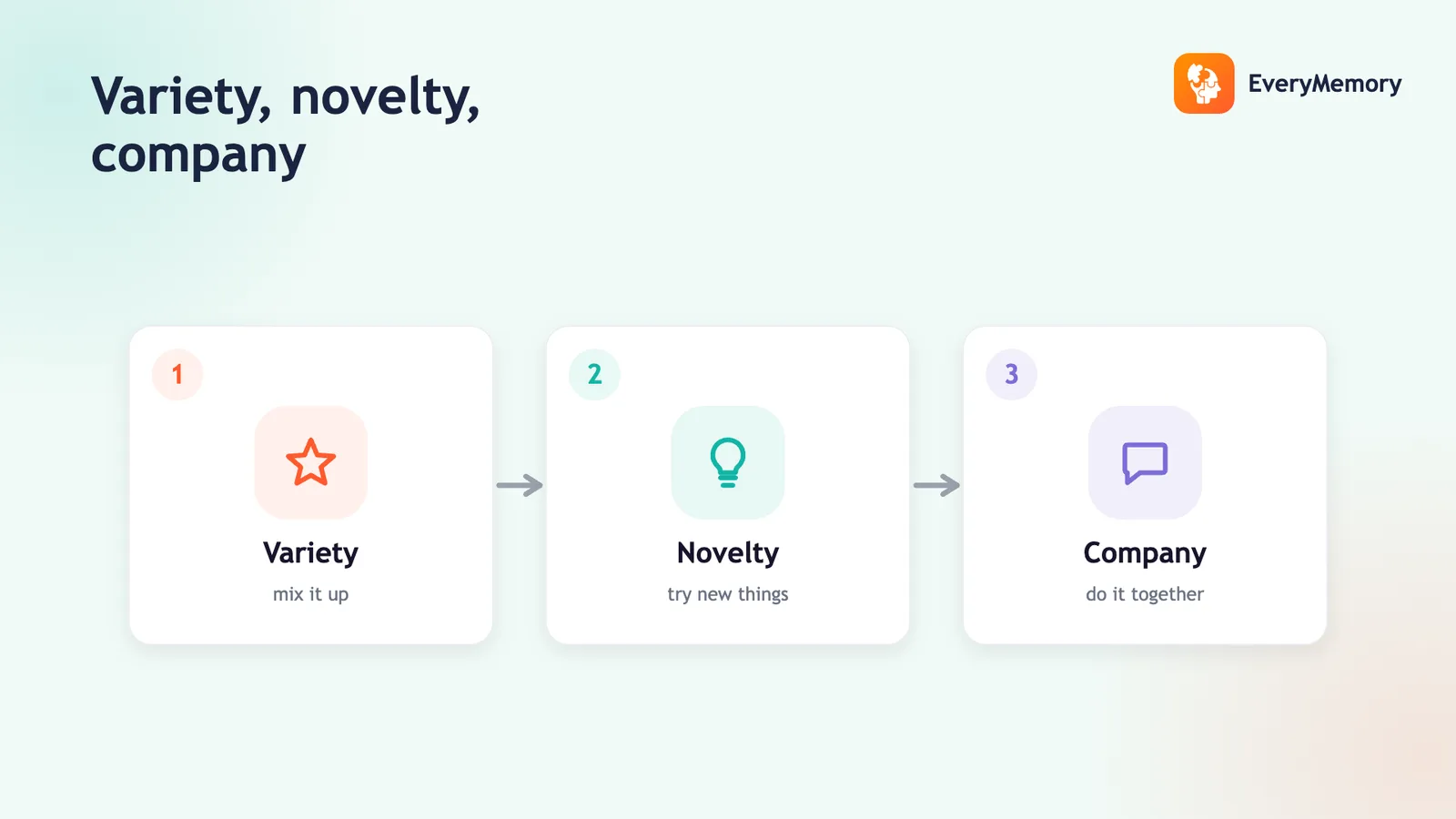
⚡ Quick answer
Keep an elderly mind active by building variety, gentle novelty, and social contact into enjoyable everyday life: vary hobbies and conversations, learn small new things, stay connected to people, and keep hands and mind busy with activities they like. Novelty and people matter more than repetitive drills. Weave it into days they enjoy rather than imposing exercises, and follow their interest and energy.
Key takeaways
- Variety, novelty, and social contact matter more than drills.
- Older minds keep learning - a small new thing each week helps.
- Weave activity into enjoyable life, not on top of it as a chore.
- Conversation and people engage the mind more than any puzzle.
An active mind isn't built from hard exercises. It's kept active by a life with variety in it - different people, new things to learn, conversations, problems to solve, hands to keep busy. For an older relative, the aim is to fill the days pleasantly, not to set tasks they have to complete.
Three things matter most: variety so nothing gets stale, a little novelty so there's something new to chew on, and social contact, which engages the mind more than almost anything else. Build those in gently and you've done the real work.
Variety keeps things from going stale
Doing the same thing every day, however worthy, stops asking much of the mind once it's a habit. A bit of variety - a different walk, a new card game, an unfamiliar recipe, a podcast on a fresh topic - keeps the day interesting and the mind gently working to keep up.
You're not chasing difficulty, just freshness. Rotate activities, change the scenery now and then, and follow whatever your relative shows curiosity about. For everyday ideas to rotate through, see keeping your brain active and brain exercises for seniors.
What actually keeps a mind engaged
Some ingredients do far more than others. Here's where to put the effort.
| Ingredient | Why it helps |
|---|---|
| Social contact | Conversation engages memory, attention, and emotion at once |
| Novelty | New things ask the mind to work; routine stops doing so |
| Learning | A new word, song, or skill gives the mind something to build on |
| Hands-on hobbies | Crafts, cooking, and gardening combine focus and pleasure |
| Choice & purpose | Feeling useful and in control keeps people engaged |
Learning never stops being possible
Older minds keep learning, and a small new thing each week is a gift. It might be a few words of a language, a card game's rules, a recipe, the names of garden birds, or how to video-call a grandchild. Learning together is best - you're a companion, not an instructor.
Keep it light and chosen by them. The point isn't mastery; it's the pleasant work of taking something new on board. For a structured but gentle daily option, see daily brain exercises.
Build it into life, not on top of it
The mistake is treating mental activity as a separate chore - twenty minutes of puzzles like medicine. It works far better woven into things your relative already enjoys, so it never feels like a task.
- Turn meals into conversation with real questions, not small talk.
- Swap one familiar activity each week for something slightly new.
- Protect regular contact with people - calls, visits, a club.
- Pursue hobbies together rather than handing them over.
- Offer a small new thing to learn, chosen by them.
✅ Try this today - A week of gentle variety
Add small novelty to a familiar week without disrupting comforting routines.
- Keep the daily anchors - meals, walks, calls - exactly as they are.
- Add one new thing this week: a different walk, a new recipe, an unfamiliar quiz.
- Plan one social moment beyond the household - a visit or a call.
- Learn one small thing together, chosen by your relative.
- Notice what they enjoyed most and bring more of that next week.
⚠ When to talk to a professional
Keeping a mind active is about enjoyment and engagement, not treating or preventing any condition. If an older relative's memory or thinking seems to be changing noticeably, consult their doctor or a qualified professional.