 EveryMemory
Helping Seniors Stay Mentally Active
Helping an older relative stay mentally active is mostly about removing barriers and adding gentle encouragement - supporting interest and independence rather than imposing tasks.
Part of the guide: Helping a Parent With Memory Changes: The Complete Family Guide →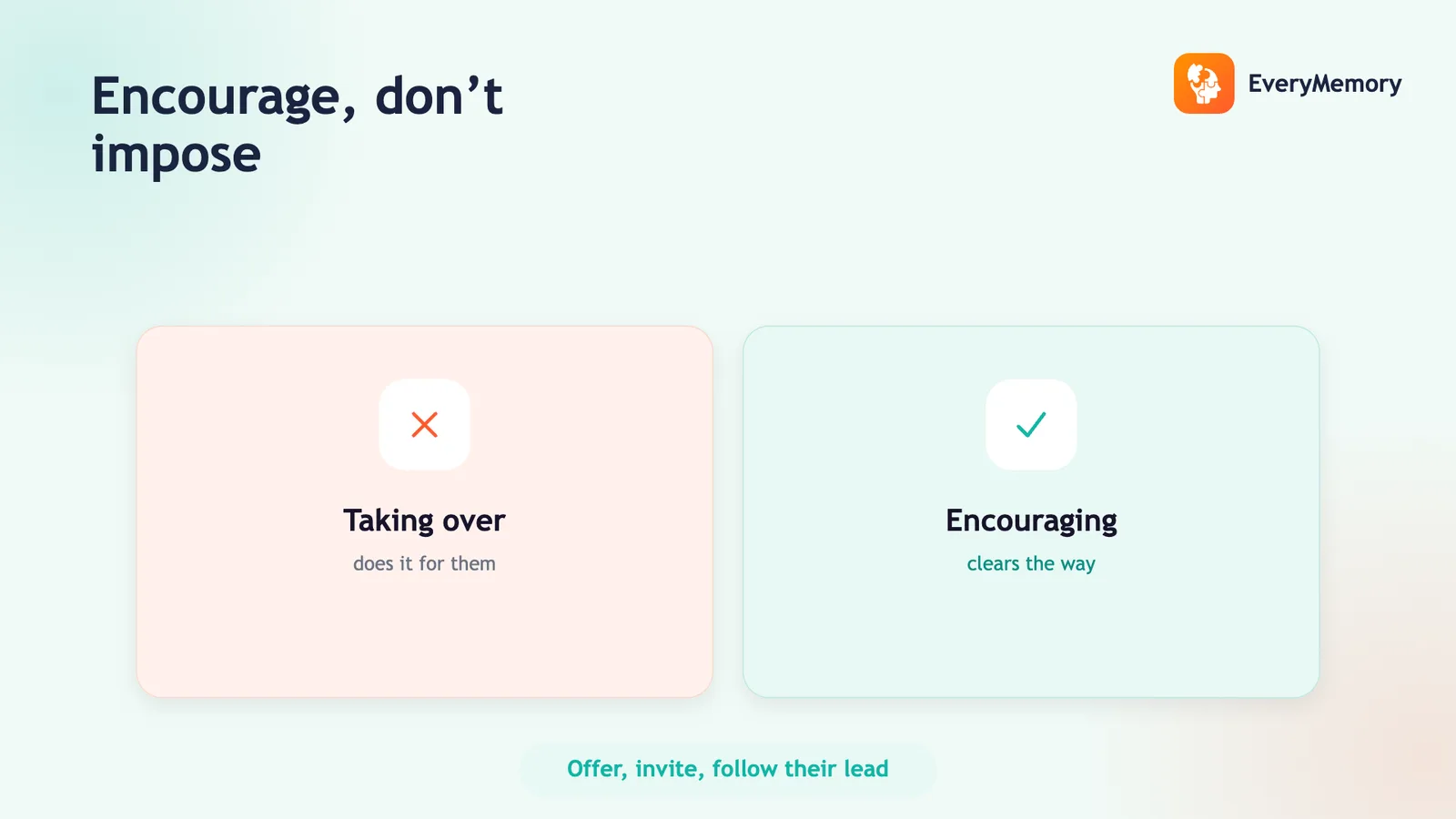
⚡ Quick answer
Help seniors stay mentally active by removing barriers and gently encouraging their own interests: fix practical obstacles like eyesight or transport, rebuild social contact, restore confidence by keeping activities low-pressure, and do things alongside them rather than for them. Support independence and choice throughout. The aim is to enable engagement and protect dignity, not to assign tasks or test memory.
Key takeaways
- Clear barriers first - eyesight, hands, transport, isolation, confidence.
- Rebuilding social contact does more than any single activity.
- Encourage and join in rather than nag or assign tasks.
- Support independence and dignity; staying active isn't a treatment.
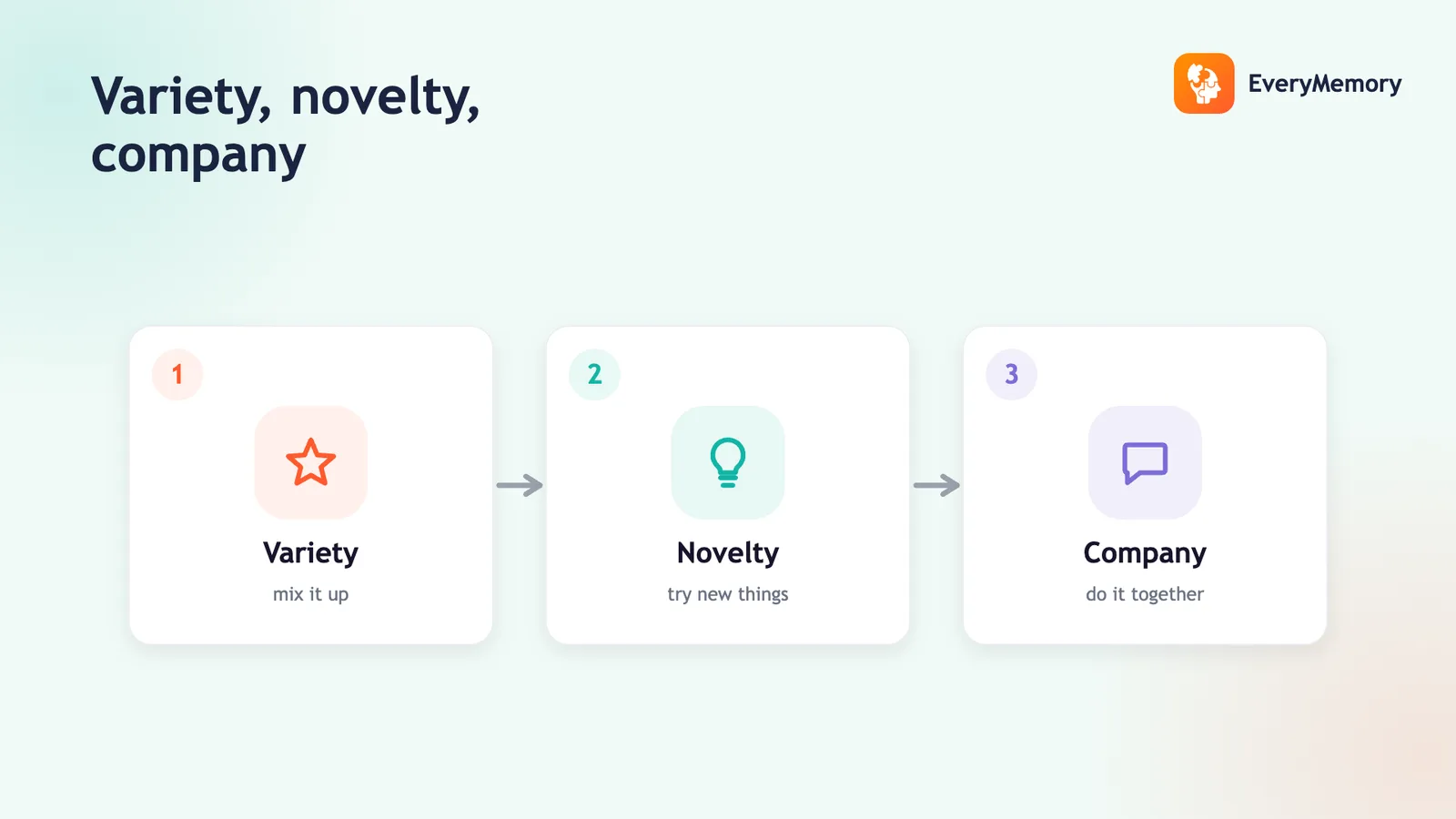
Helping an older relative stay mentally active is less about supplying activities and more about clearing the path to them. Often the interest is there but something gets in the way - poor eyesight, a lost social circle, low confidence, or simply that no one's around to do things with. Remove the barrier and engagement tends to return on its own.
The spirit of this is support, not management. You're encouraging, enabling, and joining in - not assigning exercises or checking up on anyone. The goal is a relative who feels capable, connected, and interested in their own days.
Clear the barriers first
Before adding activities, ask what's getting in the way. Faded eyesight makes reading and cards hard; arthritis makes fiddly tasks frustrating; no transport cuts off clubs and friends; a shrinking social circle removes the company that makes things worth doing. Each of these has a practical fix.
| Barrier | Practical fix |
|---|---|
| Poor eyesight | Large-print materials, brighter lighting, audiobooks |
| Stiff or sore hands | Lightweight pieces, card holders, easy-grip tools |
| No transport | A lift to a club, or activities brought to them |
| Lost social circle | Reconnect old friends, find a local group, regular calls |
| Low confidence | Low-pressure, no-fail activities and gentle praise |
Rebuild social contact
Isolation is the biggest barrier of all, because company keeps a mind engaged more reliably than anything else. Helping your relative stay connected - to old friends, family, a club, a place of worship - does more for their mental life than any single activity.
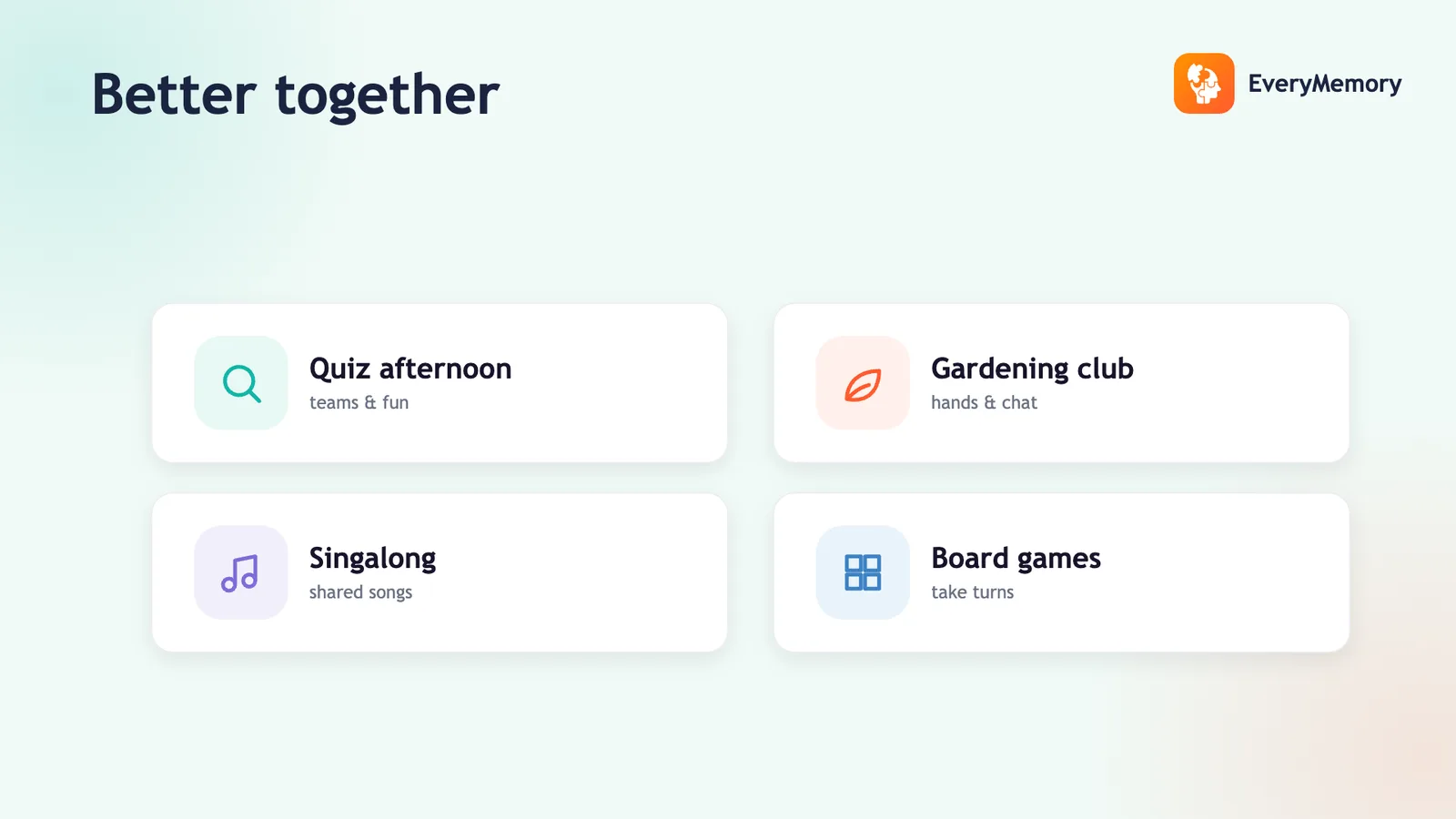
Practical help matters here: arranging a lift, setting up easy video calls, or finding a nearby group. For activities that bring people together, see group activities for seniors and the everyday side in how to keep an elderly mind active.
Encourage without pushing
There's a line between encouraging and nagging, and crossing it backfires. Invite rather than instruct, offer choices rather than assignments, and join in rather than supervise. "Shall we do the crossword together?" lands far better than "You should do your puzzles."
- Reconnect them to interests they already had, not new ones you've chosen.
- Do activities alongside them so it's company, not homework.
- Offer choices and let them say no without fuss.
- Praise effort and enjoyment, never performance.
- Keep everything low-pressure so there's no fear of failing.
Support independence and dignity
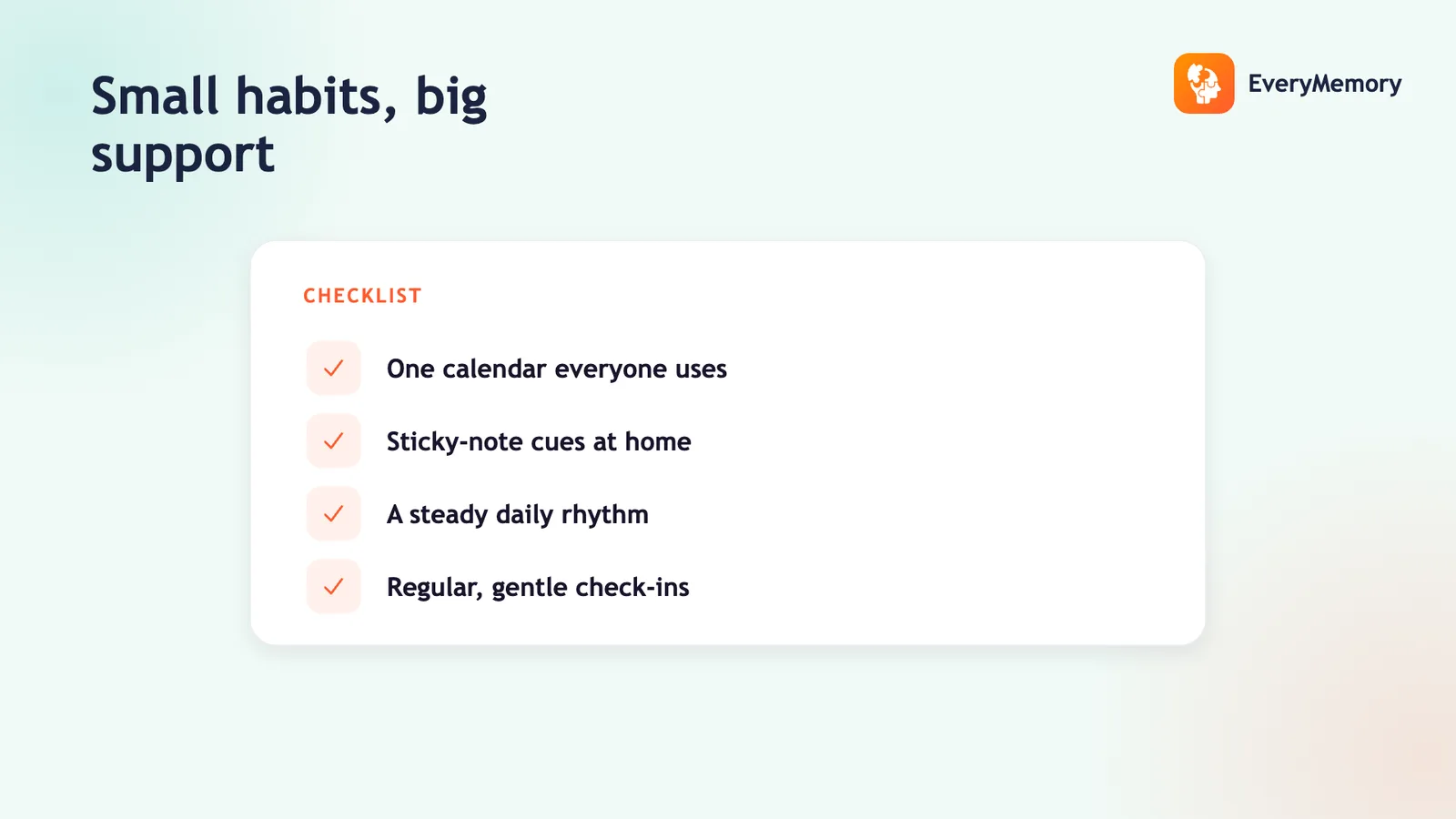
The ultimate aim is a relative who stays engaged on their own terms. Help them set up tools they can use themselves - a large calendar, easy-to-reach games, simple tech - so they're not dependent on you to stay active. Doing things for someone can quietly shrink their world; doing things with them, and enabling them to do things alone, keeps it wide.
Throughout, watch for genuine changes too. Staying mentally active supports wellbeing, but it isn't a treatment. For any real concerns, see how to help an aging parent with memory concerns.
✅ Try this today - A barriers-and-bridges check
Spend an afternoon working out what's blocking engagement and fixing one thing.
- List your relative's past interests and which they've drifted away from.
- For each, name the barrier - eyesight, hands, transport, company, confidence.
- Pick the easiest barrier to fix and sort it this week (a lift, large print, a call to an old friend).
- Reintroduce one interest together, with no pressure to keep it up.
- Notice what they re-engaged with and build gently from there.
⚠ When to talk to a professional
This is general, non-medical guidance for supporting engagement and wellbeing, not a diagnosis or treatment. If an older relative's memory or thinking is noticeably changing, consult their doctor or a qualified professional.