 EveryMemory
How to Learn and Remember Anything
A reliable learning system combines understanding first, active recall, spaced review, and association - so what you learn actually stays learned instead of fading in days.
Part of the guide: Brain Exercises for Seniors: The Complete Guide →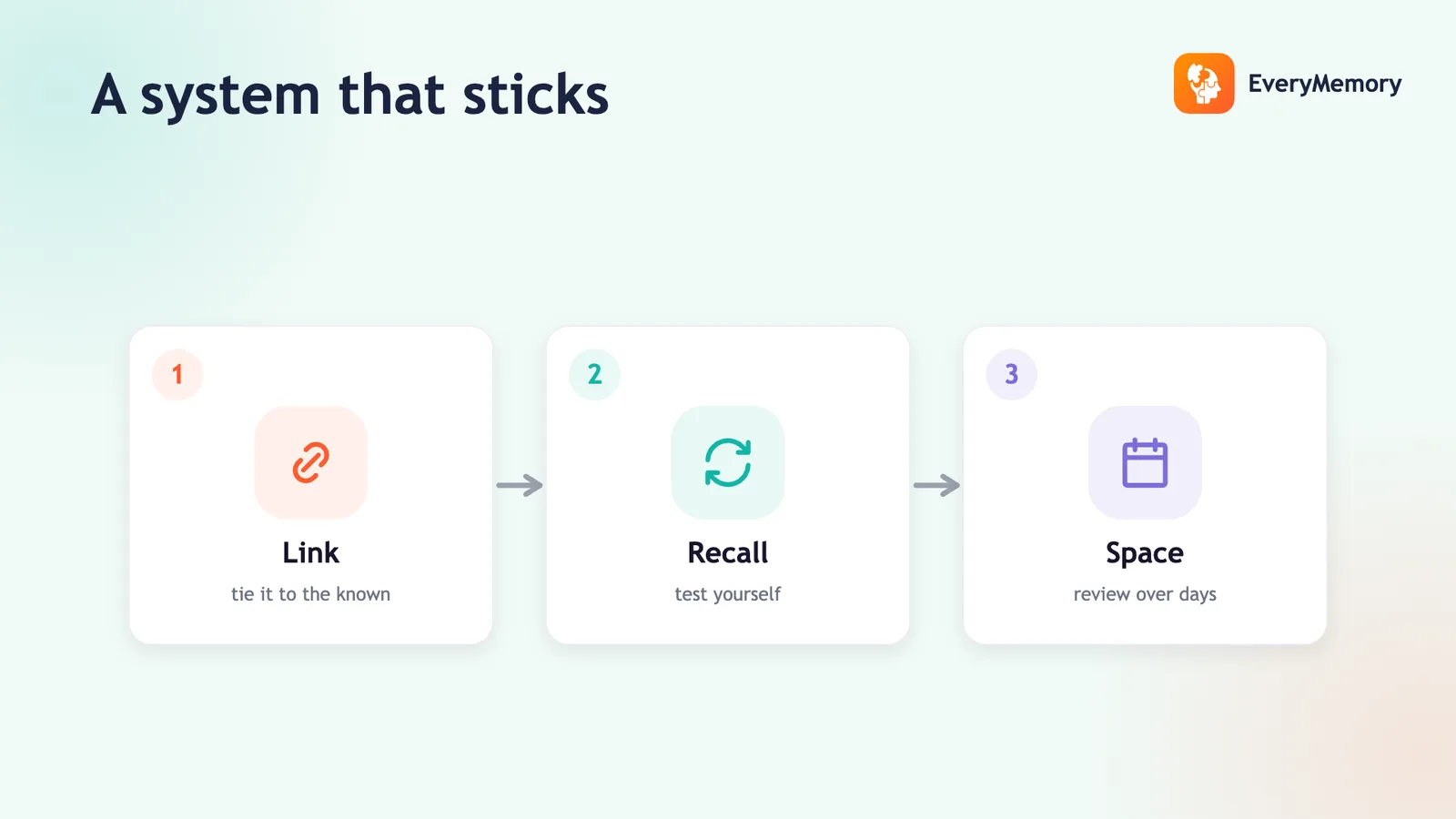
⚡ Quick answer
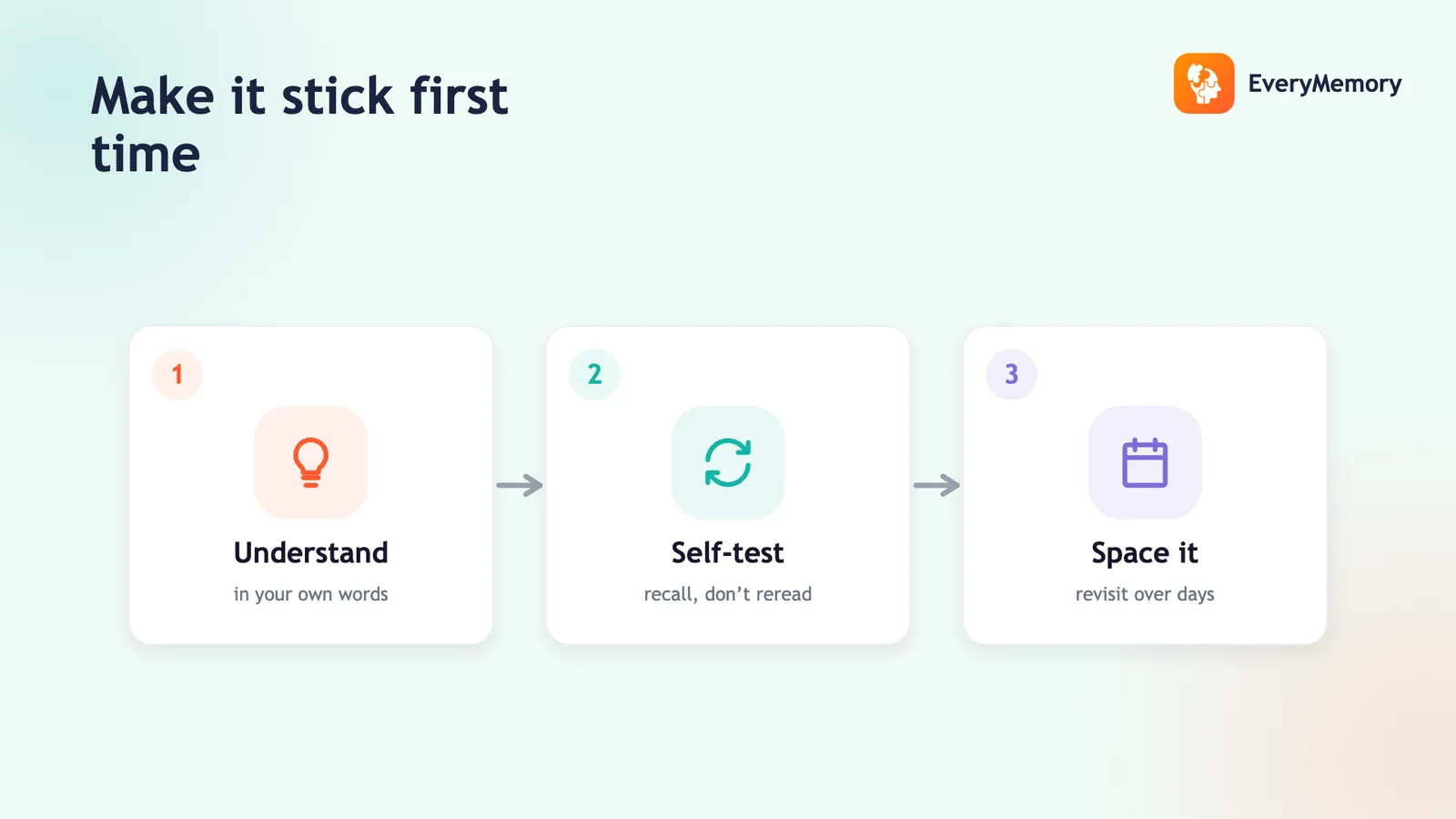
To learn and remember anything reliably: first understand it (you can't durably remember what made no sense), then use active recall to retrieve it from memory instead of re-reading, space your reviews over days (day 1, 3, 7, 14), and connect new facts to things you already know. Understanding, retrieval, spacing, and association together make material stick.
Key takeaways
- Understand material first - meaningless information is hard to retain.
- Retrieve, don't review: pulling it out builds durable memory.
- Space reviews on day 1, 3, 7, 14 to push facts into long-term storage.
- Connect new facts to what you already know using association.
The frustrating part of learning isn't the learning - it's the forgetting. You understand something, feel like you've got it, and a week later it's gone. The gap is that understanding and remembering are different jobs, and most people only do the first one.
There's a dependable system for closing the gap. It isn't a trick; it's four steps done in order - understand, retrieve, space, connect - that together make material stick instead of evaporating. It works for vocabulary, anatomy, names, code, or anything else you genuinely want to keep.
Understand before you memorise
Meaningless information is far harder to remember than meaningful information. Before trying to retain something, make sure it makes sense - how it works, why it's true, how it fits with what you know. A formula you understand is easy; one you've only memorised by rote slips away fast.
This is why cramming definitions cold fails. Spend the first pass understanding, not memorising; the memory comes far more cheaply once the thing actually makes sense. The Feynman technique in learning faster is the test of whether you've understood it.
Retrieve, don't review
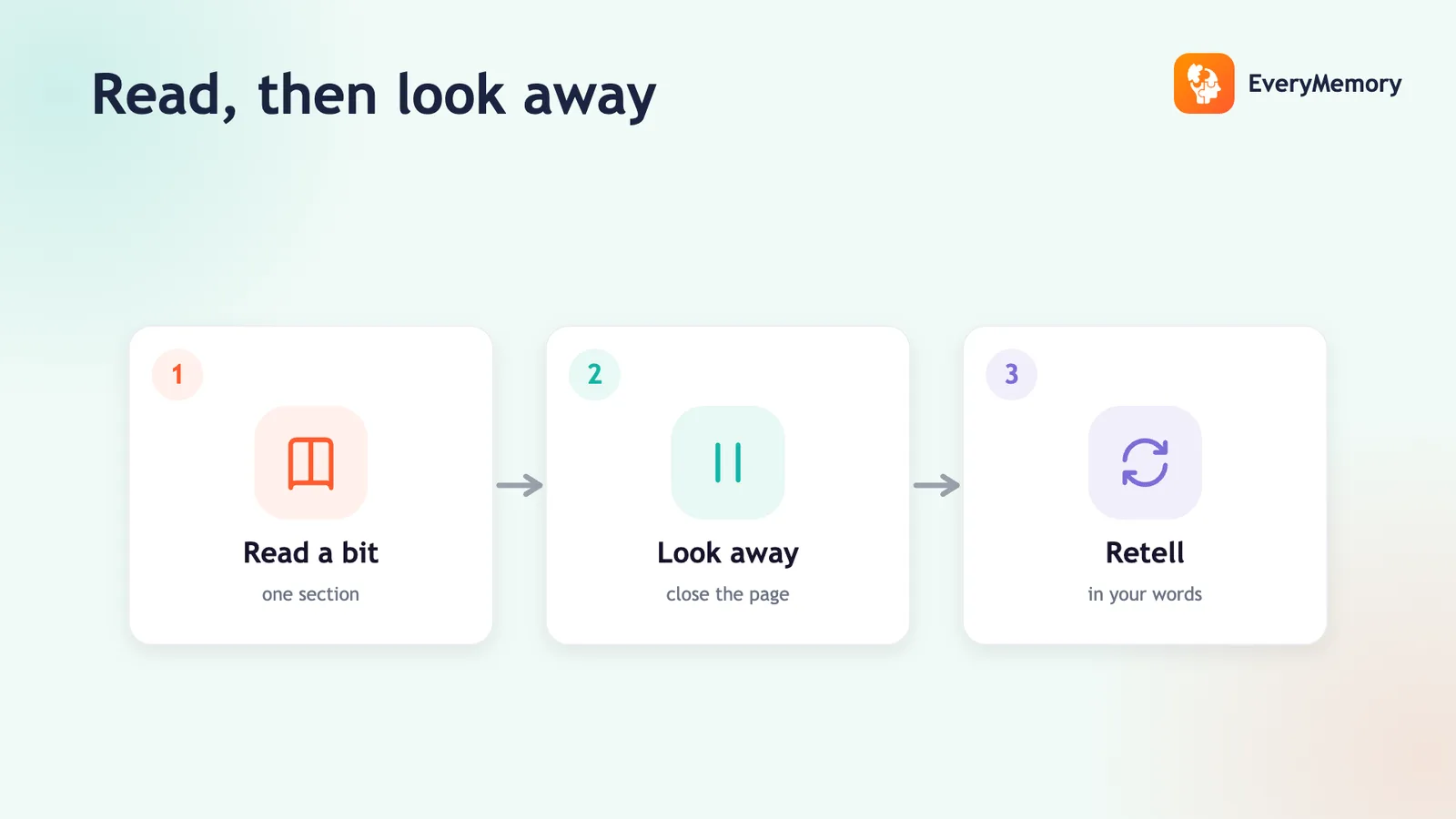
The act that builds durable memory is pulling information out, not putting it in again. Every time you successfully recall something, you strengthen the path to it. So make recall your main method: cover the material and try to produce it from memory before checking.
Flashcards work for exactly this reason - but only if you genuinely try to answer before flipping. Re-reading the back of the card teaches nothing; the effortful retrieval is the whole mechanism.
Space the reviews
We forget most of what we learn within days unless we revisit it, and the most efficient time to review is just before you'd forget. Expanding gaps between reviews push the memory into long-term storage with the least total effort.
| Review | When | Purpose |
|---|---|---|
| 1 | Day 1 | Lock in what didn't fully encode |
| 2 | Day 3 | Reinforce before steep early forgetting |
| 3 | Day 7 | Push toward long-term storage |
| 4 | Day 14 | Confirm durability; lengthen gaps after |
Connect new facts to old ones
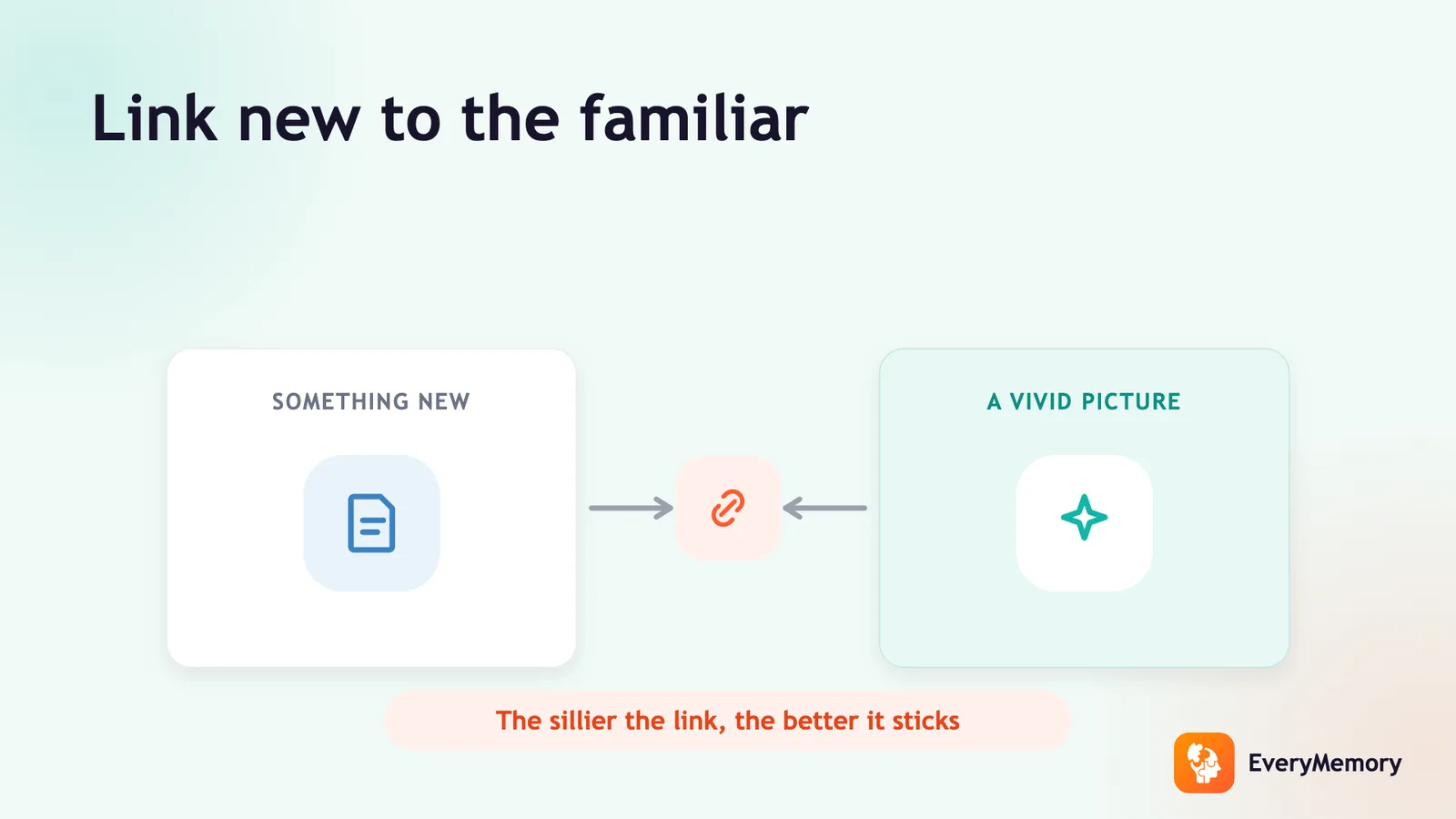
Isolated facts are slippery; connected ones hold. Memory works by association, so deliberately linking new information to things you already know gives each fact several handles to grab it by. The techniques below all exploit this:
- Tie a new fact to something familiar - see using association to remember more.
- Group related items into chunks instead of loose pieces (chunking).
- For names and lists, use a vivid mental image linking the items.
- Place facts into a story or order so each one cues the next.
✅ Try this today - Run the four-step system on one thing
Pick something you've failed to retain before and do it properly:
- Spend your first pass understanding it - explain it in plain words before memorising anything.
- Close the material and recall it from memory; mark what you missed.
- Re-test the gaps on day 1, then day 3, day 7, and day 14.
- For stubborn facts, build an association or image linking them to something you already know.