 EveryMemory
How to Relax Your Mind
A relaxed mind isn't an empty one - it's a mind that's stopped racing - and a few simple practices can settle the churn that crowds out focus and memory.
Part of the guide: How to Keep Your Brain Healthy: A Complete Lifestyle Guide →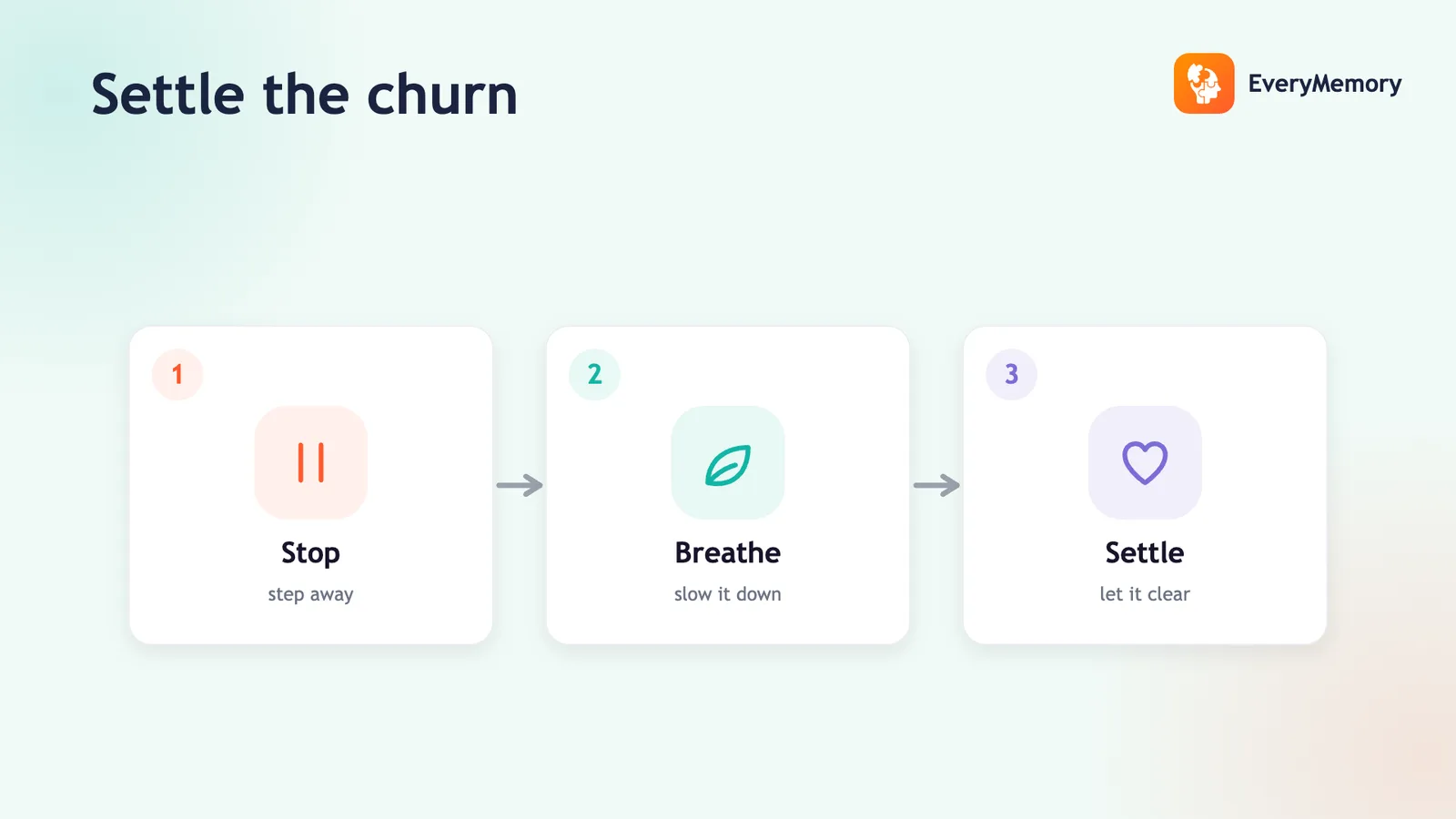
⚡ Quick answer
To relax your mind, slow your breathing with a longer out-breath, write down whatever thoughts are circling so they stop rehearsing, and rest your attention on one simple thing for a few minutes. Add movement and daylight when you can. These settle the mental churn that crowds out focus, making it easier to concentrate and remember.
Key takeaways
- A relaxed mind is one that has stopped racing, not an empty one.
- Slowing the body with a longer out-breath quickly slows the thoughts.
- Emptying circling thoughts onto paper loosens a head holding too much.
- Persistently racing or overwhelmed feelings should be raised with a professional.
A racing mind feels busy, but most of that motion is the same few thoughts circling. Relaxing your mind isn't about going blank - it's about slowing the churn so attention can settle on one thing at a time. When the spin slows, focus sharpens and the small forgetting that rides along with a buzzing head tends to ease.
The practices that work are simple and quick, and they work precisely when you feel you have no time for them. A slower breath, a worry on paper, a few minutes of noticing - these settle the mind faster than willpower ever does.
Slow the body to slow the mind
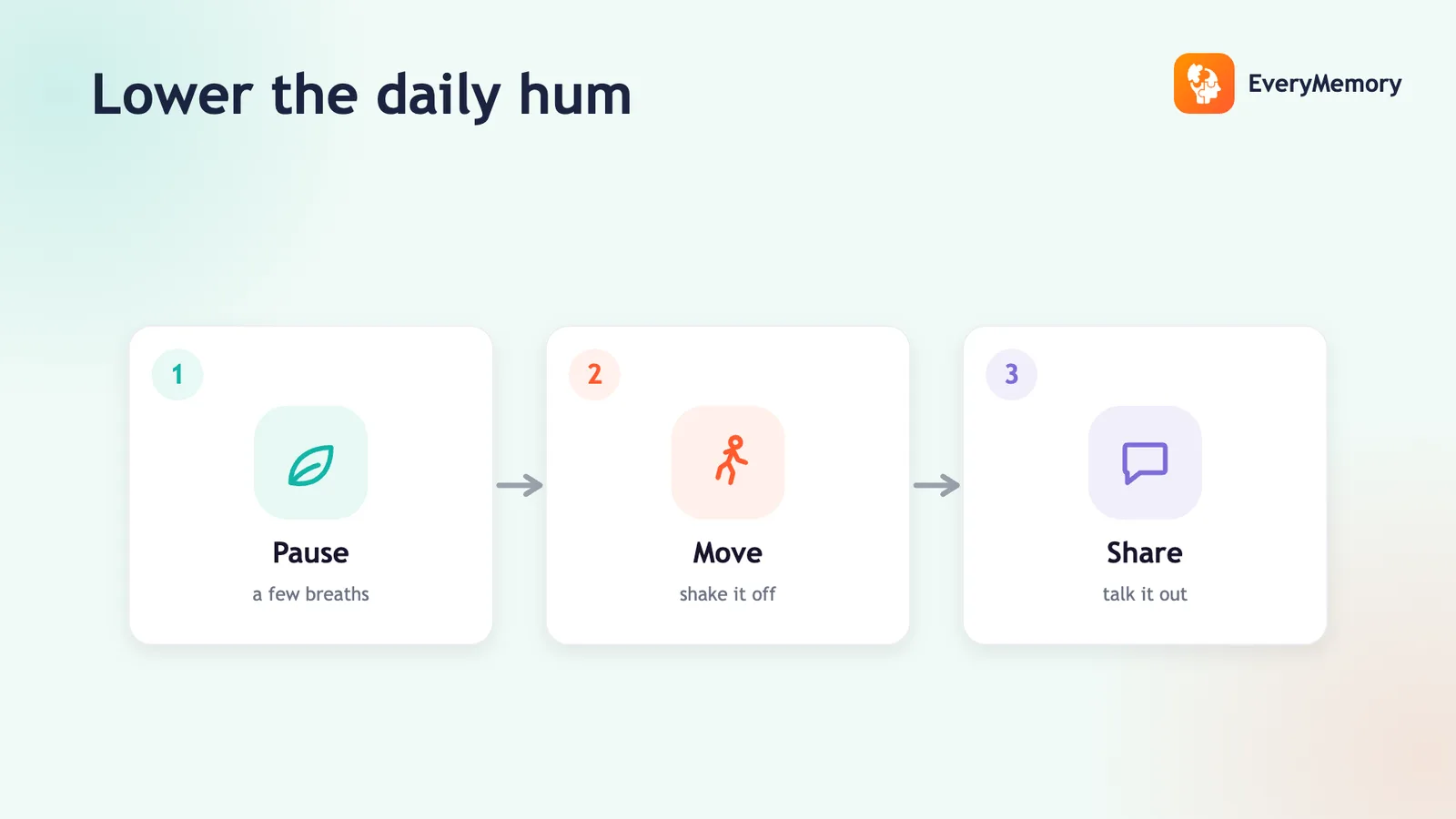
The fastest route to a calmer mind runs through the body. Slow, low breathing with a longer out-breath than in-breath tells your nervous system the alarm is over, and the racing thoughts ease as the body settles. It's quick, free, and available the moment you notice the spin.
Pair it with a small physical reset: unclench your jaw, drop your shoulders, plant your feet. The mind takes cues from a relaxed body. For the focus payoff, see how to think clearly.
Empty the loop onto paper
A mind races partly because it's holding too much at once, afraid to drop any of it. Writing the contents down - tasks, worries, half-plans - hands them a safe place to live, so your head can stop rehearsing. Many people feel an almost physical loosening once the list exists.
You don't need a system, just one trusted place. When the spin starts, dump it out, then return to one thing. This pairs naturally with the worry-parking idea in worry and forgetfulness.
Quick ways to settle the mind
Different kinds of churn respond to different resets. Match the tool to what your mind is doing right now.
| When your mind is... | Try this |
|---|---|
| Racing and won't slow | Slow breathing, longer out-breath, for two minutes |
| Stuck on a worry loop | Write the worry down to close the loop |
| Scattered across many tabs | Pick one task; close everything else |
| Wired and restless | A brisk walk or a few minutes of movement |
| Tense and tired | A short break away from all screens |
Make calm a habit, gently
Relaxing your mind works best as a small daily habit rather than an emergency measure. A few minutes of breathing, a nightly worry-dump, a short walk - done regularly, they keep the baseline churn lower so stressful moments don't spike as high.
And the honest note this cluster always returns to: these are everyday wellbeing practices, not treatments. If your mind feels persistently racing, overwhelmed, or distressed in a way that doesn't settle, that's worth raising with a qualified professional.
✅ Try this today - A five-minute mind-settle
A short sequence to calm a racing head and reclaim your focus.
- Sit somewhere comfortable and unclench your jaw and shoulders.
- Breathe in for four counts, out for six, for about a minute.
- Write down every thought that's circling, without sorting them yet.
- Read the list once and underline the single thing that matters most now.
- Take one more slow breath, then start on that one thing only.
⚠ When to talk to a professional
These are general relaxation and wellbeing practices, not medical advice or a treatment for anxiety or any condition. If your mind feels persistently racing, overwhelmed, or distressed, please speak with a doctor or qualified professional.