 EveryMemory
How to Reduce Stress
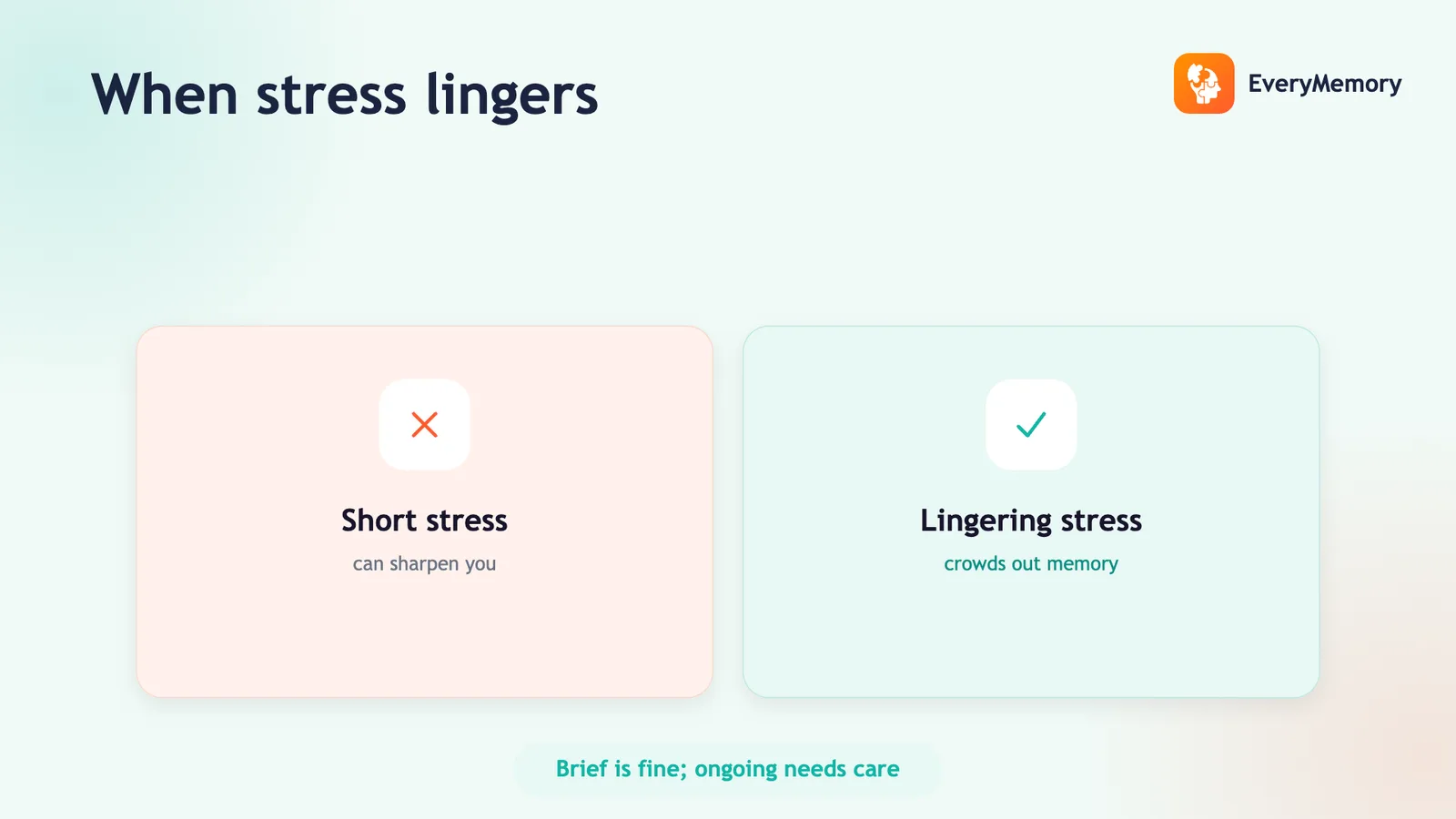
You can't delete stress, but you can lower the daily hum that crowds out focus - these are simple, everyday techniques that give attention and memory more room.
Part of the guide: How to Keep Your Brain Healthy: A Complete Lifestyle Guide →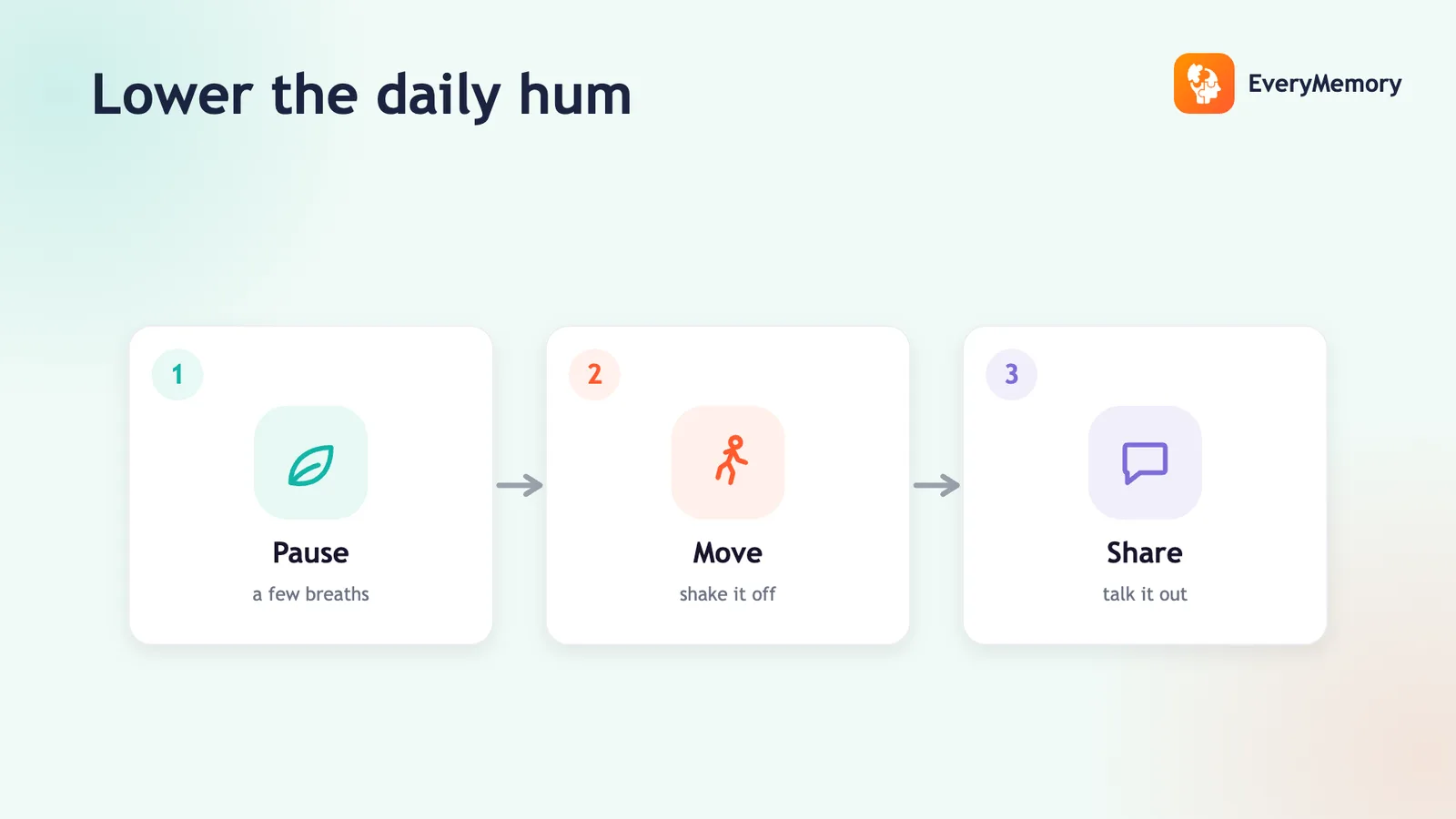
⚡ Quick answer
To reduce everyday stress, slow your breathing with a longer out-breath, take short real breaks during the day, and do one thing at a time instead of juggling. Offload worries by writing them down, move your body, and protect your sleep. These simple habits lower the background hum that crowds out attention, freeing up focus and memory.
Key takeaways
- Slow breathing with a longer out-breath is the fastest reliable in-the-moment reset.
- Short real breaks and single-tasking lower the background hum that fragments focus.
- Writing worries on paper lets the brain stop rehearsing them and frees attention.
- These tools are for everyday stress; persistent or severe stress needs professional support.
Reducing stress isn't about reaching some permanent state of calm - it's about turning down the constant background hum so your attention has room to work. When the dial drops even a little, focus sharpens and the small forgetting that comes with pressure tends to ease.
Most of what genuinely helps is unglamorous and free: a slower breath, a real break, one task at a time, and getting the worry out of your head and onto paper. The trick is using these small tools often, not waiting for stress to pile up first.
Start with the breath
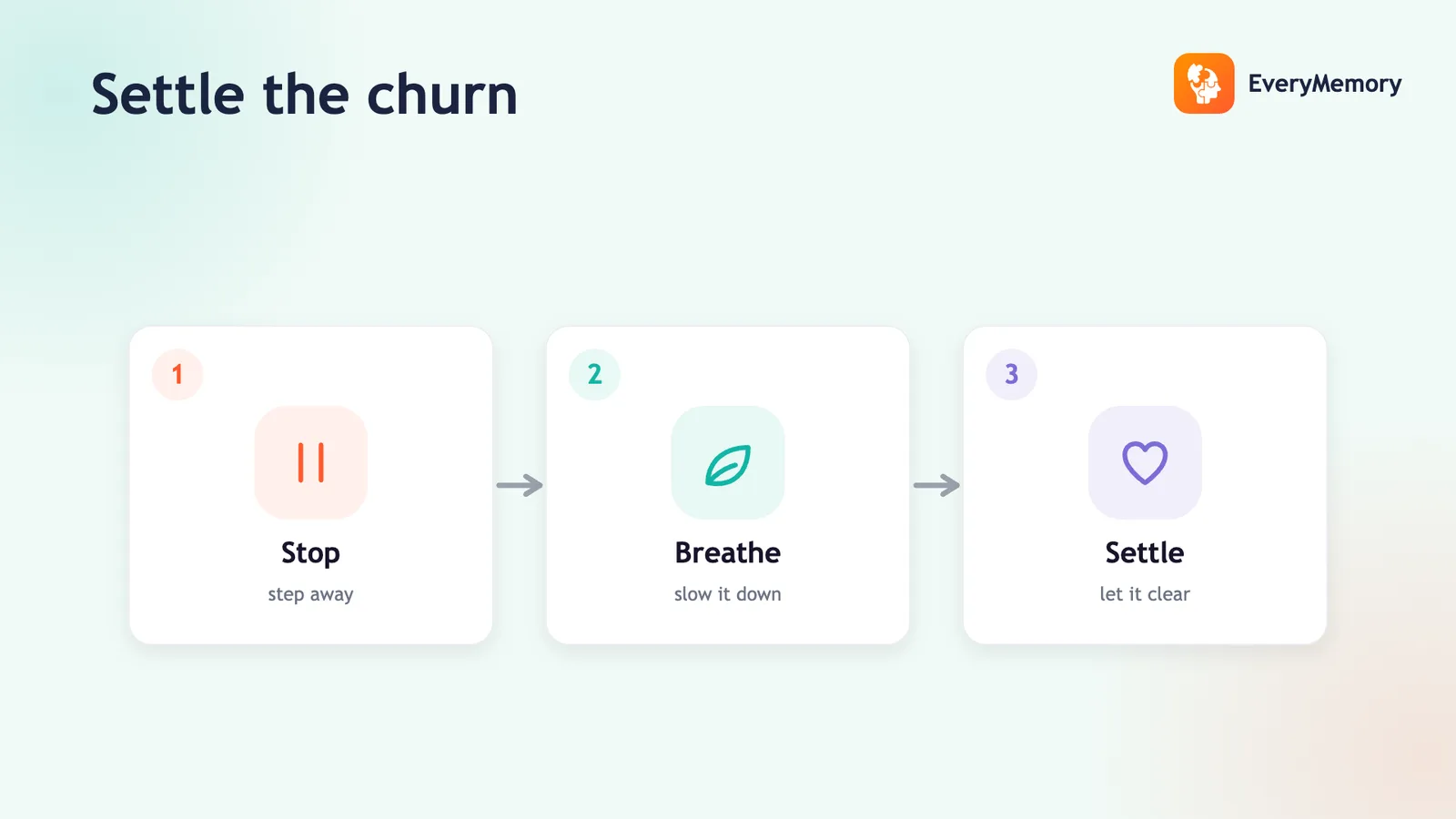
Your breathing is the one stress response you can steer directly. Slow, low breathing with a longer out-breath than in-breath nudges your body out of high alert, and it works in under two minutes - useful precisely when your mind is racing and won't settle.
You don't need a special technique or app. Breathe in for about four counts, out for about six, and repeat for a minute or two whenever you notice the tension climbing. For a calmer follow-on, see how to relax your mind.
Everyday techniques that lower the hum
No single tool fixes stress; a few small ones used regularly do. Match the technique to the moment rather than trying to apply all of them at once.
| Technique | When it helps most |
|---|---|
| Slow breathing, longer out-breath | When thoughts are racing right now |
| A short break away from the desk | When you've been grinding and re-reading |
| Single-tasking - one thing at a time | When you're juggling and dropping details |
| Writing worries on paper | When the same loop keeps interrupting you |
| A brisk walk or any movement | When tension is sitting in your body |
Offload what's on your mind
A racing mind keeps rehearsing tasks and worries because it's afraid of dropping them. Writing them down gives the brain permission to let go - the list is now safe outside your head, so attention is freed for what's in front of you.
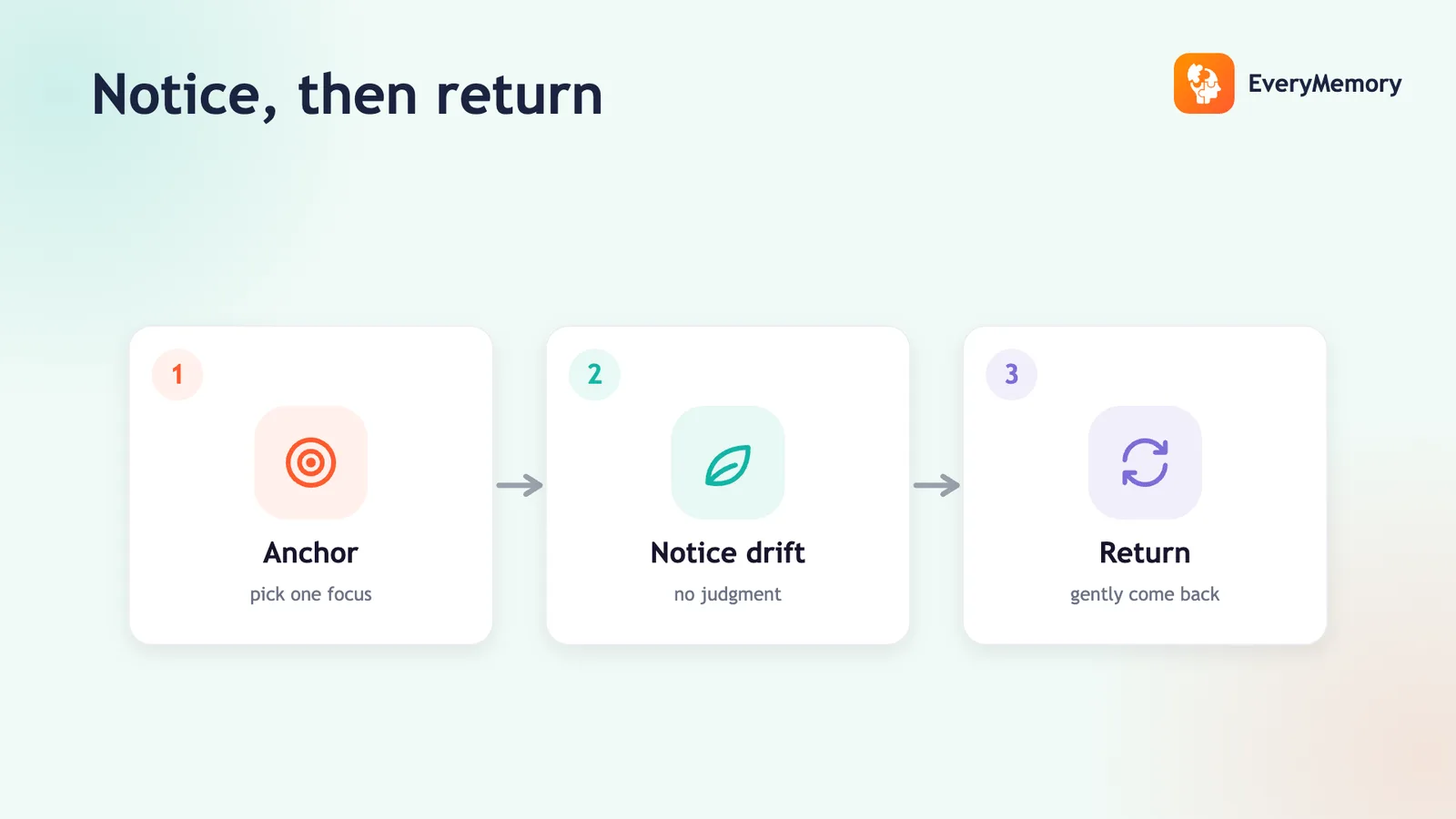
Keep one simple capture place: a notebook, a notes app, a single list. When a worry interrupts, jot it and return to the task. This small habit is one of the most reliable ways to stop stress from fragmenting your focus, and it pairs well with how to avoid distractions.
Protect the basics
Stress and the basics feed each other. Poor sleep makes everything feel more stressful, and stress wrecks sleep - so protecting one helps the other. Daylight, movement, regular meals, and a steady sleep schedule quietly raise your tolerance for pressure.
Be honest about limits, too. These techniques are for ordinary, everyday stress. If stress is persistent, severe, or distressing - disrupting sleep, mood, or daily life - that's a reason to speak with a qualified professional, not to push harder alone.
✅ Try this today - A two-minute worry dump
A fast way to clear the mental clutter that's stealing your focus.
- Grab paper or a notes app and set a timer for two minutes.
- Write down everything circling in your head - tasks, worries, half-thoughts - without editing.
- For each item, mark it "do today," "do later," or "not mine to fix."
- Close the list, knowing it's safely captured and you can return to it.
- Take three slow breaths, then pick the single most important thing to start.
⚠ When to talk to a professional
These are general wellbeing techniques for everyday stress, not medical advice and not a treatment for any stress or anxiety disorder. If stress is persistent, severe, or distressing, please talk to a doctor or qualified professional.