 EveryMemory
Worry and Forgetfulness
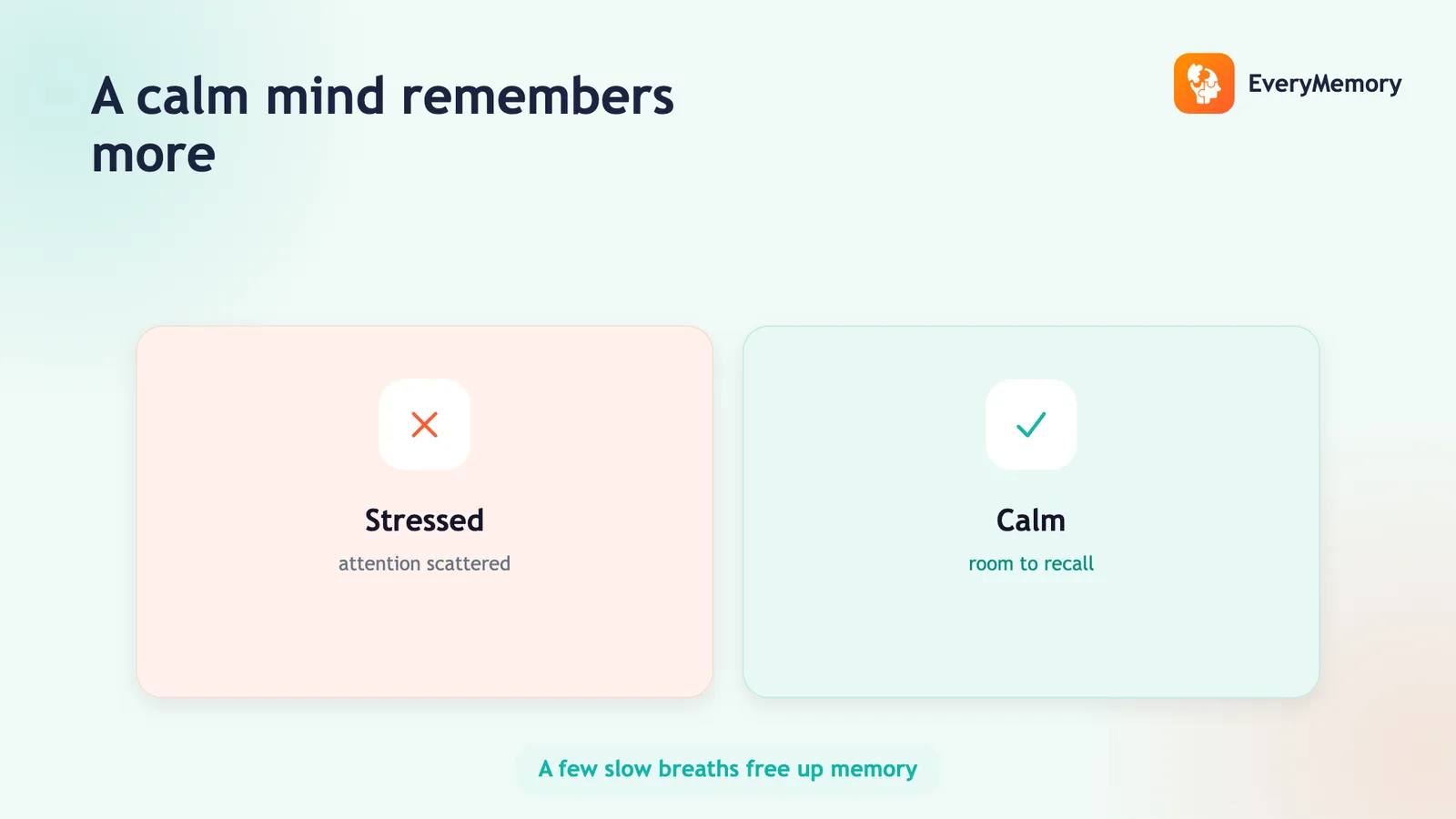
A mind stuck in a worry loop has little attention left for remembering - which is why anxious stretches so often come with everyday forgetfulness that eases when the worry does.
Part of the guide: How to Keep Your Brain Healthy: A Complete Lifestyle Guide →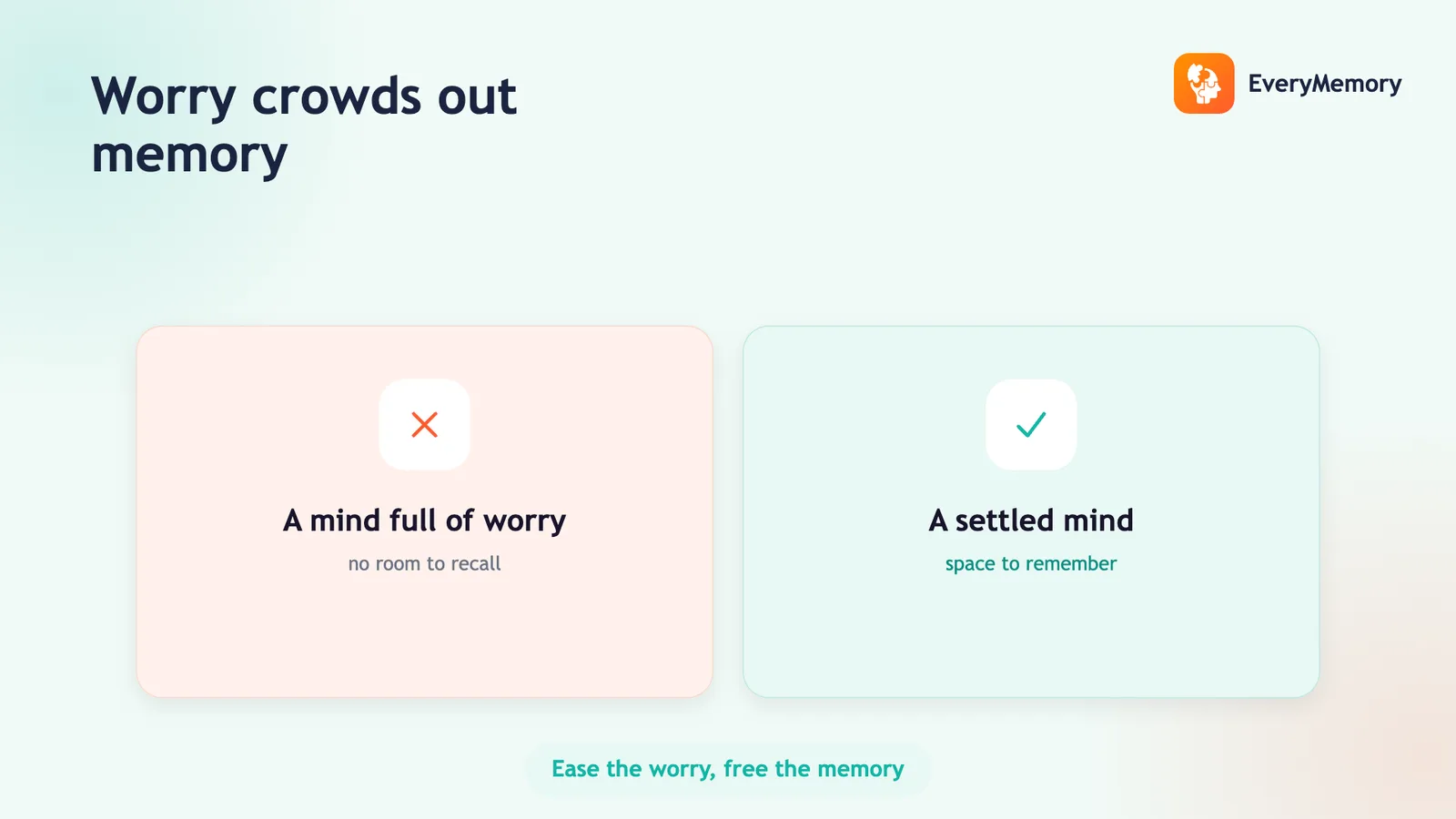
⚡ Quick answer
Worry causes everyday forgetfulness by occupying attention. While part of your mind runs the worry loop, less is available to take in names, tasks, or where you put things - so they're never fully registered. It's split attention, not a failing memory, and it usually eases as worry settles. Offloading worries to paper and single-tasking both help.
Key takeaways
- A worry loop occupies limited working memory, so names, tasks, and items slip past.
- It is split attention, not a failing memory, and usually eases as worry settles.
- Offloading worries to paper closes the loop and frees up focus.
- Worry that is persistent, severe, or distressing warrants a qualified professional.
When you're worried, part of your mind is always somewhere else - running the loop, rehearsing the conversation, checking the threat. That leaves less attention for the here and now, which is exactly where memory is formed. So you walk into the kitchen and forget why, or lose a name mid-sentence, not because your memory is failing but because it was busy.
This is one of the most reassuring things to understand about everyday forgetting. The fix isn't to try harder to remember - it's to free up the attention the worry is eating.
Why a worried mind forgets
Working memory - the small mental workspace you use right now - has limited room. A live worry loop sits in that workspace, taking up seats, so there's less space to hold a phone number or follow a set of instructions. The forgetting isn't damage; it's congestion.
Because the information was never properly encoded, no amount of straining brings it back later. The answer is upstream: quiet the loop a little and the workspace frees up. For the broader stress picture, see does stress cause forgetfulness.
The worry loop and how to break it
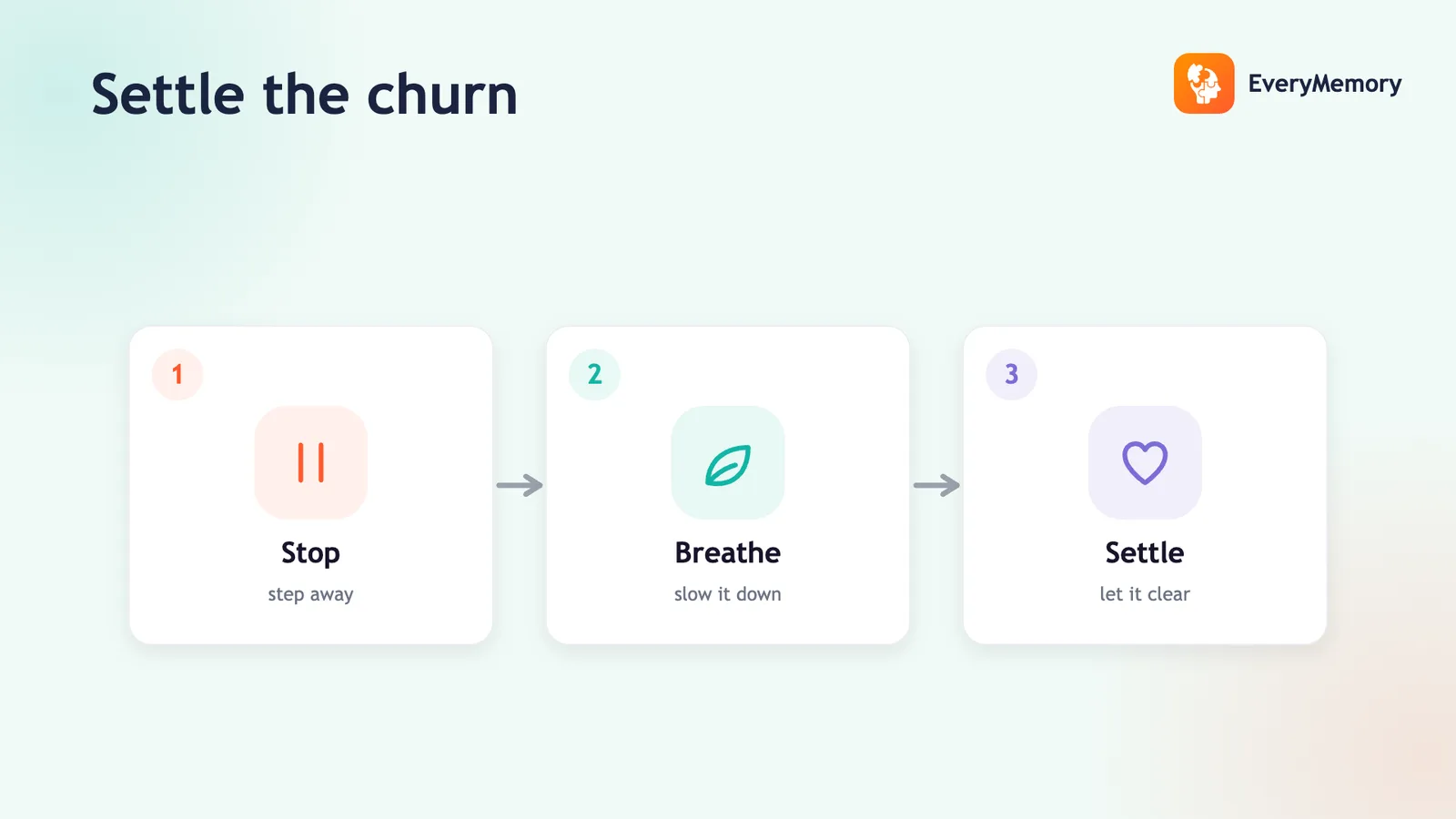
Worry repeats because the brain treats an unresolved thought as unfinished business and keeps rehearsing it so you won't forget. The way out is to give the thought a safe home outside your head, so the loop can finally close.
- Catch the loop - notice you're rehearsing the same thought again.
- Write it down in one specific sentence, exactly as it's bothering you.
- Decide its status: act now, schedule a time, or accept it's not yours to fix.
- Return to the present task, knowing the worry is captured and won't be lost.
Worry signs and quick responses
Spotting the everyday signs lets you respond before the loop swallows your focus.
| Sign of a busy worry loop | Quick response |
|---|---|
| Re-reading the same sentence | Pause, slow your breathing, then reread once |
| Forgetting why you came into a room | Retrace the trigger; single-task next time |
| The same thought circling back | Write it down to close the loop |
| Misplacing keys, phone, glasses | Designate one spot and put them there every time |
| Mind elsewhere mid-conversation | Name the worry, park it, return your attention |
When worry needs more than tools
The everyday techniques here are for ordinary worry, the kind that comes and goes with life's pressures. As the worry settles, the forgetfulness that rode along with it usually settles too - a normal, reversible pattern.
But worry that's persistent, severe, or genuinely distressing - that you can't switch off, that disrupts sleep or daily life - is not something to manage alone. Please speak with a qualified professional. For steadying the mind day to day, see how to relax your mind.
✅ Try this today - A worry-parking habit
A simple way to close the loop so your attention comes back.
- Keep one notebook or notes app as your single "worry park."
- Each time a worry interrupts, write it in one specific sentence.
- Mark it: do now, do at a set time, or out of my control.
- Set a short daily "worry window" to review the list, so it isn't running all day.
- Between windows, when a worry returns, remind yourself it's already parked.
⚠ When to talk to a professional
This is general information about everyday worry, not medical advice and not a treatment for anxiety or any condition. If worry is persistent, severe, or distressing, please speak with a doctor or qualified professional.