 EveryMemory
How to Track Memory Changes Month by Month
A practical, non-medical guide to noticing your own memory patterns over time - so you always have something useful to share with a doctor if needed.
Part of the guide: Understanding Memory Loss and Forgetfulness: A Calm, Reassuring Guide →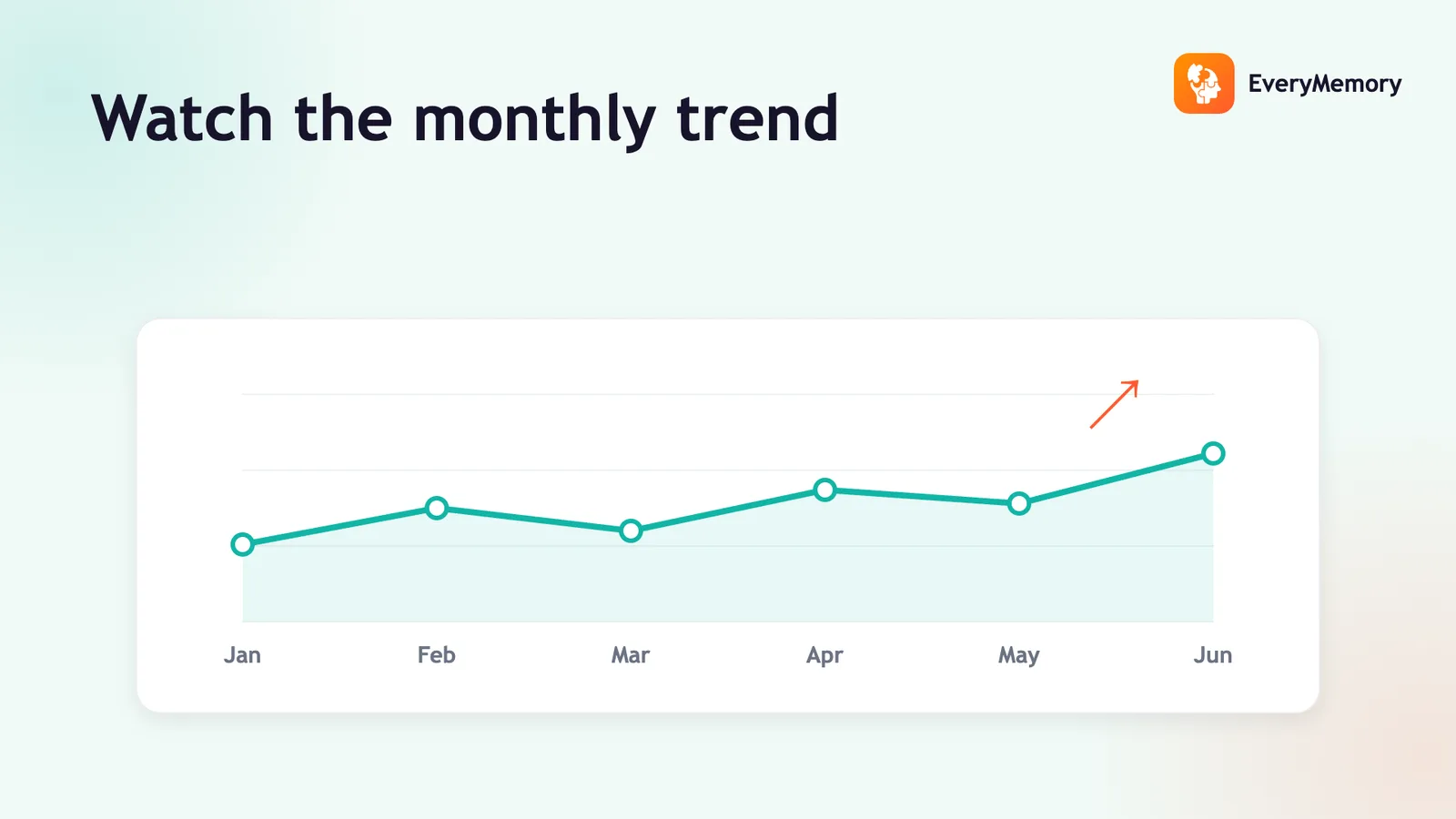
⚡ Quick answer
Keep a short monthly log noting three things: a self-rated recall score (1-10), any specific moments that stood out (good or frustrating), and what was going on that week (sleep, stress, illness). Review it every 30 days. Over three to six months, patterns become visible - and that record is genuinely useful if you ever talk to a healthcare professional.
Key takeaways
- A monthly log is a non-medical self-awareness tool - it shows your own trend over time, not a diagnosis.
- Record a self-rated recall score, a couple of specific memory moments, and your sleep and stress levels each month.
- Three months of notes gives a meaningful baseline; six months is enough to see a genuine personal trend.
- Talk to a healthcare professional about sudden or worsening changes rather than waiting for the next monthly review.
Most people only notice memory changes when something goes wrong - a missed appointment, a name that simply won't come, a moment of confusion that lingers. By then, it's hard to say whether anything has really shifted or whether it was just a bad week. Tracking month by month changes that.
This guide walks you through a simple, non-medical approach to keeping your own memory log. Think of it as a weather diary for your mind: you're not predicting storms, just noticing patterns so you have real information - instead of vague worry - when you need it.
What Monthly Memory Tracking Is - and Isn't
A monthly memory log is a non-medical self-awareness tool. It helps you notice your own trends over time. It does not diagnose anything, and it cannot tell you whether a change is medically significant. What it can do is replace fuzzy worry with concrete observations.
That distinction matters. When someone asks "has your memory got worse recently?" most of us can only say "I think so?" A log gives you a real answer: "Over the past four months my self-rated recall has stayed steady at 7-8, except in February when I had a chest infection and it dropped to 5, then recovered." That's genuinely useful information.
- CAN show: your own trend over weeks and months
- CAN show: which conditions (poor sleep, high stress, illness) correlate with worse days for you personally
- CAN show: whether a change is sudden or gradual
- CANNOT diagnose any condition
- CANNOT compare you to other people or to clinical norms
- CANNOT rule out or confirm any medical cause
For a broader perspective on what normal aging looks like vs. changes worth watching, this overview of memory loss vs. normal aging is a good companion read.
Why Tracking Your Own Trend Matters
Memory varies naturally day to day. Sleep quality, hydration, stress, medications, even the time of day all affect how sharp recall feels in the moment. A single bad day - or a single great day - tells you almost nothing. A six-month log tells you a great deal.
The other reason to track is practical: if you ever want to talk to a doctor about memory concerns, the single most useful thing you can bring is a written record. Healthcare professionals are much better placed to advise when they can see whether a change has been gradual or sudden, steady or fluctuating, and whether it correlates with anything else going on in your health or life.
See also: what to track before talking to a doctor - a companion guide on making the most of that conversation.
What to Record Each Month
Keep it simple enough that you'll actually do it. Once a month - same day, same time if possible - write down five things:
- A self-rated recall score: how has memory felt overall this month? (1 = very poor, 10 = sharp and reliable)
- Two or three specific moments that stood out - either a frustrating slip (forgot a name mid-conversation) or a win (remembered a whole shopping list without writing it down)
- Sleep: roughly how many nights per week did you sleep well?
- Stress and mood: any major stressors, illnesses, or low-mood periods?
- Any changes in medication, routine, or activity level
That's it. Five minutes once a month. You can use the free Printable Memory Tracker to keep everything in one place, or just a notebook. The format matters far less than doing it consistently.
If you want a weekly version, the weekly check-in template gives you a lighter-touch structure for between monthly reviews.
Natural Variation: What's Normal and What's Worth Noticing
Expect your scores to fluctuate. A week of poor sleep can drop a self-rated score by two or three points. A stressful family situation, a minor illness, a change in medication - all of these can temporarily affect how recall feels. That fluctuation is normal, and seeing it in your log is reassuring rather than alarming.
What's worth paying attention to is a clear, sustained downward trend that doesn't recover - especially if it's happening alongside changes in daily life (getting lost in familiar places, forgetting conversations entirely, struggling with tasks that used to be automatic). That kind of pattern, documented in your log, is exactly what a healthcare professional needs to see.
Can stress make you more forgetful? explains why mood and stress have such a strong effect on day-to-day recall - worth reading if your scores vary a lot with life circumstances.
How to Review Your Log: A Simple Three-Month Look-Back
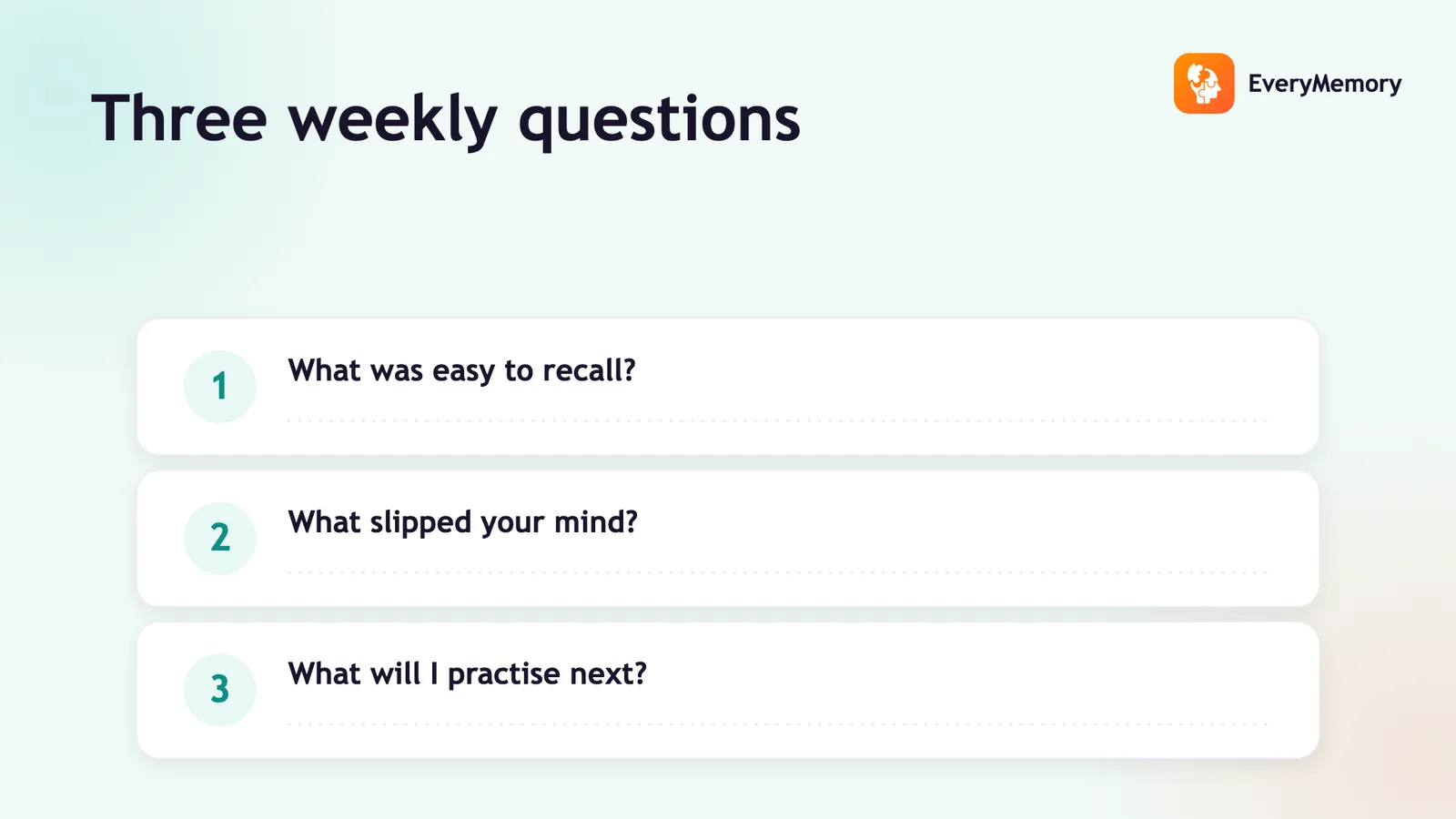
Every three months, read back through what you've written and ask three questions:
- Is the overall trend flat, gently improving, or declining?
- Do the low-score months correspond to external factors (illness, stress, poor sleep) - or did they happen without an obvious reason?
- Are there any new types of slips appearing that weren't there before?
A flat or improving trend with dips that clearly track to external causes is a reassuring pattern. A sustained decline - especially without a clear external reason - is worth discussing with a healthcare professional. You don't need to interpret the data medically; you just need to notice the shape of it.
When to Talk to a Healthcare Professional
A monthly log is a self-awareness tool, not a substitute for professional advice. If at any point you notice sudden or rapid changes - not a gradual drift over months, but a clear shift over days or a couple of weeks - that's worth getting checked promptly rather than waiting for your next review.
Similarly, if memory or confusion is disrupting daily life (managing finances, following familiar routes, keeping track of conversations), don't wait to see if the trend continues. Bring your log to your GP or family doctor and let them advise. The log makes that conversation easier and more productive for both of you.
For family members supporting an older parent through these concerns, what to track before talking to a doctor is a practical guide written with that situation in mind.
✅ Try this today - Start Your First Monthly Entry Today
Don't overthink the format. Here's a five-minute first entry:
- Rate how memory has felt this past month on a scale of 1-10. Write the number down with today's date.
- Note one specific memory slip and one moment your recall worked well. Be concrete - names, tasks, conversations.
- Write two sentences about your sleep and stress this month. That's your baseline. Same time next month, do it again.
⚠ When to talk to a professional
Day-to-day and week-to-week fluctuations in memory are completely normal and usually linked to sleep, stress, or physical health. This log is a non-medical awareness tool - it cannot diagnose anything. However, if you notice sudden, rapid, or severe changes, or changes that are affecting your ability to manage daily life, please speak with a qualified healthcare professional rather than relying on self-tracking alone.