 EveryMemory
Weekly Memory Check-In Template
A simple weekly memory check-in template for older adults - five questions, five minutes, done every Sunday to track patterns in recall and focus over time.
Part of the guide: How to Improve Your Memory: The Complete Beginner's Guide →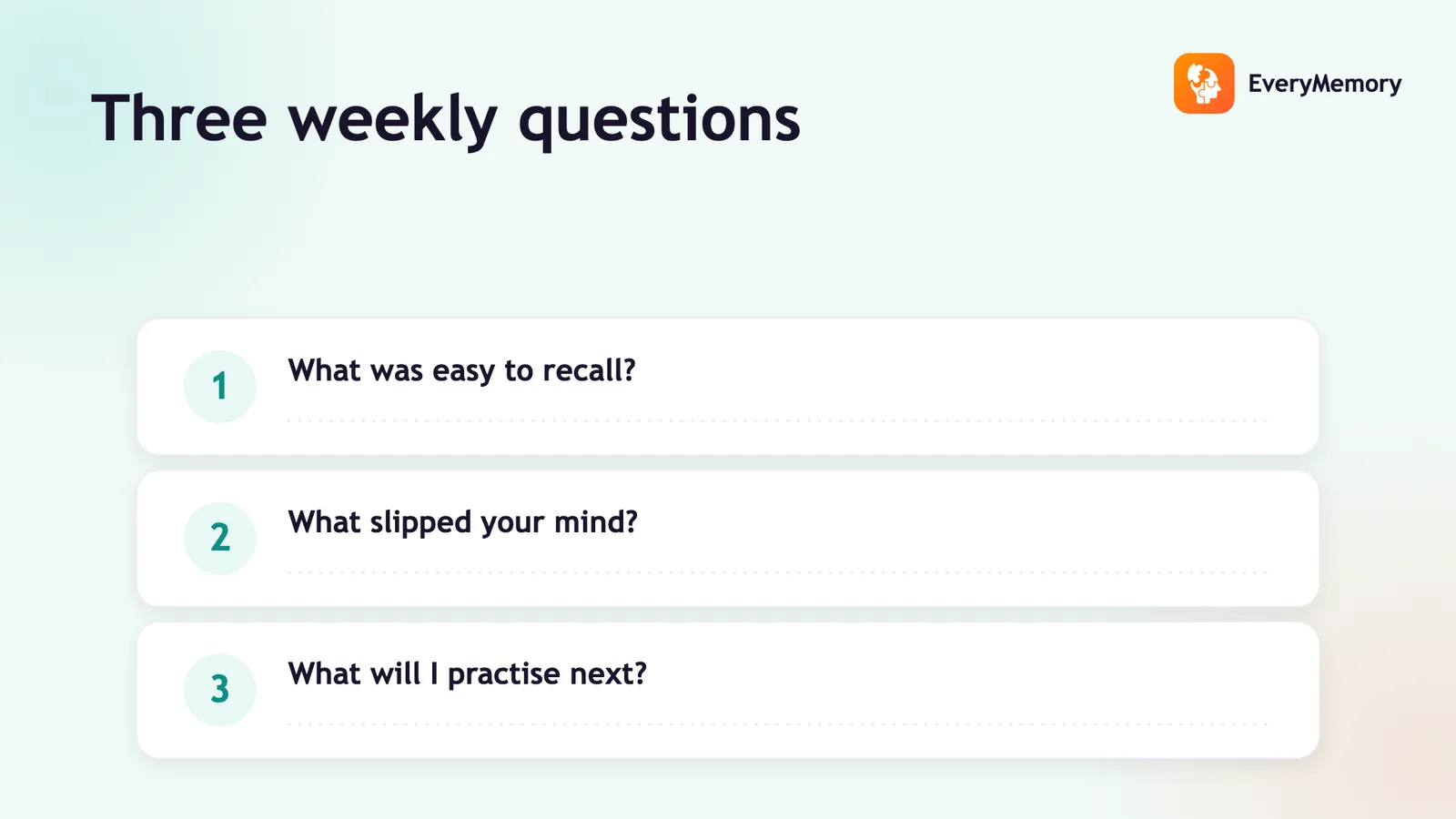
⚡ Quick answer
A weekly memory check-in takes five minutes, covers five areas (recall quality, focus, sleep, routine consistency, and one specific observation), and is done at the same time each week. After eight weeks you have a genuine pattern to look back on. The value is in the trend, not in any single week's answers.
Key takeaways
- Five questions covering recall, focus, sleep, routine consistency, and one specific observation take about 5 minutes each Sunday.
- Weekly frequency is the sweet spot - frequent enough to catch patterns, but not so granular that a single bad day distorts the picture.
- After 8 weeks, reviewing all entries together reveals trends that are far more meaningful than any single week's answers.
- A concrete dated record with specific examples is much more useful to a professional than a general impression.
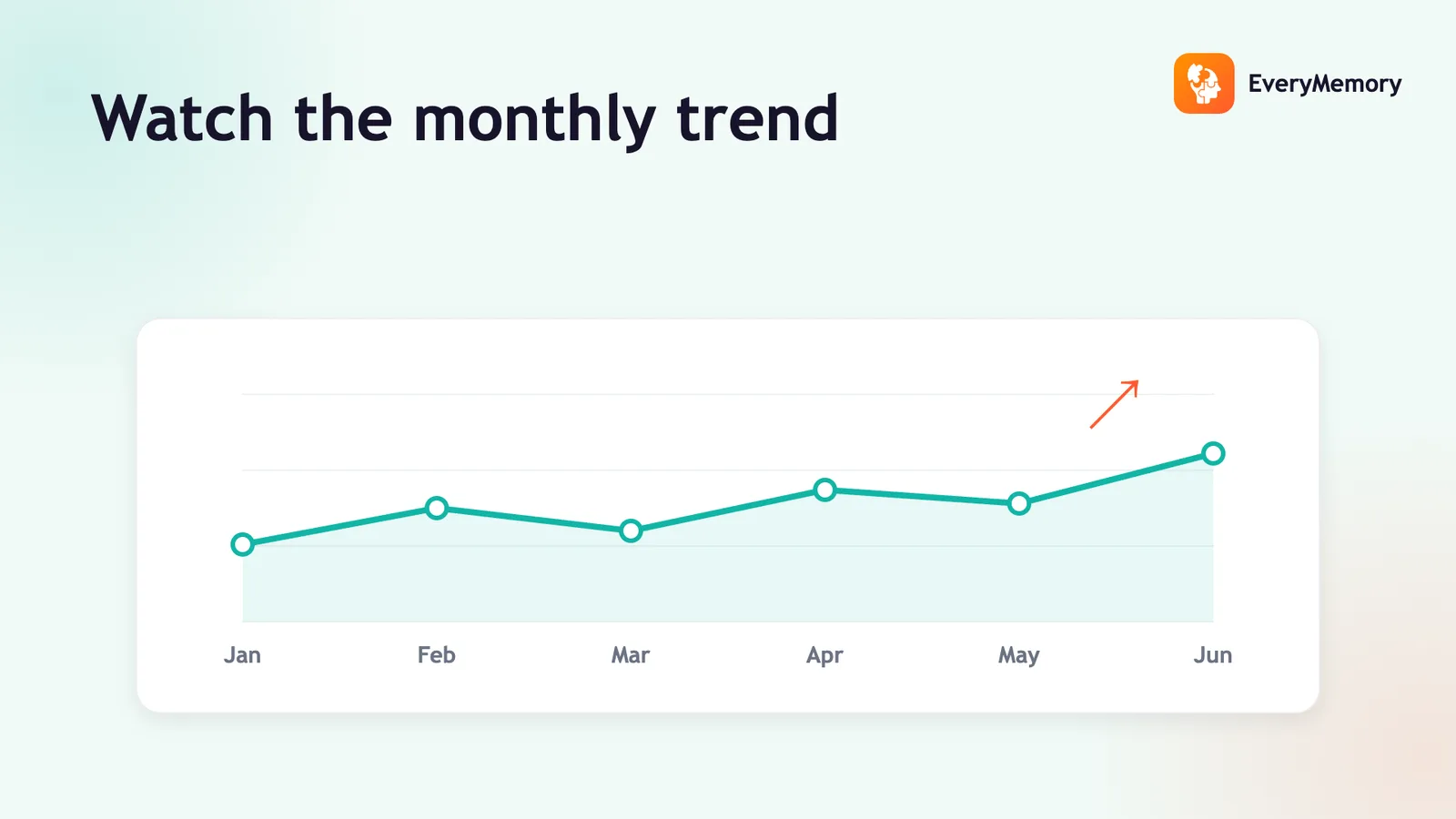
Memory is not static. It shifts with sleep quality, stress, hydration, social activity, and dozens of other factors. A single bad recall day means almost nothing on its own. A pattern of recall changes over several weeks is much more informative - both for noticing genuine progress and for spotting changes worth discussing with a professional.
The weekly memory check-in is a simple five-question self-review done at the same time each week. It does not diagnose anything. It does not score you against a benchmark. It simply gives you a record of your own patterns over time - a personal baseline that you control and can share with a healthcare professional if you ever want to.
Why weekly is the right frequency
Daily check-ins are too granular - they amplify noise. One poor night of sleep or a stressful morning can skew a daily rating in a way that looks alarming but means nothing. Monthly check-ins, on the other hand, are too infrequent to catch gradual shifts early.
Weekly is the sweet spot. It is frequent enough to reveal patterns before they become pronounced, and infrequent enough that each check-in reflects a genuine snapshot of the week rather than a single hard day.
This is also why the month-by-month tracking guide recommends anchoring monthly reviews to weekly data rather than daily impressions.
The five check-in questions
These five questions cover the most informative dimensions of everyday memory and focus. Answer each with a simple 1-5 scale (1 = much worse than usual, 3 = about average, 5 = noticeably sharp) or a short written note. Both formats work - use whichever you will actually do.
- Recall quality this week. How well did I remember names, appointments, and recent conversations compared to my normal? Was anything noticeably harder or easier than usual?
- Focus and attention. How easily could I follow conversations, stay on a task, and hold a thought long enough to finish it? Did I feel mentally present or scattered?
- Sleep quality. How did my sleep go this week - did I feel rested? Sleep is one of the strongest drivers of memory performance, so this question is worth tracking even if it seems unrelated. See sleep and memory connection for why.
- Routine consistency. How many days this week did I complete my memory training practice? Write the number (0-7). No judgment - this is information, not a grade.
- One specific thing I noticed. One concrete observation from the week: a name I remembered that I normally would have forgotten, a word that kept slipping, a conversation that felt unusually clear or unusually hard. Specificity makes the record much more useful over time.
Where and when to do the check-in
Sunday morning works well for most people - the week is just closing, things are relatively fresh, and there is usually less urgency than a weekday morning. Sunday evening is a close second.
Keep your check-in in a single dedicated place: a small notebook, a notes app, a printed template. The format matters less than the location - having one consistent place to record makes it easy to review patterns weeks later.
The check-in pairs naturally with the end-of-week review in the simple daily memory routine. If you already do a daily routine, the Sunday check-in is a five-minute add-on that turns the week's practice into a record.
A sample completed check-in
Here is what a brief, useful check-in entry looks like - using plain written notes rather than numbers:
- Recall quality: Pretty good this week. Remembered all my appointments without checking the calendar. Blanked on a neighbour's name Monday but it came back later.
- Focus and attention: Tuesday was scattered - hard to finish a paragraph. Rest of the week felt normal.
- Sleep: Four decent nights, two poor ones. Rough Friday and Saturday.
- Routine: Completed 5 out of 7 days. Skipped Thursday and Saturday (poor sleep both nights).
- One specific thing: For the first time in a while I recalled a detail from a phone call three days ago without prompting. That felt new.
Notice that this entry is honest, specific, and takes about three minutes to write. It is not a performance evaluation - it is a record. The value accumulates as weeks stack up.
Reading your patterns at eight weeks
After eight weeks of consistent weekly check-ins, take fifteen minutes to review all eight entries together. Look for these patterns:
- Is routine consistency trending upward, downward, or holding steady?
- Do your low-recall weeks correlate with low-sleep weeks? (They usually do.)
- Is there a gradual change in how you describe your focus - more scattered, sharper, or much the same?
- Are your specific observations becoming more positive, more negative, or staying stable?
This review is the most valuable use of the check-in data. It turns eight individual data points into a genuine trend. For a more structured approach to reading patterns over time, see what is a non-medical memory check.
When to share the record with a professional
The check-in is a non-medical self-monitoring tool. If you notice a clear, consistent downward trend over several weeks - especially in recall quality or focus - or if a family member is raising concerns about changes they are observing, the record becomes genuinely useful in a conversation with a qualified healthcare professional.
A concrete, dated record of specific observations is far more useful than a general impression. Rather than "I feel like my memory has been worse lately," you can say "Over the past eight weeks, I have rated my recall quality below average on five of those weeks, and I've noticed these specific patterns." That kind of record helps a professional understand the picture much more quickly.
For guidance on what to track before a medical conversation, see what to track before talking to a doctor.
✅ Try this today - Your first check-in this Sunday
Set aside five minutes this Sunday morning and answer these questions in a notebook or phone note:
- Rate your recall quality this week on a scale of 1 to 5 and write one specific example.
- Rate your focus and attention this week and note one moment - good or bad - that stands out.
- Count the number of days you completed any memory practice this week and write it down without judgment.