 EveryMemory
Memory-Supporting Activities to Do at Home
Cooking a familiar recipe, sorting photos, gentle gardening, and folding laundry together - everyday activities at home that keep an older relative engaged and connected.
Part of the guide: Helping a Parent With Memory Changes: The Complete Family Guide →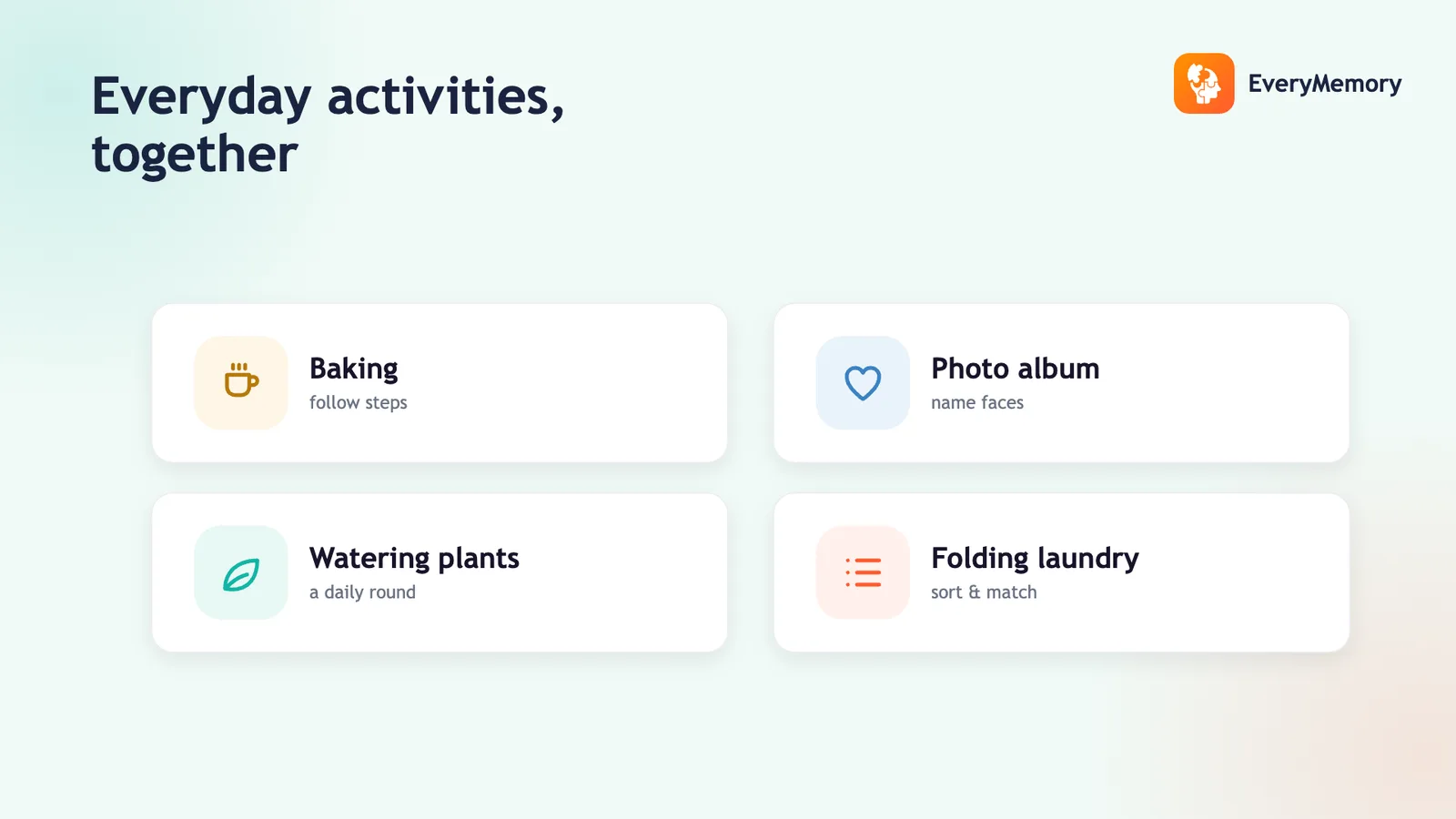
⚡ Quick answer
Good memory-supporting activities at home are familiar, hands-on, and done together: cooking a well-loved recipe, sorting and labelling old photos, gentle gardening, listening to music from someone's youth, simple folding or sorting tasks, and easy puzzles or cards. They keep an older relative engaged and connected without pressure, and the aim is enjoyment and a sense of usefulness, not a finished result or a test.
Key takeaways
- Ordinary tasks - cooking, sorting photos, gardening - are rich activities.
- Familiar recipes bring smells, steps, and stories at once.
- Music and quiet pleasures engage without needing busy hands.
- Do it together, keep it pressure-free, and end on a high.
You don't need special equipment or a program to keep an older relative engaged at home. The richest activities are the ordinary ones - making a familiar meal, sorting a drawer of photos, pottering in the garden, folding warm laundry. They're satisfying, they invite conversation, and they keep both hands and mind comfortably busy.
What turns a chore into a good activity is doing it together and with no pressure. The goal isn't a finished task or a tidy result; it's a pleasant stretch of shared time that leaves your relative feeling useful and connected.
Cooking and baking together
Few activities engage more at once than cooking. A familiar recipe brings smells, textures, steps in order, and stories about who taught it. Hand over the parts your relative can do comfortably - stirring, measuring, shaping dough - and chat while you work.
Choose dishes from their own past, not new experiments. A grandmother's biscuits or a Sunday roast carries memory and meaning that a recipe off the internet won't. The eating together at the end is half the pleasure.
Hands-on activities that engage the mind
Many ordinary tasks become satisfying activities when there's no rush and you're side by side.
| Activity | What it brings |
|---|---|
| Sorting and labelling photos | Names, stories, and a useful keepsake |
| Gentle gardening | Movement, fresh air, and seasonal routine |
| Folding laundry, matching socks | Easy, repetitive, and quietly satisfying |
| Setting the table, simple cooking | A sense of usefulness and shared meals |
| Sorting a button or coin tin | Tactile, calming, and full of small decisions |
Music, books, and quiet pleasures
Not every activity needs hands. Playing music from your relative's youth can lift a whole afternoon, prompt dancing or singing, and bring back stories. Reading aloud, looking through an old atlas, or watching a favourite film together are gentle, low-effort ways to stay connected.
Keep a small shelf of go-to options - a playlist, a photo album, a couple of easy puzzles - so there's always something ready. For story-led ideas to pair with these, see reminiscence activities for seniors and the everyday daily brain exercises.
Keeping activities pressure-free
The fastest way to lose the mood is to make an activity feel like work or a test. Let your relative do as much or as little as they like, accept a wonky result happily, and stop when interest fades. Praise the effort and the company, not the outcome.
- Offer a choice of two activities rather than deciding for them.
- Do it alongside them - company is the point, not supervision.
- Break tasks into small, clear steps if that helps.
- Let imperfect results stand; the result was never the point.
- End on a high note, while it's still enjoyable.
✅ Try this today - A familiar-recipe afternoon
Cook something from your relative's past and let the stories come with it.
- Choose a dish they made for years - nothing new to learn.
- Gather ingredients together and ask who first taught them the recipe.
- Hand over the comfortable steps: measuring, stirring, shaping.
- Chat as you go; the kitchen smells will bring back stories.
- Sit down and eat it together - the best part of the activity.
⚠ When to talk to a professional
These are enjoyable home activities for connection and engagement, not medical care or treatment. Adapt them to your relative's mobility and safety, and consult a doctor or qualified professional about any genuine memory concerns.