 EveryMemory
A Daily Routine That Supports a Senior's Memory
A steady daily rhythm - predictable meals, a morning anchor, movement, company, and rest - takes pressure off everyday memory and helps an older relative feel in control.
Part of the guide: Helping a Parent With Memory Changes: The Complete Family Guide →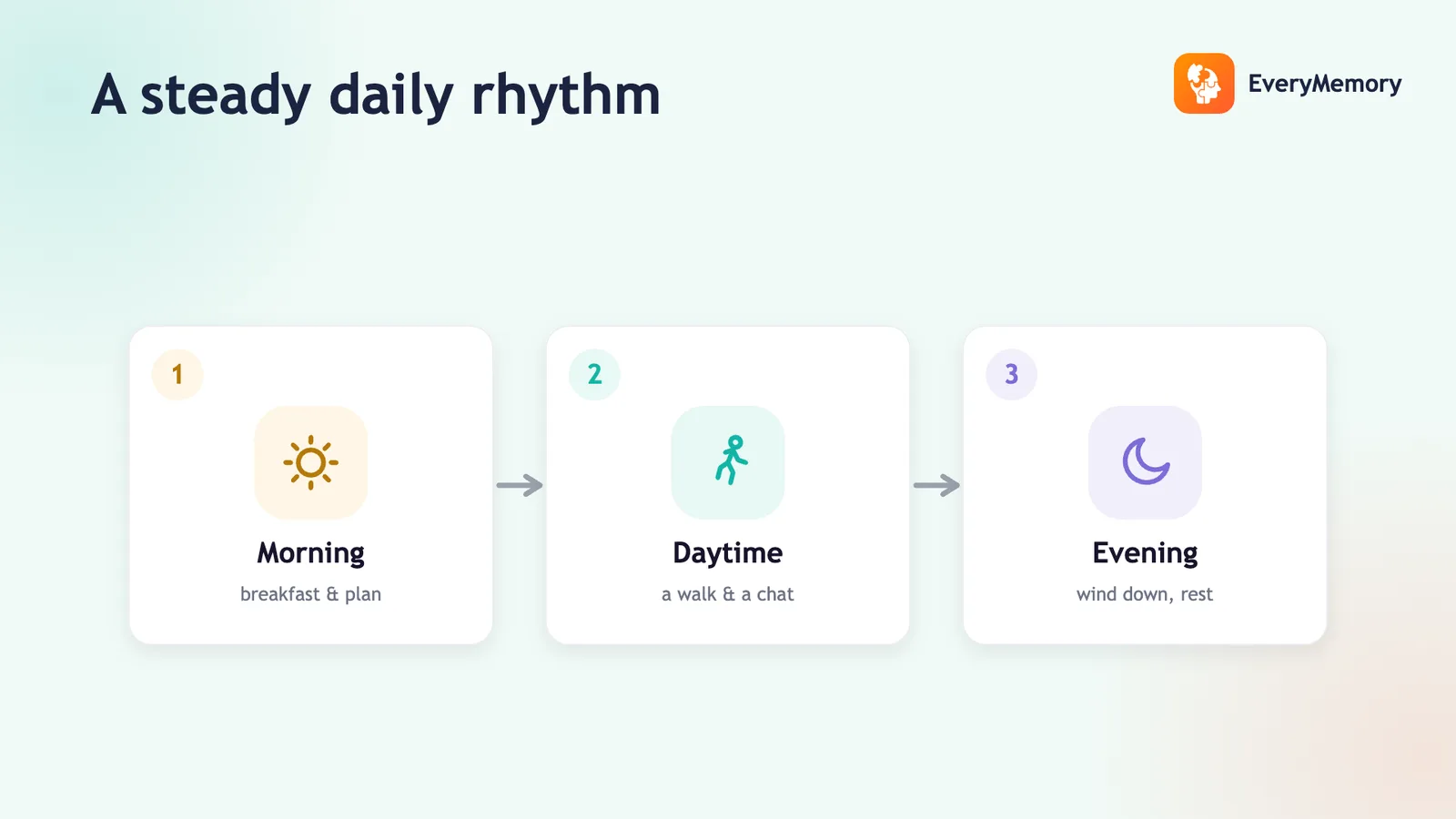
⚡ Quick answer
A supportive daily routine for a senior uses predictable anchors - a consistent wake-up and morning ritual, meals at steady times, some daily movement, social contact, an enjoyable activity, and a calm wind-down for good sleep. Regular timing takes pressure off memory and builds confidence. Keep it gentle and flexible rather than rigid, and leave plenty of room for the person's own choices.
Key takeaways
- Predictable anchors take pressure off everyday memory.
- A steady morning, meals, movement, company, and rest shape the day.
- Build the routine with your relative so it reflects their habits.
- Keep it flexible and gentle, never a rigid timetable.
A predictable day is one of the kindest supports you can give an older relative. When meals, activities, and rest happen at roughly the same times, there's less to figure out from scratch each day, and the rhythm itself carries much of the load. The result is calm, confidence, and a sense of being in control.
A routine isn't a rigid timetable to enforce - it's a gentle shape that holds the day together. The aim is to make life easier and more enjoyable, with plenty of room for choice and spontaneity inside the structure.
Why a steady rhythm helps
When the shape of the day is familiar, less has to be actively remembered. Your relative knows breakfast follows the morning wash, that the afternoon holds a walk, that the evening winds down the same way. That predictability is reassuring and frees up energy for enjoying things rather than tracking them.
Anchor the day to fixed points and let everything else hang off them. For a gentle start specifically, see the morning brain routine for seniors, and for the wider supportive picture, how to support a parent's memory.
A sample daily shape
A loose template you can adapt to your relative's habits and energy.
| Time of day | Anchor activity |
|---|---|
| Morning | Consistent wake-up, wash, breakfast, check the day's calendar |
| Mid-morning | A walk, a hobby, or a phone call with someone |
| Lunch | A proper meal at a steady time, ideally with company |
| Afternoon | An enjoyable activity - cards, gardening, a project |
| Evening | Light dinner, a favourite show, then a calm wind-down |
Building the routine together
A routine works best when your relative helps shape it, so it reflects what they like rather than what's convenient for you. Talk through their natural rhythms - when they wake, when they're liveliest - and build around those. Write it on a whiteboard or large calendar they can see.
- List the fixed points that already exist - meals, medication, a regular call.
- Add a daily anchor for the morning and one for the afternoon.
- Work in movement and at least one social moment each day.
- Write the shape somewhere visible - a kitchen whiteboard works well.
- Review it together after a week and adjust to what they enjoyed.
Keep it flexible, not rigid
A routine should serve your relative, not box them in. Leave room for spontaneity - a surprise visitor, a nice day for a longer walk, a lazy afternoon. The structure is there to reduce strain, not to remove choice.
If a day goes off-plan, that's fine; the rhythm picks back up tomorrow. Protect sleep especially - a regular bedtime and a calm wind-down do a great deal for how the next day feels. The point throughout is ease and dignity, not discipline.
✅ Try this today - A one-page daily shape
Sketch a simple, visible routine you can refine together over a week.
- Write the existing fixed points - meals, medication, regular contact.
- Add a morning anchor and an afternoon anchor your relative enjoys.
- Slot in a daily walk or movement and one social moment.
- Put it on a whiteboard or large calendar where it's easy to see.
- After a week, sit down together and adjust what didn't fit.
⚠ When to talk to a professional
A supportive routine is general lifestyle guidance for everyday comfort and engagement, not a medical treatment. If an older relative's memory is noticeably worsening or affecting daily life, speak with their doctor or a qualified professional.