 EveryMemory
Reminiscence Activities for Seniors
Old photos, familiar songs, and well-loved recipes invite a parent's stories to the surface - here are reminiscence activities that bring warmth, dignity, and connection.
Part of the guide: Helping a Parent With Memory Changes: The Complete Family Guide →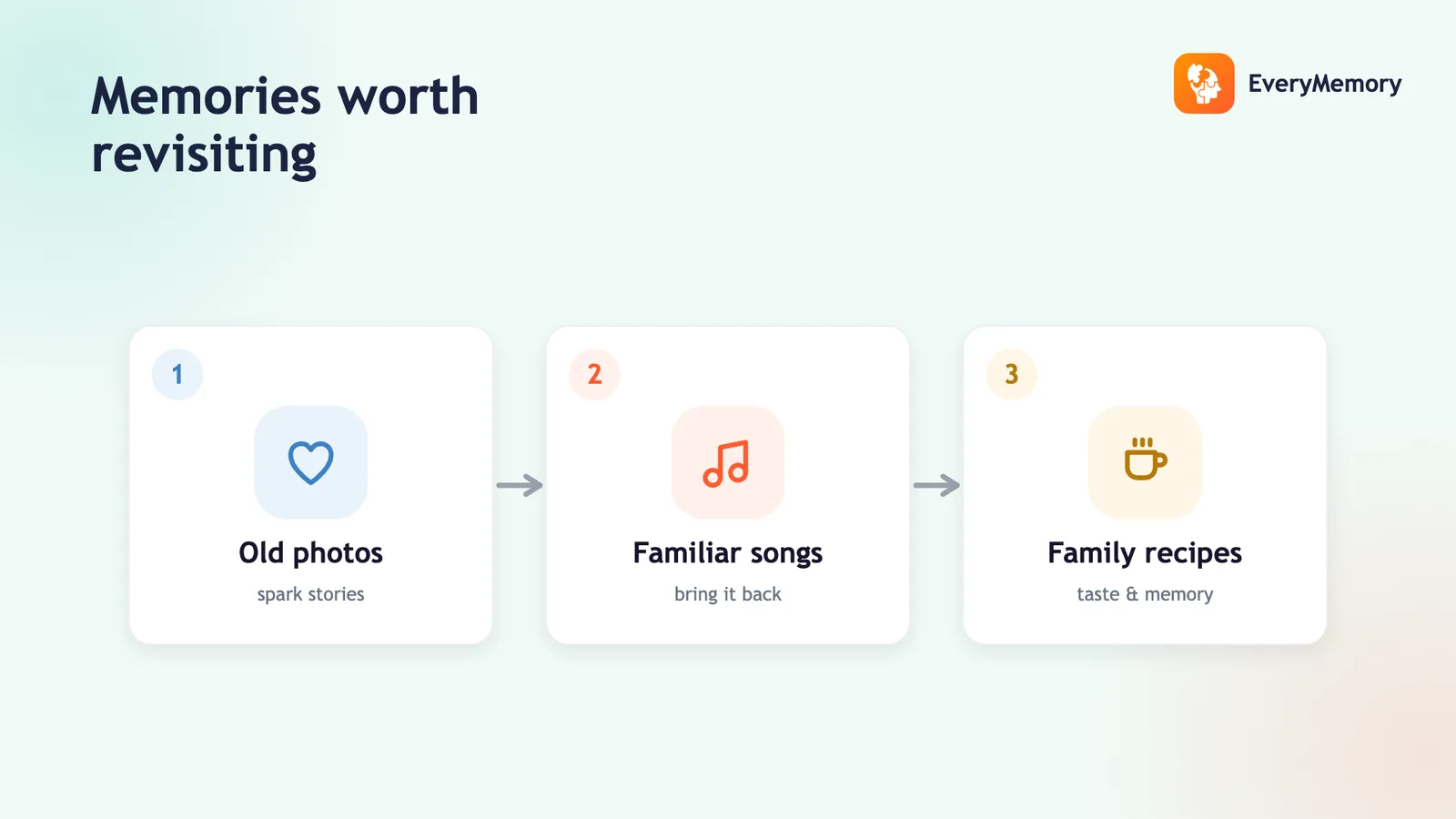
⚡ Quick answer
Reminiscence activities use familiar objects and sensory cues - old photographs, music from someone's youth, recipes, and life-story questions - to invite an older person to share memories. They're enjoyable, dignifying, and connecting, giving a parent the role of storyteller. The aim is shared time and wellbeing, not testing recall, so any story they offer is the right one.
Key takeaways
- Old photos, music, and recipes pull memories to the surface naturally.
- Sensory cues unlock stories that direct questions can't.
- Build a memory box together and revisit it over many visits.
- Keep it warm - never turn reminiscing into a who-is-this test.
Reminiscence is simply revisiting the past together, on purpose and with affection. Looking through a box of photos, playing a song from their wedding, or cooking a recipe your grandmother taught - these moments pull memories to the surface and give an older parent the pleasure of telling you who they were.
It works because the distant past tends to stay vivid and reachable. A scent or a tune can bring back a whole afternoon. You're not trying to fix anything; you're spending time in a place your parent knows well, and letting them lead.
Why old memories come easily
People often recall the years of their youth and early adulthood with surprising richness, even when last week is fuzzy. That makes the distant past a comfortable, confident place to spend time. Starting there means your parent is the expert, and the conversation feels good rather than effortful.
Sensory cues are the key that turns the lock. A song, a smell, the feel of an old tool - these reach memories that direct questions can't. Build activities around the senses and the stories tend to arrive on their own. For question-led ideas to pair with these, see conversation starters for seniors.
Activities to try
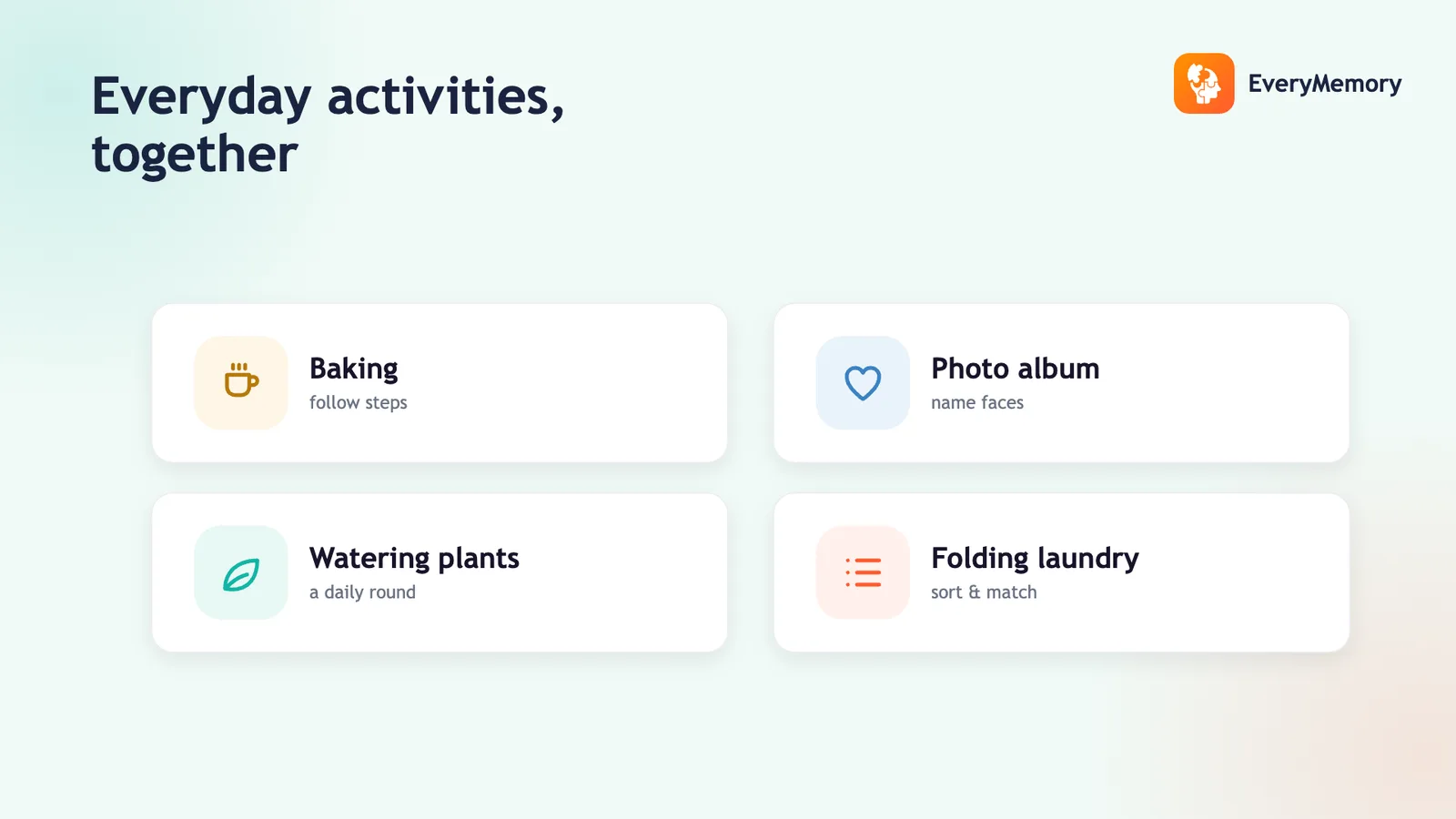
Each of these gives your parent something to hold, hear, or do - a starting point that needs no effort to recall.
| Activity | What it invites |
|---|---|
| Photo box | Names, places, and the stories behind ordinary snapshots |
| Music from their twenties | Dances, films, and where they were when a song was new |
| Cooking a family recipe | Hands-on memory, smells, and who taught them |
| A map of their hometown | Streets, shops, schools, and neighbours |
| Old objects or tools | Work life, skills, and how things used to be done |
Make a memory box together
A memory box is a small collection of meaningful things - photos, a concert ticket, a medal, a scrap of fabric - kept in one place to dip into. Building it is half the pleasure, because each item comes with a story as it goes in.
- Find a shoebox or tin and gather objects together, asking about each one.
- Add a few photos, an old letter, and anything with a strong scent or texture.
- Label items lightly if your parent wants - names and dates on the back of photos.
- Keep it somewhere easy to reach, so it's there for a quiet afternoon.
- Return to it on different visits; the same object can unlock a new story each time.
Keeping it warm, not testing
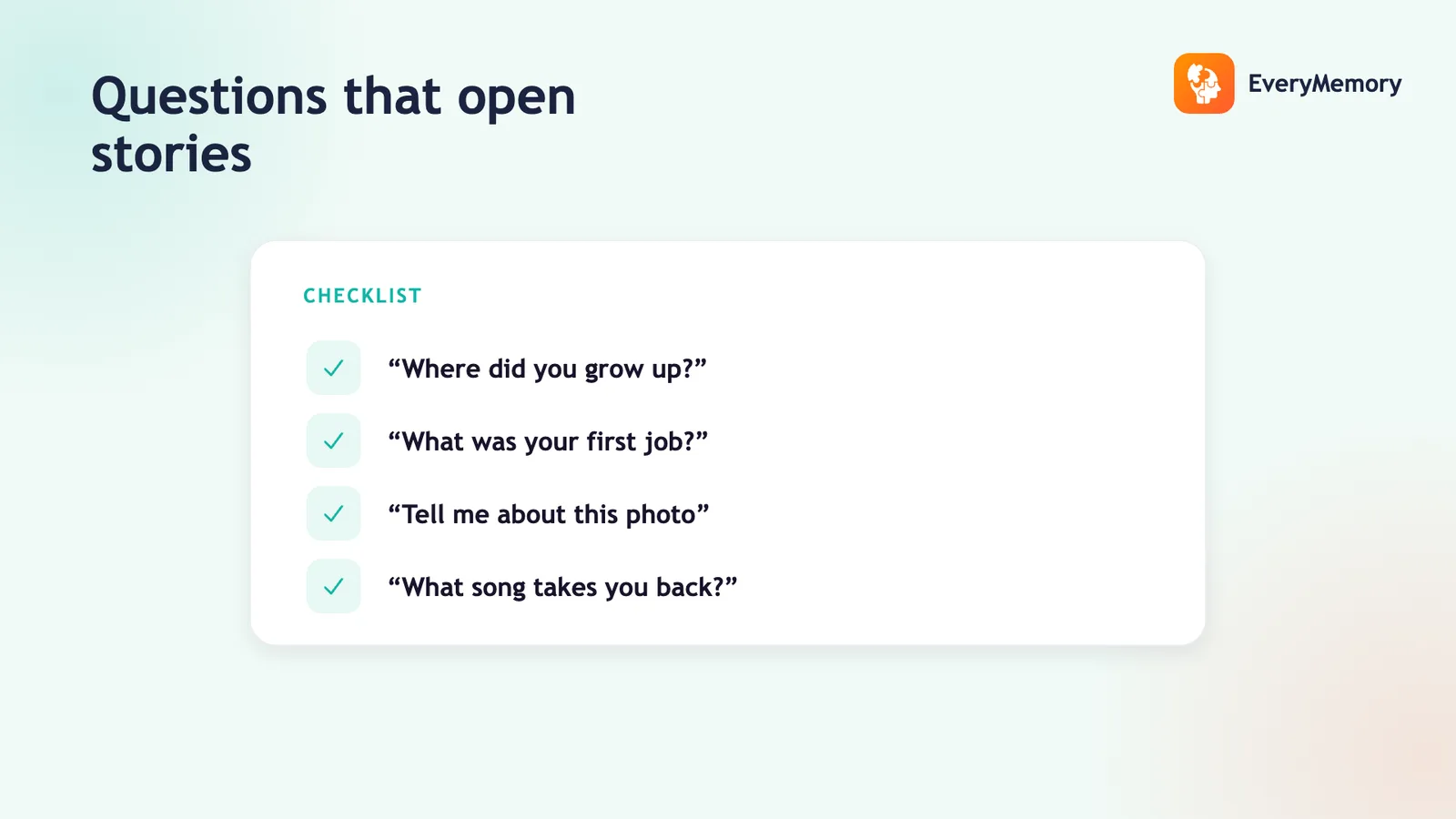
The fastest way to spoil reminiscence is to turn it into a quiz. Avoid "Who is this?" if you sense uncertainty; instead offer the name yourself - "That's Aunt May, isn't it? Tell me about her." You carry the facts so your parent can simply enjoy the story.
Repetition is welcome. A favourite story told for the tenth time is a sign it's a good one. Follow their pace, let silences sit, and treat every session as time spent rather than ground covered. For weaving this into everyday life, see memory-supporting activities to do at home.
✅ Try this today - A song-and-story afternoon
Music is the quickest route to a good memory - set aside half an hour.
- Find three or four songs that were popular when your parent was eighteen to twenty-five.
- Play one and simply listen together, no questions yet.
- Ask where the song takes them - a place, a person, a night out.
- Follow the story with "and then what?" rather than moving to the next song too soon.
- End on a happy track and let the mood carry into the rest of the visit.
⚠ When to talk to a professional
Reminiscence is a connecting, enjoyable activity, not a clinical therapy or a memory assessment. If you have genuine concerns about an older relative's memory or mood, consult their doctor or a qualified professional.