EveryMemory
Word Games for Memory and Recall
Crosswords, anagrams, and word-recall games keep word-finding quick. Which ones train memory most - and which are mostly recognition.
Part of the guide: Brain Exercises for Seniors: The Complete Guide →
⚡ Quick answer
Word games - crosswords, anagrams, word searches, and word-recall games - exercise vocabulary retrieval, attention, and working memory. The ones that make you produce words from memory (crosswords, anagrams) train recall more than those you can solve by recognition (word searches). A few minutes most days keeps word-finding quick.
Key takeaways
- Word games exercise vocabulary retrieval, attention, and working memory.
- Games that make you produce words from memory (crosswords, anagrams, recall lists) train recall more than recognition games like word searches.
- Solving from memory before reaching for a hint, at a slightly challenging level, gives the best workout.
- Keeping word retrieval quick is directly relevant to everyday tip-of-the-tongue moments.
Word games are a favourite for good reason - they're enjoyable, widely available, and they put vocabulary retrieval to work. But they're not all equal as memory exercise.
The key difference: do you have to produce a word from memory, or just recognise one that's already there?
How word games help memory
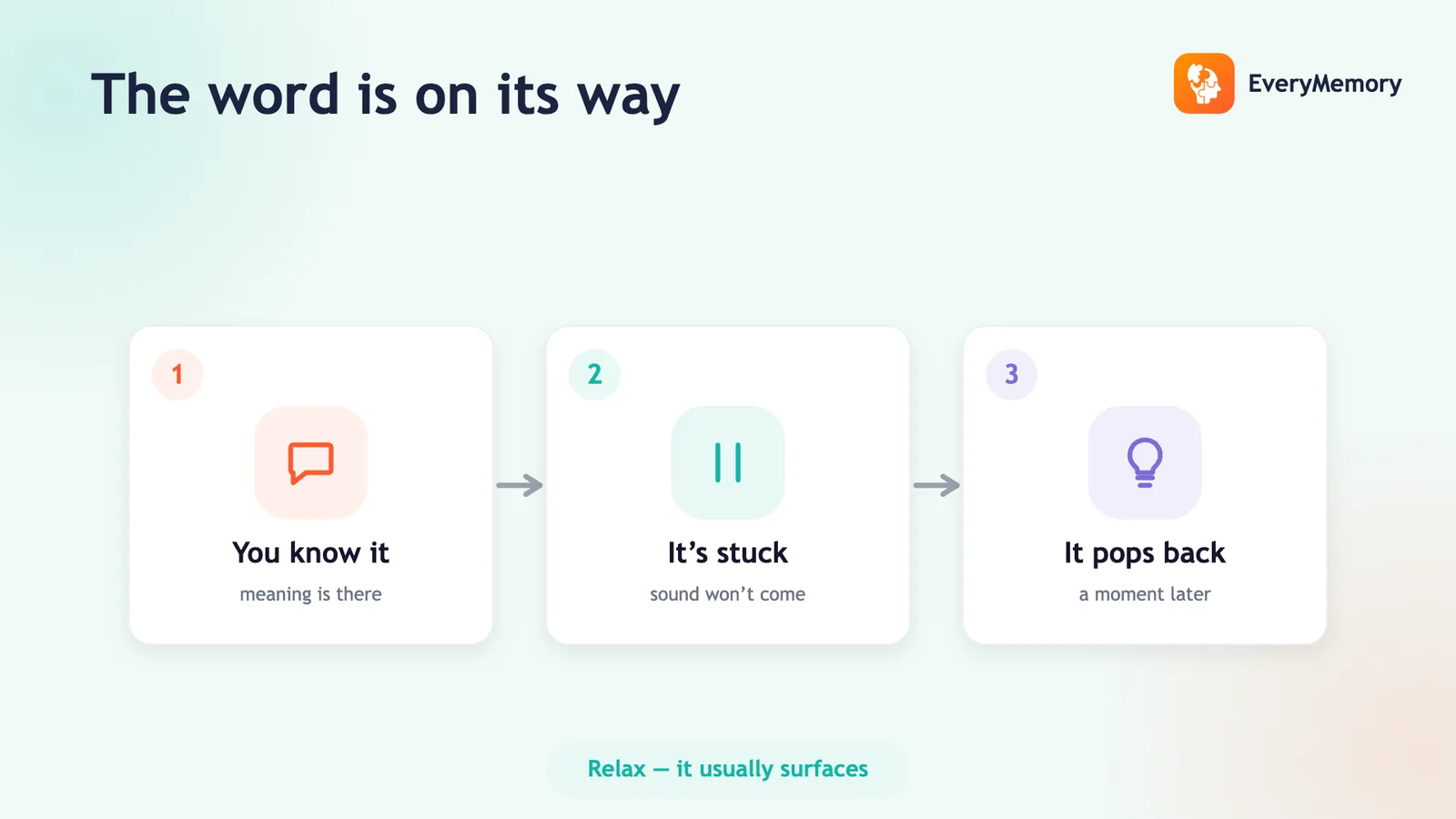
Reaching for the right word is an act of retrieval - exactly the process that strengthens memory. Word games make you do it repeatedly, which keeps the paths to your vocabulary quick and well-worn. That's directly relevant to the everyday 'tip of the tongue' moment, covered in why you forget words while speaking.
Produce vs recognise - which trains memory more
A word search asks you to recognise a word that's already printed in the grid - easy, and lighter exercise. A crossword or anagram asks you to produce a word from a clue, pulling it from memory. Production is the harder, more useful workout. Both have a place, but if recall is your goal, favour the produce-it games.
The main word games, ranked by effort
- Anagrams & word jumbles - produce words from scrambled letters; strong retrieval workout.
- Crosswords - produce words from clues plus general knowledge.
- Scrabble & word-building - produce words under constraints; also strategic.
- Word-recall lists & categories - name as many words in a category as you can; pure retrieval.
- Word searches - recognition only; gentle, good for attention more than recall.
How to get the most from them
Try to solve from memory before reaching for a hint, sit a notch above easy, and mix a couple of types. A daily crossword plus a 60-second 'name as many animals as you can' is a quick, varied verbal workout. It pairs naturally with the word-recall exercise.
✅ Try this today - the 60-second category sprint
A pure word-recall workout, no equipment:
- Pick a category - animals, fruits, countries.
- Set 60 seconds and name as many as you can out loud, tallying them.
- Repeat tomorrow with a new category and beat your own count.